The Spiritual Life

Genuine spiritual experiences don’t sit well with a nine-to-five job.  When something truly profound happens to a person s/he requires time to think about it.  Ponder the experience.  If such a thing occurs on a Sunday (imagine that!), the next morning, still reeling, you need to go to work.  Perform duties that no longer seem significant.  And continue to do so for four more days, until the fire has gone out.  This paradox has plagued me for some time.  Perhaps it’s the fate die cast for an editor who can’t just read submissions for their financial payoff.  Who asks, “What if she’s right?”  Doesn’t that affect everything?  Especially in the case of a religion editor.
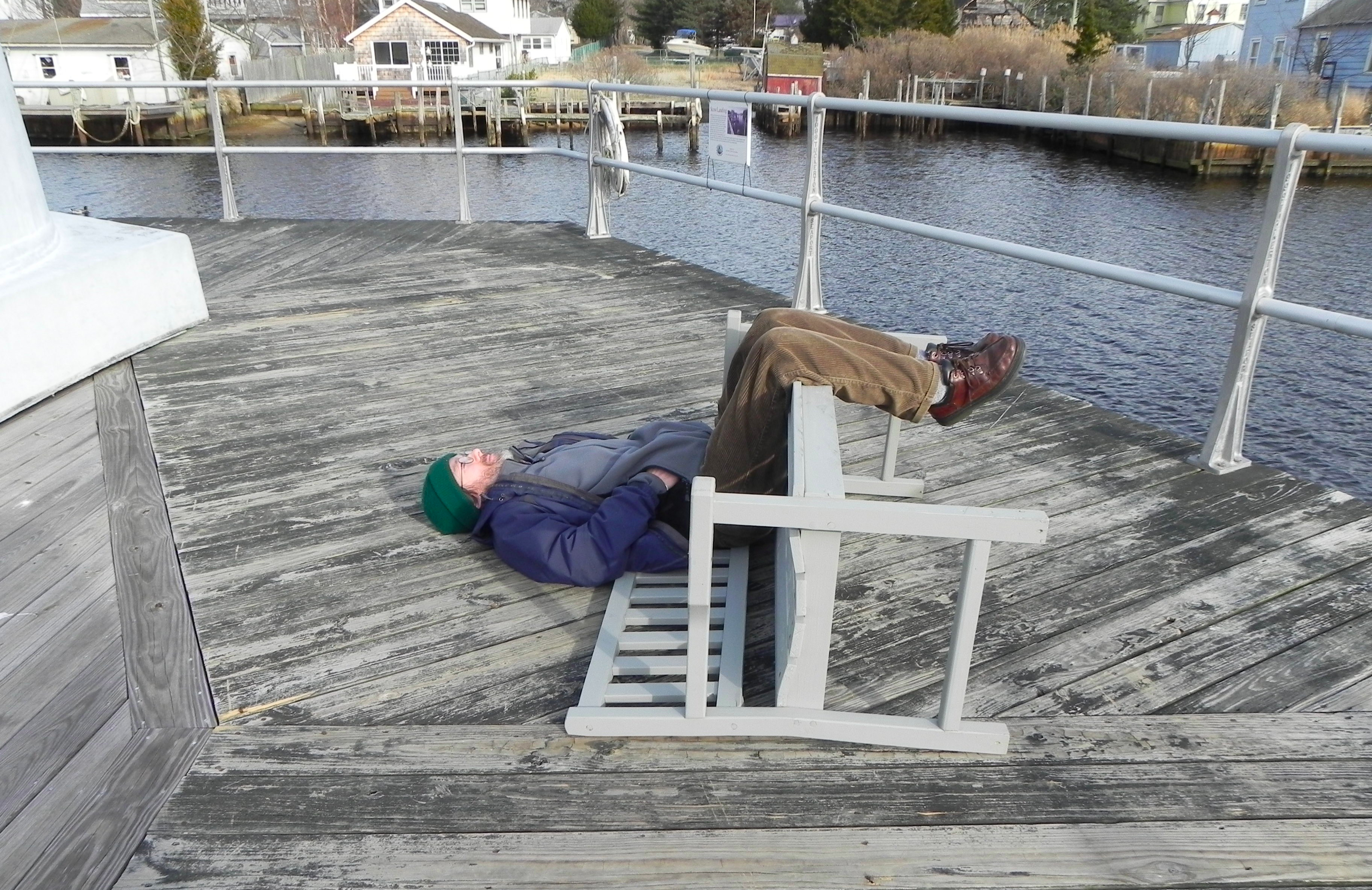
Blown away.

I first noticed this in college.  Even there the schedule was quite flexible, according to classes you had to take.  The professors were sincere in their presentation of ideas you should take seriously, but then in the work world your boss indicates that you’re not being paid to do that.  You’re being paid to produce.  Contribute to the machine.  Cogs and sprockets don’t think.  They do.  Then a significant weekend would come (or a holiday, say) where the message would really speak to me.  Change my outlook.  Until Monday morning.  The outlook would still be changed, of course, but the demands on routine would not also be changed.  It’s quite a dilemma.  As the great contemplatives throughout history have known, these ideas must be wrestled with.  Conversed with.  Tried on for size.  Walked with.  Such things can’t be done in the context of what you’re paid to do.  “Do it on your own time.”

What is your own time?  The weekend, essentially.  Work expands to fill the quiet times of weekdays.  Your time is owed to somebody who pays you less than the national average to do something any nonspiritual person could do.  Such is the danger of being open to new ways of looking at things.  Vacations need to be planned.  They are rejuvenating, but spiritual experiences can’t be planned.  They just happen.  HR has no algorithm for them.  Not exactly sick days or floating holidays.  And what if you need more than one day?  That meeting that was scheduled for Tuesday, what about that?  As if such things were really important.  Perhaps you too had the professor late for class because s/he was struggling with an idea, an experience that fit her or his specialization.  There were always office hours to recover.  That’s all fine and good, but it’s time for work.


Taxing Thoughts

Tax season has come with a new fear this year.  We had to visit our accountant’s small office to sign things.  We managed to get last year’s taxes filed before the pandemic became evident.  This year I spent weeks worrying about the upcoming appointment.  Sitting in a room with a man I both respect and fear.  Our government loves its paperwork, and although you can file electronically you still have to pay any amounts owed (on the state or local level) with actual paperwork.  That paperwork has to be signed.  To do so you need to meet an actual person who has some inkling of how this all works.  Ironically, the technology exists for taxes to be done automatically by the government.  Groups like Intuit, the owners of TurboTax, lobby the government not to make it easier.  Intuit would lose its income stream.

I don’t mind paying taxes.  I did chafe a bit the past four years, knowing I was supporting an evil government, but overall I understand that we all need to contribute in order for things to continue to run (somewhat) smoothly.  The thing that frightens me is being in a room with someone who might’ve been earlier talking with someone who had a dread disease.  Last week marked the one-year breaking point.  My wife and I agree that March 12 was the day the news turned utterly ominous.  Although the Trump administration knew about the disease, it had decided simply to ignore it.  Now, with more than half-a-million Americans dead, we’re still paying our taxes to try to undo the damage that one man did.

The more immediate problem is how to survive getting those tax papers signed.  Ironically, I can oversee the acquisition, editing, production, and sale of a physical book without ever having to touch a piece of paper.  It’s a marvel, really.  In fact, many of the books I acquire I don’t see until months after they’re published.  For taxes, however, we still need to send the physical paper in.  The alternative is TurboTax.  They add on so many fees that we ended up paying them as much as an actual accountant last time we did our own taxes.  I’m happy to pay a human being to do them, and I even like our accountant.  It’s just that it doesn’t feel safe to go inside somebody else’s space right now.  It’s a little too cold and wet to stand outside and sign the papers with trembling fingers.  Perhaps next year we’ll be able to do our part without fear.


Slacking Off

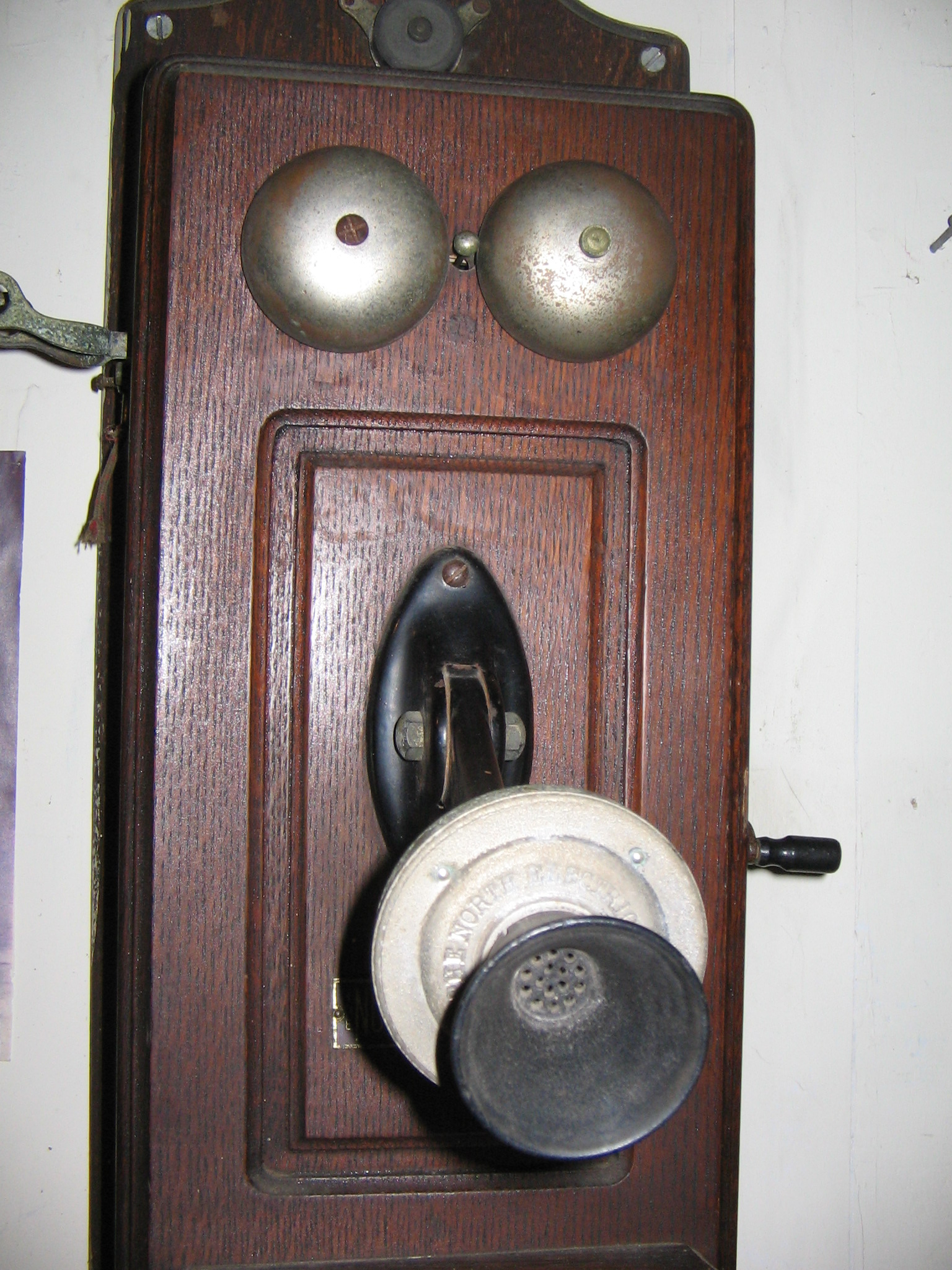
The other day someone on a committee on which I serve suggested we might eliminate the problem of buried emails by using Slack to communicate.  The problem, it seems to me, is that we have too many ways to communicate and yet lack the means to do so well.  For me email is indicative of the problem.  Email was devised—and I remember its beginnings well—as a means of swift communication.  The only real options before that were writing an actual letter (which I miss) or telephoning.  At that time you might have a cordless phone that you could carry from one room to another but you probably did not.  The phone was relegated to a place on a wall or table and, although I appreciate knowing things quickly, the fact is we got along in those days.  Junk mail was evident at a glance.  You sorted it and life went on.

Now email has taken over life.  I simply can’t keep up with it.  Some time ago Google offered a trifurcated email experience: primary, social, and promotional.  Their algorithms aren’t perfect (numbers seldom are) but I can often ignore large swaths of the promotional page.  That saves time.  Most of the social is dominated by people I don’t know wanting to connect on LinkedIn, or someone mentioning something I should pay attention to on Facebook.  Or perhaps something going on in the neighborhood on Nextdoor.  Primary deserves its name, but I can’t keep up with even that.  You see, I have a full-time job.  It largely consists of reading emails.  If I get a personal email in the morning, chances are it will be buried on the second page by the time the day’s out.  It may never been seen again.  I don’t need another new way to communicate.

The pandemic has introduced the new malady of Zoom exhaustion.  It isn’t unusual for my entire weekend to be taken up with Zoom.  If I don’t have a good part of a Saturday to sort my emails into files things I promised I’d do begin to slip.  I don’t see that email—the one that serves as a reminder to this addled brain of mine.  If I order something on Amazon I have to follow up on an email asking me to rate the service.  And then, if it’s not sold directly by Amazon, a vendor fishing for a compliment.  That after getting an email to confirm my order and another to tell me it’s been shipped.  No, please don’t subject me to Slack.  Or better yet, send me an email about it.  I’ll get to it eventually, as long as it stays on the first page.


Old Wolves

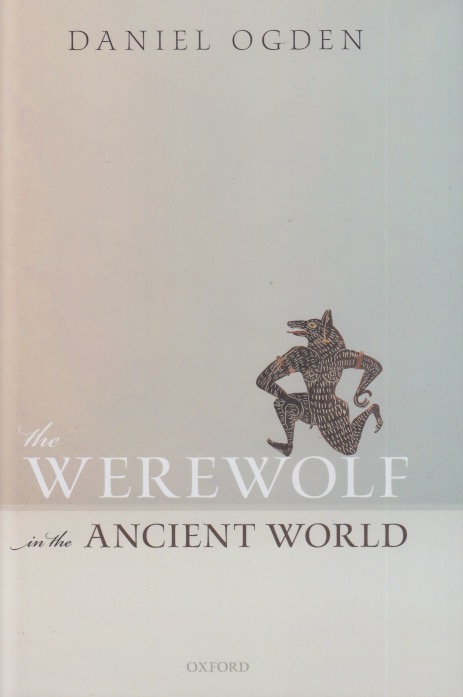
Among the classic monsters, the werewolf seems to suffer from lack of a foundational novel.  Yes, vampires are older than Bram Stoker’s Dracula, and antecedents can be suggested for Mary Shelley’s Frankenstein, but there isn’t a werewolf novel of similar stature.  Daniel Ogden, however, does us a service by providing an extended discussion of, as his title states, The Werewolf in the Ancient World.  His survey is intriguing and informative, and also insightful.  The werewolf is not always what it might seem.  Ogden is an able guide through sources from antiquity through some medieval tales, focusing mainly on the ancient ones.  He extensively explores their associations—witches, sorcerers, ghosts, and the like.  And related tales of human transformation.  He even suggests what some of those transformations may have been seeking.

The werewolf is perhaps the most obvious monster that expresses repressed desire for transformation—a kind of salvation.  Civilization comes with a cost and the werewolf is symbolic of the individual driven by animal desire, unrestrained by human convention.  It’s also an idea of great antiquity.  Although Ogden doesn’t go into it, stories of humans turned into wolves goes back at least to the Epic of Gilgamesh, one of the earliest pieces of literature we have in fairly complete form.  The idea is attested in writers such as Plato and Augustine, if only to refute it.  In other words, it is clearly something people have thought possible from very early times.  Our long association with the wolf, and its domesticated version—the dog—certainly plays a psychological role in such tales.

As Ogden points out, Guy Endore’s novel The Werewolf of Paris, published in 1933, is perhaps as close as we come to a foundational novel.  In the Universal monsters series that developed a canon for monster boomers, The Wolf Man was a somewhat late entry, appearing in 1941—a decade later than Dracula and Frankenstein.  Despite these tardy cultural appearances, the werewolf has been part of our collective psyche far longer.  Ogden shows that clearly.  When you stop to rethink stories like Little Red Riding Hood, the talking, humanized wolf appears so naturally that we don’t often stop to consider the implications.  I certainly hadn’t made the connection explicitly until reading it here.  Ogden’s work is readable but academic, so be prepared for citations and some technical talk.  Nevertheless, this is the clearest guide to lycanthropy and the magical ideas behind it from ancient times to have appeared in recent years.  


Pandemic Thoughts

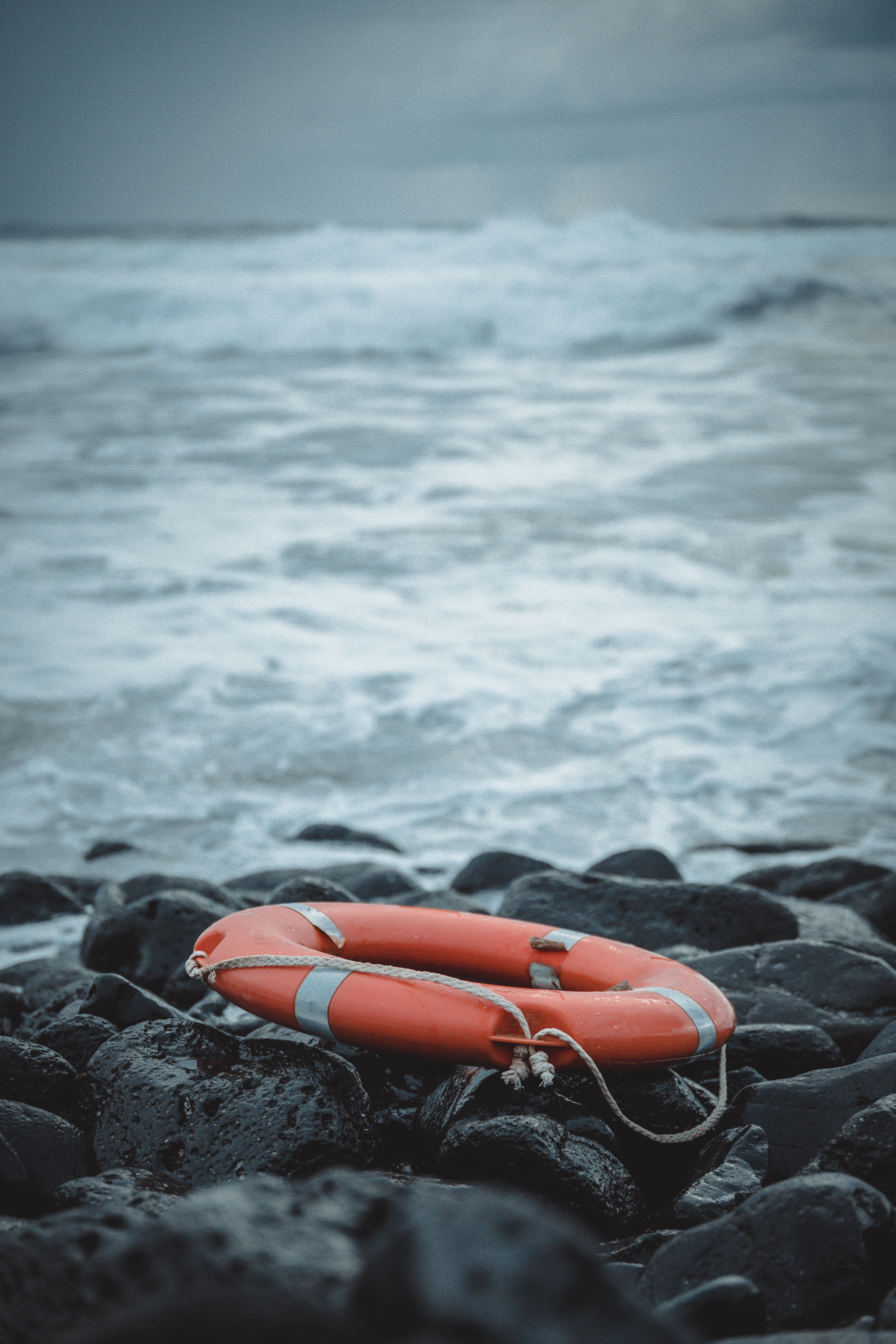
Waiting for rescue.  For many years now, I’ve been hoping for it.  It goes back to my first professional job at Nashotah House, perhaps earlier.  Particularly late in the game, I found myself wondering when I might be rescued from that difficult situation.  The teaching and research I loved, but the context was brutal.  The hoped for salvation never came.  Since those days the wishes have swung around to a steady job in a field I love.  One for which I trained.  The feeling arises particularly on weekends.  Often busier than even workdays, I nevertheless sense an almost gothic freedom to them, and Monday rolls around again reminding me that salvation never came.  Things are still the same.  Now, I don’t just sit around waiting for rescue.  I throw out all kinds of lines.  I shout and squirm and try to make myself known.  The ocean is large, however, and my voice is small.  

Perhaps this sense is a natural outgrowth of being raised in a religion that emphasized personal salvation.  The sudden conversion experience.  It was easy to believe things could change rapidly for the better.  Science, particularly uniformitarianism, tells us that the same slow processes always hold.  Solomon was right after all—there’s nothing new under the sun.  At least nothing that we couldn’t see coming for a good, long time.  Out here the horizon stretches ever so far in every direction.  Religions realize the problems with this sameness.  They give us sacred times and sacred spaces.  (The latter of which, however, the pandemic has forced online.)

Rescues that evolve can take many years to reach effective strength.  As a child I recall anticipating the rescue of adult respectability.  When I grew up people would listen to me because I was an adult.  For a brief while that was the case when I stood in the classroom and some students came because they wanted to learn.  I learned from them, and they, I hope, learned from me.  Perhaps this situation arises less among those raised in stable, middle-class families.  Perhaps they don’t sense the constant wolf pacing outside the door.  Maybe salvation is primarily for the poor.  Whoever it’s for and whencever it comes, the feeling has been with me for decades.  Rescue, it seems, is a construct we badly need.  At least on a philosophical level.  The pandemic has leveled our concept of time to a stifling sameness.  I’m prepared.  I’ve been waiting for rescue for as long as I can remember.  Then Monday rolls around again.


That Time Again

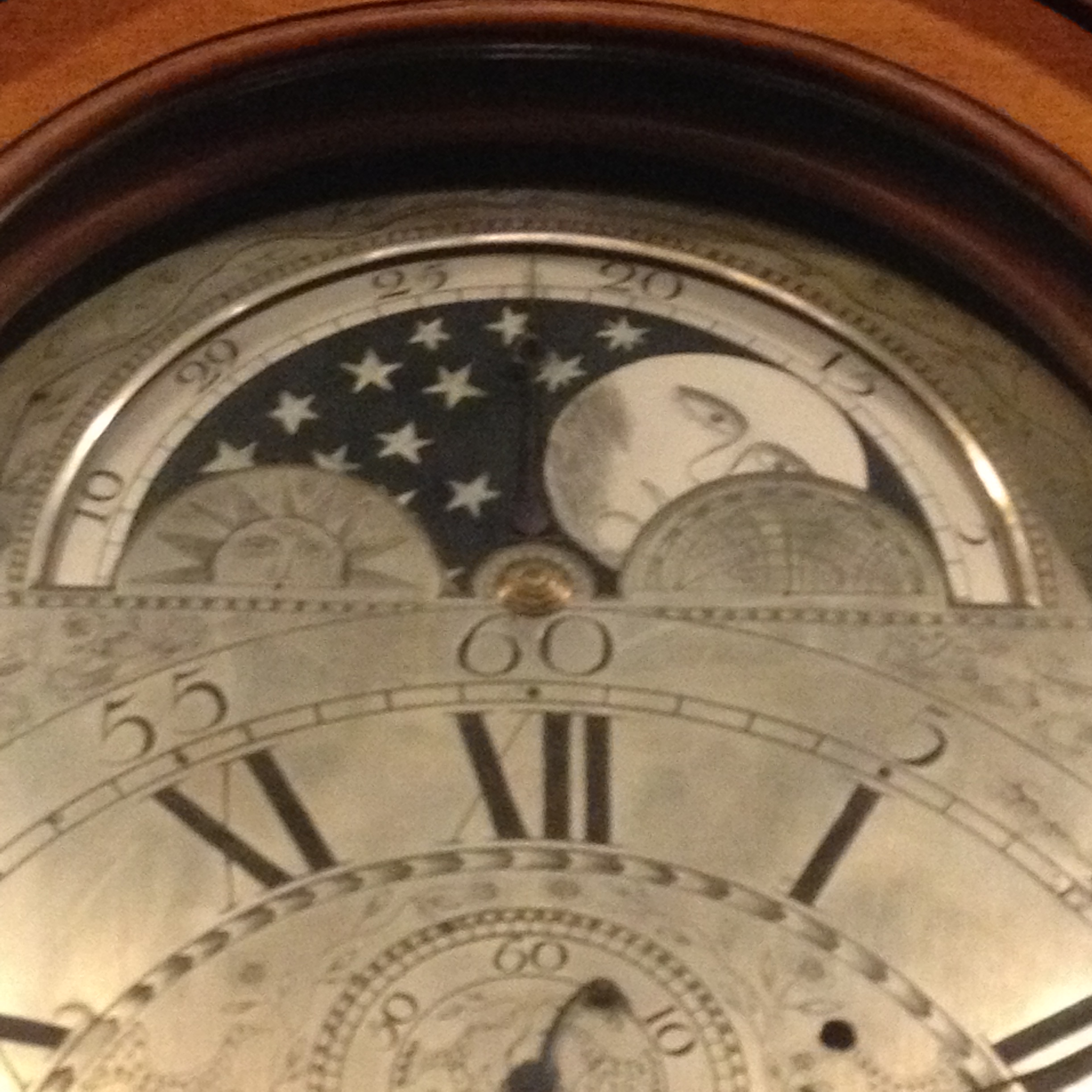
Where’d it go?  I could swear I left an hour sitting right here on the table, and now it’s gone.  That’s the feeling of waking up the day of Daylight Saving Time.  Sure, it’ll stay light later now, but the mornings, when hope is most necessary, are once again dark.  It’s funny how we play with time.  I’ve known many people who love the end of Daylight Saving Time because of the illusion that they’ve gained another hour of sleep.  In fact, it’s just a deferred payment.  The great time-keeper in the sky won’t be cheated.  So—pardon my yawn—we’re adjusting again.  One of the great mysteries of this is that keeping Daylight Saving Time permanent has strong bi-partisan support in the US government.  It never becomes law, however, because riders are constantly attached to it, making one side or the other back out.  And so we all spend a couple weeks trying to get our circadian rhythms to adjust.  Again.

I’ve often wondered about the timing for this change.  Why Sunday morning?  In this nation that likes to pretend to be Christian, it’s a regular joke that folks in pre-pandemic times would miss church, having forgot to set their clocks ahead.  One incredibly busy Sunday in Edinburgh, my wife and I had missed church altogether.  I’m thinking it must’ve been in the final throes of getting my dissertation finished.  When supper-time rolled around we found we were out of some ingredients and we went to the local grocery to find, of all things, it was closed early.  It was only then that we had to stop and laugh at ourselves.  We’d just spent an entire day out of joint with time and didn’t even know it.  In pre-internet days it was possible for that to happen.

Most of our clocks now set themselves automatically.  I still wear an old-fashioned analogue watch.  I need to set it manually, which keeps me on my toes when Daylight Saving Time approaches.  O yes, and the clocks in the cars are off—they’re not wired in that way, being older models.  And the one on the microwave.  I can always use my phone for the accurately predetermined time on which we all agree to operate.  Even if the morning skies, which were starting to be light at six now stay dark until seven.  In another month we’ll catch up again.  And Daylight Saving Time, instead of being a strange intrusion, like most unwanted guests, will begin to feel like normal.


Mystery Religions

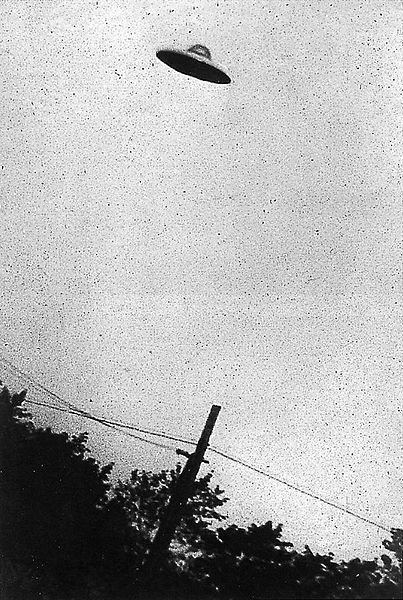
Religion.  What is it?  Those of us with many years—or decades—of experience in it find ourselves asking that often.  A Raëlian I know pointed me to the documentary The Prophet and the Space Aliens, by Yoav Shamir.  Shamir is an Israeli film-maker who was recognized by Raël some years ago as being in sympathy with the principles of Raëlianism.  The result is this film, released about a year ago, and available in its entirety in the context of an interview on Vice, housed on YouTube.  It is well worth the watching, although be warned, it is NSFW (not safe for work), as they say.  I found the post-viewing interview of Shamir to be quite enlightening as well.  Shamir’s film itself is, of course, worth pondering.

Image credit: George Stock, via Wikimedia Commons

Raël, born Claude Vorilhon, began his career in France as a singer and then a journalist for a racecar magazine he founded.  In 1973, after a close encounter of the third kind, he founded Raëlianism, a movement of which he is still the leader.  While Shamir is not a Raëlian—indeed, he’s a non-religious atheist—his documentary treats Raël respectfully.  After giving an overview of the movement at the present time, following Raël as he goes about his daily activities and interacts with his followers on his estate, it then gives his biographical story and interviews some of the people he knew as Claude Vorilhon.  The documentary is balanced and addresses issues such as the movement’s proactive outreach to Africa and respect for African religions and its unconventional views on sexuality.  The issue of cloning, which came to a head in 2002 with the claim that a human, Eve, had been successfully cloned, is also covered.

What it truly striking about The Prophet and the Space Aliens is that it intentionally raises the question of how religions begin.  An originator, a prophet, gathers a band of followers.  Its beliefs are distinctive from other people and tend to outlive the death of the founder.  If it is strong enough the religion will go on to become a fixture in society, sometimes gaining influence and respectability.  One of the points Shamir makes is that if religions survive long enough they simply become part of the cultural fabric.  One of the most interesting scenes in the documentary is an encounter between Raël and Mormon missionaries.  Mormons are one of the more recent, successful New Religious Movements that has become mainstream.  When a member receives a major political party’s nomination for president, it’s obvious that the candidate’s religion (if any) has become accepted.  This documentary will make you think.


Getting into SHAPE

The British Academy, in cooperation with a publisher or two, has taken the initiative to promote SHAPE. Social Sciences, Humanities, and the Arts for People and the Economy (SHAPE) may never match the steam of STEM, but the idea is an important one.  Science, Technology, Engineering, and Mathematics have driven society (and the job market) for many years now.  It’s sometimes easy to forget that we’re human beings and we act irrationally from time to time.  (Consider the last four years in these Untied States.)  Higher education was founded on the premises that the Humanities wouldn’t get studied on their own.  Business keeps us too busy.  Either that, or the egos of rulers lead us into war after war.  What gets left behind is the study of what makes us who we are.  The liberal arts college, learning for learning’s sake, has fallen on hard times.  What’s the profit in it?

SHAPE suggests a society suffers if it doesn’t promote social sciences—the so-call “soft sciences” that state humanity the proper study of humans—the humanities, and the arts.  The acronym itself contains a lesson “for people and the economy.”  The dismal science does, in some sense drive the initiative since we live in a world where tech does most of the work we used to.  We’re left with the non-paying business of being human.  Caring for an aging population where people live longer but aren’t given jobs that pay well enough to retire.  Looking in the mirror to see that the economy’s fruits go unfairly to those who already have too much.  The rest of us, are left to survive as, well, humans do.  Why not celebrate—and better yet, value—what people do?  Or humans for humans’ sake?

I’ve long felt that the priorities of capitalism are badly skewed.  The value of gold is artificial, one assigned by human beings and their love of shiny metals.  Our entire society is set up to, as we’re told, pursue wealth.  There is far more to life.  We humans, we love to create.  We love to socialize.  We love to help one another out.  These aren’t paid activities.  They don’t have to be commodified.  The one who goes home with the most stuff isn’t always the winner, especially when the majority of humans are left without enough.  It’s too early to tell if SHAPE will catch on, but I applaud the effort.  It is time we stopped exchanging the warmth of being human for the coldness of numbers and calculation.


Uncial Nuncio?

I recently wanted to make a donation online.  As usual in these litigious times, there was a disclaimer that I had to read.  Since this was a respectable organization I decided I’d better do it if I was claiming I had.  Of course it was long and boring—lawyers talk to each other like academics do—but what struck me along about clause 6 is how these agreements suddenly go into ALL CAPS.  That seems to imply—but I’m no lawyer—that the rest of the agreement is less important.  Were it ever to come to court, would the judge say “Well, this part is clearly shouting, so you should’ve paid attention to it.”  Do lawyers need to resort to using all caps to make their point?  When do emojis start entering contracts?

When I was little I considered being a lawyer.  I’ve got a good head for rules and a fair reasoning ability.  My mother told me I was too honest to be a lawyer, and that dream died on the cutting-room floor.  Well, not exactly died.  I still think about it.  Never seriously enough to consider law school, but I am still legally minded.  Those sections of the Bible that have rules and regulations made sense to me.  You may not like them, but it’s best to have it in black-and-white.  These are the laws by which you live.  The rest is interpretation.  You might expect the ten commandments to be in all caps, but they’re not.  Perhaps they’ve been a bit crowded by the other stuff I’ve been cramming into my head over the years, but rules are rules, are they not?

Isn’t it somewhat disturbing that legal process resorts to shouting for the part they really want to apply?  We all know, at some level, that even contracts are negotiable.  Even after being signed.  It comes down to whether the party of the first part really believes a violation is worth suing the party of the second part.  In other words, it comes down to a cost-benefit analysis.  Contracts, after all, are promises on paper.  Not everyone keeps their promises.  And what does it say about us that we expect the party of the second part to do a, b, and c.  OH YES, AND X, Y, AND Z?  Something secret is being said here, and it’s something only a lawyer would understand.  Or maybe those who regularly issue contracts.

Photo credit: US Army, via Wikimedia Commons


Space and Time

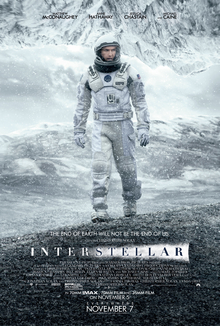
Keeping up with movies could be a regular vocation.  Until it is, however, I will always be running behind.  Seven years ago I planned to see Interstellar in the theater.   Seven years ago we had not dreamed of Covid-19 or a planetary pandemic.  I can’t see now how I would’ve possibly been too busy to have missed it.  If any movie, however, forgives the time-challenged, it’d be this one.  Apart from perhaps being the ultimate father-daughter movie, it plays with time like Inception plays with space.  Or space like it plays with time.  Einstein gave us the laws of relativity, and if they hold up when we finally get to interstellar travel (which has already happened on the space-time continuum somewhere), this is perhaps not at all unlikely.

Back in my teaching days I used to tell students that if they didn’t read at least one book during the summer or winter break that didn’t challenge their worldview then they’d wasted that break.  It was something I did my best to live up to.  Informing yourself—challenging your views—is a feature of education at which we seem to have failed.  Movies like Interstellar are examples of such challenges, albeit in the guise of fiction.  I’ve come to trust Christopher Nolan over the years.  His movies are cerebral yet moving, making us look at things from angles we didn’t know had existed.  I grew up watching not just horror, but also science fiction.  While I gravitated toward the former, I never lost my appreciation for the latter.  Especially when the latter made me think.

Much of Interstellar is, like the best of movies, is informed by previous films.  The influence of 2001: A Space Odyssey is pretty clear, as is that of Contact.  The idea at the center of Interstellar is that love drives the five dimensions in which Cooper finally ends up.  The love of a father for the daughter he had to leave behind and her love for the father that had to abandon her to save the world drives the entire plot.  To me this seems the right balance between science and spirituality.  Love is humanity at its best while science is some of our most advanced thinking at its best.  To recognize the strength of the former is important in a world increasingly driven by technology.  It took me, it seems, a full hour on the water planet to find the time to watch Interstellar.  It is time I won’t get back and I could have used some of it wisely by watching this movie sooner.


Your Viewing Pleasure

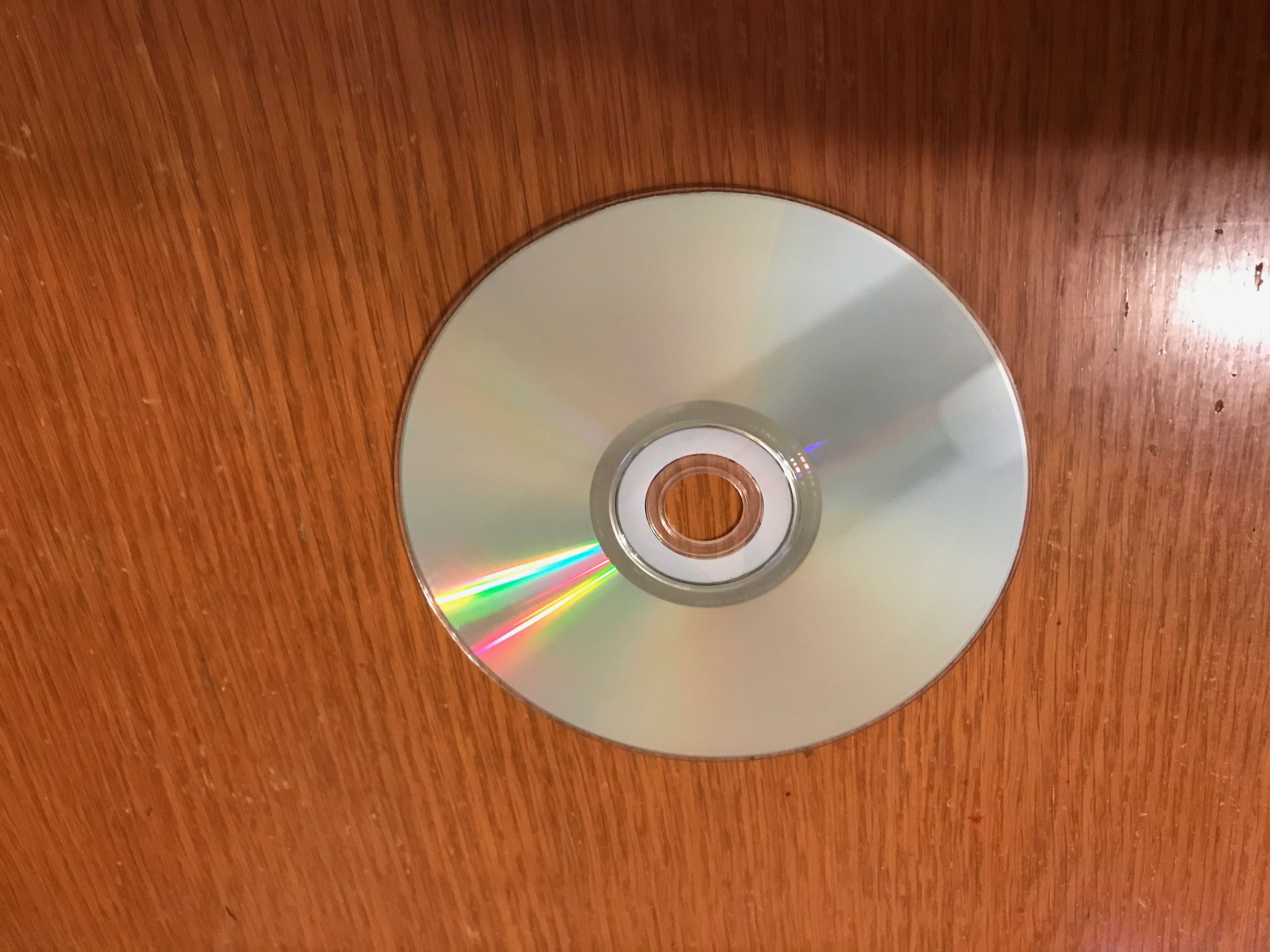
I watch a lot of movies.  Well, I used to before the pandemic stole much of my free time.  We have a closet full of DVDs.  At least they’re not VHS tapes.  The problem with VHS tapes was that they wore out with continued playing.  I’ve read that magnetic tape is still the most stable storage medium, but the DVD, with no moving parts, seemed like an improvement.  Lately we’ve had several DVDs go bad.  I’m not sure that I wanted to know there were such things as disc rot and laser rot, but there are.  And some of these were discs that weren’t cheap.  The alternative these days is streaming.  The problem is streaming services go out of business and you’re left without money and without the movie.  There’s a reason vinyl’s coming back, I guess.

Remember when you had to wait to see a movie?  When you had to either see it in a theater or wait years until it was broadcast on television on a certain channel at a specific time?  You lived your life normally, and the movie was a rare treat for those who had specific fare in mind.  Now we get movies “on demand.”  It’s death by a thousand cuts, though, since if you’re really in the mood for a film that’s not on Netflix you’ll pay to see it on Amazon Prime.  Used to be you can buy a disc—a one time expense—or was it?  Chances are in the early days you were replacing a VHS tape you’d already bought.  You may’ve sighed in relief when UltraViolet came along.  But you’d have sighed too soon.

These things bring eastern and southern Asian religions to mind.  (Consider the source.)  While I’m not an expert on the religions of east and south Asia, I’m familiar enough to know that their basic concept is that the only thing permanent is change.  Western societies are built on the demonstrably false concept that a steady state is permanent and that change comes once in a while.  In fact, our entire worldview is based on things remaining the same.  Perhaps that’s why conservatism is such a strong force in western thinking.  It is, however, an illusion.  The pandemic has given the lie to our steady-state thinking.  And if you cope, as many do, by watching movies you’ve probably signed up for a subscription service or two.  It will serve you well, for the moment.  You certainly can’t run to Blockbuster to pick up your favorite flick any more.  If only I had more time, a movie might have the answer.


International Women’s Day 2021

Changing one’s way of thinking is difficult.  So difficult that we generally don’t try it unless we’re compelled to do so.  One such compulsion is education.  Cultures that have embraced education are those that have led to great advances.  In this context it’s more than a little surprising that women’s rights are still held to be less important than those of men.  More education is required, it seems.  Today is International Women’s Day.  Of course it’s not a day off work because capitalism is all about men’s need for endless acquisition.  At least we can pause and consider for a few moments that life itself wouldn’t be possible without women, and justice, nearly worldwide, is represented in feminine form.  What can we do to make the world open its eyes to the obvious?

I read a lot about religion.  While I post here about the books I read, they are really only the tip of an iceberg.  My job largely consists of reading.  One of the themes that constantly runs through my own personal continuing education is that religion has indelibly changed our ways of thinking.  Even strident atheists today announce their stridency from a context formed by religion.  I’ve pointed out on this blog numerous times where even scientific thinking is mired in a wider context that has been constructed by religious thought.  One of those larger contexts is the subordinate role of women.  It is likely no coincidence that matriarchal cultures developed where there wasn’t a religion devised by men to impose a patriarchal governance on the world.  It’s so obvious once you learn to see it.  We need to be educated.

Women, it is obvious from an unbiased point of view, are equal to men.  As we educate ourselves further about gender and how religion has informed its perception, we come to realize that even binary assumptions—either male or female—are premature.  Underlying it all is humanity.  Human lives.  Those of men are no more important than those of women, or of those between.  Religions often like to make sharp distinctions.  Those distinctions are more abstract than reality.  The world is made up of real people and roughly half of them are female.  Today is set aside to recognize and celebrate that fact.  To recognize the contributions women have always made to society and civilization.  Let’s take the opportunity to educate ourselves, and  let’s be conscious of the fact that women are just as valuable as men and their foibles.  More than that, let’s put this truth into practice.


Not the Band

One of my favorite weekend treats involves black-eyed peas.  With a father from South Carolina, some of my earliest memories involve soul food.  As a present-day vegan, I eat a lot of beans.  That’s why I was disappointed to learn that Goya’s CEO, Robert Unanue, continues to be a big Trump supporter.  Shame on you, Goya!  Lest you get the wrong idea, we generally buy the store brand beans.  Of all the legumes, however, it seems the humble black-eyed pea is difficult to get right.  The generic brands always end up with the bottom part of the can being a kind of beige sludge where the beans have broken down and lost, as it were, their individuality.  The dish I make (one of my own invention, also featuring grits and hot sauce) requires that the beans maintain their integrity—take note, Goya!  Said brand seems to be the one that understands this aspect of canning beans.

For many years I avoided Bush beans for fear that they might be enriching the other *ahem* Bushes.  Right now, however, I’d rather have W run for a third term than the specter of Goya-supported Trump.  When did legumes become politicized?  Why can’t I sit down to a peaceful Saturday morning breakfast without a hideous four-year nightmare coming to mind?  The perils of being vegan!  In any case, I recently tried Bush black-eyed peas.  They weren’t as good as Goya, but I think I need to make the switch.  I’ve never had my somewhat simple culinary tastes disrupted by a president before.  Generic would be fine, but why, o why can’t they get the black-eyed pea right?

Image credit: Jud McCranie, via Wikimedia Commons

Perhaps somewhat oddly, I really like beans.  There are about 400 varieties and each has its own personality from sassy edamame to staid kidney beans.  I’ve even reconciled myself to the childhood nightmare of the lima bean (alien, without a hint of lime).  Now, I’m no foodie.  I eat to live rather than the other way around.  Whatever I do, however, I search my conscience.  Raised evangelical I know no way around it.  My conscience is the main reason for becoming vegan—I can’t support animal cruelty, especially for an industry that is the largest environmental polluter in the world.  So when I’m standing in front of the bean shelf, thinking ahead to Saturday’s breakfast, I’m struck with qualms.  I stare at the black-eyed peas and they stare back at me.  It’s a kind of test of the wills.  I see the Goya and decide to try something better for the world.  


J-Horror

J-Horror better move over.  There’s a new kid on the block.

For many years those of us strange fans of horror have used “J-Horror” as shorthand for Japanese Horror.  With two highly successful films (eventually series) of the mid-nineties (Ju-On and Ringu) the Japanese contribution stormed back into American consciousness.  Those of us who grew up on Godzilla knew that J-Horror had been around for decades already, but these new movies were distinctly creepy.  So much so that English-language versions were remade for both original films (The Grudge and The Ring, respectively—rather like Let the Right One In and Let Me In).  So far, so good.  So why does J-Horror need to move over?

At least three separate friends have pointed me to another emerging J-Horror trend: Jewish horror movies.  These used to be rare.  With cases of early antisemitic themes in horror, and the real life horror of the Holocaust, this is certainly understandable.  “Christian” producers or directors delving into Jewish themes would seem to be in bad taste.  Still, some notable Jewish-themed horror has begun to emerge.  (I addressed one such film in my recent Horror Homeroom piece.)  The Possession (discussed in both of my most recent books) centers around the need for a Jewish exorcist in the case of a dybbuk problem.  For more information, you know where to look!  It seemed to me that the dybbuk box contents were reminiscent of the Holocaust, but that may not have been intentional.

I recently wrote a post about The Golem.  This is a recent Israeli movie that builds on the traditional Jewish monster.  Although set before the Holocaust, the fact that there’s a pogrom in the film shows that the concept is not far off.  The movie that people have recently been pointing me toward is The Vigil.  I’ve not had an opportunity to see it yet, but the press it’s received suggests it too will be another classic based on lived experience in Judaism.  I’m not sure if Jewish horror will eventually rival the numbers of Japanese horror films, but the offerings thus far have been noteworthy.  Horror often addresses the problem of human suffering.  With all the oppressions in “white” society, it’s no wonder that, along with Black horror, Jewish horror is beginning to garner attention.  Although it’s clearly not to everyone’s taste, horror is often a genre with a conscience.  It becomes a screen on which we can see our worst behaviors projected.  And if we’re wise, we’ll take steps to make such suffering become merely an unfortunate memory.


Tomorrow’s Brainchild

The voice of one person is very small.  Even a guy like Donald Trump wouldn’t be the terrible threat to this nation that he is if nobody would pass on the nonsense he says.  I often think of this because internet personalities are always have to remind their fans to share their posts.  It’s a simple thing—click “share” and more people find out about something.  What if that something were free?  Isn’t something free worth sharing?  So tomorrow I’ll be participating in Virtual Voices Author Fair: A Day of Nonfiction Books, a small Zoom conference from one to five, to talk about Holy Horror.  Various readers over the years have asked if they can get a discounted copy—like most conferences this one will have a discount associated with it.  Stop by if you have the chance!

The variety of the books being discussed is pretty wide.  Topics will cover many of the areas for which the publisher McFarland is known: television, film, music, politics, the outdoors, and more.  A schedule may be found here.  For those of us who have been (or the lucky who still are) academics, the conference is a sacred cow that has largely been sacrificed to the pandemic.  Getting together with others to discuss ideas is important—the funny thing about ideas is that they often arise from talking with others.  For three years, for instance, the American Academy of Religion offered a session on monsters and monster theory.  That would never have happened if I hadn’t had a discussion with a friend and colleague who shared that interest.  If it’d been only me, it never would’ve transpired.  Sharing is important.

One of the things about generations is that mine (no longer the younger one), is still trying to wrap its collective head around this internet thing.  Now we feel like a bunch of avatars with no onboarding.  We don’t think in terms of clicking a share button.  We still feel like browsing is an individual thing.  They young people I know tend to think of the internet as a place for community.  It’s easier to find like-minded people there.  Unlike school (and often work) where you’re thrown together with people who may or may not share your interests, the web offers places where you can find others who share your interest.  If you’re interested in the kinds of things that you’ll find in the media, and if you have a few minutes tomorrow afternoon, feel free to stop by the Virtual Voices Author Fair.  If you land on their Facebook page, it’d be great if you’d click the share button.