Bugging Out

There’s a scene in Disney’s Hercules where Thebes has just been through a bunch of unnatural disasters sent by Hades to lure Hercules into the open.  The people, visibly shaken by the tragedies are talking about their need for a hero.  Then a locust hops in.  An old man says that does it, he’s moving to another city.  So with yesterday’s super soaker around here—we’ve had our roof completely replaced—water was still getting in.  I’m no expert, but it looks like it was condensation rather than roof leaks proper.  The air was saturated and cold, while inside it was at least a few degrees warmer.  I got up to find buckets scattered around that my wife had set up after I’d fallen asleep.  Then a boxelder bug appeared on the curtain in my study.  The insect on top of other misfortune.  It’s classic.

That’s because insects swarm.  We live in an older house (the only kind designed with space that can be used for books).  It doesn’t have wooden siding, but boxelder bugs like to overwinter in the walls.  I really can’t figure out why because in nature they winter in, well, boxelder trees.  Or a maple.  There are no boxelder or maple trees near our house, but they seem to like it nevertheless.  The problem is they get inside, in numbers.  We try to run a catch and release business.  It seems decidedly unfair to kill a harmless bug for doing what human-altered climate tells it to do.  When the heating kicks on, their insectoid brains tell them it’s spring and they crawl out looking for food.  Well, we don’t have any trees they like growing inside, so they wander about aimlessly.  I catch them and take them outside, figuring maybe they can find, I don’t know, a tree?

Usually when winter’s serious chill sets in, they go dormant.  This year we’ve been hovering between freezing and not, and when the sun comes out—which it sometimes does—they awaken.  They must be confused.  Somehow they don’t realize that the world has changed around them.  Going about their daily bug business (nothing seems to eat them—apparently they taste bad) the climate has broken their hibernation into segments of a few days at a time.  Perhaps they’re cranky when they crawl up the curtains, or across my desk (they pretty much stay in my study).  At least they don’t sting.  They’re not bad enough to make us leave Thebes, but it would be wonderful if they’d wise up to global warming, and maybe plan in advance.  Or maybe they’re waiting for a hero.


Salem Away

I can’t help but think the term “witch hunt” has been cheapened in recent years as a prominent, wealthy white man has been claiming to be the victim of one.  Nevertheless, America was actually home to an infamous witch hunt some centuries ago.  I’ve read a few books about it and there are many more yet to be read.  The thing Emerson W. Baker’s A Storm of Witchcraft has going for it is the broader context he gives the events.  Not only the events but the town of Salem also.  Older than Boston, and a major city in its day, Salem had more history than the trials for which it is famous.  Baker does a nice job of describing the ambivalence that residents have felt, and still feel, towards its past.  Tragic, yes, but fascinating also.

I fell in love with Boston the first time I set foot in it.  I made quite a few trips to Salem during my years there, drawn in by the history.  So much isn’t recoverable.  One of the aspects that comes clearly through Baker’s treatment is just how much of a Puritan problem witches were.   And not just witches.  Puritans didn’t care for those who differed from them.  Quakers could be just as bad as Devil worshippers.  And the tragedy of Salem illustrates that the Puritans didn’t much care for one another either.  Religion gets that way when it’s weaponized.  Baker points out the many pressures of what was essentially a frontier town on the coast.  War with American Indians was still a reality.  And Salem wouldn’t be innocent of the slave trade some decades later.  But it all seems to keep coming back to 1692.  And the death of the innocent.

Baker also points out how Cotton Mather covered his own tracks, justifying what he knew was wrong in order to keep privilege in its place.  We tend to think of that as a modern trait, but clearly clergy were well aware of it back in the early days of this nation.  Religions always do have a difficult time admitting it when they make mistakes.  I think they’d find that people can be pretty forgiving, though, especially since they often advocate forgiveness themselves.  This book is a thought-provoking treatment of Salem.  The events that took place there have shaped this county in unexpected ways.  They made the case, centuries ago, for tolerance of those who are different.  It’s a lesson we still have trouble learning.


Movies, Paused

Technology breaks the world into bits.  It’s not just pixels, or 1s and 0s, it’s culture.  And we let it happen.  I was thinking this when I should’ve been watching a movie.  I don’t have much time for films, nor do I have money to see everything in a theater.  Or even to pay on a streaming service so that I can watch without commercials.  So like any zombie, I just let it happen.  Recently I was watching a movie—it’s here on this blog someplace—that was uncommonly unified by mood.  Edgar Allan Poe was of the opinion, and I think he was right, that short stories should be brief enough to finish in a single sitting.  Poe opined that such a reading allowed for the continuation of a mood set by the writer.  He was a master at doing this himself.  Breaking up movies with commercials reminds us of his wisdom.

Photo by Ramon Kagie on Unsplash

So I was watching a film where the dread builds up slowly.  The shadows, the music, the unspooling plot—try this new toothpaste!  Here’s a silly television show that you can watch on our network!  What was the mood I was in?  It was shattered by people pushing stuff I’ll never buy.  (I’ve got sensitive teeth, Mr. Commercial, and my dentist has recommended a brand that keeps me from gnawing my tongue off.  And that television show, Ms. Commercial, has no appeal to me.  I won’t watch it.)  Back to the mood you were trying to enjoy.  This isn’t anything new, of course.  I grew up watching Saturday afternoon monster movies and they were constantly interrupted by commercials.  You have to endure the sermon if you want the fun of coffee hour.  But still, but still…

Yes, I know the rules.  Subscribe to a service (I use two) and you can watch what we’ve got.  Only some of it will be interrupted by commercials.  Companies as large as ours didn’t get this way by accident, you know.  We had to show the average person what market research indicates they want—whiter teeth, more entertainment.  Forget what you’re watching at the moment.  Isn’t that mood just a little intense?  Don’t you need a little break just about now?  I don’t know how you see these posts, but I pay extra not to have advertising on my website.  I do hope that’s the case, if you see it from a device other than mine.  Besides


Revisiting the Zone

Like many people in the early eighties, I heard about the terrifying accident that killed Vic Morrow, Myca Dinh Le, and Renee Shin-Yi Chen during the filming of Twilight Zone: The Movie.  Because of that I steered away from ever seeing it.  I grew up loving The Twilight Zone, and I was probably enough of a self-assured critic at twenty to suppose the movie would never have been as good as the original series had been.  Still, it didn’t leave my consciousness.  Not entirely.  There have been a couple of television reboots of the series—most recently by Jordan Peele—and it seems that those of the present day still see the cultural value in the original.  Peele’s relaunch, although short-lived, brought the movie back to mind and I finally decided to watch it when I learned that one of the segments was based on “Nightmare at 20,000 Feet,” given my recent gremlin kick.

I knew the film was an anthology and those are always dicey.  I also knew I’d be watching an actor in his final role—the scene in which he and the children actually died was not used in the movie, of course.  I didn’t realize how many stars were in the cast, and I didn’t even know what the other three episodes were.  Critics (paid and un) have opined that the episodes increase in appeal as the movie progresses, and the opening segment has been hailed as one of the scariest introductions among films.  So some forty years after it released I watched it.  I actually found it to be largely in the spirit of Rod Serling.  I don’t know what he would’ve thought of the movie, but it seems to have continued his message.  The first segment, the one in which Morrow starred, wasn’t based on a single original Twilight Zone episode as the other three were.  A few “Easter eggs” exist for fans, such as Burgess Meredith narrating and Helen Foley saying she’s headed to Willoughby on the remake of “It’s a Good Life.”  No doubt, “It’s a Good Life” and “Nightmare at 20,000 Feet” are among the most famous of the episodes in the series.

Part of me is surprised that the film was released at all.  Deaths have occurred, of course, in the making of other movies.  Some in which millions of dollars had already been invested.  Still, watching a final performance like this has a haunted quality to it.  At times it seems that acting can be a dangerous profession.  And certain movies may always be difficult to watch because of it. But should we expect anything different from this Twilight Zone in which we live?


Your Mystery

Few things glaze the eyes of others like somebody else’s genealogy.  That’s not what this is, so unglaze those peepers!  As with most of my posts, there is reflection here and that contemplation applies to just about everyone.  We don’t know our parents very well.  It’s only been when trying to connect the dots for my progenitors that I came to realize just how poverty-stricken that knowledge is.  I could (and did) talk to my mother frequently, until recent days, but even to her my father was a mystery.  I knew he was in the military for at least six years, so I filed a military records request with the National Archives.  You can do this if you’re next-of-kin.  That’s when I learned of the National Personnel Records Center fire of 1973 when at least 16 million records were destroyed.

National Archives fire, public domain (via Wikimedia Commons)

My father is a mystery to me.  The National Personnel Records request brought back a few hits, all documents partially consumed by fire (for which the administer apologized) that contained just tiny bits of information.  All of this makes me reflect on our limitations in knowing others.  Parents, spouses, children, siblings—they all remain mysterious in some ways.  And some more than others.  We go through life knowing only ourselves, and not even that person fully.  Consciousness brings these things to a new level, but we still really find ourselves bound by our minds.  That’s why, I suspect, some of us keep trying to cram new things in there—wanting to understand others as well as ourselves.  All it takes is a fire in the National Archives to wipe out entire lives.  Or parts of them.

Now that her earthly time has ended, I realize my mother is also a mystery to me.  It will take some time before I can sit down to write out what I knew of her life.  We grow up distracted by our own needs and wants.  Does a baby bird ever wonder at the enormous energy and strain on its parents as they bring food to their open beaks?  Even those of us who write leave gaps—some intentional—in the records of our lives.  Other people are mysteries.  Wouldn’t the world be a better place if we treated them as such?  Instead, we often act as if their roles (store clerk, accountant, electrician) are their lives, their essential selves.  It’s all we can do, I know, to take care of our own lives.  But it would be a more wonderful world if we could see others as doing just the same.


Loving Vampires

Vampires caught my attention early in life.  I believe, apart from ghosts, that they were the first monsters I learned about.  Apart from the fangs and perhaps an ironically anemic look, they appear to be just like us.  I’ve seen a great number of vampire movies over the years—I can’t seem to resist them.  I don’t care for the blood and gore, but the idea of the conflicted undead is a powerful draw.  It’s this conflicted aspect that brought Theresa & Allison to my vampire radar.  This movie is not for the squeamish, and I have to say up front that it is a lesbian vampire movie, with all that that implies.  You have been warned.  Theresa & Allison is also an indie movie—I’ve been watching quite a few of these lately because they’re often free.  This one is also smart and fairly original and it explores humanitarian concerns as well as vampiric ones.

Said Teresa is “made” when a drunken vampire (they get drunk when their victims are inebriated) decides to turn her (make her into a vampire).  She soon learns that vampires are organized and sanctioned by the government, and there are rules to be followed.  Also, some of the standards for vampire lore, we’re told, are male bovine droppings.   Teresa was lesbian before she was turned, and she’s befriended by fellow vampire Allison.  We learn that two major vampire “families” range about New York City—one graceful and kind, the other brutal and unfeeling.  Teresa has real trouble killing people for blood and she’s confused about what she’s become.  She doesn’t know what to make of it when the kinder vampires offer to let her join.  Instead, she follows Allison and finds herself in a blood-drenched nightmare.

Vampire movies are often full of social commentary.  Especially the spate of movies made available by independent auteurs.  Theresa & Allison asks the question of what makes something right or wrong.  It also explores what it means to accept who or what you are while also having the ability to change some aspects of it.  It reflects, it seems to me, the moral landscape of the young.  In that respect, it makes sense that those of us from older generations (let’s not kid ourselves) may have been raised with very different standards.  Culture, however, has continued to evolve.  The internet sped all of that up immensely.  Still, the acceptance aspect of the young is written all over movies like this.  And the internet means there will undoubtedly be more to come.  Vampires are sure getting interesting.


In Praise of Lecture

As I look at our world and see divisions that certain politicians only make worse for their own gain, I wonder where we’ve jumped the rails.  I was just reading about science lectures in the early part of the last century.  This reminded me of a public lecture on dinosaurs that we attended in Edinburgh with some friends.  Yes, we were graduate students looking for stimulating, and inexpensive, entertainment.  I’ve always considered entertainment a learning opportunity.  Having grown up both poor and curious, I feel a fascination regarding most new things and I began to wonder why we don’t have more public science lectures these days.  We really enjoyed the dinosaur talk.  I think the lecturer was Jack Horner, but what really stuck with me was not his name, but the good feeling the talk left behind.

At Nashotah House, Milwaukee and Madison were both a little too far to venture for an evening lecture.  We had to be in chapel early the next morning, and besides, I had already started waking up early (around five in those days) to do my research and writing.  When we came out of Nashotah, the internet had taken over the world.  Let’s face it, when you reach, say, middle age, you don’t want to have to go out much in the evenings any more.  At least if you’re an introvert like me.  Particularly when it’s cold out.  And how do you even find public lectures these days?  We live near several colleges and universities in the Lehigh Valley, and I get occasional notices, but the lecture in Edinburgh was actually in a public venue, not a university site.  You see, I think that’s what we need to get people back on the side of science and critical thinking.

The internet favors your biases.  Algorithms send your way more of what you’ve already seen.  Each click brings someone some income.  (I hasten to add that I get no income from this blog; I pay for the privilege to post on it.)  Wouldn’t it be better if towns had lecture halls and scientists (and others) had the name draw to bring people in?  While at a small venue in the Easton Book Festival a couple years back, a university guy from New Jersey talked to me after my presentation.  “We don’t have many opportunities for smart entertainment,” he told me.  I’m no scientist and there’s a real debate about the “smart” part, but I took his point.  You used to be able to find public lectures that were cheap or free.  And everyone left feeling like they’d received a gift.


Christmas Monsters

Gremlins holds up pretty well with the years.  My renewed interest was sparked by holiday horror—I had last seen the movie in a theater in 1984, when it came out.  Having grown used to CGI, I was surprised to re-learn that the gremlins were puppets but that it was so obvious was also a surprise.  Although comedy horror, or horror comedy, had been around for years at that point, as critics pointed out, the contrast here was stark.  This could be a kid’s movie (and was one of the reasons behind the shortly new PG-13 rating) but the nasty gremlins could be unexpectedly brutal.  I’d forgotten that Billy’s mother was so effective—killing a gremlin in a blender and another in a microwave.  The story has been retold and/or parodied often enough that a summary isn’t necessary, but given my recent interest in both gremlins and holiday horror, it’s worth a few moments’ reflection.

Holiday horror is more than a scary movie that happens to occur on a holiday.  In my definition, the horror has to derive from the holiday itself.  In Gremlins the gift of Gizmo is based on the fact that it’s Christmas, otherwise Rand wouldn’t have been looking for a gift for his son, starting the whole chain of events.  More than that, the reason I didn’t go back to the movie again in my college and grad school years was the story Kate tells about her father on Christmas.  Like some parents, I felt like what was a fun little story was a bit too distressing given the holiday setting.  Would the story have worked set at a different time of year—remember, it was released in summer—with the commentary that it makes about consumer culture?  No, this had to be a Christmas movie and the fear comes from that fact.

The gremlins are given minimal backstory here, although Murray Futterman tells Billy and Kate  that gremlins come from foreign merchandise and they tinker with machines.  Gremlins had been used in horror before, and given that the canon of classic movie monsters was being set from the thirties through the fifties (gremlins appeared as monsters as early as the forties) they fit right in.  They’re inspired monsters.  People naturally feel vulnerable on planes and monsters in the atmosphere can be particularly frightening.  And the fact that technology frequently malfunctions, well, wouldn’t it be nice to have a monster to blame?  Reading up on the movie made me curious to see the sequel, which, it seems wasn’t too badly received.  I’m glad to have used a small portion of the holiday season to have refreshed my memory.


Ninth Day of

I read Les Standiford’s The Man Who Invented Christmas back in 2017 and learned a lot from it then.  Some of what I read on the bus, however, has faded a bit with time and I was curious to read it again in the light of the reading I’ve done about Washington Irving.  Irving was a bit older than Charles Dickens and had, it seems, given Dickens the idea of writing, first, a sketch book (Sketches by Boz), and second, writing about Christmas.  From what I’ve read about Irving, he had a cautious liking of Dickens but wasn’t terribly impressed.  Standiford does note that it was Irving who suggested an American tour to Dickens (it didn’t turn out well) but he (Standiford) indicates that Irving was a staunch fan of his English colleague.  Were I able to spare the time, I would follow footnotes and read letters to see if I could get to the heart of the matter.  Of course, I’ve become much more interested in the history of modern literature in recent years.

It would be difficult to overestimate the influence of Dickens in English literature.  As Standiford points out, he helped to invent novel publication as we know it.  Although he took up the gauntlet of international copyright (something Irving had earlier understood as important), he became internationally famous partially through pirated works.  We still use the phrase “What the Dickens” to express surprise. (It turns out that the expression predates Charles—now that’s influence!)  As Standiford notes, however, we’ve passed the era when a single author can have such great influence.  Dickens was a singular talent and read by vast numbers of his compatriots and also grew a respectable readership in the United States.  He also had a great deal of influence on how we celebrate Christmas.  I was this time looking for Irving lurking in the shadows.  And I found him.  Dickens was an enthusiastic fan of Irving.

Standiford brings Irving into the discussion often, but also perpetuates the association of “It was a dark and stormy night” with Edward Bulwer-Lytton (who did use it) without mentioning that the phrase originated with Washington Irving.  One gets the sense that Irving was completely eclipsed by the work of his young fan, Charles Dickens.  Standiford mentions Irving quite a lot in this little book, but it’s about Dickens and not his American colleague, of course.  And Standiford also notes that crediting Dickens with the “invention” of Christmas is overstatement.  The story is nevertheless fascinating.  To me this second reading underscored the importance of Irving for the Christmas holidays, and also how terribly difficult it is to make a living as a writer.  I’m glad I came back to it, even when life otherwise threatens to be too busy for re-readings.


A Year of Hope

The older I get the more I appreciate New Year’s Day as a holiday.  Part of the reason is that, although I saw no hint of religion in it as a child, I have come to realize that holidays are for reflecting.  As a self-critical individual, I don’t wait for any date to make resolutions, preferring to do that in real time as soon as I learn about my bad behavior.  Still, although it’s a somewhat artificial marker, January 1 is a time of hope.  It seems that since 2016 years have been something of a slump.  Trump certainly has something to do with it, but Covid has become a monster in its own right and it’s hard to know when we might be able to get back to feeling comfortable in large gatherings of people.  Even as an introvert I miss that from time to time.  Still, optimism comes out with the start of a new year.  Who doesn’t like new things?

Technology has made us hyper-aware of bad things happening elsewhere.  This evolution of a hive mind has caught us unaware, it seems.  We do have a desire to improve (with some exceptions, such as politicians only in it for themselves) and that focus makes our next steps optimistic.  What greater hope can there be that an entire year stretching out in front of us, yet to be written?  There’s the old saw about a blank sheet being a source of fear, but why not do our best to write our own futures on it?  Put our good intentions into the mix to try to balance out the negativity that some others seem intent on dragging the rest of us through.  New Year’s can become almost religious in that way.  We consciously reject the bad that has grown on us throughout the previous twelve months.  We can do better.  We can be smarter.  We only need to believe.

I know that I keep hoping every year that HR will see the wisdom of allocating holidays.  We work more efficiently now, and people smarter than the rest of us suggest that we should not be stressing ourselves so much over things like work.  My own outlook is that days given off work for reflection are increasingly important.  Capitalism with its worship of mammon is, hopefully, entering its late stages.  I can see a future that’s better than what we’ve managed so far.  Let’s hope the wisdom exists to make 2024 a year of avoiding disaster.  A year of hope.


Reading 2023

As has become my tradition, I’ll end the year reflecting on the books I’ve read.  For a variety of reasons this is the first time in nine years that I haven’t cleared seventy books.  (I ended up one shy.)  But looking back over what I read, I may see some logic behind this.  Many of the books were academic, and specifically, academic in fields outside my formal training.  That also means they generally didn’t make it to my list of favorites.  2023 was also unusual in that it wasn’t until about late spring that I started to read books I really enjoyed.  The first on my list of memorable titles is Andi Marquette’s The Secret of Sleepy Hollow.  This was followed by a couple other fiction titles, Grady Hendrix’s Final Girl Support Group and Gina Chung’s Sea Change.  Those ended up being my favorite three fiction titles of the year.

For nonfiction, I finally read John Hersey’s Hiroshima, memorable, if terrifying.  Also along the lines of history, I found Lesley Pratt Bannatyne’s two books Halloween and Halloween Nation, to be particularly good.  Mark Dawidziak’s Mystery of Mysteries may well have been my favorite historically-oriented book of the year.  Donna Kornhaber’s Silent Film: A Very Short Introduction was also quite well done.  I always enjoy books on horror films, and two on The Exorcist were noteworthy: Nat Segaloff’s The Exorcist Legacy and The Exorcist Effect by Joseph P. Laycock and Eric Harrelson.  Why It’s OK to Love Bad Movies by Matthew Strohl, which I read a bit earlier in the year was also quite good.  By far the most helpful book in a personally troubling year was The Boy, the Mole, the Fox and the Horse by Charlie Mackesy.

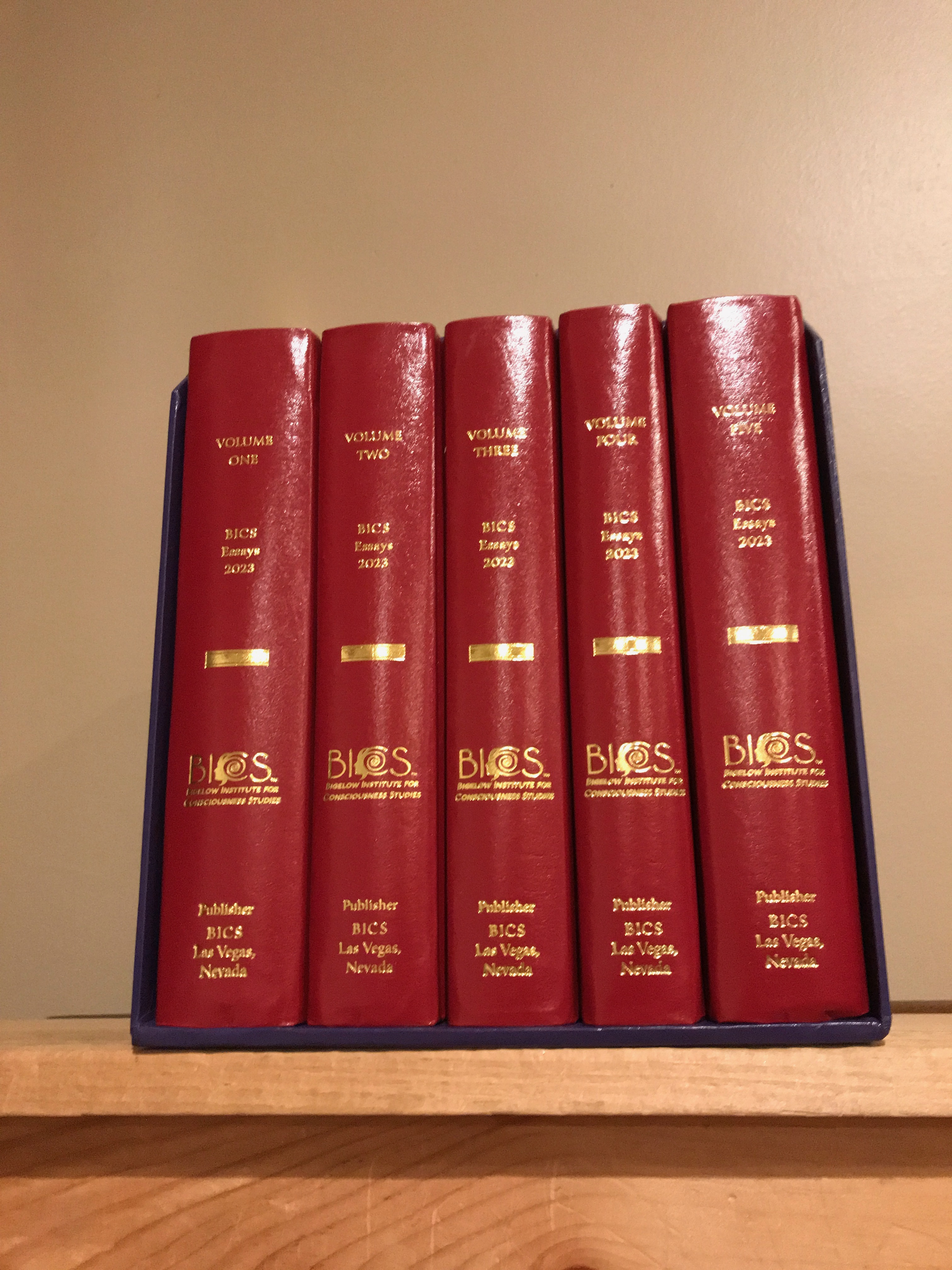
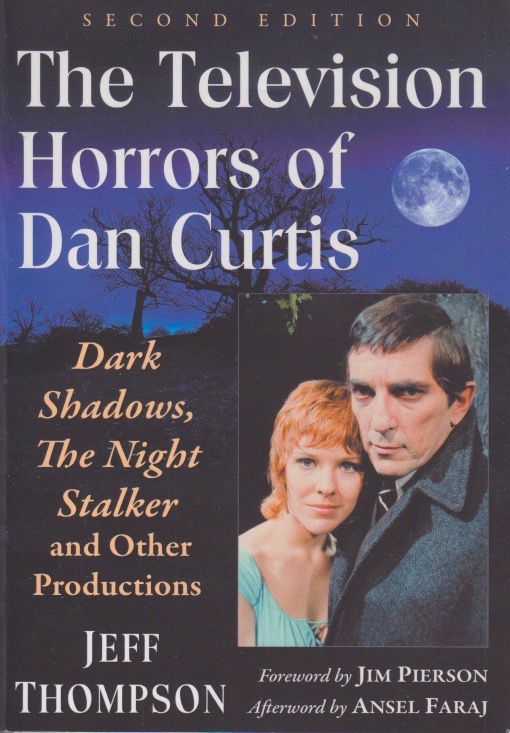
In years past I’ve generally had more commendable books on my list.  I did, however, finish the last three Dark Shadow’s novels by Marylin Ross, reaching the bucket-list item of having read the entire series.  I also found Jessica Verday’s three-volume series strangely memorable, although written for young adults (found here, here, and here).  While the number of books I really enjoyed wasn’t as high as in some other years, these highlights make me optimistic regarding 2024.  I used to follow the Modern Mrs. Darcy’s reading challenge guidelines, until they stopped being published, and now I find myself left to my own devices, for the most part.  Much of my reading is driven by research, and I suppose I should also mention that my own fifth book was published in 2023 as well.  I don’t expect it’ll be anybody’s favorite, but it is nevertheless an honor to be part of the conversation.


Self Reflection

The desire, for some people, is very strong.  The need to record one’s life in words can be undertaken for any number of very human reasons.  Perhaps we want our descendants to know who we were.  Maybe we have a message that we’re trying to give to a world reluctant to listen.  Some may just want to brag.  Now I have to confess that, like most kids of my vintage, Hanna-Barbera cartoons were standard fare in my childhood.  I personally preferred those of Warner Bros., but like a typical addict, any fix will do.  I watched The Flintstones, The Jetsons, but preferred Scooby-Doo and Johnny Quest.  They all had Hanna-Barbera in common.  Bill Hanna published his autobiography, A Cast of Friends, in 1996 and I was curious.  I located a used copy and realized something right off—here was a guy who had a knack for leaving out the best parts of the story. Perhaps it was a cartoonist’s desire to look for the fun?

We generally read autobiographies to learn about the struggles faced, the odds stacked against someone that they somehow overcame.  Often with lingering trauma.  To hear Bill Hanna tell it, his was a bland life with a stable upbringing, good career breaks, and commercial success that led to wealthy old age.  Throughout the narrative there are hints that more was going on behind the scenes, but the carefully controlled image of the Boy Scout who ended up accomplishing much with few obstacles to face prevails.  Image control is also, I suppose, a major reason for indulging in autobiography.  Getting the job you want with minimal drama, however, makes me think there’s something more to why this autobiography was written.  That said, I learned quite a bit about the early animation business—my reason for reading it in the first place. 

Before my mother’s death, I had urged her to write her life story.  There was plenty of drama there, and a strong desire to keep going, for her kids.  Her father, her personal hero and therefore one of mine also, led an interesting life that he summarized in about four pages for his children.  Apart from one or two words I can’t make out in his handwriting, I devoured it with fascination.  He pointed out the oddities, the unexpected things.  Elements that make for an interesting life.  I got the sense from this brief book that more was left unsaid than was being revealed.  Of course, some personality types tend to remember only the positive.  And I suppose that’s cause for rejoicing.  Some of the rest of us, however, wonder about what’s beneath the surface.  Unless someone records it, however, we’ll never know.


Dryad?

There are so many movies out there.  The prudent horror fan knows not to be nickeled and dimed to death by renting/buying everything available, so you stick with a streaming service and take what they offer.  That’s how I find many of the movies I discuss on this blog.  It’s how I found Ayla.  You won’t find much information on this indie, art-house horror beyond IMDb, and it doesn’t say much.  Although the ratings are low the premise is good and it is beautifully filmed.  It is a little weird, though.  Elton, a mentally disturbed man, has never gotten over the death of his sister when she was four.  He supports himself by working in a bookstore and has a regular girlfriend, Alex, but he hasn’t let his sister go.  Going to a remote, dilapidated house that Alex showed him, he digs under a tree until he finds an adult Ayla.

Ayla’s alive but she doesn’t talk and can’t tolerate solid food.  She seems to be part of the tree where Elton found her.  His brother and mother tell him this woman isn’t his sister.  Alex, who lost a brother when she was a child, doesn’t say whether Ayla’s Elton’s sister or not.  Accepting that this woman now lives with him, she’s just not sure if the dead do come back.  Elton quits his job and tries to move home with his mother, but it doesn’t work out.  While driving at night, Ayla, ahem, distracts him, and his car hits a tree.  Elton understands that Ayla has returned to the tree and begins digging for her, but doesn’t find her.  Alex finds evidence that Elton has begun to turn into whatever it was “Ayla” is.

Apart from being a study of grief—very much like A Ghost Story in that way—Ayla also explores mental illness and incest.  This is done with a high degree of artistry, however.  Those who rate the movie poorly probably haven’t considered metaphors much.  To me, there’s a lot going on in this film.  It’s the kind of movie where you want to talk to somebody about it after it’s over.  Was Ayla really a dryad?  She’s found in a nymph (insect variety) state and quickly transforms to, apparently, Elton’s missing sister.  Meanwhile, his family doesn’t give him the affirmation he requires.  Metaphorically, it seems, like Outpost, to be a movie about dealing with trauma.  Such films are well worth watching and pondering.  And they make me thankful for streaming services that occasionally bring good, if obscure, movies to light.


Not Tomorrow

Two of the sweetest words I know are, in the context of a vacation, “not tomorrow.”  They’re especially sweet after you’ve had a couple days off and you start feeling anxious that time is running out, only to realize that although work will start again soon it’s “not tomorrow.”  You have another day when you can stay in your pajamas, read, watch movies, or, if you’re a certain personality type, write.  Or play games, put a puzzle together, visit friends.  Whatever it is you do to find meaning in life outside work.  Outside academia I’ve never worked for a company that gave more than one day itself for the Christmas holiday.  (Two, if you count New Year’s Day, but that’s technically on next year’s meager holiday tally sheet.)

Each year I cash in vacation days so that I can feel “not tomorrow” more than a day or two in a row.  One of the more depressing recollections I remember is climbing onto an empty bus well before sunrise to commute to an otherwise empty office my first December working for Routledge since I hadn’t accrued enough vacation to take the week off.  I’ve worked for two British companies and it doesn’t help knowing our colleagues in the UK automatically have that week off.  Colonials, however, have far fewer holidays, and if that means trooping to the office for form’s sake, so be it.  Very few people answer their emails between Christmas and New Year’s.  Her majesty’s realm thrived for my presence, I’m sure.

The pandemic has taught us that many, if not most, workers are self-motivated when not confined to an office.  We also know that the United States has the lowest life span among developed nations, and my guess is that one contributing factor is that we don’t have enough “not tomorrows” until it becomes literally true.  Life is a gift, and spending it doing the things we value is something we tend to deny ourselves in the hopes that someday we might retire.  Many companies have begun to cap the number of vacation days you can accrue at numbers so low that the year looks like a desert from January through late November.  It’s that stretch of “tomorrow is a work day” punctuated by weekends so vapid that they vanish by the time errands you can’t do during the week are done.  Why have we done this to ourselves?  For me personally, I only have two more regular work days off.  I’m beginning to feel anxious about it.  Then I tell myself that, for today at least, although I have to start work again soon, it’s not tomorrow.


Ushering In the New

I’m not at all certain I’ll finish it, but at my daughter’s suggestion I watched the first episode of Netflix’s new series, The Fall of the House of Usher.  This isn’t set in Poe’s day.  The action is in the present and it opens with a funeral for three of Roderick Usher’s children.  What’s particularly striking about this funeral is that the priest’s homily is composed of lines from Poe.  I think we all know that Poe is undergoing a great surge of popularity these days, but this series seems not content just to name characters and companies after Poe’s names, but it also weaves his thought deeply into the fabric.  It uses his images in literal ways that add depth to the plot.  I’m not sure that I can spare the time to watch it the whole way through, but I’m sorely tempted to do so.

With C. August Dupin as the Assistant District Attorney, the series ties Poe’s ratiocination stories in with his horror tales.  Like most recent media efforts, the cast reflects diversity in many ways.  This diversity isn’t the reason the house of Usher is falling, but it’s because of disloyalty.  The family owns an unscrupulous company that has shown disregard for the suffering it causes, buying its way out of legal difficulties.  (This part is quite realistic and one can’t help but to think of Trump and others like him who simply buy injustice.)  But someone in the Usher family has decided to speak out.  Dupin won’t reveal who it is, so Roderick and Madeline Usher put the family up to the task of rooting out, and killing, the informant.

Perhaps with some time off over the holidays I’ll be able to catch more of the series.  It intrigues me, however, that Poe is being used essentially as scripture.  Literally.  The priest’s homily fades into the background as the surviving family members check in on each other, but his words are drawn from a variety of Poe’s writings.  I’ve long felt that our canon of scripture is too small.  Inspired literature did not cease to be written in the second century.  As someone who has listened, and still listens to sermons, it’s clear that the Bible alone isn’t a source for knowledge.  I haven’t read all of Poe—he left a massive paper trail through his life—but what I’ve read sticks with me and hearing him as sermon material makes me think I need to try to find time in coming weeks to pick up another episode or two.