From God’s Mouth

If book banners would actually read the book they claim to protect, the Bible, they would run across the account of Jehoiakim and Jeremiah.  It’s in Jeremiah 36, if you care to follow along.  Jeremiah was not a popular prophet.  In fact, he was often in trouble for speaking what God told him to say.  He wasn’t wearing a “Make Israel Great Again” cap.  In fact, his message was that the kingdom of Judah had to fall in order to be restored.  So in chapter 36 he dictates his message, straight from God, to Baruch, his secretary.  Baruch reads the words in the temple and this comes to the notice of the royal staff.  They arrange for a private reading and it scares them like a good horror novel.  One of them reads the scroll to the king, Jehoiakim, who cuts off a few columns at a time and burns them in the fire.

My favorite part of this story has always been the coda: “Then took Jeremiah another roll, and gave it to Baruch the scribe, the son of Neriah; who wrote therein from the mouth of Jeremiah all the words of the book which Jehoiakim king of Judah had burned in the fire: and there were added besides unto them many like words.”  Many like words.  So we have book banners around the nation trying to stop children from reading.  The hope is they will become unreading adults because reading expands your mind.  Jehoiakim was a book banner—a book burner, in fact.  But the response from God himself is to write the whole thing over and add many similar words.  

The Bible has been, and still is, fairly constantly abused.  What it seems to be is unread, at least by those who use it to stop other books from being read.  I came to believe, while majoring in religion in a conservative college, that if literalism was truly from God there would be no way to stop it.  I took a route unlike my classmates, who tended to go to the most conservative seminary they could find to have their minds further closed.  I figured that if it was true then testing it by reason couldn’t hurt it.  It’s pretty obvious the way that turned out.  I don’t stand with book banners.  This is Banned Book Week.  Read a banned book.  Stand up to those who do the banning.  And if you need something to convince them that their tactics don’t meet with divine approval, point them to Jeremiah 36.

Not What It Says

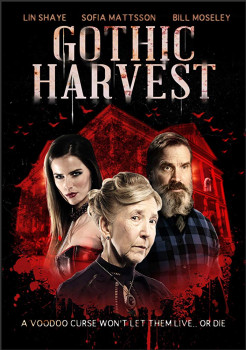
The title sounds promising.  Gothic Harvest.  But the movie in no way lives up to it, even with its vampires vs. voodoo theme.  So, during Mardi Gras a group of four coeds decides to party in New Orleans.  Of course, this is the capital of American voodoo.  While drinking themselves to oblivion, one of them gets picked up by a local and taken back to the family home.  There, of course, she’s kept as food for the “vampire.”  An aristocratic woman who fathered a child with a slave has received a curse—she and her child remain alive, she aging, while the rest of the family is arrested at their present age.  (Really, the story makes little sense, so don’t ask.)  They need young blood to keep the aristocrat alive so that they can continue living.  In the right hands such a story might’ve made a passable horror film.  These weren’t the right hands.

It’s a good thing I’m trying to develop an aesthetic for bad movies.  The acting is bad, the dialogue is bad, the writing is bad.  Is there a moral here?  Don’t go partying during Mardi Gras since you might get picked up by a family under an ancient curse?  And  would it really hurt to do a second take of scenes where an actor stumbles over their lines?  I don’t know about you, but to me the title Gothic Harvest suggests that lissome melancholy of October.  You can start to smell it in the air in August and you know something is coming.  Honestly, I’m not sure why more horror films don’t capture that successfully.  I’m always on the lookout for movies that will catch my breath in my throat with the beauty and sadness of the season.  They are few and far between.

So, like a clueless coed during Mardi Gras, I’m lured into movies whose titles promise such things.  One of the movies that I, inexplicably, saw when I was young was the James Bond flick, Live and Let Die.  Roger Moore had taken the reins from Sean Connery but that film set my expectations for both the Big Easy and voodoo.  I’ve only been to New Orleans once, and that during a conference.  It was before the revival of my interest in horror.  Successful horror has been set there, of course.  The one thing Gothic Harvest gets right is the evocative nature of Spanish moss.  And the opportunity to try to learn to appreciate bad movies.


In Sheep’s Clothing

Evangelicals supporting Trump must experience some cognitive dissonance when they read Dietrich Bonhoeffer, one of their heroes.  Bonhoeffer, who could easily have remained in comfort in the United States, went back to his native Germany because he was deeply troubled by the fascist regime of Hitler.  Involved in Operation Valkyrie, the attempt to assassinate Hitler, Bonhoeffer was hanged for his faith.  He wrote, “If I sit next to a madman as he drives a car into a group of innocent bystanders, I can’t, as a Christian, simply wait for the catastrophe, then comfort the wounded and bury the dead. I must try to wrestle the steering wheel out of the hands of the driver.”  How far we have fallen!  Now evangelicals support someone with all the signs of being a madman.  A man who has said he intends to dismantle democracy itself, if elected.  How quickly Bonhoeffer and his important work is trampled underfoot by his own.

Some people express surprise that I still appreciate evangelicals such as C. S. Lewis and Dietrich Bonhoeffer.  They were believers who stood by their convictions, but who used reason to do so.  And yes, Hitler had messianic delusions as well.  A poor carpenter once warned of wolves in sheep’s clothing, but then, what did he know?  And can we compare Trump to Nazism?  Have you read the Project 2025 agenda?  An agenda so explosive that the publisher for the book on it (HarperCollins, with a foreword written by J. D. Vance) has put off publication until after the election.  You don’t want people to know what they’re voting for, now do you?  Wolves dressed up like what?  You can’t pull the wool over our eyes.

Photo by Tanner Yould on Unsplash

I have no problems with Evangelicals.  Faith is exceptionally important in people’s lives.  My concern is the weaponizing of religion by political cynics.  They select issues that they know will rile up religious conservatives and use them to glean votes.  One of the oldest tricks in the book—known by every stage magician who’s ever stood before an audience—is misdirection.  Get people to look over there so you can pull a trick over here.  I spent my formative years reading Bonhoeffer, and his reasoned evangelicalism made a lot of sense to me.  Of course, this was when the biggest threat we faced was characters like Richard Nixon and Ronald Reagan.  Now even they are trampled under the iron claws of what has become “conservatism.”  Even Dick Cheney has said he’ll vote for Harris.  If Hitler hadn’t had Bonhoeffer hanged, modern evangelicals, it seems, would’ve done the job.


Ride the Ghost

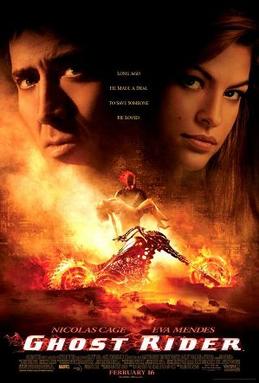
There’s a book in this, for some enterprising person.  You see, I watched Ghost Rider because I felt I had too.  I’m not familiar with the Marvel comic on which it’s based, but I’d seen many references to it and knew I had to catch up.  That having been said, I don’t think it’s as bad as the critics opine.  First about the movie, and then the book.  Johnny Blaze makes a deal with the Devil (Mephistopheles) to save his father from cancer.  The big M then has his father die in a failed stunt.  (Father and son are motorcycle stunt riders.)  Blaze is compelled to become “the Devil’s bounty hunter.”  He, like the biblical Satan, accuses evil-doers, only with his flaming skull head and super powers, he condemns said evil-doers without being evil himself.  He transforms at night and Mephistopheles wants him to take out his (M’s) son, Blackheart.  He ultimately does, but disses the Devil at the end.

One of the questions I have about metaphysical horror (or action/adventure) is how moviemakers have to make the fight scenes physical.  Shooting a non-corporeal entity with a shotgun, or wrapping said entity with a chain, should do nothing to it.  There’s no physical body to affect.  That’s the difference between movies like this, or Legion, or Constantine, or any number of others, versus The Exorcist and its kin.  The Exorcist portrayed an evil that was real, but non-corporeal.  It took over the body of Regan, yes, but nobody was running around with guns, swords, or chains to try to take the demon down.  I think that basic underlying fact is one that makes such movies falter with critics, if not at the box office (where they tend to do well).  This leads to the book.

One of the main points of Holy Horror is that many people learn their religion from pop culture.  That being the case, someone needs to write a book on how Hell is viewed by the average citizen.  The kind of person who watches movies like Ghost Rider.  Movies that have a definite idea of what Hell might be like.  Most people probably have little idea what a soul in torment might be.  (The rise of mental illness, however, may be changing that balance.)  They imagine physical pain inflicted by nasty weapons that people use on one another.  Someone should look at this idea from the perspective of what religions, such as Christianity, actually teach.  I’ve got my plate pretty full with potential books, but here’s an idea free for the taking, courtesy of Ghost Rider.


Free Word

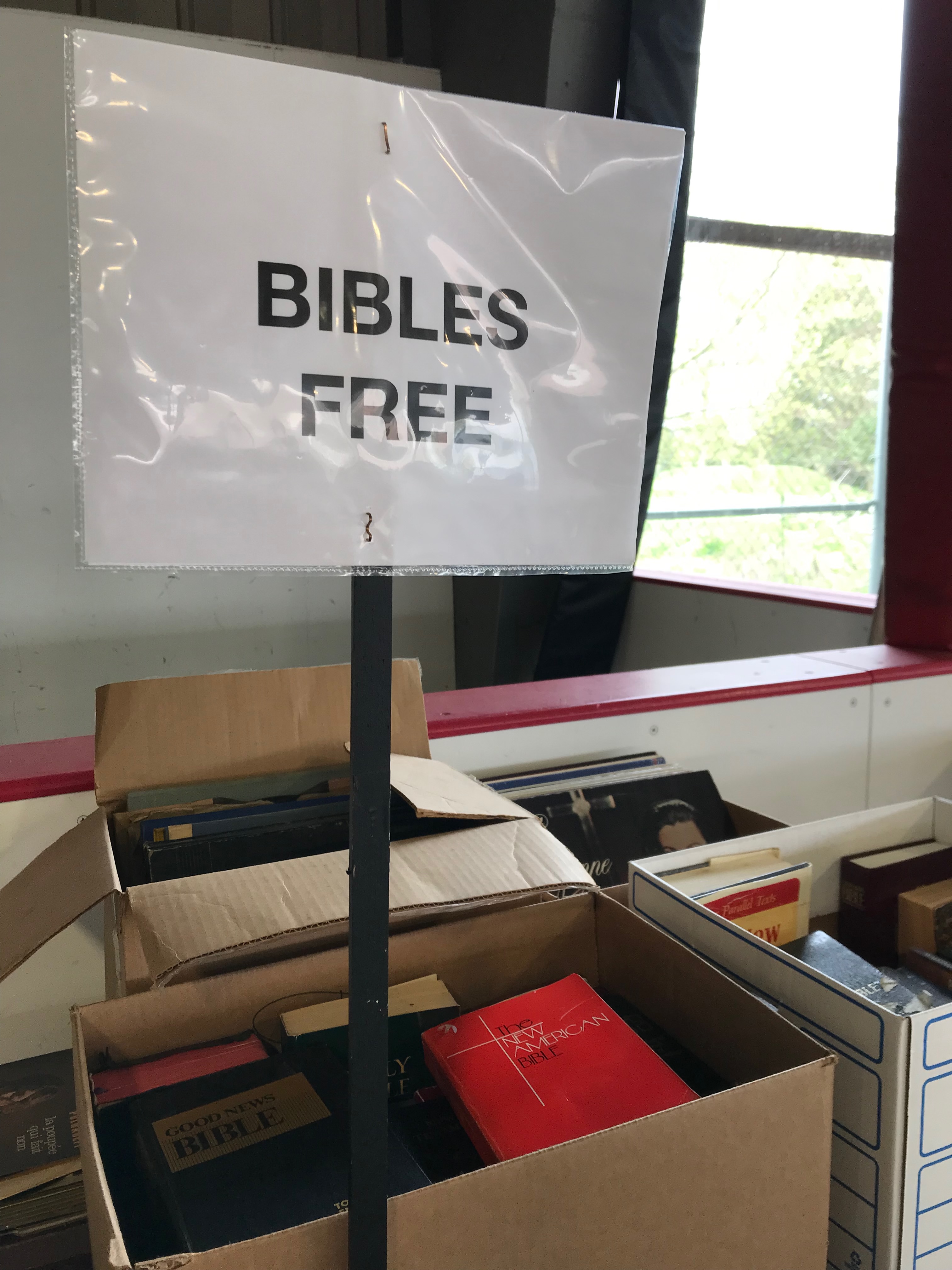
“Anything free is worth saving up for.”  That’s a line from one of my favorite movies of all time.   Free, though, can mean many things.  The “free cookie” is something good to entice you to buy more.  It often works.  Free, for a person, indicates the ability to do what we want (within the constraints of capitalism, of course).  But “free” can often mean cheap, overly abundant.  I like to decorate our lawn with rocks, which are often free, but if you want decorative rocks you’ve got to pay for even the ground beneath your feet.  So it is that when I attend book sales I marvel about the fact that Bibles are nearly always free.  It occurred to me again when I attended a spring book sale a few months back.  I always look through what’s on offer—call it an occupational hazard.

I used to attend the Friends of the Hunterdon County Library book sale in New Jersey.  I believe it is the largest I ever visited.  I used to get there early opening day to stand in line.  One year, one of the volunteer friends came out and announced that they had a really old Bible (only 1800s) that would be $100.  People do, however, tend to donate Bibles to book sales in great numbers.  I suspect organizers are reluctant to put Bibles in the trash.  They also know that people aren’t going to shell out money for them, so they try to give them away.  What does this say about being free?  Is it desirable to be so abundant that you’re left on that table in the back while everyone else is leaning over the more exciting items on offer?  There’s perhaps a message here.

Of course, Trump is selling Bibles for $60.  That’s a bit steep, even for an academic Bible (which his is not).  It might be suggested that this $60 is cheaper than free.  Now, I work with Bibles that are sold at a profit.  One thing I’ve learned is that Bibles sold are always for profit. Those who are honest admit what they do with the lucre.  Although he’s tried to keep it under cover, the Trump Bible does funnel profits to the GOP hopeful.  Yes, he is making money off the Bible and wants to be elected.  If that happens, freedom will disappear.  He’s said as much at his rallies.  Looks like stormy weather to me.  There are organizations that give away Bibles.  Somebody, however, pays for them.  In this strange experiment of a country, anything free is worth pondering.  Nothing, it seems, comes with no strings attached.


Bible Lives

How well do we know our parents?  Occasionally I think about the things I’ve never told my daughter.  This was brought home to me when, looking through a box hurried packed after my mother’s funeral, I came across an artifact.  I should say that my mother died going on a year ago, and the emotions had been a bit too raw to look at the things I’d picked up in a moment of grief.  This particular artifact was one of her Bibles.  Mom never had as many Bibles as I do (or did).  I remember distinctly asking for, as my sole Christmas present, the New International Version when it came out in 1978.  I have no idea how I knew about it (pre-internet) but I was pretty tapped into evangelicalism then.  I still have that Bible.  I also have the Bible my grandmother gave me in 1970, when, at the age of eight, I was, as it is termed, “saved.”

What makes my mother’s Bible an artifact, to me, is the information inscribed on the various dedication pages.  The Bible was my mother’s sixteenth birthday gift.  That made me stop and think.  Mom used to tell me about being a rebellious youth (she did not get along with her mother).  She smoked and drank and eventually married someone her parents disapproved of.  She gave up smoking when she was pregnant and gave up drinking when she saw what it was doing to her alcoholic husband.  I wonder what my mother’s rebellious years were like.  My entire life she was just “Mom.”  As stable as she could be, religious as she needed to be, and as selfless as a saint.

How did she feel as a sixteen-year-old receiving a Bible as a birthday present?  I never got to ask her that, but she saved the Bible and even did a DIY recovering of it with shelf-paper when the faux leather cover began to come apart.  It was a King James Version, and I knew from conversations with her that she preferred The Living Bible because it was easier for her to read (she never finished high school).  Ours were lives defined by the Good Book.  I don’t know the story of what prompted that sixteenth birthday gift.  I was sixteen when I begged for the NIV.  Now I work surrounded by Bibles.  And I’m no closer to knowing what it was that my mother really wanted when she turned sixteen.  I do know, however, that it eventually defined my life.


Academic Politics

Being the curious sort, I followed up on the post I dropped the day before Valentines.  I had written about Scholars Press and how details were hard to find.  I kept digging after that post.  I learned some things.  The Society of Biblical Literature (SBL) used to meet regularly with the American Schools of Oriental Research (ASOR).  ASOR was all about archaeology.  Then, in the year 1969 SBL and the American Academy of Religion (AAR), formed the Council for the Study of Religion.  The next year they began holding their conferences together.  ASOR was still part of it.  In fact, the three societies, along with Brown University, formed Scholars Press.  (For those in the know, this is why SBL now publishes Brown Judaic Studies.)  Scholars Press churned along, but ASOR was increasingly being shunted aside.  The conference started being called AAR/SBL, with no ASOR.  In 1997 (I remember this personally) ASOR started holding separate conferences.

Two years later, in 1999, Scholars Press dissolved.  SBL, the oldest of the societies, began publishing as Society of Biblical Literature.  AAR partnered with Oxford University Press to do their publishing.  (By the by, AAR started out as Association of Biblical Instructors in American Colleges and Secondary Schools).  ASOR went its own way, and Brown settled on SBL to continue its religious studies publishing.  As a young scholar, I was a member of all three societies.  (I didn’t attend Brown, though.  But I did go to a graduation there once, if that counts.)  I wondered why they couldn’t get along.  In a word, it was because of politics.

Those who know me personally likely know that I have tried to pursue the ordination track in three different denominations.  What they may not know is that the reason I never got through the process was, you guessed it, politics.  I started to learn, when in college, just how many power plays were involved in covens of ministers.  When dealing with the ultimate power, I guess, everyone wants to get the upper hand.  That bothered me as a seminarian.  The second and third denominations both showed their politics up front, and those sharp, flashing teeth made me realize that I’d never be free of politicking had I moved ahead.  I suppose I could go be a hermit and live in the desert—I might escape it that way, but whenever two or three are gathered, the politics start to show.  ASOR, SBL, and AAR have quite a lot in common.  All are under threat as part of the dreaded “humanities” category, and yet that’s not enough to make them want to pull together.  Politics just go that way.


Politics As Usual

What J. D. Vance does on, or to, his couch is his own business.  Sexual preferences between consenting adults, and furniture, is a private matter.  (Vance isn’t the first writer whose publications have come back to bite him.)   Forgive and forget.  And maybe reupholster.  What Vance has done that’s unforgivable is betray the poor.  I read Hillbilly Elegy years ago and was taken by his enumerating the harms visited on the poor by our capitalistic system.  Having grown up poor myself, I found many of those damages in my own self-inventory.  But even just after I read the book I heard whisperings that Vance really didn’t care for the poor, but for himself.  That puts him in the same category as Trump, I suppose.  A team that would only push what makes them personally look good, if elected.  It’s a mockery of democracy that a convicted felon is even permitted to run for president.

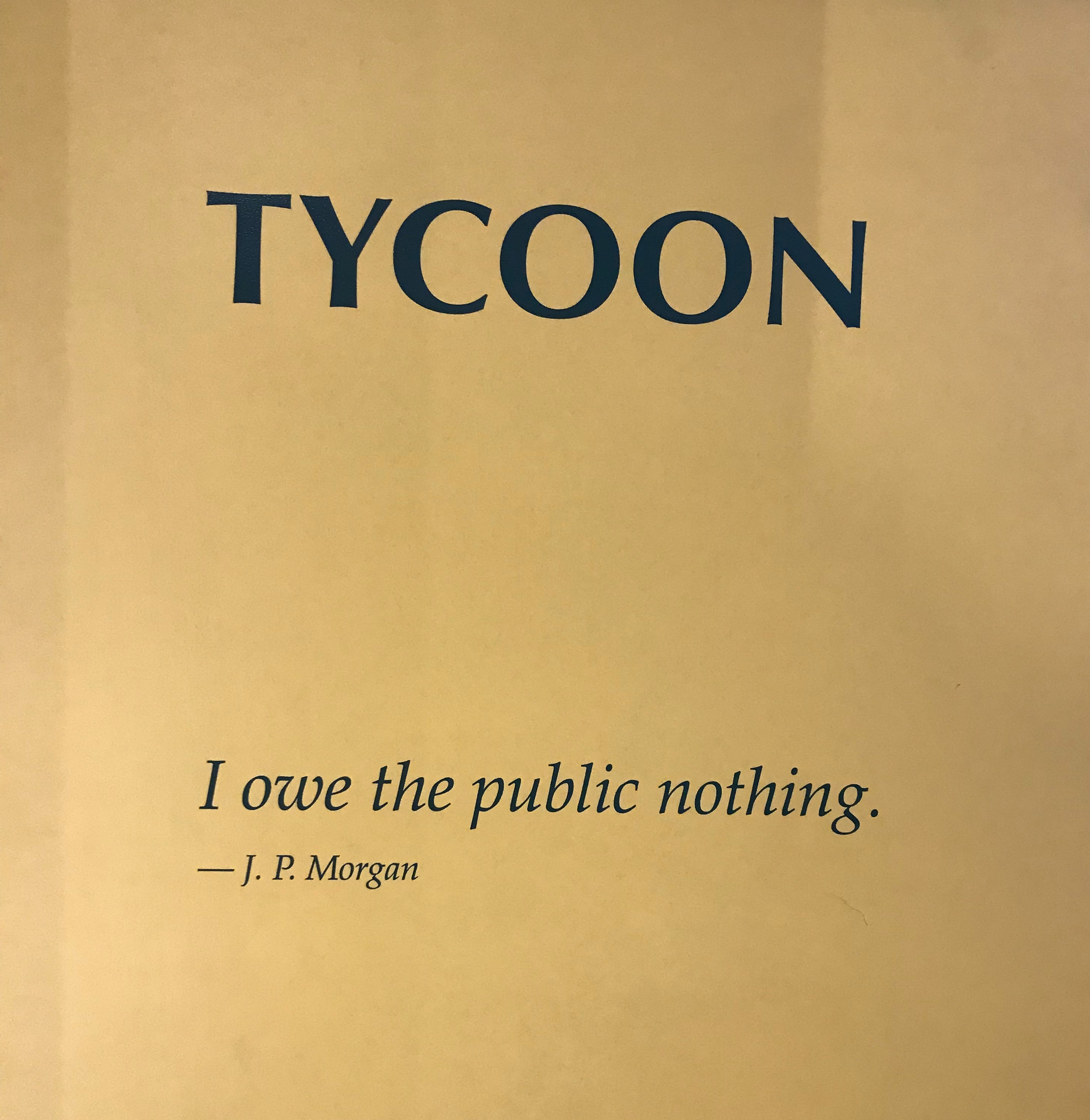
Betrayal of the poor is perhaps the most unconscionable of sins.  To have grown up knowing how difficult life is for many Americans and then to throw them to the wolves for personal aggrandizement is a move worthy of Satan himself.  Indeed, his running mate was born excessively wealthy.  I recently saw a quote from J. P. Morgan: “I owe the public nothing.”  Morgan,  one of the wealthiest men of his era, apparently believed using others to get yourself to the top is fine.  Trump, who sees people as disposable (ask his wives) never had to struggle.  Neither did Morgan.  But Vance, if his book is to be believed, did.  Knowing what it means to grow up that way and then to hitch yourself to the Trump-wagon is, in my opinion, about as low as you can go.  It’s a lack of honesty.

If we’re honest we’ll admit that all people lie.  True, Trump has made eiling (actually telling the truth) a thing.  He basically never eils, so we can assume anything he says is false.  Biden told lies.  Harris told lies.  Vance told lies.  Even though I’m an honest guy, I’ve told lies in my long time on this planet.  Not many, I hope, but I’m human.  Show me a politician who never lies and I’ll show you a liar.  I never thought I’d live to see a major party ticket pair felons, sex criminals, and betrayers together and tell Americans they’ll make the country great again.  The question that won’t let me go, however, is what of the poor?  We know that the rich, left to their own devices, tend toward Morgan’s quip.  Honestly, who will make safety nets for those who are victims of business as usual?


Summerween

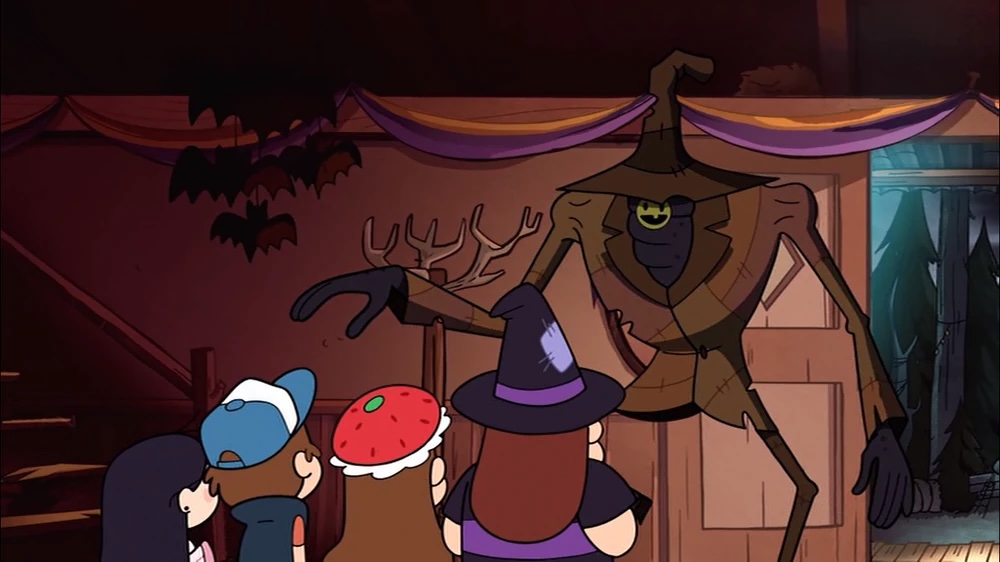
Okay, so why didn’t anybody tell me?  Well, I suppose it’s because few people know me.  But still, I had to find out about Summerween from the New York Times.  Folks, I don’t spend a lot of time online.  I work long days and I read books and mow the lawn.  I just don’t have time.  I wasn’t aware that Summerween was happening.  Interestingly, the idea got started from Gravity Falls, an animated television show based on Twin Peaks and The X-Files.  I actually watched this show because a couple of young friends, who spend a lot of time online, started showing it to me.  I didn’t remember, however, that in one episode the population of Gravity Falls decides to celebrate a second Halloween in the summer.  And now internet influencers (I’m more of an unfluencer) are popularizing the holiday.  

The need for spooky holidays is encouraging to me.  I’ve long been exploring the spirituality of the unexpected, and Summerween has the possibility of contributing to it.  According to the New York Times article there’s no set date for the celebration.  It’s more of a party aesthetic, but, the story notes, Michaels, the arts and crafts chain, has already caught on and is stocking scary summer decorations.  I have long opined (and fifteen years is a lot of daily posting—nearly five-and-a-half thousand of them) that people are afraid.  That’s why they run after unlikely political leaders and seek shelter beneath the wings of the Almighty.  Horror movies, and Halloween, simply bring this out into the open.  And what’s wrong with having a little fun with it along the way?

By the by, if you haven’t checked out Gravity Falls, you don’t know what you’re missing.  It’s a Disney production and it’s aimed at a younger crowd.  That’s one of the disconnects I experience here: Halloween is something younger people love.  At work I can’t count the number of people who’ve said (not to me directly, since few speak to me that way) that Halloween is their favorite holiday.  I guess you wouldn’t expect to find a kindred spirit among old guys who edit biblical studies, of all people.  I venture to guess that any of them would be surprised to learn that someone of my vintage even knows what Gravity Falls or Summerween is.  Well, they’d have been right about the latter, had it not been for an article yesterday in the Gray Lady.  And what a more adult way to find something out might there be?

Copyright: Disney. Summerween trickster, Gravity Falls

Powerful Belief

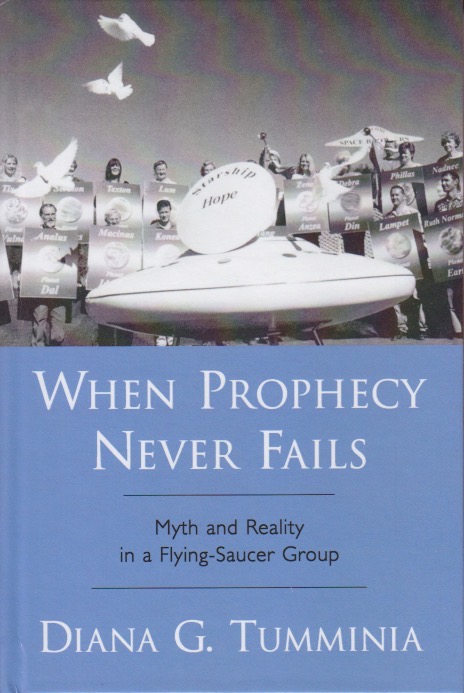
Even someone who’s spent a lifetime studying religion can’t know every single sect.  People are far too creative in that regard, and some belief groups are fairly small.  I had never heard of Unarius, for example, before reading this book.  If I had, it simply washed over me, getting lost in the noise.  Part of the trouble with defining Unarius is that it calls itself a science.  Words can be slippery, and Christian Scientists also use that designation in a similar way.  The word “science,” etymologically speaking, denotes “knowledge.”  In our materialist culture we often suppose that means the physical sciences, grudgingly allowing it to be borrowed by the “social sciences.”  There is a science of religion, but this leads to its own set of discussion points.  Let’s look at Diana Tumminia’s title: When Prophecy Never Fails: Myth and Reality in a Flying Saucer Group.  That give you an idea. 

The “prophecy” part concerns a “failed” prediction, or two, of when the spaceships would land.  Being a sociologist, Tumminia’s real interest is what happens then.  And here’s where things get interesting.  Failed predictions generally don’t lead to true believers giving up their convictions.  History has played and replayed this for us—it’s happening around us this very second—and yet “rationality” supposes that when the ships don’t land, people simply move on.  The Millerites outlived “the Great Disappointment,” after all, when the world didn’t end as predicted.  Their heirs include a sizable Christian denomination.  All this talk of AI has muddled our thinking about what it means to be human.  We are emotional.  More than that, we are believing creatures.  Our society is living proof.

Perhaps the most important, and ill-studied facet of being human, is belief.  Belief (no matter what in) is a religious phenomenon.  This study of a fairly small group shows that convinced people cannot be dissuaded, no matter how many facts are presented to them.  One need not look far to find the same phenomenon surrounding Trump.  (I do not condone violence, but history can inform us if we allow it.)  Make no mistake—he is the center of a new religion.  Unarians have absolute belief that their system is right.  Mistaken predictions—even very public ones—will not convince true believers otherwise.  It seems to me that our society, our democracy, cannot survive without intensive study of belief and how it affects the way otherwise completely rational people think.  My study is full of books exploring various aspects of belief, but we are still no closer to any kind of definitive answer.  And voters, at least a great many of them, follow their beliefs.


Mustard Monster

Speaking of mustard seeds, as a child something troubled my literalist brain.  Mark 4.31, “It is like a grain of mustard seed, which, when it is sown in the earth, is less than all the seeds that be in the earth…” According to subsequent translations after the KJV “less than all” reads, “the smallest.”  Of course, in Elizabethan English that’s what “less than all” denotes.  Since these words came from Jesus, and since the Bible was factually true on every point, I wondered how this error had crept in.  The mustard seed, I knew as a child, wasn’t the smallest seed.  Not by a long shot.  I knew, for example, that poppy seeds were smaller.  Why had Jesus said the mustard seed was the smallest when it wasn’t?  I was too young for the casuistry called exegesis, so a small crisis of faith emerged.

Pardon the resolution: I don’t have a macro lens any more. Mustard (left) meets chia seed (right).

The mustard seed has other roles in the gospels as well.  I still frequently recite “If ye have faith as a grain of mustard seed, ye shall say unto this mountain, Remove hence to yonder place; and it shall remove; and nothing shall be impossible unto you” (Matthew 17.20).  All of this made me curious as to the history of mustard.  While in Wisconsin we used to visit the Mustard Museum in Mount Horeb.  It’s now the National Mustard Museum and is in Middleton.  It seems that mustard, in its familiar paste form, was developed in China centuries before Jesus.  And people had been using mustard seeds as a spice long before that.  Jesus, like earlier prophets, used nature to make a point.  The problem wasn’t Jesus, it was literalism.  

Jesus also said “For as Jonas was three days and three nights in the whale’s belly; so shall the Son of man be three days and three nights in the heart of the earth” (KJV) in Matthew 12.40.  Modern translations of “sea monster”—for the Hebrew says it was a fish—forced me to dust off my Greek New Testament.  So Jesus said “in the belly of Cetus.”  Cetus was mythical sea monster, not unlike the mythical Leviathan God describes in Job 40.  Good thing I couldn’t read Greek or Hebrew as a kid!  Well, it seems we’ve gone from mustard to monsters.  If you’re familiar with the history of this blog, that shouldn’t surprise you too much.  I wonder what literalists believe about the Loch Ness Monster?  But don’t get me started on that or we’ll be here all day.


Sun Day

Two holidays in a row!  Although today nobody gets off work because, well, two holidays in a row is too much.  People might come to expect a little more time off.  If you’re like most people, the summer solstice creeps up on you.  Its more somber sibling, six months from now, is more anticipated.  In December we’re light deprived (here in the northern hemisphere) but we’ve been soaking in the sun for some time already now.  Besides, nobody gets the four turns of the year off work.  Christmas is a gimme, but it comes three or four days after the solstice.  We figure Labor Day is close enough the the autumnal equinox, and thank God Easter is a Sunday, at least in the years when it’s near the vernal equinox, so nobody complains.  I feel at my most pagan these days.  Why not celebrate the turning of the wheel?

The other day I was catching up on the Vlog Brothers—John and Hank Green.  Last week they were talking about “Beef Days,” or how to reduce the amount of red meat they eat.  They proposed doing it by setting aside a few holidays a year where they would have it.  Their reason?  The biggest environmental threat to our planet is our dependence on beef.  It’s the reason rainforests are being clear cut.  It is a huge source of greenhouse gasses.  The one thing they didn’t mention, however, is the suffering of the animals themselves.  Industrial farming leads to horrible lives being raised to be consumed.  The conditions in which animals are kept is so bad that it is illegal in some states to reveal the conditions to the public.  You hide things that you’re ashamed of.  I became a vegetarian a quarter century ago, and a vegan coming up on a decade now.   I can’t live being the cause of the suffering of others.

Why not use the ancient holidays as days of some kind of indulgence?  I don’t recommend eating red meat—in fact, I agree with my Edinburgh friend that if you want to eat meat you should be required to kill it yourself.  (He’s not a vegetarian, note, but a wise man.)  In any case, although you may be stuck behind a desk at work, take a moment to ponder that light will be slowly fading from this day on until we reach that other pole that turns another year.  And we can dream of shortened work weeks, although that’s about as likely as being given the summer solstice off as a matter of course.  Speaking of which, work calls.


The Teenth of June

It’s only really when they have no choice.  The Wednesday holiday, that is.  No convenient weekend a day away.  So Juneteenth is actually celebrated on Juneteenth.  I believe in holidays.  I think they’re more than just time off work, and Juneteenth celebrates freedom.  And it reminds us that our African-American siblings aren’t yet truly free.  We still have much to learn and having a holiday to underscore that is important.  Capitalism does a good job of disguising freedom, of course.  Your worth is weighed by how much value you add to the company.  Taking a day off from that is an opportunity to reflect on how daily living could be improved for all.  Juneteenth is a necessary holiday.  We need constant reminding.

I don’t see many African-Americans flying flags on their houses declaring themselves “not woke.”  We prefer to believe we’ve reached perfection already.  Capitalism is great at spreading myths like that.  The basic premise behind it is greed, and people are easily divided into groups because of skin tone.  It’s a dangerous combination.  Somewhere along the way, “justice” came to be a swear word.  Particularly among one political party that has decided power, at any cost, is the sine qua non of human existence.  If that means oppressing others systemically, or if it means invading a neighboring sovereign state because you have nukes with which to threaten the rest of the world, it’s all the same.  Power is far more addictive than any opiate, but we  don’t have any laws preventing those unsuited to holding it from doing so.  Juneteenth uncovers a host of problems still to address. 

Slavery was hard to let go because it cut into profits.  Human beings love wealth more than each other.  Ironically, without others to compare with, wealth means nothing.  If money makes someone happy I have no problem with that, but it has to come with responsibility.  One way to handle it responsibly is to insist that only so much can be had before the surplus goes to insure that all people have enough.  Of course, where Supreme Court justices openly accept bribes we can’t wonder that there are legal loopholes to help the wealthy circumvent their civic duty.  We need constant reminders.  We need holidays like Juneteenth.  We need to give our African-American siblings the same rights and privileges all people should have.  It’s appropriate to celebrate small steps in that direction.  Even if it means giving a Wednesday off of work.


Under Bite

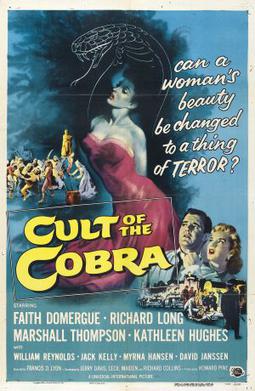
Religion and horror have long been bedfellows.  And quite companionable ones at that.  I’ve written a longer piece that I’ve not yet managed to wedge into a book about how the earliest Universal monster movies all involve religion in some way.  Maybe some day it will come out into the light.  In the meantime, I submit, for your consideration, The Cult of the Cobra.  This 1955 horror film was one of a series of movies about shapeshifting.  We’ve recently seen The Leopard Man on this blog, and before that Cat PeopleCult of the Cobra, set in amorphous “Asia” to start, involves the invented religion of the Lamians.  A group of US Airmen pay a Lamian to watch a woman transform into a cobra in an “Asian” ritual.  They’re revealed by trying to take a photograph—they’d been warned that if they were discovered the cobra would hunt them down and kill them.

Convinced this is all superstition, despite one of them dying the next night from a cobra bite, they return to New York City and civilian life.  The cobra woman follows them to carry out her mission.  She’s killed, however, before getting the last two.  What’s so interesting here is the discussion of belief that takes place throughout the movie.  Americans can’t believe in some “cult”—it’s clear from the start that anything not western is cult—but none of them show any inclination to church, or crosses, or even references to God or the Bible.  The only religion shown is that of the Lamians.  The cobra woman falls in love with one of the Airmen and tries to explain that she’s coming to doubt something she’s believed all her life.  She’s caught between religious duty and the experience of falling in love.

The movie failed to impress critics and was largely dismissed as a knock-off of Cat People.  There’s too quick a judgment here, however.  One of Universal’s earlier monsters had encountered a non-western religion but became much more famous for it.  The Mummy was based on “ancient Egyptian” religion.  Indeed, the whole story is premised on it.  The Cult of the Cobra, however, engages with the religion.  As jingoistic as it is, it nevertheless tries to represent “the cult” as a religion taken seriously by an exotic group of believers.  “Lamians” seems to have been borrowed from Greek mythology, however, where lamia were demon-like devourers of children.  I write about them in Nightmares with the Bible.  This isn’t a great movie by any stretch, but it shouldn’t be dismissed either.  It’s an important piece of the puzzle of how religion and horror interact in film.


Campus Monster

Universal was the studio that gave America its monsters.  Well, it wasn’t Universal alone, but the initial—almost canonical—line-up of monsters were Universal productions.  As horror grew to be more influenced by science-fiction in the 1950s, Universal kept at the monster-themed movies, cranking out many that I missed and on which I’ve been trying to catch up.  Monster on the Campus is interesting in a number of ways.  Directed by Jack Arnold, of Gilligan’s Island fame (or future fame, since this movie was earlier), it’s a story built around evolution.  Pipe-smoking professor Donald Blake has a coelacanth delivered to his lab.  Unbeknownst to him, the prehistoric fish had been irradiated with gamma rays to preserve it—as well as being shipped on ice.  The dead fish is about to create problems.

A dog laps up some of the blood (it started to thaw) and becomes a vicious evolutionary throwback.  Then Professor Blake cuts himself on a fish tooth and sticks his hand in the contaminated water.  He becomes a murderous caveman, but the effect is only temporary.  A dragonfly eating the fish transforms into a prehistoric insect that the professor kills, but its blood drips, unnoticed, into his pipe.  He changes and murders again.  Finally it dawn upon him that he was responsible for the murders.  In a remote cabin he sets up cameras and injects himself with the radioactive coelacanth plasma and ends up killing a park ranger.  Finally, he injects himself so that following police officers will shoot him to death.  Rather a bleak story.

The film has been read as social commentary since its “rediscovery,” but what caught my attention was the easy acceptance of evolution.  This was the late fifties and the creationist backlash was still pretty strong at the time.  If evolution didn’t occur, the professor (and dog and dragonfly) couldn’t have become their atavistic selves, giving the movie its plot.  The classic Universal monster of the decade was the Gill Man—aka Creature of the Black Lagoon—also an atavistic throwback to an earlier time, but also a divergent branch of evolution.  Creature was also directed by Jack Arnold, but four years earlier.  It began with a quote from Genesis 1, bringing creation and evolution together.  The title Monster on the Campus offers many possibilities for co-ed mayhem, but instead opts for a scientist who gets caught up in the tangle of evolution.  The movie was near the end of Universal’s monster run, but in the sixties horror would change forever.  This was a little fun before things got serious—horror school was about to start.