Ezekiel’s Nightmare

I’m still thinking about Ruby Ridge. It’s not unusual for me to be a bit late catching up on yesteryear’s news, but being alive during Trumpocalypse has made me think of the 1990s as the good old days. Jess Walter’s book on the topic, on which I posted a few days ago (just scroll down), ends with a kind of optimism that seemed possible even when George W. Bush was president—the number of white supremacist groups was shrinking radically. Americans didn’t put up with that kind of backward thinking any more. The future was ahead. Now, just about a decade-and-a-half after the book was reissued, we’ve got not only a racist commandant-in-chief, but a Republican congress who goes along with everything he says. Strangely enough, I just read a newspaper article with a Jewish Republican saying “diversity is crap” (his words). No question we’re going backwards.

It’s easy enough to dismiss extremists unless you know some. I attended a conservative Christian college in the early 1980s. There were survivalists on the faculty. These are evangelical Christians who hoard guns and supplies, generally because they believe the end of the world is coming. Ironically, their belief in the rapture doesn’t seem to assure them that they’ll be “taken up” before the trouble starts. Or maybe they just want to hang around for a piece of the action—shooting infidels must earn points with the big white guy upstairs. Most of my classmates were as appalled as I was. We agreed that if these were the kind of people who were going to be around after the smoke cleared, we didn’t want to be.

The most disturbing development since November 2016 is the move of the GOP to follow a blind leader. History will bear me out on this. It doesn’t take a prophet to see it. 45 had no plan for winning the race. Once he did, however, he knew that sheep will follow any shepherd, no matter how incompetent. All you need to do is spout racist rhetoric and the fringe will become the center. But the GOP? They are among the most sheepish of all ungulates. A “leader of the free world” who has nothing but praise for dictators and autocrats around the world? The Republican has proven to be the perfect unquestioning follower. The wool is in their heads rather than on their backs. Less than two decades ago Timothy McVeigh was executed. Today there’s no doubt he’d be under consideration for a cabinet post. I think my watch just stopped.
The Pack

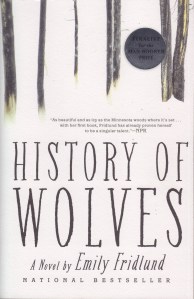
Maturity, in my experience, means knowing little and assuming even less. When I was young I grew up on a diet of books that were linear—plots were easily followed and there was clear resolution at the end. Who, as a kid, thinks that such a standard is impossible? One of this year’s reading challenges was a book nominated for an award in 2018. That assures a pretty current book, and I chose Emily Fridlund’s History of Wolves. Like life, it’s not linear. The narrator is unreliable. There are a lot of threads left hanging. It’s also a completely mesmerizing story. I selected it not because the content deals to a large extent with religion—I had no idea that it did when I selected the book, but, given what I do on this blog it was definitely a bonus.

I don’t want to give too many spoilers here since this is a novel well worth reading. I’ve always been impressed with writers who can convey accurately what it was like to be a teenager. A time of awkward discovery when we learn that things weren’t what we thought. Linda, the narrator, has been raised in a religious commune in the northern Minnesota woods. When a Christian Scientist couple moves into a cabin not too far away, she becomes a trusted “governess” for their young, sickly son. Unable, for religious reasons, to admit their son’s illness, they entrust him to Linda’s care. She comes to know each person in a unique way and learns that even adults don’t have the answers.

An interesting conceit for a story—one minority religion learning about another—the book ranges wide and far from that. Life as a teenager is when one typically both needs and rebels against religion. The awakening of adolescence, something our psyches aren’t equipped to comprehend much before this time, throws everything into confusion. History of Wolves won’t lead to any answers, but it is a useful discussion partner to have along the way. The Christian Scientists I’ve known have to face some of the same issues raised in this tale. Ironically, the advance of science has hit this group particularly hard. Novels such as this demonstrate that we, as a species, still turn to religion to explain our world. We’re frequently told that it’s safe to ignore—it’s from the childhood of our evolution. I wonder, however, whether Homo sapiens have just begun to reach adolescence and we are just starting to learn what it means to be adults in a world we don’t understand.


For It Is Written

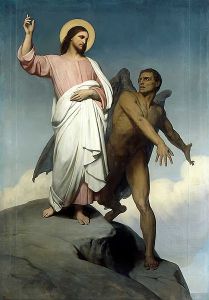
“The devil can cite Scripture for his purpose,” William Shakespeare wrote in his controversial Merchant of Venice. He was, in fact, using the Bible as the basis for this line. The story of Jesus’ temptation in the wilderness famously has Satan quoting the Good Book at him. It comes as no surprise, then, that Sarah Huckabee Sanders, following Jeff Sessions, uses the Bible to justify cruel and unusual practices of the Trump administration, according to a story in multiple media outlets. Trump himself doesn’t know the Bible well enough to quote it, but his minions feel that it can be summarized in one principle—obey the government. Oh, hi, Mr. Orwell, please take a seat over there; I’ll be with you in a minute.

Back in the days before leopards could change their spots, evangelical Christians tended to say that Jesus came to free them from the law. It seems that what they really meant was that Jesus came to allow them to cherry-pick the parts of the law that make the best cudgels against those they don’t like. Those who actually read the Bible know that it can generally be used to support either side of most arguments. Ironically, matters such as adultery *ahem, ah, Ms. Daniels, we weren’t expecting you here; please wait next to Mr. Orwell* are non-negotiable. Even Jesus said so. But let’s not talk about that—we’re too busy trying to pry children from their mother’s arms. Doesn’t the Bible say Rachel can’t be consoled because she’s lost her children?

That which is most holy is most horrible when it’s profaned. The Bible can hardly be called “holy” when found in the mouth of habitual liars. If Jesus were a gentile I’m sure he’d agree that whites have the right to do whatever they want in his name, right? Separating families because it’s the law is robbing Peter to pay Paul, then blaming Thomas. Sanders, Sessions, and their ilk pander to the biblically illiterate who like the sound of the phrase, “the Bible says.” Prooftexting, as anyone who takes the Bible seriously learns the first day of class, is cheating. Ah, Rev. Luther—I didn’t see you come in. What’s that you say? “Sin boldly”? Now there’s a message our government can live with. Especially if you let the Devil into the room. Yes, he’s welcome at the White House these days. And yes, he knows the Bible very well.


Faithism

Religion, in general, has come upon hard times. Many proponents of science and secularism point disparagingly toward what is, in all likelihood, one of religion’s strengths: its utter diversity. The fact is all people are believers. No amount of denial will change that. Whether the belief is in science or magic, we all take things as true, based on our outlook. My wife recently forwarded me a story about Faithism from the New York Times. A religion built around the Oahspe Bible, written about the same time as the Book of Mormon, Faithism very nearly went extinct before undergoing a modest revival in the present day. Instead of casting aspersions on it, a far better approach is to consider the basic, underlying human element to the movement.

Faithism was based on a book written by a dentist, a one John Ballou Newbrough. Although I’d never hear of Newbrough before, I can make a safe assumption about him—he was struggling with trying to understand a supernatural that can’t be measured or tested. This same element applies to scientists. Measurables have to leave at least a physical trace. Millennia ago, religions were already claiming that outside this mortal coil there was an entire realm that we could experience with our feelings but which would never offer any physical confirmation. There’s a pretty obvious difference between the living and the dead (at least to most people). Since nothing measurable changes at human death, it must be something incorporeal. Scientists begin to shake their heads here, but even they must face it some day.

The other takeaway from Faithism is that spiritual writings, like tiny particulate matter in clouds, can lead to the coalescence of something larger. Orally based religions, such as Zoroastrianism, seldom survive long. (Zoroastrianism, however, had very compelling ideas.) Written texts, once believed to be inspired, will naturally grow like a pearl over a grit of sand. The factuality of the text doesn’t matter, as long as it is the object of belief. When it rains, it pours. Some architects of new religious movements, such as L. Ron Hubbard, perhaps implicitly know that. While his science fiction may not have been inspired, his religious texts were. Unlike Scientology, science requires objective measures of what it considers reality. The title of Faithism, however, makes a trenchant point—it is belief in faith, like fear of fear itself, that makes religion. While historically few have believed in Faithism, even atheists have faith in what they don’t believe.


Mountain Tops

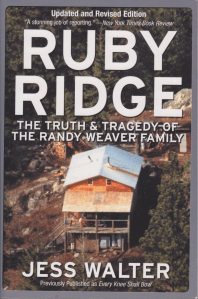
Idaho can be a peaceful place. I’ve spent parts of many summers there. I grew aware, over time, that the northern panhandle had an association with white supremacists, but if you stick to the touristed areas you don’t run into them. During the Ruby Ridge standoff I was busy trying to establish my teaching career in Wisconsin while living in Illinois—I guess my commuting life began all the way back then. I didn’t have much time for the news, and I don’t recall hearing much about the tragedy. It was shortly eclipsed by Waco. Jess Walter’s Ruby Ridge: The Truth and Tragedy of the Randy Weaver Family presents perhaps more than you need to know about this story with no winners and much strange theology. In case you missed it too, here are the basics:

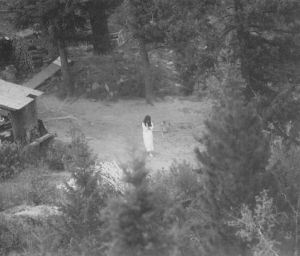
Randy and Vicki Weaver were an Iowa couple who were drawn into the Christian Identity movement. This was a white separatist, apocalyptic survivalist faith. Convinced the world was going to end, they moved to a remote part of northern Idaho and built a cabin on a rocky ridge and stockpiled guns. Being a white supremacist was actually considered bad in the 1990s (now it’s mainstream Republican ideology) and federal marshals and the FBI got involved. The Weavers had four children and that complicated things. Predictably, the government attempt to shoot an extremist family out of their religion ended tragically. The Weavers’ only son Samuel was the first killed, and then Vicki. The locals, including many skinheads, gathered at the base of the mountain in support of the Weavers as the feds led a military operation into a nearly two-week standoff.

Apart from being too long, Walter’s book is an important reminder of many things at this time. Even though America had a Republican president in 1992, white supremacy was considered dangerous and was characterized as domestic terrorism. The standoff at Ruby Ridge quickly became a cause célèbre for religious freedom, no matter how strange beliefs might be. Ironically, even as the trial was going on the Branch Davidian compound in Waco was being stormed. Now we have a “president” who makes it plausible that a “k” has somehow dropped out of Waco, or at least has been tripled. The national narrative is America is for whites only. It’s as if Martin Luther King Jr., Woody Guthrie, and Abraham Lincoln never existed. I would say “How the mighty are fallen,” but that might sound a little too religious for some. Even the Religious Right has, since that time, left the Bible out of the equation.


Evangelical Angst

Unless you know what it’s like to face life with no real prospects beyond making it to Heaven when you die, you can’t understand evangelical angst. That last phrase might seem odd to you. Aren’t evangelicals uber-smiley, happy people angry over the way society’s going? Yes and no. Many of them were raised (or converted into) a faith that holds out no hope for this world and that constantly reinforces the idea that what we like is bad. Having grown up in that world, I knew what it was like to be hoodwinked by an evangelist. I can’t remember the guy’s name, but he was famous. He came to my small town and packed a local Methodist Church. During his rambling, long sermon, he had us afraid for Hell burning under our feet. Grateful that we’d just managed to avoid it, he announced there would be three collections that night: the first was your normal tithe. The second time the plates came around you were to empty your pockets and purses of all change. The third time, you were to contribute to his private jet. If you gave over a thousand dollars your name would be inscribed on a plaque inside.

Almost as if nothing has changed in the decades since then, a Washington Post story expresses amazement that evangelist Jesse Duplantis is asking his followers for a fourth private jet. Uncomprehending, the world doesn’t show much curiosity as to why otherwise intelligent people would give to what is so obviously a scam. Or why such people would vote for Trump. The academic world doesn’t understand evangelical angst. As I sat in that audience that night, a poor kid from a poverty-level family, I fervently wished I had more money to give. Until he asked for his plane. My young doubts crept in, for I had more angst than most other evangelicals I knew. Was this really the Gospel?

Later I saw him on television. His personal mansion had literal streets of gold. Jesus, he said, wanted us to get ready for Heaven right here on earth. Did this turn his followers against him? Decidedly not. In fact, he may have believed it himself. You see, neuroscientists have learned that our brains have the evolved capacity to hold and dismiss reason simultaneously, for strong emotional stimuli. Sex, for example, or music. Or religion. These can motivate people beyond the realm of logic, and they often do. Evangelical angst says you’re not buying a scam artist a jet to spread the Gospel, it says your trying to avoid Hell. Rational or not. And that, it seems to me, is more than adequate ground for evangelical angst.


Doubting Normal

The problem with being mainstream is that you have a hard time impressing anybody. “Mainstream church does something normal” is hardly an eye-catching headline. So when mainstream Christianity’s in the media it must be abnormal. According to a recent Washington Post story, mainstream leaders are protesting Christianity leaving Jesus behind. To be fair, that’s an Evangelical speciality, but still. Without naming the elephant named Trump in the room, these mainstream leaders are doing what every Christian in the nation should be doing, which is objecting to the abuse of their brand. The Religious Right has been driving this car and from all indications RR is drunk. Dietrich Bonhoeffer, once the darling of Evangelicals, once wrote that it is a Christian’s duty to wrench the wheel from the hands of fascists. Now they call shotgun and select the tunes.

I could be getting this wrong. As the child of an alcoholic, I don’t know what’s normal. My wife must tire of hearing the question from me, “Is this normal?” I just don’t know. One thing I do know is that being unable to know what to expect has prepared me well for Trump’s destruction of America. I can’t tell if it’s normal or not, so good thing we have the two-faced Evangelicals to tell us it is. Those who watch religion might say it’s odd to have mainstream Christians on the moral high ground over their more self-righteous kin, but these seem to be strange times. Religion, like anything that can be used, can also be abused.

Even our Orthodox siblings know the score. The Orthodox Church basically went underground in Russia, which is, after all, a Christian nation. Stalin, at least, was honest. He couldn’t stand that mamby-pamby opiate of the masses. He had the fortitude to call himself an atheist. 45, on the other hand, calls himself whatever it takes to make himself look good. What? Christians are fashionable this season? Okay, I’m one of those. Even people who should know better (just because your daddy was an Evangelist doesn’t make you holy—too many Evangelists were caught with prostitutes to make that claim) have delighted to invite a lion into the sheepfold. I don’t know about you, but I’d be edging toward the fence just about now. Something doesn’t smell right in here. But then again, don’t take my word for it. The situation looks normal to me.


Sects on the Highway

Here in the east, it’s not unusual to see Amish buggy road caution signs. Well, not so much in New Jersey, but in my somewhat frequent trips into Pennsylvania and upstate New York. On a recent trip to western Pennsylvania I mentioned to my mother that I’d never seen any Amish along the infamous route 322, where such a sign resides. Driving down 322 on my way home from that trip my wife and I passed three Amish carriages and one baby stroller. Religion has a way of surprising you along the highway. Roadside sects are not uncommon. Apart from the many biblical billboards I’ve been seeing lately, there are any number of indications that once you get out the urban areas of the nation, religion is alive and well. While driving to Ithaca, New York recently my wife and I simultaneously spotted a sign we’d never seen before. We have made this trip to upstate many times, mostly along Interstate 81. The sign was for a tourist attraction called “Historic Priesthood Restoration Site.”

Being hopelessly mainstream, we assumed this meant Catholic priesthood. The problem was, what was either historic about this area north of Scranton, or what might be this restoration? Once we found wifi access again, I learned that the priesthood referenced was that of the Church of Jesus Christ of Latter-Day Saints. I have to keep reminding myself that Mormonism had its start in parts of upstate New York—an area so prone to religious flare ups that it was called the Burnt Over District back in the day. So Joseph Smith and Emma Hale had lived just over the border in the area of Susquehanna, Pennsylvania while Smith was working on the Book of Mormon.

A great deal of America’s religious history may be found on roadside markers. We are an inventive people when it comes to ways of exploring what we consider the divine world. Mormonism has been one of the more successful brands of American religion and although we tend to associate it with Utah now, it was a faith that grew up here in the green hills of the mid-Atlantic states. Being inveterate seekers, Homo sapiens go after new revelations with surprising aplomb. And we’re willing to change the constitution of old religions to fit new prejudices. Religion is anything but static. To test this theory simply get behind the wheel and drive out into rural America. You’ll be surprised how much you can see even at highway speeds, if you have eyes to see.


Redefinition

The striking thing about Evangelicalism is its protean nature. The earliest forms of this conversion-based “Christianity” began with the Reformation among Pietist Protestants. They sincerely believed in two things: the Bible and Jesus. Today Evangelicals deny both. They believe in Donald Trump. Racism and subordination of women are their two main foci. And yet, they wish to keep the brand. Daily we see the standards of traditional “Christianity” tumble: turn the other cheek, love your neighbor as thyself, if a man asks your cloak give him your coat also. All of this jettisoned like so much non-capitalist clap-trap. Thing is, it’s in the Bible. Thing is, it was said by Jesus. And also anyone who even looks at a woman with lust in his heart is guilty of adultery, let alone those who pay them off so they can grab another on the way out the door. All of that’s now “Christianity.”

The funny thing is that those who object to such behavior are what Evangelicals scornfully call “liberals.” So much for the group that just three short years ago advocated the reinstitution of biblical law. Now that 45 would have committed a capital crime according to such laws, they have changed the Good Book rather than rebuke the pastor in chief. Ironically, some of the children of famous evangelists have drunk deeply from that Kool-Aid. It’s fine to sleep around as long as you lie the right way at the right time. Bear false witness? What does that even mean? You’d think liberals were suggesting that those God loves are chasteneth by him, for goodness sake!

Many of us feel as though we woke up to an alternate reality in November of 2016. We supposed the Republican Party would show some backbone, but when they didn’t we weren’t all that surprised. What shocked us most is that the leopard has changed its spots. Those of us brought up with the Bible were led to believe this impossible. After all, who can change a hair from black to white (although some of us would rather have it go the opposite direction)? We thought that Holy Writ would guide the Evangelical heart. We thought they would remember who Jesus was. All of this is negotiable now. The only solid rock on which they build their church—those to whom they give the keys to the kingdom—are those that fall into goose-step behind a “leader” for whom the truth changes daily. Opportunist be thy name. Were Jesus alive to see all this, surely he’d weep.


The Hardest Part

The waiting, Tom Petty suggested, is a most difficult portion (no copyright violations!). The late, great departed rocker had a point. When I was younger I thought waiting was a theological problem, but the fact is it’s an unavoidable part of life. Right now I’m in that holding pattern between having submitted my files for Holy Horror and awaiting anxiously the proofs. Anxiously because there’s so much going on right now that I’m not sure how I can carve out the time to read them. Time and tides, they say, wait for no one.

I suspect a big part of this is that I have high hopes for this book. Not that I’m being unrealistic. I’m hoping to break that 500 copies barrier that holds most academic books hostage. Holy Horror isn’t really academic—it’s not technical at all like my last two books were—it’s just that the premise is academic. What do horror movies tell us about the Bible? I take that question seriously. You see, I read about the Bible a lot. Whether we want to admit it or not, western culture is based on it both implicitly and explicitly. People who castigate it don’t seem to realize that our very way of thinking is based on it. If you doubt that, talk to someone raised in eastern Asia. Someone thoroughly Buddhist or Confucian in outlook. The way we frame our thinking is based on a biblical worldview over here. It’s smart to pay attention to things like that.

At the same time, we are believers in media. Looking out the bus window on the way home I’m always amazed at how many people on the Parkway are texting while they’re driving (yes, you can be seen from above!). We can’t live without our media. When it comes to the Good Book, most people rely on media to tell them what it says. Horror, although not popular with many people, always does well at the box office. And one of the things I explore in Holy Horror is just how often the Bible appears in such movies. It’s not ubiquitous, but it certainly isn’t rare either. We should take to heart what other people say about us. Not that they know the truth of the matter—they seldom do—but we are social animals and we make our reality based on interactions with others. Those who make horror movies know things about the Bible that scholars don’t. And they know that suspense—waiting, as it were—is the hardest part.


Driving Truth

One of the problems with driving is that you can’t get pictures of billboards. Well, given the way people drive around here, I suspect that may not always be true. Nevertheless, I always think of billboards as trying to sell something. There’s sometimes fairly easy to shut out, but in long stretches of otherwise uninteresting road you fall into their trap. Now having grown up in western Pennsylvania, we always thought the people out east—Philadelphia was the largest city in the state, after all—were more sophisticated. It is around here, however, that I often see billboards selling evangelical Christianity. If you put out your wares, you’ve got something to sell. Money to make.

As I was traveling that stretch of somewhat plain highway 33 between Stroudsburg and Easton I noticed a billboard reading “In the beginning God created the heavens and the earth.” To shore up its academic credentials the billboard footnoted Genesis 1:1. An inspirational sunrise, if I recall, shown over the Bible. Of to the left—of course to the left!—was a small “no circle” and inside the famous skeletal progression from ape to human. The message was “no evolution.” The more I pondered this, the more strange it became. Most Americans are well aware that billboards aren’t exactly the locus of truth. They are gimmicks to try to get you into the store. Like the one a few miles down that advertises the world’s largest humidor; even those with no interest in tobacco might feel just a touch curious what such a place might look like. Why would you take your most intimate personal beliefs and put them on a billboard? Does that make evolution any less likely?

A strange perception has lately taken over this country. The idea that an individual’s wants equate with the truth. Shout it loud enough and it has to be true. Billboards would never stretch the truth, would they? Is that image enlarged to show texture or what? And wouldn’t a better choice of anti-evolution rhetoric have been Genesis 2? That’s where God makes Adam from lowly dirt. Yes, Genesis 1 gives us the dramatic six-day creation, but Genesis 2 manages to say it all happened in one day—isn’t that more in keeping with capitalistic ideals? Greater efficiency leads to greater profits, after all. And profits, we all know, are the real purpose behind billboards for any product under the sun.


What Lies Ahead

Things change. You’d think the fact that we all now carry the internet around in our pockets would’ve demonstrated that. What did President Nixon ever tweet? Conservatives, however, want it both ways. They want to pretend nothing has changed, but they still want to keep and reap the benefits of that change. This was shown most clearly by the ouster of Paige Patterson from his presidency of Southwestern Baptist Theological Seminary. Seminaries don’t make national news without a good scandal. (And some good scandals are never discovered.) This one involves demeaning statements made about women in Patterson’s long storm track through the Southern Baptist Convention, of which he was past president.

Journalists seem to only now be catching on to the fact that “conservative” is a codeword for misogyny. Thus it has always been. The fact that it would take nearly two millennia before women could take leadership roles in Christianity (and in some very large sects they still can’t) should’ve been a hint. It’s the old frog in the slowly heating kettle thing. Nobody notices until it’s too late. Since conservative Christianity has always downplayed the worth of women, it didn’t come to public notice until the #MeToo moment. Enough women had to speak up before society took notice of the obvious. Many men feel theologically entitled. Entitled to run things, and they live by the lie that things haven’t changed since Jesus strolled out of that garden tomb a couple thousand years ago. Well, apart from the fact that men no longer wear dresses and keep their hair short, in Roman style. But let’s not call it that, let’s say Evangelical style.

You see, the way you say things matters. Said a certain way, a misrepresentation of the truth is called a lie. It’s considered one of the greatest sins possible in the conservative lexicon. In another way, however, the same statement becomes doctrine, and that’s a whole different way of looking at things. Make it the fault of the Big Guy up there and the other big guys down here are off the hook. After all, the Almighty’s a bachelor. Such a theology has no possibility of treating women equally. Theologians say God is sexless. What’s that like? We have trouble imagining it. English has no neuter gender so we use the masculine pronoun and once we do thoughts go back to sexual features. It’s deeply ingrained. That doesn’t mean it’s the truth, however. After all, Mr. Patterson will still be kept on as theologian in residence. The more things change, the more they stay the same.


Fictional Facts

“If you want truth,” Indiana Jones famously said, you need to go to philosophy class. The sad fact is most people have little practical training when it comes to such issues as discerning truth. Some time ago I read an article about how fake news travels faster and is more deeply believed than actual truth. I suspect that’s because the truth is hard. The age-old trope used to be a wizened elder sitting atop a mountain in the lotus position. A lifetime of thinking through the labyrinthian corridors of wishful belief to get to what is finally and unassailably true. Our president, with the full complicity of the Republican Party, is out to dismantle the concept of truth once and for all.

Indiana Jones was contrasting facts to truth in this scene from The Final Crusade. The idea was that facts sometimes make you question truth. In GOP University, however, facts have alternatives. He who bellows the loudest is the harbinger of truth. Never mind that still small voice that comes after the raging wind. The voice that can stop a fiery prophet in his tracks—a man who could raise the dead, for crying out loud—but even his successor called Herod a FOX. In the culture of the shrug, who really cares? Finding the truth is so much navel-gazing. There are real enemies to bomb and somebody has some money that I can take away and claim as my own. To do so we can make up facts as we go along and lies will see us through. With the Evangelical seal of approval.

Even with rumors of a fifth film swirling, I miss Indiana Jones. In his formative days fascists were the enemies, even of the Republicans. Although he was showing his age in Crystal Skull, Jones still couldn’t countenance oppressive regimes. Scientific studies show people would rather believe fake news. We’re hopelessly prone to fantasy, I guess. Even as I volunteered on the archaeological dig at Tel Dor, although I had little money a fedora was required. There was a difference, however. I knew I really wasn’t Indiana Jones. I was digging for facts so solid that they could be held in my hand. Unlike Dr. Jones’ students, I did go down the hall to Dr. Trammel’s philosophy class. Surrounded by the young Republicans of Grove City College, none of us doubted that truth was spelled with a capital T. Now Truth is apparently an artifact buried in the sand, awaiting a hapless archaeologist to bring it to light. Amid all the forgeries that non-specialists can’t tell apart.


Day of Memorials

I admit that I’m as guilty as the next guy of thinking of holidays primarily as a day off work. A boon from the gods of capitalism so that we can come back to the job rejuvenated and more productive than ever. It doesn’t matter the occasion—I don’t have time for things like haircuts and dentist appointments with the usual round of early to rise, early to work. Holidays become islands of blessed respite in an endless ocean of labor for the man. So I wanted to take a moment to reflect on Memorial Day. Memorial Day is a time to remember those who have died—grandfather, grandmother, America. We take a moment to consider what we have lost. Then it’s back to business as usual.

My father was a veteran. He died many years ago now and I don’t write much about him because I really didn’t know him at all. That doesn’t mean I didn’t want to please him. Any boy wants to make dad proud. I tried the hard work route, and even gave Boy Scouts a try. The things of my youth have been slowly dying. Democracy is merely the latest victim. I shouldn’t be surprised—when it no longer becomes profitable, even the least offensive system of government can be bought and revamped to fit the needs of the greedy. Never mind the will of the masses. They’re the ones who lie under the gravestones for which today stands. No one can be rich without great numbers of poor against which to measure himself. Remember that; it’s Memorial Day.

Since Memorial Day doesn’t lend itself to commodification—let’s face it, outside Halloween death’s a downer—we can make it a day of sales. While you’re earning money without working, why not spend some of it? We seem to have lost the gist of holidays. Those who’ve died in vain believed in a democracy that their heirs have thrown away in scorn. If that for which we say we believe has become moribund, it appropriately becomes the focus of Memorial Day. My grandparents lie buried far from here. They were Evangelicals who wouldn’t recognize their faith reflected in those who still cling to the brand. I remember grandma sending money to Oral Roberts. She didn’t live to see him claim God would take him unless he had even more money. Now we hear the same thing from Pennsylvania Avenue. And tomorrow we all go back to work.


Biblical Popes

It was the end of the world. The year was 1979, if I recall. One of those occasional manias that sweep the nation weighed heavily upon my high school. My English teacher—for her class was at the very hour of the appointed end—sensibly scrapped her lesson plan for the day and had us each write an essay. Would the world end or not, during this very class period? We then shared what we wrote. I recall one answer—not my own—quite clearly. “The Bible says when the reign of Pope is short after the long reign of the previous Pope, the world will end.” (This was just after the death of Pope John Paul I.) A moment’s thought revealed that there are no Popes in the Bible. How could anybody think there were?

Of course, we were at the end of a decade whose bestselling book was Hal Lindsey’s The Late, Great Planet Earth. It was part of what analysts call John Todd Phase of the world’s end scenarios. Or was it the Pat Robertson Phase? In any case, all kinds of obscure signs floated in the air. But Popes in the Bible? Had any of my classmates even read the Good Book? This may have been the only occasion when it was beneficial to have been raised a fundamentalist. I’d already read the Bible many times through and it said nothing about Popes. Not even the Catholic translations.

The iconic role of Holy Writ in secular society is greater than many people suppose. “The Bible says” is practically gospel because few people will check it out. I knew from my conversations with clergy, even as a teen, that few ministers had actually read their own foundation document the whole way through. That leaves them vulnerable to the “cloud of unknowing” whether something is biblical or not. The only way to find out is to sit down with the tome and start reading. Although today such sites as BibleGateway make reading the Good Book online remarkably easy, it’s still a commitment of many hours immersed in an arcane world and mind-numbing lists of who begat whom once upon a time. Examined closely, the Bible is an odd book as far as Holy Writ goes. The same applies to the scriptures of many world religions. Somewhere along the line someone decides that this book, or collection of palm leaves, or set of scrolls, has divine origins. And since world scripture is vast, there’s got to be something about Popes in there somewhere, for when the next end of the world scare comes along.