Hot Pants

Over a decade ago now, the populace was buzzing about Stella Liebeck’s suit against McDonald’s. You may remember the case. Liebeck was handed very hot coffee through a drive-up window in one of those flimsy cups, and suffered second-degree burns when it spilled in her lap. The incident spawned a documentary movie and even a New York Times retro report a couple of years ago. No doubt the injury was serious enough to cause medical treatment including skin grafts, and McDonald’s does, as we all know, process its customers just like it processes everything; you can’t serve over 100 billion burgers and be the world’s second largest private employer without process. Food injuries in a world of business feeding can be serious. “Eating out” is a way of life for many and when people eat out they take their religion with them. That’s why Hiram Jimenez’s case is so interesting.

According to the New Jersey Star-Ledger, Jimenez decided to bow in prayer over a plate of sizzling steak fajitas at Appleby’s. For those who’ve never witnessed fajitas being served, they are an attention-demanding dish, served loudly steaming and popping with smoke rising up forever and heads being turned. I suspect that’s part of the appeal. According to the paper, Jimenez bowed over his food and the grease popped, burning his face, causing him to knock the plate of food onto his lap. None of the burns left scars, and a Superior Court here in New Jersey found the restaurant not negligent as the danger was “open and obvious.” What makes this story so interesting is not the injury but the cause behind it. Food being hot is somewhat universal. Praying in restaurants, however, is an evangelical cultural practice.

Growing up with evangelical friends, I learned to pray in restaurants. (My family was of rather humble circumstances and we didn’t eat at restaurants.) Partly it was in actual thankfulness, but clearly it was partly also in show. We were witnessing by invoking our gustatory gratitude. For being literalists, we didn’t take Jesus’ injunction to go into the closet and shut the door before praying too seriously. The culture around public prayer involves bowing. The bow is a mammalian display of submission. Thy will be done. In the biblical world being thrown into a blazing furnace for public displays of faith didn’t lead to lawsuits. Everyone knows infernos are hot. I can’t help but wonder whether a martyr complex is at play here. A praying customer is doing what his religion demands and gets burned for it. Yeah, I know what that feels like. And, I suspect, so do countless others who find no hearing in courts at all.
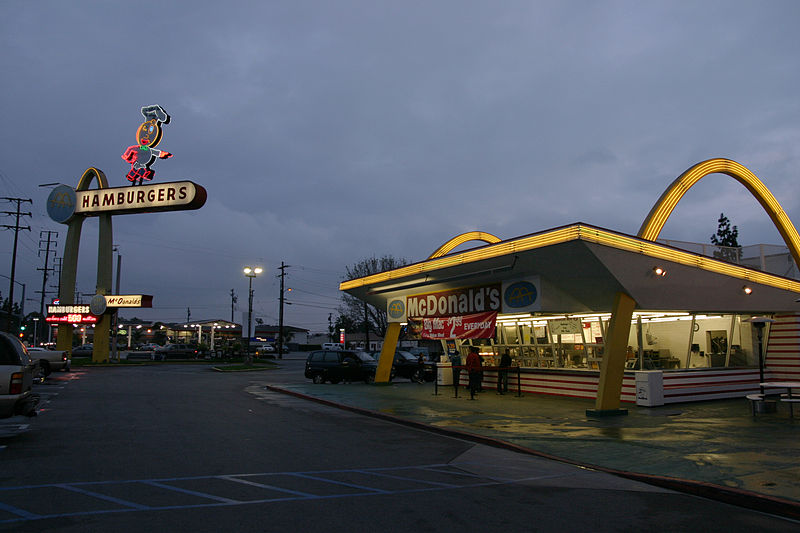
Photo credit: Bryan Hong (Brybry26), Wikipedia Commons
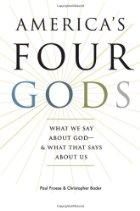
Photo credit: Bryan Hong (Brybry26), Wikipedia Commons

Wag the Tail

Among the most respected of intellectual endeavors is political science. Analysts who read and reason beyond national borders, finding implications in countries many of us have never heard of, they can be an intimidating lot. Experts in economy and psychology, they tell us what the big picture looks like—why we do what we do. And almost universally they disdain religion. We’re talking politics here, why don’t you go sit at the kid’s table? Religion is the stuff and nonsense of make-believe. What politics is about is who has the biggest bombs and bank accounts. Those who impact the world in real ways. And yet.

I would never claim to be up-to-date on current events. I don’t have time to read newspapers and if my friends didn’t send me pertinent articles now and again I might still believe that social justice is more important than the color of an anonymous dress. When no less than an authority than the New York Times speaks, however, I do have to pause a minute or two to consider the implications. Frank Bruni has recently been writing on the Opinion Pages about those ultimate strange bedfellows, religion and politics. I may have got the order wrong, but that’s for political scientists to determine.

Many people don’t consider that religion can be, in some respects, scientifically analyzed. As a deeply divided nation, one factor that even political scientists should note is that yes, religion does count. No matter how naively conceived, people vote with their faith behind that polling curtain. The Republican Party realized this in the 1980s. If you take just one or two religious issues and make them the platform on which you stand, you can garner a disproportionate amount of the conservative evangelical vote. A new study from the Public Religion Research Institute, according to Bruni, demonstrates just how disproportionate the outcome can be. Surveys may not be precise, but less than 20 percent of Americans are white evangelical Protestants. Yet their issues are the ones that make or break elections.

Life has a way of making one cynical. I grew up a white evangelical Protestant. Although my viewpoint has evolved with my education, I can’t shake two of those qualifiers even if I want to. I read political scientists dismissing religion as a bogus topic, mere twaddle to fill the daub of inert minds walled in by primitive thinking. And I read the occasional news story that demonstrates that the facts don’t fit the premise. Do we need to understand religion? Absolutely not, I’m told. But in the end, even the analysts of the political beast will have to realize that tails wag dogs just as surely as raising hackles will make any mammal appear larger than it really is.

Not a tail to be seen...

Not a tail to be seen…


Four Gods’ Sake

AmericasFourGodsStatistically speaking, most people don’t like statistics. I’m one of those. Numbers can do funny things to a person’s perception of things, nevertheless, I appreciate those who can work with them and make sense of them. When I saw the title America’s Four Gods, my disappointment engine kicked in. Is this book going to be about numbers? It was written by a couple of sociologists after all (and even a couple is a number). I’ve read enough of Christopher Bader’s work, however, to trust him. Paul Froese should be the same. Subtitled What We Say about God & What That Says about Us is an appropriate introduction to the book. Based on the Baylor Religion Survey, this study looks at what one of the most religions nations on earth believes about God. Since God is a key political player these days, that’s not a bad idea. Their conclusions are well worth noting.

Froese and Bader find that belief in God is highly idiosyncratic. It is likely the case that, similar to sacerdotal snowflakes, no two ideas about God are precisely the same. Categories, however, help to analyze things, and America’s Four Gods does just that, suggesting four main images of God that have very different characteristics. The Authoritative God we all know well. This is Jonathan Edwards’s deity that dangles spiders above the fire—active and angry in the world. The Benevolent God is also active, but more avuncular and kind. The Critical God is not very active, but is still annoyed with us. The Distant God tends to be kindly, but is rather remote. Using these four kinds of God, Froese and Bader examine what people believe about all kinds of issues, from war to social reform to adultery. When Americans say “God bless America” they mean very different things.

When it comes time to troop to the poles, we listen to what our candidates say about the Almighty. It is a virtual certainty that an atheist is unelectable in these religious states, so we want to hear what the candidates have to say about God. What they say and what their listeners hear, however, are clearly different things. Still, religious conviction is one of the most important variables when it comes to selection a President, Governor (at least in some states), or congress-person. Some candidates, with God off the plate, have nothing left to commend them at all. So it is in one of the wealthiest, most powerful nations in the world. A basic truth that we choose to ignore decides our fate for us. Mired in a Gulf War? Who you gonna call? Chances are we all know the answer to that. Chances are equally as high that we all mean something different by it.


Incitatus Redux

What more is there to say about God and politics? Far too much, I fear. In a Sunday Review in the New York Times, Frank Bruni lays out a catalogue of what, in a rational universe, would be considered violations of the United States constitution by politicians who insist their (conservative) Christianity is the faith of the nation. This is, however, one of the philosophical conundrums of religious freedom. Religious believers are free to use their faith to try to change the system from within. And the fact that the media is telling us that religion has become irrelevant doesn’t help. Who should be afraid of what’s irrelevant? Can irrelevant substances harm you? Can irrelevant bullets kill you? Why, yes, they can! And so being told repeatedly by the media that religion is something we can safely lock into a box marked “Medievalisms Outdated” we step out the door to see politicians using a religion poorly understood to gain power. A recipe for an apocalypse, it sounds like to me.

Academics too readily fall prey to the media hype. University presidents and deans suppose that religion really is dead and shouldn’t be studied. Who’s going to help us through the morass of the upcoming election if people who understand religion are made indigent and put out on the streets? Good luck to the rest of society! We must, if we are to survive, understand religion. Its death, following shortly on that of God, was proclaimed early last century. And yet it’s showing no signs of dying. In fact, it’s just waking up. Who are we going to ask? Scientists? Accountants? Economists? What will you really learn about our laws being God’s laws in the minds of the wealthy and powerful? Don’t ask me—I’ve only spent some thirty-five years studying religion. What do I know?

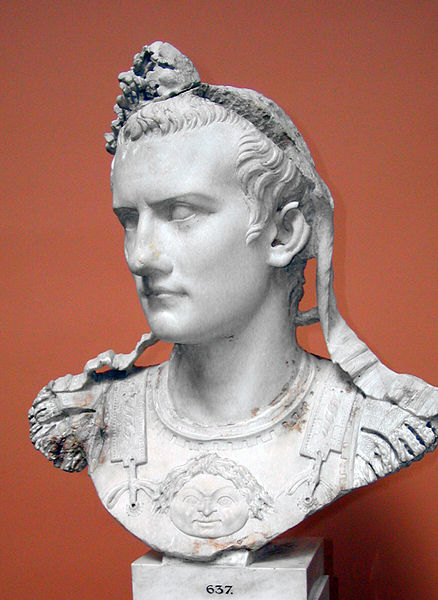
I sometimes wonder what it must’ve been like to live in Rome as Alaric was whetting his sword among his Visigothic horde. Insane—literally insane—emperors wielded unchallenged power and lived lives of opulence amid the slaves and poor. Religion was front and center on the agenda, of course, because emperors were gods. You don’t have to listen too deeply to hear the same message even today. Those who proclaim God as the justification for their political ambitions know that God is the ultimate malleable deity. In fact, God can even be in the Oval Office. Lead can line your aqueducts and your horse can be made a senator. Lord knows an ass can be. And all the while let’s shut down the voices of those who’ve looked at religion, beginning in the Stone Age and up to now. If we want to grab power it’s vital that we keep it from public view that self-deification is as old as kingship and in a post-religious world, we have only to pretend.

Photo credit: Louis le Grand, Wikimedia Commons

Photo credit: Louis le Grand, Wikimedia Commons


Under Who?

Who is God anyway? The question occurred to me as I read about the current Superior Court decision in New Jersey that “under God” in the Pledge of Allegiance remains constitutional. The American Humanist Association had sued to have the offending prepositional phrase removed, based on first amendment rights to religious freedom. I’ve always found the whole indoctrination of swearing to a flag somewhat provincial and perhaps even damaging to the unity of humankind. Nations, after all, are about keeping things for ourselves, something that the God of the Bible seems to find naughty. During the Cold War, waged against the “godless Communists,” the questionable phrase was added in 1954, only after we’d secured nuclear weapons. Does any nation that has the bomb have the right to declare divine sanction? I guess so, on second thought.

IMG_0962In his decision Judge David Bauman said that God, in this context, is not about religion, but about the state’s history. Granted, one of the New Jersey delegates to sign the constitution was a clergyman, and president of Princeton College. The same Princeton that became the home of the man who would open physics enough to let us begin a nuclear reaction. But I’m getting ahead of my story. This concept of God being an arcane aspect of history as opposed to a present and active force motivating people’s lives is a curious one. In order to keep the deity, he (and the historical God is male) must be demoted to an historical relic. If that is true of divinity, what does it say about the concept of nationhood itself? Have we come to admit that it is all a fiction to keep status quo ante?

Humanist and atheist groups have argued for years that public school (which no government takes that seriously) should not be a forum for religious indoctrination. Some religious groups (such as Creationists) clearly see such schools as a mission field ripe for proselytizing young minds. Such was clearly the case in 1954. Today we see the Russian Orthodox Church becoming a supporter of the government in Russia, where godlessness might be more a factor on the ground than on paper. In the United States we have a culture that provides lip-service to the almighty while the true god is secreted away in the shrines of bank vaults and expense accounts. It is really about a way of life, after all. Should we keep or remove “under God” from a pledge to personal gain? It is all a matter of how you define “God.”


Creating Diversity

Informed opinion is a chimera. I write that as someone who has time to read only the news stories my wife or my friends pass on to me. Once in a while one of those stories makes me feel less bad about being uninformed. A recent piece by Slate author William Saletan looks at polls regarding Creationism. The piece, picked up in the New Jersey Star-Ledger on a recent Sunday, demonstrates that although the United States is a nation of Creationists, we don’t agree about what that means. What becomes clear to me when I read such stories is that people who believe in the Bible seldom read it. Or at least understand it. Creationism “is not a thing” in the Bible. Many accounts about how the world began are represented, and the main point seems to be that it’s important that it was the God of Israel who did it rather than the competition. The first couple of creation accounts are compelling with their insistence that people are special, and that we are in charge while the owner is away. In fact, however, creation is a minor point in the story. It just has to start somewhere.

Those who set out to read the Bible, I suspect, begin to stumble in parts of Exodus and generally give up once they reach Leviticus. Although the main point of the books of Moses is the rules, the modern Christian finds the story more engaging. And the creation accounts of early Genesis are among the stories people actually read. They do make for a great, if contradictory, tale. They have, however, little impact on what people are supposed to do. Ironically, those accounts have become failsafe political devices. We vote according to how old we think the earth might be. We are special, after all.

Saletan’s point in the article is that the finer we parse the questions, the more divergent opinion becomes. The Bible doesn’t say how old the earth is—it’s really not a point of any significance to the story—but if you’re going to take it literally, you can do the math. Few literalists truly take the Bible literally. Logic very quickly breaks down as Genesis 2 follows Genesis 1. Americans are told that the Bible is literally true, but such a view literally makes no sense. We are committed to it, however, as we somehow equate believing in stories to be more important than understanding what those tales are trying to say. The polls, according to the article, make the point abundantly clear. When it comes to understanding the Bible Americans are very committed, if very confused.

Just one Creationist museum.  Photo credit: Creashin, Wikimedia Commons

Just one Creationist museum. Photo credit: Creashin, Wikimedia Commons


Worn Out Religion

Truth claims are integral to religions. No one would join a religion not declaring itself to be true. Some months ago, I posted about the store True Religion that had recently opened at our local mall. I’ve always found such branding odd—surely the store wasn’t proselytizing those who had religious commitments to buy its jeans. Or perhaps it was trying to lure in the increasing generation of nones. I have seldom felt any kinds of truth claims applied to my apparel. I buy clothes at reasonable prices and wear them until they are no longer fit to be seen in public. Even then I continue to wear them at home until they simply grow too holey to be of utility. I seldom have clothes left in good enough shape to donate, and I’m only fashion-conscious in terms of a decade or two between stints of buying what’s on the bargain rack. Religions, of course, sometimes do dictate what it is appropriate to wear. Leviticus famously declares that fabrics of mixed fibers are an infraction. Perhaps True Religion carries only single fiber-fabrics? I guess I’ll never know.

IMG_1868_2

Since our local mall has mostly clothing stores (few whimsical shops appear any more), I seldom go. There is an Apple store, and since our family has used exclusively Apple products since the 1980s, we do have to stop in from time to time. On my most recent trip, I noticed that True Religion, right across the corridor from Apple, had gone. “There’s no more true religion,” my daughter quipped. I couldn’t help but think about the implications of all this. Surely this was not the first religion to die. Disused churches have been converted into businesses for years, and some religions die out entirely rather than just fade away like an old pair of jeans. What is the message, however, when a claim of truth is made, only to be closed down by the exigencies of finance alone? Something disingenuous is going on here.

Religions not only make truth claims. They also convey a sense of promise. If you believe, you receive something in return. But what does it mean to believe? Driving home we passed the Elks Lodge. Once, when my daughter received a certificate of merit from the Elks, we were invited to an award ceremony there. The president of the lodge, doing a bit of proselytizing, mentioned that very little was required to join the Elks. “You do have to believe in God,” she said. How do you measure such a belief? Did she mean to say “you have to say that you believe in God”? The Elks are, after all, not a religion, but a community organization. Although True Religion is gone, the Elks, with their minimal commitment to faith, are still around. My clothes are perhaps a bit too worn to join the Elks, but what else is there to do when there is no more true religion?


X-mas Time

As predictable as crocuses in early spring are the controversies that crop up around holiday billboards. Even living in the quite blue state of New Jersey, I see plenty of advocating for the keeping of Christ in Christmas that the “keep Christ in Christie” campaign seems to lack. This year, however, the American Atheists billboard kerfuffle has shifted to Memphis and Nashville. There protests have been lodged that using children on “holidays for all” billboards is a kind of exploitation. And as we all prepare for the visit of baby Jesus, or Santa Claus, or any variety of mythical nighttime visitors, American Atheists are only asking that we all share the presents. It is an odd kind of culture war. Christmas, as we’ve long known, predates Christ. The holiday was usurped from pagan tradition and baptized into a holy day that was barely observed until the nineteenth century. The commercialization of the holiday gave it the current shape we recognize, and some Christian groups feel compelled to reclaim it in a kind of cultural crusade that will only end with complete acquiescence.

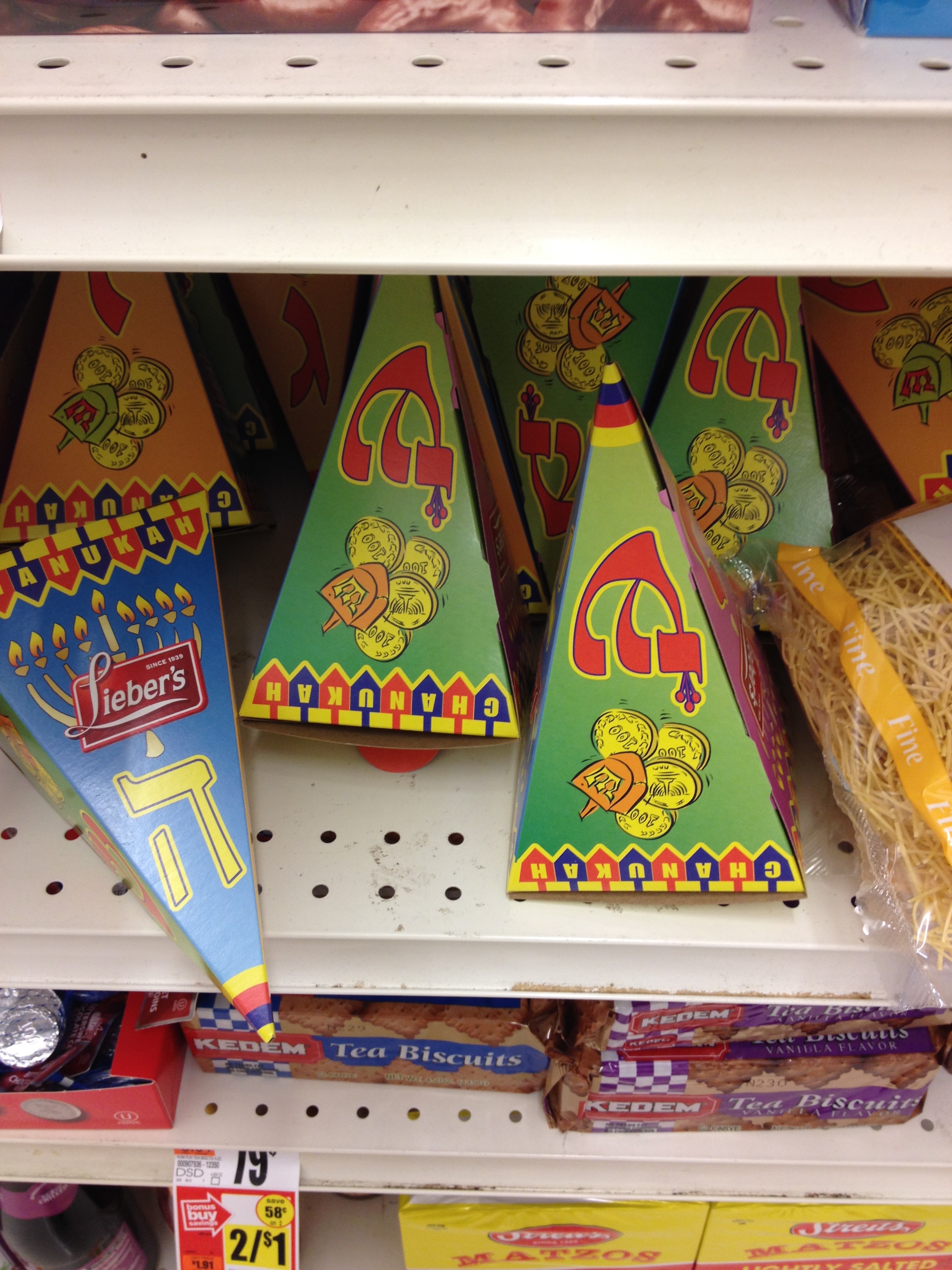
This is a holy war in which neither side is right. In the work-a-day world that I inhabit Christmas is above all a long weekend with a respite from the drudgery of a long commute to ensure that the system continues. Thousands stream into New York City, which, amazingly, does seem to transform for the holidays. The city that is, for most of the year, cold and heartless, suddenly displays a more human face. Giant wreaths and tall trees appear, bright decorations hang in windows. Menorahs and dreidels become manifest. Signs of Kwanzaa or other solstice-related holidays are evident for those who know how to spot them. People in general seem more generous than usual. Even many businesses relax their time-grabbing strictures a bit. Christmas did not begin as a Christian holiday, nor, it seems, will it ever be fully supersessionist.

IMG_1849

Celebration, I would suggest, is worth celebrating. Should atheists use a poster-child for the secular celebration of the holiday season? Should Christians have displays of mangers on church property where all passers by can see? Should Mensch on a Bench be displayed in stores? Should Santa be advocating for corporate giants who only want us to spend? Perhaps the answers are obvious. In my mind they are. We gather our families in, and in the northern style that has always resonated deeply with me, we look out the window and await the coming of the purifying snow.


Foundation and Empire

Foundation_gnomeIn a childhood full of science fiction I’m sure I read much material that was too sophisticated for me. After all, I grew up in a working-class family where politics amounted to lambasting the incumbent because things still weren’t getting any better. Even the conservative super-hero Ronald Reagan was mostly remembered for the government-issue cheese we received for free. We called it “Reagan Cheese.” In that setting much of Isaac Asimov’s Foundation trilogy must have been far beyond me. Still, I dutifully plowed through all three volumes as any budding science-fiction nerd was expected to. It was a required piece of the curriculum along with Frank Herbert’s Dune. Heinlein’s Stranger in a Strange Land would have to wait until adulthood. I remember rooting for the cosmic empire—the symbol of law and order—unaware that similar systems would eventually find me as a fifty-something, educated man unemployable for years at a time. Science fiction doesn’t bestow the ability to see the future.

Then I read a recent issue of Books and Culture, the bi-monthly publication review by Christian Century. An article by Philip Jenkins, reviewing a book I’ve not read, started off with a reference to Asimov’s trilogy. Suddenly I found myself transported hundreds of miles and two-score years from Midtown Manhattan to rural western Pennsylvania in barely adequate housing, holding Foundation and Empire close to my face. Jenkins, a noted historian of religion, was pointing out that Asimov often drew from Gibbon’s Decline and Fall of the Roman Empire and based his character of the Mule—those of you who’ve read the trilogy remember him, I’m sure—on Mohammed. The thought had never occurred to me that the science-oriented mind of Asimov would ever delve into religion for inspiration. Still, with the little I recall of the story, it does seem to add up.

In fact, much of science fiction is deeply dependent on religion. Science fiction dares to dream of the future, and no matter how technical that future becomes, the religious are still there. Last century bold claims were made that we’d be living in the twilight years of religion by now. Mid-term elections fueled by religious fervor prove the pundits wrong yet again. Organized religion, fledgling or fully adult, is a political animal. Religion and politics are both about how we interact with one another as a society. It may seem that the concepts behind religious thought are unsubstantiated myths that transcend the mechanistic world in which we live. Even so, they continue to drive revolutions large and small. And somewhere in the attic I still have my copy of the Foundation trilogy ready to be seen by grown-up eyes. Or better yet, through the credulous eyes of a child.


Real Devotion

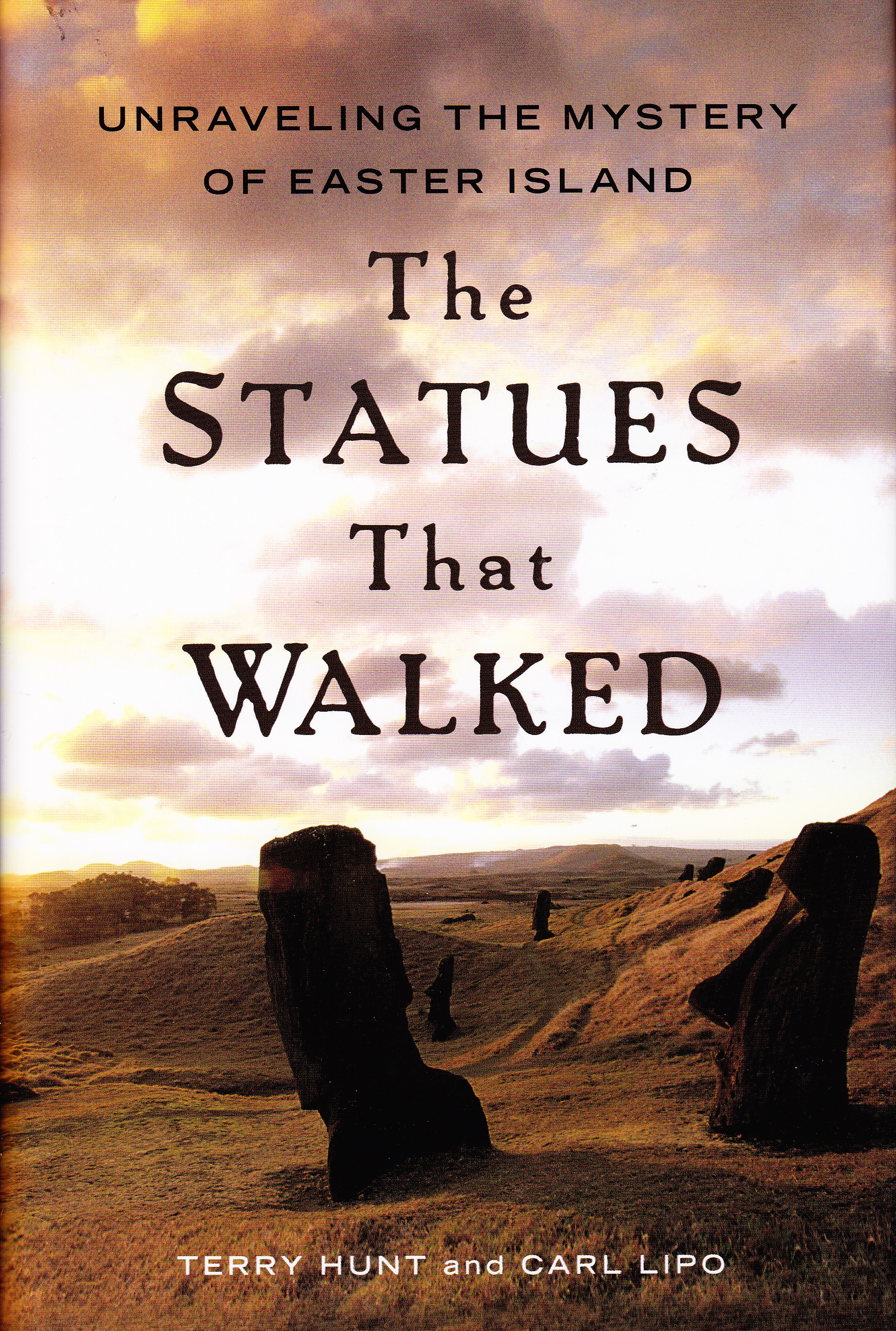
StatuesThatWalkedEaster Island instantly brings up images of massive statuary and mystery. From childhood (and that will likely continue for some time due to Night at the Museum) the sensationalized accounts of these eerie statues appeal to our sense of wonder. And they should. Still, as Terry Hunt and Carl Lipo demonstrate in their informative book, The Statues That Walked, the island is more than it first might seem. A small, extremely isolated bit of volcanic rock in the south Pacific, Rapa Nui—the native name for Easter Island—has never been a lush paradise. Its volcanic soil long ago depleted, it was only occupied from about 1000 CE, and then only marginally. In fact, were it not for the moai, nobody would probably have paid much attention to it. Even today this remote island draws thousands of visitors, despite its lack of luxury, because of these huge-headed, silent statues. And who but a specialist would read a book about the island if the moai were not featured?

Hunt and Lipo are archaeologists and anthropologists. Their interest is not primarily in mystery, yet after beginning their fieldwork on Rapa Nui, they felt compelled to turn their attention to the huge statues. Their book, in fact, takes its title from the moai, and soon settles in to a discussion of them. They are, not surprisingly, religious symbols. Many people would probably prefer that critically minded scientists leave their favorite mysteries alone. Yet the story of the moai is fascinating, and still unexplained in the larger sense of why people in a subsistence-level situation would expend so much effort on religion. Hunt and Lipo suggest the moai are examples of costly signaling—the evolutionary principle of the peacock’s tail. Even people with barely enough to eat will put enormous effort in demonstrating to their neighbors that they have the favor of the gods.

Other ancient Polynesians also built statues. On Rapa Nui it grew to a kind of religious obsession. Hunt and Lipo propose a perfectly naturalistic way that the massive statues could have been, and probably were, moved across the island. More importantly, they uncover that the inhabitants probably did not indulge in ecocide, cutting down all the trees. There were other culprits involved. After European discovery of the island, it was time and again devastated by disease. Although they don’t come out and say so in the book, European contact probably contributed to the abandonment of the great statues, many of them still in situ at their quarry. The moai likely represent ancient ancestors in a culture where veneration of the same is the basis for a natural religion. I won’t reveal any spoilers here since The Statues That Walked is an important book to read on many levels. And, although it doesn’t make this claim, it shows that religion will likely always be part of history’s great feats of lasting intrigue.


Behind the Exodus

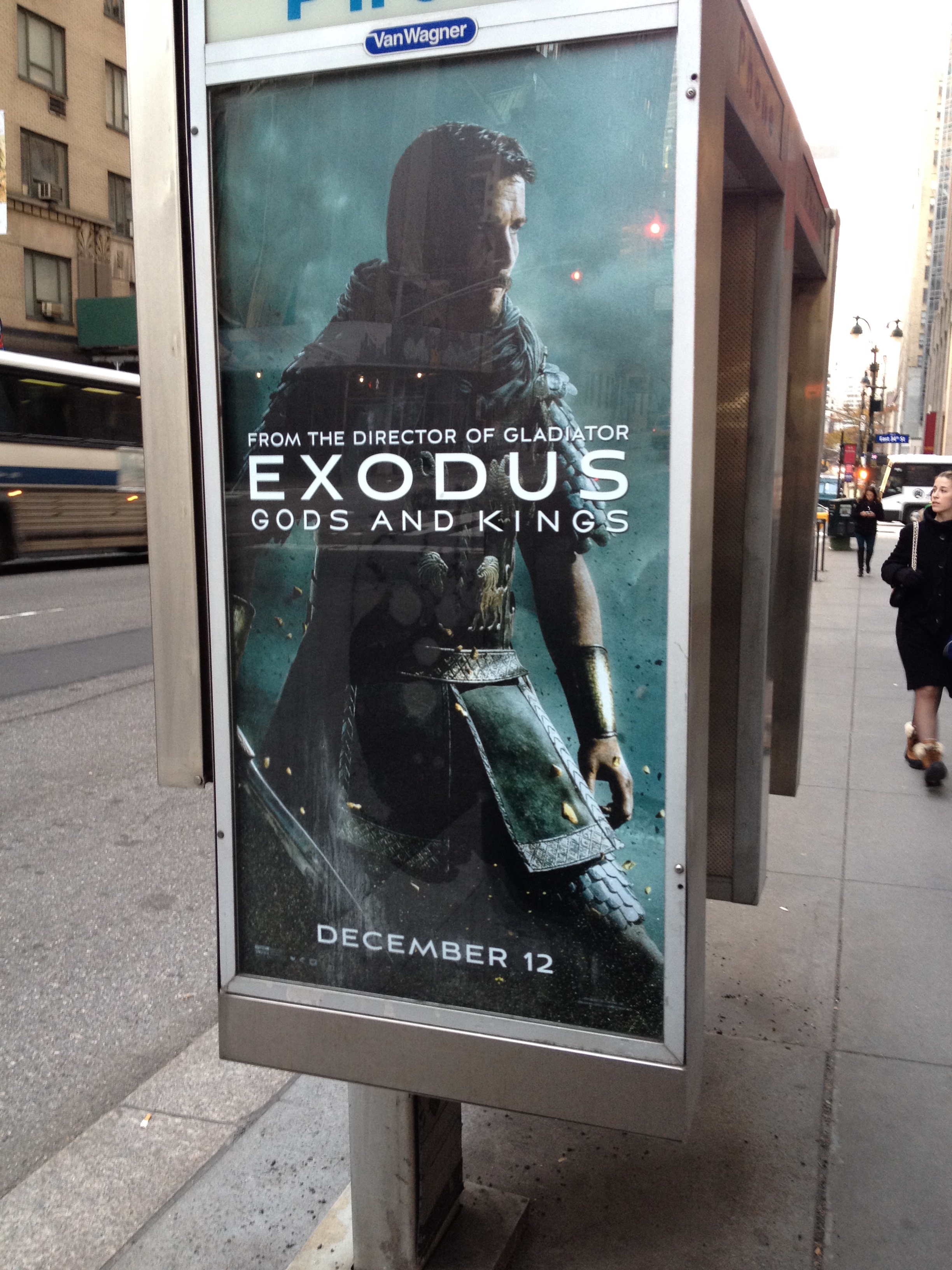
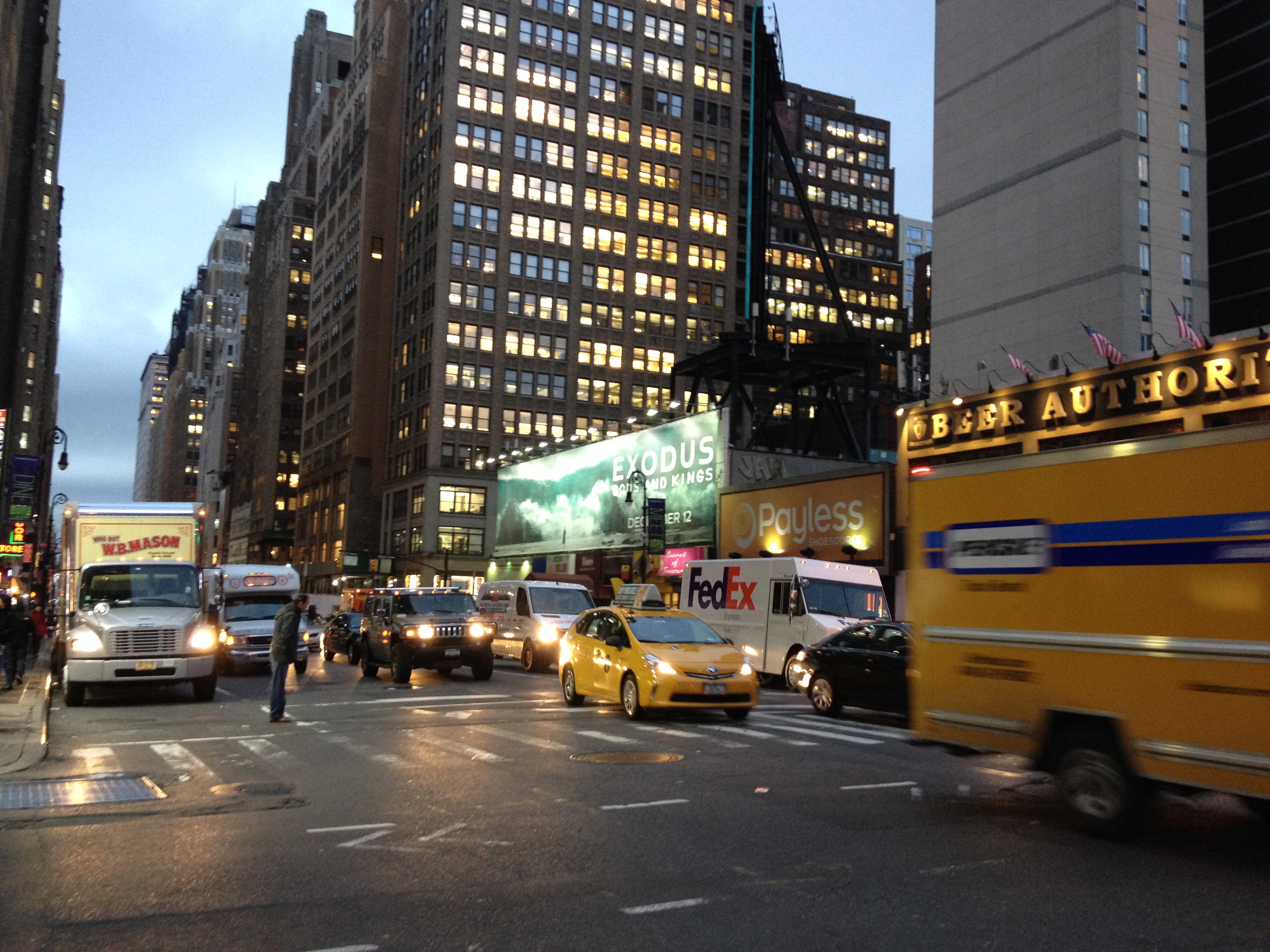
Over this past week two of my friends/colleagues were quoted in major media outlets about Exodus: Gods and Kings. Being merely a blogger with nearly two decades of teaching Hebrew Bible means, naturally, that I have nothing valuable to say. Nevertheless, I would meekly venture to make my own observations and cast them out there into the world-wide web and see what happens. I haven’t seen the movie since it only opens tomorrow. I already know it is only loosely based on the Bible. Still, I wonder at the talking heads who constantly declare the Bible to be irrelevant to a throughly modern world. Okay, so I realize that this is about money, but Manhattan is often seen to be one of the more sophisticated cultural landmarks in the country. This summer I couldn’t walk more than a book or two without being inundated with Noah posters. Now I am finding the same with Exodus paraphernalia. If we try to put the Bible away, it seems, it will come to find us.

IMG_1843

The Bible, relevant or not, is full of great baseline stories. Even in a secular society we can see the appeal of Noah and his menagerie to young children who are so fascinated with animals. We decorate youngsters’ sleepwear and toys with elephants and lions and giraffes (interestingly not mentioning that these are primarily African animals) aboard an ark with an unfailingly cheerful Noah. Now we have another classic—the great liberation story (also set in Africa) of a people held in bondage being released by divine command. We are a post-Christian society, according to the pundits, so who this divine one is remains an open question. The idea that one people is kept oppressed by another people, however, is presented as unequivocally wrong. Moses rides out on a horse, weapons in hand. Are we not focusing on the larger point yet?

IMG_1848

This latest love affair with the Bible as a source of great cinematography will not last forever. It will surely ebb away until only a few old blog posts might remain to remind us there was a time when Holy Writ inspired screen writers and directors. Nevertheless, the Bible bides its time. Back in the days when I used to teach Hebrew Bible Hollywood didn’t do too much to help out. Students had to slog through pages of picture-less Bibles to get the gist of the what God had in mind. The results may not be the same from those comfy seats in movie theaters, but a future generation will come to see Charlton Heston as a white man who loved guns being overcome by a newer generation of producers and directors who know there is a larger story here. Of course, I’m only a blogger with no credentials. Still I know what I see on the streets of the city.


Thank You

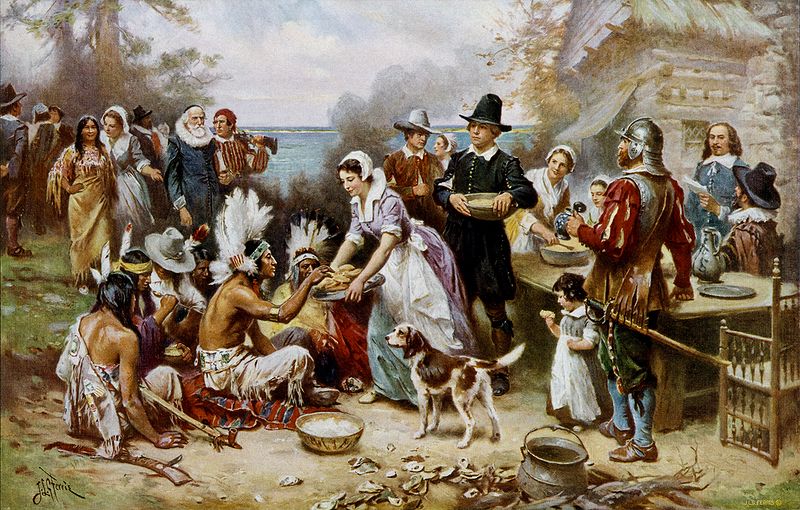
Comments being rare on this blog, I do read them when they come along. Recently I had a reader comment, in the form of a question (as sometimes happens): “Do Native American Indians do ‘Thanksgiving’?” Although I’m fairly certain this was intended as a rhetorical question, I was raised a literalist and couldn’t help trying to formulate an answer. Although I can make no claims to know Native American culture well (I wish I did) it led me to ponder the concept of Thanksgiving. No doubt the idea had at least informal religious beginnings. Even with the early European settlers, a religious diversity was already appearing. Still, although the Native Americans lost pretty much everything, they were still involved, at least according to the early accounts. The great spirit they thanked was not likely conceived of in the way that the god of the pilgrims was, and yet, thankfulness is a natural human response. Writers, often fully aware that their work deserves publication, frequently thank an editor for accepting it. It’s a deeply rooted biological response.

800px-The_First_Thanksgiving_cph.3g04961

For some of us, Thanksgiving is more about having time to recuperate after non-stop work for about ten months. The standard business calendar gives the occasional long weekend, but after New Year’s the only built-in four-day weekend is Thanksgiving. It is that oasis we see in the distance as we crawl through the desert sand. Time to be together with those we love rather than those we’re paid to spend time with. To rest and be thankful.

Among the highlands of Argyll, in western Scotland, is the picturesque Glen Croe. Years ago, driving with friends through the rugged scenery of boulders and heather, the little car struggled with its burden of four passengers. We stopped at a viewpoint known as “Rest and Be Thankful.” The name derives from an inscription left by soldiers building the Drover’s road in 1753, at the highest point in the climb. The Jacobite movement and the Killing Time had instilled considerable religious angst to the Scotland of the previous century and led to the calamity of Culloden less than a decade before the road was laid. These religious differences led to excessive bloodshed throughout a realm supposedly unified by the monarchy. Even though no natives protested displacement, religion led to hatred and mistrust, as it often does. Is not Rest and Be Thankful, however, for everyone, no matter their faith or ethnicity? And in case anyone is wondering, yes, this rhetorical question contains a metaphor to contemplate. Rest and be thankful.


Dry Nation

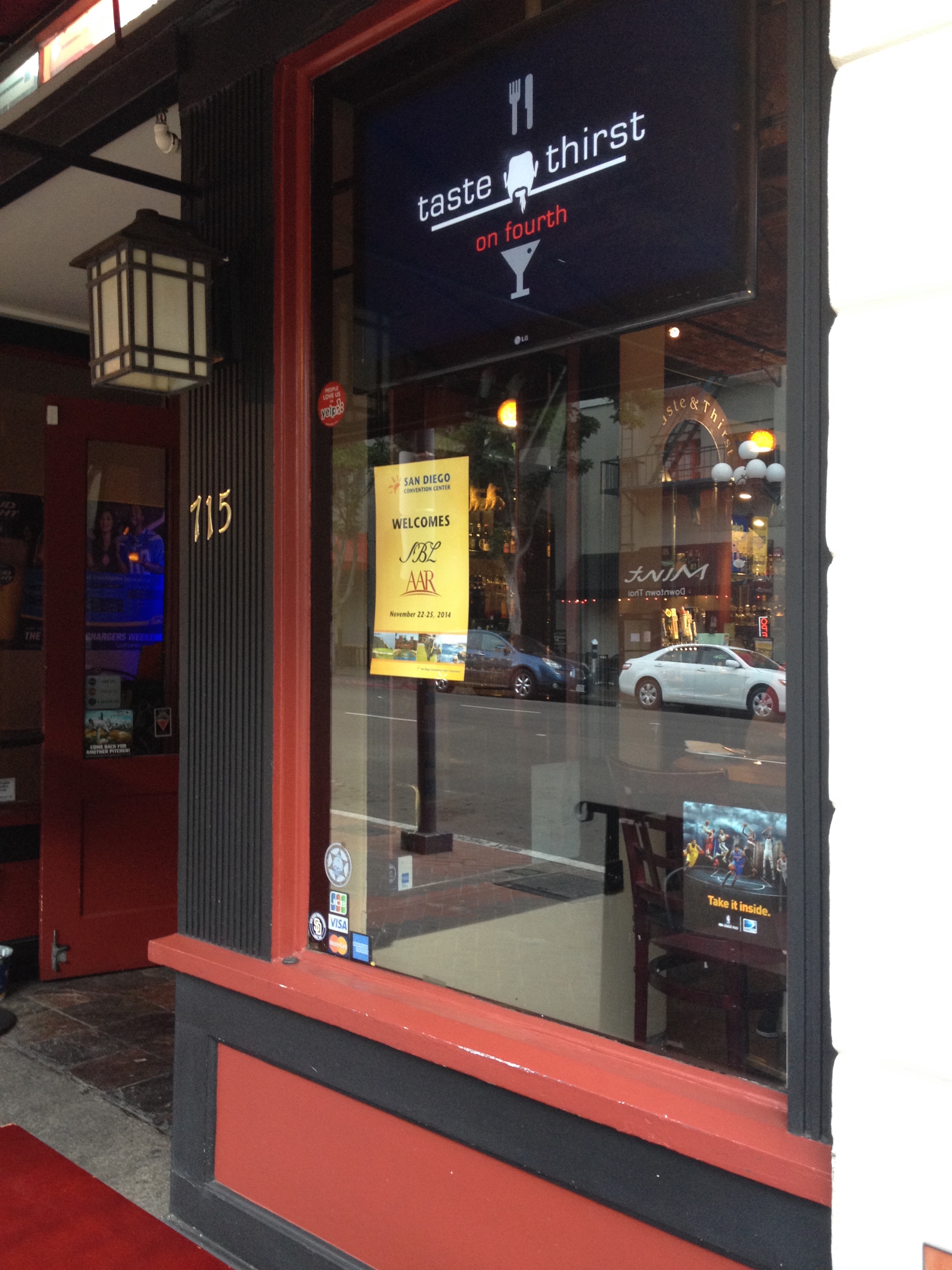
The American Academy of Religion and Society of Biblical Literature annual meeting is a big thing. It draws a myriad (literally) of scholars together every year and invades a fair sized city that may or may not be a religious haven. San Diego feels like a pretty Catholic city to me. My cab driver from the airport was a Muslim, but many of the churches and place names around here reveal a natural comfort with Catholicism. My first night in town, on my own and somewhat weary from awaking at 3:30 on the other coast to get ready to catch my flight, I wandered through the Gaslamp District looking for some authentic Mexican food. It is surprisingly tricky to find, although I’m only twenty miles from Tijuana. Along the way I passed a bar that had a welcome AAR/SBL poster in its window. Now here was a vender that recognized their client!

IMG_1814

Many of those outside the profession assume such conferences as this are like higher education Sunday schools. Undoubtedly, there are those who wish they were. For some, perhaps, the annual meeting allows for the indulgence of personal peccadillos far from watching administrative eyes. Others are more sanguine about it all. Religion scholars are just as human as the next guy. As I looked at this bar window, I reflected on how Christianity (in particular) came to regard alcohol as an evil. Wine and beer were known from ancient times, and even the New Testament has Jesus presented as an imbiber. Temperance, however, grew out of American Fundamentalism that seemed to have forgotten its scriptural roots. I remember learning, as a child, that the wine Jesus drank was really only grape juice with a little kick. Who wants an inebriated God running around the Middle East?

Still, I realize that drinking has its consequences. As the child of an alcoholic, I know the damage that this can do. On the other hand, I know many religions view “controlled substances” as gateways to alternate realities. Other planes of existence. There are even cases where Native Americans have been arrested for using their traditional ceremonial substances in a nation not quite Christian, not quite not Christian. Even on my way to the Gaslamp District, I was saddened to see so many homeless about the city. I knew that as evening fell and the scholars arrived, the bar would come alive. And I knew that when the rain came, some would get wet while others stayed nice and dry.


Medusa on the Rocks

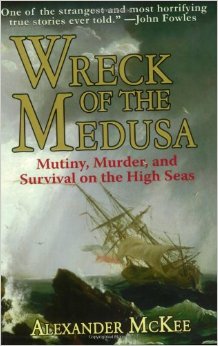
WreckOfTheMedusaShipwrecks possess a compelling resonance that is difficult to explain. I have seldom been on boats, but from my youngest days I’ve been drawn to the coast. While a student in Boston I made weekend trips to Gloucester to be near the place where ships go out to sea, sitting by the quote from Psalm 107 at the base of the famous fisherman statue. Moby Dick has passed under my eyes many times. While at Nashotah House I was frequently tormented with nightmares of sinking ships. Titanic was a huge movie late in those years, and even before watching it, I dreamed of going unceasingly down. In a used bookstore, Alexander McKee’s Wreck of the Medusa recently caught my attention. Although I’d never heard of the Medusa, the name suggested classic themes, and the shipwreck, I knew, would entail suffering and loss and human drama. I knew I had to take it home with me.

The true story of the wreck is tragic in just about every conceivable context. The year was 1816 and aristocracy was still openly practiced. The Medusa, bound for Africa from France, ran aground and, in echoes of what would happen (at least in some instances) a century in the future, the insufficient number of lifeboats were claimed by the wealthy and powerful. The most tragic aspect, however, was the matter of the raft. The masts were felled and a poorly designed raft was hastily constructed (the Medusa was grounded, not sinking). The greatest number of people were herded onto this raft where the water came up to nearly their waists, as the six boats towed the makeshift craft toward shore. At the instigation of the about-to-be-installed governor of Senegal, those towing the raft dropped the line and rowed themselves to safety. The raft, with no means of propulsion, was left adrift where 135 people of the 150 on board slowly died over the next two weeks. The governor and his party made it safely to their destination.

To me, this election week, it seems that I’ve just read a potent parable. We have public officials in place who, like those safely in the boats, cry out “we abandon them” before the masses of those who expect and deserve their protection. Power, it is said, corrupts, and as we witness the constant increase of political power over the sea of humanity taught that their religion favors the party able to quote the Bible the loudest, we sometimes forget that sinking ships may leave very long memories. In another week we will reach the commemoration of the sinking of the Edmund Fitzgerald. The Essex, the Medusa, and countless other tragically doomed ships may easily slip our minds now being propelled at full speed toward the spending frenzy of Christmas. Meanwhile, I urge us all to take a few November moments to consider where this ship is heading, and if there is yet time to change her course.


Campus Crusade

The Chronicle of Higher Education also chronicles the trials and travails of religion in academia. A recent edition of CHE reported on how California State University withdrew official recognition of InterVarsity Christian Fellowship because its leadership is, by definition and constitution, Christian. The organization contested the decision, and, in this thorny situation, I think, rightly. The disestablishment clause cuts both ways. Government can’t establish a religion, but it can’t prevent one either. InterVarsity, although not exactly to my taste, has been a fixture on campuses for decades. It offers alternatives to pong and related forms of diversion without being pushy about faith. Indeed, it does not insist that participants be Christian, and, in my experience, doesn’t try to convert them. It offers a service that is useful for undergrads and has every right to be on campus, as much as the young republicans do. Can an organization be banned for having Christian leadership? How much can we disestablish before we become oppressors?

I recently had a conversation with a college humanist chaplain. There aren’t many of these, but they are beginning to appear on campuses, offering the services traditionally given by religious organizations. Many people don’t know what to make of this. Not all rationalists, humanists, agnostics, and atheists are enemies of spirituality. We can be both spiritual and human. Some would argue that we have no choice in the matter but to be. Some express it as Christianity. Others as a non-doctrinal recognition that being human means wanting to affirm unions and weep at funerals. Maybe it is more than just chemico-electrical signals across gray matter after all. Colleges and universities should be places to explore. Like it or not, without the influence of the church, and before that the synagogue, the concept of higher education likely would never have developed at all.

How much of the baby do we throw out with the bathwater? Evangelicals cost me my first real job. I had, however, grown up among them. Although not in InterVarsity, I did participate in Christian groups in college. I don’t think it damaged my education. How can a person learn to compare when one of the options is displaced? Will Newman House be permitted to stay? Even government officials can’t agree on exactly what it means to have a religion-free government in a religious, if post-Christian, nation. Why antagonize an organization that is only trying to offer a service? Every time I pull up to a gas pump chances are pretty good that I disagree at a pretty visceral level with the ideology behind the company supplying me my fuel. And yet, here I am, running on empty. Ideologies and services, it seems to me, are very different things. Those that don’t cause harm should be the least of our concerns.

IMG_0066