Littlefoot

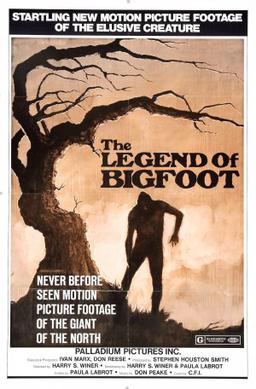
A film is an object.  Just like a book, a film exists and waits for someone to discover and promote it.  The vast majority of both don’t make the cut and exist in obscurity.  The Legend of Bigfoot by Ivan Marx is one of those obscure films.  I only knew of it because it was included in the DVD pack called “Beast Collection,” which I’ve already mentioned a time or two.  This set of movies is united by a few different themes which have little to do with one another.  The “Bigfoot Terror” disc includes Marx’s Legend although there’s no terror here and it presents itself as a documentary.    Interestingly, this movie actually had a theatrical release.  Of course, the mid-seventies were a high-water mark for Bigfoot interest in general, prior to the current phase.  Marx followed up his movie with a couple sequels and to his dying day claimed that his Bigfoot footage was authentic.

As far as the movie goes, it is just plain bad.  The wildlife footage, shot by Marx, is actually impressive a time or two.  Most critics dismiss his Bigfoot footage as a hoax, a view supported by the fact that the bona fide Bigfoot researchers he worked with eventually distanced themselves from him.  The movie is rambling and dull but intriguing at the same time.  It’s amazing, for example, that he was able to get this into theaters at all.  But what drove the producers of “Beast Collection” to include it, beyond it perhaps having been cheap and bit of filler on a disc claiming “approx. 5 hours of yeti scares”?  Well, it’s an object.  And it fits the theme of “yeti” but not really that of “Terror.”

There’s not a ton of information on Ivan Marx online.  IMDb has a mini-bio of him, noting the others who worked with him.  Even his wife, Peggy, who appears in the film, gets a little IMDb notice.  Such movies as this are hopeful artifacts.  Those of us who struggle against obscurity can take heart that, although probably a hoax, a movie that would otherwise likely have been forgotten made its way into a schlocky collection of horror movies to be purchased by the gullible and the hardcore.  As I mentioned in my post on Search for the Beast, I bought the collection to see Zontar: Thing from Venus, which, at the time, was available nowhere else.  I got what I wanted, and oh so much less.


Pet Theory

We don’t have any pets.  At least not beyond the spider near the sink that I don’t have the heart to release outdoors in winter temps.  But I have had.  I think the reasons our pets mean so much to us is that they’re like people in so many ways, but nonjudgmental.  They accept us with all our quirks and despite occasional—generally unintentional—neglect.  A recent family text chain about the sad occasion of having to put a dog down got me musing about my history of pets.  We get remarkably attached to them.  Growing up we had dogs, cats, birds, turtles, guinea pigs, fish, and we tried a short-lived attempt at hamsters.  My wife grew up with a cat but became allergic after leaving home, so we had to avoid furry pets when my daughter was young.

We had fish, hermit crabs, and a bird.  The bird, a parakeet named Archie (short for Archaeopteryx), was with us at a difficult time.  Things weren’t going well at Nashotah House, but I had no idea that I was in the cross-hairs.  Archie was a suspicious bird.  We tried to get him to talk (mostly “nevermore”) but he wouldn’t.  I tried to get him to perch on my finger—my Mom could get birds to do it—but he only ever bit me.  Still, he was part of the family.  When the seminary axe fell, he moved to two different apartments with us, remaining solitary but stolid in tumultuous times.  In the second apartment he stopped singing.  My daughter thought something was wrong, but we knew from a previous trip to the vet that we couldn’t afford another.  I was unemployed and my wife had to look for a better-paying job.  Then I found Archie dead.  That day is still, all these years later, very difficult for me to think about.  How we cried.  How we snuck back onto land owned by the seminary to bury him in the woods.  How empty our small apartment felt.

Emotions are difficult things, but they’re what bind us together as humans.  We all know loss and sadness.  Many of us have poignant memories of pets who, although we supposed we’d outlive them always thought they’d be there at least another day.  Is there anything that brings us more together?  We think anyone who doesn’t shed a tear at Old Yeller is somehow not really human.  Certainly less human than our adopted animal family members.  How wonderful not to be judged by someone who knows us perhaps better than we know ourselves.


CSI: Backyard Edition


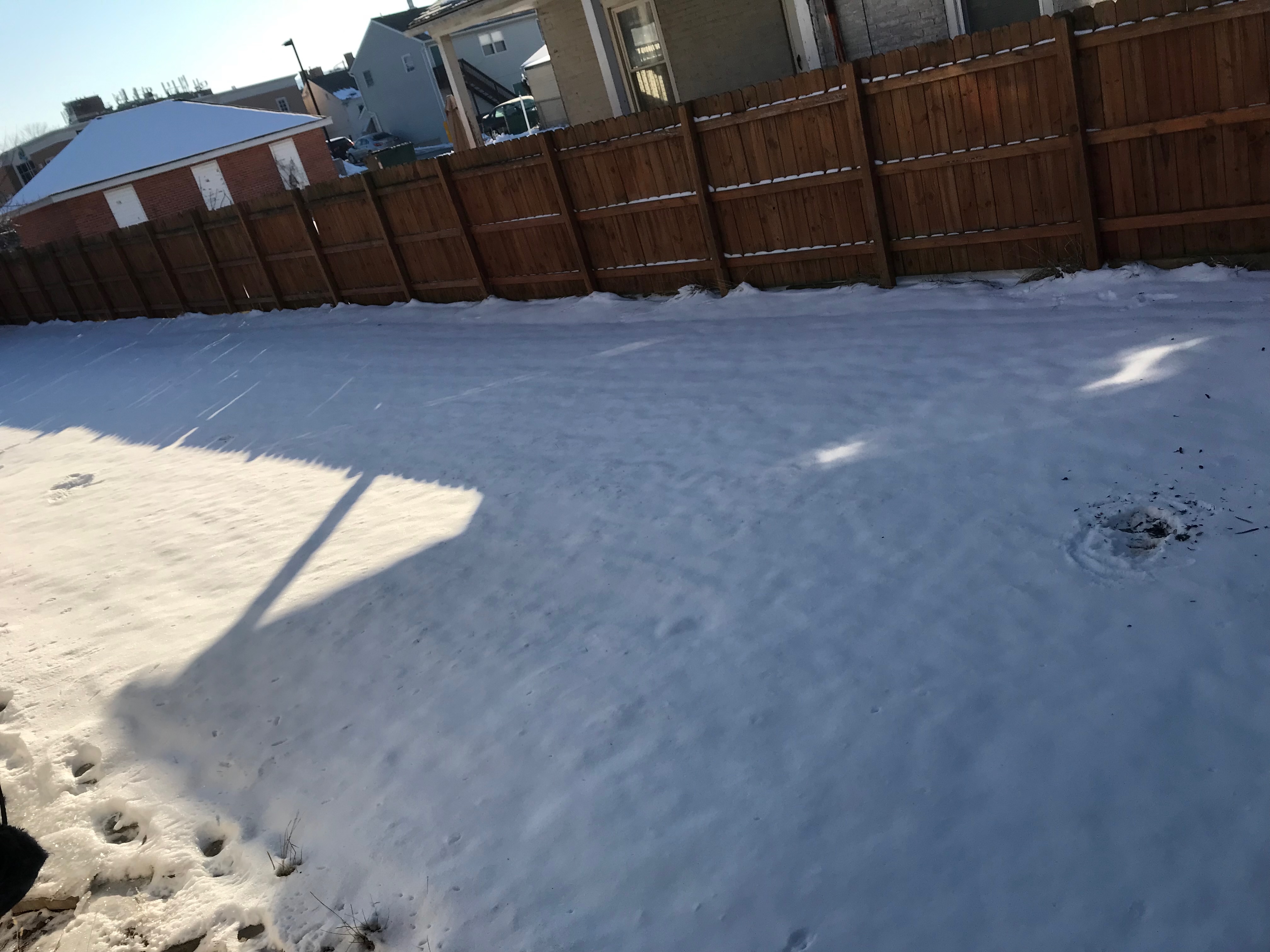
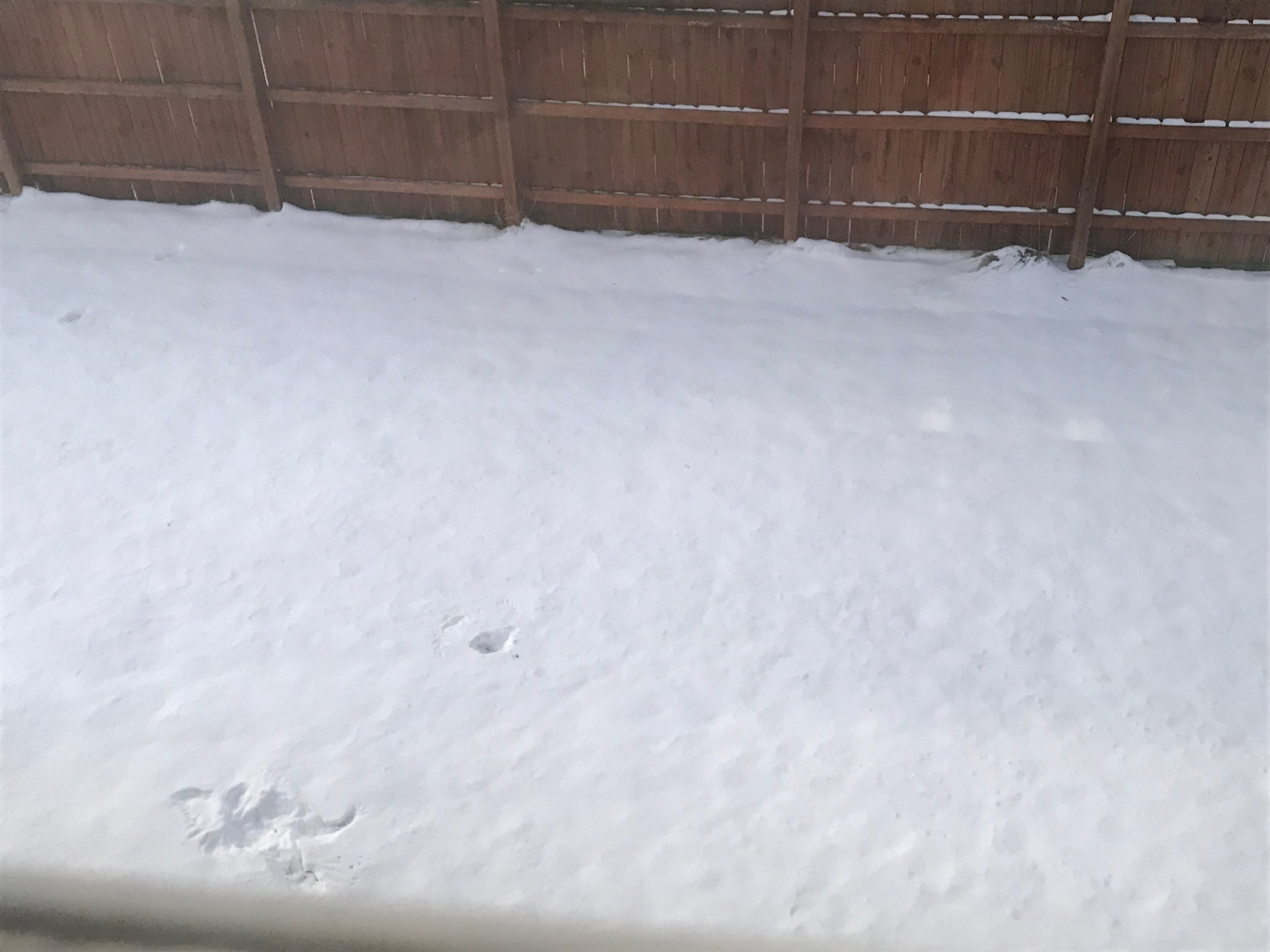
Dateline: January 24.  Location: Backyard.  It was clearly a crime scene.  There were prints in the snow.  Blood.  Signs of a struggle.  The marks hadn’t been there the evening before, so I knew I was looking at a recent offense.  Two indentations in the snow, about 10 yards apart.  Too far for a small animal to have leapt.  A third impression, closer to the second.  Clear feather imprints in the snow.  Earlier on the day in question, I had observed a hawk in the white pine across the street.  Two angry blue jays strafed the interloper, but he appeared unintimidated.  He fluffed his feathers and surveyed the area, including, I presume, my back yard.  In his own time he left, in an unmarked flight.

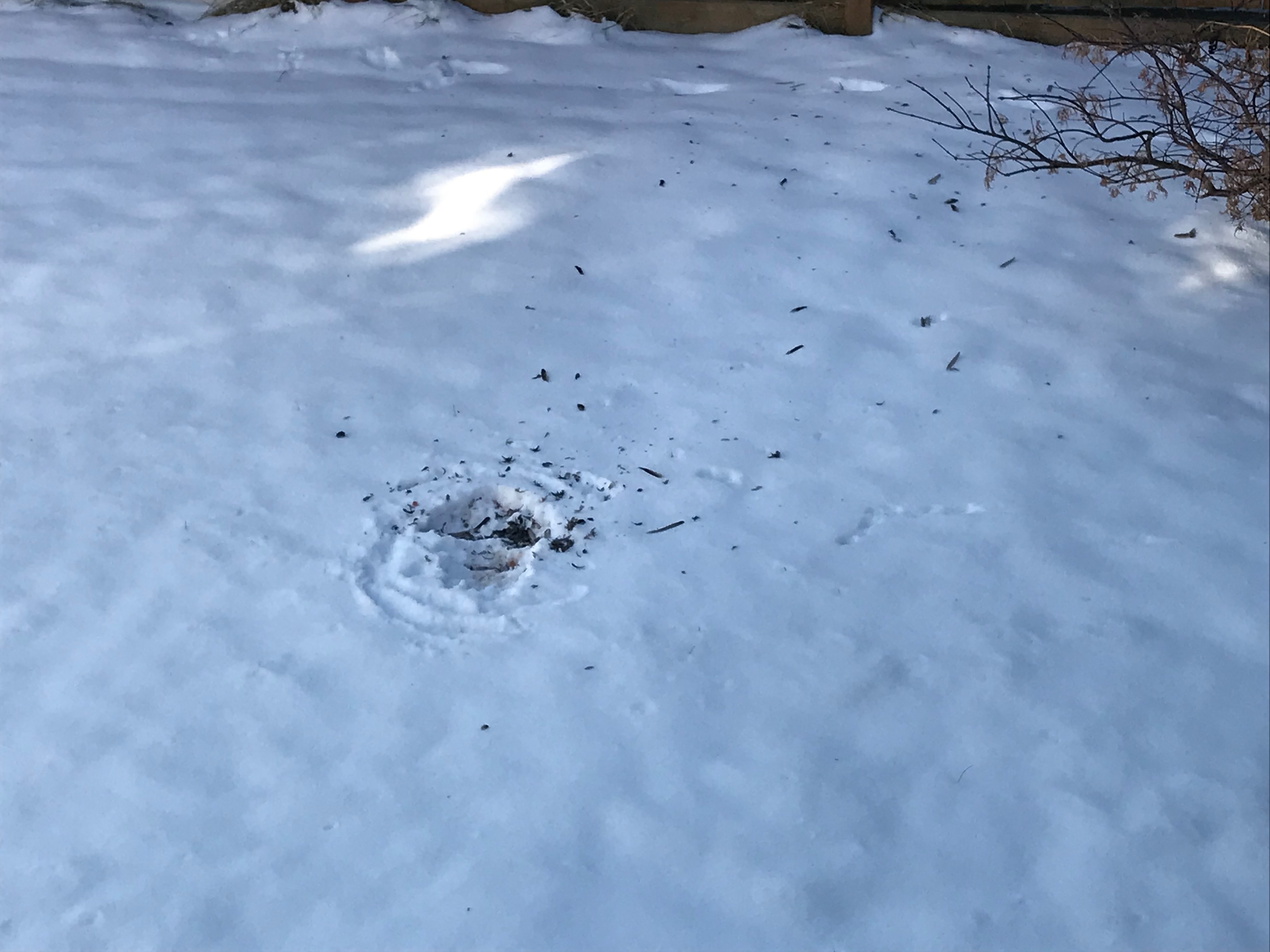
In the morning, rabbit tracks.  The first impact had been violent.  Debris had been raised from under the snow blanket and scattered toward the southwest.  No footprints leading away from the site.  This led me to conclude the victim had been lifted into the air.  But why the second impact site?  There had been a struggle.  The victim, presumably of the Lepus genus, had tried to make a stand.  The second impact site had bits of blood toward the west.  Neither of these first two scenes of investigation bore any indicative hints to the identity of either the victim or the perpetrator.  I did not have the means to test the blood.  No tracks led from either impression.  The third site clearly involved a struggle.

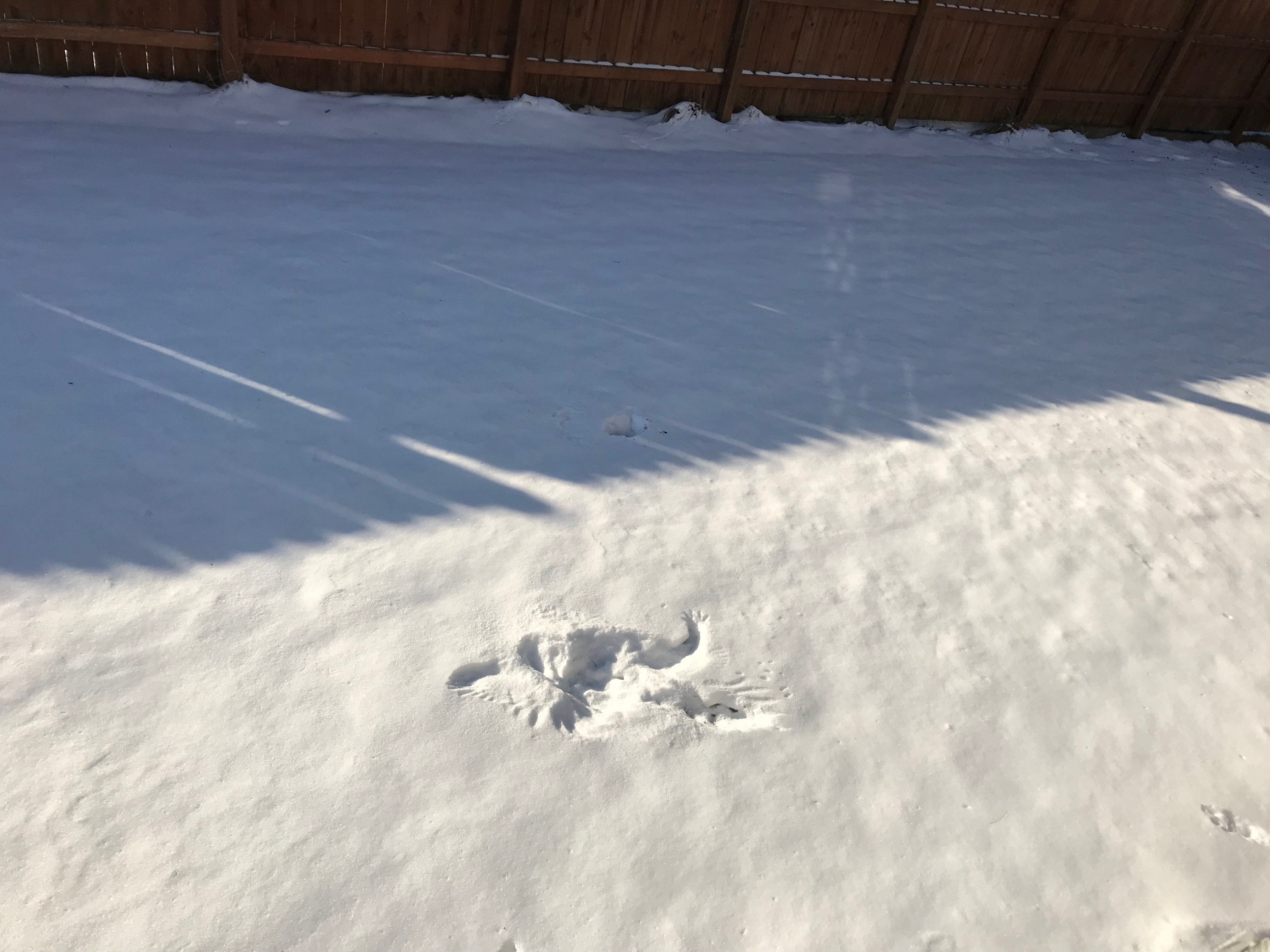
Impressions of feathers, spread at least two-thirds of a meter across, remained clearly visible in the snow.  Between these wing prints evidence of a scuffle.  Perhaps an argument ensued.  No feathers or fur remained on site.  I had to piece this together before the snow began to melt.  What I am labeling site 1, the initial strike, was near a bush under which rabbits are frequently observed to rest.  A hawk, confident of its ability, swooped down in the night and apprehended the rabbit.  The victim fought back, enforcing an unscheduled landing.  Site 2.  Blood was drawn.  Site 3 was an easy rabbit’s leap from site 2.  Perhaps the rabbit escaped.  The wing and claw marks on the snow suggest that the victim did not survive this third attack.  No solid physical evidence could be recovered.  It was just too cold outside to go and look personally.  I am not paid enough to do that kind of work.  Or I could have it backwards.  Site 3 could be the initial strike, but my reconstruction seemed more likely  Either way, the backyard would, however, never feel safe again.


The Next Phase

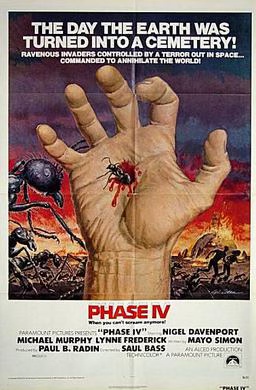
Sometimes I get things backwards.  You have to understand that in the pre-internet era finding information was somewhat dicey.  Those of us from small towns had limited resources.  The movies I saw were on television, with a rare trip to the theater being a treat.  Books, on the other hand, could be had for a quarter or less at Goodwill.  There I found the sci-fi horror Phase IV by journeyman writer Barry N. Malzberg.  I knew there was a movie, which I hadn’t seen, and I assumed it was based on this novel.  Actually, the book was a novelization of the movie.  But it’s more complex than that.  The movie was based on an H. G. Wells story, screen-written by Mayo Simon, then novelized. That novelization made a real impression on me as a kid and I knew that I would eventually have to see the movie.

Some scenes from the novel were still alive to me before watching the film.  It occurs to me that maybe you don’t know what it’s about.  Intelligent ants.  Some cosmic event boosts ant intelligence and two scientists are sent to Arizona to sort it out.  A local family ignores an evacuation order, and when one of the scientists destroys the oddly geometric anthills, a war is on.  (I remembered the destroying the anthill scene.)  The war is both of might and wits.  Meanwhile the family is attacked—I remembered the scene of the ants eating the horse—with only a young woman surviving.  She’s found by the scientists after the first pesticide is released.  The ants attack, intelligently, the research station.  We never do see the expected ants popping out of Dr. Hubbs’ infected arm, but it’s clear by the end that the ants have won and we’re living in Phase IV.

A few observations: this is a scary movie, even if seventies’ fare.  The sci-fi elements dampen the horror down a bit, but it is still scary.  And it also references religion.  I watched the movie a few weeks after seeing The Night of the Hunter for the first time.  What does a Depression-era serial-killing preacher have to do with ants?  The hymn, “Leaning on the Everlasting Arms.”  Now, there’s a project out there for someone inspired by (if such a thing exists) Holy Horror.  Is there a discernible pattern of how hymns are used in horror?  I suspect there is.  That hymn is used so differently in these two movies that I’m convinced something deeper is going on.  If you’re interested, the idea’s free for the taking.  I’ve just spelled out two of the movies for you.


Eating Conscience

Elections notwithstanding, people—at least many of them—are becoming more accepting of those of us who are different.  Or so it seems on the ground, in some places.  A couple of weekends ago we attended the s’MAC DOWN in Bethlehem.  In case you’re not from the Valley, s’MAC DOWN is an event where hundreds gather to compare vegan macaroni and cheese prepared by area restaurants.  I don’t think that when I was younger—and vegan could’ve been considered a protected category—that there would’ve been a healthy line to get into such an event.  But there was just a couple weeks back.  Even after those who paid extra had been already allowed in and had been given a complementary glass of wine.  It helps, as my family reminded me, that mac and cheese is something people tend to like in general.  Being a vegan myself, I do miss cheese the most but vegan alternatives are getting better all the time.

People are slowly becoming aware that industrial farming of animals simply isn’t sustainable for our environment.  It’s one of the largest pollution-generating capitalistic practices.  It contributes to global warming as well as deforestation.  And how many e coli outbreaks and animal diseases leaping to humans will it take until we realize we’re going about this all wrong?  I became a vegan because it’s very clear that animals suffer as they’re being “processed.”  I don’t want to be part of that.  I understand that others differ in their opinions, which is one of the reasons I don’t write about this often.  But attending events like this can be an eye-opening experience.

It’s safe to say that if eaters didn’t know, they wouldn’t be able to tell that this food was vegan.  Things have come a long way on that front.  Cheese and milk are fairly easy to substitute.  (As is meat, it turns out.)  Butter goes without saying because people warmed up to margarine decades ago and some margarine makers are now putting “vegan” on their packaging.  I’ve been vegan going on a decade now.  There are still places you can’t eat without violating your principles, but events like the s’MAC DOWN show that even non-vegan restaurants are willing to give it a try.  And by and large they do it well.  Of the nine samples we had (in compostable cups with compostable “plastic ware”) there was only one I really didn’t care for.  A couple would’ve been very difficult to pin down as vegan at all.  And then there was the fact that hundreds of people had paid to give this a try, and not all of them were young folks.  It’s good to feel accepted, even when eating by my conscience.


Pan Pandering

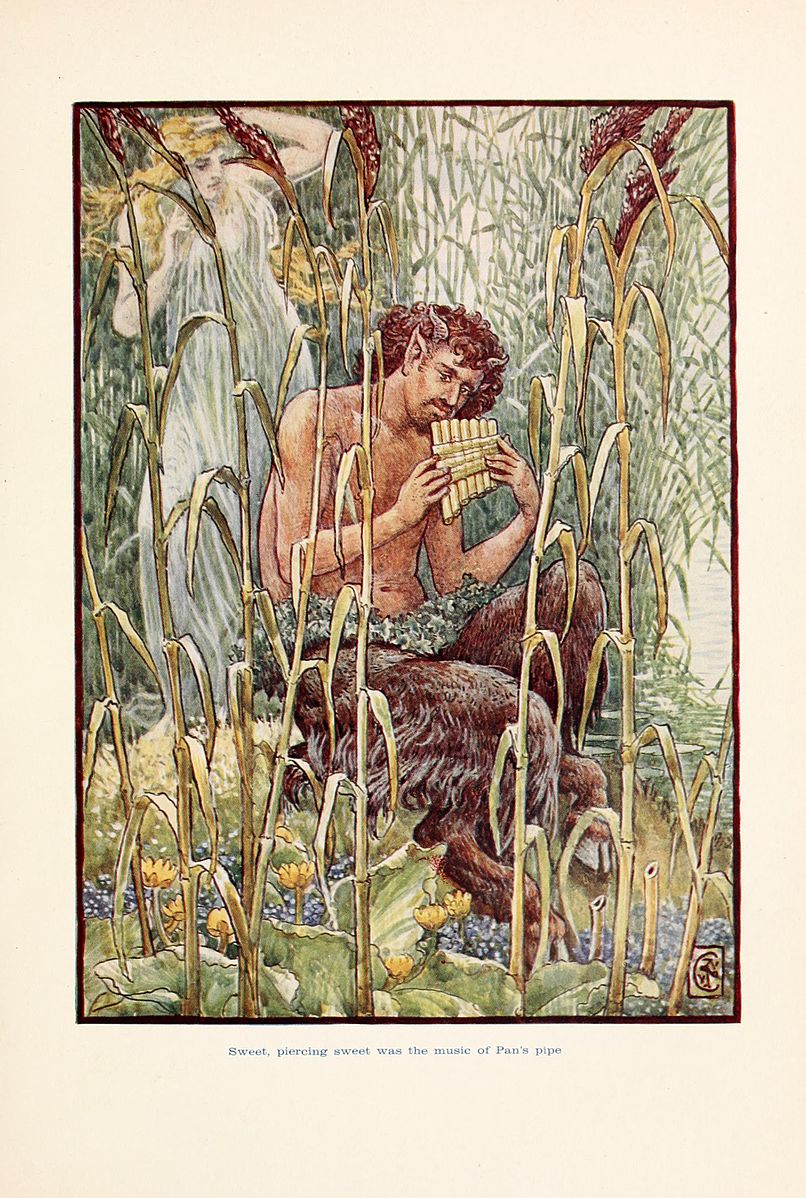
The Greek god Pan has had a rough go of it.  And I don’t mean that his name is a homophone for an essential kitchen item in English.  No, Pan was mistreated by early Christians, made evil, and then good, before finally being largely forgotten.  We’ll start with the bad and move to the good.  As I discuss in one of my publications, Pan was considered evil by medieval Christians for a few reasons, apart from being a “foreign god.”  First, he was associated with nature.  Early Christians weren’t naturalists.  They were looking to escape the world (a trait that continues to be manipulated by politicians even today).  Not only that, but Pan had goat legs and horns.  While horns could be used to represent any deity, including Yahweh, the combination with goat legs suggested Pan might be demonic.

Image credit: Walter Crane, public domain via Wikimedia Commons

Nobody knew what demons looked like.  They are incorporeal, after all.  As I point out in Nightmares with the Bible, the fact that the rarely used Hebrew word for demons is roughly translated to “hairy ones” added to Pan’s sins.  This was a common Hebrew phrase for goats, and over the course of many centuries, when people had the irresistible urge to draw the invisible, they gave Satan the Pan treatment.  Goat lower half and horns on his head.  In many esoteric groups the goat, i.e., Pan, became a symbol of demons.  All of this has a rich and detailed history and it literally demonized Pan.  Yes, he was all for free love, but he was a musician, after all.  Then something interesting happened.  

When the King James Version of the Bible was first printed, the biblical books each began with an illuminated letter.  The book of Psalms began with an L.  This letter was inscribed with an image of Pan.  What the devil was he doing in the Good Book?  Well, by 1611 Pan was considered a type (or foreshadowing, if you will) of the good shepherd.  And we all know who the Good Shepherd is, right?  Not only that but his name, “Pan,” translates to “all” in English.  Since Jesus is “all” to Christians, it was appropriate that he be symbolized by Pan.  This ancient force of nature had gone from being the Devil to representing God.  Indeed, he could, at the same time, be symbolic of both.  Now this is quite an accomplishment for any entity, let alone a rustic god who was never an Olympian.  Pan isn’t much discussed in Christianity today, but he had a fascinating place in its view toward goats, both bad and good.


Or Plastic

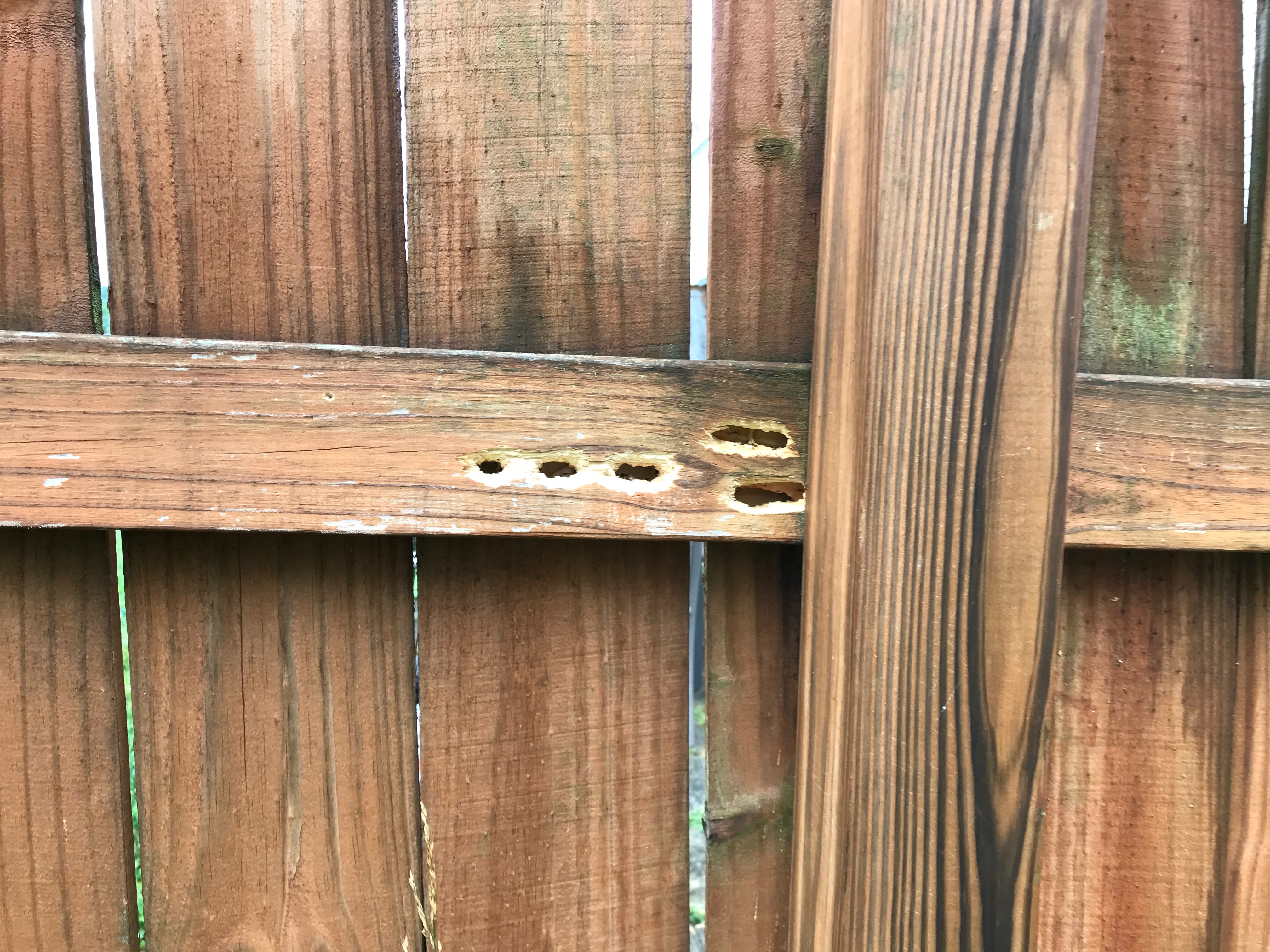
I’m no fan of plastic.  When looking for a house a non-negotiable with me was vinyl siding—nope.  In our neighborhood several houses have plastic fences pretending to be wood. I dislike materials pretending to be something else.  I was dead-set against such a thing, but our house came with a lot of neglected outdoor woodwork.  The fence was wood and had been stained, probably just before we moved in.  Then the carpenter bees arrived.  Local pest control will spray for them, but they come back each summer and unless we have the pest store on speed-dial the bees will find new things to damage.  See, the problem isn’t just the bees.  Woodpeckers, which as a kid always seemed exotic to me, love carpenter bee larvae.  I’ve watched a downy woodpecker hoping along the fence, knocking until it finds one, and then hopping a few feet further to repeat the process for another.  (If you’ve ever watched a woodpecker at work you’d not doubt animal intelligence.)

My wife and I talked it over.  The fence was in poor repair to begin with (another thing our house inspector missed).  I finally came around to seeing why plastic might be the best solution in our case.  Not for me, but for resale value.  The former owners had a thing for untreated outdoor wood.  They’d built a new back porch, but didn’t paint or stain it.  When the carpenter bees noticed, I painted it.  I couldn’t reach the ceiling, though, being short of stature.  Well, this year the carpenter bees have gone for the ceiling.  And the downy woodpeckers have followed them.  Now, when I hear knocking, I have to run downstairs to the back door to frighten off downy.  I will buy a paint sprayer to paint the ceiling, but the bees have had a head start this summer.

So I was in my office and I heard a tapping, as of a woodpecker gently rapping.  I ran downstairs and threw wide the door.  To my surprise, nobody was on the porch.  I went back to work.  Soon again I heard a tapping somewhat louder than before.  I followed my ears to the front door.  Yes, the tapping was from out front but daylight there, nothing more.  I stepped to the edge of the porch.  More tapping.  I leaned over the railing and looked down.  A rare, and large, pileated woodpecker was going at the fence post.  I was about as startled as she was.  My wife was out on an errand and when she returned home she found selfsame woodpecker working elsewhere on the fence.  I’ve learned my lesson.  While wood looks nice, and is natural, it will soon be paper thin if we don’t do something.  It’s a big fence.  And the only option to paper is, unfortunately, plastic.


Praying for Mantis

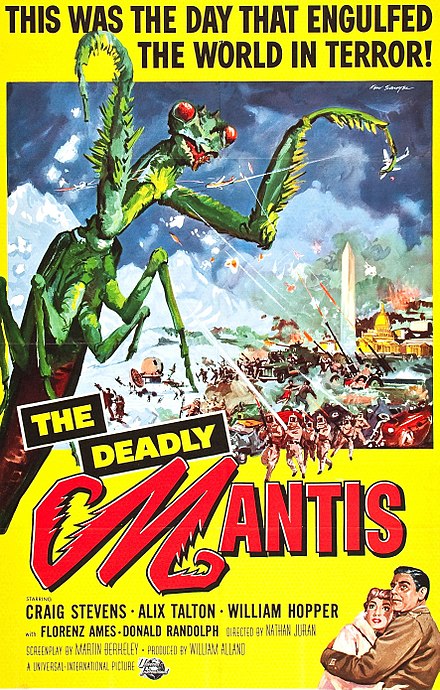
Now this is a Cold War movie.  And I mean “cold.”  The Deadly Mantis is one of those movies that hovers between “so bad it’s good” and just plain “so bad.”  I was kind of rooting for the mantis.  In any case, this was an ambitious movie for the time but it reflects the post-war paranoia in the United States.  It also makes very abundant use of stock footage, much of it military.  You almost expect a recruiting ad at the end.  (It does thank the Ground Observer Corps in the closing credits.)  Okay, so here’s the story.  A volcano in the south Atlantic causes the calving of an enormous Arctic iceberg near the North Pole.   That iceberg contains the frozen body of a 200-foot praying mantis from dinosaur times.  Even earlier.   Said frozen mantis, quite hungry after millions of years, begins attacking Arctic radar bases and flying south.  The Air Force calls in a paleontologist to help identify what they’re looking for.

The mantis is so big that it prefers people for food, although, one might note, a polar bear would’ve been easier prey.  In any case, given the technology limitations of the time, the military has trouble keeping track of the insect as it flies over the most populous part of the country.  They do get the cloudiness of the East Coast about right.  Eventually they shoot it down—actually a fighter jet crashing into it does the job—over Newark and the mortally wounded mantis crawls into the Lincoln Tunnel (called “The Manhattan Tunnel” in the film).  By this point the viewer is saying “just let the poor thing die in peace,” but they pump smoke into the tunnel, presumably to hide wires and other props, and commit a protracted insecticide.  

Now, I’m one of those people who hates to hurt any animal.  The death twitches of an insect are quite troubling, so I try to catch what I can indoors and release them.  I have trouble with the instructions to kill spotted lantern flies—it’s not their fault that they’re here.  The movie shows a bravado regarding the military and a machismo regarding the main female character that hearkens back to why it was so necessary to evolve out of the fifties.  Of course, we learned nothing from The Deadly Mantis and have catapulted back into a new Cold War and an even more robust military.  William Alland, the producer, had a real love of this genre of movie, and for that we have much to be grateful.  But even the big bug genre can produce a real groaner now and then.


Sun Day

Two holidays in a row!  Although today nobody gets off work because, well, two holidays in a row is too much.  People might come to expect a little more time off.  If you’re like most people, the summer solstice creeps up on you.  Its more somber sibling, six months from now, is more anticipated.  In December we’re light deprived (here in the northern hemisphere) but we’ve been soaking in the sun for some time already now.  Besides, nobody gets the four turns of the year off work.  Christmas is a gimme, but it comes three or four days after the solstice.  We figure Labor Day is close enough the the autumnal equinox, and thank God Easter is a Sunday, at least in the years when it’s near the vernal equinox, so nobody complains.  I feel at my most pagan these days.  Why not celebrate the turning of the wheel?

The other day I was catching up on the Vlog Brothers—John and Hank Green.  Last week they were talking about “Beef Days,” or how to reduce the amount of red meat they eat.  They proposed doing it by setting aside a few holidays a year where they would have it.  Their reason?  The biggest environmental threat to our planet is our dependence on beef.  It’s the reason rainforests are being clear cut.  It is a huge source of greenhouse gasses.  The one thing they didn’t mention, however, is the suffering of the animals themselves.  Industrial farming leads to horrible lives being raised to be consumed.  The conditions in which animals are kept is so bad that it is illegal in some states to reveal the conditions to the public.  You hide things that you’re ashamed of.  I became a vegetarian a quarter century ago, and a vegan coming up on a decade now.   I can’t live being the cause of the suffering of others.

Why not use the ancient holidays as days of some kind of indulgence?  I don’t recommend eating red meat—in fact, I agree with my Edinburgh friend that if you want to eat meat you should be required to kill it yourself.  (He’s not a vegetarian, note, but a wise man.)  In any case, although you may be stuck behind a desk at work, take a moment to ponder that light will be slowly fading from this day on until we reach that other pole that turns another year.  And we can dream of shortened work weeks, although that’s about as likely as being given the summer solstice off as a matter of course.  Speaking of which, work calls.


No Demons

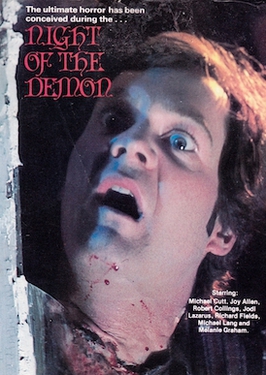
There’s a connoisseurship about it.  Making bad films, that is.  It’s a wonder that Night of the Demon—I should specify 1980 as the year—hasn’t really become a cult film of any standing.  You can tell the maker tried hard to shoot a reasonable film, but with a nearly Ed Woodsian level of incompetence.  It lacks Woods’ artistry, however.  For those just getting on the Bigfoot kick in the new millennium, it might help to know that Sasquatch was big in the seventies.  Yes, the first real efforts to sort this thing out came about when the psychedelic seventies were underway.  The documentary The Mysterious Monsters came out in 1976.  The first serious efforts to explain Bigfoot as not just a hoax began.  And James C. Wasson, Jim L. Ball, and Mike Williams took a shot at making a horror film of the hairy guy.

The acting is about the worst you’d care to see, and the script is abysmal.  The effects are anything but special, and the flashback scenes incongruous.  But it does have significance for religion and horror.  It goes like this: a professor and some students go to investigate a series of Sasquatch-related murders.  They’re led to “Crazy Wanda,” who lives alone in a remote cabin.  Wanda, when finally persuaded to talk, reveals that her crazed preacher of a father killed her Bigfoot-hybrid baby.  His followers still perform demonic rituals in the woods, worshipping the Sasquatch.  Wanda had burned her father to death in retaliation for killing her child—she kinda likes Bigfoot, it turns out.  The professor and students, naturally, fall victim to the beast.

Only the professor survives.  He’s assumed to be criminally insane and suspected of murdering his own students.  It’s almost painful to watch a movie where everyone is trying so hard to do it well, but just can’t seem to manage it.  The plot line about the cultists is immediately dropped after an intended rape ritual is interrupted by the professor.  Wanda’s preacher father, who seems to fit into no particular form of Christianity, has no motivation beyond avoiding Hell for himself.  At one point he seemingly admits killing her mother.  There’s even a scene where Bigfoot kills two Girl Scouts.  With all of this going for it, you might think it would’ve picked up a following.  It has some fans, I’m sure, but I’m not certain that it’s well enough known to make it onto lists of worst movies of all time.  More’s the pity since it would absolutely deserve it.


Hooting in the Dark

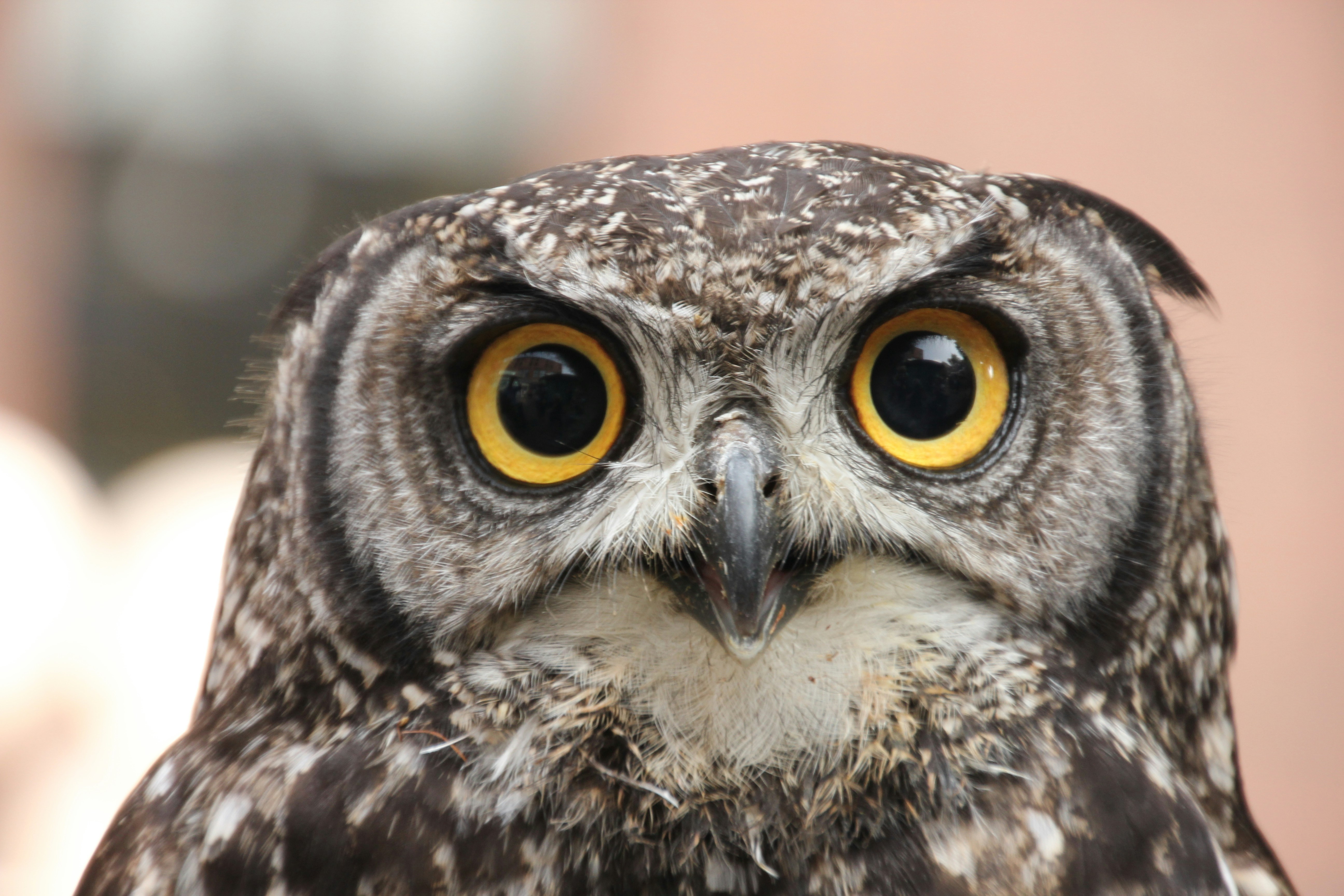
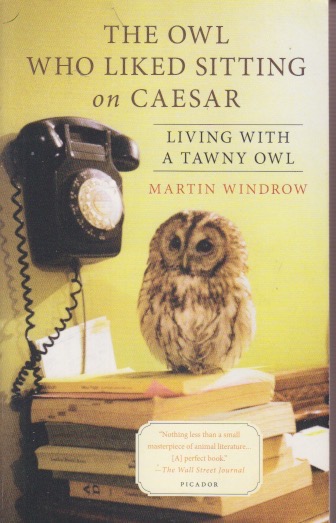
Animals fascinate me.  I picked up Martin Windrow’s The Owl Who Liked Sitting on Caesar: Living with a Tawny Owl at a used book sale.  Honestly, the cute photo on the cover swayed me.  Although some animals like living with humans, and although I grew up with lots of pets, I’ve tended away from that.  Reading about how an owl became a close companion to, and lived a good life with a human was somewhat bittersweet.  In the wild Mumble (the owl’s name) would’ve likely lived a far shorter span.  But I do wonder if she missed out on the challenges that make life rewarding.  (I sometimes wonder the same about those born rich among our own species.)  The struggle is part of nature inside us.  And although this book is generally fun, it does raise some deeper questions in my mind.

When describing the natural life of Tawny Owls, Windrow notes that they have an ability, not understood, to adjust their brood sizes by the amount of prey that will be available during a given year.  Such things always give me pause for a couple of reasons.  One is that we seem to assume we have all the data—that we know all that can be known of our world.  Animals prove that wrong time and again.  The other reason is that we are convinced there is no, for lack of a better term, spiritual world.  Or maybe better, paranormal existence.  Might it not be that owls have some ability to know the future?  Some people seem to have the ability to predict some short-term developments with accuracy.  Perhaps we’re missing something is all I’m saying.

In the end, however, I was surprised how Windrow couldn’t quite bring himself to reject a materialist view of her death.  I’ve had pets die on me—one of the reasons that I have no desire to “own” one—but as Windrow writes it, the relationship grew humdrum before Mumble’s death.  He had to work and she had to perch.  We do tend to take those closest to us for granted, I fear.  Life is so busy that we have to try to squeeze family in next to the demands of capitalism.  So the story towards the end winds down to a kind of “I had a pet owl but I had a life to live too” kind of narrative.  I’m glad to have read the book and I learned a little bit about Tawny Owls.  But I was also left reflecting on some of the larger implications.


Using Brains

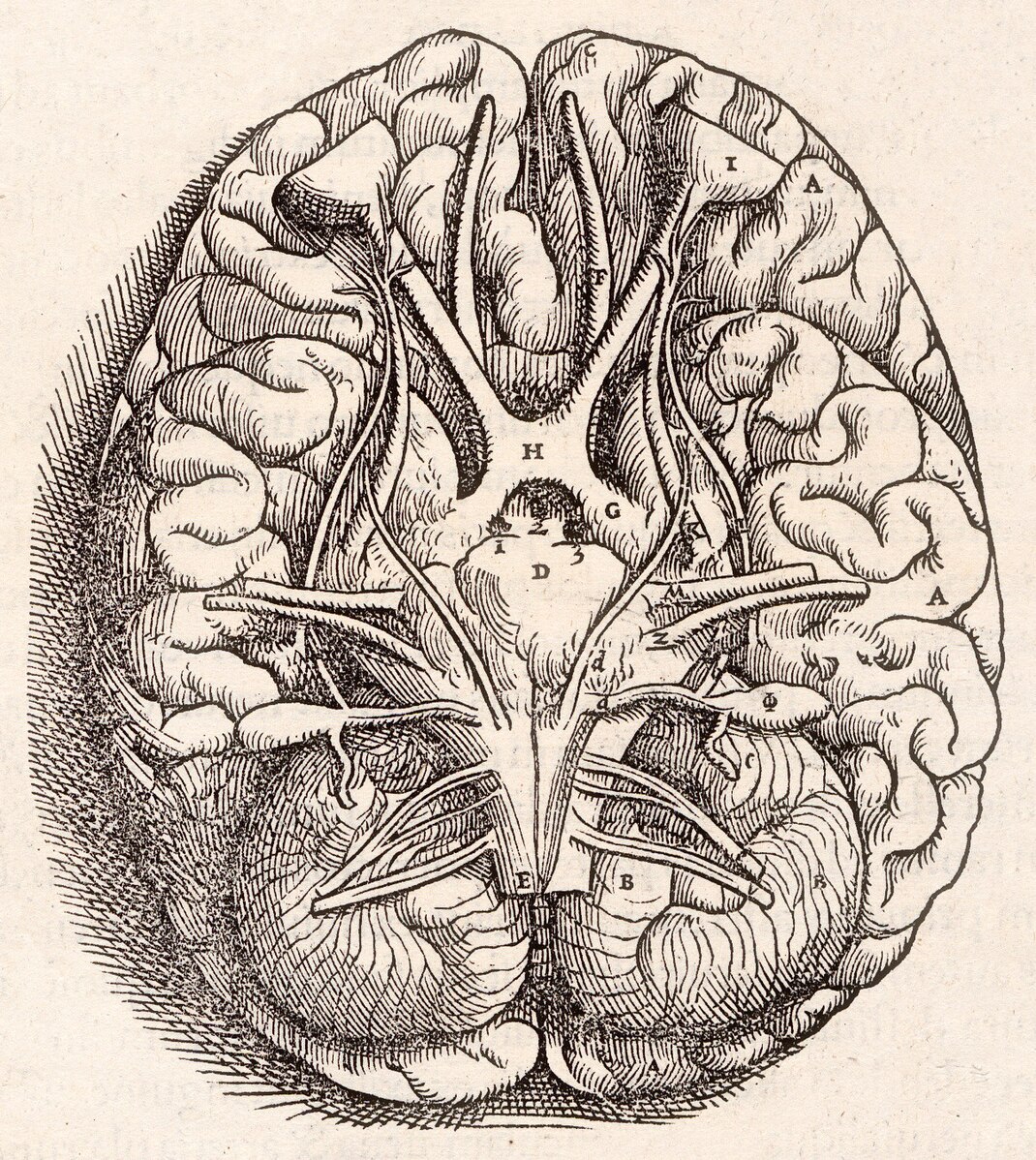
I’m old enough to know better.  Here’s a thought.  I recently saw a headline that suggested human brains filter out things like ESP because brains evolved to help us survive.  No matter what you believe about ESP, the idea got me to thinking.  We often act as if our brains are able to determine the Truth (that capital is intentional).  At the same time we don’t understand what consciousness is.  We know that other animals have brains and that the evolution of said organ is to help individuals survive to reproduce.  Some animal species end their existence at that point, but others linger on to wonder.  And I’m wondering if our brains are filters.  Stick with me here: we know that there are stimuli that we can’t perceive that other brains can.  For example, it seems that migrating birds can perceive magnetic fields.  Even if they can’t there are magnetic fields that we perceive only through their effects on objects.  Our brains have no direct access.

Image credit: Andreas Vesalius‘ Fabrica, showing the Base Of The Brain, by user Ancheta Wis

Here’s where it gets spooky.  If our brains filter out things that may hamper us in survival, what if they overzealously teach us not to perceive things that actually exist?  We’re somewhat limited by our “five” senses, no doubt.  We get along okay.  But what of those people who see things that others don’t?  We tend to medicate them or lock them away, but what if their brains have learned how to shut off part of the filter?  Having written a book about demons, naturally they come to mind as a test case.  Or, if you prefer, ghosts.  We tell our children these things aren’t real.  Trust the filter.  Get on with life in “the real world,” right, Cypher?

I didn’t have time to read the article, but I’d experienced a perspective shift.  If our brains are all about gathering information (and in part they clearly are), that’s one thing.  If they are actively filtering things out, well, that’s quite another.  We laud the imagination of children until they become “old enough to know better.”  Do we teach them to shut out what they can actually see, or sense, in order to accept the inevitable, material, adult world?  This idea has startling implications.  As we plunge ahead inventing AI to do our thinking for us, perhaps we’ve left something even more fundamental behind.  Have we lost interest in the Truth?  We may not be able to access it directly, but I wonder if we’re taught to give up without even trying.


Spider Thoughts

Spiders know.  Spiders are aware of when they’ve been seen.  I’ve been noticing this for some time now.  You can verify this yourself, but it may take some resolve, depending on your level of arachnophobia.  You walk into a room first thing in the morning and see a spider placidly hanging from its web.  If you intentionally look at it, it knows.  Leave the room for at least ten minutes and then come back.  The spider will be gone.  When you first stare at it, it won’t move.  Nature’s flight, fight, or freeze response has a clear winner here.  Spiders play it cool.  This happened recently on a weekend.  I had my wife verify this for me.  I pointed out the spider (I’d already stared at it) and told her I was doing an experiment.  She’s been married to me for thirty-five years, and such things no longer come as a surprise.

I told her my thesis and suggested we both just get breakfast ready as normal.  The spider didn’t move, even with clatter of bowls and spoons.  When my wife went to take her bowl to the sink several minutes later, the spider had vanished.   (This doesn’t seem to apply to spiders actively descending on a web in front of your face, I’ve noticed.  They’re too busy with their spider thoughts.)  Animals are smarter than we give them credit for being.  Who ranks spiders on their list of smart critters?  But they are.  And I wonder what they think of me.  If a spider crawls on me, I run away.  Like a spider I won’t return to the same place where it happened, at least not for some time.  All of this brings Rupert Sheldrake to mind.

Sheldrake has been summarily wiped off the table by other scientists, in part because he has explored the sense of being stared at.  Materialistic science tells us there can be no such thing since being seen is passive and we have no sense organs to detect it.  We have all, however, had the experience of turning around to find that someone has indeed been staring at us.  As so often happens with materialism, we’re told simply to discard it as fantasy.  But that’s not the way it feels.  So I look at my most recent spider—I know there will always be more—and know that s/he knows they’re being stared at.  When you’re small running may not get you away swiftly enough.  Freezing makes more sense.  Freezing and waiting.  The thing you fear (for a spider it’s me) will generally go away on its own, looking for something more material, I suspect.


Bugging Out

There’s a scene in Disney’s Hercules where Thebes has just been through a bunch of unnatural disasters sent by Hades to lure Hercules into the open.  The people, visibly shaken by the tragedies are talking about their need for a hero.  Then a locust hops in.  An old man says that does it, he’s moving to another city.  So with yesterday’s super soaker around here—we’ve had our roof completely replaced—water was still getting in.  I’m no expert, but it looks like it was condensation rather than roof leaks proper.  The air was saturated and cold, while inside it was at least a few degrees warmer.  I got up to find buckets scattered around that my wife had set up after I’d fallen asleep.  Then a boxelder bug appeared on the curtain in my study.  The insect on top of other misfortune.  It’s classic.

That’s because insects swarm.  We live in an older house (the only kind designed with space that can be used for books).  It doesn’t have wooden siding, but boxelder bugs like to overwinter in the walls.  I really can’t figure out why because in nature they winter in, well, boxelder trees.  Or a maple.  There are no boxelder or maple trees near our house, but they seem to like it nevertheless.  The problem is they get inside, in numbers.  We try to run a catch and release business.  It seems decidedly unfair to kill a harmless bug for doing what human-altered climate tells it to do.  When the heating kicks on, their insectoid brains tell them it’s spring and they crawl out looking for food.  Well, we don’t have any trees they like growing inside, so they wander about aimlessly.  I catch them and take them outside, figuring maybe they can find, I don’t know, a tree?

Usually when winter’s serious chill sets in, they go dormant.  This year we’ve been hovering between freezing and not, and when the sun comes out—which it sometimes does—they awaken.  They must be confused.  Somehow they don’t realize that the world has changed around them.  Going about their daily bug business (nothing seems to eat them—apparently they taste bad) the climate has broken their hibernation into segments of a few days at a time.  Perhaps they’re cranky when they crawl up the curtains, or across my desk (they pretty much stay in my study).  At least they don’t sting.  They’re not bad enough to make us leave Thebes, but it would be wonderful if they’d wise up to global warming, and maybe plan in advance.  Or maybe they’re waiting for a hero.


Boxing

Christmas is too large for just one day.  I know that, of course, not everyone can take a string of days off work.  I realize there are people who work Christmas day.  For the rank and file of us drones, however, who sit in front of computers 9-2-5 making money for “the company,” this season should be a respite.  The day after Christmas goes by many names—the second day of Christmas, the feast of St. Stephen, Boxing Day.  Christmas, like ancient Roman winter festivals, couldn’t be contained in a single day.  For me, being a professor meant living life in semesters.  And semesters had breaks that included a couple weeks in December to regain your bearings.  To me, that remains how it should be.  So we continue to celebrate Christmas another day.  We do so without an agenda.  We do so by relearning how to relax.

Mental work is harder than it looks.  The work day takes up so much time that when I finally have a few days off I wonder how I ever get things done for the rest of the year.  Out of necessity, obviously.  You have to work.  You have to mow the lawn.  You have to visit the tax guy in tax season.  And so on.  I’ve been reading about bees lately.  They’re a lot more intelligent than people tend to think.  The hive mind has its own logic.  Still, worker bees literally work themselves to death.  Lifespans are measured in weeks.  It’s the price they pay for the success of the life of the hive.  And when, after a few years a queen dies, changes take place that make a worker a new queen.  The hive can continue.

Humans aren’t bees, of course.  Our society has different values.  We investigate when any of our species dies under mysterious circumstances, believing that all have certain rights.  (War, of course, cancels those rights, but we think and dream of peace during the Christmas season.)  Since the Christmas season remains with us but a few days each year, it makes sense to me that we build in some time for the drones and workers to recharge.  Across much of the world Boxing Day is a bank holiday—a day off work.  A time when the hive isn’t so worried about the concerns that mark most of the other days of the year.  Holidays are important.  They make us human.  As much as I appreciate bees, even the hive hibernates during winter.  Let’s give Christmas its due.