Hooting in the Dark

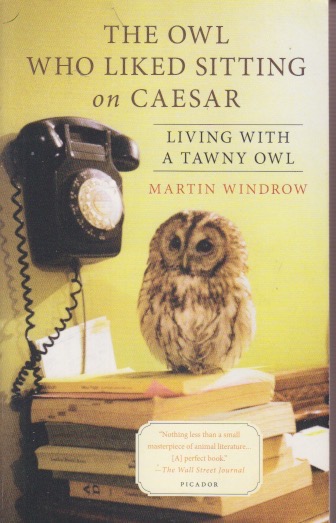
Animals fascinate me.  I picked up Martin Windrow’s The Owl Who Liked Sitting on Caesar: Living with a Tawny Owl at a used book sale.  Honestly, the cute photo on the cover swayed me.  Although some animals like living with humans, and although I grew up with lots of pets, I’ve tended away from that.  Reading about how an owl became a close companion to, and lived a good life with a human was somewhat bittersweet.  In the wild Mumble (the owl’s name) would’ve likely lived a far shorter span.  But I do wonder if she missed out on the challenges that make life rewarding.  (I sometimes wonder the same about those born rich among our own species.)  The struggle is part of nature inside us.  And although this book is generally fun, it does raise some deeper questions in my mind.

When describing the natural life of Tawny Owls, Windrow notes that they have an ability, not understood, to adjust their brood sizes by the amount of prey that will be available during a given year.  Such things always give me pause for a couple of reasons.  One is that we seem to assume we have all the data—that we know all that can be known of our world.  Animals prove that wrong time and again.  The other reason is that we are convinced there is no, for lack of a better term, spiritual world.  Or maybe better, paranormal existence.  Might it not be that owls have some ability to know the future?  Some people seem to have the ability to predict some short-term developments with accuracy.  Perhaps we’re missing something is all I’m saying.

In the end, however, I was surprised how Windrow couldn’t quite bring himself to reject a materialist view of her death.  I’ve had pets die on me—one of the reasons that I have no desire to “own” one—but as Windrow writes it, the relationship grew humdrum before Mumble’s death.  He had to work and she had to perch.  We do tend to take those closest to us for granted, I fear.  Life is so busy that we have to try to squeeze family in next to the demands of capitalism.  So the story towards the end winds down to a kind of “I had a pet owl but I had a life to live too” kind of narrative.  I’m glad to have read the book and I learned a little bit about Tawny Owls.  But I was also left reflecting on some of the larger implications.


Using Brains

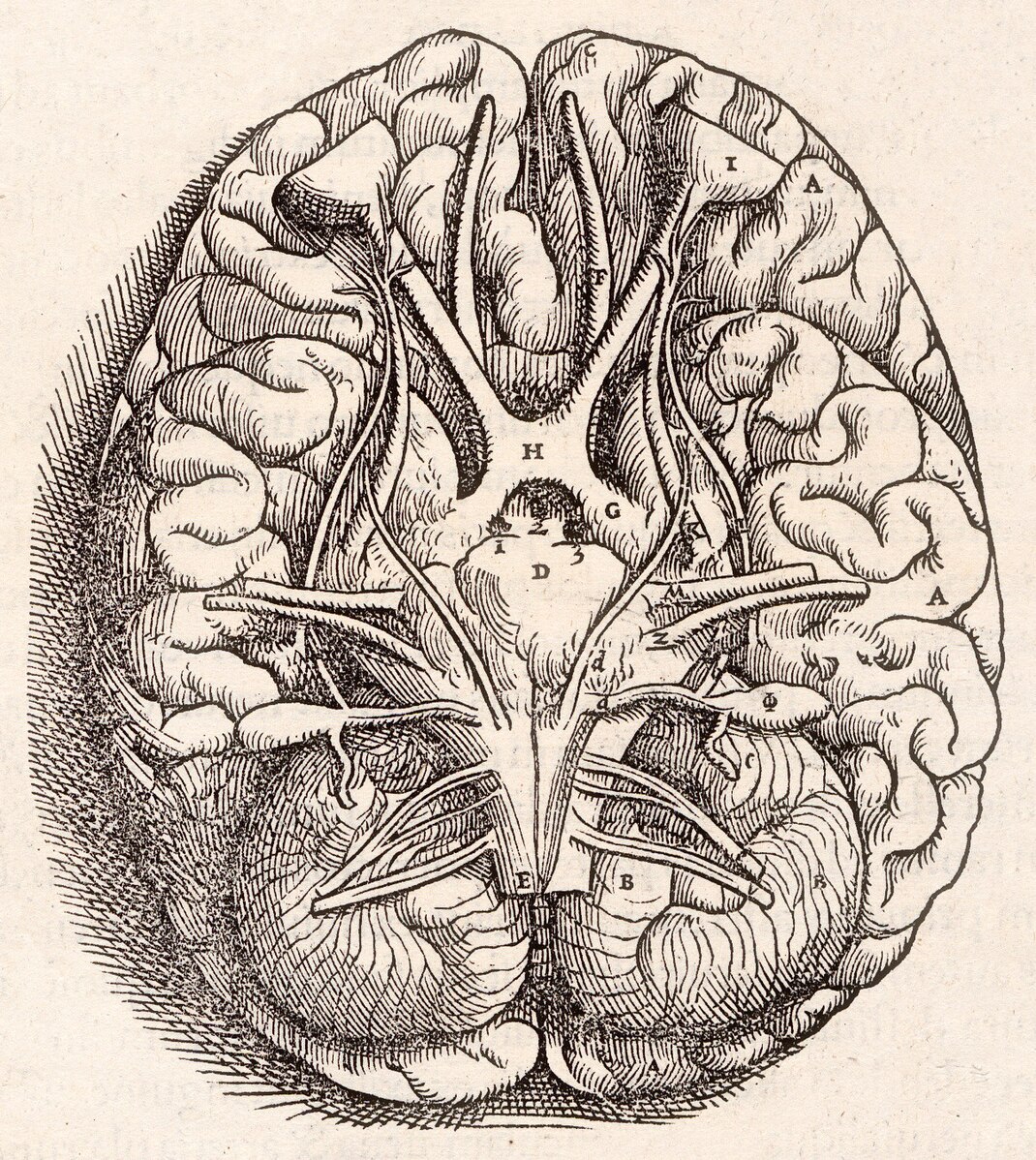
I’m old enough to know better.  Here’s a thought.  I recently saw a headline that suggested human brains filter out things like ESP because brains evolved to help us survive.  No matter what you believe about ESP, the idea got me to thinking.  We often act as if our brains are able to determine the Truth (that capital is intentional).  At the same time we don’t understand what consciousness is.  We know that other animals have brains and that the evolution of said organ is to help individuals survive to reproduce.  Some animal species end their existence at that point, but others linger on to wonder.  And I’m wondering if our brains are filters.  Stick with me here: we know that there are stimuli that we can’t perceive that other brains can.  For example, it seems that migrating birds can perceive magnetic fields.  Even if they can’t there are magnetic fields that we perceive only through their effects on objects.  Our brains have no direct access.

Image credit: Andreas Vesalius‘ Fabrica, showing the Base Of The Brain, by user Ancheta Wis

Here’s where it gets spooky.  If our brains filter out things that may hamper us in survival, what if they overzealously teach us not to perceive things that actually exist?  We’re somewhat limited by our “five” senses, no doubt.  We get along okay.  But what of those people who see things that others don’t?  We tend to medicate them or lock them away, but what if their brains have learned how to shut off part of the filter?  Having written a book about demons, naturally they come to mind as a test case.  Or, if you prefer, ghosts.  We tell our children these things aren’t real.  Trust the filter.  Get on with life in “the real world,” right, Cypher?

I didn’t have time to read the article, but I’d experienced a perspective shift.  If our brains are all about gathering information (and in part they clearly are), that’s one thing.  If they are actively filtering things out, well, that’s quite another.  We laud the imagination of children until they become “old enough to know better.”  Do we teach them to shut out what they can actually see, or sense, in order to accept the inevitable, material, adult world?  This idea has startling implications.  As we plunge ahead inventing AI to do our thinking for us, perhaps we’ve left something even more fundamental behind.  Have we lost interest in the Truth?  We may not be able to access it directly, but I wonder if we’re taught to give up without even trying.


Spider Thoughts

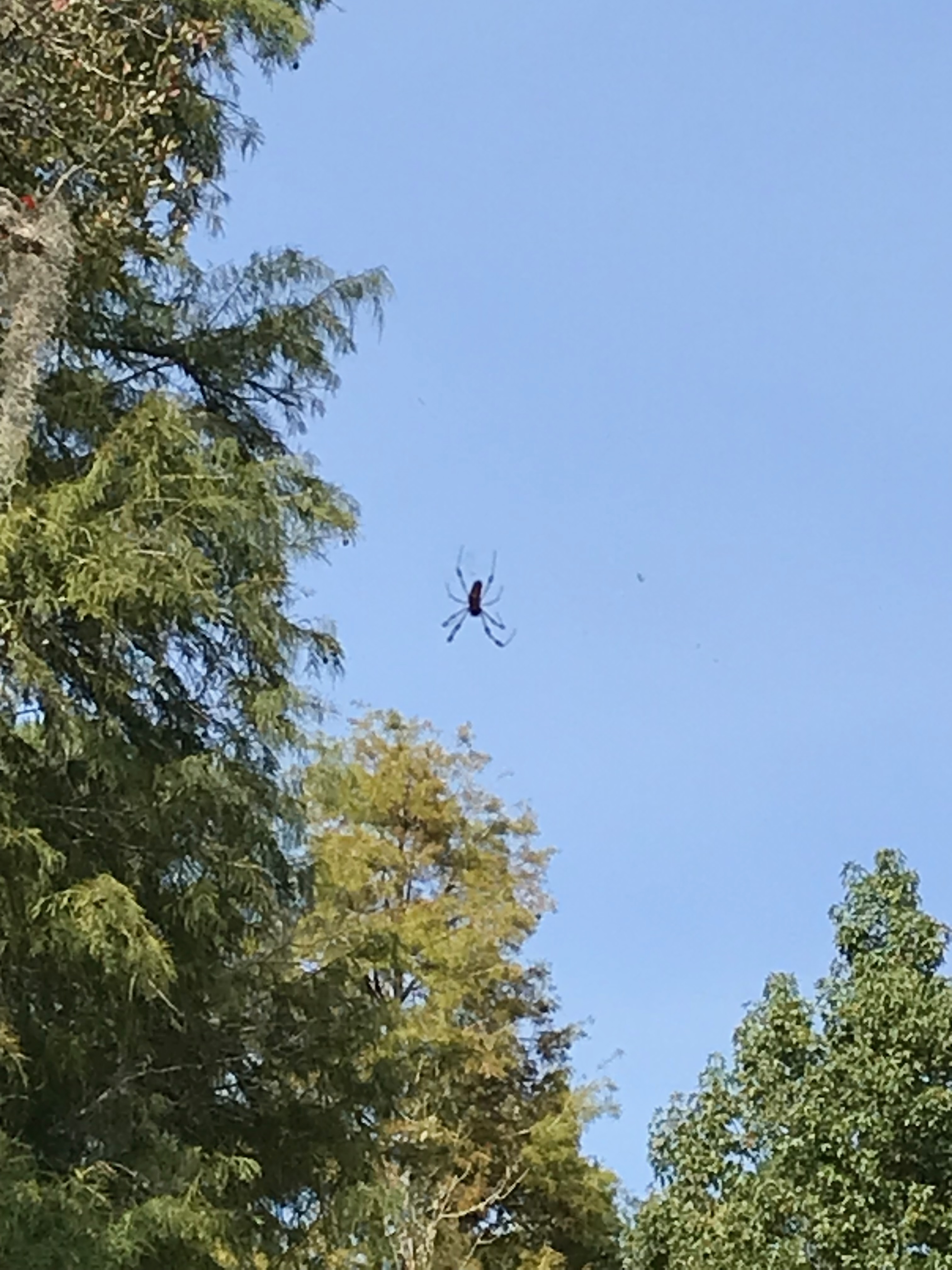
Spiders know.  Spiders are aware of when they’ve been seen.  I’ve been noticing this for some time now.  You can verify this yourself, but it may take some resolve, depending on your level of arachnophobia.  You walk into a room first thing in the morning and see a spider placidly hanging from its web.  If you intentionally look at it, it knows.  Leave the room for at least ten minutes and then come back.  The spider will be gone.  When you first stare at it, it won’t move.  Nature’s flight, fight, or freeze response has a clear winner here.  Spiders play it cool.  This happened recently on a weekend.  I had my wife verify this for me.  I pointed out the spider (I’d already stared at it) and told her I was doing an experiment.  She’s been married to me for thirty-five years, and such things no longer come as a surprise.

I told her my thesis and suggested we both just get breakfast ready as normal.  The spider didn’t move, even with clatter of bowls and spoons.  When my wife went to take her bowl to the sink several minutes later, the spider had vanished.   (This doesn’t seem to apply to spiders actively descending on a web in front of your face, I’ve noticed.  They’re too busy with their spider thoughts.)  Animals are smarter than we give them credit for being.  Who ranks spiders on their list of smart critters?  But they are.  And I wonder what they think of me.  If a spider crawls on me, I run away.  Like a spider I won’t return to the same place where it happened, at least not for some time.  All of this brings Rupert Sheldrake to mind.

Sheldrake has been summarily wiped off the table by other scientists, in part because he has explored the sense of being stared at.  Materialistic science tells us there can be no such thing since being seen is passive and we have no sense organs to detect it.  We have all, however, had the experience of turning around to find that someone has indeed been staring at us.  As so often happens with materialism, we’re told simply to discard it as fantasy.  But that’s not the way it feels.  So I look at my most recent spider—I know there will always be more—and know that s/he knows they’re being stared at.  When you’re small running may not get you away swiftly enough.  Freezing makes more sense.  Freezing and waiting.  The thing you fear (for a spider it’s me) will generally go away on its own, looking for something more material, I suspect.


Bugging Out

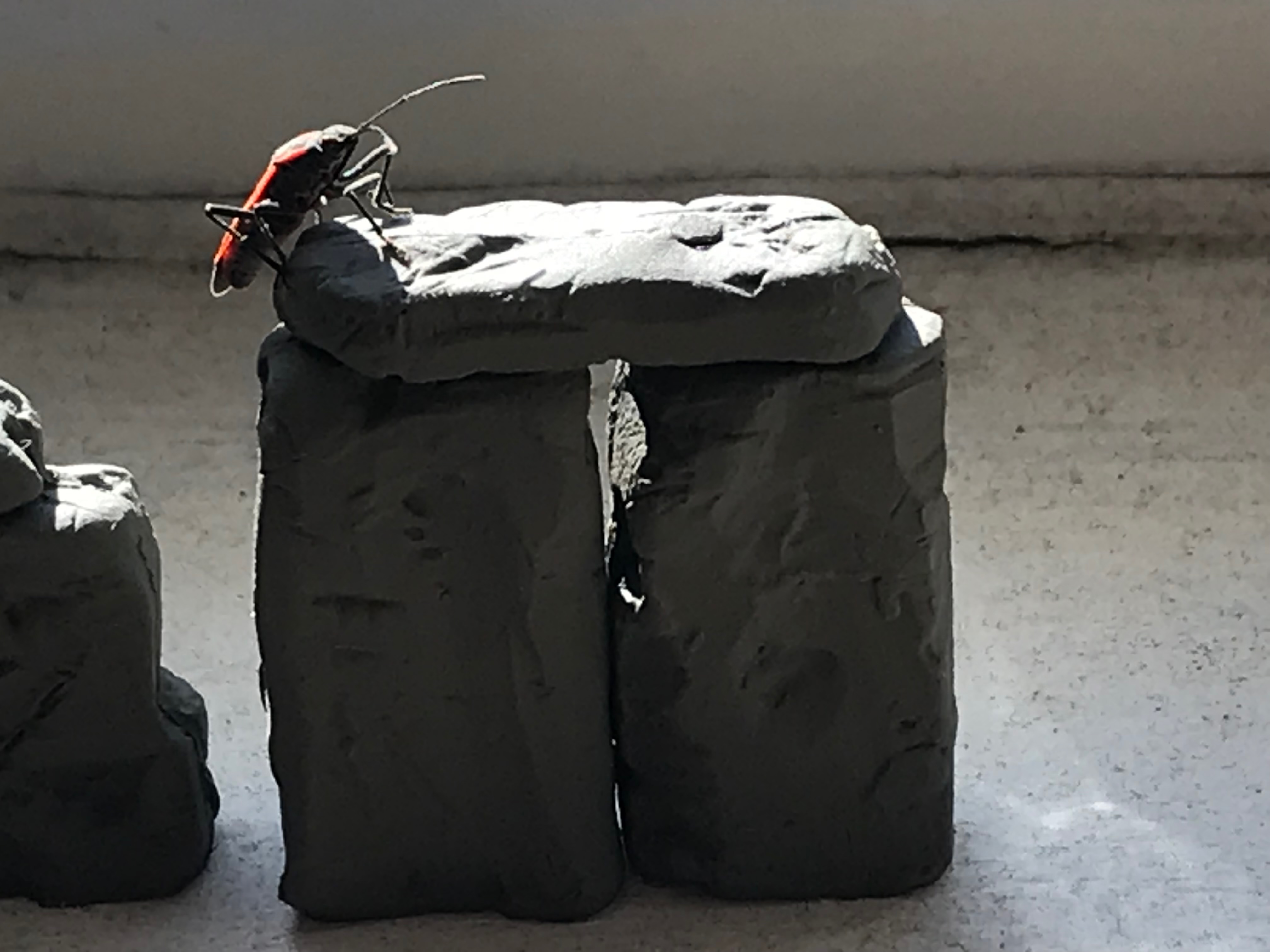
There’s a scene in Disney’s Hercules where Thebes has just been through a bunch of unnatural disasters sent by Hades to lure Hercules into the open.  The people, visibly shaken by the tragedies are talking about their need for a hero.  Then a locust hops in.  An old man says that does it, he’s moving to another city.  So with yesterday’s super soaker around here—we’ve had our roof completely replaced—water was still getting in.  I’m no expert, but it looks like it was condensation rather than roof leaks proper.  The air was saturated and cold, while inside it was at least a few degrees warmer.  I got up to find buckets scattered around that my wife had set up after I’d fallen asleep.  Then a boxelder bug appeared on the curtain in my study.  The insect on top of other misfortune.  It’s classic.

That’s because insects swarm.  We live in an older house (the only kind designed with space that can be used for books).  It doesn’t have wooden siding, but boxelder bugs like to overwinter in the walls.  I really can’t figure out why because in nature they winter in, well, boxelder trees.  Or a maple.  There are no boxelder or maple trees near our house, but they seem to like it nevertheless.  The problem is they get inside, in numbers.  We try to run a catch and release business.  It seems decidedly unfair to kill a harmless bug for doing what human-altered climate tells it to do.  When the heating kicks on, their insectoid brains tell them it’s spring and they crawl out looking for food.  Well, we don’t have any trees they like growing inside, so they wander about aimlessly.  I catch them and take them outside, figuring maybe they can find, I don’t know, a tree?

Usually when winter’s serious chill sets in, they go dormant.  This year we’ve been hovering between freezing and not, and when the sun comes out—which it sometimes does—they awaken.  They must be confused.  Somehow they don’t realize that the world has changed around them.  Going about their daily bug business (nothing seems to eat them—apparently they taste bad) the climate has broken their hibernation into segments of a few days at a time.  Perhaps they’re cranky when they crawl up the curtains, or across my desk (they pretty much stay in my study).  At least they don’t sting.  They’re not bad enough to make us leave Thebes, but it would be wonderful if they’d wise up to global warming, and maybe plan in advance.  Or maybe they’re waiting for a hero.


Boxing

Christmas is too large for just one day.  I know that, of course, not everyone can take a string of days off work.  I realize there are people who work Christmas day.  For the rank and file of us drones, however, who sit in front of computers 9-2-5 making money for “the company,” this season should be a respite.  The day after Christmas goes by many names—the second day of Christmas, the feast of St. Stephen, Boxing Day.  Christmas, like ancient Roman winter festivals, couldn’t be contained in a single day.  For me, being a professor meant living life in semesters.  And semesters had breaks that included a couple weeks in December to regain your bearings.  To me, that remains how it should be.  So we continue to celebrate Christmas another day.  We do so without an agenda.  We do so by relearning how to relax.

Mental work is harder than it looks.  The work day takes up so much time that when I finally have a few days off I wonder how I ever get things done for the rest of the year.  Out of necessity, obviously.  You have to work.  You have to mow the lawn.  You have to visit the tax guy in tax season.  And so on.  I’ve been reading about bees lately.  They’re a lot more intelligent than people tend to think.  The hive mind has its own logic.  Still, worker bees literally work themselves to death.  Lifespans are measured in weeks.  It’s the price they pay for the success of the life of the hive.  And when, after a few years a queen dies, changes take place that make a worker a new queen.  The hive can continue.

Humans aren’t bees, of course.  Our society has different values.  We investigate when any of our species dies under mysterious circumstances, believing that all have certain rights.  (War, of course, cancels those rights, but we think and dream of peace during the Christmas season.)  Since the Christmas season remains with us but a few days each year, it makes sense to me that we build in some time for the drones and workers to recharge.  Across much of the world Boxing Day is a bank holiday—a day off work.  A time when the hive isn’t so worried about the concerns that mark most of the other days of the year.  Holidays are important.  They make us human.  As much as I appreciate bees, even the hive hibernates during winter.  Let’s give Christmas its due.


Wild Moose Chase

I don’t remember the details, but I’m pretty sure we didn’t ask permission.  It was summer and a seminary friend and I were going camping in Maine.  You see, Maine has always been my favorite state.  Not only does it have dramatic cliffs over the gray north Atlantic, it’s also home to moose.  I always wanted to see a moose in the wild.  So I talked a friend into camping in Maine so we could see a moose.  He was from North Carolina and hadn’t ever seen one either—moose are limited to the very northern states in the US, those that border Canada.  Like many seminary students, I worked during the summer, but weekends were made for Maine.  We trundled up into the wooded part (the largest part) of the state, and drove up an old logging road that looked like it hadn’t been used for quite a long time, and set up a tent.  We didn’t see any moose, though.

A few weeks later I was able to persuade my friend to try again.  This time we drove to Mooselookmeguntic Lake.  We stayed at a proper campground.  The very name of the place means “moose feeding place.”  We saw no moose.  The next morning we asked the park ranger if they we around that area.  “I saw two on my way home last night,” he said.  So it often is in life.  Things abundant to the locals are exotic to those from elsewhere.  I never did see a moose in Maine until my honeymoon many years later.  They are elusive creatures, large but shy, particularly around those “not from around here.”  Eventually my path crossed those of the majestic moose.  Mostly in Idaho.

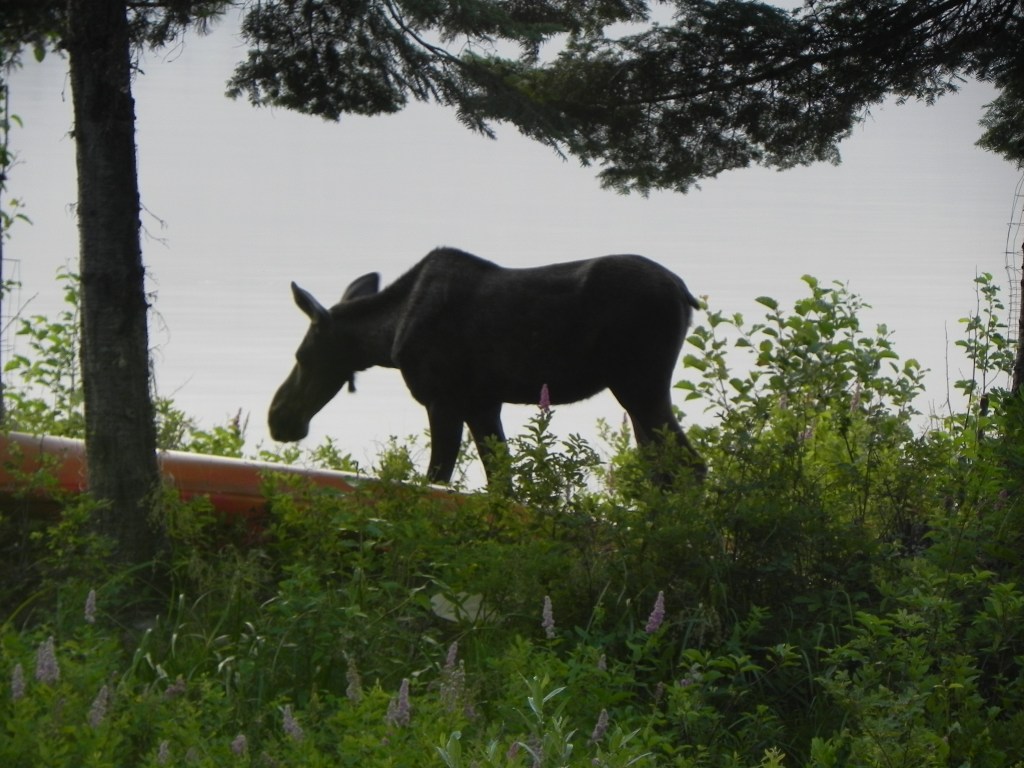
An Idaho moose

What’s behind my moose obsession?  I can’t really say.  I first became consciously aware of moose as a teenager and I knew that we didn’t have them in Pennsylvania (there are still, however, a few elk left in the state).  And besides, Maine was my favorite state.  That was because of childhood reading—there was no internet, and books are amazing for the imagination.  I suppose my love of Maine with its Dark Shadows and rocky coast may have spurred my desire to witness a moose in its chosen habitat.  There are giants in the woods of Maine.  They walk silently through the night.  For those fortunate enough to live in the state, they may be common.  For some of the rest of us, at least, they are transcendent.


Feeling Elephants

There’s an old story about an elephant (the noble kind).  It involves visually impaired men—they always seem to be male—feeling said pachyderm and coming up with different ideas of what it is they’re touching.  I’m sure you’ve heard this before—it’s repeated constantly.  The other day I was reading yet another author using this analogy and he specified that there were three blind men.  I stopped.  Scratched my head.  Where did he come up with three?  An elephant has lots of parts and you need someone to touch at least the trunk, the tusks, the legs, and the tail.  At least.  So I decided to find out where this story came from.  This particular author said it was from India, which seemed likely enough.  And so I went looking.

Image credit: From The Heath readers by grades, D.C. Heath and Company (Boston), p. 69, public domain via Wikimedia Commons.

It turns out that the earliest rendition of this story is a Buddhist text from the sixth century BCE.  In case you’re biblically oriented, the sixth century is the era of Jeremiah and Ezekiel, as well as Deutero-Isaiah.  Things were happening, that is, religiously.  While the prophets were busy dealing with the fall of Jerusalem, someone during the lifetime of the Buddha was writing this story into the Tittha Sutta (the story spread to Hinduism and Jainism as well).  Now I’m quick to admit that I’m no specialist on Buddhism.  I know a few Buddhists, but they don’t talk to me much about the tenets of their religion.  Still, I marvel at how much our culture has been influenced by the religions of India, including Buddhism.  So how many men are there? I hear you ask.  Well, the most usual answer is “a group.”

A typical early version had men feeling the trunk, ear, leg, side, tail, and tusk—double the three I’d just read about.  But you see, literalism is the problem here, as it generally is.  Nobody has suggested, at least in my limited research on the topic, that an actual group of visually impaired males found an actual elephant to feel up.  And that these men weren’t curious enough to reach beyond the trunk to the head, or feel along its side.  The story is told to make a point, not to establish history.  And like all stories, it changes over time.  So much so that when innocently reading about something else, I discovered that somebody had heard that there were three men.  Rather like wise men, I expect, who are numbered by their gifts rather than Scripture.  Instead, wouldn’t it be best to feel the whole elephant and find out what it really is?


Cute Monster

Those who make horror films often rely on the cheap and easy tricks to make viewers jump and  scream.  Some of us are more connoisseurs, preferring films that make you think and that don’t show too much, and maybe even too little.  Lamb once again underscores what has impressed me about Euro-horror over the last few years.  Slow, building dread, it’s the kind of story that you know can’t end happily because it’s, well horror.  There are spoilers here but I hope they won’t stop you from seeing this film if you haven’t.  First of all, the film is in Icelandic, and much of the cinematography focuses on the brutally beautiful cold landscape.  Its sense of isolation and the land make this a fine example of folk horror as well.

A couple, sheep farmers, make a reasonable living from the harsh land.  We come to realize that they live in regret for the death of their daughter.  Then, after the unseen visit of an unseen creature during the dark of an Icelandic Christmas, a lamb is born with a human body.  She quickly becomes their ersatz daughter.  This odd situation, we know, cannot last.  They’ve set their happiness on a gentle monster (of the classic description) and such things never end well.  The movie takes its time spelling out the story, knowing full well that viewers know something is about to happen, but are unsure of what.  Since the husband’s brother stops in (after being forcefully ejected from a car), the film only really involves four characters—six if you count the brief appearances of the lamb’s parents.  And that isolated landscape.

Part-human and part-animal generally counts as a monster.  This one is well behaved.  Cute, even.  Dad, it turns out, isn’t so cute or well behaved.  He has his reasons, though.  The film is scary by implication: What happens when the cute little monster grows up?  The movie invites us to consider that question.  Monsters are often cast as evil and dangerous, but maybe they have to grow to become like that.  With loving foster parents, such as the farmer and his wife, who knows?  This is one of those films that makes you ask questions and offers little by way of explanation.  You just have to accept it.  Something led to a monster in the hills, somewhere back along the line.  But even he may have been even-tempered had is kind been treated with civility.  Monsters have something to teach us.  Even, or maybe especially, cute ones.


The Jonah Treatment

A kayak on the ocean might’ve seemed to be a safe place during a pandemic.  In November of 2020, however, two women ended up getting the Jonah treatment.  While it happened some time ago, the story appeared in Slate just in August, so the world is learning about it after a few years.  At least those of us who hadn’t seen the viral videos before.  Julie McSorley tells how she and a friend were paddling out to see some humpback whales along the California coast.  Then, like a scene from Finding Nemo, bubbles started to well up around them and they found themselves briefly in the whale’s mouth.  They escaped unharmed since humpbacks don’t eat mammals, being baleen whales.  Apart from the natural fascination of the story, what caught my attention was the reference to Jonah in the log line.  As Heather Schwedel notes, few people “outside of storybooks and the Bible” have actually been inside a whale.

Image credit: Gustave Doré, Illustrations of Baron von Münchhausen, public domain via Wikimedia Commons

The typical biblical scholar response is generally somewhere along the lines of, “the Bible says ‘great fish,’ not whale.”  This may be true but we don’t possess a biblical glossary for the animals, real and imaginary, in the Good Book.  Ancient Israelites were neither great seafarers nor precise describers of nature.  There are many strange references to animals in the Bible with no certain referents in the world we know.  Not being oceanographically inclined, biblical authors wrote “great fish,” a term that was still used to describe whales up to Melville’s time.  But we now know there are other big fish as well.  Whale sharks, for example, and if you’ve ever watched River Monsters you’ve likely seen catfish large enough to send shivers down your spine. 

The funny thing about the book of Jonah is that the point of the story is often overlooked for the splashy action.  There’s a moral to the story.  It’s all about not judging others because they don’t belong to your group.  Jonah has already condemned the Ninevites as godless idolaters.  The book teaches that such judgment isn’t a human prerogative.  But we simply can’t get past that image of a whale, or great fish, swallowing a guy and digesting him for three days.  Like Jonah, Julie was spit back out by the whale.  It took only a matter of seconds since, despite what Pinocchio shows, the interior anatomy of most whales won’t allow living space for a long weekend away from home.  Julie McSorley and her friend emerged relatively unharmed.  McSorley even says it was a transformative experience.  One might even suggest it could be a spiritual one.


Loco Locusts

It really used to bother me.  Other kids in kindergarten or first grade called them “crabs.”  The picture, however, clearly showed a lobster.  Quiet and introverted, at least I knew how to tell apart basic body plans.  It’s a weakness I’ve always had—the need to correctly identify.  This didn’t come from my family, who really seem not to be bothered about such things.  It came from somewhere deep inside.  A lobster is not a crab.  The same applied to toads and frogs, or any number of other fine distinctions.  Now I confess that I try to stay away from Nextdoor.com.  It seems that no matter what anyone writes the comments immediately turn political and belligerent.  Such is our world.  But when someone can’t identify an animal, that’s clickbait to me.  I just have to take a peek.

A couple of months back a woman posted a photo of a cicada.  I didn’t chime in because at least thirty other people already had.  The thing was, several locals said it was a locust.  Even after previous commenters had sent helpful links showing the difference between a cicada and a locust.  Probably it comes from many years of teaching biblical studies, but I couldn’t believe anyone would misidentify a locust.  Mind you, when I taught the book of Joel we talked quite a bit about locusts—they are amazing creatures.  In a pre-market economy, they were also deadly.  They don’t attack people like they do in horror films, but they will eat every green leaf for as far as the eye can see.  They travel in huge swarms, capable of blocking out the sun when they fly overhead.  Cicadas are harmless.  Noisy but harmless.

Cicada. Image credit: R. E. Snodgrass, public domain, vía Wikimedia Commons

How someone can live in the world and not care to know the other things that surround them I cannot fathom.  I can understand mistaking similar creatures—some animal mimics can be incredibly effective.  A locust, however, looks nothing like a cicada.  They’re both insects, yes, and they both have wings.  The similarity stops there.  Life is complicated, I know.  There’s a lot to learn.  As a writer one of the things constantly using up my time is trying to find the right name for a thing I know by sight but have never heard called by its noun.  With the internet, identification of critters has become somewhat easier.  But only somewhat.  You have to know where to start.  I still have the well-thumbed animal identification books from my childhood.  Outdated, yes.  Coming apart at the spine?  Definitely.  Full of childhood memories of learning what things are?  Of course.


Of Wolves and Humans

Time has a funny way of distorting perceptions.  I remember when The Wolfman (2010; please, I’m not old enough to have seen the classic initial release in 1941) came out.  I’d already started this blog by then, and I was occasionally watching and writing about horror movies.  Initial reports said this reboot was too violent and bloody.  I had the impression that it’d done well at the box office, but I didn’t see it.  I found a used copy on DVD several years later and still I waited to watch it, a bit afraid from the initial assessments I’d read.  (I tend not to read reviews or watch trailers before seeing a movie—I prefer to come in fresh.)  All of this is to say I finally got around to seeing The Wolfman and I was disappointed.  I really wanted to like it too.  The wolf man was my favorite classic monster as a kid.

I do need to praise the gothic setting and landscape cinematography.  This is beautiful and well done.  Part of the problem is the way the story is changed.  Another is that, apart from The Silence of the Lambs, Anthony Hopkins doesn’t seem to fit the horror genre very well.  Claude Rains made a believable Sir John Talbot, despite being so much smaller than Lon Chaney.  Hopkins has trouble pulling it off.  It could be poor directing, I suppose, but it was difficult to take him seriously.  And two werewolves?  That suggests just a little too much CGI.  Still, there are some good moments.  I did appreciate Sir John encouraging his son to let the wolf run free.  I suppose if you’ve got a werewolf issue, having a dad to talk you through it would be a good thing.

Werewolves, like most classic monsters, are thinly disguised psychological tendencies.  Civilization isn’t always easy, even for social animals like our own species.  There’s a werewolf inside.  Transformation, however, always suggested redemption to me.  The ability to become something better.  I saw The Wolf Man as a parable.  That may have been unusual for a kid, but when religion and monsters come together strange things can happen.  The wolf may be angry, but it need not be dangerous.  It turns out that I really didn’t have to wait thirteen years to see this movie.  I’ll probably watch it again for the points it scores on the gothic scale.  The action features aren’t necessary for a good monster flick, though.  The 1941 version worked just fine.


Swamp Things

If I have time, before I go on a trip I like to consider what different flora and fauna I might see.  People from southern states traveling north to Pennsylvania would likely not see too much that they can’t see at home, I expect.  South Carolina, however, is far enough south to hold what seem (to me) to be exotic species.  These are things that are probably pretty quotidian here, but to a traveler they really stand out.  My family had hoped to see an alligator, in a safe way, as long as we were here.  That’s why we ended up at the Audubon Swamp Garden on the Magnolia Plantation just outside Charleston.  Although it’s October, it’s still warm here and although it took some time we eventually spotted a fair sized gator sunning itself many yards away.  After seeing the first one you kind of know what to look for and we ended up spotting four more.

This swamp has a walkway intended to keep visitors safe, so we followed it through the facility.  You have to pass a kind of Jurassic Park entry gate to get in, and it may be best to reflect later that alligators have been around since the dinosaurs.  There were plenty of other animals too.  Our first encounter was a snowy egret.  This was followed shortly by an anole, but my lizard species identification isn’t very developed, I’m afraid.  There were dozens of turtles sunning themselves—several quite large—and a blue tailed skink.  And spiders of apocalyptic size.  My phone camera didn’t zoom in much on the gators, so I’ll put the anole here for you to enjoy.

This iconic swamp was used in the filming of Swamp Thing (I couldn’t resist), and is rumored to have been the inspiration for Shrek’s swamp in that movie.  The most poignant aspect to me, however, was just how much beautiful diversity the world allows if people aren’t constantly trying to improve it.  When a field in my native Pennsylvania is left to its own devices, it will likely become a forest and all the usual suspects will come back.  We do still have elk in some northern counties.  Yes, I suspect if we left swamps run wild mosquitos and other less fun species would also proliferate, but still, there are places that are transcendent for not having been improved upon.  The Audubon Swamp Garden is one such place, although the sunning platforms allow us to see some of the creatures, and with an alligator just a few yards away, I am grateful for this raised walkway.


Consider the Ant

Ants, the Bible suggests, are worth both watching and learning from. I was reminded of this while at the Easton VegFest a couple weeks back. The VegFest is an annual event promoting vegan food in a riverside park. I’d given someone a ride and ended up finishing earlier. I could either walk all the way back to the car or spend the time outdoors. It was a pleasant enough day and there were places to sit (with no back support, however). One such sitting venue is a concrete retaining wall about 12-feet high, that borders a walking trail along the river. Since there’s a lively inner tubing business along the Delaware and Lehigh Rivers, you could watch groups float by, looking very relaxed in the way that only being on the water can make you. It was while sitting along the top of this wall that I realized I was on an ant highway.

Image credit: Fir0002/Flagstaffotos, under CC BY-NC license, via Wikimedia Commons

While individual ants don’t live very long, colonies (and their lives are very interconnected) can last several years. Some queens even make it to 30, which is impressive for an insect. As I was sitting (more like leaning, since the wall has a rounded top and I have a fear of falling) I’d notice some larger ants approaching with great determination. I would stand to let them pass. They weren’t in a close line or anything, so if I didn’t notice one in time, I became part of the trail. Looking confused—if an ant can look confused—at missing the chemical trail, they’d nevertheless continue in the same general direction unless some microscopic bit of a dropped piece of lunch on my lap caught their attention. Their determination was a lesson. They simply don’t give up.

Although the wall predates any of their individual lives, it has become their highway just as any interstate becomes ours. They didn’t build it, but it has become their recognized and known pathway. This was clear because in the course of my hour there, several members of what I presume was the same hive came by. I suspect the writer of Proverbs wanted readers to notice their busyness, but what I saw was their marked will power. Not even a giant wearily resting on their road deterred them. There was an utter conviction about what they were doing. Obstacles were simply climbed or gone around in the assurance that the trail would resume on the other side. Their sense of hope was admirable and, in its way, contagious.


Hope by Butterflies

Butterflies are the most hopeful of animals.  I’m always thrilled when I see the first ones of spring and I silently cheer on those that last until autumn.  One of the three insects I didn’t fear as a child (ladybugs and fireflies were the other two), butterflies seemed like nothing so much as goodness incarnated in insect form.  While at the 4-H Fair a couple weeks back, we were fortunate enough to be there for a butterfly release.  Volunteers handed butterflies to children who were eagerly awaiting the opportunity to hold one.  It’s like touching a rainbow.  It reminded me of the butterfly rooms at various museums or zoos where even adults wear bright colors and hold still, hoping an insect will select them for a temporary perch.  We want to be kissed by butterflies.

Photo by Shiebi AL on Unsplash

Their hope goes beyond their bright colors and the cheer they spread.  To become a butterfly is to be willing to undergo transformation.  A caterpillar is an eating machine.  When its biology gives it the cue, it forms a chrysalis and inside that temporary shelter made from its own body, it literally dissolves.  Nature, knowing what to do, reconstructs that goo into the flowers of the animal world.  Could there be anything more hopeful?  More able to draw tears of joy?  Butterflies don’t bite—some don’t eat at all—they don’t dig into you with sharp chitin, they don’t fly into your eyes or ears.  Gentle and delicate, their sole purpose seems to be the bringing of happiness to other creatures.

I know I’m over-simplifying here, but I’m in a poet’s skin this morning.  Life transforms us.  We don’t know what’s ahead and some things melt us down and make us into something else.  The butterfly shows us how to do it with grace and light.  When times are difficult we realize, often only later, that we have been transformed.  We had built a cocoon around ourselves, we dissolved and became something even more beautiful than we were before.  Winter came and froze our world, but when we felt the warmth of spring, we responded, not even knowing how we did.  And looking back we can see that we bring color and light and joy into a world that had formerly been gray.  There’s a reason that butterflies are widely recognized as symbols of hope.  They’re brave without even knowing it.  And they give the world just the optimism it needs.


Middle Ground

It’s the real poison Trump baptized.  Polarization.  The idea that there is no middle ground.  It’s a shame since the middle ground has been what’s kept America stable over the years.  Now it seems to be eroding rapidly.  While my sympathies have always been on the left, I realize that radical change tends to dirempt societies.  As much as I deeply desire justice and fairness for all, I know it will take time.  In my way of thinking that “all” includes animals.  That’s why I’m vegan.  Now, I know being completely vegan is likely not possible since who knows what everything is made of, and who has the time to find out?  I do the best I can and I don’t eat animal products and I try not to wear them either.  I know there are those who don’t share my outlook and they’re entitled to their point of view.

For nostalgia’s sake, and to get out of the house, we attended a 4-H county fair.  An annual event when we lived in New Jersey, it’s now a rarer treat.  So I put on that scarce recording of Bruce Springsteen’s song “County Fair,” not on any of his studio albums, and headed for New Jersey.  This county fair is the kind with animals rather than rides, and we stopped in to see the sheep, goats, cows, and alpacas.  It was in the cattle tent that I saw the following poster, claiming “There’s no such thing as vegan.”  Well, I don’t go around saying there’s no such thing as omnivores (thus the polarization) but this poster convinced me that we need to try even harder to stop raising animals to exploit. I understand, I think, the intent of the poster—cattle aren’t just meat.  The thing is, I think of them as conscious beings.

I miss the middle ground.  People no longer want to compromise or negotiate.  Since Trump it’s become “my way or the highway.”  I think I prefer the highway.  That highway takes me far from industrial feedlots where it’s illegal to document the cruelty that these animals undergo daily.  It’s quite a different thing for Bessie to lay down with a fan blowing on her under a tent with a small farmer caring for her, but that won’t feed a nation.  Small farms aren’t the problem. I don’t insist everyone be vegan.  I would like it if we could sit down and talk about it, however.  Cattle raising is the industry that generates the greatest amount of greenhouse gases that are causing global warming.  If we keep dividing ourselves and refusing to change we’ll be having this polarizing argument under water before too many years have gone by.  My highway is middle of the road.  Even slow change can benefit many.  The goal is to get “many” to “all.”