Dawkins Dilemma

Some of my regular readers may have divined that I’ve been reading Richard Dawkins’ The God Delusion. It is a book well worth more than one post on a blog, but it is also one of those troubling and liberating books all at the same time. Dawkins is a gifted writer who explains things clearly. He sometimes makes mistakes in the details, but his logic is flawless and consistent, at times running up against the limits of reason itself. There is a dilemma here, however, and that is the ghost in the machine. It may not be supernatural, but even Dawkins must occasionally refer to “enlightenment”—a term derived from Buddhism, and “essence”—something that does not actually exist, and other turns of phrase that wander beyond the strict purview of science. Nevertheless, his point, hammered home repeatedly, is well taken. The perpetuation of religion is not very healthy, and in a way, contains the seeds of its own destruction.

As a specialist in religion reading this book by a world-class scientist, it feels like awaking in the morning after a stranger has broken into your room at night and beat you soundly while you slept. Religion is what we do, our thing. That voice of indignation whimpers, “why must scientists come in here and trash all our stuff?” And yet, that is the way of reason. It takes no prisoners. Back at Nashotah House I used to argue points of Scripture with students. Often there would be someone who would resort to, “reason is fallen and is therefore not to be trusted.” I would always respond, “how do you come to that conclusion if not by reason? Can you trust it?” If reason be true, it must be true the entire journey, as anyone who has ever flown on a plane knows. When reason meets religion, however, fireworks fly.

Dawkins does an admirable job illustrating the troubles into which religion has led the human race. It is very unlikely, however, that the human race will ever outgrow religion. Perhaps it is one of those evolutionary mechanisms set into our brains in order to ensure that we are not too successful. With the exception of crocodiles, sharks, cephalopods, and many insects, life forms are continually evolving and dying out. Maybe religion is our apocalypse, the mark of the beast. The original sin. Call it what you will, but religion often acts as a massive deterrent to human progress, and especially to the ideals that it often promulgates. Sometimes it takes a biologist to sort out the menagerie.

Raising Cain

The Bible doesn’t contain many good horserace stories. The early stages of a presidential candidate race, however, are rather like a horserace (I don’t pay much attention to either). Unless one (or more) of the horses get religious. It seems that a candidate can’t cinch a Grand Old Party nomination without laying bets on religion. I’ve no idea how religious Mitt Romney is, but his religion itself forces the issue. Rick Perry wears it on his sleeve and in his pious grin. The keep in the heat, Herman Cain has now pulled out his religious credentials. God told him to run for president. So he says. Since the Bible doesn’t mention any candidates by name, we have to take his word for it. (Although I doubt Cain actually wants to be associated with his biblical namesake.)

God’s been down a bit on the divine luck lately. With all the causes the Big Guy has supported being lost to others (one thinks of the “Gott und Ich” mentality that stretches far back beyond World War One) you’d think that those chosen by God might keep the matter quiet. At least until the results are assured. Once that card has been laid, to shift metaphors, it can’t be trumped by any other. A card laid is a card played. How can a candidate climb higher than God for the next debate? And when one or another of God’s chosen loses—and this is inevitable—it is clear that God is dragged into the mud with the almost chosen candidate.

There has been much talk and debate about the role of religion in government. In a nation as religious as the United States it is purely impractical to keep the two impolite subjects apart. We only want a religious man in the White House. Preferably Protestant, but beyond that any flavor will do. In the 80’s at least one was Tutti Frutti, in a manner of speaking. The actual religious beliefs expressed by our national leaders would certainly lead to raised eyebrows among the truly conservative, if such matters truly mattered.

Back in college, it was considered wise advice never to try to stuff any variety of underwear in order to create an illusion of size—such tactics are bound to end in disappointment. It is lesson that politicians never learn. There will always be some disillusioned followers the morning after, unless, of course, the racehorse analogy is the proper one. And the Bible will back me up on that.

It's all in the reading


Master Cat

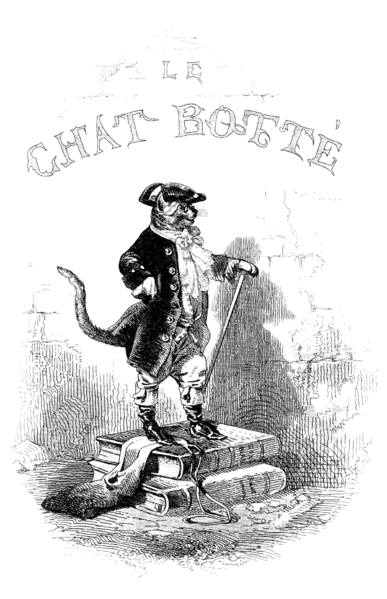
Okay, so I’ll confess having gone to see Puss in Boots yesterday. The movie had been getting good reviews and I’ll admit to really liking the first Shrek movie. The second Shrek movie, with Puss’s debut, was not bad. After that something changed. Anyway, it looks to be an intense week ahead, and I needed a little mindless release. Often on this blog, I mention horror movies and how fear ties into the concept of religion. Since working at Routledge—a publisher noted for its many books on religion and film—I’ve taken a renewed interest in finding the religious imagery in many different genres of movies. This is something I regularly undertook as a religion major in college and beyond, but it is an area of renewed interest in my mature years. So it was off to the theater.

One aspect of Puss in Boots, however, proved a distraction to me. The character of Humpty Dumpty scrambled in my mind with the same off-color image of the egg man in Jasper Fforde’s The Big Over Easy, a book I read this summer and blogged about earlier. In both stories, the egg was not what he seemed to be. A foodstuff with a decidedly darker side. In both stories, however, Humpty Dumpty was somehow vindicated, more a victim than a perpetrator of crime. It is not always easy to be a good egg. In Puss in Boots, however, this is where the religious imagery came in. The fractured fairytale storyline has Puss and Humpty (and Kitty Softpaws) growing a giant beanstalk and stealing the golden goose’s gosling. This is part of a twisted effort at revenge by Humpty; a kind of egg’s Benedict Arnold moment. Well, this is a children’s movie, so nobody is really bad. Humpty repents and sacrifices his own life to save the town. When he falls to his death, a golden egg is revealed inside. Mother Goose flies the golden Humpty up to the castle in the sky, disappearing in a blaze of heavenly sunlight. Life after death, the eternal reward. Heaven, Hollywood style.

Movies often serve as a source for and reflection of social values. Thus watchdog groups keep a close eye on what the silver screen reveals. Puss in Boots passes the test on highlighting the redemption theme. Although he is still a wanted criminal by the end, Puss (as well as Humpty) achieves redemption by making good on all the wrongs he committed against society. Almost sermonizing at points, the movie is another example of how mainstream media ends up on the side of traditional values. A deeper truth, however, may lurk beneath the celluloid. The true hero here is the Spanish Puss rather than the Angelo Humpty (and decidedly red-necked Jack and Jill). The religion it underwrites is, naturally, the civil religion expected by American audiences. Just maybe there is an awareness of social justice here as well.

The original


Bull Shot

Sitting on an idling bus in the Lincoln Tunnel, I supposed I was too far underground for an epiphany to hit me. Then, on the way to Third Avenue it descended on me. I was passing one of the countless gift shops of Midtown when I saw it—a miniature replica of the Wall Street Charging Bull statue. Golden calves come in all sizes and shapes and when they grow up they may be very aggressive. Deadly even. Movie makers have long recognized the deep symbolism of the golden calf. And not just Cecil B. DeMille. Dogma, perhaps the most notorious of the anti-religion, religious films, centers around Mooby, a cartoon network golden calf, for one of its subplots. Even Bruce Almighty has the eponymous Bruce leaning back against the statue of a golden calf as he enjoys his new success in his new house, empty of all personal satisfaction. The list could go on. And of course, Wall Street.

What is it that makes us believe that gold leads to happiness? We all want it, if we are willing to look into the mirror with any semblance of honesty. Maybe we don’t want to be filthy rich, but who doesn’t really want to just kick up their heels and let their lucre do the work for them? Enter the “Prosperity Gospelers”—God wants it for you. Even if you demure and lower your eyes coyly, wealth will find you. And like that idol on Wall Street, calves grow up to be bulls. The horns of the dilemma are almost too literal. For a fulfilling life, give it all away. Like a misdeed long past, still unatoned, that bull follows you. You can’t escape a charging bull.

The episode of the golden calf in Exodus 32 is one of the more disturbing scenarios in Holy Writ. Moses, alone wreathed in the glory of the Almighty keeps forty days of silence and, tellingly, the clergy construct a golden calf. Probably an image of Yahweh. The next morning, “the people sat down to eat and to drink, and rose up to play.” Until distant Moses returns home. The calf is burned and ground down to dust, the people drink it, and the Levites kill three thousand of their compatriots. Prequel to Jonestown? “For Moses had said, Consecrate yourselves today to the LORD, even every man upon his son, and upon his brother; that he may bestow upon you a blessing this day.” The killing of their neighbors is their ordination. A blessing bestowed upon those who would worship the golden calf. That 7000-pound charging bull will follow you, even into the tunnels and tabernacles. When the golden calf is loose, no one is safe.

Bull comes in all sizes


Extinctions

Gaddafi is dead. Bin Laden is dead. Saddam Hussein is dead. The people of the Middle East have risen up to reclaim their world from the privileged. In Wall Street people are arrested and sequestered lest the discontent should spread. Do those of Libya, Iraq, Egypt, aspire to Wall Street? Are not the oil barons wealthy enough? How easy it is for us to forget that what we call civilization began here. In what we now call Iraq, people first banded together with complex governments, specialization of labor, and the arts. And, naturally, slavery. As civilization grew, priesthoods became strong. Governments could not stand without the support of the gods. Temples could not stay open without government funding. Gods and kings slept together. The Bible would later parody this as the tower of Babel. How we want to live in that penthouse chapel!

We often take from history that which sustains our interest. And when that interest is reinvested and compounds, we lay the foundations for yet another tower. We live in a world of towers, glad to accept their beauty and glory without realizing that no tower stands out without the deep valleys between the artificial peaks. To build high, some must be consigned to live in the subways and cluttered alleys and sleep out on the streets. The oil money in Dubai, not far from the fabled Eden, erects towers that are the wonders of the modern world. Just looking at pictures of the Burj Khalifa can make one shudder. Oil is decayed life.

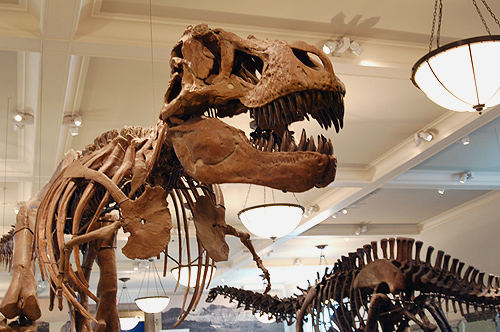
Sometimes I imagine the world of the dinosaurs. Mammals must have seemed an endangered species then, small and insignificant as they were. Our distant, distant ancestors must have gazed up on the towering brachiosauruses and bruhathkayosauruses with awe and fear. When they finally evolved opposable thumbs, they decided to emulate their fears. Now the dinosaurs are all petroleum and birds. And still they rule the earth. Civilization began in the oil fields of the world with little use for petroleum. Instead, kings and priests worked together to construct towers that would ultimately fall. Oil makes some very wealthy, but it is only possible because of the extinction of the largest living animals that ever walked the earth.


Yeti Again

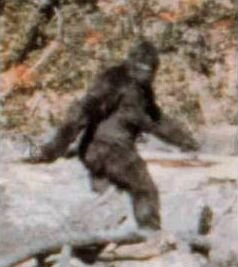
Time magazine announced last week, in a story spelled out on Time.com, that “There may be solid evidence that the apelike yeti roams the Siberian tundra.” This is surprising news given that even in the face of good evidence, science is reluctant to admit new large animals to our biological family. The reasoning goes that since humans (mostly white, male humans of the western hemisphere) have explored most of the landmass on this planet, we could not have missed any large land creatures. There are rare exceptions, such as the mountain gorilla, added to our database only about a century ago, but it seems to have been the last of the large animals to avoid detection. Now the yeti, the bogeyman of many childhood dreams, may be coming to life.

Science is our way of describing and theorizing about what we have discovered. Many therefore assume that science is all about new discoveries. Some of us feel a tinge of sadness at having been born after the great era of discovery. Reading about how adventurers (responsible for far more fundamentally earth-shaking discoveries than scientists of their times) ventured into new worlds and declared the wonders of God revealed in the formerly unknown, is always a humbling experience. We know so little. The mark of the truly educated is not the claims of great knowledge, but the admission of how little we really understand. Does the yeti roam the inhospitable and very sparsely populated regions of Siberia and the Himalayas where it has been a staple of folklore for centuries? We may never find definitive proof, but Time holding out a candle of hope seems a step in the right direction.

Relegated to the world of the “paranormal,” elusive animals demonstrate that the ways we know about the world are multitude. Science does not, and does not claim to, know everything. Indeed, science has a limited frame of reference within which it works. Going out seeking cryptids is not, properly speaking, science. The belief that those seeking evidence display is closer to religious conviction. That does not mean it is wrong or that it is founded upon faulty suppositions. It is simply a different kind of knowledge. It is common to say science is in conflict with religion. It need not be. If we accept science at its word, as doing what it claims to do, there is no need ever to question assured results. Belief, on the other hand, seldom crosses over into the realm of objective truth, empirically demonstrated. If it did, it would not require believing. If yeti is discovered, there will be much celebration among believers, but the creature will necessarily pass into the hands of science. For this reason alone, many are glad to leave it in the realm of folklore and myth. Either way, to some people, yeti will always be real, whether scientifically verified or not.


Moosechief

The moose, depending upon which standard you use, is either the largest or second largest known land animal in North America. This aspect of the moose, as well as its general docility, has often spurred me to the northwoods in search of the elusive beast. Those of us with few tracking skills, however, often must be approached by the greater party rather than finding it. My trips to Maine have seldom yielded moose, but in my periodic forays to Idaho the creature sometimes makes an appearance. This past summer I spotted two of them in the west. In their ungainly way they are beautiful animals. Large they may be, but intelligence is not a necessary corollary to size.

Moosing around.

From about the 1840s, up to its formal passing into law in 1919, prohibition ranked high in the list of evangelical Christian concerns. A distinctly Protestant issue—Catholics still recognized that any tipple good enough for Jesus was good enough for them—the outlawing of alcohol was understood to be in keeping with the Gospels. Some groups even suggested that Jesus had been quaffing Welch’s, or the first century equivalent thereof, rather than Mogen David (the shield of David, after all). Latest research seems to indicate that fermentation was known before the Sumerians ever appeared, and we all know what happens when cavemen have too much to drink. Strangely, this became a religious issue along about the time Fundamentalism began to appear. But Fundamentalists considered neither the practices of Jesus nor the moose.

A story in today’s New Jersey Star-Ledger concerns a moose in Sweden. Known for their liberal social values, the inhabitants of Sweden are often presented as champions of free lifestyles. A moose near Gothenburg apparently had trouble steering herself after eating several fermented apples that had fallen from a tree. The inebriated moose lodged herself in a tree fork. The rescue involved bringing a crane to the scene to release the trapped, and slightly disorderly, animal. Such a story makes me wonder if prohibition should not be among the laws of the jungle. After all, the observation of nature often calls the certitude of many religious doctrines into question. If God prohibits alcohol, we might rightly wonder, why are there moose in Sweden sleeping off a hangover?


Natural Born Killers

Every year I spend some time at the local 4-H fair. I grew up not knowing about 4-H, and the discovery of the organization as an adult has been an education for me. The local university extension that supports 4-H is Rutgers, although on campus you never hear about this rural aspect of the sophisticated world of academia. My daughter has been a member of the cat club for years, and although not a member myself, they are cordial and always offer me a chair (something no university has ever done) to spend a few hours in the shade while the kids showcase their skills and knowledge. Young potential is one of the few sources of optimism I find in a culture obsessed with selfish gain. My daughter’s cat club shares a tent with the alpacas, the epitome of herbivorous tranquility. With wool so soft as to be unbelievable, the alpacas with their long, graceful necks and huge brown eyes, look to be the least offensive creatures at the fair (except maybe the bunnies).

People in crowds, however, often shift dynamics and stress systems that would otherwise find their own balance. While many of the thousands of visitors at the 4-H fair are respectful of the animals, many others seem unaware that loud voices and running children and constant noise can stress even docile animals kept in small enclosures. Kids will find a cat in its cage and bark at it to get a reaction, and we all know the glass-tapping behavior that drives the reptiles wild. The fair has been part of my life for three years now and I’ve never noticed a stressed alpaca. They seem above it all. Yesterday, however, one stressed animal took on a surprisingly human behavior and began to bully a smaller alpaca in its pen. Apart from the caricatured spitting, the larger animal began licking and biting the smaller one, snaking its long neck after the smaller camelid’s head, biting its ears, and generally making its life miserable. The aggression lasted only a few minutes, but it felt to me like the tension of seeing bullies rough up a kid on the playground. The fairgoers felt uncomfortable, with some even wagging their fingers at the larger, aggressive animal.

Club members eventually stepped in to separate the fighting alpacas, and the poor, smaller animal kept trembling for several minutes after the attack. No blood was let; the assault was mostly psychological. I went out to get a snack at the food tent. When I returned I was relieved to see the smaller animal had been removed from the pen, given some space. Later I learned the young animal had died from the stress of the attack. I had seen the incident, and the violence had mostly been of an unrelenting display of dominance with a minimal physical attack. The aura of threat had created the stress. Saddened, I realized that a parable had unfolded before my naïve eyes that afternoon. Like all parables, only those with perceptive eyes may be able to see through the drama and get to the heart of the matter. If only people were as perceptive as even the innocent herbivores, perhaps such parables could finally come to an end. In the meantime, maybe I’ll watch the bunnies and forget what I read in Watership Down.

Just look the other way...


Red Eye Religion

It is a slow news day when Bigfoot makes the front page of the New Jersey Star-Ledger (without a body being found, of course). Not even halfway through the article the word “supernatural” shows up. This illustrates once again my contention that paranormal and religion often share mental space. A few months back I posted on the recent book Paranormal America by Christopher D. Bader, 
F. Carson Mencken and 
Joseph O. Baker. The authors, sociologists by trade, expressed a revealing connection between religious belief and willingness to accept the paranormal. One exception stood out, however; professionals who engage the hunt for sasquatch often toe the line of science and disparage the popularizing notion that their quarry is supernatural. There’s no doubt that Bigfoot has a growing clientele. Whether mythic or biological, there can be little doubt that the big guy’s here to stay.

Appearing in the newspaper as a bit of New Jerseyana, the local tradition about Big Red Eye—the north Jersey version of Bigfoot—suggests instant comparison with the Jersey Devil, a tactic the paper takes. Similar to responses presented when religious behavior turns criminal, adding a light touch helps to ease the tensions. Both religion and the paranormal thrive in the realm of belief. As I waited all morning in the garage for car repairs yesterday, the incessantly chatty morning talk-show hosts were going on about some quote that the Tea Party had been compared to terrorists. One of the gambolers stated, in rather self-righteous tones, “they are entitled to their beliefs-the constitution protects our right to believe what we want,” or something to that affect. Belief is a very powerful motivator. Even those who thrive on science alone secretly imbibe.

The physical reality of a phenomenon is not the sole indication of its significance. People are meaning-seeking creatures. Our concepts of what life means range from nihilistic, to simple, to complex. Even those who claim life has no meaning arrived at that place after the search. The significance of the unseen, the unknown, is that it provides an Ebenezer for meaning. Does Bigfoot exist in New Jersey? I can’t say. If so, it would still not rank as the strangest thing I’ve seen here. Nevertheless, among the fervent critics and uncritical adherents a common bond exists. Belief can’t be measured in any laboratory (yet) but only the most naïve would assert that it doesn’t exist.

Do you want to believe?


Slash and Burn

Extinction is an evitable part of life in the universe we’ve inherited. Throughout the eons of our planet mass extinctions have occurred several times, and the new world that emerges is strange and unexpected. We as primates owe our existence to such a natural occurrence at the end of the Cretaceous Period. We evolved religion, which, in some species, bestows the right upon us to alter, or even destroy, our environment. The lame reasoning that generally accompanies such amateur theologies is that a deity is about to sweep down and reclaim those “he” (inevitably) likes. All the rest are just part of a hellish charade to make the righteous feel their entitlement more acutely. So we now find ourselves facing, as scientists warn, another great extinction. This one is of our own making.

The causes are not too difficult to discern. For centuries the dominant religions in the western world have preached messages easily mistaken for selfishness. The perverse aberration called the “prosperity gospel” is one such bastard theology. (I use that term in its literal sense here: the prosperity gospel claims false parentage in declaring that Jesus rewards the affluent with material wealth.) An article in Sunday’s New Jersey Star-Ledger points out that the unprecedented human involvement in extinctions. Using Haiti as a test-case, Faye Flam of the Philadelphia Inquirer notes that 99 percent of that nation’s forests have been wiped out as the poorest people in the western hemisphere seek wood for the basic necessities of life. Just over six hundred miles to the north begins one of the most affluent nations in the world where as long as we get our own, the rest of the world can go extinct. We are so blessed. While the loss of forest barely keeps the people of Haiti alive, it drives unnumbered species to extinction.

Entitlement is an odd phenomenon. Without those further down the food chain, the advantages of privilege disappear. When there are no poor to support the wealthy, the comparison fails. The same is true on a species level. As privileged Homo sapiens, we have climbed to the top of the mountain and made ourselves gods. Other species are counted as chattels to be divided up among the wealthy. The rarer they are, the more valuable. Problem is, once rarity reaches extinction there’s no turning back. Our environment placed us in this position and gave us the grey-matter to figure it out. Instead we liken ourselves to gods who do not need this world that gave us birth. Biology disagrees, as time will tell.

Icon of the prosperity gospel.


Friend of Jonah

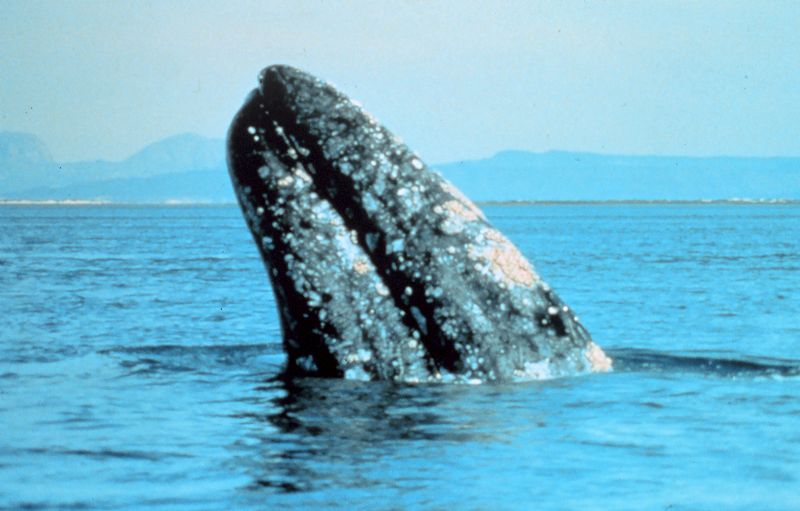
Last year a gray whale was spotted off the coast of Herzliya in Israel. As in the days of Jonah. Actually, we need to turn the clock back a little further. According to Arthur Max of the Associated Press, the gray whale was hunted to extinction in the Atlantic already in the eighteenth century. This whale, therefore, had to travel north of Canada from the Pacific Ocean through channels that are normally frozen. Global warming has opened these passageways and plankton last seen in the north Atlantic 800,000 years ago have begun to reappear. If Jonah was smart, he’d have stayed in that whale and would’ve just kept going.

Big business stands to lose the most from cleaning up the environment. It cuts into the bottom line. Happily, if brainlessly, joining the laissez-faire coven are many of the “Religious Right” who see destruction of the environment as part of God’s plan. So much for “and behold, it was very good.” When free market economists first met the conservative evangelicals it seemed that they had little in common beyond similar haircuts and a desire to turn time back to the 1950s. Since then they’ve joined to become a very powerful force in American politics, preventing any headway to improving the globe for others, even if it isn’t a personal concern of theirs. So much for “do unto others as you would have them do unto you.”

Each year in my Prophets class I have students that are far more concerned that a literal Jonah was swallowed by a literal whale rather than hearing the message Jonah proclaimed: repent or face destruction. If we turn the thermostat up a few degrees more each year maybe Jesus will finally jump on that white stallion and split the Mount of Olives. You can’t quite see the Mediterranean from there, but if you could you might spot a lonely gray whale. You don’t need to look for the little man inside. That whale is the sign of Jonah.

Wave to Jonah for me!


Reverend Sanders?

According to the Associated Press yesterday, Yenitza Colichon was sentenced to 18 months’ probation for child neglect and cruelty. The charges stemmed from a 2007 religious ceremony in which her seven-year-old daughter was made to watch a chicken sacrifice in New Jersey, and the girl was fed the animal’s heart. The practice is part of the Palo Mayombe religion of central Africa. This whole incident highlights the vital question of when religion crosses the line into child neglect. Many of us bear scars—some psychological, some physical—from our religious upbringings. It has been concluded by psychologists that children do not possess the level of abstraction necessary to deal with religious concepts until they are about the age of twelve. Parents, often fearful of eternal consequences should their children depart the one, true faith (whatever that is), begin religious instruction early, often passing their children off to others who are in no real sense an expert in the religion itself.

The United States embraces, on paper, the concept of freedom of religion. Rightly, it seems, the strong arm of the state will step in when a child is endangered or neglected. The unanswered question is at what point does this neglect or endangerment occur? Authorities turn a blind eye if the faith is time-honored, and, especially, if it is of European/American extraction. Typically of the monotheistic variety. What is standard practice for other religions, as this case demonstrates, may be called into question. Sacrifice is also at the heart of the Judeo-Christian tradition. Sublimated into different forms for both political and theological reasons, those of us in that tradition have abstracted sacrifice to bloodless words on a page. When we see red, child neglect and cruelty are cited.

Religions frequently make extreme claims over the lives of their adherents. Most religions relax such claims for children, but others continue ancient practice that is tacitly condoned. Sometimes those permissible rites cause real physical pain and scars. If under the hand of a moyel, okay; if scarification in African tradition, not okay. Religions denigrating personal achievements of the young, setting them onto a path of failure, okay; religions ritually killing animals, as even the Bible demands, not okay. Without making any judgment on specific religious outlooks, the reality of lingering effects remains. Are the terrors of Christian nightmares inspired by tales of Hell any less cruel than watching a domesticated animal die? Is eating a chicken heart any less unusual that fish on Fridays? Is being unfamiliar with a religion grounds for dismissing its authenticity or claim for equality? Some of us find animal sacrifice distasteful, but if we proclaim a tidy sacrifice each Sunday, and share it with our children, that particular rite/right is protected by law.

What would (wiki-commons) chickens do?


Religious Raven

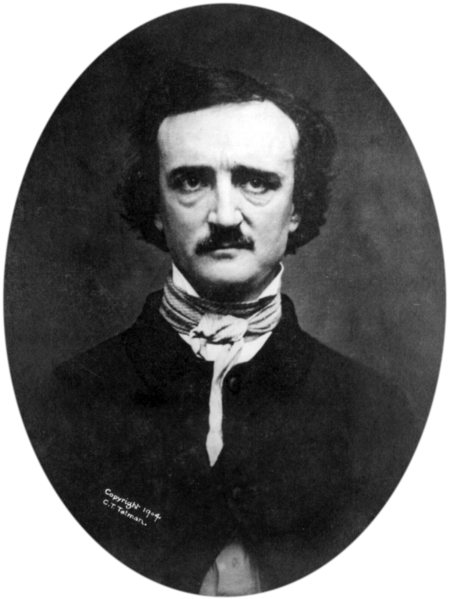
Having seldom achieved any sort of public recognition in my youth, I have been gratified to observe the approbation my daughter frequently earns. One such instance occurred yesterday as she won an Outstanding Presenter award at the state level of 4-H. For her presentation she introduced and recited Edgar Allan Poe’s “The Raven” from memory. As much as I like to take credit for some of her taste in literature, her remarkable memorizing ability that has impressed several judges and parents along the way is the result of her own determination. “The Raven” has always been among my favorite poems. As I listened to my daughter’s recitation yesterday, once again the wealth of religious and biblical images stood out.

Starting subtly with the perching of the raven on a bust of Pallas, Athena, the protective goddess of Athens itself, Poe adds the supernatural to his lamentation on the death of his wife. The bird’s origins on “the night’s Plutonian shore” also point the reader to the classical underworld toward which the poem inevitably points. The last five stanzas, where Poe’s verse turns directly toward his black thoughts at the decline of his wife, introduce the presence of seraphim—the turning point in the poem—angelic beings mentioned as attendants to God’s throne in Isaiah. The divine presence, however, offers Poe no comfort as the raven refuses to relinquish his memories of his love. Asking with Jeremiah (and citing the bird as prophet) if there is balm in Gilead, the poet is informed no such comfort exists. Calling God in Heaven as witness the bereaved asks if in Eden (Aidenn) he will be reunited with his bride, only to be informed such will not be the case. The raven, compared to devil, thing of evil, and a demon, represents for Poe the ultimate reality.

“The Raven” is a dark poem, tinged with religious imagery that was freely drawn upon in the nineteenth century. Having heard it recited many times over the past few months, I have come to believe that Poe would have been in accord with my belief that religion and fear are close siblings. When the climax of the author’s pain and sorrow is reached, the religious imagery predominates. This is a paradigm of many human lives. How many non-religious folk seek to make their peace with the supernatural when death is imminent? “Eleventh hour conversion” may be a trite trope, but it does point to something that Edgar Allan Poe recognized long before me—when we find ourselves most afraid religious impulses are frequently at hand.


Now Locusts?

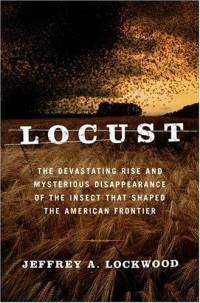
With the same page of the newspaper lamenting flooding in Iowa and drought in Florida, it seems that nature has turned against us in an almost biblical way. A more biblical plague than locusts would be hard to conceive, however, so when my wife pointed me to a current video of a locust invasion in Russia, I took notice. In the United States we seldom consider locusts since they have largely ceased to be a problem with the extinction of the Rocky Mountain locust for unknown reasons, last century. One of the more interesting books I’ve read over the last few years was Jeffrey Alan Lockwood’s Locust: The Devastating Rise and Mysterious Disappearance of the Insect that Shaped the American Frontier. Because the locust is not an American problem, biblical literalists like to transform biblical locusts into something else. The transformation is not necessary. We’ve eliminated the large predators from our planet, and the small ones often go unnoticed.

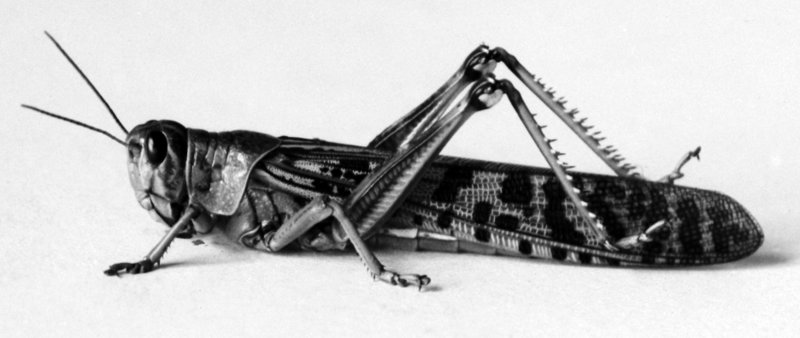
Each year as I lecture on the book of Joel, I spend a little time with locusts. The Asian varieties of locusts tend to reproduce rapidly and prolifically in the desert. Quickly exhausting the sparse food supply, they take to the air and fly for, literally, greener pastures. They can fly for three days without stopping which means they are suddenly there and eating everything. They look like divine judgment. Each locust eats its own body weight in green matter daily, and when a swarm can contain over 100 billion locusts, that can add up to 50,000 tons of food a day. Like poorly mannered house guests, locusts stay until all the food is gone, then leave. They are fully capable of devastating entire nations.

An actual biblical locust, vintage 1915.

Hal Lindsey famously converted Joel’s locusts into military helicopters, claiming that they presaged the end times. Decades later we are still here and so are, apparently, the locusts. They are part of evolution’s great machinery. The biblical view that we are the purpose behind that machinery has caused endless problems for the ecosystem. Locusts are a problem because they consume the food that we would otherwise eat or waste. In the struggle for survival, as Joel attests, it is not always the biggest that win.


And I Feel Fine

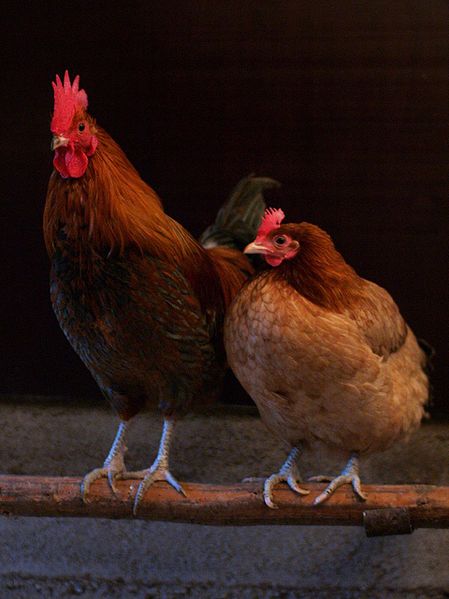
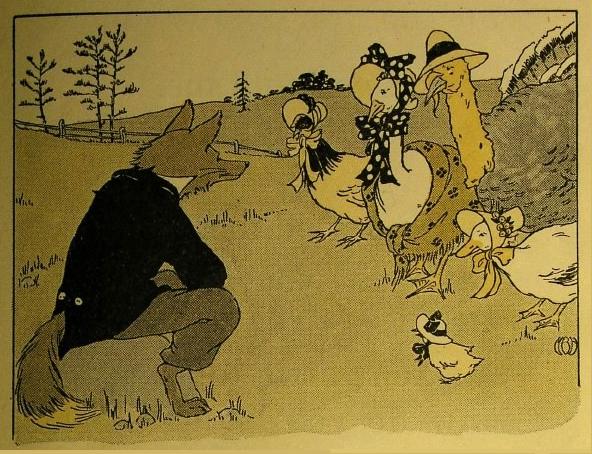
“Is something supposed to have happened?”—Jane Banks in Mary Poppins. The world was supposed to have ended yesterday, but I haven’t yet looked out my windows to make sure. I suspect that everything is pretty much the way it was on Friday. Nevertheless, I have to admit to a tiny bit of relief. I do not believe in a mythic end of the world, and yet there is always that taunting doubt that maybe somebody knows more than me. To calm my jitters, I watched Chicken Little last night. This particular Disney movie has never been one of my favorites, but yesterday it struck me as a parable for our times. Even better, the original folktale is a parable for our times. No one knows when the story originated; it is an example of a folktale that belittles paranoia and the mass hysteria that tends to accompany it. A common ending has a fox eating all the concerned animals as they make their way to the authorities.

Our culture is rife with end-days beliefs. Since this is an idea clearly traceable to non-biblical origins, one might suppose that Fundamentalists would eschew it, but as we have seen the last few days, quite the opposite is true. Those who like Chicken Licken or Cocky Lockey go around declaring the end of all things clearly believe they will be rewarded for their special efforts. Instead, history will class them along with Goosey Loosey and Turkey Lurkey—those who are easily led. Perhaps the oddest result of this recent scare is that many people will not abandon the belief, but will simply push it off. We have another scheduled apocalypse for the end of 2012. Is it because we are now so closely connected by the umbilical Internet that our natural fears have become international?

The claims seem to be arriving thick and fast. I remember the end of the world scare of 1979 when I was in high school. There seemed to be a hiatus until 1999, and since then the dates have begun to bottleneck. What we are seeing is the role-playing of a Christian mythology, and herein is the real danger. A true believer can try to initiate the end times. We only need recall 9/11 to test that. Like most religions, Christianity has developed its own unique mythology that freely borrows elements from both other religions and popular culture. The apocalypse has a history, you know. Overall the false scare of the end of all things has been good for this blog. It was not without irony that I noticed my post for May 21 was number 666. But like the clock that is still ticking, this post will clear that hurdle, and the world will be around for a long time yet to come. Now I need to go and pull back the curtains, just to make sure, and keep an eye out for Foxy Loxy.