Kingship Divine


All conspiracy theories and history’s mysteries aside, there are some interesting correlations between the ancient Egyptians and the pre-European “New World.” Temples, pyramids, and large ceremonial structures are among the common features they share. Perhaps it is inevitable that where a ruling class becomes oligarchic that grand structures to their greatness will follow. Some factors transcend all times and cultures. It may be no surprise then, as MSNBC announced yesterday, that tunnels have been discovered under the ancient Mexican city of Teotihuacan. The tunnels, first noticed under the temple of Quetzacoatl, may be the entry to the tombs of the royalty, not unlike Old Kingdom Egypt. This great pre-Colombian city was already abandoned by the time the Aztecs came along. They gave the city its current name, a title that may be translated as “the place where men become gods,” according to Mark Stevenson of the Associated Press.

Not being an expert on ancient Americans, it is difficult to interpret all this information. Having read extensively on the ancient Near East, however, the parallels are unavoidable. The place where men become gods may well apply to several aspects of ancient Near Eastern thought as well. Not only the Egyptians, but also most ancient peoples attributed divinity to their kings. We have no personal statements from such rulers indicating their personal satisfaction at having been considered better than their fellow citizens, although one might speculate that captains of industry and finance share those views today. The ancients, however, seem to have taken this literally. Kings were gods. When kings died, and were conveniently no longer observable, they were among the unseen realms of the divine, continuing to influence the world from beyond the grave.

Even the Bible shares, to an extent, the idea of divine kingship. David comes pretty close to the mark in the books of Samuel, and certainly the idea had appeal in the pre-monotheistic eras of ancient Israel. The place where men become gods is, however, in the imagination. The great and powerful pharaohs do not govern the affairs of modern Egypt, nor do the shades of Assyrian and Babylonian emperors protect the war-torn realities of life in Iraq. We don’t even know who built Teotihuacan. The fate of divine kings, it seems, is to grow obscure and irrelevant to all but historians and reluctant school kids. There are those who still aspire to divine kingship. They may have lives of immense wealth and power, but if they read a little more history they would glimpse their own fate in the tombs of the divine kings.
Which Way is Up?

In an article full of rare academic tropes and staid paronomasia, MSNBC announced yesterday, through LiveScience, that what appears to be an ancient “sex toy” has been found in Sweden. The object, of uncertain utility, is made of antler and dates to the Mesolithic era in that region. What has surprised the archaeologists is that the artifact apparently represents a male, rather than the more usual female, image. Two common ambiguities of antiquity come together in such a find: the sacredness with which the ancients seems to have held reproduction, and the fact that the way you look at an artifact is certain to express interpretations in line with the assessor’s.

Scholars of religion have long had to roll their eyes as archaeologists, particularly in Israel and “biblical” regions, unearth artifacts of uncertain function. Not knowing what this item might be, it is common for a find to be labeled as “religious.” This is perhaps a larger issue in “biblical” regions since so many archaeologist, particularly the influential ones of late last century, began their careers as biblical scholars or potential clergy. In the days when academic career mobility still actually existed, they could easily make the jump to archaeology, caring all their biblical baggage with them. Efforts to bolster the historicity of the Bible provide a special impetus to see objects as religious. Their actual function remains lost to history.

Even scholars see what they wish to see. It is a form of pareidolia, the finding of significance in what might otherwise be random noise. Is the Stone Age Swedish antler really a phallus or not? It is unlikely that the answer will ever be known. The context is ambiguous and the object itself is open to interpretation. Modern humans, with our own issues about sexuality, are inclined to snap suggestive objects right into that pattern. Even the specialists admit that maybe it is an object to knap flint, a common use of bone and antler material in ancient times. Or maybe it was intended as a thank you to the gods. Its interpretation may depend on which way you look at it.

Ambiguous artifacts abound


Artificial Ugarit

Yesterday a friend pointed me to an article in the MIT News entitled “Computer automatically deciphers ancient language.” The language in question is Ugaritic. The article, by Larry Hardesty, narrates how three computer scientists have developed a program that may potentially decipher as yet non-readable languages. Ugaritic was chosen as a test-case because it has already been decoded and since it meets the specific criteria needed for the program to work. Results from the program could be measured against the standard translations already produced by specialists. Perhaps Ugarit will have another day in the sun.

The larger issue, of course, is technology and its role in understanding the human endeavor. Written texts are an extension of the human mind and those of us who practice it copiously know that the written piece is a piece of the author. Ancient texts may not suffer the same burden of individuality – some undoubtedly were rote pieces set to clay only after a lengthy oral life – nevertheless they participate in the constant paronomasia that is the human psyche. We invent the myths that Ilimilku and his colleagues inscribed so carefully over three millennia ago. Computers may indeed aid us in unlocking their often obtuse forms of expression, but how close will they put us to laughing at Ilimilku’s jokes or wondering deeply at his profundities?

Having been involved in a research project involving computerization and the Ugaritic texts (I was an editor in the now defunct Ugaritic Tablets Digital Edition) I am very aware of the benefits that technology brings to the table. As a sometime writer, I am also aware of the ironies involved. Our ancient predecessors, humans like ourselves, wrote texts that they considered worthy of preservation. Their civilization collapsed. Their language died. We rediscovered it and eagerly wanted to know what they had to say. We, however, have lost the ability to understand. Computers have taken on a dominant role in disseminating the written word. They daily participate in the human experience. Perhaps some day it will be AI that is scrutinizing our whimsical words and trying to decipher what in the world we meant. When they succeed they will find we are not that far from where Ilimilku began.


Tut-tut

King Tutankhamen is on tour in New York City at the Discovery Times Square Exposition. It is difficult to assess how he feels about this tour, but I am certain the young king would have been astounded at Manhattan. The Egyptians were impressed by monumental architecture, and whatever one’s personal likes or dislikes may be, New York is full of monumental architecture. Tut’s famous golden death-mask will, however, be absent. That never leaves Cairo anymore.

As a sometime lecturer on the Ancient Near East, I can always count on students knowing King Tut. Many can’t name his father, Akhenaton, or even say what he was famous for (a rudimentary monotheism), but all know Tut. The reasons are transparent – all that gold! It is difficult not to be impressed with that shiny yellow metal we all would like to have in abundance. Apparently Tut did. His accomplishments as king were severely circumscribed and lackluster, yet he lives on as the most famous Egyptian pharaoh because we have his gold.

Our appreciation of the superficial in the ancient world is a condemnation of our own society. We continue to be impressed by wealth at the expense of substance. Seldom do we find anything resembling true wisdom surviving from the enormous estates of CEOs. Their wealth assures their place in society, regardless of their accomplishments in moving society forward (or, more likely, not). They are living King Tuts. When ancient historians of the future turn their gaze back to our era it is most certain that the modern day Tuts are the ones who will dazzle them with their worthless gold.


Go Fish

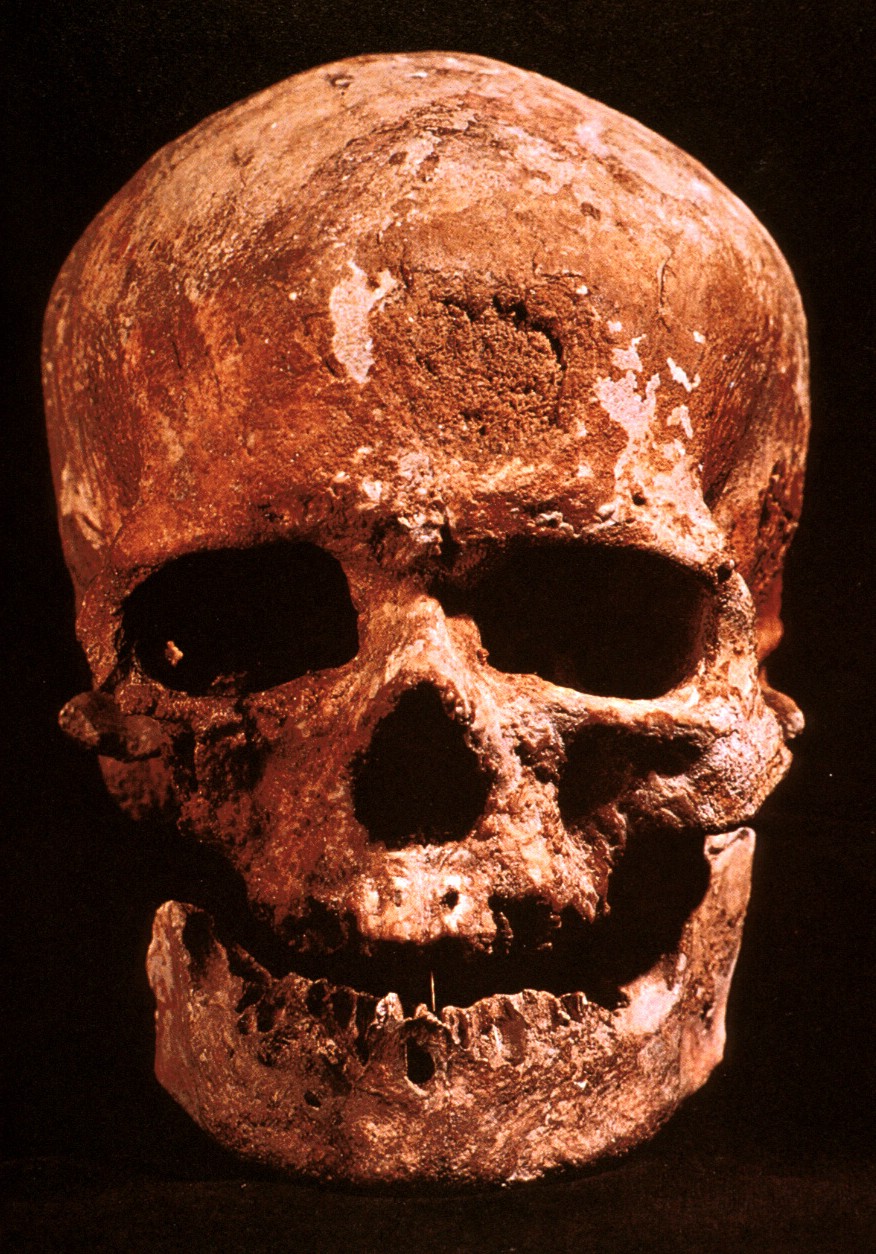
You are what you eat. That trite truism has been kicking around for a few decades now, and although it has been an aphorism to encourage healthy eating it does convey a deeper truth. Scientists working in Africa have determined that the hominid diet of roughly two million years ago led to rapid brain expansion (rapid on an evolutionary scale, of course), according the New Jersey Star-Ledger. Remains found in Kenya, featuring a Rutgers University archaeologist, have indicated a widely varied diet of fish, turtles, and crocodiles among ancient hominids. Apparently these animals provide valuable nutrients for brain development, a somewhat disturbing piece of information for us vegetarians.

The more I have pondered this information, the more it has become evident that the concept of God has undergone considerable evolution. As I have noted several times in the past, religious behavior emerges at the very least in the Paleolithic Era of human development. What those non-literate ancestors thought or believed about “God” is long lost, but it seems to have persisted into modern conceptions of divinity. Belief in supernatural beings is attested world-wide, and therefore is a true human universal. (There are, of course, non-theistic religions and individuals, but all cultures show some measure of belief in the supernatural.)

In those moments when I am free to ponder what this might mean, I wonder about the earliest conceptions of the divine. It seems likely that this being was like a hominid, able to respond in kind to placating gestures on the part of early humans. An abstraction simply doesn’t fit easily into minds focused on the practical aspects of survival without the guidance of professional theologians. That early God was able to, but not obligated to assist our fearful ancestors with the struggles of daily life. That aspect of the divine being has not changed in many millennia. Even today many religious individuals still consume fish, a food approved even for meat-free days, by God himself.

Early images of God?


Older than Stonehenge

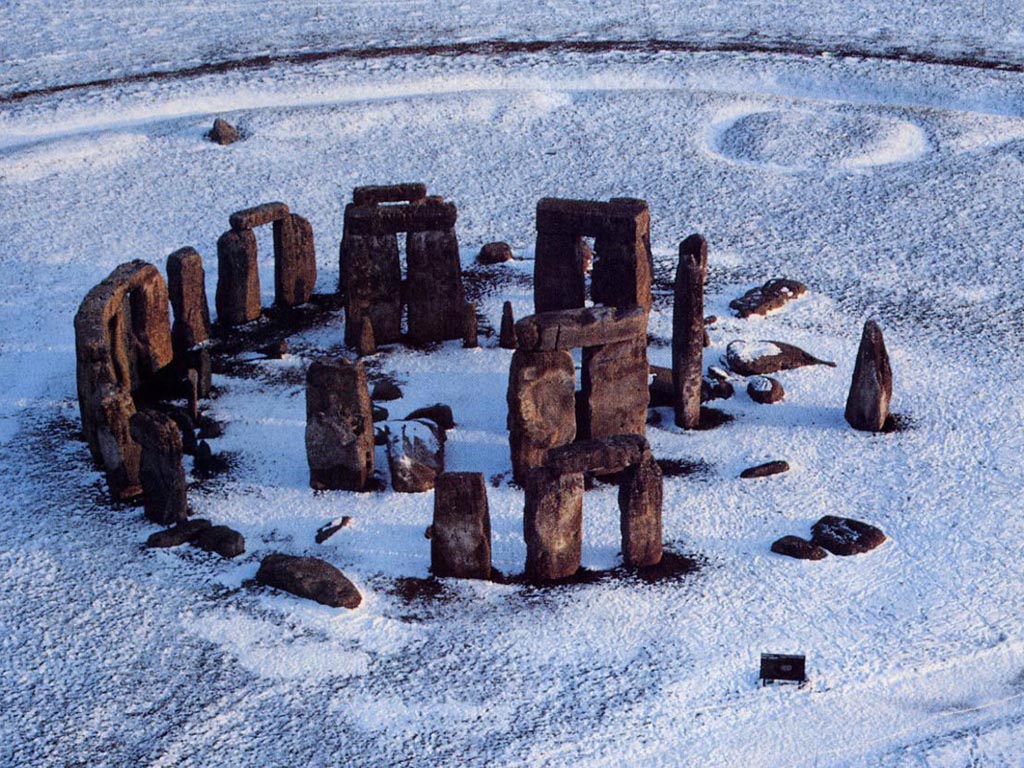
MSNBC ran a story yesterday concerning a little-known henge in Dartmoor, England. Images of these remote Dartmoor megaliths transported me back to my years in the British Isles when my wife and I spent every available tuppence traveling around to see antiquities so old that the Roman fortifications along Hadrian’s Wall seemed like throwbacks to the 1950s. With some English friends we met in Edinburgh we drove through the bleak moors of Dartmoor and Exeter, down into the forgotten curiosities of Cornwall, and back to Salisbury Plain to see Stonehenge. One year for my birthday we flew to the Orkneys (on a plane designed like a shoebox with wings) to explore the islands with the highest concentration of preserved prehistoric sites in Europe. Suffering from a killer head-cold, I accompanied my wife on hands and knees into tombs constructed thousands of years before William turned his conquering eye onto the British mainland. Colossal stone rings larger than Stonehenge, but less bulky and lacking capstones, stood out in the middle of a field where the locals barely threw a glance; such monuments had become part of the daily backdrop.

Archaeologists constantly attempt to discern the function of these silent remains. The MSNBC story suggests, based on the remains of porcine bones, that the Dartmoor site may have been associated with funerary rites. Carbon dated to 3500 BCE, they predate Noah’s putative ark (dated precisely to 1657, thank you Bishop Ussher) by more than a millennium. That they may have been associated with death is no surprise – the great feats and structures of humankind seem to be exactly that, efforts to cheat death. To leave reminders that we were here and we had something to say. What exactly they had to say, however, is muffled by the eons of lost communication.

A phenomenon I have noticed for many decades now is that when an unexplained structure or artifact is recovered, first recourse among many archaeologists is to attribute religious significance to it. Religion is the default fall-back when we can’t explain why people were expending tremendous resources to articulate a primal, deep concern in stone or clay. In many respects, the same is true today. Religious leaders still raise funds like no other class of professionals, simply by suggesting that death itself may be cheated of its due. All that money, however, can’t stop the inevitable. Instead of running away, I side with the archaeologists as I poke my head into some dank, dark space no other person has explored for many a month or year. Sitting quietly in an empty tomb left by an ancient society rendered completely mute by high antiquity, you are nevertheless in touch with what it means to be truly human.


Sex and Violence in Ancient Peru

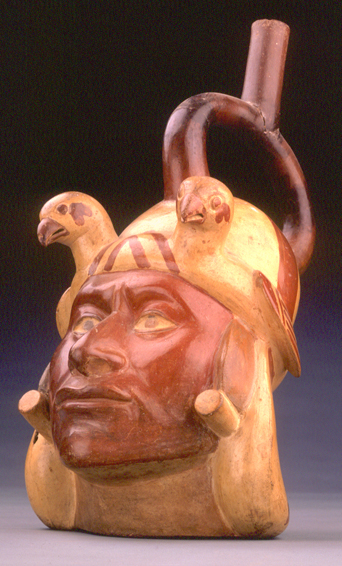
MSNBC ran a fascinating article yesterday that strangely validated this blog. The Quai Branly museum in Paris is opening a display of Mochica artifacts from ancient Peru. Although I am no expert on ancient Peruvian religion, I do recognize the obvious connection that I have introduced here a time or two: the connection between sexuality and religion. The article states that (but does not show) artifacts of an explicitly sexual nature are among those recovered from the Mochica civilization. Bringing violence (in the form of human sacrifice) and sexuality together, the ancient Moche were just as religious as medieval (and later) monotheistic faiths that assert their right to control sexuality and dole out violence.

The MSNBC article makes clear that the sexual, sometimes violent, images are not representations of everyday life, but religious rituals associated with the death of dignitaries. Emma Vandore, the author of the article, notes that the images demonstrate the social control Mochica religion had on its people. She is clearly right. Religions, while often in the position of providing “theological” rationales for their decisions, are actually forms of social control. Individual salvation aside, your clergy want control over your life.

Tame Mochica pottery from Wikipedia Commons

Because religion is so large and so mysterious, the populace often simply complies. The Mochica artifacts, some of which are reported to be disturbing, justify this interpretation. Even an image search on the web will reveal how graphically cruel religious representations of Hell are; much more compelling in scariness than are feeble attempts in alluring one into an idyllic representation of Heaven. (Heaven is often shown as a garden, and as a sufferer of hay fever, I imagine myself sneezing through paradise.) It is no coincidence that organized religion appears on the historical scene on the coat-tails of civilization itself. The Moche were straightforward about what modern civilization would prefer to hide: religion is more about control than it is about belief.


Archaeology in the Service of Politics

People are political creatures. Unfortunately. Politics, as most honest observers of society admit, serve the interest of the ruling party over the good of the whole. This is a nearly universal human flaw; a glance at any newspaper will demonstrate its prevalence. Those who practice politics can hardly be blamed for using the system they’ve inherited, but the system leads to many instances of unfortunate posturing and suffering. Clearly seen in Middle Eastern current events, it is nonetheless no less so in the “western world.” Often in both political arenas the Bible is invoked.

An article in this morning’s New Jersey Star-Ledger bears the headline “Archaeologist links ancient wall to Bible and King Solomon.” The story goes on to describe how excavations in Jerusalem outside the Temple Mount have unearthed a stone wall that might have been part of the legendary temple of Solomon. Of course, putting biblical names to mute structures amounts to voicing ownership claims. Solomon is not a historically attested individual yet – the only source referencing him is the Bible – and claims to have found his temple are premature. As the story states, “Palestinian archaeologists have criticized their Israeli counterparts’ rush to link finds to the Bible.” Amen. So they have; the structure itself is used as a form of dominance. Eilat Mazar, the archaeologist named in the article, is quoted as having said that this wall, “testifies to a ruling presence.”

The Haram es-Sharif, or Temple Mount, is one of the most hotly contested pieces of real estate on the planet. Embedded within these claims are acclamations of ownership. This brief post does not offer the space to unfold the complex issues in any substantial way, but it is an opportunity to note how archaeology is often used to establish tenuous holds on a past that is too foggy to penetrate. Like the classic dystopias of the twentieth century, politically oriented individuals use the evidence to write their own versions of the past. Pasting the name of an uncertain Solomon on a building that the Bible states was built by Phoenicians is an ironic historical twist indeed.

Gnu Jerusalem from WikiCommons


Asherah to Asherah

Every great once-in-a-while I regret no longer being in a position to conduct active research and publication. In the days when a full-time teaching position afforded me that option one of my favorite subjects was the exposure of facile arguments made by otherwise careful scholars. Most of those arguments focused on the presence of Asherah as a fully formed goddess in ancient Israel. Extremely tenuous evidence for the association of the goddess with a variety of ambiguous artifacts has polluted the discussion for decades now. Any vaguely abstract image suggesting a female was declared an “Asherah” representation, sometimes even images as simple as a triangle or a mother cow.

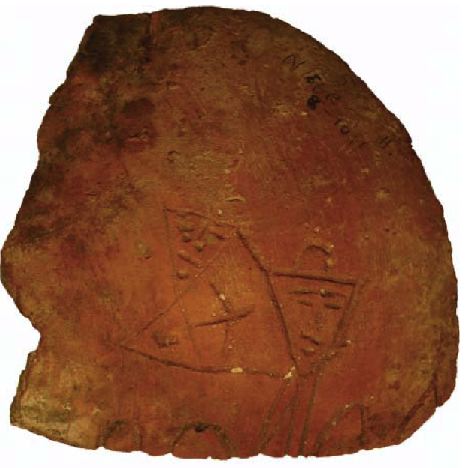
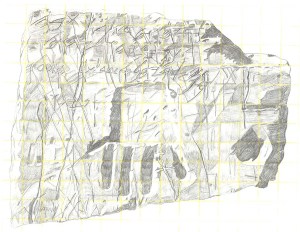
A colleague of mine just pointed out the recent article by Garth Gilmour in Palestine Exploration Quarterly 141 (2009), entitled “An Iron Age II Pictorial Inscription from Jerusalem Illustrating Yahweh and Asherah.” Having more than a passing acquaintance with the goddess, I read his article with considerable interest. A potsherd discovered in the 1920s, but unpublished until now, bears an incised “inscription” of two figures that Gilmour plausibly argues to be highly stylized female (left) and male (right). Basing his analysis of possible identities for this Picassoesque pair on the now canonical interpretation of the Kuntillet Ajrud and Khirbet el-Qom inscriptions, he suggests this is none other than the happy couple of Yahweh and Asherah.

Loving spouses or battling foes?

I encourage creativity in scholarship; otherwise it has a way of becoming deadly dull. The supposed pairing of Yahweh and Asherah, however, has been excessively overblown by scholars who should know better. When it comes to the point that escapees from Flatland who bear the suggestion of gender must be Israel’s most famous bachelor and his main squeeze, I have to wonder what the basis of solid scholarship is. There are no words obliquely hinting that this is a divine couple, nor is there a sacred context to suggest this shard was in any way religious. Given the fact that the image had formerly been on a spouted jar, perhaps holding water, would not a suggestion of Marduk and Tiamat be more appropriate?

Rorschach tests aside, this incised image is an important piece of a puzzle with far too many pieces missing – the puzzle of the artistic life of ancient Israelites. Given the all-too-human interest in relationships between women and men, I would see no necessity of making deities out of a pair of prospective lovers or foes. Why can’t people just be people?


Is the Truth Under There?

Each semester I introduce my Hebrew Bible students to the dangers of “biblical archaeology.” Not that there is any wrong-headedness in excavating sites of importance to ancient Israel, but I warn them of requiring proof for religious beliefs. Early archaeologists digging in the lands of the Bible were open about their agendas — “proving” the Bible to be “true.” The problem is proof is certain only in mathematics, not in matters of faith. Truth cannot be known, but must be believed. When archaeologists excavate the unknown, they cannot know in advance what they might find.

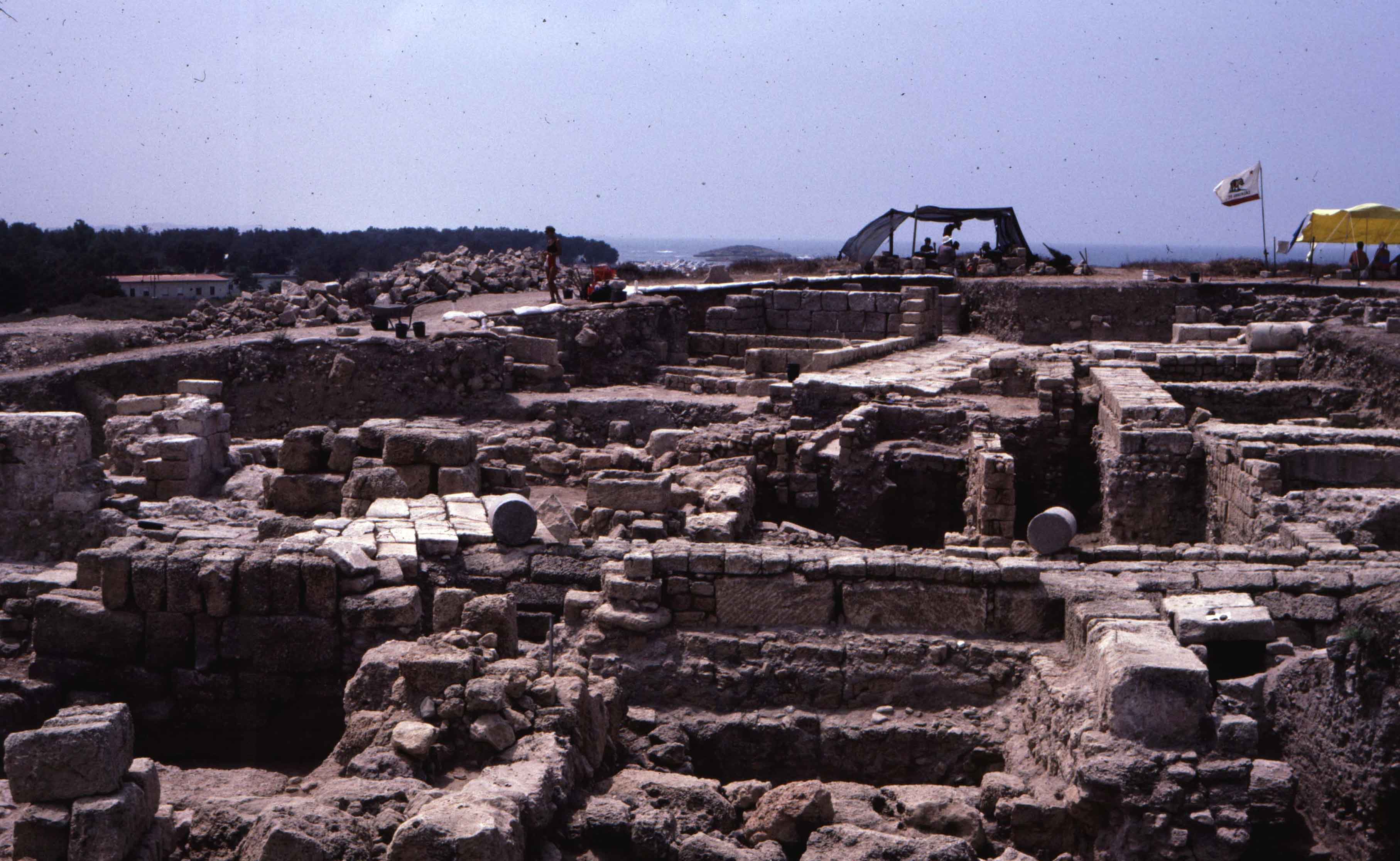
As a young academic wannabe, I volunteered at Tel Dor in the summer of 1987. Before the introductory orientation sessions Dor was only a shadow of a reference to one of King Solomon’s administrative cities mentioned in 1 Kings; I knew nothing of its location or importance. I’d had enough of seminary to be skeptical of many truth claims even then, and the irreverent outlook of many of my fellow diggers underscored the secular nature of the venture. We were digging for the truth, but we might not recognize it when we found it. Apart from the scorpions and tarantulas, we unearthed many mute trinkets from Israelites silenced by time. My square team was assigned to the city gate; we were seeking the coveted fourth chamber to place the city in a Solomonic context.

To the best of my knowledge, our humble efforts did not prove the Bible was true. After manually hauling out tons of dirt, we found what appeared to be a gate chamber and perhaps even a rubbish heap. Of these two features the rubbish heap was the more interesting to me. Here it was that the cast-offs of ancient life had been consigned to oblivion only to be rescued by bewildered strangers far in the future. Truth is often in what we hide. It may not be glamorous or worthy of biblical paeans, but it is that part of our lives that we discard. Finding “Solomon’s” gate proved nothing, but what “his” people threw away contained nuggets of the truth.

Is the Truth Under There? Tel Dor 1987


Anomalies in Paradise

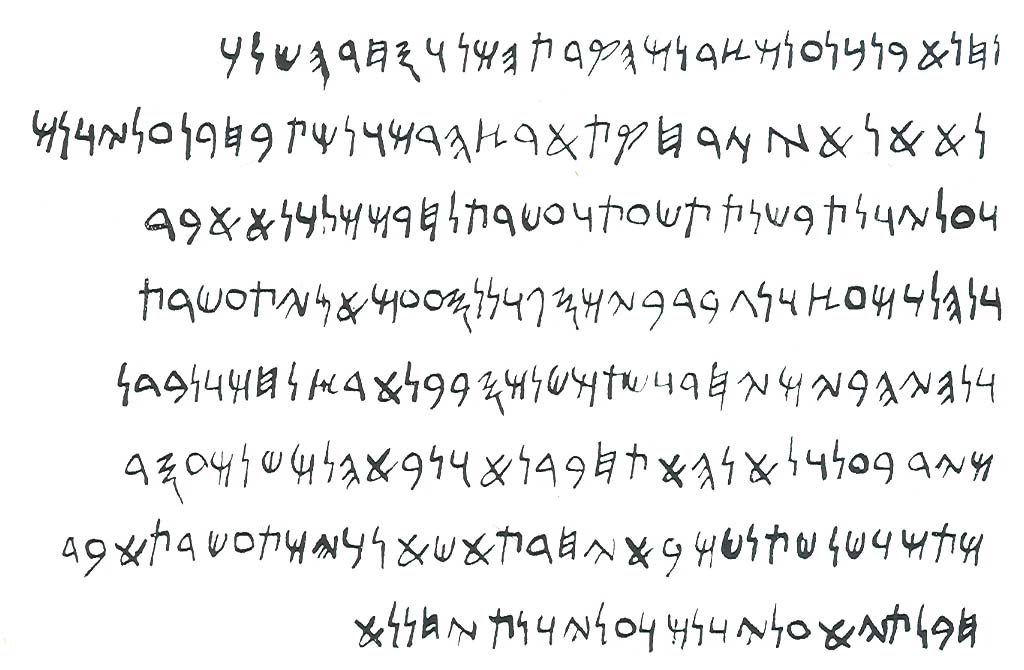
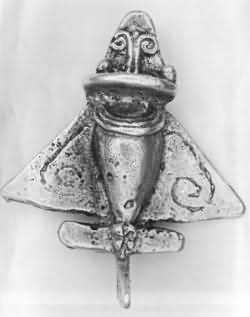
In 1874 (C.E.) a mysterious ghost of an artifact from Brazil was announced. In a story full of twists and turns and multiple Spanish surnames, a director of the National Museum of Rio de Janeiro had received a copy of a Phoenician inscription allegedly found in Brazil. Efforts to trace the letter to its source and to find the actual artifact both ended unsuccessfully, leading the director, Ladislau de Souza Mello Neto, to conclude the letter was a hoax and the artifact non-extant. The story might have ended there had not Cyrus Gordon, one of the premier Semiticists of the last century, allowed his open mind to reexamine the evidence. Gordon, in an article in 1968, argued that the inscription had to be authentic because of advances made in the understanding of Phoenician that would have been unavailable in the 1870’s. Gordon’s interpretation was in turn challenged by Frank Moore Cross, noted Harvard epigraphist, and scholarship heaved a collective sigh of relief and returned to the status quo. No Phoenicians ever crossed the Atlantic.

Neto's un-copy of the un-inscription

This little incident highlights one of the persistent conundrums of academic life. Anomalous objects are found/reported every once in a while and mainstream academia immediately debunks them to come back to center. A student of Hinduism asked me recently about the correlation of ancient calendars; before British colonialism hit India artifacts were dated to much earlier periods. Under the influence of Britain Dravidian culture grew younger and the background to European culture was considered more ancient, more time-honored. Those with investment in the system do not like to have privileged positions challenged.

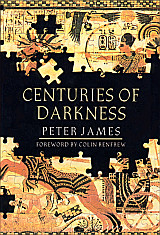
While a post-graduate student at Edinburgh, my advisor had me read Peter James’ Centuries of Darkness, a study that challenged the accepted chronology of the ancient world. Intrigued, we set up a seminar with representatives from the Archaeology Department to discuss whether this was a feasible approach to the many problem areas of ancient chronology. The archaeologists duly trooped in, set up their weapons and took pot-shots at the book, blowing multiple ugly holes in its arguments. After about an hour, when the archaeologists were unable to answer a very specific question by my advisor, he asked, “How many of you have read the book?” Sheepishly, not a hand was raised. The premise of the book was sufficient for its well-deserved snubbing. I learned a valuable lesson about academia that day — open minds lead to trouble. It is a lesson that demonstrates a very basic insecurity of those who do not wish to have their assumptions challenged.


The Power of Pyramids

One of the benefits of teaching is the constant refreshment of ideas presented by students to air out the stuffy closets in minds that tend to close around academic orthodoxies. Each field of studies has its sacred shrines not to be disturbed, and none more so than the field of religious studies. That’s why I appreciate the openness of student minds. This summer I was introduced to the alleged Bosnian pyramid that I posted about some months back. Having reviewed the statements of both archaeologists and geologists it is easy to see how what looks like a pyramid might not be a pyramid at all. Some experts even theorize that the pyramids of Egypt took their inspiration from the shape of a natural desert mountain.

Wikipedia's photo of the "Bosnian Pyramid"

As we were winding up our classroom discussion of Egyptian mortuary cult and its awe-inspiring pyramids, another student asked me if I had heard of the Okinawa pyramids. I hadn’t. Back in my student days I recall a professor entering my Egyptian Religion course after having just read a book on the mystical power of pyramids wherein the author claimed that dull razors placed under a small-scale pyramid would come out sharpened the next morning and other such nonsense. We all had a good laugh and got onto the serious business of comprehending the fascinating world of Ptah and Atum. When I first heard the phrase “Okinawa Pyramids” I had to fight down the immediate flash of embarrassment of unrestrained academic laughter should I be found even considering such a proposal.

I have always, however, listened to those willing to ask about even the most anomalous incidents of history. Two years back I had a student share the “helicopter hieroglyphs” of ancient Egypt with me, despite a fully understandable reading of signs that can look like a helicopter to the uninitiated. The Okinawa Pyramids, however, were different. As the student whipped out his laptop and pulled the images up from the internet, I was intrigued. These were not pyramids, but rather monolithic blocks 60–100 feet below the surface of the ocean near Japan. My amateur study of geology has taught me that many species of rock naturally have squared fractures along various planes and facets, but the number of offset angles and the profusion of the squared edges forced my mind open just a bit. What is more striking yet is that there is no Wikipedia article on this formation at all, despite its discovery in the 1980s. Most intriguing of all is that the complex seems to have sunk at the end of the last ice age, thus predating even the pyramids of Egypt. Even the stepped pyramid of Djoser.

Is there evidence of a pre-civilization civilization under the coastal waters of Japan? I am not qualified to decide. I feel safe in saying that whatever is there is not a pyramid, but I am impressed by the photos and the relative silence about them even on the web. Since the best photos are copyright protected, I’ll provide a link for anyone wishing to creak open a dusty mind-closet and wonder about the implications.


Biblical Lyres

lyrelyre

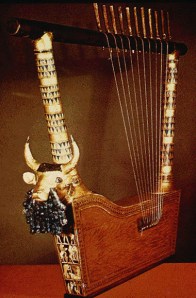
The head of Ur’s bull harp stares at me from the article announcing Penn Museum’s “Iraq’s Ancient Past: Rediscovering Ur’s Royal Cemetery” exhibit down the road in Philly. Despite recent questions of the ethics of laying off yet more academics, this exhibit beckons to those of use who’ve only ever seen pictures of the famous finds from the ancient world that we’ve spent our lives reading about. Penn’s museum is famous for its holdings from Sumer, and I’m trying to scrape together the change to go and take a gander.

Still, I was not surprised to see that the biblical angle was tied into the article as well. “The royal tombs of Ur (the city believed to be the home of the Bible’s Abraham) date to 2,600 to 2,500 B.C.” it reads. The article doesn’t go as far as to state that Abraham, not historically attested, if he ever lived, dates to at least a millennium later than Sumer’s heyday. No, Abe never strummed that beautiful bull-headed harp nor thought on Isaac as he stared at the “Ram-in-the-Thicket.” The only way to get the paying public in, however, is to play the biblical card. Were it not for Abraham, however, Sumer would likely have remained the orphan child of early antiquity.

Among the great civilizations of the Ancient Near East, Sumer failed to make it into the Bible. Its Mesopotamian successors Babylonia and Assyria marched into Holy Writ when they sacked Jerusalem and Samaria, and even the Hittites merit a mention with Abraham’s poignant loss of Sarah. Sumer was a civilization that stood on its own. No Bible story was necessary for any to see its greatness, yet there was no public interest without biblical bating. Nevertheless, this is a road-trip worth the taking. It will be nice to see the glory of Ur, even without Abraham lurking in the shadows.


Bes Leave It Alone

One of the constant enjoyments of teaching is the interactive learning that takes place. I tell my students that I learn from them just as they learn (hopefully) from me. One place this has been happening regularly is in an Ancient Near Eastern Religions class I teach. Students have to provide weekly class reports on somewhat obscure deities that I chose for them to research. One of the groups was assigned Bes, the minor Egyptian protective deity, and their research had uncovered the suggestion that Bes may have originally been a cat-deity. As Halloween approaches with its plethora of black cats, I found this connection to be fascinating.

The Egyptians domesticated the cat, and revered it. The nimble catcher of vermin (although, in all fairness, vermin are only doing what vermin have evolved to do), the cat was seen as a protector. When in need, why not call upon a deified cat, an everlasting cat, if you will? It makes sense that Bes with his stubby proportions and bewhiskered face, often portrayed poking his tongue out, might have evolved from a feline original. His iconography often features leonine imagery as well. We may never know his true origins, but Bes was widely recognized in the ancient world as an effective protector.

Bes

Back in 1987 I volunteered as a digger at Tel Dor in Israel. This was my first exposure to archaeology, and I loved every bit of it. The digging, the expectation of discovery, the honest physical work, the endless bouts of Herod’s revenge — well, some parts were better than others. One of the artifacts I discovered was a sky-blue faience head of Bes intended, apparently, to be worn on a necklace (there is a hole drilled through his head). I also found two bronze seed-beads that went with the necklace in the same matrix. Often I have wondered who, in an Israelite context, wore that amulet of Bes and what fate befell the wearer nevertheless. Bes is paradigmatic of our trust in help from beyond, but every once in a while even Bes ends up being dropped in the dirt only to be dragged out again by some future cat.


Who’s Your Daddy?

Is there an epigrapher in the house?

Is there an epigrapher in the house?

As long as I’ve broached the issue of Yahweh and his Asherah, it would be fitting to consider the supporting evidence of Khirbet el-Qom. The attention of William Dever was drawn to this burial site as long ago as 1969 by a badly striated inscription purchased from an antiquities dealer that had been traced to the location. Indeed, the exact spot of the excised inscription was discovered where it had been removed from a pillar near a tomb. Dever originally translated the inscription with no reference to Asherah and with an admission of its poor state of preservation. It was only after Kuntillet Ajrud was discovered (see yesterday’s post) that scholars began reading Asherah back into this extremely difficult epigraphic puzzle.

Since that time, Kuntillet Ajrud and Khirbet el-Qom have become the requisite two witnesses to seal the case: Yahweh had a wife named Asherah. Now slow down a bit! What does the second witness say? The Khirbet el-Qom inscription is extremely problematic; those who’ve examined it closely do not all agree that “asherah” occurs in it at all. If asherah appears here it is grammatically unwieldy: “blessed be Uriyahu by Yahweh for from his enemies by his asherah he has saved him,” and that’s only if the word really is “asherah.” Although Dever has gone on to write a book about God’s wife, he has never changed his original translation sans asherah. I followed his publications on the topic to see his revised translation, but surprisingly, he defers to others, some of whom have never seen the original. Am I the only one who sees something odd here? Only after “Asherah” appears in a grammatically awkward way from Kuntillet Ajrud does she get back-read into Khirbet el-Qom, in an even more awkward syntactic construction, and voila! Yahweh is happily wed!

My scholarship suffers from no conservative agenda, and I cannot be accurately classified as conservative by any stretch of the imagination, but I simply cannot
abide sloppy scholarship (and I’m the one without a full-time job!). It seems to me that if Yahweh was married, even if so considered by a tittering band of heterodox Israelites who liked to hang out in tombs and scrawl graffiti on public property, we would find some solid indication. So far all we have is ambiguous references to Yahweh of Samaria (and Tema) and “his asherah” at Kuntillet Ajrud and a badly defaced inscription from Khirbet el-Qom that may or may not even mention “asherah.” I cannot see this as strong evidence for a case of divinely wedded bliss.