God of the Gaps = Poof!

In Stephen Hawking’s new book, The Grand Design, according to MSNBC, he declares that God is not necessary, physically speaking, to get the universe going. The only people who should be surprised here are those who took Hawking’s final lines from A Brief History of Time too literally: “However, if we do discover a complete theory, it should in time be understandable in broad principle by everyone, not just a few scientists. Then we shall all, philosophers, scientists, and just ordinary people, be able to take part in the discussion of the question of why it is that we and the universe exist. If we find the answer to that, it would be the ultimate triumph of human reason – for then we would know the mind of God.” I remember being a bit surprised when I read that the first time.
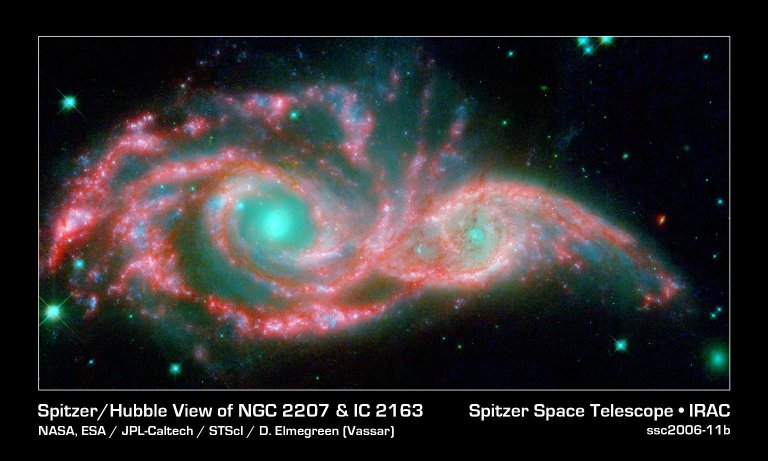
Whose eyes are watching you?

At some level, it seems, many people took comfort in knowing that one of the greatest scientific minds alive had left a door open for God. The great cosmologist looking through a theoretical telescope and seeing God on the other end looking back. There was a symmetry here, a sense of rightness. Some, to gauge by the reactions reported, feel that Dr. Hawking has betrayed us in stating the obvious. God was never to be found in the petri dish or under the electron microscope. According to the theorists of a theological stripe, God has no quantifiable qualities that might be measured. As the article states, the only God to disappear here was the God-of-the-gaps.

As a young, undergraduate religion major, when I first heard that God-of-the-gaps was bad philosophy/theology, I was a bit surprised. (I spend a lot of time being surprised.) If God has no explanatory value in the real world, whence deity at all? If religious folks behaved better, there might well be cause to suggest that the evidence for God comes in human kindness and charity. Unfortunately, religious folk quite often instigate the hatred and suffering that scars much of human society. No, Stephen Hawking has not killed God, just as Friedrich Nietzsche did not commit deicide in the nineteenth century. If the God-of-the-gaps is gone, nothing of value has been lost. The minds of theological thinkers will only have to be stretched just a bit farther.
Sol Invictus

Perhaps for abject fear of paganism, western civilization has avoided holidays associated with the summer solstice. Being the lightest day of the year in a frequently dark northern hemisphere, it was naturally a time to celebrate the victory of light over darkness. While the winter solstice insinuated itself into the complex of Christmas holidays and Easter became intricately intertwined with the vernal equinox, the summer and autumn holidays were rejected.

This neglect of the powers of light coincides to some extent with the orthodox Christian rejection of Gnosticism. The Gnostics, able dualists like their Zoroastrian predecessors, celebrated the victory of light over darkness. Remnants of their theological outlook survived in the canonical Gospel of John and the always questionable Revelation. Ancient societies throughout the world recognized the summer solstice because, regardless of its name, the sun was acknowledged as a powerful deity. On this day the sun is at its height of strength, banishing darkness for longer than any other day of the year. It is a day not to waste.

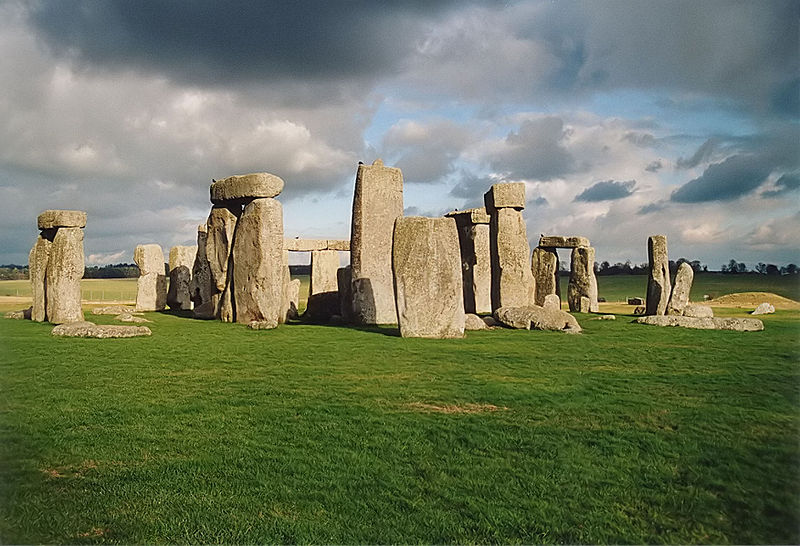
Christianity has preserved some minor holidays for the summer season, but with the advent of a leisure-based society where summer is a time to take it easy, if not cease work altogether, the solstice lost its grip. Perhaps because light is so abundant already in the longer days as winter wends its way into spring and summer and lingers pleasantly until the vernal equinox, summer itself is simply holiday enough. Those adhering to the ancient religions nevertheless gather at sites like Stonehenge and Maeshowe, or even Egypt’s famous pyramids to consider the unending influence that our special star holds for its most imaginative planet.

The stones of summer


Monday Morning of the Soul

Western society is much indebted to the Hebrew Bible and the culture it has engendered. Nowhere is this more evident than the now hallowed concept of the weekend. Most of our time increments are determined by the movements of celestial bodies – the sun marks our days and years, the moon keeps our months rolling along. But the seven-day week is a bit of an anomaly. We know that the ancient Babylonians experimented with the seven-day idea, but it was the Hebraic concept of the Sabbath that provided us with a regular day off.

Ancient agrarian societies knew no “days of rest.” The old saying, often attributed to nineteenth-century American farmers, states that your cows require milking, even on the Lord’s day. Life in ancient times, for most individuals, was a daily slog, repetitive, long, and repetitive, of struggling to survive. The idea that you could take a break from survival to relax and not work simply did not equate. A break from survival is the same as death. When ancient priests – city-dwellers, no doubt – decreed that Saturday was a special day because even the Almighty needs a little Miller-time, well, the idea caught on. Society, once it had become sufficiently urbanized, could allow one day off a week.

Fast forward to the Christian contribution. Early followers of Jesus were Jewish and therefore already sold on the Sabbath concept. The resurrection, they asserted, took place on Sunday, so it was appropriate to worship on that day as well. A two-day worship minimum had been established. To many ancient folks this looked like laziness with a religious blush. Nevertheless, it caught on. Now many of us in a leisure-based society, with white-collar work that usually can handle being put off a couple days without immanent starvation or over-lactation, live for the weekend. Constraints of doing it for “the man” are off, we are free to be who we really are. Two-sevenths of the time, anyway.

Religions have given the world special gifts. As another dreadful Monday morning forces us out of bed early and focuses our eyes on a distant Friday afternoon, we should remember to thank Judaism and Christianity for their combined worshipful sensitivities. If it weren’t for them, we would have endless weeks of Mondays.


Great Balls of Fire

Gnu from WikiCommons

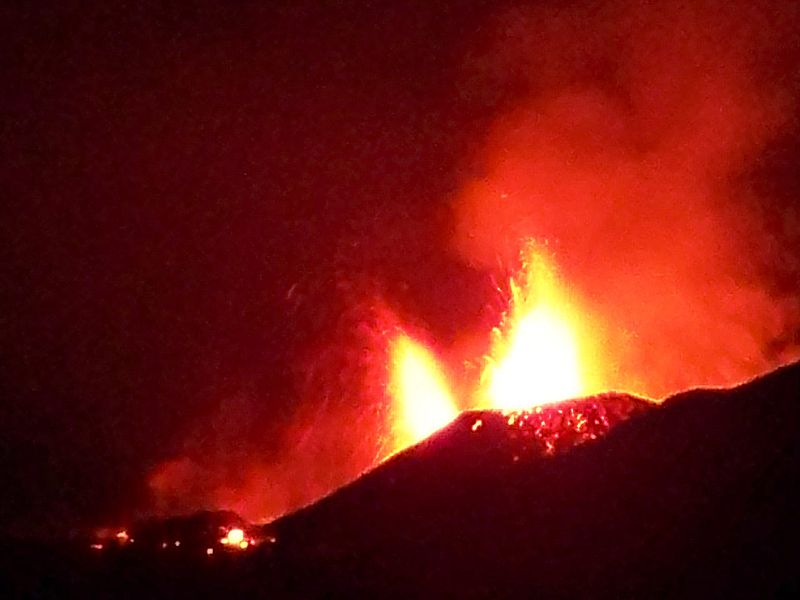
“I looked, and there came a great earthquake; the sun became black as sackcloth, the full moon became like blood, and the stars of the sky fell to the earth…” (Revelation 6.12-13a). With all the apocalyptic events of the past few days, some religious pundits are eagerly awaiting a rider on an extraterrestrial white horse with a light-saber jutting from his mouth. As the smoke from Eyjafjallajokull rises like a funeral pyre, a great green bolide streaks across Midwestern skies (landing, no doubt, near Nashotah House, among Wisconsin’s most paranormal locations), and this all follows an earthquake in China. More impressive than the snowpocalypse of this past winter, but less worrisome than the abrupt ending of the Mayan calendar.

All of this fuss reminded me of the way 1987 began. Having grown up in humble circumstances, one of my favorite pastimes was jigsaw puzzles. As my brother and I sat piecing one together on New Year’s Day while home on break, suddenly a loud boom shook our ramshackle house. Now I grew up in a small town built around a large refinery, and stories of the cataclysmic explosion that was sure to come raced through my head as my brother and I went outside to see the great pall of greasy black smoke that was certain to accompany such a disaster. We were met by clear skies and neighbors standing in a confused huddle in the streets. The news that evening reported that a fireball had been seen racing across the daytime skies of Ohio and Pennsylvania before it exploded some distance north of us. I’d just experienced my first bolide. It wasn’t the end of the world, but it was an event I’ve never forgotten.

The message I take from these many natural occurrences is that humanity is small. We imagine ourselves to be gods of our domain, controlling our environment and making it more to our liking. But we are not in control. Revelation was not predicting the end of the world, but was attempting to reassert a sense of control for people suffering from a perceived godless enemy. Today we still think of such events as a sign of God’s anger. I’m not sure what God is supposed to be angry about, unless he has happened to drop in on a Tea Party and heard how his name is being taken in vain.


The End of the World as We Know It

Well, that may be a bit dramatic, but my whole family is scratching its collective head over the news that our time on this planet has been foreshortened by the Chilean earthquake. Yes, scientists from NASA announced yesterday that Saturday’s 8.8 magnitude earthquake actually shook the earth three inches off its axis and has led to a loss of 1.26 milliseconds of time. Even for the gods this seems to be playing against the rules!

I wonder what the Fundamentalists are thinking about it? I do know that some extremely conservative types mess with time when trying to explain how the 4.5 billion-year-old world could have been manufactured in just 6 days — they call it the “day-age theory.” Or that the globe stopped spinning for 24 hours to give Joshua and his invaders more time to kill the Canaanites. I’ve even had students tell me that this latter case was scientifically proven. Time, however, ticks on despite our concerns with it.

It was my daughter who suggested the title for this post. After she said it, however, she noted, “Well, actually the world as we know it ended with the earthquake.” The world as we knew it. Radical changes have taken place with stunning rapidity on this old globe we call home, and some days the whole world changes. In 1815 the eruption of Mount Tambora led to the “year without a summer.” Wayward space rocks sometimes wipe out over 90 percent of all species on the planet. We live in a constantly changing environment. And it is my hunch that when that final disaster comes, those who’ve spent all their energy climbing the money mountain in the company of financial wizards, bank presidents, insurance profiteers, and oil company gods will come running to those who’ve spent their lives learning about religion seeking comfort in the face of the inevitable. We know we live in a temporary world; the wise spend their time contemplating the implications of that fact.

A little more to the left...


Old Father Hubble

“Space. The final frontier.” So I grew up hearing as Captain Kirk and Mr. Spock raced through the galaxy and plucky Will Robinson explored the cosmos with Robot despite the machinations of Dr. Zachary Smith. In Seattle a few years back I visited Paul Allen’s Science Fiction Museum and as I stood before the original Enterprise console and viewed Robot in person, it was almost a personal epiphany. This was my childhood all in one room.

Experience Music Project and Science Fiction Museum, courtesy Gnu

NASA has just announced the release of more deep space images snapped by the new and improved Hubble Space Telescope. These images show objects, galaxies, back to a mere 600 million years after the Big Bang. Look any further back and you’re liable to find yourself staring God right in the eye! These incredibly ancient images are humbling to a scholar of ancient times. In the cosmic calendar Sumer isn’t even on the map. And now we can see back almost to the Big Bang itself. It is another kind of epiphany.

Here's lookin' at you, kids - Hubble's new view

Cosmology is inherently religious. Even Stephen Hawking leaves room for the unknown, “religious” entity in his popular writing. As the infinitesimal biological apex of evolution on our own planet, we are somewhat less than cosmic dust on the grand scale. When we reach out to that cold blackness of outer space metaphors fail us until we fall back on God language. I look forward to the day when the Big Bang is captured on film (or digitally). I am almost certain that when that happens science will become far stranger than fiction.


Happy Circumcision Style New Year!

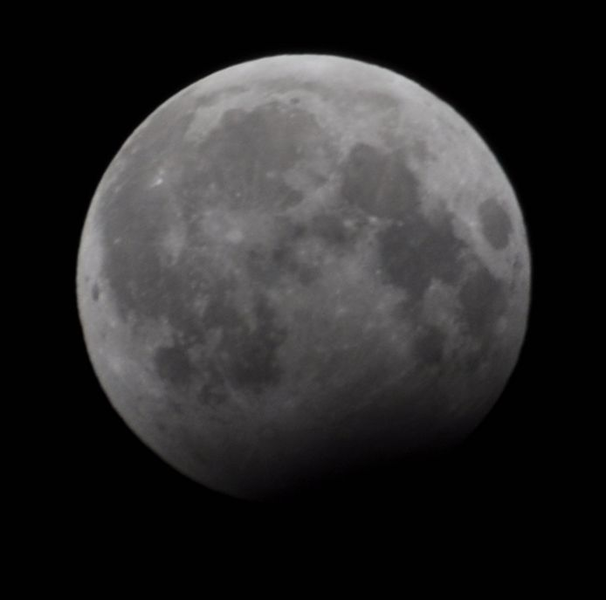
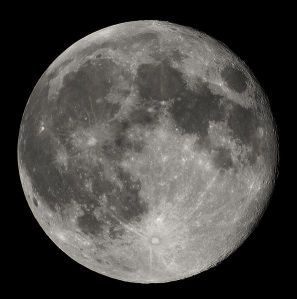
2009 ended with a blue moon. Last night’s lunar display (for those who could see the satellite) was the second full moon in December, one of the accepted definitions of a blue moon being the second full moon in any one month. Apart from its cool beauty of mythological fame, the moon is a timepiece to rival any Rolex or even Timex. Many ancient peoples lived by lunar calendars since the 28-day units of lunar time were regular and much more obvious to the layperson than solstices or equinoxes. A full moon is hard to miss.

Last night's blue moon from Wikipedia Commons

The marking of time is a religious activity. The date of Easter is still set according to the full moon; Easter falls on the first Sunday after the first full moon after the vernal equinox. Since Passover is a moveable feast and since we don’t know the year of Jesus’ death, Easter is a mathematical shot in the dark. It is regular because of the steady cycles of the moon. Time is a non-renewable resource, and since religions are generally concerned with what happens after death, time gains a sacred blush. Few holidays are truly secular in origin.

New Year’s is one of the most important holidays in the ancient world. There, the proper observance of seasons meant correct planting and harvesting times, and the possibility of survival. Living very close to the land, people required the assurance of the gods that their meager returns for labor led to enough food to survive. Keeping the gods happy as the new year began was essential. In the United States, New Year’s Day was observed on March 25 until 1752. It was observed on the supposed date of Gabriel’s annunciation to Mary that Jesus would be born. If you want to understand the title of today’s post, you’ll need to take a look at the Full Essays page and read the New Year’s Day section from my as-yet unpublished book for teens on the holidays. It does have a religious basis, as does circumcision itself.


Yarihk Finally Gets a Drink

594px-Full_Moon_Luc_Viatour

Gnu moon

Yarihk once again makes the news as NASA announced yesterday that they have discovered a substantial amount of water on the moon. I’m still reeling as if I’d joined Yarikh at the Marzeah. Although the local paper only deemed it page 2-worthy, this is a paradigm-shifting discovery! The arid, airless, lifeless, dead rock daily racing around our world has suddenly blossomed with new potential. Water on the moon? It seems as unlikely as satisfactory jobs for all graduate students.

Students are generally surprised to learn that in the Ancient Near East the moon was often considered superior to the sun. Given our knowledge of astronomy and physics it is difficult to look behind the curtain to see that it is not self-evident that the moon reflects sunshine without the subsequent development of a scientific outlook. For ancients the moon provided the gentler light that illuminated night — when you really need some light anyway — and was responsible for generating dew, a necessary source of water in regions where summer rains are unheard of. The benevolent moon waxes and wanes, forming a perfect circle and, by degrees, the crescent shape of the horns of divinity, and finally disappearing completely to start the cycle all over.

At Ugarit Yarikh is a thirsty character in text 114. He marries a foxy Hurrian goddess in the myth of Nikkal, a princess much above his station, then he easily fades into the background from the dearth of textual sources. Some have suggested a lunar connection for El as well, the very head of the gods. If El was lunar, perhaps Yahweh also drove the moon. Whoever is in charge, however, thought to pack water for the journey and as we further explore our nearest astronomical companion we will discover that Yarikh is just as interesting as the denizens of Ugarit had suggested.


Robots vs. Ancient Deities

NasaRob

Yesterday I found myself at my first ever robotics competition. As a scholar more familiar with the offering recipes for long extinct mythological deities than with the practical application of computer technology, I felt a little out of my league. I had gone to support the local high school robotics team, and, well, robots and Halloween seemed a natural combination.

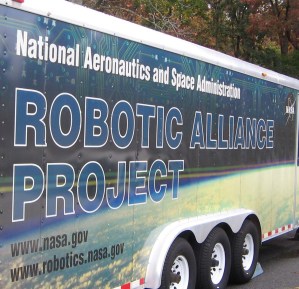
The first thing that stood out was the large NASA van parked in front of the school. Fidgeting over finding a job at the moment, I realized that the money is far more forthcoming for practical enterprises than reading ancient history. It is, literally, for rocket science. So I was crammed into high school gym bleachers with other aging parents, surrounded by kids smarter than I’ll ever hope to be, watching robots compete in exercises too complex for the average Republican. There was rock music blaring and yes, nerdy people dressed like science fiction movie/television characters. I was really feeling lost when I spied the character below.

DrJim

I had no idea that Dr. Jim of the Thinking Shop had relatives in the robotics field! As I saw the bearded Norseman approaching me, I was strangely reassured that there might be a place for me here after all. Religion and NASA do share an interest in celestial realms, and if my generation has been capable of producing kids this smart, there may be hope for the future yet.


Leggo my Ego!

Last week on my way to an interview, as I was merging onto the interstate, a state trooper in the center lane let out a whoop on his siren and broadcast on his speaker, “the left lane is for passing — got that?” Naturally I assumed the broadcast was directed toward me; I was in the right lane and the trooper was moving considerably slower than the posted limit. Should I pass him on the right or slow down? Now I was apparently joining a highway drama already in progress (status quo for New Jersey) and after a few intense heart-thumping minutes I realized that the cynical lawman was likely addressing a slower driver in the left lane. All of this is to introduce the problematic mindset of egocentrism.

The human brain, we are informed, is the most complex thing in the universe. It is also our gateway to all experience, knowledge, revelation, insight, and inspiration. We are limited in all our ventures by the tangible limits of our biological brains. Everything we associate with religion is mediated and filtered by our brains. As my friend and seminary professor K. Marvin Bruce likes to say, “consciousness is as much a curse as a blessing.” Our brains can be traps as well as explosive openings into new worlds. Everything begins and ends with the humble ego.

I was recently reminded of this while looking at the latest round of Hubble Space Telescope images released from NASA. We consciously know the universe is incomprehensibly large, the number of stars way beyond human imagination. And yet, on this smallish planet racing around a medium-sized sun somewhere in the outer banks of the universe, people have always thought the gods were concerned with them. The earliest cultures believed that humans were created in the service of the gods. We live, we wonder, we die. As long as the gods are pleased, the world continues much as it always has. In their eyes the stars that far outnumber the human population were gods. Their universe was more divine than profane. Yet even in our galaxy-filled universe, our brains can’t help but believe that somehow we’re in the very middle of it all.

Where's Wiggins? Not even on the map!

Where's Wiggins? Not even on the map!


Momma Maya, Is It the Apocalypse Already?

Where have all the Maya gone, long time passing?

Where have all the Maya gone, long time passing?

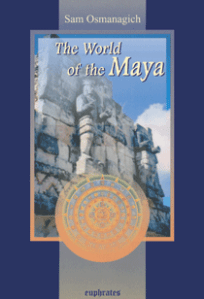
While recently reading a Gorgias Press book on the Maya (Sam Osmanagich’s The World of the Maya) I couldn’t help but notice the concern of the author with the year 2012. Actually, Osmanagich is looking forward to 2012; it will be when a new era in human existence begins. Since he freely admits throughout the book that extraterrestrials provided technical support in the Mayan monumental architecture, I suppose the fixation on 2012 should not be surprising. The book is charming as a folksy travelogue and disarming in its innocent sense of wonder, but academic it is not.

Concern with the end of the world as we know it seems to have entered the Judeo-Christian tradition with Zoroastrian contact. As soon as the idea was conceived it was immediately apparent that this was going to be a very large baby, and it has not disappointed. Back in my rural Pennsylvania high school, concern that the world would end in 1980 was seriously rampant. (Considering that the Reagan-Bush years were about to begin, it makes sense in retrospect, at least on a metaphorical level.) Worry ran so high that on the stated day — noon was the confirmed hour of doom — my English teacher laid down her grammar book and had us spend our final earthly minutes writing an essay arguing why the world was, or was not, going to end that day. When the class-bell rang, other than some soiled undergarments, everyone seemed pleased still to be there.

I was at Nashotah House for Y2K. A prominent administrator insisted that we all prepare for the likely event of a societal collapse. (From my present vantage point, I’d rather have taken my chances just about anywhere else.) Yet here I am to recount the tale.

Now only a dozen years down the road from Y2K we are being told to prepare for yet another apocalypse. People I speak to seem genuinely concerned about this one, and even I had a shiver or two as Osmanagich calmly laid out how the Maya just didn’t make mistakes like that. As I see it, there are two choices: people should study the origins and rationale of apocalypticism or someone should start a business selling Apocalypse insurance (the name Four Horsemen might be catchy). People seem ready to believe that extinct civilizations knew something about our fate that we just can’t see. And if the world does end in 2012, well, you wouldn’t want to have all those premiums weighing you down by then, would you?

The Four Horsemen -- would you buy insurance from them?

The Four Horsemen -- would you buy insurance from them?


Assyrian Dreams

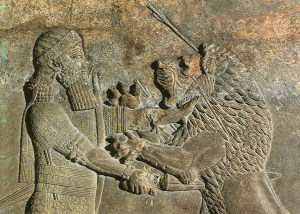
All through my formal education I had learned about the Assyrians. My first introduction to them was as the evil empire that destroyed the chosen nation of Israel, inspiring countless myths of the ten lost tribes. Upon further study they appeared in a more positive light — they were one of the great, formative Mesopotamian peoples who had gone through considerable trouble inventing much of our culture for us. They also had a penchant for over-running smaller and weaker nations, but then, everyone has their foibles. When I saw their striking bas-reliefs in the Boston Museum of Fine Arts, and later in the British Museum, I was deeply impressed by their ability to project hostility. Bulging biceps, braided beards, dreadlocks and attitude enough to be the envy of any gangsta, these guys could subdue you with just a solemn nod in your direction.

A good day for Assurbanipal, not so good for the lion.

A good day for Assurbanipal, not so good for the lion.

But the Assyrians over-extended themselves. Conquering further and further from the homeland, they couldn’t keep a stony eye from Egypt and Anatolia all the way to Persia. Media (not the paparazzi) eventually tumbled Nineveh and Babylonia stepped in to take on the burden of predominant empire. The United States hadn’t been invented yet, so somebody else had to dominate the Middle East. With the influx of Arameans and the machinations of the Persians, Mesopotamian culture became a cherubic mix of peoples. Assyria ceased to exist as a separate nation, and once the Arabian tribes launched into the region, all genetic bets were off. Racial purity was a dream of the past. So the Assyrians dissipated, joining their neighbors in a happy, amorphous Mesopotamian culture.

In Shamash we trust.

In Shamash we trust.

Then, after procuring a doctorate in Ancient Near Eastern studies, I took a job at Gorgias Press. Suddenly the Assyrians were back! That was one on the other end of the telephone! Visions of dreadlocks and skewered lions came to mind, and in my confusion I asked my colleagues if I’d slept through that lecture. No, it turns out, the Chaldo-Assyrians are a relatively new incarnation. Named Assyrians by nineteenth-century European missionaries, this predominantly Christian people has adopted and tried to assimilate the heritage of the ancient Assyrians. They still exist today, I’m told. Instead of swords and lion hunts, they wear camouflage and hunt with automatic rifles. But their flag hearkens back to their ancient, pre-Christian religion. That flag, their rallying point with high antiquity, bears the emblem of the eight-rayed Assyrian sun. Jesus, meet Shamash. Son versus sun. I guess it is time for me to go back to school again and see if I can get it straight this time.


Here Comes the Sun, and Is She Ever Hot!

As I enjoy my Kellogg’s Raisin Bran at breakfast, a benevolent sun smiles down on me from the box. I know from social conditioning as a child (courtesy of television), that the smiling solar disc converted the healthful grapes into equally healthful raisins so that I could grow up to be big and strong. While there is no doubt some truth to this solar myth, it does demonstrate how pervasive solar personification is.

A persistent myth to minds conditioned by trinitarian concepts of early Christianity is that the ancients recognized three major goddesses. Although their names are distinct in the original languages, in English three of them begin with A and form a delightful Trinitiess: Asherah, Anat, and Astarte. So this feminine triune godhead is considered to represent the female power triangle of the ancient Ugaritic world. (Ugaritic, I know, is a far too limited term for what was a widespread idea. On the other hand, “Aramean” and “Canaanite” are inherently problematic!) It has been my contention for years that this construct is A) modern, and B) false.

Throughout the ancient world the sun was considered a major deity. And although deities frequently overlapped in their spheres of interest, the principle Ugaritic deity in charge of the sun is Shapash. (With apologies to Nicolas Wyatt, I simply can not find Asherah in her.) In the surviving Ugaritic mythology, which we know for sure is only a portion of a larger corpus, Shapash appears frequently to enlighten both gods and humans. She guides the dead to their repose in the underworld and provides them with some kind of light while the world sleeps unknowingly above. She even seems to have the ability to cure snake bites. Now in the heat of summer, there is no question of Shapash’s ability to turn our grapes into raisins. She even kept many indoors in India last week as the longest solar eclipse of the 21st century crossed that country (chalk one up for Yarikh). Let’s give the sun her due!


Drunken Moonshine

As I learn in wonder that several of my favorite public personalities are suddenly, in fact, younger than I am, Time sends an issue broadcasting that the first moon landing occurred 40 years ago. Ouch! I remember watching it on our snowy black-and-white television the size of a washing machine. There is some comfort, however, in knowing at least some people out there are as fond of outer space as I am. I have proudly told younger co-workers that I watched the original airings of the first real Star Trek, and I confess to having been a Lost in Space junkie.

Ancient peoples used a different set of lenses when they looked up into their pre-Galileoan skies. Those tiny dots of light in the sky at night actually move across the sky as any ancient insomniac knew. They had to be alive, that stood to reason — they must be gods. And that “big shiny one, right there,” as Donkey calls it, the moon, presided over them all. In many an ancient divine magisterium the moon reigned supreme. Its light wasn’t reflected, it was self-generated.

At Ugarit one of the deities associated with the moon was Yarikh. Unfortunately tablets relating his exploits are rare, but one such tablet (fancy title KTU 1.114) relates a frat party on Mount Saphon (an ersatz kind of heaven). As the gods are drinking themselves senseless (how else can the latest Bush administration be explained?) Yarikh, the moon-meister, begins crawling under the table like a dog and begging for a joint of meat. His advances are greeted with a divine stick-whacking to send him yowling back home. It is probably a good thing that the moon sobered up before we landed there. The imagination runs wild at what could have been so much worse than landing on a pile of green cheese!

Innocent nursery rhyme or Yarikh on another drunken exploit?

Innocent nursery rhyme or Yarikh on another drunken exploit?


In the Light of the Moon (Sin)

While teaching at the University of Wisconsin Oshkosh I was assigned a course whimsically entitled “Myth and Mystery.” With little more than an old syllabus and some Agatha Christie reading experience to go on, I set about building an academic study of the unknown. (Ironically, in the years since then it has mostly been students from this course who have contacted me later to follow up on classroom material.) One of the mysteries I addressed was the werewolf legend (also see the previous post).

The earliest known record of a man becoming a wolf derives from ancient Greece. An Olympic athlete named Lycaon reputedly turned into a wolf (not during the games, I suspect, or he would had to have been put in the dog races). I would contend, however, that werewolves are at least biblical and likely older yet. The tale of Nebuchadrezzar transforming into an animal in Daniel 2 is widely known. Less recognized is that this story likely originated earlier than the book of Daniel, and it was associated with Babylonian king Nabonidus. Nabonidus was a devoted worshiper of Sin, the god in charge of the moon, and was rumored to have struggled with an “evil ulcer” (the mind reels) instead of having transformed into a beast. Rumors that he’d gone insane abounded, which, for lunatics, must count for something! How far back the moon’s transformational powers go is not known, but the marauding beasts of the night were known and feared long ago, along with the occasional insane king.

Not Nabonidus, but maybe one of his kids?

Not Nabonidus, but maybe one of his kids?

Unfortunately only after my Oshkosh course ended, I struck up correspondence with Linda Godfrey, a journalist who lived almost close enough to be a neighbor. Linda is an avid researcher of the Beast of Bray Road, Wisconsin’s own home-grown version of the werewolf. The closest I ever came to experiencing the beast was being awoken one midnight by a pack of coyotes howling through the yard, but I read Linda’s books with wonder. Are ancient fears really present realities? I suppose only time will tell, but our ancient ancestors sometimes had more keen eyesight than their modern day beneficiaries do. Their advice was to love the moon with caution since it could cause insanity in select cases!