Agade

The word “listserv” feels abrupt to me, as if someone couldn’t be bothered to type one more “e” to give the reader a sense of satisfied completion.  Technology terms are often like that—not really descriptive of what they are and leaving us older folks wondering about the words and not quite comprehending what they’re supposed to signify.  Back in the early 1990s I joined a listserv that eventually came to be known as “Agade,” since it carried news of the Ancient Near Eastern variety.  Since I seldom have the opportunity to work in that field any longer, I long ago ceased to be on the Agade listserv and consequently have lost track of what’s happening in real time.  Or at least close to it.  An author with whom I was working recently asked me to post about his book on Agade so I had to resubscribe.  It’s nice to see the listserv, whatever that is, still alive and kicking.

One of the articles posted recently had the intriguing title “Burnt remains from 586 BCE Jerusalem may hold key to protecting planet.”  I’m not sure, beyond evangelicals chomping for Armageddon, who doesn’t want to protect the planet, so I read on.  Archaeologists, I know, sometimes feel put upon to defend their work.  Yes, it’s sexy and cool, but it’s also expensive and not as well funded as it needs to be.  It does occasionally lead to real scientific breakthroughs.  This particular story is about Earth’s magnetic field.  It is vital for life as we know it, and we know that it is constantly shifting.  In fact, some pundits are fearing a flip in magnetic poles which, for a guy who can’t even understand listserv, sounds really catastrophic.  The article, however, is about the fact that the destruction of the temple in Jerusalem by fire that led to a trapped picture of the magnetic field at the time, and we know the date.  Magnetic materials under high heat preserve indicators of the Earth’s magnetic field, whether it had been discovered or not.
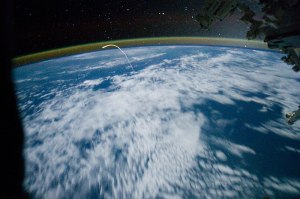
Image credit: NASA/ISS Expedition 28, public domain from Wikimedia Commons

The book of Genesis says nothing about the creation of the magnetic field that makes life on our planet possible.  Knowing that we understand so little about something that makes our existence possible, I suspect, indicates that there are many factors of life we haven’t even begun to comprehend.  There are further discoveries to be made.  We’re not even sure if our definition of “life” is entirely accurate.  One thing our history has taught us, however, is that if we build great structures there will be those eager to burn them.  As we sift through the rubble we might discover something about the direction in which we’re going.  And a listserv will be there to share the news.


Holy Smoke

I’m not inclined to read news about drug use, and, to be honest, I barely have time to read about the culture of ancient Israel any more.  I very occasionally hear from people who find out that my book on Asherah is free on Academia.edu (it is) that tell me how they plan to use the information.  It’s gratifying, but as with anything put out there for public consumption, you never know which direction it’s going to go.  Thus I found myself on Lucid News’ website.  With the tagline “Psychedelics, Consciousness Technologies, and the Future of Wellness,” ideas begin to form in the mind.  But a citation is a citation, and so I read the opinion piece “Drugs, the Israelites and the Emergence of Patriarchy,” by Danny Nemu.

The story follows on the announcement from some time ago that chemical analysis of an interior altar of an ancient temple at Arad (from ancient Israelite times) revealed that it had been used to burn cannabis.  The biblical story—now questioned by archaeology—is that there was only one official temple and that was the one in Jerusalem.  It was destroyed by the Babylonians in the sixth century BCE and then again by the Romans in the first century CE.  We have no access to the altars that stood in the temple, but we do know that incense, particularly frankincense, was valued for its pleasant smell.  According to the article in Lucid, a second altar in Arad showed residue of frankincense.  Both altars were in a small, enclosed room—the bong of the Lord, as it were—and that together the two forms of smoke would’ve created an intense religious experience for a priest in there for any length of time.  Although the article doesn’t suggest this, it could also explain why animal sacrifices were going on in the courtyard, I guess.

You might be wondering about Asherah.  While the jury’s out on her actual worship and what it entailed, the academic establishment has decided that she was Yahweh’s spouse and was worshipped together with him in the ceremonies that have been forgotten to time.  With all that heavy substance burning I guess it’s not surprising that some things might’ve been forgotten.  I don’t really advocate the use of drugs, but the science behind archaeology shows us that religions have used them for centuries and centuries to reach other levels of consciousness.  I was in chapel services at Nashotah House where the incense was so thick you could barely breathe.  Did such circumstances play a role in the religion that now identifies itself as white-shirted evangelicals?  It boggles the mind.


Jacob’s Ladder

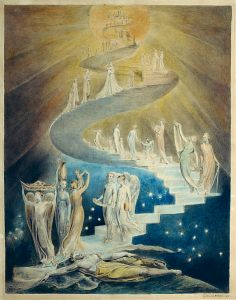
Jacob, it is said, was quite a dreamer.  While fleeing from his brother Esau he had a dream of a ladder, or stairway, to heaven.  Well, “Heaven” as we recognize it didn’t exist then, but you get the idea.  Angels were climbing up and down on it, I’m guessing to do roof repairs.  You see, neither my wife nor I are what you might call tall.  In fact, I’m a bit shorter than the average guy and we can’t reach the top shelf in our kitchen, let alone the ceiling.  Or, God forbid, the roof.  So when tropical storm Isaias (not to be confused with the prophet) dropped upwards of five inches of rain on us, some of it got inside.  Our roofer, vexed as I was, promised to get over the next week but there’s more rain in the forecast.  I had to get up there to do some temporary patching.  I needed a ladder.

Ours is an older house.  The roof is way higher than any ladder we have.  I have one that allows me to get as high as the ceiling, but being acrophobic I don’t use it much.  It doesn’t come halfway to the lowest roof.  The hardware stores have ladders, but delivery’s a problem.  A ladder twice as long as our car seems like a road hazard, strapped to the top.  I asked about delivery at the local Lowe’s.  It would cost a third of the price again of the ladder itself, and that’s only be if they could deliver it.  Their truck was, ironically, broken down.  Wasn’t this a DIY store?  Could nobody there fix a truck?  I put a face-mask and rubber gloves on for this?  The world isn’t easy for the vertically challenged.  I really don’t want to climb that high, but with the ceiling below already coming down I’ve got to do something.

I wonder if Jacob’s ladder is still lying about somewhere, unused.  We don’t live far from Bethlehem.  Maybe I can scoot over the Bethel and pick it up.  Then again, maybe angels deliver.  I hear they can be quite accommodating.  Of course, if they’d keep the rain off in the first place that would’ve been helpful.  I’m pretty sure that Plant and/or Page had a leaky roof.  When they went to get up there they’d found somebody had already purchased the ladder (I think they call it a stairway in England).  So I find myself with a leaky roof and no way to get to heaven.


Hurricane Isaias

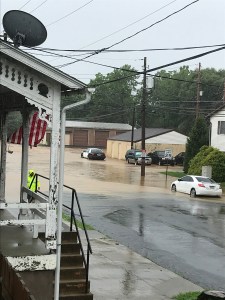
People have been debating how to pronounce Hurricane “Isaias,” an hispanic name based on Isaiah.  Pennsylvania, which has few distinguishing features, is generally well enough inland not to have too much hurricane damage.  Isaias, however you pronounce it, dumped over five inches of rain in the small town in which we live.  Multiple roof leaks sprang up in our house and a small part of the ceiling in one room came down.  Not exactly wrath of God level treatment, but unwelcome nevertheless.  The real problem was the short amount of time in which the rain fell.  Averaging about an inch per hour, the water simply overwhelmed the devices put in place to keep it outside.  Being of my particular disposition I can’t help but think of the prophet Isaiah.

Not a classical prophet of doom per se, Isaiah is the most quoted prophet in the New Testament.  He is remembered for “predictions” and soaring rhetoric that promises deliverance.  He’s also a prophet known for his woe declarations, as reflected in the Hebrew Bible.  This storm, I suspect, has delivered more of the woe than of the hope.  Streets were flooded as the local creek burst its banks.  Our own street was closed as I called our roofer who, I’m sure, had more than wanted popularity in one day.  Being a homeowner, I quickly discovered, is largely a matter of trying to keep the water out.  Our sump pump was working overtime and still the rain came.

My book Weathering the Psalms was intended to be the first in a series of volumes exploring meteorotheology in several books of the Bible.  The weather, you see, is a popular topic of discussion since in ancient times their meteorology was theology.  After the Psalms my exploration was intended to move toward the prophets.  There are dramatic events where these saintly folk were able to bring down rain, or withhold it.  Israel never experienced hurricanes because they don’t form in the Mediterranean.  Meteorological terms, however, shift over time just as by the time Isaias reached us it was a tropical storm.  The wind buffeted us a bit, but it was mainly a rain event.  I thought at first that I would look at weather terminology in Isaiah and see what I could find there.  I don’t know what my conclusions would have been since I was cut off before I could get that far.  Like those who cast their bread upon the waters, after many days it came back, ironically in the form of Isaias.


Bonded

It happened this way.  When my daughter was young she was interested in dinosaurs.  Most kids are.  In fact, my wife and I went to a public lecture by a paleontologist in Edinburgh where he pointed out that the real experts on the subject in the audience were generally twelve or younger.  I took an interest in what my daughter found fascinating, and you can’t study dinosaurs without knowing a bit of geology.  Now, the professor’s lifestyle is a thing of wonder.  You may have a heavy teaching and publication load, but the freedom to spend your unstructured summer time pure learning was (still is) a huge draw.  I began studying geology.  I joined the Wisconsin Geological Society.  I was even made an officer.  My, a biblical studies professor.

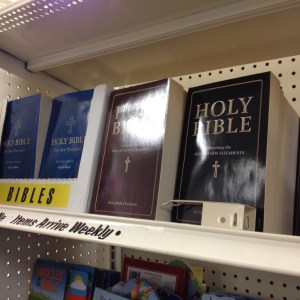
At one point I bought a jeweler’s loupe.  Many geologists have them.  To get down to the level of the crystalline structure of most rocks you’ll need something more powerful, but for fieldwork (and I’ve got a garage full of rocks to prove it) your average loupe will do.  When Nashotah House decided I should no longer be a professor (and the rest of academe acquiesced) I seriously considered going back to school to study geology.  Time was against me, however.  I had to find a job with a family needing support, and so here I am in publishing instead.  And not only that, but I’m a Bibles editor.  Most people have no idea what that means.  Some days even I don’t.  But one thing I have learned is that you’ve got to know your leather.

This is a bit uncomfortable to me as a vegan, but I have learned that many people want their Bibles wrapped up in animal sacrifice.  I’ve also learned there are many different kinds of leather.  The typical leather Bible is pigskin.  Yes, that’s right.  In the trade you can call a Bible with any animal hide leather.  Bonded leather means that it’s pieces glued together.  The most expensive Good Books are “genuine leather.”  Cut from whole cloth, as it were.  I keep my jeweler’s loupe in my work desk.  Sometimes I need to look at something closely, off screen.  My loupe came in a leather case.  One of the sides peeled off during our move and I could see clearly what bonded leather means.  In fact, the “nded” part of “bonded” is clearly visible like a secret Bible code on the underlayer of my case.  Nothing, it seems, is ever wasted.


Virtual Bible Study

Like just about everybody else, I spend my days online during the pandemic.  Well, actually, I spent my days online before that since I’m a remote worker.  Even before that, when spending a considerable part of each day commuting to and from New York City, once I got there I’d sit in a cubicle and work online all day anyway.  To borrow a tagline, the truth is out there.  Somewhere on the internet, I think.  Probably on the deep web, but I understand that’s a scary place.  I’m not sure why it is that I started receiving email ads for something called Virtual Bible Study.  I suppose I spend enough time, and my computer eats enough cookies on Bible Gateway that the Virtual Bible Study people think I’m the typical customer.  

Having led many Bible studies in my life, and having taught biblical studies professionally, I’m aware that you can never learn it all.  Indeed, biblical study is the original never-ending story.  Stay with it long enough and you’ll earn plenty of enemies.  Recently my mother was telling me that she’s doing a Bible Study where you follow a schedule and read the “liner notes” that come with a particular curriculum.  She mentioned to me that she was having trouble with Deuteronomy 28.  It’s a chapter with which I’m quite familiar.  I remember reading it as a young person and being terror-struck by it (those who wonder what horror might have to do with the Good Book ought to read it.  Go ahead, I’ll wait.  You can find it on Bible Gateway.).  This is one of those places where God spells out the blessings (somewhat limited) for obedience and the curses (very many) for failure.  The list is long and terrible.  I’m not a chapter-and-verse citer, but from my very first read-through of the Bible I could tell you what was in Deuteronomy 28.  It was burned into my memory.

I do have to wonder about the efficacy of online Bible Study.  I sure do appreciate not having to look everything up in a print concordance any more.  That was quite a time-consuming activity and you needed to be very familiar with the particular version you were using to make it work.  I know I grouse a bit about technology on this blog, but given my vocation, and avocation, I sure like having Google on my side when I need to look up a verse that I can only partially recall.  I do have to wonder, however, since the truth is out there, whether anybody’s found a good way to comfort their elders who get stuck on the curses that essentially wrap up the covenant in good old Deuteronomy.

Virtually the Bible


Hebrew Class

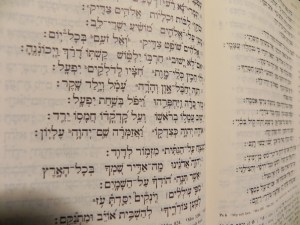
It is utterly remarkable that in this year of the Common Era 2020 that even in Unicode you can’t write Hebrew in Microsoft Word without gymnastics.  The task at work was a fairly simple one: proofread the Hebrew in a typeset manuscript ready for the printer.  This means the manuscript is a PDF at this point and to get Hebrew to appear in a comment bubble you need to copy it from Word and paste it in.  But wait!  Word only has some Hebrew letters in its Symbols menu.  Try getting a yod to appear.  I looked up a Unicode chart, copied and pasted the Unicode unique identifier and Word gave me a capital P.  Not a jot or tittle to be found.  So, to get the yod I had to fetch my personal Mac and use the language menu and type the word out.  Copy.  Paste in an email from my personal account to my work account.  Wait.  Open work email message.  Copy again.  Paste again.

Using this method, a task that would take me maybe twenty minutes stretched into hours.  There was simply no way to get Microsoft Word to display a full Hebrew alphabet shy of changing the language on the computer.  And since I don’t read Modern Hebrew I had a feeling that would lead to disaster.  Part of the problem is that programmers thought it would be smart to make Unicode Hebrew automatically appear right to left.  This has been the bane of many of us since the earliest word processors tried to replicate the language.  We grew used to typing it in backwards.  Now you never know which letter is going to disappear if you hit delete—it doesn’t help that it can act differently on a Mac than on your standard business-issue PC.  Not only that, but when you paste it the receiving document often automatically reverses word order.  Can I get a pen and paper over here?

I sometimes jokingly lament the hold that technology has on us.  In some instances the joking takes on a serious tone, I know.  I do wonder about having techies drive where we’re going.  It’s one thing to make it possible to print Hebrew letters in electronic form, but it is quite another to read them and have a sense of what they’re saying.  And those of us challenged by the whole right-left orientation and a cursor blinking on one side of a word but having its effect on the other wonder if it’s worth the effort.  There’s a reason ancient people wrote in clay, it seems. 


Like an Egyptian

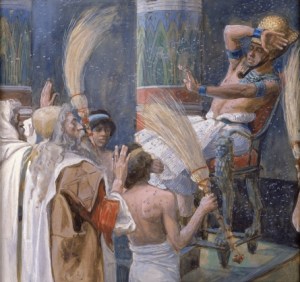
“And Pharaoh’s servants said unto him, How long shall this man be a snare unto us? let the men go, that they may serve the Lord their God: knowest thou not yet that Egypt is destroyed?”  The words are from the Good Book.  Specifically Exodus 10.7.  They’ve been on my mind as the coronavirus is beginning to yield in all developed nations but our own.  Let me set the scene: the Israelites have become slaves in Egypt.  Moses was sent to set them free, but a Trumpian Pharaoh stood in the way.  Plague after plague was sent, but the president, er, I mean Pharaoh, refused to acknowledge what the evidence indicated.  Moses would appear before the senate and declare the coming disaster.  In the mythical world of the Bible, though, the senate actually saw reason.

“Knows thou not yet that Egypt is destroyed?”  Instead of addressing the Covid-19 crisis the White House has decided to turn a blind eye.  Nearly one-fourth of the worldwide cases of the disease are recorded in the United States.  In the past week several record-setting days of new case numbers were set even as the administration was insisting that schools be opened without any plans, or even ideas about how to help.  “Have them make bricks without straw,” you could almost hear echoing around the Oval Office.  Ah, indeed, this is the most biblical of administrations.  Our economy has been tanked for years to come.  The environment has been degraded to the point of disaster.  And yet Moses is ignored.  The real plague was the Pharaoh.

“This is the finger of science!”

Exodus is a story of liberation.  What’s more, according to the Good Book, God himself wanted Israel to be set free.  The Pharaoh, it seems, was not personally afflicted with the plagues until the darkness fell.  Prior to that, if it didn’t affect him personally he simply didn’t care.  Too many self-aggrandizing monuments to be built to his own name.  Ancient Egypt was like that.  Meanwhile plagues brought the mightiest nation of the time to its knees.  Beyond that.  It brought them prone.  Most of us, I expect, are ready to get on with life.  We’ve been self-isolating for over three months and yet the number of cases continues to increase.  We could use a word or two of guidance from a sympathetic leader.  Instead we’re entering hurricane season.  I can’t speak for anyone else, but I’ve got my Bible all ready.  And right now it’s open to Exodus.  


Layers of Brick

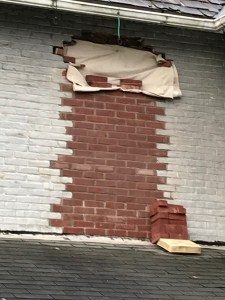
If, like me, you can’t see a neighbor’s brickwork without thinking of “A Cask of Amontillado,” then I need not explain why I watch horror films.  I know that as of late some literary scholars have challenged the idea that Edgar Allan Poe wrote horror.  There is now, and always has been, a bias against the genre.  In fact, many would point out that Rod Serling’s Twilight Zone wasn’t really horror, no matter how creepy some of the episodes were.  Some would cast Ray Bradbury into that lot as well, and others would not.  I spend a lot of time pondering this because those of us who enjoy some of what’s called horror are often cast as misfits.  And misfits have a lot in common with monsters.

The connection with religion is a palpable, yet intangible one.  It does seem that religion has its origins in fear and as it branched out it came to have different emphases.  Jesus, for example, apparently stressed love, at least according to the gospel of John.  That religion of love came, eventually, back around to fear.  Calvinism, especially, is suffused with it.  There’s a reason that it is the religion expressed in particularly effective horror.  Apparently they meet similar needs, but psychology is not an exact science, and our tastes in it differ.  Even our interpretations do so.  As the bricklayer puts down row after row of masonry, the thoughts get walled up in days where work prevents serious consideration of the deeper questions.

It’s been years since I’ve read “A Cask of Amontillado.”  The story has stayed with me, however, whether it’s horror or not.  Stories about imprisonment are like that.  The other day a police car stopped outside our house.  We live in a working-class, but descent neighborhood.  From the bits and pieces glimpses out the window revealed, there was a problem with a car that had been parked on the street for quite a while, and that didn’t belong to any of the local residents.  The natural response to seeing that car just outside was fear.  We fear criminals and we fear the police.  We fear what Covid-19 is doing to us, even to those of us who’ve managed not to contract it.  Traditional religion would tell us punishment comes from the Almighty.  These things are all related.  And across the way the bricklayer keeps up his work, row after row.


X-Files Redux

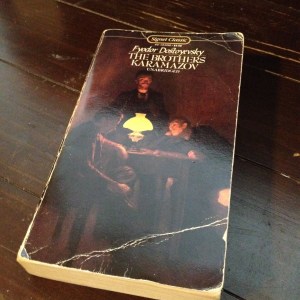
So, after writing a post about The X-Files, I finished season three, forgetting up until then that the last episode was “Talitha Cumi.”  Apart from being part of the alien mythology arc, the biblically literate recognize the title as the words Jesus said to Jairus’ daughter as he raised her from the dead.  Appropriately enough, the episode features an alien-human hybrid that is able to raise the dead and to shape-shift.  This particular episode also has an intriguing dialogue between the Smoking Man and Jeremiah Smith (the hybrid) where they discuss whether the alien agenda for people, or that of the shadowy cabal, is better.  With a theology drawn from the Grand Inquisitor chapter of The Brothers Karamazov (according to Wikipedia, and which I have no reason to doubt), they argue from different perspectives.  The Smoking Man explains that they have given people science instead of God and miracles will only confuse the issue.

While not exactly Fyodor Dostoyevsky, this scene raises some very real questions.  Are people happier not believing?  Not only that, but the cynicism of the Smoking Man matches rather precisely the modus operandi of our government some two decades later.  There’s a reason we keep coming back to the classics.  The X-Files mythology is, like the Cthulhu Mythos, woven throughout a larger tapestry whose warp and weft both seem to be religion.  It ran far longer than Sleepy Hollow ever did, and it would take considerable effort to tease all of the Bible, let alone religion, out of it.  They make the story far more believable.

This particular episode also displays the staying power of the classics.  Long, ponderous books like The Brothers Karamazov require concerted effort to read in these soundbite days of internet hegemony.  That Grand Inquisitor chapter, however, has been enormously influential.  (I recall during my most recent rereading of the novel that I hit that wonderful chapter and then realized I still had hundreds of pages to go.)  We often have trouble telling God from the Devil.  Just look at today’s political scene and try to disagree.  In the X-Files diegesis there is a shadowy, high-powered group that got to the extraterrestrials first.  They keep the secrets to themselves while the masses play out their insignificant lives that enrich those in charge.  Democracy, it seems, used to be about elected representatives seeing to the will of the people.  It perhaps assumes a greater educational base than we’ve been able to retain.  But still, with chapters like “Talitha Cumi” we see that there may be some glimmer of hope after all.


The Bible Files

As intimated several posts ago now, my wife and I are rewatching The X-Files.  Neither of us has much free time, so this proceeds slowly over many weekends, and we’re now nearing the end of season three.  This exercise brings me back to an article I wrote on Sleepy Hollow, the Fox series that ran from 2013-2017.  That article, published in The Journal of Religion and Popular Culture, I later adapted into a chapter in Holy Horror.  At the advice of my editor I dropped that particular chapter and wrote a different one.  In the lost chapter, if I recall, I made the case that Sleepy Hollow was biblically based in a way that other monster-of-the-week series, like the X-Files, were not.  While I still have to hold to this, I must admit the X-Files are far more biblical than I recollected.

Somewhere about halfway through season one I started to jot notes when the Bible was mentioned or quoted.  Soon it became obvious that religion was a major theme in The X-Files pretty much from the beginning.  I’ve mentioned here before that some scholars of religion have begun to address the paranormal seriously.  One of the reasons for this seems to be that the two fields are related.  Some of the x-files derive from folk traditions, and these traditions often hold religious elements.  When those themes derive from American folklore the Bible creeps in.  There are quotes, visual displays, and even biblical themes.  How had I not noticed this the first time around?

I didn’t watch The X-Files during the actual airing of the series.  As a kid I was endlessly teased for having an interest in the strange and unexplained, and it bothered me that it had become mainstream after I’d already paid the price.  When the series became available on DVD, though, I had second thoughts.  My wife and I watched it all the way through some years ago, and, having finished rewatching another series several months back, we began slowly to make our way through again.  When I wrote my article on Sleepy Hollow I had vague recollections of X-Files episodes with some biblical content, but I’d forgotten how extensive it was.  Religion is that way.  It tends to permeate society, and even though we’re proudly secular, the base of it all is religion.  This should be obvious to anyone who takes the time to tally just how often it appears in the most secular of spaces.  Instead, there’s little interest in it.  Like the paranormal, lack of concern about religion is something we just can’t adequately explain.


Bible Horror

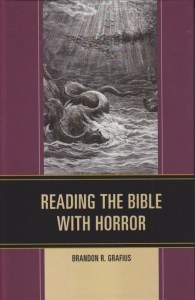
The combination may seem odd, but it is definitely a valid one.  The Bible and horror, I mean.  My colleague in this venture, Brandon R. Grafius, has published the first book in the Horror and Scripture series, Reading the Bible with Horror.  This is a fascinating little volume that explores the productive use of horror films when it comes to interpreting the Bible.  The Bible isn’t all horror, of course, but a good deal of it is.  That’s one of the keys of biblical interpretation—no one method covers it all.  At least when I was teaching I used eclectic methods both because some methods work better than others in some places and because no one method is the correct one.  Using horror to interpret the Good Book is one of the newest methods out there.

The methodology involves looking at horror films (mostly) and finding biblical parallels.  Both the Bible and the movies interpret one another.  This can be a kind of reception history—the idea that to understand Scripture we must look at how it has been “received.”  The way that people read Holy Writ after it was written is as important as the way biblical specialists read it.  We all know what literalism is, and biblical scholars are well aware of its shortcomings as a method.  There are tons of other methods that seek to show the relevance of the Good Book, and one of them is to see how horror makes it so.  To get to this point the reader must get beyond our social bias about horror as a degraded, evil genre.  Some of it is quite bad, of course, but much of it has redeeming value.  Redeeming value so obvious that it can be used to interpret the Bible.

Grafius studies only limited examples here, for instance, the book of Job with its human suffering and superhuman Leviathan.  He also looks at hauntings and biblical ghosts, as well as haunted locations.  His chapter on haunted houses made me stop and think quite a bit.  He concludes with what will be the most challenging concept for many—the idea that God can be monstrous in the Bible.  He clearly can.  Apart from theodicy, one of the major reasons critics attack Christianity is the character of God as portrayed in the Bible.  Grafius isn’t attacking Christianity but rather he’s trying to show how a most unlikely source can shed genuine light onto it.  Reading the Bible with Horror is an insightful step in that direction, even if it’s a step into a rather haunted house.


Temple Mysteries

Maybe you’ve noticed it too.  If you read the Bible, rather than just pose with it, you’ll wonder what went on in the temple when you’re done.  Yes, it’s obvious there would be the bleeting of sheep followed by an eerie silence, and that “that Burger King smell” would be pervasive, but what of the interior of the temple itself?  The Good Book says next to nothing about what happened inside.  We do know that going to temple wasn’t the same as going to synagogue or church.  The laity, for one thing, weren’t allowed inside.  Although the temple in Jerusalem can’t be excavated, many ancient temples have been found and archaeologists have the ability to analyze residues found on altars and that tells us something at least.  A story on Artnet News publicizes an archaeological report that rests behind a paywall, so I’ll use Artnet’s headline: “Did Ancient Hebrews Get High During Temple? A New Archaeological Discovery Suggests They Did.”

The story explains that chemical analysis of the famous Arad temple from ancient Judah shows that one of the altars was used to burn cannabis.  I guess that could help explain all the animal sacrifices.  Like most religions, that of ancient Israel kept much in the dark (literally).  Read the biblical account again.  The temple had no windows.  The holy place was illuminated by the menorah, so there was light.  The holy of holies was completely dark.  Other than the rituals of the Day of Atonement, we’re not given much information on what the priests and levites did for the rest of the year.  They may or may not have burnt cannabis.  It might be that what happened in Arad stayed in Arad.  What hath Arad to do with Jerusalem?  We simply don’t know.

Another altar in Arad, according to the story by Sarah Cascone, burned frankincense.  That sounds much more biblical.  I’ve never been a smoker and I’ve never smoked anything in my life.  I did, however, attend many services at Nashotah House where the small space of St. Mary’s Chapel was filled with so much incense that I wondered about its health affects.  I’m not sure if others felt they were getting lightheaded from all the fumes or not.  Incense, to be used effectively should be handled sparingly.  Its purpose was, theologically, to cloud the air in case God decided to show up.  You weren’t allowed to see him.  If he did show up, though, maybe it was party time.  And there’s bread and wine just out in the vestibule.  Some mysteries will never be fully explained.


George Floyd

Perhaps for the first time in four years, 45 is beginning to see people are unhappy.  Very unhappy.  The pontiff—excuse me—president wanted a photo-op with the Good Book at a nearby Episcopal Church and had crowds of protesters tear-gassed so the he could make himself look righteous.  My wife pointed out that this was an example of the Bible as a Ding, and she was right.  (If you don’t get the reference, it’s explained in Holy Horror.)  Moreover, it is a clear abuse of power.  Not only have thousands of Americans been needlessly dying from COVID-19, the violence against African Americans is caught time and again on police body-cams.  People are rightfully protesting and the racist-in-chief doesn’t like it.

It doesn’t work unless you open it.

With echoes of Tiananmen Square he’s now threatening to send the military against protestors.  It’s far easier to strike out at people while holding a Bible in your hand than it is to learn empathy.  We’ve been isolating and masking ourselves for over two months now and not one word of sympathy has come from the White House incumbent.  Instead of trying to calm racial unrest, he tweets to conquer, not realizing that divide and conquer is meant to be used against enemies of your nation, not your own people.  Never had we had a president who has so openly played favorites and made not even a pretense of being a leader for the entire country.  He is a figurehead of his base only, which is, it seems to me, a violation of the oath he swore on that selfsame Bible not even four years ago.

Pandering to such a Ding is an abuse of Holy Writ.  After unrest over George Floyd’s murder had entered its third night the response from 1600 Pennsylvania Avenue was silence.  How far is it from here to Tiananmen Square?  Is it not possible to admit error and realize that the economy is going like the Titanic’s maiden voyage and just about everyone knows someone who’s died because of the virus or who’s been racially profiled by one of the “good people on both sides”?  No, grab the Bible and clear the rabble who won’t shout “Hosannah” when he rides his ass outside a church whose door he’s seldom darkened to show his base he really is a Bible-reading man.  Was this some bizarre parody of Jesus clearing the temple or just a mockery of the man who said “By their fruits you will know them”?  There’s only one answer to that.  How different the world would be if Bible-believers actually read the book they love to thump.  


Qohelet’s Washcloset

Cast your bread upon the water, as Ecclesiastes says, and it will come back to you when you need it.  Since bread is a common slang word for money, and since the toilet paper has arrived that I ordered two months ago, I see the truth in this.  Paper spent for paper to use.  While I’m pretty sure that’s not what old Qohelet exactly had in mind, it is the reality in which we live.  There are experts that tell us the toilet paper shortage isn’t due to panic buying, but over eight weeks into this crisis and the shelves in Target and grocery stores still look like Mrs. Hubbard’s cupboards.  All those people working from home must need more fibre in their diets.  Or is it less?  I can never remember.  What other than bread satisfies?  Clearly toilet paper does.  And the fact that the nearest yeast, according to Siri, is in Tennessee, clearly has nothing to do with panic buying.  Nothing at all.

People will go to any lengths to prove that we’re rational beings.  We don’t like the image of being the panicky herd beasts we are.  When I first realized the crisis was hard on us, it was March 16.  That was my first grocery store trip where beans were as rare as moral Republicans and we still can’t find pasta or flour around here, even with stores stocking daily.  The announcements on the loudspeaker beg buyers to get only what they really need, and leave some for others.  The thing about panic, though, is that it’s anything but rational.  It’s based on emotion washed in the myth of scarcity.  It also shows what an unregulated economy soon devolves into.  I’m sure many people rationalize panic buying as “just until things get back to normal.”  Vanity, vanity, says Ecclesiastes.

Instead of the myth of scarcity we should believe in the myth of normalcy.  That should’ve ended, for any reasoning being, in November of 2016.  It isn’t normal for a prosperous nation to offer up someone who clearly has no governing ability for the most powerful office in the land.  Two months into the largest crisis we’ve seen since the days of FDR and the White House response has been the null set.  Meanwhile, I ordered toilet paper from abroad on March 16.  The ship slowly made its way across the Pacific from China where, I understand, toilet paper is abundant.  I’m just glad that there’s a rational explanation for all of this.