Seasonal Reading (Not)

I might excuse writing a post on Satan on Christmas Eve by positing that I misread the title of this book as Santa.  After all, as Ryan Stokes explains, the Greek form of the title is ho satanas, which clearly contains the first of the canonical tripartite “Ho, ho, ho.”  The reality, however, is that work on Nightmares with the Bible continues despite the holidays, and there’s so much reading to do that not all of it can be seasonal.  I’ve known about Stokes’ book for some time, even as I’ve known his name through his various articles about the Satan.  This book, while not exhaustive, is certainly comprehensive for the time period covered and lays considerable groundwork for future discussions of the Devil.  What becomes obvious working through it, however, is that many different ideas about the Satan are represented in the Bible and related literature.

Long ago, as far back as my dissertation, I realized that it’s a problem for modern readers to systematize what ancients viewed disparately.  The Bible has no single idea of the Devil.  We’re quite accustomed to saying that “Satan” (which Stokes shows may not be a name in the Bible) and “the Devil” and Lucifer are all synonyms.  That’s not really the case.  Ancient peoples had many names for beings that caused problems, but not all of these entities were evil.  Belial, Mastema, Melchiresha, Beelzebub (and the list could go on) were designations used by different groups at different times.  These entities are sometimes agents of Yahweh, doing God’s will.  At other times they seem to be enemies of God, adversaries.  “Executioners,” is Stokes’ emphasis in these roles.  In early (and more recent) attempts at systematization, readers have tried to roll these various images into one.  With but limited success.

Ancient peoples didn’t feel the necessity that more modern ones do to make everything fit “scientifically.”  After all William of Ockham hadn’t shown up yet to suggest complicated ways of explaining things should be simplified.  We get the sense from reading ancient texts, including the Bible, that lots of ideas were floating around as to who these nasty beings might’ve been.  And their nastiness was really the result of human perceptions of who they were because often they were in league with the Almighty.  Theirs was not a simple, binary world of black and white.  It was more like a photo that we would still designate by that term but which is really grayscale.  Grayscale shades from white to black with the chiaroscuro preventing simple explanations.  Although it’s not about Santa, this book is very informative and will raise any number of questions at any time of year.


The Truth Lies

I recently saw a Trump supporter claiming, unsurprisingly, that everyone’s lying except Trump.  Of course, I could be lying.  According to the Washington Post, Trump has made over 13,000 lying or deceitful statements since being in office.  For those who did their homework before he became the great protector of the unborn (ah, there’s one born every minute!) he was known as a crooked businessman to begin with.  With well over a thousand lawsuits against him even before being elected, we have no choice but to believe the entire legal system is lying, as well as anyone who’s had business dealings with him.  I’m just so glad that we have such a moral, upstanding paragon of Christ-like behavior in the Oval Office.  Never mind that all those witnesses in the impeachment case were speaking under oath—they all lie, but Trump.  Hey Donald, is that your real hair?

Ironically, some of the people making such claims hold the belief that divorce is not excused in the gospels (see Matthew 5:32, but Jesus could’ve been lying here—he’s not Donald Trump, after all).  It’s a matter of public record that Trump is twice divorced.  It’s a matter of sworn legal testimony that he paid hush-money to cover up affairs while married.  Well, that is if we believe this lying world rather than the one, solid, shining bastion of truth in the White House.  Someone once said (but he may have been lying) that it is easier for a camel to pass through an eye of a needle that for a rich man to get into heaven.  Just sayin’.

I have said before that all politicians lie.  It comes with the territory and only the most naive among us don’t accept that fact.  There is a difference, however, between the occasional mistruth and a lifetime, documented record of indiscriminate lying.  If it weren’t for the fact that all facts are lies (except those Trump makes up) we would see that the phenomenon of pathological lying is well known.  The presidency of the United States has never before tolerated a pathological liar.  But then again, they never had an incumbent more Christian than Jesus himself.  Now I think I remember who made that crack about rich guys.  He also said something about having no place to lay his head.  If he’d been born rich, though, you can bet the gospel message would’ve been very different.  Too bad the Bible lies.  If it didn’t such musings as this would hardly be necessary.  I could be lying, of course.  It is, after all, the new truth.


I Swear

The ongoing political fiasco of our nation (and within several states as well), raises a very basic issue.  We trust our legislators to do what we pay them to do (they’re our employees) because they take an oath to uphold the Constitution.  Problem is, liars don’t keep their word.  When an elected official opts to lie pathologically rather than to tell the truth, how can we expect him (or her) to uphold an oath they took?  Doesn’t lying behavior suggest that they were lying when they took that oath?  A hand on the Bible means nothing if you don’t suppose God is waiting with a lightning bolt in the metaphorical Heaven described, none too clearly, in the Good Book.  This is the greatest crisis a democracy can possibly face—lying leaders.

This isn’t just alarmist talk.  Societies—even capitalistic ones—rely on a great deal of trust.  Those who don’t mean what they say end up on the business end of the Better Business Bureau, or fail to stay solvent.  There are laws that ensure you are protected if someone sells you a false bill of goods.  What then, if the highest office in the land is occupied by someone who can’t be trusted?  Instead of appealing to the rule of law to set such a person on the right path, the Republican (Church) Party has decided that lying is now a commandment.  I may be lying, but how can you tell?  If no one has the backbone to stand up and declare that the whole system has toppled, what can a nation do?  An even more worrisome fact is that there’s no going back once this has happened.  The Republican Church has instilled this behavior for three years and is showing no sign of repentance.

Oaths were taken very seriously in the world of the Bible.  Violating one (lying intentionally) was considered the surest way to arouse God’s anger.  Ironically the Republican Church, which claims to be biblically based, is, according to its own Scripture, angering God.  I often consider myself a cynic, but my cynicism falls far short of this.  Psychological studies have demonstrated that the average person is reluctant to outright lie when the idea of God is introduced into conversation.  God’s Own Party, however, has inured itself to that minor phobia.  The Good Book, after all, says God’s the father of lies, right?  If they’d bother to open that book they’re thumping, I think they’d discover that that is truthfully the worst kind of blasphemy a human can utter.


Jeremiah’s Lamentations

Fundamentalists live in a supernatural world, otherwise their view of the Bible simply can’t hold up.  I’ve read or studied about the Bible for well over forty years now and I’m still learning things.  Interesting and strange things.  Some time back I wrote about the bizarre world of the many books of Ezra/Esdras in various versions of the Bible, some canonical, some not.  While chasing up a reference the other day I had to delve into the similarly complex sphere of Jeremiah.  Jeremiah is the only prophet who names his secretary, a man called Baruch.  This fact led to a series of books pseudepigraphically written by Baruch, but before we get there the book of the prophet himself is also confusing.  Since Jeremiah is the prophet whose life is said to most resemble Jesus, for Fundies this is important information.

The book of Jeremiah isn’t in chronological order.  This always throws introductory-level students, for it shows clear evidence of editing.  Now, at least Jeremiah does tell us about Baruch, so we can blame his poor organizational skills and still maintain a divine aura for the book.  The earliest translation of Jeremiah, the Greek Septuagint, lacks some material.  Indeed, the Greek is about an eighth shorter than the Hebrew, raising the question of whether an original (reflected in the Greek) was expanded or whether some of the confused original in Hebrew was cut.  Protestant Bibles assume, by their placement, that Lamentations was written by Jeremiah but it clearly wasn’t.  It doesn’t match his theology at all and the “of Jeremiah” in the title was made up some time after the book was written, and this is only a start.

The Apocrypha, or Deuterocanon of the Catholic, Orthodox, and Anglican churches, contains a book called the Letter of Jeremiah (not written by Jeremiah), and a book called Baruch.  I went looking for a reference to Baruch only to find it was in the Apocalypse of Baruch.  When I had trouble finding it, I had to consider that two books bear this title, 2 Baruch and 3 Baruch.  The former is in Syriac and the latter in Greek and they aren’t the same.  Because of these two (also pseudepigraphic) books, plain old Baruch is also known as 1 Baruch.  And there’s also a 4 Baruch.  None of the Baruchs were written by Baruch and Lamentations and the Letter of Jeremiah weren’t written by Jeremiah.  Neither was his own book because he tells us Baruch wrote it down.  I never did find my reference, and I realized that only in a supernatural world would any of this make sense.


Powerful Wink

Those of us who became academically aware (in the biblical field) in the 1980s knew the name of Walter Wink.  Now, if you’ve ever become academically aware, you know that we all know some names vaguely, as if seen in a glass darkly, and some more intimately.  Wink fell into the former category for me.  He specialized in “the other testament,” and although I read Greek quite well, my academic track led me through Hebrew to Ugaritic and beyond, in the opposite direction.  I taught New Testament in my academic career, but never found the time to go back to Wink.  I knew he’d written about “the powers,” and the idea was interesting, but I had other research I was doing and I never got around to him.  Now I’ve finally finished the first volume of his famed trilogy on the powers (Naming the Powers).

“Powers” was a circumlocution for many things in antiquity.  It is a high abstraction.  Why do you do what you’re told?  The powers.  They can be human, such as bullies or governments (which are increasingly difficult to distinguish), or they can be supernatural.  Much of Wink’s book is technical—this isn’t easy going, even if it’s theology.  He looks closely at the terminology of power and exegetes it minutely.   The book comes alive, however, in part 3.  There were quite a few worthy insights here, but the one that struck me the hardest is how institutions generate a power that no one individual can control or contain, let alone comprehend.  As Wink points out, a school isn’t a building.  What goes on inside such a building takes on a power that reaches beyond any of the individuals involved in teaching or learning.  Think of Harvard.  What is it?  Who is it?  It bears power simply by the citation of its name.  No scientist can quantify it, but none will dispute it either.

Thinking about “the powers that be” in this way is transformative.  Wink draws this into the ancient perception that what is happening “down here” is merely a reflection of what is taking place on high.  Not unique to Christianity, or even monotheism, the idea that our lives reflect the reality of some higher power is pervasive in human thought.  And institutions.  Harvard, as most prestigious universities, essentially began as a place to train clergy.  Even at this stage it began to exert a power.  Today Harvard (and many other schools) still hosts a seminary and training ground for clergy.  They face a largely unbelieving society when they’re done.  And if they’re at all like me, it might take them decades to realize something may be missing.


Prophets and Precipitation

I have no idea how they name winter storms, or even if they should.  Weather-hype is yet another instance of click-bait, or watch-bait that requires constant upgrading to draw in increasingly jaded readers/watchers.  Winter storms are a fact of life, particularly in northern states.  If you name them, then you think you own them, as the saying goes.  In any case, beyond the fact that they go through the alphabet to draw their inspiration, I have no clue what criteria are used for giving names.  The storm that many of us were out in for much of the day yesterday was “Ezekiel.”  There are plenty of “E” names available, and I wondered at this biblical choice.  Ezekiel is often treated as a name for eccentrics, and I wondered if something about this storm was proto-apocalyptic or what.  Beyond the standard “snowpocalypse,” I mean.

The storm may have been considered of “biblical” proportions since it affected/is affecting much of the nation (as it is me, even as I write).  We tend to use the Bible for things that are of large scale, and, frequently, beyond our control.  Prophets often called for events on national level, and Ezekiel’s message had to do with a kind of ultimate redemption.  I suppose it’s the kind of message our nation could use right now, snow or not.  We could use good times sent from above, following the decidedly unbiblical evangelical administration we’ve put up with for three years now.  What would Ezekiel say?

Back in my teaching days, I had to cover Ezekiel in less time than the prophet deserved.  He pantomimed the coming destruction of Jerusalem, and, among the exiles, proclaimed their return to a better future.  Now I can’t say if winter storm Ezekiel will lead to a better future or not.  It will lead to some sidewalk shoveling, some travel headaches (as we experience firsthand yesterday), and the usual array of winter wonders.  I do know that claiming insanity to label a prophet is a cheap shot when it comes to explanations.  Ancient people recognized madness when they saw it, and prophecy, they knew deep down, was different.  None of this suggests this storm has been in any way predictable.  Yesterday with its accumulation of sleet and freezing rain, and today with its projected snow are all part of a typical December around these parts.  As people addicted to media stimulation, I guess we have to give it a name so that we can feel properly awed.


Daylight Saving Time Zone

One or two of you out there—you know who you are—put yourselves through reading my musings on a daily basis.  I haven’t missed a post in nearly a decade, but travel always complicates things.  Yes, it’s that time of year again—I’m on my way to AAR/SBL.  The American Academy of Religion and Society of Biblical Literature Annual Meeting is the trade show of the guild.  This year we’re meeting in San Diego, California.  The hope of many of us is that it’ll be sunny and warm.  Last year, of course, I missed the conference for the first time, exchanging the Denver Hilton for a night on the floor of Newark’s Liberty Airport.  This year I’m flying out of a different venue—one where egress is possible in the case of snow.

I always like to post a reminder to the faithful few that normal service on this blog may be interrupted.  One never knows what might happen when away from the regular routine.  And three time zones will surely wreak havoc with circadian rhythms that haven’t yet caught up with the end of Daylight Saving Time.  Or is it the beginning of Daylight Saving Time?  It makes no difference, because it lead to lack of normal sleep, no matter what we call it.  In any case, San Diego may make usual posting unusual.  At the very least it’ll be a few hours off.  I’ve become a creature of habit, posting my thoughts between six and seven on weekdays.  On weekends I’m up just as early, but I give the web a chance to sleep in.

These annual meetings are exhausting when you go on behalf of a publisher.  Unlike the leisurely experience of a paying customer, you don’t get to go back to your room for a nap, or even to sleep in.  Every year colleagues ask me to receptions but I decline because every day is a school day.  And I have appointments from 8:30 until 6:30 daily.  Sometimes even later.  You, my gentle reader, have been given advance notice.  I’ll try to continue my daily chronicle of life inside this particular head as thousands of scholars of religion mill about, wondering about the answers to the big questions.  Right now the big question is whether I’ve packed everything I’ll need.  I’ll gain three hours on the way out, but I have to leave them at the desk when I get back.  Along the way I’ll scatter posts like breadcrumbs to help me find my way home.


Grasses and Bans

It’s been so busy that I didn’t realize it was Banned Books Week until yesterday, when there was but one day left (today).  I usually make a point of reading a banned book during this week, but I suppose I read so many of them normally that the observance might lose its edge.  But that’s just an excuse—in this world of uber-corrupt governments, preventing censorship is a sacrament.  We’ve seen just this week how dictators try to silence those who expose them.  Banned books, whether we like what they say or not, should be available for reading.  This is an amazingly bipartisan holiday.  Some places have banned the Bible, to which true believers in the principles of Banned Books Week would respond “Even books we might disagree with should be made available.”  Censorship seeks to cut off discussion.

Although I won’t finish in time, after work yesterday I quickly grabbed my unread copy of Walt Whitman’s Leaves of Grass to begin to make up for my oversight.  Leaves of Grass has been called America’s homegrown Bible and it has an almost religious following, as it has for decades now.  Poetry has a way of moving people that frightens autocrats.  It taps into something that skirts around our conscious mind at times, opening up possibilities that censors would rather keep closed.  Over the past couple of years books of poetry have again begun to appear on the New York Times Bestseller list.  People read to be moved.

One element banned books tend to have in common is that they’re honest, even when they’re fiction.  Honesty is a source of great anxiety for many.  We don’t like to let our true selves be seen because, truth be told, we feel vulnerable.  Banned books take us into uncomfortable places.  And sublime places.  Not all books are great literature, of course.  Even I have been known to part with a book after reading it because it simply didn’t speak to me in the way I like to be spoken to.  Still, I’m loath to give such a book a negative review.  It didn’t speak to me, but it spoke to the author and the publisher, obviously.  It is a voice that deserves to be heard.  That’s what Banned Books Week is all about—defending the right of human expression.  I may not finish my banned book by the end of today since weekends tend to be busier than many work days.  Still, I’m looking forward to my encounter with America’s other Bible.


Fearing Hubris

I’m afraid of hubris.  You see, my academic career was not exactly distinguished, and as an editor you’re encouraged to keep to the background.  Still, when you write a book you need to promote it a little, which is one of the things I learned as an editor.  I was equally parts embarrassed and pleased to see the bookstore display for my upcoming book signing in Bethlehem.  I mean, although I wrote Holy Horror for a general readership, the publisher tends more toward academic books and their pricing, so this is not an inexpensive purchase.  Those who write are nothing, however, without readers.  Those chosen for interviews are writers who’ve made a sales impact or who have a university behind them.  When it’s just me, it feels like maybe I’m trying to ascend Olympus on my own initiative.

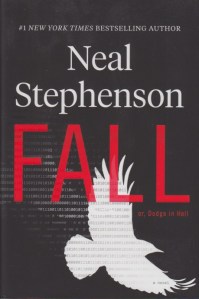
I was in the Moravian Book Shop to purchase Neal Stephenson’s Fall; or, Dodge in Hell.  I’ve fallen a bit behind on Neal’s work, largely because Goodreads challenges are measured in numbers of tomes read.  I was pondering this, book in hand, when I noticed—there I was with my own display.  You see, Holy Horror was meant as a guilty pleasure read for those of us who like the scary time of year.  The book price is the scariest part about it, however.  I feel a profound gratitude when anyone actually buys it.  Since there are now copies available on sites such as eBay, I’m guessing some who’ve read it want to recoup a little of the cash outlaid.  While all of this is happening, however, I know that I have to learn the art of book promoting.  Still, it feels like that self-promoting I was warned against as a kid, an unseemly thing.

Writing is a form of conversation.  When I’m in a room with a bunch of other people unless I’m the teacher I have trouble making myself heard.  I’m soft-spoken by nature.  I suppose it’s obvious, then, why a book signing feels hubristic.  Perhaps it’s appropriate for a book about fear to engender this sense of discomfort.  Entering the conversation has always been difficult for me.  At the same time, as the beneficiary of so many books, I feel compelled to give something back.  My insights, if such there be, won’t rock the world.  As I think of myself signing books, I wonder what I could possibly say to someone who’s willing to pay that price for something I produced.  If you’re going to try to climb that mountain, you’d better think about what you’ll say when you meet the gods at the summit.


Scrolls Not Living

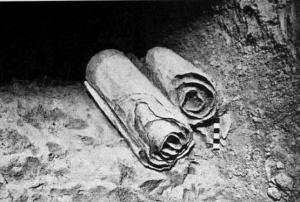
Of the many ancient finds in Western Asia, none captured the imagination like the Dead Sea Scrolls.  The timing and romance of the find itself, the scandals that almost immediately broke out, and the subsequent “secrecy” over the contents made the secular news.  I’m convinced that a large part of the mystique has to do with the somewhat spooky name—Qumran scrolls never caught on, even though it is more accurate for many of the documents.  Their discovery came after the Second World War when people were wanting good news, and, perhaps, an indication that all of this stuff was somehow predicted.  Enter the scrolls.  No doubt, these documents gave us quite a lot of information on the Second Temple Period—the time from the rebuilding of the Jerusalem temple in the sixth century BCE until its destruction under the Romans in the first century CE.  Now the scrolls are back in the news.

A story by Nicola Davis in The Guardian announces that the origin of the scrolls is once again open to interpretation.  The reason is somewhat technical—scrolls that were written on vellum (animal skins) had to be prepared for writing.  One of the steps involved chemically treating the writing surface with a fine powder (the details are beyond me) so that it could be written upon.  We’ve reached the point where the salts left behind can be tested for place of origin.  The Guardian story notes that the Temple Scroll—one of the important non-biblical texts—was not prepared at Qumran (the site where most of the scrolls were found).  That means that the scroll itself came from elsewhere, depending upon with whom you speak.  The scrolls gather controversy like the Ugaritic tablets gather dust.  

Part of the charm here is that there are many unanswered questions about these ancient texts.  Who exactly wrote them is debated.  Their find-spot suggests they were hidden away by the quasi-monastics who lived in nearby Qumran, but this doesn’t mean they necessarily wrote them.  It’s still debated whether the Qumran community was made up of Essenes or not.  One thing we do know about them is that they were able librarians.  The scrolls themselves are symbolic of the strife in the region, having been discovered just as Israel was declared a nation.  The scrolls were quickly politicized.  They were kept under the auspices of a small group of academics and priests for many decades.  And they still have a way of catching headlines.  Even when its a matter of who powdered their faces.


Pointing to the Moon

The failure of India’s  Chandrayaan 2 to maintain contact, intended to make India the fourth nation to successfully conduct a lunar landing, sent me reading about the moon.  I remember the first manned landing, which happened when I was six, so the idea that we could make it that far seemed less impressive than it really is, I suppose.  I was fascinated by early space travel, and part of this may have been because of the moment of silence announced in school the day Apollo 13 safely returned to earth after the oxygen tank explosion that made its landing impossible.  As I was reading about the many moon missions that took place before I was born, I was surprised to learn how many nations are still attempting to reach our nearest neighbor.  This year alone China, Israel, and India have all attempted to land up there.

Israel’s mission called its lunar lander Beresheet.  It was the first attempt to land the Bible on the moon.  Beresheet is the Hebrew title of Genesis.  The US missions were named Pioneer, Ranger, Surveyor, and Apollo.  Ironically for the persistently religious nation, our only supernatural title was the name of a Greek deity.  Israel was true to its roots with its naming convention, but there is kind of a paradox involved.  In the world of the Bible the earth is the center of the universe and the moon is a quasi-living being circling about our stationary fix in this fictional view of the cosmos.  That’s not to say our own views may not some day be regarded as fictional as well, but simply that we now know the view in Genesis is incorrect.

Of course, the word “genesis” can mean a purely secular beginning as well.  It is a compound word that is often translated as “in the beginning.”  As such, it is appropriate for the first attempt at a moon landing, or any other great venture.  Still, it is instantly recognizable as the first word in the Bible, indicating a kind of strange juxtaposition where the biblical moon—which is not the same as the astronomical moon—are brought together.  Unlike the book of Genesis, the moon has been reached many times by others before.  The old and the new meet in this attempt to reach into space.  Meanwhile our problems continue down here.  Maybe that’s why we continue to attempt to reach the heavens.  And in that sense, no better title applies than that of the book that somehow defies rational explanation.


Burger Impossible

On the way home from Ithaca, we’ve learned the hard way to avoid I-80 through the Poconos on a holiday weekend.  Past experience indicates that about 80 percent of the population of New Jersey (to be fair, a percentage of that may be those from New York City) tries to squeeze through the Delaware Water Gap at just about dinner-time the day before work starts again.  There is a longer alternate route, I-476, the turnpike, which you catch north of Scranton and exit in Allentown.  The only issue with this plan is that, unless you want to exit the turnpike to try to find food in rural Pennsylvania, there’s only one travel plaza between our entrance and exit.  It’s a nice enough stopping point, but for a vegan on the road options are limited.  As we pulled in we noticed there was a Burger King.  Would they have the much touted “impossible burger”?

It turns out that they did.  Having last had a whopper well over two decades ago, mouth memory may have faded a bit, but I can honestly say this was like the whopper I remembered.  If you hold the cheese and mayo, you have a vegan version.  This discovery made me strangely happy.  For years at remote locations (and some urban) we’ve stopped when the only other options are meat based and had the BK veggie burger.  It’s not too bad most of the time, but if you want to think you’re eating meat while not contributing to the massive environmental degradation of industrial farming, the impossible burger seems like a reasonable option.  This is one area of technology that I’m glad seems to be catching up with ethics.

I often ponder how much our western point-of-view is based on the Bible.  Our reluctance to include animals in our ethics is another example of how the hard line between species has been applied.  Even scientists are susceptible to worldview bias.  When we realize we’re all part of a continuum of biological relatedness, it’s a lot more difficult to argue for our special place in the divine eye.  At the same time, insisting one’s ethics be applied to all is a form of fascism.  I’m just glad my conscience can be assuaged with some plant-based food options.  After all, I’ve been on the road for a few hours and I’m sitting here happy to be eating at Burger King.  It’s a matter of perspective.


Linking

So I’m active on LinkedIn.  I try to keep social media down to the essentials, but you never know when opportunity might rap its knuckles next to your shingle.  When LinkedIn began they ran the warning that you should only connect with people you actually knew, since people can say bad things about you and hurt your job prospects.  Since that kept me down to about a dozen connections (many academics, being secure with tenure, don’t bother with LinkedIn), I eventually followed the advice of a wise friend and accepted invitations from people I didn’t know because, as he pointed out, they might be the ones with jobs to offer.  That made sense.  There is a flip-side to it, however, and that is people think I have work to offer.  I don’t.  At my job I have no hiring capacity whatsoever.  (I can feel the links being broken even as I write this.)

The vast majority of people who contact me on LinkedIn want something from me.  They obviously don’t read this blog.  (See paragraph above.)  Many people send me messages wanting me to publish their books.  Editors, my dear and gentle readers, work in specific disciplines.  No one contacting me on LinkedIn has written a book about the Bible, although my profile indicates that’s my gig.  And besides, many companies, including mine, have policies against doing business over social media.  I often think of this because the book business is easily researched.  There’s a ton of information both online and on shelf about how to get published.  Messaging someone on LinkedIn is not recommended.

Writing a book takes a lot of effort.  I know, because I’ve done it a number of times.  If you’re going to put years into doing something, it pays to spend at least a few minutes learning about how the publishing industry works.  I made rookie mistakes in my younger days, of course.  But that led me to learn about publishing even before I had a job in the industry.  Quite apart from my job, I freely admit to being a book nerd.  And publishing, despite its many problems, is an inherently fascinating industry.  Although I’ve had academic books accepted for publication, I still struggle getting my fiction to press (I have had short stories published, but my novels remain unread).  I won’t contact other publishers I know through LinkedIn, though.  I’d rather have it be a personal experience whether it’s acceptance or rejection.  And that’s something social media just can’t replicate.


Detective Daniel

In a recent article, which will hopefully be published, I explore the origins of the horror tradition in the Bible.  That should come as no surprise since the Good Book is really the beginning of the western literary canon.  Yes, there are earlier works—the Epic of Gilgamesh may be considered part of that canon as well, for the canon has no official curator—but because of Scripture’s status literature in the western world takes off from there.  In any case, the other day I was considering the additions to the book of Daniel in the Apocrypha.  The Apocrypha is, of course, part of the Catholic biblical canon, but not the Protestant.  The additions to Daniel roughly fall into three stories, or two stories and a poem.  The two stories—Bel and the Dragon, and Susanna—involve Daniel as an early kind of detective.

Traditionally the inventor of the detective story is Edgar Allan Poe, and certainly in the modern literary canon that may be so.  One wonders, however, if Poe might have drawn his inspiration from these apocryphal stories.  Susanna goes like this: two nasty elders fall in lust with Susanna, the beautiful wife of a local prominent judge.  They stalk her, learning her habits, and when they know she’ll be alone they confront her demanding sex.  If she won’t, they’ll claim they caught her with another man and since the law requires two witnesses, well, she was screwed.  Since she won’t comply they accuse her and she is condemned until a young Daniel in turn condemns the court for not questioning the men separately.  When Daniel does so the details of their story don’t match and Susanna is vindicated.  Part courtroom drama and part ratiocination, this is an early detective tale.

Bel and the Dragon involves a couple stories together, but the story of Bel is the one involving detective work.  The priests of the god Bel take food into their temple every night to offer as a sacrifice.  Since it’s gone in the morning, they offer this as proof that Bel is real.  Daniel, however, knows Bel is just a statue and so he sprinkles a fine layer of ash on the floor around the food one night.  The next day as Bel’s followers announce the food is gone and the temple was sealed for the duration, Daniel takes them back and shows the footprints in the ash—the priests have been entering from a secret access and eating the offering.  There may not be a direct line from these stories to Poe, but they nevertheless reinforce the idea that the western canon begins with Holy Writ.  If we explore this with our own ratiocination we’ll discover, I believe, much more.


Glossophobia

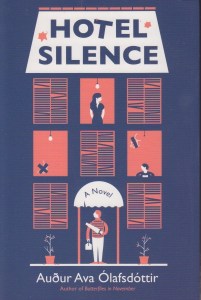
For a guy so full of phobias that there’s no elbow room at Hotel Fear in my head, people are sometimes curious as to why I don’t suffer one of the most common sources of terror: speaking in front of crowds.  Glossophobia is extremely normal.  I suspect it’s one of evolutions tricks for keeping metaphorical cooks out of the allegorical kitchen.  If we’re all talking at once, who can be heard?  The internet will prove to be some kind of experiment in that regard, I expect.  Thing is, I’m not what most public speakers appear to be: confident.  I’m not.  Beneath the surface all kinds of phobias are vying for the next private room to become available.  Over the weekend I had a public speaking engagement, and that made me consider this again—why doesn’t it bother me?

Although the answer to “why” questions will always remain provisional, I have an idea.  It’s kind of creepy, but true.  In my fundamentalist upbringing, I was taught that my life was being taped.  You see, it goes like this: since the book of Hebrews says “And as it is appointed unto men once to die, but after this the judgment,” some Fundies like Jack Chick illustrated this as an outdoor cinema in Heaven.  Or rather, in the clouds just outside Heaven.  Here you’d be summoned, buck naked, as soon as you died.  Other nude souls would gather round the big screen and your entire life would be projected for all to see.  Since everyone’s dead there are apparently no time constraints.  As a kid I realized that I was being watched.  All the time.  Now, I’m not conscious of this constantly, but I did translate it to public appearances.  We’re all, it seems, actors.

With a lifetime of performing experience, by the time I was a teen I wasn’t afraid of public speaking.  Introspection was a big part of my psyche, and when I had a speaking engagement, I knew that I had to be conscious of what I did and said, because people would be watching me.  I learned to play the part.  I did take a college course in public speaking, and even a preaching course offered by the Western Pennsylvania Conference of the United Methodist Church, but both of these were long after I’d begun taking public speaking roles.  I make mistakes, of course, and early on I learned to laugh at them before the audience did.  We were all being taped, after all, and there’s no outtake reel before the pearly gates.  Strange, but true.  If you’re afraid to speak in public just remember—you’re being watched, all the time.