The Preacher

Ecclesiastes, I used to tell my students, is one of the most unusual books of the Bible. And that’s saying something. When we think of the Good Book we think of pious thoughts and lofty feelings—you know, the white-shirt, evangelical sort. The Bible, however, isn’t what most people think it is. Ecclesiastes, nestled right there near the geographic center of the Protestant Bible (and there’s more to say about this) is a book unlike any other. It is philosophical, weighty, and somewhat gloomy. It is a book where God can’t be relied on to help you and the world may very well be against you. It honestly admits that things just aren’t as they should be. “The quiet words of the wise are more to be heeded than the shouting of a ruler among fools,” it says, “Wisdom is better than weapons of war, but one bungler destroys much good.” (That’s 9:17-18, in case you want to check me out.)
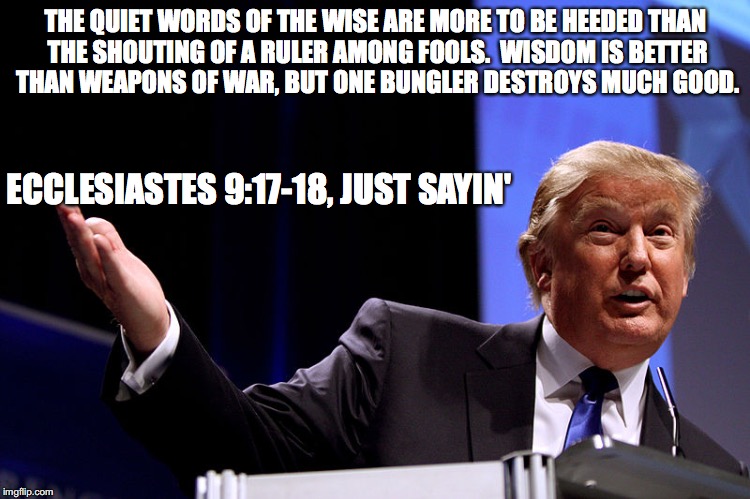
America used to be known around the world for its pragmatism. Now it’s being laughed at as the master of irrationality. I remember when elections were matters of gravitas and serious consideration of the issues. They’ve now become high school popularity contests, even including the locker-room talk. Trump insults his own party and they kiss up. We have a president more impressed by kid’s toys in Saudi Arabia than by the top-notch research universities in his own country. I turn to Ecclesiastes for consolation. It’s a good book to read when everything’s going wrong. “For there is no enduring remembrance of the wise or of fools, seeing that in the days to come all will have been long forgotten.”

My white-shirted friends will surely object. I’m taking verses out of context—prooftexting, it’s called. But, my evangelical friends, you say Scripture is the word of God. Fully inspired and inerrant, is it not? How can you dismiss the wise, wonderful, woeful book of Ecclesiastes? The world is a complex place. Those who seek office as public servants should at least be able to distinguish the servant from the master. They lay their hand upon the Bible to take a sacred oath of office. Beneath that withered hand lies the book of Ecclesiastes, forsaken among its more cheerful siblings. Do not forget Ecclesiastes. It is the book that best makes sense of our day. “Better is the end of a thing than its beginning; the patient in spirit are better than the proud in spirit.” Herein lieth the truth.

Incident at the Wailing Wall

While reading about Jerusalem lately, I recalled my first visit to the Wailing Wall. The Wailing Wall is the only standing part left of the temple that Herod the Great refurbished on the site of the temple originally built during Solomon’s reign, destroyed by the Babylonians, and rebuilt under the Persians. This was called the “Second Temple” because the first had been razed and although Herod had basically rebuilt it, the second one had never been destroyed (that would happen a few decades down the road). Today the Wailing Wall, the western wall of that magnificent temple, is a sacred site to Jews, and to not a few Christians. My visit took place in 1987. I was volunteering on a dig at Tel Dor, and on a free weekend I’d taken the bus to Jerusalem with some friends to look around.

It was late Friday afternoon. I was on my first trip overseas, and, like most fresh-eyed youngsters, photo-documenting as much as I could. I raised my camera. A guard walked up to me. “No pictures on the Sabbath,” he said. He had a machine gun and I didn’t, so there was no arguing the point. Besides, I had just finished the roll. (Does anyone out there remember film cameras?) I stepped into the shade of an alcove to change the roll. A couple of Hasidic men stopped me. “No photos on the Sabbath,” they warned. I assured them I was just changing my film. It was clear, however, that no more pics would be snapped. I rejoined my party and took out a notebook—at least I could jot down a few impressions. Another guard approached, “No writing on the Sabbath,” he said.

This episode has stayed with me over the years. With Trump’s international tour, I’m reminded that I’ve always striven to avoid the “ugly American” syndrome. I respect the local rules. The incident at the Wailing Wall, however, was a case of religious rules, wasn’t it? Does the enforced rest of the Sabbath apply to Protestants? Indeed, I’d been warned that if I didn’t catch a bus before sundown I’d never make it to Jerusalem on a Friday evening at all. Conflicting theocracies have led to more than their share of international sorrow. Why not take the high road and simply absorb what is going on around me? There’s a profound wisdom in that. Travel should inform our worldview. Those who encounter walls should stop and consider all they might mean to all who will eventually face them.


Cloaking Device

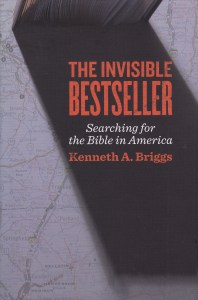
America’s book is seldom read. Those of us who spend an unusual amount of time with the Bible know this from personal experience, but others are starting to notice too. Kenneth A. Briggs’ The Invisible Bestseller: Searching for the Bible in America is a rambling account of the way a variety of everyday people from prisoners to academics and clergy use, read or not read, and perhaps inwardly digest the Good Book. There are moments of stark insight in this book, but with no narrative arc it is somewhat easy to feel like you’re reading about what random people say about the Bible. I don’t need a book to tell me that I’m odd, but much of what I read here was old hat to a guy who grew up Evangelical, went to seminary but never got ordained, completed a doctorate and taught the Bible nearly two decades before being booted out of its company. I’m not sure what I expected to find. Perhaps redemption?

Briggs does provide some useful statistics, and not as maniacally as sociologists do. We learn that few people read the Bible and the numbers are declining. Still, people buy the Bible and tend to have multiple copies in their domiciles. It is cheaper than insurance, after all. Holy Writ, however, is an alien among us. Few people have any idea what it was like to live before smart phones, let alone before the smelting of iron. The concerns and dialogues of the Bible seem so terribly provincial and, to be honest, unenlightened (if one can say such a thing about divine revelation). Still, we won’t accept a president who doesn’t lay his (and it’s always his) hand on the Good Book and swear to uphold America.

The Invisible Bestseller gave me plenty of information to ponder. Some of the tales Briggs tells are interesting. Others are so mundane as to be stultifying. The overarching fact is that the Bible is an established object in our culture. Some take it seriously enough to read it and stick with it—this isn’t easy to do, and I speak from experience here. Such people are rare. After all, apart from getting you a hall pass out of Hell, the Bible doesn’t seem to do much for people these days. Still, when I take a moment to read the Sermon on the Mount, I can’t help but feel we might be missing some wonderful rhetoric by ignoring the Good Book so much. But then again, I’m fully aware that I’m the one that’s odd. Briggs’ book stands as a testament to a couple of testaments that continue to wield enormous power without ever being read.


Sleepy Holy

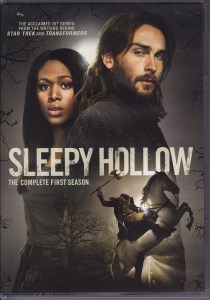
Fox recently announced that, after four seasons, Sleepy Hollow is being cancelled. The news, while not unexpected, is still disappointing. The initial success of the series caught just about everybody by surprise. Intelligent, witty, and literate, this program tapped into a number of themes dear to American sensitivities. One of those sensitivities, surprisingly, was the Bible. I sometimes wonder if the Bible might’ve been able to save Sleepy Hollow. In my limited view the first season was the best. It started out with an all-American apocalypse. To survive an apocalypse you need a Bible. George Washington’s Bible featured throughout the mythology of the first installment. Two of the four horsemen of the apocalypse had arrived in Sleepy Hollow. Then something went wrong.

In season two, Moloch—clearly a stand-in for the Devil in the series—was killed off. Apocalypse no. The end of the world, in Scofield’s canonical view, had been cancelled. Even Ichabod and Abbie began to wonder what good it is to be mentioned in Revelation if your role as world saviors has been made redundant. A new arch-villain was needed. The coven that had shielded Ichabod, headless without its horsemen, simply faded away. Ichabod learned how to drive. Where’s an enemy when you need one? Enter Pandora for season three. But wasn’t she rather a sympathetic figure? Sure, she unleashed lots of negativity but hardly with malicious intent. There’s no villain like a biblical one.

Where do you go after the apocalypse is over? What use is the Bible in such a world? Pandora has no book of Revelation behind her. No special effects budget can rival Pestilence, War, Famine, and Death. What can make you shudder like that pale horse and its skeletal rider? In a world with ebola and zika it would seem that pestilence still has a place. Famine in a world of plenty is horror defined. Two out of four isn’t bad, I suppose, but when you start off with Death you’re not leaving yourself much room for maneuver. Of course, after the horsemen there are three seals left. Perhaps if Sleepy Hollow had stayed with the script and followed through until just before the final trump, it might still be here among the land of the living. Just like creation, the “end of the world” has multiple versions in the Good Book. The Bible’s a consistent narrative only in the imagination of harmonizers eager for easy answers. The possibilities are endless. Where there is no vision, the people parish.


One Size Fits All

The divide between religion and science is often artificially widened by one side or the other. Of course the divide’s artificial—both science and religion are human constructs, after all. This is illustrated well in the sense of wonder in an article titled “True Story Of Volcanic Eruption Told By Aboriginal People For 7,000 Years” by Robin Andrews on IFLScience!. The very concept that a scientifically verifiable event survived in oral tradition for thousands of years completely unbalances those accustomed to think that the ancients were superstitious dupes who looked to the gods to explain everything. What’s often not realized is that the gods were an early version of science. Think about it—ancient people observed their environment for cause and effect. They couldn’t use the empirical method because it hadn’t been invented yet. That didn’t mean they were unsophisticated.

We look at the pyramids and wonder. How could such archaic people construct such advanced monuments? The rudiments of science actually begin to appear in the human record very early. Our species is a curious lot. The explanations for the close observations tended to be mythological. Gods are great for filling gaps. What we don’t see is any conflict between knowledge acquired by reason and ideas conjured by imagination. They fit together nicely. Human brains evolved that way. Belief is a strange thing—it influences reality, at least on a quantum level, but somehow it must be denigrated when compared to “pure science.” A large part of the blame, of course, has to go to those who had learned to take the Bible literally, particularly beginning in the eighteenth century.

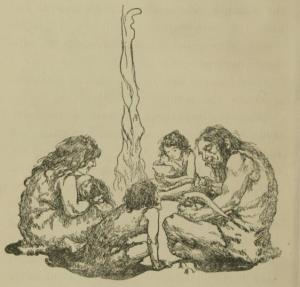
The Bible had a disproportionally influential role in the founding of European empires. From the regular Roman under Constantine to the Holy Roman under Charlemagne, what became Catholicism informed political structures. In the British Empire, ever vacillating between Catholic and Protestant, the Bible played a major intellectual role. Real problems developed, however, when the idea of science alone took over. This was after Newton, Galileo, and Darwin. None of these lights suggested religion had no place. The real issue isn’t vanquishing, but finding proper balance. No matter how well calibrated our instruments may become, until we learn to detect “spirit” we have to admit that science can’t replace religion. Such harmful ideas as eugenics and behaviorism indicate that we need a balance and not a slam dunk. Who knows? Some of even the Bible may be true. Unless we learn to admit we don’t know all, those sitting around the fireside telling stories should be given credibility regarding what they’ve seen.


Size and Its Matters

Have you ever wondered where your Bible came from? No, I mean physically. There are many possible answers to such a query, so the other day I was searching for Bible printers on the web. A great many Bibles are printed by Royal Jongbloed, in the Netherlands. They specialize in the super-thin paper used in much Bible printing. The reason the paper is thin is purely pragmatic. The Bible is an economy-sized book and if printed with “regular” paper it would be large and unwieldy—something desirable only by those with nefarious purposes, I suspect. Bible paper, by the way, was developed originally by Oxford University Press. And in case you’re wondering, the convention of printing Bibles in two-column format is also a space-saving convention. So I was looking over the Jongbloed site, wondering if they’re nervous at all about the increase of Nones. Then I remembered that in many parts of the world Christianity is actually growing, so there should be security in the Bible printing market for some time.

The Netherlands had a large role to play in the development of Protestantism and its love of the Bible. Many English non-conformists found it a welcoming place. Bibles were welcome. But Bibles aren’t all that Jongbloed does. They print scientific manuals too. Now that caught my attention. There’s nothing mercenary going on here—some scientific manuals are really big and are printed on (of all ironies) Bible paper. Is there some kind of conflict on interest going on here? I mean, which is it—science or religion? Or maybe there’s a third way. Maybe it’s not an either/or proposition. Maybe Occam shaves a little too closely.

The craziness flooding out of the District of Columbia has us all worried. Science is being attacked. If you’re being attacked you look around for your enemies. Religion! But wait, is religion really science’s enemy? How easy it is to forget that science developed from alchemy and astrology, both religious practices. Even today many scientists see no inherent disagreement between the two. If we want to be effective in warding off the pressing insanity we need to realize who the real enemy is. Science and religion can both be honest searches for the truth of this universe we inhabit. No, the natural enemy of science is personal greed. It’s also, if we take any kind of religion at it’s word, the enemy of religion as well. What we see bursting the floodgates of Foggy Bottom is the desire for personal gain cloaked as governance for the masses. We should never forget that the Netherlands facilitated a movement that changed everything. Besides, it’s just too expensive to print Bibles in a land badly in need of a Reformation.


Spiritual Spelunking

Looking at the headlines it’s sometimes difficult to believe we’ve evolved. I still trust evidence-based science, despite official government policy, however. So when a friend sent me a story about a new human cousin I knew it was worth a look. Homo naledi bones date from much more recent times than they should. At less than 400,000 years old (which means they might fit GOP ideology pretty well) they are almost contemporary with Homo sapiens. And, apparently, they buried their dead. Now much of this is still speculation. The bones were found in caves with openings so small that onlyfemale spelunkers could fit in, and the question of whether dropping bodies in a hole counts as burial has raised its head. Still, the human family tree is being redrawn, and in a way conservatives won’t like.

I became interested in evolution because of Genesis. My mother gave us a few science books as children even though we were Fundamentalists. One of them talked about evolution and I was intrigued. Clearly it didn’t fit with the creation story—I was young enough not to notice the contradictions between Genesis 1 and Genesis 2—and yet scientist believed it. They likely weren’t Christians, I reasoned. College gave the lie to that deductive thinking when I ran into Christians teaching the required “Science Key” who believed in, and yes, taught, evolution. I’d missed something, obviously. Once I discovered evolution could coexist with Scripture I was eager to learn as much as a non-biologist could. In my teaching days I focused on the early part of Genesis and even began to write a book on it.

Image credit: Margaret A. McIntyre, from Wikimedia Commons

It’s much more honest to admit that we’re related to the rest of life on this planet than to set ourselves aside as something special. Evolution has done something that the Bible never could—brought all living things together. There are too many towers of Babel and chosen people themes in Holy Writ to allow for real parity with our fellow humans, let alone other creatures. Yet the human family tree is wondrous in its diversity and complexity. We now know that Neanderthals were likely interbreeding with Homo sapiens and I wonder how that impacts myths of divine chosen species. Did Jesus die for the Neanderthals too, or just our own sapiens sapiens subspecies? You can see the problem. For a literalist it’s just easier to crawl into a cave. But only if the opening is large enough to admit males, since the Bible says they were created first, right?


Sideliners

Sidelines can be interesting places to sit. You’re close to the action, and you’re privileged with a close view that few others have. You can’t, however, play the game. Sidelines are familiar to biblical scholars. I can’t count the number of times and/or ways the input of those who spend their lives trying to comprehend the Good Book are, well, sidelined. In the publishing world those who work with Bibles are simply ignored by most others, despite the enormous revenue Bible sales generate. In the academy religion departments overall are fair game for any potential budget cuts. And since what religion study survives tends to be intercultural, the Bible faculty are deemed somewhat less necessary than other sub-disciplines. It’s easy to forget that Christianity is the largest organized religion in the world and that some 2.2 billion persons claim that name. The Bible’s their foundational book. It tells us what motivates them. And yet, it’s easier simply to ignore the whole thing. Then something insane like an Evangelical-fueled Trump election, and everyone continues to say, “we can safely ignore this.”

I recently saw an article by scientists which explored why people engage in dangerous behaviors. The main idea was that although we know certain things are bad for us individually or as a planet, we still do them. We do them with the full knowledge that they’re deadly and will likely hasten our demise. Ignoring religion (and in the case at hand, the Bible) is very much like that. A well-armed true believer can ruin your day pretty quickly. Religion, in recent years, has generated over $82 billion in revenue per year. At least those in the dismal science ought to sit up and take notice of that! Hey, for once, the numbers are with us! Statistically, religion is very important. Sounds like a good thing to pretend doesn’t exist.

Having grown up a Fundamentalist, I often ponder this state of affairs. The Bible, we all knew, was the most important thing. Studying it formally does tend to force new ways of considering it, but few Bible scholars would want to dismiss the Good Book out of hand. It still means too much to too many people simply to ignore. Far safer is the proper handling of Holy Writ. This is much easier to instill when institutions support it. It really is a necessary kind of education. Still, it gets sidelined for industries with lesser profits and lesser baggage. I grew into a career defined by the Bible, but even if I hadn’t I’d hope that I’d be able to recognize that some things just shouldn’t be ignored. Yet I’m on the sidelines cheering on those who consider such a career a tragic mistake.


Filling the Frame

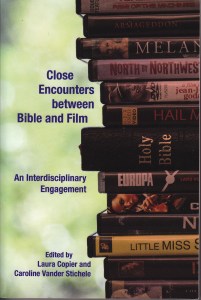
Those who study the Bible have to reckon with the fact that someone else probably said it first. This is one of the inherent liabilities of studying something a couple thousand years old. Still, scholars have to keep their jobs, and so they come up with new ways of looking at something ancient. One of my favorite new methods is the use of movies to understand the Good Book. Clearly nobody in ancient times had any ideas about films, let alone stills, but still, they liked to tell stories. They have that in common with modern cinema. Although I’m naturally distrustful of collections of essays—there are so many of them and they are all of mixed quality—I decided to read Close Encounters between Bible and Film: An Interdisciplinary Engagement, edited by Laura Copier and Caroline Vander Stichele. I have to admit that I picked it up with some trepidation, but I was pleasantly surprised in the end.

Like all edited volumes, Close Encounters is uneven. Nevertheless, a fair number of the essays are well done and insightful. The others may be insightful too, but my exile from academe has led to a drop in tolerance for method-heavy essays. They make me think the Bible should mean nothing to anyone but experts, which, if true, is a sad state of affairs for a world that depends on it for salvation. But I digress. The fact is movies quite often draw on similar collections of brain cells as do sacred texts. That’s interesting. Not only that, but flicks show just how deeply embedded the Bible is in western consciousness.

Having read many books on cinema and the Bible, I was pleased at how well this one seemed to flow. At times it’s as if that authors are struggling to find some common ground, but the realization that both sacred text and cinema are part of the cultural sphere suggests that the connections are there. More than that, they suggest that the Bible might still retain some relevance for modern people after all. Hollywood hasn’t lost sight of Holy Writ either. Just a few years back three major biblical epics came out in one season. For me this makes it clear that the stories of antiquity still speak to modern people. They have to be gussied up with CGI and big-name actors, but the underlying tales go back to a day before lights and camera were necessary for action. And we might learn something while our intention is simply to be entertained.


Wall-E of Separation

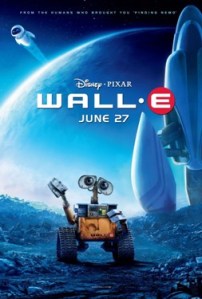
io9 is a progressive website. Its futuristic stories delight and entertain. When a friend sent me a story on io9 titled “New Fan Theory Asks the Obvious Question: Is Wall-E Satan?” I had to read. Then wonder. People know so little about the Bible. The idea is simple: in Wall-E the people live in an undisturbed paradise until Satan (in the form of EVE’s plant) tempts them to leave paradise and return to an earth they’d forgotten existed. Okay, so the Genesis parallels are blindingly obvious (Peter Gabriel was even formerly a member of a band named with the title of that very book). What’s wrong is that there’s no Satan in the Bible’s first book. I give Katharine Trendacosta credit—she discounts the connection of fat, immobile future humans and paradise. The idea that the snake of Genesis is Satan, however, is about as biblical as original sin.

Genesis never calls the snake Satan. It doesn’t mention original sin. In fact, many (Christians, especially) don’t realize the event isn’t called “the fall” in the Hebrew Bible at all. The gaining of knowledge by the first human beings is painful yes, but can be a good thing. Some Jewish interpretations of Genesis 3 suggest precisely that. The story goes that Eve and Adam were living, stupidly, in the garden. The snake points out that the fruit will make them wise—and it does. They do not immediately die as God said they would. Instead they lose a blissful ignorance and have to grow up. The serpent is never said to be the Devil until the very last book of the Christian revisionist scripture, Revelation. Sometimes a snake is just a snake. That’s the way it is in the book of Genesis.

Christian interpretation, however, took over the story of humanity’s awakening and made it into the fall into sin and evil. Things have been so bad ever since than that we have to elect Trump to start a war that’ll end it all. That’s Christian revisionism writ large. Read Genesis again. Slowly. The snake is not said to be Satan. “The fall” isn’t sinful. In fact, the word “sin” doesn’t occur until the story of Cain and Abel in the next chapter. So, is EVE inspired by Satan to end the paradise of the Axiom, unaware of its true origins? Only in a revisionist history of the Bible. The idea existed long before io9, and, according to Genesis, it was wrong even then.


Trusting Truth

How do we know what’s true? For many the answer is what your experience reveals. If that experience involves being raised as a Bible-believer, that complicates things. A friend recently sent me a New York Times piece entitled “The Evangelical Roots of Our Post-Truth Society,” by Molly Worthen. For those of us raised in Fundamentalist conditions, this isn’t news. Then again, those raised Fundamentalist assume that everyone knows the truth but others have blatantly decided to reject it. It’s a strange idea, inerrancy. It’s clearly a form of idolatry and its roots can be traced if anyone wishes to take the time to do it. Inerrancy is the belief that the Bible is correct, tout court. It’s right about everything. If it contains one error, so the thinking goes, it topples like a house of cards. (Cards are sinful by the way, so get your hands off that deck!) If that’s your starting point, then the rest of the facts have to fall into place.

As much as I wish I could say that this simplistic outlook may be corrected by education, that’s not always the case. Many children of inerrantists are raised to question what they learn in school. Worse, many are home schooled so that they never have to be exposed to the sinful machinations of others until they try to enter the job market and are utterly perplexed by the fact that they don’t even speak a common language with the rest of society. Key code words don’t mean the same things outside that safe, withdrawn community where everyone knows the Bible and understands that to know it is to love it. Science doesn’t love the Bible, they’re taught. So science is wrong. It’s quite simple really. You already have all the information you need in one book. If science disagrees, then, well, you already have all the information you need.

There’s an internal logic to all of this, and dismissing the heartfelt beliefs of Fundamentalists only gets their backs up. It’s not about logic, but the emotion of belief. Some neuroscientists have been suggesting that we reason not only by logic but also with emotion. That complicates things, for sure, but it also explains a lot. For example, in a world where religion drives nearly all the major issues facing society, logic would dictate that universities would build up religion departments to try to understand this very real danger. Instead we find the exact opposite. Withdrawing into your own little world occurs on both ends of the spectrum. Dr. Worthen is to be applauded for bringing this out into the light. If society wants to benefit from this knowledge, it will need to stop and think about what it really means to be human. Fundamentalists, for all their foibles, illustrate that nicely.


Whither the Weather?

The weather which we’re having, showing the impact of imaginary global warming, has been quite dramatic of late. I recently had occasion to be out driving during one of the more intense weather events when the sun broke through only to reveal an impressive array of clouds heading in—all the way from the ground to the gray ceiling of the firmament itself. It was quite beautiful in a threatening way. Of course, I’ve been fascinated by the weather for years, going so far as to write a book about weather in the Bible. A friend recently sent me a story reminding me of an under-recognized aspect of witchery. Our standard cultural myth suggests witches are all about casting spells on your cow, or your family. In reality, many witchcraft accusations were about bad weather.

The story by Pollyanna Jones, “Storm Callers—The Art of Weather Magic,” describes beliefs in witches and weather magic. I couldn’t help but think of our current situation. We live in an age of empowered climate change deniers who also happen to be misogynists. Can this be mere coincidence? 45 and others of his caliber seems to think that women are the cause of all masculine problems, which are, after all, the only problems that really matter. The red states do seem to have a preference for the dark ages, overall. I don’t need to worry about them reading this because electricity is of the Devil and the internet doesn’t really exist. It’s amazing how liberating blinders can be. February was spring this year and April feels like January. Must be some woman to blame.

The truly tragic aspect of this tiresome repetition of misogyny parading as righteousness is that the myths behind it have been thoroughly debunked. The atmosphere’s so complex that even with all our understanding of fluid dynamics and chaotic systems we still can’t be sure what tomorrow’s weather will be like. The atmosphere, by definition, is larger than the surface of the earth and is constantly trying to adjust itself like a passenger on a long-distance commute. Yet we go from McCarthyism to Watergate to Reaganomics to 45 rpm, each one as tawdry as the previous attempts to blame the poor for the woes of the rich. “He maketh His sun to rise on the evil and on the good, and sendeth rain on the just and on the unjust,” Scripture saith. That doesn’t sit well with true believers, however. It’s much easier to hunt for witches than to deal with facts.


Theoretical Monsters

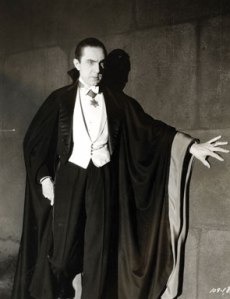
We’ve had a lot of rain lately. One rainy night over this past weekend I talked my wife into watching Dracula with me. It’s been a few years since I’ve seen this classic myself. Difficult to believe that it was ever scary. This is the film that launched the horror genre that has become such a major part of the entertainment industry. It has the right mood for a rainy night. Movies were paced much more slowly in the 1930s, and viewers are given ample time to drink in what’s happening. In some current day films the cross-cutting in action scenes is so rapid that I really have no idea what took place. Dracula is slow, stately even. Thinking back, I believe this was the first monster movie I ever saw, so it has a resonance with me. When Renfield balks at the huge spider web in Dracula’s castle, the vampire quotes from Leviticus—“the life is in the blood.” Monsters are religious creatures.

A year ago in January, with the help of two colleagues, I proposed a new unit for the American Academy of Religion annual meeting—Monsters and Monster Theory. After working on this proposal a couple of months (strictly off work time for me), the new unit was declined by the academy. We decided to try again. This year our exploratory session was approved. The idea had come to me when I noticed that papers on monsters and religion had been on the rise, but there was no central forum to discuss them. They were like zombies without a shepherd. Not being an academic, I couldn’t start the session by myself. Now the society agrees that we’re worth at least one meeting room and a couple of hours to see whether the topic might become a recurring one.

Some people, I’m well aware, find this combination odd. Religion, after all, is about sweetness and ethereal light. Being nice to one another. Things like that. Monsters, on the other hand, inhabit the dark. They’re creepy and unsettling. They’re also wonderful metaphors for so much of life. What some of my colleagues have come to realize, and the academy seems to be backing us up on this, is that if anyone can understand monsters, religion can. Psychology will continue to try. Literature will continue to create them. Scholars of religion, however, are those who would like to bring some order to a chaotic world. We study monsters to learn about what it means to be human. It has been raining quite a lot lately.


Crossing Beowulf

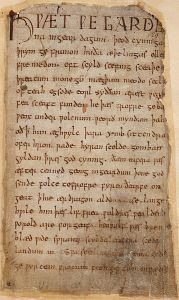
Beowulf, from Wikimedia Commons.

Slaying dragons is costly. In much of the western hemisphere the ultimate metaphor for the perils that await humanity in a world imperfectly understood, dragons were the bane of the medieval imagination. And earlier. Dragons are mentioned in the Bible and were stock creatures in the bestiaries of the Mesopotamian imagination. And, of course, it is a dragon that causes Beowulf’s fall. Almost a type of a latter-day Gilgamesh, Beowulf likewise holds an early, if non-negotiable place in the western canon. In this month’s Atlantic, James Parker discusses the dynamic of this pre-Christian poem in our post-Christian context. Specifically he addresses how modern renditions, perhaps inadvertently, Christianize the story. A popular subject for movies and graphic novels, Beowulf is a monster-hunting story that begs for baptism.

The story itself is familiar to most alumni of American high schools. Perhaps before we’re ready to be exposed to Old English, we find ourselves assigned a story of drinking, rage, and violence. Make no mistake—Beowulf is a hero. A deliverer like the judges of old. Grendel, after all, is the spawn of Cain, the evil seed that continues into a moody world of stygian nights and dismal swamps. Parker’s brief article demonstrates the reception history of the poem nicely. It also raises the question of what’s going on when heroes fight monsters. When the Christian imagery that’s deeply embedded in our culture comes to play Beowulf can’t help but become a Christian monster slayer just as Grendel becomes the enemy of God. All of this may be quite unintentional. What we see, however, isn’t imaginary. That’s the way reception history works.

Parker suggests that, although Beowulf is a pre-Christian poem, the cosmic order laid out in the tale is a Christian one. Even today in a post-Christian America it’s vital to understand how important religion remains. It’s not so much that churches are overflowing (unless they’re mega-churches stating that you can get rich by attending) as it is a recognition that centuries of Christian identity can’t help but leave their mark on culture. We see crosses in the handles of swords. Or even in the grid patterns laid out in city streets. Telephone poles. What’s so remarkable is that we see such things naturally and think nothing of it as we go on our secular way. There may be monsters out there. What may not be so obvious is that in slaying them we’re engaging in a religious activity as old as Gilgamesh, if not as obvious as a crucifix held up to a vampire in the present day.


The Scofield Connection

While reading about Cyrus Scofield recently—and that book has stayed on and played with my mind for some reason—I ran across the conferences that he held in preparing his famous reference Bible. Although he claimed the sobriquet “Doctor,” placing D.D. after his name, like many a self-puffer Scofield has no university that will support the claim. (It’s amazing how many high-level CEOs and “important” businessmen pad their résumés with false degrees. Even some government wannabes do it, and then they want to defund education after they get into office.) Perhaps because he had no seminary training, and likely didn’t even graduate from college, Scofield might’ve felt a sense of insecurity when it came to a very large book originally written in languages he couldn’t read. There’s a reason “King James Only” Christians exist. In any case, he set up meetings in a couple of conspicuous places to go over his work. One of those places was Grove City College.

Now, like many small, Christian colleges, Grove City isn’t widely known. Most of the student population—at least when I was there—was fairly local. Pennsylvania, Ohio, and New York, for the most part. Still on the (admittedly rare) occasion when someone asks me where I went for my undergraduate work, they generally haven’t heard of Grove City at all. Even though I spent four years of my life there, I had no idea about the Scofield connection until I read Joseph Canfield’s book. That’s because not all Fundamentalists grow up with Scofield. I’m sure I heard about the Scofield Reference Bible but I didn’t own one and I wondered what the big fuss was all about. After all, the annotations were the work of a man, and I was interested in the words of God. Far more popular was the revision of Scofield known as the Ryrie Study Bible, but I never read that either.

The end result is that many people think that Scofield’s words are “the Bible.” As I used to tell my students, binding pages together within a book makes a statement. If you’re saying “this is the word of God” and part of “this” is Scofield’s annotations, most people can’t distinguish between text and commentary. I eventually acquired a Scofield Bible, not for valid information, but simply for information. I was amazed at how poorly executed it was. Nevertheless, a true believer reading through the first chapters of 1 Chronicles is ready to accept even minimal narrative as divine. So it is that many Americans have come to believe in a Bible that’s not biblical. Religion is full of paradoxes and in this case I’d shared sleeping quarters with one in my more formative years although the connection was unknown at the time.