The Religion Code

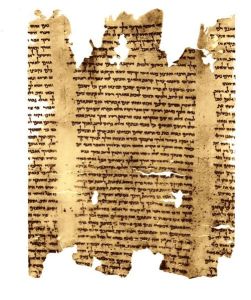
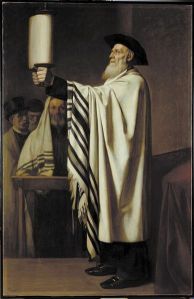
People have strange ideas about what religion can and cannot do. Yes, many religions face the past—founders of various sorts gave dictates and statutes that were appropriate for all time. At their time. Few religious visionaries can see very far into the future, so their rules have to be massaged over time. When we see an Amish buggy clopping along next to a highway we suppose that this is a religion mired in the past, but we could be wrong. The BBC ran a story the other day expressing some surprise at “ultra-Orthodox Jews” and their getting into tech fields. What hath the Talmud to do with coding? Stop and think about that.

One of the aspects of this dynamic unaddressed by this story is how unescapable the internet has made learning tech. Your religion may have you following outdated principles at home, but unless your community can get on without the outside world, like the Amish, you’ll need to learn to negotiate technology. As the article points out, learning Torah and Talmud are transferrable skills. People genuinely seem surprised when what we might broadly call “the humanities” come in handy. Religion, when it requires serious reflection, builds critical thinking skills. It is only the blind adherence to principles that haven’t been thought through that leads to trouble. Even a Fundamentalist knows that this all has to make some kind of sense or something’s wrong. In fact, the article doesn’t suggest that a Fundie as a tech expert would be any cause for wonder. A humanities education might have helped with that.

Photo credit: Musée d'art et d'histoire du Judaïsme, Wikimedia Commons

Photo credit: Musée d’art et d’histoire du Judaïsme, Wikimedia Commons

One can’t speak of Judaism as a monolithic religion. In fact, religion scholars regularly speak of “Judaisms” just as they speak of “Christianities.” The various branches of Judaism hold study of scriptures in common, and the BBC article makes the point that this kind of thinking helps with problem solving. The great irony here is that when the problem solving comes in the form of getting computer glitches worked out it is considered valuable. When the problem solving merely helps people figure out how to get along in the world it is backward and parochial. Such is the strangeness of a world impressed by its own creation. The internet has brought a great many religions together. It has, I would suggest, created new religions as well. It is a myth to suppose that the rational rules of any hypertext markup language are that different than sages and rabbis arguing over the best way to make progress in a confusing world. No matter what our religion, we all need to make money, don’t we? And isn’t that the most truly ecumenical enterprise of them all?


Enter the Labyrinth

Trying not to think too much about Children of the Corn, I visited a corn maze over the weekend. This particular autumnal activity highlights just how much detail a human mind can pick out in a mass of sameness. You can tell if you’ve been to this particular juncture before—that oddly shaped leaf, or that peculiar stone, or that specific ear with the missing teeth will give you the clues. This particular maze, however, also uses printed clues. Before you enter the labyrinth, you may choose your species of guidance. There were 4-H clues, Girl Scout clues, history clues, and more. One of my companions handed me the scriptural clues. Although it may have been an obvious connection, I thought about it in terms of salvation. A corn maze is not unlike life in the real world; confusion, false leads, and aimless wandering. Having a guide—in my case, knowing the Bible—will lead you out.

corn-maze

Of course, the point of a corn maze is the fun of getting lost. This particular farm had eight acres dedicated to fall fun, and our party did get hopelessly mired in one location and had to ask for help from the corn cop who wanders like a friendly minotaur, or maybe a personal Daedalus or helpful Ariadne, directing those who’ve lost their way. The idea is that once you enter the maze, you look for numbered clues at various junctures—only a few crossroads have them—and answer the question for instructions about which way to go next. Even with the Bible in hand, or in head, we managed to lose our way. Baptized by a sudden cloudburst, we sought shelter in an open field. The only way ahead was to press on.

Those who’ve been with this blog for any length of time know that it is intentionally kind of a labyrinth, often using metaphor. In the case of the literal corn maze and its clues, minimal biblical knowledge was required to figure out the correct way to turn. The trick was even after getting all the hints, there was still some distance to go. Wet, confused, and having only our wits to go on, by trial and error we made it through. Our instructions—for we each had a different set of questions—only got us so far. My biblical guide was damp and see-through with the soaking we received. Metaphors were falling as fast as the rain. After all, the point of a corn maze is that you don’t get your money’s worth unless you get well and truly lost.


Intelligent Life

arewesmartPerhaps the most pervasive trait of religion is its ability to construct worldviews. Even when the religion is eventually abandoned, the worldview remains. Most scientists would deny that religion lies behind their perspectives, but in the case of human exceptionalism it remains the most logical cause. I always eagerly await new books by Frans de Waal. Ever since I read his book on empathy and apes, I couldn’t wait for the next one. His latest book, Are We Smart Enough to Know How Smart Animals Are?, although the title is a mouthful, does not disappoint. As I’ve noted before about his works, de Waal is perhaps the most sensible person writing in science today. He considers the evidence and takes his own biases into account. In a competitive world where science money is often doled out to those who can exclude others, de Waal is willing to leave the door open when the evidence demands it.

What is really ironic is that evolution has become the line in the sand between biblical literalists and science. As de Waal points out, the idea that people are different from the animals from which they evolved—in some qualitative way—is an idea based on religion. Many scientists still hold to it in a way that can only be described as, well, religious. This is very strange when evolution works by gradual changes over long periods of time. When did humans gain whatever trait that separates them from “the animals”? When I was a child it was tool use. When that was disproved, it became language. When that was disproved it became consciousness. The latter is the safest since nobody really knows what it is. As de Waal amply demonstrates the Behaviorist school was clearly wrong about animals (including humans). What no Behaviorist wants to admit is that the idea that we alone are conscious comes from the cultural interpretation of the Bible.

Are We Smart Enough to Know How Smart Animals Are? is, like many of de Waal’s books, full of wonderful observations of the ways animals actually behave. They solve problems. They learn from experience. They anticipate the future. In some cases they have been shown to outperform humans on cognitive tasks. And yet we still insist that people are somehow different. Better. Interestingly this is one area where religions and science tend to agree. People are just more important than animals. I wonder if one of the underlying reasons—not addressed by de Waal—is that we have come to depend on a lifestyle that unfairly exploits animals. After all, we eat them, use them for work, and even experiment on them. If we admit that they are intelligent we would need to, yes, rethink all of this. Given what’s happening in the world today, it is perhaps time to admit what we don’t really know.


Banned Truth

bluesteyeBanned Book Week is one of my favorite holidays. Don’t worry—you haven’t missed it—it occurs the final week of this month. I’m not very good, however, at guessing how long it will take me to finish a fiction book, so I start early, just in case. My banned book of choice this year was Toni Morrison’s The Bluest Eye. It’s not easy to read a novel which is so close to the truth. As any writer of fiction knows, just because something didn’t happen precisely as described doesn’t mean that it’s false. Indeed, fiction is often factual. It’s not easy to read because the “race”—a dubious distinction at best—to which I belong has often throughout history victimized others. While I’ve never knowingly participated in this criminal action—and despite what politicians might say, it is criminal—it’s never comforting to hear from the victim’s perspective. The Bluest Eye is about African American experience in the land of the free. At least in name.

What becomes clear from the beginning is that the families around which this story revolves are pushed to their limits. In an affluent society they are forced to live with less than their “white” neighbors have. Slavery may have ended, but the superiority mindset that permitted it in the first place hasn’t. I grew up in poverty but I didn’t have the added burden of being treated badly because of my “race.” Stories that remind us of that reality are never comfortable places to be. We’d rather think that since slavery ended prejudice went away with it. In reality, however, it is still here. Interestingly, the culture portrayed so vividly by Morrison is deeply biblical. Indeed, surveys of Bible reading in North America show that African Americans tend to actually read the foundational book more than their oppressors. The biblical worldview spills easily across the page.

Although the Bible made it onto the list of top ten banned books last year, The Bluest Eye was challenged because of its sexuality. That’s another defining aspect of the novel. It’s a frank exploration of the human condition. The protagonists are not only African American, they are also all female. Their perception of sexuality is, in many ways, inherently that of victims. Not that love doesn’t enter it, but rather that poverty often leads to a state where sexual gratification is held up as one of the few positives in a life that includes regular mistreatment, poor pay, and jail time. It isn’t an easy story to read. Morrison’s deft hand, however, prevents the story from becoming gloomy. It is like spending a sunny day knowing there’s something you shouldn’t see in the basement. Banned Book Week may be some time away yet, but it is always the right season to read about the truth.


Viewpoints

WomanistI first heard of feminism in seminary. Growing up as a poor, uneducated fundie in a small town, where would I have learned about it? I came to it naturally, though. Being raised for several years by a single mother I knew that women were just as smart and resourceful as men. I guess I was surprised to learn that others didn’t see it that way. This was in the eighties and angry feminism was around—I was occasionally attacked in class for my naiveté. After all, I had attended Grove City College not because of its conservatism but simply because I didn’t know any better. This is a lengthy preamble for a book that would’ve helped me a lot as a youngster, although I wouldn’t likely have known to read it. Nyasha Junior’s An Introduction to Womanist Biblical Interpretation is a very useful guide to those who don’t really know what womanism is.

I’ve been in biblical studies long enough to know that I really don’t know much. There are critical approaches to the Bible I’ve never even heard of. Not too shabby for a field that has already been written off as moribund by the academy. In any case, the title “womanist” doesn’t really say much beyond an implication of gender. Junior’s book explains that. Womanism didn’t really grow out of academia as much as it did out of African American women’s experiences. I admit that it took this book to teach me that. What is really being addressed, however, is how womanism is becoming, or is starting to become, an interpretive school. The Bible is in the public domain. It’s anyone’s book. Indeed, it strikes me as odd that translators copyright their work, especially if they believe it is the word of God. The word of God comes with a price tag, I guess. African American women have long been readers of the Bible. What, though, characterizes this method?

That’s the question with which Junior wrestles in this informative book. Just as being female doesn’t make a scholar a feminist, she notes, being an African American woman doesn’t make one a womanist. And we all approach texts with a method, explicit or not. “Objectivity” doesn’t really exist and even literalism is an interpretive approach. Junior traces the history of both feminism and womanism, especially in regard to biblical interpretation. Her struggle should reflect that of any scholar—how do I regard the text regardless of my demographic? While many churches have slumbered in doctrinal dreams, progress in reading the Bible has marched forward. The real danger often comes in the form of labels. This book, written just as a method is starting to be formed, is a trustworthy guide to both the history and to the larger questions.


Zoo or Farm?

It comes as no surprise, I hope, that I read lots of fiction. While not every book I read makes it onto this blog, a good many of them do, along with some I haven’t read yet. Bill Broun’s Night of the Animals is one of the latter. A suspicion is itching way down deep telling me that I’ll probably end up a fan. Part of my suspicion comes from having read a story on NPR about the book. First of all: dystopia. Need I say more? I admire those who try to paint a future with a lighter palette, but I’ve been observing the way those in power behave and it kind of makes me think optimism about improvement is just a tad naive. People are too easily lulled into apathy by things like sports and the internet. The Romans used bread and circuses. Meanwhile those in power help themselves to a bit more until you can’t even get on an airplane without a total stranger seeing you sans briefs. If I can’t be trusted by those I elect, what cause do I have for hope? But enough about me. The book’s the thing.

DSCN1969

Night of the Animals, according to the NPR piece, is kind of a reverse ark. The animals in the London Zoo are understood by a man and they ask him to release them. I don’t know what happens, but I sure hope to find out. When interviewers ask Broun what it was like to spend fourteen years working on a novel, he responded in a way that, I suspect, many writers would understand. He said that it was a spiritual journey. Writing this book was his search for God. Many of us must nod our heads to that.

Concentration is becoming a dying art. I’ve written a number of books in my life—by far the greatest number remain unpublished—and I know there’s nothing like the intense concentration you experience when lost in such a world. Yes, it is spiritual. It is also a cry to be heard. As George Orwell well knew, we are the animals hoping to be heard. Zoos represent entrapment. Broun states that he wanted to explore how people are trapped in his novel. Looking at a system that rewards greed and keeps workers in unfulfilling jobs just so they can keep the system going while their CEOs buy another hotel chain or sports team and decide to run for office, I begin to hear the oinks, whinnies, and neighs all around me. And I haven’t even read the book yet.


Simply Complex

What does it mean to be a man? Or a woman? Or intersex? As a society we seem to spend quite a lot of political time thinking about this. We want to regulate something we don’t even understand. An opinion piece by Rabbi Mark Sameth in the New York Times raises this question to a new level. “Is God Transgender?” the title asks. The Bible, which most of the belligerents in this battle claim to follow, doesn’t present as hard and fast a rule on sex as it might seem. As Sameth points out, the language of a number of passages seems “gender confused” and even the gods of olden times could slip from female to male and back. The Ugaritic deity of Athtar could be called Athtart, depending on her or his gender at the time. We human beings prefer our genders to be fixed, but nature doesn’t always agree.

IMG_2578

Not only gender identity, but gender itself occurs on a spectrum. In cases of “ambiguous” gender doctors often make the decision at birth. Gender is assigned, and sometimes made surgically. And lawmakers will use an outdated binary system to assign bathrooms. We make industrial, multi-occupant bathrooms because they’re cheaper. At the same time we raise our children telling them that bathroom use is a private function. Of course, when money’s involved the story changes. We thought we understood what gender was. Like most aspects of life, however, our understanding is only partial. Some species have such complex reproductive techniques that the term “gender” just doesn’t apply. Some species naturally change gender in the course of their lives. Which bathroom should they use? Nature doesn’t support our laws here.

For human beings the experience of gender is no doubt important. More important, it might seem, would be the acceptance of difference. A rainbow doesn’t have sharp divisions of color. Light blurs from one hue to another and we say it’s beautiful. When it comes to sexes we only want two. Black and white. As the rabbi points out, however, nature prefers the rainbow. The acceptance of difference in the face of the evidence would appear to be prudent. But many people read the Bible only on the surface (although even here it’s not as straightforward as it might appear at first). The biblical writers probably thought of gender in binary terms. In those days congenital “defects”—at least those visible to the naked eye—were cruelly set aside as a divine curse. We’re at last learning to see this “curse” as a blessing of diversity. As long as we don’t have to share bathrooms.


Sea Change

MelvillesBiblesMy reading list is long, and it grows longer all the time. I read both fiction and non-fiction with equal avidity. Given that there are so many books I want to read, it is unusual to read entire books a second time (they should be kept for reference’s sake, of course). Two exceptions to the multiple reading trend have been, for me, the Bible and Moby-Dick. In reading Ilana Pardes’Melville’s Bibles, I discovered I’m not alone in according Melville nearly biblical status. As a book itself, Melville’s Bibles went on my reading list as soon as I learned of it. You see, Moby-Dick was added to my personal Deutero-Canon as soon as I closed its cover. Perhaps before. It was an assignment for a seminary biblical studies class on wisdom literature. My high school wasn’t one that required the novel, and all I knew about it previously was that it was a big book about whale hunting. I knew so little.

Pardes looks at Moby-Dick, and other literature, both by Melville and others, through the lenses of biblical characters. Of course there’s Ishmael. And Ahab. Melville, however, knew his Bible well, and to understand his work on a deeper level so must his reader. Job’s there. As is Jonah. Jeremiah, Elijah, Micaiah ben-Imlah, and even Rachel. Pardes takes these characters and shows how they appear, generally in Moby-Dick, spread across a variety of characters. More than one Ahab and Ishmael walk these decks. All the while, she notes, Melville himself wasn’t a typical “believer.” He struggled with the deity that he just couldn’t find. The end result is a compelling analysis of literature and human nature.

This brief study has a disproportionate number of insights. I frequently found myself stopping to ponder what I’d just read. Perhaps that’s to be expected in any book that brings two weighty canonical works together in such a gam. (If you can’t recall what a gam is, reading either Pardes or Moby-Dick will remind you.) Encountering Moby-Dick the first time was like finding a lost book of the Bible. I had no idea, however, at the depth of comparison. Pardes shows just how deep that ocean is. Melville’s well-thumbed, indeed, annotated Bible does play a role in all of this. Perhaps he didn’t intend all the connections readers like Pardes find, but that doesn’t make the connections tenuous. They’re clearly there. Canonical works are like that. Moby-Dick, indeed, is an iconic book and Pardes is a very capable Captain to guide a reader through it.


For Love of English

One of my most frequent imaginary dalliances is wondering what I would have done with my life if I hadn’t been raised religious. Like many young boys I found “exciting” jobs enticing—soldier, firefighter, explorer—but scientist also loomed large in my imaginary horizon. By the time I was a teen I was firmly ensconced in books. My upbringing meant that many of these books were religious in nature, and my concern with ultimate consequences meant religion was the only possible career track to make any sense. It certainly never made dollars. As someone who professionally looks backwards, I’ve found myself wondering if I shouldn’t have focused on English rather than Hebrew and Ugaritic as a career. After all, the Bible has been available in English for centuries now. Besides that, the canon is larger—from Beowulf to Bible and beyond. Reading is, after all, fundamental.

Beowulf, from Wikimedia Commons.

Beowulf, from Wikimedia Commons.

I only discovered BookRiot recently, and that through the mediation of my wife. For the writer of a blog I really don’t spend that much time online outside of work. I like real books, and being outdoors. Too much time staring at a screen brings me down. Nevertheless, BookRiot has stories that cause me to question my career choices from time to time. For instance, I have never knowingly heard of The Exeter Book. Dating to the tenth century, this medieval manuscript is among the earliest of English writings. Showing the interests of the monk who likely inscribed it, it has religiously themed material and riddles. As E. H. Kern’s post on BookRiot points out, The Exeter Book has inspired many later writers and has, through them, made its way into mainstream popular culture. Not bad for a book that I suspect many, like myself, have never heard of.

Old English has the same kind of draw as other ancient languages. Not nearly as dusty as ancient Semitic tongues, it contains the roots to the form of expression I find most familiar. I love looking back at the Old English of Beowulf and spotting the points where my native language has remained relatively unchanged over the centuries. Modern English even begrudgingly owes a considerable debt to the Bible of King James. Our language is our spiritual heritage. We have trouble expressing our deepest thoughts without it. Perhaps had BookRiot existed when I was young, I might have made a rather more informed decision about the direction of my career. Or, then again, religion might have found me nevertheless. From some things there is just no hiding.


The Cost of Chaos

BathingTheLionJonathan Carroll’s novels are always thought-provoking. My reading patterns tend to be driven by book sales and secondhand stores since my reading vice is particularly aggressive. The Ghost in Love is now already years in my past, but I found a copy of Bathing the Lion that I could afford and I was soon dropped into a world of chaos and order. I won’t try to summarize the complex plot here, but I would note the story’s participation in one of the oldest themes of literature—the struggle of order against chaos. The characters called “mechanics” in this book are those who attempt to maintain order throughout the cosmos. Many retire to earth. There, or here, they continue to work against the ever-encroaching chaos.

According to Genesis 1—not the earliest literature, but still fairly ancient—creation is God making order out of chaos. The universe, prior to creation, consists of uncreated, chaotic raw material. Order is what makes our world recognizable. Elsewhere in the Bible creation takes the form of a struggle against a conscious monster that represents chaos. This motif is reflected elsewhere in the ancient world in texts such as the Enuma Elish. Actually, the theme is so common as to be classified as a standard trope of ancient religions with its own name—Chaoskampf. Chaos is always waiting in the wings, ready to break back in and make a mess of our nicely settled existence. The flood story, placed as it is just after creation, is an example of what happens when chaos regains the upper hand.

The battle to maintain order represents a kind of ancient awareness of entropy. If energy isn’t expended, that which is accomplished becomes a wet, stinking mess and anyone who survives has to start all over again. This story is deeply embedded in human consciousness. To our way of thinking, we’re integral to the running of this universe. Spending time in nature gives the lie to this thought. There aren’t that many predators left, but those that are here—cougars and grizzly bears especially—remind us that in the eyes of nature we can be just another meal. Our outlook cannot accept such a low position. As Carroll has the mechanics say, they are not gods. Like human beings, however, they take on a role next to that of divinity. Chaos is the enemy, even garbed in the colors of making us great again. There are still those who will bathe the lion.


Eve’s Apple

Rituals rely on unchanging circumstances. When we attended a grocery store that was not our usual one my ritual was challenged. First I have to confess (as is appropriate for a ritual): I am no foodie. Having grown up in humble circumstances where eating out was an unknown, eating in meant the basic food of the unsophisticated. Although college and subsequent years opened my appreciation for new, and sometimes exotic foods (before my vegetarian days I ate ostrich when taken for dinner on a job interview. I didn’t get the job and shortly became a vegetarian—some things just aren’t worth it) I’m still a pretty boring grazer. I take the same thing for lunch each day at work. I eat the same thing for breakfast every day—inspired by the Seventh Day Adventist predilection for cereal—and I imagine my wife finds grocery planning with a guy like me to be its own trial. I see the grocery bill and scream. I eat to live, and not vice-versa.

Eve

So we were in a different grocery store. I take the same fruit for lunch every day, but here my apple of choice was more expensive. I looked for something in the price-range that I feel is affordable for fruit. My eye fell on a variety of apple I’d never seen. It was called Eve. Apples are one of those staples that I’ve always appreciated. We still sometimes go apple picking in the autumn, but it’s difficult to eat them all up before they go bad. In the orchards they list the different apple varieties available for picking on any given weekend, and I had never seen an Eve apple. For my boring lunch (since I eat breakfast about 3:30 most days, by noon anything tastes good for breaking the second fast) I wondered if Eve would do. Would this be too exciting for work? I pondered the dilemma.

Although our culture is increasingly biblically illiterate, here was a breed of apple based on Genesis 3. The Bible, of course, does not name the fruit of the tree of knowledge, and the apple was likely chosen much later because of the similarity of its name in Latin to the word for evil. The image has, however, become iconic. Eve reaching for the apple is so well known that advertisers use it with abandon and nobody fails to get the reference. This story is deeply embedded within our culture. The Bible on the grocery store shelf. Still, I’m wondering—should I try something new? Thinking of the work week ahead, I’m tempted.


Monkey Puzzle

One of the unexpected consequences of Christian theology is the ongoing insistence in science that human beings are qualitatively different from other animals. Actually, it goes back to the Hebrew Bible and the concept of “the image of God.” As the absolute line between human and beast continues to blur (intelligence, tool use, language use—you name it) mainstream teaching has trouble admitting that our special differences aren’t that different. A Washington Post story by Darryl Fears describes how capuchin monkeys have been using tools to extract cashews from their toxic husks for at least 700 years. These monkeys use a two-rock system to get at cashews, which, in their natural state, are inedible. The surprise here is that this makes these monkeys denizens of the Stone Age and capable of teaching complex behavior to their offspring.

Animals watch parents to learn to eat—it might seem to be a simple idea. In reality it’s more complicated than that. As I watched a doe and fawn foraging the other day, it occurred to me that what we call “instinct” is a way of getting around admitting animal intelligence. Why would a newborn (“unconscious”) animal seek to feed, or flee from predators? We call it instinct, but what we really mean is a form of will, a desire to survive. This “will” pervades nature well below the human-animal divide. Plants strive to thrive, and exhibit a “will” to live. By just taking all this for granted and calling it “instinct” we’ve further cut ourselves off from the organic world of which we’re all a part.

Christian culture gave rise to scientific method. No doubt this is an embarrassing scenario for those who believe science should reduce all the wonder of being alive to mathematical equations. Can’t we just pretend that rationality was creeping in from the beginning? Aristotle was going that way wasn’t he? But his work was “lost,” only to be recovered by Muslims who saw the value of such logical thinking and Christians—in an over-simplified history—wanted to catch up. Meanwhile, in the Dark Ages monkeys were using an intricate system to extract tasty nuts from toxic casings without the benefit of any religion at all. The Stone Age, we easily forget, was the first recognizable step on the road to the technological world we inhabit today. And we continue to use an outmoded paradigm to understand our place in that world.

391px-Organ_grinder_with_monkey


Minding Souls

The mind, despite nay-sayers, is real. It isn’t an illusion. Emergent phenomena are often larger than the sum of their parts. One of the problems with the non-physical is that we can’t parse it precisely. “Mind” may be called “soul” may be called “personality” may be called “spirit.” You get the picture. Many scientists would answer “none of the above” to the question of which of these exist. Other scientists, not on the fringe, are beginning to see that the answers aren’t quite so simple. A recent piece in the mainstream Washington Post, dares to say what we all feel. Or at least many of us feel. There are realities that religions have recognized for millennia, that demonstrate the existence of the non-corporeal. “As a psychiatrist, I diagnose mental illness. Also, I help spot demonic possession,” an article by Richard Gallagher, is worth reading. Gallagher, with a hat-trick of Ivy League-awarded degrees, believes in demons. They’re rare, of course, he says, but real.

The standard story—in large part correct—is that ancients misdiagnosed epilepsy and some forms of mental illness as demons. Undoubtedly their standard threshold was too low. Occasionally, however, they may have been right. Unlike what we’re sometimes told, the ancients recognized at least some mental illness when they saw it. There were non-functional people then, and while some may have blamed demons, others saw them as people who don’t think like the rest of society. Then there were the possessed. As Gallagher notes, humans with superhuman strength, speaking languages they never learned, and yes, even levitating, have been witnessed by credible viewers. Very rare, yes. But also very real.

Despite the need that many feel for freedom, we are, as a species, fond of laws. We want to know the rules and we’re quick to call out those we catch cheating. We’re so fond of laws that we apply them to nature and claim that natural laws can never be broken. Well, at least not above the quantum level. A friend shared that this concept of applying legal language to nature is a fairly recent development in human thought. The idea of a law, however, requires someone to oversee and enforce it. One of the subtleties here is that any enforcement that takes place requires a measure of value, and value, as much as we all treasure it, simply can’t be quantified. Is gold more valuable than silver? It depends. The value comes in assessing its usefulness. Laws separate good behavior from bad behavior. And, if many credible people are to be believed, the behavior of mind sometimes defies the laws of nature.

Buer


Holy Oak

IMG_2876 copy

It was already ancient when first discovered by the early European colonists of New Jersey. The Basking Ridge oak is a well-known and time-honored New Jersey denizen. Over six centuries old, the white oak, it seems, is dying. Like it’s cousin, the Swamp Oak that I mentioned back in January, this tree is dear to many in the state. It is also historical. An article in the New Jersey Star-Ledger begins with some religious associations: George Whitefield, one of the evangelists responsible for “the Great Awakening” from which we’re still trying to awaken, preached under this very tree. George Washington also knew it. It has been tended and cared for by the town for so long that there is a reluctance to let it go. In the words of another New Jerseyan, “well everything dies, baby, that’s a fact.” Job, in a more optimistic moment, declared, “there is hope for a tree.” Like the Good Book, the good folk of Jersey wax religious about this sexcentarian, and for good reason. The human outlook is far too short.

Think, for example, of what was happening when the Basking Ridge oak was a mere acorn. In the early 1400s there were no Protestants yet. That didn’t stop Jan Hus and Joan of Arc from being burned at the stake, however. Although the Vikings, and perhaps others, had ventured here from across the ocean, North America was blissfully unaware of those waiting to claim for their own any land they could set foot on. Good thing too. The Inquisition was still underway and witch trials lingered on, flying in the face of enlightenment. Cambridge and Oxford University Presses were, in some sense, neophyte businesses. This Eurocentric view overlooks the great achievement of Machu Picchu down south. As the Dark Ages were beginning to lighten, this oak began its life’s journey. We who are a mere blink of its slow eye are still spouting hate for those who are different and are determined that nobody should outlive us.

The Holy Oak, as it is known, stands beside a Presbyterian Church. One of the trustees of the church is in charge of the tree. In the article he stated that this is about eternal life. From our perspective, trees seem to live forever. That’s because we are so dreadfully short-sighted. It’s surprisingly easy to become nostalgic for a tree so old. In terms of accomplishment, we think humans are exceptional for surviving a century of all the misfortune we dish out for one another. The tree, however, seems innocent by comparison. We’re changing the climate even now, making it more difficult for trees to thrive. We continue to shoot people for the color of their skin and although we don’t call it witch-hunting any more we still find ways of oppressing anyone who is different. At this rate we may need six more centuries to come to our senses. If only we had the perspective of a tree.


Biblical Literature

HB as LitIt must be difficult to write a Very Short Introduction. Although the series is published by Oxford University Press, I’m not being a shill. As someone who writes the equivalent of several of these little books a year, I imagine it must be nearly impossible to confine what you need to say to such a small space. I recently read The Hebrew Bible as Literature: A Very Short Introduction, by Tod Linafelt, and I imagined the anguish of my colleague as he had to decide what to leave out. Professors these days appreciate short books because there is an actual chance that students might read them. The Bible itself is intimidating as a textbook—massive and brooding as it is. Then, in addition to the Ding an Sich, the instructor also has to provide interpretive tools. One of the most common these days is that of the Bible as literature.

This obvious assignment is not without dispute, however. Literature is defined by some as a secular category. The Bible, as a set of one, is a holy book. That is to say, it can’t be considered literature at all. As a collection of written texts, however, the Bible can be understood as a literary venture as well as a sacerdotal one, and for many schools this is the only way the Bible can be legally taught. Not only that, but almost all scholars now realize that, protestations aside, the Bible is literature. It is one of the great books of the western canon. Civilization for huge swaths of the planet was based, in some way, on this book (the Bible, that is). Understanding it as literature is the venture of a lifetime, and condensing that down to an easily digestible Very Short Introduction is no mean task. Linafelt performs his duty admirably. The basics of prose and poetry are covered, as well as their interaction. The examples he chooses are compelling and I learned quite a bit myself, even having taught the Bible many years.

As I read, it struck me that the main objection to the Bible as literature revolves around the concept of truth. Linafelt raises this question early, and it stayed with me throughout the book. In a kind of sacred exceptionalism, “Bible believers” treat literature literally. Ironically, this can lead to grave misunderstandings. Truth, however, is a difficult concept to pin down. Many people equate literature with fiction and truth with fact. Truth is actually a bit more fluid than that. As any poet knows, some truths can’t be expressed in prose. Or history. Or philosophy. And some truths are best expressed in fiction. That brings us back to literature as a form of truth. I suppose that’s a good thing too, because were I to write much more I might be in danger of accidentally composing a Very Short Introduction. As long as I’m being a shill, just consider this a very short introduction to a Very Short Introduction.