Programming God

Robots have been part of my world far longer than I ever recognized. Still, growing up in a small town in the 1960s, their impact was fairly minimal—they may have had a part in the manufacture of the car we drove, and perhaps helped prepare some of the products we bought—but those robots were far away. Far more present were those on television who, for the most part, were funny and helpful. This month’s Wired magazine runs a story entitled “Trusting Our Robots,” by Emily Anthes. The point of her short article is that people feel more comfortable with robots that are programmed to appear uncertain. We don’t trust robots to drive our cars, as she points out, but we give them more, old-fashioned primate sympathy when we make them look like they’re having a hard time. Just a couple weeks back Time magazine had a blurb on how we’re now at the point of programming drones to kill without human input. Add a dose of uncertainty and we get a glimpse of what it must be like to be gods.

Underneath our exteriors, we all know that robots do what they are programmed to do. In many respects—physically, especially—they are superior to us. Nevertheless, human knowledge is not perfect. We, too, are prone to uncertainty. Our robots aren’t better than we are, only more efficient. Doubt is a human quality. Perhaps our most endearing. As Ms. Anthes notes, “even when confronted with evidence of our own inferiority, we resist a robot’s help.” We have evolved over millions of years to interact with other creatures. Those non-biological entities we’ve created and endowed with artificial intelligence (sound familiar?) somehow can’t equal the right we’ve earned from struggling against, and along with, nature for these many eons. Would God really trust us with the keys to the universe?

An early plan for a robot.

An early plan for a robot.

Robots, we are told, are our inevitable future. Some visionaries look forward to uploading human consciousness (even though we have no idea what it is) into a machine and, with replaceable parts, living forever. Before the dead and resurrected Jesus, according to the gospel of John, stood Thomas—the man some traditions said was Jesus’ very twin—and yet he doubted. As much as we claim otherwise, we adore Thomas for it. Evolving even in a world full of religion—itself a product of our evolution—we are so unsure. Our robots, however, programmed by us, have no doubts. Even when they act confused, it’s only because we tell them too. Our minds, as Wired tells us, resist letting robots drive the car for us. We let them pull the trigger, however, and pray our programmers got it right.


St. Ghost

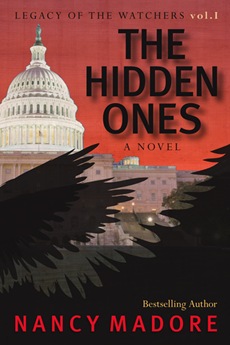
HauntedSouthernTierSince they combine two of my soft spots—local history and ghost stories—books telling the tales of home-town specters are compelling in a homespun way. On a visit to Binghamton, New York, I picked up Haunted Southern Tier by Elizabeth Tucker at the local bookstore (I have a hard time passing up an independent bookstore anywhere). Those of us at least a little familiar with upstate New York know that the southern tier is not strictly defined, but it is a recognizable section of the Empire State that runs just north of the Keystone. I was drawn to the book by Elizabeth Tucker’s name; she is the author of Haunted Halls, a book I reviewed earlier on this blog, about college campus ghosts. These local travel guides tend to focus on the weird and whimsical, and aren’t meant to be taken too seriously. Nevertheless, the connection between ghosts and religion is tangible in just about any part of the world, no matter what one believes.

This fun read brings a number of explicit religious points to the surface. One involves the strange phenomenon of haunted churches. Given that many varieties of Christianity offer Heaven as a reward immediately following death, having a ghost hanging around a church seems strangely disingenuous. Perhaps that’s why few churches admit to such things. Another interesting tie-in to religion comes in Tucker’s section on roadside ghosts. Stories of spectral hitchhikers are quite ancient, but I had never considered them biblical. Tucker mentions one such instance in the Book of Acts, and upon reflection I realized that she may be onto something. The account of Philip converting the Ethiopian eunuch is one of the odder tales of the early Christian movement. Philip explains Isaiah’s prophecies to the chariot-riding dignitary who gives him a lift, and baptizes the visiting Ethiopian before mysteriously disappearing. Could this be the prototype for the vanishing hitchhiker folklore theme?

Perhaps the most serious of the religious connections in the book, however, has to do with St. Bonaventure University. For those familiar with Thomas Merton’s life story, St. Bonaventure will not be unexpected. Merton taught at the school as he was struggling with his identity that led him to become one of the most renowned Trappist monks in the world—one who spoke approvingly of Buddhism, to boot. Merton is not said to haunt the university, but his presence there at one time has endowed this Catholic school with a sense of spiritual gravitas. The ghosts come from elsewhere.

Books on ghosts are a guilty pleasure with a serious undertone. End of life issues, once we move beyond the medical, are the unquestioned provenance of religion. Whether or not there are any ghosts out there, religion will claim the final word on afterlife. And only those who experience it will ever really know.


Jonahado

SharknadoSome movies are so bad that they become classics. Some are just plain bad. The jury in my head is still out on Sharknado. The story, obviously tongue-in-cheek, is so far-fetched as to be pretentious, and anyone who knows something about either sharks or tornadoes, or both, will likely find credibility waning from the first scene. For those sensible among my readers, who’ve not seen the movie, the title gives it all away. A global-warming-induced hurricane hurries toward Santa Monica with its forever young sun-worshippers. The hurricane floods the California coast, bringing sharks to the city streets. As our protagonists drive around somewhat pointlessly, the sharks attack their car, eventually eating everyone who’s not family. At one point the family tries to buy rations at a liquor store, only to have the news announce that this is the apocalypse. The store owner scowls that it’s the government, not God, that’s bringing this upon them. Then the waterspouts appear, morphing into tornadoes carrying sharks, still hungrily chomping at everything as they fly through the air.

Ironically a biblical theme comes about with the swallowing of Nova. As she falls from a helicopter (don’t ask), a great white shark snaps her up in mid-air, and since she’s about the only character you can care about, the movie seems to have reached its nadir. As the tornadoes dissipate and the sharks coming raining down, the eponymously named Fin is swallowed whole by a huge great white, while still holding his chainsaw. We already know that this latter-day Jonah will make his way back out, and we are supposed to be surprised that this is the very same shark that holds the reborn Nova, who admits her real name is Jenny Lynn. Like Neo in The Matrix, she is the convert to a new faith, this time in the family of Fin, whose only fault, it seems, is that he cares too much for others.

While a made-for-television B movie (although C or D might be more appropriate), Sharknado demonstrates the popular conception of the apocalypse. Not that it will involve flying sharks and destructive wind-storms, but that the end of the world is somehow inevitable. We have convinced ourselves that its a matter of when, not if, the world will meet its demise. Global warming, clearly our fault, is blamed by the movie (as is the government), but the story is that the flimsy culture we’ve constructed is subject to utter ruin by a hurricane and maritime predators. Or I could be reading far too much into this. Religious tropes may be picked and chosen at will. And when things really go wrong, like accidentally switching on Sharknado, we have a ready arsenal of religious ideas at hand to blame. And the apocalypse may be the least of our worries.


Inerrant, Indeed

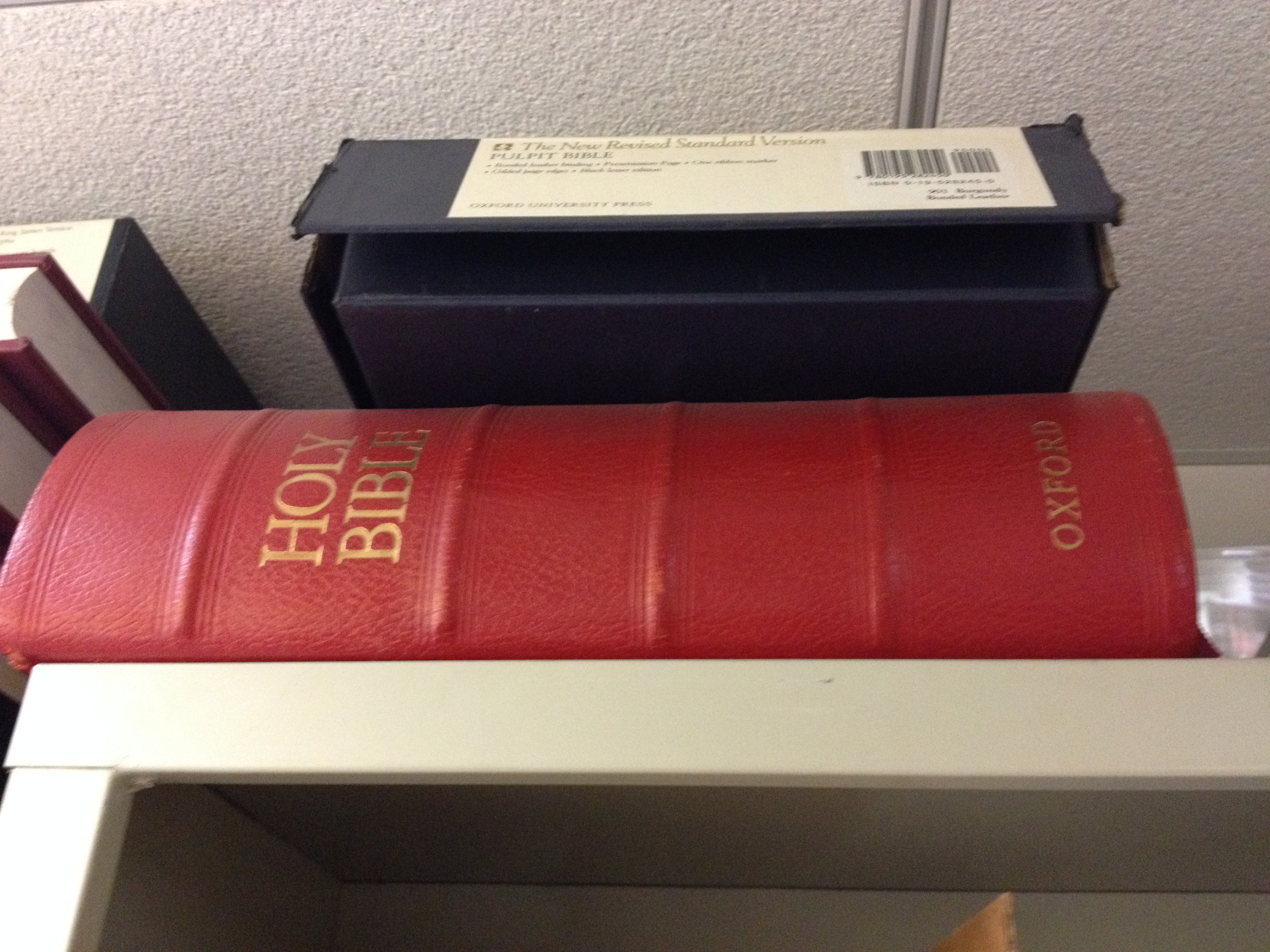
The other day at work, I discovered a huge Bible. This one was truly massive, in three volumes, almost too heavy to lift. As I pulled down the last fascicle, which weighed more than a newborn, I noticed the sticker on the cover. “Author’s proof.” This gave me pause. Does God read his own material or does he hire out freelancers? Printed Bibles have a long and venerable history of typographical errors, especially in the early days. Speaking in the name of the Almighty does have its risks. After all, little is more persuasive in America than the words, “it’s in the Bible.” I remember kids saying that to me in high school, where I had the reputation of being a walking concordance. More often than not, I had to correct them, since, in fact, the Bible mentions nothing about Popes or guns.

IMG_1389

Prior to the electronics revolution, printing a Bible was a complex process. Typesetting, or compositing, was not an undertaking for the foolhardy. Type has to be set, cast, and molded in order for offset printers to roll. And although page proofs aren’t set in stone, metal isn’t a forgiving medium to manipulate. And let’s face it—the Bible has a lot of words. Some of them very dry. The King James Version has over 780,000 words. Those with any experience in publishing know that’s one big book. Bible proofreaders command a hefty fee. I would be afraid to correct the word of the Lord myself. Reading through holy writ, word-by-word, takes a bit of time. The mind wanders to monks in their scriptoria.

Nevertheless, printer’s errors abound. Growing up as an evangelical, lighthearted entertainment was to be had as we read about the “Breeches Bible,” the Geneva Bible that had Adam and Eve fabricating britches for themselves from fig leaves. Coverdale’s Bible was known as the “Bug Bible” for its translation of Psalm 91.5, “Thou shall not nede to be afrayed for eny bugges by night.” Various versions of the King James have typos including Judas telling the disciples to watch in Gethsemane while he goes yonder to pray, and the somewhat self-serving “Printer’s Bible” that renders Psalm 119.161, “Printers have persecuted me without a cause” (which may be true, but the Hebrew would seem to indicate “princes” instead). The most notorious was the “Wicked Bible” wherein the seventh commandment in Exodus reads, “Thou shalt commit adultery.” All but eleven copies were destroyed and one of the remaining sold in recent years for $89,000. A Bible printed during the First World War, had “Thou shalt kill” as a commandment, Freud be praised. I slip the author’s proof back onto the shelf. I’ll let this be somebody else’s problem.


Transparent

With its endless versatility, gold is many things to many people. Already at the dawn of civilization, both in the old world and the new, it was a valued commodity. It is one of the few things that conquistadors didn’t have to impose on their victims; love of gold was already there. One of the qualities of gold that makes it such a remarkable metal is that a little bit can go a long way. Gold plating, for example, can be accomplished with very thin sheets of gold. This made it ideal for decorating statues of gods in antiquity, or at least the heads of the statues, as reflected in Daniel’s dream of Nebuchadrezzar’s statue. “Thou art this head of gold,” even Daniel obsequiously crows. Today, of course, gold represents commerce and it often sits, unused, in great storehouses heavily guarded, so as to prove a nation’s worth.

Gold still has industrial uses in the book business, particularly with Bibles. A classic Bible with calfskin leather, gold letters stamped on the cover, and gilt-edged pages, can be a luxury item. The gold on the edge of Bible pages is only 1/300,000th of an inch thick, or thin, meaning that a Troy ounce goes a long, long way. Only books with an idolatrous value get this kind of treatment. And they still sell. Somehow an ebook just doesn’t compare. The irony here is that the contents of the Bible suggest that gold is of lesser value than the spiritual truths contained within. Still, we can’t help but smooth the outside with burnished gold. Show and tell it on the mountain.

DSCN4534

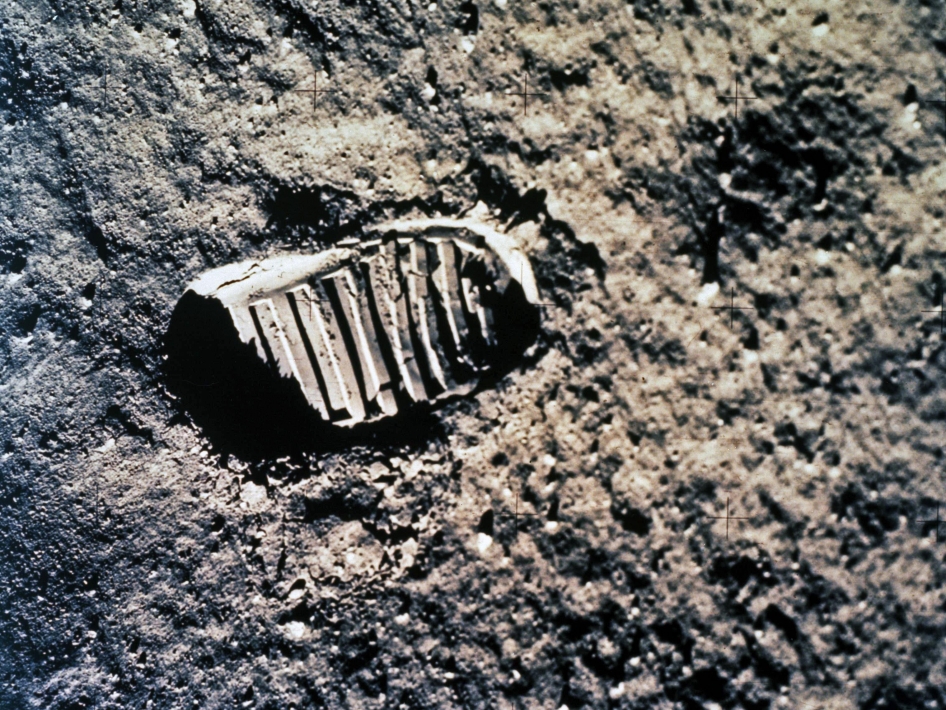
Although the populace demanding evangelical standards such as the Scofield Bible are going ever more and more towards the large-print editions, the leather-and-gold crowd is still alive and has the cash to prove it. The same content is available online with just a few keystrokes, but there is no gold coating here. All that glitters is not gold, goes the old saying. As we turn our gaze ever heavenward, the glass visors of space helmets are also covered with a thin layer of gold, as if the deity we might glimpse is best viewed through gilded glasses. From the moon—humanity’s farthest step—back to the early statues of gods whose names have been forgotten, even though it may be the thinnest veneer possible, we look at the world through gold.


The One That Got Away

While looking for reviewers for a book proposal on Jonah, I had a strange realization. Few mainstream biblical scholars are interested in the book. Or at least in publishing on it. The same goes for the Bible’s other great watery adventure, Noah’s story. Ironically, these are the stories we, as children, are weaned on. Kids love animals, right? And both Noah’s ark and Jonah’s great fish mastication involve animals, as well as lots of water. Both stories have more than a whiff of the fantastic about them—the kind of thing children can relate to. And yet, biblical scholars, collectively, wonder why few people are interested in their work as they take on the more heady work of unraveling Isaiah or Romans.

Sistine_jonah

Jonah used to be a test case for the Fundamentalist crowd. You were a “Bible believer” if you could, with steely gaze, claim that Jonah was swallowed by a fish—the Bible doesn’t say “whale”—and survived three days only to be vomited up on the Levantine shore to make his soggy way back to Assyria. Three days swimming in the gastric juices of just about any animal doesn’t do a great deal for a prophet’s credibility. Or physique. And since the story is fantastic, and populist, scholars avoid it like a giant fish. Meanwhile, John and Susie Q. Public want to know about this story—what does it mean? Did it really happen? Why is it in the Bible at all?

My generalization above is somewhat faulty. (What generalization isn’t?) Evangelical scholars still take an active interest in Jonah. Jonah is the stomach-acid test of faith. Since I never really outgrew my love of monster movies and outlandish plot lines (my brothers recently convinced me that I should see Sharknado) I’m fascinated by the tale of Jonah. It is one of the most carefully constructed stories in the Bible, and it clearly has a very counterintuitive message about who is acceptable in God’s eyes—here’s a hint: they live in Nineveh and even dress their animals in sackcloth when they realize they’ve been naughty. The book of Jonah, however, has been condemned for being a puerile tale of a guy who can hold his breath three days, amid chemicals that can dissolve most organic substances, and utter Psalm-like prayers all the while. Fish stories, after all, are something that many folks intuitively know how to interpret.


Akedah

AbrahamsCurseViolence, in its most basic form, is to be blamed on evolution. Not the theory of evolution, but the fact of it. More precisely, violence is a reflex of the struggle for existence. To live animals have to eat and to eat, many have evolved to kill. While violence is endemic in the world, it isn’t so rampant that species overkill their own kind. That’s rather rare, actually. Human beings have engaged in violence against one another for our entire history, and it is only within the last century or so that we’ve made any concerted efforts to stop violence against those who are different than ourselves. Among the impulses both advocating and quelling violence is religion. Bruce Chilton’s important study, Abraham’s Curse, scours the monotheistic family tree for information on why all three major Abrahamic faiths advocate martyrdom. Or more disturbingly, why they insist on sacrifice, even of our own species.

Chilton begins with the story of Abraham and Isaac. The Akedah—the binding—or near-sacrifice of the beloved son. Since Judaism, Christianity, and Islam all share this story, and since it sets the tone of a God who seemingly demands human sacrifice, Chilton explores its implications and possible origins in sacred violence. Sacrifice predates any written records, although, as Abraham’s Curse points out, it became an established fixture in urban culture when temples began to play an important role in ancient society. No one knows why we sacrifice. By the time writing came along, it was already an established part of the picture. When the book of Genesis was penned, the story of the binding of Isaac became sacred scripture. Even in the earliest days of biblical interpretation scholars puzzled over what was going on here and its chilling implications. God, after all, comes up with the idea that Abraham should be tested with the cruelest of tests. Although the Bible isn’t explicit on the point, Abraham and Isaac never appear together again after the incident until Abraham is safely dead.

Building on this common story, Chilton takes the reader through the stories of the Maccabees where Judaism develops the concept of martyrdom, through Christianity where some actually begged for it early on, and into Islam, which still practices animal sacrifice. The idea that it is noble to lay down your life, and worse, the lives of others, points to a guilty Abraham who is a paradigm of faith. An Anglican priest, Chilton is no angry atheist. He does not, however, pull any punches. If monotheistic traditions gave us a violent heritage, they can also work to dismantle it. Ironically, it is when religions are in the ascendent that they exercise their power to perpetrate violence. All three major monotheistic religions officially advocate peace and justice. But somewhere in our deepest human experience, we know what it is to feel hunger and what an opportunistic animal does about it. Abraham’s Curse does offer solutions, however, if only we could get human beings to put down their spears and read.


Future Shock

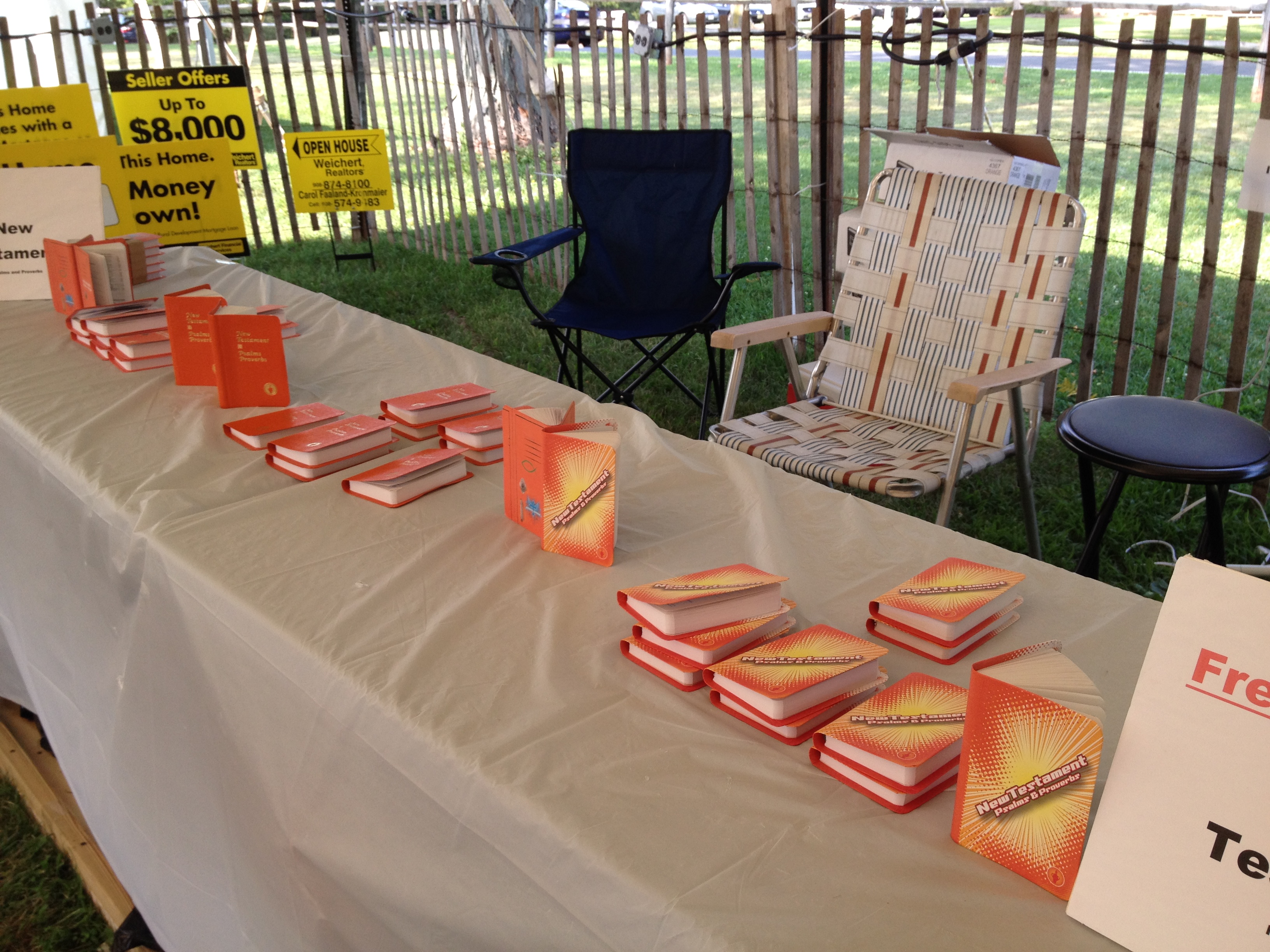
The Jehovah’s Witnesses are nothing if not persistent. Unemployed and huddling fearfully at home during the day a few years back, I answered the door and had a talk with the local missionaries. I explained that I was a biblical scholar and not open to be swayed to new religious sensibilities, but that didn’t stop them from trying to convince me otherwise. They were oh so polite, however, and sending them away seemed like the height of rudeness. The Witnesses have roots in my home territory, and I have a soft spot for religions originating in Pittsburgh. Despite the fact that I’ve had a day job now for about three years, they still routinely stop by and leave tracts behind. One of the most recent ran a headline “Can Anyone See the Future?”

JWatchtower

Of course the story inside quickly turns to prophecy and the age-old, if false, idea that biblical prophets were fortune tellers. Still, the popular conception among the public is just that: prophets see the future. In the Bible prophets are primarily social critics. They cry out against injustice, exploitation, and false religion (!). One thing they don’t do is see the future clearly. Isaiah had to be revised at least three times in the writing. Nevertheless, prophets are engaging figures. They are non-conformists who rail against a system that takes advantage of those who are helpless—not weak, but helpless. Many people are rendered helpless by society. One size can’t possibly fit all. And yet we keep the cover closed on those nattering prophets and pump our money into a capitalist engine that is fueled by human effort and spews the helpless out as exhaust. We could use a good prophet now and again.

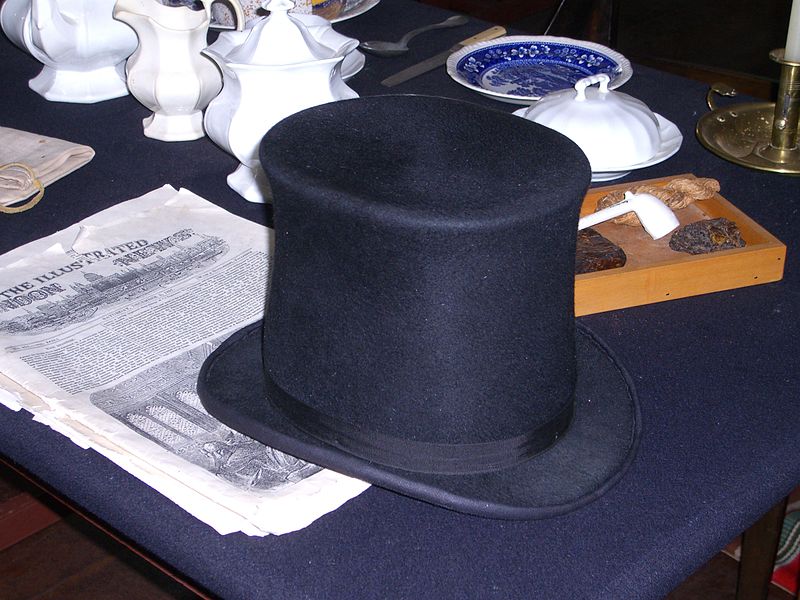
The question about seeing the future, however, keeps coming back to me. It might have been a good talent to have some thirty years ago as I was pondering a college major and a career that would take me deep into the Bible. If I could see the future—renting an apartment for an extortionate amount of money for the privilege of living near a city where all my efforts would be poured out to help others make money off religion while asking people with the same degrees I have to write the books that I should be authoring—would I have taken this route? Or would I, as a local boy, have taken the warning of Charles Taze Russell and made my living through haberdashery. Is it any different than balderdashery? Would I have even opened the door? Only a prophet can tell.


Genizah Bible

Overproduction is a survival strategy among many animal and plant populations. Just consider the number of acorns under one oak tree, or “propellers” under a maple in the spring. Swarms of ants or the legendary multiplication of rabbits. It’s as if nature knows most won’t survive, so you’d better prepare plenty. The same applies in the publishing industry. Every book is a gamble, and you can’t know which one will sell out and which one will collect the dust of ages on a warehouse shelf—a shelf you have to pay dearly to lease. This applies to best-sellers as well, such as the Bible. By almost any standard the Bible is among the best selling books of all time. Literally more than a billion have been printed. It exists in multiple translations and in many languages. And many copies end up sitting on the shelf. So many, in fact, that eventually a kind of limit is reached and you either need to rent another warehouse or thin the stock a bit. In my position, knowing what other publishers are doing is vital, so buying their Bibles is important. Then someone else needs your shelf-space.

A genizah is a repository for “retired” sacred scripture featured in some synagogues. Texts that are too sacred to toss into the garbage when they’re worn out may be buried among others of their kind in a genizah. Well, a storage room at work isn’t exactly a genizah, but it is a room where hundreds of out of print Bibles lie forgotten. Salvation in dry storage. As the new kid in the department, I get to clean the closet. Our own Bibles we are able to sell, but the hundreds amassed from other publishers over the years, well, we aren’t running a genizah here.

My instructions are: “see that dumpster over there?” For a kid who grew up believing that it was an order of sin even to place another book on top of a Bible, the idea of filling a dumpster with the good book presents a crisis of a greater magnitude. The simply is no room in the inn. Besides, I’ve lost a job or two already. And I’ve seen the damage that Bibles can wreak in the wrong hands. Still, I followed the Bible through three degrees, and in some form or another my entire life has revolved around that book. But I’m talking like an idolator. Bibles are big business. Few Bible publishers can’t turn a profit. And profits, we all know, lead us to produce even more.

IMG_1364


Nothing to Do with Pigs

Pseudepigrapha is not a word that flows mellifluously off the tongue, and the first time reader stops to give pause over its awkward beginning and several syllables. It comes from a couple of words meaning “false” and “letters” and it designates a book, usually ancient, falsely attributed to somebody important. Since most people in our post-modern world don’t even read the regular Bible (many Fundamentalists among them), throwing a false gospel out there and telling everyone what it says is a fairly safe bet for getting some attention. A friend sent me a link to a web story about the “Gospel of Barnabas” based on an allegedly clandestine Turkish manuscript, that has been circulating for a few years now. Let’s face it: how is a non-specialist supposed to find a copy of the Gospel of Barnabas, and how is the public going to know how to weigh one ancient document against another? After all, we as a society have determined that biblical scholars are more than useless, and they should be employed doing odd jobs just above minimum wage, the unbelievers!

Dante making Scripture

Dante making Scripture

The story on the promisingly named Liberaland website makes a Bill Maher of mistakes regarding the ancient document, however. Citing only vague “religious experts and specialists located in Tehram,” (after all, we all know that there are no religious specialists in North America or Europe) the article claims with an unattributed quote, that this 23-million-dollar gospel has been squirreled away for safe keeping because of its scandalous claims about early Christianity. Any biblical scholar knows, however, that truly original scandalous claims are difficult to come by. The Gospel of Barnabas has been known since the seventeenth century and it is likely a document with Muslim sympathies. It doesn’t help that actual ancient documents are sometimes held in secret (I know of one being kept in a Turkish monastery that is being held, literally, for ransom to help finance the place), and the general public is ill-equipped to know who’s telling tales outside of school.

There’s no point in denying that religions have made a plethora of mistakes and missteps over the centuries. New religions are emerging all the time and new mistakes and missteps will be made. Given that people are, according to the best evidence, programmed to believe, it would seem to this insignificant former scholar that keeping a few religion specialists on the payroll might not be such a bad idea. Of course, I am an interested party, and that makes me suspect from the beginning. I spent my early adulthood years learning to read a dozen dead languages and that has landed me in an obscure job that barely covers the rent. One thing it did prevent, however, is being taken in by claims of mysterious gospels that seem to surface several times a year. There will be those who dispute what I write, but then any document these days is liable to be called pseudepigrapha.


East of Nowhere

EastOfEdenThere was a time when you could assume a lot about your readers. Although it was only a little more than a half century ago, John Steinbeck could assume a biblically literate readership. East of Eden is so thoroughly pervaded with, one might say interlarded with, the Bible that the key scene could have three men sitting up half the night discussing 16 verses of Genesis, and not one of them being a priest or preacher. The earnestness of their conversation is haunting in its intensity. You know the boys will be named Cain and Abel and that only one of them will come out of this alive. Okay, so they decide on Caleb and Aron, but you get the picture. Of course their father is Adam. Even the title of the book is drawn from the last words of the 16th verse.

Ironically, this biblically literate author is one of the most frequently banned from high schools. Some censors can’t get beyond thinking that being good is the same thing as being a realist. In East of Eden, characters are flawed, and they tramp out the course laid in the Bible with an unwitting solemnity. The entire book hinges on the ability to change one’s fate, and yet, the characters dutifully enact their parts. Those who watch over the morals of youth are bothered by an occasional word with four letters, which, I must say, Steinbeck uses with moderation. They mistake the packaging for the message.

But why should we care? Hasn’t the world moved on inexorably these past sixty years? It is the wisdom of Lee, the Chinese servant, who answers this. “Any writing that has influenced the thinking and the lives of innumerable people is important.” This does not refer to the Bible alone—although at this juncture in the story it does—but it is a message that many who simply dismiss the Bible as just silly myths would do well to remember. Lee is a literate character who turns to Marcus Aurelius for comfort as well as other classics. Sometimes the Bible is regarded as so holy that we forget it too is a classic. Classics become what they are through the impact they have on innumerable people. East of Eden is considered a classic although the author walked this earth just half a century ago. And those who reject Steinbeck for their children would do well to read the Bible they would put back into schools in his place, if only to consider the irony.


The Cow Jumped

While digging through the attic for some reference material for a colleague this weekend, I came upon a box of Bibles. I actually have many Bibles around the place—often within an arm’s reach—despite the ease of internet biblical access. One thing of which I own few are leather-bound Bibles. Trying to be as vegetarian as I can, I have avoided leather in my apparel as much as possible (sometimes the alternatives are even more expensive), and apart from a rare, old book, I prefer cloth to leather, and, generally, paperback to cloth. Still, working in the Bible industry, I know that among the best selling Bibles are the leather variety—those that involve the ultimate sacrifice, although not of the human kind. Leather as a book-binding material is an early development. Leather is durable, and strong, even if a little kinky. Before synthetics, it was used to protect tomes that had been written by hand, representing hundreds, or thousands, of human-hours of work. You wanted it to last. So kill the fatted calf.

I was amazed, therefore, to discover that most leather Bibles are bound with pigskin. That’s right, the material tossed around the grid-iron Sunday afternoons from September through February is kin to the very binding on your standard Bible. Pig leather (never called that) is cheap and durable and is the routine binding for leather Bibles. You want a kosher holy book, you’ll need to buy calf-skin (one thinks of a savior dying at only 33), and it will cost you. Pigs, generally eaten by Christians, are unclean to Jews and Muslims, and books bound in pig cannot be touched by the most religious of the monotheistic sibling faiths. To me, I just see dead animals all around in any case, and wish we might find some way to protect our pages with something else.

Photo credit: Ben Salter, Wikimedia Commons

Photo credit: Ben Salter, Wikimedia Commons

A larger issue (isn’t there always a larger issue?) is a porcine one. Pigs, we are told, are very similar to humans. We use their organs to transplant for our own, and some scientists think they may have played a role in human evolution (although this is not the conventional view). Although I can’t claim Babe led me to vegetarianism, it certainly didn’t hurt. For that matter, neither did Charlotte’s Web. Still, the idea of swearing atop a deceased pig to tell the truth, or watching a televangelist beat a dead pig, definitely has some theological implications. So as I sit here staring into a Hammermill box full of Bibles, I wonder about the hidden costs. Not just to calves and pigs, but to the species who claim that this box of books contains a truth deeper than the many other tomes all around me. And I wonder just how naive I may have been on the finer points of the religion based on these books as well.


Science Fiction Double Feature

Two news stories last week—one from the Associated Press and one from the Chronicle of Higher Education—hit upon a common theme: scientific illiteracy. Both articles presented scientists who felt that if they could just reach the (mostly) American public with easily digested facts, then belief in the Big Bang, evolution, and global warming would suddenly make sense to everyone. It may not be my place to say, as I’m not a scientist, but I believe they’re wrong. Don’t misunderstand. I do believe in the Big Bang, evolution, and global warming. In fact, I spent part of last week flagellating myself (metaphorically) for not posting something appropriate on Earth Day. I worry a lot about global warming and what we do to our only planet. What I mean is, these scientists don’t understand religion. People don’t willfully reject the facts. That takes religion.

One of the reasons that I continue my daily efforts on this blog is that our educated elite constantly refuse to acknowledge the blue whale in the room. People are naturally religious. Some grow out of it, some are educated out of it. For most, however, the price to do so is far too high. Science offers little to take the place of faith. For all of its innuendo, the Big Bang tends to leave most of us cold. I don’t support religions spreading ignorance, but even the Bible recognized that it is useless to say to a poor person, “stay warm and well fed” if you don’t offer a blanket and some food as well. It’s chilly in an infinite, yet expanding universe. Why don’t scientist understand that if you give a jacket, maybe people might actually warm up and listen?

hs-2010-13-a-large_web

Religion, however we define it, is a coping mechanism. Even many atheist biologists admit that it has an evolutionary utility, embarrassing as that may be. Evolutionary scientists also tell us that we don’t evolve according to plan. Nature (de-personified, of course) opportunistically uses what’s at hand to help creatures survive. Instead of trying to understand religion, many in the hard sciences think that speaking loudly in single-syllable words will convince those who’ve found meaning in evolution’s solution of religion that somehow evolution was wrong. The worst thing we can do is to waste more money trying to understand religion! I hear it’s very cold in outer space. Still, things seem to be warming up down here. For those who can’t evolve gills, it’s time to learn to swim.


Dark Sight

TimeDarkBarbara Brown Taylor is a name about which I wish to learn more. Although Time magazine predictably runs a religious-themed issue around Easter, the year’s cover story, “Finding God in the Dark,” hit some resonant chords immediately. A friend of mine writes a blog called Bleak Theology, and my own posts often linger in those nether regions where, if we’re honest, we don’t know what we might find. Barbara Brown Taylor has been exploring these themes for years on a spiritual journey that has her deciding, as many of us know, that the dark is not evil. Fear is a kind of spiritual elixir. I watch horror movies. I read gothic novels. I awake daily before the sun, and do my best thinking in the dark. The key, as I would humbly suggest, is to be honest about life. When I preached, the students who understood that would say they appreciated my honesty. After all, before the beginning, all was darkness.

The article on Taylor, by Elizabeth Dias, is moody but appreciative. Taylor has the experience of being an Episcopal priest, a professor, a preacher, and a recognized author as her journey has led her to appreciate the dark. Some of us understand that the biblical books that are the darkest—Ecclesiastes, Job, and Psalms—are also the most honest. These are books to read in the dark.

Nature has evolved us to trust our eyes for survival. Fear of the dark is not something instilled in humans by protective parents—it is a consequence of having to survive in a jungle where you too are prey. We can’t see well at night, so that is the time we close our eyes and make ourselves vulnerable to the nocturnal beasts. Those beasts are, of course, spiritual. Somewhere on our journey to shallow religions of the modern era, we’ve come to believe that religion is all about sunshine and light. Evangelicals often believe that feeling good is a sign of blessing and depression is from the devil. Religion, however, from the beginning, has not shied away from the heavier side of human existence. If all were clear and bright, what need would we have of religion? In our experience, however, life has a substantial amount of trials and difficulties. There’s a lot of fumbling in the dark. If we can learn, with Barbara Brown Taylor, that not seeing is true insight, we might indeed learn a lesson about life in a world that is dark, literally, half of the time.


Ham Awry

Ham, in the movie Noah, is a conflicted figure. I felt a slight chill, I’ll have to admit, when the carnivore Tubal-Cain asked him his name, reminiscent as it is of pork. Of the sons of Noah he alone bears the impossibly stylish short hair his father seems to favor, and yet, he is one of four men alive and the only one without a mate. Japheth is young enough to wait for his twin nieces to grow up, and the ancestor of the Semites, Shem, has already begun his fruitful multiplication, just when humanity seemed at an evolutionary bottle-neck. Ham found a wife but couldn’t keep her. Noah leaves her to be trampled to death as he takes his son to the gentlemen’s club known as The Ark. The rain has already begun to fall.

In the Bible Ham gets short-shrift as well. Having seen Noah naked after he discovers alcoholism, Ham bears the brunt of his father’s wrath. Noah, perhaps still hungover, curses Ham’s son (not appearing in the movie), Canaan. From the biblical point of view, the reason is perfectly clear: when Israel arrived in the promised land, the Canaanites already lived there. Given that the promise was to Shem’s descendants, a genocide was ordered and probably the more liberal among the marauding Israelites felt a bit of guilt about that. No worries—like ethnic minorities in horror movies, the Canaanites were created to be killed. Ham, however, isn’t cursed for his voyeurism. Still, according to later interpretation, he is the ancestor of the Africans as well, and the “curse of Ham” was used for a biblically literate society as a justification of slavery. After all, Ham had had an eyeful, and it was only fitting, they reasoned, that his n-teenth-hundredth generation should suffer cruelly for it. How’s that for air-tight reasoning?

According to the movie, Ham decided to leave in voluntary exile. Perhaps he hoped that like Cain he might find an unlikely spouse in an unpopulated world. He had grown apart from the new Adam, welcoming Tubal-Cain aboard the ark, and keeping him hidden until Noah threatened to kill the future of all humankind. Strangely, it seems that Ham is the proximate cause of the salvation of all humanity, and he become a self-sacrificial scapegoat in the Icelandic scenery. He declares that his deceased chosen mate was good, and Noah had cursed her as well. In the Bible cursing is freely dispensed, and it is considered adequate to its task. Somehow that curse transmuted to a nobility in the film, for Ham is the most like Noah of all his children. And even today that self-same Bible is used to justify a genocide in a world where myth is taken for reality.

Noah doesn't like Ham

Noah doesn’t like Ham