Men Without Hats

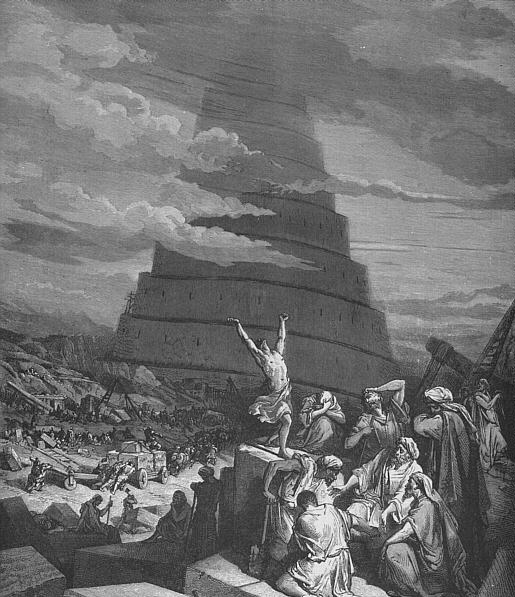
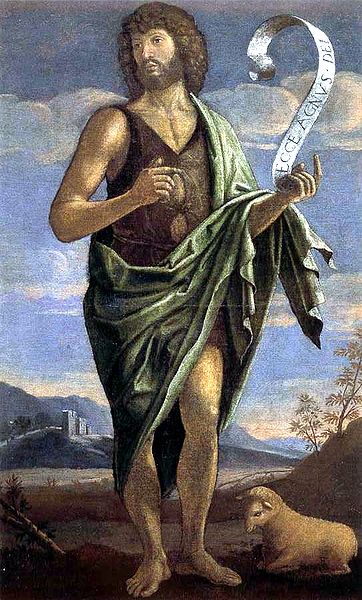
Do you want to start an argument? Mention hijab in a Christian environment. Some tempers will likely flair. The idea that a patriarchal religion would tell women to cover themselves suggests something sinister, doesn’t it? The other day I came across headcoveringmovement.com. There are, as I have come to know, many Christian groups that consider Paul’s directive for women’s headwear as, well, gospel. Commentators still spar about why Paul insisted that women cover their heads in worship. Adding “for the sake of angels” only evokes more convoluted imaginations. As any stroll through Manhattan will reveal, many Jewish men also observe head covering. What is it with bare heads, gods, and angels?

No doubt, in cultures where men are expected to restrain themselves less than women, hair can sometimes be seen as sexually provocative. (I’m not excusing, just observing.) Most men will eventually experience nature’s tonsure in some form or another, and perhaps this knowledge makes feminine hair more alluring. None of this, however, answers the question. What is so hubristic about uncovered heads? I’m not authorized to speak about fashion, but I feel confident in asserting that in many periods of human history, hats were the norm. Look at old portraits. What did Martin Luther or John Calvin look like without their ubiquitous hats? Did they serve to cover bad theological hair days? Or was it just the climate? Distinctive hats have been used to identify social classes and professions. We still use the expression “putting on my [chose a noun] hat.” So what’s all this with head covering for women?

“The wearing of fabric head coverings in worship was universally the practice of Christian women until the twentieth century. What happened? Did we suddenly find some biblical truth to which the saints for thousands of years were blind? Or were our biblical views of women gradually eroded by the modern feminist movement that has infiltrated the Church…? – R.C. Sproul.” So states Headcovering Movement’s homepage at the date of this writing. There can be little doubt about what’s behind this scheme. I recall a phase when my mother wore headscarves to church. Many years later, even in high church Episcopalian settings I’ve seen women walk in with what looked like lace doilies on their heads. Is there an agenda here? I can’t speak for Muslims, but it seems that Sproul believes the rightful place for a woman is beneath a man. Theology in the service of chauvinism. Just try to read 1 Corinthians 11 and come out without a headache. The saint’s logic here is so confused that I want to pull my hat over my eyes. Or I would, if I wore a hat.

Photo credit: Themightyquill, Wikimedia Commons

Photo credit: Themightyquill, Wikimedia Commons


God Discount

God is great, despite what Christopher Hitchens wrote, at least, that is, if you want to save 15% without having to talk to a gecko. According to Mulder’s World—I want to believe that what I find on this site is true, but often I find myself feeling more like Scully—Mary’ Gourmet diner in Winston-Salem, North Carolina gives a grace discount. Well, perhaps this is believable. Praying in public has a long pedigree. This past Corpus Christi as I was driving back into town after a day out, I saw a procession walking down the street a few blocks from the local Catholic Church. Vested and carrying a monstrance with a humeral veil, the priest led the faithful out in public for a little recognized festival many suppose to be named after a city in Texas. Actually, I was an acolyte for Corpus Christi one year at the Church of the Advent in Boston. The well-heeled of Beacon Hill, however, knew to expect us out on the genteel streets. Private prayer in public, however, is something quite different.

As a very religious teen, I often went to United Methodist Youth events with the other faithful young. We would stop into restaurants on our long drives and make a show of praying amid the heathen. Some of us (not me, I assure you) even left Chick tracts instead of tips. If we’d ever ventured into Dixie, we might have had a discount. The problem with offering a praying in public discount is that it is impossible to tell if such shows are sincere. I have sat through many such episodes, wondering about Jesus’ statement “But thou, when thou prayest, enter into thy closet, and when thou hast shut thy door, pray to thy Father which is in secret; and thy Father which seeth in secret shall reward thee openly.” Well, that was only the Sermon on the Mount. Here we’re talking fifteen percent! “For where your treasure is, there will your heart be also.” This gecko winks.

IMG_1502Public displays of piety are not uncommon. I spent yesterday at the local County 4-H Fair on a rare day off of work. The Gideons, as always, were there handing out New Testaments. Let your light so shine—they are bright orange. Religious freedom ensures that prayer in public is kosher, as is agnosticism in public. Who is harmed by a public prayer? In that diner, who is made uncomfortable? Sometimes the innocuous act of kindness is a sign of mature morality. How many times—isn’t it nearly always?—does that car cutting you off in traffic have a Jesus fish plastered to the back? “I drive my car,” Daniel Amos sings, “it is a witness.” What you truly believe shows up when you’re behind the wheel more than when you’re behind the napkin. The truth may be out there after all. In the meanwhile, my tip’s on the table.


Flying Sorcery

In a post on the Huffington Post recently Michael Zimmerman, founder of the Clergy Letter Project, wrote about the strange antipathy of Ken Ham to the search for extraterrestrial life. Ham, founder of a creationist museum and self-appointed spokesman against evolution, has gone on the record saying that aliens cause problems for a creationist worldview. Therefore they can’t exist. Indeed, creationists should reject aliens because of the flat earth the Bible presents. Zimmerman, with his usual unfailing reason and wry humor, demonstrates the multiple difficulties both with Ham’s understanding of science and of the whole alien agenda. The Bible doesn’t address the modern world on many fronts, which is why literalists so often find themselves out of step with the issues of the day. When the final period (an anachronism, I know) was placed at the end of Revelation, it was expected that the world wouldn’t be around much longer, tottering as it was on the underground pillars that held it up. Somehow the Roman Empire came and went without any kind of cataclysm ending it all, and literalists have been backing and filling ever since.

Ham’s angst about extraterrestrials, however, is not shared by all Fundamentalists. I recall going to a session way out at a country church as a child where the guest speaker, a firm believer in aliens, talked about the “sheep in other folds” referred to by Jesus as aliens. I recall the eerie feeling as we drove home under a dark sky with fliers depicting flying saucers and assurances that we were not alone. In college, when I discovered Larry Norman’s music, I was struck by his lyric “If there’s life on other planets, then I’m sure He must know, and He’s been there once already, and has died to save their souls.” Literalists, like Catholics, take multiple views on the question. It seems a terrible waste of space if, in this infinite universe we’re the only sparks of consciousness around. I’ll leave “intelligence” for time to decide.

What would Genesis do?

What would Genesis do?

Ironically, Ken Ham doesn’t seem to have considered the up side of aliens, at least for his point of view. If the extraterrestrials end up looking like us, that does raise some serious questions about evolution. How did it work identically on two different planets to produce such similar results? You’d think maybe Fundamentalists might welcome aliens with open appendages. Of course, some have gone far off the other end and declared that angels and aliens are the same thing. The problem of the literalist world view is that it is severely limited. The Bible never foresaw the internet or the airplane or even the true nature of our own solar system, let alone the infinite sea of space beyond. In charting a course for belief, accurate maps are necessary. As Zimmerman points out, those maps, of necessity must contain the stars. And as we continue to evolve infinite worlds of possibilities await.


Sign of Jonas

A century ago today, the world erupted in war. Those who engaged in World War One are pretty much all gone now, but the war to end all wars has left its scars across the globe. We showed ourselves we could do it. We could drag, through our accumulated frustrations, just about every nation into open conflict. The costs were astronomical, but we didn’t learn a thing. Just a couple decades later we were back at it. Nations taking provocative stabs at other people. Keep on poking and people, being what they are, will eventually hit back. So on this anniversary of the start of the First World War (awaiting a sequel, perhaps from the start), I’m reading about the extremists in Iraq destroying Jonah’s tomb. Poke. Poke. Well, it is more a loss to fellow Muslims than it is to those who take the Bible seriously. Jonah is a nice story of a prophet (rather blithely retold in the Washington Post) who probably never existed. If there was a Jonah he wasn’t fish food, that we know for sure. The tomb of Jonah is like that of an unknown prophet. The symbol’s the thing.

In the story in the Washington Post, Justin Moyer laments that “anything in the Bible” might be destroyed in these circumstances. I wonder how you can destroy something that never happened. Doing so, in any case, is liable to start a war. It really doesn’t take that much. The last century has taught us little. Don’t get me wrong—I’m not in favor of destroying ancient landmarks or parts of a region’s history. But if we misattribute its importance to something sacred, or biblical, it will be far too simple to start a row. You see, Jonah converted Nineveh, according to the Bible. The Assyrians became good Yahwists, despite the historical record. Those who destroyed his tomb likely had conversion on their minds as well.

As these thoughts were taking form in my head, I happened upon the page of GETS Theological Seminary, which, as far as I can tell, is in China. On the banner across its homepage was a picture of its mission field. Is that the United States? Of course, if you read the description you’ll see that the world, in toto, is the mission field they intend. Still, it is a little bit of a shock to see yourself counted among the heathen. I’m sure, had Jonah really existed, that the Assyrians would have been just as shocked. They were as moral as any other militaristic society. And today my thoughts are on militaristic societies. The First World War definitively changed everything from that fatal moment it began, a century ago today. It was the first, but not the last, loss of humanity’s innocence. We would invent newer and crueler ways to kill each other in greater numbers. Blood would become the true currency of the last hundred years. Maybe we should keep a weather-eye out for a fish-swallowed prophet after all. The world could perhaps stand a bit of conversion.

f11w


Fear of the Known

Social media has become the new reality. Not that rumor ever had much trouble before the internet, but now our cultural memes explode so fast that we have to be wired constantly to keep up. And what we see makes us afraid. The other day I came across a story on channel 7 WSPA website out of Spartanburg, South Carolina. I don’t suppose I have any business needing to know what was going on in South Carolina, but the headline “Mysterious ‘woman in black’ spotted in Tennessee” got my spidey sense going (or my Men in Black sense, but that’s just a bit cumbersome). Was this a female urban legend who shows up after UFO reports and warns the witnesses to keep quiet? The truth is much more mundane. She’s a woman, dressed in black, walking south from Virginia, currently in Tennessee. Police say she has a name and she’s from Alabama. Since she’s all over social media, however, people are worried.

She’s on a Bible mission one woman has claimed. A Blues sister in black? Others claim she’s from an Islamic nation. Some implicate the Pentagon. When someone exhibits unusual behavior our minds turn to religious causes. Why would a person dress in black and walk down the highway? It’s just not done! Must be religion. On YouTube apparently a video shows her arguing about religion with a man in a Wal-Mart parking lot. Where’s the element of surprise there? If there are any firmly fixed social markers they are surely Wal-Mart and religion. Time to be afraid.

Scarcely a day passes when I’m in New York that I don’t see someone doing something peculiar. It’s the new normal. I suppose religion is sometimes the motivation, but I wouldn’t know. The gospel can be pretty difficult to identify definitively these days. You can’t trust someone just because they dress in black any more. After all, we’ve seen agents K and J battling aliens on the big screen since 1997 and there doesn’t seem to be much preaching involved. There is conversion, however, and just a dash of conspiracy theory. That’s more like American-style speculation. Internet fame is remarkably easy for some. Put on your black and walk down the road. And if you see Johnny Cash along the way, there will be no doubt that this is newsworthy indeed.

Bible-thumper or alien?

Bible-thumper or alien?


Dead See Scrolls

Despite her ability to overlook my obvious deficiencies, my wife has good eyesight. Last week she spotted an article carried by the Associated Press entitled “Dispute over ancient scrolls changes modern law.” Although many ancient documents (notably those from Ugarit) outweigh the importance of the Dead Sea Scrolls for understanding the religion of ancient Israel, the Scrolls have continued to be headliners. There never seems to be some sort of scandal very far from the Scrolls, and this article by Jennifer Pletz reaffirms that assessment. The name of Norman Golb is familiar to just about any Hebrew Bible scholar. His work on the Scrolls is highly regarded. The story, however, brings the scandal down a generation to Golb’s son Raphael, a lawyer and literature scholar. In a case whose details rival the minutiae of the Scrolls themselves, the younger Golb is accused of sending emails putatively said to have been sent from his father’s rivals confessing plagiarism. To what point, beyond alleged family honor, one hesitates to speculate.

Dead_Sea_Scrolls_Before_Unraveled

“Sculduggery,” J. C. L. Gibson once said, “is always just around the corner in archaeological circles.” The same might be said to apply to the Scrolls. Episode after episode of scholars behaving badly have attended the controversial documents since their accidental discovery on the eve of Israel becoming a state. Ironically, the Scrolls in some symbolic ways represent the struggles of the Israelis. No one doubts their importance, but access has always been an issue. Careers were made and secured by the Scrolls, reaching to the highest academic offices in the land. And yet, we can learn more by turning back the pages of history just a little further.

The Scrolls date from that troubled time period when Christianity was just beginning to emerge from Judaism. Tempers flare at implications masked or insinuated. As if the Scrolls were really the much sought philosopher’s stone. The original generation of Scroll readers is going the way of all nature. Those associated with the more solid tablets of Ugarit have long passed that way already. And yet we still have Bible museums being built and implications left dangling. Law suits are filed and ownership of the Scrolls is disputed. In the twenty-first century scholars are still willing to risk it all on some parchment fragments that have the appeal of the esoteric. Hidden truths, almost apocalyptic, squirreled away in desert caves. Knowledge is indeed money, unless, of course, you actually know how to read the Scrolls for yourself.


Unity in Diversity

UnitariansUniversalistsIn the Simpsons episode “Bart’s Girlfriend,” Jessica Lovejoy steals all the church’s money from the collection plate, leading Mrs. Lovejoy to call out, “Everyone turn around and look at this!” Grampa Simpson whips around saying, “What is it? A Unitarian?” And so the jokes go, back even to my seminary years. The Unitarians, however, are among the most intellectually honest of religions. I recently read David Robinson’s The Unitarians and the Universalists. Although the traditions approached their 1961 union from different angles, they had a common origin: concern over the Calvinism of colonial and early post-colonial New England. The majority religion of the northeast, various forms of Calvinism taught of utter depravity, human helplessness, and, that absolute affront to human intellect now being posited by some materialists: predestination (determinism, in secular terms). The Universalists couldn’t accept that a loving God would make anyone suffer forever. The Unitarians had trouble with several aspects of the theology, not the least of which was the Trinity (as a non-biblical concept). Early Unitarians based their beliefs on the Bible, which, as it turns out, does not support several Calvinistic concepts.

Like all religions, Unitarianism evolved over time. Eventually the unity of God became only one among many possibilities of what one might believe. In fact, doctrine was less important than ethics. It was a true Enlightenment religion. It allowed for the Transcendentalist movement that we all learned about in school, with Emerson wandering in the woods, and Thoreau never wanting to move out of them. They also had room for those who studied the Bible but expressed concerned that Jesus doesn’t really say that he’s God, although obviously some people interpreted it as if he had. Regardless of belief, meeting together was necessary, and eventually the Unitarian Universalist Association came to represent a widely liberal form of religion with Christian roots but rational sensibilities.

Among the marks of distinction of these groups is that, among Protestant denominations, they were among the first, if not the first, to ordain women. When you are less beholden to wooden tradition, all kinds of possibilities emerge. This book was kind of an epiphany for me. I’d been channeled into thinking that “orthodox” necessarily equalled “the good guys,” despite the treatment that I’ve repeatedly received at their hands. It sometimes takes a Gestalt phenomenon to see orthodoxy as not necessarily good. Perhaps the effort to preserve a tradition outdated by a couple of millennia costs far more than it saves. Perhaps we need to become more human, not less. I may not walk the forest with Emerson—he preferred to be alone anyway, from what I understand—but I’ll not be so quick to assume that tunnel vision is true vision either. Not in a world where the Simpsons can teach us as much as The Institutes.


Lobby Hobby

I can recall a time when hobbies seemed less than threatening. Indeed, the idea was to relax, not to lobby. My hobbies—collecting just about anything you could get without money—didn’t involve going to a store. Stamps (because everybody used them back then), coins (ditto), fossils from the local river bank, bottle caps that we collected while Mom was doing the wash at the laundromat, all kinds of handouts from society’s detritus made for many hours’ entertainment. I also collected Bibles. That was when I was old enough to earn some money and spend it on books. And I read those Bibles until I’d run out of versions, then I’d start over again. Now my hobby has come back to haunt me.

According to the New York Times, the Hobby Lobby family is planning to build a Bible Museum in Washington, DC, prompting fears of evangelization. Right there in the nation’s capital, not far from the Mall, a museum showing the importance of the Bible would indeed send a message. But is it really a threat? We live under the judicial decisions of a Supreme Court weighted towards the literal already. It might not hurt to have a museum dedicated to finding out what’s going through our justices’ minds. Clearly it’s not women’s rights. If we wander those proposed halls, we might see that museums are indeed dedicated to outdated stuff that has some importance. Rare are the contemporary museums that show right where we are at the moment. Rarer still, those that show the future that remains undecided. In many senses, Washington is already a museum.

The secular world seems to fear the Bible. It is, however, not going to go away. Although I left literalism decades ago, I’m still pleasantly surprised how much the Bible has to offer by way of insight into human nature and contemplation. You might even find some workable ethics if you can get away from the non-issues of birth control, stem cells, or same-sex marriage. The Bible doesn’t need to be a threatening book. In the wrong hands, it may at times seem like The Book of Eli had its eyes right on the target, but those who would use the Bible to harm others are those who read without understanding the words. No, I don’t think the Green family’s plans for such a museum are innocent. Neither can I believe that hobbies are a $3 billion industry. Reading books and picking up other people’s cast-offs may be the only hobbies you need.

Engraven images?

Engraven images?


Stratego

lossy-page1-428px-CLiff_being_undermined_by_the_Virgin_River._West_wall_of_Canyon_above_Temple_of_Sinawava._-_NARA_-_520458The idea is a simple one. When someone undermines, the very foundation of an idea is left with no foundation. We are taught not to undermine ourselves; for enemies it’s okay. Encouraged even. The Bible contains the seeds to its own undermining. The claim that it is a sacred book encourages—even demands—serious attention be paid to it. When it is examined closely, however, it becomes plain that the status accorded it as a book undermines its own claims. Believers can respond in several ways. One is to declare the Bible inerrant and to claim that contradictions are not contradictions and that what history has proven false is actually true. The keenest breed of such inerrantists hardly exists any more, since it does require a stable, geocentric view of the universe, if a universe there be at all. On the other extreme there are believers who make sacred writ so highly symbolic that we need not worry about the obvious factual errors—they were never meant literally anyway. And, of course, every position in between.

The Bible is not a unified composition. This was evident to the person, whoever it was, who first joined the Prophets to the Torah. Or even Genesis to Exodus. We have no way of knowing if s/he (mostly likely the latter) really believed that Moses wrote all the stories from the creation of the world through his own death, but the books of the Pentateuch roughly hang together in an extended narrative with plenty of instruction along the way. The “Bible” that Jesus knew had considerably fewer books than our “Old Testament.” And one gets the sense that Paul’s letters were tacked on in a catch-as-catch-can fashion, with everyone knowing (as the letters themselves say) that material is missing. And what Paul authoritatively wrote to the people of Galatia may not have been the same advice he sent to the Corinthians. Tides and times. Bibles and believers.

When scholars began, out of deep devotion, to look closely at the Bible the cracks in this historical facade began to fracture. Once the breach is in the dike, one dare ignore it only at great peril. The first shaft had been dug. By the time of Julius Wellhausen, the undermining was already engineered and well underway. And it couldn’t be stopped. Biblical scholars had choices to make: ignore the evidence and continue to sing the Lord’s song in a strange land, or climb out of that tunnel before it caves in. And the church, unsuspecting of what it means, insisted on an educated clergy. Serious study of the Bible shows what many believers wish it didn’t. And yet we continue to make claims based on evidence that is faulty. Just as long as these supporting pillars hold up we have nothing to worry about. And the undermining continues daily, lest we all find ourselves in the breadline.


High Road

“You take the high road and I’ll take the low road,” starts the chorus of that overused, unofficial national anthem of Scotland. The low road, while offering less spectacular views, is quicker and more practical. At least that’s how it seems to this erstwhile expatriate who spent three bonnie years in that land. Still, we all know the appeal of taking the high ground. In studies of morality, high moral standards are better than low. High income is sought after over low. We are encouraged ever to reach higher, shooting our probes out to the very stars. Who wants to admit to being low? There’s more than a hint of this condescension in the terminology I’ve lately been noticing when it comes to the Bible. Instead of saying that an author of a book is Conservative, it is now common code to claim that s/he has “a high view of scripture.” I guess the rest of us have a low view.

Despite the increasing secularity of culture, there are still many, many books being written about the Bible. In fact, the standard industry rag, Publisher’s Weekly, routinely carries story after story about religion publishing, much of it biblical. But readers want to feel safe when approaching the Bible. New ideas can be dangerous and challenging. So we want to know the perspective of the writer before we crack open the cover. Those who believe, within a reasonable degree, that the historical tales of the Bible are factual have a high view. When the four stories of Jesus contradict one another they can be harmonized. That’s the high view. Saying that the world was created in one day, as Genesis 2 asserts, is tending toward a low view, literal though it may be. After all, didn’t we just read in the previous chapter that it was six days? One can become six with a high enough view. Just stand on your tippy-toes.

A high view

A high view

Now the cynical side of me wants to believe that this coding of the high view of Scripture is willful misrepresentation. The stratospheric viewers may not actually say that the industry standard has a low view—not exactly—but miracles are easier to see from the mountain top. If you want to know who to trust, you rely on those with a high view. In this world the sun can stand still and giants can grow to be nine feet tall. It is a high view indeed. While no one knows the original meaning of the lyrics to “Loch Lomond,” many associate it with the Jacobite rebellions of the eighteenth century. The lyricist may be referring to the heads of the executed exhibited on pikes along the high road from London to Edinburgh while their dispossessed relatives walked on the low road. Neither group devalues its native land where some hope to return and others died trying. So feel free to take the beheaded high road while I take the low, because we’ll all end up at Loch Lomond in the end.


Order of Melchizedek

WhyPriests?A considered reflection from a long-time believer is a force never to be taken lightly. Garry Wills is a lifelong Catholic and an intellectual. His book, Why Priests? A Failed Tradition, was recommended to me by a friend and it is indeed a book that raises most profound questions. To someone born Protestant, such as the current writer, many of the arguments Wills marshals are strangely familiar. Many were lobbed in Fundamentalist harangues where clergy that believe in a literal six-day creation proved surprisingly adroit at finding the chinks in Catholic armor. The New Testament says nothing about the Christian movement having its own priests. And even the explicit command that seems to have come from Jesus—call no man father—is immediately reversed once priests become a fixture in a priestless faith. Wills explores the origins of these practices not to tear apart the religion of which he remains a loyal part, but to suggest that religious tolerance is the only proper solution. It is amazing how much of Catholic thought goes back to the disputed book of Hebrews with its mysterious Melchizedek.

While I have never been a Catholic, I have always been haunted by the idea that my religion was some kind of innovation. After all, the stakes were beyond stratospheric. If you pick the wrong one, at least according to what I was taught, Hell awaits at the end of the day. Then I discovered that my own Fundamentalism also had a history. We were called Protestants because we protested Catholicism. As I moved into the Methodist tradition, at least there seemed to be a continuity—John Wesley was an Anglican and Anglicans were really kind of English Catholics. Or so it seemed. Naturally, I became an Episcopalian since going Roman seemed like it came with exceptional amounts of accretions that were clearly not biblical. Such accretions are much of what Wills explores. Traditions that become doctrine. And exclusive. Those on the outside can hope for Purgatory at best, and the very Hell I was trying to avoid remained a distinct possibility. Who was right?

Religions suffer with time. The faith that Jesus seems to have proclaimed had already altered by the time Paul put pen to parchment. Ask any Gnostic. Already, within just three decades, the question became “now what did he say again?” And what exactly did he mean? The core of that message seemed to be love above all else, but that doesn’t make for sexy doctrine. Exclusivity achieves what love could never accomplish. Wills explores how sacraments evolved, and how Scripture became a sword dividing believer from believer. His most sensible solution? Its time to get beyond priests. He doesn’t actually suggest doing away with them, but asks Catholics why they don’t consider closely the implications of their roots. Melchizedek takes on a stature greater than anyone seems to have imagined for an imaginary figure. And a lifelong believer here asks the most basic of questions: what is Christianity truly about?


Kingdom Come

Bible in HistoryPopular media tells us the Bible is irrelevant. As someone who has struggled for years to find a non-sacerdotal job in that area of specialization, it’s not difficult to believe popular media is right. Despite all the rationales on all the religion department websites out there, there is little that you can do with your degree. It was refreshing, therefore, to read The Bible in History: How the Texts Have Shaped the Times, by David W. Kling. While not exactly what I expected it to be, Kling’s book did explore several specific pericopes (pericopae sounds too pretentious) with an eye toward showing how a single verse from the Bible could change western history. The examples go from the early monastic movement up to debates about women’s ordination that are, unbelievably, still on-going. The social movements he traces demonstrate that the Bible has been, and continues to be, more than just a book.

At several points through this volume I stopped to consider the implications. From an outsider’s point of view many of these debates must seem almost infantile. They would have no teeth at all if not for the belief that the salvation of humanity rode on their correct interpretation. Often—too often—the results were the torture and oppression of others, for the sake of the Gospel. If we’ve got this right, then we need to prove it through might. A mighty fortress is our God. So the Psalms seem to say.

Few people stop to consider just how deeply engrained in our culture the Bible is. The idea, on the surface, is almost like a fairy tale: once upon a time, God said… And yet, some of the most intelligent people the world has known have staked their very reputations on this claim. As a postscript to Kling, we can still see the Bible’s influence on politics—and therefore society—over a decade later. We still debate whether homosexuals can legally love one another. The biblical basis of this debate is thin, but it is a bulwark even today. We argue about stem cells, and although from the biblical worldview such things are mythical; yet that same Bible gives people the material with which to argue, eh, Jeremiah? And where is that female president we should’ve elected long ago? Any ideas, Paul? No matter how we may discount it, the Bible is, and will continue to be, a most influential book. Too bad we as a society don’t care to learn about it from specialists. Not when it’s so irrelevant.


War in Heaven

Van_Helsing_poster

Van Helsing, about which I’ve posted before, is not a great film, but it is perhaps the closest that modern cinema has to offer for my childhood Saturday afternoon viewing. Vampires, werewolves, and Frankenstein’s monster all appear together in a ménage à trois that Universal would’ve been proud to own in the 1960s. With lines cribbed from some of the Universal originals, plus some less believable chatter from Steven Sommers, the campy film is unrelentingly in dialogue with religion and its monsters. Indeed, the plot revolves around the church’s plan to save humanity from monsters by the employment of the eponymous van Helsing. I’ve probably seen the movie half a dozen times, and I’m a bit embarrassed to admit the this is the first time I’ve stopped to wonder at why, unlike Bram Stoker’s van Helsing, the one in the movie is named “Gabriel.”

It should’ve been obvious at the first viewing, but this time I was watching the movie with the intention of parsing its theology. In medieval Roman Catholic angelology, there are seven archangels. Two of them (or three, depending on whose Bible you are reading) are named in Holy Writ. Gabriel is, of course, one of them. The movie also shifts Dracula from being son of a Wallachian nobleman to being the “son of the Devil” (clearly by adoption). The Devil’s gift of resurrection (with which the movie is rife) comes with the vampiristic curse. And the climax of the film has the leader of God’s army (“the left hand of God”), Gabriel, battling the son of Satan. This is none other than the war in Heaven of which the Bible speaks. The leader of the archangelic army is actually Michael, but having “Mike van Helsing” as your lead just doesn’t carry the gravitas of Gabriel.

The movie opens with Dracula claiming that science has triumphed over God, and yet the mythology of monsters prevails. Frankenstein’s creation is morally pure, being a loving child of science, and the church declares him anathema. Throughout the movie all the monsters claim to want is to live, to survive. In fact, they are already resurrected. The werewolves get the dog’s share of the theology, however. They are infected or cursed rather than reborn. The war in Heaven has come to earth as angels and demons battle for supremacy. In the end, it is the human family chosen by God that goes extinct. I’m not sure all the theology adds up at the end of the film, but again, that is the very nature of mythology. And a film that can bring back a careless Saturday afternoon really doesn’t need to make sense at all.


Psalm 151b

sinead-oconnor-take-me-to-churchI can’t claim to know much about Sinéad O’Connor. When she did her Saturday Night Live act a few years back, I remember the outrage among several Nashotah House students muttering unholy threats. Not that they were Catholic, having *ahem* celibacy issues, but they objected to a picture of Pope John Paul II, known colloquially as “J2P2,” being torn up. This symbolic gesture lost her, on campus anyway, about a dozen fans. I had nearly forgotten the Irish bardess when my wife sent me an NPR story on her recent song, “Take Me to Church.” I was immediately struck by the lyrics that, to this old Psalter reader, sounded very much like a Psalm. The lyrics, while some will certainly disagree, resonant very strongly with the self-confession that permeates the hymnal of ancient Israel. Not that O’Connor has suddenly become a proper Catholic, but she has entered the band of David.

Many popular artists over the years, I would contend, have struck that familiar chord. Anyone who reads the Psalms at face value will find it hard to miss the angst of the writer who tries to do right only to find that s/he needs someone to “take them to church.” Music is the confessional of the soul. Psalms can be a most secular book. The way some biblical scholars like to explain it is that the Torah and the prophets are God speaking to (read “commanding”) people, and Psalms are the opportunity of people to speak their mind to the divine. This might explain the otherwise inexcusable anger that pours out in invective which, if we’re honest, we’ll have to admit to having felt from time to time.

The line we draw sharply between sacred and secular is attenuated in the Psalms. In fact, it is in any honest religion. When religions present themselves as strictly lived as if people could be truly righteous while others should be excluded, trouble is on the horizon. Pictures get torn up, and the “faithful” grow angry. I know few who would argue that humans are perfect just the way we are, yet, for the most part, we try to do what is right. The standards any religion proffers are too high, and we are bound to fail. Perhaps the saving grace, if I may borrow a bit of religious language, is that even the secular can write effective psalms along the way.


Missing Apocalypses

Sharknados aside, we seem to be in a lull of apocalypses at the moment. In the run-up to the change of the millennium and 2012, we perhaps had our fill of dire predictions of the end of all things. Funny how the fears seem to run so high when the Grand Old Party is telling us what to believe. When we settle down and try to wrestle with real-world issues with real-world ideals, the need for watching it all burn seems to settle down in the back seat and let the adults drive for a while.

IMG_1309

I recently came across The End Times Bible (now out of print). Published in 1999, this Bible had a not-so-subtle message that the end of all things was nigh. As it had been before, and, knowing human nature, will be many more times again. I imagine myself, in a Left Behind fantasy, watching a neophyte trying to make it in the post-apocalyptic world with a Bible. References to the end times are rare in Holy Writ, and dreadfully obscure. Reading Tim LaHaye or Hal Lindsey you might think the Bible has step-by-step directions for negotiating the wrath that is to come. As if the Bible were a recipe book and you wanted chocolate-chip cookies. Ironically the world is full—over-full in point of fact—of people with advanced degrees in Bible who’ve spent years and years of their lives learning to uncover the minutest hints that the Bible gives. Most of these folks are unemployed and wouldn’t mind sharing a bit of that simplistic apocalyptic pie baked up by the premillennialists. And yet, the world goes on.

Even as I was researching The End Times Bible, however, I began seeing references to the next apocalypse. Some are hopefully suggesting 2019, since, apparently, God likes round numbers. The reprieve we’ve been feeling, I have no doubts, is only temporary. In the course of human events we will have alarmists elected to high offices and once again panic will begin to build. The Maya let us down, and Howard Camping up and died. No worries—there are other arcane civilizations and the world knows no shortage of prophets in button-down shirts. Still, I’ve kind of enjoyed this little vacation without having to hush the irrational fears that God’s non-biological clock is inexorably ticking.

The biblical world is a simple one, in its own way. Created in six days just a few thousand years ago, it topples off its pillars and ends in a fiery demise in some millennial scenario, if only it can keep its own story straight. And like any good story, children will come back to it time and again.