Of Cuckoos and Kings

One_Flew_Over_the_Cuckoo's_Nest_poster

Having a life-long phobia of mental institutions, I shy away from situations that refuse to make sense. Some have attributed this to my having had an alcoholic father and responding with an über-rational expectation of analyzing how other people would likely act. Whatever its cause, the fear is real. So thirty years ago, when I watched One Flew over the Cuckoo’s Nest, I assumed it would be the last time. It was a relatively recent movie at the time, and it was required viewing for one of my college courses. With my phobia I really couldn’t get beyond the heebie-jeebies to consider what was going on beneath the surface, which is to say, most of the movie. Well, a few decades will cure many ills and I sat down to watch the movie again and my own experiences of asylum-like, heartless institutions in the intervening years had indeed hardened me a bit. I noticed much that I’d missed the first time around. For one thing the story of King David kept coming to mind.

For those who read the Bible somewhat objectively, David is a player, and not always the most admirable character. He has a subtle charm that wins the reader of the books of Samuel back time and again. He steps into a situation where his ambition is held back by a kind of Nurse Ratched named King Saul. So what does David do? He pretends to be insane and runs off to join the Philistines. He gathers a band of miscreants about him and goes to towns taking what isn’t his. He even brings a forbidden woman into his house. As R. P. McMurphy goes through these same shenanigans, he comes to really love young Billy (Saul’s son Jonathan). In the course of the movie our ersatz David takes a suffering nation and heals it. There, however, the parallels end and Ken Kesey’s story takes over.

Of course, I’m not suggesting that Kesey intentionally drew on the story of David—that would be crazy talk—but I do often wonder about the aphorism attributed to his son Solomon that there is nothing new under the sun. There were those who felt that Solomon had lost touch with reality as he sat down to write Ecclesiastes. The great stories, in some sense, have already been told. But not all. Those of us who write seek new truths, and sometimes use ancient sources to do it. David is remembered as one of the great biblical characters. One of the reasons, undoubtedly, is that he is so fallibly human—he’s not impossibly pious like Moses, or unfailingly sad like Jeremiah. He is a good man with peccadilloes for which we are willing to forgive him just for the pleasure of watching him go on. No, Kesey may not have had the Bible in his hand as he dreamed up the character of R. P. McMurphy, but he produced a true representation nevertheless. Of course, I might just be insane myself.


Religious Education

The elephant in the room is exposed in a New York Times op-ed piece last week. “Indoctrinating Religious Warriors,” by Charles M. Blow, puts a finger squarely on the pulse of the ailing science stance of American religious believers. Noting that the Republican party has made no secret of its attempt to capture conservative votes by touting the religious intolerance of the theological right, Blow points out that more Republicans now believe that humans were created separately from animals than accept the scientific fact of evolution. And not just human origins suffer—our future will as well. The same mentality attends denial of global warming and advocating against fair treatment of committed, loving couples (depending solely on the visible sexual equipment). It is all of a piece. Blow points out that white, evangelical Protestants make up only 18 percent of the US population, but 43 percent of the Republicans who are classified as staunchly conservative. This imbalance leads to one of the world’s wealthiest nations being sidetracked from serious global issues while we continue to debate whether the Bible in inerrant or not.

I would add a further note of concern to what Blow says: higher education refuses to take religion seriously. As a life-long sideliner who has never been permitted fully into the halls of academe, I have watched as business schools have grown from the rubble of religion departments that have at best stagnated—when they have not been actively dismantled. In the worst case scenarios, universities have closed such departments down. With the exception of evangelical institutions. Very large departments of confessionally indoctrinated religionists thrive across the country. I am not the only religion scholar to have been kicked out of the academy for an intellectually honest approach. The wider society, with eyes wide shut, has decided that religion is a passing fancy while statistics indicate the exact opposite. We as a society will continue to be manipulated by religions as long as we continue to pretend they don’t pose a real concern.

Religion serves a purpose.

Religion serves a purpose.

Nor does castigating all religion, as Richard Dawkins, Sam Harris, and the late Christopher Hitchens do/did, solve any problems. Science itself appears to indicate that religion is part of the human condition, as surely a product of evolution as our opposable thumbs. Basic psychology would dictate that such direct challenges to religion will only result in retaliation. In fact, this is something that I recall learning from kindergarten. Until our society learns to go back to school and study the four R’s—yes, religion has to be there among the basics—we will continue to suffer from those who have vested interest in using religion for their own ends while those who could educate us on the subject continue to suffer the cut jobs of those who might be part of the solution. Charles Blow wonders if he is being too cynical. I suggest that he’s not nearly cynical enough.


Utterly Ineffable

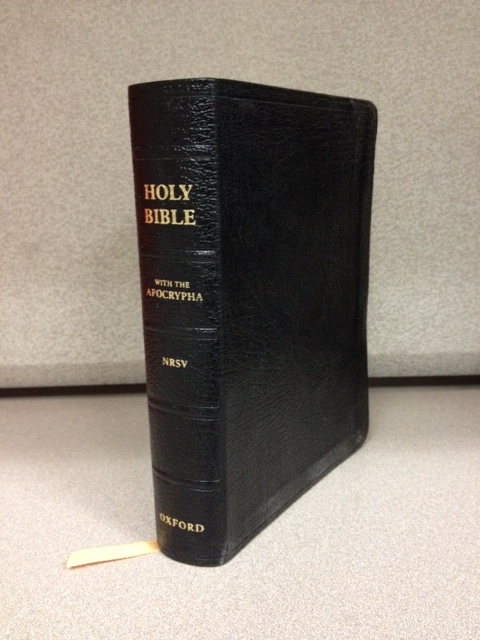
Sitting in an office full of Bibles, I feel well equipped for an apocalypse. At times, however, the irony of editing Bibles is almost overwhelming. Standard publishing contract boilerplate includes the assurance that the work of the author contains nothing “blasphemous.” I once had an author object to this language since just about anything said about religion or the Bible could be considered blasphemous in the right circumstances. In these days when Tea and other parties promote a literalistic reading of Scripture and some of its antiquated perceptions of humanity, I realize that the problem is the strange theological tenet known as “inerrancy.”

IMG_1163

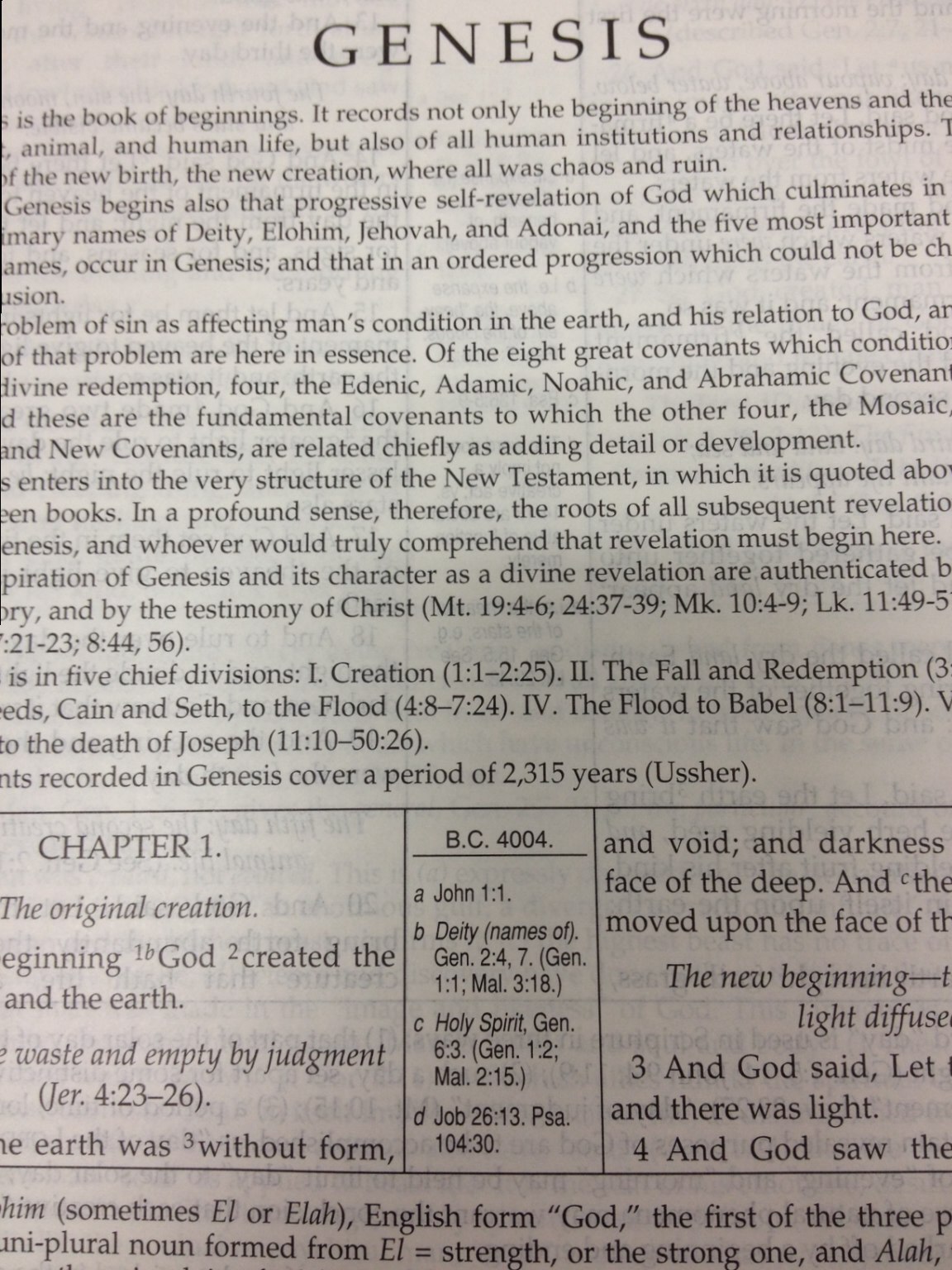
The idea of inerrancy is that the Bible is without error of any kind, itself an errant assumption. Those who hold it do not fully appreciate that we have no original biblical manuscripts at all. The Bibles we read and swear on today are translations of copies of copies of copies in a long regression back to missing originals. Those translated copies have to be typeset and printed, and errors creep in at every stage, as is clear from a glimpse of the manuscript trail as well as many famous misprinted Bibles. Even when the inerrantists are pushed back to the original languages, the problem of not having the autograph remains an unsurmountable barricade to the mind of God. Bibles, like any other books, are subject to human error at each step of the publishing process. On my desk sit contracts where the editor of a Bible swears nothing blasphemous exists in the words. Such contract signers are braver than this tremulous hand.

Once I sent a hastily drafted contributor agreement to a Jewish author with the divine name accidentally misspelled. Within literal minutes of hitting the send button, my phone rang. The contributor was civil but reproving. Did I expect a Jewish man to sign off on a document with the ineffable name misspelled? I apologized but otherwise held my tongue. I had inadvertently blasphemed, perhaps, in my need to get too much done in a day. Now I am editing Bibles. One contributor to a study Bible told me his student evaluations state, “he wrote the effing Bible!” Effing? Ineffable? Inerrant? I’m not sure I have the nerves to handle this kind of pressure. Then there is that box full of leather Bible-binding samples under my desk. Bible-binders sure know their leather. Don’t tell me my thoughts have gone astray yet again.

IMG_1131


Sail Away With Me

Fascination with Noah’s ark is never-ending. It represents the salvation of life in the face of deadly catastrophe, the concern of the divine for humanity, and cuddly animals we put in our children’s cribs. I suppose, however, I properly shouldn’t call it “Noah’s” ark, because the story predates Noah by some time. The Mesopotamian cultures seem to have been the original flood mythographers; more specifically, the Sumerians first gave shape to the tale. Perhaps in anticipation of his new book, Irving L. Finkel, curator of Mesopotamian artifacts at the British Museum, is quoted as saying the ark was disk-shaped. In a story that is sure to catch the attention of Ufologists, the argument is made that a newly translated text reveals the ark to have been a floating saucer. Why does Styx come to mind?

This past weekend I discovered Ancient Origins, a website purporting to give information about the ancient world. The story of the round ark appeared there recently. The author of the piece, April Holloway, suggests something that has been on some people’s minds all along—maybe the ark was real after all, but we’ve been looking for the wrong thing. Holloway doesn’t outright say that, but the article hints that this may be more than a myth. Usually the dividing line between myth and history is drawn at the biblical borders. According to those bound with faith commitments, pagan myths continue right up until Moses. Once they enter the covers of the Holy Bible they become history. We have known for decades now that the story of the ark was borrowed from other ancient cultures. We also know that the world, physically, in any case, could never be entirely flooded and come out of it looking like our world. Ours is a somewhat drier history, watered by wonderful myths.

707px-Nuremberg_chronicles_f_11r_1

Some Christian groups use the flood story as a paradigm for the rapture—the belief that Christians will be rescued, animal-like, before the worst unnatural disaster ever hits the planet. (Although “planet” may be a misnomer—no biblical writer knew that we orbited the sun on a roughly spherical rock with a molten center.) Earlier Christians saw the ark story as a metaphor for the more spiritual salvation of the faithful in a godless world. There is a strange kind of security in this story, like knowing that you don’t have to go to work for an entire week. And so we can’t let it go, even when we know it’s a myth. “I thought that they were angels, but to my surprise, we climbed aboard their starship, we headed for the skies.” We’ve done a good job polluting our planet and we want to be pulled out of this mess, like the world Wall-e’s people know, to a realm of comfort in the skies. But it is a myth after all, even if I do find myself squeezing my teddy bear and hoping against hope for a happy ending.


The Subtle Elephant

“Beer,” the list reads, then “Sex, Tacos, Weed.” At the top of the list, “Jesus.” “Which one of these is best?” the magazine page virtually shouts. Not Playboy, but Wired. At times I have difficulty figuring out what is an advertisement and what is an article in Wired. It is the future, I suppose. Anything’s for sale as long as there’s lucre to be generated. The page is topped with “Wired Insider,” so I suppose it’s a whimsical pop culture section, but I’m not really sure. The page seems to be promoting an app called Proust. I’m still pondering this list: “Jesus, Beer, Sex, Tacos, Weed.” One of these things is not like the others…

Vices

While there may be nothing inherently wrong with beer, sex and tacos (the jury’s still out on weed), such indulgences are often labeled “vices.” Jesus, until recently, never really populated such lists. Even those who do not claim divinity for Jesus of Nazareth do tend to see his teachings as embodying virtue rather than vice. In the media, however, we often see Jesus turned into a kind of addiction, a vice, if you will. What I mean is that Jesus has become a kind of iconic symbol, emptied of tolerant teachings and benevolence toward all. He has become a “white man,” who does not put up with anyone who deviates from the McCarthy-era lifestyle. He is Ozzie (Nelson, not Osborne). We know so little of the historical Jesus that it is difficult to say anything definitively, but I might suggest that he may have felt more at home at a Black Sabbath concert than watching Leave it to Beaver. There is, after all, value in shock value.

Some scholars now confer about the Iconic Book (i.e., the Bible). The Iconic Book is where the Bible is used not for what it says, but what it represents. Swearing on a Bible means nothing to an atheist, and yet we persist. These hollow symbols become powerful indicators of social norms, while losing their radical content. Many might think the Bible utterly conventional, but there would be weeping and gnashing of teeth on Wall Street if people actually read it and took it seriously. Jesus, it seems, has also become iconic. I don’t mean that icons are painted (although they are), but that he has become a hollow symbol for some. In a world where gaining as much money as possible is called “Prosperity Gospel,” despite what the iconic man in the iconic book supposedly said, I guess it isn’t unusual to find the erstwhile savior among the vices of the world.

“Our dried voices, when
We whisper together
Are quiet and meaningless”

Yes, Mr. Eliot, this is the way the world ends.


God Spell

I had some good news from God recently, if the Jehovah’s Witnesses are to be believed, anyway. It had been a trying week in some ways, and who wouldn’t welcome good news? Back when I was unemployed, I used to natter with the Witnesses when they came around. Like a stray that you feed one time, however, you’d better be expecting them back from time to time. I was reminded of a phone conversation I overheard (in New York City generally everything is overheard by at least someone) where a woman was saying, “I keep praying Jehovah will straighten her out.” I didn’t know who the “her” was, but I did wonder why the Witnesses keep using a name that we know is technically incorrect. “Jehovah” is actually what you get when you read the Masoretic device of using the vowels from “adonai” with the consonants for “Yahweh,” in a Germanic language. Since Jews don’t pronounce God’s name, they used this little symbol to remind the reader to use the sobriquet “lord” (adonai) instead. Some literalists lined the letters up and came up with a Teutonic-Hebraic name that was never historically used for God.

Watchtower

Well, the good news volume of the Watchtower addressed that. Sort of. Chapter 2, “Who is God?” notes “In English it [God’s name] is usually pronounced ‘Jehovah.’ But some people pronounce it ‘Yahweh.’” Historically and critically it is the other way around, but who’s counting? Orthodoxy doesn’t always make somebody a good person. In fact, most of the Witnesses I’ve met have treated me better than the majority of people in my own faith tradition. Familiarity, they say, breeds contempt. Religion often has a way of bringing out the worst in people. Since this was the good news, I decided to accentuate the positive. I turned to chapter 8 to learn “Why Does God Allow Evil and Suffering?” Theodicy is probably the largest generator of atheism that monotheism faces.

“Evil began on earth when Satan told the first lie.” Although, I wonder how you define a lie? According to Genesis 3.17, the conclusion to God’s first word to Adam was, “But of the tree of the knowledge of good and evil, thou shalt not eat of it: for in the day that thou eatest thereof thou shalt surely die.” The last part of the sentence, “surely die,” is an emphatic in Hebrew, the original language of Jehovah. But it doesn’t literally happen. Most literalists allow this infelicity to stand, or explain it away as a “spiritual death,” while the Hebrew is quite plain in its meaning. Thou shalt surely die is non-negotiable. Not exactly true, however. I’m no theologian. I’m just a reader attempting to make sense of the world I see around me. Good news is there certainly, every now and again. But that theodicy question trips me up every time. Until we can face the implications of not surely dying, I’m not sure we’ll ever find out.


Exegeting for Peanuts

Peanuts, the cartoon, is about as pure as the Bible itself. Like the Bible it is included in ritual, as in the annual viewing of A Charlie Brown Christmas in our home. I grew up in the generation that eagerly awaited the special to be aired on television (if you don’t know what I’m talking about, ask your parents). When we were finally feeling affluent we purchased the DVD to continue the tradition with our daughter. Last night as we watched, however, it struck me that, like the Bible, many variant traditions are present in A Charlie Brown Christmas. I began to suspect a kind of documentary hypothesis. The program begins with Charlie Brown, in his house, wearing his famous yellow zigzag shirt and black shorts, getting ready to go outside. This must be the oldest tradition since wearing shorts in the winter is the lectio difficilior, or the more difficult reading—any good Bible scholar knows the more difficult text is most likely to be the original because later scribes try to make the story make sense. I’ll call this Urtext C. The crisis is evident because as Charlie Brown pulls on his coat to go outdoors, he is wearing shorts. He steps outside in the next scene wearing long pants. This represents a harmonization by a scribe uncomfortable with a child on a snowy day outdoors in shorts—a simple scribal correction. This source, designated H for long pants (lange Hosen in German), subsequently appropriates the script since Charlie Brown is not shown wearing shorts again.

When Charlie Brown consults with his psychiatrist, Lucy van Pelt, however, the real evidence emerges. Lucy’s sign on the front of her stand originally reads “The doctor is out,” each of the first three words occupying its own line. When Lucy spies Charlie Brown she runs over and switches the “out” sign to one that reads “real in,” representing the story line of H. When the tight shot to emphasize “real in” closes on the desk, however, “The doctor is” has now come to occupy two lines instead of three, “The doctor” sharing the top register, and ‘Is” on the line with the new status of the analyst. This is the work of S, the Schilderhersteller, or Sign Maker. A further variant tradition appears in the shot of the two characters talking since “The doctor is real in” once again occupies three lines. Either H is reasserting itself or D, the Deutero-Schilderhersteller has tampered with the text. When the desk is then shown with epigraph “The doctor is in” on three lines, we are clearly dealing with a redactor with literalist tendencies, L, or perhaps this is C, our Urtext, having been further elaborated as “real in” by S, for obviously theological reasons.

The composite nature of the script is even more evident with the Christmas tree. When purchased by Charlie Brown and Linus, the tree has three branches, obviously a reference to the Trinity, so a later addition. It is easier to explain branches taken off a tree than a dead plant growing new ones. In the auditorium, however, the tree has five branches. In the next scene, six. When Linus gives his hortatory address, the tree is shown with four branches. Then in the following scene, seven. When Charlie Brown attaches an ornament, the tree again has five branches (an obvious nod to the Pentateuch), but when the children decorate it, it has transformed into a full tree on which it is impossible to count the number of branches. This will take a more adept scholar than me to unravel. I’ve lost track of the Urtext. Could a university-employed academic help me out here?

If any of this sounds far-fetched to you, remember that Charles M. Schulz bore a German name. Like Moses, he gave us the original text, and like Graf and Wellhausen, he forever changed the way we viewed the faith tradition. It is my hope that you enjoy the holiday season. I’m going to be too busy trying to piece together the corrupt tradition of that miraculous tree.

Final, canonical form.

Final, canonical form.


Manuscript Madness

A friend recently pointed me to a story of a “new” manuscript, recently discovered, that portrays Jesus predicting the advent of Mohammad. The article on sott.net, suggests that the manuscript, wanting to be seen by the Pope, may be the Gospel of Barnabas. Of course, the Gospel of Barnabas is already known from a medieval Italian manuscript and a new, authentic discovery would be of great excitement to epigraphists and text critics, but few others. Barnabas is not a canonical gospel and is considered by the majority of scholars to have come from centuries after the fact. Quite apart from the sensational headline “1,500 year-old Bible found in Ankara, Turkey: Vatican in Shock!” (posted in September of last year, before Francis came along), the manuscript raises a number of questions concerning what one colleague calls “the iconic book.” To be sure, there are documents yet to be discovered. The Bible, however, will not be reconstituted and the door has long been sealed shut on written revelation. What remains is the perception of sacred books.

How many movies and novels are based on the premise that an ancient document has been discovered and suddenly everything about the world changes? It is a common enough theme. This idea is based on the magical concept of scripture—the hidden wisdom of the ancients somehow overrides all that we know of the world. It lies in some cave or monastery or synagogue, waiting to be discovered, unleashing divine power. No doubt the dramatic (and dramatized) discovery of the Dead Sea Scrolls plays into this mythos. Nobody knew they were there, but suddenly, new information! How many people on the street today, however, can say anything of what was contained in the Dead Sea Scrolls? They’ve been mulled over by furrowed-browed scholars for over half a century, but haven’t triggered any apocalypses, at least not yet.

There are hidden documents. Working for Gorgias Press put me in the place where I could learn about some texts kept under lock and key in remote monasteries in Syria. They are generally kept for their monetary value rather than their spiritual revelations. The manuscript on sott.net made me think of those manuscripts for the first time in years. In all likelihood, if a manuscript is being hidden it is lucre, not illumination, that is at stake. The Vatican library, researchers who’ve been there tell, requires immense patience and a willingness to be repeatedly turned away. There’s just something about those old texts. No surprise that the Bible and Qur’an lead to such fiercely protective sentiments in some believers. In the meanwhile, I wouldn’t advise selling all your possessions and anticipating the apocalypse. Unless, of course, you take some ancient documents literally.

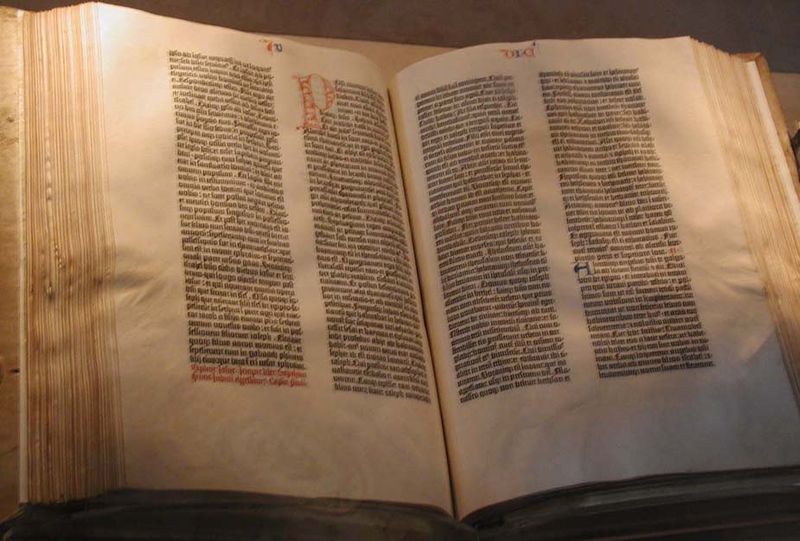
An ancient manuscript (not the hidden one).

An ancient manuscript (not the hidden one).


Fears of a Clown

A few weeks back, over on EsoterX, I was reading about circus oddities. Perceptive as always, EsoterX notes that the carnival or circus used to be disturbing. Before being commercialized and sanitized, otherwise civilized folk crept out of town to gaze at the bizarre and troubling aspects so effectively hidden from 9 to 5. Among the most disconcerting of the carnies was the clown. Horror writers and film makers have long focused on the ambiguity of the clown—faces are our clues to the intentions of another person. A face painted is opaque and we feel as vulnerable as in the presence of the false evangelical smile that hides a spiritual deadness in hardened eyes. You are about to be victimized. It is no wonder that small children—and not a few adults—are freaked out by clowns. At times they make us laugh, but mostly they make us tremble.

ClownThose who know or read me may have a difficult time believing that I once was a clown. Not a professional one, of course—it is even more difficult to believe I’ve ever been a profession anything—but part of a campus clown ministry. Beyond simple titillation, I state this fact because, like most things in my life, I researched clowning before I became a part of it. Those books are, of course, packed away with other forgotten bits of personal marginalia but I remember bits and pieces. The origins of the clown are religious. In fact, in the most ancient of societies clowns were most often played by priests. Their early bungling, which may go back to the third millennium BCE, was perhaps a way to indicate that even the somber role of the cleric could be taken too seriously. Like modern concepts such as Mardi Gras or Carnival, that which is sacred builds such pressure that normal people become a little unhinged. We erupt into frivolity while the divine turns a blind eye. Or secretly smiles.

Clowns for Christ was a Grove City College organization that I revived in my Junior year, serving as president and acquiring a campus charter. Based on 1 Corinthians 4.10, we declared ourselves “fools for Christ,” reprising, unknowingly, an ancient pagan custom. We visited nursing homes and mental hospitals and other campus events, bringing the good news in the form of silent skits. The clown traditionally does not talk. Even today when I hear a clown in makeup speak I give him or her a glare—clowning is physical, not audible. As I left college I left behind my childish ways (at least some of them). And the years since have taught me to be afraid of clowns, as any reasonable person should be.


White Christmas Revisited

In the light of yesterday’s post, I’d like to tip my metaphorical hat to Brian Regal of Kean University for a piece he wrote in the New Jersey Star-Ledger. Entitled “The Real Meaning of Christmas,” Regal’s piece shows the striking disconnect that comes between the image of a “Christian” Christmas and the oft-ignored words of Jesus that make him such a great example to follow. We want the image and the affidavit without having to do the hard work of loving those we don’t like. This really seems to be the heart of what was once know as gospel—it’s okay to be who you are (for those of that bent, “who God made you.”) Too often “Christian” has come to mean someone who wears their hair far shorter than Jesus, who shuns those welcomed by Jesus, and who smile far more than Jesus. My Bible says “Jesus wept.” I don’t recall any verses reading, “Jesus put on his ‘I love you’ smile.” Ours is a society that wants it both ways—all for me, but isn’t that what Jesus really wanted? You know, he must’ve smiled a lot.

Regal rightly points out that the majority of Christmas traditions are admittedly pagan, and we are glad to baptize them as long as we don’t have to let the homeless into our churches or admit equal rights to those of all genders, races, and orientations. What seems to be the real desideratum is a “white” Christmas. A white, affluent Christmas. The very idea of the ownership of a holiday characterized by giving is a phenomenon worth serious study. Religion can certainly be used to justify such self-centeredness, but it is condemned by that very same faith. What are people worried about? Christmas has been a commercial holiday essentially from its origins in the modern period. It is one of the few holidays to which nearly everyone looks forward, at least for a break from work or school, if not for a windfall of new stuff.

Privilege as blessing is a perverse theology, as is shown repeatedly in the Bible. Israel’s long line of descent is chosen from the least, the youngest, the meek. Now we are constantly told that God rewards those who are blessed, and that the poor and underprivileged have only themselves to blame. At Christmas time it may be worse than many other seasons of the year. We want not only to keep good cheer, we want to keep a holiday only partially of our own making for ourselves, and then congratulate ourselves on just how good we are. It would seem that the spirit of Christmas might lie, as the pagans said, in giving. I am not a fan of commercialism, as my regular readers know. I can’t help but think that believing one deserves special rewards for righteousness in their own eyes will only have the opposite effect. Remember: he sees you when you’re sleeping, he knows when you’re awake…

Adolph_Tidemand_Norsk_juleskik


Not Knowing

WhatIDontKnowAboutAnimalsBegin with a basic premise: we cannot know what a creature without language thinks. Add in the thoughtful anxieties of a post-domestic writer who knows about animals and you have What I Don’t Know About Animals, by Jenny Diski. Part biography, part science, part philosophy, wholly human. I knew from the day the book was released that I would read it since, like the author, I am one haunted by the relationship between the exploited and the exploiter. Diski’s confessions are difficult to read at times, veiling herself, as she does behind the curtains of one’s most private experiences, but she reveals plenty to those who read on. We can’t know for certain what another person thinks, so how can we know what a sentient animal thinks? Some, following Descartes and Skinner, would declare that animals don’t think, they simply do as programmed. The rest of us know that they are wrong. The evidence accumulates more each year that animals think and feel, but, as Diski repeatedly points out, we need to drive with the brakes on. We can’t get inside them to actually know if human experience corresponds at all with animal experience. We’ve shared the planet for millions of years, but we’ve lost track of our common origins.

As I suspected, the Bible came into the discussion. The book of Genesis lurks in the background of most human-animal rationalizations. The divine division into separate “kinds” must be kept discrete at all times. The problem is, nature won’t always play along with that game. One type slowly morphs into another and some biologists are even questioning the usefulness of “species” at all. Fear of bestiality, as Diski points out, is found already in the Bible. Best to keep everything in its proper pigeon-hole, whether that’s where it belongs or not. Genesis gives us the right to exploit, and so we continue to use animals for our own purposes. Although the feline, it turns out, may have figured out how to set this order on its head. In some cases.

What I Don’t Know About Animals is not a defense of vegetarianism or of radical, thoughtless abandon. Diski writing on spiders will cause many heads to nod in agreement, and her rage against the loss of the common lady-bug struck an amazingly responsive chord with this reader. The lady-bug’s demise came at human tampering, importing asian beetles as pest control—beetles that eventually edged out the harmless lady-bug, replacing the Volkswagen of beetles with a biting, omnivorous, massing pest. In Wisconsin the southern side of our faculty house was literally blanketed with them in the spring. Diski uses the same word I did then: biblical. Swarms seem to be the way that the Almighty has of telling us too much of even a good thing will go bad. Although I couldn’t agree with every statement Diski makes, I have the feeling this is a book I will reread more than once. Wisdom often comes in the form of admitting just how little we know.


Eating Your Prophets

Ezekiel was an odd character, even for a prophet. He’s become a kind of patron saint to ancient astronaut theorists, and his name in fiction often denotes someone slightly off balance. In his defense, he believed that God was demanding his many strange actions. A priest in a period of exile from the “one true temple,” Ezekiel lived an existence as a captive in a foreign land and came to some radical conclusions about the nature of Israel’s god. His visions and actions were considered the original weird, even by his contemporaries. Since Ezekiel believed Babylon would conquer Jerusalem, the people there would have to go on starvation rations. In chapter 4 of his book, Yahweh tells the prophet to try to make a bread out of wheat, barley, beans, lentils, millet, and spelt. This odd mixture is to be eaten in very meager portions to symbolize the coming privation for 390 days (during which time he is to lie on his left side). His bread is to be cooked on dung.

IMG_1156

I eat breakfast around 4 a.m. My bus to the City comes before 6:00 and there are no restrooms on NJ Transit buses. Many New Yorkers eat breakfast in the office, but I’m just too Episcopalian in sensitivity for that to really be an option. I don’t like really sweet cereals, but granolas are often quite sugary unless you want to pay top dollar (and most of my dollars are bottom dollars) for some organic, European blend. Then I spied Ezekiel 4:9. Knowing full well the context of the reference should’ve given me pause, but it was two dollars less a box than some of its competition—downright exilic prices—and my curiosity was roused. What would Ezekiel eat?, I asked myself.

Most people don’t realize that so many of us eat breakfast cereals due to the efforts of our Seventh-Day Adventist friends. Adventists, in addition to being literalistically inclined, advocate healthy living. Will Keith Kellogg, a faithful Adventist, believed that eating cereal for breakfast was healthy and widely promoted the idea through the company he founded to produce cereals. Kelloggs does not produce Ezekiel 4:9. Food for Life, an organic bakery, are the purveyors of this organic breakfast. Their religious convictions, if any, aren’t evident from their website. Just about the time I’m climbing aboard the bus, I know that even as Ezekiel saw the wheel, I’m in for a moving experience. Isaiah-os or Jeremiah Flakes may be difficult to imagine, but with Ezekiel nothing really surprises. Today’s Bible lesson may be as close as the larder shelf. I just skip the cooking on dung part.


The Importance of Being Published

AtlanticThe crowd over at The Atlantic Monthly magazine are a formidable lot. Even with a Ph.D. and a modicum of writing ability, I’ve been frightened off from ever submitting to such an intellectual periodical. These are people whose opinions count. When The Atlantic named, in last month’s issue, the fifty most important inventions since the wheel how could I not peek? Especially when number 39 included a picture I recognized from my childhood in the cradle of the oil industry: Col. Edwin Drake standing outside a fledgling oil derrick in Titusville, Pennsylvania—just the next town up route 8. I felt like I might be somebody, by association. We all know that number one is best, so I wondered, as I flipped through the pages, what the most important invention was, although I suspected I already knew. The printing press, dating back to the 1430s, is certainly a contender, and was Atlantic‘s winner. Those of us historically inclined tend to think in regressions. The internet has forever changed our lives, but what is the internet without reading? (Okay, well, it is lots of funny pictures of cats and pornography, but you still have to be able to type in “cat” or “nude” or whatever, to bring you there.) It took the printing press to catapult reading from the academy to the hearth, and to reach that critical mass so that the Kindle could surpass the printed book.

My interest in studying the Hebrew Bible for a doctorate actually included an ulterior motive. You see, the Bible was among the first books printed. As much as western civilization owes to the New Testament, my regressive thinking insisted that the New Testament was based on the Old. As I learned in seminary, the Old was based on an older, and that on an even older, in a pleasing kind of regression. I ended up in Ugaritic, the earliest known alphabetic language. The alphabet, I might contend, vies with the printing press for most important invention since the wheel. Before the alphabet writing was so cumbersome that only very skilled specialists could read written languages cobbled together from signs that represented letters and symbols and entire words and entire classes of words. But, ah, it was writing! Mesopotamians seem to have brought the idea into existence, specifically, those of ancient southern Mesopotamia that we call the Sumerians, who, incidentally, also invented the wheel.

Those of us in the book industry feel a constant worry in our stomachs when we look at book sales figures. Even in the most highly literate of social periods a very small percentage of people would actually purchase books (especially in the New World). With electronic media, that number has declined alarmingly. Still, the internet—number 9 on The Atlantic list—owes its life to good old paper (number 6) and pen (which failed to make the list at all). And paper wouldn’t have evolved without clay—the very substance of which early written myths claim that humans are made—and stylus. Thoughts locked in our clay heads cry out for expression. Some of us are compelled to put them in the form of written words for others to see. It’s just that we know our place and wouldn’t presume to send them to The Atlantic Monthly, or any other magazine, where they would be certain not to make the cut.


Almost Human?

Last week the New York Times ran a story on the efforts of the Nonhuman Rights Project to have chimpanzees declared “legal persons.” Naturally this has set many legal persons at arms, given the unstated, biblical origin of the concept of human superiority. Without the biblical mandate we simply have to admit that we rule over animals on the basis of “might makes right,” a philosophical concept that never makes it far either in the classroom or the courtroom. We hold animals captive and experiment on them because we can. They can’t speak, can’t register protest, so we assume their silence as complicity and carry on. Research over the past several years, however, has pushed the human-separatists harder and harder. Animals are more like us than we are willing to admit. We acknowledge that we’ve evolved from them, but we suppose that at some point—probably the vocal cords—we surpassed them and therefore if they can’t speak they can’t think and they can’t feel. Even today many people still hold to the biblical orthodoxy that animals are merely here for our enjoyment and exploitation.

Considering how we treat other human beings, this is probably, sadly, no great surprise. In a world where many nations still allow women to be treated as property, putting a chimp in a cage and labeling it “mine” doesn’t appear so odd. Only the most crass of chauvinists would dare say that women are not human, but far too many, based mostly on religious biases, have no problem stating that women are inferior humans. Again, “the Bible tells me so.” This kind of thinking, prevalent even up until the 1950s in “civilized” countries like the United States, has yet to die out fully. What is it about the male psyche that insists on its own superiority? The Bible, it seems, has much for which to answer when found in the hands of men.

What makes us think that we are all evolving toward the “high point” of white males? Some of us in that class know that it is long past time that this glass “ceiling” should have been irreparably shattered. Nonsense, however, has staying power. Some of us even feel inferior just knowing such distinctions were ever made. Not that long ago Africans were said, by some, to be closer to apes than Caucasians. Women were said to be closer to snakes than men. What has been lacking is a sense of balance. Common sense. Genders and races equal but variable. Until that minimum bar is reached, how can it be hoped that fair treatment of nonhuman persons can ever be achieved? Some animals have been taught to read, at least in basic, symbolic ways. They understand that certain symbols stand in for defined rewards. Given time it might even be that this most human of inventions could be shared among nonhuman persons. If they do not learn to read the Bible with more sense than some human persons, however, we face a future of many other layers of distressing oppression.

787px-Chimpanzee_Ham_in_Biopack_Couch_for_MR-2_flight_MSFC-6100114


Appreciate Your Job

At a gathering of friends recently, a game of trivia broke out. Well, it was actually planned because we were not using the cards and pie wedges that we grew up with, but were making up our own questions. The submitter of the question was the final arbiter on whether an answer was correct or not. As usual, I probably overthought the process, trying not to make my questions too hard or too easy. Maybe my ideal contestant was a student in one of my intro classes since much of what I submitted was what I covered in my courses. Other questions were drawn from choice bits of this blog (something to which I never subjected my students). In any case, one of my submissions asked for the name of Job’s fourth friend. I was honestly surprised when nobody in the grew knew, or could even name one of poor Job’s friends. My slip of paper went into the unanswered pile in the middle, a stack alarmingly dominated by my own questions. Afterward, the friend who knew me the longest, and who grew up in a church-going family, asked “Did you really think anyone had read the book of Job?” Coming so shortly, as it did, after another friend in a different context had indicated that my interests are arcane, I began to feel my age.

Biblical literacy is a topic for which some scholars actively lobby the reading public. I’m not sure if the entire Bible need be known fully, although my job increasingly relies upon its popularity. Students used to ask if I still found the Bible meaningful, even though I spent my career parsing it apart. The answer is always the same: yes, the Bible is worthy of the attention lavished upon it. It has sections of unsurpassed beauty and even some lessons the world could still stand to learn. It is uneven, however. There are bits that probably should’ve never been canonized. There are moral lows as well as highs. And the book of Job is among the greatest pieces included in it.

On that point I would receive some argumentation, I’m sure. Many people detest the book of Job. The eponymous hero of the book seems almost blasphemous to some, and a complaining ingrate to others. In the course of his suffering four friends stop by. The last one, surely a later addition to the text, toes the party line of orthodoxy that the book severely shreds. Job also contains some of the finest poetry from the ancient world and has given modern English several catchphrases still currently in use. I’ve always felt a kinship with Job. While my lot has not been as pathetic as his, I have had enough set-backs to lend the book a kind of nostalgic patina. Even in their wrongheadedness Job’s friends can spill out poetry. And there is wisdom to be had in that dusty book. In the end I was probably the one who was wrong. There is nothing trivial about the book of Job.

Blake'sJob