Flood Warning

If you’re like any number of others in North America, you may be wondering when spring will arrive. Not meteorological spring—that has flown past already—but the warm, salubrious air that bears no wind chill factor. You might, like many, turn to the Weather Channel website. While you’re there you might see a story about extreme weather and Noah’s Flood. (You might need to scroll down the page to find it; the link seems to have been cursed.) The flood myth is a pervasive story. It appears in countless novels, movies (even Titanic and The Poseidon Adventure, for those who are willing to believe), and many baby’s nurseries. The weather this year has many wondering about global warming, although, honestly, we’ve known about it for years. Some are speculating that floods will become more common, and that’s almost certain. The Weather Channel, however, uses the myth to point out that people have experienced extreme weather from “the beginning.”

The trouble with this reasoning is that the story of Noah’s flood is not original to the Bible. It seems virtually certain that the writers of the biblical stories (there are two) knew the Babylonian version embedded in the tale of Gilgamesh. The writer of the Gilgamesh Epic knew the Sumerian version of the story, already centuries old by that point. And the story never really happened. At least not in historical time. Floods, yes. World-wide flood, no. The stories were told to make points, as most stories are. The point here seems to be that gods can be pretty petty if you neglect to offer them their due. Even minor sins can set you treading water for weeks at a time. Still, the Weather Channel considers the possibility that this could reveal ancient meteorology. Ancient morality is closer to the truth.

Every year around Easter the media peppers its workaday headlines with biblical tropes. It is the time to catch the quasi-religious thinking pious thoughts and click-throughs are more likely. Never mind that biblical scholars have known for many decades that this fetching tale is based more on a primitive Schadenfreude than modern science. Not that the Bible is devoid of ancient weather. I once wrote an ill-fated book about the topic. The people of ancient times knew that God has a special place in his sacred heart for the weather. It is one of the most awesome demonstrations of divine power. So it is in the story of Noah. For those of us in the twenty-first century it may still be a morality tale. This time, however, the flood is caused by human greed and lack of control. And this, when all is measured in the scales, may be among the worst sins humanity has ever committed.

Martin,_John_-_The_Deluge_-_1834


Good, Friday

Riding public transit sometimes turns into a religious experience. Various bus drivers will wish passengers a “blessed day” as they pull into the Port Authority Bus Terminal—not that I can blame them, after the traffic they face daily, for taking a spiritual breather. Lately, though, I have been wished a happy Easter by the driver. Ironically, I must note, because people of many faith traditions ride the bus. Not all are Easter riders. Just yesterday a Rastafari stood before me in line. I’m regularly joined by Hindus, Jews, and maybe even a Mormon or two (who can tell?). Holy Week in New York is a surreal experience. I chatted with some co-workers where the topic changed effortlessly from their experiences of Passover to others’ experiences of Easter. Religion is alive and well in the Big Apple, but it is mostly an afterthought to the real business of making money. That’s what we’re all here for, after all.

Money, according to the good book, is inimical to the lifestyle of faith. I must have a little too much faith, I guess, since I have so precious little money. Nothing throws that into such sharp relief as looming tuition bills. You see, I tried “to fight the good fight” only to learn that there’s no way to win it without playing by the entrepreneur’s rules. Filling out the FAFSA over the smoldering ruins of my “earning years” was a distinctly sobering experience. I went into higher education because I believed in it—there’s that pesky faith again. The things you believe in, however, have a way of turning on you. I suppose that’s an appropriate reflection for Good Friday.

It’s hard to be an idealist in a world where people say, “you just need someone to give you a chance,” and then turn their backs on you. So as I’m walking across town, thinking about my blessed day, I notice that we’re all in this together. Except some of us. In the idealist world, those who want it the most sometimes win it. Those who play by the rules. I had no Harvard aspirations, just a reasonable job in a little college would suit me fine. A place to think that doesn’t have wheels and aluminum sides and seat forty-nine other lost souls. But for those who have less, even the little they have will be taken from them. That’s biblical too. Higher education is one of the greatest gifts we can give our children, but it easily joins hands with Judas Iscariot. It is Good Friday, according to some. Others just call it a blessed day.

Mathis_Gothart_Grünewald_007


Sacred Sexism

holymisogyny How terrifying to observe religion from the eyes of women! In the monotheistic traditions it begins as early as Genesis 2 and continues unbroken through to the twenty-first century. While the origin of such views seems a mystery, they may be partially understood by reading April DeConick’s Holy Misogyny: Why the Sex and Gender Conflicts in the Early Church Still Matter. Not that anyone fully comprehends the insidious idea that women are somehow less than men, but DeConick offers some insight into the issue. She suggests that sacred misogyny is, like much of life, an embodiment issue. The monotheistic traditions from the beginning have had trouble with women’s bodies. Men can’t control their urges and blame the victim. That is over-simplifying, I know, but the basic gist is about right. What can’t be missed from reading Holy Misogyny is that the idea has embarrassingly deep roots in religious thought.

The Bible starts out pretty fair. Except from the beginning the masculine pronoun is used for God, even though theologians from very early days declared God neither male nor female. How do you believe that an “it” really cares for you? Wants the best for you? Loves you? We are gender embodied. We want to know who it is that’s loving us. Genesis 1, on the human level, has man and woman created together on the same day, at the same time. The essence of their embodiment appears to be divine: “in the image of God created he him, male and female created he them.” “Human” is gendered humanity. But then the apple falls. We turn the page to find that the not yet monotheistic religion of the Bible is already pointing sticky fingers at Eve. I know that I can’t read Tertullian without wanting to hide my face when he castigates women as the source of evil.

Holy Misogyny is a disturbing book. It should be. What it does demonstrate, however, is that a wide variety of opinions and options existed for early Christianity when it came to the perception of women. Some of the Gnostic sects of Christianity came much closer to a kind of equality, but they lost out to an unremittingly masculine “orthodoxy.” The Bible itself, although written in a patriarchal world, is an ambiguous document. At points even Paul seems to indicate the genders are equal in God’s eyes, but then, he (or someone writing in his name) tells women to keep quiet in the church. Ask your husband at home. I’ve talked to a lot of church guys in my time, and Paul, I have to contest you here. Women who want to get proper instruction in matters of the soul—or of the body—would be better off reading DeConick than asking their husbands. We’ve got two millennia of unfortunate history to prove the point.


Beg Your Martyr

Despite the extreme antipathy shown toward religion by the educational establishment, the Chronicle of Higher Education doesn’t shy away from the topic. In the March 1 edition of The Chronicle Review, a piece by Candida Moss presents one of the uncomfortable facts of religious history to the academic world. Many of us who are “specialists” have known for quite some time that the record for mass persecution among early Christians is sketchy at best. In “The Myths Behind the Age of Martyrs,” Moss reveals that historical documents don’t present the first few centuries of Christendom as quite the blood-bath that early hagiographies do. It is true that perceptions vary depending on one’s point of view. If your auntie were thrown to the lions, it might look like everyone you knew was being persecuted. If you were a Roman historian, the numbers might seem small in comparison with, say, those pesky Carthaginians, heathens the lot of them. Still, it was this persecuted self-image that left a lasting imprint on Christianity. Until Constantine, anyway. When Christianity became imperial, it didn’t hesitate to get medieval on a few posteriors.

As Moss points out, early Christians (as well as Jews and those of other bookish traditions) rewrote their stories over time. Even altering the Bible—not yet the Holy Bible—was fair game. The whole discipline of textual criticism grew up to answer the question of what the original Bible likely said. As soon as believers take their writings as factual, however, the story will change. Were early Christians persecuted? Almost certainly. By the tens of thousands that tradition asserts? Less likely. The Romans were practical. Like most domineering classes, lording it over someone isn’t nearly as satisfying when your subjects are dead. You want that superior feeling? Keep the masses in servitude. But alive. That’s not to say that it didn’t feel like everyone you knew was being murdered for trying to do the right thing.

When I was little, I was taught that it is more important to put others’ needs and wants in front of your own. It is a basic Christian teaching. Somewhat naively, I approached the academic empire with that simple basis deeply embedded in my mind. I didn’t realize just how often others would use this trait to their own advantage. Other Christians as well as the non-religious are happy to take from the willing giver. This didn’t prepare me well for life in the business world where, I am learning, the delight in taking from the giver has only grown stronger over the centuries. So I end each day spent and weary and feeling like I’ve been thrown to the lions. Not literally. Still, I believe in the plain idea that if we all treated others’ needs before our own the world would be a much better place. I’ve never outgrown my idealism. Until others join in, however, I’m sitting in the stands trying hard not to watch what the lions are doing down below.

800px-Jean-Léon_Gérôme_-_The_Christian_Martyrs'_Last_Prayer_-_Walters_37113


Monkey’s Uncle

T.H.Huxley(Woodburytype)

An opinion piece in Saturday’s New Jersey Star-Ledger highlights the 150th anniversary of T. H. Huxley’s Man’s Place in Nature this month. Well, Huxley may be forgiven for writing in the idiom of his day—he was Darwin’s contemporary after all—when he really meant humanity’s place in nature. The article, by Brian Regal, points out the common fallacy that evolution, as propounded by Darwin, says that we descended from monkeys. Quite apart from the insult to monkeys, Huxley was the one, as Regal notes, who made explicit something about which On the Origin of Species kept decidedly mum: the evolution of humans. People did not descend from monkeys. Nobody except religious opponents ever suggested that they (we) did. Evolution is a biological fact, and monkeys are evolved just as we are evolved. We had a common ancestor somewhere back a few millions of years ago.

This neverending story of religion (of some sorts) fighting evolution should capture the fascination of anthropologists, sociologists, and psychologists. It shouldn’t be ignored. Darwin wasn’t trying to start any fights. Huxley, well, he may have been, but with good cause. The facts, even in the 1850s, were definitely pointing to descent with modification. In fact, breeders of dogs and pigeons and other animals had known this for centuries. All that Darwin and Huxley attempted was to be intellectually honest with the evidence. It was religious believers who, reading between the lines, picked this fight. The Bible, after all, seemed to say we’d been created on day six (or day one, if you read Genesis 2 literally), and that meant science had to be wrong. Religion is used to setting its own terms. The debate is in the cathedral, not in the academy. Although by the end of the nineteenth century nearly all major branches of the church had come to some kind of understanding of the facts, the issue flared up with again around the time of the First World War with the advent of “social Darwinism.” Then, the religious objectors claimed, we did not descend from monkeys.

Funny thing is, Darwin and Huxley would’ve agreed. Instead, insidious motivation was attributed to some of the greatest minds in science. Accusations were made that everything in the lives of both Darwin and Huxley gainsaid. Natural selection made Darwin ill with its implications, but he could not shy away from the evidence. He believed in truth. Although Huxley coined the term “agnostic” to define his position, he had good reason. The biographies of these scientists are well worth reading before making accusations. So as we stand (or more likely, sit) on the sesquicentennial of Man’s Place in Nature, it might be a good opportunity to assess whence the friction is arising. We claim, in our still limited understanding, that monkeys can’t speak. (I’ve seen the movies and I know differently, nevertheless…) If they could, I imagine the debate would go something like this: “those hairless creatures who say that we are less important than they, they have the audacity to claim a common ancestor with us? Maybe evolution is a myth after all.”


Persistent Idealism

Few spans of human life are so idealistic as our college years. There we meet many people from beyond our hometown, and we learn the treasures of diversity and different ways of doing things. Ideas mix and blend, and with professors who’ve learned so much telling us all the places we can go, the possibilities seem endless. I find the idealism of college kids refreshing. That’s one reason, I suppose, that I enjoyed teaching them so much. At work you’re far more often told why things won’t work and how they can’t be done. And I find myself thinking back to college and wondering when people lost their sense of vision. When did idealism die?

Yesterday I spent on the campus of the University of Texas at Austin. Between appointments I was crossing a quad area and noticed a bunch of blue and white balloons. We’re all still kids inside when we see balloons. I stopped to look. Then I noticed, across the street (in which sat a very obvious police car) a small group of students waving a Palestinian flag. Several police, frankly looking bored, stood between the two peaceful groups.

IMG_0581IMG_0580

Looking back to the balloons, there were a series of tents set up and a sign read “Israel Block Party.” Obviously this had been a carefully planned event, and we all know the heinous story of the constant persecution of the Jews throughout much of “civilized” history. The simple table across the street bore the sign “Free Palestine.” Less than ten students stood around, handing out literature, peaceful, yet literally flying their flag. Yes, the Palestinians have also been oppressed for much of their history. If only adults could live so peacefully as these students. My heart went out to them.

The issue of Israel and Palestine is one of the deepest scars in our collective human psyche. Indirectly, that conflict is responsible for many tragic terrorist acts, including the attacks of 9/11. And it is so frustrating because both sides (and there are actually more than two) are victims. We like our good guys in white and our bad guys in black. I’m still an idealist, after all. Yet in Israel/Palestine we have two historically oppressed groups vying for the very same land. And in the middle of this maelstrom, the Bible. The very book that can be read as an eternal promise by God that the people of Israel should own this land. By 1947, however, we’d stopped relying on God and began relying on guns. And atomic bombs. And life has never been the same since.

Images of the wall going up between Israelis and Palestinians just after the wall went down in Berlin reminded me of Bush’s proposed wall between Texas and Mexico. Here in Texas just about everyone in the lower paying jobs I’ve met is hispanic. And friendly. Grateful in a way that many of us wouldn’t emulate in such low stations. We are all people. We all experience the same feelings, needs, and desires. Why not tear down the walls and let us look at one another? Take a good, long look. And my idealistic self says, if we face another human being with love everything will be all right.


Austin City Limits

Maybe it’s just because Texas feels like the brass buckle of the Bible Belt, but I had moral qualms about landing in George Bush International Airport this afternoon. Texas has so many worthy heroes, but in the land of Rick Perry, recent Republican politics is king. Not queen. But king. It felt like a work of supererogation to drive to Austin after a three-and-a-half hour flight to Houston, but Texas reminded me of Illinois with palm trees. And cacti. Well, okay, and longhorns. One could get culture-lash flying here from New York. Before I embarked I had visions of my rental car being a huge Cadillac with real steer horns for a hood ornament. I just couldn’t picture myself in a ten-gallon hat.

I sometimes wonder how religion could’ve come to divide a nation such as the United States. Founded on the principles of religious liberty, lately one party has been claiming the right to legislate morality for all, deeply polarizing a populace that should be able to accept differing viewpoints. Still, there are issues on which human rights insist there can be no compromise: women have equal rights with men, and have the right to self-determination just like men. It truly amazes me that such common sense can even become a divisive issue. If we could agree on even that, we’d have to declare it progress over the objections of the Religious Right. My thoughts wander that way when I tarry in the south. It’s really a pity. The people are friendly here and the landscape has its own beauty. Are we really that different?

I’m not altogether convinced that this isn’t just a case of prejudice masking as religious sensibility. Religions can be all too gullible when they feel their honors might have been impugned. While I regularly express my opinion here, I do respect nearly every form of sincerely held religious belief. None of us has all the answers, and it seems the height of hypocrisy to insist that anyone is right all the time. Nevertheless, my sojourn beneath the Bible Belt has me wondering about the origins of various religious squabbles. Or maybe it was the just the long drive along the “presidential corridor” after touching down at an facility that most websites still refer to as simply, Houston International Airport. Travel broadens the mind—it is, in fact, an excellent form of education. Maybe if we got out more we would all get along better.

From here we all look the same.

From here we all look the same.


In Touch with History

A friend recently sent me a package with a Roman jar handle from Caesarea Maritima. It’s not everyday that I receive 2000 year-old artifacts in the mail. Holding that ancient jar handle reminded me of my short stint as a wannabe archaeologist, not far from Caesarea at the site of Tel Dor. There’s no thrill like unearthing an artifact that has been buried for millennia, knowing that you are touching something a fellow human being dropped for the last time back in the days of the early Roman Empire. It is a humbling experience. In all probability the final touch was a heave into the dump, since clay jars are easily broken. But as I finger this ancient piece of useless junk, I can plainly make out how fingers like mine twisted the clay and pressed it on the jar body, much as I once did in art class, decades ago. I am connected with a stranger over the millennia by this simple bit of clay. We are united in an ancient family.

IMG_0555

Archaeology began as a biblical venture. Anyone who watches Raiders of the Lost Ark with archaeological sensibilities, after rolling their eyes (yes, it’s deserved) can’t help but realize a kernel of truth is buried here. Archaeologists don’t search for the ark, but it was religion that gave them the idea in the first place. Travel to the Middle East and begin digging up the places mentioned in the Bible. Those early archaeologists wanted to prove that the Bible story happened just as it was laid out. Only it didn’t. Archaeology soon began to reveal a more complicated picture. Jericho was uninhabited in Joshua’s day. And was there even a historical Joshua? What began as a charge to demonstrate that the Book of Books never gets it wrong transformed into a science with its immutable commitment to objectivity. And objects.

The desire for historical proof meets a deep need in people. We want to know what really happened. This simple jar handle before me tells a mute story of a person like most of us—never famous, never noticed in the noise of first century Palestine. Just some Jane or Joe throwing out the trash. That is the story of archaeology. That is the story of human life.

Every once in a while I ponder how insignificant we are. The vast majority of us will be remembered only a few years or decades beyond our demise. What will our artifacts say about us? One of the relics that will be found in the rubble of my life will be a Roman jar handle from an even earlier age. Long ago deemed junk by a person so different, but not so very different, from me. It was discarded two millennia ago. When it was found in the twentieth century it was a treasure. Thanks, Susan, for putting me in touch with history.


Gods and Goliath

EyreAffairNot only gods are proficient at creating worlds. Writers, as readers know, are the creators of worlds too. I first discovered Jasper Fforde via a friend’s recommendation. With the depressing demise of bookstores, however, I end up picking up whichever one happens to be on the shelf. Not that this is a bad thing, but I find myself in a melancholy cast when I think of all the joy that is not being had by avoiding reading. It’s all rather hollow, wouldn’t you agree, Mr. Eliot? All of which is to say Jasper Fforde’s The Eyre Affair was great fun. As usual when I read fiction, I kept an eye out for how religion appeared in this alternate world—most fiction that ignores religion completely somehow seems to be less realistic than Fforde’s fantastic tale. In the world of Thursday Next, the churches are dedicated to GSD, the Global Standard Deity. As one of the characters explains, the GSD is a combination of all religions intended to stop religious wars. It’s a great idea on paper, but religions are prone to wars as sparks fly upward.

Somewhat later in the novel Thursday encounters a crucifix-wearing vampire. Fooled by the sigil, she almost becomes a victim to the blood-sucker. When Thursday points out the supposed impossibility of a vampire wearing a crucifix, he replies, “Do you really suppose Christianity has a monopoly on people like me?” Although Fforde can be a great comic writer, some of his quips are quite profound. Indeed—does Christianity have the only vampires? All religions have their monsters, whether that’s what the author meant (score one for reader-response theory). The truth is the truth, no matter whether intentional or not.

The idealized world of The Eyre Affair is one in which religion has become universal. The great military conglomerate in the book is called Goliath not because of the Bible but because of its size and apparent strength. It is brought to its knees, however, by Thursday—a female David, if you will. In practical terms, throughout the book the military is much more powerful that the church of GSD. Perhaps that’s because people are afraid. Religion, which once upon a time allayed fears, has now become one of their main generators. “Nothing frightens me more than religion at my door,” John Cale once sang. In this rich complexity the reader is invited to bask as Jasper Fforde works his magic. Do yourself a favor and pick up one of his books. Before it is too late. You might find yourself learning a thing or two about religion. I did.


Tunguska 2.0

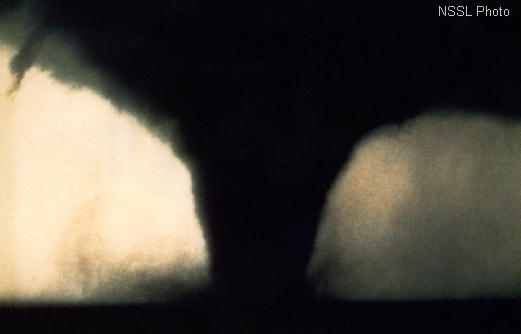
The explosion of a meteor above Chelyabinsk on Friday immediately took me back to Tunguska five-score and five years ago. The Siberian Explosion, as we called it as kids, had captured my early imagination. An explosion that big, so long before nuclear weapons had been developed, and so long after the dinosaurs felt the wrath of an asteroid, fired my sense of wonder. The pictures of all those felled trees. Of course, the mystery helped as well. Some decades later, The X-Files revisited Tunguska, and the mania of my youth was back. There’s nothing like something incredibly massive to ignite the chariots of fire. The Chelyabinsk meteor is the largest object to strike the earth since the Tunguska event, and although at 500 kilotons of explosive power, it was about 60 times less potent than the earlier event, it does have many pondering the fragility of life on our little planet.

tunguska2

For those less familiar with astronomy, the event was confused with the much hyped passage of asteroid 2012 DA14 which buzzed close enough to have had some fingers hovering above the retaliation button. The two unrelated events stand to underscore just how small we are in our tiny ripple of the Milky Way. Watching the many videos of the Chelyabinsk meteor, I ponder what might have happened had this been during the Reagan years and the delirious high point of Cold War paranoia—would any of us have been left here to read about it at all? Although ants, we think ourselves giants. Some speculate that if the dinosaurs hadn’t been wiped out by an asteroid or comet they may have evolved to intelligent beings. Perhaps they would have had a reptilian god. Based on body-mass ratios, that’d have been one huge deity!

So we’ve had a couple of near misses this week past. Chances are some day we’ll get hit. There will be those who call it an apocalypse, and others who will suggest it is some kind of cosmic justice. In reality, it is just what happens in a universe where we are but minuscule demigods in our own imaginations. Tunguska was a huge event, but it didn’t kill on the scale of the Haiti Earthquake or the Indian Ocean Tsunami. Such natural disasters make the insurance industry cry foul as they describe them as “Acts of God.” “Act of God” is legalese for anything outside human control. Giant rocks falling from the sky clearly fit into that category. Goliath, the biblical giant, was slain by a single smooth stone from a brook, according to the book of Samuel. We think we’re pretty big with our towers and our weapons and our internet. If God unleashes a big stone our way, as Friday’s events demonstrate, Goliath might have the last laugh.


Implausible Deniability

Sandy gave us a little taste of dampness under the gunnel. You see, people live by the water because it beckons to us. That was actually Rachel Carson’s idea, but nevertheless, we do find ourselves drawn to the sea around us. Historically our great cities grew in the littoral because communication across the big water was, prior to jet travel and trans-oceanic cables, the best way to stay in touch. Have a business meeting in London, but live in New York? No problem. We can get you there in two-to-three weeks. And the ship sets sail. Since that day we’ve become more electronic. Those of us who experienced Sandy near New York City know that one of the biggest problems was that salt water and electrified trains don’t mix. Of course, conservative lobbies have insisted that Congress and the White House keep their eyes firmly shut about the possibility that a more unstoppable flood is coming. We may not need an ark, but we’re going to have to take some steps back.

A story on the Weather Channel shows the “smoking gun” of global warming. Oh wait, that’s just a myth. Industrialists tell us so. But what a devastating myth! The Gulf Stream waters of yore have kept the climate mild in northern latitudes. While in Scotland we spent a wonderful weekend with some friends on the Island of Arran in the Hebrides. Palm trees growing in Scotland? Yes! The warm Gulf Stream means that much of the British Isles remains relatively temperate despite their latitude. The Gulf Stream, due to climate change, is slowing. In less than a century, climatologists now predict, the oceans will rise three feet. Looks like I’ll need to wear my gaiters to work. We’ve known for about half of my life that we’ve been changing our environment. And not for the better. Those who are too wealthy stand to lose a little so we do what we can to protect them, the poor dears. The rest of us had better learn to swim.

We don’t worry when the people of some Indonesian island point out that their entire world may submerge. Put a little ocean water in the subway and, well, that’s an entirely other story. How are the peons to get to work? Let them wear hip-boots. Word from the top one percent is that there is no global warming. If the Gulf Stream is slowing down it’s because it’s lazy. What a moocher! Suppose it will be wanting a health plan next. That’s the problem with the weather—it changes like, uh, the weather. Unlike the minds of some people that are already made up and never change, no matter what the facts. When the one-percenters start speaking, I’m glad I’m wearing my hip-boots after all.

Where can I get me one of those?

Where can I get me one of those?


Popeless

414px-Benedykt_XVI_(2010-10-17)_4 Pope Benedict XVI managed to catch many of us off-guard with his early retirement option. Not within living memory, or even very dusty, antiquated memory has a pope resigned. Such is the draw of power. Of course the founder and putative CEO of the organization stepped down at 33, or so the story goes, but after that the urge to stay on only grew. The papacy, some traditions claim, is as old as Christianity. Others suggest that the stresses and strains that eventually led to the primacy of Rome in the western church were much more intricate than that. Modern research has also indicated that one-size-fits-all Christianity really didn’t even exist from the beginning. Different groups claimed to be Christian but were labeled heretical by other groups. The Roman Catholic Church is still the single largest Christian denomination in the world, however, and that translates to quite a lot of weight.

According to the book of Acts, the first Christians were a communal lot, holding everything in common. Although we can’t call them communists, in a sense they were. It didn’t take long for that structure to break down, however. Before long it was obvious that leaders would emerge in the movement. At first they wouldn’t have been priests, but eventually that age-old designation came to describe what the clergy did. Worship became ceremony, and ritual requires expert leadership. Various religions have tried to break down the hierarchical structure of having one person over the others, but in this masculine world of CEOs and prestige, well, there’s only so much you can share.

What’s really striking is that no pope in 600 years has stepped down. There could’ve been many occasions. Presiding over about a sixth of the world’s population must be a heady experience, especially for a religious person. Already the speculation is thick on who the next pontiff might be. The fact that the faithful are already chomping at the bit shows something of the nature of the creature (one can’t very well say “beast” in such a context). The papacy has become a symbol in its own right, and even megachurches can’t hope to top their numbers. The Pentecostals, however, are racing to catch up. The two types of Christianity are about as far apart as possible while remaining under the same Lord. I suspect by the time the next pope vacates the office the religious landscape will be very different. Perhaps Benedict XVI is wise to call the game on his own terms.


Scouting for Boys

I guess losing a bid for a presidential nomination sanctions a guy to speak for God. Of course, that goes for just about any Republican these days. I’m frankly amazed that Moses managed to write the Ten Commandments without them. So Rick aptly-named Santorum has gone after the Boy Scouts. To remove the duplicitous ban on gay scouts, according to Santorum, is to remove God. Obviously Mr. Santorum was paid no attention in Boy Scouts himself. I spent many hours at Scout camp and I can attest that God was already the last thing on most boys’ minds. Maybe our former presidential hopeful ought to look back a little further, for Webelos and Cub Scouts may imply the love that dare not mewl its name. I predict this: if the ban is lifted, as it should be, no one will notice the difference. Santorum will continue beating his dead horse and the rest of America may achieve just a hint of maturity.

“Scouting may not survive this transformation of American society, but for the sake of the average boy in America, I hope the board of the Scouts doesn’t have its fingerprints on the murder weapon,” Santorum declared, according to CNN. I have to wonder what he knows about the average boy in America. Or the average girl. Santorum would have a difficult time finding the word “gay” in his Bible, for it is not there. But apparently God is not God without someone to hate, without the “Right” to show him the way. And God favors straight, white men, as the last presidential election clearly shows.

Any religion that makes someone feel better by repressing others is not worthy of propagation or emulation. Look at any oppressed group. What’s the backing always cited by the oppressor? Is it not narrow religious belief? Anyone can say “God says.” There—I just wrote it. And I could distort the Bible to make God dance to my prejudices as well. The problem is that I recognize how cheap and tawdry such eisegesis is. Of course, hot air expands. The Texas governor that God told to run for president, but then changed his divine, omniscient mind, and who never thought closely about the implications of that—aka Rick Perry—also had to weigh in on the issue. CNN quotes him as stating, “Scouting is about teaching a substantial amount of life lessons… Sexuality is not one of them. It never has been; it doesn’t need to be.” Mr. Perry needs to spend a weekend at camp with his eyes and ears open and his mouth shut. In the best of all possible political worlds, his bosom buddy Rick Santorum will be right there beside him. Maybe it will take a little child to lead them after all. And that actually is biblical.

From WikiCommons, AgnosticPreachersKid--worth a thousand words

From WikiCommons, AgnosticPreachersKid–worth a thousand words


Secular Oaths

“I do solemnly swear that I will faithfully execute the Office of President of the United States,” so begins the story. With President Obama’s second inauguration so fresh in the public mind, an article in the Sunday New Jersey Star-Ledger raised the question of using Bibles for taking this secular oath. As A. James Rudin points out, not every president has laid a hand on the Bible to take the oath—John Quincy Adams preferred a law book to do the job. Rudin points out that commentators have started to question the practice of using any religious book for taking a vow for a government position. As I read this article I had to pause for a thought. It was the particular turn of phrase “the Bible, and by implication all other religious writings,” that stopped me at this brain crossing.

Washington's_Inauguration

Anyone who has taken time to study the phenomenon of religion seriously (admittedly not a large cohort) has stumbled upon the blue whale in the room: what exactly is religion? We all know, but nobody really knows. Many scientists equate religion with superstition and claim that we are evolving out of it, but we still seem preternaturally powerfully attached to it, if that’s the case. While religious writings have been around for ages, the idea of a sacred book seems to have its origins in the societal reception of the Bible. There are older religious books, but the Bible seems to have defined the category. What’s running rampant in my mind is where the line is drawn between a religious and a secular book. For some, it would seem, Fifty Shades of Grey, or Twilight would fall into that category. Some thinner, more glossy and heavily illustrated literature favored by teenaged boys might also qualify. What makes a book religious?

In current understanding, religion is a matter of belief. Not all religions insist on belief, but in the United States, in any case, it’s not properly religion without it. In our secular society belief is atomized into millions of varieties, even within the same religious family. Step outside the church, synagogue, or mosque, and the sheer varieties of religious experience would make even William James blush. “All other religious writings.” Those might include just about every pen stroke on paper (or electron on whatever it is that I’m typing this into). Those of us who venture to write know that at some level it is a sacred activity. I would swear it with my hand on my dissertation. (At graduation at Nashotah House students are hit on the head with a Bible. Perhaps this might be more appropriate to swearings in?) We lay our hands on that which is sacred, otherwise there’s no vow involved. Whether it be Bible, law book, or saucy literature, we pledge on it because all books are religious, regardless of definition.


Poe

PoeSilvermanOn his birthday I began reading a biography of Edgar Allan Poe. The last biography of Poe I read, I’m embarrassed to admit, was in high school. To me Poe is like music: deeply appreciated and therefore taken in rare doses. The biography this time was Kenneth Silverman’s Edgar A. Poe, A Biography: Mournful and Never-Ending Remembrance. I picked this book up last time I was on the University of Virginia campus, just after I stopped by to gaze wonderingly into Poe’s room. Like most biographies these days, Silverman’s account is hardly a hagiography. Poe was a perfect man only in his embodiment as a man of sorrows. In the days when “writer” was not really a profession, Poe nevertheless recognized what his strengths were and persisted to try to make a living following those assets. A poverty-stricken living much of the time, but an honest one. It is not pleasant to have a hero’s foibles exposed, but Poe was all the more admirable for having been fully human. We have all experienced arrogance and humility in turns. Poe was a man who knew sorrow from his youngest years, and that cloud stayed with him until his death just forty years later. A personal tempest.

Poe, not a conventionally religious man, nevertheless recognized and drew upon religious imagery. In his poem “Ulalume—A Ballad” Astarte’s ghost appears. Astarte remains a goddess poorly understood, but Poe was likely drawing on her association with Venus. She fails, however, to lead to Heaven. Silverman points out how “Ulalume” was followed closely by Eureka, Poe’s only sustained attempt at metaphysics. Poe came to the conclusion that upon death we become part of the all-encompassing God. This daring deduction cost him friends and supporters, but it also led to a rebuttal by a seminary student. Poe’s reply to his criticisms remains apt, as Silverman quotes him, “‘God knows what’—he cared very little what he was called ‘so it be not a “Student of Theology.”’” Amen, Mr. Poe.

Some lives, like those of Job, seem fated to loss and suffering. Yes, there have been those who lost more than Poe, or even Job, but this is no contest to see who might bear the most weight before being driven to his or her knees. Poe felt it deeply and expressed it eloquently. He recognized, as most writers do today, that business models resent an honest voice. Those who sell are often those who pretend. I’m sure that Poe would nevertheless give a wry smile of irony if he knew how multiple editions of his works, long in the public domain, flow from the presses of publishers hoping to make a dollar or two on his now stellar reputation as a writer and, in full recognition of the paradox, a prophet. Like his raven, Poe could see beyond the confines of this world and paid the price for his vision. Obviously he was no student of theology.