Father Abraham’s Faith

Okay, so this is the scene: Abraham is old and he has just one son to whom a promise has been made (this is the biblical version, by the way). God had promised him that he’d have as many descendants as the stars in the sky, so it seem that Isaac has a long way to go. And the boy’s not married yet. Abraham calls in his trusted servant and gives lengthy, detailed instructions on how to go back to ancestral Iraq and find a wife for Isaac. Just to make sure the servant understands just how serious this is, Abraham says, “Put, I pray thee, thy hand under my thigh,” (I can’t help thinking he added a big wink) and instructs him to swear to obey the instructions precisely. Readers of the Bible since at least the Middle Ages have recognized that “thigh” here really means genitals. The more we’ve learned of the ancient world the more we’ve discovered that men touching each other’s privates was a sign of a most serious oath—it’s a touch that can’t be taken back, and any promises made in this way must be kept.

I’ve been reading about monkeys. More precisely, about evolution. When reading about how baboons show intent to form an alliance, I was surprised to learn that males utilize scrotum-grasping. Since all’s fair in love and war, when baboons fight ripping off another guy’s jewels is considered perfectly acceptable. That means that allowing another male to fondle your testicles is a sign of ultimate trust. Baboons, it seems, have been doing it long since before Abraham showed up on the scene. I wonder if this then is a case of convergent evolution of whether Abraham’s oath goes back to nature in its most basic form. Once castrated, especially in antiquity, a man had no choice about going back. To invite another man to put his hands “down there” was a serious matter indeed.

The only requirement really given to Abraham by God was circumcision. Again, from what we know of ancient times this was not unique to Israel, but the theological freight associated with it was. For a man who’s been promised as many descendants as the sand on the sea shore, allowing another man to cut away part of your reproductive organs is a sign of ultimate trust. This is a behavior that seems not to go back to nature, however. Not even chimpanzees have quite figured out how to make knives or use them to carve up sensitive areas. This has none of the marking of evolution. An act like that seems to have come directly from the gods. Abraham, in a way most modern believers would find incomprehensible, was the paragon of faith.

Contemplating the ineffable


Coexistence

Sometimes I think I’m a punching bag. Not uncommon among scholars of religion, I suppose. I have read my fair share of overt attacks on religion: Hitchens, Dawkins, and even Jillette, and sometimes limp out of the ring wondering why I even bother. Still, science doesn’t completely explain the universe I inhabit either. Thus is was with some glimmer of hope that I read a story in Monday’s Chronicle of Higher Education entitled “Does Religion Really Poison Everything?” There can be no doubt that religious behavior has a track record of some execrable atrocities—some very bad behavior has been engendered by fervent religious belief. At the same time, those who despise religion have a hard time explaining it. As the Chronicle piece points out, religion is likely an evolved trait. There is some survival value in it, otherwise it would, by natural selection, disappear. Religion is seldom a rational enterprise. That doesn’t mean that it can’t be rationally studied, but rather that religion is primarily experienced as an emotional phenomenon. We find ourselves motivated by feelings, although reason will often drive us to do things we don’t feel like (like going to work). And emotion is necessary to be truly human.

It is often difficult to respond to those who castigate religion as an evil or poison, not for lack of reason, but because of feelings. Having spent most of my life with religion, it is not surprising that attacks on it often leave me feeling ashamed. But ah, that is an emotional response! It seems rational on the surface, but really, shame and embarrassment are typical emotional responses. This is the realm of religion. Reason may indeed indicate with great accuracy the way the universe works—of this I have no doubts. At the same time, I’m not sure the entire universe is something that humans can adequately comprehend. I have a hard time remembering what’s on a short shopping list if I accidentally leave it at home. Our brains aren’t equipped to the task of comprehending universes. Feel overwhelmed when facing a physics test? That overwhelmed feeling is an emotional response. With considerable cheek, might I suggest it might even be a little bit religious?

The Chronicle is a high-profile source for academic rectitude. I am pleased to see Tom Bartlett pointing out that the line-drawing in the sand between religious Fundamentalists and pro-science New Atheists will not solve anything. Religion is often guilty as charged. It is not, however, pure evil. There is enough evidence out there to suggest that religion is a tremendous coping mechanism for billions of people. And coping is not a bad thing, all things considered. Wisdom that is often attributed to the Greeks suggests that “all things in moderation”—the golden mean as it’s known—is the way to human happiness and success. The idea is older than the Greeks, and indeed, can even be found in the Bible for those who are willing to look. One need not be religious to see that, like most human inventions, religion has both good and evil uses. Evolution gave us religion, and it gave us science. It also gave us brains divided down the middle and strong reasoning that must dance with creative emotion in a tango that frequently makes abrupt shifts of direction. Our job, as humans, is to learn the steps to the dance.

Different, but equal.


Zongfu’s Ark

While riding the elevator up to work last week, I glanced at the little LCD screen that plays single-page news stories for those who only have the seconds in an elevator to catch up in what is happening outside the world of commerce. That’s where the really creative stuff occurs. The picture on the screen appeared to be a large, orange, smashed ping-pong ball. I caught the words “Noah’s Ark” in the caption before the busy screen flashed onto a new and more pertinent story, such as who is winning what in the Olympics. I remembered the odd image when I got home and tried an Internet search and discovered only a small bit of information. This ark is in China, which may account for the lack of full coverage. Here in God’s own America, stories that potentially validate biblical myths are sure to attract readers and/or watchers, so there must be more to the story than I can find.

The details I’ve been able to locate note that Yang Zongfu, a Chinese inventor, designed an improvement on Noah’s ark. His ark is a sphere and really doesn’t have much room for animals beyond the occasional tapeworm or wayward spider. “Noah’s Ark of China” is a six-ton ball that costs nearly a quarter of a million dollars to build. Five people can live for ten months inside, sheltered from heat, impact, and, of course, water. Like a latter day bomb shelter, this is the place you would go to survive a disaster. The odd number of survivors, however, made me wonder about the repopulating of the earth part. Even in the Bible God made sure that instead of any individuals the ark was populated with couples. The more I thought about attempting to survive in a world with only four other people, the more frightened I became.

This is old school ark building.

Our lives are intricately inter-connected. Most of you reading these words will never have met me, yet here we are, sharing the same cyber-head-space. Movies like I Am Legend make it seem that a single man, whether Vincent Price, Charlton Heston, or Will Smith, could survive for a great length of time alone. This is pure science fiction. With the exception of Vincent Price, I doubt that any of our omega men could have successfully planted and raised a garden, let alone survived more than a few weeks. We need each other. The picture of Yang Zongfu popping triumphantly from his ark fills my head with a strange vision. A post-apocalyptic world in which the toxic runoff of our irradiated rivers will have a jumble of orange balls at their deltas and a bunch of confused, somewhat nauseous millionaires inside. As I stare out over this valley of dry balls, I think to myself, Who’s winning ping-pong at the Olympics?


Isaiah Thwarted

Back in January, out of a sense of curiosity on a number of points, I began tweeting the Bible. I wondered how long it would take, at 140 characters a day, to type the King James Bible into Twitter. Since that time, I have not missed a day. Until this week. International travel and business travel with uncertain Internet access have been overcome as I flew with Bible in hand to keep it going. On Monday I was just wrapping up the flood story. Clearly this was going to take a long-term commitment. Then early this week a message popped up on my Twitter account stating, “You cannot send messages to users who are not following you. Learn more,” so naturally, I learned more. Unfortunately I am not now, nor have I ever been, a techie. Just a sentence in and words I don’t understand begin to flummox me, building confusion on confusion. What it appears to be telling me, in layman’s language, is that I can no longer post to Twitter.

Apart from the personal rejection such impersonal messages inevitably engender, this development brought to mind the famous verse from Isaiah 40.8, “The grass withereth, the flower fadeth: but the word of our God shall stand for ever.” Hath the Lord been stopped by Twitter? Technology changes rapidly, and those of us who’ve never had any formal training in it sometimes feel like we’re driving a car on a dark country road at night with no headlights. I’m not really sure how this all works, but I try to send daily thoughts out into cyberspace and, yes, what you say can and will be used against you. And I wonder about old Deutero-Isaiah sitting there in Babylon peering into an indefinite future.

Our abject dependence on the Internet has changed us as a species. I’ve recently read about how technological innovations have become the evolution of the human species. This collective brain we refer to as the Internet has revolutionized the way we do business, but it has also introduced a component of fragility into the equation. Electronic information is untested in the long term. Some of my earliest writing projects now exist only on three-and-a-half inch floppies, most of which are tucked away in some musty corner of the attic. And what if the earth passes through a comet’s tail or a nasty solar flare jets out our way? Doomsday scenarios have been based on such things (just remember Y2K and smile). So maybe Second Isaiah was onto something after all. Printed books have been known to survive for at least half a millennium, and in rare instances, a couple thousand years. And the pagan sources on which parts of the Bible are based, written in clay, last even longer. And one of the earliest stories recorded was that of a worldwide flood.


Charon’s Obol

One of the concomitants of spending time with religion is a non-morbid fixation on death. As a college student I was surprised to learn that other people my age did not think about death nearly every day. Perhaps with a typical college student’s obsession with the other end of the life cycle this is only natural. Ever since I was a child, however, I felt frustrated by the lack of permanence that characterized all of the striving involved with life. We work very hard and then we die. I suppose that is one of the reasons religion appealed so strongly to me—it had an answer to this dilemma. Science, as I began to experience it about the same time, suggested a radically different conclusion: we have no souls, and so it is best to accept the fact that death is the end and get on with life. No wonder Ecclesiastes has always been my favorite book of the Bible.

While reading about–shhh!–death recently, I came across an interesting tidbit. Pope Pius IX was buried with a coin. I’ve read that even John Paul II was buried with coinage, but I’ve not been able to find credible sources on that. What is fascinating about this practice is that no matter how it is vested, burial with money is a form of Charon’s obol. With movies like Clash of the Titans, many modern people are aware of the need to pay Charon to cross the River Styx. (Back in the radical days of traditional education just about everyone would’ve learned this in the course of studying the classics. In any case…) The gifting of the dead with money represents the survival of a pagan custom that likely stretches back well before ancient Greece. Even before money was invented people buried the dead with goods that the living would never be able to use again. They may not have considered this payment to a ferryman, but the principle is the same.

This idea has a strong grip on our psyches. Not one of my favorite movies, I have watched Ghostship a time or two. What initially brought me to the movie was the fact that it is a horror-movie built around the character of Charon. The mysterious stranger who lures the crew of the Arctic Warrior onto the Antonia Graza laden with gold is named Ferriman. The salvage crew quickly forget the tons and tons of metal that they came for in exchange for the a few dozen bars of gold. Of course, a sole survivor lives to tell the tale. The thing about Charon’s obol is that once he is paid, death is inevitable. Thus death and money are inextricably twined like earbuds carelessly tossed into a backpack. It seems that no matter how you measure it, the only winner is Charon. Maybe the Greeks have something to teach us yet.

Charon’s got ahold of our Psyches


Evil Living

Maybe it was just the lack of rationality that comes with driving 700 miles in two days, or just plain glaikitness, but I watched Evil Dead II a couple nights back. I had read on an Internet site (probably already a warning) that it was very scary, but I’ve been a slave to logic for many years. Supposing this to be a sequel, I was confused when the first few minutes replayed the plot from the first movie with just two characters instead of the original five. Budget cuts (literally, as I later learned) meant leaving out characters and supposing that the viewers would catch on. In the first Evil Dead, the catalyst of the evil spirits in the woods was “Sumerian” spells recorded by an ill-fated professor in the cabin in the forest. Playing the recording (still in the first film), the kids release the evil spirits and one-by-one become possessed until Ash has to kill off all his companions. The campiness in both films tends to ameliorate the over-the-top violence and blood, and you know that the film isn’t taking itself at all seriously.

Once I figured that out (it was, after all, a very long drive), I settled in to watch a familiar story unfold. New characters are added in the form of the professor’s daughter, and traveling company, who show up with more pages from the Book of the Dead that will help to dispel the evil. When the characters encounter a ghost of the dead professor, he says something that may be the point of this blog post. He urges his daughter to seek salvation in the pages of the book. So here was a distinctly Judeo-Christ-Islamic theme playing out: salvation comes through obeying a book. It is an example of what I would have called “the Bible as a magical book” back in my teaching days. Movies, both good and bad, tend to portray “Bibles” as books that have the ability to affect the world around them in beneficial ways. Demons are cast out, illnesses are healed, lives are restored.

My fondness for B movies, in the end, is all that redeemed this domestic cinematic experience. I have spent many nights in the woods and I have read and reread sacred books. The two, however, seem to be worlds apart. Nature often feels like a redemptive experience. After many weeks of experiencing the outdoors only in the guise of New York City, a truth that can only be called sacred occurs—people are creatures of nature and nature can still feel sacred to us. Here is a simple reason that environmental integrity must be maintained against those who would exploit the earth for fossil fuels, timber, or drainage of lakes for irrigation. Nature may be our last chance to find something truly sacred. Once one person, company, or government destroys it, it will be gone for a lifetime or more, for everyone. That, in my book, is evil.


Pack on the Back

One of the joys of corporate culture is receiving office memos. Of course, memos are now electronic and our environment hopefully benefits from that. A couple weeks back a memo announced Operation Backpack, a charitable cause. Fully employed for the first time in what feels like an eternity, I signed up to contribute. When I read the memo through, however, I was shocked. In New York City 11,000 children attend public schools from homeless shelters. Eleven thousand. The number is still large enough to boggle my blue-collar brain. That is over eleven times the size of the town in which I grew up. And that’s just the children. Urban culture has become the predominant paradigm of capitalism, but it comes with a considerable price tag. I see homeless people foraging through garbage for food—a more degrading example of picking berries and nuts in the woods, I suppose. What’s worse, nobody seems to think this is unusual or distressing.

A frequent visitor to university campuses, I am familiar with urban troubles. The low land values around tax-free campuses mean that many universities abut the harder neighborhoods in our cities. The city is considered the epitome of civilized living—humanity removed from the dirtiness and wildness of unpredictable nature. When did it become okay to forsake those who came to cities to make a living? How can one of the most affluent cities in the world let 11,000 children live in homeless shelters while others in the same city have far too much to satisfy any individual’s needs? We send troops to other countries to liberate them from oppressive regimes, mistaking free trade for freedom. We need to help those who cannot help themselves.

The biblical ideal of a just society is not one without wealth, but one where wealth comes only after everyone has enough. Yes, there will be some who take advantage of the system. I wonder, however, if not working is any different from taking advantage of the system on the other end—to “succeed” in a culture driven by the market, you must take advantage of the system. One kind of taking advantage means getting by with basic needs and services met, the other kind of taking advantage means living the life of royalty in a democracy. One we excoriate, the other we emulate. I don’t have the answer, but I do hope that a backpack of school supplies will make a difference in a young idealist’s life.

Still so far away…


Seedtime and Harvest

With the drought deepening over about half the United States, it is with not inconsiderable irony that I am reading the story of Noah’s flood. I have been tweeting the Bible for some months now and am just reaching the end of the fascinating account of the deluge. The difference in the case of the drought is obvious, but similar. Having spent some time in the Midwest, I came to know how intimately and intensely many of the citizens trust God’s providential care (this is true elsewhere, of course, but I noticed it more in that region). When disasters come, however, just like an animist would suggest, answers will be sought in the divine world. “While the earth remaineth, seedtime and harvest, and cold and heat, and summer and winter, and day and night shall not cease.” Genesis 8.22 rounds out God’s plan for the perpetuity of nature’s cycles, stating in just the previous verse that he knows people to be wicked and will never punish them for it again, as he did in the flood. Such biblical assurances, however, do little to allay fears when crops are dying in the field.

The problem in looking for answers in nature is their ambiguity. Just consider the record number of church picnics that haven’t been rained out this year—the number of prayers I’ve heard for the staying of rain for human convenience is surely a reflection of how intimate divine interaction with the workings of nature is supposed to be. One of the benefits of science has been its ability to straighten out all the cards in the deck, tapping them on the table-top and squeezing them into line. How would God weigh prayers for no rain so that an outdoor wedding of a devout couple could take place versus the prayers of a backslidden farmer for much needed precipitation (without hail)? Are decisions made by majority request? Wouldn’t that be excessively dangerous, given humanity’s track record of deciding what is good for itself?

The drought is a serious concern, and I do not mean to suggest otherwise or make light of the situation. What concerns me is the human tendency to look for a divine bailout. Many politicians of certain persuasion (usually the greenback kind) tell us that the climate is just fine. Our greenhouse gasses are not unduly affecting it. Now that a drought is upon us—and even a child can understand that all weather is related—the focus shifts to God. This dancing around the elephant in the room is tiring and dizzying. We can spend billions of dollars making bombers that are almost invisible to radar and so oddly shaped that they get reported as UFOs and yet we can’t get politicians to consider our impact on the very skies they fly in on their bombing missions. The atmosphere is larger than us all and it is warming up. And when we bake ourselves out of existence isn’t it a comforting thought that seedtime and harvest will continue, at least until our sun burns out?


Diggers, Ranters, and Muggles

Great Britain, despite its relative secularity today, has historically been the Petri dish in which many religions have been cultured. A large part of this phenomenon derives, I suspect, from the relative indecision during a crucial period of what the official religion should be. It is quite possible for a state to dictate a religion, and historically religions have often served the purposes of the state. Governments support the religion that serves them best. Beginning with Henry VIII, however, Britain had a difficult time making up its royal mind. The Church (in Rome) had decreed divorce immoral, and the interests of patriarchy run deep in some men’s souls. In the flip-flopping between Protestant and Catholic that took place, many new groups emerged from the froth. The True Levellers, popularly known as “Diggers,” were one such group. Taking the book of Acts literally, they believed true Christians should have everything in common. They formed farming communities (digging the soil) to support themselves as dissenters. As with most utopian communities, however, this kind of radical sharing just didn’t last. After only two years the Diggers had disbanded.

Around the same time another sect known as the Ranters abounded. The Ranters, early rivals to the Quakers, held ideas well beyond the simple communism of the Diggers. Pantheists in an age of omnipotence, they didn’t really stand a chance of survival. They didn’t trust the authority of the church, and being Christians, as well as pantheists, they urged their English compatriots to listen to the Jesus inside instead of the one proclaimed in a limited way by the church and the Bible. Their antinomianism led to the perception that they were a threat to the social order. Interestingly, there seems to be evidence that the movement was somewhat widespread in the seventeenth century. Eventually they disappeared, absorbed into the Quaker movement or simply losing their cohesiveness by dint of their native antipathy to order.

Mr. Muggleton, I presume

One of those influenced by the teaching of the Ranters was Lodowicke Muggleton. Technically a tailor, Muggleton is remembered as a religious thinker (a rarity in itself) largely because of his writings and Muggletonianism, which he founded (and which lasted until 1979). Apart from the Ranters, he also rejected the Quakers. Muggleton believed only in that which could be physically embodied, denying many aspects of an early modern world still alive with miracles and superstition. Even angels were beings of pure reason. Tracing the origins of fictional concepts may be a fool’s errand—and if so I am well qualified—but I wonder if J. K. Rowling’s “Muggles” derive from the name of this former Ranter who came to see life as having no magic. Muggleton’s world had no place for witches, magic, or divine intervention, yet it was profoundly religious. Once religion enters the public domain, it is sculpted to the satisfaction of individuals in search of their own meaning. Some of those searchers will be Muggles and others will be Ranters and a few may remain Diggers. Without any of them, the fabric begins to unravel.


Leggo My Congo

When I first saw the trailer for Congo, back in 1995, I was a new father and my interest in talking apes understandably took a back seat. While the movie sat back there like a quiet child, it was slowly forgotten. Something prompted my memory over the weekend, so I finally watched it. Now, I had plenty of time to read the negative reviews, but I have a soft spot for both talking apes and bad movies. The really fascinating aspect of Congo, however, was the fantastic liberties it takes with the ancient world, particularly the kingdom of Solomon. Solomon has been under investigation over the past few decades. Archaeologists have not found evidence of the biblical opulence concerning both his wealth and fame. It seems likely that he was an actual king, but the king of a small nation that did not have quite the pull that later tradition granted to it. Still, Solomon has become a cultural trope for great wealth and splendor, and if a movie-maker wants an easy frame of reference, well, some people will recognize old Sol. Those who do recognize Solomon probably won’t have a ready inventory of his assets to interrupt their enjoyment (that presumes a lot) of the movie.

The motive factor that brings our unlikely traveling companions together in Congo, are the fabricatedly mythical diamond mines of King Solomon, located in the Congo. A self-styled archaeologist and professional con-man from Romania assists to finance a flight to Africa to help return a homesick gorilla (Amy) who also, by the way, talks. The only realistic aspect of the heroes is that the university professors are the ones who are completely broke and have to rely on corporate funding to get their monkey off their back (well, actually she’s an ape). And then there is the huge communications giant (TraviCom) that needs the diamonds for their communications equipment. And a bunch of Africans who just want to stay alive (most don’t succeed). Solomon was never really associated with diamonds in the Bible. His wealth is described in terms of gold, silver, bronze, peacocks, and suprizingly, apes. Why and how he would have managed a mine in central Africa when even the Egyptians didn’t travel there is never explained.

Well, I shouldn’t be so hasty about the Egyptians. Our Romanian con-man is also able to translate Egyptian heiroglyphics, liberally scribbled on the walls of the fortress surrounding Solomon’s mine. These preserve the story of the “myth of the killing apes” that generated an honest-to-god guffaw from my cynical self. New mythology and corny characters aside, the movie didn’t fail to reach me. I’m always a sucker for talking apes and under-funded education, both of which represent a kind of extinction. If Solomon really had a reach all the way to the Congo, and if he extracted the huge diamonds the movie showed scattered around on the surface of the ground and if universities could actually get media attention for causes other than the shortcomings of their football programs, there could be cause for hope. In what is a bit of probably unintended social commentary, after the mine is destroyed in a volcanic eruption, only one diamond remains. And that diamond benefits neither the single surviving African nor the underfunded university professor. It becomes a weapon in the hands of a large, private corporation.


Scotland’s Cryptic Evangelist

Many years ago it was now, on a Victoria Day bank holiday weekend, my wife and I were on a camping trip with friends in the Scottish highlands. Pitching our tents on the banks of Loch Ness, we joked about the potential danger—after all, Nessie had reputedly attached St. Columba, therefore even the pious had no refuge. Early the next morning, our party still intact, we drove to Urquhart Castle, arriving before it opened. Out on the loch we saw something moving through the water, leaving a wake. It was breaking the surface but was too small to be a boat and it was not a bird. It moved at constant speed until it was out of sight. This was in the days of actual film, and slide processing was “dear” as the Scots say, but I snapped off a photo anyway. The slide is too indistinct to make a diagnosis, but our friends, who had a better camera, came to the conclusion that it was a small boat. After looking at their enlargement, I still have my doubts. I’ve always sat on the fence for the Loch Ness monster. Certainly it seems improbable, but we have only a cursory knowledge of sea creatures and Loch Ness is deep and long and isolated. Is there a Loch Ness monster? Maybe yes and maybe no.

Of course, Nessie has been in the news, as my wife pointed out, backed by the considerable creativity of the creationist camp. Seizing a living dinosaur as the death knell of evolution, Fundamentalist schools in several states are using textbooks that argue Nessie’s existence proves that dinosaurs didn’t evolve and that they still walk (or at least swim) among us. An excellent corrective to this “either evolution or special creation” is Victor Stenger’s book God: The Failed Hypothesis, that I reported on a few weeks back. With apologies to the late Stephen Jay Gould, this tactic puts an entirely new spin on the concept of the hopeful monster theory.

Religion and monsters are thoroughly intermeshed. Often this intermingling comes as the result of revulsion against the unclean or impure aspects of life that monstrosity represents. Numerous analysts have shown that monsters tend to be unholy mixes of elements that religions prefer to keep widely separated—animals that would never have made it onto the ark, yet somehow have arisen since the deluge. Human fear at contamination has an excellent basis in evolution; those who never developed the sense to stay away from the sources of contamination grew sick and died off. Monsters, in this sense, serve as useful reminders for avoiding the “strange fire” that so displeases the Lord. Reading how good Christians are now reaching out the right hand of fellowship to their monstrous brethren, I wonder if a long-held belief is being imperiled. Those who would swim with monsters must be very cautious indeed, for above all things, monsters are notoriously unpredictable.


Heat Wave

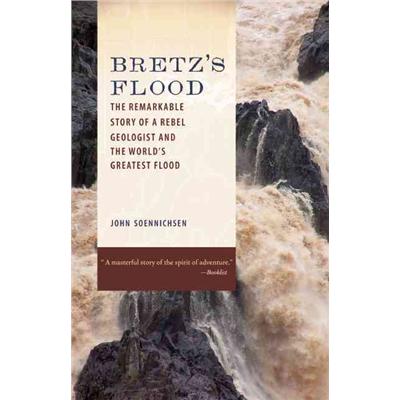
Stewing in the heat of the wave washing over much of the east, my thoughts sometimes turn to the cool, refreshing flood of Genesis. I’ve been Tweeting the Bible for some months now, and I am in the midst of the stories of the flood. Noting the many contradictions and discrepancies, it is a wonder to me how many of the religious are able to overlook or harmonize infelicities for the sake of a consistent faith. Most famously the story states that Noah took one pair of the clean animals, but also seven pairs of clean animals. The rain came down forty days. Or was it 150? One of the reasons that people continue to believe this story may be its specificity. No approximations or guesses, the numbers are precise, as if written down by an eyewitness at the scene. In actual fact, the story is among the oldest of recorded civilization and has its origins at least as far back as ancient Sumer. For as long as people told stories about the gods, they told stories about world-wide floods.

As a species that is able to think ahead, we have long been concerned with the fate that might befall us. Consider the amount of hype about the end of the world that has accompanied the random calendrical dates we’ve assigned to the cosmos: the world has been expected to end nearly every year since 2000, and that is only the most recent incarnation of this foreboding. If there are gods out there, they must have it in for us. The very fact of our being human seems to anger the deities. Even after God promises the world will never again be destroyed, he adds a caveat—not by flood, anyway. By the time we reach the letters near the end of the Christian Scriptures the future torment has turned to fire. There’s always something out there looming on the horizon.

“Prometheus teacher in every art brought the fire that hath proved to mortals a means to mighty ends,” so reads the quote from Aeschylus behind Paul Manship’s statue of Prometheus. Prometheus was the Greek god (Titan, actually) favorably disposed toward humanity. His name means “forethought.” When humanity cowered and shivered in the dark, Prometheus brought the light and warmth of fire. It is easy to suppose the Greeks to have been more enlightened than earlier or contemporary civilizations, but Prometheus had offended Zeus and was subject to eternal torment for his thoughtful gift. Perhaps it is just the divine way—gods are jealous of us although they hold all the power. As I continue to tweet the good news of an angry god, I am starting to understand the power deities will always have over their vulnerable creatures.


Ebenezer

Providence has been on my mind lately. Most obviously, traveling to Providence for my niece’s graduation from Brown brought the city back to mind.  A book I’ve been reading has been referencing H. P. Lovecraft, a person readily associated with Providence as well.  And who can forget the Baptists?  While in Providence we visited First Baptist Church, widely considered to be the actual first Baptist church in America.  Portions of the commencement ceremony are held here, but between times it was open for the curious.  I guess I qualify.

Baptists are a widely diverse group.  In the United States they are often guilty by association with the shenanigans of the Southern Baptist Convention, and given the numeric force of the Baptist Church that can appear a little intimidating.  Nevertheless, Baptists were (and generally are) great defenders of religious tolerance.  Their own non-hierarchical tradition allows considerable freedom within the denomination itself.  Houses of worship (originally meeting houses, not churches) were plain and devoid of symbolism.  That is still a hallmark of most Baptists today.  Inside First Baptist, I was surprised to see a symbol.  A chunk of rock, an Ebenezer, rested on the table at the back of the meeting house.  The origin of a “stone of help” (an adequate translation of “ebenezer’) is certainly biblical-the reference goes back to the story of Israelite victory over the Philistines in 1 Samuel 7.  Samuel is reputed to have set up the stone as a memorial of the unanticipated victory.  After that story, the stone never reappears in the Bible.

The Baptists have always been concerned with idolatry. They do make a point that some Christian traditions rely very heavily on trappings to get the message across.  They are also correct in that early Christianity was a much simpler faith than the densely layered, extremely complex, imperfectly blended varieties of religion that today claim the title “Christian.”  It isn’t a copyright-protected brand and there is little that all Christians could be said to have in common.  As I touched the stone of help, I realized not even all Baptists share the stringent standards of no symbolism in their churches.  That is probably a good thing, because that, in itself, is symbolic.


Civil Rites

Sundays’ op-eds often have sensitive fingers on the pulse of the American religious scene. A piece by Tom Deignan in Sunday’s New Jersey Star Ledger raised a very interesting point about civil religion. Civil religion is, loosely defined, the acting out of religion in a civil-political forum as a cheap form of nationalism. We do it because it works. Noting that a presidential candidate denying the divinity of Christ in the twenty-first century would be engaging in political suicide, Deignan rightly points out that many earlier “Protestant” presidents would—and did—do just that. He notes that Taft, a Unitarian, came outright and said it. No matter the protestations of the Neo-Cons, the founding fathers were Deists, not believers in Christ’s divinity. Thomas Jefferson went as far as to excise all the miracles from his version of the New Testament. The idea that religio-politicking is business as it’s always been done is a myth.

And what a persistent myth it is! Many Protestant denominations trace their ancestry back to founders who believed that they were closer to the apostolic faith than the next guy. They legitimately believed their faith was the original, intended by God, Christianity. Thus it was in the beginning, is now, and forever shall be. Only it’s not true. Religion was purposely written out of the Constitution of the United States with the Bill of Rights declaring its freedom the ideal. What presidents believed hardly played into the concept of their fitness for national leadership in the early days. Now little else seems to matter. Deignan rightly wonders why Mitt Romney is so tight-lipped about his Mormonism. Could it be he fears what critics might say about devising a national budget through rose-colored glasses? Surely his vast personal wealth belies that concern.

So what was the original Christianity? On this point the Bible is amazingly unobscured; early Christianity was Judaism. Jesus was called “Rabbi,” and his teachings weren’t too far distant from Hillel and others near his generation. Paul of Tarsus, who pointed the nascent religion towards its evolution into Catholicism, was also Jewish. Following his faith in resurrection, some early Christians moved into the direction of eventual ritualism. The fancy hats of the papacy, it is fair to say, were never in the minds of Jesus or Paul. Not even Peter. Modern religions, even the primitivist movements, cannot reclaim the Christianity of the first century. That religion does not fit into a world of Internet, cell phones, and automobiles, let alone presidential candidates with wealth befitting King Herod. Let’s just grow up and admit where we are.


Buying the Truth

Every now and again the Chronicle of Higher Education dips its trowel into the biblical archaeology debate. Those of us who’ve made extensive arguments based on ancient texts and artifacts know the territory a little too well. Archaeology, which largely grew out of biblical scholars attempting to “prove the Bible,” eventually started on its own track of scientific respectability with the predictable result of distancing itself from the Bible occurred. So far, so good. Then biblical criticism took a turn towards post-modern sensibilities. The truth cannot be known, and therefore the safest approach is to stop seeking any truth at all. Archaeologists in the know joined this venture (biblical scholars and archaeologists often cross borders in this exotic land), and began to deny historical Israel, as well as the rightly dismissed historical Abraham and Moses. Once you’ve walked a few leagues down that path, however, it is difficult to turn back. This is, of course, an over-simplified account of a complex dynamic, but the issues raised, as seen in the Chronicle, are real. Our perspective flavors our interpretation. If you don’t believe in a historical Israel you’ll never find one, no matter how hard you look. (A similar dynamic is at work in studies of religions and “paranormal” phenomena.) The word “evidence” is finessed as readily as fine hair treatments and the kinds of evidence that convince vary depending on the scholar. It is safest to admit we don’t know, sometimes.

The more troubling aspect, as far as I’m concerned, comes when the Chronicle introduces the concept of corporate sponsorship to archaeological digs. As an erstwhile volunteer on a dig (somewhere back in the Iron Age, it feels like now), I know that archaeology is frightfully expensive. There’s nothing like being on a dig to witness firsthand the amount of labor that goes into removing all that dirt–carefully! Carefully! Universities can’t afford it (stadiums don’t come cheap, you know!), so many digs rely on corporate donors–often television and film companies. And if you’re paying for footage, you want something to bring in watchers. An unnamed archaeologist quipped honestly in the Chronicle, “I don’t agree with everything they say in the films, but they pay me an awful lot more than I could ever earn from writing or teaching.” There it is, staring us straight in the face. The truth goes to the highest bidder.

That may sound benign enough, but in Israel especially, archaeology has high political stakes. You see, politicians are easily swayed by the “we were here first” argument. To get an idea of its specious nature, just ask a Native American! Proving the veracity of a David or Solomon no longer just gets God off the hook, it also builds the basis for claims against people who’ve been here an incredibly long time. The sad reality is that in archaeology, as in higher education, money speaks with an inordinately loud voice. As an agreed means of exchange, money is certainly important, but is it “true”? For those who’ve stopped short of the post-modern abandonment of that great philosophical ideal of Truth, we should be wary of allowing lucre to decide the issue. Those with money already help to decide what courses will be taught and what tels will be excavated. We run a real risk when we let those same people decide what will be considered the truth. In a society enamored of media and its ease of use, the truth is sometimes what comes across the television. There is another way, but it involves heavy digging and lots of reading. Maybe next time—but for now just pass the remote.