The Life Is in the Blood

Finally, after a couple of decades, I got around to watching Francis Ford Coppola’s Bram Stoker’s Dracula. As viewers know to expect of a Coppola film, the cinematography is stylish and artistically exaggerated. It has been even more years since I’ve read Stoker’s novel, the book that gave birth to the modern vampire, but I am pretty sure that the many oblique references to the Bible count among the film’s innovations. Coursing like an artery through the movie is the phrase “the blood is life,” taken from Leviticus 17. I’ve posted earlier concerning the biblical outlook that life is equated with breath, and so it is. The Bible does not always remain consistent on this point — natural enough for a book with multiple authors living centuries apart. Blood and breath obviously share crucial functions in maintaining life.

Stoker

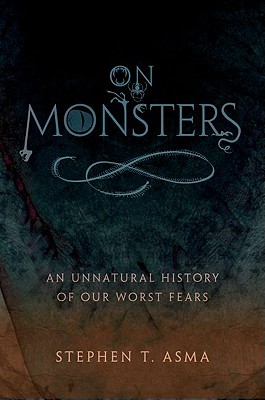
Ancient peoples believed in a world peopled with unusual, quasi-supernatural beings, including blood-drinkers and nocturnal baby-snatchers. Theirs was a world of harsh realities where death was more closely observed than it tends to be in many parts of the world today. The fascination, often coupled with religious underpinnings, continues to engage our imagination today, as can be seen in any given Halloween season or on el Día de los Muertos.

Whether el chupacabra or Bela Lugosi, the fascination with mythical creatures of the night that thrive on the life-source of others is a concept never far from religionists. No matter how many stakes we pound through undead hearts, the unholy bloodsuckers continue to show up in our theaters and on YouTube. A childhood penchant for Dark Shadows books has recently been reactivated in the restless gray-matter in my head. As the days grow shorter and shadows become an increasing element of daily experience, I marvel at how the human imagination parodies our daily experiences, dressing them up in fanciful garb to parade about with the other ghosts of October. What is perhaps even more unusual is that money is still to be made in this business of selling the parasite. How else can we explain Buffy and all her cohort? The life is indeed in the blood.


God’s Wife

Podcast 13 follows up on the previous two posts concerning Asherah. Here a little more background is provided on the discussion/debate concerning the goddess. I trace the origins of Asherah, best attested at Ugarit, and explain why this should be our primary source of information about the character of the goddess. I consider the 40 biblical passages briefly before moving on to the Mesopotamian, Hittite, and Epigraphic South Arabian material. Clearly the most important evidence for the debate on whether Yahweh was wed or not is the set of inscriptions from Kuntillet Ajrud and Khirbet el-Qom. I examine these bits of evidence as well, explaining why I doubt that they intend to portray a divine couple. The podcasts closes with what I believe to be the way forward — a clear understanding of Asherah based on Ugarit and read without a scholarly agenda (yes, they do exist!).


Let Us Make Moses in Our Own Image

This week’s Time magazine contains an article entitled “How Moses Shaped America” by Bruce Feiler (actually it is an abstract from his book, America’s Prophet: Moses and the American Story). Feiler points out how Moses has been manipulated and utilized by various factions of American society from the earliest pilgrims up through President Obama’s campaign. There’s some interesting stuff here, from the proposal of the Great Seal that depicts the parting of the Red Sea to the Mosaic elements in the Statue of Liberty. No doubt about it, America loves Moses.

As intriguing as I found Feiler’s thesis, I couldn’t help but be a little bit disturbed by it. Serious biblical scholars are early taught to avoid prooftexting like a plague of frogs. Prooftexting is part of a Fundamentalist’s daily spiritual calisthenics, right after chapter-and-verse-presses. Prooftexting is pulling random Bible verses out of context to support a confessional position on any issue. You can always tell it’s coming when someone opens with “the Bible says…” Then you get a chapter-and-verse punctuation mark. What Feiler is describing in his article is just that, a use of Moses that fits the crisis of the moment. While there is nothing wrong about looking to a great leader in time of need, whether that leader be mythical or historical, I wonder how different this is than marching into battle with “Gott und Ich” inscribed on your belt-buckle.

One statement Feiler makes, however, I must take exception to: “With the rise of secularism and the declining influence of the Bible in the 20th century, Moses might have melted away as a role model.” No doubt secularism was in the ascendant during the twentieth century, but the influence of the Bible was never stronger. The twentieth century saw the Bible co-opted as part of a powerful political agenda that drove this nation to the brink of destruction. Never before had the Bible been used to deceive many thousands of untrained religious believers in the ways of war and greed and inhumanity. Bible-thumping had become more effective than rational thinking or coherent speech in the political debates we all so painfully watched. No, the Bible’s influence has not been shrinking. What is needed is a Moses to wrestle it back to its proper place. Even the Bible can be a golden calf.

Moses gets down

Moses gets down


Origin of Dragons

The ancient Greeks often take the credit for concepts they borrowed from the Ancient Near East. When casting about for the origin of dragons, a staple, if unstable, element of ancient Semitic myths, the credit often lands in ancient Hellas. Those of us influenced by western culture prefer the Greek versions of myths because they tend to be (mostly) coherent and do not have large gaps like those scrawled on fragmented clay tablets. Also, the word “dragon” traces it etymology to ancient Greece where it apparently derives from the verb drakein, “to see clearly.” Often commentators suggest that the rationale for the name is that dragons guard treasure and need to see clearly to do so.

Babylonian dragon

Babylonian dragon

Dragons, however, actually first appeared, like so many western civilizations concepts, in Sumer. In the ancient world, what we would recognize as dragons are always associated with water. Water is an uncreated element, existing as the primordial substance from which everything emerges. It is personified as a dragon that must be subdued for creation to take place. Images of the dragon from somewhat later time periods in Mesopotamia already depict the familiar form we still recognize as draconian.

Marduk astride Tiamat

Marduk astride Tiamat

The Bible has its share of dragons as well, although they never actually existed. Tannin, whose name probably relates to serpentine features, is regularly cited as a biblical dragon. Leviathan, as described in Job 41, has scaly skin, lives in the water, and belches fire (perhaps having taken lessons from televangelists). These characteristics probably played into modern conceptualizations of the dragon. Fire breathing, however, is first attested with Humbaba, the Cedar Forest guardian of the Gilgamesh Epic. Humbaba is not a dragon, but he may be the ancestor of our fire-breathing Leviathan. Some ancient iconography may also show fire projecting from the mouths of dragons as well.

Humbaba (center) on a bad day

Humbaba (center) on a bad day

Traditional Mesopotamian dragon

Traditional Mesopotamian dragon

I would even venture to suggest that the origin of the name dragon could go back to ancient West Asia. The idea of seeing clearly reminds me of the ancient cherubim. According to Ezekiel, they are full of eyes. This complements their role as guardians of the thrones of ancient deities. Cherubim are Mischwesen composed of lions, eagles, humans, bulls, or any other spare parts lying around. In my imagination it doesn’t take much to shape them into dragons, the original watchers.

A true cherub

A true cherub

No matter who coined the word, dragons have been with us from the beginning of human civilization and continue to live on in popular culture. Maybe they are, like the unruly waters, truly uncreated.


Noah’s Lark

This podcast deals with the myth of the great flood. It begins with a consideration of why modern expeditions do not find anything (nothing to be found), and considers the reasons the story is so appealing to present-day readers. The Sun Pictures productions on the flood story are reviewed, along with the story of the hoax played on Sun in their 1992 made-for-television movie. The history of the flood story is briefly narrated, beginning with George Smith’s 1872 discovery of the Mesopotamian flood story, back to Atrahasis and the Eridu Genesis from Sumer. The flood story is one of the earliest religious stories known.


Science Me This

I’ve just finished going over the creation and flood myths in Genesis 1–11 with my students. By my reckoning, this is about the twentieth time I’ve taken this journey. One comfort of walking a well-known trail is you know what to expect. The fact that always sticks in my mind is how good of a job the Creationists have done. In every setting where I have taught I have many students who unquestioningly accept that Genesis 1–11 was written as science by some kind of Mosaic mosaic of scientist, law-giver, and prophet, a regular Bronze Age Renaissance man. Since biblical scholars do not communicate well with the public (nor do they play nicely with each other), most students come into class wondering why the Creationist viewpoint is even under question.

I want to suggest something radical here: in our culture where science, technology, and finance are highly valued, we neglect to educate our kids in the basics of literary study. Schools push the technological envelope, and this is not a bad thing, but the kids come home and are shuffled off to church where the Bible is revered and a basic disconnect forms in their minds. A compartmentalized Bible, factually true, resides in one region of the cortex while in another scientific theory lurks. And when fact clashes with theory, fact always wins. They know they have to tell biology teachers that they understand evolution, they simply don’t believe it. They come to collegiate religion classes expecting Sunday School part 2.

Just this summer a grown man, Randall Price, director of Liberty Uni-, Univ-, University’s (sorry, I always choke on that one) Center for Judaic Studies once again made the weary trek to Mount Ararat to find Noah’s Ark. If he’d read Atrahasis or even Gilgamesh, he might have known he was looking in the wrong place. Nevertheless, he received coverage from a major news network (FOX, of course!), and those who never studied ancient mythology cheered him on. If we could teach children that the Bible is a literary document, teach them that it can be studied seriously, and that the Big Bang and “let there be light” are not the same thing, we might make some progress. Until then, we will have to contend with silly cartoons trumping hard-earned education.

Jack Chick has more publications than any Bible scholar

Jack Chick has more publications than any Bible scholar


Banned Bible?

Florian b.'s 2005 image

Florian b.'s 2005 image

It’s Banned Book Week again. Each year the American Library Association promotes free thought by raising awareness of books that have been, or currently are, banned. Having just exited ABE books’ Weird Book Room (among the currently featured: Paint it Black: A Guide to Gothic Homemaking, The Bible Cure for Irritable Bowel Syndrome, and Is Your Dog Gay?), it is easy to see how the morally squeamish might wish that some books had never been written, but being a firm believer in personal expression, I give them a rousing cheer. Odd ideas are also among the Lego blocks that build our world.

I also ponder the texts with which I have spent so much time, and wonder what the ancient censors would have done with the great classics of antiquity. History’s first great novel, the Epic of Gilgamesh, would certainly have been on their crushed clay list. On only the second tablet we read, “Enkidu sits before the harlot. The two of them make love together… For six days and seven nights Enkidu came forth, mating with the lass. Then the harlot opened her mouth, saying to Enkidu: ‘As I look at thee, Enkidu, thou are become like a god” (Speiser’s rather tame translation). A sex scene with the first woman Enkidu ever met? We can’t have our kids reading that! Where do you put the V-chip in this tablet?

Perhaps the people of ancient Ugarit would have fared better? Their epic tale, the story of the trials and ultimate triumph of Baal, includes his unfortunate defeat at the hands of death. Baal is ordered to the underworld. “Mighty Baal obeyed. He loved a heifer in the pasture, a cow in the steppes of death’s shores, seventy-seven times he laid with her, she let him mount eighty-eight times.” Whoops! Hope the kids weren’t reading that. Surely this is some kind of sacred marriage ritual with Anat and not a cow? Good thing we never figured out where KTU 1.10 fits into the cycle! There’s another one for the rock crusher.

It’s a good thing the Egyptians were more civilized. Their culture would never allow for such liberal, naughty writing, would it? Well, maybe if we ignore the Memphite Theology. Not for the shy, here we are told how Ptah brought the Ennead into being using just his fingers.

I started reading the Bible as a child. To my surprise, it would not have gotten away with a G rating either. It seems to me that books deal with the greatest complexities human beings face. Sacred books as well as secular delve into the darker grottoes of the mind, and here the Bible is clearly among them. If we had systematically destroyed all written work that had offended others throughout history, we wouldn’t even have the Good Book left to argue about.


Fundamentalist Foibles

Podcast 11 deals with the phenomenon of Fundamentalism, particularly biblical Fundamentalism, and its history. The podcast begins by setting the historical parameters, in the early part of the twentieth century, and considers some of the reasons that the movement may have begun. German biblical criticism, Darwin’s theory, and the First World War among them. A brief sketch of the movement is then offered, starting with the Niagara Bible Conference and the publication of The Fundamentals. The basic tenets of the belief system are summarized, again with suggestions as to why this may have been the case. A cautionary conclusion ends the presentation.


The Original Mud-bloods

“Let Nintu mix clay with his flesh and blood.
Let that same god and man be thoroughly mixed in the clay.”

This quote is from the myth of Atrahasis (Benjamin Foster’s translation; my Akkadian’s a bit shaky these days), an early version of the flood story. Although I have a burning itch to write about the flood, I would rather focus on the creation of humanity in this post. Maybe it is because in my unemployed mode it is easy to think of myself as only dirt and blood, but maybe it is because in my evening class we’ve just been talking about creation stories.

One of the benefits of polytheism is the lack of a pressing need to ascribe uniformity to your myths. Ancient peoples who believed in a multiplicity of gods had a wide variety of versions about how the world was created, where people came from, who sent the flood, and so forth. They were not writing about what actually, factually happened — these were myths, for the gods’ sake! Nobody was there to see the creation of humanity, so who’s to say what really happened? One element that is repeated in ancient accounts, however, is the creation of people from dirt.

Perhaps it is because people often treat each other like dirt, frequently with religious motivation, but a more likely explanation is that in ancient times the dead were known to return to soil after they were buried. Logic dictates that if the dead turn to dirt, their living version must have been created from dirt. So far, so good. But dirt isn’t exactly alive. The ancients differed on what animated this soil with a soul.

The Bible presents a lofty account of God breathing air into the soil-man. It is clear that the Hebrew Bible equates breathing to being alive. A person is alive when they first breathe; when they stop breathing, they die. At the same time, blood is an essential component too. This is so much the case that the Bible dictates that “the blood is the life” (Deuteronomy 12.23). For this idea the Israelites were indebted to the Mesopotamians. As seen in the Atrahasis Epic, humans are a mix of clay and the blood of the gods, the original mud-bloods. For all their differing opinions, the ancients realized that in this messy world of dirt and dread, human beings, for all their problems, had a bit of the gods within their very veins.


Intelligently Deceived

One of the most difficult things about the life of the academic gypsy is having tons of books. Literally tons. Having been cast from institution to institution in search of that mythical full-time teaching post, we’ve put books in storage and sometimes even forgotten that we’ve had them. So it was that when I was looking for a copy of Great Expectations for my daughter’s English class assignment, I was in the dusky attic, hoping the upstairs neighbors didn’t burst in on me, up to my armpits in boxes of books, that I rediscovered a treasure. Taking a leaf from Dr. Jim’s Thinking Shop, I decided I would review a few of the Creationist books I grew up with. Fortunately I had the presence of mind to keep them although I’d long dismissed their facile, often juvenile, point of view. They have provided great entertainment and even some poignant instruction in the ways of manipulating the minds of the young. Fear of Hell is a great motivating factor to a kid who sees ghosts in every corner and finds bats on his pillow!

So, without further ado, I present the top 5 creationist books of my youth. (Those that I purchased as an adult I bought from used bookstores so as not to add any royalties to the fundamentalists’ already bursting coffers.)

Textbook

We’ll begin with the textbook. Scientific Creationism makes no pretense, such as the “Intelligent Design” school does, about being non-(necessarily-but-we-all-just-happen-to-be)Christian specific. Here Henry Morris begins with the assertion “the Bible and theistic religion have been effectively banned from [public school] curricula” and offers the present book as a corrective to the situation. A better title for the content, however, might have been Scientific Fiction.

GenFlood

The work that really opened the flood-gates, so to speak, was The Genesis Flood. This craftsterpiece was penned by Henry Morris (again) and his compatriot John Whitcomb. Both proudly proclaiming themselves “doctors” they point out “evidence” designed to confuse the unsavvy into believing that there is a physical way the world could be entirely flooded. They even make room for dinosaurs on the ark, noting that they would have been juveniles of the various species. I’ve been in academics long enough to know that a Ph.D. does not guarantee credibility (or even sanity) on the part of the holder. The fact that Whitcomb’s doctorate is from Grace Theological Seminary ought to speak quite plainly as to its objectivity.

Gish

Written by Duane “the Fish” Gish, Evolution, the Fossils Say No! is an attempt to demonstrate that since not every single phase of the fossil record has been uncovered, the whole theory of evolution is in shambles. Gish, one of the few authentically scientifically credentialed Creationists, should have been able to see that his “back-and-fill” technique was going to fall on hard times as new fossil forms were discovered. As the fossil record grows more complete each year his book becomes more and more outdated.

EvolutionHS

Evolution and the High School Student terrified me in my delicate years. This booklet intimated that when I reached high school the unending assaults of the atheistic non-believers would be unrelenting. I feared for my very soul. Instead, in high school I found nose-picking, pocket-pool playing, and chalk-print-on-the-pants-seat teachers were among the openly committed Christians. Some even kept Bibles on their desks. (This was a public school.) The book lost its teeth.

GooZoo

My personal favorite is How Did It All Begin? (or From Goo to You by Way of the Zoo) by Harold Hill (obviously when he was not out swindling River City, Iowa folk of their hard-earned cash to start a bogus boy’s band). This booklet, complete with cute, cartoon drawings, convinces grade-schoolers that evolution answers no questions at all. He had me going as a kid, until I got to the part where he claimed scientists had invented a machine that could indicate if you were “saved” or not. Even as a gullible child I couldn’t buy that.

The efforts of the Creationists are tireless. Even this brief survey of books that I happened to chance upon is nowhere near a comprehensive survey of what is out there. What it does serve to demonstrate is that all reasonable people should be wary. After all, even Jesus knew that a person in the wrong, if persistent enough, could convert even a hard-hearted judge.


Good Book, Bad Seeds

A gray day in September. Nowhere to go, nothing to do. A stark melancholy races on the winds of a distant nor’easter. It is a perfect day for The Boatman’s Call.

Searching for land

Searching for land

I have to admit up front that I found out about Nick Cave & The Bad Seeds from the Shrek movies. The soundtrack crew from the first two movies did their homework exceptionally well, tapping some truly desultory, lugubrious tunes from artists who don’t make the top twenty. I was so taken by “People Ain’t No Good” that as soon as I could afford it I purchased the album (The Boatman’s Call, not Shrek II). The album begins with the line “I don’t believe in an interventionist God, but I know darling that you do . . .” Throughout the album the achingly sacred and profoundly profane are blended in an eerily subdued way. The music is haunting and thought-provoking. Almost each track on the album has a biblical reference, but these references are mixed with what would be crude if handled with any less artistry.

All that I know about Nick Cave is what I’ve read on Wikipedia, but it is clear that he is well versed in the Bible and makes effective, if dark, use of religious imagery. Perhaps the reason I admire this album so much is that Cave’s ambivalence toward religious structures is so honest. He isn’t out to convert anyone, nor is he willing to let go of his religion. The religion that wafts out of the drafty attic of this disc mirrors the complexity that faith ought to possess. Especially on a dark and rainy autumn day.


Sternutation Salutation

Perhaps it’s the specter of swine flu or perhaps it’s the onset of the autumnal allergy season, but sneezing is unmistakably prevalent. While meeting with one of my students this past week, I was asked why people said “God bless you” after someone sneezed. Immediately my mind went back to the explanation I’d learned in some history class that superstitious folk in less enlightened times supposed that your soul flew out your nose and mouth during a sneeze and wished to ensure a safe transition of a person’s spirit back inside. Others trace the phrase to the period of an early plague when Pope Gregory had Kyries sung at sneezes to prevent the spread of disease (although plague was not really characterized by sternutation as much as buboes). Still others continue the myth that one’s heart stops during a sneeze and the comment is simply a verbal defibrillator of sorts.

In my mind a cough is much more sinister than a sneeze, but we have no standard verbal accompaniment to coughs. The same is true for hiccups, belches, or, God forbid, something even worse. How does the humble sneeze achieve a status so as to invoke the divine? Soul-spewing aside, sneezes are naturally violent events. Some medical experts clock dramatic sneezes at up to 650 m.p.h., inciting the question of how we might harness such energy. Unlike coughs, hiccups, burps, or — ahem — other expulsions, the sneeze solely involves the respiratory tract. In the ancient world breathing is life. The standard measure for viability in the Hebrew Bible is not a beating heart or even a functioning brain (a relief to many Republicans), but breath. Those who do not breathe do not live. The sudden loss of breath via a sneeze could be cause for alarm.

Zeus seconds the motion

Zeus seconds the motion

The humble sneeze is even mentioned in the Bible, although the “God bless you” part is not. In 2 Kings 4.35 Elisha, emulating his master Elijah, revives a dead child. Significantly, when the child reanimates, he sneezes seven times. He is breathing, but not yet out of danger. In ancient Greece it was supposed that sneezes were messages from the gods, a kind of Hellenistic “Amen!” to eloquent rhetoric to which the gods just couldn’t hold their applause. No one knows just when “God bless you” was attached to the sneeze, but it is difficult for those accustomed to remark on sternutation to hold still. Even in classes of 70 students or more, a sneeze out there in the audience is always followed by a “bless you” from across the room. Whether it is a message from God or a harbinger of H1N1 I’m just not sure.


By the Numbers

Just when you thought it was safe to go back to the airport, the Bible Code strikes again! This morning’s newspaper carried the story of Jose Flores, a would-be hijacker of Aeromexico Flight 576. Flores boarded the flight with a Bible and fabricated a pretend bomb out of a juice can (the story doesn’t specify exactly what kind of juice —) and instructed the pilot to fly around Mexico City a Jericho-esque seven times. Flores informed the flight attendants that he was part of a set of four hijackers, the other three, he later revealed to police, were the Father, Son, and Holy Ghost. The flight landed safely and Flores was extricated from the plane. Why all the fuss? Yesterday was 9/9/09. Flores realized (with or without the help of his three co-hijackers) that upside down this would be 666. Safely on the ground he told reporters “Christ is coming soon!”

So once again we meet a believer in coded messages in the Bible. Clearly one of the most misrepresented books in the Bible is Revelation. This book is a textbook example of apocalyptic writing, a genre wide-spread and easily recognized in the ancient world, but which suffers from being taken literally by people living a couple millennia after it was penned. Even before the ink slipped from John’s pen (we don’t know John’s last name), people were looking for a new world to burst in on this old one in need of radical repair. That urgency has continued unabated for two thousand years.

Is life really so bad that we need it to end? Apocalyptic outlooks are perfectly understandable among the disadvantaged and persecuted that they were intended to console. It is a strange phenomenon, worthy of a sociological dissertation, why many affluent, educated people strain for the end of this god-awful world where they are so comfortable. Perhaps it is that we evolved from lemmings rather than primates, but it seems to me rather another example of the wealthy taking from the poor. Even their hopes of sticking it to the rich have been co-opted.

Something to look forward to?

Something to look forward to?


Bible Land

Once upon a time I took a trip to visit a friend in West Virginia. I made the drive from New Jersey across parts of Pennsylvania and Maryland. Having grown up in Pennsylvania I never supposed it to be considered part of the “Bible Belt,” but it seems that some of the spillover may be making its way north of the Mason-Dixon line.

Interstate 78 has recently struck me as being highly evangelized. I saw a billboard reading “Blessed is the nation whose God is the Lord” and remarked at how out of context this verse was taken. Last time I checked, the Bible tended to be concerned with Israel, not the United States. Further along I saw a church near Bethel, PA called the Assembly of Yahweh. Not being aware that there was confusion as to who the God of the Israelites was, it amazed me to see that they have their own radio station called “The voice of the Assembly of Yahweh.” This struck me as a missed opportunity; the real message could have come through more clearly with “of the Assembly” left out. Yet further along was an ominous billboard from a local Mennonite Church that sounded eerily like Amos. “You Will Meet God” it announced.

Storm's a-comin'

Storm's a-comin'

As I entered Maryland the sales tactics intensified. In Frostburg there was God’s Ark of Safety Church where an actual replica of Noah’s Ark is being built right along Interstate 70/68. Since the steel frame is all that was currently finished, I was glad that it hadn’t recently been raining. Perhaps a more recent translation of the Bible has updated gopher wood to Bethel steel. Further along I spotted a lighthouse atop a hill over a hundred miles from the nearest substantial body of water. This was the World Lighthouse Worship Center. While visiting an actual lighthouse on Lake Superior a few years back the docent informed me that lighthouses were now considered superfluous with the advent of Global Positioning Systems. (Shhh — please don’t inform them that science has again trumped a quaint piece of folklore! I can imagine that the lighthouse may be useful when the new ark is completed.) Along route 219 in McHenry, MD I saw “A House of Love Gathering Place” that I just couldn’t dissociate from the B-52’s for some reason. Just about on the border to West Virginia was the Fresh Fire Church of God.

The United States is truly an impressive reservoir of biblicism. Perhaps university administrators who believe the study of religion isn’t worth the meager salary of an assistant professor should take a road trip. It would be a learning experience.