What’s Wrong with Heroes?

There can be no doubt that under Trump conservative Christians have been flexing their muscles.  Few things corrupt so readily as political power, and evangelicalism—already an unrealistic way of looking at things—is itching to throw punches.  A story on For Reading Addicts that my wife sent to me bear the title “DC Comics cancel latest comic after backlash from conservative Christians.”  The piece by Rowan Jones notes that Second Coming was cancelled due to pressure from evangelicals with the cultural sensitivity of the Kouachi treatment of Charlie Hebdo.  Cartoons, it seems, are a real threat to true believers in a way that reason is not.  Jones notes that the comic was actually largely supportive of Christian values, but like an evangelical Brexit the reaction was taken without understanding the issue.

The anger of conservative religions—it hardly matters whether they are Christian, Muslim, or Aum Shinrikyo—often plays itself out in displays of violence.  I wonder if part of this insecurity comes from the fact that the expectations of their faith don’t work out they way they’ve been led to believe they will.  The myth of the blessed existence of the true believer is given the lie by life in a secular world.  While the evangelicals support Trump, 45’s tax plan takes money from their pockets and hand it to the ultra-wealthy.  This raises no objections, but a cartoon showing Jesus helping the poor?—now that’s offensive!  And still no second coming takes place.  It’s difficult to retain a fantasy view in the face of cold reality.

Who doesn’t like a hero?

Religious beliefs are a deeply personal matter.  It is a dicey business to try to get someone to change their outlook when they’ve been convinced that the consequences are eternal.  Although vaguely aware of other religions all along, Christianity in the “new world” was taken quite by storm at the 1893 World’s Parliament of Religions in Chicago.  Suddenly it was clear that other moral, decent religions had developed similar ethics to what had largely been supposed to have been Christian innovations.  It’s difficult to feel superior when others in the same room seem just as intent on improving the lot of humankind as you do.  Even when a particular religion holds all the political power of a nation it’s overly sensitive to cartoons.  This is a curious situation indeed.  I’m not a comic book reader—I don’t even have time for internet articles unless someone sends them to me with the suggestion that they’re worth my time.  And I, for one, think a little more humor might just make the world a better place.  Either that or we need a hero.

You Call That Working?

A recent post of mine on the United Methodist Church got a lot of response (for me, anyway) on other social media.  As I pondered this—I’ve written about the topic many times before—it occurred to me that most people probably have no idea what biblical scholars do all day.  (That is, besides write books that only other biblical scholars read, and teach their classes, or, very occasionally, edit books.)  Biblical studies is arguably one of the oldest academic pursuits in the world and what it boils down to in a word is “contexts.”  We try to understand the multiple contexts of the biblical texts.  Think about this a second: when you pick up a book, newspaper, magazine, or their electronic equivalents, what is the first, if often unconscious, thought you have?  Isn’t it something like “what kind of book, newspaper, etc., is this?”  Is it fiction or non?  Is it reputable or not?  Who wrote it and when?  These are all contexts.

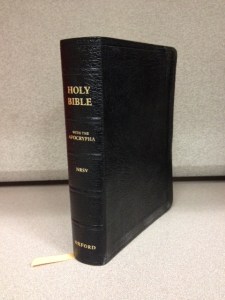
The Bible was written about two millennia ago.  Very little of that original context still remains.  In fact, none of the original manuscripts even still exist.  It was a book written in Hebrew, Aramaic, and Greek.  The vast majority of people in the western world do not read these languages, and so the Bible comes to us in mediated form—translation.  Translation, as any writer knows, is a form of interpretation.  It is not, and can never be, the original.  To figure out what the Bible “means” it has to be interpreted—even just reading it is a form of interpretation.  Biblical scholars want to be able to interpret it in informed ways.  We learn about its various contexts and use them to help us understand.

What did people think like thousands of years ago?  Can you even remember what it was like to look up a distant location without the internet?  Writing letters or dialing a rotary phone to get information on it?  Going to triple A to get maps?  And all of that was only two decades ago.  Life in biblical times was very different than life today.  The people then didn’t understand science the way that we do.  The writers of the Good Book didn’t have any idea that what they were scribbling would one day be considered holy scripture.  They had completely different contexts.  Whether the contexts are historical, literary, or social scientific (we still haven’t figured out an elegant way of saying the latter) biblical scholars use a variety of methods to get to those contexts.  We can’t go in with the answers already in our heads—if we did we’d only find what we were looking for.  At the end we have an answer, not “the” answer.  And so biblical studies continues.


Quoth Hardy

There are days when the quote from an author is the best thing to happen to me.  You probably know those kinds of days—days when there’s nothing really to stay up for so you go to bed early.  Lengthy days when your Muse wins easily any game of hide-and-seek.  You see, I save most of my fiction reading for bedtime.  If I turn in soon enough I can read quite a bit before falling asleep.  Not to sell you a false bill of goods, but that’s not the source of the quote.  It actually came to me from an unrelated email about the Bible.  The quote, while lengthy, comes from Thomas Hardy:

By the will of God some men are born poetical. Of these some make themselves practical poets, other are made poets by lapse of time who were hardly recognized as such. Particularly has this been the case with the translators of the Bible. They translated into the language of their age; then the years began to corrupt that language as spoken, and to add grey lichen to the translation; until the moderns who use the corrupted tongue marvel at the poetry of the old words. When new they were not more than half so poetical. So that Coverdale, Tyndale, and the rest of them are as ghosts what they never were in the flesh.

This comes from a letter to Professor D. A. Robertson of the University of Chicago, dated to February 1918.  Hardy was a known critic of religion, but like most writers of his day he knew the Bible.  Now, I’d never generally put myself on the same page with Hardy, but something similar to this thought had occurred to me long before I saw this quote.  We treasure ancient writing simply because it has survived.  This should be a sobering thought to any of us who try to forge our thoughts into words.  We have no way of knowing if, at the time, an author was considered great.  Merely the passage of time can make writing unfashionable in its age appear brilliant.  Like rocks tumbling over each other at the base of a cataract, they find polish over time.

My particular context for receiving this emailed quote was the King James Version of the Bible.  Often considered sacred in that translation, it was not uniformly well received when first published.  There had been English Bibles before, and since the Good Book is the foundation of western literature, a new translation commanded attention.  It had its critics, but over the centuries the translation itself became holy, whether it deserved it or not.  Similarly, Martin Luther’s translation of the Bible helped to codify the German language.  We shouldn’t be too quick to dismiss Scripture, not for its theology, but for its immense influence on western thought.  As Hardy noted, it may be the passage of time that makes writing great.  Even so we might be wise to pay attention.


Not Your Parents’ Bible

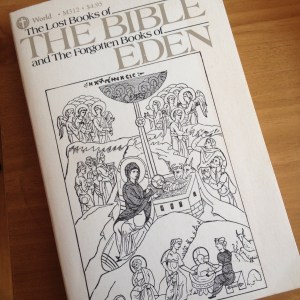
As someone always interested in origins, I reflect on how I’ve ended up the way I have.  I mean, who plans to end up a Bibles editor?  In the grand scheme of a universe with a sense of humor, it’s an odd job.  I grew up reading the Bible, but lots of people do.  Most of them end up with ordinary people jobs.  Obviously, working on a doctorate in the field is admittedly strange, but then, my interests have always been to get to the truth.  The other day I spotted a book on my shelf—the book that arguably started it all.  The Lost Books of the Bible and The Forgotten Books of Eden.  These days I would recognize this for what it is, a cheap reprint of a book published quite some time ago (1926 and 1927).  No “value added content.”  Just a reprint.  But why did this book have such influence?

It was the first time I’d realized—and growing up in poverty with parents lacking college educations you have to teach yourself a lot—that there were other books about as old as the Bible.  The idea fascinated me.  Somehow my fundamentalist upbringing had convinced me the Bible was the first book ever written—after all, its author was God and how much more primordial can you get?  Now this particular book (Lost Books of the Bible etc.) contains some apocryphal Gospels.  Not having a strong grasp on the concept of canon, I wondered why these books had been excluded, or, to use the title conceit, “lost” and “forgotten.”  In college I would learn about the canonical process.  I’d hear more about it in seminary.  There I would learn that even older sources existed.  In the pre-internet days, in a rural town without so much as a public library, how would you find out about such things?

Helmer Ringgren’s Israelite Religion captured my imagination in seminary.  Even there, however, nobody on the faculty seemed to know much about what had come before the Bible.  Harrell Beck told us of ancient Egypt in our classes, but clearly there were further depths to plumb.  I learned about James Pritchard’s Ancient Near Eastern Texts, which I bought at the Harvard Divinity School bookstore.  Other texts went back beyond Holy Writ.  Just how far would have to wait until the University of Edinburgh.  I sometimes wonder if I might’ve taken a different turn here or there had anyone been able to answer my young, unformulated questions about the origins of the Bible and other ancient books.  Now we just have to ask the internet.


Weaponized Scripture

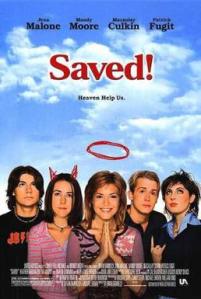
One of the many questions that haunt evangelical Christians is whether it is okay to watch horror films or not.  The same applies to whether it’s okay to listen to rock-n-roll (even as it’s reaching its senior years).  Cultural accommodation is often seen as evil and evangelicalism, as a movement, is frequently offered as a culture all its own.  I recently rewatched Brian Dannelly’s Saved!, a coming-of-age comedy about a group of teenagers at American Eagle Christian High School.  Gently satirical, it portrays well how evangelicals try to redefine “cool” in a Christian mode.  Taking tropes from pop culture and “baptizing” them, Pastor Skip—the principal—assures the young people that they’re every bit as cool as secular culture icons, only the Christians are going to heaven.

The film came out when I was teaching at Nashotah House.  That seminary also had problems with secular culture, but in a completely different way.  Its method was basically to ignore that culture.  Isolated, Anglo-Catholic, one might even say “Medieval” but for the sanitation, it was likely not a safe place for a professor to be watching such films.  Evangelicalism and right-wing Catholicism were beginning to find each other.  Once the cats and dogs of the theological world, they were becoming more like goldfish in their bowl, watching a strange and unnerving world just outside the glass.  A world in which they couldn’t survive.  Now, Saved! is only a cinematic version of this, but it has a few profound moments.  Mary, the protagonist, comes to see the hypocrisy of both the school and her former friends when she supports a boyfriend who is gay.

At one point her friends attempt an intervention.  They try to exorcize Mary, and when that fails one of them throws a Bible at her.  Picking it up, Mary says “This is not a weapon.”  Since this movie isn’t by any stretch of the imagination horror, I didn’t address it in Holy Horror.  As I rewatched it in the light of that book, however, I recognized a motif I did discuss in it.  The use of the Bible in movies is extremely common.  That applies to films that don’t have an overt Christian setting such as this one does.  The iconic Bible is a protean book.  Despite what Mary says it can indeed be a weapon.  It often is.  Many of us have been harmed by it.  Christian separatist culture has its own dark side, even if it’s carefully hidden, its adherents think, from the secular world outside the fishbowl.


Terror Text

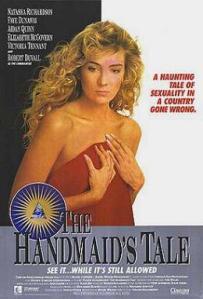
Dystopia reading and/or watching may be more practical than it seems.  History often reveals authors who may be accused of pessimism more as prophets than mere anxious antagonists.  Two books, according to the media, took off after November 2016.  One was George Orwell’s 1984,  and the other was Margaret Atwood’s The Handmaid’s Tale.  I’d read both long before I started this blog, but I recently asked my wife if she’d be interested in seeing the movie of the latter.  While teaching at Rutgers, I had a 4-hour intensive course and to give students a break from my lecturing I’d have us discuss Bible scenes from secular movies.  The Handmaid’s Tale was one of them.  Watching it again last night, I realized the problematic nature of Holy Writ.

The Handmaid’s Tale is a movie (and novel) that involves what I call “Bible abuse” in Holy Horror.  That is to say, the Bible can be used to oppress rather than to liberate.  To cause human suffering instead of eliminating it.  Sure, to make Atwood’s dystopia work a future catastrophe of fertility has to occur, but the military state, the assumed superiority, and the will to control on the part of men are all too real.  We’ve witnessed this in the United States government over the past two years.  A lot more has been revealed than personal greed—that side of human nature that quotes the Good Book while doing the bad thing.  In the movie it’s literally so, while our “leaders” are only a metaphoric step away from it.  Although it’s not horror, it’s a terrifying movie.  I still have trouble watching The Stepford Wives.  Why is equality so easy in the abstract, but so difficult when it comes to actual life?

Aggression is not a social value.  This is perhaps the most ironic aspect of using Scripture to enforce oppressive regimes.  The whole point of the New Testament is self-denial for the sake of others.  That may be why the only Bible reading in the movie comes from the Hebrew Bible, the story of Jacob and Rachel.  Although this isn’t one of the traditional “texts of terror,” to borrow Phyllis Trible’s phrase, it nevertheless illustrates the point well.  A culture that values women only for their reproductive capacities is dystopian to its very core.  When a book, no matter how holy, is divorced from its context it becomes a deadly weapon of blunt force.  Atwood moves beyond Orwell here—the government that sees itself as biblical can be far more insidious that one that only weighs evil on the secular scale.  Not only the Bible ends up being abused.


Evolving Intelligence

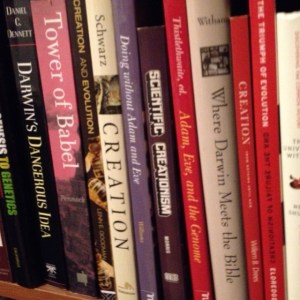
In the process of unpacking books, it became clear that evolution has been a large part of my life.  More sophisticated colleagues might wonder why anyone would be concerned about an issue that biblical scholars long ago dismissed as passé.  Genesis 1–11 is a set of myths, many of which have clear parallels in the world of ancient West Asia.  Why even bother asking whether creationism has any merit?  I pondered this as I unpacked the many books on Genesis I’d bought and read while teaching.  Why this intense interest in this particular story?  It goes back, no doubt, to the same roots that stop me in my tracks whenever I see a fossil.  The reason I pause to think whenever I see a dinosaur represented in a museum or movie.  When a “caveman” suggests a rather lowbrow version of Adam and Eve.  When I read about the Big Bang.

The fact is evolution was the first solid evidence that the Bible isn’t literally true.  That time comes in every intelligent life (at least among those raised reading the Good Book).  You realize, with a horrific shock, that what you’d been told all along was a back-filled fabrication that was meant to save the reputation of book written before the advent of science.  The Bible, as the study of said book clearly reveals, is not what the Fundamentalists say it is.  Although all of modern scientific medicine is based on the fact of evolution, many who benefit from said medicine deny the very truth behind it.  Evolution, since 1859, has been the ditch in which Fundies are willing to die.  For this reason, perhaps, I took a very early interest in Genesis.

Back in my teaching days it was my intention to write a book on this.  I’d read quite a lot on both Genesis and evolution.  I read science voraciously.  I taught courses on it.  I’d carefully preserved childhood books declaring the evils of evolution.  To this day Genesis can stop me cold and I will begin to think over the implications.  When we teach children that the Bible is a scientific record, we’re doing a disservice to both religion and society.  This false thinking can take a lifetime to overcome, and even then doubts will remain.  Such is the power of magical thinking.  I keep my books on Genesis, although the classroom is rare to me these days.  I do it because it is part of my life.  And I wonder if it is something I’ll ever be able to outgrow.


Fossilized Ideas

In our current political climate, perspective helps quite a bit.  Indeed, one of the shortcomings of our conscious species is our inability to think much beyond the present.  In either direction.  Because of the biblical basis of western civilization, a significant portion of otherwise intelligent people believe that the world was created 6000 years ago.  I grew up believing that myself, before I learned more about the Bible and its context.  I also grew up collecting fossils.  Somehow I had no problem knowing that the fossils were from times far before human beings walked the earth, but also that the earth wasn’t nearly as old as it had to be for that to have happened.  Faith often involves contradictions and remains self-convinced nevertheless.

While out walking yesterday I came across a fossil leaf.  Unbeknownst to our movers last summer, I have boxes of fossils that I’ve picked up in various places that I’ve lived.  I find it hard to leave them in situ because of the fascinating sense of contradictions that still grabs me when I see one.  There was an impression of a leaf from millions of years ago right at my feet.  It was in a rock deeply embedded in the ground and that had to be left in place.  Never having found a floral fossil before this was somewhat of a disappointment.  Still it left an impression on me.  Perhaps when dinosaurs roamed Pennsylvania—or perhaps before—this leaf had fallen and been buried to last for eons.  How the world has changed since then!

After that encounter, I considered the brown leaves scattered from the recently departed fall.  Some lay on the muddy path, but few or none of them would meet the precise conditions required to form a fossil.  If one did, however, it would be here after humanity has either grown up and evolved into something nobler or has destroyed itself in a fit of pique or hatred.  We know we’re better than the political games played by those who use the system for their own gain.  The impressions we leave are far less benign than this ossified leaf at my feet.  The Fundamentalist of the dispensationalist species sees world history divided into very brief ages.  God, they opine, created the entire earth to last less than 10,000 years.  All this effort, suffering, and hope exists to be wiped out before an actual fossil has time to form.  It’s a perspective as fascinating as it is dangerous.


Pleasant Dreams

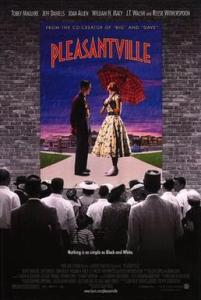
The last time I watched Pleasantville I didn’t have this blog running to discuss it.  It was also during the Obama administration where it felt more like nostalgia rather than a documentary.  In case you’re not familiar, Pleasantville is a movie about how a nerdy teen, David, and his cool sister Jennifer get sucked into a 1950’s sitcom, “Pleasantville.”  They find themselves in black-and-white and in a world as regimented as Stepford, but somewhat more humorously so.  As Jennifer is eager to get back home, she introduces this colorless world to sex, and as the two-dimensional characters begin to experience strong emotions colors start to appear.  The “picture perfect” Pleasantville begins to let the plastic facade of the 1950s slip to reveal a complex and messy world of true humanity beneath.

Watching the film in the age of Trump, as with most things, interjected a current of fear.  The townspeople feel threatened by those who are different, colorful.  They want everything just as it was—women serving their husbands, everyone the same hue, and pretending that sexuality doesn’t exist.  It may have been originally intended as an homage to the the 1960s, but what became clear in an age of MAGA is that crowds easily respond to suggestions of hatred.  Many of those in the group, individually, are “coloreds” themselves, but fear to let it show.  Conformity is much safer even if it means hating those who are different.  I wasn’t alive in the 1950s, but the superiority of the white man apparently was.  One of the characters is, tellingly, named Whitey.

Initially drawn to the film seeking biblical references (occupational hazard) I knew there was an Eden scene before I first watched it.  Margaret, on whom David has a crush, has discovered actual fruit at Lover’s Lane.  She brings him an apple which, the TV Repairman (if you’re lost, please watch the movie—it’s quite enjoyable) points out, is a form of sin in this world of simple answers and unspoken repression.  A mash-up of Jasper Fforde and American Graffiti, the film exposes the lie behind the idea that all were put on earth to serve the white man.  Jennifer discovers books and stays behind in colorized Pleasantville to go to college, something of a rarity in those days.  Although the movie bombed at the box office, it has a serious message to convey.  There was no perfect 1950s iconic America.  The process of becoming great is one of evolution, rather than that of a fabled Eden, available only in black-and-white.


Universal Books

I’m reading an overwritten book right now.  In fact, I just finished an overwritten book.  Such works, I suppose, are the results of being taught how to write.  It’s not that people can’t be taught to compose, but for various reasons some authors, either through the privilege of having high-powered publishers, or their own conviction that they don’t require correction, overwrite.  I suppose overwriting is, like beauty, in the eye of the beholder.  Several years back I recall a critic stating Lemony Snicket’s A Series of Unfortunate Events was overwritten.  I thought it was fun.  Yes, deliberately exaggerated, but nevertheless well-composed.  Those books were enjoyable to read because, I think, they refused to take themselves seriously.  Writers can be temperamental people.

As an editor something I need to repeat—for academics are consummate overwriters—is to keep your intended readership in mind.  No book is written for everyone.  In fact, many people can’t make it through books like the Bible because they’re hard to read.  Religious books often are.  There’s no such thing as a universal book, but some believers in some religions make the claim for their sacred texts.  Like many curious people I find it rewarding to read the scriptures of other traditions.  It’s not always easy—in fact, it seldom is.  It’s frequently disorienting and I look for an edition with an introduction.  The reason is when it comes to books, even sacred ones, it’s not one size fits all.  Many religious conflicts in the world could be resolved if we’d just realize this.

Someone who reads a lot is bound to be disappointed from time to time.  We turn to books either looking for a certain mood or specific pieces of information.  Authors often take things in their own directions.  Our minds don’t all work in the same way.  That’s why, in my opinion, reading is so important.  I prefer “long form” writing—I always have.  Sometimes an idea can be well expressed in an article, but taking the time to develop ideas requires a nuance not all publishers appreciate.  (Yes, I realize that by expressing this sentiment in a brief essay like this I leave myself open to deconstruction—one of the overwritten books I just read was written by a deconstructionist.)  Still, I have trouble abandoning books that take ideas in a way I wouldn’t go.  Usually when I start reading, I’m committed to finish.  Some would say that’s foolish.  I take it as a learning opportunity.


Headline News

Some headlines just can’t be resisted.  George Knapp: Christian Fundamentalists in the Pentagon Shut Down Government Paranormal and UFO Probes Due to Demon Fears” is one such headline.  It appears on the blog of Jason Colavito, a name I recognized from the book The Cult of Alien Gods: H. P. Lovecraft and Extraterrestrial Pop Culture that I read several years back.  Skeptical of many strange claims made, Colavito criticizes journalist George Knapp for some sloppy reporting.  If you go all the way down the rabbit hole, you will end up in some very weird places indeed!  What caught my attention here, however, is the connection between demons and UFOs.  More than that, the claim that government funding was deep-sixed for fear of the Devil.  (Has anyone else noticed that it’s October?)

This isn’t the first time I’ve read about this.  Having grown up Fundamentalist, I often heard talk of the Devil’s wiles.  One of the things he had his demons do, I was told, was fly around in UFOs to deceive people into thinking demons were aliens.  If this sounds far-fetched to you, remember that God made dinosaur bones to plant in the ground to test people’s faith in Genesis 1.  That’s just the kind of universe we live in.  Better get used to it.  The real problem, and one with which Colavito concurs, is that high ranking military officers (and other government officials) believe the Fundamentalist screed.  This is a matter of documented truth—much of our government policy is dictated by the evangelical agenda.  Stranger than fiction.

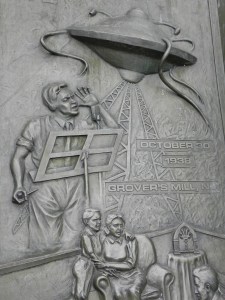
In 1952 there was a UFO flap in Washington DC.  No matter how you choose to explain it, this is an incident on the public record, and the Air Force responded with its famous temperature inversion explanation.  At the same time, some Fundamentalists were thinking that demons had improved on the bat-wings they’d been using for millennia.  They now zipped around in silvery discs with the same object as they’ve always had—to dis the Almighty.  As entertaining as such a story may be, it becomes scary when it might indeed be the motivation for government action.  I don’t know about you, but when I look at just how much of my meager paycheck goes to the powers that be, I want to know that rational people are spending it wisely.  Wait.  Well, I thought some of them were rational until a couple of years ago, about this time.  In any case, we do get some entertainment value for our cash, which is some comfort I suppose.  Keep watching the swamp!


The Problem with Shaving

Evil may be an abstract concept, but that doesn’t mean it isn’t real.  Sorry for the double negative—finding the right angle of approach is difficult sometimes.  I say that because I believe that the misattribution of evil is tearing civilization apart.  Science has rightfully taught us the tricks for understanding the material universe.  Problem is there’s more to the universe than material.  If all our minds consist of are electro-chemical signals, well, this batch swirling in my head isn’t alone in doubting itself.  (Think about that.)  So, here’s the problem—those on the opposite side of the political spectrum rending the United States into shreds aren’t evil.  They’re doing what they believe is right, just like the lefties are.  The evil comes from forces trying to tear good people on both sides apart.  The simplest solution, Mr. Occam, isn’t always the best.

Putting it out on the table, right and left have some basic disagreements.  By far the majority of them are sexual.  Both sides believe what they’ve been taught or what they’ve learned.  Sex, of course, is one of the great dividers of humankind.  It brings us together and it tears us apart.  Religions have always been very interested in sexuality—who does what to whom and what to make of the consequences.  None of it is easy to sort out.  Since the Bible voices first-century (and earlier) opinions on a matter they understood even less than we, the situation is very complex indeed.  Especially since many people wrote all the self-contradictory words within its stolid black, pigskin leather covers.

Complexity reigns in the world of explanation for both politics and sex.  Put them together and see what happens (if a Clinton, impeachment, if a Trump, nothing).  The issue with Occam’s razor is that the simplest solution doesn’t always explain things best.  It’s not evil to suggest woman plus man equals marriage.  Unenlightened, maybe, but not evil.  The truth is that things are more complicated than they seem.  A society taught, in many ways, that only one solution works could easily boil it all down to one size fits all.  Evil is the desire for political power that draws its energy from making each group think the other is evil.  I realize this courtesy often goes in only one direction.  That too is part of the evil machinations of a system that divides instead of seeks common ground.


Classic Education

A few months ago now, just after moving, our garage flooded.  Our books, unpacked, were stored there at the time, resulting in many casualties.  As I sorted through what was destroyed—a process still ongoing—I decided that if I replaced books I would re-read them as I did so.  Emily Brontë’s Wuthering Heights was the first replaced, and therefore re-read, volume.  For those who never had the opportunity to attend seminary, I would note that it is the ideal time for reading.  One of my professors, Harrell Beck, although he taught Old Testament, encouraged wide reading.  The Bible, he suggested, didn’t stop at the last verse of Revelation.  It was in seminary that I discovered the Brontë sisters and their remarkable literary achievements.

Wuthering Heights is fine autumnal literature and Heathcliff one of the greatest protagonist villains of literature.  An interloper among the privileged classes, Heathcliff finds delight in making others share in his suffering.  One of the more memorable characters is Joseph, the Bible-toting, Bible-quoting caretaker who sees nothing good in the younger generation.  Even Emily Brontë, the daughter of a clergyman herself, spies the hypocrisy so clear in the lives of literalists.  Joseph enjoys scolding as much as reading Scripture, and even the other servants find him tiresome.  Born in the year Frankenstein was published, Emily had Gothic sensibilities.  With the protracted death scenes and atmosphere  of loss and mourning, this classic can be a restorative in an era such as ours.  In more than one way.

Since Wuthering Heights is a classic, there’s no need to recount the story of lost love and damaged human beings.  What is important is to realize that we continue to support a social structure that repeats the sins of nineteenth-century England.  And like that setting, we do it firmly believing we are a “Christian” nation.  Joseph would surely nod in agreement.  Stripping the safety nets from the vulnerable so that the privileged classes might enjoy more of their ill-gotten gain, we live the hypocrisy of the self-righteous.  It the era of the Brontë sisters, women were not encouraged to write.  They, like the servants of the wealthy, were believed to exist for the comfort and pleasure of the master.  Not paying attention to the classics, we’ve come back to that era, claiming that wealthy white men are the true victims in all of this.  The denizens of the swamp will find their place in history next to Josef Stalin, Mao Zedong, and Benito Mussolini.  Wuthering Heights, like 1984, will, however, remain a classic that sees through hypocrisy.


Forgotten Bible Verses

Bible believers are basking in the headlines these days.  What with Mr. “Meet My Genitals” gunning for the Supreme Court and displacing them for a few days, they must be getting anxious for more sonburn in the limelight.  If only they didn’t have the Good Book standing in the way.  As I was reading my Bible the other day, I was reminded of this little gem, “the love of money is the root of all evil.”  Now, liberals like myself know that Paul of Tarsus didn’t write 1 Timothy, but Bible-believers know he did.  So much the worse for them.  They elected a president who stands for nothing so much as the love of money, and the swamp has become quite a root of evil.  Senate Republicans, after hearing a second credible sexual assault allegation against their boy for the black bench responded by trying to rush through a vote before the news got out.  And this reminded me of the forgotten prophets.

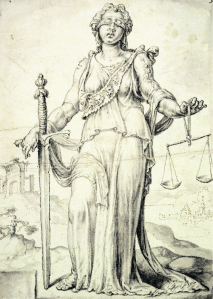
“What doth the Lord require of thee, but to do justly, and to love mercy, and to walk humbly with thy God?”  Well, you see, Mr. Micah, we know we’re heading to defeat in the midterms, so we’ve got to railroad through as many of our personal agendas as we can.  Don’t you know, o Lord, that this is a lifetime appointment?  And really, what does justice have to do with it?  Sure, he gropes and demeans women, but you’re a dude, right?  I bet you did the same when you were in high school and college.  And the money thing?  We’re only trying to help the economy because, well, wealth trickles down.  Who said anything like it’s the root of all evil?  “Hate the evil, and love the good, and establish judgment in the gate.”  Now, don’t go quoting Mr. Amos to me.  Next thing I know you’ll be telling me to let justice to run down like waters, and righteousness like a mighty stream.

Forgotten Bible verses, in the new Evangelicalism, seem to be cropping up on the black market.  You might think we should turn back to the start of the Good Book and read from the beginning.  There the GOP will find its solace until they come to the 27th verse, “So God created man in his own image, in the image of God created he him; male and female created he them.”  That semicolon says a lot; they will claim.  Man is the image of God, and he had a son.  Just don’t listen too closely to what that son says, particularly when he makes remarks like “whosoever looketh on a woman to lust after her hath committed adultery with her already in his heart.”  Young men like to drink and grope.  When they grow old they then like to be Supreme Court justices.  What’s that?  One more short verse?  “Jesus wept.”


Patriarchal Faith

One of the dynamics we see in present-day America is the worship of belief itself.  This is nothing new since faith is the “substance of things hoped for, the evidence of things not seen.”  It’s hard to trust in what you can’t see.  Trusting in trust may be tautological, but it’s also a natural development for something that evades proof.  If it goes too far, however, such religion becomes an idol.  Its teachings become secondary to its very existence.  Its rules, no matter how contradictory, must all be followed.  And those who believe are encouraged not to think too deeply about it since, if they did, this inherent inconsistency would be obvious.  The knee-jerk reaction of “the Bible says” is one such defensive measure.  I saw this all the time while teaching in seminary.

The other day I heard the melody of “Faith of Our Fathers” playing on the local church bells.  Interestingly, this is a Catholic hymn adopted by Protestants.  It’s kind of an anthem to this idea of worshipping the faith rather than the deity to which it points.  Consider the chorus: “Faith of our fathers, holy faith!/We will be true to thee til death.”  Originally a celebration of martyrs—those who found the courage to die in their steadfast belief—the hymn survives into an era when the perils besetting what used to be Christianity are less political and more scientific.  We live in a universe compellingly explained by science while politics has appropriated religion and counts on it to keep worshipping faith as an entity, regardless of distorted beliefs.  The hymn plays on.

Many public intellectuals are wondering about how evangelical Christianity could so easily divest itself of Jesus’ teachings and accept Trumpism.  Some have already begun to suggest that Trumpism is a “cult.”  (Religionists would say the proper term is “New Religious Movement,” since we no longer judge religions, no matter what forms of mind control they might prefer.)  The problem with experts on religion is that anyone can claim that sobriquet, bona fides or no.  Some of us have documented decades of official study of the phenomenon—those who paid attention in seminary and continued to pay for many years for a doctorate in this elusive field—but we’re are easily outshouted by those who take the words of this hymn literally, as they were meant to be taken.  Martyrdom comes in many varieties.  As I listen to the bells, I consider the implications.