Remembrance Day

September 11, 2001 is on America’s collective consciousness. A decade ago thousands lost their lives in a religiously motivated and misguided attack on what some see as a wicked culture. Those who hate America have never come to know it. What a sad commentary it is that religious belief lends its strength of conviction to those whom it has convinced that evil is righteousness and that terror is divine. It is somber to experience this tenth anniversary so close to New York City. When I ride in to work now every day I see the new World Trade Center rising, literally, from the ashes. It is a monument to what America tries to embody.

Twin towers, 13 years old.

Our nation is not perfect. None is. Too easily we accept the casual relegation of various minority groups to poverty. Too easily we allow the obscenely wealthy to escape all sense of social obligation. Too easily we focus on our selves rather than our community. No, we cannot claim to be perfect. Nevertheless, we strive for an ideal that will not die.

Some have boldly claimed twentieth century notables as “the greatest generation.” I believe that praise, although deserved in a sense, to be misplaced. The greatest generation was that rag-tag group of colonial citizens who’d fled from cesspools of oppression to find freedom in a new world. They were not perfect. They oppressed and displaced Native Americans who still suffer under repressive policies that ensure the great embarrassment of their treatment will remain out of sight. The greatest generation I envision is those who, at the risk of their own lives, decreed that the world should, must contain a haven for those who cannot live without a free conscience. A place where religion, or even the very words you say or write, cannot be dictated by the government. A place where people could go on to become the putative “greatest generation”s of the future.
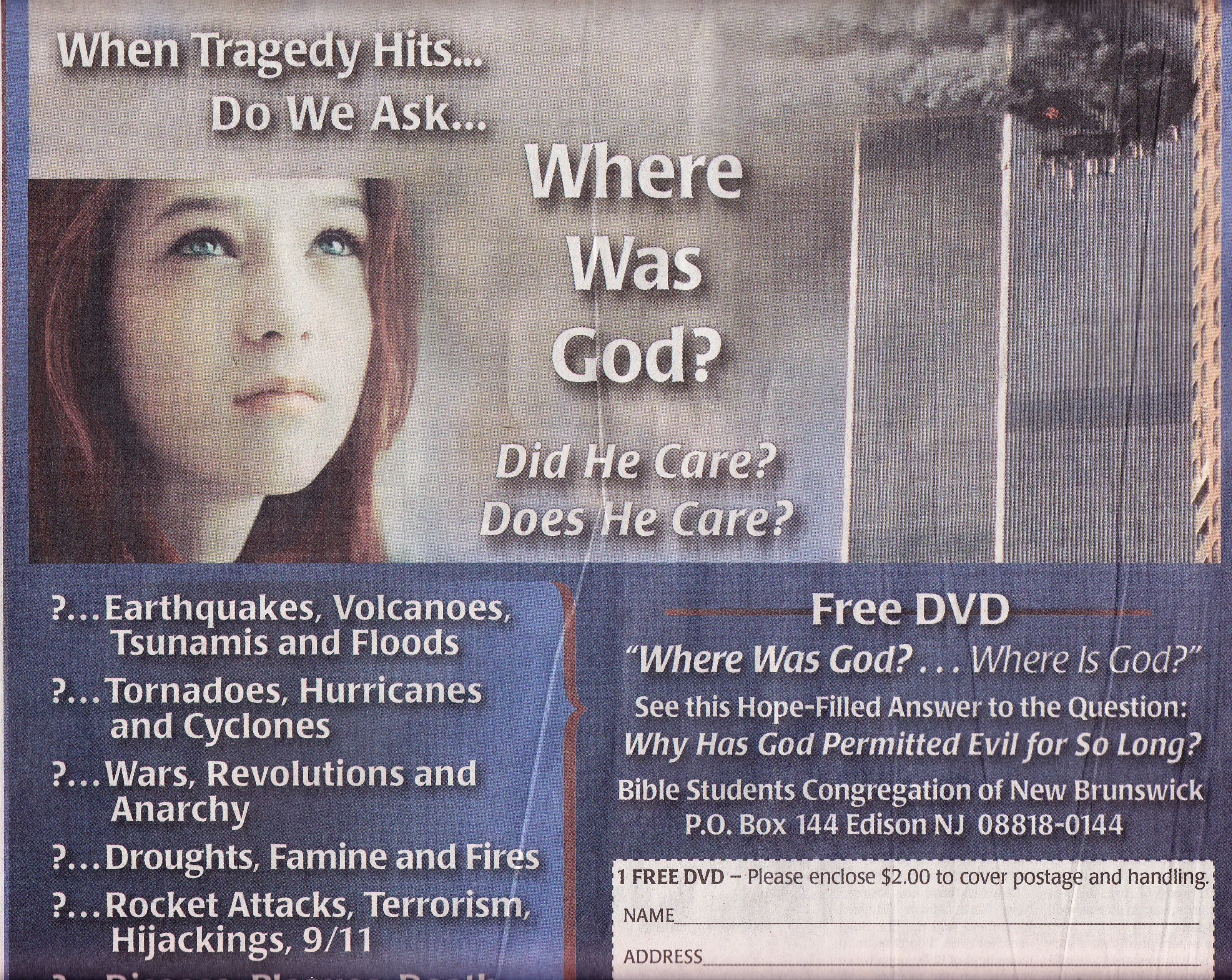
When I first heard about the attacks on 9/11 I was at Nashotah House. Those first moments of confusion were terrifying—our daughter had just started school and was not close enough to hold. My wife and I watched the television in sheer unbelief, tears on our faces, our lives being forever wrenched and twisted in new directions. In was a day that sobered up an entire country.

(Please read the remainder at Full Essays.)


Moosechief

The moose, depending upon which standard you use, is either the largest or second largest known land animal in North America. This aspect of the moose, as well as its general docility, has often spurred me to the northwoods in search of the elusive beast. Those of us with few tracking skills, however, often must be approached by the greater party rather than finding it. My trips to Maine have seldom yielded moose, but in my periodic forays to Idaho the creature sometimes makes an appearance. This past summer I spotted two of them in the west. In their ungainly way they are beautiful animals. Large they may be, but intelligence is not a necessary corollary to size.

Moosing around.

From about the 1840s, up to its formal passing into law in 1919, prohibition ranked high in the list of evangelical Christian concerns. A distinctly Protestant issue—Catholics still recognized that any tipple good enough for Jesus was good enough for them—the outlawing of alcohol was understood to be in keeping with the Gospels. Some groups even suggested that Jesus had been quaffing Welch’s, or the first century equivalent thereof, rather than Mogen David (the shield of David, after all). Latest research seems to indicate that fermentation was known before the Sumerians ever appeared, and we all know what happens when cavemen have too much to drink. Strangely, this became a religious issue along about the time Fundamentalism began to appear. But Fundamentalists considered neither the practices of Jesus nor the moose.

A story in today’s New Jersey Star-Ledger concerns a moose in Sweden. Known for their liberal social values, the inhabitants of Sweden are often presented as champions of free lifestyles. A moose near Gothenburg apparently had trouble steering herself after eating several fermented apples that had fallen from a tree. The inebriated moose lodged herself in a tree fork. The rescue involved bringing a crane to the scene to release the trapped, and slightly disorderly, animal. Such a story makes me wonder if prohibition should not be among the laws of the jungle. After all, the observation of nature often calls the certitude of many religious doctrines into question. If God prohibits alcohol, we might rightly wonder, why are there moose in Sweden sleeping off a hangover?


Biblical Muppets

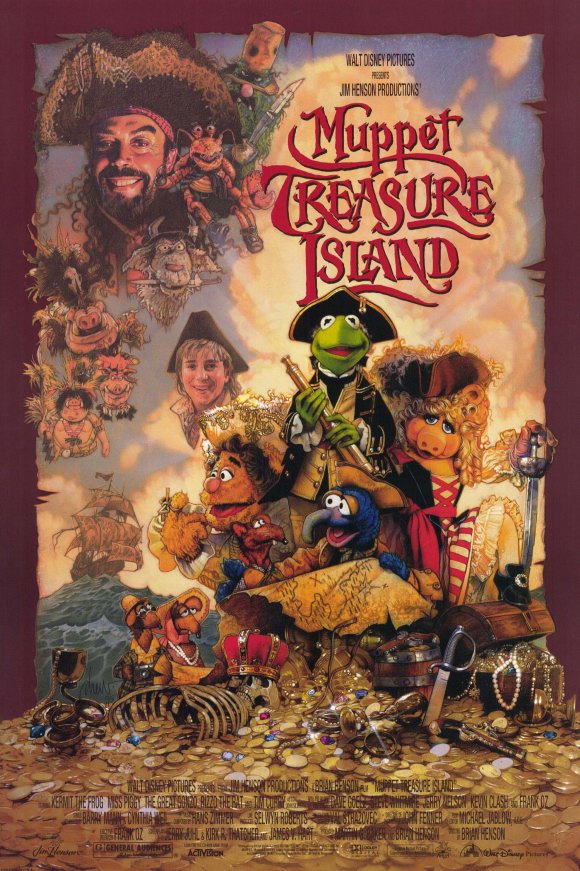
Back in the days when I was teaching intensive summer courses, I frequently used movie clips to help break up the three-to-four hour class sessions. I would find movies in which the Bible featured in what I’d call a minor supporting role—almost as a character—and would try to get the class to discuss it. One of the immediate observations is that such an exercise is starved for choice: the Bible appears frequently in films, both secular and religious. Sometimes its role is pivotal, at times incidental. Last night as my family prepared to return to work and school, we watched a movie to say goodbye to summer. The movie was Muppet Treasure Island.

Like most children of the 60’s I learned about Muppets from Sesame Street. By the time I was a teenager The Muppet Show had emerged on prime-time. Before long Muppets made their way onto the silver screen. Muppet Treasure Island was a movie I had missed until my daughter saw it in primary school. I have used it as an example in my summer classes for years. The story follows, as faithfully as Muppets can, Robert Louis Stevenson’s Treasure Island. Tim Curry—selected for Long John Silver because of his fame in the Rocky Horror Picture Show—makes a believable singing pirate. In this version of the story, when the pirates reach Captain Flint’s treasure it has been absconded by Benjamina Gunn (Miss Piggy). The pirates, now guilty of mutiny, give Long John the black spot. (For a generation raised and weaned on Pirates of the Caribbean, the black spot requires no explanation.) Long John, playing on the superstitious nature of the other pirates, sermonizes them because they used a page of the Bible to draw the black spot. Terrified of this sin, the pirates beg Long John for forgiveness.

This is a textbook example of the Bible acting as a magical book. Often in the movies it functions in that role; the Bible has the invisible authority to bring mortals to their knees. Pirates in need of paper might dismember any other book (I might suggest Going Rogue: An American Life), but the Bible is itself sacred. This particular role for the Bible reflects American sensibilities about the nature of religion particularly well. Without ever reading the Bible many people venerate it as if ink on paper is a little piece of God. There is a grain of truth in that, for literacy is a little piece of God and books do guide us. The problem is limiting that role to one single exemplar. Perhaps after all the Muppets shall guide us to a deeper truth.


Don’t Know Much

Pennsylvania does not come immediately to mind when “big states” are mentioned. When you have to drive the breadth of the state, however, you start to get a sense of the beast. Despite its abundant natural beauty, Interstate 80 manages to keep it to a minimum, so driving home yesterday we listened to the first disc of Kenneth C. Davis’s A Nation Rising in audio-book format. Mostly known for his Don’t Know Much About — books, Davis is a popular historian with a sense of what makes the past interesting. I can’t speak for the entire book yet, but the unabridged reading of A Nation Rising certainly was an educational experience for the first hour or so I’ve heard. The book focuses on the initial fifty years of the nineteenth century (1801-1850) in the United States. Of particular interest to me is the religious angle. In the introduction Davis states that it will become clear how the concept of America as a Christian nation is a myth. Other than my usual objection to “myth” being equated with falsity, this premise does look very interesting.

Stepping back before the nineteenth century, Davis spends several minutes (which I assume translates to several pages) describing the ancestry of Aaron Burr, one of America’s bad-boy politicians of the period. Burr was a grandson of the reformed minister Jonathan Edwards and this circumstance leads Davis to recount a bit about the Great Awakening. The first major religious revival on American soil, the Great Awakening spread throughout the States in the 1730s and ‘40s, setting the reputation of the young nation as a bastion of Reformed Christianity. Although many denominations became involved in the show, the origin and orientation of the Great Awakening was Calvinistic. Reacting against enforced Catholicism in much of Europe, many colonials flocked to America to practice their stripped down, Bible-based, generally intolerant religion in the New World. Particularly interesting in Davis’s rendition is George Whitefield. Viewing the preacher from hindsight that includes a distorted religious view of American history, Davis notes that Whitefield was as much performer as preacher.

Trying to figure out the next hot trend

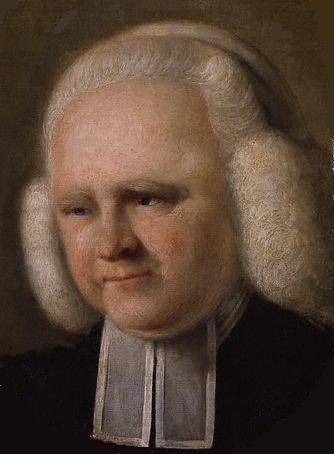
Whitefield was an Anglican priest who helped set the mold for John Wesley’s success in bringing what would become the Methodist Church to America. “Whitefield pioneered the development of multiplatform marketing strategies,” using the media and staged events to draw attention to his evangelistic efforts, according to Davis. Whitefield knew that religion alone could not sway the masses. They had to be entertained. Davis notes that even the Tea Party has corollaries in early American history. What the mainstream has been slow—perhaps too slow—to realize is that entertainment works. In casting the die for American spirituality, preachers like Edwards and Whitefield knew the value of the gripping sermon vividly illustrated. The antics of many Tea Partiers reveal that they learned the lesson well. Showboating will garner more votes than substance any day. How else can we explain Ronald Reagan, Sonny Bono, Jesse Ventura, and Arnold Schwarzenegger? This is America’s truest legacy: entertaining with religious faith will take you where intellectual depth just can’t go.

I will have to wait for another car trip to hear more of Davis’s interesting perspective on American history, but in the meantime I wonder how long it will take intelligent Americans to catch on. Don’t Know Much About History is a frighteningly prescient title for those who continue to ignore religion as a political force.


Failing Geology

Rocks of ages

Watkins Glen, New York, sports a natural wonder that has occasionally drawn me to the Finger Lakes region to refresh my memory of the view. The eponymous glen has been carved out of the relatively soft shale by a tireless stream that falls to the level of nearby Seneca Lake. The relentless persistence of this water has left a canyon of striated layers over a period of 12,000 years. Even today tourists from around the world flock to the site, captivated by its natural beauty. To assist walking the gorge, 832 steps have been added alongside a mile and a half of the stream, taking the visitor past, and occasionally behind numerous small waterfalls. When we visited yesterday, what struck me—beyond the sheer number of out-of-shape Americans complaining of the number of stairs (this was well before the hundredth riser), a number that continually thinned the further we climbed—was the special compensation that biblical literalists claim to accommodate their view. The typical response is that all geologic wonders are a result of Noah’s flood, despite the different erosional rates and dates of the sites. Watkins Glen is a fairly new piece of earth architecture.

Some years back while driving out to the western United States, my family camped in Makoshika State Park in Montana. This particular park, apart from its wild, arid, and rocky scenery, also boasts many dinosaurs. You can sidle right up to the exposed, fossilized backbone of a hadrosaurus, and triceratops skulls can be found in situ. Preparing to hike one of the trails, we stopped at the ranger station for a map. As usual, interpretive displays explained what we were about to see. As we entered, an older couple spoke with the ranger. One of them said, “How can that be, since the earth is only 6,000 years old?” Special compensation is required to refuse the evidence that lies all around us. The Fundamentalist movement seldom takes into account that this distorted and bizarre worldview is almost uniquely American. Religion drives their scientific outlook, even as they are relying on the factuality of actual science to prolong their lives with medical advances or to allow them to read this blog (although the latter is not likely).

The same flood had to carve out the buttes of Makoshika and expose its Cretaceous fossils of 65 million years ago at the same time as eroding the first 6,000 years of Watkins Glen, leaving the remaining 6,000 to be worn away during our world’s lifespan so that we might declare the great works of God. It is a worldview that demands a constant center stage for a feeble explanation based on the worship of a misunderstood book. And yet they come to see the beauty. No matter how many persuasive words might be penned, the possibility of changing this outlook will elude us. Reinforced by television personalities and politicians, this utter breakdown of reason is one of our national characteristics. As a nation we suffered through eight years of “leadership” by a president who did not believe in science, and we are still paying off his tab. In another 6,000 years or so we may succeed. By then, however, I expect, if I’ve learned anything from the movies, we will have reversed roles with the great apes.


Tea Party Science

I sometimes jog in the morning before the sun begins his course across the sky. Funny thing is, sometimes I beat him. I know the sun is a guy because the Bible says so. When I startle a bunny from its hiding place along my path, I am amazed that those little creatures chew the cud just like bovines. It is the word of God. Occasionally a suicidal insect tries to fly into my mouth, and unless they go about on all fours, with legs above their feet, I spit them back out. If they do meet Leviticus 11’s strict standards and I accidentally swallow, I try not to think of Deuteronomy 14.19. I am surprised that the Tea Partiers haven’t tried to correct science on this point: the Bible is clear that insects (technically “flying creeping things”) have four legs, not six. Open your eyes people! Six legs? All those sixes seem to be from the antichrist. That’s why I feel comfortable with the potential of handing our nation over to the Tea Party. Certainty is better than scientific orthodoxy, hands down.

“I don’t know how much God has to do to get the attention of the politicians. We’ve had an earthquake; we’ve had a hurricane. He said, ‘Are you going to start listening to me here?’” The words are those of Michele Bachmann. Those of us who were taught that hurricanes result from the heating of Atlantic waters, swirled by the rotation of the earth (it does not move, according to the only proven source of science, the Bible) have egg on our faces. Do I ever feel silly! Empirical evidence suggests that the earth’s crust consists of tectonic plates that sometimes bump and rub and pull apart. Earthquakes result. Last week’s earthquake creates a problem for me, however, since North America is not mentioned in the Bible. I now live in a country that can’t possibly exist. We had better elect leaders who know how all this really works.

According to a Religion News Service poll this year, 40 percent (that’s more than half, in Tea Party mathematics) of Americans believe natural disasters are signs from God. I am relieved that this clearly shows science to be wrong—surely that many individuals must be correct. That’s the way math works. I sometimes imagine the United States as the Titanic (movies are another good source of science). Ismay, the Tea Party, declares, “But this ship can’t sink!” Thomas Andrews, the engineer (representing science) replies, “She’s made of iron, sir! I assure you, she can… and she will. It is a mathematical certainty.” Ismay, believing the rich are too wealthy to die tragically, refutes the findings of science. When the colossal ship slips into the icy Atlantic, however, he’s nowhere on board. Like the rest of his party, he’s already secured himself one of the rare seats on the lifeboats inadequate to save those of us in steerage. Since the ship can’t sink anyway, why are we even worried about this?

Full speed ahead and damn the icebergs...


Tomorrow Ever After

Last night as we said goodnight to Irene, my family decided to watch The Day After Tomorrow. Beyond The Perfect Storm and Twister we didn’t have any other weather-related disaster movies on hand. I became convinced long ago that weather was somehow key in the conception of divinity. Working at a seminary that required attendance at chapel twice daily where we would lugubriously and laboriously recite every verse of every Psalm according to the unforgiving schedule of the Book of Common Prayer, I began to notice the weather. Among the more common images used in the “hymnal of the second temple,” weather was seen as an essential aspect of divinity. Religions with celestial orientations frequently view the sky with a sacred aura. I began to compile all the Psalm references to the weather and eventually brought them together into a book, still unpublished. What became clear at the end of this exercise was that ancient people had no way to interpret the weather other than as a divine phenomenon. Listening to all the hype about Irene, it still seems to be the case.

In The Day After Tomorrow, our ill-fated teenagers are trapped in the New York Public Library as a super-chilled tropospheric wind freezes New York City. They build a fire and when you’re in a library, naturally, you burn books. I kept looking at all the furniture they spared as they consigned the books to the flame. A minor character called Jeremy is shown clutching a Bible. A girl named Elsa asks if he thinks God will save him. Replying that he is an atheist, Jeremy says that this is a Gutenberg Bible, “This Bible is the first book ever printed. It represents the dawn of the Age of Reason. As far as I’m concerned, the written word is mankind’s greatest achievement. You can laugh, but if Western Civilization is finished I’m gonna save at least one little piece of it.” This little dialogue represents the full circle of the celestial god. Jeremy doesn’t believe in this god, and the Bible requires human protection. Instead of being the instrument of war and political badgering and tea parties, it is seen as a symbol of enlightenment. It represents the first steps toward reason.

As Hurricane Irene still gusts outside my window, dropping rain as if New Jersey were a desert receiving its first drink in a century, the Tea Party is busy crafting ways of getting the Bible back in the White House. Their Bible is the antithesis to the Age of Reason. It is the symbol of superstition and prejudice and authoritarianism. It is the means of political power. The god of the Tea Party is a white-bearded man living in the sky, sending his fury against the liberal cities of the East Coast in a mighty wind. He is the punishing god of the Psalms. As the helicopter lifts off over a frozen Manhattan, the teenagers saved by a flawed father who walked from Philadelphia to New York to find his son, the camera pans across Jeremy as he hugs the Bible to his chest. I was in Boston for Hurricane Gloria back in 1985. Watching the waves crash on the beach at Winthrop I felt the power of fierce nature at the beginning of my own journey to, I hope, enlightenment. When it was over, however, there was not yet a Tea Party threatening an even worse, unnatural disaster to follow.

Irene, the early days


Calm Before the Storm

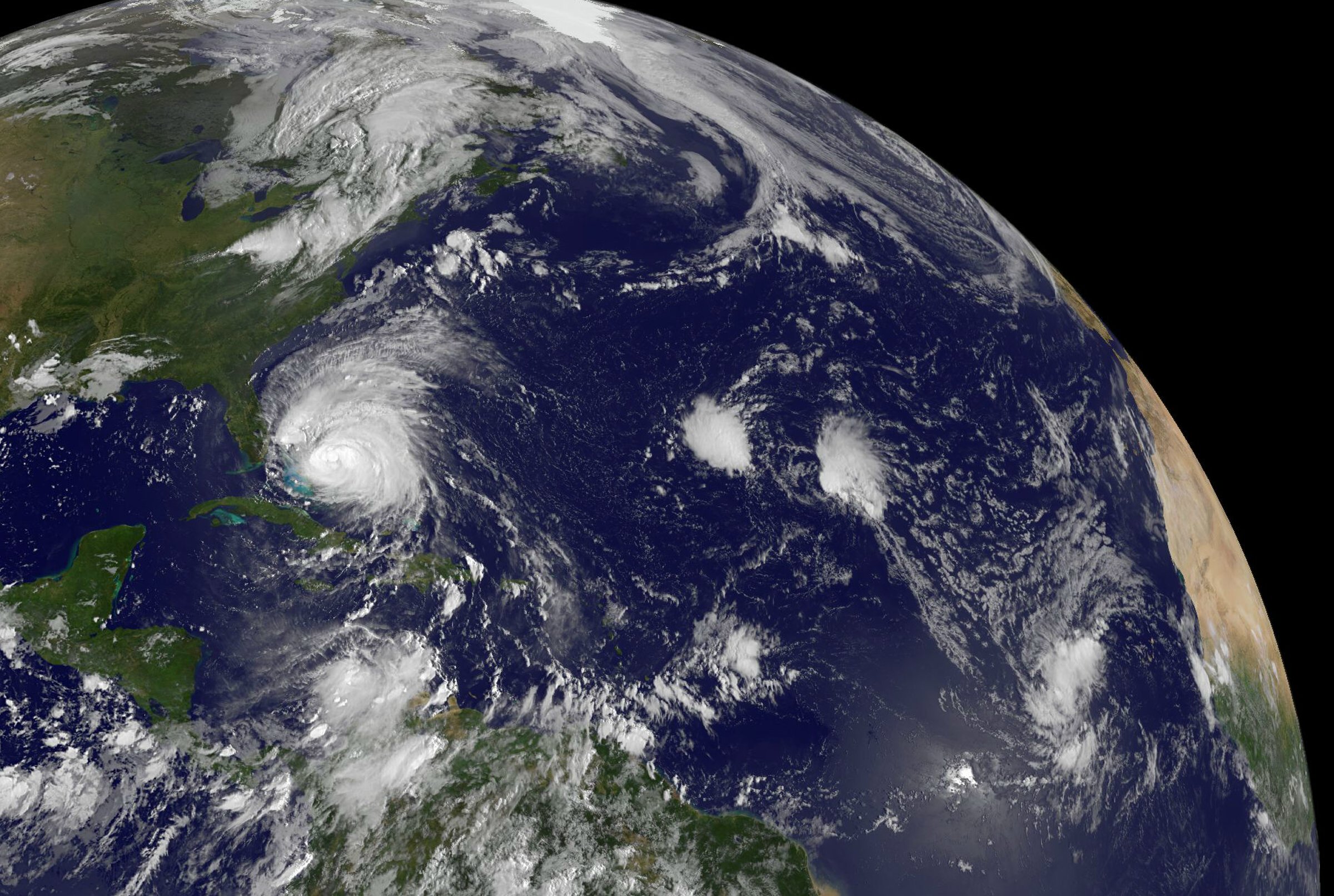
All the build-up for Hurricane Irene masks a deep-seated fear of the uncontrolled. If the storm devastates anyone, there will be Biblicists who say, like Job’s friends, that they must have sinned. Such pronouncements accompany nearly every natural disaster, as if God is huddled over the globe attempting to concoct more horrid and sinister ways to punish sinners. Natural disasters, however, have a way of effecting good and bad alike, just as the benevolent sunrise and the soft kiss of the rain (both according to someone mentioned in the Bible as being the son of someone important). But when danger looks down its barrel at human communities, they don’t neatly divide into sheep and goats. All people are a mix of virtuous and vice-ridden in varying ratios, and only the God of the Marquis de Sade would slam the iron maiden shut on all alike. The East Coast saw this earlier in the week when a benign earthquake shook our world. Barely had the ground stopped trembling before we were informed it was divine punishment. For what, no one could really say.

Interpreting nature according to the Bible is so misguided that it is difficult to know where to begin the critique. Yes, some biblical writers with a flare for the dramatic will claim that Yahweh was behind some disaster. Of course, they had no concept of science, in this case, meteorology, upon which to draw. Nature acts in unexpected ways because God has his fingers in the bowl. Even the early church gave up on that way of interpreting things as soon as natural processes could substitute for God. When religion because politicized, however, we started to see a backlash of backward thinking. It is a simple enough deception to utilize. People fear natural disasters, and the politically savvy know that few have any theological training. You can very easily encourage panicked masses to follow you if you claim to have read the Bible. From years of teaching it, I can certainly affirm that many clergy have not read the whole thing. Yet we use it as the barometer of divine wrath.

I, for one, am not worried about Hurricane Irene. As New Jersey has zigzagged in and out of the predicted track of the storm, it seems as though God may be wavering. If it misses the politically astute will say it is Chris Christies’ righteous policies of helping the wealthy at the expense of the poor. If it hits they will claim it is the sinfulness of the liberal camp that led the winds this way. It is all wind. Having written a book-length manuscript on weather in the Psalms, I know a fair bit about biblical perceptions of weather in the world of ancient Israel. Although over-zealous translators ill-informed about meteorology used to translate a word or two as “hurricane” the fact is that biblical Hebrew has no such word. Due to the rotational direction of the planet (about which they also did not know) hurricanes never hit Israel. Herein lies the basis of my confidence in the face of Irene. If the Bible doesn’t mention hurricanes, they can’t possibly exist. Literalists up and down the coast should heave a sigh of relief. But just in case, I have stockpiled several gallons of water, right next to my Bible.

Good morning, Irene -- if that is your real name.


Elephants and Earthquakes

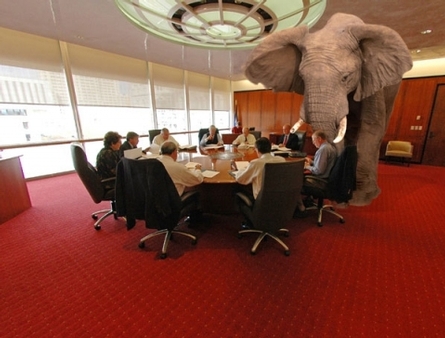
Two things happened yesterday that underscore the danger zone in which we currently live. The more dramatic event, an earthquake in central Virginia felt by many of us along the East Coast, had the social media tweeting for some time. The second event took the form of an editorial in the New Jersey Star-Ledger concerning GOP hopeful Jon Huntsman. Huntsman is quoted as saying, “The minute the Republican Party becomes the anti-science party, we have a huge problem.” An even larger problem is that the clock has moved well beyond the future tense. The editorial cites GOP candidates who routinely dismiss the science of global warming, evolution and other certainties as mere “data-fixing.” Perry and Bachmann have both decided they “don’t believe” in global warming. The elephant in the room, however, goes without mention.

The elephant in the room is religion, and it is a killer elephant, one that has a history of stomping those who attempt to control it. Politicians attack religion—whether or not it is bad juju makes no difference—at their eternal peril. In this “nation under God” (really under God) even a finger pointed towards conservative Christianity becomes a dagger plunged into a candidate’s chest. The Religious Right has been doing its homework for decades: no voice of reason can speak loudly enough to be heard over the songs of praise of the self-righteous. Reason, as scientists have discerned, cannot impact religious fervor. Belief can withstand a full-frontal attack from logic, reason—all that is sacred to rationality—and emerge without a scratch or dent. It is time that those in the middle and left took religious studies seriously.

Then I felt the earth move under my feet. As our house swayed and I checked on my daughter, I couldn’t believe I was feeling my third earthquake. I checked the web to see what in the world was going on. Interestingly, no witch doctors or Fundamentalist soothsayers were being consulted, but the scientists were. The news stories emerging minutes after the ground shook from Pittsburgh to Concord to Chapel Hill rang with the refrain, “scientists say.” Where was Rick Perry and his dowsing rods? Where was Michele Bachmann and her chicken bones? No, the religious war on science was switched off for a moment and those who felt afraid listened to those who actually knew what they were talking about. It was the elephant moving around the room, I say. It will only be a matter of time, however, before it is claimed that the people of Mineral, Virginia did something evil to prod an angry god into action.

Nobody felt anything, right?


God’s Country Club

Last week CNN’s religion Belief Blog reported on the five most and least religious colleges in the United States, according to Princeton Review (not affiliated with Princeton University). Having attended one of the five most religious colleges on the list (Grove City College, but whether it is number one or five is difficult to determine), I took an interest in the overarching question: how do you determine if a college is religious? The author of the survey indicated that it was through student interviews concerning whether they perceived other students as religious or not. And that’s where the bone of contention pokes through—who determines what is religious behavior? Are students able to determine who is religious or who acts religious? Does religious mean Christian in this context, or religious in any tradition?

Grove City College, God's Country Club

My years at Grove City left little doubt that the school itself was proudly religious. An evangelical bastion against many forms of critical thought, plenty of indoctrination took place in those hallowed halls. A few religion professors (I was even then over-zealous to learn as much as I could about this field), while personally faithful, asked serious questions that many self-righteous classmates blithely ignored. From glancing through alumni magazines, they seem to be the successful ones. Those who asked the hard questions seriously were ostracized; now they are lost in obscurity. Is this true religion? The Princeton Review is concerned with providing potential students with accurate data about their collegiate choices, but I wonder if the religiosity proffered is anything more than denominational branding.

Three of the four other most religious schools might bear this out: Brigham Young, Thomas Aquinas College, and Wheaton College. Hillsdale College, the final member of the most religious fraternity, is the exception. A liberal arts school, formerly Baptist but currently independent, it fits somewhat uneasily next to the Mormon, Catholic, and Reformed natures of the other four schools. While I can’t speak for the other colleges, at Grove City there was definitely a coercive peer pressure to behave like everybody else—to be religious, i.e., evangelical Christian. With required attendance at chapel and required courses in religion, the ethos was heavily impressed. Were other students truly religious? That depends on the measure that is used. Many have gone on to be entrepreneurs declaring free market economics in the name of the kingdom of heaven. If that is a measure of true religiosity, all hope is lost indeed.


Six Red Flags

Answers in Genesis’ biblical theme park with its life-sized ark was back in the news yesterday. Journalists just seem to be fascinated that people really do believe in their religious convictions. Having grown up in a religious family, I understand where they’re coming from. The version of the Bible they offer to the public, however, is much too tame. I spent the day dreaming about a literalist Bible theme park that would put Evangelical Christianity back on the map. I’m thinking it should be in Rick Perry’s Texas and we could call it the Literalist Six Red Flags.

The first attraction would be the Garden of Eden—sans clothes. If we’re going for the full Bible experience we should go all the way. The full Methuselah. For those who are worried that this might lead to morality concerns, I would assure them that experience belies that. From the few nude beaches I’ve stumbled upon—who would’ve thought there’d be one in New Jersey? New Jersey!—it is my guess that this might be the most effective way to scare kids into religion. Why pass up an evangelical opportunity like that?

Station number two would be the Egyptian Late-Term Abortion Clinic. By this I mean Exodus chapter 1, with a nice tie-in to Leviticus 20 and Psalm 137. The pro-lifers could leave a little green but very self-righteous after seeing what the Bible prescribes for uppity children.

Our third flag could be the battle of Jericho. Especially interesting for the kids would be the visit of Joshua’s spies to the prostitute who betrayed her city. Children could blow on ram’s horns, carry a plastic ark with authentic death-rays emanating from it, and shout while the Styrofoam walls come tumbling down. If they wanted to be really literal, however, they’d have to explain that archaeology demonstrates that Jericho had been abandoned for a century before Joshua showed up, but who wants to dampen all that youthful, Christian bloodlust?

Flag four could be the story of Samson. After leaving his first wife to visit a prostitute, kids could watch in fascination as Samson heaves the city gates of Gaza from their place, showing that the Lord approves. Since he’s a muscleman who likes to have affairs, maybe we could check to see if Arnold Schwarzenegger is too busy to take on the role of God’s version of Hercules. I’m sure that Delilahs would not be too difficult to recruit. Perhaps this could be an audience participation event.

Attraction five has to be the Story of David. This would be a good opportunity for parents distraught after the previous stations to take out some aggression with the sling. I’m sure my friend Deane could come up with some giants for them to practice on. Otherwise, maybe something could be worked out with the NBA. After killing a few giants, the station could lead to the palace roof with a view to Bathsheba’s bathroom. Since David didn’t want to send her to the clinic (see station number two), he decided to have her husband killed instead. Maybe we could have a side exhibit: Uriah’s Last Ice Cream Stand. (He was only a Hittite, after all.)

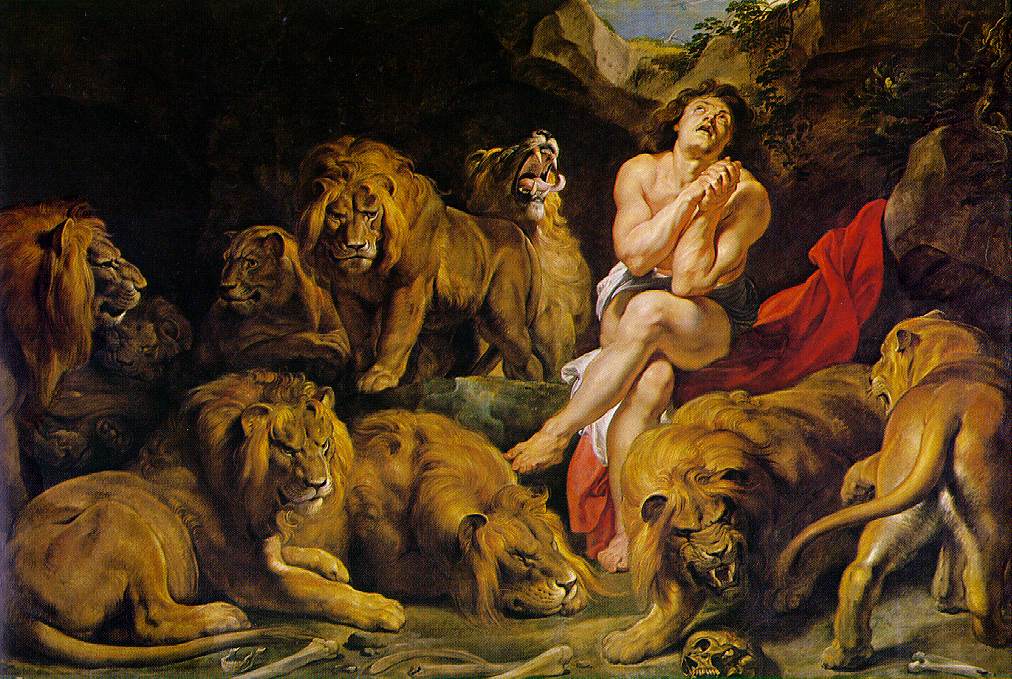
Our sixth red flag would be the Lion’s Den. Here we could offer Tea Partiers and NeoCons the opportunity to prove their faith by spending a night in a den of hungry lions. They like to claim loudly that their faith is being castigated, just like Daniel’s was—here would be the opportunity to prove it! Somehow I believe that the lion’s den would remain empty and crickets could be heard chirping throughout our Literalist Six Red Flags even before it opened its festively decorated gates.

"Oh please let Rick Perry be nominated!"


Last Rites

Last night at 9:40 p.m., my last class at Rutgers University ended. I began a teaching career in higher education back in 1992 when I was still younger than most of my students (that was in a seminary). Despite the difficulties of that setting, I had lowly dreams of a reasonable teaching post in a small college where good teaching was emphasized and serious research was allowed. It was never to be. Now, facing an exciting career move, it feels like a giddy run suddenly played out. The finish line crossed halfway through the race. Higher education simply never made room for the likes of me. Students have frequently commented on how they like my courses and find me a congenial instructor and wonder why no full-time positions ever emerged. My answer has always been that Religious Studies is the one field where religious discrimination is legal and regularly practiced. Denominational schools are permitted to hire on the basis of faith—I have been declined more than one position because I was not the right brand of religion. State schools are afraid of the field.

State universities, where I ultimately ended up, are very cagey about Religious Studies. I’ve known otherwise highly educated individuals who suppose that such departments are glorified Sunday Schools or Catechisms. They always seem surprised, when a religiously motivated person decides to become a mass murderer on the basis of conviction, that universities don’t know more about religions. It is, however, a dying field. Religion in America has been hijacked by the NeoCon camp. Over the years I’ve had mainstream Christian students explain to me why they are not really “Christian” since they assume that the title goes with conservative political and social values. To my humble eyes, it appears the battle may have been already lost. State schools fear interference with the establishment clause while NeoCons plow ahead to mandate a state church. It is the religious makeover of America.

I will miss teaching, but it has been a punishing career. My years at Nashotah House were filled with abusive situations and unrealistic expectations. Since then I have never had a full-time teaching post. In some cases I have spent more time driving to campus than I spent in the classroom. It is time to launch on a new career direction—even my previous editing experience was under the shadow of a conservative religious outlook. I have told many students over the years that teaching careers are not what they used to be. I have many horror stories to back me up. That doesn’t mean that a tear or two didn’t fall as I left my last classroom after nearly twenty years in the biz. It has been an education to me, and I hope a few students among the hundreds I’ve taught out there feel that it has been the same for them.

Nevermore.


Sports Religion

I’ve never been a fan of organized sports. Call it sour grapes, but having been born with an inner ear affliction that makes sudden turns debilitating, I’ve never been effective at much beyond running. Maybe also the occasional flirtation with free weights. So when my wife showed me a story about Tim Tebow, I had no idea who he was. It turns out that he is the quarterback for the Denver Broncos. He was in the news not because of his apparently lackluster performance, but because of his religion. The Miami Herald story by Dan Le Batard insightfully points out that football fans participate in what amounts to a religion in their devotion to the game. Add an evangelical Christianity to that “sports religion” (Le Batard’s term) and a “holy war” (again, Le Batard) breaks out. Religious fans praise Tebow because of his character, sports fans castigate his allegedly mediocre ability. The controversy over Tebow, however, goes deeper.

Hallowed be thy game (but not thy Photoshop)

Home schooled in Florida, his family took advantages of laws that allowed home schoolers to play on actual schools’ sports teams. Even going as far as to rent an apartment and move out of their home with her son, his mother placed her son in advantageous school districts while teaching him at home. The problems with home schooling are legion, but clearly among the most troubling are the frequent use of religious indoctrination and the lack of critical thinking skills. Those who are truly educated are aware of just how little they know. Those who presume they can teach their children everything they’ll need often seem impressed by their own knowledge. But I digress. While in college Tebow’s penchant for painting Bible verses in his eye black led to the “Tebow Rule” that forbade messages in the paint. Interestingly, the Bible verses he scrawled on his game face received high numbers of Google hits during the games.

No doubt for many sports are a form of religious release. Le Batard suggests that football religion and traditional religion rest uneasily together. In a world where I might mention a particularly important Bible passage for students to read and most won’t bother, the flash of Proverbs 3:5-6 on a starry-eyed quarterback’s face will send fans page-thumbing the good book. Perhaps religions have been focusing their energies in the wrong places. If the various religions of the world formed football franchises and joined the ranks of the NFL, the benches, or pews, would be filled every Sunday. And it might also solve another perplexing problem: which religion is the correct one? They could be determined once and for all on Super Sunday.


Whatever Happened to Marshmallows?

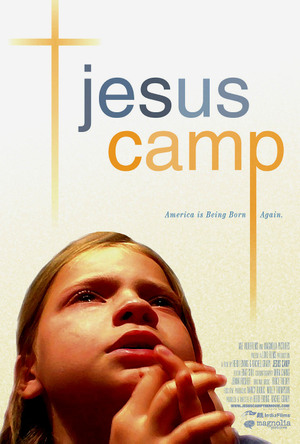
A rainy Sunday evening seemed like a good time to watch a scary movie. I had already viewed an exorcism movie or two over the last couple of days, so my wife and I decided to try something scarier: Jesus Camp. This 2006 documentary shows the workings of an evangelical, Pentecostal children’s camp run by Becky Fischer. By not skewing the evidence but by letting the organizers and children speak for themselves, a disturbing political agenda is revealed. Even more disturbing is the psychological scarring that accompanies such childhood indoctrination in a religion of fear. Fischer is obviously concerned with militant Islam, but her tactic of countering it with militant Christianity where children are soldiers (“this is war!” she shouts at one service) feels equally wrong. Part of the problem with such “Bible based” groups is that the Bible contains many contradictions and the Fundamentalists must pick and choose. For example, Rev. Fischer has chosen to disregard 1 Corinthians 14.34, stating that women should keep silent in the church. (I certainly do not advocate the literal application of that verse, nor of many others that made their way into a misogynous Bible.)

Utilizing the Bible only goes so far as a political tool. At the Kids on Fire camp the children are geared up to an emotionally intense state and lectured about the evils of abortion, evolution, belief in global warming, and Harry Potter. No mention is made that the Bible says nothing about abortion or evolution, and global warming had not yet become an issue. I can’t seem to recall Harry Potter being mentioned by name in the Bible, but other fictitious characters are from time to time. The Bible, having been written over a span of about a millennium, contains differing voices making statements for specific circumstances, and never intended to be used as political platforms. One gets the sense that “Bible believers” seldom read the Bible seriously themselves. Certain favorite passages are committed to memory and rehashed to death while others molder in dank corners of Fundamentalist basements.

What is lacking here is the long view. Once such groups win political power—they should be taken far more seriously in this arena—the religious freedom that will have launched them to that position will disappear. Like all human enterprises, however, it too will eventually crumble. Ted Haggard was spotlighted in the film, shot before his own hypocrisy came to light. At the camp George W. Bush is held up as a saint with Samuel Alito as his acolyte. The psychological manipulation and emotional abuse that the children trustingly accept is condemnation enough in itself. The camp was shut down after the film was released, but Becky Fischer, like Arnold Schwarzenegger has declared, “I’ll be back!” This is one Terminator I truly fear. Having watched a couple of exorcist movies over the weekend as well, I am left wondering which is scarier: demons that possess children or false prophets who do the same?


Livin’ On a Prayer

Am I the only one who finds it disturbing that Neo-Con politicians are naïve enough to believe that prayer will solve all our problems? Where was God during the Bush years, for crying out loud? And yet headline after headline speculates about Texas Governor Rick Perry’s prayer-fest scheduled for Saturday. What is more disturbing than the lack of imagination on the part of would-be candidates is the sheep-like following on the part of a large segment of the electorate. If God is going to step in and take charge, he had a great chance back on May 21 and refused to pick up the option. If God was behind politics, why did George W. Bush fail to find Osama Bin Laden? If God is running things, why are so many unemployed? Ah, but the religious pundits have a pat answer: America is a sinful nation. What it takes is religion, Texas-style.

In the many years I spent at Nashotah House, the majority of our students hailed from Texas. They represented the conservative hard-line and doctrinal strappadoes that caused much suffering but still somehow didn’t placate an angry God. That, of course, says more about Nashotah House than it does about Texas. Perhaps it is the logical evolution of a country that began with prominent ministers gleefully describing sinners in the hands of an angry God. Nearly three centuries later and we are being told God is still angry. Thou shalt not hold a grudge, eh? The problem seems less about sinful folks just trying to get by (a la Bon Jovi) than about politicians using their religion to get elected. Centuries down the road it will be the topic of some new series of History’s Mysteries that an affluent, educated, and generally forward-looking nation cluttered its governing bodies with politicians who believed the answer to complex problems is to bow their heads and tell God how to fix it. Are we really half-way there, or have we spread our arms to embrace Jonathan Edwards once again?

In MSNBC’s article on Rick Perry’s prayer day, it is noted that the book of Joel is cited as an inspiration for the event. For such a brief book, Joel has been at the forefront of a ton of damage wrought by prooftexters. Joel wrote three brief chapters about a locust infestation for which the suggested response was prayer. One wonders if Rick Perry simply prays when the termites begin to gnaw on his expensive home, or does he call Ortho instead? Joel was truly old school. The locusts in his day meant literal mass-starvation. No chemical romance to solve the problem there. Unfortunately we don’t know how that one turned out—Joel doesn’t say. I’m just glad that Governor Perry hadn’t been reading Psalm 137 when inspiration struck, and can I get an amen from the pro-lifers on that?

Ricky used to work on the docks?

P.S. Matthew 6.5.