Tell-Tale Hearts

StorytellingAnimal As a sometime dabbler in the fictional arts, I was intrigued by Jonathan Gottschall’s The Storytelling Animal: How Stories Make us Human. I read the book because of my own fascination with fiction—it is a transcendent activity to read it, but more so to write it. I‘ve always wondered why. Gottschall, a fellow academic making a living as an adjunct instructor, is a lucid writer and a great storyteller. His book opens with the unusual fact that even the most logical and rational of humans are addicted to stories. Our brains work to spin unrelated events into narratives. Even while we sleep, our minds continue to tell fictitious accounts of weird adventures. To be human, Gottschall clearly demonstrates, is to be in love with stories.

In chapter 6, “The Moral of the Story,” Gottschall turns his attention to religions. That far into his book it is no surprise that we find religions are largely based on story. Those who’ve studied mythology plainly see the story-ridden origins of religions. Religions, after all, have nothing if not great explanatory value. They tell the tales of why we’re here—the technical name is “etiology,” stories of origins, but also tales of what the gods, the tao, or the force demand of us. Believers often take such fanciful narratives literally, missing the point of it all, the proverbial moral of the story. The story is the moral. We find the deepest truths in fiction.

Many of my friends are fiction writers. Most have never been published or struggle to find representation. None simply give up. The draw of narrative is as palpable as the need to eat or sleep, as strong as the urge for sex or recognition. It is far stronger than the desire for money since nothing material can substitute for our desire for stories. After a busy day we send our children off to bed with a nighttime tale. Many of us climb into bed with a book—the more fictional the better—to end our conscious hours each day. We dream our way through the night and spend our long days fabricating a narrative we call “my life.” Those of us who indulge in fiction are sometimes solitary individuals, but we crave the awareness that we are not alone. Others too, as Gottschall clearly proves, are alone with us. In fact, all humans are gathered around this campfire of the storyteller. Thank you, fiction, for coming to the rescue.
When in Rome

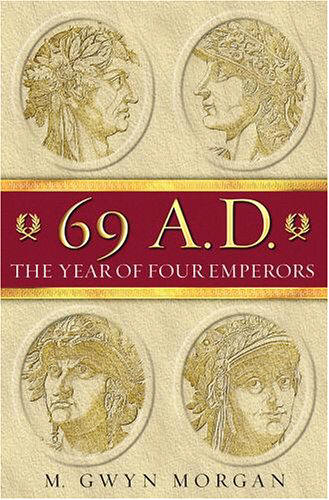
69ADMost biblical scholars know that the synoptic Gospels began to take their rough shape around 70 C.E. Many middle school children have heard stories of the Romans, in their bullying way, putting Christians in the arenas to be savaged by wild beasts. It would take a precocious child, or adult for that matter, to recognize that in 69 C.E., Rome went through four emperors. I found Gwyn Morgan’s 69 A.D.: The Year of Four Emperors quite informative, not having be a precocious child (or adult). The times I’ve taught New Testament courses I have found myself fascinated by the stern and stoic culture that the Romans constructed. Maybe it is because I see so much of our own society in it. Maybe it is because the New Testament is much easier to understand with a basic grasp of the early Roman Empire.

Early in his historical account, Morgan makes a salient point. I had to stop and consider the implications of it. Going over the sources for the reigns of Galba, Otho, Vitellius, and early Vespasian, mainly Tacitus, Morgan reveals the truth of history: it is story. Romans measured the value of an historian not only by getting the facts right; literary artistry was, in many respects, even more important than dry facts. What might this mean for the Gospels? Anyone who has actually read the Gospels knows they hold some obvious contradictions, some subtle, some not. In a culture that understands the Bible as “history,” in the modern sense, many believers kick their brains into overtime to harmonize discrepancies so that we can have, as Sergeant Friday would say, “just the facts.” But the Gospels, like Roman historians, are telling a story. There is some license here. After all, none of the writers were likely eyewitnesses of the events they describe.

The events of 69 also help to explain the frustrations that the Romans would so unkindly take out on the early Christians. The calm, logical world of reason and the force of law had repeatedly broken down (as they will), perhaps most spectacularly just as the Gospels were being written. Threats and fears of a total societal collapse whipped the Romans into a froth of intolerance. Those who threatened to rock the ship of state could be cast to the sharks, to adapt the metaphor. New religions with new gods don’t mix in a state where the old gods appear to have fled. Indeed, I couldn’t help but get the feeling, as I was reading about ancient history, that I was reading about things not so very long ago. Fear brings out religious conservatism in just about any society. The juxtaposition of the Gospels’ composition with Rome’s period of great stress might just be one of those metaphors that we can still use to explain how a rational civilization loses its grip on what’s really real. And that’s true in any age.


More Witches

WitchHuntAronson It’s been some time since I’ve been to Salem. It’s been even longer since I’ve read Arthur Miller’s The Crucible. The events of 1692, however, continue to haunt me. I recently read Marc Aronson’s Witch-Hunt: Mysteries of the Salem Witch Trials. Intended for a young adult readership, Aronson’s book really isn’t proposing any new theories about why religious violence was perpetrated against the vulnerable, mostly female, pool of those living in a very superstitious society. It does, however, show some of the issues in sharp relief—more academic books sometimes cloud the issues with erudition. Historians will continue to debate what happened in Massachusetts at the end of the seventeenth century when the Enlightenment was getting underway and the explanatory value of science was overcoming the world of miracle and magic. Even with science on our side, however, adequate explanations of the sad social madness of Salem are still lacking.

As Aronson points out, there seems to have been a certain amount of greed involved as laws allowed the property of “witches” to be confiscated. Equally culpable are the learned clergy of the day, some of whom overrode their disinclination towards belief in witchcraft to hang a few women (and fewer men) for an imaginary crime. Lack of full historical documentation and the unrecorded lives of women often combine to raise many questions about Salem. It remains clear, however, that the outlook of the clergy influenced perceptions on the ground. Aronson suggests that Cotton Mather’s earlier accounts of Goodwife Glover of Boston—a woman executed as a witch without even her first name having been recorded—may have “inspired” similar violence among the population of Salem. When devils are suspected, the clergy are never far.

When the mania died down after a lethal year, the clergy, both Increase and Cotton Mather among them, recanted the easy execution of a few expendable women, and fewer, less expendable men, in Salem. Since we lack documentation, we will never know fully what was behind the witch-hunts, apart from misogyny and misperception.

Aronson ends his little book by asking us to consider modern terrorist hunts and the eerie similarities to the mindset of Salem. Listening to some media interviews, particularly on Fox, after the Boston Marathon bombings, we haven’t traveled so very far from Salem. In a world of high technology, where Satan is said to once again stroll the streets of Massachusetts, we have to wonder if the witch-hunts will ever truly end.


Shaman Shifting

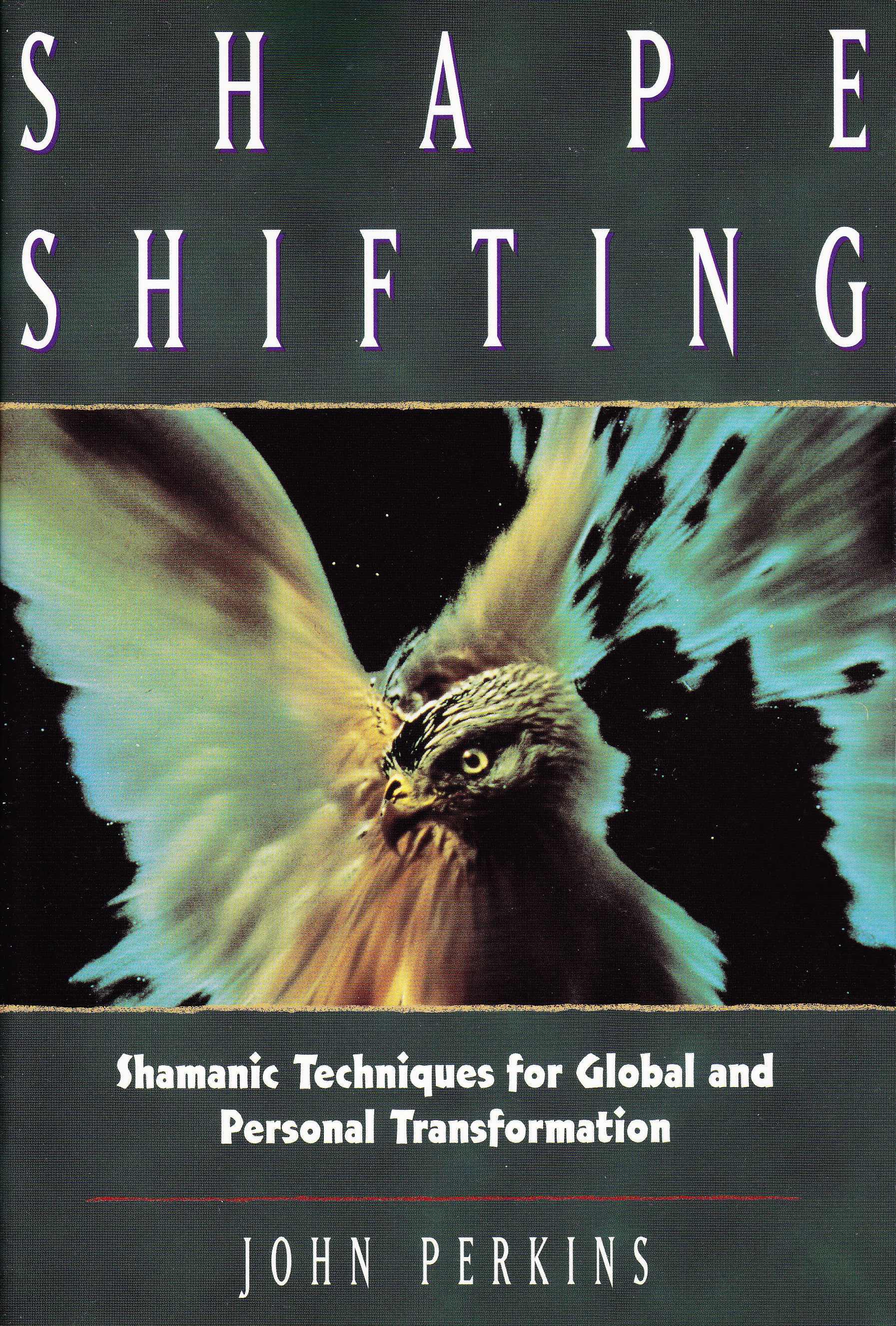
Shapeshifting I confess that I haven’t read Confessions of an Economic Hitman. Being incurably drawn to the weird, however, I picked up a copy of John Perkins’ earlier book, Shape Shifting: Shamanic Techniques for Global and Personal Transformation at the recent Hunterdon County Library Book Sale. I also confess that I fear being classed as one of those irrational sorts who’ll believe anything. It’s pretty obvious to anyone who’s been to college or university that a Ph.D. is no protection from the strange ideas that waft through human gray matter. Many years of teaching convinced, I hope, at least a few of my students that I approach the study of religion in a reasonable—dare I suggest?—rational, way. Despite appearances to the contrary on this blog, I weigh evidence carefully. Sometimes the evidence suggests we don’t yet have all the data. So it was with an open mind, but also a dose of skepticism, that I read through Perkins’ book. And yes, he does suggest that cellular-level transformation is possible.

Before breaking out your hooey-meters, however, consider that John Perkins is a successful businessman. Money speaks, n’est-ce pas? So I’m reminded every rational working day. The human mind, however, plumbs realms on which empirical method sheds little light, even to this day. Psychologists still debate whether there is a subconscious mind at all. And then there’s that troubling question of what exactly reality is. Historically, people have answered such questions with religion. And religion quite often permits entry where science declares “no gods allowed.” So did John Perkins really transform into a ball of energy and float across both time and space and see such disturbing sights as he describes? Did Richard Bach really astro-project with his partner, as recounted in The Bridge Across Forever? Are we really rooted to this mundane world where politicians and entrepreneurs make all the rules?

Perkins recounts his experiences with shamans of the Amazon, and like Jeremy Narby, his experiences with ayahuasca, a consciousness-altering plant. He even recounts transforming into an “inanimate object” so that his wife could not see him. Is it real? Can science measure such events? Does anything escape the penetrating stare of the electron microscope? We will have our Richard Dawkinses on one hand declaring an unequivocal “No!” The other hand, however, may be generating the sound of clapping for those who have ears to hear. Or at least for those who have eyes to read. At the end of this book, truth comes down to a matter of belief.


Campbell’s Swansong

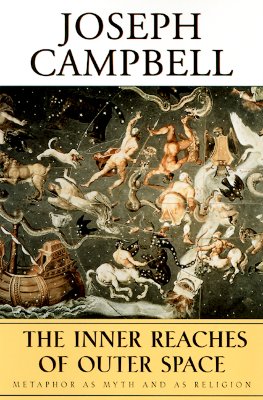
InnerReachesofOuterSpace Joseph Campbell may not be the best reading for the bus. Despite the many signs and placards gently suggesting to passengers both in the Port Authority Bus Terminal, and on the buses themselves, that keeping quiet is courteous, we are a people in love with noise. We are used to annoying electronic beeps, squawks, and farts. People find it difficult to sit more than 20 minutes without talking. I’m trying to read. At the Hunterdon County Library Book Sale I picked up Joseph Campbell’s last book, The Inner Reaches of Outer Space. It requires some concentration. Campbell was a brilliant comparative mythologer. I was reared in the scholarly hermeneutics of doubt, however, especially when it comes to comparing myths from different cultures. Campbell has a great appreciation for Jungian concepts, and soon minor details are blurred and the similarities stand out in stark relief. Still, as I always do with Campbell, I came away with plenty of rich concepts over which to mull.

Campbell, the great inspirer of Star Wars, the original series, was that rare breed of scholar who appreciated without participating. He is recorded as stating he was no mystic, and certainly not any kind of conventional religionist, but he couldn’t get enough of mysticism or mythology. Religion, he implies, is just mythology taken literally. He is, I believe, very close to the truth here. What we know of indigenous peoples today is that they don’t have that sharp and hard line between literal reality and story that marks much of western civilization. We tend to think fact and fiction cannot be of a kind. Looking around, we find no gods, so our choices are not to believe, or to believe too literally. And those who believe literally differently, we tend to want to kill. This is the history of religion in the western world, in a Campbellian nutshell.

Apart from the little gems I located scattered throughout The Inner Reaches of Outer Space, the main theme I found applicable was the driving force of chapter two, Metaphor as Myth and Religion. Metaphor is our way of interacting with a reality we just can’t experience directly. As human beings, we experience the physical world through the mediation of our senses, filtered by our brains. If there is something deeper, more profound than nature, we are even further removed. Our experience of meaning is metaphor. Joseph Campbell may have been a little too swift to spot congruities that are probably best left apart, but he clearly recognized the fact that our religions are not so different from our mythologies, and that both are narrated in the form of metaphor. This is not to devalue them, for metaphor is one of the most potent substances in our chemistry set. Now if only I could find the vial that has the stuff to make people want to keep quiet on the bus, we might all be able to get a bit more reading done.


Almost Heaven

OneidaUtopia. Sounds like a good idea—what’s not to like? There have been a number of attempts to form utopias in this sad, violent, and secular world, and although none have succeeded, it is difficult not to admire their spirit. The Oneida Community has long been a source of personal fascination. In that region of New York where spirituality was so urgent that many people crowded to the purveyors of new salvation, the Perfectionist sect of John Humphrey Noyes eventually settled down. Oneida: Utopian Community to Modern Corporation, by Maren Lockwood Carden, was written in the late 1960s as a sociological study of the followers of Noyes. Although the data are dated, it is a respectful, careful study of an unconventional group of utopians who managed to keep a dream of sorts alive for three decades in the latter half of the nineteenth century. If we known anything of the Victorian Era, it is that sexuality was handled with extreme delicacy and reticence. Most people would not have survived half an hour of Fox’s standard evening programming. Beneath social convention, however, they were as hot blooded as people have always been.

John Humphrey Noyes was a troubled soul. Like many institutors of religions, he was a seeker who knew what felt right but never believed he could find it. He studied theology at Yale Divinity School, and he had been profoundly moved by the Perfectionist movement. Perfectionism traces its roots to John Wesley and his perpetual need for assurance of salvation. Indeed, Noyes appears to have picked up the ideals of Perfectionism from Wesleyan theologians of the day. Noyes, however, believed that perfection on earth meant sharing everything. Well, nearly everything. Having been chased from a location or two for his radical ideas, Noyes and his followers eventually settled in Oneida, where they could practice “complex marriage” in peace. While few people remember the other doctrines of the Oneida Community, complex marriage is one from which even sociologists can’t keep their eyes. All adult members of the community were expected to love each other fully. While avoiding incestuous unions, all adults were married to all others. By practicing male continence, they kept the birth rate down, and, to the surprise of many visitors, seemed the most civil and sophisticated people around.

The Oneida Community, however, outlasted John Humphrey Noyes only by becoming a corporation. As most couples registering for their weddings even now know, Oneida tableware is considered of very high quality. The company, at least until the 1960s when Carden’s book was published, was under the leadership of one of Noyes’ descendants. Carden’s book delves into the running of the corporation as much as into complex marriage, and points out the very real impact the Oneida Community has had on America. I also think of it as a paradigm. It began as a Perfectionist utopia, a religion of (free) love and concern for all others, and ended up as a business corporation. Any number of other churches might fit into that same pattern—they begin as idealistic enterprises and end up as businesses. Perhaps this is the truly fallen state of humanity. We start out spiritual, but end up sadly entrepreneurial.


Book Friends

Along highway 12 in Hunterdon County, New Jersey stands an armory with an obtrusive tank stolidly facing the road. Over the weekend the tank was draped with a banner proclaiming the Hunterdon County Library book sale. I wished I’d had a camera. It had been a few years since I’d been free on the book sale weekend (it often classes with robotics competitions), so I decided to visit on Saturday. No, they usually do not have much in the way of academic books, or even the books on my extensive wishlist. The books are not in pristine shape, not alphabetized, and sometimes miscategorized. But still I love to go and browse around. It is always crowded. I feel like a babe in its mother’s arms around so many people who want to be near books. Although the vast minority of the American population, book buyers are of a kind. We get along.

The event is so large that parking is off-site and a shuttle bus is hired to ferry people the extra mile down the highway to the armory. I emerged with a small bagful of guilty pleasures and waited for the shuttle behind three elderly gentlemen. On the bus they lovingly pulled out their special finds to share with one another, smiling and quietly praising the virtues of each one. When I was checking out a few minutes earlier the elderly lady counting the books asked me if I recycled them back into the system when I was finished. I had to confess that I keep most of them. There are books in every room of our apartment except the bathroom. You can read in bed, in the kitchen, or in front of the television. I couldn’t live any other way. “It’s a good problem to have,” she affirmed.

A few weeks back our refrigerator died. For the third time since Hurricane Sandy we had to throw out all our refrigerated goods. Our landlord magnanimously agreed to replace the derelict cooler. I worked from home that day to let the delivery guys in. Their faces fell. “We’ll never get it in past all those bookshelves,” they lamented. The doors on this older building are offset, and we do have bookshelves covering much of the wallspace. So I began pulling down books. The piles grew and eventually I freed a shelf enough to move it from the wall and to get the oversized appliance in place. On the way out, one of the movers stopped by an unraped bookshelf and stared for a moment. “You read interesting books,” he said. Perhaps he just pronounced my epitaph. He read interesting books. I can’t think of a better compliment in this world where reading for pleasure is an endangered species.

"Interesting reading"

“Interesting reading”


Just Books

It’s very difficult to make your voice heard in this world. I’ve been talking for nearly half a century, and most of the time it’s like nobody’s listening. For those who follow the Chronicle of Higher Education, the fact that Herbert Richardson, the founder of Edwin Mellen Press, is threatening to sue some librarians for comments made on various blogs, is not really news. When the Chronicle ran a story this week on Herbert Richardson’s career, I gained a renewed appreciation for what he’s doing. I say “renewed” because I remember the days when I was very poor. My first year of teaching, with my wife in a university program and my own student loans due, I was paid a measly ten grand for a salary (this was in 1992). Despite these privations, my wife and I attended the Society of Biblical Literature annual meeting on a very tight budget. For those of you who’ve not been, SBL offers a book orgy for scholars. Publishers of all descriptions offer books at a discount, but even so, many titles are out of reach. My wife was researching Methodist hymnody for her thesis, and Edwin Mellen Press had a resource that she needed. We simply couldn’t afford it. Herbert Richardson saw our earnest discussion at his book stall, walked over, picked up the book, handed to my wife and said, “Take it.”

Although Herbert Richardson would not recognize me, he has on other occasions, shown me unsolicited kindness. Reading the Chronicle account, I learned that he is a Presbyterian minister and that he had taught at Harvard Divinity School. He is unconventional in some respects, but he also enjoys bucking the trends. Edwin Mellen Press publishes good research that mainstream publishers pass up because their eyes are always on the prize. The bottom line. I never published with Mellen, but I have had snooty presses turn down very careful scholarship of my own. My sympathies are with the underdog, and with the guy who tries to help the underdog. Academia is a cruel world. Some of us have received nothing but backhanded salutes from “established institutions” for all of our adult lives. It’s hard to feel sorry for them. What are the needs of one man in a machine so vast? Not much, apparently.

I’m not the litigious sort. Lawyers have generally caused mostly grief, in my experience. But I don’t castigate the important work Herbert Richardson is trying to do. It might be easy for those lucky enough to be welcomed by academia to forget just how lucky they are and noses are easily looked down towards those of us who never received a chance to shine. No, I wouldn’t sue those who bad-mouth me, and I’m sure there are plenty, but I think Herbert Richardson’s heart is in the right place. As a guy who would happily work for books if food, shelter, and healthcare could somehow be had, I know what it is to covet a book and not be able to afford it. I know what it is like to feel want. Herbert Richardson, based on my encounters with the man—we continue to cross paths from time to time—understands those who love books. That is a principle I can live by.

IMG_0506


Paranormal Academy

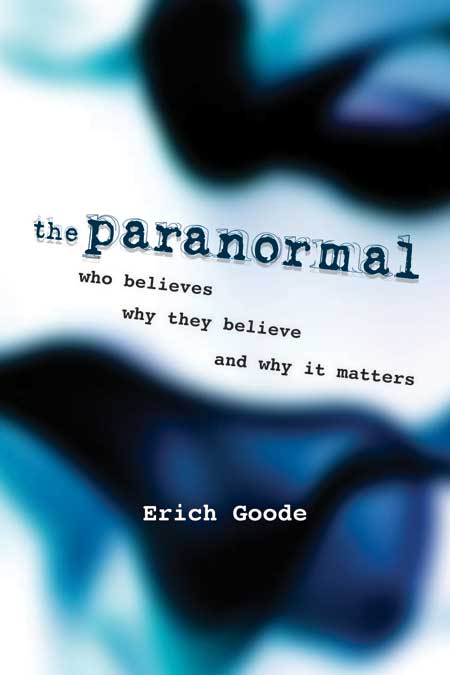
ParanormalA recurrent theme on this blog (as my faithful few will doubtless know) is that religion draws from the same stream of cultural energies as do other phenomena such as horror movies and the paranormal. Religion and fear and curiosity seem to share some common parameters, and every now and again serious academics tackle these connections as well. Erich Goode, a sociologist, has taken on unconventional beliefs in his The Paranormal: Who Believes, Why They Believe, and Why it Matters. Unlike many academic writers on the topic, Goode does not attempt to debunk, but it is also clear that he does not ascribe to the unconventional viewpoints he examines either. In what must be an important realization among sociologists, Goode, like some of his colleagues who also consider the paranormal, finds that belief is widespread. Large segments of the US population allow for some validity toward ghosts, psychics, aliens, and yes, even creationism.

That last one stopped me for a second. Several seconds, actually. Creationism paranormal? When Goode’s delineations are considered, this is not completely inappropriate, but creationism is pure-blood religion. Not that it is necessary for religion, but its birth and considerable growth has been among the conventicle of true Bible believers. It is clear that in Goode’s line of reasoning there is only a fuzzy line between religion and the paranormal. I’ve asserted that same fuzzy line, but I’d never considered biblical literalism as paranormal. Maybe because I was raised in that environment it seemed normal and natural to me. Maybe because it is in the Bible it feels weird to hear it classed as paranormal. Maybe because believers in ghosts, aliens, and undiscovered forces have at least some viable evidence to indicate their beliefs are valid; the creationist distortion appears not to belong in the same camp.

Creationism is a complex psychological phenomenon, to be sure. How people who know the obvious practicalities of science (such as television and the internet, where creationism can be expounded) have demonstrated that its overall methodology is sound, how such people can accept a fairy tale beginning to a Grimm tales world is difficult to fathom. And creationists, in general, would reject belief in what most of society considers paranormal. Can these coexist in the same category? While Goode constructs his paradigm as those who accept and reject empirical reductionism, I’m not convinced that religious belief is the same as paranormal belief. The parsing is a bit too coarse here. Creationism, which began life as a religious belief, has become a political agenda all about domination. It is not so much naiveté as it is need to rule. Somehow I doubt the ghost hunter with her or his night vision camera and digital voice recorder has any real designs on textbook distortion or having women keep silent on Sunday morning.


Bridge over Troubled

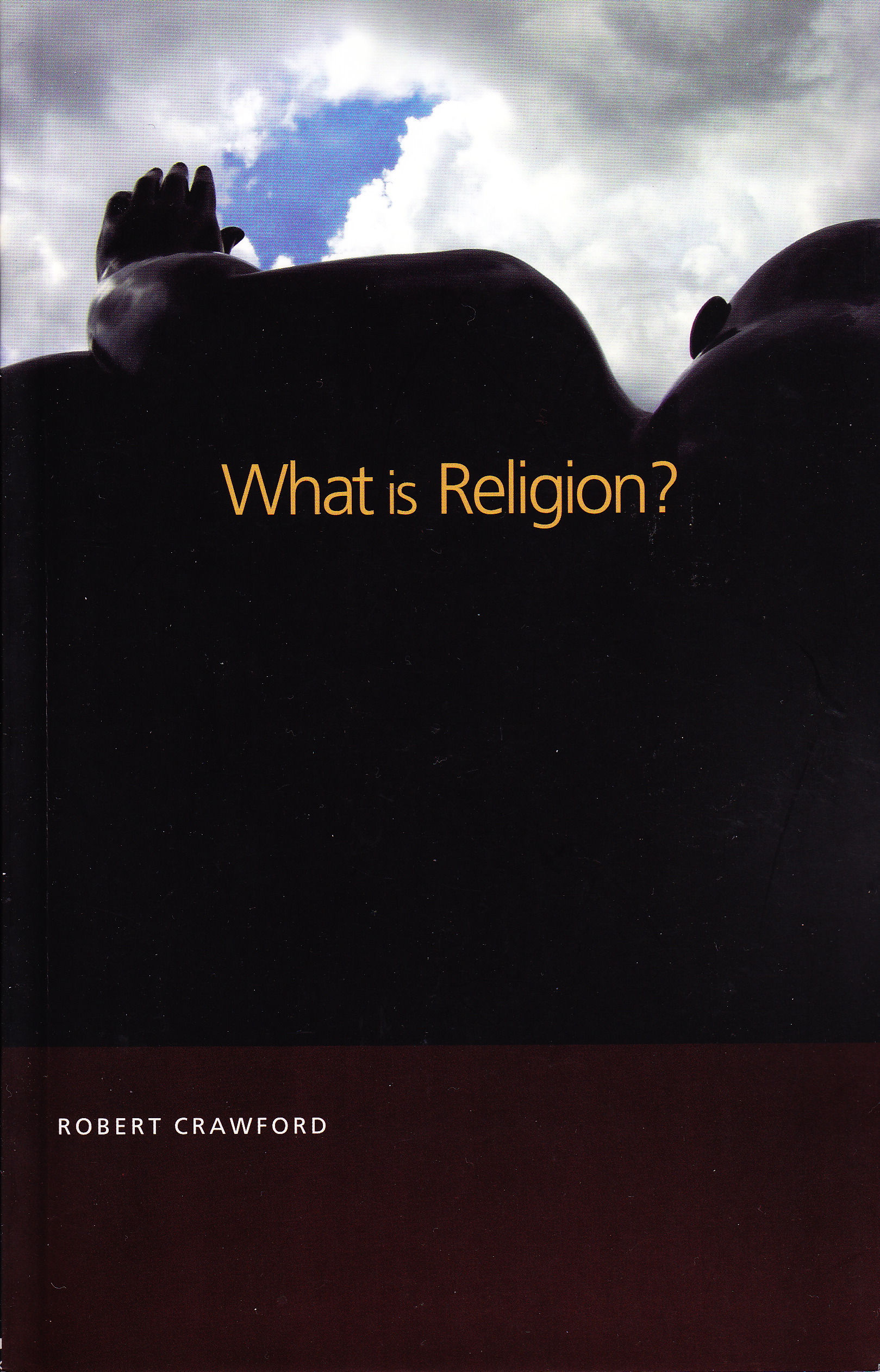
ReligionThe fundamental question of what counts as religion remains elusive. I read Robert Crawford’s What is Religion? hoping to find out. Crawford begins with the admirable assertion that in a pluralistic world all religions must learn to get along. Unfortunately, learning hasn’t always been one of religion’s strong suits. And we still don’t even know what religion is. As becomes clear within minutes of starting the book, consensus will be a stranger in this room. Nevertheless Crawford plows on, hoping against hope that comparison will reveal conformity. Religions aren’t really team players in that way.

Crawford keeps his focus on the “big six”: Judaism, Christianity, Islam, Hinduism, Buddhism, and Sikhism. Although these faiths contain the lion’s share of numbers, they in no way corner the market on religion. I wonder if Crawford’s net is really large enough. When trying to define religion, cutting corners gets you into trouble every time. No matter how we count it, religion is more than a matter of belief and broader than prescribed rituals. It must take seriously the attempts of even small knots of seekers in its preternatural accounting. Crawford sometimes gets bogged down in the details. Science plays a key role in his discussion but then the scope shifts to Christianity, a religion with more than its share of scientific troubles. Islam, for a while anyway, led the world in scientific thinking. What of Sikhs and science?

The more I read of What is Religion?, the more I got the feeling that all of these pieces don’t go to the same puzzle. Religions develop out of historical circumstances and needs. They, with a few exceptions, are not consciously devised by a bunch of eggheads shut up in ivory towers. Religions develop from people in difficult situations, whether physical or psychological. Think about it. If the Bible is to be believed Judaism grew out of slavery in Egypt (either that or Abraham’s childlessness). Christianity out of Roman oppression. Islam from Muhammad’s conviction that polytheism didn’t add up. Hinduism’s old enough to have lost its origins in deep antiquity, but Buddhism is clearly a reaction to pervasive suffering. Sikhism tried to steer between the clashes of Hinduism and Islam. We could go on, but I don’t wish to try your patience. I’m not suggesting I’ve finally done the impossible and defined religion. In fact, I may be suggesting the opposite. Religion encompasses many ways of being in the world. Crawford maybe got a start on the discussion, but it will go on as long as people have troubles.


The Spice of Religion

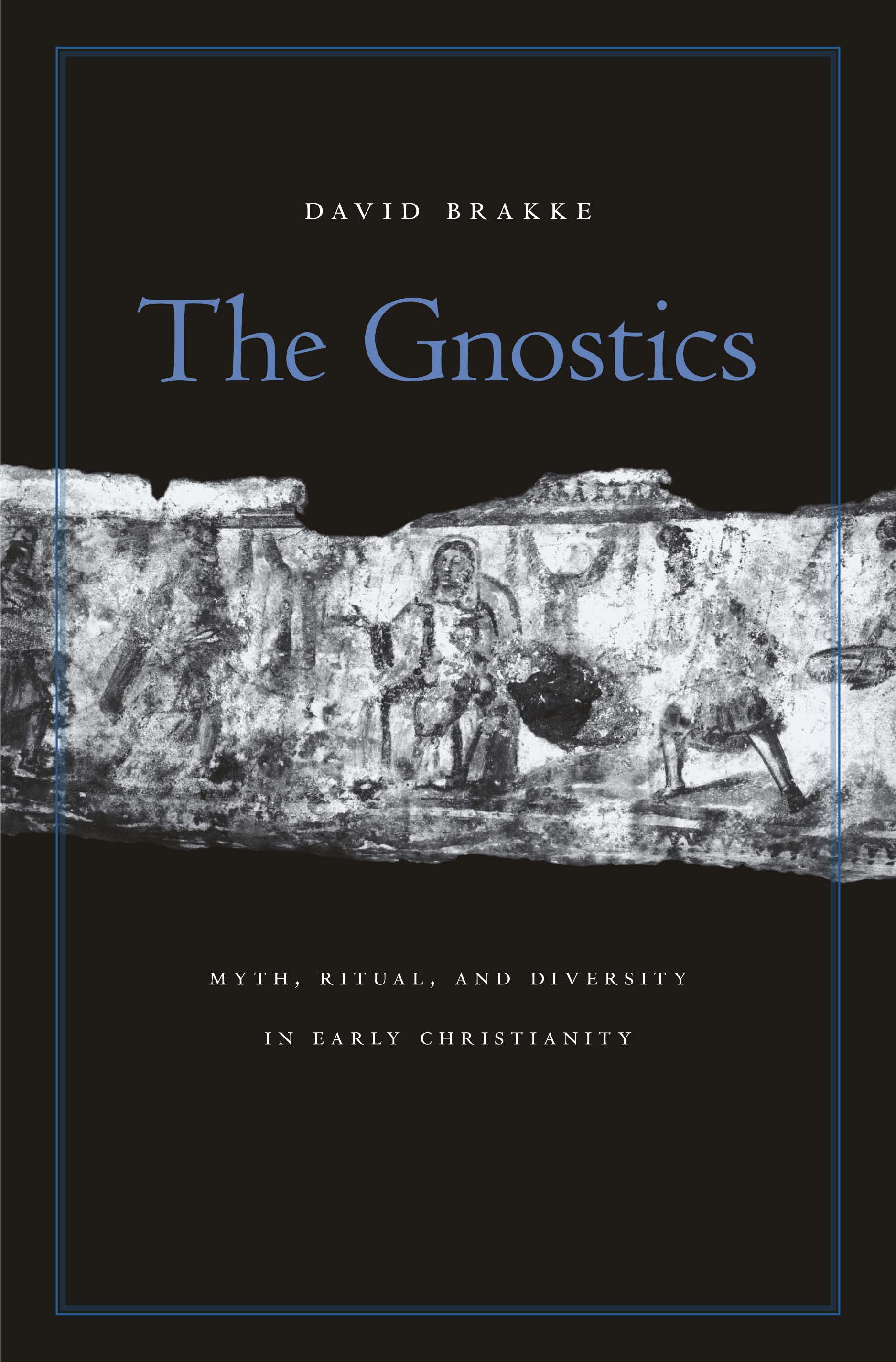
BrakkeGnosticsI haven’t really forgotten about the Bible. It has been such an integral part of my life that I couldn’t escape it if I tried. Going into religious studies, however, I feared New Testament studies. You see, having gotten a taste of historical criticism with good old J, E, P, and D, I was afraid what might happen if I looked Q a little too closely in the face. We now know, however, that the New Testament was just as redacted as the “Old,” and that there wasn’t a single variety of Christianity, even in the first century. I just finished David Brakke’s The Gnostics: Myth, Ritual and Diversity in Early Christianity. Brakke admits right up front that some will see him as not being radical enough, but since middle-of-the-road is a comfortable place to be, I found his introduction in the realm of the little bear, just right. The old story, perhaps originating with Irenaeus of Lyon, is that Christianity began as a monolithic faith and then came along these spoil-sports like the Gnostics and soon nobody could keep the truth straight any more. This is, of course, an over-simplification.

Religions are constantly shifting. As Brakke points out, there was no definitive Christianity when Christianity was still Jewish. Paul never calls himself a Christian, and he was, by his own declaration, Jewish. His interpretation of Jesus varies greatly from that of the eponymous John, of Gospel and Epistle fame. No, there never was a single Christianity. Probably from the very beginning there were Gnostics too. And, again with Brakke, they would have supposed they were following what was to become Christianity as well. Same world, different worldviews. They were not sinister and plotting, any more than other varieties of Christians were sinister and plotting. They were trying to live out lives in accordance with what they thought life was all about.

It has become clear over the last several decades that Christianity never really did unify into a single belief system. Constantine certainly gave it his best shot, but Christianity had spread beyond the bounds of the Roman Empire already, and heterodoxy was rife. No account of Late Antiquity can be honest without noting all the fighting going on among true believers about who was a, well, true believer. Really. Tensions existed early between eastern and western brands of Christianity and schisms became as common as missals. Nobody was really able to put Christianity back together again. In fact, this Humpty Dumpty never was an uncracked egg. I’m afraid I’m taking liberties with Brakke here, but the basic truth remains. Christianity came in its own 57 varieties, most of which didn’t blend very well. The Gnostics come out looking pretty good. That is especially the case when the proto-orthodox start gathering stones. In such a case, it is perhaps time to read the Gnostic scriptures to get a little perspective.


Intelligence, Evolved

intelligenceinnatureAnyone who has looked into the eyes of a cat or dog can have little doubt that they think. What exactly they think is, of course, a matter of conjecture. I had been meaning to read Jeremy Narby’s Intelligence in Nature for a few years now. We are taught at a young age to eschew anthropomorphism—although our eschewers don’t use that word—as the childish way of perceiving the world. Animals don’t think because that’s reserved for people. We sit in the finest spots in the poshest corners of the animal kingdom and the sign says “No Dogs Allowed.” I never really outgrew this child-like belief because the minimal scientific evidence I’ve been able to infer supports the idea that like us, other animals think. Narby, an anthropologist, agrees. At least to a point. I don’t wish to make claims for Dr. Narby that he wouldn’t support, but he provides fascinating empirical evidence, “down” to the level of amebas and plants, that indicates intentionality. Nature is alive with thought.

As an anthropologist, Narby begins his consideration with the insights of shamans. Although scientists rarely countenance shamans, they are among the earliest of human religious specialists and they have long promoted the idea that humans are fully integrated into nature. We are not separate and above. From our brains to our bones, we are one with the natural world. If we think, should not animals think? Interestingly, this idea brings Narby into some of the same territory as Thomas Nagel; intelligence may be a cumulative process. Our brains’ ability to think may be the result of collecting together the thought processes of our fellow creatures to a point where our thinking becomes abstract. We’re told that dolphins and whales don’t think like us—they don’t build cities, do they? Maybe it’s because they didn’t evolve opposable thumbs. Maybe it’s because they’re smarter than we are.

There are, it seems, many thinkers on the outside of the hallowed confines of hard science that are chipping away at the strict materialist edifice. There can be no serious question that the empirical method explains much of what we experience in the universe. It has always amazed me, however, that we assume that humans are able to find the outer limits of existence with our limited senses. We know animals can see, hear, smell, taste, and maybe even feel in ways beyond our capabilities. Who’s to say that there isn’t other input well beyond our limited senses that we use to survive in this environment? After all, we didn’t evolve to know everything—we evolved to be able to thrive in our ecosystems. For that you don’t need all the answers—just enough to get by. If you doubt my reasoning here, I suggest you ask your dog or cat.


Which Lethbridge Witch?

witcheslethbridge Thomas Charles Lethbridge was a twentieth-century explorer. I knew his name only from book covers, and since books published before the cynical 1980s have a feel of the parsimoniousness to them, I tend to be trusting. As a former academic, my choice of reading is, in an odd way, sequential. You see, academic research is often a matter of following leads, rather like Sherlock Holmes with his clues. One thing leads to another. I’ve been learning about paganism at work, and so when I noticed T. C. Lethbridge’s book, Witches: Investigating an Ancient Religion, I figured that I might learn something about belief in witches in the Middle Ages. The book was published by the Routledge Kegan Paul phase of my employer in 1962. I quickly learned that Lethbridge was far from conventional, even in the twenty-first century.

Lethbridge’s book on witches turned out to be a romp through mostly Celtic mythology, with a bit of Norse and ancient Near Eastern myth thrown in for good measure. It turns out that Lethbridge literally did believe in the power of magic and was no slouch when it came to dowsing. In the great Frazerian tradition, Lethbridge brings together some elements that are probably best left separate, but the result is undeniably interesting and entertaining. I’m not sure he would be considered a balanced source for research purposes today, yet his book does contain unexpected insights. But no witches. Witches, according to Lethbridge, were adherents of the old gods. Their worldview collapsed with geocentrism and there was little left for magic to do in an empirical world.

Lethbridge’s constellation has dimmed from the scholarly zodiac. In recent days he has found a new set of disciples, however, who see his work as profoundly prophetic, in a manner of speaking. Lethbridge was an occult investigator before such pursuits became big business. Among mainstream academics these ideas still fall into the category of bogus, naive, or superstitious, but that is beginning to change in some quarters. Lethbridge, as it quickly becomes apparent, reserved a kind of scorn for establishment academics. It is true that stepping out of line has its consequences even in the rarified halls of higher education, but the results of the research are often of high quality. Even witches can be studied with an academic eye. The difference seems to be that T. C. Lethbridge believed what the witches said. That makes him a real explorer.


Mind Your Cosmos

MindandCosmosSomething on your mind? How often do we bother to think clearly about our minds? One of the most dispiriting concepts ever invented is the idea that even our minds are merely part of a reductionistic, mechanistic universe. All those beautiful, frightening, sublime, and mundane thoughts are just noise, clutter. An inevitable side-effect of all that electro-chemical activity in the gray matter. Nothing more. It is an idea to which it is very difficult to warm. Philosopher Thomas Nagel, however, doesn’t use a soft approach to the concept of mind in his Mind and Cosmos: Why the Materialist Neo-Darwinian Conception of Nature is Almost Certainly False. This is not an easy read, but it rewards the reader well.

Some, I suspect, will accuse Nagel of being a closet creationist, but he addresses that concern up front. Nagel is an atheist, but he recognizes that the creationists have raised some valid points about the explanatory value of a materialistic, reductionistic view of the universe. Nagel, like all careful thinkers, realizes that the fact of evolution is not to be disputed. The mechanism driving mutations, however, is open to some speculation. I’ve read many books that suggest we are but (in a more than angst-ridden Kansas) dust in the wind. Particles and reactions and nothing more. That love you feel when your heart is thumping wildly over that special someone? Mere chemistry. And not the kind that implies a transcendent state. Just lab-coat chemistry. I read Nagel because this kind of reductionism just doesn’t fit reality as I’ve experienced it. I’m no physicist, but I’m all I’ve got. And my reason tells me that there’s something more too it.

Nagel approaches the issue by examining the origins of mind. Whence does consciousness emerge? Using precise, carefully selected reasoning, he demonstrates that there is a chance that consciousness is inherent in this universe we inhabit. Just as bodies are built of cells, and cells are built of proteins built of molecules built of atoms, the mind could be constructed of components as well. I can’t replicate Nagel’s elegance of expression, but his suggestion that we may be part of a universe beginning to awake is as much poetry as it is logic. And that, more than anything else, is a reflection on the complexity of being human. We are meaning-seeking creatures. Being told that we’re mechanistic automatons is like slamming a door in a two-year old’s face. If I am merely particles and tiny jolts of electricity, I’m going to take the particles that make Nagel’s book with me as I try to reconcile myself to a universe where nothing is really what it seems.


Gods in Spandex

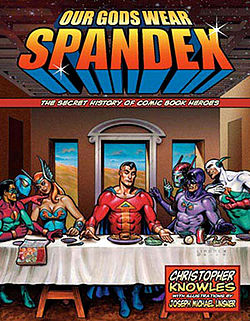
OurGodsWearSpandexOne thing leads to another. Reading Jeffrey Kripal’s Mutants and Mystics stirred an interest in comic books that I hadn’t felt since before my college days. Often excoriated as puerile, escapist doggerel for pre-pubescent boys, comics have grown to be respected members of adult society. I often wonder what the draw might be. Hollywood has certainly cashed in on it with any number of blockbuster flicks each year coming from the brains of the comic book writers and artists. So I picked up the quirky book by Christopher Knowles and Joseph Michael Linsner entitled Our Gods Wear Spandex: The Secret History of Comic Book Heroes. Reading it was kind of like looking in a mirror that has been buried in dust for a few decades. I hadn’t realized that my tastes in childhood comics was a reflection of a longing for the divine world with healthy doses of science fiction, and even H. P. Lovecraft, thrown in along the way. Knowles ties in a remarkable breadth of material to demonstrate that our superheroes are, in the final analysis, gods. That point may be taken in any number of ways.

The academic world suffers from a fear of respectability. That may seem a strange assertion, but I’ve spent a great deal of my life among academics and I know that many of them are insecure and tentative. Does all this reading, writing, and analysis ever get read by anybody? Does anybody take me seriously? Academics are haunted types. So when a subject as vulgar as comic books arises, scholars are reluctant to touch it. It might look like we actually enjoy reading the funnies. Still, popular culture has demonstrated an unexpected depth to much that we read in the strip world. As Knowles points out, a deep undercurrent of the occult and esotericism runs through many hero story lines. Several heroes began their lives as classical gods, only to assume the spandex and become incarnate humans with special powers we long to have ourselves. We would fly, if we were given the chance.

Our Gods Wear Spandex may never be viewed as an academic book by most. It has too much visual interest and not enough recondite footnotes. All the same, it is a profound look at what people really desire. We worship gods because of their special powers. If God were one of us with our humiliating weaknesses and limitations, would we ever worship him or her? Of course not. We only seek to appease those who are stronger than we are. Entire governments and ecclesiastical bodies are built on that very principle. Heroes are like us. Mortal, and yet, with something more. They die. But like the gods, they can come back. Reading Knowles it becomes clear just how much religious thought pulses through the veins of the comic book world. We may be grown up and sophisticated. We may have left behind childish things. But when our backs are to the wall, who doesn’t secretly wish they were Wonder Woman or Superman? And maybe that wish is a prayer.