Sacred Sexism

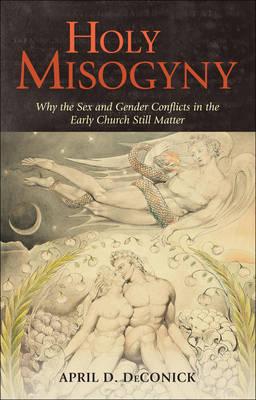
holymisogyny How terrifying to observe religion from the eyes of women! In the monotheistic traditions it begins as early as Genesis 2 and continues unbroken through to the twenty-first century. While the origin of such views seems a mystery, they may be partially understood by reading April DeConick’s Holy Misogyny: Why the Sex and Gender Conflicts in the Early Church Still Matter. Not that anyone fully comprehends the insidious idea that women are somehow less than men, but DeConick offers some insight into the issue. She suggests that sacred misogyny is, like much of life, an embodiment issue. The monotheistic traditions from the beginning have had trouble with women’s bodies. Men can’t control their urges and blame the victim. That is over-simplifying, I know, but the basic gist is about right. What can’t be missed from reading Holy Misogyny is that the idea has embarrassingly deep roots in religious thought.

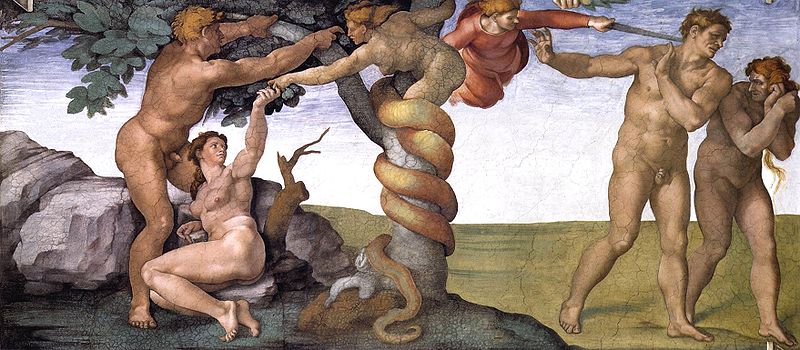
The Bible starts out pretty fair. Except from the beginning the masculine pronoun is used for God, even though theologians from very early days declared God neither male nor female. How do you believe that an “it” really cares for you? Wants the best for you? Loves you? We are gender embodied. We want to know who it is that’s loving us. Genesis 1, on the human level, has man and woman created together on the same day, at the same time. The essence of their embodiment appears to be divine: “in the image of God created he him, male and female created he them.” “Human” is gendered humanity. But then the apple falls. We turn the page to find that the not yet monotheistic religion of the Bible is already pointing sticky fingers at Eve. I know that I can’t read Tertullian without wanting to hide my face when he castigates women as the source of evil.

Holy Misogyny is a disturbing book. It should be. What it does demonstrate, however, is that a wide variety of opinions and options existed for early Christianity when it came to the perception of women. Some of the Gnostic sects of Christianity came much closer to a kind of equality, but they lost out to an unremittingly masculine “orthodoxy.” The Bible itself, although written in a patriarchal world, is an ambiguous document. At points even Paul seems to indicate the genders are equal in God’s eyes, but then, he (or someone writing in his name) tells women to keep quiet in the church. Ask your husband at home. I’ve talked to a lot of church guys in my time, and Paul, I have to contest you here. Women who want to get proper instruction in matters of the soul—or of the body—would be better off reading DeConick than asking their husbands. We’ve got two millennia of unfortunate history to prove the point.
Trouble Feature

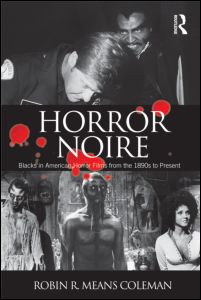
HorrorNoire I must be a glutton for punishment. My fascination with horror films grew more out of enjoying the unsettling mood these movies used to set. That creepy, shadowy world that resembles in such a degree my experience of the everyday world. Like most people I don’t enjoy being scared, and as a pacifist I find violence extremely distasteful. And yet, horror movies. I suppose they serve to remind me that no matter how bad things might seem, they could be worse. This fascination also accompanies reading about scary movies as well. Robin R. Means Coleman’s Horror Noire: Blacks in American Horror Films from the 1890s to Present is a fascinating study of how race perceptions have found expression in horror movies. As Coleman points out, it’s not a pretty picture. I suppose, however, that it could be argued that no one should want to find themselves the subject of a horror film. They tend to be a form of self-punishment, and, psychologically speaking, that makes a lot of sense.

African-American characters, I had noticed, in early horror films are portrayed as easily frightened and their reactions are used for comic effect. I still squirm when I see such representations in early movies: the cultural and racial arrogance rises like bile in the throat. What I hadn’t realized, however, is that the Black role in horror films is frequently tied to religion. Coleman makes this clear—from early films centering on African-American issues to Caucasian efforts to portray Blacks, religion is often the vehicle. Black films make a strong use of Christian themes, while White films not infrequently present Africans as purveyors of voodoo or some mysterious, and dangerous religion. This is a fascinating trend and it shows mixed perceptions of how religion is understood. Christians who dismiss the “superstition” of other faiths should have no fear of “false gods.” Yet it makes for great horror fare.

Despite their low-brow reputation, horror films are among the most successful genre of movies. Many people find them cathartic, I would guess. It is uncomfortable, however, to be faced with how race self-perception is embedded in such films. Like any artistic effort, movies reflect the values of those who write, produce, and direct them. At the same time they reinforce or even channel the expectations of the viewing public. Reading Coleman’s study, I was given a glimpse of the perception of one of my favorite genres from the perspective of “outsiders.” It is not always a comfortable place to be. Horror movies sometimes showcase terrors more frightful than the special effects and improbable beasts flashed upon the big screen. The realities of our own past can be the worst of monsters.


Real Life Zombies

In recent months Binghamton University has been on my mind. Binghamton has a number of videos available on YouTube which I find to be entertaining and even, sometimes, very funny. I like Bing’s style. Even though I catch myself laughing once in a while, I know that Binghamton takes higher education seriously. I watched a recent, 17 minute talk on a vital topic. It is located here, and I would recommend that you watch it too. Don’t worry, I’ll wait.

Back? Okay. The situation raised here is one that makes me shudder. Few things are as debilitating and vulnerable as an uneducated populace. Both religious and political forces have made great efforts to prevent certain orthodoxies from being challenged by what they term, as an obvious swear-word, “higher education.” The fact is, folks, higher education is nothing more than an attempt to get people—often young people—to learn how to think critically. That last word is a stumbling block sometimes. Any number of people will suppose that critical thinking is the same as criticism. It isn’t. Critical thought is the ability to approach a problem—any problem—rationally. To respond with the best that our minds have taught us to do, rather than with knee-jerk reactions. Yes, emotion and jerking knees have important places in the world, but they only work well if they are accompanied by the ability to think critically.

The video makes it pretty clear that the ability to think is rapidly eroding in our culture. Perhaps not quite zombie apocalypse, but not comfortably far from it. The death of Borders was blamed on its inability to get into the electronics markets by various pundits. I disagree. Borders fell victim to a culture that has lost the joy of challenging reading. We like spoon-feeding (otherwise much of the internet is difficult to explain). In order to exercise our brains, we have to use them to read hard things. Like my high school coach used to say, if you don’t use your muscles they’ll atrophy. Looking at my mid-section, I can see that his words were true. What Coach didn’t warn us about, though, is that the same holds true for the mind. The unchallenged intellect is a dull one. This is a threat far more insidious than any Communism, or liberalism ever was. It is the dummification of America. We are a nation that loves zombies. We are also a nation in danger of becoming them as well. Fight the zombie apocalypse—read a book. And like that baseball bat you use to swing at the undead, the harder it is, the better.

They don't write them like that anymore

They don’t write them like that anymore


Esalen

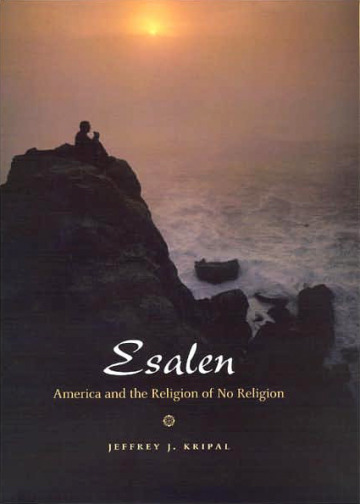
Esalen Every great once in a while, you read an academic book that really makes you think. Not that many books aren’t erudite or thought-provoking, but the ones that cause a reader to question reality are relatively few. I suppose that’s why I’ve been reading Jeffrey Kripal’s books like candy. I’ve posted on his Authors of the Impossible and Mutants and Mystics. Now that I’ve read Esalen: America and the Religion of No Religion, I somehow feel like I missed out on something important that had never entered my awareness. Growing up in the eastern part of the country and not reaching my teenage years until the program at Esalen was already under way and famous on the west coast, I’d never even heard of the institute until I’d started reading Kripal’s books. Esalen, for those who are like I was, is hard to define. Indeed, Kripal studiously avoids doing just that as he narrates its history and impact on the nation, and indeed, the world.

The human potential movement has seldom found institutional support. Since our worldviews determine what we are capable of seeing, and since our reality has largely been defined by a rationalistic monism, an entire universe remains for us to discover, if we were only to open our eyes. Reading about Esalen was like finding a long lost twin—much of what the institution has stood for has found its way into my own psyche in some form or other. I suppose I’ve never really read too much on eastern religions, but I do appreciate what meditation can do. Reading the names of those associated with Esalen over the decades, it would be difficult to disagree.

Our society has come to trust materialism assiduously. How easy it is to forget that even the material world consists of so much more than our limited senses reveal. We know that animals sense the world differently, so we call them non-conscious beings and get on with pretending that if we can’t see it, it doesn’t exist. As the Esalen devotees know, even scientists have come to consider the implications of quantum mechanics. If we are to take the results of physics seriously, the impossible does happen. Right here in our own corner (or arc) of the universe. We lose so much by refusing to believe the impossible. Lewis Carroll knew that and we’ve been talking about going down the rabbit hole ever since. There are rare places in the world where the spiritual, the scientific, the sensuous, and the artistic come together to explore what the human experience truly is. One such place is Esalen, where, I’m told, the religion is no religion.


Flying None?

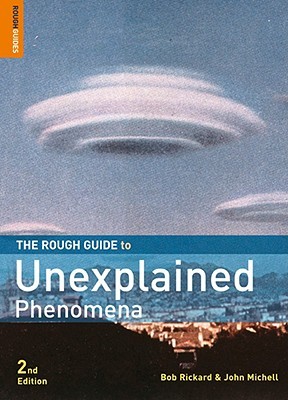
RoughGuidesWhile reading about a saint or two recently, I once again came across the concept of levitation. Long dismissed as overly gullible piety of superstitious pre-moderns, the practice has been relegated to the scratched and damaged basement of religious thought. Or so it would seem. While examining a World Religions textbook at work, I came across a picture of a young person in meditation who was, to all appearances, levitating. The caption simply noted that levitation is a component of some religious practitioners’ discipline and then quietly moved on. No scare quotes or allegedlys to be seen. The publisher of the text was one of the major textbook moguls. Curious, I found a reference to The Rough Guide to Unexplained Phenomena by Bob Rickard and John Michell. This intriguing book, in its second edition, bears the Penguin imprimatur, and therefore should be taken seriously. While I am certain that any number of skeptical readers will declare me hopelessly naive, I found the book full of interesting anomalies, and many of them, as I’ve noted several times on this blog, tied the paranormal to religion.

While I can’t accept everything I read in The Rough Guide, there remain, even after healthy doubt, a number of weird things that persist in our reductionistic world. Strange phenomena do not necessarily validate religion, of course, and many of those “revelations” people claim must be simple pareidolia. These are entertaining, no doubt, but hardly newsworthy. It is rather those phenomena that refuse to play by the rules that raise questions about our demon-haunted world. If even just a handful, or even one of the cases of levitation actually occurred, it would mean some serious rethinking concerning the nature of gravity. Do saints levitate? I’m no saint, so perhaps it’s best not to ask me. If one lies about it, then s/he is hardly a saint.

As uncomfortable as the unexplained may make us, these reports do serve as a reminder that our scientific worldview is, in many ways, still in its infancy. A few years back, sitting in on the lecture of a friend concerning the science of the Mesopotamians, it was clear that rational thought has very early origins in human civilization. At the same time, the Mesopotamians had plenty of room for gods and the supernatural in their worldview as well. Here in our electronic twenty-first century, it might seem that reason will see us through just about any crisis. Even a glance at the headlines reveals we’re not there yet. Some will blame the religious, the “superstitious,” the irrational for our problems. Meanwhile far from the eyes of scientists and authorities of secular power, maybe, just maybe, a religious practitioner may be hovering a few inches off the ground.


Apples to Apples

Religion is all about death. Well, maybe not all, but still…

All religions deal with death in some detail. Perhaps that’s because death is such a universal experience. I think about it quite a lot—not to do so seems to be caught at a crisis without having thought through the implications—but mine are not always morbid thoughts (although, by definition, they may be). When I read Mary Roach’s Stiff a few years back, before I started this blog, I was amazed by the number of ways one could decide to have their “remains” treated. When I was a kid it seemed that there were only two options: bury them or burn them. To some religions the latter option felt a little close to Hell and was condemned as a sin. Occasionally I’ve posted here about various new methods that have made the news: having yourself morphed into a bullet or diamond.

In what I hope was not too much of a hint, my wife shared a further option with me—having yourself turned into a tree. Now while this seems what nature intended, it also feels profoundly Asherah-like. I have my doubts that Asherah was a generalized tree-goddess, but there is some kind of connection between wood and the goddess. Certainly by the Rabbinic Period of Judaism any tree in or near a sanctuary could be understood as the goddess and therefore a threat to monotheism’s hegemony. The solution: chop down the tree. Now Asherah whispers back, when you die, I can make you a tree.

People, like all animals, biodegrade when they die. Some saints apparently avoid this fate while others are pickled to a state of perfection artificially, but for us regular folk nature has a plan. Animals eat the plants, plants eat the animals. We are all consumers. Bios Urn is the brainchild of Gerald Moline and features your deceased body packaged in a biodegradable urn along with tree seeds of your choice. All you need is a post-holer and a bit of rain. Some might wish to be a redwood with their aspirations to immortality. I think I would prefer to be an apple tree. Apple trees give back year after year. Plants, by their floral nature, are givers. The apple tree gives in a way that seems especially divine. After all, many are those who claim it is the very tree of Eden.

What everyone wants

What everyone wants


Gods and Goliath

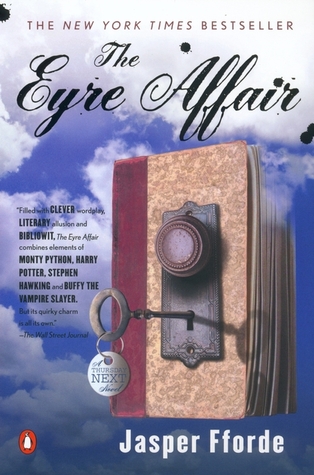
EyreAffairNot only gods are proficient at creating worlds. Writers, as readers know, are the creators of worlds too. I first discovered Jasper Fforde via a friend’s recommendation. With the depressing demise of bookstores, however, I end up picking up whichever one happens to be on the shelf. Not that this is a bad thing, but I find myself in a melancholy cast when I think of all the joy that is not being had by avoiding reading. It’s all rather hollow, wouldn’t you agree, Mr. Eliot? All of which is to say Jasper Fforde’s The Eyre Affair was great fun. As usual when I read fiction, I kept an eye out for how religion appeared in this alternate world—most fiction that ignores religion completely somehow seems to be less realistic than Fforde’s fantastic tale. In the world of Thursday Next, the churches are dedicated to GSD, the Global Standard Deity. As one of the characters explains, the GSD is a combination of all religions intended to stop religious wars. It’s a great idea on paper, but religions are prone to wars as sparks fly upward.

Somewhat later in the novel Thursday encounters a crucifix-wearing vampire. Fooled by the sigil, she almost becomes a victim to the blood-sucker. When Thursday points out the supposed impossibility of a vampire wearing a crucifix, he replies, “Do you really suppose Christianity has a monopoly on people like me?” Although Fforde can be a great comic writer, some of his quips are quite profound. Indeed—does Christianity have the only vampires? All religions have their monsters, whether that’s what the author meant (score one for reader-response theory). The truth is the truth, no matter whether intentional or not.

The idealized world of The Eyre Affair is one in which religion has become universal. The great military conglomerate in the book is called Goliath not because of the Bible but because of its size and apparent strength. It is brought to its knees, however, by Thursday—a female David, if you will. In practical terms, throughout the book the military is much more powerful that the church of GSD. Perhaps that’s because people are afraid. Religion, which once upon a time allayed fears, has now become one of their main generators. “Nothing frightens me more than religion at my door,” John Cale once sang. In this rich complexity the reader is invited to bask as Jasper Fforde works his magic. Do yourself a favor and pick up one of his books. Before it is too late. You might find yourself learning a thing or two about religion. I did.


True Heroes

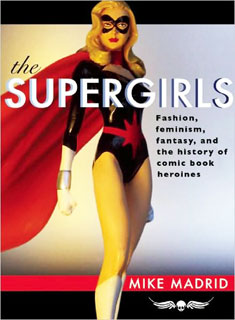
supergirls As a guy with a healthy sense of the weird,it strikes me as odd that rational people can suppose that we’ve solved all of life’s great mysteries. As a student of biology, chemistry, and physics in high school—and a reader of non-technical aspects of the same throughout my adulthood—it always seemed that there was an undefinable “something more.” Reading Jeffrey Kripal’s Mutants and Mystics led me to an interest in comic books. As a child I did not have many of them since we didn’t have much money to spend on luxuries. The few I had, however, were read and reread and reread, assaulting my imagination with endless possibilities, many of which defied everything I was to learn of biology, chemistry, and physics. My interest in feminism and new-found appreciation of the proto-graphic novel, led me to read Mike Madrid’s The Supergirls: Fashion, Feminism, Fantasy, and the History of Comic Book Heroines. As a boy surrounded with brothers, I clearly knew which comic books were for males. Madrid’s book delves into this super-hero world with the question of why females have always struggled to be taken seriously in this fantasy land.

Many of the characters explored in Supergirls were heroines I’d never encountered before. Madrid’s analysis often appears spot-on as he traces their histories through the decades as they mirror, and occasionally lead, society’s expectations of what women should be. The one that I had no trouble recognizing was Wonder Woman. And the reason for that was she used to have a TV show. Not mentioned by Madrid was the mighty Isis, also a heroine from television. She began as a character opposite Captain Marvel, and did not have her origin in a comic book. Isis was, of course, an ancient goddess, and as I learned from Supergirls, Wonder Woman was not far behind. The way that women could be as strong as men was to be divine. For human females, life was much rougher.

Wonder Woman, Madrid notes, was one of the Trinity of early, lasting comic book heroes. Superman, Batman, and Wonder Woman are cast as the Father, Son, and Holy Ghost, respectively. Like her theological counterpart, Wonder Woman is the most amorphous, least understood of the three. Her career and persona change over time, almost losing any kind of supernatural ability. Her origin story, however, began as a helper of oppressed women everywhere. Today we see Superman and Batman on the big screen, but Wonder Woman has fallen behind. Despite great strides, our society still isn’t ready to accept rescue of men at the hands of a woman. More’s the pity, because we clearly see the mess that masculine leadership has spawned. Mike Madrid has discovered a secret identity for our old foe, sexism. And it might take the world of comic books to help us see clearly that which mainstream analysis still denies.


Grown up Fish

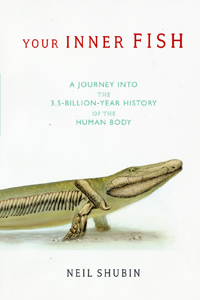
InnerFishEmbryonic recapitulation. That’s what it used to be called. I didn’t learn about this in biology class, but rather in the Creationist literature that challenged the very concept. I suppose those deep evolutionary roots are what led me to read Neil Shubin’s Your Inner Fish: A Journey into the 3.5-Billion-Year History of the Human Body. Not that anyone who’s considered the facts can question evolution, but this book nevertheless took me back along my own evolutionary descent from Fundamentalism to a reluctant rationalism. I recall the frequently repeated Fundie catch phrase, “no transitional forms.” Probably what they were looking for was a mermaid-like creature that was half reptile and half bird, divided down the middle. Even at a tender age, while accepting their rhetoric, I wondered why archaeopteryx didn’t qualify. A flying feathered lizard? Sounded pretty transitional to me. Shubin opens his fascinating account with the discovery of Tiktaalik, a transitional form in every sense of the word. Here is a fossil that shows the tell-tale limbs and organs of moving from fish to amphibian. Yes, Virginia, there is evolution.

Shubin doesn’t stop there, however. He traces the various features of human bodies back to our piscine ancestors. From gills to gonads, we are bipedal, air-breathing, mammalian fish. No surprises there, really. One gets the sense that Shubin’s book wouldn’t be such a wonder if there weren’t organized Creationists out there constantly challenging the obvious. All living things on this planet are clearly related. Some of the cousins may be very, very distant, but we are all part of the same family. This threatens Creationists and others who need to feel different, special. People are related to God, they suppose, in ways that mere animals are not. Biology gainsays that concept, so no matter how much evidence we might marshal, the Fundamentalist is duty-bound to reject it. We’re trying to break up a personal relationship here, after all.

While Shubin does a wonderful job of explaining whence our biological features, I was nevertheless heartened to read him referring to the essence of being human. Some scientists reject “essence” as a vague concept that can’t be examined in a laboratory. That may be true, but we all know what an essence is. As a concept it too has explanatory value. It would be very difficult to read Your Inner Fish and come out doubting evolution. At the same time, Shubin realizes that people write books, and fish do not. That’s not to say that we’re superior to our fishy family, but that we are different. We have our own essences. That doesn’t mean we were created this way—maybe we’ve just evolved with them. Either way, Shubin is charming romp though 3.5 billion years of our history.


Peculiar Mythology

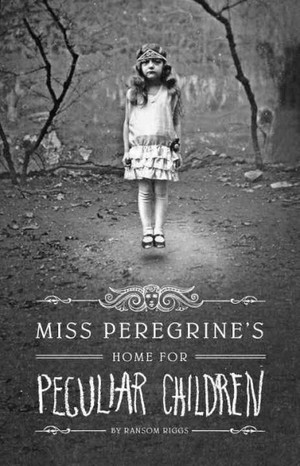
Peregrine Confession: I love books like Ransom Riggs’ Miss Peregrine’s Home for Peculiar Children. Ambiguity in fiction is under-appreciated at times. Of course, I’m not formally trained in fictional literature outside the confines of ancient mythology, but I do know what I like. This wondrous story of paranormal children in an alternate universe could almost have been drawn from Celtic mythology, and indeed Riggs provides a mythology to explain how things got this way. And every mythology is a kind of religion. In this world there are peculiars—not far removed from real life, for those willing to accept it—who have unusual powers. Miss Peregrine’s home, one where the children are under the guardianship of ymbrynes, houses those with special gifts. Some ymbrynes, however, wanted their godlike powers to make them into actual gods and in addition to causing the Siberian explosion, gave birth to hollowgasts, a kind of living damnation monster. “Rather than becoming gods, they had transformed themselves into devils.” Sounds a touch like Lucifer’s fall, n’est-ce pas?

It might be supposed by cynical readers of this blog that I select my reading based on the potential for finding religion in fiction. If that is true it is so only on a subconscious level, I assure you. I read about religion for many hours every day and I taught the subject for nearly two decades. When I turn to fiction it is generally for escape. I have found, however, that there is hardly any escape from religion. When I find it in fiction, therefore, I ponder some of its implications. Religion is so much a part of our lives that it can’t help working its way into popular culture. Maybe I just see it everywhere. That doesn’t mean that it’s not really there. But back to our story…

Hollowgasts, like Ugaritic devourers (sorry, couldn’t help myself), are powerful hungry. They must constantly feed their voracious appetites. Their favorite food, which actually transforms them a slight step back toward humanity, is the blood of peculiars. Blood is their salvation. The depth of this idea trickles down to the very roots of religion itself. Transformation is not possible without somebody paying the cost. Religion is bloody business. I won’t throw any plot spoilers in because I want to encourage you to read this strangely moving book. I will say that it is a strikingly well executed mythology for a world where God is not present, but where monsters and peculiars both partake in their own kind of divinity. And the strange photographs are real.


Rise of Religions

mansdominion Imagine my surprise when, as a boy raised in a fundamentalist family, I arrived at a liberal seminary to find myself accused of sexism. Like most kids I had been taught not to question religious dictates. Majoring in Religious Studies, even in as conservative a college as Grove City in the 1980s, even there I learned that to be educated meant learning to question. I’d thrown off fundamentalism by the time I reached seminary—I supposed I was making great strides. I’d always been in favor of equal rights for all, just because it seemed right. I supported gender and racial equity, but I was obviously still guilty of something. It has taken me decades to realize it, but being male is sufficient grounds to be despised. Perhaps it’s not as bad as all that. Maybe it’s worse.

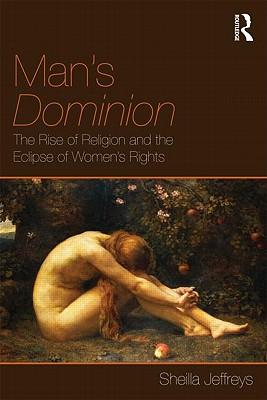
Sheila Jeffreys’ Man’s Dominion: The Rise of Religion and the Eclipse of Women’s Rights was nevertheless a sobering read. I supposed that it might be a historical introduction to the problem, but instead it is a bold declaration of some uncomfortable facts. All ancient religions, at least those that survive, had subordinated (and continue to subordinate) women. That’s not path down which a liberated religionist wants to stroll. I found myself resisting these assertions at first, but as Jeffreys keeps the examples coming, they are difficult to deny. Yes, religions have been founded by men and they favor men. Not that belief necessitates that, but history seems to. Even in religions where women’s leadership is allowed, it is because some men have decided it is okay. There’s no changing the historical trajectory to the past. Religions were invented by men. Given their druthers, they will, at best, treat women as somehow less important than men. The missing element here, however, is sincerity of belief.

I doubt that Jeffreys would claim that religions were devised by males in order to subordinate females. It’s hard to say whether that first inventor of religion really believed all the stories he told, but soon people came to do exactly that. And those stories grew into something more than myths, and became the basis by which lives were lived. They became literal. And women, who played only supporting or villainous roles, soon became the victims. I know that’s too simplistic. I also know there’s some truth in it. I went to seminary to learn more about religion. What I discovered was often an unwelcome reality. Although I never personally tried to oppress women, I participated actively in a club that did—the club of masculinity. It may be that religion itself will always lead to oppression of the other, for religions don’t form in perfect worlds. If you have any doubts about that all you have to do is ask half the human race.


Secular Oaths

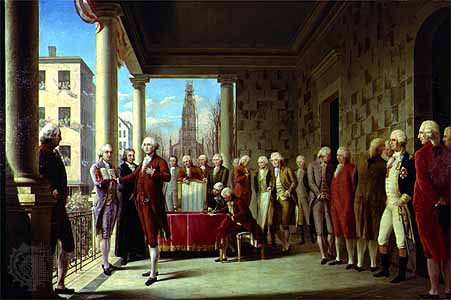
“I do solemnly swear that I will faithfully execute the Office of President of the United States,” so begins the story. With President Obama’s second inauguration so fresh in the public mind, an article in the Sunday New Jersey Star-Ledger raised the question of using Bibles for taking this secular oath. As A. James Rudin points out, not every president has laid a hand on the Bible to take the oath—John Quincy Adams preferred a law book to do the job. Rudin points out that commentators have started to question the practice of using any religious book for taking a vow for a government position. As I read this article I had to pause for a thought. It was the particular turn of phrase “the Bible, and by implication all other religious writings,” that stopped me at this brain crossing.

Washington's_Inauguration

Anyone who has taken time to study the phenomenon of religion seriously (admittedly not a large cohort) has stumbled upon the blue whale in the room: what exactly is religion? We all know, but nobody really knows. Many scientists equate religion with superstition and claim that we are evolving out of it, but we still seem preternaturally powerfully attached to it, if that’s the case. While religious writings have been around for ages, the idea of a sacred book seems to have its origins in the societal reception of the Bible. There are older religious books, but the Bible seems to have defined the category. What’s running rampant in my mind is where the line is drawn between a religious and a secular book. For some, it would seem, Fifty Shades of Grey, or Twilight would fall into that category. Some thinner, more glossy and heavily illustrated literature favored by teenaged boys might also qualify. What makes a book religious?

In current understanding, religion is a matter of belief. Not all religions insist on belief, but in the United States, in any case, it’s not properly religion without it. In our secular society belief is atomized into millions of varieties, even within the same religious family. Step outside the church, synagogue, or mosque, and the sheer varieties of religious experience would make even William James blush. “All other religious writings.” Those might include just about every pen stroke on paper (or electron on whatever it is that I’m typing this into). Those of us who venture to write know that at some level it is a sacred activity. I would swear it with my hand on my dissertation. (At graduation at Nashotah House students are hit on the head with a Bible. Perhaps this might be more appropriate to swearings in?) We lay our hands on that which is sacred, otherwise there’s no vow involved. Whether it be Bible, law book, or saucy literature, we pledge on it because all books are religious, regardless of definition.


Poe

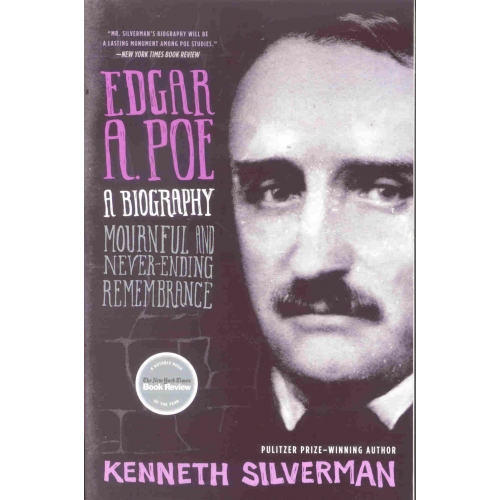
PoeSilvermanOn his birthday I began reading a biography of Edgar Allan Poe. The last biography of Poe I read, I’m embarrassed to admit, was in high school. To me Poe is like music: deeply appreciated and therefore taken in rare doses. The biography this time was Kenneth Silverman’s Edgar A. Poe, A Biography: Mournful and Never-Ending Remembrance. I picked this book up last time I was on the University of Virginia campus, just after I stopped by to gaze wonderingly into Poe’s room. Like most biographies these days, Silverman’s account is hardly a hagiography. Poe was a perfect man only in his embodiment as a man of sorrows. In the days when “writer” was not really a profession, Poe nevertheless recognized what his strengths were and persisted to try to make a living following those assets. A poverty-stricken living much of the time, but an honest one. It is not pleasant to have a hero’s foibles exposed, but Poe was all the more admirable for having been fully human. We have all experienced arrogance and humility in turns. Poe was a man who knew sorrow from his youngest years, and that cloud stayed with him until his death just forty years later. A personal tempest.

Poe, not a conventionally religious man, nevertheless recognized and drew upon religious imagery. In his poem “Ulalume—A Ballad” Astarte’s ghost appears. Astarte remains a goddess poorly understood, but Poe was likely drawing on her association with Venus. She fails, however, to lead to Heaven. Silverman points out how “Ulalume” was followed closely by Eureka, Poe’s only sustained attempt at metaphysics. Poe came to the conclusion that upon death we become part of the all-encompassing God. This daring deduction cost him friends and supporters, but it also led to a rebuttal by a seminary student. Poe’s reply to his criticisms remains apt, as Silverman quotes him, “‘God knows what’—he cared very little what he was called ‘so it be not a “Student of Theology.”’” Amen, Mr. Poe.

Some lives, like those of Job, seem fated to loss and suffering. Yes, there have been those who lost more than Poe, or even Job, but this is no contest to see who might bear the most weight before being driven to his or her knees. Poe felt it deeply and expressed it eloquently. He recognized, as most writers do today, that business models resent an honest voice. Those who sell are often those who pretend. I’m sure that Poe would nevertheless give a wry smile of irony if he knew how multiple editions of his works, long in the public domain, flow from the presses of publishers hoping to make a dollar or two on his now stellar reputation as a writer and, in full recognition of the paradox, a prophet. Like his raven, Poe could see beyond the confines of this world and paid the price for his vision. Obviously he was no student of theology.


On a Wager and a Prayer

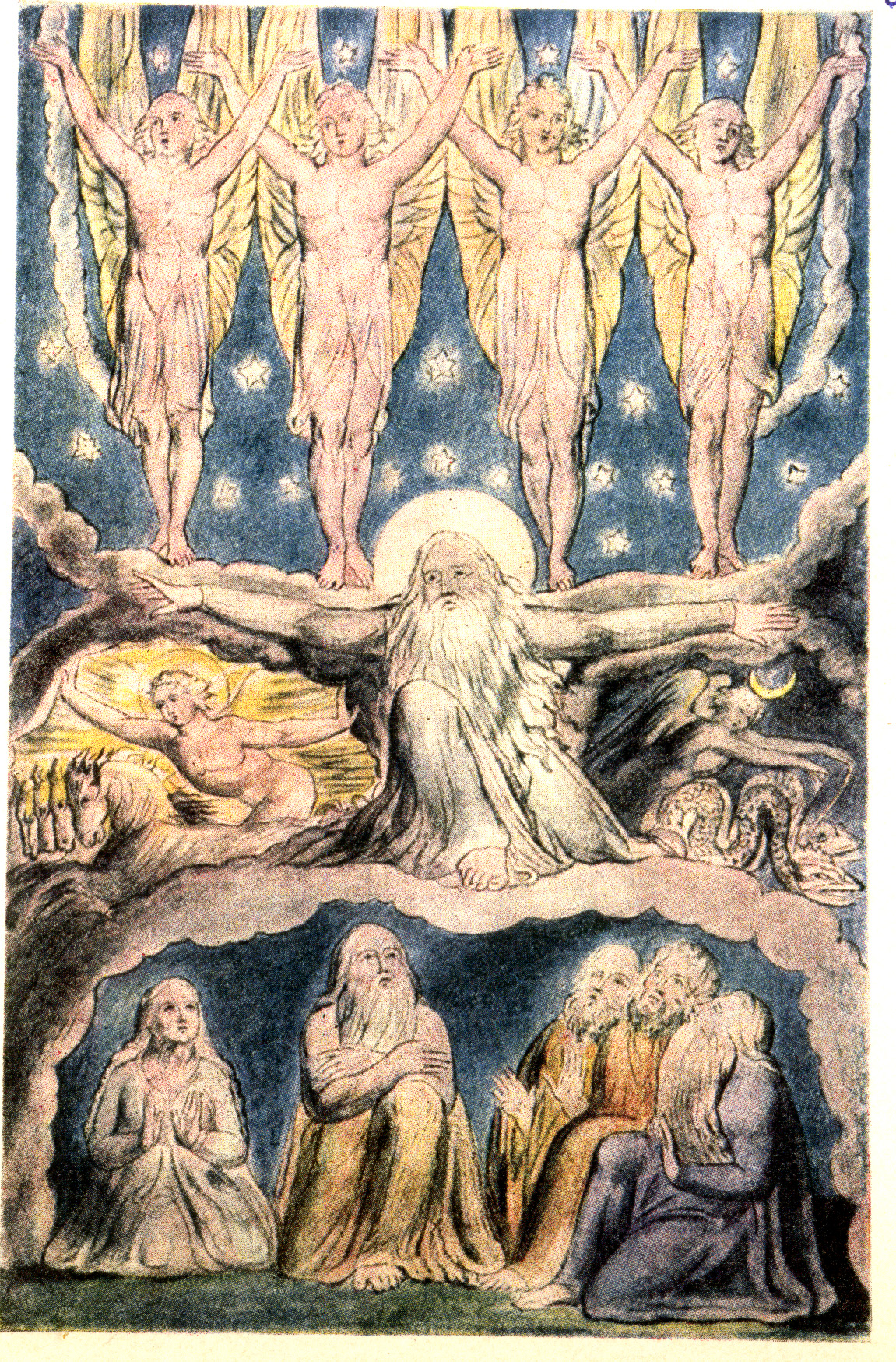
I’ve been thinking about Job a lot lately. Not my job, but the biblical book. Way back when I was preparing my initial classnotes on Job, I remember a commentator—I forget who—stating, as commentators are wont to do, that people have strong reactions to Job. Either they love it or they hate it. I have enough imagination to consider some people being somewhat ambivalent about it, but I have observed many people over the years revealing powerful reactions to this Wisdom book. One of the reasons, I suspect, is that God doesn’t come off looking particularly good in this story. This was recently reintroduced to my awareness in Steven Cahn’s God, Reason and Religion. The reader, unlike Job, knows the real reason for Job’s suffering. It was a divine wager, instigated by God, that Job would not curse him even if allowed GBH by the Satan. We know, however, and we are culpable for that knowledge. It puts a burden on the reader.

BlakesJob

When God does explain to Job why he shouldn’t question God’s acts, as Cahn points out, the answer rings hollow in the knowledge of the truth. God can’t admit to Job that he was playing fast and easy with his health and the death of his ten righteous children. A roll of the dice and Job is vulture-bait. The book of Job should make us squirm. We base our morality, we are often told, on the ideals of the Bible. If we were Job, who ends the book never knowing about the bet, we might be content. But the author, with a sly wink to those who face life squarely, points out that this is all a charade to justify God’s confidence in one of his many carroms. I suppose that might be small comfort to the pawns.

For Job there is no answer given to why he suffers. He doesn’t even really ask why—God’s right on that count, Job is very good. Yet the reader is not so lucky. How can we gain any comfort knowing that God sometimes lays us on that altar, not for any just cause, but as a wager against the divine prosecutor? No, the Satan in Job is not the Devil. He too is a divine character, an attorney borrowed from Zoroastrian mythology. He’s just doing his job. His Job. He is present to make us feel our guilt. And if Job, who the Bible itself says is perfect, can barely restrain his soul from cursing, how much of a chance do the rest of us have? There are many who hate the book of Job. I am not one of them. A more honest book I have a difficult time imagining. If it comes to justice in this world, however, I wouldn’t bet on it.


Know Thyself

Perhaps it is a perverted sign of the times, but sometimes I seek myself online. Not surprisingly, most of what I find there is stuff I’ve posted myself. Then my daughter suggested that I search “wiggins” in the Urban Dictionary. For people my age, the Urban Dictionary is often handier than Merriam-Webster for reading online lingo. I’d never tried to find myself there before, however. It turns out that “wiggins” is defined as “The state of being uncomfortable or freaked out… an uneasy feeling; a sense of foreboding badness.” Speaking strictly for me, this is a spot-on definition. Other Wigginses would likely take exception, but this connotation fits me like a thumbscrew. Perhaps our names make us who we are. The Dictionary also cites the source of this slang; Joss Whedon (who also gave us The Avengers) apparently coined this term on Buffy the Vampire Slayer. (His name, by the way, is defined as, “To kill off the most lovable b-list characters in your movies.”)

Naming, in ancient times, held a distinctly religious significance. Ever notice how many biblical characters were renamed by God? Even today the Catholic Church recognizes renaming after a saint as part of a person’s identity at certain crucial junctures in life. Indeed, in western culture “Christian name” equates to the more secular “given name.” Names define us.

I’ve done a fair amount of genealogical research. The actual etymological origins of the name Wiggins are obscure, but likely have to do with living in a valley. More exciting prospects trace the name back to early English forms that look like the word for “Viking,” and the name does seem to originate from the vicinity of York, where Vikings were not unknown. Still, the more prosaic, the more likely.

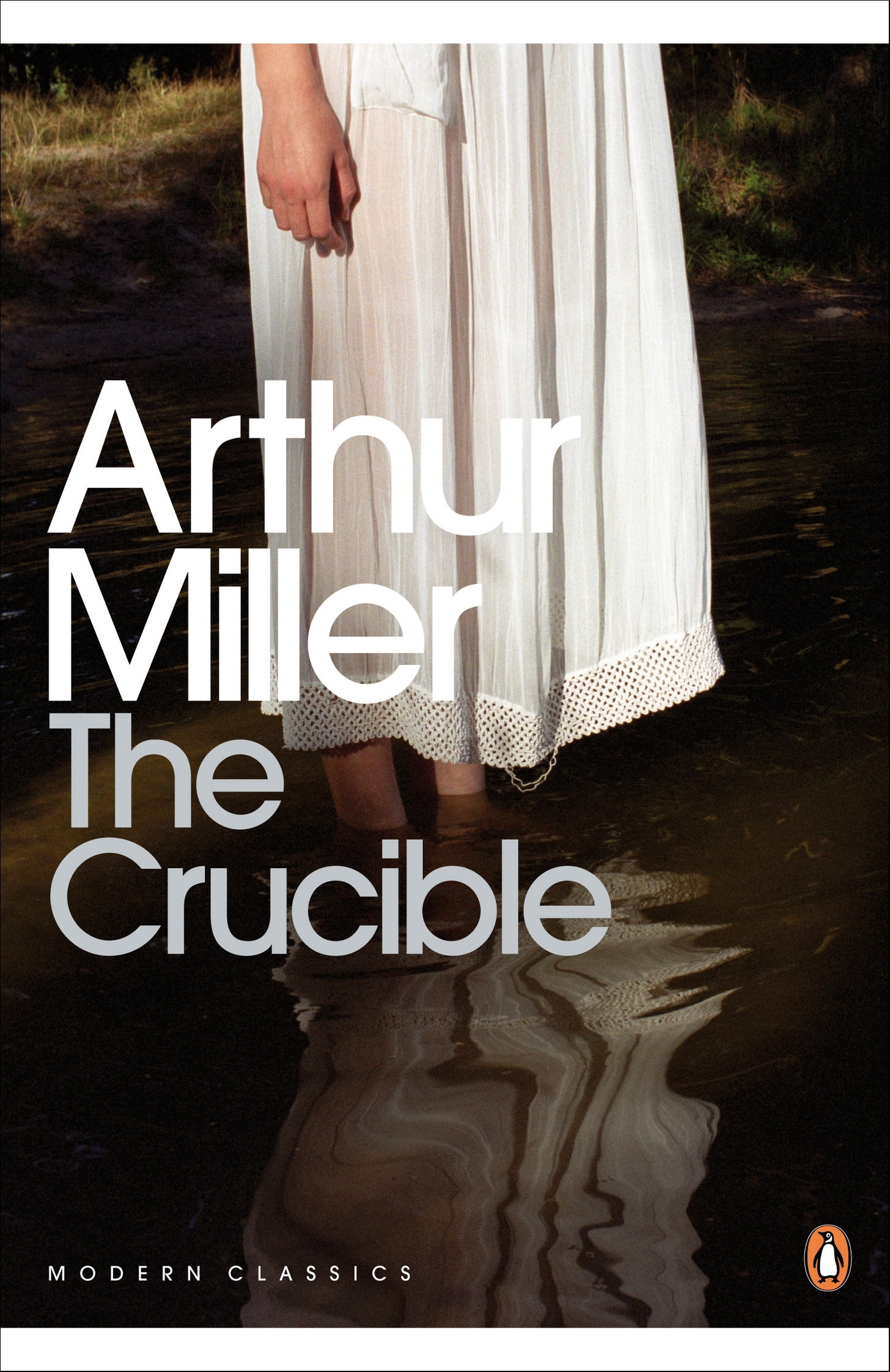
crucibleWhen my mother remarried, I took on my step-father’s surname. It didn’t sit well. When I read Arthur Miller’s The Crucible in seminary, John Proctor’s words leapt out at me: “Because it is my name! Because I cannot have another in my life! Because I lie and sign myself to lies! Because I am not worth the dust on the feet of them that hang! How may I live without my name? I have given you my soul; leave me my name!” When I later went to court in Massachusetts to reclaim, legally, my birth-name of Wiggins, I had that quote written on a paper in my pocket. We are our names. Slang has, in my case anyway, provided the most reasonable definition of my surname. And only courts, as I know from experience, have the authority to change this pre-decided declaration of who we are.