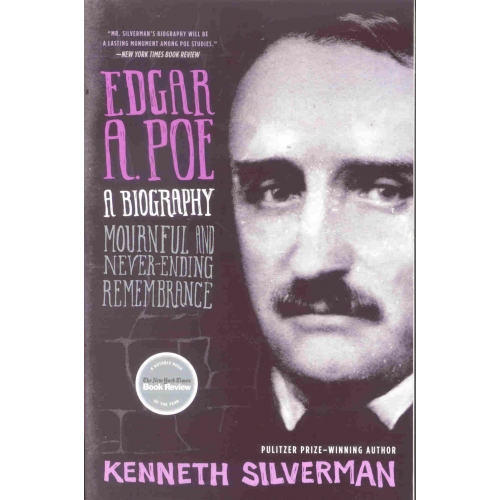
Stonefaced

Railsea Imagine, if you will, life on the open sea. Back in the whaling days. Days before enlightenment really took hold. Transpose that thought onto railroads. In a day of huge moles and other underground creatures. Days when no one can imagine where the rails end. That might give you the slightest glimpse of China Miéville’s Railsea. I haven’t read too much of Miéville’s fiction, but I have read enough to know to expect a reality distorting romp through very interesting places. In this take on Herman Melville’s Moby Dick, Miéville takes some noteworthy risks in providing his characters with a native religion. Fiction authors sometimes find religion a constraining topic. Consider Salman Rushdie. More often the restraint appears to be a lack of imagination on the writer’s part—although we can’t define religion very well, we all know what it is and what it’s supposed to look like. Miéville, although in backstory, provides a new religious world where the gods are called Stonefaces and everybody believes in angels, and the explanation of where the railways came from is “theology.” Even our erstwhile Captain Ahab is chasing after her “philosophy” in the form of a giant mole that seems to have taken her arm.

With a sensitivity I’ve rarely found (the fault could well be entirely mine), Miéville utilizes religion, particularly Christianity, to construct an alternate universe. The gospel therefore appears as godsquabble, and to suggest there is anything beyond the sea of rails is literally heresy. Our protagonist Shamus ap Soorap on his voyage of discovery ends up riding to heaven on the rails only to find that there is yet even more beyond. Although religion itself is not central to the story its adjuncts are, creating an entire mythos of life on the railroad. It this world it is clear that wood and trees are related, but no one quite knows how; some suppose an evil god planted false evidence to deceive them. There’s even a healthy dose of the Odyssey thrown in, with the Medes having to pass through a mountain dwelling monster, the siller, and the Kribbis Hole.

But aren’t we really on the ark once more? For surely the bedeviled Pequod was a shadow of the same. In Miéville’s fantasy world, the open ground unpopulated by islands is dangerous. All kinds of innocuous creatures burrow out and will eat the traveler who is not safely ensconced on a train. As if to underscore the Noahic connection, Sham ends up on an actual boat on an actual endless sea. I’m pretty sure Homer never read Genesis, but the parallels between Greek mythology and the Hebrew Bible were long ago recognized by Cyrus Gordon and his colleagues. Miéville continues the tradition. Stranded on an island, Sham tries walking on the rails (read walking on the water and you’ll get the picture) until his faith fades. There are many who declare that religion has outlived its usefulness, but if an author can bring Melville, Homer, and the Bible into an intensely creative story, I think I’ll have to beg to differ.


Rational Religion

GodReasonReligionGod, Reason and Religion, the title of Steven M. Cahn’s book, fit uneasily together. Or so it would seem. Cahn, a philosophy professor, collected together in this little book a set of sixteen short, provocative essays keyed to major topics of the philosophy of religion. I’m always skeptical when I see Reason and Religion together on a book cover. It seems like an unholy plotting is going on. Perhaps it’s because those of us who study religion are often classed together with those who use slipshod techniques to “study” a subject they’ve already made up their minds about. Any scientist who’s seriously tried to learn Akkadian might have to reevaluate that premise. Happily, Cahn is not trying to promote such an idea. He states in the introduction, “My conclusions may be surprising, for although I am not a traditional theist, I find much to admire in a religious life, so long as its beliefs and practices do not violate the methods and results of scientific inquiry.” For books with Reason and Religion on the cover, that can be quite a concession.

One of the biggest faults of religions is their lack of introspection. That is a gross generalization, I know, but there is truth in it. Most religions have been severely challenged by the empirical method. Reason, it turns out, can explain most of what required one—or a multitude of—god(s) to accomplish. At the same time, religion makes people feel secure and happy. My experience of science has often been enlightening, but decidedly prickly. I’m sure I’m not the only one. Nevertheless, Cahn takes the reader through a maze of ways to think about religions from different angles. What is the tie between religion and ethics? How do we tell a good deity from a bad one? What is faith and is it a safe bet? Do miracles happen? These kinds of questions, when viewed rationally, don’t always have the dreadful results so often feared. So maybe the laws of physics aren’t violated, but that doesn’t mean you have to stop praying. Did I mention that Cahn makes concessions?

We are the cultural children of our logical, Greek forebears. They taught us to trust our reason and we’ve developed that to a high skill. Yet reason has its limits. Consider the Republican Party, for instance. Or Snooki. In life not everything adds up. Facing their final moments, few have the fortitude to keep their thoughts purely on the rational. What lies beyond we just don’t know. Science has no way of answering. So Reason and Religion should get along. There may be more than one way of knowing, and some things in our world may bridge that deep gulf between Reason and Religion. That bridge may sometimes be difficult to find. If you decide to seek it out, however, I would recommend taking Cahn along for some good reading. Even the most serious search must offer some concessions.


Twist and Shout

TwistedFaithTrue crime is not really my thing. I find regular life disturbing on a frequent basis, and reading about how someone willfully harmed another only seems to make my prognosis worse. When I saw that Gregg Olsen’s A Twisted Faith: A Minister’s Obsession and the Murder that Destroyed a Church took place in a number of places where various family members live (Poulsbo, Port Orchard, Seattle, Washington) I was drawn in. As the dark story began to unfold, at several points I almost put the book aside—this is a difficult account to read. Christ Community Church on Bremerton Island sounded a little too much like the Community Chapel in which I was reared. The power struggles, the self-righteousness, and the hidden lusts of those who live “clean lives,” all brought back painful memories. Nevertheless, I had to see how this sordid, almost salacious tale played out. Youth minister Nick Hacheney, to cut to the chase, murdered his wife and carried on affairs with at least four women in his church, including his murdered wife’s mother. Based on many personal interviews, Olsen digs deeply into the psychological trauma this one minister inflicted on the women he stalked, and revealed some of the neuroses of conservative religion.

I say “conservative religion” not to pick a fight, but because of the things both the women and men believed. After a conflict over whether to stay with the Assemblies of God denomination, Christ Community Church went independent when a new minister began seeking senior leadership over the congregation. So far that’s normal ecclesiastical politics. What made this so unbelievable is that many of the decisions were based on “prophecies” that self-proclaimed messengers of God presented and that clergy and people took at face value. Even when they blatantly failed to show any accuracy. There was never any questioning whether one received an authentic message or not. Some of these “prophecies” involved the deaths of congregation members, including the murdered Dawn Hacheney. Women with marriages in various states of decay, feeling sorry for the murderer (whom only one of them suspected) eventually gave in to his words “from God” that they were to have sex with him to help him get over his loss. The real pain was seeing the psychological manipulation he applied to his victims, causing them divine guilt if they refused.

In a community that readily accepts claims of direct messages from God, congregants are clearly sheep led to the slaughter. Most Christian denominations have mechanisms in place, no matter how faulty, to test such individual claims. Groups that trust their clergy to be honest all the time fail to calculate human weakness into the equation. It is no surprise at all when staunch, conservative clergy are caught violating their own rules (and congregants). Give them a blank check for signing God’s name to any statement and you’ve got a truly unholy writ. Many churches manage to avoid the most serious pitfalls most of the time. When one fails to discover the wolf in sheep’s wool, as happened on Bremerton Island at the end of the last century, true crime may be the mildest way to describe the results.


Angels of Ages

Angels&Ages February 12, 1809. Both Abraham Lincoln and Charles Darwin were born. Some days can be momentous that way. Although I’d known about this coincidental birth for some years, I had supposed it was one of history’s curiosities and nothing more. Adam Gropnik’s Angels and Ages: A Short Book about Darwin, Lincoln, and Modern Life changed all that. What’s more, while both Lincoln and Darwin are secular characters, the book has a strong dose of how religion influenced and perhaps even emanated from ideas both of these giants had. Religion actually surfaces throughout much of the book, although Lincoln grew up as a skeptic, and certainly was not a “church goer,” and Darwin was groomed for the clergy but came, through nature, to have serious doubts about God’s existence. Religion may not be Gropnik’s main point, but it has a way of following these two historical figures around.

Using a biographical and intellectual parallelism, Gropnik lays the two men side-by-side in their Victorian lives and shows how death was really a factor that bound them. Both lost a beloved child at about the same age, and both found death’s pervasiveness a problem for believing in any kindly God. Of course, we all know that none of us would be here now if our forebears had not passed on, making room for us. It is the way of nature. Nature is hardly kind or just, however. Ringing throughout this fascinating exploration is the ubiquitous problem of theodicy—in a world of such palpable suffering, where, indeed, has God gone? How do we continue to believe when all the evidence is contrary? Some of our greatest doubters have become our greatest guides.

I appreciated especially how Gropnik ends his little book with some thoughts on religion. He makes the essential point that Darwinism, by definition, cannot be a religion. Even better is the clear-eyed vision that he has that religion and science are both needed by people and they may both be held as true. Even when they’re fighting. The truth is nobody has all the answers. Those who brashly dismiss religion or science are equally wrong. In his eloquent style, Gropnik makes a decidedly sane suggestion that we should learn from our assertions of pluralism. We are accustomed to thinking about much of life and culture as being equally valued, no matter where on the planet we find it. Why can we not do the same with truths? Some will find meaning in science and have little time for faith. Others will find religion to be their ultimate and will not be bothered by science. The vast majority of us are somewhere in the middle. And what brought us to this point was the fact that February 12, 1809 was such an extraordinary day.


Soul University

ExcellenceWithoutSoul Cambridge, Massachusetts is a likable town. As students at Boston University my friends and I would occasionally take the red line to Harvard Square and shuffle through the leaves of that venerable institution that gives the square its name. One of the treats was stopping in The Coop, the Harvard bookstore that made us all feel smart. While at Harvard last year, The Coop was part of my professional, editorial remit. I spied a book entitled Excellence Without a Soul: Does Liberal Education Have a Future?, by Harry R. Lewis. I have often thought about how higher education has slipped its moorings these past few decades, and wondered what an erstwhile Harvard dean had to say about the matter. The leaves on campus weren’t so abundant last October, but I felt that same inferiority complex that being on the Harvard campus always gives me. Of course, I had received an acceptance letter from Harvard Divinity School when I considered transferring there, but it was easier to stay at BU and complain.

Lewis’s book is a somewhat nostalgic consideration of how Harvard has evolved from a seminary to a powerhouse university—the powerhouse university—in the new world. There is no doubt that Harvard is our oldest institution of higher education, and there is no doubt that it has the money to be “the best.” But by what measure? This is one of the questions Lewis asks, repeatedly. Still, the assumption is always lurking in the background that Harvard is the best, but as Lewis notes in the book, there is no one best doctor just like there is no one best book. Harvard is good, but so are many other schools. They all suffer from the same indifference in a society that takes education for granted. The real problem is that we like simple solutions. Take a look around you—you’ll see what I mean.

It is difficult to feel sorry for Harvard. The elite of the elite, it has that time-honored patina that antique specialists love so much. What it doesn’t have it can afford to buy. There is no doubt, however, that as Harvard leans, so tilt the other universities of this country. In my professional field I’ve seldom met an unemployed Harvard Ph.D. Those of us who attended even older universities (yes, the Europeans came up with the idea first) with even more recognizable alumni—has anyone heard of Charles Darwin or David Hume? Adam Smith?—are used to being passed over for positions while Harvard writes its own checks. Elitism may be at the heart of the problem. It’s not that I wish hard times on Harvard, it’s just that I wish we’d be honest about the academic enterprise. Has higher education lost its soul? To find the answer we’re going to have to look beyond Cambridge, Massachusetts. But the leaves in autumn are certainly pretty, if not so abundant as they were before.


Mystique-alism

CavemanMystiqueReading in a public place gives peer pressure an entirely new meaning. Public transit is a place where I spend at least fifteen hours a week. Not having converted to Kindle, or even Nook, I still prefer the feel of paper in my hands. With the open book, however, comes exposure. On the bus you have no control over who climbs in next to you. You’ll be spending an hour, maybe two, side-by-side, and although s/he may never see you again, it could be that tomorrow they will find themselves once more at your side. I’m very conscious of the books I choose under such circumstances. I shouldn’t care what others think, but I do. Recently my choice was Martha McCaughey’s The Caveman Mystique: Pop-Darwinism and the Debates Over Sex, Violence, and Science. The issues here were multiple. McCaughey consciously chose her riff on The Feminine Mystique as a catchy, if very appropriate title. The person plopping down next to you with a bleary eyed glance over on an early morning bus will probably catch only one or two words in the title. One of them will be the only word with an x. Still, this important little book has big implications for the “s word,” and how men are socialized to think about sex.

Darwinism, and evolution, are concepts that are keyed to religion in the United States. There is no avoiding it. McCaughey, as a sociologist studying science, shows just how many assumptions scientists make about the universal applicability of their work. She suggests something that many of us have learned over the years: absolute objectivity is not possible for any human being. We are all socialized. We all bring biases to our work. We’re all human. McCaughey doesn’t question the results of scientific investigation, however. Her concern is that in a male-dominated field the results might be, well, screwed up. In a series of delightful thought experiments, she shows how very basic sexual biases get played out into larger scenarios that tend to excuse the inexcusable: violence against women. Men have to be taught to be cavemen. Science, improperly disseminated, gives men an excuse for blaming evolution for their lack of character. It seems to this man, at least, the McCaughey is certainly on target.

In a particularly insightful paragraph, McCaughey writes, “Invoking God’s will, or nature’s [i.e., science], hides the political context in which such a will was ‘revealed’ or ‘discovered.’” How easy it is for both scientists and religious believers to conclude that the way of their belief system is the only explanation for the world. Both camps forget they are profoundly political. As humans we can’t escape it. The world defies easy explanation—there are truths that we haven’t discovered yet. The main point of The Caveman Mystique, however, is clear. Just as men have been led to believe that the caveman is inevitable, they can be also taught that such a statement is a lie. Biologically there are gender differences, but socially—and this is the ability humans boast of—we can and must insist on equality.


Without a Hitch

I’m not really afraid of dying. All those years of being taught that “to die is to gain” have obviously done their work. At the same time, it is a poignant exercise to read the posthumous memoirs of a dying man. I remember my first funeral. Although I don’t recall the name of the poor, deceased honoree, I still see the reactions of the living vividly. I was under ten at the time, and the funeral home in Franklin, Pennsylvania was in a very somber mood. The man, who had been a friend of the family, “was not a Christian.” Having been buffed and rubbed in the Fundamentalist tub from my earliest days, I didn’t realize that what was meant was actually that he hadn’t been an active member of our particular church. Nevertheless, as a child, you get deeply impressed with these kinds of things. “I’ll never go to the funeral of a non-Christian again,” I remember my mother telling a friend. “The minister couldn’t find anything comforting to say.” While funerals are sad occasions by definition, this one left a crater that is still fresh over forty years later.

MortalityChristopher Hitchens is someone I found through his book God is Not Great. I don’t have time to read magazines, and I hadn’t read any of his previous works, but he raised some extremely valid points in this diatribe. My wife recently bought me his final oeuvre, Mortality. I felt as if I were back in that funeral home. It is not that I still hold to the odd belief system of Fundamentalism—of this my regular readers will have no doubt—but it is the forlorn feeling of reading the words of someone dying who hopes for nothing. Yes, it may be Stoic, and even noble. Certainly it seems far more worthy than visions of living in opulence with lots of available virgins with whom to toy while angels strum their harps overhead, but the certitude that one’s final days will be nothing but prolonged suffering—ouch! Maybe there isn’t a heaven, and if there’s a hell there’s something morally wrong with the universe, but doesn’t some residue of a human life remain? Even if it’s just the memories, the marks that we’ve made on others’ minds, don’t we somehow survive? Dying without hope nevertheless feels like milling about in that doleful crowd of specific Christians years ago.

Hitchens does offer a chapter in his final words devoted to those Christians who responded to his cancer with an unholy Schadenfreude, trying to torture the thoughts of a dying man with the promise of an eternal hell after experiencing a temporary hell of cancer treatments. This chapter made me sick. Anyone who so completely misses the message of compassion that suffuses the Gospels can hardly claim the designation Christian, I would insist. No one, no matter what their eternal plans, has the right to try to fracture anyone’s tenuous tranquility to make their own crown shine a little brighter. Such weekend warriors likely imagine that they are defending their fragile God, but in reality they are demonstrating that some of the criticisms of Hitchens were very well placed to begin with. No religion will live up to its full potential until it succeeds in the most basic practice of all—treating all people with respect and dignity. Until then, death has the final word.


Graveyard Culture

TheGraveyardBook During an Ancient Near Eastern Religions course a few years back, one of my students commented that something was like “in American Gods.” I suppose my quizzical look betrayed that I wasn’t familiar with the book, and, aghast, he said, “you’ve never heard of Neil Gaiman?” The funny thing about being a professional academic is, if you want to be good at it, there is little time to read. Popular culture is vast; I’ve never even heard of “Gangnam Style.” But I did subsequently read American Gods, and from then on I’ve been picking up Neil Gaiman books as a special treat in my literary diet. A couple years back another friend recommended The Graveyard Book, so I read it over my brief holiday break. It is the time of year for treats. Gaiman’s fantasy worlds, although seldom explicitly deity-populated, tangle the real world with the supernatural—just the juncture where religion emerges. Although defining religion is not as straightforward as looking it up in a dictionary, you can nevertheless feel when you’re in its realm.

Nobody Owens was raised in a graveyard among ghosts. Since science tells us there are no such things, religion steps up to the challenge with suggestions of an afterlife. Whether or not there’s a Heaven or Hell, ghosts partake in that uncanny milieu we call religion. And since this is fantasy, there are other mystical creatures as well. In Bod’s world werewolves are called “Hounds of God” and they are on the good side. Ironically, the only clergy mentioned (along with various political figures) are actually ghouls. The world of the dead involves a religion of its own where an altar and chalice lie deep beneath a special grave and a human sacrifice makes up the climax of the story.

Religion, of course, occurs where the supernatural meets regular people. We dismiss it at our own peril. When Bod attends school his teachers guess he must be from a religious family because he doesn’t have a computer or any electronic devices. Religion eschews such progress. And yet it touches on the real world. I recognized Highgate Cemetery almost from page one. It could be that my own visit there just last year was fresh enough in my mind that Gaiman’s descriptions naturally took over. Or it could be that since I walk that imaginary line that we recognize as religion every day I recognize its more familiar features. Neil Gaiman’s popularity is a testimonial to how we still need the hidden world unexplained by science. We may call it fiction but it is just as real in the human mind as anything in the quantum universe.


On Dasher, On Dancer

CaputoOnReligion It’s a little embarrassing to admit that after having pondered religion for all of my life, I still have no clear idea what it is. In my case pondering includes three degrees in the study of religion and almost two decades in teaching it. I still read books that introduce religion, hoping to catch some distilled essence that I might label the core of the phenomena that go by the name. Some least common denominator. But that’s not how life works. Even the most basic of things can be complex, so I recently turned to John D. Caputo’s On Religion to find out what a philosopher thinks it might be. From the start this little book is jarring. Caputo, while staunchly refusing to tip his hand, defines the religious as those who love God. Or god. Or not really god, but something that might be as impersonal as the Force. Of course, love is as slippery a term as “God,” so Caputo suggests that it is caring for more than one’s own self. If many of our religious politicians and televangelists could get even that far perhaps we’d be closer to the religious idea of heaven itself. Then when Caputo turned philosophical, he started to lose me a little.

The big problem, and one of which Caputo is well aware, is that loving God is a western religious ideal. There are those who claim that some “Eastern religions,” such as Buddhism, Taoism, and that of Confucius’ followers, are actually philosophies and not religions. But if we’re trying to define religion, excluding a very large portion of the world’s belief structures seems to tilt the balance a bit dangerously westward. Come to think about it, the idea that all people have to have some kind of religion is a western conceit as well. Who are we to define the terms of another’s existence? That, it seems to me, is one of the problems of reductionism. Assuming that all people accept the premise that an empirical system can explain everything will not rid the world of religious martyrs. So what is to be done?

Caputo has thought about this as well. He concludes his short manifesto with a chapter entitled “On Religion—Without Religion.” Here the true root of the problem is exposed—religions that claim they alone can be true. For Caputo’s purposes western religions work best here because the three major monotheistic faiths share so much in common. Put crassly, the real question is where does the line of final revelation end. Is it Moses? Jesus? Mohammad? We could go on—Joseph Smith? Raël? Philosophically, at least, Caputo suggests that all religions could co-exist if they were willing to admit that they are all right. It boggles the reductionist mind. How can they all be right? How can they not be? After all, despite the millennia spent on the topic, we still don’t know what religion is.


The Best Gift

Standing outside the footprint of a circular chapel next to the ancient ruins of a drinking hall in Ophir, the Orkney Islands, with friends. We’re quoting from the memorable scene in the Orkneyinga Saga where Svein Asleifarson leapt out and killed Svein “Breast-Rope” as drunken vikings staggered back and forth from the Earl’s Bu to the chapel one Christmas season some nine centuries ago. The Orkneys used to belong to Norway and had a close connection with Iceland, which, all things considered, is not that far off. While working on my doctorate in ancient Syrian mythology, I experienced a fascination with Icelandic viking sagas and read several of them (in translation, of course). Traveling to the Orkney Islands was about as close to Iceland as we’d hope to get on a student’s budget, and the atmosphere of these historic islands does not disappoint. We were standing on the actual site of this historical incident one violent Christmas long ago.

VikingsImagining, however, is not the same as condoning. Nearing a millennium later, Iceland celebrates Christmas with “Jolabokaflod,” the Christmas book flood. Armed with books rather than broadswords, the folks of Iceland have built a considerable literary reputation. According to an NPR story my wife and traveling partner sent me, Iceland publishes more books per capita than any other country, and giving books at Christmas is a national tradition. Reykjavík is a UNESCO-designated City of Literature. Unlike the United States, a large proportion of the population of Iceland buys books, according to the story, and I can’t help but wonder if this isn’t related to two other Icelandic phenomena as well. Iceland has very little gun violence and it is one of the most ecofriendly countries on the planet. While it is only a feeling, I believe that widespread reading makes a better society.

I remember the experience of growing up and hearing other kids complaining bitterly about assigned reading. Here in this wild west corner of the world, we’re too full of dreams of action to spend quiet hours improving our minds. Guns are easy to acquire and too easy to use against the innocent. We could sure use a Jolabokaflod, it sounds like to me. Towards the end of each year I like to tally up an approximation of how many books I read in the previous twelve months. Although some are definitely better than others, each one is its own gift, a glimpse into someone else’s worldview. And such glimpsing aids in understanding. I may not agree with you, but I know where you’re coming from. And as we enter that long, cold stretch of January and February I feel ill-prepared if I don’t have a stockpile of books to get me through the darkness of this time of year. And one of my fantasies will be a world that can see from the blood-stained ground of Ophir all the way to Reykjavik.


Evolving Instinct

ArtInstinct Evolution has appeared as a threat to the Christian establishment ever since Charles Darwin worked out a mechanism by which it could work without God. In the western world, particularly in the United States, evolution has always been a religious issue; it seems that if we remove God from the development of humankind we remove him from the universe. The thing is, natural selection works on such an elegant scale that the scientific endeavor itself almost hinges on it. And still people believe. I flatter myself with thinking I’m a creative sort, and so Denis Dutton’s The Art Instinct: Beauty, Pleasure, and Human Evolution provided an intriguing consideration of how we might become creators in a world lacking a creator. Well, I shouldn’t be so crass; Dutton has no atheistic agenda—he is interested in exploring what natural function the human love of art might have. We do know that art appears well before civilization itself, and Dutton has a suspicion that natural selection’s lesser known sibling sexual selection might have an explanatory role. He isn’t willing to go all the way and say art is just a mating strategy, but art and love are no doubt bound closely together.

I read The Art Instinct wondering if there might be some collateral insight into the origin of religion. I wasn’t disappointed. Within the first ten pages religion entered the discussion and it never really left. Not that sexual selection evolved religion, but the traits of the religious often parallel those of the artist. As Dutton points out, some theorists almost equate religion and art. For me one of the main features of this thought experiment was the innate questioning of reductionism. While there is no doubt a stark beauty to the idea that an atomistic theory might explain every weird little thing that we do in the name of art and religion, real life just doesn’t feel that way. The reductionist will counter that emotions have evolved as well, and surely there is a measure of truth in that. Nevertheless there is too much that goes unexplained in this mechanistic worldview. Even Dutton occasionally uses the language of the soul.

Sublimity remains a noble state. The feeling that we have standing before a painting that yanks our very consciousness into itself, or when a symphony sweeps us to places we can’t begin to articulate, or a poet distills in a handful of words what an entire lifetime has taught us—these experiences certainly don’t feel like electrons racing through a gray matter racetrack. Even stepping out the door on some autumn mornings can bring the essence of life into a single, compact moment when nature’s art transcends the human capacity for understanding. Science, at such times, is the farthest thing from our minds. Or at least mine. Perhaps it’s a personal defect. As Dutton notes in his Afterword, his thesis has raised the ire of reductionists and the religious alike. To me that sounds like he’s probably headed in the right direction. Religion may not be art, but art is life. Reducing life to a series of earning opportunities in a godless marketplace may make me believe in Hell yet.


Southern Comfort

CajunNightOnce upon a time, long before Hurricane Katrina, the American Academy of Religion and Society of Biblical Literature held their annual meeting in New Orleans. It must’ve been an incongruous sight: the Big Easy filled with right proper professional religionists discoursing eruditely. While there, my family purchased the Cajun Night Before Christmas, by Trosclair. A cute knock-off of Clement Moore’s “A Visit from Santa Claus” (‘Twas the Night Before Christmas), the story unfolds of a fur-bedecked Santa visiting a destitute, but grateful family on the bayou. Each year I try to reach deep in my southern roots to find an accent that accommodates the poem, and read the story the week before the holiday comes. A number of factors have suggested that perhaps this year Christmas might catch many people on a more subdued level. Crushing poverty is a reality, guns are too readily available, and the one percent don’t get close enough to humanity to contract the common cold. Even the effects of Katrina have refused to dissipate completely. Her sister Sandy visited the Big Apple, and things still aren’t quite right.

Big Apples and Big Easies may seem to have little in common, apart from how much money is available to assist in hurricane recovery. They both also participate in Christmas, being havens of Catholicity. Yet after the hurricanes some in New York and New Jersey were without power several days, but parts of Louisiana were simply abandoned. The will to help the disadvantaged seems to have improved since 2005. Considering changes at the top, this isn’t necessarily a surprise. Nevertheless, tragedy throws into sharp relief what we consider human decency. Too bad it takes a disaster to make us more human.

What sticks with me about the Cajun Night Before Christmas, apart from the flying alligators, is the profound hopefulness that the poem conveys. Those with so little take so little to improve their lot. Yet those with too much insist it is their right not to be taxed at all. Those who live in a shack don’t expect much from Santa. They have learned through the disappointment of experience that double standards are endemic in life and while some are unbelievably rich, the poor are happy with just the smiles of children. Ironically, Santa is the great equalizer here. While the children of the wealthy may expect and receive more, the children of the humble are also allowed a portion of hope. As I remember New Orleans, in the palmy days before Katrina, it was a city that knew Mardi Gras was far more humane than Lent, and that even a city marked my radical inequities (let those with eyes to see read) could come to a joyous accord when sins are about to be atoned. And even if he has to commandeer alligators, Santa will visit the poorest children the night before the holy days.


Christmas Incorporated

ChristmasinAmericaA number of years ago I wrote a short book on holidays for children. Like most of my books, it was never published. I wrote it when I learned that good books explaining in simple language whence various American holidays came appeared not to exist. The literary agents I contacted quickly showed me why. In any case, I remain curious about holidays and so I read Penne L. Restad’s Christmas in America: A History. There’s a wealth of gifts in this brief book. I’d researched the subject a little bit myself, so I already knew some of the origin stories, but if you’d like to know why we have Yule logs, egg nog, or why Santa prefers red, this is the book for you. As I’ve noted in previous posts, Christmas is a fairly recent star in the constellation of American holidays. In fact, those of us who work for secular companies know just how few holidays Americans officially celebrate. Having lived three years in the Scotland, I know how seriously holidays are taken in at least one corner of Europe.

Christmas didn’t really catch on in America until the nineteenth century. Industrialization was beginning and more and more was expected of the worker who made the robber barons wealthy. It is no accident that the American Christmas had many of its origins in New York City where much of the industry ran non-stop. Restad, however, makes a very good point that Christmas has always been both pro- and anti-commercial. Owners of large retail chains saw the opportunities to sell goods to time-stressed individuals while the giving of presents often promoted a selflessness uncharacteristic of those who stand to profit from consumers. Restad notes the increase in goodwill that Christmas generates in society as a whole. Indeed, I have seen more people giving to the homeless during the past two weeks than I had seen so far this year.

One aspect of Christmas that I hadn’t expected to find in Restad’s treatment was the early emergence of the “prosperity gospel.” Of course, it wasn’t called that in the early twentieth century, but in the millennia since the Christmas story actually originated, some in the church began to take their own righteousness far too seriously. Seeing that clergy who knew how to tug the soul-strings just right could easily gain wealth, they started to suggest that God wants you to be rich. They seem to have overlooked who was born in a stable because there was no room in the inn. Search the Gospels and your search will be in vain if you attempt to find words to console the rich. The “prosperity gospel” is as much a lie today as it was when it began, back in the days when dubious clergy looked for a way to excuse their comfortable lifestyles while many of their flock suffered want. Christmas in America shows itself to have a little bit of the social gospel built in, for it is clear that even the Devil can site Scripture for his own purposes.


Fanpire Club

FanpireIt has become an odd world indeed when thousands of people look to vampires for family values. Although I’ve not read any of Stephanie Meyer’s Twilight books, I have been curious at the reception they have received. A literary agent said, a few years back at an event I attended, that publishers want vampires. There is no end in sight. Perhaps it is my inherent trust of scholars that led me to read Tanya Erzen’s Fanpire: The Twilight Saga and the Women Who Love It. Why would a religious studies scholar write about Twilight? Because Erzen realizes, as many scholars are beginning to that: 1. vampires are very religious monsters, and 2. many more people care about books like Meyer’s than they ever will about scholarly minutiae. I, for one, learned that I’ve missed out on a huge part of pop culture by insisting that my fictional reading must have at least an attempt at depth. Erzen ably points out that there may be truths beneath the surface even here.

When I first became aware of the Twilight books, I was surprised that no one seemed to be making the connection with Dark Shadows. I grew up with the subtle, sensitive vampire who was deeply conflicted. The books that serialized the television series were not profound either, but they evoked an angst that bespeaks a religious need deeply buried. Erzen is able to dig some of this out of Twilight as well. By interviewing fans for whom Twilight has become an ersatz religion, Erzen can show that even squeaky clean Mormon men can’t possibly live up to the vampire standard. The fantasy that has engrossed so many is an image of selfless love. As if Edward Cullen were a less chaste, and more undead Jesus. After all, he gives Bella eternal life and his love never grows cold. The values fit rather well with Latter-Day Saint theology, and provide a model for mortal family values.

More striking is Erzen’s revelation that fandom does not equate to feminism. The women who are empowered to love in unorthodox ways are very much controlled by their men-folk in Meyer’s universe. As Erzen points out repeatedly the ideal lover here is an obsessive stalker with a penchant for abuse (although mostly unintentional). Freedom for women comes at a cost. They may be offered the best in some fields, but even today women do not find equal representations in positions of power in our society. CEOs? Evening news anchors on major networks? Senators? Presidents? Our society is one that talks the talk of equality, but stumbles when it attempts the walk. Vampires cannot exist without victims. Even in the most “advanced” societies in our world, women must struggle in a hierarchy for which the architects, contractors, and supervisors are mostly men. Perhaps women find vampires so fascinating because it matches their experience of a society that takes far more from them than it is ever willing to give back.


Mutants, Mystics and Memory

MutantsMysticsParadigms. These patterns of thought are self-reinforcing and very useful. As anyone who’s studied foreign languages knows, paradigms are an effective way to keep all those impossible verb tenses in mind. Until you encounter an irregular verb. Once you discover irregular verbs, you start to find there are more of them than you wish. As with language, so with life. Like most boys, I grew up reading comic books. We didn’t have much money, so I wasn’t as fluent in super-heroese as some kids were, but I felt that irresistible draw to garish colors inking exaggerated muscle-tone under a costume that held a body capable of extraordinary things. Everything seemed possible. Then adult responsibility hit. Who had time for comic books and heroes?

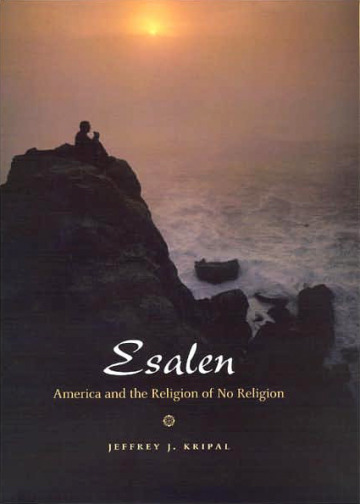
That’s why I was delighted to discover Jeffrey Kripal’s Mutants and Mystics: Science Fiction, Superhero Comics, and the Paranormal. The three sub-topics just about summed up my childhood. But, like Paul declared to Corinthians, the first time around, “when I became a man I put away childish things.” Turns out, maybe my desire to be grown up was premature. I commented on Kripal’s Authors of the Impossible earlier this year. In his work I’d finally discovered that academics can sometimes get away with asking unorthodox questions. Perhaps it was my exposure to biblical studies, a discipline which goes one of two ways—overly facile attempts to maintain a literal reading, or a staid, solid approach tied to serious linguistics and archaeological records—that forced me into a reductionist paradigm. Well, everybody else was doing it! Academic thought had little room for the unusual, the bizarre, the irregular verb. The same applies to our no-nonsense, money driven society. Just shut up and do your job.

Mutants and Mystics, however, shows that our repressed unusual experiences, like a freudian phobia, will find ways into daily reality. It is a mind-stretching book. As for Authors of the Impossible, Kripal is to be congratulated on allowing himself to consider walking down paths that most academics assiduously bypass. Coming to his work as a fellow student of religious studies, I see that he has arrived at similar conclusions to mine, although clearly more advanced. I’d just assumed that since I never had the serious backing of a serious university my way was the low-way. The way of the kid who just couldn’t bring himself to grow up. There is a reason we spent our formative years reading about heroes for whom the impossible was daily reality. Perhaps we were in training after all, and comic books prove the point of old Isaiah that a child may indeed hold knowledge adults often just can’t see.