Goats and Sheep

Having missed the movie, when I found a cheap copy of Jon Ronson’s The Men Who Stare at Goats, my curiosity was piqued. With such a title I had assumed it to be fiction, but, proverbially it turned into the truth stranger than. The book explores the weird world of the X-Files chestnut, the super-soldier. There is no doubt that despite science’s discomfort with the paranormal, government agencies have utilized psychics for some years now, hoping to gain some advantage over the other guy. Not everyone agrees on how effective such tactics are, but they exist nevertheless. The Men Who Stare at Goats (TMWSAG) provides a rare glimpse into that world where no one knows who is telling the truth (otherwise called “government”); we live in an era when truth has become negotiable.

One of the accidental recurring themes in my recent reading has been the horrendous abuse of power at Guantanamo Bay and Abu Ghraib. Far from placid eyes, the land of the free advocates torture to get prisoners to talk. After years of government bungling, it is no surprise that misguided efforts at torture on the part of a democracy would invariably be discovered. It would be easier to doubt that governments kept lethal secrets if they didn’t keep getting caught in flagrante delicto. Who can you trust when governments, ruled by gods of their own making—in their own image—preach the gospel of torture? TMWSAG weaves this sordid story in with 9-11, Uri Geller, Branch Davidians, Heaven’s Gate and Deuteronomy 18—what’s not to like?

I’ve been alive long enough to know that some supremely odd stuff goes down. TMWSAG provides a service in demonstrating that the government takes some of this mysterious reality seriously. It also shows the twin surfaces of resistance: religion and science. Science has a difficult time admitting what can’t be seen; with few exceptions psychic phenomena are considered not even worth the bother of a lab test. Religion, at least in its biblical, American incarnation, lumps all spooky stuff together with the devil, something Jon Ronson declares that even high-ranking generals in the military believe. So when I put this little book down I was left scratching my head. It may just be me, but where have all the sheep gone?


Psychotic Vampires

Over the past several months, and unrelated to the current vampire craze, I have re-watched some of the classic vampire movies: Dracula, Bram Stoker’s Dracula, Nosferatu (both Murnau and Herzog), and even Shadow of the Vampire—a movie about making vampire movies. Although the prototype of the vampire goes far back in civilization, in some form back to even the earliest of civilizations, the modern rendition rests mostly on the imagination of Bram Stoker. I’ve been re-reading Dracula to recapture a sense of why this particular telling of the tale has become iconic. One suggestion that comes as I’m reading is that it presses the religious taboos of its Victorian era sensibilities. Indeed, Stoker consciously wrote religiously provocative elements into his story. Of course, in movie form the story is altered to fit the needs of both time and scope.

A character that transforms in these various films is Renfield, the lunatic. In Stoker’s original Renfield is the foil for Dracula himself, his devotion interpreted as insanity by the science of the day. At one point Dr. Seward, Van Helsing’s protege and the man in charge of Renfield, notes with clarion penetration, “for a strong man with homicidal and religious mania at once might be dangerous. The combination is a dreadful one.” Renfield is, as a servant of Dracula, complicit in both homicide and religious mania. He uses Christianesque language when referring to his master. In describing his devotion, Seward notes, “He thinks of the loaves and fishes even when he believes he is in a Real Presence.” To a generation raised without Bible, this confession makes little sense.

I have contended throughout this blog that religion and horror are intimate familiars. To understand the appeal of the vampire, one must explore the religious context. Surely the simple neck-biting and blood-sucking without religious underpinnings would soon grow tedious. It is the sense of mystery—most fully realized in religious thought—that brings the vampire to life in the imagination of a generation lacking traditional religion. Not to mix metaphors too intimately, but there is a dose of Melville to be mixed in as well. Renfield is the epitome of madness, blindly following where he believes he is called. But the reader knows how sadly mistaken he is. So it is that I return to Bram Stoker’s Dracula and in so doing find a form of true religion.


Wizards and Saints

Hagiography has gone out of style. Since the Reformation we’ve come to see even our most promising lights as flawed and sullied, and no one retains the sheen of unadulterated goodness. It is the new realism. Yet somewhere in our psyches we still need our heroes—those who give us something to which we might feebly attain. A couple years back I visited Edison’s Orange labs in New Jersey—his last inventing paradise—and partook of the mythology that is Edison. Thoughts of that visit keep coming to me, so I read Randall Stross’s The Wizard of Menlo Park: How Thomas Alva Edison Invented the Modern World. Like a wonder-struck schoolboy, or Homer Simpson, I was ready to find stories of incredible creations Edison conceived. Instead Stross’s account is devoid of hagiography and presents a tarnished hero that is much more in keeping with the spirit of the twenty-first century.

Edison was known, even in the nineteenth century, for his atheistic leanings. He was one of the proponents of the human spirit of achievement, a perennial hard worker who believed we could solve our own problems. In many respects, although he didn’t foresee the practical aspects of his inventions, he was ahead of his time. As Stross points out, during his days as a telegraph operator Edison got into trouble for transcribing Jesus Christ as “J.C.,” following the standard practice of rendering time as “B.C.” (Before Christ). Others saw this as sacrilege, perhaps falling into that perpetual myth that Christ was Jesus of Nazareth’s surname. Abbreviation, no matter how sacerdotal the content, is eminently practical in telegraphy.

When entertaining Henry Stanley during his days of phonograph fame, according to Stross, Stanley asked whose voice Edison would most like to hear from history. (Keep in mind, at this time, before records, magnetic tape, and MP3s, a recorded human voice seemed to be a way of communicating with the dead.) When Edison answered “Napoleon,” Stanley expressed surprise suggesting he would’ve supposed the most important voice to be that of Jesus. Edison replied, “Well, you know, I like a hustler.” Even for Edison hagiography was dead. But he did see that the world had gone after the hustlers. Watching the political game unfold again, of which I’m already deathly sick, I hear echoes of Edison’s cynicism. Political leaders would have us believe they are in it for our best interests. Anyone who has studied history (which most politicians despise and discourage us from doing) knows that Edison was right. For all his flaws, Edison will remain a symbol of light in dark times.


Criticism Is Not Attack

Each administration of George W. Bush was marked by a major disaster. 9-11 was followed four years later by Hurricane Katrina. The United States had received a one-two punch. I recently read Zeitoun by Dave Eggers. This is a book that should be read by every American, and it wouldn’t hurt others to read it too. This account follows the lives of a New Orleans family through the aftermath of Katrina. The main character, a tradesman named Abdulrahman Zeitoun, is a permanent resident of the United States from Syria. His wife Kathy, a convert to Islam, was American. When Katrina bore down on New Orleans, Kathy took their kids to safety with friends while Abdulrahman (known by many as Zeitoun) stayed in the city to look after the properties they owned. When the flooding had engulfed entire sections of the city, Zeitoun paddled about in a canoe, rescuing those he could, and even feeding abandoned dogs. Family and friends urged him to evacuate, but he felt he was doing good. Until he was arrested on his own property and imprisoned for being Syrian.

In a wrenching account based on interviews with Zeitoun and Kathy, Eggers describes how the US government quickly set up Guantanamo Bay-style prisons rather than attempting to rescue those stranded in their homes. Zeitoun was arrested and never informed of the charges, although he heard paramilitary guards armed with machine guns uttering “Taliban” and “al-Qaeda” at him. He watched as a mentally disabled man was pepper-sprayed by soldiers when he clearly couldn’t understand what they were commanding him to do. Despite having government issued ID and good standing as a business owner in New Orleans, Zeitoun was presumed guilty because of his profile: “Arabic” and Muslim. As Eggers reminds us, Homeland Security is now the administrative head of FEMA, and those that Homeland Security distrusts (all of us) are potential terrorists rather than citizens in need of help during times of disaster.

I grew up in a rather monochromatic part of the country, but as I traveled I met and befriended those of differing nationalities, including Syrians. Those considered “the others” by xenophobic bureaucrats are just as kind, loving, and good as those of us born under the sign of the cross with “white” skin. Zeitoun stands as an indictment of the jingoism that has come to be recognized as the only legitimate American citizenship. Zeitoun spent nearly a month in maximum security prison before being released after a makeshift trial, when no evidence existed that he’d done anything wrong. What has happened to the tired, the poor, the huddled masses yearning to breathe free? They’ve become the enemies of the state. I know, Katrina engendered extraordinary circumstances. Extraordinary circumstances, from a “Christian” view, however, demand extraordinary sympathy. Do the nation a favor. Before November, read Zeitoun.


Supernaturally Selected

Things are seldom as simple as they seem. Religion, for example, is frequently cast as the villain or the hero of human society, when, in truth, like most human institutions, it is a little of each. I’ve read many theories on the origin of religion, and none has been completely convincing but most contain persuasive aspects while I’m reading them. After having read several books proclaiming the end of religion in the last several months, I just finished Matt J. Rossano’s Supernatural Selection: How Religion Evolved. Many books with a similar goal begin with the suggestion that religion may have had some biological utility for people at one time, but that we’ve outgrown our need for it and we should classify it with other obsolete, arcane concepts that have no further purpose. Rossano suggest that religion grew out of the need for social bonding and that we could not have become human without it.

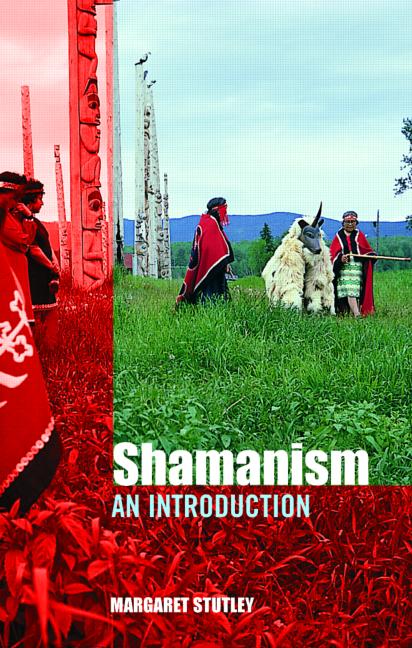
Basing his ideas on genetics and anthropology, Rossano notes that even with our genetic similarity to chimpanzees there remain striking differences. Mostly they are social in nature. Many of the differences are reflected dimly in our primate cousins, but the human penchant for gathering in groups with ritual behavior to offset overwrought emotions applies only to us. That ritual behavior includes healing rites, something that Rossano suggests might be the earliest, shamanistic, religion. Back in my teaching days I’d been telling students that the earliest evidence for religious behavior dated to the paleolithic period. This is something I’d reasoned from the artifacts found in pre-historic communities. I was happy to find confirmation in a more competent scholar than myself.

While I’ll no doubt revisit some of the fascinating hypotheses of Supernatural Selection over the coming days, one point especially stood out on my initial reading. Religion is a communal phenomenon in what is a largely individualistic society. In other words, religion itself continues to evolve. Even the hermit in his or her cave is only considered religious in comparison with his or her less dedicated, secular compatriots living la vida de fe. Since religion is communal, Rossano suggests, it is impossible to argue someone out of their religion—based on perceived relationships as they are. Indeed, it seems that his hypothesis predicts a behavior we find only too evident when we prepare to line up at the polling booths, but which will immediately fall into the background again once the level is pulled.


Longer Nights

Those who write put part of themselves into every piece. Sometimes that tiny fragment of the author is nearly invisible, while at other times fiction becomes difficult to separate from biography. One of my daughter’s assigned summer readings is Eugene O’Neill’s Long Day’s Journey into Night. Since I use the opportunity of her assigned readings to catch up on what I should’ve read long ago, I recently sat down to see what the play was about. A dysfunctional family. Alcoholism, tuberculosis, and self-loathing are the unholy trinity of much writing from the nineteenth and turn of the twentieth centuries. But God also comes into the mix. Perhaps the divine was nearer to the surface back in the days when you might assume every other American had been raised in a Christian household. O’Neill’s dark and disturbing Tyrone family might be considered good candidates for irreligion were it not for the fact that being Catholic was so much a part of Irish identity in those days. Perhaps in some quarters it still is.

In Act Two, Scene Two James Tyrone is discussing his wife’s as yet unrevealed addiction with his two sons. Edmund, the scholar (and in reality bearing the family position of O’Neill himself), has rejected belief in God. He asks his father if he prayed for Mary in the days when her difficulties began. “I did. I’ve prayed to God these many years for her,” James Tyrone declares. Edmund responds, “Then Nietzsche must be right.” The debate is the classic issue of theodicy—where is God when things go wrong? Mary, the wife/mother believes she was bound for a convent, having been raised in Catholic school. When her life spirals in unexpected directions, she chooses morphine over faith in God, and the men, soused in whiskey, wonder who’s to blame. James, the father, declares atheism to be the culprit.

I found this an interesting study. Characters either unthinkingly accept the religion with which they were raised, or reject religion altogether. Edmund follows up his declaration by quoting Thus Spake Zarathustra: “God is dead: of His pity for man hath God died.” Nietzsche is never simple to comprehend, but even in the declaration of the divine death is an implicit indication of the existence of deity. The subtle nuances here are often lost in family debates where God’s abstract existence is far less important than the human suffering that raises the question in the first place. O’Neill was writing not only in the shadow of Nietzsche, but also of Karl Marx and other theorists whose nails had been pounded into the heavenly coffin over the past two centuries. So Mary, in her morphine vision, returns at the end of the play to state, “I went to the shrine and prayed to the Blessed Virgin and found peace again because I knew she heard my prayer and would always love me and see no harm ever came to me so long as I never lost my faith in her.” The reader, however, along with Karl Marx, knows that this is really the opiate of the people finding voice through one of the faithful.


NDEs

I love science. Like many young boys, I was probably enticed to science through science fiction. While I didn’t follow science to a career, I used it to study religious texts. Those who’ve never undertaken the challenge of trying to figure out what something written thousands of years ago—on clay!—really says may be surprised to learn just how much science is involved. Nevertheless, as comforting as reductionism may be, something just doesn’t feel right about it. Science is how we explain and understand our world, and it does a spectacular job of it. The problem arises when science becomes what Stephen Jay Gould called a “magisterium.” Magisteria have all the answers. Yes, science explains how matter and energy work and interact, but it has yet to explain satisfactorily what it feels like. Most days I feel like the person I’ve become accustomed to show to the world. That person is very much like every other—being born, eating, breathing, dying. Medical science can explain most of it, but what about the parts it can’t?

I just finished reading Ornella Corazza’s Near-Death Experiences: Exploring the Mind-Body Connection. I remember when the craze about this hit in 1981 with the release of the movie Life After Life. I was fascinated and terrified by it. Since a materialistic view of science dismisses anything that has the residue of spirits or souls, the phenomenon of the resuscitated dead reporting seeing their bodies from above, shooting through tunnels into the light, and sometimes meeting the dead (or God), were explained as last nano-second hallucinations as the brain prepared to shut down or reboot (upon resuscitation). That’s that. The answer, however, didn’t satisfy everyone. What about those cases where the dead person reported, in detail, what happened in other rooms, or things they couldn’t have seen in their own room, had they been conscious? Corazza takes these considerations seriously and tries to understand what may be going on. Obviously, her explorations will not convince a reductionist, but they may give pause to some of us.

What makes her approach so interesting is that Corazza takes into account an alternative way of looking at consciousness. While the facts of science are, by definition, universal, the contexts within which those facts are viewed are not. Having spent considerable time with Japanese scientists exploring consciousness, eastern ideas of the body inform her research. In the western world we have an easy familiarity with the Cartesian dualism of body and soul that does not fit into other worldviews. Corazza takes the interesting step of asking what if we apply an eastern paradigm of the body (one that understands soul as body, and not just in a materialistic sense) and apply it to the question of Near Death Experiences. The results are mind-stretching. I feel as if my consciousness got up from months of laziness and ran a marathon (or at least a 5-K). It’s a bit winded and parts of it are starting to ache a little. No reductionists need worry, however, because in that worldview none of this exists.


The Power of Magic

Open-minded academics are somewhat hard to find much of the time. This stands to reason when jobs are already rare and having a reputation for thinking outside the box frequently equals thinking outside the academy. I am always pleased, therefore, to find unconventional works by credentialed authors. I just finished reading Sabina Magliocco’s Witching Culture: Folklore and Neo-Paganism in America. Magliocco takes head on the dilemma that non-empirically verified experiences sometimes do happen. Of course, Paganism accepts that as a matter of course, and Magliocco notes that many Pagans hold advanced degrees in the sciences and some even have university posts. Experiences have a way of defying the rules. Most of us have had a bizarre coincidence or uncanny occurrence or two transpire in our lives. We are trained, via our scientific worldview, to shake our heads and try to dismiss it. Magliocco pauses to wonder if we’re perhaps being too hasty.

Sabina Magliocco is an anthropologist with a legitimate doctorate and a university post. Witching Culture is largely an analytical study of Paganism, but it also allows for the possibility that experiential knowledge might complement academic knowledge. This remains a debated issue among specialists: who can really know a phenomenon objectively? Many argue that empirical data reveal the truth of the matter, but truth remains a slippery concept. At the opposite debating table sit the smaller coterie that argue that you can’t study magic until you’ve experienced it firsthand. The debate does not divide along even lines and this is reflected in society at large. We accept the utility of science, but many still pray for divine intervention. Specialists in religion fear to take sides—after all, jobs are hard to find and increasingly harder to keep.

Fully aware that the modern Pagan movement is a revival movement following the hiatus of Christendom in Europe, Magliocco nevertheless admits to being a practitioner. Fascinating her readers with first-hand accounts of mystical experiences, she draws back to try to analyze what has just happened. And she tells us so. Years ago, as part of a seminary assignment, I attended an Al-Anon meeting as an observer. I am, however, the adult child of an alcoholic and when the circle came around to me I confessed to being both an observer and a person seeking healing. It was a difficult place to be, so I respect what Sabina Magliocco is offering us here. Anthropologists increasingly doubt the possibility of pure objectivity, and even physicist Werner Heisenberg realized that to observe is to be part of the experiment. And so are we all.


Liberating Science

The fact that prominent scientists occasionally take time from their busy schedules to fire off a broadside against religion and religious believers freely bare their fangs at science shows that we need some efforts at reconciliation. I am reminded of schoolyard bullies when specialists in either realm make claims of exclusivity. Religion and science are both here to stay, and they’d better learn to get along. I just finished reading the remarkable little book The Sacred Depths of Nature by biologist Ursula Goodenough. While declaring herself a non-theist, Goodenough, the child of a Methodist minister, preserves a profound respect for the sacred in a concept she calls “religious naturalism.” Her brief book, which a colleague compared to a daily devotional, contains more good sense than all the enraged professionals bellowing at each other from either side of an unbreechable gulf. Uncompromising in her science, Goodenough is not suspicious of the human religious impulse, but embraces it in the expressions of nature. It is an approach I found liberating and amazingly conciliatory. It lacks the territoriality of Stephen Jay Gould’s Non-Overlapping Magisteria (NOMA) and preserves the integrity of the human person in all its complexity.

The day I finished the book the headlines of the paper announced the premature death of Sally Ride, another woman who moved science in the right direction. Ride’s sister is a Presbyterian minister, while Ride herself was a physicist as well as the first American woman in space. Aboard the space shuttle Challenger, she made history also as the youngest American in space. Typical of the imperialist national attitude that unfortunately still reigns supreme, space had been tacitly declared a man’s world. Sally Ride shattered that glass ceiling at 17,500 miles per hour. Even so, change seems to have decelerated once again to far below sub-orbital speed. Religion is partly to blame. A deep component in our culture, religions in the western world have traditionally asserted male superiority. Even those who claim God to be sexless can’t really conceive of a big person without some gender. The day after her death and the headlines had shifted from mourning to astonishment that she was gay.

The loss of Sally Ride is a loss to science, for she was in the heaven formerly occupied by God, showing women the way. I am, however, comforted by the efforts of Ursula Goodenough to keep the dialogue open. Too often, it seems, that conflict is the cost of disagreement. One of the observations of astronauts is that long periods confined with the same small coterie of people lead to inevitable disagreements. The question facing us all—for our planet is not so large after all—is how we will choose to deal with differing worldviews. It was declared that science would eventually bury religion, once reason had taken hold and superstition had run its course. Although the grave was dug, it has never been filled. Maybe we should all read the sensible approach of Goodenough and just be glad that we’ve all had a chance to be here at all. And remember Sally Ride as a fearless explorer, a hero rather than a spectacle.


Preachers and Pirates

One of the more colorful characters, albeit briefly mentioned, in Jon Butler’s New World Faiths, is Rev. Henry Loveall. While not a major historical figure in any sense of the word, and as a man who is known without the benefit of his own account of himself, the little we know of him intrigues. According to Butler, Loveall was dismissed as pastor from the Baptist church in Piscataway, New Jersey (a town in which I once worked) on charges of bigamy, prompting the Philadelphia Baptist Association to note he’d chosen an appropriate name for himself. Genealogical records online indicate that his given name was Desolate Baker and that he was born in Cambridge, England. As a youth he found himself in trouble for immorality with a woman at his church and he moved to America. Records are sketchy, but he apparently moved from Rhode Island to New Jersey to Maryland to Virginia. He had married but had gone to Virginia with another man’s wife. Even the usually forgiving genealogical records indicate some suspicion of his character.

Loveall lived in the eighteenth century when the world was still large enough to hide in. While I’m not the one to be impressed with Disney’s attempts at profundity in the Pirates of the Caribbean series of movies, there is one parsimonious line from At World’s End where Barbossa and Sparrow are discussing the incursion of business interests (in a delightful irony for a Disney film) into the free-spirited world of piracy. Barbossa avers that the world is smaller, but Jack Sparrow retorts that it’s not a smaller world after all, but “there’s just less in it.” Our world has been rapidly reduced to the pixels we can see on the screen in front of us. Bloggers are acclaimed as experts while those who’ve gazed across the war-torn promised land from atop the Mount of Olives with its frenetic network of churches start to doubt what their own eyes have revealed to them. We are content to let the Lovealls and Sparrows live it for us.

Our names are seldom a matter of choice. Like being born, they are factors in the midst of which we find ourselves—someone else supposed that we might turn out like this. The names we would select for ourselves show the size of our inner worlds. To love all is a noble sentiment. A sparrow is nervous, flighty, and has but a small brain. Our inner worlds are partially constructed by our religions. Declaring on divine authority what we must and mustn’t do, we find ourselves born into religions like we’re born into names. Few question the faith tradition fed to them by parents with such certainty, and that religion, just as surely as our name, becomes an integral part of our identity. History tell us little of Henry Loveall, a man who changed his name, and a clergyman who lived religion on his own terms.

Baptized!


Nouveau Riche

Among the vibrant areas of interest for scholars of religion is the emergence of new religions. Unlike the religions of antiquity, New Religious Movements provide a direct view, occasionally in “real time,” of what constitutes religious belief. The possibility of sitting Jesus, or even Paul, down for an interview remains vastly remote. The same is true of Ellen White or Joseph Smith, but here we have many historical records upon which to draw and a clearer context against which such religions might be read. Supposing the religious urge is something people of antiquity felt, we can get a sense of what might have satisfied that itch, at least in an oblique way, by looking at the modern period. As a student of religion I was mired in the ancient period. Learning obscure, dead languages, I supposed, would lead me back to the earliest forms of religious belief, therefore the most authentic. Like many of my colleagues, I came to discover that the origins quickly disappear into the distorted view our poorly ground telescope into the past reveals. As one writer recently suggested, if humanity evolved in Africa, so did religion.

This past week I read Jon Butler’s New World Faiths: Religion in Colonial America. Growing up I always felt that our own history was too young to be interesting. As I learned more about the horrid treatment of Native Americans, my sense of newness was accompanied by a sense of collective guilt. I like to think I wouldn’t displace a population in hopes of getting wealth, but as Butler demonstrates, the colonial experiment from the beginning was a profoundly religious one. We all know the pilgrims were dissenters from the established Church of England. Butler takes time to pause and consider the unwritten religions of those subjugated to European rule and sometimes extermination. How many of the first to brave the Atlantic crossing did so with missionary zeal, convinced of the superiority of a Christian culture. Not incidentally, they noticed great wealth could be had in this new land. Slaves would be needed to extract it and the Bible seems a slave-friendly document.

Butler’s little book is a good guide to the larger issues. The religion of African slaves grew into something to be feared. Colonial religion split along hairline fractures of doctrine, leading to the fascinating multiplicity of religions we now have in this country. Then, in his discussion of the early Presbyterians of Philadelphia, I ran across a sentence with immense explanatory value: “At the same time, congregations found that they could exercise their own power over clergyman through controlling their ministers’ salaries.” Conviction quickly falls by the wayside with a God whose arm is too short to save. The paycheck is something you can take to the bank. Religions develop into something different once gold enters the equation. I have watched the birth of empires with megachurches and televangelists in my own lifetime. I know that we are witnessing the birth of yet another human scheme to acquire eternity in the form of liquid assets.


Explanatory Value

The dividing line between superstition and religion is thin and growing more effaced all the time. Nowhere does this become clearer than in studies of the history of religion. One of the critiques early made between “true religion” and superstition is that the latter involved magic, but today anthropologists find that line difficult to discern as well. Many religions are defined by their insistence on supernatural occurrences. The world as is, is by definition, secular. That’s one of the reasons Euan Cameron’s Enchanted Europe: Superstition, Reason, and Religion, 1250—1750 is so interesting. Cameron, an historian with a precise grasp on theological nuance, traces Christian responses to the world of the supernatural through the Middle Ages. Various theological responses are then explored as the author searches for that elusive distinction that makes one belief religious and another superstitious. It is really a matter of perspective.

Nowhere is this clearer than in the late Middle Ages. As Cameron notes, physics, to the mind attuned to God’s direct intervention in the cosmos, looks like the occult. How could a person seriously believe that two physical bodies, such as the sun and earth, or earth and moon, could attract each other? If you put God back into the equation just to take him out for an instant, this sounds extremely occult. Does not attraction imply volition? How can physical objects attract one another? Thus scientists such as Galileo and Newton often found opposition for their ideas based on the fact that science and superstition can also bear a passing resemblance.

As science’s superior empirical evidence became clearer, the God who’d stepped out of the room temporarily was eventually locked out. This vast universe could be explained without the supernatural at all. What was needed was better glasses. Microscopes and telescopes, and now cyclotrons and space telescopes, provide a consistent and ever sharper image of a universe that gets along just fine without the divine. But what of superstition? Has it gone away? We still routinely construct buildings without thirteenth floors. The sigh of relief from the worker or guest on floor fourteen seems never to be obviated by the fact that they are really on a renamed, empirically thirteenth floor. Your daily newspaper (although quickly growing extinct) will still offer you your horoscope before you hurry off to the lab. Call it what you will—superstition, religion, occult, magic—as long as we’re human no scientist or theologian will ever convince us that there’s not at least some whisper of a ghost in the machine.


Like Clockwork

It is probably safe now to reveal something that occurred at Grove City College over a quarter of a century ago. I often feel I must justify my choice of college, but I was a first-generation college student who knew nothing about higher education. I was raised with a Fundamentalist orientation, Grove City was a “Christian college,” and it was only about 30 miles from home. I do give Grove City credit for shaking me out of my Fundie way of thinking; as a religion major I met some genuine honest thinkers in the department who let me question the inconsistencies of Fundamentalist beliefs. I broke free in my own time. One of the literature professors, however, insisted that we both read and watch the movie version of A Clockwork Orange. It was my senior year and I felt ready to handle it. As I watched the movie again over the weekend, the first time since college, I was shocked that the institution Grove City College has become would have ever allowed such a movie to be shown. Although there is Kubrickian nudity, the movie was initially given its rating because of the violence, which, by today’s standards, is somewhat tame.

Anthony Burgess’ book is so well known that I don’t need to summarize the story here. What struck me in a new way was the religious element in the plot. While Alex is in prison, and wanting to be reformed, it is the prison chaplain who advises him against it. Undergoing the famous movie treatment, Alex indeed proves docile after testing, leading the priest to declare, “He has no real choice, has he? Self-interest, fear of physical pain, drove him to that grotesque act of self-abasement. Its insincerity was clearly to be seen. He ceases to be a wrongdoer. He ceases also to be a creature capable of moral choice.” Of course, the government is satisfied with this kind of morality, the sort that upholds appearances at any price to humanity.

What I find particularly disturbing is Burgess’ prescience. A Clockwork Orange was published fifty years ago, and since that time we have seen politics shift from care of the citizen to the ultimate window dressing of courting the Moral Majority to make it look as if all governmental decisions are moral. The Tea Party seeks to underscore that charade, claiming that all who would argue for Alex’s humanity deserve the fate that he so wrongfully dispensed before his “reform.” This view of the world suffers for its lack of complexity. Humans do not come in black and white. Ironically, Burgess chose to make the clergyman the only the objector to the inhuman treatment imposed on Alex. This is the kind of dilemma on which Stanley Kubrick thrived, but it has become even more poignant in the decades since his movie was released. True, Kubrick’s film is based on the apocopated American version of the novel, perhaps obscuring the intended meaning of Burgess. But isn’t that exactly what he was attempting to do?


For the Love of Gold

Do you ever get that feeling that you’ve been led along by a false premise that has gotten out of hand, like a practical joke that has gone too far? If I had to rate the books discussed on this blog in terms of urgency, Jeremy Carrette and Richard King’s Selling Spirituality: The Silent Takeover of Religion would top that list. I’ve felt for a long time that something’s been wrong, but I didn’t possess the training or resources to discern what it might be. I think Carrette and King may have named it. Just a few pages in and I knew there was profound insight here. Religion has been taken over by capitalism and the result is that alternatives to the godless, sanctified free market are rapidly disappearing. In a truly Orwellian sense, we have been taught the language of capitalism and have lost the ability to frame our ideas in any other way. Free markets take no prisoners—one must assimilate or die. Religions, which had traditionally served as correctives to selfishness and greed, have been co-opted into the forces of unbridled gain for the few. Amorphously marketed as “spirituality,” what sounds like religious conviction now lives in the service of consumerism.

By slowly shifting all our language and metaphors into those of Reaganomics (the very fact that you know what that means shows how far gone we already are) the capitalist machine, supported by the flaccid terms of spirituality, has established a new god—capital—and has pilloried any who dare question it. Think of the trashy phrase “prosperity gospel” for just one minute and you’ll see what I mean. Those of us who disagree with the orthodoxy that meaning can be found in money have become the resistance in a war we did not start. The twin hellions of privatization and corporatization have sunk their fangs deeply into the jugular of society and its old-fashioned value of caring for others. People are, like strangers in a strange land, just marks for the powerful. We’ll buy anything if it looks attractive enough.

The problem with consumerism is that it is easy. We all love to play along because—who knows?—we might end up getting rich in the process. We have gained the world and lost our souls. Carrette and King show clearly how entrepreneurs have learned to market the language of religion while divesting it of its venom. Go along, it urges, everything is fine. Even the economic collapse brought on scarcely two decades after Reaganomics has failed to convince the average citizen that they are but a petroleum bi-product to grease the unrelenting gears of commerce. Anything, even salvation, can be sold. Back in April I stood beside the graves of Eric Arthur Blair (George Orwell) and Karl Marx. And maybe in an unguarded moment I shed a tear or two that critical thinking seems to have been buried along with those who were brave enough to state the obvious.


Flea the Obvious

In one of my personal ironies of history, the period of ancient times that I find least interesting is the one I’ve been reading most about. Part of that is based on my lack of coherence when it comes to selecting reading material. I take recommendations seriously, so when a friend suggested Justinian’s Flea by William Rosen, I figured I’d better read it. I had fairly recently read Philip Jenkins’ Jesus Wars, about the nearly unbelievable shenanigans of post-apostolic Christendom, and so I felt up to taking on the Plague. Justinian’s Flea is about the fall of the Roman Empire. At Gorgias Press, where Justinian’s former prostitute wife Theodora was subjected to revisionist history that made her a lifelong saint, I learned to discount most of what went on during this time period. I was, it seems, a bit too hasty. Justinian and Theodora’s reign is quite interesting, and it is, as intimated, largely because of ecclesiastical politics.

Rosen begins his study by laying out the background to Justinian’s imperial days in Constantinople. In describing the disputes between what specialists now call various Christianities (formerly true believers versus heretics), Rosen notes that Christians had particular disdain for Gnostics, largely based on interpretations of what Jesus’ death might mean. At one point he writes, “Monotheistic religions are famously intolerant of apostasy, even when they disagree about what constitutes it.” Here he hit the flea on the head. “I doesn’t know what it be, but I’m ag’in it.” This attitude of religions has long been the motivation behind massive campaigns of bloodshed and intolerance. Often in the name of religions that claim peace and tolerance as the highest goods. So it was in the early church; heretics were routinely martyred for their “wrong” belief.

Not to throw in a spoiler, but the first great wave of the Plague does nearly draw an end to the ailing Roman Empire. Justinian’s expansions were mere band-aids trying to hold together a Frankenstein’s monster of many nationalities. So riding home on the bus I was surprised first of all that the driver engaged a passenger in conversation (generally frowned upon) and second of all, that he ranted for many miles about politics. It isn’t very comforting in the stressful traffic around New York City to hear your bus driver cry out, “the Roman Empire collapsed—maybe it’s time America did as well!” The prospects of getting home seldom looked dimmer. And I had just been reading about that very empire’s last days. I try to stay away from predictions because I dislike being proven wrong—the end of the story hasn’t been written yet. Rosen, however, has given us a great cautionary tale; if the humble flea can help bring down the world’s mightiest empire—one ruled by a leader overwhelmingly concerned with religion—maybe it’s time to canvass what the infidels like to take in their coffee.