Burned Over

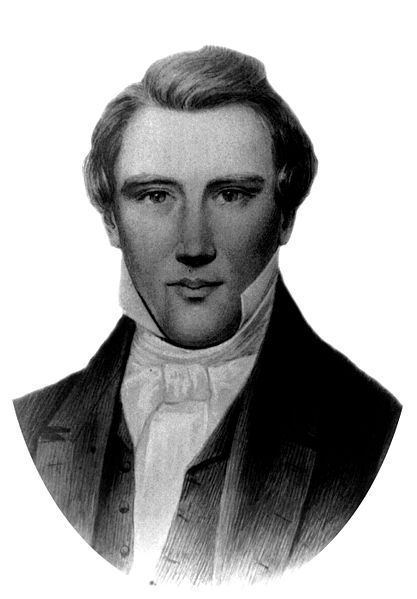
Western and central New York State, in any religious history of America, have acquired the nickname, “The Burned-Over District.”  This graphic metaphor arises from the constant evangelizing and, more importantly, the fertile soil for new religious movements left in its wake.  This region could claim to be the home of Seventh-Day Adventism, Spiritualism, the Oneida Society, and the Latter-Day Saints.  It was also an early home of the Shakers and the land chosen by the Publick Universal Friend for her new Jerusalem.  The sense of place is important to religions.  The Latter-Day Saints, however, grew restless in this region where Joseph Smith translated the Book of Mormon and began a torturous trek that would land the Mormons in Utah.  Joseph Smith never made it that far.  Religious leaders being persecuted are nothing new; Smith had been tarred and feathered, was wanted on charges of fraud, and was eventually murdered for his beliefs.  He was also one of the most intensely creative individuals America has produced. His extraordinary creative venture is often overshadowed by the religion that grew out of it.

With Mitt Romeny’s campaign stoking up steam, many people find themselves wondering about Mormonism.  I first learned about the Latter-Day Saints from a rather biased World Religions course at Grove City College.  One aspect which was true in that course, however, was the great secrecy surrounding Mormon teachings. Of course, the Book of Mormon is in the public domain and is easily available to those who wish to read it.  Official Latter-Day Saint beliefs, on the other hand, are frequently inscrutable.  For all its problems (and they are sometimes significant), mainstream Christianity is very open (and often vocal) about its belief system.  The same holds true for Judaism (mostly) and Islam.  If you want to know what they believe, just ask.  Americans tend to be a little perplexed by the Latter-Day Saints because there is always a feeling that there is something they’re not telling you.  It goes all the way down to the underwear.  All religions are concerned with sex.  Some may not disclose the details in public, but they all deal with it somehow.  Latter-Day Saints have rules about underwear–I’m sure other religions do too.

If Americans are really, seriously curious about the religious heritage of a potential president, a great way to find out is to read a bit of our own history.  I learned about the Burned-Over District back in college and have periodically read about it several times since then.  It is no secret.  Our society is not likely to expend the energy needed to learn about its own heritage.  As several of my recent posts have intimated, even higher education has no time for the study of religion (or history, or anything that doesn’t make money–Romney surely does!). Instead we will charge fearlessly ahead into the dark.  And when we are in the dark we may start to wonder why we’re wearing this unusual underwear. Wondering about religion is far easier than supporting those who study it.
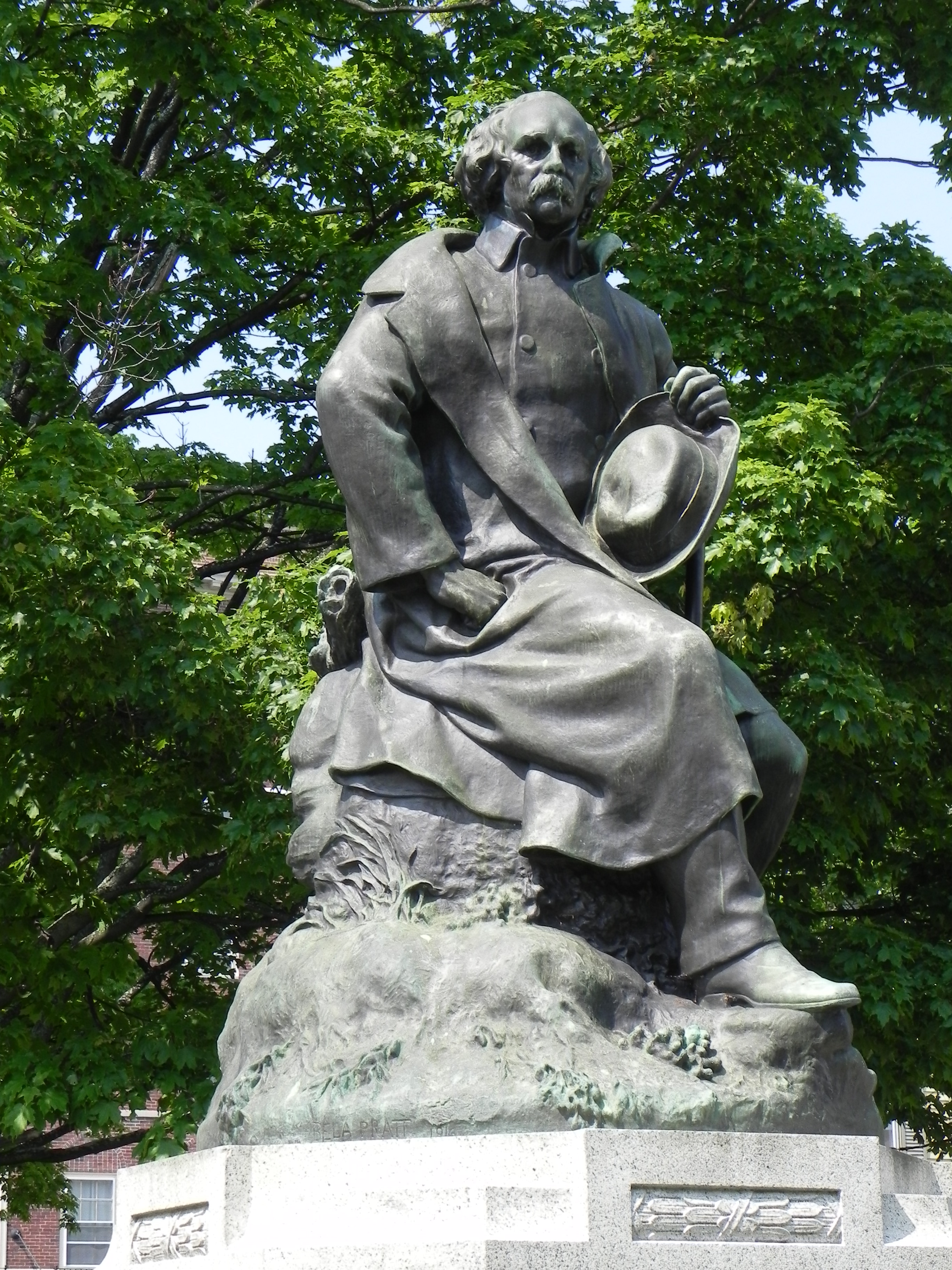
Have you seen this man?

Lost Professors

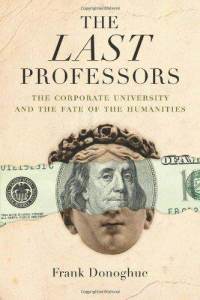
In front of my desk at home sits a chair.  That chair came to me when Gorgias Press was subleasing some of its office space and was necessarily divesting itself of unnecessary furnishings. Gorgias Press came to inherit the chair with the closing of the for-profit Katherine Gibbs School of Business, a branch of which leased half of the building.  I sit in that chair, contemplating the future of education.  I have just finished reading Frank Donoghue’s The Last Professors: The Corporate University and the Fate of the Humanities (as recommended by my friend Marvin).  Despite the fact that it is the first academic book I can recall leaving me in tears, it is a book every Ph.D. and potential Ph.D. in the Humanities should read and/or be forced to read.  Buck the trend!  Buy a book!  Donoghue is a rare individual who actually takes time to research what is going on in higher education and who has the courage to report it directly.  My regular readers will know that for nearly two decades I worked in higher education, spending every one of those years hoping that the next year things would get better.  Thank you, Dr. Donoghue, for speaking the truth.

I didn’t enter higher education as a child of privilege.  My career ambitions in high school were to be a janitor.  Encouraged along the way by well-meaning teachers and professors, I eventually found a job (lackluster as it was) in higher education.  What I didn’t realize is that the game had been rigged.  I recall being told with crystalline clarity that college and university positions were headed for a vast turn-over in the 1990s and jobs would be abundant.  Donoghue heard that story too.  His research shows that the writing had been inscribed on the wall as early as the 1970’s (before I reached high school) that this would not happen.  This is not hindsight either; studies were already indicating that higher education was going after the vaunted business model of the glitzy for-profit world.  Shiny baubles.  Worse yet, the roots of this inevitable transformation reached back to the Civil War and the nation that emerged from it—replace the dead on the battlefield with the dead in the factory.  Only only method of judging value existed: money.

The most disturbing aspect of all of this is the irreversibility of this trend: in today’s world only one value system is admitted, and it is purely material. No other way in higher education is capable of assessing worth. Rather, the alternate ways are being ruthlessly silenced by the transformation of university to corporation. That transformation was well underway long before the 1970’s, of course.  I had recognized at a young age that capitalism is a cancer that eats away the soul of people, convincing them that financial success is the only goal worth pursuing. I protested.  I spent years earning a doctorate in the Humanities to show that other values still throbbed away in the hearts of those who weren’t taken in by shiny baubles.  If you have any interest in resuscitating the human spirit, read Donoghue and weep with me.  The only consolation that I have is that I am sitting on a chair of a for-profit school that fell victim to the value system it once supported.  Capital and cannibal are too close for comfort.


Gothic Religion

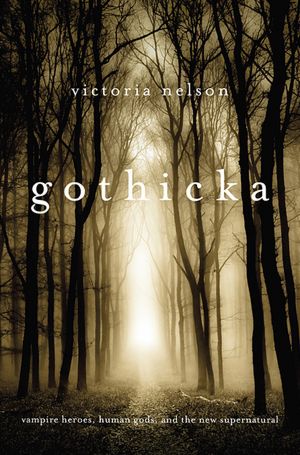
Every great once in a while, you run across a book that seems to have been written just for you. I’m cheap enough to wait for most books to be issued in paperback (and storage is getting to be an issue in our cozy apartment), but sometimes the urgency is too great and I can’t resist. In Providence a few weeks ago, I visited the university bookstore—one of my favorite places in town. On the new arrival table was Victoria Nelson’s Gothicka. For what seemed inexplicable reasons, I always found Gothic tales among my favorite growing up. Poe was a standard, but he was accompanied by other stories that elicited the same cocktail of sensations, accompanying a dark and mysterious atmosphere with a suggestion of menace. Transfixed by even the mere presence of this book, I knew I was in the power of a force to which I would eventually succumb. And, unexpectedly, the book helped to explain part of my childhood.

Not every book I read has to do with religion. Far from it. I expected Nelson to discuss literature and movies and culture—all of which she does—but not necessarily religion. The first three chapters proved a revelation in that regard. Nelson deftly explains how Gothic largely overlaps with the characteristics of religion, bringing the supernatural into human lives and insisting that we tremble before it. Perhaps best explained by pastor Rudolf Otto in The Idea of the Holy; the transcendent is something that terrifies as well as compels. In a culture where organized religion appears to be losing ground, Gothic offer the opportunity to tremble before the supernatural, and many people find it almost a religious experience. As becomes clear, the “almost” may appropriately be dropped.

Tracing the trajectory of my own reading interests, Nelson next provides an insightful chapter on H. P. Lovecraft. In many ways the initiator of worship of the dark divine, Lovecraft’s Cthulhu and kith and kin represent an undisguised secularization of deity. At the same time, the trembling is still very much present—indeed, it is a native part of the experience. Lovecraft, who was an atheist, understood the literary utility of gods. They frightened and haunted him with their very non-existence. That is power. Gothic acknowledges and embraces that power while never relinquishing its darkness. Nelson’s Gothicka holds the potential of a journey of self-discovery. As she ranges deeper and deeper into that world, the reader discovers just how much it is part of being human in a world tormented by fallen gods.


Help from the Friend

Being unconventional does carry certain risks. I first learned of the Publick Universal Friend, born Jemima Wilkinson, from Mitch Horowitz’s Occult America. There are many things, I imagine, worse in life than being labeled “occult,” but the Publick Universal Friend seems to have been more eccentric than occult. The “Friend” of her chosen moniker was a mark of her Quaker roots. The Quakers, while never among the most numerous of Christian sects, are infrequently considered occult. Two U.S. Presidents were Quakers, as is that friendly face smiling at you from your breakfast cereal box. What Jemima Wilkinson did that pushed her over the edge into the unconventional was actually the fault of her father: she was born female. In the 1770s religious leadership was nearly unanimously male. 

Wilkinson underwent a near-death experience that, like John Wesley some 70 years earlier, led her to believe that she was born to some higher purpose. Quakers, or Friends, generally eschewed excess showiness and the Publick Univeral Friend liked to make her presence known. She rode a white horse into Philadelphia and rode around in a carriage with her own logo, a kind of evangelical branding, if you will. Eventually tiring of the criticism of city folk (Publick Universal Friend was strictly platonic, advocating absolute celibacy), she moved to a region of New York that would eventually become the birthplace of several distinctive American religions. She settled near Keuka Lake and formed a community called Jerusalem.  New York and Pennsylvania would eventually harbor many utopian groups.  Both states were (and are, to a large extent) rural and it was a fairly easy matter to locate unclaimed real estate and establish a little bit of heaven here on earth. 

The message of Publick Universal Friend was peace and friendship, nothing too radical.  If preached by a male it would have been considered gospel. In fact, in a less darwinian world it might actually work.  The pull of nature on some people is too strong.  On others it is too weak. Maybe it is the legacy of having been born in a state that began as a “holy experiment” by William Penn, but I find it sad that the Publick Universal Friend has been nearly forgotten. Perhaps the Friend will have the final laugh. It seems that a young man named Joseph Smith might have been influenced by her in the days before writing up the Book of Mormon. As I’m sure Joseph Smith learned in the town of Carthage, we can all use a Friend who encourages us all to get along.


Ms. Found in an Email

The other day I received a distressed message from a friend that I met in college. Marvin’s career somewhat parallels mine; he went on to get a PhD, taught for a few years in New Hampshire until the economy claimed his job, tried to make it as a fiction writer and adjunct instructor for awhile before moving to Boston to work with a publishing company. He’s never made any money for his writing, but that may be for his own good because the money that authors make goes to support the CEO of whatever corporation owns the publishing house. Still, I wish him luck. Yesterday he emailed me about a book he’s reading, The Last Professors, by Frank Donoghue. He’s convinced me that I should read it, but I thought his message would be appropriate for this blog. In Marvin’s words:

“If a more bleak preface has ever been written, I’m an illiterate ape who never reads. The writing has been on the wall for years, but those of use who are able to see it have been hopelessly myopic. In the preface he tells how industrialists since the end of the Civil War have been dead-set against liberal arts education as useless. People like the two of us who studied ‘useless’ fields, they would have as the cogs in their efficient machines, suppressing our thoughts. The only useful education they can deign to approve is one that earns them more money. There’s only one value system in the world, it seems.

“Don’t you feel like a sell-out, working in New York City, that cathedral of capitalism? Is NYU on anybody’s list of tourist stops for people down there in New York? Who goes to visit a university when there’s so much of commercial interest to see?

“And yet, corporate types are the ones who can afford tickets to shows written and put on by people educated in their ‘useless’ craft, but who are in reality their unwitting chattels. And who wants to be seen with authors and intellectuals to enhance his personal prestige, so that he will appear smart? Who are the dogs in the manger who keep everything they can’t possible use for themselves, for fear that others might enjoy it?

“We all play along with their game—we wear jeans on casual Friday and declare how good we have it. We speak their demeaning language, using humiliating phrases like ‘best practice,’ ‘core competency’ and ‘corporate values.’ In this dehumanized state we all live in cages that we’ve helped build. Corporate moguls hold their power over us because we let them. We, the workers, have the power to change it. They make the rules and we obey because we all want to be in their place.

“Education is the way out—that’s why they hate it. There’s an entire support industry built around it; those of us in the book business rely on educated readers. What happened to Borders looks prophetic to me. Time to close—I’ve just arrived at work.

“Sent from my iPhone”

Just another useless lay-about


Shelley, Byron, Trelawny, and Ahab

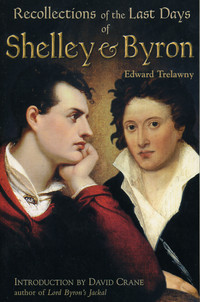
“I took up the word [atheist], as a knight took up a gauntlet, in defiance of injustice. The delusions of Christianity are fatal to genius and originality: they limit thought.” The words come from Percy Bysshe Shelley, according to Edward Trelawny. After visiting the display Shelley’s Ghost at the New York Public Library last week, I was struck by how little I knew of Shelley. I’d read some of his poetry, and had watched the fictional movie Gothic (maybe more times than is really healthy) to get a sense of this candle in the wind, the Romantic poet who died in a shipwreck before reaching 30. Edward Trelawny’s reputation as an historian is somewhat suspect, but he did form friendships with Shelley and Lord Byron and arranged the disposal of their earthly remains. His book, Recollections of the Last Days of Shelley and Byron, while somewhat self-serving, weaves an intriguing account. Among the mementos in the library display are some fragments of Shelley’s skull, taken after his cremation by Trelawny. This erstwhile biographer did prove his mettle by reaching into the pyre and pulling out Shelley’s heart, according to his own account, that eventually returned to Mary Wollstonecraft Shelley, his widow.

Trelawny admired Shelley’s atheism, and even applauded Darwin’s Origin of Species when it appeared. The nineteenth century was setting the stage for a strange Frankenstein’s monster of political and religious backlash against the freedom of the Romantics. Not all of the Romantics, obviously, were atheists, but their works extolled the wonders of nature and a sense of liberty from tyranny that would define them as dreamers and idealists. Lord Byron comes across much less favorably in Trelawny’s account, although their friendship lasted through some difficult times. After the poet’s death, Trelawny claims to have examined his feet, discovering the cause of a lifelong limp. His psychologically astute conclusion is that Byron’s disagreeable personality traits arose from his lifelong anger and anxiety about his birth defect.

Being an ardent admirer of Herman Melville’s Moby-Dick, I have to admit that the elements of anger at the divine for a limp (Captain Ahab forcefully stomps into mind), and the emphasis on ships and shipwrecks (as in Shelley’s death) tie these three literary geniuses together into a knot of suffering and seeking. Religion had consoled many in the nineteenth century, just as it continues to do now in the twenty-first. Among many of those who have endured through their literary works, however, God had slowly disappeared. Not quite as dramatic of a demise as Shelley’s, nor as unforgettable as Captain Ahab’s, but one for which there will be few biographers.


Occluded Religion

In my youngest days the word “occult” conjured the most perilous kind of fear in my inexperienced, Christian heart. It sounded malevolent and sinister, suggesting Hell, Satan, and the coercion of the divine. Therefore it took considerable time to pump up the courage to read Occult America by Mitch Horowitz. Well, maybe it wasn’t that dramatic—I learned in the course of my many years studying religion that “occult” is very difficult to tease out from “religion.” What I really feared is what others would think of me as I sat on the bus reading Occult America while heading to the Lincoln Tunnel. The word “occult” refers to the “hidden” or “secret” nature of certain religious practices. In ancient times it might refer to the Gnostics or Mandaeans, while in more recent days it might be used to describe Rosicrucians or Theosophists. Unconventional, yes. Evil, hardly.

Horowitz takes his readers through a whirlwind tour of some very colorful characters and, perhaps more importantly, shows just how deeply rooted occult practices are in the most Christian nation on earth. Few people realize just how influenced high office holders in this country have occasionally been by the occult. It seems a hard-and-fast rule that to be elected president you must be a professing Christian, strongly preferable if of the evangelical, Protestant flavor. Ronald Reagan made a great show of that while being personally convicted of the efficacy of astrology and some popular mediums. And Reagan has not been the only one. Still, politicians have to keep their more unconventional religious beliefs secret. The populace likes a straight shooter, devotionally speaking. The fact is that even what many people think of as regular Christianity has been seasoned somewhat with occult.

I can recommend this little book for getting a sense of just how deeply the occult has tunneled into the American psyche. The chapter on the ouija board took me straight back to a very straight-laced Grove City College, bastion of conservative evangelicalism. When I matriculated (which sounds vaguely occultish in its own right) the yearbook was called The Ouija. It was explained away as the combination of the French and German words for “yes,” but everyone knew, given what yearbooks are, that it had that spooky, occult vibe. By my senior year a more fluffy, evangelical-safe title of The Bridge replaced it. And many heaved a great sigh of relief. Christians thanked their lucky stars that they’d been delivered from the evils of the occult just as they were lining up to elect Ronald Reagan to a second term in office.


Varieties of Non-Religious Experience

The New York Public Library is an icon of rationality. Daily tourists throng by—some inspired by Ghostbusters, others by Between the Lions. Nestled in among some of the tallest buildings in New York City, it is a symbol of culture amid its antithesis, business. Nearing its last days is a small display in the library entitled “Shelley’s Ghost.” Containing handwritten manuscripts and a few artifacts from Percy Bysshe Shelley’s cradle to his grave (literally, his baby-rattle and fragments of his skull), the display celebrates one of England’s most famous and short-lived poets. Shelley, although his life was scandalous at points, was no doubt an idealist. A vegetarian, advocate of “free love,” and protestor, he would have fit well into life a century-and-a-half after he died. He was also an early atheist.

“If ignorance of nature gave birth to gods, knowledge of nature is made for their destruction,” he wrote in The Necessity of Atheism. Not quite the angry atheism often found today, but then, despite his obvious spirituality, Shelley was a rationalist. Born during the English Enlightenment, be was a strange mix of the alchemical and the reasonable. To his young mind the truth was self-evident: the belief in gods grew from nature and therefore the study of nature would reveal those origins. Today the origin of gods is still up for debate, as is the nature of the human animal. It is routine for scientists to claim that our brains are simply processing electro-chemical signals that have no reality beyond this physical world in which they occur. To be a human, however, sure feels like more than that. Shelley was a writer at this nexus. No one writes poetry like that who believes their brain to be full of only electrons.

Reductionism often gets us into trouble. The problem has always been that humans are myopic; we can only see so far and yet assume we have all the data. This myth persists despite the fact that we know some animals pick up on environmental factors that we as humans miss. It need not be supernatural to claim that there is more to the world than we can perceive. This is a double-edged sword. Many of the absolute pronouncements of religions simply don’t match our experience of the world. We find ourselves bombarded by authoritative statements by experts who know as little as we do. I have yet to hear a televangelist who can claim on any intellectual basis any reason that anyone else should pay attention to his raving. Perhaps what the world needs is a few more like Shelley’s ghost—rationalists who still recognize the necessity of poetry.


Lies, Damn Lies, and Statistics

“The fear of the Lord is the beginning of wisdom,” so the books of Psalms and Proverbs agree. It must be true. Religion and fear walk happily along hand-in-hand. Some have suggested that religion began as a human response to fear. So this week I felt a little conflicted as I read Daniel Gardner’s The Science of Fear: How the Culture of Fear Manipulates Your Brain. The book had been recommended to me by one of my brothers. As a child fear defined me—it seemed that in a world where God was meant to be feared (for I was a literalist) that fear was the basic operating system for life itself. Gardner’s book is a fascinating exposé of the culture of fear. Gardner doesn’t really suggest that fear should be eliminated, but he does show how many of those in power manipulate fear into a faulty perception of risk management, for their own advantage. Beginning with 9/11 he demonstrates how the irrational responses of people to the tragedy led to even more deaths that quickly became buried in the white noise of everyday society. Comparing Bush’s response to FDR’s “the only thing we have to fear is fear itself,” Gardner demonstrates that the United States emerged from the depression and Second World War weary but confident and strong. After Bush’s two terms, the country is cowering and weaker. Why? The Bush administration heavily mongered fear.

Funnily enough, the release from fear comes from two main sources: statistics and psychology. Statistics reveal the true odds of common fears—these can be inflated so as to create an atmosphere of threat. People, as herd animals, will gladly give more power to the alpha male when serious treat is perceived (don’t kid yourself, politicians have long known this). Psychology enters the scenario because people think with both reason and emotion. Our immediate, visceral response (the “gut reaction”) is instantaneous and powerful, developed from millennia of evolution. It is, however, irrational. Reasoned responses, often better for us, take longer and people do not like to force themselves to think hard. We have a whole educational system to prove that. Faced with hard thinking or quick solving, which do you prefer? Be honest now!

Ultimately The Science of Fear is an optimistic book. Being made aware of the problem is half the struggle. Garden-variety fear is fine. Systemic fear paralyzes. Religion is often defined as one of the building blocks of culture. Instead of offering release from fear, religions frequently add their own ingredients for recipes of even greater fear. The concept of Hell is a great example: think of the worse thing you possibly can. Multiply it by several orders of magnitude. Repeat. And repeat. You’re still not even close to how bad Hell is. There’s your motivation right there. Place that religion in the midst of a society rich with natural resources and led by schemers who know that xenophobia increases power, and voila! Paradise on earth for some, a life of fear for the rest. Manipulation characterizes both the evolution of religions and societies. Gardner doesn’t directly address the religious side, but that’s the beauty of reason: he doesn’t have to. The cycle can be broken; think of Mark Twain’s words I’ve selected as a title. Think hard.


Adult Reading

Book Expo America is porn for readers. I couldn’t believe how large a space was dedicated to literacy, even if only for a week. It is cheering to see what seem to be so many people flocking to the support of the written word, until one steps outside. The city is busy, fast-paced, and frenetic. Books have almost no place here—in fact, bookstores are increasingly difficult to find. This is the world of finance and action, not quiet, reflective thought. Stepping back into the Javits Center what do I find? As a long-time attendee of academic conferences, I am no stranger to book stalls. In religion conferences one expects to find hundreds of religion titles. Thousands even. One of the surprising aspects of the Book Expo, to my eyes, was the volume of religion titles there. To be sure, they were not the erudite, and recondite tomes that populate religion conferences, but there were many Bibles and many books on faith. The religious, it seems, have always loved their books.

Books offer a stability that is not unlike the ideal of religious teaching. One of the main reasons for the plague of fundamentalisms the world is experiencing is the obvious disconnect between the world of ancient books and a culture that refuses to stand still. Once words are laid down, they have a way of becoming stable, apparently written in stone. To borrow a phrase from those long nights playing hearts or gin rummy, a word laid is a word played. Thus Scriptures, with all their foibles, are born. Even in a world increasingly tied to electronic devices, the written word still voices an air of authority. They may be merely electrons projected onto a glowing screen, but words tell us what we need to know. Some of them may become future bibles.

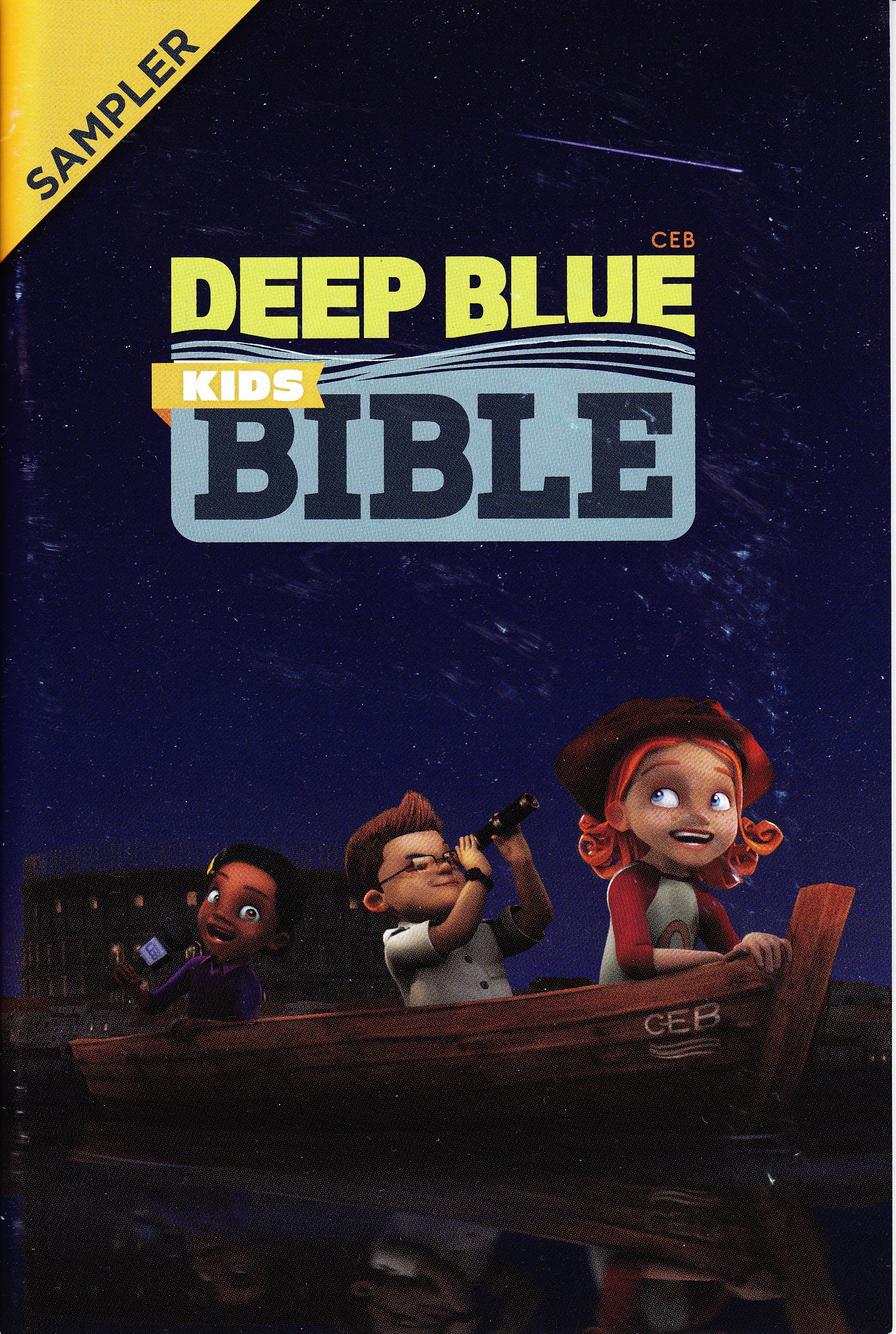
At Book Expo I found Bibles in child-friendly form. In a world where vegetables are the purveyors of the Gospel truth, and we can’t believe anything that hasn’t been animated by a major corporation, the Deep Blue Kids Bible caught my eye. Based on the Common English Bible, it is not the work of amateurs, but it did bring to mind a scary story I read long ago. (The story and this Deep Blue Kids Bible are only related in the labyrinth of my gray matter, not in any business sense whatsoever.) The story was in a children’s Christian magazine and it still evokes a shudder forty years later, when I recall it. An unthinking parent, it seems, decided to keep rat poison in a peanut butter jar. I really need recount no more of the story than that—as the child lay dying the moment of spiritual crisis came to make that decision for salvation upon his deathbed. I started reading the Bible (KJV, of course) before I was a teen. The Bible is not a children’s book. As I walk through BEA on weary feet, I am very glad for the books, but part of me is somewhere between the devil and the deep blue sea.


The Illustrative Man

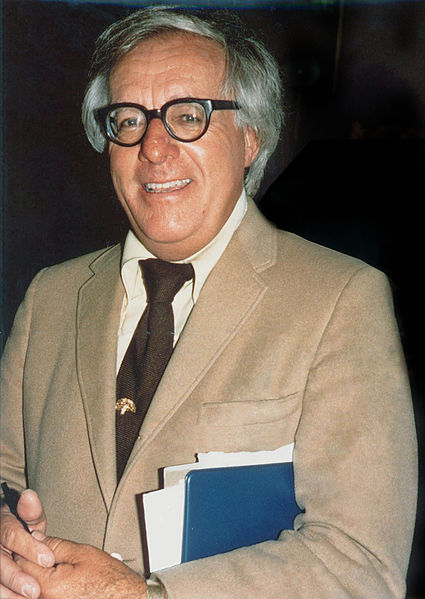
To a young boy growing up in an economically depressed small town without money to buy fancy things, escapist reading is a natural hobby. As with many boys, science fiction held my undying attention. My favorite writer was Ray Bradbury. His stories were short enough to consume in a single sitting, and they were full of wonder, and imagination, and possibility. I had nearly all of his books. So today, when I learned that Ray Bradbury had died, it felt as if another author’s works had been burned and the great man himself simply disappeared. Along with Edgar Allan Poe—whom I discovered early—and H. P. Lovecraft—whom I discovered late—Ray Bradbury represented what I believed a short story should be. I began writing short stories when I was in grade school. I still have a few of them, and the influence of Bradbury is most profound. At times it feels like the world is running out of dreamers.

Instead of churning out young people eager to explore the possibilities—and even the impossibilities—of the world, our educational system has become much more prosaic. We teach our young how to find jobs. Walking across Manhattan in a weary mood one morning it occurred to me: we go to college and we receive specialized training to make us fit for more cerebral jobs. We work those jobs in order to make corporate executives wealthier. Work benefits the one-percenters most. All the way to the office I dream of a life where I might have pursued creativity and exploration. I still awake before 4 a.m. every day to scrape together a few fragments of a moment to write before heading off to work in the big city. The characters I invent live in my head and die a subtle death as email and book proposals force their bossy way into my consciousness.

The worlds Ray Bradbury imagined were places where the familiar and the strange easily mixed. Many of his tales would be categorized as fantasy rather than science fiction today, but they manage to instill an almost religious reverence among those who believe paradise might be just over on that next unexplored planet. Or perhaps it will never stop raining there and the universe will drive us mad. When I “grew up” and needed to liquidate my juvenile assets, I sold most of my Ray Bradbury books to a used book dealer. Rarely a day passes when I don’t regret that impetuous move. And some days, such as today, I feel it especially deeply. One commodity that our fumbling world simply can’t afford to lose is its dreamers. On an unexplored planet somewhere out there, I know Ray Bradbury agrees with me.

From Wiki Commons


Sleeping with Darwin

Although I’m hardly capitalism’s biggest fan, it would be difficult to overestimate how much the closing of Borders last year has affected my life. It is formidable to explain, as I sometimes must, to friends who don’t find books as irresistible as I do, how the simple pleasures of knowing a friendly bookstore was in town could make the world seem a little less cruel. There were towns that I instantly identified with the Borders located within their borders. Towns I rarely visit any more. All of this is by way of preface to explain the book I just finished. As the last desultory books lugubriously lined the shelves, my wife and I went through picking up titles we supposed we might have not found any other way. One of those titles was the little travelogue Darwin Slept Here by Eric Simons.

My admiration for Charles Darwin began when I realized that the Creationist venom I’d been bloated with from early days had been misguided. There was a fascination with this “evil” of evolution I’d been taught to shun. As I began to read more objective accounts, I realized Darwin possessed a keen, if tortured, mind that could not rest with half-truths and theological figure-fudging. In his account of following Darwin’s tracks in South America, Simons’ narrative not so much takes evolution any further, but presents a portrait of a world that has continued to evolve. In lives filled with uber-capitalism, where would a young person find five years to sail off on a voyage of discovery? Where would the health insurance come from? The 401K? The dental? As a species, humanity has been utterly domesticated.

Once in a while I dream of the Galapagos. I think of Easter Island and smile. So many places I will never be able to go. I spent three years specializing in Ugaritic studies and I will never make it to Syria—not on an editor’s salary. Not as an American. The world that we’ve constructed opens travel to the young who rarely have the resources to enjoy it. After seminary I spent six weeks in Israel. Young and healthy and heavily in debt, I at least glimpsed the sun setting over Jerusalem before getting hog-tied into the economy. Simons’ little book will not make him a millionaire, but as I read his reflections of rainforests, youth hostels, and rental cars on the Pampas, I thought where our world would be now had Darwin not been of a family of means. So much of our health care is based on understanding evolution. We would not be chained to our desks by threats of a slow, painful, and perfectly legal death without health insurance. We would be subject to biblical literalists who rejected the tenets of science— Come to think of it, perhaps we’d all better make tracks while we still can.


Religious Aliens

While surveying books purchased as texts in religion courses (something that an editor sometimes does), I came across a book called Interdimensional Universe by Philip Imbrogno. As I’ve often suggested on this blog, the study of the paranormal is related in people’s minds with the study of religion. I suspect a large part of it is because both deal with matters that go beyond mundane, daily experience. Indeed, the tiresome caricature of those interested in the paranormal is that they are individuals dissatisfied with their lives who project their disappointments into bizarre beings or situations to make up for the emptiness. Sometimes the same thing is said of those who are religious. What is really lacking in both fields, it seems to me, is people with strong critical thinking skills who remain open minded. There are serious scholars who study the paranormal—not many of them—and it is clear from the market-informed choices that Hollywood makes, people are intensely interested. So I decided to read Interdimensional Universe.

On the bus, however, I fidgeted to find ways to hide the cover and contents of the book. I don’t want some urban, Manhattan sophisticate seeing the letters U-F-O in my reading material. Still, like most honest, open-minded people, I have to admit curiosity. After a couple of chapters Imbrogno’s work appeared to be a standard UFO book. Then it started to get weird when he suggested that angels and jinn are, like aliens, interdimensional beings. He went from citing declassified Air Force and FBI documents to quoting the Bible. And not just quoting. He assumed the historicity of biblical accounts that scholars have extensively exegeted (oh, that word!) and demonstrated to have more plausible explanations. For the jinn he draws extensively on Islamic lore, believing that they are responsible for much of the trouble in the world, tricksters like the Marvel Universe’s Loki.

I put the book down disappointed. I still consider myself open minded. I admit to not knowing what is really going on with paranormal phenomena. If the number of reports alone are anything to go on much of the human race is either insane or is seeing some unusual things. The subject requires some real academic consideration. When self-proclaimed experts, however, veer into mythology to start explaining the unknown, we are getting no closer to finding the truth that, as Fox Mulder assures us, is out there. At the University of Wisconsin Oshkosh I taught a course entitled Myth and Mystery. It was some of the most fun I had in the classroom. It was also one of the most difficult classes for which I’d ever had to prepare. Is there intelligent life in outer space? I don’t see why not—the universe is awfully big to rule it out categorically. Are there jinn literally lurking in the closet? For that I’m afraid for that there is a much more prosaic answer.


Holy Hypothesis

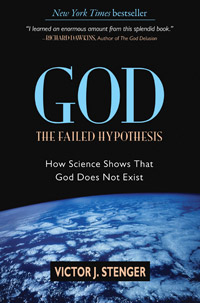
The angry atheists have been center stage in the God debates over the last few years. Many of them have become household names. Often giving sweeping generalizations about what God is, they tear apart this highly improbable image with aplomb. Not that I like to get in the way of somebody’s innocent fun, but their approach to the question only antagonizes the opposition without converting them. I just finished Victor J. Stenger’s God: The Failed Hypothesis. Like many who argue for atheism, Stenger is a highly regarded scientist. Unlike many, he offers a systematic, even-keeled account of his reasons for rejecting the divine. Indeed, the sub-title is straightforward—prosaic even—How Science Shows That God Does Not Exist. As befits a physicist, Stenger is careful to define his terms and is cordial enough to state that his book doesn’t cover the non-existence of deities per se, but the interventionist God of yore in particular.

Although I can’t agree on every single point Stenger makes, he does a compelling job of laying out logically how, if God is taken as an hypothesis (theory is a little too strong a category, implying substantial scientific concurrence), there should be some measurable result in the universe that God created. Choosing to differ from many theologians and scientists, Stenger argues that science can say something about God, given that God reputedly acts in a physical world. Outside these parameters something one may choose to call God may exist, but that kind of God does not answer prayers or oversee evolution.

Like many scientists, Stenger feels compelled to undertake this argumentation at least partially because of the weary insistence that evolution is “just a theory.” Creationists have tried to distort science for nearly a century now and have been successful really only in the United States. As Stenger shows, their method is often science, but wrong science. Just because an idea is scientific does not made it valid science. Stenger also points out that the premises of creationism, no matter how measured, are just plain wrong. Throughout, however, there is no belittling of those who believe in God. What is offered in this little volume is a rational, non-hysterical account of why a physicist who follows the law of the kingdom finds there is no God above it. And like a true scientist, Stenger leaves open the possibility that new evidence could overturn his verdict. Nevertheless, if his work is taken seriously, such a turn of events appears highly improbable.


Scary Monstrances

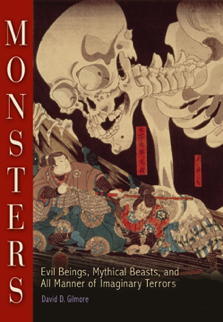
I can’t help myself. I’ve always found monsters fascinating. Now that I’m mostly grown up and am expected to have a modicum of respectability, I try to read academic books on monsters so that I can legitimate what would otherwise be puerile juvenility. David D. Gilmore’s Monsters: Evil Beings, Mythical Beasts, and All Manner of Imaginary Terrors was my latest foray into the forest. As I have come to expect, just pages into the book the first reference to religion emerged. This connection between monsters and religion is not Gilmore’s central theme, but it does recur at several points in the book. I especially enjoyed his discussion of Spain’s Pentecostal dragon. The Tarasque, named after its host town, is a medieval dragon that is still feted to this day in some locations. Considered to be symbolic of the sins of humankind, it accompanies either the holy day of Pentecost or of Corpus Christi. This connection between the church and monsters took me back to my first experience of Corpus Christi.

Raised as solid a protester as a Protestant can be, I had a difficult transition to some aspects of Anglicanism. The ceremonial was great, but some of the popish blandishments I could never quite accept. When a member of Boston’s famed Church of the Advent, the rector asked me to be a torch bearer on Corpus Christi. This involved processing outdoors onto Beacon Hill in full drag (or cassock and surplice, as I’m sure the parsimonious will correct me) to accompany the holy sacrament, carried as it turns out, in a monstrance. The idea that looking at a piece of wafer-thin bread on public display could somehow mediate a divine blessing, I never understood. It felt as much a fairy tale as the dragons of Spain. Monster or monstrance?

Gilmore concludes that monsters are people’s projections of their deepest unresolved issues. He may be right. One of his observations, however, struck me. He suggests monsters predate even gods in the human imagination. I tend to think they entered that gray space at the same time. Our minds have always told us that there were creatures out there to fear. Some of them, we hope, are good. Others are clearly evil. Monsters are difficult to explain in a world created by a benevolent deity. It is perhaps no mistake that Zoroastrians conceived of Angra Mainyu as monstrous. Divinity and diabolism could be fused into one being. There is a profound lesson here, for those able to read. Monsters are among the earliest projections of human imagination. And they remain forever with us.

Angra Mainyu; god or monster?