Kids’ Stuff?

Do you want to be popular with the kids this Christmas?  Do you want to hear the squeals of pure delight that every mom, dad, aunt, or uncle wants when that special present is unwrapped?  Might I suggest a book of theology?  Yes, one of the publishers here at AAR/SBL has a table of Theology for Kids.  Staring at that sign during the long hours on the conference floor, my mind kept wandering back to Richard Dawkins’ comparison of teaching children religion to child abuse.  Indeed, my wife had sent me an article in Rolling Stone a few weeks back that declared an Evangelical childhood was a, to put it politely, a total mind-fornication.  It is something from which those of us raised religious spend all our lives recovering.  Some never escape, while others try to make sense of the world without it.

Publishers of religious bodies make up a substantial part of those present at the annual meeting.  The ones with the biggest, flashiest displays are often buoyed up by evangelical dollars.  Teaching kids to think this way is a core part of keeping the meme alive and those of us who dared question it with our God-given brains are the modern heretics and heathens.  Some years here, various publishers are piously closed on Sunday morning (this is only a three-and-a-half day conference) with signs telling the rest of us that they’re observing the Lord’s day.  America is a strange mix of evangelical and secular, the kind of place where you can purchase theology for kids.  I know I grew up with such things, even though we really couldn’t afford the other children’s classics that I only learned about from having a child of my own.

The canon is important to this self image.  For me, I’ve come to expand mine a bit over the years.  That expanded canon includes unconventional sources of spiritual inspiration, or so my conversations with others leads me to believe.  Theology can, and often does, lead to death sentences for adults.  And sadly, occasionally for children.  It’s difficult to blame adults for trying to ensure their children’s eternal salvation, especially when religion is so terribly difficult to escape even as an adult.  I suppose that’s why I still advocate for learning about religion although it has damaged me personally as well as determined what would pass for my career.  So I stand here awaiting my next appointment and find myself again taken into my past which was full of theology for children.

Finishing the Set

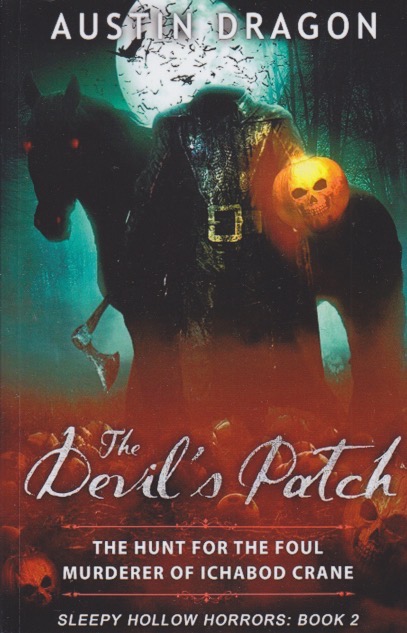
I hope I didn’t leave you hanging too long.  Autumn is always such a good time for mood reading that I had a couple of books I wanted to be sure to cram in before finishing Austin Dragon’s two-volume Sleepy Hollow Horrors set.  I wrote about volume one, Hollow Blood, some weeks back.  I wanted to read The Devil’s Patch to finish out the series before I forgot too much about the first one.  The subtitle is the same as it is for the first volume: The Hunt for the Foul Murderer of Ichabod Crane.  This imaginative retelling shifts the action away from Sleepy Hollow, although part of it takes place there, to the eponymous Devil’s Patch in upstate New York, near the Canadian border.

Instead of focusing solely on Ichabod’s avenging nephew Julian Crane, volume 2 adds an ensemble cast.  The first half of the novel provides the backstory for ten characters who will eventually accompany Crane to the Devil’s Patch to confront the Headless Horseman on his home turf.  The conceit here is that the Horseman, for some reason, has tried to kill each of the posse who eventually form to dispatch him.  Perhaps there’s some prophecy or something that he’s heard.  In any case, once Julian Crane recovers from his own encounter with the Horseman in book one, he begins to gather a group in Sleepy Hollow to go with him further upstate to take care of business.  The group of ten constitute his posse and Brom Bones goes along too.  They encounter the evil and defeat it.

There’s always a sense of accomplishment in finishing a set of books.  What has dawned on me in the process of all this reading is that the story was already told by Washington Irving in one of America’s first literary collections.  If fans want to engage with the story they need to take it in different directions, or tell it from a different perspective.  This is sometimes done cinematically and, increasingly, in literary form.  For me this is an autumn story.  That makes sense since Irving set the climatic scene during a fall party at the Van Tassel estate.  That tradition is frequently carried on in retold versions, but not always.  Whether or not they are set in autumn, they seem to be appropriate reading for this time of year.  That’s in keeping with the spirit of the season, whether in Sleepy Hollow or not.


Life in the Woods

Early influences are often the strongest.  “If you can’t say something nice, don’t say nothing at all.”  Thumper was the dispenser of this particular wisdom, as prompted by his mother, upon noticing how shaky newborn Bambi is on his long legs.  Now I recall having seen Bambi only once, at an age so early that it’s buried in my personal ancient history, but I’ve tried to live by those words ever since.  I don’t like to hurt anyone’s feelings if I can help it.  When I do, I feel awful myself, often for a prolonged period.  Add that to the fact that I read a lot and review the books, in some fashion, here, and I sometimes face a dilemma.  Particularly when it comes to self-published books.  Most of them just aren’t that good.

My wife once asked me whether I was concerned about my own critical reputation by not pointing out the problems in self-published books.  I had to ponder that a bit.  Just when the keystrokes start to point out the issues, Thumper hops into my mind and I think how I wish my own reviewers would be nicer at times.  You see, we’re all the victims of circumstance.  I’ve read self-published books where the author was clearly trying to make a living and honestly believed that s/he could write.  Ham-fisted keyboarding clearly stood behind some of these books and I realized that an editor serves a vital role in the literary ecosystem.  It’s also why I’ve resisted self publishing.  Before Holy Horror, I’d been compiling a book on monsters that I was ready to take to CreateSpace.  I’m glad I didn’t.  Books need editors just as surely as sparks fly upward.

The problem is the review.  I don’t mind saying critical things about books published in the standard way.  I’m still petting Thumper, though, and keeping it nice.  When it comes to self-published material I realize just about every time why the authors really should pursue a different line of work.  Many of us who write books do so while holding down full-time jobs.  Writing productivity suffers, yes.  I could write a lot more books if I didn’t spend nine hours at work most days.  As much as the criticism of editors (or peer reviewers) always stings, the resulting book is better for it.  You have to convince an editor, first off, that a book is worth doing.  If you can’t, perhaps there’s a hint to be taken.  I’ve never read the story behind Bambi to know if Thumper’s line came from Felix Salten or not, but I know the book was published by the prestigious German publisher Ullstein Verlag.  And self-publishing is, in many ways, a life in the woods.

Bambi: Eine Lebensgeschichte aus dem Walde by Salten, Felix

What Lurks

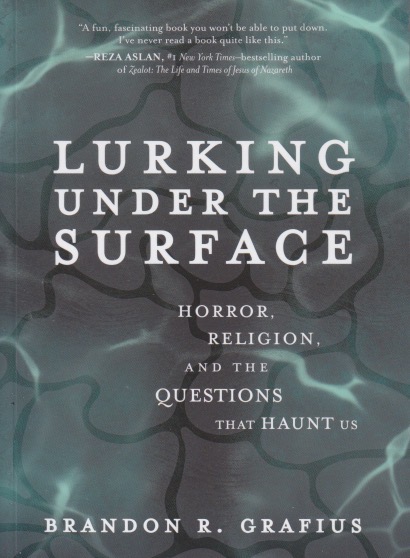
One question that I get asked by those who don’t understand is “Why horror?”  The asker is generally someone that knows I’ve been “religious” all my life, or affiliated with religion—which people think means sweet and light—and who associates horror with bitter and dark.  I know Brandon R. Grafius has been asked such things too, because I’ve just read his Lurking under the Surface: Horror, Religion, and the Questions that Haunt Us.  Like me, Grafius has been writing books on the Bible and horror—I’ve reviewed a few on this blog.  As in my former life, he teaches in a seminary.  People find this juxtaposition jarring.  This little book is Grafius’ struggle with various aspects of this question.  He’s not anti-religion, but he’s drawn to horror.

For those of us familiar with Grafius’ other work, this offers a more detailed explanation of what one religion scholar finds compelling about horror.  Specifically, he shows how various films deal with similar issues to his Christian faith.  The book deals with that for about half its running time, and the other half discusses similar themes in horror.  You get the sense that Grafius has been at this for a long time.  Scooby-Doo seems to have been his childhood gateway to horror and it raised some deeper questions as he explored further along the line.  If you read this blog, or search it, you’ll find such things as Dark Shadows and The Twilight Zone in my background, but then, I’m a bit older.  The point is, being a religious kid doesn’t discount finding monsters fascinating.

As usual with books like this, I’ve come away with several films to watch.  And more angles of approach to that tricky question of “Why horror?”.  A recent post on a panel discussion titled “Religion and Horror” led to an online exchange about religion and fear.  Grafius deals with that here as well, but from a more distinctly Christian point of view.  Although he’s an academic, this book is written (and priced) for wider consumption.  I found it quite informative to hear the story of someone else who grew up with monsters and the Bible.  He had the sense, however, to start addressing this early in his academic career.  We each have different paths to walk and for some of us it will take a jarring experience to chase us back to our childhood monsters.  And being religious is no barrier to that, as this brief book demonstrates.


Holy Nightmares

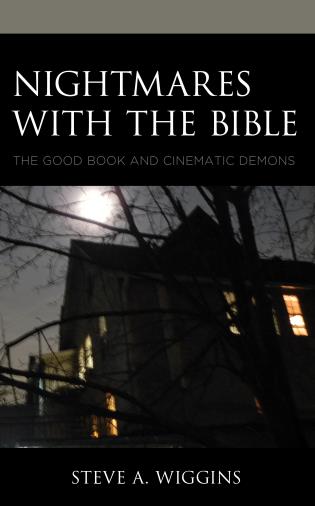
The thing about ratings, as John Green astutely notes in The Anthropocene Reviewed, is that they are in many ways arbitrary.  From the very few reviews of my own Nightmares with the Bible, I get the sense that people misunderstand the book.  Or it could be that they just don’t like it.  To each their own.  To me it is quite a personal book.  It is also a bookend to Holy Horror.  They represent first steps into a new kind of endeavor for me—saying something (hopefully) intelligent about horror films.  And writing books with no institutional support at all.  There are several intentional interlacings between these two books and to understand one it helps to read the other.  For those who want to get a sense of the way this addled brain works, in any case.

Holy Horror was literally one of those “if you see something say something” books.  I had noticed something that apparently nobody else had—the way the Bible is presented in horror films tells us something about the Good Book.  I have not seen every horror movie made.  I know of nobody who has, or even can.  I’d noticed a commonality, however, among those films.  The Bible isn’t rare in horror.  In fact, it’s quite common.  I’ve done quite a lot of reading about religion in horror since then, and this is something that has to be taken into account when considering the effects of Christianization.  It brings fear in its trail.  Nightmares with the Bible is a bit more ambitious and a bit of a hybrid.  That may be why its been reviewed so poorly.  It is a continuation of the thesis—if you want to understand how people really believe, look at what popular culture teaches us.

What do we believe about demons?  What The Exorcist taught us to believe.  Anyone who looks at the history of the idea sees that this concept really only took off, after the Middle Ages, when movies reminded us of the threat.  From the early modern period on, belief in demons and their impact on the world had been in decline.  Anyone looking at the headlines today will have to wonder about the wisdom of that loss of interest.  When The Exorcist hit, it struck a nerve.  Since then demons have been back on the big screen time and time again, each showing providing more information on what to believe.  I suspect those who’ve been rating the book really don’t get what I’m trying to do.  At least, I tell myself, somebody’s reading my work.


Grave Robbers

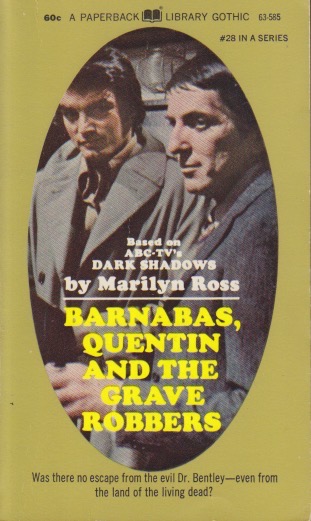
My personal reconstruction of the Dark Shadows universe was made by connecting the books by Marilyn Ross that I could find with the episodes of the television show that I saw.  I’ve always been one to try to make a logical storyline out of such things so that I could connect them when they came at irregular intervals.  (I’m still a fan of linear storytelling.)  So it’s a bit of an eye-opener to read the series of pulps in order.  There are continuities and discontinuities.  Barnabas, Quentin and the Grave Robbers again has Quentin, in 1830, portrayed as a good guy.  When he was first introduced in the series some books back, he was a satanist and very nearly evil.  And this was in a more recent era.  You get the sense that Ross was responding to fan requests.

As I noted regarding the last book in the series, the stories do seem to have grown more complex, and sophisticated over time.  The writing remains labored, but the story aspect improves.  Barnabas, Quentin and the Grave Robbers comes the closest to standard horror so far.  This is a dark story with problematic race issues thrown in.  The first two-thirds or so are set in England and are tied into the story by Barnabas Collins being there.  It is distanced from the usual moody setting of Collinwood where, despite all the haunting and troubles, you tend to think things turn out alright in the end.  Here the antagonist grave robbers kill people close to the heroine and the corpses sent to gruesome ends.  And there are zombies.

To flee the evil ringleader, Barnabas takes Paula Sullivan to Collinwood where Quentin is introduced to the story.  In 1830 he’s an unpredictable trickster, but good at heart.  He and Barnabas team up, as last time, to take on the grave robber when he moves, you guessed it, next door to Collinwood.  Then something unusual happens—Paula discovers zombies are afraid of crosses.  This leads to a strange episode of Barnabas—a vampire, remember—chasing a zombie with a cross.  In general religious imagery is scarce in these novels.  A vicar or two may be mentioned, but vampires aren’t menaced with crosses.  That does happen in one of the movies, but here it seems that because Barnabas is a good vampire he’s not bothered by a cross.  Or it could be a consistency issue.  Either way, this is a moody addition to the series, appropriate, as always, for autumnal reading.


Small Big World

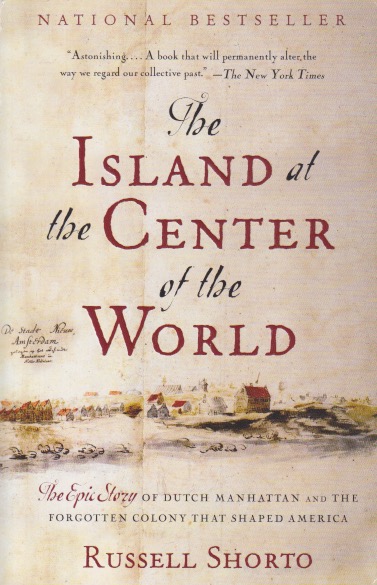
Serendipity may have been over-used in the eighties, but the idea of finding something by chance that turns out to be really good is real enough.  My wife found The Island at the Center of the World, by Russell Shorto, by chance.  You see, used bookstores are places of serendipity.  This one happened to be in Trumansburg, New York.  Subtitled The Epic Story of Dutch Manhattan and the Forgotten Colony that Shaped America, this is the story of an early European incursion into North America.  These days it’s difficult to feel good about any of that, but overlooking the misery we’ve caused for a moment, the early Dutch settlement was, comparatively, not as detrimental to the American Indians as later colonies were.  The Dutch were mainly interested in trading, and unlike the Puritans who settled to the north, they were tolerant of difference, even religious difference.

Shorto chronicles how the settlement of Manhattan from the beginning was one of diverse peoples having to get along and accept one another.  The Dutch, like the Puritans, had been infected by Calvinism, but they took a more practical view.  People get along better if you don’t force them all to think the same way.  The book suggests that this was impressed on New Amsterdam from the beginning, and it remained when it became New York.  It’s a fascinating story partially because it begins the narrative before the point where we’re generally instructed in school.  Europe was warring, at the time, of course.  But it was a Dutch idea—that peace could be the default state, instead of war—that allowed for real civic progress.  Those scrambling for empires, however, continued to squabble, even as they still do today.

There are plenty of unexpected insights from this book.  The Dutch in many ways molded the die that would become European America.  Having built a successful trading colony in Manhattan, they had to surrender it when the English, after the Cromwell debacle, decided to take it by force.  The people of Manhattan did not want to fight a clearly superior army and lose all that they’d gained by their tolerant way of life.  And so New Amsterdam became New York.  The story is filled with colorful characters and incidents that, if you’re like me, you’ve never heard of.  I’m not one of those people who has to read everything published on New York City.  Working there for many years was sufficient for me.  But still, this is one of those books that I’m glad my wife serendipitously found while looking for nothing in particular in a used bookstore.


Locally Speaking

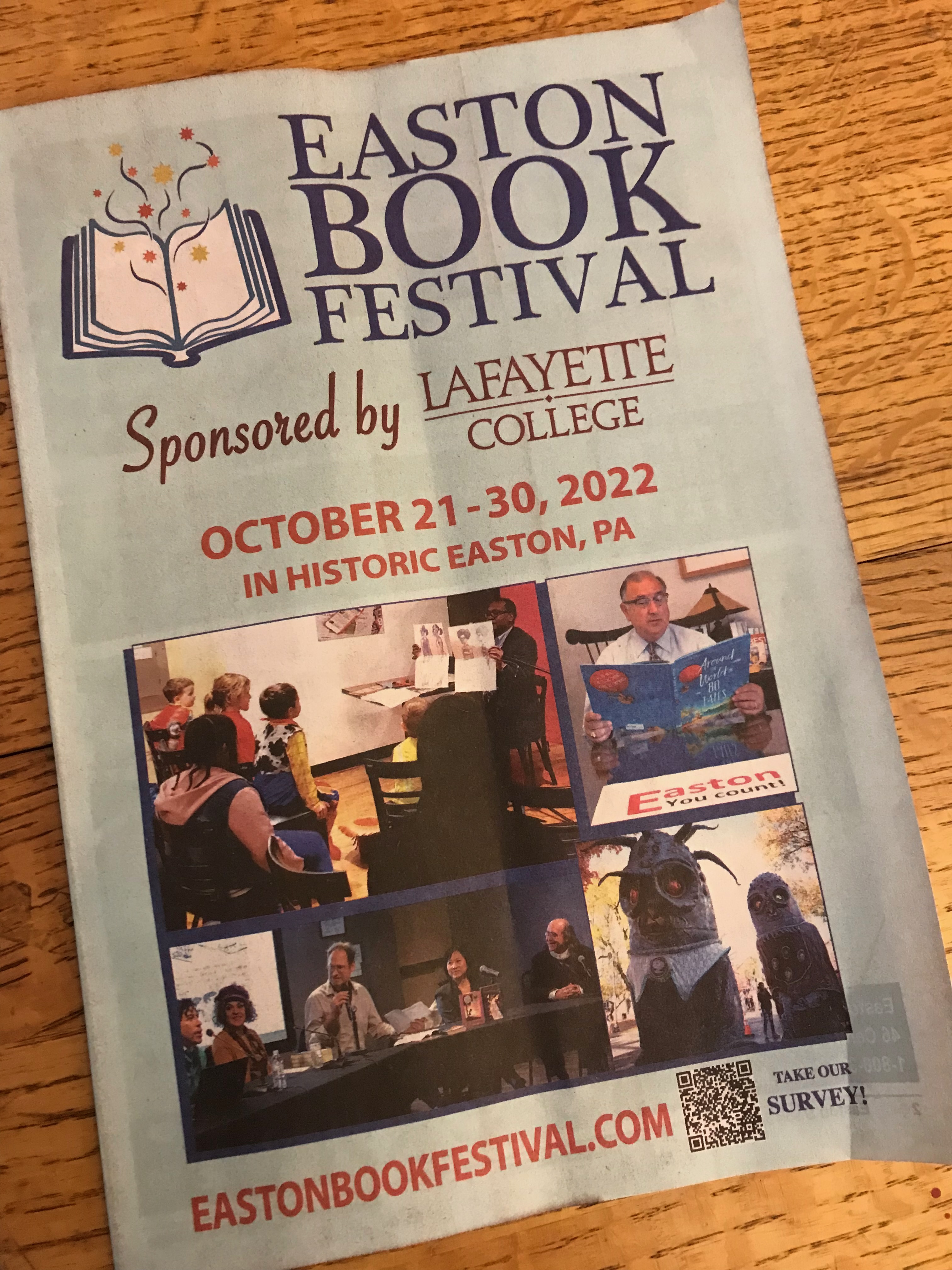
One of the weird things about moving is that you don’t know many people in your new location.  Ah, but who am I kidding?  As an introvert I knew few people in my last two decade-long locations.  So when I blog my readers tend not to be local.  Those I know locally tend not to read what I write.  This is the way of things.  Nevertheless, I make bold to mention the session I shared with Robert Repino and Andrew Uzendoski at the fourth annual Easton Book Festival yesterday.  The session was recorded and may be found here.  The topic is speculative writing.  While speculative writing may encompass nonfiction, it is generally considered to be fiction about things most people consider not to be real, such as science fiction, horror, and fantasy.

The slippery word there is “real.”  There’s a great deal of philosophy to that word.  How we determine reality is hardly a settled matter.  It involves more than the physical, as much as we might want to deny it.  In the case of future-oriented fiction “it hasn’t happened yet.”  Even if it comes true, such as George Orwell’s 1984.  In the case of the past, such as Game of Thrones, it never really happened.  For horror, itself not easily defined, it may range from gothic ghost tales to bloody accounts of carnage, generally set in the present.  Speculative often involves the supernatural.  The supernatural, however, may be real.  Who’s the final judge of that?

If I had a local readership I would add a plug for the Easton Book Festival.  It started strong in 2019 but was nearly choked by the pandemic.  I’ve had the honor of being involved in some way for all four years although I’m a minor author with perhaps the poorest sales figures of any who participate.  The Lehigh Valley is a major population center of Pennsylvania, but there’s wonderful greenery and woods between Easton, Bethlehem, and Allentown.  I live here but work in New York City and there’s no question who gets the lion’s share of time.  Publishing is a mystery to many.  How does it work, and how do you find a publisher?  And once you get published how do you get your books noticed?  And perhaps more relevant to more people, how do you get to know your neighbors?  Apart from the chance encounter across the lawn, we’re hermetically sealed in our houses, living lives on the web.  Unless you happen to venture to your local book festival where you’ll find like-minded individuals.  It goes on through the weekend, so if you’re nearby check it out.


Chilly Ghosts

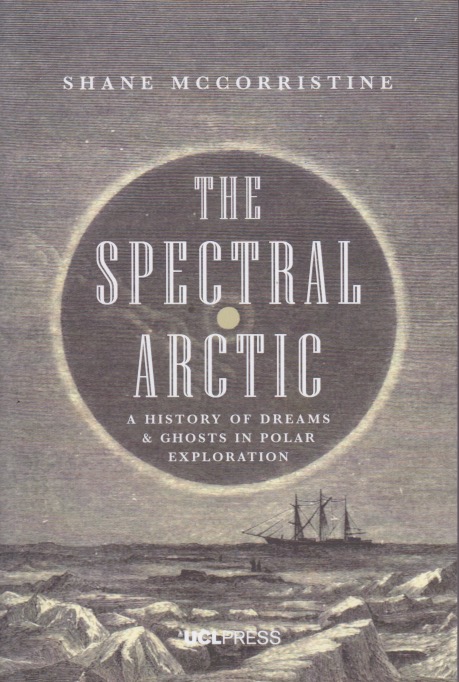
The names of many Antarctic explorers are more familiar to me than Arctic ones, so John Franklin was a name unknown to me.  A nineteenth-century British explorer, his expedition was lost beginning in 1845 when his appropriately named ships, Erebus and Terror, became icebound.  Franklin was seeking the famed Northwest Passage and given the slow communication of the time, nobody knew for years whether he’d survived or not.  (He hadn’t.)  Shane McCorristine’s The Spectral Arctic: A History of Dreams and Ghosts in Polar Exploration is a fascinating account of the attempts to find Franklin and his ships, often with speculative means.  Franklin’s widow, Jane, was famous in Britain for her constancy and her unwillingness to give up on the search for her husband.  She also consulted clairvoyants and paid attention to noteworthy dreams.

What drew me to this account was the involvement of the supernatural.  Significant dreams and many clairvoyants—all in the Victorian Era—made suggestions and claims about Sir John’s health and survival, as well as his whereabouts.  This was, of course, in the era before anyone reflected on the rightness of the imperial ideology of exploration and exploitation.  (We seem to have a hard time shaking that even today.)  In any case, these unusual, supernatural means of gaining information were often utilized and sometimes even functioned to set the destinations for other ships sent on rescue missions.  The chapters dealing with spectral landscapes of the Arctic are riveting and hard to put down.  Arctic imagination, even for those of us who don’t care for the cold, is powerful.  And we tend to think of it in spiritual terms.  There’s something about the far north.

There are many names involved and there are some places where it’s difficult to keep track of all the characters on a casual read, but overall this study is gripping.  McCorristine, as an academic, can’t tip his hand regarding the authenticity of the phenomena he explores here, but it simply doesn’t let go.  His chapter on women in Arctic discourse is likewise engaging.  Franklin and his crew had died by 1847 but the ships weren’t “discovered” until 2014 and 2016 by Canadian expeditions.  As McCorristine points out, even such political use of resources makes statements about how indigenous people continue to be treated by nations established as colonies.  There is much to say on this point, but the book focuses instead on “polar terror and sublimity” that comes to the surface in supernatural beliefs.  Tying all of this together is an astonishing feat and the results leave much room for wonder.


No Words

I read something scary recently.  And no, it was not a horror story.  I work in publishing and we have to keep abreast of developments, so I’ve had a glimpse of the future.  Publishers are now starting to look toward the time when information will no longer be conveyed by the written word.  A picture’s worth a thousand of them, after all.  This new future will convey information by video, or whatever the replacement of video will be.  Perhaps some are looking forward to the Matrix direct downloading model.  Perhaps the computer will be able to simulate the pleasures of reading a book, of browsing in a bookstore, of writing with pen on paper.  Something about the process and discipline of reading has made us what we are.

Star Wars, as others have noted, is set in a world with no paper.  You won’t find a scrap blowing in the wind, even on Tatooine.  Nobody is shown reading.  Plenty of action, but no wizard behind his big book of spells, no princess writing down her inmost thoughts.  Make a recording and plug it into your R2-unit.  Perhaps this is heresy, but compare this to Star Trek.  The episode “Court Martial” has Cogley (Elisha Cook, before he applied to become Rosemary’s landlord) saying to Kirk, “Books, young man, books. Thousands of them. If time wasn’t so important, I’d show you something. My library. Thousands of books.”  We always thought even the future would have plenty of reading material.  Now we’re being told the technology is passé. 

The constant emphasis on “data-driven analysis”—mostly in an effort to get more money—seems to mistake the downloading of knowledge for the pleasure of reading.  They’re not the same.  I love movies, as any regular reader will know.  Perhaps ironically, I write books about them.  The thing is, I watch them largely to write about them.  Knowledge downloading is getting the cart before the horse.  I’ve read even nonfiction books wrapped in awe.  An author’s way with words, the phrasing, the craft, the artistry.  These are pleasures.  Sure, images can show an interpretation but there are those of us who will always want to read the book before we see the movie.  Can you get the actors’ faces out of your head if you do it the other way around?  There are those who celebrate this sterile future.  And there are those of us who won’t even go there if we don’t have a book in hand to read, just in case.

Image credit:Bender, Albert M., artist; Federal Art Project, sponsor. Public domain.


When Autumn Starts

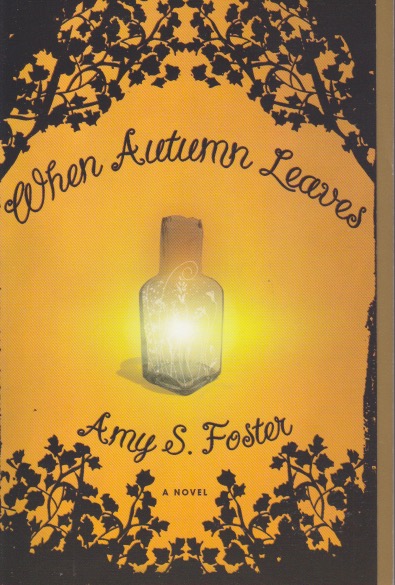
Some books catch my attention and I’m not sure why.  Knowing myself, the title When Autumn Leaves, invoking my favorite time of year with its intriguing syntax, probably did it.  I’m always on the lookout for books that capture the spirit of autumn.  Although she’s quite well known as a lyricist, Amy S. Foster’s name wasn’t familiar to me.  The cover looked autumnal and I knew it was about witches.  It came out quite a few years ago, so my recollection of why I’d marked it then had faded by the time I finally got to it.  The title is a play on both autumn and leaves.  The main character of the ensemble cast is Autumn and knowing that changes leaves from those on a tree to a verb of action.  I’ll try not to put any spoilers here since there’s plenty to say without giving away the ending.

Autumn is a good witch.  Well, the book doesn’t out and say so directly.  Being magical realism there’s some room for interpretation.  She’s the matriarch of Avening, an island city off the west coast.  Those drawn to Avening tend to have some kind of magical powers, whether or not they know of them.  The story unveils the various women coming to be aware of their special talents, but generally they’re unsure what to do with or about them.  Autumn is the one to help them.  She’s been in Avening as long as anyone can remember, but, as the novel opens, she learns it’s her time to leave (thus the title).

Before she can go, however, Autumn has to select a replacement.  This is what introduces us to the various characters in the story.  We hear of the magical powers of some of the thirteen in quite a bit of detail, and others more incidentally.  Many of them don’t know they have these powers.  They know there’s something special about Avening and that they were drawn there, but they don’t know why.  So it’s a tale of female discovery.  Some of the vignettes are difficult to read, dealing with serious subjects, but they reflect realities in women’s lives.  It’s not really an autumnal story, spinning as it does through the wheel of the year, beginning with the winter solstice and ending up at Samhain.  It doesn’t dwell on Halloween, however.  It’s much more a character-driven story.  It creates a wondering image of Avening and what might happen if women were in charge.  And in that respect it’s very compelling indeed.


Free to Listen

It was a delightful conversation, as always.  Robin and Debra from The Incarcerated Christian podcast always amaze me with both their program and their enthusiasm.  I’m still bit nonplussed that they find my work interesting.  They invited me back for an October discussion around Nightmares with the Bible, located here.  Although the book has not yet sold enough copies to have earned any royalties (i.e., it hasn’t covered the cost of its own publication yet), it has nevertheless led to four interviews and even had a Choice review.  Granted, a good part of the lack of enthusiasm is its Elon Musk price point, at least that’s what I tell myself.  I’m still hopeful that a paperback will be out next year.

I suspect people are interested in demons.  Considering that movies keep on being made about them and doing well, I hope it’s only a matter of time.  While I’m waiting, however, I’ve got some good listening over at The Incarcerated Christian.  The podcast addresses a couple of issues: one is spirituality and the other is the effects of being raised in a religion that boxes or cages a person in.  The proprietors are among the few who realize that there’s a spirituality to horror.  I’m reading a book just now that considers thzt question.  And I know of others, active ministers among them, who find spirituality in horror.  I don’t know their backgrounds well enough to know their carceral status, but to me the connection makes sense.

Photo by Marco Chilese on Unsplash

I’ve written before that I’ve come to rely on experience as a source of knowing.  Not entirely, of course, but it’s clear that those who don’t trust their experience end up incarcerated.  My experience of organized religion suggests that it has many issues that require professional help.  That’s one aspect of having been a seminary teacher, and administrator, that has fed into my experience.  Having seen how that happens, and knowing the kinds of people who rise to the top—just look at politicians, particularly on the right-hand side—my experience suggests that ecclesiastical corruption is far more common than most people suspect.  In order to accomplish big things humans have to organize.  And in any organizational structure there will be climbers.  In general you don’t get to be clergy (apart from those non-denominations that’ll hire anyone making certain claims) without seminary.  And seminary isn’t what it seems.  To me, watching horror makes far more sense than befriending the jailer.  Take a moment to listen; it’s free.


Green Pagan

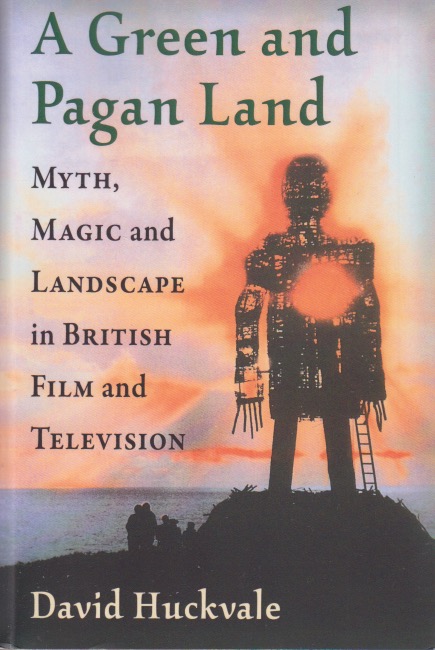
The folk tradition doesn’t encompass folk horror only.  I’ve been working on The Wicker Man, one of the initial folk horror classics, long enough that I sometimes need to remind myself of that.  Of course, it was the cover image featuring said movie that drew me to David Huckvale’s A Green and Pagan Land: Myth, Magic and Landscape in British Film and Television.  The descriptive subtitle more or less informs the reader what the book is about although it reaches further than that.  Huckvale also interprets novels, short stories, and classical music pieces according to landscape.  And sometimes it ranges beyond Britain, especially to other Anglo-Saxon cultures.  Richard Wagner, for example, plays a prominent role in one of the chapters.

Having written about popular media myself, I’m aware of how such issues can easily arise.  A movie too good not to discuss falls out of the precise range you’ve set for yourself.  And no matter how much media you can consume there will be tons more that you could, had you the time, add to your experience of it.  This book looks at mostly British media with an eye toward the pagan landscape.  That doesn’t always mean horror, but sometimes it does.  Huckvale always has interesting things to say about the media he addresses.  Whether the pieces go back to Arthurian legend or to more recent fictional pasts, the landscape has a role to play.

Indeed, folk horror is generally defined by landscape.  That makes sense considering that it’s all around us.  Many people in urban settings may have to struggle to find it.  Indeed, when they want to get away they head for it.  In Britain—and anywhere in which invasion has taken place—the earlier pagan ideas are imprinted on the land.  In Britain they’re perhaps more obvious; think of Stonehenge.  As later interlopers modern people see them and wonder.  And then we create stories—literary, musical, or visual—about the experience.  I’m so used to reading about folk horror that I’d finished the book before I realized it wasn’t really the focus of the entire thing.  While I don’t live in a major city, I too have blinders on for much of the time.  I’ve got a book deadline and I wanted to read this before making final revisions.  I’m glad I did.  There were places where I was just in the backseat, along for the ride, but there were also chapters where The Wicker Man was a crucial component.  And it reminded me of why I enjoyed living in that landscape for a few years.


Reading Algorithm

I appreciate help.  I really do.  It’s easy to feel overwhelmed in this world and others offering to help out are welcome.  But you do have to wonder about algorithms.  They seem to lack human sympathy.  And perhaps the ability to count.  Every year I enter the Goodreads Reading Challenge.  I would read without it, of course, but having that extra pressure doesn’t hurt.  Because of my convoluted mental makeup, I try to get things I have to do done early.  That means I want to finish my reading challenge before I have to.  In my commuting days I read about 100 books per year.  When I stopped commuting I had to bring that number down by about half—frankly, I don’t know where the time went, but I do spend more awake time with my family, which is good.

So I’ve settled on setting my Goodreads goals at about 50-60 books per year.  I often exceed it, depending on how many big books, or ponderous academic tomes I read.  Lately I’ve set the goal at 55, which is just over a book a week.  That seems doable to me.  This year I achieved that goal in September, but that doesn’t stop me from reading, nosiree!  I’m currently somewhere near the 60 book mark and I’ll keep going.  Now the help I was referring to is this: Goodreads typically sends an encouraging email in October suggesting how to meet your goal.  My message showed, via tracker, that I’d already met my goal, but telling me I could still meet it with these suggested books.

The books suggested are fine, I’m sure.  And that this message was sent via some formula that I have no hope of being able to comprehend, I’m also sure.  An algorithm, however, doesn’t feel for you.  I’m relieved to have the goal behind me and to continue pressing on regardless.  I could use some help in getting the lawn mowed, should an algorithm like to apply.  I particularly resent having to do so while wearing a jacket and stocking cap.  It’s time for the grass to be settling down for its year-end nap, isn’t it?  Or maybe an algorithm could do my job for me.  I guess that’s not funny, because that fate has befallen many humans, I suppose.  Maybe the solution is simply to read more.  That’s not a bad thing, but I don’t need an algorithm to get me to do it.


Forbidden Things

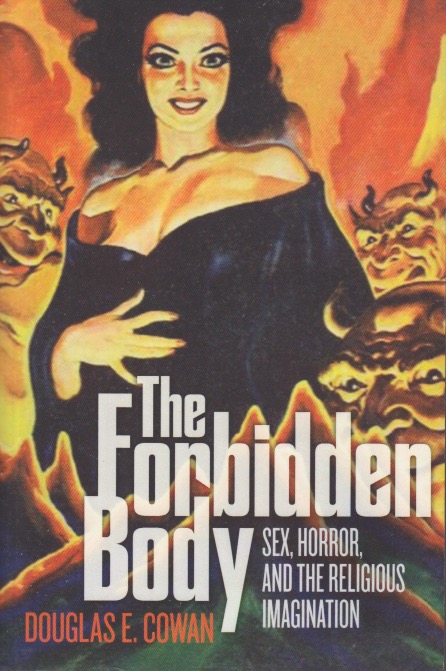
I owe Douglas Cowan a debt of gratitude.  Spending evenings at the American Academy of Religion and Society of Biblical Literature annual meeting curled up with his then new book, Sacred Terror, I was amazed.  Vaguely in the back of my mind I knew that film scholars were writing about horror, but I didn’t know that religion scholars even could.  Of course, later I discovered that Cowan had predecessors, as do we all, but that still didn’t change the fact that he opened my eyes to possibilities.  Being a slow reader with an unrelenting 925, I can’t keep up with any one author’s total output but I knew I’d need to read The Forbidden Body as soon as it was announced.  Subtitled Sex, Horror, and the Religious Imagination, it covers many aspects of what’s being called embodiment studies.  And there are, of course, monsters.

Where he finds the time to read so much and watch so much I can only guess.  This book covers a lot of territory that I can’t even begin to summarize here, but it goes without saying that Cowan’s many observations are worth paying attention to.  If I were to try to find a main theme I think it would be bodies out of place.  At least that what it seems to me.  Bodies out of place can mean many, many things.  Horror isn’t shy, of course, about showing you many of these.  As always, the unexpected part is religion.  Better, religious imagination.  I’ve been trying for years to articulate how religion and horror are related, and this is obviously something I haven’t been the only one pondering.  Cowan offers trenchant thoughts on this and even gives you some glimpses of unexpected monsters along the way.

Horror is often considered puerile, I know.  You get an image of a bunch of guys in business suits or military uniforms shaking your shoulders and saying “grow up!”  But what is it we’re growing up for?  To feed the monster.  So that those who are the monster can pamper their bodies with the luxuries everyone else works to provide.  Religion often serves to motivate those who are on the production end of this scale, but there is a truly Ottoian fear that compels us, lying not so very far beneath the surface.  Religion reaches out to those who encounter the monster.  And those people have bodies.  Cowan touches on many aspects of horror here from Corman to Lovecraft to Sade.  My response, perhaps appropriately, is that my head feels like it’s exploding.  I have so much yet to learn.