Homegrown Haunts

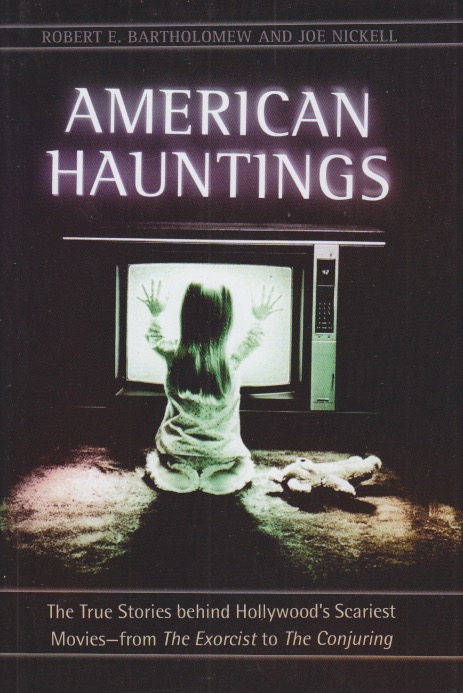
The thing about the unknown is that it’s, well, unknown.  Like many people I’m interested in getting at the truth behind ghost claims, so American Hauntings: The True Stories behind Hollywood’s Scariest Movies—from The Exorcist to The Conjuring, by Robert E. Bartholomew and Joe Nickell looked helpful.  Indeed, it is.  To a degree.  The book, however, devolves at points to debunking cases that aren’t in the movies and frequently asks “Why didn’t somebody take a picture?”  (In cases where there are pictures they say how they could be faked.)  Given the authors, you kind of know none of the claims will be accepted.  Even so, there’s a lot of good information here.  They do a great job of outlining the very probable hoax at Amityville.  For some of the lesser known cases they offer explanations harder to believe than the poltergeists they so abhor.

That’s the thing: for all the “hauntings” they default to poltergeists and then explain how poltergeists are faked.  They begin with An American Haunting, and move on to The Exorcist, Poltergeist, The Conjuring, The Amityville Horror, and The Haunting in Connecticut.  Sandwiched in there is also the non-movie Don Decker case.  What struck me as strange is they often seem offended that movies embellish stories.  That’s what movies do.  They’re quite right about the money aspect, however.  They also take in films that make no claims about being true, such as Poltergeist, which drew inspiration from an actual case but didn’t make that assertion.  It’s also odd that they didn’t ask some of the writers about this.  I once met Brent Monahan, author of An American Haunting.  He readily admitted some of it was made up.  In other words, taking offense at the “based on a true story claim” feels a bit naive.

In some cases they speculate what might’ve happened without visiting the location.  It’s hard to tell if a leaky roof can explain things when you don’t specify if the room is on the first or second floor.  Also, suggesting a young boy is faking because a professional magician can duplicate effects raises its own set of questions.  If a kid is as good as a professional, why doesn’t s/he go on the circuit and make some money from it?  That kind of question, by the way, characterizes much of the skepticism in the book.  Why not become a magician?  Because we don’t have the whole story.  It seems to me that dismissiveness doesn’t really help to get at the truth.  Nevertheless, this book contains much that is useful and skeptical voices should always be included when attempting to sort our extraordinary claims, even if you never , ever want to be caught without a camera.


Wicker Redux

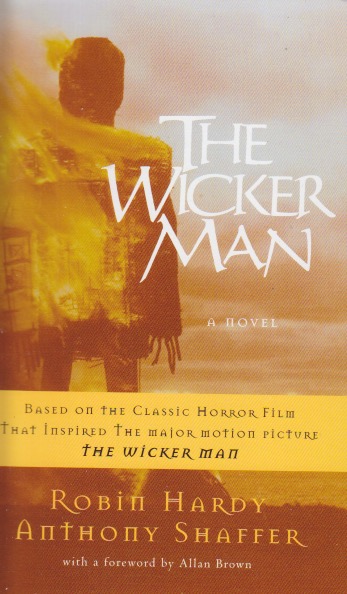
The Wicker Man (1973) is a cult classic.  If it had had proper distribution and promotion it might’ve become a more mainstream hit when it was released.  Instead it was a slow burn.  Once it reached cult status controversy grew.  The movie doesn’t acknowledge, but was clearly influenced by, the novel Ritual by David Pinner.  I reviewed the novel earlier, and it isn’t particularly great.  The movie changes so much that it maybe was “inspired by” rather than “based on” the novel.  Several years later the director, Robin Hardy, decided to novelize the film.  His The Wicker Man also credits Anthony Shaffer because a good deal of the dialogue is lifted straight from the screenplay Shaffer wrote.  But the novelization also changes things.  That means there really is no novel that gives the full story of the film.

The creative process is never-ending.  Anyone who’s had a story published knows the tinkering that goes on, even after it appears in print.  The last word’s never truly that.  It takes restraint to leave something alone.  So Hardy wrote one of the more important characters out of his novel and wrote in another who seems to have very little connection to the story itself.  I’m still not sure what the point of adding him might have been.  Incidents that seem to be bracing for a sequel are present, and indeed Hardy wrote a spiritual successor that became a less impressive movie some years later.  Sometimes you do get it right the first time around.

Not that the movie is perfect—none are—but it has held up considerably well, growing in stature over the years.  A novelist, however, tends to have a deft touch that seems to be lacking here.  There’s a great deal of telling instead of showing.  Hardy’s Howie almost becomes a Mary Sue.  Tying his love of birds into the plot of the novel would’ve been one such deft touch.  Instead we have here a serviceable novel with much that’s familiar and even some that is strange and provocative.  It does restore some of the famously edited footage from the first cut of the film.  It tries to make Howie’s religious conviction clearer.  Changing parts of a story comes with the territory of those who spin yarns.  Hardy never really rose again to the heights he achieved in directing The Wicker Man.  It’s no wonder, then, that he felt compelled to return to it in literary form.


The Mystique of Research

One thing that many people may not understand about research is that those trained in it are basically learning how to find stuff out.  It doesn’t matter what the subject is, research is a matter of learning what’s available to help you understand that particular subject.  Typically it involves becoming familiar with the classic “standard books” on the topic then branching out.  Even the internet, however, has its limitations when it comes to trying to find out what’s available.  My curiosity extends far beyond the religion I often blog about.  I write about religion because I’ve studied it all my adult life.  When I discover a new area of interest, or rediscover it, I often wonder how to get the salient books on the topic.

Amazon isn’t a bad place to start, but they don’t have everything.  I’ve run searches on its powerful algorithms that come up with no results.  Bookfinder.com is great for locating out of print material, but it also depends on you knowing what to search for.  WorldCat and Google Books also help.  The one thing you really need, however, is time.  Research requires a lot of time.  You find a book on the subject and read.  Then you look up the sources the author used.  Search the names of other authors to find out what they’ve written.  Watch publishers’ catalogues for the new books they’re producing.  Read journals to see who’s writing on what.  It’s like a never-ending treasure hunt.  It’s beguiling and addictive.  But it’s limited to few full-time—those who are paid to find things out.  The rest of us make what time we can.

Prior to the internet we had, it seems, a lot more certainty.  Much of that certainty was false, but it was nevertheless firmly believed.  Many people despise researchers because they challenge what we’ve always believed about the world.  As if the truth were known x number of years ago and hasn’t changed at all since then.  We want things to stay the same—we want our wallets in the same place we’ve always put them so we can find them when we need them.  Then your told there’s new, virtual currency but you have to mine it.  I know many people who don’t even own computers.  Research opens new worlds, but not all people are natural explorers.  Some prefer to stay close to home and near to the certainties they learned growing up.  Others are restless and have to learn more.  And perhaps go places where we don’t even need our wallets.


Come In

It feels good.  To be invited, that is.  Like many people I know how rare it can be.  When teaching at Nashotah House, invitations were scarce.  It’s a small seminary, not widely known.  Besides, the internet was in its infancy then and a great many people (including the seminary dean) were suspicious of it.  Few invitations came.  None for peer review opportunities, none for interviews.  I was invited to the Ugaritic Tablets Digital Edition project (for which I wrote a successful grant application) but that was because I met one of the lead editors while my wife was studying at the University of Illinois.  It’s strange, but nice, to be invited to things now.  It still happens rarely, but when it does it has two things in common: the invitations come closely spaced in time, and they have to do with horror.

Photo by Stella de Smit on Unsplash

This past week two invitations came.  One was to review an independent horror movie for Horror Homeroom and the other was to have an interview on the New Books Network.  Since this is the internet and since the internet’s endlessly self-referential, I’ll be writing about them both in more detail, directing you to the end results when they arrive.  It just feels good to be included.  I didn’t have many academic mentors at Nashotah House.  I’m a first-generation college-student; I didn’t know what academia would try to do to a person.  I had no idea what a “post-doc” was.  I did publish an article a year and write a second book which, I understood, was the key to getting hired by a “real school.”  I had a few interviews, but I’m demographically challenged, I guess.

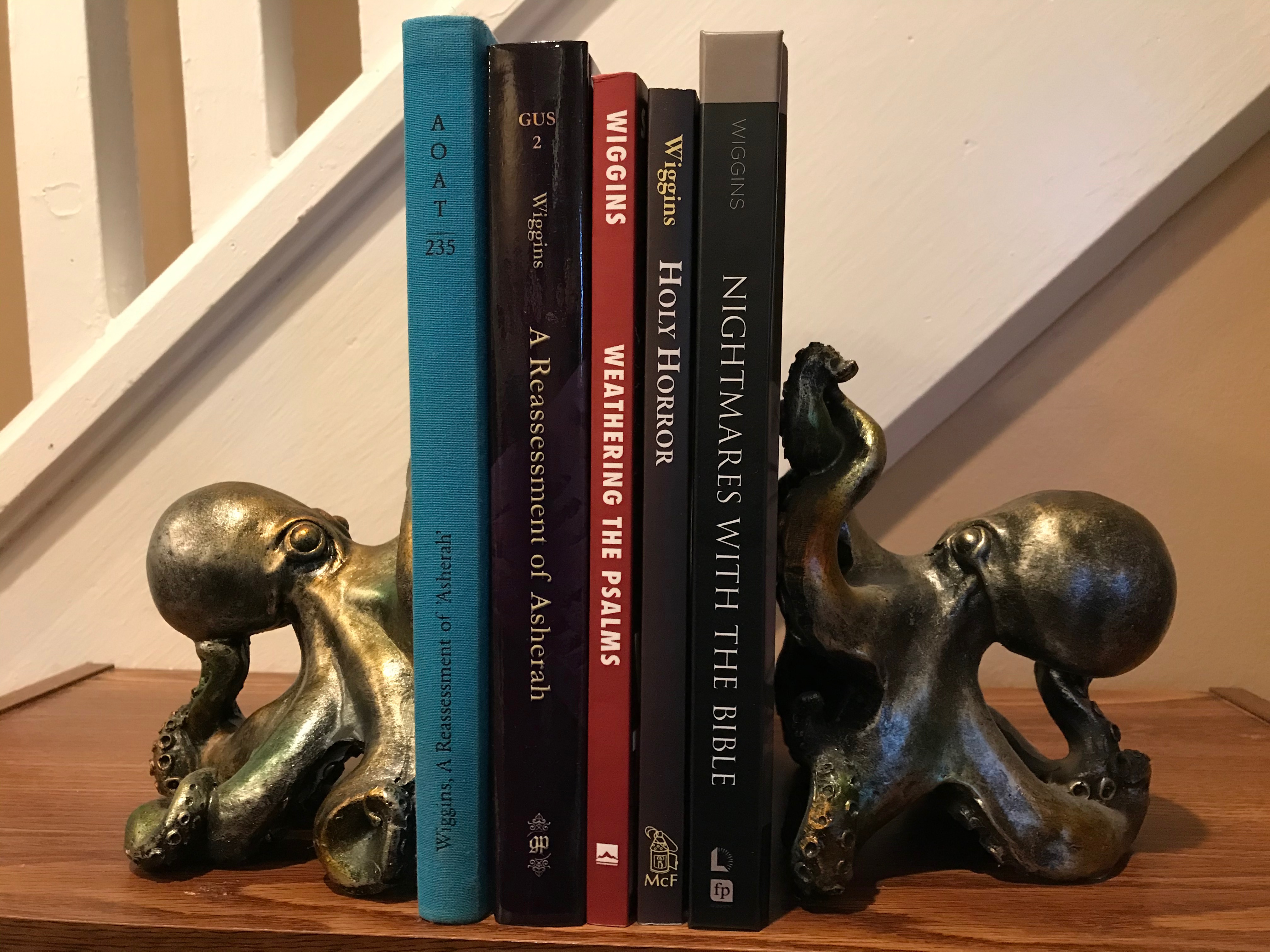
Weathering the Psalms was written at Nashotah House but it has only led to one weekend church program.  My books on horror, written post-academe, have managed to get some small measure of attention.  It always struck me as ironic that, although raised among the theology crowd I never really found acceptance among them.  Those who know there’s something to horror, however, are a welcoming crowd.  The other day I was listening to Alice Cooper’s Welcome to My Nightmare and realized, whether intentional or not, the invitation was sincere.  It remains one of the formative albums of my life.  As a child the only invitations I had were altar calls.  I responded to many.  As an adult I’m still inclined to say “yes” when someone invites me in.  Rarity only adds value.


Ghost Chasing

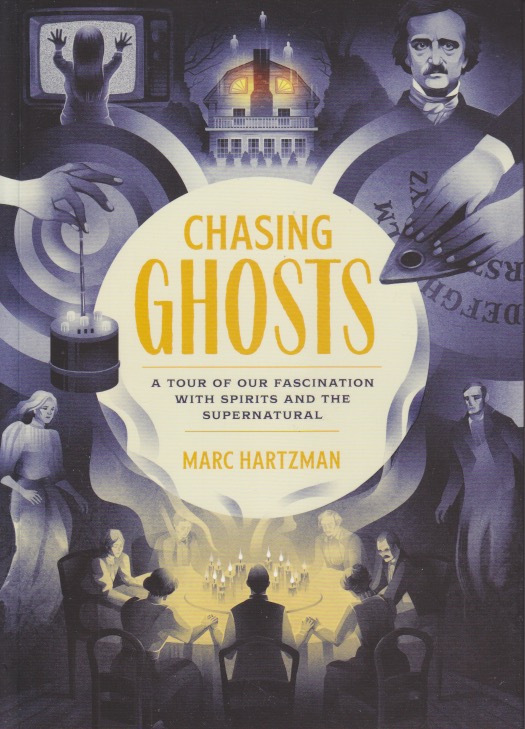
I’ve known about Quirk Books from their very first publication.  That’s a rarity, I suppose, since many publishers have been around far longer than I have.  I tend to think of Quirk as mainly a purveyor of unusual fiction.  I’ve pitched a book or two to them myself over the years.  In the last few years they’ve been producing some good nonfiction as well.  The topics are, well, quirky.  I just finished reading Marc Hartzman’s new book with them titled Chasing Ghosts: A Tour of Our Fascination with Spirits and the Supernatural.  It’s a good compendium of material that traces the very long history of human obsession with the restless dead.  It begins with some ancient ideas about ghosts and comes up to contemporary times.  Not all of this can be covered with great detail, of course.  But there’s a lot here.  And it has a great cover.

The chapter on Spiritualism and seances is necessary, but it also reveals one of the reasons, perhaps, that modern skeptics still scoff at ghosts.  Mediums (not necessarily Spiritualists) were often caught in trickery, but as Hartzman points out, that doesn’t logically imply that everything was a hoax.  For me, when the rules start to include special boxes or sitting behind a curtain the old skeptic meter starts clanging loudly.  Still, some of this happened because, it seems, you can’t force a ghost to attend.  If there are ghosts and if they retain personalities, well, how do you like it when people tell you that you must be here at this time so I can make you do what I want you to do?  

The chapter on haunted locations covers many of the expected and a few lesser known haunts.  Often a very real human tragedy has occurred in such places.  Is it unreasonable to think we might impress such things on our environment somehow?  Or that our consciousness—which we still can’t explain scientifically—might not hang around to resolve unfinished business?  The final section on using devices to “capture” ghosts brings us up to the present ghost hunter craze.  The pursuit of ghosts is extremely popular, leading to the predictable result that academics shy away from it.  It’s a shame, really.  A few universities have, and some still quietly do, sponsor(ed) departments or facilities to study such things.  It seems to me that if people have been seeing, hearing, and feeling something for millennia, it might be worth some serious effort to find out what’s going on.  Until then, quirky books like this one will always be a guilty pleasure.


A Haunting Story

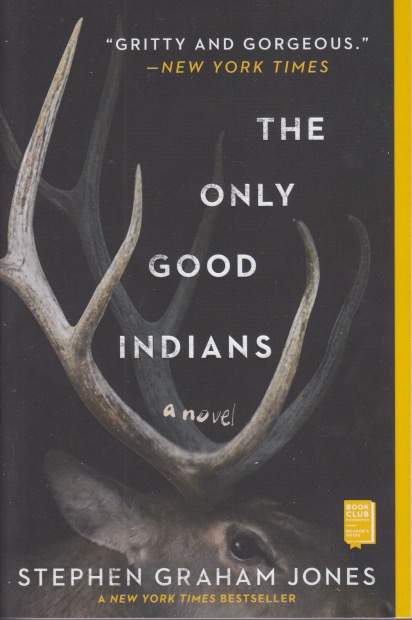
The last book I finished in 2021 didn’t quite make it under the wire for my year-end blog post.  It was the second Stephen Graham Jones novel I read in the year.  I guess I’ve been reading a lot of American Indian books lately.  The Only Good Indians is a horror story and more.  There’s reconciliation.  There’s tradition.  There’s hope.  As part of the privileged “white” class, I’m always a little afraid that writers from oppressed cultures will take it out on me.  It may’ve happened here, but if so it was done in a way that I didn’t feel the sting.  This is a story of friendship, mistakes made, and a monster who has a righteous cause.  There’s a lot going on here.

One of the persistent cultural fears of the unwoke, I suspect, is that there’ll be payback if all things were to become equal.  Perhaps on the scale of karma that’s true, but in reality the people that’ve been oppressed simply want the oppression to stop.  To be recognized and acknowledged as being human.  As if that decision is up to white folk to make.  This novel simply deals with American Indian life as it’s lived.  The characters all pretty much live in poverty but they lack the greed so many white protagonists have.  They’re happy if they have a few hundred dollars, or even a few twenties.  Life is more than playing the capitalist game.  It really all comes down to relationships.  And family.

Stephen Graham Jones writes with a deft hand.  He offers some humor amid scenes of violence and loss.  He speaks plainly and without pretense.  And there are parts of this novel that are genuinely scary.  Since I had no idea how it might end, I wasn’t even sure even while I was on the last page.  

The best monsters are those that teach us to be better human beings.  Quite often they teach us that the truly monstrous ones are those who look and act like people usually look and act.  We take the natural world, assuming it’s ours.  We think our small problems are those of the entire world.  Monsters help to fix our perceptions.  Without them we carry on as if it’s business as usual.  This is a good novel to read in the midst of a pandemic.  There’s hope here that we’ll come out of the crisis better than we went in.  Perhaps scarred and changed for good.  In every sense of the word.


2021 in Books

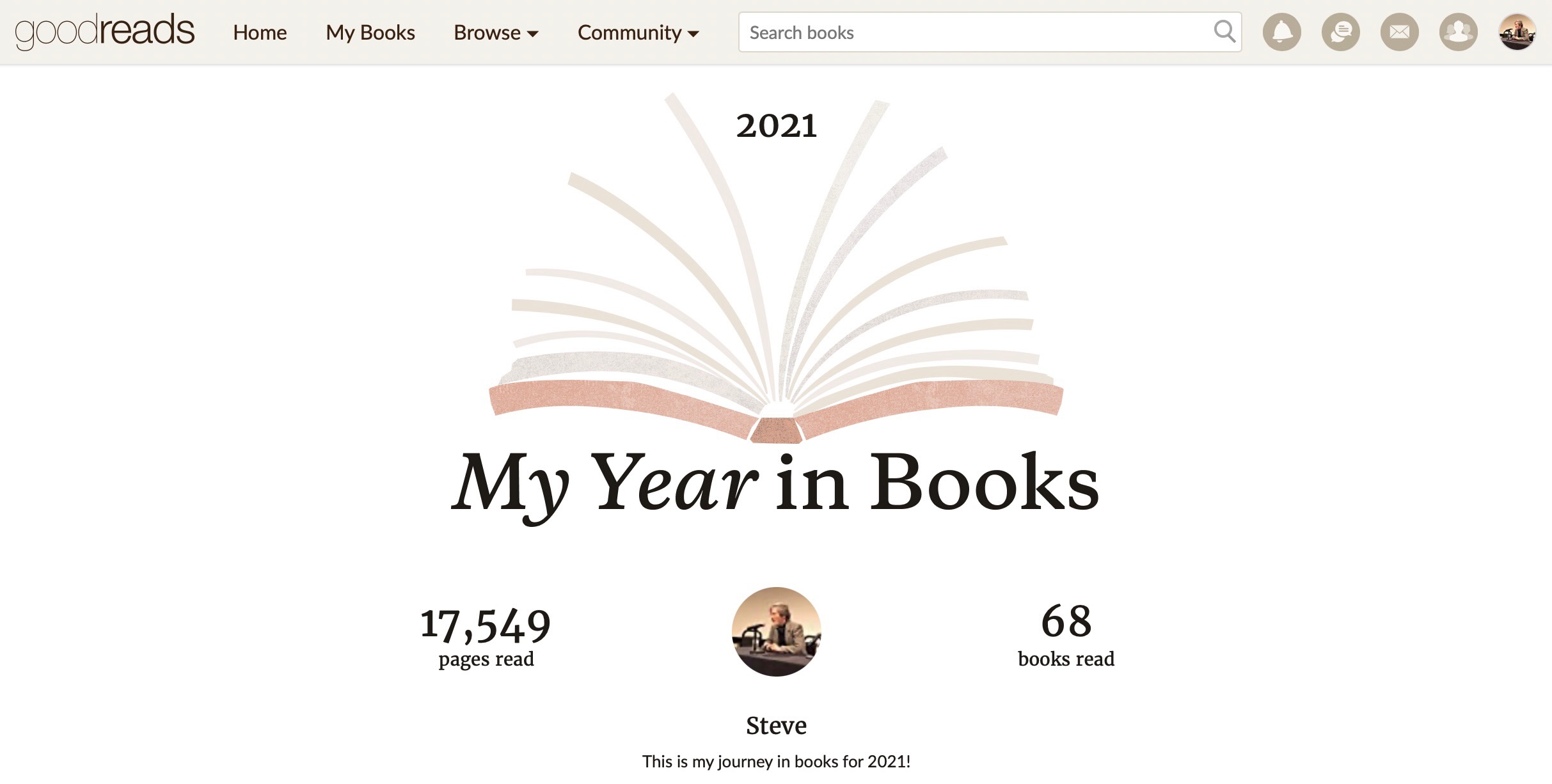
It’s become my habit, on the last post of the year, to think back over the year in reading.  This gives me a chance to give a separate boost to the books I found particularly valuable, for a variety of reasons.  My Goodreads total for 2021 will end up being 70 (two haven’t yet shown up on my page).  It’s easiest to do this by category, so I’ll begin with fiction.  My favorite novels of this past year were Haruki Murakami’s Kafka on the Shore, Stephen Graham Jones’ Night of the Mannequins, Lisa Tuttle’s Familiar Spirit, Hank Green’s A Beautifully Foolish Endeavor, and Christina Henry’s The Girl in Red.  I really enjoyed Joseph Bruchac’s Bearwalk as well, but it’s for younger readers.

For what might be called spiritual memoirs I found Ernestine Hayes’ Blonde Indian remarkable and Heather and Gary Botting’s The Orwellian World of Jehovah’s Witnesses revealing.  Vine Deloria’s God Is Red was stunning.  (It should be clear by now that I read quite a lot from indigenous writers.)  If you count love of books as spiritual I would include Andy Laties’ Rebel Bookseller as well.  As long as we’re on spiritual, books by religion professors might count, so I would add Intimate Alien by David Halperin.  If you count just memoirs, I would also add Follow the Rabbit-Proof Fence by Doris Pilkington.  And if reflective essays count, John Green’s The Anthropocene Reviewed.  And Thich Nhat Hanh’s Love Letter to the Earth.  I learn so much from reading about how others deal with their lives.

Books in the nonfiction category tended toward horror movie analyses (ahem), but some stood out even among the weirdness.  Daniel Ogden’s The Werewolf in the Ancient World inspired me.  Kendall R. Phillips’ A Place of Darkness was a well-written account of early horror movies.  Tanya Krzywinska’s A Skin for Dancing in was insightful and helpful to my research, if difficult to locate.  Likewise Hammer and Beyond by the late Peter Hutchings.  Mathias Clasen’s A Very Nervous Person’s Guide to Horror Movies was fun and informative.  For importance I’d rate Dag Øistein Endsjø’s Sex and Religion at the top.  So much of the world’s conflict is based on these two factors.  It’s difficult to believe that we don’t talk about them and end up fighting and killing over them.  If we can’t talk about it, at least we can read about it.  There are many other books I enjoyed over the year.  Enough that even a brief mention of each would put me over my usual word limit.  (They’re easily found, in any case, by using the “Books” category to the right.) 2021 may have been a challenging year, but books helped me make it through it.


Investigating Investigators

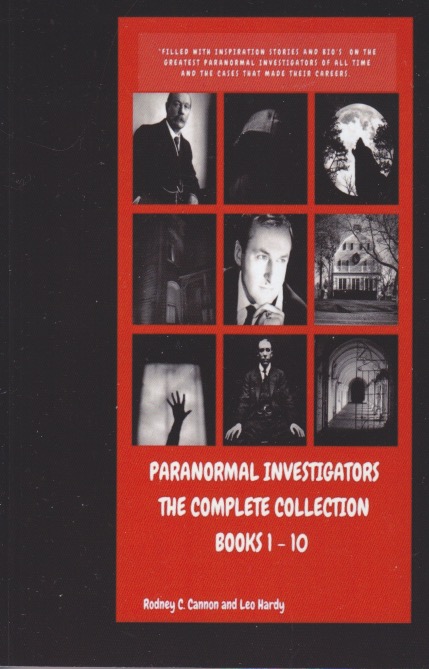
I firmly stand by my earlier assertion that you can learn a lot from reading badly written books.  It’s difficult not to attribute motives (particularly of the pecuniary kind) to a book apparently hastily written and self-published.  But still, but still.  Writing even a short book takes quite a bit of effort.  One thing that came through in my reading of Paranormal Investigators: The Complete Collection Books 1–10 is that Rodney C. Cannon and Leo Hardy have a legitimate interest in the topic.  Not everyone has the facility with wordsmithy that makes for pleasant reading.  Not everyone has years of research training.  Still, there were moments of eye-rolling and actual out loud snorting that accompanied reading this one.  It continues some useful information, but all of it will need to be double or triple-checked.

My reason for reading it is the dearth of good information on controversial figures.  This has bothered me for some time.  Academia tends to pretend figures such as Ed and Lorraine Warren, Hans Holtzer, and Montague Summers simply don’t matter.  The fact is they have very wide followings and they share the feature of being self-taught in the field of ghosts and/or monster studies.  I knew this book was self-published (itself a warning sign, but then many credible authors self publish because it’s nearly impossible to break into the commercial publishing world).  I had hopes that it was simply because publishers don’t like to take chances on authors without a platform, without household name recognition.

The book is, however, poorly organized and repetitive.  The grammar is bad enough to make an erstwhile teacher such as yours truly pull out his truly’s hair.  And yet there is information here.  I can’t accept anything as factual from a book loaded with grammatical errors, very very few citations, and factual mistakes.  That doesn’t mean there’s nothing of value to be found in it.  In fact, I learned a thing or two (that I’ll need to confirm) that may help me in my own research.  And besides, it’s a quick read.  Given the constraints in the publishing world, we can all be forgiven for not automatically dismissing those who have something to say but who need to sidestep the standard publishing world to do it.  Amazon and others have made self publishing as simple as clicking a few buttons.  Who can be blamed for taking advantage of what others have wrought?  I learned something and that is, after all, the point of reading.


Next Year’s Reading

One of my year-end rituals, apart from looking back at the past year’s books, is to look ahead for the next year’s reading.  This is such a pleasant exercise because Christmas often comes with gift cards from Bookshop.org or Amazon.  Until this year I’ve used the Modern Mrs. Darcy’s reading challenge to push me into some areas I might not read, but that challenge has now been discontinued.  I participated (this is strictly self-monitored, of course) in six of the seven years that challenge ran, starting in 2016.  Part of each late December was spent in visiting book stores, planning new reading projects, and thinking about the year ahead.  Of course, you can’t predict anything with too much accuracy, but I start the year with a stack of books and a head full of literary dreams.

Also in 2016 I began doing the Goodreads book challenge.  This is merely numerical—you pledge a certain number of books to read in the year.  According to my Goodreads stats (there are some books I don’t publicly admit reading, of course), I’ve read 517 books in the past six years.  Numbers were higher in the commuting days, of course, but I try to read more than a book a week and that practice gets me through some difficult times.  It always looks sunny when planning ahead for a year’s reading, but you never know where the other parts of life will actually take you.  Anyway, this year I’m planning my reading without Mrs. Darcy, mostly culled from my Amazon wishlist, which is unwieldy and constantly growing.  I try to buy the books from Bookshop, however, as it benefits independent bookstores.

This year I may set a slightly lower Goodreads goal.  The main reason for this is that books seem to keep on getting longer.  Novels grow to multiple hundreds of pages but time doesn’t increase in proportion to that number, unless it’s an inverse proportion.  Even with a lower goal I won’t plan on slowing my reading down.  In my commuting days it was fairly easy to read a hundred books per year.  I still tend to get over sixty without those hours on the bus, and hopefully all that reading is doing something useful to the world as a whole.  I write to give back for all the good I’ve been given.  If this in any small measure offsets the headlines that meet us daily, it will have been time well spent.


Many Moons

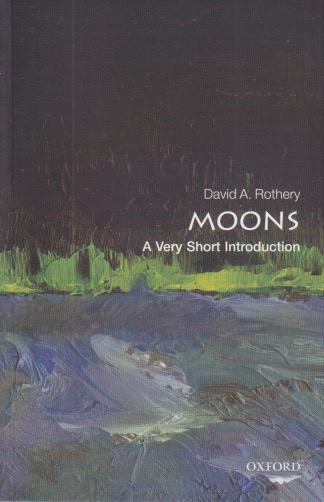
Once you get beyond the very basic level, astronomy quickly become all about numbers.  It’s both fascinating and a shame.  Fascinating because scientists have been able to send probes millions of miles away, calculating, for example, where the multiple moons of Jupiter and Saturn will be so that they can fly by for an interplanetary peek.  The shame is that many people star-struck by the concepts can’t pursue it as a career.  That’s where books like David A. Rothery’s Moons: A Very Short Introduction come in.  I’ve read a number of books on the moon, but I’ve fallen behind on what we’ve learned about the moons of the outer planets.  This short treatment covers them in just enough detail.  I certainly learned a lot by reading it.

Rothery points out that apart from Earth, in our solar system the likeliest candidates for life are actually some of the moons of Jupiter and Saturn.  Heated by tidal action and volcanism, and having under-surface oceans, conditions may be right for such worlds to spawn life.  Even if microbial, finding life elsewhere would confirm what this dreamer has supposed all along—we’re not alone in the universe.  As Rothery also notes, there are far more moons than planets in our solar system, so that may also apply to other systems as well.  Exoplanets have been discovered for decades now.  If other suns have planets and those planets have moons, who knows what might be out there?  And all this has been happening for billions of years, whether or not we notice it.

For me, it’s concepts such as these that make astronomy so fascinating.  Also, as the book points out, there are all kinds of oddities in our own astronomical back yard.  Asteroids that have their own moons.  Moons that have unusual geological (or lunar) features that haven’t been explained.  Moons that have been torn apart by their host planet.  Moons that have been captured in orbit when passing by.  Probes have been landed on moons other than our own, and the ethics of doing so (since we might transmit microbes unintentionally) are topics of discussion.  There’s a lot crammed into this brief study.  I also can’t help but wonder what amazing things the next generation will discover.  Our knowledge of this universe, impressive as it is, doesn’t even break the crust of ice moons out there, where there is nitrogen ice and methane ice.  Parameters beyond imagination.  It may all come down to numbers in the end, but moons are so much more than that.


Love Letter

One of the more insidious things about religions is their claim to exclusivity.  The belief than any religion is the “only true religion” is bound to run up against the fact that there are many religions in the world, most of them sincerely believed.  We have much to learn from religions outside the one (if any) we were raised in.  I’ve known about Thich Nhat Hanh for quite a few years now.  One of his books was published (perhaps republished) by Routledge.  As their religion editor I was familiar with it, but as he was not “my author” (that’s the way publishing works), I didn’t contact him.  One of the most famous Buddhist religious teachers, Thich Nhat Hahn strives to transcend religion, which seems like a noble goal.  His Zen approach is simple and important.

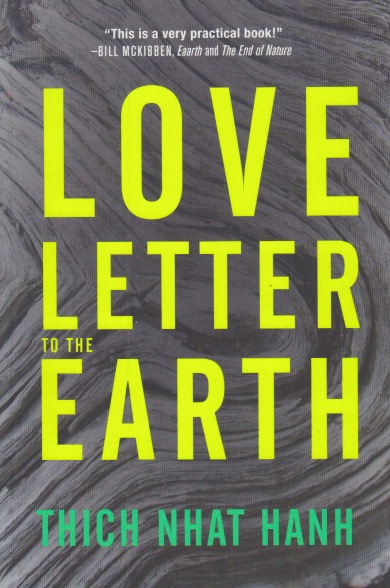
This book’s title, Love Letter to the Earth, indicates what it is.  A reflection on environmental sensibility, it includes literal love letters to the planet.  Arguably it is probably a book best read in small batches with time to contemplate between each reading.  Although some aspects are clearly Buddhist, there are also noticeably Christian elements as well.  Christian spiritual leaders, such as Thomas Merton, knew there was no inherent conflict between Christianity and Buddhism.  Thich Nhat Hanh is also remarkably prolific, having written over 150 books.  World religious leaders need to take a lesson here concerning speaking out about environmental justice.  Certainly there are those who will disagree with aspects of his theology, as reasonable and important as it is.  The message is larger than that.

This book is based on the truth that we are all made of this universe and we contain within ourselves that universe.  The earth is our mother, understood by Nhat Hahn in an almost, if not literally, literal way.  While this isn’t news it is nevertheless profound.  When religions are used as excuses to attack the earth they cease to be true in any sense.  Those who don’t buy that perverted outlook are being condemned by those who do.  The earth is our home and it is our responsibility to preserve it not only for our own sake, but that of all creatures.  Thich Nhat Hanh does without being judgmental.  He instead calls for a religion that takes other religions as part of a non-conflictual belief system.  Religion starts wars.  Wars, of course, come at great cost to the planet, quite apart from the human suffering.  There is much wisdom in this slim book which would benefit many to read.


Ghosts Again

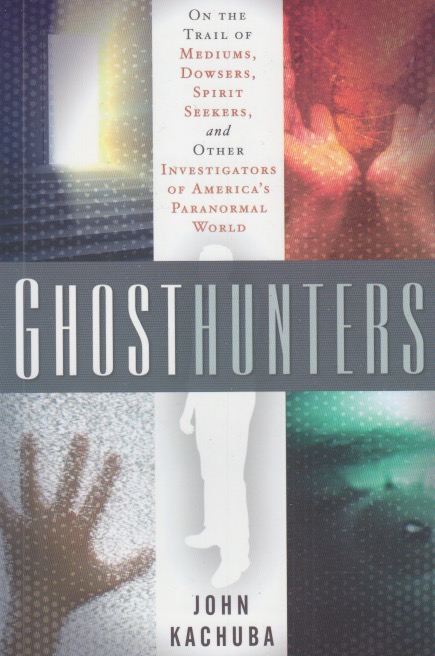
In keeping with my holiday ghost interest, I read John Kachuba’s Ghosthunters: On the Trail of Mediums, Dowsers, Spirt Seekers, and Other Investigators of America’s Paranormal World.  Yes, that subtitle is a mouthful.  The book is a series of essays without an overarching thematic arc, but it does contain some interesting accounts.  If you’re hoping to walk away with proof of ghosts this probably isn’t your book, but a few of the people the author interviews have some pretty convincing stories.  Ghosts remain one of the great unknowns.  People of all intellectual backgrounds, every socio-economic class, and every religion have encountered them, and this is true throughout history.  Ghost hunting isn’t a science and has no developed methodology, but then ghosts don’t seem to perform on demand.

I was particularly interested to see what Kachuba had to say about Ed and Lorraine Warren.  They were the original ghost hunters and their work was controversial from the beginning.  One of the consistent problems with the paranormal is that advanced degrees tend to make you quite skeptical.  You look for proof in the fields recognized by your peers and although a few departments of “parapsychology” have cropped up from time-to-time, mainstream science is doubtful and drives doubt into all comers.  Those who investigate ghosts suggest that if you don’t believe you won’t see.  Here’s the basic paradox between faith and proof.  And it only raises questions when you learn that science doesn’t prove but rather provides the best answer, given the data as currently understood.

Kachuba presents himself as neither a firm believer nor a dismisser.  He clearly enjoys ghost hunting himself and several times mentions his Ghosthuntermobile.  He interviews not only Lorraine Warren (Ed had had a stroke by this time) but also a variety of mediums, Spiritualists, and ghost whisperers.  He writes about various haunted locations, but in the accounts he shares he doesn’t see anything that can’t be explained.  Some of the essays are written with a humorous take on the subject, while others are entirely serious.  It’s kind of a grab-bag of a book in that regard.  Like many readers, I suppose, I hope to pin down something certain when it comes to the unknown.  My guess is that if anything definitive appeared we’d know about it.  Given the goings on in the world these days it probably wouldn’t be front-page news, as much as any information on eternity should be.  In the meanwhile we can read and wonder.


Salvation by the Book

I’ve never been to Iceland.  Part of me says that if I ever get to go I’d want it to be on Christmas Eve.  Ah, the light would be in short supply, no doubt, and it would be cold.  But the draw of Jolabokaflod is strong.  Jolabokaflod isn’t a difficult word to figure out, if you’re familiar with Indo-European languages. “Jol” (maybe the “a” is included) looks a lot like Yule.  “Bok” is English book missing an “o” (again, maybe the “a” is part of it).  And “flod,” likewise with another “o” becomes “flood.”  The Yule Book Flood.  The tradition is to give books on Christmas Eve and spend the long hours of darkness reading.  Iceland has the reputation for being a very literate culture.  I’ve read a number of books (in translation) by Icelandic authors.  If there’s ever to be peace on earth and goodwill to all, it will be through books.

If you observe Christmas, today is that great time of anticipation, Christmas Eve.  Churches, whether virtual or in person, will be humming places this day.  Last-minute shoppers will be out and frantic.  Some will be insisting we keep Christ in Christmas while others will be dreaming of sugarplums and fairies.  Some will be tracking Santa on NORAD.  In Iceland they’ll be exchanging books.  Politicians will continue their calculated plotting but I dearly wish they’d spend the day reading instead.  Perhaps there would be fewer tanks at the Ukraine border if those in Moscow would curl up with a good book.  Check the progress of their Goodreads challenge.  Open up the flood-gates and let the books pour in.

There are those who believe this world should be consumed by God’s awful fire, and that right soon.  But God, as I understand it, is a writer of books.  Perhaps the divine plan is different than so many suppose.  Even the angels sang about peace on earth in one of those books.  You never know what’s going to be under the tree, but in our house books are always a certainty.  The words that describe this season—joy, peace, goodwill—can come in a few ounces of paper, ink, and glue.  And if God’s own book tells us to love one another, who are we to argue on Christmas Eve?  And if it’s true today won’t it be true also tomorrow and every other day beyond that?  Iceland has grown out of its warlike past.  And today they’re exchanging books.  Perhaps there’s a lesson there for all of us.


Literary Thoughts

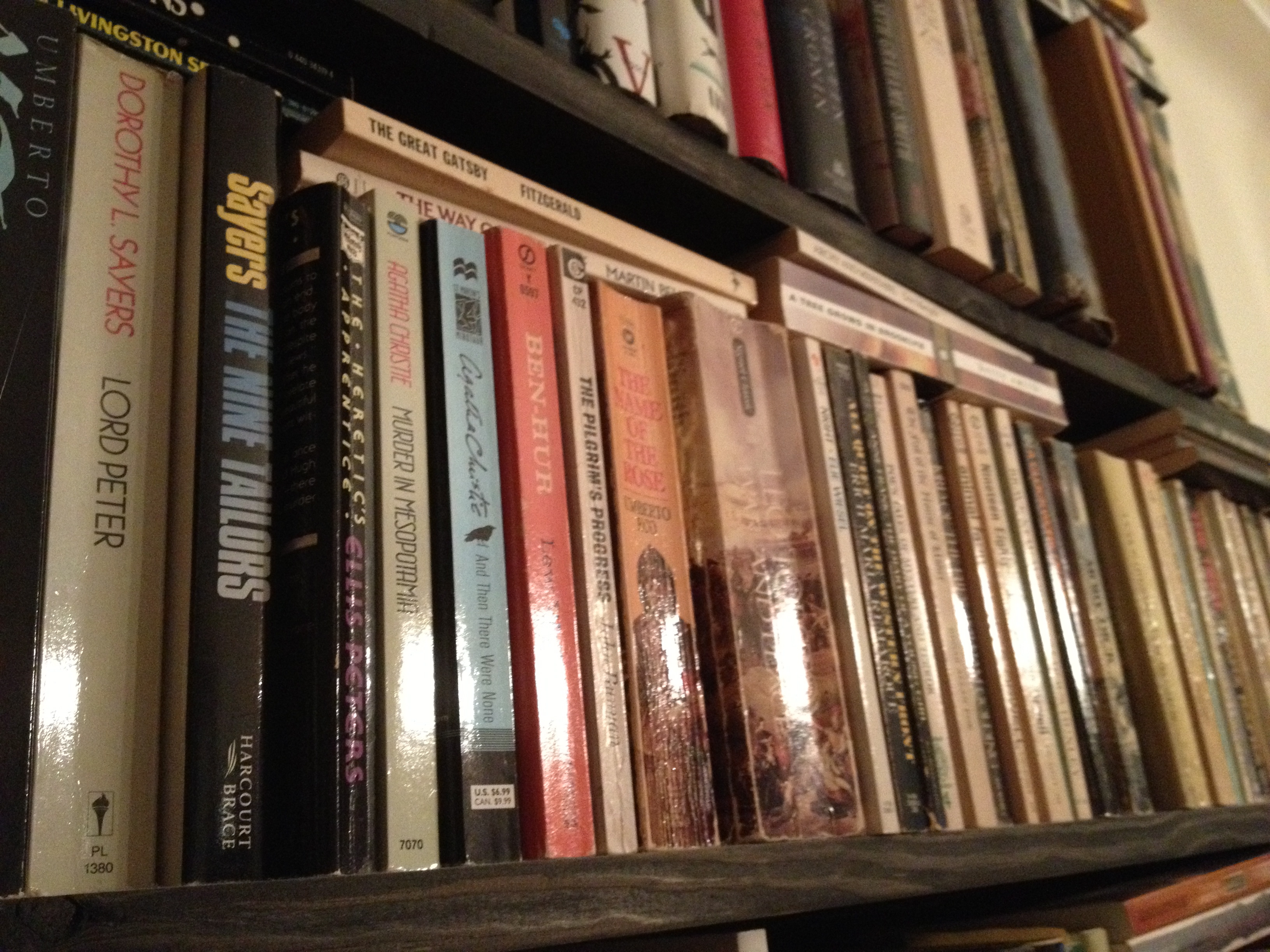
A book is a physical object.  It is printed on paper and has a cover.  It has a publisher who undertakes to have it printed and bound (and with any luck, marketed and publicized).  This, I would contend, it what most authors have in mind when they sit down to write a book.  It isn’t just “content,” of which you can find far too much on the internet.  It is an object of pride that you can slot onto your shelf with a great sense of personal achievement.  It has taken a lot of work, and headaches, to get to this point.  Several months or even years of your life.  An idea that can’t be addressed in a couple dozen pages.  A book is born!

Publishers are more and more pushing the ebook, however.  The ebook is not a book in the same sense as a printed object is.  In some sense it may be more durable.  It’s certainly easier to get quickly.  But how do you get excited over writing an ebook?  Whenever I’m writing a book, there’s clearly an object in mind, not a cloud of electrons.  Ebooks have their place, but as people start talking about a post-literate future I start seeing visions of my own tombstone.  It gives me a strange kind of comfort to know that all of my books so far reside in the Library of Congress.  Some university libraries even buy copies.  Would a carpenter take pride in an electronic table she built?  Can you set your book on it?  If you don’t carve your “Kilroy was here” in stone, how will you ever prove it?

As handy as ebooks are, nothing matches the sensation of walking into a room full of books.  The sense of rapture is palpable.  Such rooms are monuments to our culture.  A screen with metaphorical tons of content may be a tribute to technology, but is any of it real without ink connecting with paper?  There’s nothing wrong with “content;” I produce some every day.  The thought process is different from book writing, however; just like the process of writing poetry differs yet again.  The publisher always looks at the bottom line.  (And I don’t mean the last line of a poem.)  And to keep “books” profitable the conversion to “content” seems attractive.  It breaks down, however, if writers no longer think in terms of books.  The book has a storied history and a long future, if we keep in mind that it’s something far more refined than mere content.


Another Article

Some insecure people feel the compulsion, but really don’t know why.  Speaking strictly for this insecure person it’s because (I think) I’ve been ignored most of my life.  I didn’t cause trouble so teachers seldom paid me any mind.  (I’m pretty good about obeying rules.)  I was a middle child with less than a year at youngest status.  I was abandoned in a house at the age of one for God knows how long when my father went out on a bender.  Who knows?  In any case, this piece isn’t really about any of that.  It’s about the compulsion to write articles.  I don’t know why I keep volunteering to do this.  They get me nowhere.  You’re not paid for them, and you get little exposure.  I seem to be addicted to appearing in print.

This blog is purely an electronic phenomenon.  It exists nowhere in print.  I post on it every day in the hope that, like a Pioneer probe, it will connect with somebody who comprehends.  As a non, but erstwhile, academic I am not compelled to write.  In fact, it sometimes complicates things.  (If you believe that freedom of written expression exists you’ve never read a publishing contract.)  So print publication appeals to me.  I had an email from a volume editor the other day and I couldn’t place the name.  I opened it to read that the volume had been accepted as I was struggling to remember what I promised I would write for him.  I had to do an email search to locate the chain.  So that’s what I said I’d do! (The previous article I’d committed to I remembered well, since the proposal was long overdue.) 

Print publication, you see, takes a long time.  An erstwhile editor (likely an academic), gets an idea.  They wrestle with it a while and then write it down.  Pitch it to a publisher.  The in-house editor has to pitch it to the editorial board.  Often after peer review.  It can, in my defense, take months—plenty of time to have forgotten I said I’d contribute.  Then the book has to be written.  That part can take years, but in edited collections many hands make light work.  After the disparate pieces are finally cajoled in (one editor had to keep after me for four months), the editor, well, edits them.  Then they finally get sent off to the publisher.  The production process takes about a year.  The volume comes out and you get a congratulatory email or two, and then it’s forgotten.  I’m not sure why I do it, but I’ve been published by university presses for taking these on.  When I was teaching I couldn’t seem to get their interest.  Now that I’m writing about horror they’re starting to notice.  But then, that’s how monsters behave.