First Books

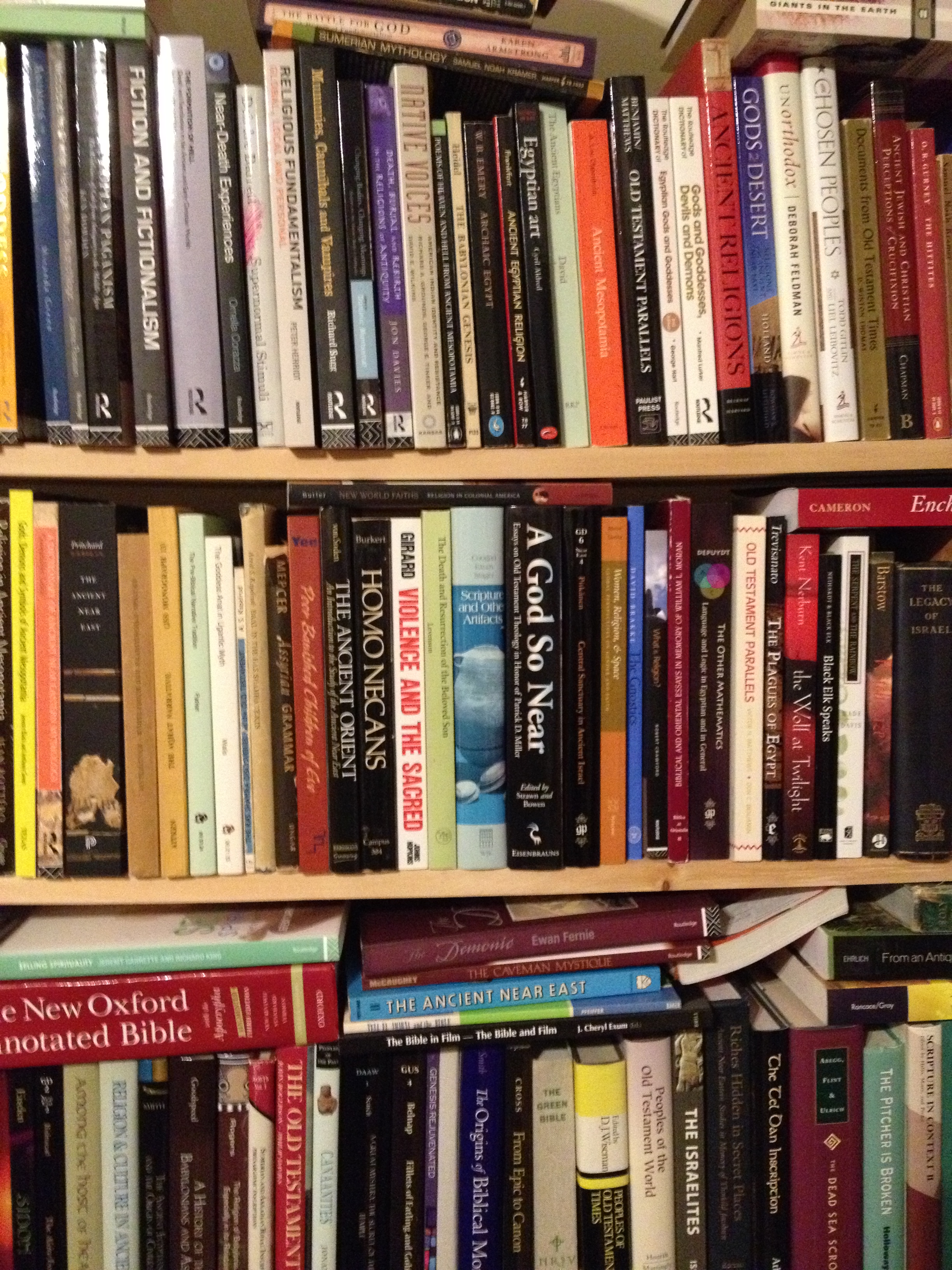
It was back in the day when I believed a book was the final word.  Remember those times?  (I have a suspicion that many Republicans really are longing for the days of simple answers: “Smith wrote it in History of Everything so it must be true,” and such.)  You’d read a book assigned in college and assume that since the author wrote a book s/he (but generally he, in my day) must be right.  If college really caught on, however, you’d start comparing sources.  Still, there was that one book that got you started thinking in a new way.  Back in the day when I believed a book was the final word I read J. Alberto Soggin’s Introduction to the Old Testament.  I remember the context well: Harrell Beck’s intro course at Boston University School of Theology.  We were given a list of texts and allowed to pick.  I chose Soggin.

Reading that book I realized for the first time that ancient Israel had borrowed from its even more ancient neighbors.  The fact that I’d attended Grove City College and majored in religion without ever having been introduced to the idea says volumes.  (Some parties, it seems, have always preferred to suppress information.)  I followed it up with Helmer Ringgren’s Israelite Religion.  I was hooked.  If we knew that there were ancient sources, and if we knew their languages and their cultures, why hadn’t it been obvious to the general public?  I started on a doctorate to uncover the truth since I couldn’t find courses on it at seminary.

We didn’t take many books with us to Edinburgh, but Ringgren was one.  By then I’d begun to realize that introductions weren’t really research books.  I spent my years digging deeper and deeper into ancient West Asian culture.  If it’d been possible I’d be there still.  Soggin and Ringgren, I realized by this point, were clearly biblical scholars, and not students of the specialized field that’s still called Ancient Near Eastern studies.  But still, their books had started something.  My copy of Soggin has followed the socks in the dryer, and I now realize the politics of introductory texts (if you believe it’s innocent you may be happier remaining in your bliss).  Still, I owe a debt of gratitude to those scholars who wrote in accessible words aimed at the novice.  Time has passed and nature has begun its own tonsure process, but this fallen monk has learned that many books are the only way of getting to the truth.
Getting Your Goat

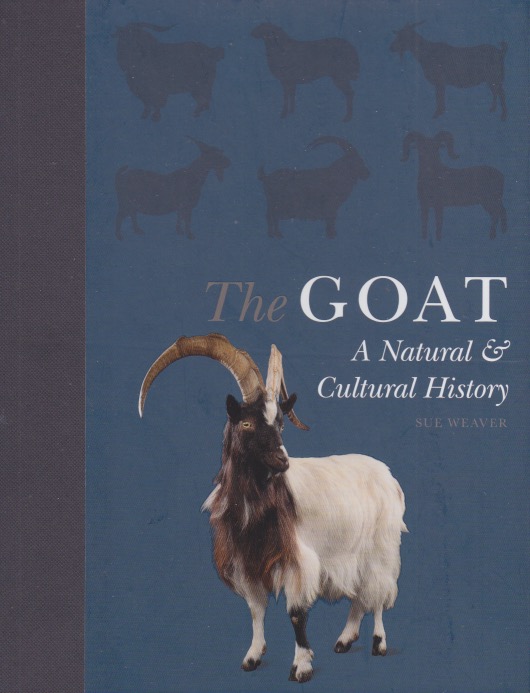
I have to confess to having known very little about goats.  Although one book does not an expert make, I still feel that I know quite a bit more now than when I started Sue Weaver’s masterful The Goat: A Natural and Cultural History.  I can’t convey it all to you here (that’s what the book is for), but I can offer a few highlights.  I do have to say that books that measure animals by the human exploitation of them tend to bother me a bit.  There’s something about reading how they make good pets but then they taste good too.  Especially since one of the takeaways is just how intelligent goats are.  I suspect even smart animals wouldn’t hang around if they knew their owners were licking their chops behind their backs.

Goats were very early among the domesticated species.  People do keep some breeds as pets, kind of like herbivorous dogs.  Goats require stimulation and tend to be playful and curious.  And they put up with humans quite well.  They climb.  You can find goats in trees in some locations since they do like to ascend whatever they can.  I remember seeing goats on the roof of a restaurant in Wisconsin (I can’t remember the name of the place, but I do recall the goats were supposed to be there).  Having not grown up on a farm I’ve never been too close to goats, but this book does make me interested in knowing more.

The book is heavily illustrated and it describes several varieties of goats as well as general goat physiology and behavior.  In fact, it answers that age-old question of how to tell the sheep from the goats.  Behaviorally they’re quite different, with goats being more individually minded and not always acting as a herd.  More individualistic, they nevertheless crave company.  And it is this difference between the sheep and the goats that starts to give the latter a bad name, perhaps because of their willfulness and individuality.  Goats are good followers, but on their own terms.  Sheep apparently don’t think much about it.  They follow any leader.  Historically, and unfortunately still, in some locations, goats have been preferred sacrificial animals.  Indeed, some gods, such as Pan, are portrayed with caprid qualities.  It is the intelligent, it seems, that are often targeted by the gods.  In any case, goats have long had associations with the divine in human minds.  And Weaver’s book parses goats in great detail.


Healing Borders

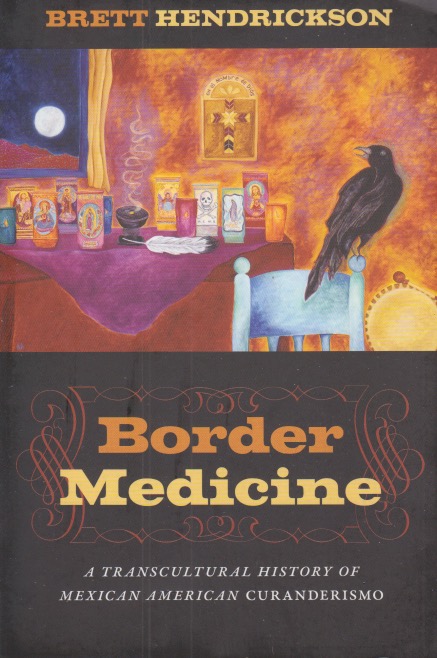
Sometimes you read a book that just gets your head buzzing.  Brett Hendrickson’s Border Medicine: A Transcultural History of Mexican American Curanderismo is one such book.  It brings together so many areas of fascination: healing based on different belief structures than scientific medicine, the role of community in avoiding cultural appropriation, and the cultural blending that takes place at all borders.  The myth of the “pure” has long created problems, particularly in the realm of religion.  Things blend.  They always have.  And this includes belief structures, faiths, religions.  This is most obvious at borders, which makes them very interesting places.  Officially we police them, wanting to keep what is “ours” and keep “them” out.  In reality we are blending with each other and that’s not a bad thing.

In much of educated society, it’s assumed that scientific medicine is the only valid kind.  There are those even among the schooled, however, who pray for the ill.  Curanderismo is a form of folk healing that involves cures that would be rejected out of hand by science.  In a materialist, chemical world, only this can heal that.  Curanderismo looks at things quite differently.  Its practitioners don’t charge an arm and a leg for their work.  They are extremely popular.  And they heal people.  This is part of what makes Hendrickson so wonderful to read—he doesn’t assume up front that this doesn’t work.  Some analysts treat this kind of thing from a perspective of cultural superiority, as if scientific medicine is the only real way to treat illness.  Cultures, however, can heal.

Culture is something we value because it makes us feel secure and comfortable.  We know what to expect.  We speak the language, know the conventions.  (It would help Democrats, I think, to realize that although we’re trying to dismantle xenophobia, it is still very much intact in most of the world.  People follow autocrats because they’re afraid.)  We all live near borders.  Our personal border may be the wall of our apartment or the front door to our house.  It may be the Protestant/Catholic next door (or Buddhist/Atheist/Muslim/Hindu/Agnostic).  It may be the middle class/working class person who lives across the street.  In one town in which I lived it was literally those on the other side of the railroad tracks.  We draw borders for protection, but what Hendrickson shows so clearly is that they can also be places of healing.  


Living Right

Horace Liveright had an outsized influence for his somewhat foreshortened years.  Initially a bond trader, he eventually moved into publishing where he founded the Modern Library as well as Boni and Liveright.  The Modern Library still exists, now as an imprint of Random House.  Liveright ceased publishing operations eventually, but the name was revived as an imprint of W. W. Norton.  There have been many publishing Wunderkindern, including Richard L. Simon, co-founder of Simon and Schuster (and father of Carly Simon), and the Scot William Collins whose name still appears in HarperCollins.  While reading about Liveright recently I learned that he also was responsible, in an unexpected way, for the development of the horror film.

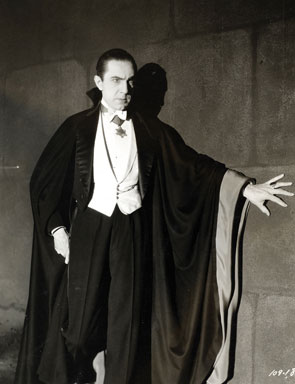
Liveright never worked in the film industry.  He did, however, work as a stage producer in New York in the 1920s.  Among his most successful works was a play titled Dracula.  It starred Bela Lugosi and Edward Van Sloan as Dracula and Abraham Van Helsing, respectively.  The success of the Broadway show caught the attention of Hollywood and Lugosi and Van Sloan were cast in the same roles in Tod Browning’s Dracula, widely considered to be the first horror film, released in 1931.  Van Sloan went on to appear in Frankenstein as well, and Lugosi reprised his Dracula character as well as several other monsters.  It’s possible, perhaps likely, that horror would’ve begun with some other entry into the genre, but as history stands Dracula, based on Liveright’s stage production, started the whole thing.

Unless we work in it, we tend not to think about publishing too much.  We don’t pay attention to the publisher of the book we’re reading, and who lingers over the copyright page?  Giving a thought to these details, however, often adds new stories to the ones between the covers.  A fellow editor is fond of saying that books are as much about the author’s story as they are about the story the author’s telling.  The press, for example, often focuses on the former.  Who is it that wrote this book and why?  The question may be extended further—what publisher took it on and how did they even get into the business of deciding what people will read?  The internet has democratized that quite a bit, of course, and some authors can become their own authorities by knowing how to handle it.  So I’m taking one such opportunity to highlight the work of a sometimes forgotten pioneer who nevertheless began a publishing venture from which we’ve all most likely read.  And he also helped created the horror movie.


Socks and Books

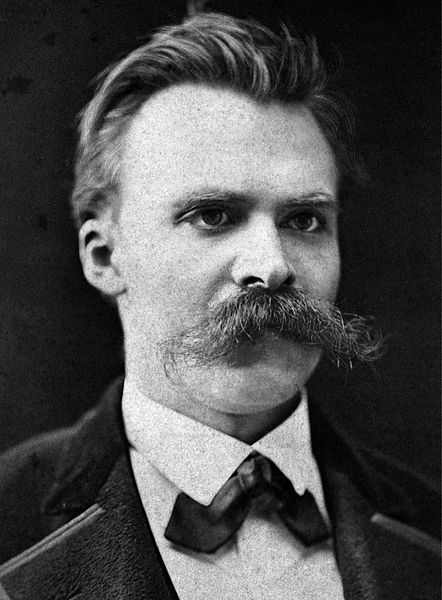
The other day I was thinking about my annotated copy of Friedrich Nietzsche’s Thus Spoke Zarathustra.  I read this in seminary and took notes in the margins.  It was part of my permanent collection.  After a couple of moves from Boston, finding myself in Illinois, I couldn’t find it.  Like socks in a dryer, it had simply vanished.  Socks, of course, sometimes fall out of a sweatshirt or some other garment some time later—a piece of clothing with which they shared the carnival ride of the tumble dry.  The book, however, stayed vanished.  I often wonder where it went.  Prior to Nashotah House, mostly my wife and I kept our books in boxes.  Even now with a house many of them are still in boxes.  But I’ve never knowingly left a book behind when vacating an apartment.  Where is Nietzsche?

Wherever he is, he’s not alone.  This has happened before.  While attending Edinburgh University it seemed like a good idea to get out a bit.  Travel is an excellent form of education.  My wife and I, both interested in history, joined Historic Scotland.  Membership came with a guidebook describing all the properties and we used this as a record of which sites we’d visited and when.  (We used to keep extensive travel diaries, but epic trips are few these days now that we’re no longer academics.)  In any case, when we moved back to the United States, that guidebook was a treasured possession.  Yes, we kept it with the other books but in those days they weren’t so many as they’ve become now.  When we were unpacking things in our apartment in Illinois, we noticed it was missing.

Our flat in Edinburgh was small—really only three rooms.  Nothing was left behind there.  Where, then, did our book go?  Where’s Nietzsche?  What other items have we lost that we haven’t discovered yet?  And where do the socks go when they’re lost in the dryer?  It’s almost enough to make me believe there are little wormholes scattered around our planet, particularly attracted to socks and books.  Well, phones, wallets, and car keys too, I suppose.  The biggest mystery, for me, is the books.  We’ve unpacked nearly all of them now that we have a house.  Those still in boxes have been taken out and returned, no box remains unopened.  Our Historic Scotland guide and Also Sprach Zarathustra aren’t among the books we have.  They’re out there with the many things we treasure and misplace over time.  Perhaps some day we’ll stumble upon that place and be amazed.


Whose Baby?

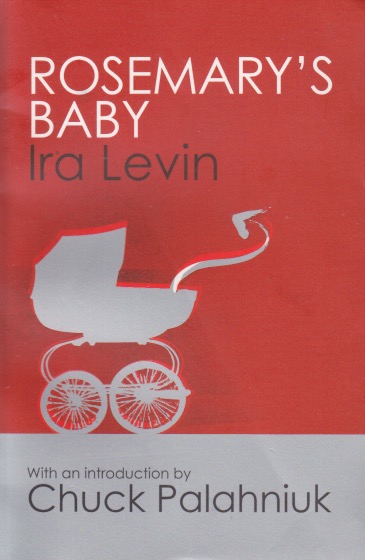
Some books are better known as movies.  I suspect that I, like many, saw the movie Rosemary’s Baby without ever reading the book.  It turns out that they’re very similar.  The book takes the action a few minutes beyond the end of the movie, but otherwise they’re quite close.  Reading a horror novel where you know everything that’s going to happen isn’t exactly the recipe for thrills and chills, but I’m nevertheless glad to have done it.  For a book published as long ago as it was (1967) it still isn’t easily found used.  New copies tend to be just as expensive as new books.  I just wanted to have a read to see if Roman Polanski stayed close to Ira Levin or not.

Levin had a string of successful novels, but Rosemary’s Baby is probably still his best known.  He is quoted as saying he didn’t believe in the Devil and felt guilty that his book (and movie) may have led to many people taking on that belief.  In many ways Polanski’s movie kicked off the age of modern horror, being released the same year as George Romero’s Night of the Living DeadRosemary, however, opened the door to horror with overt religious themes.  It paved the way for The Exorcist and The Omen.  The latter, written by David Seltzer, was another example of a movie based on the Devil by an author who didn’t believe in him.  Personal belief aside, that trinity of movies remade the horror scene and led to one of the strangest cooperations in cinematic history.

In the book versus movie scenario often there’s a clear winner.  On other occasions the movie is so powerfully made that it overshadows its novel.  Rosemary’s Baby, along with The Exorcist, tended to do so.  (The Omen was novelized from the screenplay by the screenwriter.)  I wonder if that might not be because religion pays right into cinematic representation.  The novels, after all, can take several days of reading on a normal workaday schedule.  The film, if well done, transports the viewer there for a couple of hours and leaves you feeling as if you’ve been through, in the case of Rosemary, a traumatic pregnancy.  It so happened that the unholy trinity of religious horror tapped into that rapt storytelling of which celluloid proves so capable a medium.  Still, reading the novel fills in many of the gaps and brings to mind the benefits of the written word.  And this is, like a birth, something to be celebrated.


A Little Fuzzy

Animals don’t obey the law.  As I observed just a few days ago on this blog, they don’t recognize indoors or outdoors.  And they certainly don’t respect private property.  Conflicts are sure to arise.  Mary Roach turns her impressive writing skills to address this, and related issues in Fuzz: When Nature Breaks the Law.  I’ve read an academic book on this subject as well, and I have to say that one wasn’t as much fun.  Roach has a way of bringing the humor out of even potentially trying subjects such as how do we scare carrion birds away from human corpses?  How do we eliminate pests that we’ve accidentally introduced?  (Think of rabbits in Oceania.)  How do we stop birds from getting sucked into jet engines?

Although the book handles these with a light touch, as with most of Roach’s work, it also raises some serious issues.  Solutions to introduced species can involve poisoning that also kills native species it’s designed to protect.  Genetic engineering may have (likely will have) unforeseen effects.  What is a dominating species to do?  We have laws about ownership, after all, and we expect them to be obeyed.  Squirrels, for example, won’t care that you just had to have a sink replaced at great expense.  They’ll gnaw their way in anyway, creating a new crisis right on top of the old one.  Deer cross highways, their brains not yet evolved enough to interpret what a car is—they’ve only been around for just over a century.  (The cars, not the deer.)  They sometimes cross runways too.  (The deer.)  We like animals well enough in the wild— in fact we long to see them.  When they get into our space, however, our rules don’t apply.

As long ago as the Bible, and perhaps before, the question arose of punishing animals.  If your ox gores someone what should you do with it?  I’m not sure Homo sapiens are the best species to be making such decisions.  We’ve shown colossal poor judgment (think of Trump and try to disagree).  We’re actively destroying our own environment, the terrestrial equivalent of defecating in our own fishbowl.  What gives us the right to punish other creatures who are more in tune with what nature tells them to do?  Perhaps the biggest takeaway from all of this is that we may try to make the rules, but the rest of the planet responds to what we might call a higher power.  I’m glad that writers like Mary Roach can show the fun side of it all.


Secret Formula

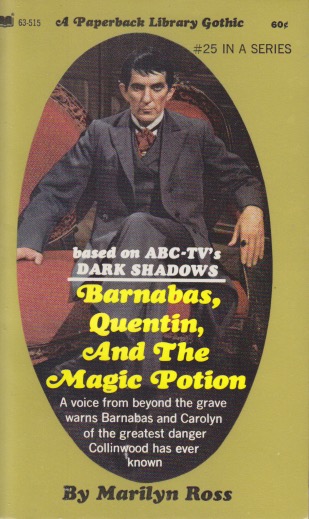
When writing fiction, I’ve never tried a series.  Some, such as Harry Potter, can set a writer for life.  I’ve always had the sense that the Dark Shadows novels were more potboilers.  There was a built-in fan base, and somehow in the sixties and seventies we didn’t expect Rowling-level writing.   It was the entire package: the Gothic, the recurring characters, the moody setting of Collinwood.  And of course, Barnabas Collins.  These novels may be journeyman writing, but here at number 25 in the series, Barnabas, Quentin, and the Magic Potion, there are some signs of literary improvement.  They are slight, rather like the first tinging of leaves with yellow as August begins to settle in, but they are there.  The series is nearing its end for me (provided I can actually find the last few books), but maybe it’s getting better.

What’s my reason for such a burst of enthusiasm?  Well, in this episode we see some features of Quentin that are more in line with how I remember him.  First of all, Ross tries some misdirection.  Quentin is presented as a master of disguise in the series and here there’s some clever hinting that, if you’re trying to think it through, leads you to mis-guess early on.  Not only that, but there’s a more positive view of Quentin here.  He’s not the evil satanist that he is earlier in the series.  Perhaps Ross had figured out by now that if people liked the idea of a Barnabas who is a conflicted victim, the same might apply to Quentin.  He’s not evil, but when you’re a werewolf, well, what can you do?

The “magic potion” is just as contrived and sketchy as most of the plot devices in this series—Harry Potter this is not.  It’s just a get rich quick scheme for a reprehensible old man and serves to move the plot along without really adding anything to it.  Carolyn here discovers that Barnabas is a vampire and, it seems to me, some of the plot devices for the Tim Burton movie might’ve been picked up from this particular novelization.  Although still not belle lettres by any stretch, the story here seems to have made some progress over the previous 24.  As a child, of course, I didn’t read these in order.  I relied on what I found at the bin in Goodwill, when I could find them.  I never had the whole series.  While trying at times, reading them may be a worthy exercise as an adult.  Perhaps series too grow up.


Keeping Categories

Writing books about movies with a limited budget presents some challenges.  Our subscription to Disney Plus doesn’t really help with the horror genre, but my wife insightfully added Hulu to the package.  Now Hulu isn’t known as a horror streaming hub, but they do have some movies on my viewing list.  The other day I noticed one of their offerings with a title I didn’t recognize.  I  tried searching it on IMDb and came up with nothing.  A bit more research revealed it was an episode of an original Hulu series, mixed in with the horror movies.  The eroding of categories bothers me a bit.  It’s not just Netflix and Hulu and Amazon with movies, but it’s across the board.  I grew up when movie and television were easily distinguished.  Now we live with hybrids.

The same is happening in publishing.  When I sit down to write a book I have a specific end-goal in mind.  Everyone knows what a book is, right?  Well, the future of publishing is all about breaking that down.  Already years ago you could purchase aggregates for classroom use.  These were custom-selected chapters from certain books (electronic, of course) that an instructor could bundle into a “textbook.”  You could mix in articles, blog posts, anything to which you had the rights.  Such a textbook is not a book.  Nobody set out to write it in that form.  It looks like things are moving more and more in that direction.  You’ll be able to purchase just a chapter, or even a paragraph, to use.  Even if the book only makes sense when taken as a whole.

The electronic era is all about breaking down what civilization took centuries to build up.  Not everything about civilization has been good, of course.  It has been patriarchal, treating women unfairly.  It has been supremacist, treating those less technically developed in horrendous ways.  It has been classist, favoring the rich and their interests over those of the vast majority.  Still, it has left us some good legacies—the book, the symphony, the movie.  Such things have made us better people.  It may be fine to break such things down—who knows?  Maybe it will create more fairness for more people.  It won’t help me, however, when I’m trying to write a book about movies.  You still have to know what counts for each category, even if you have to do so on a budget.


Reconstructing Celts

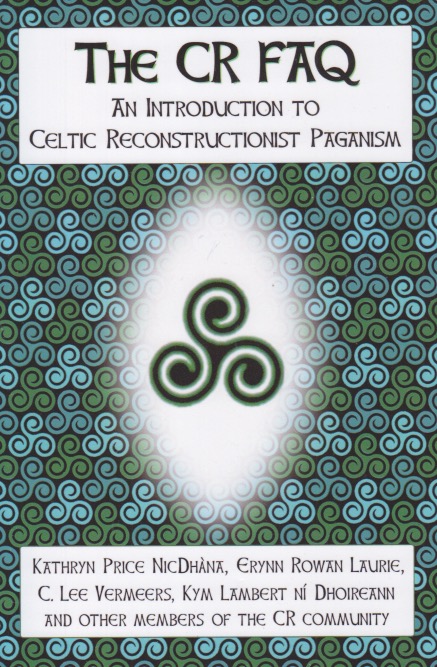
There are myriads of them.  They come in all shapes, sizes, and colors.  They are believed seriously by the faithful.  Of course I’m talking about religions.  Scholars have been inclined to focus on the “big five” or “six” or “seven,” depending on how you count them, but each of those has sects—some with unbelievable numbers of them.  Christianity alone has somewhere in the region of 40,000 denominations.  I tend to think of them as different religions.  A snake handler has very little in common with the Pope, for instance.  Celtic Reconstuctionism is a smaller religion, but it has a very clear idea of what it is.  The group-written CR FAQ, originally a web document, is a question-and-answer format explanation of this particular set of believers.  It’s fascinating to read.

One thing that immediately stands out is that these are very intelligent and deliberate folks.  They are scholarly, sincere, and clear about what they’re trying to do.  Believing that ancient Celtic religions (for again, there are many) can be reconstructed and refitted for modern use, they learn the languages, read the books, look at the archaeological evidence, and critically engage with other modern religions that borrow from Celtic culture.  Indeed, the inauthenticity of some recent religions’ use of Celtic elements led to Celtic Reconstructionist Paganism.  The CR community is well aware that there are other Celtic revival religions.  This particular sect strikes me as among the better informed regarding the origins of their religion.  Most modern Christians have some vague idea how their empire got started, but they tend to be weak on the details.

Religions have sometimes been deliberately crafted, going back to antiquity.  Zoroastrianism, as far as we can tell, was an attempt by Zarathustra to avoid the pitfalls of indigenous Persian religions.  He wanted an ordered, systematic belief system.  As measured in years it was certainly successful.  It is the world’s oldest continually practiced formal religion.  Both eastern and western religious traditions were influenced by it.  CR is an attempt to live a Celtic religion as if its development hadn’t been interrupted.  Obviously, Christianization of the Celts was a major disruption, but it wasn’t an obliteration.  Most religions manage to survive in the colonizing faith.    Groups worshipping ancient Greek, Norse, Canaanite, and Celtic gods are thriving.  Aware that things have changed, they find value in the pre-Christian religions of their heritage.  If CR is anything to go by, they do so inclusively and thoughtfully.  And for those who wish to learn more, they leave written records.


Banning Ideas

It’s been in the news lately that some communities, in keeping with the current fascist trends, are starting to ban books.  One of the plays in the Nazi book was to burn them, followed soon after by destroying the people who read them.  Ideas are, by their very nature, dangerous things.  Trying to destroy them by banning books, however, doesn’t work.  The kinds of books being banned are predictable: those that portray races as equal, those that offer understanding and acceptance of those differently gendered or oriented, and books that show the white man caught with his pants down (metaphorically, although in actual life this happens quite often literally as well).  Books premised on lies are just fine, but as soon as we get to ideas that make us think, well, we ban and burn.

Book banning is normally presented as protecting the children.  Something any attentive parent knows is that children understand a lot more than we think they do.  I suspect they realize that books are prohibited because they contain the truth.  Nobody bans a book of “harmless” fantasy—books where white men have all the answers and solve all the problems.  And when they lose their tempers they start wars, which, of course, the white guys always win.  Such stories, based as they are on basic untruths, are fantasy indeed.  Our slow move into the new millennium from the growing awareness of the sixties, has shown us the necessity of looking deeper.  Expanding beyond the stories white men tell to comfort themselves.  Those invested in this narrative are very reluctant, of course, to let it go.

The more we move into the new millennium the more determined we seem to repeat the last one.  That one had a pandemic near the beginning and wars and white men only on the front pages.  The younger generation, thankfully, by and large doesn’t share these poison biases.  They were read to as children.  Teachers and other heroes didn’t ban books, but encouraged reading them.  Local communities are making a concerted effort to break down learning and then we wonder why the United States has the highest infection rates in the world.  If only there were some way to figure out why that might be!  Reading books with uncomfortable truths might be a good start.  Ideas that can’t stand up to logical challenges may not be the best ones for building a society.   Read a book rather than banning it, and see if we all might learn something.


Nine Secrets

By their very nature they make us wonder what they’re up to.  Secret societies, I mean.  That’s part of their appeal.  Those on the outside speculate and usually the ideas swirl around mysterious rights and probably sex and money.  Leigh Bardugo takes it in a different direction in Ninth House.  Since I try not to read reviews before getting into a book, I wasn’t aware of the premise that the secret societies of Yale University were the nine houses referred to in the title.  Bardugo’s imagination takes the route of suggesting that they all specialize in different kinds of magic.  That makes this kind of a fantasy horror novel because the protagonist, Galaxy Stern (“stern” is, of course, German for “star”), can see ghosts.  And some of the professors aren’t who you think they are.

Somewhat gritty, Alex (Galaxy) isn’t exactly college material, let alone Yale.  She’s a recovering drug runner who has a past that would keep her out of most universities, particularly those of the Ivy League.  Still, she’s invited to Yale and she has some personal motivations, not necessarily academic, to accept.  She’s brought there by the ninth house, Lethe, because of her ability to see ghosts.  As portrayed in the novel Lethe is the secret society that makes sure the others don’t go beyond their bounds, the police, if you will.  Each society specializes in a specific kind of magic and it uses it to help its members benefit in school and career.  That’s why the university is so well funded.  It paints a compelling image of New Haven and it manages to capture the mystery many of us felt about attending college in the first place.

Yale is one of the two Ivy League campuses I’ve never been on (the other is Dartmouth).  Even so, Bardugo writes in a way that makes you feel as if you’ve been there.  The story is a page-turner that goes quickly for its size.  Alex, who is a novice in Lethe, spends the novel trying to find her mentor, Darlington, who’s been missing since some bad magic got him.  There are many unexpected twists along the way.  Although I don’t know much about Bardugo’s past, it seems likely that she knows some people in the drug culture.  Maybe she’s even seen some ghosts.  All of this combines to make a magical read that should appeal to Neil Gaiman fans as well as those of Stephen King.  And, of course, those who like to speculate about secret societies.


Can You Recall?

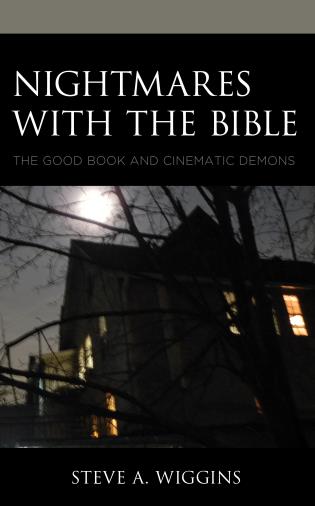
While recently in touch with a colleague I’ve never met, I agreed to send along a filmography of my two horror movie books, Holy Horror and Nightmares with the Bible.  I tend not to read my own books after sending them to the printer.  Defensively it might be that I can say, “I know what I wrote,” but in reality it’s probably more a lack of self-assurance.  Writers often experience self-doubt and although you’ve convinced an editor and an editorial board you may still have your harshest critic to please.  Even though you’ve read the book many times through—at least fifteen each for these two books—you fear you might’ve overlooked something.  So it was strange trying to recall which films I’d actually discussed.  Or how many.

The latter point became clear in a recent review on Reading Religion.  Knowing how I went about piecing together Holy Horror, I’d forgotten just how many movies I watched and rewatched for it.  While it was never intended to be a comprehensive treatment of the Bible in horror (I haven’t seen all horror films), it nevertheless ranges widely.  After having submitted it I continued to watch horror and I continue to find various Bibles in it.  The amazing thing is just how truly widespread the Good Book is as an iconic symbol.  Indeed, I’d been reading about the Bible as an iconic book and that idea took hold in the early days of putting words down for the book.  As an editor I help authors figure out these kinds of issues all the time.  Physician heal thyself.

Even though Nightmares with the Bible just came out over a year ago I couldn’t list all the films off the top of my head.  Sometimes you need reminders.  My books are never discussed at work.  The people I interact with on a daily basis have no interest in them.  In other words, unless I’m having an interview or reading a review, I don’t have much opportunity to think about them.  I’ve moved on to my next projects.  The draft of The Wicker Man has been submitted and I have three promised articles to work on.  Still, I’m trying to settle on the next book.  I seem to have found some acceptance among the horror crowd.  Biblical meteorologists and researchers on Ugaritic goddesses are much less seldom in touch.  Monsters are often mixed forms.  I should know that after watching all these movies.


Others’ Weeping

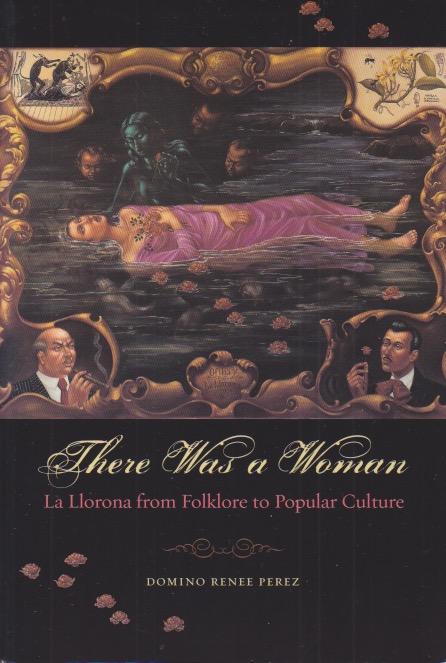
I was first introduced, consciously at least, to la llorona via the movie, The Curse of la Llorona.  The film is part of The Conjuring universe, but just barely.  It was clear from the movie that the weeping woman (la llorona) wasn’t invented for the film.  I’ve never lived in, or even spent much time in, the southwest.  Even less in Latin American countries.  In my rather strange career path, the best source of such things to penetrate my own experience tended to be my students.  (Those who think professors do all the teaching have the equation backward.)  Since becoming more isolated as an editor, my interactions are often someone approaching me with an idea mostly formed, often fully formed, and few of them have to do with ghosts or folklore.  That’s why I found Domino Renee Perez’s book There Was a Woman: La Llorona from Folklore to Popular Culture such a treasure.

As an Anglo reader endowed of white privilege, it’s important to read books where I’m clearly the outsider.  Being a kind of historian, I was curious about the origins of the tale.  As a person living in the modern world I was also interested by its reception history.  This book contains many, many examples of the latter.  It will demand that the outsider reader accept unfamiliar names and cultural conventions.  It will, in some ways, force you to stand “south of the border” and face the suffering our nation has caused and continues to cause in the name of white supremacy and its adjunct, capitalism.  There are other ways to be in this world, but when money gets involved all bets are off.

There’s much to discuss in a packed book like this, but one aspect, near the end, caught my attention.  Briefly, if you don’t know the story, la llorona is a woman betrayed by her husband.  She drowns their two children and is condemned to wander the riverbanks for eternity crying as she searches for them.  Interestingly Perez makes the connection with Rachel in the Bible.  I’ve read the Good Book many times and yet I seem to have missed Matthew’s use of Jeremiah’s interpretation of Rachel’s story.  Joseph was kidnapped and sold to slavery by his brothers but Genesis focuses on the grief of Jacob.  Rachel doesn’t live to be reunited with her lost son like Jacob does.  Perez makes the point that the stories are quite different, but it showed me once again how much I have yet to learn.  We need to pay attention to those who experience life differently.


Write It Down

Those of us with a bookish outlook often wish we could look things up.  This comes to mind because of a recent documentary I watched, but the thought has occurred many times when visiting museums, particularly for special exhibits.  I’m pretty easily overwhelmed by too much information at once.  In a museum I have trouble reading all the placards and remembering how they tie in because there are so many interesting artifacts to look at.  I leave inspired and impressed and wishing I could look up the information I just read.  I’ve often wondered why museums don’t sell exhibition books that have photographs of the objects with replications of the placards describing what they are.  Maybe it’d just be a market of one, but I’d buy them.

The same thing is true of documentaries.  I’ll readily admit I’m poor with names.  It takes many interactions before a person’s name sticks with me.  (It’s nothing personal, I assure you—it’s just the way my brain works.)  When I watch a documentary I often wish a booklet accompanied it with the names, and credit lines of the interviewees and (because I know this is available on IMDb) a full bibliography.  The books mentioned.  You see, those of us inclined to research enjoy looking things up.  In the case of a long documentary (and that’s only if you subscribe or buy it instead of “renting” it for a one-time viewing) it means having to skim through it all again to reach the information that you could easily look up in a book.  Books are wonderful.

For me, one of the benefits of books is their stability.  Electronic resources change.  When you go to cite a website as a source you have to list the accessed date because things may have changed.  The book on your shelf remains reliably unaltered.  The few ebooks I’ve read come with marks in them.  There’s probably a way of turning this off, but I don’t want to see what other people think is noteworthy.  I suppose it’s supposed to make reading a communal experience.  Reading, in my experience of it, is mostly a private things.  One of the great joys in life is talking about reading with others, whether it’s the same book you’ve read, or a different one.  Why not add to that by making books to go with other species of information-sharing, such as museums and documentaries?  Those of us with a bookish outlook aren’t hard to please.  We just like to have it down on paper.