Taking Part

It’s always a pleasure to be invited, even if not as a proper guest.  To an academic conference, I mean.  Most of us sit around feeling pretty obscure most of the time, even if we do write books.  I am literally genuinely surprised when sometime contacts me to tell me they’ve read my work.  It was, therefore, a complete surprise to be asked to attend the “Ancient and Modern Ideas of Possession” conference hosted by the University of Innsbruck.  I wasn’t an official participant, but the organizers, somewhat surprisingly, knew of Nightmares with the Bible and thought I might be interested in, well, possession.  Because I work “nine-to-five” and because Austria is several hours ahead of the Eastern Time Zone, I couldn’t Zoom in for all of it, but what I did hear I really appreciated.

One of my suspicions was confirmed, and that is that the idea of possession remains an outlier in academia.  The sixteen or so presenters represented several academic fields, none of which boasts of being interested in such things.  What surprised me, but then really didn’t, was that a comment or question came up several times: do any of us believe in the ontological reality of demons?  At least for the time I was able to sign in the question was never fully discussed but I had the sense that one or two of these academics were willing to lean in that direction.  We all know that individual observation is often faulty and subject to biased interpretations.  We may, however, know that many such accounts have been written by highly reputable individuals with nothing to gain by making spurious claims.  Academics should remain curious.

I learned that at least two of the presenters had written books that it would’ve been useful to have read for my own book.  Books are part of a conversation.  Seldom is any single volume the last word on a subject.  It was a privilege to be among other academics, if I may classify myself as one, even if erstwhile, that had come to a similar place in their explorations of the world of spirits.  Women and men who were willing to ask that most shunned of questions, “what if?”  Human experience moves ahead and some ideas are left behind.  That doesn’t mean those ideas should never be revisited.  Nobody at the conference mentioned my book, but at least one person in the room was aware that it was, in some form, part of the discussion.
Quest for Quest

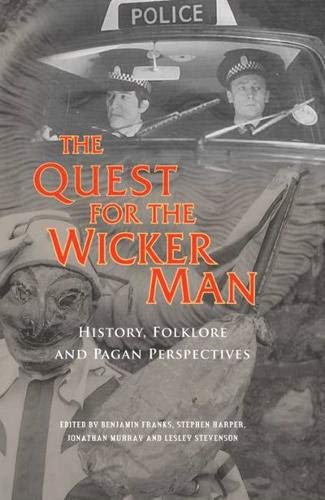
The Quest for the Wicker Man is a rarity.  Not only is it very difficult to locate and very expensive if you do find it, it’s also a collection of essays where each one is worth reading.  I’d read some of it before, but since I’m writing a book on the movie I thought I ought to sit down and go through it cover to virtual cover.  I had to settle for a Kindle version—please bring this back in print!—and was reminded yet again why a paper book is so much more satisfactory as a reading experience.  You see, I’m a flipper (not the dolphin kind).  I like to flip back and forth while I’m reading.  Clicking and swiping (both of which, coincidentally, dolphins do) isn’t satisfying.  And if you underline in a Kindle everybody else can see it.  I prefer the privacy of a print book.

In any case, if you’re interested in probing a bit into The Wicker Man you’ll find quite a lot of information here.  (Available on Kindle for a reasonable price, if not a comfy reading experience.)  Many aspects of the film are covered here.  One thing I won’t be discussing in my book is the music.  Firstly, I’m not qualified to do so, and secondly, it is done well here.  Essays also discuss religion (which I will discuss in my book), paganism (ditto), and many other aspects.  This is a book of conference proceedings—a boon for fans, but bust for most publishers.  It’s also a boon for those who like marking up used books to the tune of 64 cents per page (the lowest price on Amazon).  

Some of us believe a page is an ontological entity.  Once narrative writing began those responsible for clay tablets soon settled on a size that is, well, handy.  You can hold it easily.  That concept translated to the codex, or “book” as we know it.  Scrolls were cumbersome, but books offered many advantages.  For hundreds of years they were the standard-bearers of accessible knowledge.  I miss page numbers when reading an ebook.  I don’t want to know the percentage of screens I’ve swiped.  I want to know how many pages I’ve read, what page I’m on, and how many pages there are to go.  (The best of electronic books preserve that information.)  The book was not a form that required improvement.  Well, at least that digression kept me from giving up too much information about my book.  If you want to read it, when it comes out, I recommend the print form.


Book or Movie?

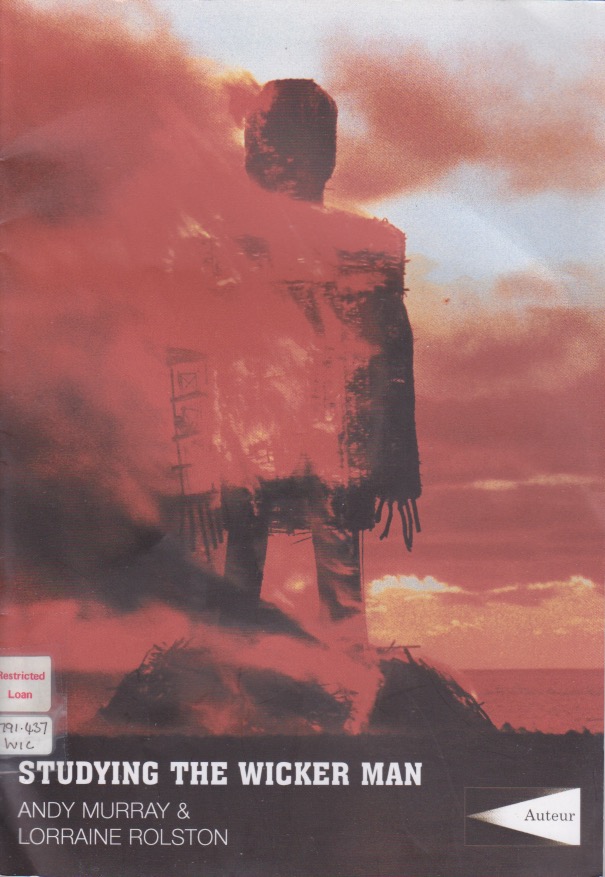
The funny thing about people, or at least one of the funny things, is that when individuals get together we notice different things.  It can happen at in-person meetings or “virtually” through books.  I’m working on a book on The Wicker Man, as I recently noted.  Others have written on the movie, of course, and I’ve read some of their analyses already, but I’m continuing to read more.  Recently I finished Studying The Wicker Man by Andy Murray and Lorraine Rolston.  This particular book—more along the lines of a booklet, actually—has quite a few observations about the movie that I had missed.  Connections, or interpretations, that I’d failed to make despite having watched the movie many times.  It takes the meeting of the minds to bring many things to light.

One of the questions they raised (and there will be spoilers here) is why the movie bears the title it does.  Obviously the climatic moment of the film features a wicker man.  Murray and Rolston noted, however, that more could be going on in this title than is obvious.  Sgt. Neil Howie, the protagonist, is a lot like a wicker man himself.  I won’t repeat their wonderful work here but I will say it’s convincing.  The literary trope of “the hollow man” (it could be woman, or hollow person, but I’m writing from personal experience) can be a poignant one.  We know that life may carry on biologically, but what makes us who we are is what goes on inside.  The hollowness may be intellectual or emotional.  Either way it’s a trial.  It’s something that I wouldn’t have thought of without help.

Studying The Wicker Man may be slim, but it has some powerful ideas.  As a society we’re often impressed with size.  When a promotional photo wants to show an author with gravitas, they generally ask him or her to hold a thick book.  There is certainly a place for large books, but insight can come in any size.  This particular book is obviously designed for film studies courses focusing on this particular movie.  It does point out that “cult classics” become such by not being widely seen, so I realize many of my readers (presuming there are many) won’t be terribly interested in a book that analyzes a movie they haven’t seen.  If you’re one of them, and if you don’t mind a movie with an ending that will stay with you, I would recommend watching the film before reading the book.


Podcast Live

Have you ever had one of those weeks where you forgot what day it was?  (Come on, now, it’s a pandemic—you can admit it!)  I spent yesterday unaware that it was Tuesday.  Tuesday is important because I knew that The Incarcerated Christian was going to be posting my interview on Holy Horror on their podcast.  It’s live now—give a listen!  I’ve been toying with rebooting my own podcasts, but like most other things in life I just can’t find the time to do it.  I still enjoy talking about my ideas and I thank Robin Mitchell Stroud and Debra Levy Martinelli for allowing me to yak their ears off for an hour.  There are many interesting podcasts on their site, so it you decide to listen the interview be sure to hang around a while and explore.

My hosts understand that Holy Horror was written for general readers, if not priced for them.  Being asked questions keeps you sharp, and sometimes it feels like my blade has been dulled from sitting in the drawer too long.  At the risk of sounding too biblical, iron sharpen iron, right?  Conversation is increasingly important in a polarized world where minds are already made up and the preferred solution is to hate others based on differences of opinion.  Why not talk about things?  Interviews also keep me sharp in asking about things I wrote years ago.  It may not seem like it, but the main body of Holy Horror was finished nearly five years ago.  Books take a long time to write and then a long time to publish.  It’s good to be asked about what one has written.

The questions asked on this interview were well thought out and reflective.  I can only hope that my responses were the same.  If you decide to listen and like what you hear, please share it with others.  The interview actually spilled over into a part two that will be posted in a couple weeks.  There’s a lot to say about religion and horror.  I’ve continued to watch movies since the interview and I notice further affirmations.  The Wicker Tree, for example, is a very biblical movie.  Or at least it quotes from the Bible quite a bit.  Holy Horror was very much an experiment on my part to find out if there was any room for a book like this.  After I wrote it I found others shared some interest in these topics, and two people cared enough to schedule an interview about it.  Please give it a listen.


Strange Happenings

It all began with a lazy Saturday, back in those days of trying to make a living as an adjunct professor.  People often ask why such folks don’t do more publishing, but the fact is that as an adjunct most of your time outside class prep and teaching is spent looking for a full-time job.  On a weekend, after all the job postings had been examined, I’d sometimes head to the local FYE and look through the bargain bins.  I’d taken to watching horror as an inexpensive kind of therapy years before.  I came home with a two-fer A Haunting in Connecticut and A Haunting in Georgia.  I hadn’t heard of either one, but hey, this was bargain bin entertainment.  It turned out they were television movie documentaries and they were scary, but not what I was looking for.  I resisted watching the theatrical movies when they came out.

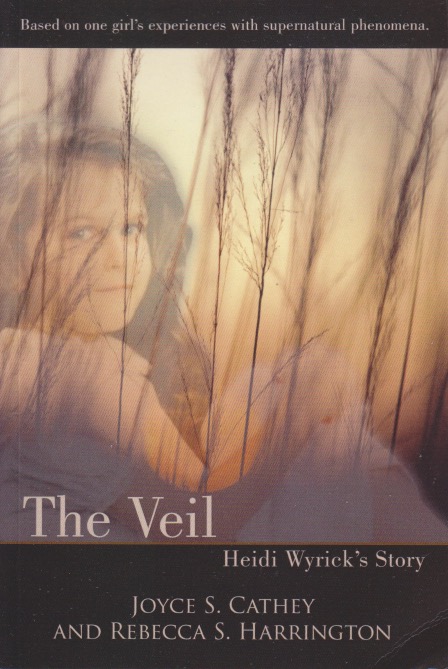
Eventually curiosity got the better of me, and I watched The Haunting in Connecticut and its sequel long after their release.  The strangely named The Haunting in Connecticut 2: Ghosts of Georgia dramatized the story of Heidi Wyrick almost beyond recognition.  Since the documentary had been based on a true story I wondered what had happened.  This wasn’t an Ed and Lorraine Warren case, so I turned to The Veil: Heidi Wyrick’s Story, written by two of Wyrick’s aunts.  Much of the book follows the documentary, only, strangely, with less detail about some of the hauntings.  It’s a quick read, and it’s fairly well paced.  It is, however, self-published.

A real dilemma, I imagine, for anyone wanting to publish their paranormal activities (unless they’re already influentially famous), is how to find a publisher.  From my own experience (and I work in the biz), finding a publisher isn’t getting any easier.  Self, or vanity publishing offers a physical book, but the usual gateways to believability (editors, editorial boards, etc.) are missing.  Established presses have reputation to worry about, and why take a chance when you can afford the luxury of buying projects that come to the top of an agent’s pile?  I enjoyed The Veil—I appreciate the effort of those who have a heartfelt story to tell.  But I couldn’t help thinking how much better it could’ve been with an editor’s guidance.  Those of us who write are often too close to our own work to see the problems—this is the real danger in self-publishing.  Hiring an editor is expensive and you need to have the income to do so, often creating a cycle of unaffordability.  I’m curious as to what really happened in Georgia, and I’m still curious after both the book and movie.


Druid Redux

I know I’ve talked about this book before.  I had cause to learn about the Druids again, and Peter Berresford Ellis’ book was handy.  I’m pretty sure I have Stuart Piggot’s book somewhere, but I haven’t seen it since the move, so I turned to Ellis again.  The first time I read him I was commuting and couldn’t take notes.  (My specialized form of research has its limitations.)  This time it took several days’ more reading, and doing so with more active engagement.  One thing that really stood out to me this time was the Indo-European connection.  Druids, according to Ellis, were essentially Brahmins—the intellectual class in a stratified society.  Having derived from a common ancestor, the two societies diverged with Brahmins surviving in India and Druids going extinct with the somewhat genocidal treatment of various other groups against the Celts.

Druids were egalitarian as far as the sexes went.  This is one of those examples where Christianity’s masculinist orientation furthered a trend that led to women being treated as inferior.  Evidence points to early female Druids, and even female political leadership among the Celts.  As the male godhead took over the remaining influence of women eventually evaporated.  The Druids, you see, were extremely focused on learning the truth.  Their pre-Christian judicial system was oriented toward fairness and finding out what really happened.  In other words, ethically they required no conversion.  That was a matter of theology, and theology often brings its own set of issues.  

The Romans, who’d had a long and protracted war against the Celts, drove them to the fringes of their empire.  Britain (and Brittany in France) were far enough removed from the base of power in Rome that the Celts survived in the edges of the islands: Cornwall, Wales, Scotland, the Isle of Man, and Ireland.  As a distinctive culture, Celts have been in fashion for some time now, but that’s a new development, historically speaking.  Ellis’ book explores this angle quite a bit since understanding the Celts is essential to comprehending who the Druids were.  The lack of native written accounts (Druids forbade writing their wisdom, passing it on by memorization over the centuries) hampers our ability to have a coherent history.  Ellis, however, seems to have reconstructed well.  Modern Druid revivals necessarily contain speculative elements, and historically the Druids wouldn’t have been perfect either—nobody is.  They do seem to have had a reasonable and just society for the most part, something we’ve managed to lose, along with much of their wisdom.


Clash of the Titles

Well, it seems I may be stuck in publishing for a while.  At least it’s a place to learn.  The inside story, it turns out, would be very helpful for authors to know.  Let’s take titles for example.  An editor sees a basic misunderstanding on the part of many academic authors.  Hey, I’ve even done it myself.  To correct this misunderstanding it’s important to see that academic publishers see different basic kinds of books.  One of them is the academic monograph.  No matter what the author thinks (I know the feeling of working on a book for years and supposing everyone else will be interested in the topic) academic books are of limited appeal.  Their main buyers are academic libraries and academic librarians want to know at a glance what the book is about.  The title has to say this, even before reaching the subtitle.

We’re all used to the idea of seeing books with clever titles in the bookstore.  (Remember bookstores?)  These are trade books.  Some of them are from academic presses, but these are books that have often been worked over by editors and marketers and publicists to make them more appealing.  The title can be clever, with an explanatory subtitle, because the target buyer is a bookstore rather than a library.  It’s difficult for an author to admit that this tome that has consumed your waking life for years, and maybe even decades, is primarily something a couple hundred libraries only will buy.  And family and friends who feel they need to support your efforts.  It’s a hard reality to face, but it often comes down to title.

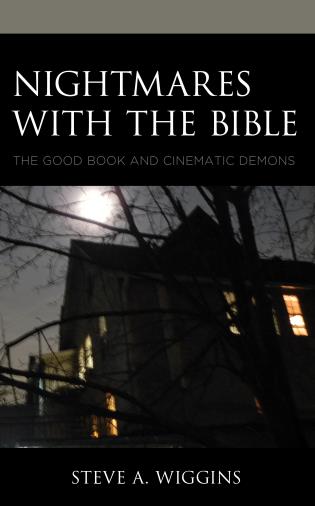
What are you going to call your book?  My own most recent effort, Nightmares with the Bible, was written for a trade readership.  The publisher, however, had the library market in mind.  For success in the library market, the title works against the book.  No matter how accessibly your book is written, no mere mortal will pay $100 for it.  (Some of us will feel compelled to dish out that kind of cash for a title we really must read, but we are the exception rather than the rule.)  I like my title, but it was a mistake.  It should’ve probably gone by its subtitle, slightly modified, The Bible and Cinematic Demons.  In my mind as I wrote it, I had an educated but popular readership.  The publisher had different ideas, unclear to me when the book was put under contract.  Now it’s time to give this post a popular title so that it will be read. And hopefully taken to heart.


Banning Banning

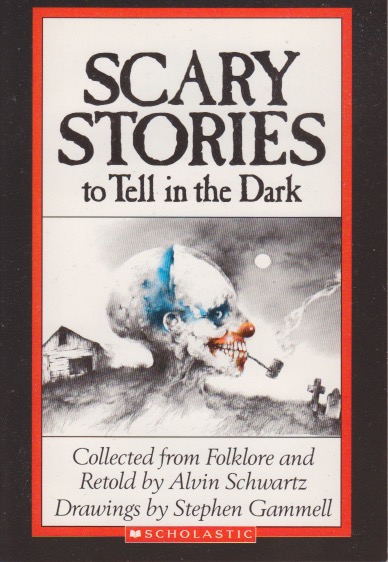
Banned Book Week gets me all aflutter.  There have been years at I’m so busy that it slips by before I notice it, but each year I try to incorporate it somehow into my reading challenges.  This year my book was Scary Stories to Tell in the Dark, by Alvin Schwartz and Stephen Gammell.  Yes, it’s a young readers’ book.  Most banned and challenged books are.  Why censorious adults feel the need to keep ideas out of print is pretty obvious in these Trumpian times.  (Please note, dear Republicans, many Democrats criticize Biden on a regular basis; we do not worship him.  American Marxist my donkey!)  Book censoring only serves fascist tendencies.  Ideas will find a way to be born, regardless.

Scary Stories, of course received a shot in the arm by Guillermo del Toro and his interest in making a movie based on it.  The stories themselves are drawn from folklore—they’re populist, you might say—and reflect what passes around from perhaps less insane times.  As an adult a reader tends not to find these stories frightening.  For one thing, many of them are stories we’ve heard before.  For another, life has already thrown many scary things at us.  Not only that, but we try to ban books to make adulthood even scarier.  You see, folklore doesn’t go away just because children are kept from the books.  These stories find the gaps just as water does.  They get told in the dark.  Instead of trying to censor them we should try to talk about them.

Adults’ own discomfort with ideas such as death and decay often stand behind our efforts to “protect” our children.  Then they reach maturity not prepared for the adult world of sex, exploitation, and dying.  Our modern comfort-based lifestyle tries to shut away the unpleasant aspects of existence.  Books, however, are the food of the imagination.  To ban them is to try to suppress the truths that authors have uncovered.  Growing up in a conservative household, we weren’t subjected to censorship.  I couldn’t afford many books, but my mother never said “No, you can’t read that.”  Some of my early reading faced uncomfortable facts.  I read both Jaws and The Godfather long before I ever saw the movies.  I read Scary Stories to Tell in the Dark as a form of solidarity with young minds.  There are benefits to learning to deal with fear early on in life.  And Scary Stories, even if not so frightening, has an appropriate place in it.


Discount Nightmares

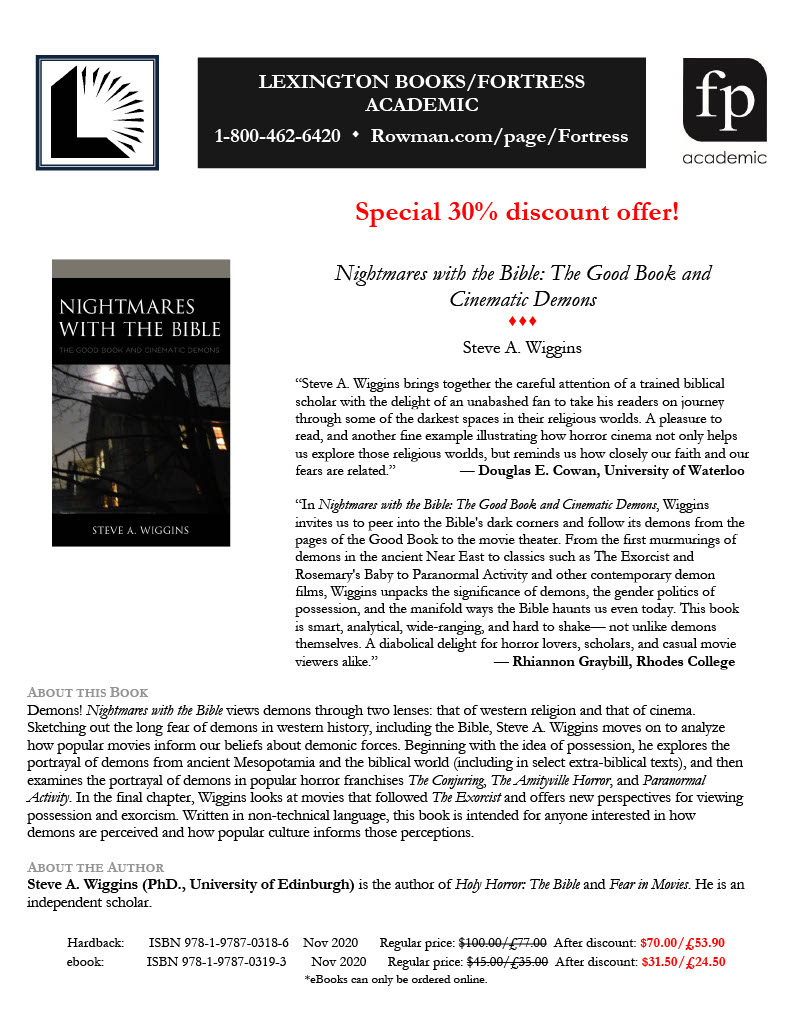
Now that we’re past the equinox it’s officially okay to obsess with monsters, right?  (Any excuse will do.)  Nightmares with the Bible was officially a pandemic book.  Academic publishers (especially) found out that books released in 2020 tended to flop.  People weren’t thinking about much other than the pandemic (or crying about losing an election fair and square).  Books, of course, take a long time to write and a long time to produce—it’s not as simple as it looks.  And if your production schedule falls during a pandemic, well, be prepared.  In the case of Nightmares there was the added burden of price point.  When all you’re thinking about is survival, cashing out a Franklin to read about demons seems hardly wise.

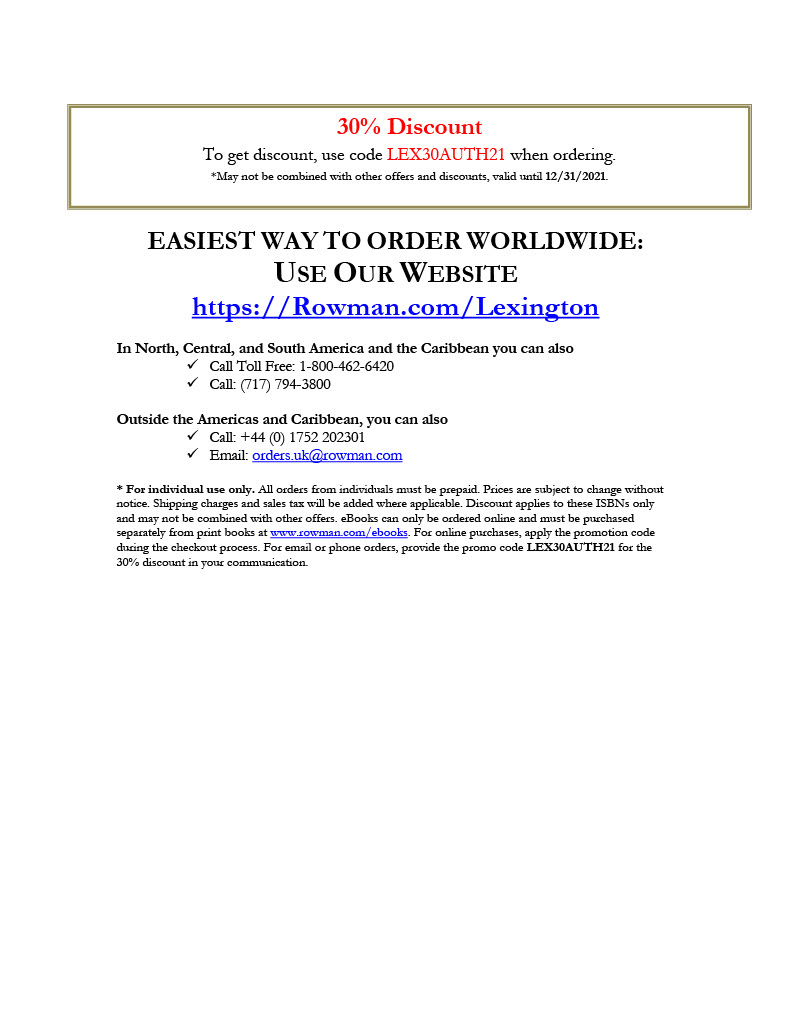
Just yesterday I received a flyer, that I’m passing along to you, for the book.  It has a discount code on it (look at part 2 below) so that the book is merely expensive rather than very expensive. Nightmares is part of a series titled Horror and Scripture.  The series, published by Fortress Academic and Lexington Books, is now coming out with its third volume.  The publisher, starting to recover from the pandemic, is promoting all the books in the series.  You see, Nightmares was not only a pandemic book, it also missed that highly sought-after pre-Halloween release.  Books that deal with horror get a boost during the holiday season.  Ironically the same thing happened with Holy Horror.  Both books came out in December when nobody but Charles Dickens is thinking about scary things.

Academic book pricing is based on a model that’s beginning to crumble.  It’s that capitalistic trope of what the market will bear.  The market is academic libraries, and it has been demonstrating lately that even they aren’t made of money.  I don’t know if libraries get to use discount codes or not—it can’t hurt to ask your librarian.  Fully employed academics, however, will sometimes pay a hefty price for a book they really want or need.  My shelves upstairs are filled with books that were overpriced but were required for the books and articles I wrote when it was an expectation of my job.  My next book, which is now in the negotiation stage with the publisher, will be more reasonably priced.  It will likely have a smaller appeal, but you’ve got to start somewhere.  I sincerely hope I’m through writing hundred-dollar books.  Please pass the flyer along to all your rich friends—it’s just in time for the haunting month of October.


Festive Books

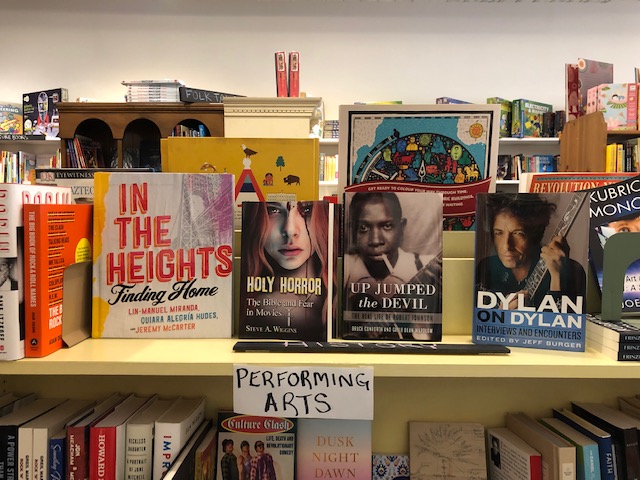
The Book and Puppet Company, a small independent bookstore in Easton, Pennsylvania is unique.  Other bookstores may have puppet shows and other forms of theater.  Others may have the obviously tasteful and intelligent selection of books.  Others offer items other than books.  Book and Puppet is unique in at least three ways.  First, and most (I promise) self-serving, it is the only bookstore in the world with Holy Horror on its shelves.  I know how it got there, which ties into the second unique feature—the Easton Book Festival.  The Easton Book Festival is the brainchild of the third unique element, the store’s owners—Andrew Laties and Rebecca Migdal.  

So let’s piece this all together.  The Easton Book Festival launched in 2019.  Being local to the event, I volunteered to present because Holy Horror had missed Halloween in 2018 when it came out, and it was still technically a front list book.  As with any event that wishes to grow, the Festival was extremely inclusive.  Despite its price point Andy had ordered copies to have on hand to sell.  He assigned me to a panel discussion and even gave me a time slot to talk about the book.  The event was one of the highlights of my true calling—being a writer of books.  Weathering the Psalms was less expensive but more technical.  Holy Horror is for a general readership, although the publisher sees it differently and prices it accordingly.  You have to start somewhere.  In any case,  it was part of a book festival that contains memories that still make me glow.

his year, like many events, the Easton Book Festival (October 16-24) is going hybrid.  As we start to regather, is there any better place to coalesce than around books?  Wouldn’t the world be a better place if that were true?  A recent visit to the shop led to a conversation that seems likely to result in a chance to plug Nightmares with the Bible, the more expensive sequel to Holy Horror.  Well into the writing of my next book, my attention has momentarily turned from demons to more human horrors.  Nevertheless, books are what my lifelong goal has always been.  I thought that I would be writing as a professor, but even editors can make some modest contributions, I hope.  Regardless, since much of the Festival will be online, it’s accessible from the comfort of your chair.  Why not tune in?   In any case, supporting your local bookstore will do nothing but improve society.


Seedy Delivery

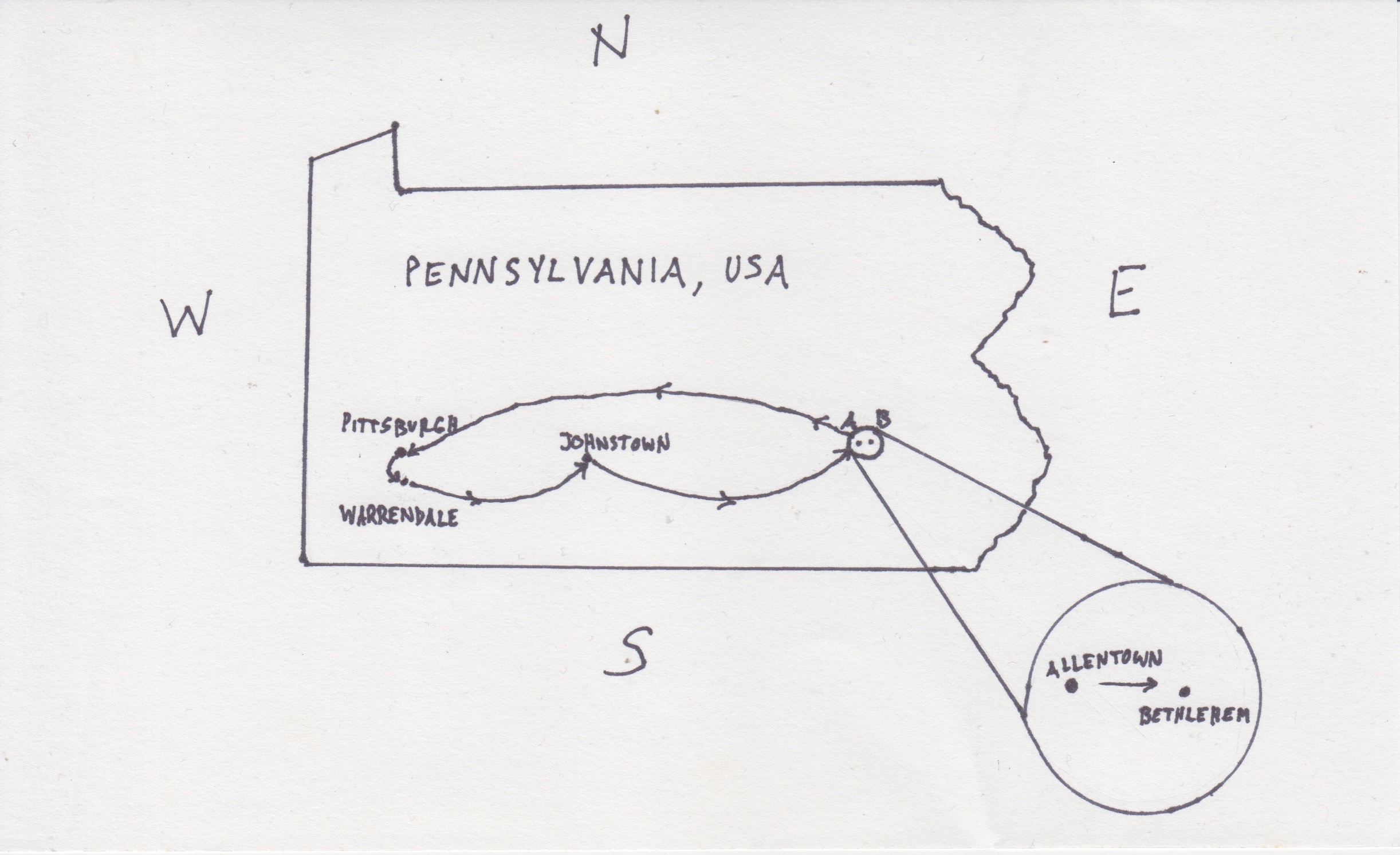
Call it a weird indulgence, for that it surely is.  I’ve been slowly re-collecting childhood books—really what we call “tween books” these days, but there were no tweens back then.  Since these are out of print and somewhat difficult to find, I order them when I can afford to, and have been doing so for over a decade now.  The latest one shipped from Minnesota, via the US Postal Service.  Since these are not easily replaced, I follow the tracking.  The seller indicated a delivery date of September 16-18, only to send an early delivery notice when it was mailed.  Indeed, I’d ordered this on the 8th and by the 10th it was in Pittsburgh.  In case you’re not familiar with Pennsylvania geography, I’ve sketched a map.

Pittsburgh is about 6 hours away from where I live.  It was now scheduled for delivery on the 11th.  I had my doubts.  I awoke on the eleventh to find that it had overshot and was now in Baltimore.  Baltimore is only about two-and-a-half hours away, but still, the thought that it could reach the local post office and get out for delivery that same day seemed slim.  The next day was Sunday, so I figured maybe Monday.  Sure enough, on Saturday the 11th it had reached the dreaded Lehigh Valley Distribution Center, in Allentown.  Allentown is only ten miles from here, within actual walking distance.  The tracking site said it would be delayed.  On the 14th it had been shipped back to Pittsburgh (where it had been less than a week before), from there to Warrendale (which I had to look up on a map), and from there to Johnstown.  Barring another flood, it was due here on the 16th.  Of course, it may have to go through the horror-inducing Lehigh Valley Distribution Center again.

That same center had shipped a package to East Stroudsburg, over thirty miles away, just the week before and had sent a notice that it had reached its final destination.  I’m not one for squandering money, but I would gladly buy the Lehigh Valley Distribution Center a map.  They could look and see that Bethlehem is a mere 20-minute drive to the east.  That could prove useful information.  The package arrived the 15th.  The next day I received a status update alert that it was out for delivery and would arrive that day.  I’m a Post Office booster.  I believe the government should fund the postal service adequately and quit trying to win elections by cheating.  And maybe they could throw in a map while they’re at it.  I’ve got one they can have for free.


Before Current Parameters

I recently had cause, for a work project, to survey which Episcopal seminaries are still around.  You see, I began my teaching career at Nashotah House.  (There were few teaching jobs in the early nineties, although we’d been promised a glut in the late eighties when I set out on that career track.)  In any case, I remembered marveling that the Episcopal Church had eleven seminaries.  For perspective, one of the largest Protestant denominations, the Methodists, only had thirteen.  Enrollments were high in those days.  Before the rise of the Nones, seminary teaching was a viable, if perhaps staid, option for a career.  Or in the case of some of us, it would be a holding pattern until something more suitable came along.  (I’ve always thought of myself as a small college professor.)

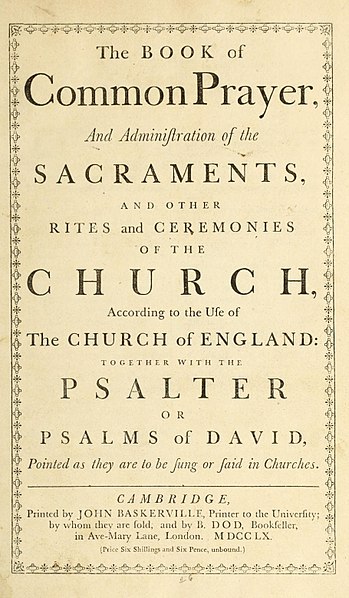
So the list of Episcopal seminaries is now down to ten, but those ten are much diminished from what they were back in the nineties.  Seabury, the nearest competitor to the south of Nashotah, has merged with Bexley Hall to make a very small federation.  Berkeley at Yale is a Jonah in the whale.  Episcopal Divinity School had to vacate campus and merge with Union in New York, leaving the tradition Episcopal stronghold of Boston.  The others seem to be clinging on.  In the midst of all this I learned that the Anglican Church in North America, a conservative break-away denomination, has reissued the Book of Common Prayer.  The BCP, as it’s fondly known, has a long and venerable history.  The 1979 edition has both a more conservative and a more modern liturgy, but even that doesn’t seem to be enough to prevent fracturing.

Photo credit: Church of England, via Wikimedia Commons

Fracturing.  Estimates for the number of denominations in North America set the figure at about 40,000.  No wonder Nones are among the fastest growing category!  If you’re going to place your eternal salvation on a bet, and there are that many options to choose from, the odds seem awfully long.  In some cases it’s a matter of being in the right state, or city, where the “one true church” exists.  If you miss it by thirty miles you could end up in Hell.  And all this with shrinking numbers.  The landscape has changed since I entered the seminary world.  Even as the numbers go down the fragmentation increases.  From a bird’s eye view this looks pretty odd.  Even if you look to the Prayer Book for solace you have to ask which one.  I just make the sign of the cross and move on.


Reading Memory

I recently wrote about writing too much (as if such a thing were possible).  After posting that I thought of how much the same can be said of reading.  I like to believe that whatever I’ve read is stored in my brain somewhere, rather like my writing on all those external drives.  I get some hopeful hints of this when a fragment of something read long ago suddenly reappears.  It’s good to know it’s there somewhere.  What brought this to mind is that a book I’m currently reading used a significant term.  Overly confident as I only am when reading, I figured I’d remember where it occurred.  A few days later I’d forgotten.  “No problem,” I thought, “the index.”  Indexes are never perfect and I’m always amazed by what strikes me as being so important failed to make the author’s cut.  So it happened.

This particular book was compactly written, but even so, it was more than sixty pages ago.  It took a few days of skimming, and finally going through line-by-line to find the word again.  It was a capitalized word and I thought mere skimming would be able to pick it out.  No such luck.  Part of the problem, I suppose, is that since I’ve left academia I’ve pretty much stopped writing in books.  I always did it in pencil, but still—there’s something about that pristine page so carefully typeset and laid out.  Well, if I had all the time in the world I could re-read those first sixty pages again, but I don’t have time to read all the books I need to, so I grabbed my old Pentel and began marking the spots I wanted to remember.

When we age it’s recall that suffers.  I tend to think the memories themselves are still there, sometimes distorted, sometimes altered, but present.  Books, after all, can be reread.  If I read something while commuting to Manhattan, there is a good likelihood that some of it was occluded by the worries of work lying ahead, coupled with the anxiety of catching the bus back home at the end of the day.  Not to mention anything that might’ve been happening in real life—that place outside of work that you really care about.  I’m glad for the commute reading; I regularly read over 100 books a year.  You couldn’t take notes while on a New Jersey Transit bus, though.  It’s not possible to read too much, but reading memory, it seems, is a sometimes a scarce resource.


Mental Health

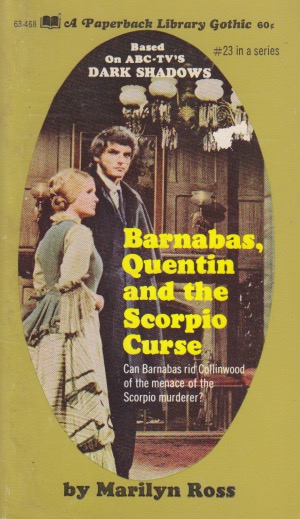
Dark Shadows was a formative part of my childhood.  I don’t recall specifics, or even how I found out about it, but I do recall watching it after school and being completely taken by it.  When I do the math I realize I had to have been watching it primarily before I was ten, and then after that I started reading the books when I found them in the used bin at the local Goodwill where they usually cost a quarter or less.  Now they’re collector’s items.  That fact doesn’t change the reality that they are journeyman writing through and through.  William Edward Daniel Ross, under the pen name Marilyn Ross, wrote thirty-three novels in the series as part of his oeuvre of over 300 books.  The stories are formulaic and feature odd word choices, but they are gothic.  Sometimes gothic is just what you need.

Barnabas, Quentin and the Scorpio Curse is a fun romp through a period when Barnabas has—with no explanation in the novel—overcome the vampire curse.  It introduces some Collins cousins who come to an asylum conveniently located next door to Collinwood where murder breaks out and mayhem ensues.  I have to keep reminding myself to put my critical faculties aside when I read these guilty pleasures.  There are gaps and incredulities that are simply glossed over, and that’s part of the world in which they take place.  Astrology plays a part in this episode, as the title indicates.  It features a psychologist who, it would seem, doesn’t know how to do background checks.

The truly scary part of this Scooby-Doo tale is that the protagonists, Diana and Barnabas Collins, aren’t believed because they’re voluntarily admitted to the asylum.  Mental illness is a serious matter, of course, and it can be difficult to diagnose.  The difficulty here is that it’s used simply to dismiss what Diana observes.  Time and again, as the Scorpio murders continue she’s dismissed as “a mental patient.”  It’s all part of a plot, of course.  It does raise serious issues, though.  In the late sixties and early seventies there was a real stigma attached to mental illness.  There still is, in fact.  Ironically, the more we learn about mental disorders the more common they become.  Just about everyone has some neurosis or worse.  In our efforts to define the “normal” we dismiss those with actually diagnosed conditions.  We’ve come a long way since then, but we still need to work at dispelling the stigma.  One way to do it is, I suppose, to put conflicted vampires into the mix.


A Life of Writing

One problem with being a graphomaniac is forgetting what you’ve written.  I’m glad to know I’m not alone in this.  Once we had the eminent historian Owen Chadwick to our house for dinner.  We of course had invited some students as well.  At one point one of the students asked him about something in one of his books.  The famed historian shook his head, not recalling it.  “One writes so much,” he replied.  Now, I’m not comparing myself with a knighted academic of international fame, but his remark in our living room has stayed with me all these years.  There are over 4,400 published posts on this blog, over a million and a half words, by my calculation.  Not even I remember everything I wrote.  “One writes so much…”

Just the other day I was looking for something I wrote.  You see, when I get an idea for a book (which happens frequently) I start writing it.  Inevitably, since I have very little time for writing on a daily basis, given my job, it joins many other partially written books.  Unless something like a book contract happens, my interests shift from one project to another, slowly building each up to near book length.  Once a project reaches that point I try to finish it off.  This involves writing and countless edits.  Holy Horror, for example, went through fifteen rewrites, some of them extensive.  Before it was sent to the publisher other books had already been started.  A conversation the other day reminded me of a book I’d started and I couldn’t find it.

My backup discs are a jumble of projects that take up too much memory on my laptop.  I try to organize them, but when a computer warning comes on while in the middle of a project one tends to cram things aside until one has room to finish up what one’s currently working on.  All of this authorial drama takes place before the sun rises, and when enough time passes I don’t always remember which file I put that old project into.  What did I even call it?  Writing, you see, requires constant practice.  Working nine-to-five creates a sense that you owe a great deal of time to your employer.  (Ironically, in my case, helping other people get published.)  The people I talked to the other day thought that that unfound idea sounded like a viable book.  Perhaps it is, if only I could remember where I put it.  Meanwhile I remember Sir Chadwick’s words from a quarter-a-century ago.