To Write in Black and White

It can be seen as a black and white issue: either you’ve written a book or you haven’t.  Many people do write books.  Many more want to.  In a survey I saw sometime in the past few months—I can’t recall exactly where—a survey indicated a high percentage of Americans wanted to write a book.  What exactly does that mean?  There are many different kinds of books and several motivations for writing them.  And, depending, your work may or may not be taken seriously, even if you publish.  As someone who’s published four nonfiction books, all of them obscure, I often think about this.  Working in publishing I have some privileged access to the ins and outs of how this works, but that doesn’t necessarily help in writing success.  So what are the motivations?  Is there any way to tell the difference?

Obviously, I can’t speak for others’ motivations but I can see the results.  Most of the writers with whom I work are academic writers.  Their books are generally written for fellow academics and they’re the result of years of research in specialized libraries often off-limits to non-academics.  Those are pretty easy to tell at a glance.  Another class of nonfiction writer is the journalist.  It’s assumed by the industry that someone who majored in journalism is a talented writer.  If, after reporting on a topic for a few years, a journalist wants to write a book based on experience, that frequently gets a publisher’s interest.  The results may not be academically reliable.  I recall that as a grad student it was assumed there were even certain established publishers not to trust—mainly those that weren’t university presses, but not exclusively.

The self-published book has a more difficult trajectory to trace.  Some authors, no matter how good or insightful, just can’t get a standard publisher’s attention.  Others are convinced of their own wisdom and now have an easy route to become a published author.  Yet others realize some money can be made from writing (although making a living at it is very hard work).  I’ve been reading a book by a journalist that has lots of factual errors in it.  I try not to judge, but I do wonder when I know it’s shelved as nonfiction.  Now, these aren’t the kinds of errors that will cost a life if dosed incorrectly or will set off a war between dominant personalities that are heads of state.  I also know that most books do contain inadvertent errors—books are written by humans and we don’t have all the answers yet.  Still, I think of the readers and how we define nonfiction.  What counts as a book anyway?  Things are seldom black or white.

Writing my first book

Magic Color

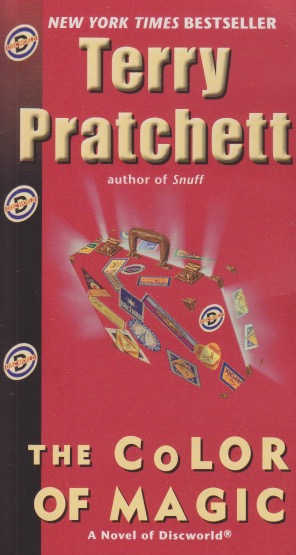
Terry Pratchett was known for his quirky, funny writing.  I’ve only ever read his collaboration with Neil Gaiman before, Good Omens.  I’d heard of Pratchett’s Discworld series and I decided to give his first novel in the series, The Color of Magic, a try.  There can be little doubt that Pratchett was a clever writer with great turns of phrase and imaginative plots.  Something I’m discovering about myself, however, is that fantasy as a genre isn’t working well.  I suppose a case could be made for calling Discworld science fiction, but the world-building seems definitively fantasy—warriors, dragons, supernatural beings—the whole lot.  The story is well told and the writing’s great.  It just didn’t grab me as I hoped it might.

Having said that, one thing I noticed was that Pratchett realized something I’ve written about many times before—if you’re going to do world-building incorporating religion makes it believable.  There are gods here, often distant and mainly unconcerned with human beings (and various other beings), but clearly part of the diegesis.  And, of course, magic.  Maybe that’s the part of fantasy that I find disconcerting.  I read through the Harry Potter series, and although it was funny in parts, it was mostly played straight.  Was it fantasy?  I’ve been writing quite a lot about genre lately, and I’m beginning to run up against its limitations.  Discworld is clearly a fantasy environment. Rincewind and Twoflower are great characters, and so is the luggage (if you haven’t read it yet, let that be an enticement).

I ran into the same sense of disbelief recently with Ursula K. Le Guin’s Left Hand of Darkness, and there’s little doubt that it’s science fiction.  Maybe as I’m aging I’m getting more and more mired in this familiar, if not tired, world in which I find myself. Horror, however, retains its fascination.  The Color of Magic follows the hapless wizard Rincewind and how his life changed forever after he met the tourist (a rarity on Discworld), Twoflower.  Together they face and overcome (with sometimes a little deus ex machina) obstacles of others with agendas that simply don’t accept misfits.  The literally cliff-hanging ending does encourage the reader on to book two and the characters won’t soon be leaving my mind.  It’s just with fantasy too much seems possible.  Anything can happen and it’s almost a matching of wits with the writer.  Not that that’s bad, but maybe it just isn’t the escapism I tend to think fantasy is intended to be.


Used or New?

A recent post on a used book got me to thinking.  Back when I was acting like a trained researcher my reading was very specialized and focused.  Even so, my personal reading was eclectic.  I think that’s the result of having been raised poor.  With no bookstore in our town, and no Amazon (or Bookshop.org), book purchasing was catch as catch can.  Since my fortunes haven’t dramatically increased in life (long story), my purchasing habits have remained pretty much the same.  I’ll buy used books or movies if I can.  Since these are about the only things I buy, they loom large in my mind.  And the thing about buying used is that it’s often opportunistic.  I can pretend it’s intentional and say I’m trying to be well-rounded, but the fact is I try to save money where I can.

This really struck me as I was reading something written by a film maker.  Now, I’ve penned two books about horror films, and I tend to watch them quite a lot.  What struck me about what I was reading was just how many films the writer knew.  Academics can be that way—knowing everything about a subject.  When researching my first book, A Reassessment of Asherah, I read everything I could find in pre-internet days about the goddess.  That is a thoroughly researched book.  When you’re a graduate student your job is to become as familiar as possible with your subject, no matter the language of the research (within reason).  As just an editor my movies and my books are a matter of what I find in my eclectic life.

I often imagine what my life would be like if I could’ve remained a professor.  In those days I read fewer full books—research is often a matter of reading only the parts relevant to your project—and certainly less fiction.  I was never a well-paid academic, teaching at a small school that considered on-campus housing a large part of the compensation package.  I didn’t buy many books then, either.  Some of the most important ones were, you guessed it, used.  I wonder if I would’ve ever have shifted my interest back to horror.  During those days I didn’t need horror (it was a gothic campus and I was beginning family life).  Since then I’ve become an even more eclectic person.  My fascination with geology began then and still comes back when the stars are just right.  And even they, I suspect, might be remnants of even older, used stars.

Photo credit: NASA

Shifting the Narrative

Wide ranging.  That’s a phrase that comes to mind to describe Vine Deloria Jr.’s book God Is Red: A Native View of Religion.  Another phrase is very important.  I know this book has been available for several years and it’s been on my reading list for many of those.  What is it about?  Some books are just difficult to summarize, but the basic answer is that it’s an American Indian view of how Christianity has distorted the world.  An accomplished academic, student of law, and activist, Deloria knew of what he wrote.  His book explains articulately the view of Christianity from the outside and what a religion that reverences the earth really looks like.  What makes the book so fascinating is that Deloria had theological training and could engage with the Christian worldview over a considerable range of topics.

Controlling the narrative is of primary importance and the fact is white men have controlled the narrative and normalized one view of history, science, and our place in the universe.  First nations peoples had, and some still have, a radically different outlook.  Deloria makes the crucial point that even our science developed out of our religion.  That science, in turn, supports the worldview that created it.  It is possible to look at things differently.  In fact, for much of human history those alternate views were predominant.  The triumphalist view of Christianity claims it’s successful because it’s right.  A native view takes a longer view, saying “we’ll see.”

Very concerned about the state of the planet brought on by the Christian/capitalist partnership, Deloria advocated for not only Indian rights, but environmental protection s well.  Not only is the environment central to Indian spirituality, the concept of sacred spaces is very real.  Many of us not raised with indigenous points of view have experienced this as well.  Some places are special to us.  We hesitate, because of that very science created by the Christian worldview and its view of God, to call such spaces objectively sacred.  Even the “objectively” part is determined by a Christian perspective.  Deloria ends up by asking whether this form of religion has improved the state of the world.  There’s no doubt that some of Christianity’s achievements have lessened human suffering.  It is also true that science has achieved great things.  If I understand correctly, Deloria isn’t disputing this.  His point of view is much more essential.  Is this the only way to live on this planet?  From the indigenous point of view, which is far more important that we want to admit, the question is—is this the only way to see it?


Scary Folk

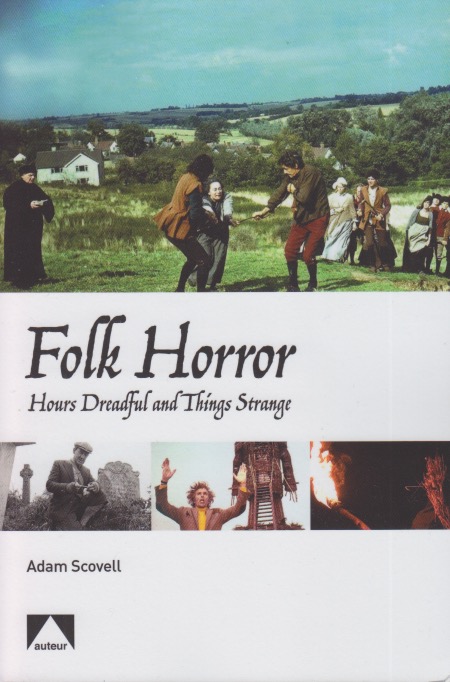
Genre is a useful category.  It can be misused, however.  Straightjacketing a piece of literature, music, or film can lead not only to confusion, but to constraining creativity itself.  Nevertheless, the category of Folk Horror is certainly expansive enough for a book-length treatment, such as Adam Scovell has given it.  Unless you’ve read quite a bit about the subject you might wonder what folk horror is.  A good part of Scovell’s work is definitional—providing the reader to an answer to that very question.   Although it has earlier roots, folk horror was initially a British genre that became particularly noticeable in the late sixties and early seventies.  It comprised movies and television programs that dwell on specific aspects of the landscape—particularly the rural—and isolation within it.

What I find particularly compelling about folk horror is that it is often based on religion.  In the countryside you encounter people who think differently about things.  Believe differently.  Their convictions are enforced upon the stranger who may be there by design or by accident.  Ironically the genre largely emerged in a nation that prides itself for its role in civilized behavior.  It speaks volumes about belief.  Civilization has produced more refined strains of religion, but on its own religion will tend to grow wild, even as the weeds in your yard are distantly related to the cereal grains we cultivate.  Examples of this are everywhere.  Fans of horror can name them off, but even those who don’t care for the genre know the kinds of belief this indicates.

Not all folk horror is about religion, of course.  It can be rural ways in general.  No matter how you classify it, most people can identify Deliverance and the danger it implies about being far from civilization where those who live in the woods can do as they please.  Scovell delves into the urban settings of folk horror as well—most of his examples are British—because it is possible to hide in the city also.  Although the genre reached a high point in the 1970s, it didn’t die out.  The book ends with consideration of some more modern examples, such as Robert Eggers’ The Witch.  The problem, as those of us who write about film know, is that just because you’ve written a book it doesn’t mean future examples won’t change the picture.  The Lighthouse and Midsommar were both released in 2019, after the book was published.  And they demonstrate that the scary folk haven’t gone away.


Is It Thursday?

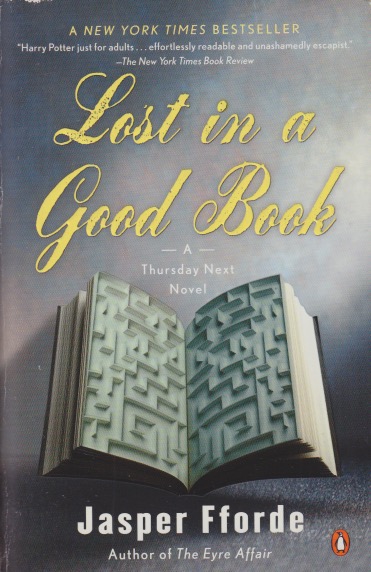
Jasper Fforde is an author I discovered because of a friend’s recommendation.  One of the more literate of fiction writers, he is clever and funny, but also difficult to find in many bookstores.  (Believe it or not, some of us prefer to shop in actual bookstores.)  I tend to pick his books up when I find them, whether used or new, and wait until I have time to indulge in a good book.  Well, I seldom have time to indulge, so I decided to go ahead and read Lost in a Good Book.  Now, this involves some mental gymnastics on my part.  Part of Fforde’s Thursday Next series, this is actually the second book after The Eyre Affair—not his first book that I read, but the first of this series I had.

I tend to find used copies of Fforde in certain used bookstores, and so my collection has grown through the years.  I’ve read four of the first seven novels in this series, but in this order: one, seven, six, and two.  Each is understandable on its own, but it occurs to me after finishing the second in the series that things might make better sense if read in order.  The good news is that the next one I have to find should fall in order after this one. Unless it’s one of the others.  That’s the nature of finding things in secondhand stores.  It’s not that I object to buying books new—do you even know me at all?—but that I have some authors that I can find in used stores from time to time and I read them when I do.  Fforde is one of them.

How I find the books probably impacts how I engage with them.  Perhaps because they’re funny I don’t consider the implications too seriously if things don’t always make sense.  I can see myself, if I ever get more time, coming back to the series.  Then I’ll do so in order.  The real pity is that I don’t have time to read all the books by authors I enjoy.  Nor all the money.  Libraries in small towns tend to have collections that reflect local tastes, and besides, I like to come back to my books at my own time, without having to wait for inter-library loan and somebody else finishing it up before I can get ahold of it.  All of which is to say I enjoyed Lost in a Good Book very much.  Thursday Next is a compelling character, and it’s always a pleasure to read an author who, like you, clearly reads a lot of classics.


Highgate Cemetery Again

Vampires can distort your thinking.  For example, whenever I hear of Highgate Cemetery in London, my mind immediately goes to the Highgate Vampire.  (There was somewhat of a comment kerfuffle on that topic right here on this blog some years back that resulted in several comments being removed.)  Highgate is the amazing final resting place of a remarkable number of famous people.  Still, when I visited a few years back I couldn’t get the vampire out of my mind.  (A friend of mine lives a short walk from the cemetery and that made the visit possible.)  This all came rushing back when I saw a book on Highgate Cemetery up for review on Reading Religion.  (And hey, Nightmares with the Bible has been available there for free, for any interested takers!)

Given my current vocation, writing actual book reviews is considered conflict of interest.  More’s the pity, since that’s how I often managed to get ahold of expensive books back in the day.  I’m pretty sure the book advertised (edited by Marie-Therese Mader, Alberto Saviello, and Baldassare Scolari) has nothing to do with the vampire, but I can think of it no other way.  Highgate is an architectural marvel for a necropolis.  It is spooky, inspiring, and impressive.  When something happens in a place, even if the facts are in dispute, it takes on an atmosphere that reflects such happenings.  At least that’s the way it feels for Highgate.  I’d heard about the vampire incident before visiting, but didn’t have the details.  Besides, you’re only permitted in on guided tours and the docents don’t point out such things.

Nevertheless, having been there I still have an interest in the cemetery itself.  It’s odd in a way.  Nobody I know personally is buried there.  No ancestors, as far as I know.  It’s the sense of place.  I’ve written about this many times before—there are numinous spaces in the world.  Science may deny it, but even scientists feel it.  Some places transport you somewhere beyond just the physical dimensions of where your body happens to be at the moment.  Cemeteries are filled with the memories of lives past.  They remind us that our time is limited, and that we too will cross that numinous threshold some day.  We all contribute.  Well, I can’t review the Highgate book and I can’t afford to buy it.  I nevertheless suspect that there’s nothing about the vampire in it.  I’m sure it’s my thinking that has been distorted by vampires.


Screening the Dark

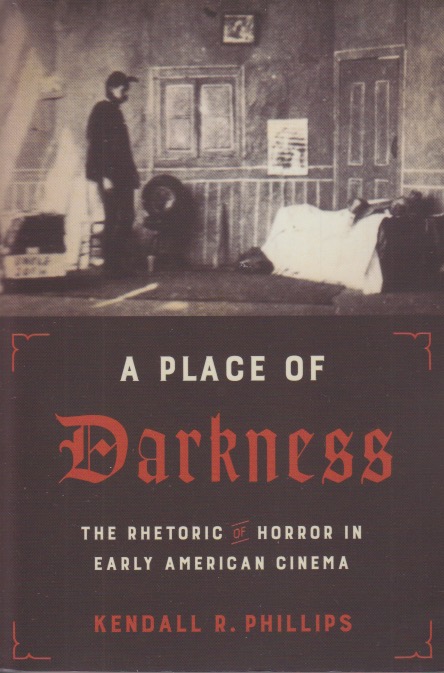
We’re spoiled.  The intensity of our media experiences makes it nearly impossible to imagine the truth of stories that viewers fainted at films such as Frankenstein even less than a century ago.  This change in outlook, this sense of being over-stimulated, occurred to me while reading Kendall R. Phillips’ excellent A Place of Darkness.  In keeping with the subtitle (The Rhetoric of Horror in Early American Cinema) Phillips primarily addresses pre-Dracula films, beginning in 1896 and demonstrates how horror themes emerged early and evolved along with society’s norms.  There is so much insight here that it’s difficult to know where to begin.  For me one of the big takeaways was how Americans at this stage were eager to appear non-superstitious and how they used that concern to keep the supernatural out of early ghost films.

Phillips isn’t afraid to address the role of religion in horror.  Other cultural historians note this as well, but many pass over it quickly, as if it’s an embarrassment.  Since my own humble books in the field of horror are based on the religious aspects of such movies, I’m always glad to find specialists who are willing to discuss that angle.  As America grew more and more enamored of the idea of rationalism, less and less energy was put into suggesting that anything supernatural might be at work.  Supernatural was considered foreign and cinema followed society’s lead.  This led to—and I want to add that this isn’t Phillips’ terminology—the Scooby-Doo Effect where every seeming monster had to be revealed as a hoax.  As a kid I watched Scooby-Doo in the vain hope that the mystery might turn out to be real.

Studies of horror films generally acknowledge that the first real member of that genre is Tod Browning’s Dracula of 1931.  Phillips demonstrates the valuable pre-history to that and does an excellent job of explaining why Dracula was such a singular movie.  Horror elements had been around from the beginning, but Browning’s film made no excuses—the vampire is real.  Audiences were shocked and thrilled by this and other studios didn’t quite know whether they should follow Universal’s Depression-Era success or not.  Mostly they decided not to.  The Universal monsters seem innocent enough today, but we go to theaters where the floors shake when heavy footsteps fall and the sound of a door creaking open comes from behind us.  Special effects make the horror seem real.  No excuse is made for religion and its monsters.  We’re spoiled. 


Electronic Ritual

Religion and horror go naturally together.  Perhaps that’s something I instinctively knew as a child, or perhaps it’s something only mature eyes see.  It’s clearly true, however.  While reading about The Wicker Man lately I felt compelled to read David Pinner’s 1967 novel Ritual, upon which the movie is loosely based.  In many cases it is better to read the book before seeing the film.  In other cases the movie ends up being the superior project.  I had to keep on reminding myself as I read the novel that it couldn’t be measured against a superior vision of what it could have been.  Having written seven novels myself (all unpublished) I hope that I have a sense of the process.  Unless you’re into the commercial side of things you don’t write for the movie potential—you have a story to share and this is your way of telling it.

The novel isn’t bad.  It’s written in a punchy style that I don’t really enjoy, but the story drew me in.  It almost wasn’t to be.  Like many novels of this era, print copies are difficult to find.  Those available on used book websites, or even on Amazon, probably because of rights agreements, sell for over $200.  That’s a bit much, considering that over two dollars per page is excessive for a novel.  I finally had to cave and get a Kindle version.  I don’t have a Kindle, but I have the software on my computer.  Reading it again reminded me of how superior a print book is to an electronic one.  Reading ebooks tends to be faster but like eating snack food, doesn’t really satisfy you.  

At one point the navigation function stopped.  Confused, I couldn’t go any further in the story and wondered if I’d reached a sudden but unexpected end.  With a physical book I could’ve paged ahead to find out.  In this case, with the controls frozen with that obdurate computer attitude, I had to find another way to make the illusion of reading continue.  I eventually got it going again after clicking here and there, but reminded myself again that ebooks should only be the last resort.  As for the story itself, it was okay.  I read it as a parable about intolerant religion.  I’m not sure it was intended that way, but it certainly seems like a reasonable interpretation.  It ends differently than the movie does, so I won’t put any spoilers here in case you decide to spring $200 to get a used copy.


Pagan Perspective

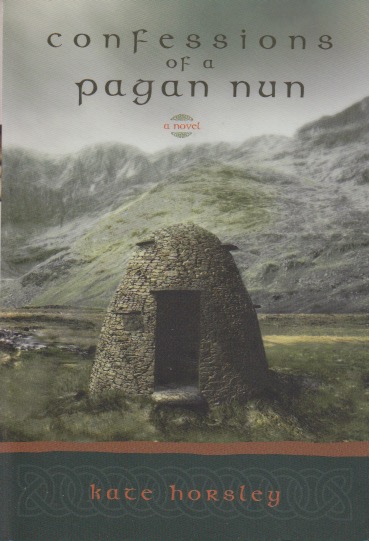
“I would live in a world of Christ-like humans, but not one full of Christians.”  So Kate Horsley’s protagonist Gwynneve writes in Confessions of a Pagan Nun.  This novel is an attempt to envision what life would’ve been like for a woman in medieval Ireland when Christianity came to the land.  Gwynneve is a spiritual seeker who comes to be a nun when it’s clear that this new religion has taken over the old ways.  Learning to write, she transcribes her story after hours in her clochan, or cell.  She recognizes that Christianity has brought good things to Ireland, but at a high cost.  The disparity between rich and poor increases, women are denigrated so that men can run things, and the land is ravaged for the benefit of their new way of living.

The novelty of the idea caught my attention when a friend pointed the book out to me.  I was a bit surprised to see that Shambhala, generally a nonfiction Buddhist press, had published the novel.  Since this is a story designed to make the reader think—it is contemplative, as a story from the point of view of a nun would likely be—the choice of publisher makes sense.  While it’s not likely that a book published there would make the New York Times bestseller list, as an erstwhile writer myself I can attest that novels outside the usual pale have great difficulty in getting mainstream publishers interested.  This too is a matter for contemplation.

One of the main themes of the story seems to be how a worshipper of the goddess Brigit has to become a devotee of St. Brigit when the church made the gods into saints.  This is something that happened historically as well as in novels.  Aware that it was easier to persuade individuals to convert to a new religion if they didn’t have to give up their gods, this seemed a small accommodation to make.  Horsley is not wrong, however, in pointing out that Christianity was not a free ride.  More than a religion, it was (and is) a powerful means for social control.  The vision it offers tends to benefit men over women, the wealthy over the poor, the powerful over the weak.  Despite what the Bible emphasizes, religion has its own conversion experience when it tastes power.  Confessions of a Pagan Nun is a story intended to shift perspectives.  The open reader will learn from contemplating its message.


Post-Literate?

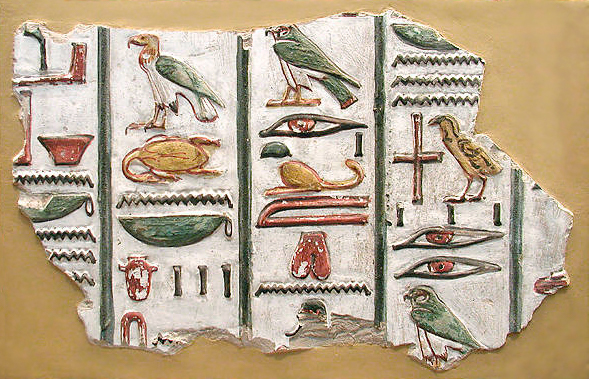
Who would’ve thought that publishing could be a scary industry in which to work?  Apart from the constant changes, that is.  Or maybe the changes are the reason it’s scary.  Our society has never been through a revolution quite like the tech revolution.  Yes, writing was pretty radical when it was invented, but it took millennia before literacy got to the point where it created widespread change.  Tech changes everything, and it does so very quickly.  Writing changes everything, but does so over the longue durée.  It began in a pretty humble way.  Crude drawings, called pictographs, came to represent things that mattered to pre-capitalists.  Take an ox head, for example.  It could represent the entire animal.  While some pictographs can be discerned in cuneiform (just as they can in some Chinese characters), the best example is perhaps Egyptian hieroglyphs.

Photo credit:: Jon Bodsworth, via Wikimedia Commons

Whether wedge-headed oxen or beautifully stylized hieroglyphs, both writing styles came to be representative for phonemes.  Egyptian and Mesopotamian writing tended to be syllabic rather than strictly alphabetic, and indeed, the invention of the alphabet made learning to write simpler.  Even after this innovation, however, it still took over a millennium before its practice became widespread.  Writing meant that ideas could be preserved beyond a lifetime.  Instructions and history could be recorded.  When a mistake was known and noted, remaking that error could be avoided.  (This seems to be a feature that has been lost to history, judging by recent fascist political parties.)  One of the great advantages to writing is the precision with which ideas could be expressed and preserved.

So how does this make publishing scary?  Some analysts are now claiming we are in a “post-literary” society.  Reading is no longer necessary.  We download visual content to gain the information we need.  When ideas need to be expressed in writing, we have emojis.  What happens, however, to synonyms when emojis take over?  Our humble ox head that eventually morphed into the capital A may now be represented by a stylized cow.  Or is it a bovine?  What does that cow image convey?  Books—novelties at the moment—are being written with emojis.  Learning to read is difficult.  It takes years and changes our brains.  Technology is encouraging us to become post-literate.  Even blogs are now becoming outdated.  Yet, looking at those emojis we see the history of writing moving in reverse.  From the precision of clear and accurate description to vague notions that look cool but leave us guessing otherwise.  Perhaps those ancient scribes scratching sketches into clay had it right to begin with.


Watching The Witch

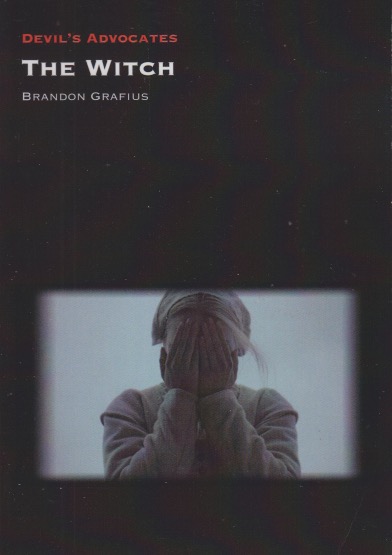
Good things often come in small packages.  I’ve read a couple of Brandon Grafius’ books before, and I’ve had The Witch on my reading list since I found out about it.  This is one of those books that benefits from knowing the raison d’être of the series of which it’s a part.  Devil’s Advocates is published by Auteur Publishing as a set of brief books on specific horror films.  If I didn’t have other financial obligations I could see myself purchasing the entire series.  Fortunately this volume was on a film I’ve seen (horror films have become so prolific that I can’t afford to see all of those I’d like either).  The Witch is a provocative movie, having gained critical acclaim as well as box office success.  It’s also a complex film.

Grafius ably takes us through the Puritan background that’s necessary to understand the social, and familial tensions that make this movie work.  Robert Eggers is a director known for his meticulous attention to period detail.  Even while weaving the fantastic into his stories, the plots are entirely believable.  Grafius has a solid grasp on how religion and horror interact.  That’s on full display here.  Looking at The Witch as an exploration of folk horror, he illustrates the importance of the landscape to the tale as well as how isolation sets a family off against one another.  The Puritan religion creates a monster, as it were.  Grafius doesn’t shy away from the misogyny behind the developing idea of the witch, either.  His explanations of—not excuses for—it are insightful.

Granted, horror films aren’t everyone’s cup of tea.  Or coffee.  As I sensed when writing Holy Horror, fans of the genre enjoy reading about it.  I often wonder why those of us who watch it do so.  In my case, in any way, it feels like a compulsion.  It’s a coping technique and perhaps an antidote to the headlines.  Horror can be an intensely creative and socially aware genre.  The best of it critiques the flaws of society.  As Grafius points out, Thomasin only wants to be a good girl.  The Puritan society into which she was born projects the image of the witch upon her.  Eggers gives us a real witch in the woods, of course.  Grafius explains how this becomes the aspiration of a young woman who’s only trying to do what’s right.  I have a feeling I’ll be going back to the Devil’s Advocates series again.


Fragility

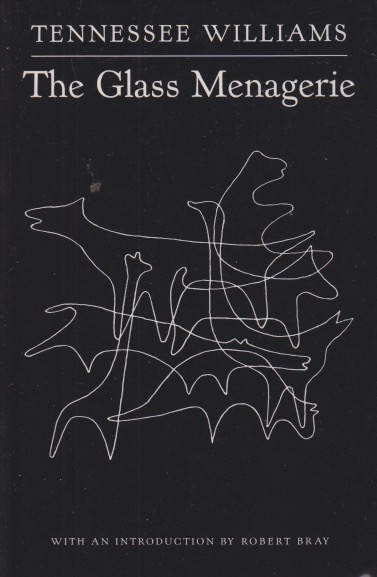
Who doesn’t like a play?  Since I’ve been reading many lengthy novels this year I like to intersperse them with some shorter pieces of literature.  Many of us are assigned plays in high school English class.  For those of us from non-literary families, these may be the only plays we’ll encounter in our youth.  Shakespeare and Arthur Miller ran the entire gambit for my high school career, but I’ve done some exploring on my own since then.  I’d heard quite a bit about Tennessee Williams’ The Glass Menagerie over the years, but I’d never read it.  I found a used copy at a book sale and so my excuse for not reading it was at an end.  Unlike when I read A Streetcar Named Desire, I really had no idea what to expect.  Dysfunction, it seems, spurs creativity.

I suspect the play is well enough known that my musings about its symbolism and impact wouldn’t add much to the discussion.  (Besides, I suspect few English teachers read this blog.)  My particular edition, however, comes with the essay “The Catastrophe of Success,” written by Williams after he found fame.  It reminded me a bit of a speech Ursula K. Le Guin gave late in her career, after receiving an award.  Both writers note that money drives far too much of what we consider creativity.  Williams notes in his essay that success leads to pampering and pampering is good for no one.  His description of staying in a hotel is a familiar one—poorly paid employees treat paying guests as if they were wealthy, cleaning up after them and tidying other people’s messes.

As many critics have noted, Williams grew up in a dysfunctional family and drew heavily on that for his fiction.  Another aspect, perhaps related to that, was the sense of pressure on his writing.  In his essay he mentions that writing grew more difficult when life was easy.  I often think about this myself.  My fiction suffered a bit when the pressure of the daily commute to New York ceased.  I had to catch an early bus and I was determined to get some writing done every day.  That was the origin of what now seems to be my permanent early wakefulness.  That pressure of knowing I had a very limited amount of time before I had to be showered, dressed, and at the bus stop, led to a tremendously creative output.  I see from my limited experience of reading Williams that I still have much to learn from those whose experience has become a lesson.


Kafkaesque

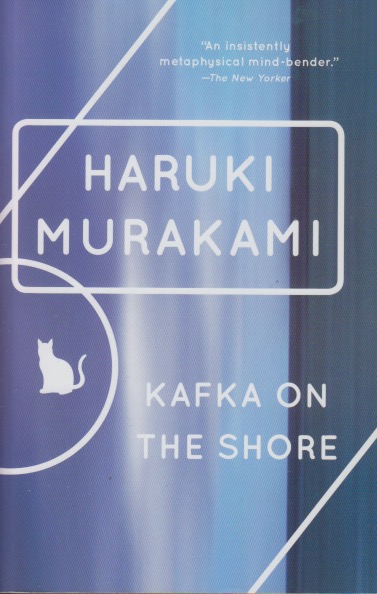
Although it’s a bit early—it’s never really too early—I just finished a banned book.  One of the main reasons I do annual book challenges is to help keep myself well rounded.  The categories often include books I might not otherwise read, although banned books are among those toward which I gravitate.  Lists of banned books are quite long, and so the choices are many.  I read Haruki Murakami’s Kafka on the Shore for this particular category this time around.  As the name Kafka in the title implies, there will be some surrealism here.  It was banned, as many books are, because of the sexual elements.  Anyone who made it through their teenage years without having struggled with that, however, is truly fiction.

Kafka is, in this instance, a fifteen-year-old Japanese boy running away from home.  On his journey, interlaced with that of an older, disabled man, he begins to discover what it is to grow up.  A number of unexpected things happen along the way, and pretty soon you’re not able to tell which world you’re really in.  The story refuses to be tied down to the ordinary.  The writing draws you in, however, and reminds the reader that being a teenager is indeed a liminal state.  Almost larval, to use a Kafka metaphor.  And yes, the metaphor is extremely heavy here.  There’s no denying two worlds bleed into each other as the story progresses.  Becoming an adult, it seems, involves having to make difficult choices.

Woven in with the base story is the Oedipus myth.  American cultural figures also appear.  Questions are raised but never really answered.  I’m not sure that I was fully ready for the mind-bending nature of the narrative.  Especially in these days when it’s considered okay, with a badly distorted moral compass, to hate those who are different, it’s important to read books like this.  There are characters you simply can’t figure out.  There are situations that seem unlikely, but that match some of the inherent strangeness of life itself.  I’m trying hard not to give away spoilers here, but this is a profound book.  I can’t tell if it was written for teenage readers or not—there’s clearly a lot of life experience behind it, and we were all teens at one time.  It was banned for being honest about sexuality, but perhaps, as is the case with most, if not all banned books, the real problem is that it’s simply too honest about being human.


Is This Contact?

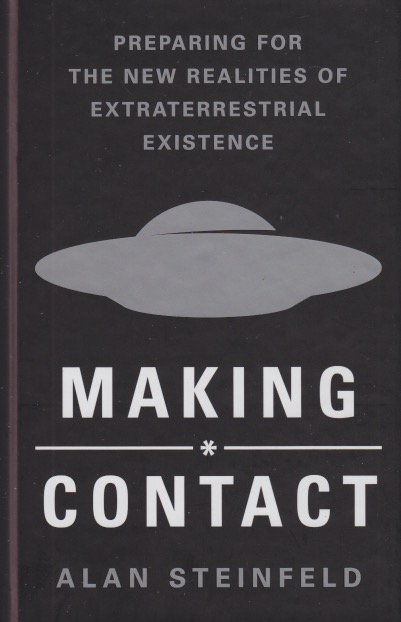
And speaking of the X-Files—but ah, I shouldn’t jest!  In fact, I strongly advocate avoiding the ridicule response when a claim seems outlandish.  A few weeks ago I posted on a review of Alan Steinfeld’s Making Contact: Preparing for the New Realities of Extraterrestrial Existence, a book just out.  The review I’d seen made reference to the aspects of religion and paranormal in the book, and given the mainstream media’s treatment of the topic of UFOs lately, I thought I should see what was being said.  As you might expect for a collection of essays, the tome is a mixed bag.  While ridicule is excluded, a healthy skepticism is necessary.  Amid the contributors with known credentials are those who make claims that are difficult to verify.  Much like the rest of life, you’re left making choices.

Amid all of this, where does religion come in?  Books like this often reveal the deep biblical literalism of our society.  Amid the authors who haven’t held government (although that’s hardly a situation where critical thinking is necessary) or university posts, there is clearly the assumption that the Bible is literally true.  Cherry-picked verses are “explained” by the presence of UFOs or aliens, with the supposition that if it’s in the Good Book it must be true.  This kind of simple credulity is quite common, but it does make you wonder if all the homework’s been done.  I know, I know, biblical scholars spoil all the fun!  If one piece of the puzzle doesn’t fit, however, perhaps the picture hasn’t been put together correctly.

That’s not the extent of the religious—or better, spiritual side of the topic.  Many of the essays are written from a somewhat “New Age” perspective with vibrations, and energy, and universal guidance of spiritual beings.  Other essays deal with government whistle-blowers who seem to tell a coherent story of secrecy and deception on the part of those in power.  No matter how you slice it, reading this book without ridicule is a perception-bending experience.  It may not be the one book everyone needs to read to get up-to-date information on where things stand in public perception, but it will make you think.  Given how much the topic has been in the media lately, and how it has at last been treated without snide asides, may be cause for hope.  “No go” topics may be vanishing, if only because our military admits to taking this one seriously.  And there seem to be, as always, religious implications.