Inventing Christmas

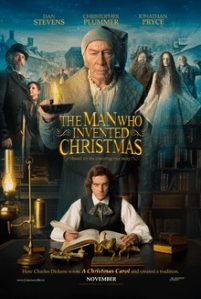
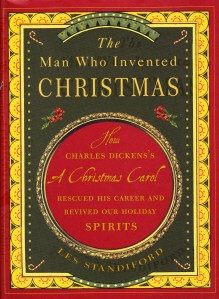
While not always classified among the most intellectual of writers, Charles Dickens was a complicated man. Able to conjure words that reflect emotions, often making readers laugh and cry, he was the undisputed bestselling author of his day. This holiday season the movie The Man Who Invented Christmas explores one of the probable reasons for Dickens’ celebrity—the resuscitory success of his first holiday novel, A Christmas Carol. The film was based on a non-fiction work by the same title, written by Les Standiford, subtitled How Charles Dickens’s A Christmas Carol Rescued His Career and Revived Our Holiday Spirits. As an author who found early fame, it might seem counterintuitive to those of us who’ve never found any that Dickens’ career would need rescuing. In the publishing world, fame has to be sustained since few books keep on selling and selling. And Dickens didn’t always help himself.

Dickens’ choice of Christmas as a theme was, obviously, driven by his own warmth regarding the season. As Standiford makes clear, however, it was also driven by money. Like many in today’s world, Dickens had established his comfort at pecuniary liability—he lived on credit. He also supported other family members and although he cared for the poor he often resented those who cost him money through irresponsibility. Christmas was a time when, he hoped, people might be encouraged to give. Some of that money, naturally, would go toward the purchase of his book. Although the story was secular, it gained the approbation of many in the church—it encourages thinking of others and being generous. Complicated.

As we get closer to Christmas this year, it seems that Dickens’ message bears loud and constant repeating. Here in the States, our government has taken on a decidedly Scrooge-like cast when it comes to the poor and unfortunate. Indeed, “bah, humbug” might well be the new motto of the Grand Old Party. Shown evidence of the guilt of the miser in chief they only claim that those who discover such truth are lovers of false truth, such as claiming that the poor really suffer with want. They close ranks to ensure that the downtrodden can never vote them out of power and claim that Bob Cratchit’s problem is that he’s lazy and Tiny Tim is a burden on the misunderstood wealthy who only ever wanted to help others. A huge difference is that Dickens knew his novel was fiction. This holiday season the ghosts visiting us will be the emaciated spirits of democracy past, present, and future, and that of human decency.
Anneliese or Emily?

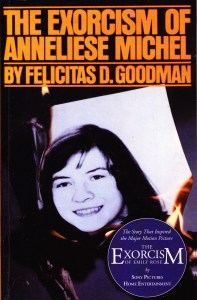
If it weren’t for the movie The Exorcism of Emily Rose, the name of Anneliese Michel would undoubtedly be less recognized than it is. Probably the first exorcism movie since The Exorcist to move the genre in a new direction, Emily Rose was based on the real life case of Anneliese Michel. There were significant differences between film and reality, however. Michel was from Bavaria, and she died at the age of 23 rather than being an American teenager like Emily. The story caught media attention because it was discovered that Michel had died after an extensive, months-long exorcism. Charges were made and the priests and Anneliese’s parents were found guilty of negligent homicide. The movie plays the whole thing out in the courtroom with flashbacks of the possession.

The book which led to the film was The Exorcism of Anneliese Michel, by Felicitas D. Goodman. Goodman, who died in 2005, was a rare academic who wasn’t afraid to address the supernatural. Trained as a linguist, she had years of anthropological fieldwork experience and a medical background. She was also not dismissive of religious experiences. Naturally, this makes her suspect among academics, but her treatment of Michel’s case is both sympathetic and masterful. After narrating events pieced together from court records, diaries, tapes of the exorcism, and information supplied by some of those involved, she offers her own hypothesis of what actually happened. Anneliese Michel was a religious girl caught up in a religious altered state of consciousness that was treated scientifically by drugs. The result was fatal.

Throughout history, and even today, shamanistic persons exist. Whereas in tribal cultures they tend to become prominent, in the “developed world” they are often quite hidden. They experience what Goodman calls religious states of altered consciousness, and are sometimes misdiagnosed as requiring chemical healing. There have been many thoroughly documented cases where such individuals do “impossible” things. The rationalistic world has no place for them, however, for like capitalism, materialism takes no prisoners. Religion is part of who we are. Human beings do have spiritual needs. Such needs can be placated by other means at times, and we can continue to believe that everything in this universe is made of atoms, or super-strings, or quarks. Or we can perhaps admit that theres’s much we do not know. Goodman admits that her solution is an educated guess, but it does put all the pieces together rather nicely. And she doesn’t declare unilaterally whether demons are physical or not. In the case of Anneliese Michel, however, they were undeniably real.


Not So Gnostic

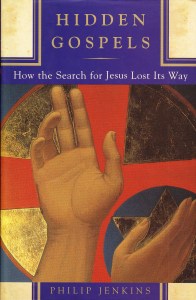
A certain, amorphous indignation comes over those of us trained in history when we encounter abuses of the same. In my case, some thought me conservative when I argued in my first book that Asherah as Yahweh’s wife wasn’t nearly the slam dunk some scholars were making it out to be. Don’t get me wrong, I wanted to see Yahweh as happily married as the next deity, but it was a matter of the evidence being weak and not thoughtfully examined. That is to say, I sympathize—maybe even empathize—with Philip Jenkins. His book, Hidden Gospels: How the Search for Jesus Lost Its Way, is an historical dressing down of many in the New Testament scholarly community who’ve perhaps let a bit of historical rigor slip in order to understand the world of early Christianity.

You see, once upon a time, scholars took the Gospels as, well, the gospel truth. Contradictions were simply harmonized or glossed over. When newer ancient material began to be discovered, however, adjustments had to be made. Perhaps the “orthodox” story of Christian origins wasn’t the only option available. In the twentieth century some spectacular manuscript finds were made, including the “library” of Nag Hammadi—largely Gnostic—and the Dead Sea Scrolls. New understandings of early Christianity were possible when these texts were considered. Some scholars engineered sweeping theories about revolutionary ideas concerning Jesus and his buds. Jenkins laments the lack of historical precision that many of these reconstructions demonstrate, and he comes across as somewhat annoyed.

Sensationalism, as we all know, sells publications and gets presidents elected. We all like a good story. In the case of Jesus, this means that the reconstructions of scholars often challenge traditional views, and popular publications love it. Jenkins finds it distasteful. Although this book is well written, as all of Jenkins’ material tends to be, it probably doesn’t do his arguments any favor to have retained the tired trope of heresy. Heresy means nothing without a supernatural bias, something that historians must avoid. Heresy, after all, assumes that one and only one version is correct (orthodox) and the four Gospels demonstrate that such a simple dichotomy is more difficult to sustain than it might appear to be. Yes, the Gnostic texts may not be as early as the traditional Gospels, but the ideas may have been circulating from near the beginning. We know surprisingly little about Jesus, so it’s not unexpected that rumors would’ve flown, even in antiquity. A solid source of information on some of the early “other gospels,” Jenkins’ book serves as a useful reminder that history is almost never as simple as it seems it should be.


More than Baptism

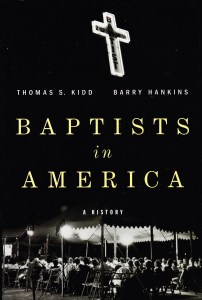
Few things distinguish American Christianity as much as its divisions. These aren’t precise, however, and often the borders are fuzzy and held more by cultural history than by theological outlook. One of the denominations—indeed, the umbrella for the single largest Protestant denomination in America—often faces the question of its identity. Who are the Baptists? Many Protestant groups can trace their histories to defining moments; consider Martin Luther and his hammer, according to the Lutheran origin myth. Baptists are a little tricker to pin down. Dissenters, yes, convinced that adult baptism should accompany conversation, yes, but beyond that widely divergent. Thomas S. Kidd and Barry Hankins have provided a service by writing Baptists in America: A History. Going back before America, they trace the origins of the sect and quickly bring it into the context in which it would thrive.

Persecuted early in American life, Baptists grew in numbers and recognition during the period commonly known as the Great Awakenings. Suited to frontier individualism, non-doctrinal, and advocating for freedom of conscience, the Baptists gained large sums of converts in this era. With their congregational polity, Baptist cultural influence really only took off when mass media gave its more aggressive preachers a venue not limited by church walls. As Kidd and Hankins point out, however, the denomination proved friable. Splitting apart over various issues, the number of Baptist denominations grew. Their political influence would also grow so that they would become a force with which to be reckoned even today. Few, however, really understand who the Baptists are.

The Southern Baptist Convention is the largest single Protestant denomination in the United States. It defines itself by a radical conservatism that masquerades as “orthodoxy.” Heavily biblical, many in the tradition have a strong preference for inerrancy. Social causes that appear outdated to most modern people are do-or-die issues for this sect within a sect. Baptists in America does a good job showing how contradictory Baptists can be. They were, after all, dissenters from the beginning. Their championing of religious freedom often doesn’t apply outside their own borders. The more political of the denomination know very well how to game a democratic system. Perhaps the lesson they’ve learned most acutely is that being unseen carries with it great advantages. They play the sport of legislative chess very well. In a culture that loudly and repeatedly claims that religion no longer matters, those with conviction have a natural hiding place. From there pieces are easily moved to positions of power.


Inventing Breaks

Breaks are good for many things. Time with family and friends. Hours of non-bus time for reading. Watching movies. So it was that we went to see The Man Who Invented Christmas. It really is a bit early for my taste, to think about Christmas, but the movie was quite welcome. Being a writer—I wouldn’t dare to call myself an author—one of my favorite things to do is talk about writing. Watching a movie about it, I learned, works well also. The conceit of the characters following Dickens around, and refusing to do what he wants them to should be familiar to anyone who’s tried their hand at fiction. My experience of writing is often that of being a receiver of signals. It is a transcendent exercise.

Not only that, but in this era of government hatred of all things creative and intellectual, it is wonderful to see a film about writing and books. The reminder about the importance of literacy and thought is one we constantly have to push. If we let it slip, as we’ve discovered, it may well take considerable time to recover. Getting lost in my fiction is one of my favorite avocations. Solutions to intractable problems come at most improbable times. Although publishers tend to disagree with me, I find the stories compelling. In the end, I suppose, that’s what really matters.

On an unrelated note, this is the second movie I’ve seen recently that attributes non-human actors their real names in the cast listing. What a welcome break from the blatant speciesism that pervades life! Animals have personalities and identities. Humans have often considered the privilege of being named to be theirs alone. True, animals can’t read and wouldn’t comprehend a human art form such as cinema. But when they communicate with each other, they may well have names for us. The beauty of a story such as A Christmas Carol is that it reminds of the importance of generosity. We should be generous to those who take advantage of our kindness. Our time. Our energy. We should also be generous to those who aren’t human but are nevertheless important parts of our lives. The movie may have come too early for my liking, but the holiday spirit should never be out of season. If we’ve made a world that only appreciates kindness because much of the rest of the year is misery, it means we’ve gone too far. Films can be learning experiences too, no matter the time of year.


Devolving Apes

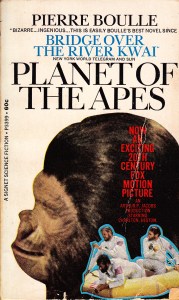
It would be difficult to overestimate the effect the movie Planet of the Apes had on me as a child. Raised a biblical literalist, evolution was, naturally enough, anathema to me. And yet here was a movie based on the idea that evolution had taken a different course. It was a transgressive film, but the screenplay had been written by Rod Serling, so well known for his trusted work on The Twilight Zone. I was utterly fascinated by it. Until the most recent iteration, I’d seen every sequel, spinoff, and reboot ever made. So important was this story line that as a child I found a copy of the book, in English, of course. Pierre Boulle told the story somewhat differently. Spying the book on my shelf after some four decades of my own evolution, I decided to read it again.

We all evolve. I noticed the improbabilities more this time through. The fact that, unlike the movie, humans wore no clothes at all must’ve scandalized my young eyes. I would’ve agreed, however, with Ulysse Mérou’s sentiments that humans were created in the image of God, not apes. In fact, there is an undercurrent of a somewhat conservative theological outlook here. Humans may experiment on animals, but when it’s reversed, it’s evil. In many ways, the cinematic version improves the story, but Boulle’s telling grows in intensity as the novel unfolds. Mérou develops a moral sense that includes the apes as well as human beings. The story, of course, is largely about prejudice and its evils. In that respect, it’s timeless.

As a child I realized that we lose something if we accept the fact of evolution. We lose that special feeling of having been intentionally created by a deity that made us God-shaped. Ironically, I also came to realize that those who rejected evolution often treated their fellow humans like animals. They held onto prejudices against other “races.” They castigated the poor for being lazy. They wish to remove healthcare from those made in the image of God. The contradictions and cruelties simply don’t comport with the Good Book they adore and ignore. Evolution, with the realities of nature impinging on our security, is far less dangerous than what biblical literalism has evolved to be. I can’t say why this book and its cinematic renditions became so deeply embedded in my young mind. But having read the book again, it’s pretty clear that the ideas have remained there, even as they have modified, with descent, over time.


Predestined?

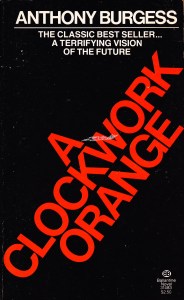
This particular doctrine struck me as evil. It violated every experience and thought I’d ever had, even raised as an unquestioning Christian as I was. Then, at Grove City College I was faced with it for the first time—predestination. If free will is an illusion, what crueler God can be conceived? I couldn’t avoid such thoughts upon re-reading Anthony Burgess’ A Clockwork Orange. A non-conforming non-conformist at the college assigned it in a science fiction class, so it has been decades since I’d read it. Now I found it perhaps more profound than before. Much has happened since my initial reading of the book, o my brothers. (And sisters.)

The framework of the story is well known. Alex and his friends are teenage punks who love ultra-violence. Alex is betrayed and imprisoned. Considered incorrigible, he’s reprogrammed to the point that he can’t even defend himself in a society that’s grown even worse during his time in jail. In the hospital after a suicide attempt, he awakes to find his old self restored, whether this is a good thing or not. The main point that’s behind this, it seems, is that without free will, repentance means nothing. In fact, in my edition of the book, an afterword by Stanley Edgar Hyman makes the point that some interpret A Clockwork Orange as a fictional defense of Christianity. Certainly the comparisons are there, from Judas through Jesus, healing, sin, and suffering. How much it actually meets that idyllic vision of God in Heaven directing the lives of individuals is, of course, an open question.

The idea that human beings are born as Hell-fodder posits a cruel and sadistic deity. Not only are the majority of human beings going to face eternal punishment for matters beyond their control, there is a divinity who planned it that way. We are all, literally, puppets in a universal morality play written by a being whose moral compass is horribly skewed. Indeed, even at Grove City some of the faculty would state that philosophically there could be no contest—free will was right. But, they would add, tapping the Bible, it’s not true because the Word of God says so. When I protested, it was declared, without irony, that even my protest had been predestined. In other words, in this clockwork universe I was clearly an Alex. Upon closer inspection, however, the truer analogy would be that we are all the victims of Alex and his droogs. But only if we have the freedom to make such an observation.


Autumnal Ashes

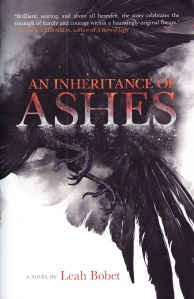
I once told someone that a book I was reading was a “good autumn book.” The friend looked at me quizzically and asked what I meant. Seasons have a feel to them, even as books do. When the days grow shorter and the chill seeps in through the storm windows, I start looking for a book that matches the mood of a year that’s dying beautifully. So it was I came upon An Inheritance of Ashes by Leah Bobet. While I like Amazon just fine, the magic of the brick-and-mortar bookstore is finding that book face out that you’d otherwise never have seen. I read a lot of fiction—more than I post about on this blog—and a great deal of it come from the unexpected find in the local indy.

The story’s difficult to classify. Set in a future that sounds quite a lot like post-Civil War days, two sisters, Marthe and Hallie, try to keep a living at Roadstead Farm. The last of the soldiers have made their way back from the war where the Wicked God was killed. We never see the Wicked God clearly. He’s from a parallel world and is championed by his prophet. The death of the Wicked God was largely thought to be the end of the war. The passage between worlds, however, isn’t as secure as they armies thought. Religion doesn’t play a strong role here, but it was the cause of the war that has devastated the nation.

Fictional worlds require believers. Stories need not be religious to include religion. Without it, many tales lack verisimilitude. People are religious creatures by nature. Belief drives us, whether secular or sacred. This novel about a family trying to pull together in the aftermath of an evil god’s death. There’s a purgatory here from which those who believe can be rescued. And Hallie, who believes, ends up saving her own entire world. Religious? Not really, but it is all about belief. We need books that encourage faith in dark times. Indeed, An Inheritance of Ashes is about a dark period of uncertainty. What used to be true is open to question in these days when one belief system is determined to wipe out all others for good. Not so much live and let live as it is give and not give back. Ashes, whether literal as in Bobet’s world, or figurative as in our own, are appropriate reflections as the year begins to die.


Horror Divine

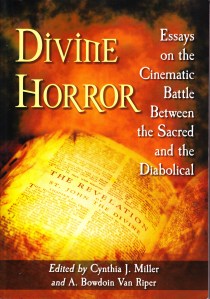
There’s a validation about finding something you figured out written in a book. For me that happened just about this season, some years back. At the Society of Biblical Literature annual meeting I found Sacred Terror by Douglas Cowan—the first book I’d discovered that discussed religion and horror films. Not only discussed them, but made the case that they have considerable common ground. Divine Horror: Essays on the Cinematic Battle Between the Sacred and the Diabolical, edited by Cynthia J. Miller and A. Bowdoin Van Riper, addresses the same theme but in more detail. Some of the essays in this volume get to the heart of the relationship between the sacred and the scary. As I mentioned, there’s a validation here for those of us who find horror movies fascinating. Others have noticed.

Genre fiction, as many fans know, comes with a subtle sense of shame. Low brow. Unsophisticated. Garish. Those with more refined tastes prefer subtlety and muted colors. Horror appeals to more basic instincts—but it’s also a form of expression that allows for the safe exploration of fear. There’s good horror and there’s bad horror. The eighteen essays in this book explore a bit of both. One conclusion that is unavoidable, however, is that religion—particularly Judeo-Christian religion—thrives in the context of horror cinema. The surprising part is that they often affirm the same message, but you need to look for it. Those who seek the origins of religion itself peer into the realms of awe and fear.

My own forthcoming book looks at similar territory. I don’t mind being classified as low brow. Raised in a blue collar world, that’s a fair assessment. What’s more, life confirms the reality of the connection between fear and religion. Consider the political moment in which we find ourselves. Much of the horror coming out of DC originates in religious “think tanks” trying to make evangelical Christianity the default faith stance of all our legislation. It means death and suffering to many, but the view of heaven for some becomes the tax haven for all. I know low brow when I see it. Horror comes in many forms—some lurid and some insidiously sneaky. Miller and Van Riper have pulled together a collection for our times here. The movies their authors discuss are part of a culture that is prominently religious and very afraid. If we want to understand what’s happening around us, we have to be willing to be scared.


Imagine Devils

One of the more encouraging events of recent times took place on Tuesday. In elections across the country many public offices were won by women. After a year of official misogyny from the Comrade in Chief—it started long before the election, of course—I felt hope for the first time. You see, I’d been reading Carol F. Karlsen’s The Devil in the Shape of a Woman: Witchcraft in Colonial New England. I’ve been interested in witches as part of my general exploration of religious views of monstrosity, and in the Early Modern Period, witches were still lurking in the imagination of many. Karlsen’s book isn’t focused solely on Salem. There were other outbreaks of witchcraft accusations, and a general air of suspicion had hung over New England from its founding.

Why women? Karlsen’s question haunts much of human history. Why one gender, or gender construct, why one race, or racial construct, feels itself superior to others is an issue not easily resolved. It doesn’t come, necessarily, from being a “white” male, but it is a disease that primarily effects that demographic. It’s a myth of superiority. The Devil in the Shape of a Woman is not an easy book for a man to read. Centuries of bad behavior don’t exonerate those who, although their belief was sincere, found an outlet for their faith in the destruction of others. Karlsen demonstrates that quite often the background issues were those of inheritance—in a patriarchal society, land passed to male heirs. Women who owned property complicated a social picture that was already under stress. Consider: any family with two sons would halve (although the proportions were not equal) its land each generation. The only way to keep the wealthy wealthy was to snatch land wherever they could.

It wasn’t so simple as that, but the basic economics—which haven’t changed much—set colonial New England up for disaster. Birth control was considered evil. Men still had to be gratified, however, and population increased as land size remained the same. The system is untenable. Just a year ago the electoral college made love to an angry white man. A man who “owns” lots of “valuable” property. A man who demeans women and those of other “races.” When his own shady dealing come into the light he cries “witch hunt!” History is full of ironies. One of the greatest of them in the fact that women have been held back long after circumstances had advanced enough to allow equality in a stable society. There may still be witch hunts, but they flow in the direction they always have—toward those denied autonomy and civil rights. Maybe Tuesday was finally a sign of hope.


Keystones

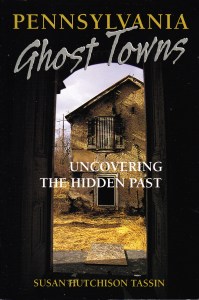
It was one of the very few parties to which I’d been invited in Edinburgh. “When a Scotsman asks you where you’re from,” one of the guests said to me, “he means where you were born.” Although we have no control or say over where we come into the world, we do feel that the place has a claim on us. Combined with my undying interest in local history, that means I like to read books about my native Pennsylvania. I was a first generation Pennsylvanian, to be sure, but to keep a nearly forgotten Scotsman happy, that’s where I’m from. Sarah Hutchison Tassin’s Pennsylvania Ghost Towns: Uncovering the Hidden Past is that familiar kind of book considered light reading, geared largely to the tourist and nostalgic past visitor or homebody crowd. Still, these kinds of quick studies often inspire the imagination. Lots of people lived here before you did.

A couple of factors stood out to me about Pennsylvania’s elder communities. One obvious feature is that a number of them began as intentional religious communities. Often breakaway sects from some major denomination, they established settlements to pursue spirituality in their own way, generally with strict rules, such as celibacy, that would spell their ultimate demise. Pennsylvania is well known for its separatist Anabaptist sects—Amish, Mennonites, and others who’ve been around for centuries and have integrated into the cultural mix of the state. I had no idea that a few ghost towns remain where some less successful spiritual seekers had broken ground. The second feature that stood out is how many communities were intentionally founded for commercial purposes. Often these were mining or lumber-processing towns. Some wealthy individual would buy a natural resource, build houses and a communal store, and permit workers to purchase goods only there. This meant individuals could never save money and never really afford to leave the mine or mill.

These are two very different conceptions of what it means to live in community. One is overly idealistic the other overly exploitative. At one end, the basic necessities of life—food, shelter, clothing—were kept from those who found themselves, like most of us, in need of a job. Or, at the other extreme, being held back from eternal life by failure to keep to the rules of a newly revealed religion. I never really thought of towns intentionally founded in these ways before. My naive view was more eclectic. But then, what do I know? I was born in a small Pennsylvania town and never thought to question why it was there. Where are you from? It’s a matter of perspective.


Stranger Things

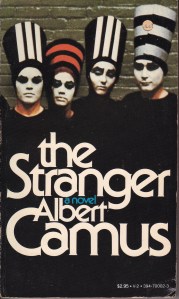
Albert Camus preferred the label “absurdist” to “existentialist” to describe himself. The problem with labels is that we don’t always get to pick our own. As a young man fascinated with existentialism, I was introduced to Camus as one of their number that I should read. Categories, of course, are only abstractions to complex realities. So, for learning about existentialism Camus was recommended reading in those days. I selected The Stranger. So many years have passed since then that I only recollected a single part of the plot. Coming back to it as an adult is like walking down that beach a second time, unaware that you’ve just been down this way and something bad happened last time. Existentialism is like that.

Meursault is little effected by life. He has no strong opinions since, at the end of the day, everything seems pointless to him. He sheds no tears at the death of his mother because death is to be expected. When a heat stroke confuses him sufficiently he unintentionally kills a man. At his deposition the examining magistrate finds Meursault’s atheism inexplicable. In the face of the possible consequences of his actions, such indifference leads him to refer to the prisoner as “Mr. Antichrist.” Awaiting his execution, Meursault has a final confrontation with the priest that has come to his cell unbidden. The prisoner is convinced that even on death row he believes more sincerely than the man of the cloth. Camus’ story is surreal but realistic. A parable for his day and ours.

I’ve lamented before about the decline in philosophical literature. Taking philosophy straight requires the kind of concentration that I lack on the bus or before going to bed. Novels like The Stranger express such ideas in digestible form. The reader identifies with and despises Meursault. Why doesn’t he do something to help himself? Boredom and indifference will literally kill him. He is, however, steadfast, and that is something to admire. Along the way existential ideas are woven into the character’s thoughts and dialogue. Everyone is like an actor in a play—they did not write it, they simply perform the roles assigned to them. When it’s all over they end up in the same place. Absurdism and existentialism aren’t very far apart. They’re both categories devised to help us comprehend the enigma that we confront in books such as The Stranger. Meursault can’t give the chaplain any false belief since, as he notes, those who believe have more need of convincing than those who don’t.


Turn the Other What?

The man next to me on the bus is reading his Bible. At one point in my life that would’ve made me feel safe. I would’ve known that the person next to me was committed to the same value system as mine—love for all, peace, equality, and acceptance. Now, however, I see that Bible and I’m afraid. You see, I’m reading Chris Hedges’ American Fascists: The Christian Right and the War on America. I can’t remember the last time I’ve been so scared. Hedges’ book was published a decade ago. What he wrote about then is coming true now and it’s because the elites of society—university folk and all—don’t take the radical religious seriously. In their delusional ways, they assume all will be well. If you think like that, read this book.

Dominionism is fascism dressed in Christian garb. It has no room for tolerance. It teaches that those outside its circle are to be ignored at best, and murdered without compunction at worst. This is not exaggeration. It is their teaching. It’s like that computer game that used to come with Macs where a time-traveling dinosaur collected the eggs of other species to save them from the coming asteroid. You could kill other dinosaurs without guilt because you knew they were going to die in 20 minutes anyway. That is very much the way Dominionists feel about you and me. We aren’t saved—their word is “Christian”—God has rejected us, and therefore we deserve to die. Many of them stockpile weapons just for this reason. Their goal, not at all hidden, is to take over the United States and make it a Christian nation. Already many in the houses of Congress are their candidates. They have a president who shares their values. We should be very afraid.

Hedges does a very good job providing the statistics that back his assertions. There is no question that this is real. Those who blithely vote Republican out of fiscal conservatism have risen to the bait. Trump has proved that once and for all. These “Bible believers” do not value or treasure love. They treasure treasure (many of them are very wealthy) and what they desire is power. Tolerance, in their view, is evil and compromising with the literal Satan in which they believe. Their Jesus does not love. He fights. And he fights for white, straight, privileged men. If you’re willing to forsake sleep, read this book. And if you think it’s exaggerating read the headlines.


Spirits and Souls

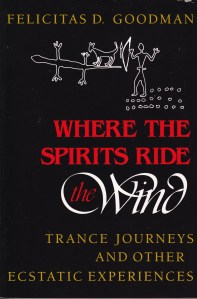
I first became aware of the work of Felicitas D. Goodman because of her classic text on spirit possession. Published by the reputable Indiana University Press, that book has become a standard for anthropological understanding of a strange phenomenon, which includes demonic possession. I found Where the Spirits Ride the Wind: Trance Journeys and Other Ecstatic Experiences in a used bookstore. Recognizing Goodman’s name, and always eager to learn about spirituality, I picked it up, It’s one of those books that makes you wonder. In an effort to experience trance states, Goodman began to experiment with various posture represented in the archaeological record. When she taught classes where students had no foreknowledge on the postures, she found they they reported similar visions during their trances while using the same posture. Matter, it seems, can effect mind.

I couldn’t help but wonder, as I read her account, what Indiana University Press must have thought about what they were publishing. This could be some serious woo, depending on how far you’re willing to go with Goodman. She was a doctorate-holding professor, so academic convention suggests she should be taken seriously. The BISAC classifications (those categories that often appear on the back cover of a book) tell the reader that this is Anthropology and Psychology of Religion. Neither field tends to give a whole lot of credence to the supernatural. At least not necessarily. And yet, there it is. Neither field really captures what Goodman describes in this book. Nobody really doubts that trances can happen; alternate states of consciousness are acknowledged phenomena. What we don’t have, however, is an explanation of what’s really going on.

A good deal of the this book consists of her students’ accounts of their visions. Although a native of Hungary, Goodman, through fieldwork and experience, became quite adept at Native American and other indigenous religious practices. The images that suggested the postures to her come from archaeological contexts around the world. This suggests that, according to Goodman’s worldview, these are some universal experiences. Attaining trance states, like meditation, takes practice. They can shift perceptions of reality. We tend not to hear too much about religion faculty who explore such things too openly. It’s a dangerous move in academia. Ironically, the institutions we build to understand our world tend to restrict themselves to the physical world or those fields that make ample lucre. I’m impressed that, even if by labeling it anthropology or psychology of religion, at least one university press took a chance at offering an exploration that might have some real world consequences.


Contracting Something

Book contracts make me happy. After slipping from higher education into the limbo of editing, it took a few years before realizing that not all books have to be academic monographs. For the past couple of years I’ve been silently writing a book intended for general readers. The subject will remain hidden for now, but a contract for the book has arrived and I’m happy. As my friend Marvin says, “for a man being published is about the closest you can come to giving birth.” There’s a bit of truth to that. Several months of thoughts growing in your head finally culminate in a full developed form, capable of surviving outside the confines of your protective mind.

The motivation for many academics to write is “publish or perish.” In my career track I both published and perished. The thing is, I write because I read. It seems unfair to read so much and not to share a bit of what I’ve learned. If you read this blog regularly you know that I have a restless intellect—the kind of thing that in the old days would’ve made you a professor. I no longer have access to university libraries with their arcane journals and massive collections, but reading on the bus is its own kind of research. (Anyone who’s tried to write notes on a bus, however, knows that the research is limited strictly to what can be remembered after a wearisome 90-minute-plus ride in stop-and-go traffic.) A few years back I decided to start writing up what I’d been observing. Slowly a book was formed. The process is not a swift one.

Many people question the ability of editors to write books. No, seriously. Agents are generally only interested in professors, celebrities, and journalists, not those who may have been one of the above once upon a time. That’s why this book contract feels like a small victory. Weathering the Psalms was written for other professors while I was still one myself. A lot has happened since then. I’ve read hundreds of books in the intervening years. Slow study that I am, it took some time before I realized I could begin to analyze all of this and write it in a way the average educated reader could find engaging. Agents declined the project, but now I’ve found a publisher who believes. When you work on your own, like many authors do, finding just one believer is sometimes all that it takes.