Down the Road

First of all, thank you to my regular readers. I’ve been making daily posts on this blog since July 2009—nearly nine years of illustrated commentary. It seems, however, that I’ve reached my limit. My storage limit, that is, on Word Press. As a result I’m going to be upgrading my account. Now, I’m enough of a Luddite to be uncertain of how this might impact any auto-updates (I flatter myself to think there are some) or links to this blog. I’m planning on continuing Sects and Violence in the Ancient World, but it will be but one page on a website that will offer the opportunity for me to go into more detail about my books. I don’t know how it will look yet, but it shouldn’t be disappearing from cyberspace.

Timing, as they say, is everything. It’s never been my strong suit, however. My current book still has no final title, so it’s a little difficult to promote it properly. Oh, it’s finished, and in the hands of the publishers, and although I can give it its own page, I can’t really title it yet. Perhaps in the height of hubris, the new layout will have pages for my previous two books, A Reassessment of Asherah and Weathering the Psalms. These were both academic titles with very limited sales, but they represent a significant portion of my life and I’d rather not have them completely forgotten. My latest book is for a more popular readership, but I don’t have the platform to interest agents (not for lack of trying), so I’m incorporating it into a website that will allow for its self-serving promotion. So embarrassing. You can imagine how red my face must be.

By the way, there’s another book about half-written. (Actually, there are several, but this one looks like it might actually appear.) A new series has been announced—I’ll write about it once I learn if my proposal has been accepted—that follows my own aesthetic closely. In conversation with the series editors, I’ve put together a proposed book based on my current work. If it happens, a new page will pop up on this future website I’m envisioning. Since I’m no Luddite, I can see possibilities for these pages. The blog will continue with its daily babbling. I’ve been doing this so long I wouldn’t know any other way to start my day. Combined with the hubris of those who spend too much time in supernatural headspace, this could be interesting. If you’re search brings you to what looks like the wrong page, please persist. Sects and Violence will be only a click away.


Always Have with You

The place wasn’t meant for a family of six. Properly speaking, it was a one-bedroom house, or hovel. The attic, from which we could see the sky through the roof, was divided into two rooms, with no doors. You had to pull down the stairs in order to climb up there and that trapdoor had to be kept closed in the daytime. The house was heated by a single, oversized gas stove that sat in the middle of the living room—no ducts, vents, or radiators here. The bathroom had only a sink and a toilet. No tub. No shower. The only window that opened was the kitchen window, and before we moved in my mother insisted that my step-father pull out the nails that held the vinyl blinds permanently closed over the windows that would never open. The only reason we weren’t called “white trash” is that we lived above the Mason-Dixon line.

Reading Nancy Isenberg’s White Trash: The 400-Year Untold History of Class in America was, therefore, a little bit uncomfortable. First of all, bullies who care only for the wealthy are nothing new in American politics. Second of all, it reminded me of how, when I was found without a job, no college or university wanted to hire a guy with no connections, despite the Ph.D. That’s business as usual in these United States. What I have realized is that in this nation of self-made individuals, those allowed to make it often start from a class higher than my own. I was a first generation college student, and once my step-father gave in to the pressure to put a proper bathtub in his house, I’d come home to find carp swimming in it. White trash and ivory towers clash, don’t you know.

The saddest part of this book is that nothing has changed. Four centuries on and we still treat the poor with contempt. We love rags to riches stories because they’re so rare. The vast majority of the poor have a very hard existence. Even though, according to government statistics, we were considered a poverty-level family, we had it better than many. True, there were too many cars in the driveway, all of them used—very used, and the house was bulldozed as unfit for habitation immediately after we moved out, but many have it far worse. This book opens some old wounds, but it should be required reading for all politicians. Not that it would make much of a difference, though. The suffering of the poor is just far too easy to ignore as long as there is money to be made off of anyone less fortunate than yourself. That’s the American way. It always has been.


After Darkness

Some historians, I suspect, despair of the volumes already written on all periods, ancient and modern. History, however, can cover a variety of segments of time. A. Roger Ekirch, for example, thought to write a fascinating history of darkness. At Day’s Close: Night in Times Past is a thoughtful exploration of what night has historically meant. For those of us born in the era of constant light, the realities of what it was like after dark in the past are almost unimaginable. I’m sure Ekirch didn’t intend it to be so somber, but the reality of frequent crime in unlit regions made reading much of this book a sober experience. Confident of their ability to get away with it, many up until modern times took advantage of the night to commit all kinds of crimes. Makes you kind of want to check the door locks once again before turning in.

Much, but increasingly less, of our lives is spent in sleep. The advent of artificial light has led to changes in lifestyle that, according to biology, aren’t terribly healthy. The natural rhythms of sleep and wakefulness may be challenged by jobs or enticements to stay up late and surf the web or any number of other factors. Now that light has become so very portable in the form of smart phones and tablets, even less of darkness remains. Although it’s a bit repetitive and not laid out chronologically, At Day’s Close contains many provocative observations about the dark. There’s even a bit about monsters.

Night has always been symbolic. Death and fear were associated with night early on, and we still call the era of scientific progress the Enlightenment. Churchmen (for it was an age of such) tended to condemn night as evil, the Devil’s time. Not all agreed, for some considered the dark a creature of God and complained of the hubris of setting up lights at night. The religious symbolism of night is very rich and very ancient. Those of us used to artificial light have difficulty imagining what it took to navigate after dark in ages past. More than an annoyance, night could be a truly dangerous time. Dreams, once mainly the products of the night, also had religious significance before being rationally explained. The industry of banishing night also has, in some respects, the effect of banishing dreams. We should stop and think before we put night to flight. Half of our time is spent in darkness, and all of our time is highly symbolic.


On the Nature of Publishers

An occupational hazard of the editor is paying obsessive attention to publishers. That stands to reason. Many academics are less concerned than some publishers think they are about such matters as who publishes their book. I suspect that many have, for whatever reason, found no welcome home among elite publishers. This happens often enough to make many scholars less worried about reputation than the practical matter of getting a publisher interested at all. There are a lot of original thoughts out there, and some of them occur to a person and just won’t let her or him go. An example: what terms are used for weather in the Psalms and why? Before you know it you’ve awaken before the sun for five years and written 75,000 words on the topic and you want to get it published without having to pay someone to do it. That kind of thing. I’ve been pleasantly surprised by the number of scholars who understand this kind of reasoning.

Also, it’s a matter of scale. I work for a premier publisher in the academic world. It may surprise many people to find out just how often when someone asks what I do (not very often, for the record) and then follows it up who I do it for, the interrogator has never heard of my employer. Academic presses, even important ones, are really only known among academics. Keep scale in mind. If you’ve ever walked passed Norton’s offices in Manhattan, and then those in which I spend my days, you know what I mean. Academia is small scale. For the average person reading a book is something they generally choose not to do. Of those who do read, very few read academic books. Those who read academic books tend to stick to their own discipline, or related ones. You get the picture—smaller returns at each step.

So, having written a book about horror movies, where do I take it? This isn’t one of those footnoted, look-how-erudite-I-am kind of books. It’s more of a I-noticed-something type. The question then becomes, who publishes such kinds of thing? I do worry about academic reputation—who doesn’t?—but this is a book I want the correct readers to find. That’s why McFarland suggested itself. People reading on pop culture, know to keep an eye on their offerings. Hopefully enough people will find it to have justified the effort. It won’t impress those enamored of collecting (academic) names. It isn’t the kind of book my employer would publish. Nor would I want them to. Call it an occupational hazard. Like any subject, knowing too much about publishing can take away from the fun.


Of Our Being

It happens every year. What with my commute schedule and personal disposition, I read a lot. This blog and Goodreads are my accounting system for keeping track of the thoughts that arise during all of this. Every year I get stopped by my first really important book that I’ve read since December’s roundup of last year’s titles. Paul Bogard’s The Ground beneath Us is this year’s first such book. Subtitled From the Oldest Cities to the Last Wilderness, What Dirt Tells Us about Who We Are, this tour of several fascinating locations is a wake-up call. Divided into three sections—Paved and Hallowed, Farmed and Wild, Hell and Sacred—Bogard’s book offers a kind of travelogue with the additional reminder that how we’re treating the land is the most terrifying example of what lack of foresight imaginable (why, Prometheus?) looks like. In a world with a rapidly growing population, we’re paving and building at unprecedented rates. World harvests, experts say, will last only another sixty years. Then we starve.

A dilemma I’ve struggle with here before is the fact that nobody owns this world. Nobody but those driven by money. There’s little that can stop them. This is exemplified by his chapter on fracking in my native Appalachia. Companies protected by loopholes—nooses, actually—devised by Dick Cheney can take over a town and destroy its environment. And this was even before Trump. And this is only but one example. Those who look soberly at where we’re going—and the melting permafrost in the northern hemisphere is about to make the globe nearly uninhabitable for our species—are ignored because they stand in the way of profits. Everybody loses. As a species we have neither the will nor the power to prevent it. Epimetheus reigns.

Not just doom and gloom, The Ground beneath Us is a thoughtful reflection on the human spirit. The titles of the subsections reveal that sacred ground—one of my recurring themes on this blog—is very real. Bogard isn’t a religionist, so you can’t accuse him of special pleading. His moving accounts of visiting sites hallowed by any number of factors, whether violence or simple belonging, reveal what home really means. What a dangerous, maybe even sinful, concept ownership can be. With chapters covering areas as diverse as Mexico City sinking under its own weight, to Ames, Iowa where what we’re doing to the soil is studied, to parts of Alaska accessible only by air, Heaven and Hell are daily and plainly played out before us. This is a very important book. We can only hope enough people will read it before it’s too late.


Hey Jude

Reading Jude the Obscure was, at times, like reading my own biography. Authors strive for that effect, to be sure, but Thomas Hardy hits close to home on this one. I don’t mean in the aspect of marrying the wrong woman and losing his true love, but rather in the sense of what Jude was meant to and couldn’t be. For any readers behind on their Hardy, Jude Fawley was an orphan who grew up with scholarly abilities but no connections to university folk. Teaching himself Greek and buying what books he can afford, he eventually moves to Christminster (Hardy’s version of Oxford) in order to begin his studies at the university there. His application is summarily rejected because he is a working-class nobody who would be happier not overreaching himself. He then decides to try to become a parson only to find that path blocked to him as well.

Okay, so that’s a bit brief for a 400-page novel, but you get the gist of it. Hardy, according to the introduction, added the university theme later since the novel’s main focus is on the hypocrisy of the church regarding marriage. Both Jude and his true love (and cousin) Sue end up marrying other people who make them miserable. They each separate and then live together and raise children until tragedy causes Sue to have a religious conversion and return to her first husband. Jude dies in obscurity, as the title warns. Hardy was famous for his anti-church sentiments and Jude the Obscure was one of his most criticized works. The university theme, however, was the part I just couldn’t let go.

Being from the working class you may not have any idea how higher education functions. Even with raw talent and ambition, there are so few places available that you can easily find yourself in the rejected pile. Jude fatefully moves back to Christminster, hoping on some deep level that he’ll be accepted. That never happens although his fellow stone-cutters know that he is just as learned as the professors who regularly parade through town. The author didn’t intend to write cheerful stories. The friend who first suggested I read Hardy’s work knew about that tendency. The world is a place of comfort for some and struggle for others. Like Jude, those on the outside just can’t see what’s wrong with their own earnest application to be counted among the educated. Like any country club, however, the real point of it all is to learn how to game the system. Like taking a sad song and making it, well, better.


Creating Science

Religion and science. Cats and dogs. We’re used to hearing these two just can’t get along. High profile scientists sometimes denounce religion tout court, and some religionists doubt science’s claims implicitly. Human beings, truth be told, are both rational and spiritual. Often not both at the same time. Edward O. Wilson is a biologist who believes, as expressed in The Origins of Creativity, that the humanities and science are both essential and that the hope of humanity is that both will be embraced. It’s a fine vision—guided by science but aware of the values brought by art, we would live in a world utilizing the best our species has to offer. So, why don’t we?

Apart from the obvious fact that humans are also irrational and non-religious—what else could justify wars?—Wilson has a rather odd answer. The belief in creation myths, he avers, is what leads to much unrest in the world. Not religion per se, but creation myths. Muslims, Christians, and Jews share basically the same creation myth. Their divergences come in other forms. Many don’t much care about the creation myth of their tradition so much as about issues that are based on outdated understandings of humanity. Wilson doesn’t condemn religion per se, which is refreshing, but he does seem to circumscribe it far within its natural boundaries. I suspect his real target is creationism.

In this very insightful little book, another curiosity lurks. Wilson, although he supports the humanities and advocates for them, stresses that they are problematic by being limited to humans. I think I get this, partly. There is much to the world beyond human ability to perceive. Our senses of smell and taste are especially limited. We can’t see as well as an eagle or hear as well as a bat. Incorporating their experiences into the humanities would be way cool, but we would never experience them ourselves. This is terribly speciesist of me to say, I know, but humanities are all about what it means to be, well, human. We are limited. Rationality is limited. We don’t have all the facts, and if history is anything to go by, we never will. Accepting limitations is very human. So is attempting to exceed them. The humanities at their best embrace both. Wilson acknowledges that the study of religion is important, and that our universities let us down by not giving the humanities their due. Science can take us only so far. Creativity is about the most godlike trait we possess.


Title-less

I’ve been offering a few teasers about my forthcoming book. One of the reasons for not making an announcement is that the title hasn’t been settled yet. It’s pretty hard to promote a book without one. I’ve written enough about it that readers can tell it’s about horror movies. The publisher is McFarland, an independent academic publisher that specializes in pop culture and has an impressive list concerning monsters and other frightening things. Once we get a title down, I’ll say more. In the meantime, I can take the opportunity to say a bit more about the publishing industry. Not that people generally ask me about it, but I suspect many authors secretly want to know some insider tips. If not, I suspect there’s one or two other blogs to read today.

I’ll admit up front that I tried unsuccessfully to interest agents in this book. At least four wrote back to tell me it was a great idea, but a writer without a platform is like, well, an editor. I help other people get their ideas published—always a bridesmaid, as they say—physician heal thyself. When I realized I was wasting months trying to find a professional to promote my book, I decided to revert to the tried and true. When you want to know who to approach about your book, look at the spines of the books you read to write yours. Who are the publishers who produce books in this area? Sometimes the interests of a publishing house will change with the editors, so the more recent your comps, the better.

Horror sells. My project wasn’t really mercenary in that way, but rather it was the result of years of watching horror, usually by myself, and finding some commonality in the films. What exactly that commonality is will, I hope, become clear once I can freely write about my book topic. Others, you see, could swoop in and take my thesis—a perpetual fear of someone who barely has time to scribble out a blog post a day. Finding the time to write books in the off-work and off-commute hours is a real juggling act. In my case, perhaps a jugular act. Without an agent, I turned to McFarland. Many of their books helped me form the ideas for my own. Besides, they have a Scottish connection, and that means something to this old Edinburgh alum. If you want to get published, it helps to know the players. That may become even a bit easier once I’ve got a title.


Winter Blossoms

Audur Ava Olafsdottir is a remarkable novelist. Iceland, of course, is held to be the most literate country in the world. I began reading Icelandic fiction of a considerably earlier period while living in Scotland. There was still a trace of Scandinavian heritage from Viking days discernible there, particularly in the Orkney Islands. I started taking on reading challenges three years ago. Given that I spend many hours a week sitting on a bus, it seemed natural enough to put my time toward a specific goal. The Modern Mrs. Darcy’s reading challenge encourages me to move beyond the bounds of my usual fare. One of the categories for this year’s challenge is a translated book. I enjoyed Olafsdottir’s Butterflies in November so much last year that I selected The Greenhouse for this year’s translated offering.

The story of two young people who accidentally have a child together, the tale makes effective use of religious imagery in reflective ways. The young man takes a job in a monastery rose garden in a remote country. When his one-night stand visits him to have him watch his daughter while she finishes her thesis, everyone notices how miraculous the child is. She even bears a striking resemblance to baby Jesus in the painting in the chapel. The narrative is gentle and reflective. The monks are drawn out of their scriptorium by the beauty of the roses and the child that is so intimately tied up with them. There’s nothing preachy, or even overtly religious here. It’s a simple reflection that religion pervades life, even in secular Europe.

One of the saddest realities of the present is that religion has made itself so odious to so many. Human beings are naturally inclined toward religious thoughts and behaviors. When any form of orthodoxy enters the picture, though, it begins to fall apart. The young couple, unmarried—not even girlfriend and boyfriend really—transform the town they’re in, making it a more habitable and humane place. They’re not condemned for “living in sin.” Even a priest admits things can get pretty complicated where relationships are concerned. A coming of age novel, The Greenhouse has Icelandic magic that comes through even in translation. Olafsdottir is a novelist who doesn’t feel the need to apologize for describing what is plainly obvious to those who pay attention: religion is all around us, and it need not be something to condemn. In fact, if cultivated without the acidic soil of orthodoxy it might even make the world a better place.


Frankenstein and Co.

Authors, I expect, don’t anticipate that their work will be annotated. Since I deal with annotated Bibles on a daily basis, I often ponder that the anonymous writers—we know of few biblical writers with any degree of certainty—had no idea that they were writing the Bible. Nor did they realize that some day many people would make their livelihood from interpreting that book. Among the interpreters are annotators. When my wife gave me Mary Shelley’s Frankenstein for Christmas I was at first puzzled. I have a copy of Frankenstein already. In fact, I read it again just last year. Then I realized it was an annotated edition: Annotated for Scientists, Engineers, and Creators of All Kinds. Edited by David H. Guston, Ed Finn, and Jason Scott Robert, the book contains the original text and an introduction, as well as the said annotations. Like a typical study Bible, it also contains essays. The editors joke that it’s kind of like a Frankenstein monster itself.

The “value added” material isn’t all about science. In fact, quite a lot of it has to do with human relationships, and particularly women’s rights. Mary Shelley was an early feminist and her novel shows what goes wrong when men try to reproduce without women. Another recurring theme that, amazingly, had never dawned on me while reading Frankenstein was the Adam and Eve story. Victor Frankenstein, like God, creates a man. Then he creates a woman. Well, almost. Afraid what might happen should his creature find a companion too companionable, he destroys the second creature before she’s finished. The biblical parallels are nevertheless there.

Originally subtitled The Modern Prometheus, the novel was based on pre-Christian myth as much as on Holy Writ. Nevertheless, the Bible suffused British culture in the nineteenth century just as it has continued to overwhelm American culture to the present day. We ignore it at our peril. Morality in science is a major focus of the essays in this volume, but I wondered how many scientists might be enticed to read a piece of feminist fiction in order to learn some ethics. The largest ethical conundrum we face in the United States is that so few people read for personal growth. Spending time with a book is a sacred activity for those committed to the principles of literacy. Frankenstein isn’t a prefect novel; the pacing is pretty slow even for a gothic masterpiece. There are loose ends left hanging. The protagonist is often insufferable. Still, as the editors and annotators have demonstrated, there’s much to learn from this old story. All it takes is the willingness to read and deeply reflect. And perhaps read the annotations.


Christian Sister

Difficult to believe as it may be, some of the biggest superstars in America’s history have been clergy. The case has been firmly made that George Whitefield, the evangelist, was the first to hold “rock star” status in these United States. He drew stadium-sized crowds before there were stadiums and was, perhaps, the most famous man in the country. Fast forward a number of years and we find a name that may not ring so many bells today. Aimee Semple McPherson, however, was more famous than Hollywood actors and most political figures of her day. The founder of the Foursquare Gospel church was, in the roaring ‘20s, one of the most recognizable names in America. It may not count for much, but even in rural Pennsylvania we learned about her in American History class in high school four decades after her time.

I read quite a lot about American religion, and Aimee Semple McPherson frequently comes up. I knew little about her, however, until reading Daniel Mark Epstein’s Sister Aimee: The Life of Aimee Semple McPherson. While it has its faults as a biography, it does convey a fair image of who this fascinating woman was. An evangelist when few women preachers existed, she was creative, crowd pleasing, and remarkably broad-minded for a Fundamentalist. Her personal life was full of drama—three marriages and at least one kidnapping episode—wealth, and want. She trusted Jesus implicitly and often suffered alone in silence. Secretly she befriended Charlie Chaplin, a man drawn to her stage presence but not her religion. It’s difficult not to like this woman who insisted on doing things her own way, and who ended up alienating her family (apart from her son) by doing so.

There can be no doubt that Aimee Semple McPherson believed what she said she did. Although she didn’t approve of theater she brought theatrics into church via her famous “illustrated sermons.” She pioneered radio evangelism, which subsequently grew into a hackneyed soapbox for lesser thinkers. She was a faith healer, a world traveler, and a woman who genuinely cared for the poor. Epstein’s book tells the story with heart and a touch of hagiography, but it is an entryway into one of the lives that shaped Jazz Age America, even if it is now largely forgotten behind flappers and Fitzgerald. It’s hard to believe that some of the most famous people in American history were religious leaders of their time, especially when we see what’s on offer in that arena today.


Devil of the Time

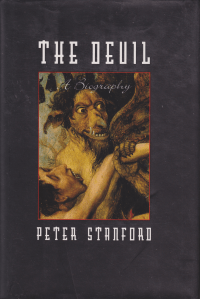
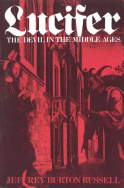
There can be little doubt that evil prospers. We’ve suffered through a year of an evil administration and we’ve seen the government increase the suffering of its own people in deference to the wealthy. And ours is only a mild case of evil. Jeffrey Burton Russell, over the course of some years, wrote three sequential books about evil. The first, The Devil, I reviewed last year. Having just finished the second, Satan: The Early Christian Tradition, it has to be said that the concept definitely evolves. The period between the New Testament and the fifth century was a rich one for diabolism. The writers of this period became increasingly theological in their efforts to make sense of what is obviously an unjust situation created by a theologically good God. These were inventive writers, if somehow less than convincing.

Russell is a careful explainer. He summarizes the views of the “church fathers,” pointing out where their logic fails. This isn’t some liberal trying to dis the Devil, however. Russell acknowledges that he believes a Devil of some kind must exist. Reason, however, must also be applied. It’s difficult to believe that people in the early Christian centuries were willing to take such leaps of logic. Of course, they didn’t have many options for opting out. God was the great explanation for so much of their world. Fitting an all-powerful deity into logic when there’s abundant suffering in the world requires a certain flair for casuistry. No matter how the equations work out, an all-powerful God can’t be all good, not in this universe. Speculation about the Devil, or Satan, ran logic through its courses. Who was this being, and how did he get to be the way he is?

The theologians argued without any glint of irony. This was serious stuff. The Bible, famously, has little to say on the matter. Early thinkers such as Tertullian, Origen, and Augustine had volumes to say on the subject. None of them came up with a workable solution. Logic and the Devil just don’t fit. Theology is always a struggle since it deals with intangibles. Laws of logic sometimes simply don’t apply. If the feeble human imagination can conjure a good world without needless suffering, one has to wonder, why can’t an almighty deity do the same? Is this a god of limited imagination or, as the classic theological chestnut puts it, one who sees more than humans do? You can ask, but you won’t receive an answer. The Devil, it seems, really is in the details.


Playing Piano

It must be very difficult to write books that make the future believable. With the speed of technological change, it’s getting more difficult all the time. Some exceptions are modern dystopias that take civilization back to square one. We’ve come close enough in reality already to be able to imagine such things. While not really a dystopia—although it kinda is—Kurt Vonnegut Jr.’s Player Piano extrapolates what a future in the service of machines might look like. Some elements are incredibly 1950s—everyone still smokes, all communication is on paper, computers run by punchcards, and attitudes are hopelessly parochial—while others are on point for today. The world has been mechanized and an even more obvious class system than our current one has been established. Of course, those top few reap all the rewards and wonder why those below them are dissatisfied.

What’s really noteworthy, though, is that Vonnegut uses religion to address the situation. In this, his first novel, he has a minister leading the revolution against the system. This clergyman does so by finding and nominating a “messiah”—a figure around whom the dissatisfied might coalesce. In a world many characters characterize as evil, the solution is offered by religion. Well, not exactly. Vonnegut’s famous satire is beginning to appear even here and the revolution that religion fuels can’t overcome the human love of machines and gadgets. In many respects, this book is an extended parable. I can’t help but think that Vonnegut would’ve recognized our love of devices as a symptom of his humanity being declared useless by machines.

Kurt Vonnegut isn’t a religious writer, but like many authors he recognizes the motivating power of belief. There are agnostics aplenty in Player Piano, Indeed, the protagonist is never sure of what he believes. The larger questions, however, still persist: do we advance human potential by making things easier? All of us now have to be varying degrees of experts on computers to find even the most rudimentary jobs. There is really no opt-out anymore, and what’s more, few would take it if there were. The phone in my pocket has changed my life in ways I can’t call entirely good. As we get closer and closer to our media, we’ll want more intimate contact—implants are already starting to exist. Vonnegut, in his sardonic way, was asking even in the early 1950s if we had really improved our lot via such invention. In the end, of course, it doesn’t really matter because for better or worse, our tech is here to stay.


How Did We Get Here?

Where do we come from? Leaving aside the puerile snickers of our younger selves, we eventually learn “the facts of life” and get on with it. The funny thing is, conception wasn’t really understood until the late nineteenth century. Obviously people had been reproducing from the very beginning. Chances are they were curious about the matter even then. Scientific investigation was a long way off, however. Edward Dolnick tells the story of the discovery in a wide-ranging, entertaining, and informative way in The Seeds of Life. The subtitle gives an idea of the range and quirkiness of the account: From Aristotle to da Vinci, from Sharks’ Teeth to Frogs’ Pants, the Long and Strange Quest to Discover Where Babies Come From. I used to tell my students that using the Bible for sexual ethics was difficult because biblical writers really didn’t understand what was going on “down there.” I think Dolnick would back me up on that.

Ancient people generally made the connection between sex and babies, of course. What was actually happening, however, wasn’t understood because sex cells require a microscope even to be seen, and that doesn’t make it obvious what they’re doing. Dolnick’s tale looks at advances in various sciences and, perhaps more importantly, the religious constraints under which they operated. The idea of the atheistic scientist is a fairly new one. Up through most of the nineteenth century scientists tended to share the worldview of others that God was assumed and that religious rules applied to such mysteries as life. That’s amply demonstrated in this book. True insight was slowed down considerably by religious presuppositions.

That’s not to say Dolnick blames religion—this book is much too congenial to do any blaming. A number of ideas had to coalesce, however, before it was understood that both women and men contributed to the developing embryo. Medicine was often looked down upon by science, and religion often crossed its arms and stood in the way. Despite all that, careful observation, and putting unexpected things beneath a microscope, finally led to the answer. It was sea urchins who finally yielded up the mystery’s clue. This book will take you some strange places. The individuals described are a curious lot. For the most part they’re also a religious lot. Persistent theorizing and persistent peering through a microscope and a willingness to question convention all had to combine to answer a question as basic and profound as where it is we come from.


Middle Age Demons

One of the consequences of watching horror movies is the interest in the origins of various monsters. Since many such films feature demons, their backgrounds and origin stories have always been a point of curiosity. Time is always an issue and Juanita Feros Ruys obliges that hurried sense by packing a lot of information into her short book Demons in the Middle Ages. Covering the basics in the introduction, she moves on to discuss demons in the desert—the bane of the early monastic, and demons in the monasteries of populous Europe. A chapter on the Scholastics describes how early science was applied to incorporeal beings, and a final chapter on learned magic, i.e., raising demons via magic books, finishes off this brief study.

What is particularly striking here is that the Bible says surprisingly little on the topic. It says, however, just enough to kickstart the Late Antique and Medieval interest in the subject. Vast amounts of speculation were raised in the Middle Ages concerning what exactly demons were and what they were made of and what they could or couldn’t do. Ruys points out the trajectory of the male necromancer giving way to the female witch just as early modernity was getting started. The results, we all know, were horrific. Throughout it is remarkably clear that belief in demons was strong. People took them very seriously—the Bible says they’re there, so there. Belief, as always, has consequences. Beginning with the Scholastics, however, a reasoned understanding of the spiritual world was deeply desired.

Reason and faith aren’t really the strangers they’re often portrayed to be. Medieval monks could be quite clever and scientific in their outlook. Human mental faculties, created, as they believed, by God, were necessarily good. Something I’d never considered, but which Ruys explores, is the belief that God cannot experience emotions. Being an “unmoved mover” meant not experiencing emotion (which, she points out, includes a noun of movement). This also meant that demons, according to some, had no feelings. This is a very cold spiritual world, particularly when it’s put into conflict with the human one. Spiritual, rational beings subjected to emotions, we’re the ones at the mercy of supernatural beings more powerful than us, yet incapable of the warmth we crave. About a millennium and a half of shifting beliefs in demons crowd this tiny book. Although not intended to be especially profound, it gives the reader plenty to ponder. Including why some of us watch horror movies at all when religion can do the trick all by itself.