Books and Editing

My life has been about books. It was only as I became what is now known as a tween that the passion took hold, but since that time I’ve been addicted to them. As some readers know, I have a Goodreads account. Each year I try to take out a Goodreads challenge on how many books to read. That recently got me thinking; as an editor you read lots of embryonic books, but they don’t count. Being an editor’s a funny job. Not ha-ha funny, but the other kind. When I was having trouble breaking back into higher education, I ran across a quote that went something like this: What’s an editor? A writer who actually has a job. (Rimshot.) I have a tendency to take things literally, so I thought I’d discover lots of writers among professionals in the publishing world. I haven’t.

It could be that other writers keep it well hidden. I publish my fiction under a pseudonym and it may be that the other editors I know live hidden lives too. Somehow I doubt it. They check their email at midnight and all day long on weekends. One thing I know about writers is that we need time to write. If your workday is already eight hours and your commute is three-plus hours more, you won’t be checking work emails on weekends if you want to get any writing done at all. But what about the reading? Does it count when you read books that aren’t even born yet?

On Goodreads I enter my books by the ISBN. The International Standard Book Number (for which you have to pay, I’ve learned) is a tool used so that booksellers can keep track of titles with a unique identifier. The system is fairly recent (at least according to some of the books I read), and not all books have one. For those of us who read ancient documents, those can’t count either. Ilimilku didn’t think to stamp 13-digits on the bottom of his clay tablets. There’s no way to trace just how much s person reads in an actual year. I measure myself by my books. I get a profound sense of fulfillment when I finish one. That’s why I so often post about them on this blog. Books mean something. Call it a bad habit if you will. We’re outgrowing our apartment because I find it hard to part with books. There are those who spend their lives building arsenals. Then there are those who spend theirs building libraries. I know which I prefer.


Here Before

Déjà vu can be quite disorienting. Déjà vu can be quite disorienting. One of the categories for my 2018 reading challenge is a book you can read in a day. Maybe it’s just me, or creeping middle age, but books seem to be getting fatter these days. Despite the amount of time I spend reading, I’m slow at it and it’s a real struggle to find something I can actually finish on a three-hour bus ride. That’s why I thought of a play. Plays are meant to be performed in one sitting, so you should, in theory, be able to read one in a few hours. My first thought was Shakespeare, but the books of Shakespeare you can find these days all have added pages of commentary and interpretative material and the books seem to have put on weight since the Bard’s day.

So I settled on Rosencrantz and Guildenstern Are Dead by Tom Stoppard. My wife had a used copy from college days and I’d been wanting to read it for some years. Here was my excuse. Then the bus ride began. Starting Act One I was sure I had read this before. It wasn’t just an inkling, like déjà vu often is, but an overpowering sensation. Of course I could tell what was going to happen—I’ve read Hamlet a time or two—but it was more than that. The sense that I had not long ago read this very sequence of words was nothing shy of overpowering. Uncanny even. As I moved into the latter part of the act, the feeling went away. This was new territory after all.

Consciousness is mysterious. Even with all our instruments and equations and theories, we still don’t know what it is. Materialists insist it must be simply a function of the brain, but that’s certainly not what it feels like. One of the hazards of reading a lot in middle age is that some things do start to blend together in your gray matter. Research, for example, means reading many books on the same subject with repeated ideas common among them. For fiction, however, we often hold a higher standard. Uniqueness and creativity are highly valued, even if the play you’re writing is a riff off the old Bard. In the end, I was able to finish the play in a day’s reading on the bus. Staring out the window after I’d finished, I was thinking how déjà vu can be quite disorienting.


Personifying Evil

Biographies seldom cover millennia. Even if one were to try to uncover all the scant facts on old Methuselah at 969 years, it would still fall short of four digits. So Peter Stanford’s The Devil: A Biography takes the long view. Even with that lengthy perspective, there’s little that might be known about the prince of darkness. Even with a role in the Good Book his appearances are few and details are lacking. What Stanford does, of course, is outline, more or less, the history of Satan. This is no easy task since few ancient sources focus on trying to provide explanations for exactly who this might be.

As with most books by non-academics (and I don’t mean to sound snobbish here) there are some overstatements. Some of the details aren’t so finely parsed. It’s the big picture the author’s after and he does quite well when it comes to the modern era. Not only is there enormously more material from which to choose, there is also a great deal of literature and even headlines available to harvest. All writers that I’ve encountered on the subject make the point of demonstrating that news of what’s happening in the modern world suggests either the Devil exists or that something (or things) is doing a great job parodying such a character. When seeing evil in the highest reaches of the government it’s not so hard to believe.

The thing about the Devil is that he almost died out. In the nineteenth century when the explanatory value of science was firmly kicking in, and industrialization was making our live both easier and harder, the dark lord went underground. Humans seemed capable of making and claiming their own evil, and even the professionals—the clergy and formal religionists—had admitted Satan was most likely a metaphor gone wild. The birth of Fundamentalism, a movement that became prominent only in the 1920s, necessarily resurrected the Devil. The Bible does mention Lucifer, so he had to be real. Since that day he’s learned a lot. Protean to the extreme, he bears many guises. No longer beholden to a demonic tail, cloven hooves, or a pointy beard, he most often appears clean shaven and wearing expensive business suits. Borrowing a phrase from the Good Book, it’s by his fruits that we know him. Stanford’s biography shows its age a little, but when you’re covering a couple thousand years of speculation, being outdated is only a venial sin.


Bearing Light

Jeffrey Burton Russell knows a devil of a lot about the Devil. I’ve just finished the third of his five books on the subject, Lucifer: The Devil in the Middle Ages, and I certainly learned a thing or two. As someone who considers himself an historian of religion, being exposed to a concept over several volumes has a way of making me feel humble. The theme of this series, at least so far, is that the Devil is a conceptual way of dealing with evil in the world. In the days of polytheism a single source of evil wasn’t needed, but no matter how you slice it, monotheism implicates God in the fact of evil in the world. The Devil is one way to try to lift some of that burden from the divine shoulders.

Lucifer is an interesting installment because ideas of the diabolical really took off in the Middle Ages. Russell’s previous volume, Satan, became heavily theological and there’s a bit of that here as well. While there’s no doubt some average people in the Dark Ages tried to figure out where Devil came from, the officials sponsored by the church were those whose ideas were written down and preserved. Those ideas, unsurprisingly, were theological and complex. Scholasticism, which began in the Middle Ages, launched what was to become known as systematic theology in the modern era. Among the many topics with which it concerned itself was the Devil, and evil. Ranks of angels, both fallen and un, peopled the atmosphere. Galileo’s perspective would eventually change this cosmology by making it both simpler and more complex at the same time. Lucifer, however, still survives.

One of the stranger developments of the Devil in this time period is as a form of light relief. The idea of plays (which had been around since classical times) also took off in the Medieval Period. In these plays Lucifer and his demons often took on a comical cast. Even when the tone was serious (and what morality play isn’t?) the Devil could be used for laughs. An incredibly rich mythology had been adopted by the church at the time—think Star Wars with more religious characters—that assured the laity that Satan’s doom was sure. Besides, we like to make fun of the things we fear. Think Washington, DC. Now that I’m halfway through Russell’s oeuvre on the subject, I’m curious where his next volume will go. No matter how much you think you might understand evil, as we’re daily finding out, there’s always so much more to learn.


Testamental Annihilation

I’d be a hypocrite if I didn’t tell you there may be spoilers below. The book to which I alluded last week—the one made into a movie—was Jeff Vandermeer’s Annihilation. I first saw the book in a Green store in Ithaca, New York. I figured it must have a planet-friendly message if it were being sold at such a venue. I’ve finally had time to read it. There may be spoilers, so if you plan to see the movie, be warned.

Set in a kind of edenic dystopia not far from now, the novel gives none of its characters names. The narrator is the biologist of a four-member team sent into Area X—a region in the south from which no expedition has returned. Clearly intended to be part of a series, the novel does leave quite a few things hanging. Among the many unanswered questions is what has happened here. One of the problems with having Bible-radar is that you can’t overlook references to the Good Book. Without going into too much detail, the story has mysterious writing on the wall. That itself is a biblical trope, of course, but when the biologist discovers notebooks from previous expeditions, she considers that the writing is like something from the Old Testament. This description made me pause and ponder. The Hebrew Bible has, in the popular imagination, been cast in the role of a harbinger of doom and gloom. Granted, there are many passages that have earned that reputation, but on the whole it’s a very mixed bag. Still, in popular culture “Old Testament” means things are going wrong.

While not a horror novel, there are elements of horror here. People transforming into plants and animals, sloughing human skin. And resurrection—how New Testament! This made me think that maybe a penchant for horror isn’t such a strange thing for a guy who spent a decade and a half teaching the Hebrew Bible. My motivation for going in that direction had more to do with my interest in origins, but nevertheless, I also grew up watching monster movies. Maybe, unbeknownst to me, I was bringing the two together in this field of study. It’s difficult to tell at the end of book one what the overall message will be. But since I’m discussing the Hebrew Bible maybe I’ll take a stab at prophecy and predict that the second book of the series will be in my future. And I wouldn’t want to be a hypocrite.


Experimental Truth

Only the truly naive suppose that the government doesn’t lie. I just miss the days when they lied for what could be construed as good reasons. Now you can tell if the president’s lying simply by observing if he’s talking. In nostalgia for the days of defensible lies, and also my own youth, I picked up The Philadelphia Experiment by William L. Moore and Charles Berlitz. Before you roll your eyes too much, please bear with me. I was aware of this book when it first came out, but I never read it. My brother did and his interest has stayed with me all these decades until I finally got around to a bit of guilty pleasure reading myself. In case you don’t know the story, it goes like this:

In 1943 the U.S. Navy was experimenting with invisibility. At or near a naval yard around Philadelphia, the U. S. S. Eldridge was subjected to intense electro-magnetic fields that made it vanish. It showed up moments later in Chesapeake Bay, and then reappeared in Philadelphia. The crew aboard the ship went mad, although the experiment had been successful. Now, of course the story was denied, and still is, by the military. Moore and Berlitz track down enough clues in this book to make the event plausible. Nothing can be proven, and according to physics, this kind of thing can’t happen. Reading the account is a spot of fun amid the daily lies spewing from Pennsylvania Avenue.

There is a personal element involved in this story as well. One of the characters (at least one) uses a pseudonym. (Although the event was decades earlier than the book was written, the military has a long memory.) The pseudonym stuck out because it was Reno Franklin. The name was gleaned from a road sign from Oil City, where I went to high school. It gives the mileage to Reno, and then, Franklin (the town where I was born). Seeing my little town in a book that was a bestseller in it’s day was a strange kind of validation. Did the Eldridge really disappear one fine day in 1943? Most of us will never know. In the name of national security the truth, if there is anything actually to hide, has been classified. But that’s where guilty pleasures come in. Books like this, although they can’t be considered unvarnished truth, are enjoyable to read and vanish into a haze of a world where the Nazis ruled on the other side of the Atlantic, not over here.


Sky Mercies

While in a used bookstore recently, I was going over the science titles. I like to read accessible science since I often find it approaches religious ideas in secular terms. Once in a while even the terms of these disparate disciplines coalesce. I spied a volume on the top shelf titled The Mercy of the Sky. The spine showed a purplish cloud-bank, and the very concept set me wondering. We’d just been through a bomb cyclone the day before with wind bellowing through our apartment. Many trees were down and power was out for several people I’d overheard talking that day. I stared at the spine, thinking perhaps this would be a good follow-up to Weathering the Psalms, but as I already had books in my hands, and since I’m not the tallest guy around, it seemed beyond my reach. Of course, after I left I thought more about it.

The previous day’s nor’easter had revived that sense of a storm as divine anger. Strong winds, my wife commented, are generally disturbing. They make it difficult to sleep. It’s hard to feel secure when the heavens are anything but merciful. Although the wind is easily forgotten, it’s among the most easily anthropomorphized of natural phenomena. And it’s ubiquitous. Everything on the surface of the earth is subject to it. Indeed, the atmosphere is larger than the planet itself. Is it any wonder that God has always been conceptualized as in the sky? The quality of the mercy of the sky, we might say, is strained.

Danger comes from the earth below us, the world around us, and the realm above. Like our ancient ancestors staring wonderingly into the sky, it is the last of these that’s most to be feared. The wind can’t been seen, but it can be felt. It cuts us with icy chills, drenches us with dismal rain, even flings us violently about when its anger compresses it into a tight whirl. We can’t control it. Unlike other predators it requires neither sleep to refresh nor light to see. Its rage is blind and it takes no human goodness or evil into account. After a great windstorm, the calm indeed feels like a mercy. Elijah on Mount Sinai stood before a mighty wind, tearing the land apart. It was the still, small voice, however, that captures his imagination. There’s a calm before the storm, but it is the stillness in its wake that most feels like the mercy of the sky.


Belief Matters

What you believe matters. This is shown clearly in the case of exorcism. Brian P. Levack admits to personal reasons for interest in this dark subject. His The Devil Within: Possession and Exorcism in the Christian West is a masterful treatment of a topic that it considers from many angles. As a form of Christian practice it goes all the way back to the beginning—Jesus’ initial fame was as an exorcist of sorts. He didn’t require any ritual or authority to expel demons, but he became a public figure largely because of his ability to do so. Levack’s study focuses mainly on the Middle Ages and the Early Modern period. The latter was the high-water mark of possessions until the resurgent interest of the post-Exorcist twentieth century.

An aspect of exorcism that had raised my curiosity more than once was its Catholic disposition. Many Protestants believe in demons, but only the Roman Church has the grand ritual to drive them out. There are Protestant exorcisms, but they have a different goal—they’re intended to eliminate sin. This leads Levack to a strong contrast between Catholicism and that most extreme of Protestant traditions, Calvinism. Few Calvinists suffered from possession. Those who did were not held blameless, as in Catholicism (if you were being controlled by a demon you could hardly be held responsible for your actions). Calvinists believed only the sinful could be possessed and since their God is Republican you can hardly count on any mercy. In fact, if you were possessed, chances were you would become a witch. And everyone in early modernity knew what the cure for that would be.

We tend to think that the Enlightenment drove such beliefs extinct. In fact, the height of both witch hunts and demonic possession came after the scientific paradigm took hold. Levack makes the point that this is a kind of theater—performance undeniably plays a part in exorcisms. Both science and Calvinism, taken neat, can leave a body feeling cold and in need of some emotion. As the book notes, you could generally find a Catholic priest who’d be glad to drive out your demons. It seems that the great forces of good and evil play themselves out not only in the spiritual realm, but in the varieties of religious experiences in the all-too-political world of the church. The Devil Within is a fascinating book with a plausible thesis written by an author who understands that ideas have consequences that aren’t always easy to expel.


Spoiler Alert

I work in a cubicle. That’s just one word shy of the famed “six word novel” challenges. I’m wondering what qualifier I should add. To understand this dilemma you have to realize a few things. My first professional job (professor) included a three-room office to myself. Also, I am a middle-aged man amid a work-pool of mostly twenty-somethings (everyone else my age has their own office). My cubicle has walls six feet high, so I can’t see, but can hear my just-out-of-college neighbors. Very few people talk to me at work. In fact, I can go an entire week without anyone saying anything to me, right here in the largest city in the country. The office is generally very quiet. You can hear everything. This leads to my concern with a very specific peril regarding work in a cubicle.

Much of the meaning in my life comes from what I read. In addition to all the books I review here on this blog, I have quite a few fiction projects going at any one time. I happen to be reading a book just now that was recently made into a movie. The reason I know it’s been made into a movie? My unseen, 20-something colleagues began talking about it yesterday morning. Complete with spoilers. Now, they couldn’t see the contortions on my face, hidden in my cubicle. The people who sit next to me work in a different department than mine and I have no reason to speak to them—they don’t even know who I am. Should I, like the voice of God, thunder unseen from my cube, “No spoilers!”? Or should I just continue to sit here with my fingers jammed firmly into my ears and hope that when I pull them out I don’t learn anything more about what I haven’t read yet?

I know it’s just me. I don’t read the blurbs on a book before reading the book itself. I don’t read reviews of movies before seeing the film. Guys my age appreciate the craft of story, building up to the reveal, not getting it in Monday morning water-cooler talk. I finally got up and walked away from my desk. There’s nowhere private to go on my floor, so I went to the stairwell and pointlessly climbed to the top floor and back down again. I returned to my desk and they were still talking about it. Not only was it Monday morning in a New York City where nobody had spoken to me in the three hours since I arrived in town, but there wasn’t even a spoiler warning for one of my favorite pastimes. Such are the perils of cubicle life.


Evil Masters

Whoever Modern Mrs. Darcy is, she keeps me honest. This is my third year of doing her reading challenge, and in an effort not to go out and buy all the books I want, I try to select from among my own pre-existing collection tomes I’ve never read. One of the categories this year was a classic you’ve been meaning to read. I spied on my shelf a copy of Jules Verne’s Master of the World that I bought before my high school years but had never actually consumed. I think I was a bit put off by 20,000 Leagues under the Sea. Don’t get me wrong—that’s a great book, but it’s dense and long and very detailed. And I was probably too young when I read it. Master of the World, like 20,000 Leagues, was part of Verne’s magnum opus Voyages extraordinaires, a set of fifty-some novels recounting, well, extraordinary voyages.

What makes Master of the World topical to this blog is the Devil. I’d better explain that. The story surrounds a somewhat naive detective trying to solve the mystery of a great, inaccessible, hollow mountain in North Carolina. While investigating this mountain (prior to the age of heavier-than-air flight) he learns of an automobile that is terrorizing the United States by driving 200 miles per hour. The credulous colonials seriously think that perhaps the Devil is driving this car. While that may be but passing fancy, it’s an image that replays itself throughout the book. Anyone who recklessly drives so fast—and the car can transform into a boat, submarine, and airplane as well—must be diabolical. The Devil’s amusements seem pretty tame, and the driver isn’t supernatural after all, once he’s discovered.

Robur the Conquerer is Master of the World, in his own opinion. At the climax he flies his marvelous machine into a hurricane, proclaiming his mastery like a good mad scientist. The machine, called The Terror, is destroyed and Robur is presumably killed in the storm. When our narrator returns home after several weeks missing (he was kidnapped by Robur and thus learned a bit more about the driver’s madness), his housekeeper has the last word. She declares that although Robur was not the Devil he was worthy of being so. The Devil has become a lot more nasty since Verne’s day, apparently. Why, our own government makes Robur the Conquerer look like an amateur demagogue. Either we’ve become terribly more accepting of everyday evil, or the dark lord has grown even worse over the century. I, for one know which one to believe.


Nightmares with

One of my greatest phobias is that people will think I’m arrogant. Those who know me realize that I’m highly self-critical, as befits a lapsed Fundamentalist. Self-image isn’t my strong suit. So it is with great trepidation that I celebrate a tiny bit at another book contract. Book number three (still not officially titled) now rests with McFarland Books. Shortly after I signed the contract for the book nameless here forevermore, Lexington and Fortress Academic announced a new series: Horror and Scripture. Maybe you know the feeling too. You’ve just done something you’re proud of and then you’re upstaged. My book deals with the Bible and horror films—what could be more Horror and Scripture than that?

The new Lexington/Fortress series has two editors. One of them is a friend of mine. (Monsters and horror don’t often mix with the Good Book, and those few of us interested in such things receive glances askew.) She asked me if I’d consider contributing to the series. This takes a lot of careful thought on my part. I have a sum total of about an hour a day to write, often less. I can read research-related material on the bus, if I can stay awake, but other than weekends—already quite busy catching up from not being home all week—I have very circumscribed writing time. Nevertheless, I do get up at 3:00 a.m. so that I can have that vital hour to write. Why not focus my efforts onto another book? Perhaps insanely, I submitted a proposal. This week a contract came.

In the short span of one year I’ve gone from being able to claim two books to four, almost like a parable. My untitled book is written and submitted. My contracted book is already half-drafted. After my McFarland book I’d already begun work on a sequel, you see. It lacked form and substance, but the proposal forced me to bring it together. Now, barring any unforeseen disaster, I should be able to submit this new book within a couple of years. By admitting this to you, dear readers, I fear I open myself to accusations of either arrogance, or at least greed. It is, actually, rather like this: my wife often tells me “we must cut the coat to fit the cloth.” I don’t have an academic position, but I’ve learned a lot about the publishing industry over the past decade. Research is a constant in my life, as it is with most credentialed people, no matter their jobs. So it is with fear and trembling that I announce my next book: Nightmares with the Bible. Watch this space for cryptic updates as the details unfold. And please don’t think less of me for it.


Exercising Exorcism

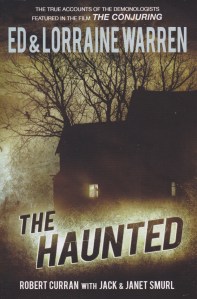
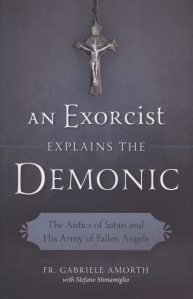
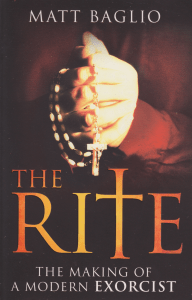
About the last people, ironically, that you’ll find researching demons are religion scholars. That’s perhaps a slight exaggeration, but there’s an embarrassment to the topic that serious academics just can’t shake. Nobody wants to be thought truly believing in that stuff. Michael W. Cuneo, who teaches sociology and anthropology at Fordham University, isn’t afraid to look. His American Exorcism: Expelling Demons in the Land of Plenty is a user-friendly, often witty look at what is an amazing phenomenon. Exorcism had pretty much gone extinct by the middle of the twentieth century. Then The Exorcist happened. Cuneo makes no bones about it—Hollywood wrote the script on what was to become a somewhat bustling business through the end of the millennium and beyond. And it wasn’t limited to Catholics. Protestants, mainly of Evangelical stripe, cottoned onto Deliverance ministry and joined the fray against the demonic.

American Exorcism reflects Cuneo’s personal account of attending exorcisms. As he puts it at the end, no fireworks occurred. In fact, he’s skeptical that demons exist and he strongly suspects exorcisms work in the same way that a placebo does. He’s well aware that the majority of people he met and talked with in the making of this book disagree on that point. Cuneo himself attended at least fifty exorcisms, both Catholic and Protestant, and shysters among the exorcists were rare. Most were sincere, devoted people who are helping others in distress for no fees, no glory, and no promotion. They see a need, believe they know the diabolical cause, and take the devil by the horns (metaphorically speaking).

There is a solid mistrust between academics with their studied skepticism and exorcists with their eyewitness accounts that defy belief. Cuneo suggests that even what they think they see may not really be happening in the real world. My question, coming down to the end of the fascinating book, revolves around what exactly this real world is. There can be no doubt that present day concepts of exorcism are largely based on “the movie.” Cuneo seems just a bit reluctant to say what I also declared in my forthcoming book—pop culture, the movies, dictate reality for many people. At least in the realm of religion. Sacred institutions have lost their authority to make ex cathedra pronouncements about what is real and what is not. Few bother to, or can, delve into the tedious work of reading academic studies on the subject. It’s far easier to let the unseen presences behind the camera take over. Isn’t that what possession is about, after all?


Morning Thoughts

One of the persistent dangers of being a morning person is the fact that places aren’t open early when you have to be out and about. Since my wife had to work yesterday morning, instead of spending a good part of the weekend alone, I drove her to her location. (The fact that there was a used bookstore nearby had absolutely nothing to do with it, of course.) The bookstore didn’t open until ten. My wife’s meeting started at 7:30. Much of what I have to accomplish on the weekend involves the internet and occupies me well before such late hours. Although I’m anything but trendy, Starbucks is open early and it offers wifi. And it’s ubiquitous. Kind of like churches used to be. As I pulled out of the parking lot where my wife’s meeting was being held, I found a sign saying Starbucks, this-a-way.

It was still early (for the secular) when I arrived. In fact, the banner outside read “Now Open.” This implied that previously it hadn’t been open, so this was virgin Starbucks territory. It was early enough that a table was actually available. I had a lot to get done, and by the time I was finished the place was jammed. In fact, when I first arrived, some of the other new patrons were joking that they would move in now that Starbucks had come to town. Groups sat in small knots for an hour at a time. People borrowed the extra chairs at my table. Countless more came in and walked out with paper mugs steaming in the chill air. I was here to wait opening time for a used bookstore. I was pretty sure I was the only one with that motive.

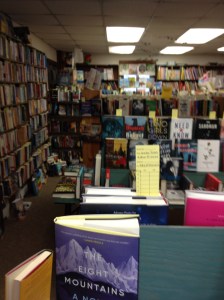
There are more of us out there, however. While looking for a birthday idea for a writer friend of mine I ran across a writing box online. There were several reviews. Many people lamenting on Amazon the loss of the culture of the bookstore and the hand-written manuscript. They’re the ones who review used bookstores and weep the closing of indies with authentic tears. We’re the displaced. Our society is extinct. I love old books. Touching them takes me into the past. Yes, their words are public domain and can be found online, for free. What’s missing is the thingness of it all. I’m not a materialist, but I’m even less of an electronist. My spellcheck won’t even let me keep that word. Say what you will about the old way of doing things, paper was never so uppity as to refuse the words I intentionally placed upon it. At any time of day or night.


Jewish Annotated

A project with which I have some small acquaintance is the second edition of the Jewish Annotated New Testament (some of you may be noticing an annotated theme lately). The idea behind it is deceptively simple: most of the writers of the New Testament were Jews. What do modern day Jewish scholars see in the text? This annotated Bible gets adopted into both Christian and Jewish courses, and many seminaries have an interest in learning what the writers might have been thinking as they were composing “the other testament.” So far, so good. I was looking at the Amazon page for the book the other day, specifically for the Kindle edition. As usual, you can’t please everyone, and some of the negative comments had to do with functionality. Then one said simply, “There is no such thing as a Jewish New Testament.”

I’m not so naive that I don’t know what trolls are, but I got to thinking about this comment. It didn’t come from a “certified buyer,” so it could be an opinion piece. The mononymed reviewer might be Jewish, Christian, or neither. From a Jewish perspective s/he might mean: Jews don’t accept the New Testament as scripture, so what else is there to talk about? From a Christian perspective the point might be: this is a Christian document so it doesn’t matter what Jews think about it. Either way there’s a call for some exegesis here. Both perspectives can be argued against. Jews have a very real interest in what Christians say about them. And, like it or not, the first Christians, and even Jesus himself, fell squarely within Judaism.

Christianity has become a religion of privilege. That happens when you’re the biggest religious body in the world. Christians get a bit testy when Islam begins encroaching on its numbers. There’s still some hard feelings about the Muslim expansion of the seventh and eighth centuries, too. Being an imperial religion will do that to you. Thoughtful Christ-followers, however, have begun to look back and wonder how this whole thing got started in the first place. Without Jews there would’ve been no Christians. Nobody’s claiming the New Testament is Jewish scripture. Neither side wants that. It’s simply a recognition that we might have something to learn from each other. And that’s not a bad idea. In fact, if we were willing to listen a bit more than talk, who knows how much true understanding might come to pass? The Jewish Annotated New Testament is one possible place to start.


Russian Along

Living at Nashotah House—if you haven’t been, trust me—makes one curious about Rasputin. While on the faculty there, his name was used as a common slur. When Brian Moynahan’s Rasputin: The Saint Who Sinned came out in 1997 my wife and I bought it and read it together. Two decades on the details had become fuzzy and, having read about Aimee Semple McPherson and her faith healing reminded me of the famous Russian scallawag. For all his personal faults, Rasputin did seem to have genuine healing abilities. He was more shaman than orthodox, to be sure, and Siberia was the home of shamanism as well as Rasputin. For those who don’t know the story, in pre-Revolution Russia Grigory Rasputin rose from a Siberian peasant family to the most trusted advisor to the Empress of Russia, Alexandra Romanov. Her weak-willed husband, Nicholas, also gave credence to the mystic, despite the latter’s well known drunkenness and womanizing.

The fascinating aspect of Moynahan’s treatment is that it brings out the saintly side of this figure who’s grown such a notorious reputation. That’s not to whitewash his extreme lifestyle, but it is to acknowledge that he was far more complex than many critics make him out to be. He seems to have been sincere in his faith, and perhaps a little mentally imbalanced. He was kind to the poor, and charitable. He wasn’t a bigot, a sin quite common in his day. He was a working class mystic who took advantage of being inebriated with power. His influence over Alexandra was so strong that he could appoint Prime Ministers even in the midst of a world war. This is a fascinating personality.

Reading the book at this point in history, however, proved strangely unsettling. Many of us wonder how a rational, fairly educated and prosperous nation could tolerate the buffoons who inhabit Washington, DC. Daily we see insanity—with no exaggeration—on the level of the throes Tsarist Russia, or even of Rome under Caligula. Instead of taking steps to right the course, the Russian, excuse me, I mean Republican, Party does any and everything in its power to keep the illusion of normalcy alive. Even while foreign ministers of his own party tell the European powers to ignore their own president, American Rasputins just can’t survive without their daily power fix. The sad thing about that last sentence is that after writing it I felt as if I were somehow being unfair to Rasputin. And I lived at Nashotah House long enough to know what I’m talking about.