Spiritual Walls

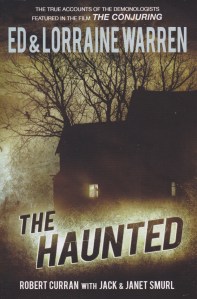
I often ponder what a difference walls make. Perhaps our ancient, cave-dwelling DNA just runs away with imaginations, but walls make us feel safe. Most of the time. As I was reading the ensemble-written The Haunted, by Robert Curran, Ed and Lorraine Warren, and Jack and Janet Smurl, the concept of walls showed its other face. In the mid-to late-1980s, the Smurls lived in a haunted house. The West Pittston duplex in Pennsylvania was also home to their four daughter’s and Jack’s parents. And the entity that harassed them there was deemed a demon. It’s easy to be skeptical about such accounts—no physical proof exists, after all, and proving anything is pretty near impossible anyway. Although I wasn’t aware of it at the time, apparently this become quite a media event. It’s easy to question the whole thing. Then I think about walls.

Although there are public haunted buildings, I often wonder about specific residences that foster claims of haunting. If spirits are, well, spiritual beings that can pass through walls, why would they stay in a house? In the case of the demon that everyone in the family saw, what does it mean to see physically a being that has no physical reality? And when the priest exorcised their house, why did they look to see where the incorporeal being might be hiding? It seems that the demon needed walls too.

Human beings are natural actors. We behave differently at home than we do in public. We act differently with friends than with strangers. Even closer to home, we act more natural with our families than we do even with friends. Beneath all these layers of pretending, most of us still act differently when we’re alone. That’s where walls come in. Although knowing someone’s in the next room might temper our behavior, the family unit within its walls is one intimate collective. What was happening within the walls of the Smurl household three decades ago? Any recounting will involve retelling. Interpretation. And we all know what a difference walls can make. The neighbors, according too this book, could hear demonic screams. Some even experienced invasions of their own during the height of the haunting. Books like this have a way of drawing you in, opening windows and doors through the walls into someone else’s life. What actually happens to them, however, is something we’ll only learn when walls begin to talk.


Original Sinner

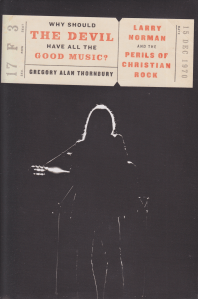
Musical preferences are a personal matter. In the case of the kind that loudly thunders from open car windows, often they should be more so. Still, music is a deeply moving phenomenon. When a musician is paired with a compelling personal story, it can be quite a gripping narrative. Gregory Alan Thornbury’s Why Should the Devil Have All the Good Music?: Larry Norman and the Perils of Christian Rock is one such account. Although Larry Norman was never popularly famous—many people today have never heard of him—he was a tremendously influential person. Like most true innovators he was, as Thornbury shows, a difficult person. He often had more enemies than friends, but there can be no doubt that he lived, at least in his own mind, by his convictions. And on his own terms.

I didn’t know until reading this brief biography that it was common for Larry Norman to wait around after concerts and talk with fans. When a friend invited me to see Larry in concert I was, as is generally the case, so wrapped up in my own issues that I hadn’t done much research. I was thrilled to see the artist that I, like Thornbury, had discovered during college. It was my friend’s idea to go backstage to talk to him. To this day those few minutes remain some of the most thrilling of my life. Norman was a name dropper, according to those who know, and I’ve met a few famous people over the years, including Jeff Bezos, but Larry was different. The breadth of his impact on rock in the 1970s and into the ’80s, was vast. Many secular artists count him among their most profound influences. And he had time to sit and chat with a seminarian from nowhere.

While my friend and I waited to see him, the guy in front of us wanted to play Larry a song. In an act of hubris I can’t fathom, he’d brought his own guitar to the concert. Larry kept saying “I don’t understand why you want to do this.” But surely he knew. Throughout his career he helped start many younger artists on their track, some to Christian stardom, others to more quiet lives. He had, however, something he couldn’t give away. Larry Norman was a true original. Despite his uneasy dalliance with fame, he was willing to sit and talk with a star-struck young man who would go on to become a lifelong admirer of an artist who remained true to himself, even if he was too Christian for some and too secular for others.


Pittsburgh Demons

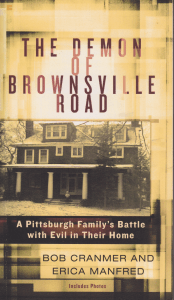
Far be it from me to question someone else’s demons, but every story has at least two sides. After reading Bob Cranmer and Erica Manfred’s The Demon of Brownsville Road: A Pittsburgh Family’s Battle wit Evil in Their Home, I have to wonder about the other side. I have no doubts that strange things happen behind closed doors. Indeed, the aspect of space, or location, has far more entanglements than our science allows. I don’t question the haunting described in the pages of this book—Bob Cranmer was once a prominent political figure in Pittsburgh and has the credibility that comes with elected office (or at least used to). What is open to question is the interpretation.

The Catholic tradition, which is involved here, does accept that a demon can infest a house. The way this account is laid out, however, is as a personal battle between Cranmer and the demon. The story is not unlike Amityville—family moves into house, discovers it’s haunted, and has to decide what to do about it. They call in a priest. From there the stories diverge. Cranmer’s family started experiencing various misfortunes. These were attributed to the demon. The story is strongly patriarchal; Bob Cranmer is a take-charge kind of guy and he alone can take on this fallen angel in the final instance. There are priests involved—including a prominent monsignor in Pittsburgh—but also clergy from other faith traditions and a paranormal investigation group from Penn State. Did the events happen as described? I don’t know. I wasn’t there.

A few things seem a little off here, though. A Catholic official stating that sex between married couples drives off demons? The discovery that the sins in this house stem from it being an illegal abortion clinic? That Native Americans murdered a family now buried on the property? The book doesn’t give documentation because it’s not that kind of book. Don’t get me wrong. I’m glad the Cranmer family finally found relief from the presence that was haunting their home. Even watching a movie like The Amityville Horror makes people uncomfortable because the idea is so scary—home is a sanctuary and when it’s invaded by an invisible (in this case sometimes visible) enemy it becomes a nightmare. The reader is left with the impression that it came down to a battle of wills and that of a former Republican politician was stronger than that of one of Satan’s minions. Some things, particularly in the climate these days, are difficult to believe.


Zombie Wars

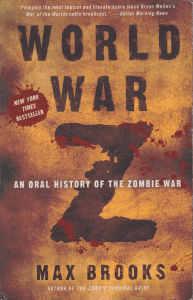
I suppose, rationally considered, most monsters can’t possibly exist. Maybe that’s the psychological relief required to enjoy the movies made about them. We can imagine the thrill, but we know we’re safe once we leave the theater. Culturally, monsters fight for supremacy. The early 2000s belonged to the vampire. They were everywhere. I once heard a literary agent advise wannabe authors to write on vampires since the publishing industry was showing no signs of slowing down on them. Then came the zombies. They’re still with us. World War Z came to my attention as a movie, but as one I never saw. I’ve watched many zombie films and none has lived up to the status of the spectacle that launched the genre, George Romero’s Night of the Living Dead. It remains a classic to this day. Still, I was curious and so I read Max Brooks’ World War Z: An Oral History of the Zombie War.

Let alone the chapter after chapter of tough-talking, cool-sounding reminiscers, I have trouble buying zombies. Yes, I get the scare factor, but maybe I’ve read too much science even to visualize myself into a fantasy world where a creature with no digestive system would be driven to eat. It just makes no sense. Human bodies can function with missing parts, of course, but without the integration of muscles, ligaments, digestion, and brain, it seems difficult to accept that they’d keep coming after you when they’ve been decaying for years. It’s all I can do to get out of bed most mornings, even as a healthy, living body. Analysts, I know, talk about zombies as metaphors, but with over 300 pages of stories in no way believable, I had to wonder about the limits of credulity. Maybe Carl Sagan was right after all.

I hope I’m not unsophisticated enough not to realize that the real point in Brooks’ novel is how the surviving humans treat each other. There is a moral to the story. We develop new and “better” weapons to kill one another. We’re smart enough to have world peace and prosperity, but wars are constantly erupting. We have a nation with many brilliant people and yet we elect a Trump. Self-destruction, it seems, is written into our genes. We consume one another. Even when the enemy is completely imaginary we find ways of believing. So I read World War Z, appreciating the irony. I still can’t get over, however, the trope that all you need is a human brain to want to destroy others.


Indie Bookstore Day

Although a year can seem like a long sentence, holidays are the punctuation marks that help us make sense of and organize it. Ordinary time, such as time at work, or commuting, can be endlessly tedious. Holidays, some personal, some local, others national or international, help us break up the time. Give us something to look forward to. My pity goes out to those religions that recognize no holidays and face time with a grim, Presbyterian determination to get to judgment day. The rest of us like to celebrate once in a while. So what’s today? It’s Independent Bookstore Day! Anyone who reads more than a post or two on this blog knows that I’m a lover of books. I first started taking solace in reading when things were difficult in my younger years, and reading has never let me down. In fact, I’ve often told myself that I could put up with just about any job as long as I could write.

It’s because of being in publishing that I learned about Independent Bookstore Day. Yes, it’s a promotional holiday, but it’s also a genuine celebration. As the outside world daily reminds us, those of us who read are a minority. The realistic author knows that the reading public is a small fraction of the whole. The number of people, percentage-wise, who spend their money on books is minuscule compared to those who fling their lucre elsewhere. But those of us who read appreciate the depth and reflection of each other. We may read different things, but we read. And that’s why I don’t mind going to an indie bookstore today and buying something.

One of the simple pleasures in life—call it a punctuation mark, a comma maybe—is being surrounded by unfamiliar books. Oh, I often worry what happens when we decide to move; we have lots of books at home. The last time the movers actually complained in our hearing that we had too many boxes of books. Talk about me at the bar afterwards, but don’t castigate my simple pleasures to my face, please. Books are the rare opportunity to commune with others on a deep level. How often have you put down a book and felt that you knew the author? Their soul was revealed in their writing and you had touched it. Just being in a bookstore is cause for celebration. If you have no plans for today, why not make your way to your local indie? Stand up and be counted as the literate resistance. It’s our silent Bastille Day, after all.


Movie v. Book

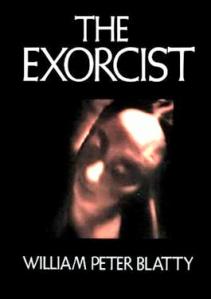
The debate is about as old as celluloid itself; which is better, the book or the movie? The response obviously depends on personal taste, and I suspect that many people base their answer on criteria that can’t exactly be quantified. Often it’s a matter of the specifics—which book? Which movie? In my own experience I’ve done it both ways, read the book first and watched the movie initially. I’ve even gone to movies not realizing there was a book and, of course, some movies aren’t based on books at all. You couldn’t grow up when I did, however, and not know that The Exorcist was a movie based on a book. I never saw the movie in a theater. There was a lot of buzz about it in my hometown, of course. I hadn’t been introduced to modern horror yet—still being a Fundamentalist at the time—and besides, it was rated “R” and I wasn’t.

I finally got around to reading the book. At this point in my life I’ve seen the movie several times, so I knew how the story was “supposed to go” beforehand. The fact that William Peter Blatty wrote the screenplay suggested it would be close to the novel, and indeed that’s the case. Novels, by their nature, tend to have more information about the storyline than is obvious from a film. The author can take time to explain things that don’t translate visually, including scenes where one character lectures another, like this blog. Since I’m writing a book about demons in movies, I paid careful attention to this. One of the themes from the novel that didn’t make it to the movie was witches.

That surprised me a bit. I had seen the movie first and it was plenty scary just as it was. I had to remind myself that my younger years coincided with the rebirth of the fear of witches. Literal ones. I’m not an astute enough sociologist to say whether the “witch hunts” of McCarthyism led to a hypostatized fear of real witches or not, but people were afraid in those days, as I recall. The Exorcist tapped into cultural fears in a way rare for a horror movie. It spoke to the fears of the era, but it didn’t mention witches. I couldn’t help but make the comparison with Rosemary’s Baby, which hit theaters shortly after The Exorcist. Rosemary believes the Satanists are witches. There’s a whole supernatural concoction of malevolent entities on the loose. Witches, ultimately in the novel, are simply one avenue the desperate Chris MacNeil explores to find out what’s wrong with Regan. The movie, wisely in my opinion, chose to leave it out. Demons are scary enough on their own, but of course even that’s debatable.


Watching Research

Now that Holy Horror’s been announced, I’m at work on my next book based on horror movies. Although some people might question the aesthetic of the horror genre, these films are sometimes remarkably intelligent and can indeed be good cinema. Having spent the better part of last weekend watching multiple flicks, however, I’ve come to realize that watching films for research is quite different than viewing them for fun. We all know the feeling of going to the theater to be exposed to the mythology of the present day; movies are the new mythology and are a common source of meaning and hope for individuals in a post-religion era. We go for the spectacle and the story. We leave, if the movie is good, with a renewed sense of purpose, or in a thoughtful state. That’s what mythology does.

In writing up my analyses of many films, I’ve noticed how little the detail is generally acknowledged in many synopses. They can make a flick seem banal. I’ve even had very intelligent people ask me why I think watching movies should be considered intellectual exercises. One reason for this, at least in my experience, is how often people rely on what they see in movies to inform them of important things. Historical events, for example. For the average person, an historical recreation on celluloid can provide recall better than a detail from some 400-page tome on the topic. Human beings are visually oriented by nature and evolution. It takes us years to learn how to read, and if we don’t keep up with the practice our ability to comprehend advanced writing atrophies. It’s easier to watch a film.

No doubt movie scripts are available for purchase. To get the message of a film, however, you need to watch. Immerse yourself in a kind of flickering light baptism. Research watching, however, involves multiple viewings. Taking notes. Watching again to make sure you got that detail correct. Some may doubt that this is an intellectual exercise at all. Still, one of the concerns that some scholars feel is that we’ve lost touch with what hoi polloi believe. People have turned to mythology from the beginning of time in the quest for meaning. Science tells us how the world works, but not why. For such questions we need our mythologies, ancient and modern. Since Nightmares with the Bible focuses on demons, I’ve had to construct a cinematic demonology that’s quite different from those of the Middle Ages. It requires, after all, a modern research method for a modern mythology. And movie watching. Lots of movie watching.


Candles vs Demons

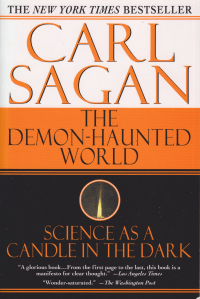
Among scientists who write Carl Sagan has always struck me as one of the more open minded. Dedicated to the scientific method, he nonetheless admits that there are some things scientists don’t know. The last time I was in Ithaca, therefore, I picked up a copy of his tour de force, The Demon-Haunted World: Science as a Candle in the Dark. I wasn’t really sure what to expect—I’ve been researching demons and I supposed they would be addressed in his book, since they feature in the title. Although that is indeed the case, the book is a collection of essays vindicating in various ways the practice and teaching of science. It is quite a scary book. It was also Sagan’s final book published in his lifetime.

Reading this just after Gabriele Amorth’s An Exorcist Explains Demons, noteworthy for its credulousness, The Demon-Haunted World was like whiplash into reality. Back into the realm of observable facts and testable hypotheses, it was indeed like a candle in the dark. Sagan admits that science can’t speak definitively on the supernatural—something that sets him apart from other science writers—but that doesn’t mean we shouldn’t apply scientific thinking anywhere it’s appropriate. And that includes the universe of politics. Published some two decades before the rise of Trump, the book is surprisingly prophetic when it points to the possibility of the rise of fascism in a nation that distrusts science. Indeed, the book shows Sagan clearly worried that an authoritarian, totalitarian government was on the rise. It’s almost preternatural in its accuracy.

The tome is large enough to dissuade a full summary within the word-limits I set for myself on these daily posts, but I can say that this book is necessary now more than ever. Sagan was a celebrity in his lifetime, a “rock star” scientist. Even so he worried about the deplorable state of science understanding among political leaders he met. For many years America has been mired in conservative causes that distrust science implicitly. Another strain that runs throughout this book is the need for education. Not only has America catered to anti-science groups, it has fallen behind much of the rest of the world in science education. Those who claim to make America great again can’t see that their very tactics have made our nation fall behind the rest of the world when it comes to education, across the board. Surely Sagan was right that a good grounding in scientific thinking is the equivalent of lighting a candle. As for the rest of the country it has been getting darker and darker, and our “leaders” have no idea even how to strike a match.


Private Browsing

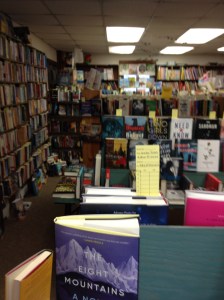
Montclair, New Jersey, is a diverting place. At least it is for me. I used to teach—strictly as an adjunct of course—at Montclair State University. And like many other diverting towns, Montclair has multiple bookstores. On the occasions my wife has to spend a Saturday working in Montclair I often accompany her. If the weather is decent I can walk to both bookstores and have a leisurely browse. Since anything leisurely is rare these days, I eagerly anticipate such trips. Typically I’ll sit in my wife’s work place counting off the minutes until I can leave to get to the Montclair Book Center just as it opens. Used bookstores are a bit like archaeology—you never know what you’ll find, and some of the treasures may be unique. I often have the store mostly to myself, for private browsing.

This time, however, I had another task to accomplish first, before I could go to the first bookstore. By the time I arrived, it had been open for over an hour and there were, surprisingly, plenty of people there. We’re accustomed to hearing that people no longer care for books. While it’s true they won’t bring in the numbers of, say, those wanting the latest video game, it’s also true that on a pleasant Saturday morning an independent bookstore can be a crowded place. It warmed my heart to see so many readers out. And they weren’t all old like me. Younger people talking about the merits of this or that author, browsing in the sections I frequently haunt. Although I found none of the books on my list, I still had that blessed feeling you have when you discover you’re not really alone.

The other store, Watchung Booksellers, is a couple miles to the north, at least by the walking route I use. A small indie, it typically has what modern-day people might be expected to be interested in. I arrived to find it crowded as well. I’ve been there a number of times in the past and usually there are two or three others browsing. This time it was actually a little difficult to get around the small space. Seeing children there made me especially glad. A crowded bookstore is a sign of hope. As we struggle against the forces of ignorance and hatred that seem to have gripped the privileged classes, Saturdays at bookstores doing brisk business are an indication that the future may correct such ill-informed sentiments. Bookstores are termometers of national health, and seeing them busy made my Saturday. It’s worth getting up early just to spend such a day in Montclair.


Exorcising Theology

Among those curious about exorcism, the name Fr. Gabriele Amorth requires no introduction. As “the Vatican’s chief exorcist” (a claim the book makes), Fr. Amorth was known for conducting many deliverances and for teaching a new generation of exorcists. Looking for an entryway into his perspective, I read An Exorcist Explains the Demonic: The Antics of Satan and His Army of Fallen Angels. That a priest in Rome should be conservative was no surprise. What was truly astounding about this account was how unquestioningly the exorcist accepted nearly everything to do with Roman Catholicism. His reading of the Bible is quite literal. His understanding of the Virgin Mary as the Mother of God offers no nuance. Demons are fallen angels and, somewhat surprisingly, he uses “Devil” and “demon” interchangeably. For a hierarchy so thoroughly parsed, this was a bit unexpected. Encountering these explanations, much of what I’d recently read in Matt Baglio’s The Rite made sense. Baglio’s protagonist studied in Rome when Fr. Amorth was still active.

Much of the book felt like a lecture from the 1950s. Sex, drugs, and rock-n-roll can all lead to demonic possession. And it turns out to be quite pervasive. Many people, saints and sinners alike, are possessed and don’t even know it. This is truly, according to the priest, a “world with devils filled.” The book begins with a Catholic, if literal, interpretation of Jesus’ role in the salvation of humankind (although the masculine pronoun is preferred throughout). Not only that, there’s no question that women can or should be exorcists. This is something that priests alone can handle. And he even goes far as to point to Eve (who literally existed, one gets the impression) as an example of how women are more easily tempted than men. Reading this brief tractate was like stepping back into a world that even antedates that of the Republican Party. Not decrying science, however, Fr. Amorth suggests medical explanations can account for some of what sufferers deem as possession. Those who think they are in trouble with demons should first go to a psychiatrist. If the problem can’t be solved, it’s time to call in the men in black.

Another area of concern is his outlook on other religions. African and East and South Asian belief systems are coded as possibly satanic. This universe is a strictly Catholic one. Having noted that, a strong undercurrent of love pervades the book. It’s clear that Fr. Amorth was a priest motivated by care for others. His theology may have been hopelessly medieval, but his heart was in the right place. And, if the accounts are to be believed, he was quite good at expelling literal demons. Some of the metaphorical ones, however, seem to have remained firmly in place.


Updates

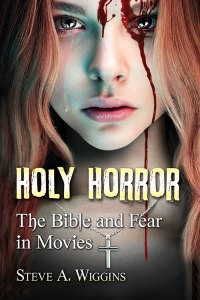
So, I’m getting ready to update this website. I’ll give you a warning before things change. Another update, however, is in order. I’ve been promising that I’d let you know when my forthcoming book with McFarland received its final title. Well, drum roll please! The final title is actually the first title I proposed—Holy Horror: The Bible and Fear in Movies. And it has an ISBN: 978-1-4766-7466-7. And a cover design too, but I can’t share that just yet. It is appropriately lurid, matching the subject. But in all seriousness, the book makes a case for the fact that many people understand their religion via popular media. Being a bad boy, I look at it through horror movies.

The title Holy Horror was a play on Douglas Cowan’s excellent book, Sacred Terror. I recall reading that book, starting the night I bought it as SBL, curled up in the swank conference hotel bed, turning pages until I couldn’t hold my eyes open any longer. It had honestly never occurred to me that religion scholars could get away with writing about horror movies. Cowan had the natural advantage of being a Canadian, something I’ve always longed to be. He also has a secure university post. I was, at the time, just a guy trying to feel secure in what seemed like (and turned out in reality to be) a threatening seminary position that was shortly to end.

It may be difficult to understand how horror can be consoling. It can. I’m a squeamish guy. I don’t like blood and gore. I hate being startled. Nevertheless, I took comfort in this genre as my career was falling apart. Holy Horror was a cathartic book for me to write. There’s more than a little metaphor in it. One thing that will become clear to readers is that the Bible is no stranger to horror movies. Ironically, many of them are strangely conservative—Carol J. Clover’s classic Men, Women, and Chainsaws (which I’ve reviewed on this blog) made that point clearly. Horror often has the same message as your typical Disney film, although it’s presently slightly differently. How so? Well, I can’t say very much here or you’ll have no reason to read my book. McFarland does a great job with publishing this kind of title. You won’t find it in Barnes and Noble, and not likely in your local indie either, but it’ll be available on Amazon and these days that’s enough. And before long these pages will change to reflect its coming.


Scientists, Unplugged

Feeling inferior is common among religionists. When cultures list their brightest and best, scientists often top the list and those who specialize in religion are nowhere to be found. This situation gives the lie to the fact that many scientists think about, and are influenced by, religion. That became clear to me in reading Stefan Klein’s We Are All Stardust. Not Klein’s best-known book, this is a collection of interviews with well-known scientists, unplugged. There are many big names in here, such as Richard Dawkins and Jane Goodall, as well as some less familiar on a household level. Klein, himself a Ph.D.-holder in physics, asks them somewhat unconventional questions, with the goal of bringing a more human face to scientists.

When asked directly, scientists admit to thinking quite a bit about religion. Of those interviewed, several are hostile to it while others accept some tenets of one faith system or another. Most of them indicate that either religion or morality plays an important role in society, if not in science itself. The sad part is almost none of them seem to realize that the study of religion can be (and among the university-trained, generally is) scientific. In academia, religious studies is often vaguely tossed in with the humanities, while others would suggest it fits under social sciences—as a sub-discipline of anthropology, for example. Few understand the field, in part because many specialists enter it for initially religious reasons, somehow tainting it.

While I enjoyed the book quite a lot—it was a quick read with plenty of profound ideas—it also had a disturbing undercurrent. The explanation that many of the interviewees gave for why they went into science was “curiosity.” The implication was that those who can’t stop asking questions, and have intelligence, go into science. Again, this feature is true of most academic fields, if they’re understood. Greatly tempted to go into science myself, I simply didn’t have the mathematical faculties to do it. While I took advanced math in high school I wouldn’t have gotten through without my younger brother explaining everything to me. My real concerns lay along the line of ultimates. Learning about Hell at a young age, it made the most sense to me—very curious and scientifically inclined—to avoid going there. To do so, the proper target of my science should be religion. While many scientists in We Are All Stardust are friendly to philosophy, religion is considered a far less worthy subject by not a few. True, religion often behaves badly in public. It doesn’t bring the money into universities that megachurches reap. But unplugged even scientists still think about it.


Re-reading the Rite

I’ve written on The Rite before. My current book project, however, led me to reread this account after watching the movie based on it a couple of times. The film dramatizes, of course, the somewhat understated demonic activity in the book. The protagonist loses about 30 years in age and isn’t yet a priest. As is usual, the book is better than the movie. Matt Baglio’s story follows Fr. Gary Thomas from parish ministry in California to his discovery of possession and appointment as an exorcist. As part of the Vatican initiative to have an exorcist appointed in every diocese, Fr. Thomas was sent to Rome to take a course on exorcism. His experience was all academic until he began to attend actual exorcisms with an unconventional Capuchin monk. Very little described in the book is difficult to believe.

This time around the curses nabbed my attention. Among exorcists of the Roman Catholic stripe, there is a strong belief in the reality of curses. Not only the reality of curses, but the belief that curses can lead to demonic possession. Knowing that Catholicism has struggled with accusations of being unsophisticated and behind the times, the fact that this isn’t more widely known is pretty self-explanatory. Growing up Protestant, I was always taught that curses are make-believe. They don’t really have any influence on a person’s life. The world of demons, however, is a supernatural one and the concept of curses still holds sway in this universe, as the book shows.

Another arcane aspect that resurfaced when I reread this book is just how elaborate the Catholic backstory is. Many Catholics, it’s clear, distance themselves from such topics as the Devil and demons, but there’s no escaping the Virgin Mary and the drama of Jesus versus the powers of evil, as well as the intercession of saints. The problem is that many of the players are personified in the Bible. It’s pretty hard to say the Good Book got it wrong. That worldview lends itself to belief in supernatural impingement on this sphere. Not that that’s a bad thing. Many people, however, would rather believe in a materialist world with physical cause and effect being the main operating paradigm. Demons complicate all that. But then, so does the idea of Mary being a perpetual virgin, and even the patrilineal heritage of Jesus himself. The Rite brings to the light something many would perhaps prefer to be kept under a bushel. Strange things do happen in this world, and they do tend to respond to the backstory that’s been told. That makes such books difficult to classify, even with the backstory.


Americanism

I’m a bit too much of a contrarian to be a regular bestseller reader. I do occasionally bow to curiosity though, and I do have a lot of time on the bus. But that wasn’t the reason I turned to Michael Wolff’s Fire and Fury: Inside the Trump White House. Purchasing this book was a statement. Another in a long line of protests in which I’ve taken part since January of 2017 (and even before). You see, I mourn. I mourn what our country has become. My first indication that I should write (which I of course ignored) was the winning of a statewide essay contest my senior year in high school. The topic of the essay was “Americanism.” My piece was respectfully cynical; I was surprised I won. This was in the days before personal computers and I didn’t think to keep a typed, or even hand-written copy.

The essay was cynical not because I don’t believe in America, but because I do. I’ve been confronted on this issue concerning my blog occasionally. My jeremiads. You see, you only get this fed up with things when you love them deeply. I sometimes rail about higher education, for example, because I care about it. Fire and Fury created in me a—to borrow from the book’s vocabulary—Kafkaesque bewilderment about how a nation based on high principles could possibly sink so low. Politicians are perhaps the most self-serving of human beings, but at least they try to make sure the country doesn’t go off the rails. This train leapt the tracks months ago, and our elected officials refuse to do anything about it, each playing their own angle, hoping personally to come out of it ahead. Worth a jeremiad, I’d say.

I was a Republican in high school. I wasn’t old enough to vote, so that party affliction was never official. When I did register at 18 it was as an independent (remember, contrarian). As a Fundamentalist I was ahead of the Tea Party, at the time. Even with this level of patriotism I wrote an essay taking my country to task. I was raised in a poor family. Told an education would improve my chances, I found myself facing predatory loan officers and others eager to wring my blue collar until it was possible to twist no further. If I had no money, my future money would do. I’d already had a taste of that as a high schooler. That was three-and-a-half decades ago now. I kinda hoped the country might improve in all that time. And I kinda wish I’d kept a copy of that essay as a memento of more optimistic days. Fire and Fury sells so well, I suspect, because I’m not really alone in feeling this way.


Good Company

It’s a matter of scale. If you read this blog chances are you like books. If you like books you probably know about remainders. When you walk into a bookstore and see a shelf or section of really cheap new books, you’ve found the remainders. This happens when a publisher overprints and, instead of pulping books (that hurts even to type!) the remaining stock is sold at just above cost so that retailers can add a small markup and make a marginal profit. Most authors don’t like to see their books remaindered, since it means demand wasn’t as high as the publisher anticipated. Expectation was that the book would do better than it did, now the publisher and bookseller just want to recoup some of their losses. Often there’s a marker stroke across the bottom pages of the book so you can’t return it for the retail price.

For those of us whose books sell in the double digits, seeing yourself on a remainder list would be kind of a thrill. The other day I looked at Wipf & Stock’s 50 percent off sale to find a copy of Weathering the Psalms listed. Probably it was overprinted for the AAR/SBL annual meeting, since I saw that they did have copies there again last November. If they hadn’t bothered to print out a bunch, I would never be on the remainder shelf in Eugene. I don’t mind because I’m in good company. Looking at the list I feel like I belong in some kind of academic crowd in the reduced bin. There’s a sense of community among the overprinted.

Turnabout, they say, is fair play. I’ve bought plenty of remaindered books in my life. Lately I buy used academic books because the new editions are out of the reach of an independent scholar who isn’t independently wealthy and who doesn’t have access to a university library. If I buy others cheaply, I turn the other page and expect the same back. Most of us who write academic books aren’t in it for the money. We want to be remembered for our contributions to the discussion. We took the many months and years it takes to research, write, and polish a book, and we want others to take an interest in what we have to say. It’s all about the dialogue. It’s all about the community. For those of us who never really found a home among the established academy, publication can mean a lot. It doesn’t matter that the books are sold cheaply—in fact, that’s good, because it means somebody might just read what you wrote. It’s all a matter of scale.