Kindling

Paula Cocozza, writing for The Guardian, describes “How E-books Lost Their Shine.” Like most inveterate readers, she says she has stacks of books growing like mushrooms after a summer rain, in her bedroom. I was working in the publishing industry (I still am, so please take no alarm at my rhetoric) when e-book sales plateaued. Then declined. “Industry analysts” were baffled. I wasn’t. The reasoning goes like this: e-books are light and cheap and amazingly convenient—why would anyone want something different? Those of us who love books know. If you know what I mean when I write “library smell” I’m preaching to the converted. More beguiling than new car scent, that first deep breath when you step into a library takes you places your physical body may never go. All those bodies of books gathered together let off a bouquet that insists you follow your nose to an earthly paradise. I just tried sniffing my iPhone. Nothing. No synapses fired. I’ve read books on it, but have I really?

Studies tend to show we have trouble remembering books read electronically. It’s just too fast. Wham-bam-thank you whoever you are. Let’s get on to the next thing. But books, as Cocozza writes, are slow. Publishing’s a slow industry. You submit your proposal, and the editor reads it. The editorial board discusses it. The book is written and sent to a copyeditor. Then a compositor or typesetter. Then a proofreader. Then it’s off to the presses. Printed, bound, and shipped. It can take a year or more. And when you curl up in bed with a book, furtively sniffing it, gently rubbing your fingers along its pages, drawn into a world not your own, plastic’s the last thing on your mind.

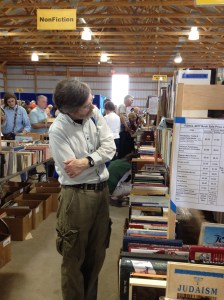
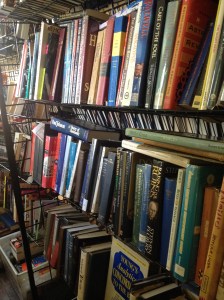
A few Saturdays ago I attended the Hunterdon County Library book sale. I go every year. It’s a big deal. People line up in advance. You step into the barn-like sales floor and it hits you—the smell of all those books. The aroma of knowledge. You can’t repurpose an e-book. You can’t sell it back because nothing was ever really produced. You purchased electrons, you’re stuck with electrons. Hit “delete” when the storage is full. All these books in this room are valuable. All for pocket-change. Many of them were wildly overprinted in the exuberance that naturally comes from being over-stimulated. Like kids about to enter Willy Wonka’s chocolate factory. Industry analysts are puzzled. If they’d get their fingers dirty by thumbing through a used book once in a while they wouldn’t be. Yes, its dusty, grungy, and probably laced with germs, but I wouldn’t trade it in right now for a Kindle, even if it costs me nothing.


Filling the Frame

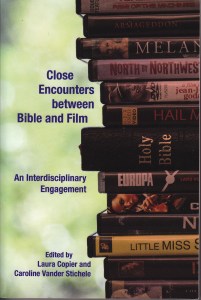
Those who study the Bible have to reckon with the fact that someone else probably said it first. This is one of the inherent liabilities of studying something a couple thousand years old. Still, scholars have to keep their jobs, and so they come up with new ways of looking at something ancient. One of my favorite new methods is the use of movies to understand the Good Book. Clearly nobody in ancient times had any ideas about films, let alone stills, but still, they liked to tell stories. They have that in common with modern cinema. Although I’m naturally distrustful of collections of essays—there are so many of them and they are all of mixed quality—I decided to read Close Encounters between Bible and Film: An Interdisciplinary Engagement, edited by Laura Copier and Caroline Vander Stichele. I have to admit that I picked it up with some trepidation, but I was pleasantly surprised in the end.

Like all edited volumes, Close Encounters is uneven. Nevertheless, a fair number of the essays are well done and insightful. The others may be insightful too, but my exile from academe has led to a drop in tolerance for method-heavy essays. They make me think the Bible should mean nothing to anyone but experts, which, if true, is a sad state of affairs for a world that depends on it for salvation. But I digress. The fact is movies quite often draw on similar collections of brain cells as do sacred texts. That’s interesting. Not only that, but flicks show just how deeply embedded the Bible is in western consciousness.

Having read many books on cinema and the Bible, I was pleased at how well this one seemed to flow. At times it’s as if that authors are struggling to find some common ground, but the realization that both sacred text and cinema are part of the cultural sphere suggests that the connections are there. More than that, they suggest that the Bible might still retain some relevance for modern people after all. Hollywood hasn’t lost sight of Holy Writ either. Just a few years back three major biblical epics came out in one season. For me this makes it clear that the stories of antiquity still speak to modern people. They have to be gussied up with CGI and big-name actors, but the underlying tales go back to a day before lights and camera were necessary for action. And we might learn something while our intention is simply to be entertained.


Taking Time

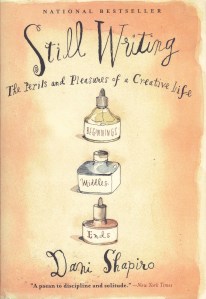
Good writing is hard work. One of the mixed blessings of the internet is that it makes publication so easy. Get yourself a blog and nobody has to approve anything! Ideas come tripping across your fingers onto some electronic substrate and, viola! You’re an author! The problem is that being an author’s not the same as being a good author. Writing well (and I make no such claim for myself—after all this is just a blog) is hard work. A piece has to be written, and then read again and again. I’m reminded of the story of a convicted murder whose name I’m forgotten (call it a defense mechanism). This was early last century. The murderer was caught, initially after having been found wandering, disheveled, in public. As a respectable man (he was a doctor, I think) part of his defense was that he’d never have left his house without being presentable. He would have on a collar and hat. People would see him, and he had to convince them of his presentability every single time he walked out that door. (This isn’t an affliction that I share, by the way.) Writing for publication is like that—you need to take care to look respectable every single time.

I can’t speculate about how other writers do their thing, but for me the main requirement for this is time. Any piece that I want anyone else to see, has to be written. Read. Edited. Re-read. And probably edited again. All before the public sees it. This is just for the informal stuff. I’m currently writing a book (which is pretty much a constant state with me). The draft was finished months ago. I started thinking about a publisher. Then I read it again. I couldn’t believe I’d ever thought it was ready for a publisher. Several rewrites followed. I’m in the midst of another one at the moment. I think of it like my ill-used rock tumbler. You want shiny rocks, you’ve got to send them through with finer and finer grit. If you do it right, they’ll come out looking like they’re wet, and they’ll stay looking that way. Polished writing takes time.

Some things can’t be hurried. As a middle-schooler I had a summer job with the school district. One of my assigned tasks was painting bus shanties. Many of these were, as you’d expect, way out in the middle of nowhere. I’d be dropped off with a couple other teens and we’d paint the shelter inside and out. One day I got tired of the constant, boring, and repetitive task of filling a paint pan with white paint, carrying it into the shelter, using it up, and then doing it all over again several times. I decided to pour the paint directly on the plywood floor of the shelter. All I’d have to do would be to roll it out and who’d be the wiser? I only did it once. Little did I consider that the best painting, like the best writing, is a thin layer over the substrate. You need to go over it more than once, leaving time between layers. More importantly, I didn’t realize that you can’t gauge how much paint you need this quick way. The best thing is to run out and refill. Then you can pour the remainder from the pan back into the can. The floor took hours and hours to dry. Not only that, but the top surface dried first, so when I stepped in, I pulled up a thick layer of paint off on the bottom of my shoe. Tom Sawyer I was not. I had to redo it. What I learned that day, though, was a lesson about writing. Take your time. But you don’t have to take my word for it. I just write a blog.


Good Newsists

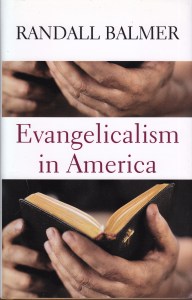
In the interest of avoiding conflict thereof, I cannot yet give a review of Randall Balmer’s Evangelicalism in America. Since I’m writing a review of it for Reading Religion, I’ll use it as a springboard into a topic that should concern all who believe in religious freedom. One of the resounding themes of Balmer’s treatment is that Evangelicalism, after it wedded to the Religious Right, lost its soul. Those are my words, not his, but the sentiment’s about right. For anyone who wasn’t politically aware in the 1980s, it may seem a surprise that religion didn’t enter into politics before that decade. With the exception of the fear of the Catholic in the case of John F. Kennedy, religion wasn’t used as a political wedge until the presidency of Jimmy Carter. The Religious Right, unhappy with the born again Southern Baptist in the White House, moved to solidify the Evangelical bloc.

Evangelicals had been an underground movement for half a century. Many had no idea what being “born again” meant when Carter first claimed the sobriquet. Balmer points out that it was the threat of the withdrawal of tax-exempt status to discriminating Christian schools that led to political action. Bob Jones University, fearful of racial intermarriage, didn’t admit African American students. Leaders of the Religious Right saw the loss of tax-exempt status as a move against their sacred segregated culture and a push that required a shove. Coopting the abortion issue (historically Evangelicals had supported women’s rights, including the right to abortion in many cases), they nailed together a platform for political activism which put women “back in their place,” kept racial “purity,” and romanced a total aberration in Christianity—the “prosperity gospel.” All of this is well documented. And well hidden.

Looking at Evangelical politics today, abortion—the control of women—has become THE issue. It’s hard to believe, as Balmer amply illustrates, that Evangelicalism used to be allied with the Social Gospel. It was a religious view with a conscience and it supported issues that are now polarized as “liberal” and leftist. This shift came about gradually, but not accidentally. There were political players—Balmer names names—who had one goal in mind, and that goal wasn’t Jesus or what he’d do. It was the sweet prize of political power. Evangelicals, you see, are born followers. A leader with a strong voice can lead them just about anywhere. Many Evangelicals today would deny their more liberal history, but it is right there for anyone who’s willing to learn something about who they once were.


Weather Vain

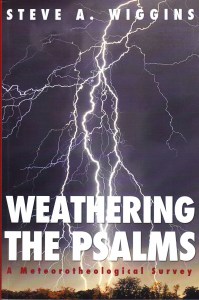
The other day I was awakened by a severe thunderstorm. It’s been quite a while since that’s happened. Unlike when we lived in the Midwest, thunderstorms in New Jersey tend to be widely scattered and somewhat uncommon. (It’s all a matter of perspective, I know.) My basis of comparison is how often I notice such storms. I’ve never been able to sleep through one. Thankfully this one came at around 4:30 a.m., past when I’m usually awake on a weekend. I’d forgotten the raw power of just how loud and bright such a storm can be. Danger seems all around. The feeling is primal and urgent. As I got out of bed and walked into the dark kitchen, windows filled with electric blue followed by and tremendous blast, I thought once again of Weathering the Psalms and the story behind it.

By the way, when I speak to young scholars about publishing I tell them this isn’t the way to go about finding a topic. That having been said, my book was born in the Midwest. Life at Nashotah House revolves around required chapel twice daily. Weather does not stop it. In fact, holding the daily office by candlelight because a storm had knocked out the power was not uncommon. Morning and evening prayer—indeed, all of the canonical offices—are built around the recitation of the Psalms. Reading the Psalter in slow, stately tones while thunder raged outside, rattling the ill-fitting stained-glass windows, left an indelible impression. It was only natural in such circumstances to notice how often the Psalms mention the weather. Thus a book was born.

I’m currently at work on a new book. I can’t say the topic just yet because someone might be able to beat me to it. (Knowing the way I come up with book ideas, however, I doubt it.) Sitting in my darkened living room, in my writing chair with the fury just outside, I was strangely inspired by the storm. Then it was over. Silence followed by birds singing, just like in Beethoven’s sixth symphony. The thunderstorm is one of nature’s psalms. As at Nashotah House, in the Midwest we had perhaps too many of that particular kind of psalm. Nevertheless, in the silence that followed I was left strongly in touch with my muse. These are the states that lead to poetry and song. Every great once in a while they might even lead to a book idea. As I tell students, just don’t expect that anyone else will get it.


Blood Brothers

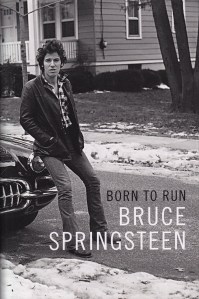
Every once in a while I take a chance and write about music. I don’t do this too often since it’s a very personal thing, and as open as I may be on this blog, I’m not as accessible as I seem. We all need a place to retreat in this world, and Bruce Springsteen’s music is one of those places for me. Late last year, just after it was published, Springsteen’s Born to Run—his philosophical and revealing memoir—sold briskly for several weeks. Since it made its way into my stocking I’d been intending to read it since then. And putting it off. There’s something disillusioning about finding out your heroes are only human. The best among mine are heroes precisely for that reason. Gods need not apply. Overcoming my fear, I dove in.

Two things stood out in this autobiographical account: religious imagery looms large, and depression mingles liberally with it. I recall reading an early review where the writer expressed surprise that the Boss suffers from depression. I responded (perhaps out loud), “have you ever listened to his songs?” I became a Bruce fan because he sang about working class people. Bruce and I share that background. He knows that your roots never let you go. Indeed, roots are what keep you grounded. Many of my academic colleagues, I learned, were simply carrying on the family business—and a privileged business it is. Those of us who had to overcome poverty to get in the door were never really welcome in the ivory tower. You can’t help where you’re born, but you can sure be punished for it. Bruce understands that.

I’ve never been to one of his concerts. I don’t even like to listen to his music when someone else is in the room. There’s something deeply personal about communing with someone you feel understands you. Of course I’ve never met Bruce Springsteen. I probably never will. He won’t know the kind of influence he’s had on my life and I feel that I’m risking an awful saying so here on this blog. There aren’t too many heroes in my life. I’m not inclined to idolize people. In this memoir, however, Bruce won’t let himself become an idol. He’s not perfect and he takes pains to make sure that you know that. We were, nevertheless, raised in situations not dissimilar from each other. Unlike Bruce, I have no musical gifts. No, I’ll never likely meet him—and if I did I wouldn’t want it to be with other people around. Some things are just too personal that way.


Independent Bookstore Day

Many modern mini-holidays are centered around things you might buy. I don’t mind that so much in the case of Independent Bookstore Day—of which I wish you a happy one. Quite by accident I found myself in an independent bookstore just last night, not aware I was prematurely celebrating. If anything might save us from the muddle we’re in, it’s books. We live in a society with plentiful distractions, many of them shallow. Books take some effort. They demand your time. They make you take some quiet space to think. Books came along with, and perhaps were the source of, civilization. Today we’re harried and hurried and frantic with an electric source of information and entertainment that never turns off. And we’re seeing the results of that playing out on an international scale. How different it would be if we’d grab a book instead!

The strange thing is that those inclined to action often suppose reading to be an utterly passive activity. The basis for human progress, however, has often been what someone has read. Surprisingly, books can be the source of progress. When we see reactionary elections taking place around the world, leaders who don’t read emerge as the hailed champions of regress. We’re living through that right now. Books can be dangerous. Think about it—you’re being given access, however briefly, to someone else’s mind. The combined power of minds is an impressive thing. If what I’m reading is anything to go by, the hive mind is a source of incredible strength. You want action? Put multiple minds together. There’s a reason that civilization has gone hand-in-hand with literacy.

In the wake of Borders going under, independent bookstores have started to make a comeback. Those of us who work in the publishing industry have to keep an eye on those numbers. A visit to a bookstore is all about discovery. Quite often I’ve walked in with a list in hand. When I exit my list has grown rather than shrunk, and the purchase I’ve made was likely not on the list to begin with. Independent Bookstore Day gives us a chance to think about how very much we do not know. Unlike those who claim power and brag that they don’t read, admitting that we have more to learn is the way toward progress. I may not be the most active man in the world, but I do recommend action in the form of getting to a bookstore. If we each do our part, we can’t help but to make the world a better place.


Dog Daze

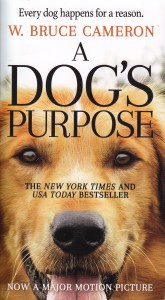
I read quite a bit about animals. One reason is that when you’re counting all the species on the planet we’re pretty clearly among the animal part. Having grown up with many pets, the dogs particularly stand out. We tended to have only one dog at a time and they were so full of personality that it obviously wasn’t a matter of projecting to understand that one was more or less optimistic or joyful than another. Some could be mean while others were loving. There was quite a bit of buzz about W. Bruce Cameron’s A Dog’s Purpose back in January. For Modern Mrs. Darcy’s 2017 Reading Challenge the book fit one of the categories for me, and so I found myself reading about animals again. The thing about buzz is that I listen with only half an ear. I didn’t know much about the book except that it was a novel narrated from a dog’s point of view.

A couple of things struck me as I got into the story. One was that the protagonist ended up still believing that humans were more important than dogs. I suppose there’s some kind of evidence for that, from a dog’s viewpoint, but it doesn’t seem very strong to me. After all, we’ve bred wolves into pugs and cockapoos with an intentionality that even Mr. Darwin would’ve recognized as unnatural selection. Left to their own wolves would’ve adapted, but they’re pack animals and while dogs may think us the alphas, they’re each an important part of the group. They are giving, but that’s the nature of being in a pack. It’s also something that elected officials in Washington could stand to learn. When there aren’t rifles and traps, pack animals prosper.

The second thing that stood out about A Dog’s Purpose was reincarnation. The idea scares me. Life’s been a long challenge this time around and, unlike Nietzsche I’m not sure I could face it this exact way again. In any case, reincarnation only works if there are souls to pull it off. Cameron posits that for Toby to become a fully developed Buddy four cycles of reincarnation are needed. Like a good Platonist, our protagonist recalls the important lessons from each previous life and is able to develop into a more fulfilled dog each time around. The karma here is good. Cameron does seem to “get it” from a human-projected dog’s point of view. It can be fun, and it can be sad. The important lesson, for me, is that animals are who we are and to be a successful pack we need to look out for the good of each other.


The Labyrinth of Copyright

Here’s another post originating from my daily work as an editor. (As an editor you tend to assume nobody’s really interested in what you do all day, but I’ve been told this isn’t so.) What is copyright? And do I have it? First of all, a caveat: I’m not a lawyer. Copyright is complex and, to answer my second question first, yes, you do have it! So what is copyright? Essentially it’s the protection of intellectual property. As long as that property remains in your head, it’s yours alone. Once it’s expressed in writing, art of any kind, music, or even as a chart, it is automatically covered by copyright. If you want to use something someone else wrote, or produced, in your book, you need permission. Small quotes are generally considered fair use, but don’t push that doctrine too far! Fair use is listed as just that, a doctrine.

What many authors don’t realize is that your book contract is an exchange—you’re selling your copyright to the publisher for their services (they publish your book, promote it, register the copyright (it already has copyright, but registering helps to protect it legally), and handle the financial aspects of selling your book). You can’t publish your own work again without permission of the publisher. Sometimes I’ve had people ask me to use my artwork (from my own published articles) in their work. I don’t mind, of course, but I don’t own the copyright! If I published my work, the publisher has taken that copyright and I remain simply the author. If I want to publish my own published work somewhere else, I have to ask permission. Copyright, however, doesn’t last forever.

The only safe date before which material can be used without fear of infringement is 1922. Works published before then are in the public domain. Right now new works (such as this blog) are covered by copyright for the life of the author plus 70 more years. After that, unless the law changes, you don’t need permission to reuse these idiosyncratic musings. Not that that’s ever been an issue. I’m not a litigious person, but I do like to be cited. (Who doesn’t?) In any case, if you’re working on an academic piece, and you want to reuse somebody’s drawing, or an extended piece of writing, or even a tiny bit of a poem, you must have permission to do so. That’s what copyright does for you. The “fair use doctrine,” like most doctrines, doesn’t hold up well in court. If in doubt, just ask. Before you do, though, you might want to consult a copyright lawyer, just in case.

All opinions my own.


Frankly Frankenstein

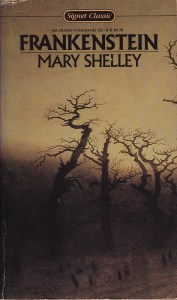
As a novel, like its monster, Frankenstein trespasses all kinds of boundaries. Is it science fiction or horror? Is it Gothic or presciently modern? Is it feminist or conventional? One thing about it is certain: it has been immensely influential. Lester D. Friedman and Allison B. Kavey have created for the world a truly wondrous treatment of this meme. Monstrous Progeny: A History of the Frankenstein Narratives is perhaps the most engaging monster book I’ve ever read (and there have been many). One of the main reasons for this is that Friedman and Kavey are keenly aware that binaries don’t necessarily exclude their opposites. Frankenstein is about both science and religion, and it treats both profoundly. Considering that Mary Shelley was only 21 when the novel was published bespeaks a rare genius in blurring boundaries and making those on each side think.

Monstrous Progeny considers multiple issues associated with Frankenstein. Should science be approached alone, or should peer review be involved at every stage? Is religion eschewed by this woman so strongly influenced by atheism, or is it the very crux of the matter? And what about the incredible and continuing afterlife of Shelley’s story? Friedman and Kavey survey not only the novel but several movies associated with, or based on ideas from, the book. Modern science, if we’re to be honest, also owes much to the fictional musings of a 19-year-old girl on a dark and stormy night. The tale of the tale is nearly as fantastic as its progeny. Challenged to write a ghost story, Shelley produced an undying Zeitgeist feature instead. Monstrous Progeny delves deeply into this unexpectedly profound idea, showing how it grips the heart of many contemporary nightmares.

Genres can be deceiving. Shelley wrote her tale as a “ghost story.” It received literary acclaim, becoming one of the best selling books in England in the nineteenth century. Only when Universal found success with Dracula in 1931 and followed it up with Frankenstein the same year did film critics want something to call movies like this. The term “horror film” was invented. There is certainly horror in Frankenstein, but there’s much more to it than that. The relationship between religion and science, and the very real ethical issue of making something because we can, are never far from the reader’s mind. Giving life to the creature only underscores the conflicts and contradictions of life in a world where to be gods risks destroying any possibility of heaven. Monstrous Progeny is a thought-provoking book that will, in its own way, brings our present fears to life.


Happy World Book Day

In times of distress, as well as of joy, I turn to books. Since about November there have been more of the former than the latter, so I’m cheered that today is World Book Day. The United Nations Educational, Scientific and Cultural Organization has designates World Book Day to promote literacy internationally. If only the White House would pay a little more attention to the UN maybe the world situation would improve. In any case, books are always worth celebrating. At any given time I’ve got three or four book-reading projects going on simultaneously. Well, not literally simultaneously; I have books I read in the morning, different books for the bus ride, and books I read before bed. Often there are others scattered in there as well, such as books that I take with me in case I get unexpectedly delayed somewhere and want something to read. It’s a life full of books. It’s a wonderful life.

I can’t imagine enduring the mental vacuity that must come from not reading. It sounds like torture to me. Yes, I’ve occasionally been caught up in the action-packed episode of travel and adventure (or what passes for adventure for a guy like me). Hours spent with other people in locations not at home when there’s something to do every minute of the day. But then, when the fun’s over, I open a book. I read before bed even when I’m traveling, and since I’m an early riser I read before anyone else is awake. It’s a form of communion. Having access to the intelligent minds of others is a rare privilege that shouldn’t be scorned. World Book Day should be an international holiday.

Books, strictly speaking, didn’t necessarily originate as sacred texts. Very early in the process of writing, however, such holy documents began to appear. Civilization itself grew through the cultivation of writing. Bibles, Qur’ans, Books of Mormon—for all the troubles sacred texts may cause, they’re reminders of the importance of reading. And once reading starts, it’s impossible to stop. Reading is resistance to the Zeitgeist that’s haunting the politics of the day. Had voters been informed, it is absolutely certain, neither Brexit nor Trump would have happened. We need to read, and be seen reading. Ignorance is the final enemy to be defeated. Celebrate World Book Day. Wish people happy World Book Day. And for the sake of civilization itself, get caught reading.


Witching Well

Salem, Massachusetts, brings to mind images of intolerance and a culture ossified in superstition. That’s not really fair, of course. Even in the late seventeenth century the people of Salem were living during the Enlightenment and they understood enough of science to question the legitimacy of the spectral evidence of the kind that would stand in Washington DC today. With twenty direct deaths due to witchcraft accusations and many more lives disrupted or ruined, this tragic episode has perhaps unfairly cast New Englanders as credulous rubes willing to believe just about anything. If you’re like most of us, you may not be aware that other witch trials were going on around that same time period, but with differing results. Richard Godbeer’s Escaping Salem: The Other Witch Hunt of 1692 recounts the events in Fairfield County, Connecticut in Salem’s haunted year. As in Salem a young woman began experiencing fits. Medical explanations—rudimentary as they were—didn’t explain everything away, so supernatural causation was considered. Witchcraft was suspected. Accusations were made.

In the case of Kate Branch of Stamford, as Godbeer shows, Connecticut was learning the lessons of Salem in real time. The belief in witches and witchcraft was just as real, but realizing the bad press their northern neighbors were receiving, the Connecticut Yankees insisted on more stringent evidence. Indeed, judges dismissed the jury to reconsider their decision and even overturned it based on reason. These were people who knew that human lives were at stake. They also knew that Salem was doing nothing to vindicate the cause of either Puritans or justice. We don’t hear about it so much, I suspect, because those in power did the right thing. Given present circumstances, reading about Americans who actually learned from history is encouraging. We read daily of a president woefully unaware (and proudly so) of his own nation’s history. What could possibly go wrong?

Witch hunts are sad miscarriages of justice in the best of times. In days when minorities are being scapegoated for the problems capitalism itself causes, we have to wonder if, apart from those in contemporary Connecticut, we’ve learned anything from Salem at all. Wasn’t it clear that targeting women—many of them social outsiders, and pretty much all of them recently descended from immigrants—was in itself just plain wrong? We pride ourselves on having outgrown belief in magic, and yet we go into that voting booth without a rational reason to elect a self-evident bigot and abuser of women and do it anyway. Reading, knowing where we’ve come from, prevents all kinds of tragedies. And this isn’t alternative factual history. It happened in the very shadow of the calamity of Salem, Massachusetts.


Who Knows What?

Nobody likes to have their shortcomings pointed out. I suspect that’s why many people might find Tom Nichols’ The Death of Expertise: The Campaign against Established Knowledge and Why it Matters a little uncomfortable. Nichols doesn’t pull any punches. Nor does he claim to be an expert on everything. What he does claim, however, is very important. He shows how America has taken a distinctly hostile attitude toward experts and specialists. Somewhere along the line hoi polloi began to mistake everyone has a right to their opinions for “everyone has the right to be an expert on what they express in those opinions.” This isn’t a new problem, but there’s no doubt that the Internet has exacerbated it. We’ve got people arrogant of their lack of training claiming alternative facts that are “just as good as” established facts. One of them resides in the White House. There’s no arrogance in claiming you have extensive, highly specialized training if you do. It’s a simple, non-alternative, fact.

A perfect book for our times, The Death of Expertise should be—must be—widely read. It’s not likely to change the minds of those who’ve already decided that with the Internet giving them a voice they’ve become the gurus of a new generation of the “Know Nothing Party.” The rest of us, however, should read and ponder. Nichols doesn’t shield himself in his ivory tower—he admits there’s plenty that he doesn’t know. He’s not shy, however, in saying he’s an expert on what he does know. I remember when facts used to stand for something. Winning at Trivial Pursuit was a matter of pride. Now everyone’s a contestant on Jeopardy and Alex Trebek has taken the express train home. All answers are right, for all people are experts. Seems like we have a surplus economy in arrogance these days. And that surplus just keeps growing.

An area where Nichols isn’t an expert is religious studies. He wouldn’t claim he is. I did find it interesting, however, that when he wants to make some of his strongest points he quotes C. S. Lewis. Any evangelicals out there should read The Screwtape Letters again and check what Nichols says. Lewis would not have been a Trump supporter. Not by a long shot. And he uses the word “ass” in his books, even when he’s not referring to literal donkeys. He may have been onto something. We have an anti-expert president who has appointed anti-experts at the head of major government agencies. He anti-expertly launches missiles at Syria illegally. C. S. Lewis was an expert Anglican. 45 may be an expert of the sort Lewis wasn’t afraid to name. We need to be educated. Read Nichols and give our nation a fighting chance. There’s always more to learn.


Publisher’s Breakfast

I recently had the opportunity to discuss publishing to a room full of academics. (Ooo, I can feel the envy rising already!) Although I discuss books quite frequently on this blog, I generally don’t discuss publishing much. One of the reasons is that publishing isn’t easy to tie into religion sometimes. Another—and this may be the bigger factor—is that publishing is work. This blog, which is technically a form of publishing, is more for letting my mind wander outside the paddock after being penned in at work for too much of my adult life. Still, I’m glad to give publishing advice for those who want it.

The focus of these talks (of which I’ve given precisely two) is how to get published. My main approach to this question is to point out that higher education and publishing are diverging rapidly. The reasons for this are complex, but simply put, publishers need to make money. Having been on the receiving end of tuition statements for a good deal of my life, I have no doubt that institutions make ready money. They may have trouble meeting the costs of all those administrators for whom they keep creating positions, like any good business, so each semester the bill creeps up a bit until suddenly you realize your bank account’s empty and you’d better get to commissioning some more academic books. After all, this is all about money, is it not?

Like many in higher education, I courted academia as a hopeless romantic. I believed that love of subject and ardent devotion with ample proofs of said love would woo the academy into a permanent relationship. I’ve always been an idealist. Now I’m on the side of the desk where colleagues approach me to ask favors. It’s kind of like The Godfather, really. Only those who kiss Don Corleone’s ring tend to do so knowing that favors require some kind of reciprocity. The academy may not welcome you but would you mind helping us out now that you’re in a position to do so? No fear of horse heads here. Perhaps by now you understand why I don’t write much about publishing on this humble little blog. The focus of The Godfather, after all, is really young Michael Corleone and his devolution from an upstanding citizen (shall we say “academic”?) to a mafia crime boss. I’ll leave the other side of the equation blank. Trade secrets, after all, are worth money.


Dark Lite

Maybe you’ve noticed it too. While certainly not universal, many forms of Gothic cultural expression (novels, movies, television, etc.) have a playfulness to them. As if taking the genre too seriously might be a misrepresentation. Even Edgar Allan Poe can be caught smirking from time to time. I’ve often wondered about this unusual combination of darkness and light. Catherine Spooner obviously has too. In Post-Millennial Gothic: Comedy, Romance, and the Rise of the Happy Goth she takes on a number of these cultural expressions—both Goth and Gothic—and tries to understand the lighter side that they often present. Sometimes it’s comedy and sometimes it’s irony, but those fascinated by darkness aren’t always as gloomy as they seem.

This book is a real hodgepodge of both British and American explorations of the smiling dismal. It’s a cultural contradiction, maybe, but it certainly feels authentic if you look closely enough. Although Spooner doesn’t discuss it directly, I couldn’t help but think of that great progenitor of the Gothic—the medieval church. Perhaps it was the very real fear of the plague and the nearly constant warfare of the time in Europe, but liturgy, when done right, has a palpable darkness to it. References to ourselves as “miserable sinners” begging God to “have mercy upon us” clearly call to mind some of the deeper elements of the Gothic sensibility. Having attended Anglo-Catholic services for years I came to know many who were compelled by this intensity. A Gothic chasuble is a thing of beauty forever.

Spooner, however, focuses on popular culture. Beginning with the Goth movement of the 1980s, a subculture formed that brought much of this darkness to light. She’s careful to point out that being Goth isn’t the same as being gloomy all the time. It is an expression of creativity, and, as Spooner notes, closely associated with Steampunk. Such things, however, require a recognition on the part of participants that in order to taken seriously, such expressions must become part of daily life. There are risks, however. Even in enlightened cultures we are not yet fully tolerant of those who are different. And really, much of the book is about this—accepting those who are not like ourselves. There is quite a bit going on here that’s beneath the surface. And depth is something the world could use a bit more of. There’s nothing wrong with having some fun while acquiring it, either.