Know Your Monsters

at-stakeEdward J. Ingebretsen is one of the most intelligent analysts of monsters about. That may seem like a small order, but it’s not—many people write about monsters, and Ingebretsen is one to whom attention is owed. At Stake: Monsters and the Rhetoric of Fear in Popular Culture is not an easy book to read. Narratively sophisticated, it takes on some issues we’d rather not have addressed. One of the great myths about monsters is that they’re all for fun. The current understanding of monsters gives the lie to that worn adage. Monsters tell us something extremely troubling about ourselves and we don’t like to have someone pointing it out. When hearing that some of the monsters considered are Jeffrey Dahmer and Susan Smith, the prospective reader might wrongly assume why. The monster may not be whom one expects. Indeed, Bill Clinton makes his way into the discussion, as do Andrew Cunanan, O. J. Simpson, and Matthew Shepard. Be not quick to judge, however; you must pay attention.

As most writers on monsters recognize, religion often fuels them. Without belief monsters have no power to scare. We’ve probably all seen horror films that underscore this point. If a creature is unbelievable it loses its ability to be frightening. The movie invariably ends up in the B category and is appropriated for laughs or for an example of how not to make a film. Ingebretsen knows that to understand monsters we must understand ourselves. We too often allow unspoken prejudices (which are sometimes nevertheless shouted aloud) to inform our opinions of what is deviant or evil. Just look to Washington and see if you can disagree. The more we tease these monsters apart, the less they conform to expectations.

As implicated by his title, a great deal is at stake in coming to grips with monsters. They aren’t just for childhood Saturday afternoons anymore. It may be that they are one of the healthiest means for dealing with the steady stream of fear flowing from the District of Columbia. Without our metaphors, we are lost. Those set on destroying monsters have no concept of just how terribly helpful they are. You can’t be sure who the beast is, they are so very protean. They will, however, get you through some dark nights. Not without scars, but wiser, if a touch more melancholy, in dawn’s cold light. Take monsters seriously. It’s the only way to survive them.
Made of Clay

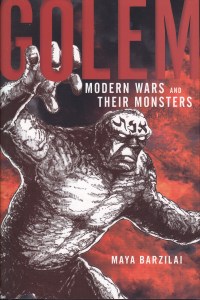
golemInvestigating a new field, at least on an academic level, involves a little disorientation. Part of this derives from the fact that academics didn’t use to write about monsters. Another part of it, however, is that those who do such writing have been doing so while my attention was elsewhere. It’s not easy to learn dead languages reasonably well. I didn’t pay much mind to the golem, being as it is, a “modern” monster. Probably responding to early modern pogroms, the golem was considered a defender of persecuted Jews. He was, however, a mindless defender. Made of animated clay, the golem was brought to life by magic and could only be killed in the same kind. Maya Barzilai has written a masterful account of how this monster relates to war. Golem: Modern Wars and Their Monsters explores how modern golem stories (and there are many) tend to relate to situations of conflict.

I had read about the golem before, and had trouble locating many academic resources on the creature. Barzilai demonstrates how much there is to ponder. It seemed, prior to reading her book, that the golem was mostly obscure, but it turns out that many writers, artists, and filmmakers have appropriated the clay giant over the years. Those who trace the history of comic books suggest that Superman was originally a kind of golem figure. I hadn’t realized that the golem had his own short-lived comic book series. When a people are persecuted repeatedly, having a secret weapon may not seem a bad thing. But the golem is difficult to control. It rampages. It can kill the innocent. Barzilai raises the question of whether a people with an unstoppable weapon are ever justified in using violence.

That question hangs pregnantly over the present day. The rich white men that run this country feel that they’ve been oppressed. Not willing to admit that it’s morally reprehensible to treat women as objects (they’re “hosts,” we’re told), blacks as inferiors, or hispanics as illegal, they bluster away about family values that aren’t consistent with anything other than threatening those who are “different” into submission. And yes, the Jews are among those these white men scorn. I wonder where the golems have gone. It could be that, like those of us self-identified as pacifists, that those who know how to make golems simply can’t justify violence. Barzilai didn’t intend for this in her book, I’m sure. Still, each new era brings new perspectives to these monsters made of clay.


Animal Ways

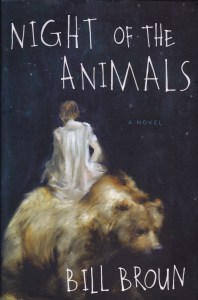
nightofanimalsNoah’s Ark has a way of showing up in many literary forms. Familiar to many from Genesis, it actually predates the Good Book by hundreds of years. On the backside, it keeps recurring in literature as diverse as Neal Stephenson’s Snow Crash, Jonathan Carroll’s The Ghost in Love, and Margaret Atwood’s MaddAddam trilogy. It also shows up in Bill Broun’s debut novel Night of the Animals. Set in a future that’s becoming present faster than Broun likely anticipated, the story revolves around an addict who hears animal voices. The story stubbornly refuses to let you get any grip on a slippery reality, so the reader’s left guessing even at the end. In the 2050s Britain is under a fascist regime that seeks to keep the wealthy happy and everyone else servile. (Keep reminding yourself this was written before 11/9.)

Cuthbert, the protagonist, believes the animals—most of which are extinct in the wild—are calling him to release them from the London zoo. As an addict his perception of reality is constantly in question. His sense of mission, however, is not. One of the stranger elements in the tale (and that’s saying something!) is the revival of Heaven’s Gate. This cult, instead of wiping itself out, has gone international. The approach of a comet sets the Neuters (as they’re called) on a mission to wipe out earth’s remaining animals. Many of them are in the London zoo, which brings Heaven’s Gate into direct conflict with Cuthbert, who is busy trying to release as many talking animals as possible. London literally becomes a zoo and Heaven’s Gate openly attempts a coup.

All of this sounds wild and fantasy-prone, but like 1984, fiction sometimes peers deeper into reality than science. Is it science fiction? It’s set in the future, but it’s difficult to say. What has all this to do with Noah’s Ark? The novel itself draws the parallel—the zoo that preserves the last of their kind is, by default, an ark. The Ark. Floating on a world-ocean of irrational turmoil where might (read wealth) makes right after all. Religious imagery interlards the story. Cuthbert becomes St. Cuthbert. His possible granddaughter (the reader is never sure) manifests as the Christ of the Otters. There’s even a kind of Second Coming. This is a novel that feels like altered reality. That illusion is given the lie when you close the book and turn on the news.


Theoretically Speaking

lit-theory-vsiI’ve been brushing up on my literary theory. All writing tends to get classified as fact or fiction, and we don’t stop to think, generally, about what “literature” is. Those of us who write fiction and non know that a well-placed hyperbole might throw us from one camp into the other. Such is the power of rhetoric. So it was that I found myself reading Jonathan Culler’s Literary Theory: A Very Short Introduction. Witty and insightful, Culler acknowledges the elephant in the room for many of us—theory, in a literary context, is often impenetrable. I’ve often wondered what one had to do to be considered a theorist, and this little book actually addresses that. Nobody has time to read all the theorists, though, and come up with their own creative things to say. Chose your poison.

The Bible, of course, is literature. That’s one reason I was reading Culler. I found one of his assertions immediately applicable: people in nineteenth-century England saw literature as a unifying principle. The British Empire encompassed the world, and to make diverse peoples a part of it, literature might be used, they thought, to do the trick. Culler suggests that it might have been a substitute for religion, which, he notes, was no longer holding society together. This gave me pause. Religion—at least official religion—began as social glue. The earliest recorded religions were state sponsored and served to cast the monarch in the role of the special appointee of the gods. There’s no arguing with that, right? Elaborate, expensive temples were erected. Financed by tax-payers’ dollars. This worked fine since priests declared the rule of the king as sanctioned by the gods. Nations warring against each other were thought of as rival gods fighting.

When science began to take the universe literally, religion lost its stickiness. How do you hold a society together when the gods no longer exist? You see, scientists didn’t think out the whole picture in advance. Scientists, like most academics, work in silos (that’s a metaphor). The discovery of a scientific truth can dissolve a social epoxy quite efficiently. Recognizing the slippage in the British Empire, theorists (I suppose that’s who noted such things) considered literature the great uniting force of a diverse people. We’re kind of facing that same dilemma today as literature is becoming, for many, as irrelevant as religion was a century-and-a-half ago. At the same time, people don’t understand science well enough to assess it for themselves. What are we supposed to do? Is there a theorist in the house?


By Any Other Name

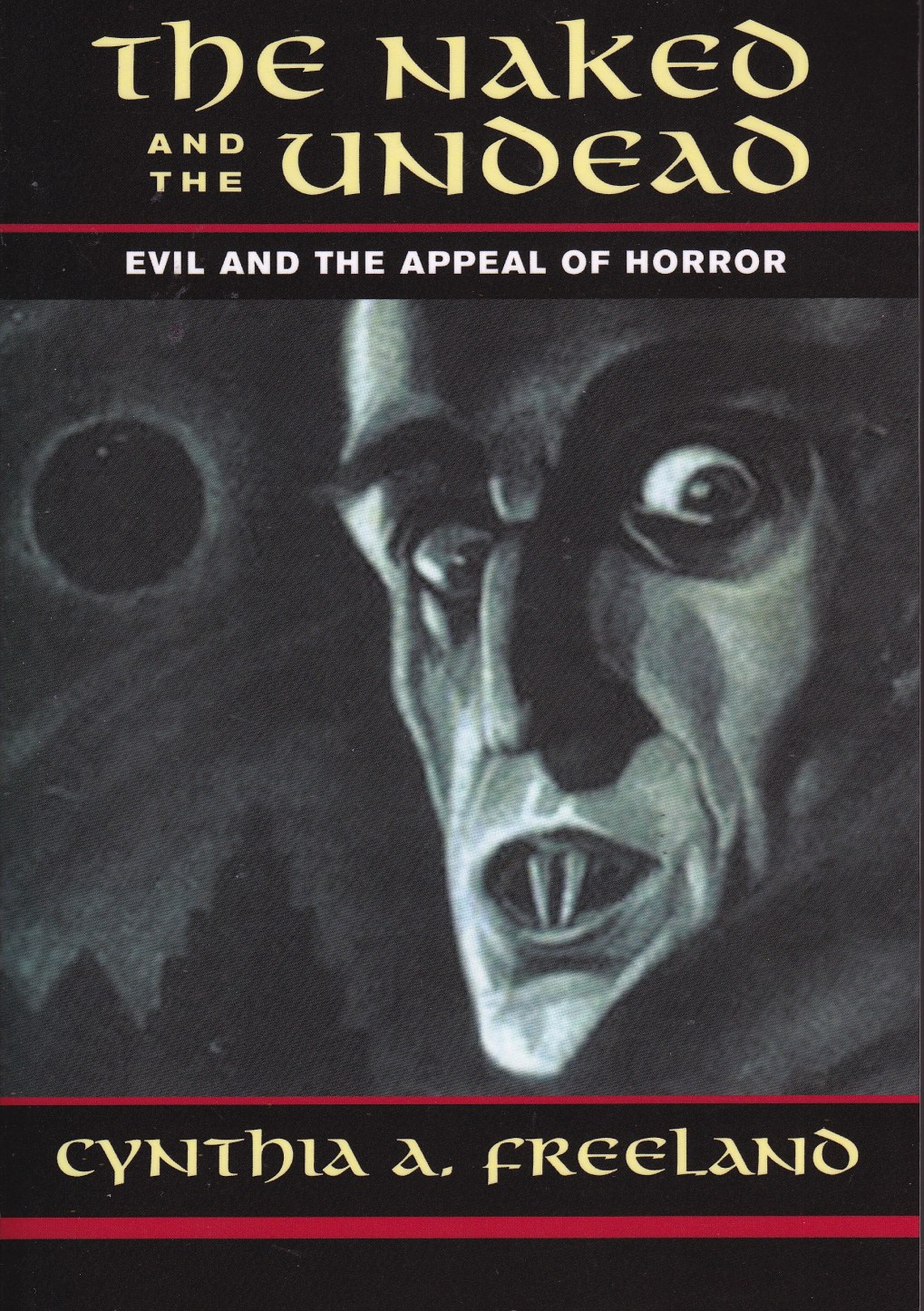
nakedundeadGood and evil. Well, mostly evil, actually. No, I’m not talking about Washington, DC, but about horror movies. Cynthia A. Freeland’s The Naked and the Undead: Evil and the Appeal of Horror is a study that brings a cognitivist approach to the dual themes of feminism and how horror presents evil. It’s not as simple as it sounds. Like many philosophers Freeland is aware that topics are seldom as straightforward as they appear. Feminists have approached horror films before, and other analysts have addressed the aspects of evil that the genre presents, but bringing them together into one place casts light on the subject from different angles. Freeland begins this process by dividing her material into three main sections: mad scientists and monstrous mothers (which allows for the Frankenstein angle), from vampires to slashers, and sublime spectacles of disaster. Already the reader can tell she’s a real fan.
One of the simplistic views of horror is that these kinds of movies—particularly slashers—are misogynistic by their very nature. Feminists, including Freeland, question that assumption. Horror is a genre with a decidedly checkered history. Some films do feature mostly female victims to male monsters. Not all do, however, and even those that do may be saying something other than the obvious. Looking for the locus of evil in these movies provides a lens that focuses the meaning somewhere other than the surface. This is one of the benefits of philosophy—probing questions may be asked and unexpected answers may result. Along the way you can have a lot of fun, too. Especially if you watch horror movies.

A large part of the criticism probably arises from the fact that film making was, for much of its earliest history, run by males. That’s not to say women couldn’t do the same thing men were doing, but the opportunities simply weren’t there. Most film makers, I expect, have trouble getting out of their heads to think about how someone of a different gender might perceive this kind of movie. Fear, we are told, is “coded” feminine. It seemed natural to such film makers to put the female in peril since both women and men would respond to it. Since then it has become clear that fear isn’t coded for gender. Indeed, one of the hallmarks of modern horror is that we all have cause to be afraid. Fear is no respecter of gender. Freeland’s analysis, now getting on in years, correctly looked ahead in many respects. Especially concerning the ongoing presence of evil.


Unseen Worlds

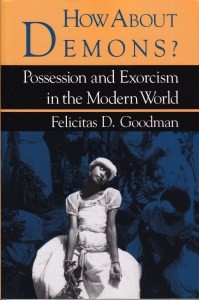
howaboutdemonsA few weeks ago I wrote about re-watching The Exorcism of Emily Rose. In anticipation of the inauguration I was in the midst of a spate of possession movies. I watched several others, including The Rite and The Possession. This got me thinking I should read Felicitas D. Goodman’s book How About Demons? Possession and Exorcism in the Modern World. Goodman was an anthropologist who’d done fieldwork among groups that practiced possession—keep in mind that many religions believe in good spirits as well as evil ones. Her book is one of the few that takes the larger picture seriously. Many writers simply dismiss the “demon haunted world” as naive and superstitious, but Goodman makes the point that possession is a real phenomenon and we don’t know the cause of it. Indeed, it’s impossible to say with certainty what the agency is because spiritual causes can’t be studied empirically. That said, science deeply informs her analysis.

I’ve observed people speaking in tongues before. It’s an uncanny experience. No matter what you decide the origin might be, it’s strange and not a little unsettling. It’s related to possession, as Goodman shows. So is multiple personality syndrome. Unlike most scientists, however, she doesn’t make the unwarranted leap that since these are all related they’re all the same. Speaking in tongues is usually considered a good thing while demonic possession is not. Interestingly, recordings of glossolalia—speaking in tongues—show the same pattern globally. This indicates that whatever it is, it originates biologically from human brains in a mostly predictable way. Many world religions allow for possession by good spirits or gods and alternate states of consciousness are accessible by learning how to reach them. Anyone can do it, but some have the gift of doing so easily. Those who do overlap with the pool of the possessed.

As the White House shows, we like simple answers. Possession, however, is a complex phenomenon. Throughout, Goodman refuses to equate it simply with the physical manifestations that have been observed and recorded. She was a true scientist. Reductionism is related to our love of simple explanations. I wanted to read How About Demons? because it contains one of the few serious academic studies of the case of Anneliese Michel, the young woman on whom The Exorcism of Emily Rose is based. I was expecting, since this is an academic treatment, that the cause would be nailed down simply and efficiently. I was pleasantly surprised when it wasn’t. Well before the movie Goodman interviewed those involved in the case and wrote an entire book on it. Although she clearly believed in science to explain our world, as this book demonstrates, she didn’t give it more explanatory power than it actually has. In a complex world we need as many subtle minds as we can get.


The First Weak

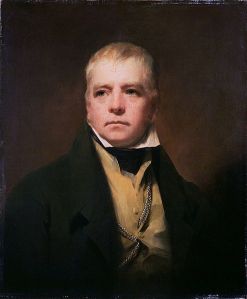
“Oh, what a tangled web we weave. When first we practise to deceive!” I always thought this couplet came from Shakespeare, but in fact it’s from Sir Walter Scott’s poem “Marmion.” The quote has been in my head all this first week of the new administration as alternative facts, lies, and statistics have flooded out of the White House. Along with gag orders slapped onto federal agencies. I’ve worked for people who rely on gag orders. This obvious lack of transparency signals loud and proud that they have facts to hide. Then they will feed the public alternative facts and later claim they never did. Mission accomplished. Sir Walter Scott may not have been William Shakespeare, but he sure got that web analogy right. At times like this we need our writers. Of course, Trump bragged in pre-inauguration interviews that he didn’t like to read.

Since last weekend sales of George Orwell’s 1984 have spiked. From the first words out of Sean Spicer’s mouth (or any words out of the mouth of Kellyanne Conway}, many of us knew the only thing Orwell got wrong was the date. Frankly I’m surprised the government hasn’t tried to ban 1984 yet. It was required reading when I was in high school and that date was still in the future. The press—what still exists of it anyway—passed along stories that Trump had ordered photos of the inauguration day crowds hung in the White House in his first week. Such pressing matters of state! The photos had the wrong date on them. Facts are cheap. This should be good for the economy. You can get them in any flavor you like—true facts, false facts, alternative facts, statistics. Arachne has returned to her loom.

Although “Marmion” wasn’t written by Shakespeare, I can still say it was because I need a segue to Harold Hecuba. Hecuba was a Hollywood producer who accidentally landed on Gilligan’s Island. After he insulted Ginger the castaways put on a performance of Hamlet to showcase her acting skills. Hecuba, the unelected president of the island, awoke during rehearsal and, like other narcissists we know, took over. He says that Shakespeare was a hack and that if he were alive he’d have him working on a complete rewrite. Of course, he doesn’t know what Hamlet’s about. Or “Marmion.” Actors only mouth the words. They make us believe what is not true. We’re in for a period when we’re going to rely on the authors for the true story. I suggest we all start with 1984.

William Shakespeare

William Shakespeare


What Rapture

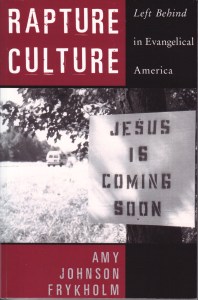
rapturecultureEvangelical culture must be an endlessly fascinating area of study for sociologists. So pervasive that many people who aren’t religious buy into aspects of it, this social movement has shaped American thought in often unexpected ways. Take the rapture, for example. Here is a non-biblical concept, invented in the late nineteenth century and so thoroughly disseminated that most people simply accept it as standard Christian belief. It’s not. Amy Johnson Frykholm pieces part of this puzzle together by focusing on the Left Behind series. Rapture Culture: Left Behind in Evangelical America is one of those books where you find plenty of food for thought as you go along. Not that the novel series itself is profound, but the impact that it has is.

The origins of the rapture go back to a way of thinking called dispensationalist premillennialism. That alone could be why so few people know about it! All this phrase means is that some Christians believe history is divided into distinct periods (dispensations), one of which is the end of the world. Among dispensationalists, there is disagreement on when the rapture will come, and those in the majority believe it will happen before the millennium (not the Y2K millennium, but the millennium of God’s reign on earth before the world ends—the next dispensation). These are the premillennialists. It’s easy to think that since this system is pure mythology it must be simple. It’s not. This is a complex mapping of the future based on an intimate knowledge of obscure verses from the Bible. The Left Behind series, written by Jerry Jenkins under the guidance of the finally departed Timothy LaHaye, brought this idea into mainstream culture. There was even a movie.

Many educated citizens don’t realize that Left Behind has a Harry Potter-like following. Sales of the series are into the millions of units and many of those who read them take them somewhat seriously. Frykholm interviewed such readers to find out what they actually thought about the series and whether it was something they believed in. As might be expected, answers differ considerably on these points. For me one of the real takeaways is that we ignore evangelical culture at our own peril. I learned about the rapture form Chick tracts—I’ve posted about them before—that I read in my childhood. By the time of Left Behind I’d been through enough courses that I knew it was all based on a fictional event. But many don’t realize that. And many of them showed up in the last presidential election.


Alternative Reality

devilsdominionIt is a caution that may become increasingly necessary as Trump’s supporters of “alternate facts” begin to sink their insidious hooks into feeble American minds that magical belief is part of our culture. While most would deny it in any kind of direct way, from the earliest days we have been a credulous lot. Richard Godbeer explores this historical affinity in The Devil’s Dominion: Magic and Religion in Early New England. Mostly concentrating on the events that led up to the Salem Witch Trials, and some analysis of the trials themselves, he traces the origins to such belief back to the theology of Calvinistic Congregationalists who held undisputed sway in the earliest days. Without benefit of clergy who might urge them to look at the world as a good creation, people instead saw evil and the Devil lurking everywhere. Magic was a regular component of their intellectual diet.

Now, some three centuries later, it’s looking as if things haven’t changed much. Those closest to the highest office in the land—and more frightening still, the most powerful single office on earth—are claiming that facts can have alternatives (what used to be called “lies”) and that if a rich man feels offended reality must be rewritten to make him feel better about himself again. The rewriting of history and science and law is really a mere trifle if you can claim “alternative facts” whenever you please. I wonder what you might find in Alternative Facts on File? I had a chance to thumb through recently and here’s what I found:

Alternative fact 1: Donald Trump didn’t win the election after all! We got the wrong guy in the White House. It’s a fact. Alternative fact 2: the Electoral College was abolished on November 8, 2016. That means that the popular vote wins the White House and Hilary Clinton is, in fact, President of the United States. Go ahead and challenge me on any of this Sean and KellyAnn—for any of your facts I can offer alternatives and they are, by definition, equally valid. Who’s with me? As long as alternative facts are now official discourse supported by the White House, let’s use them to the advantage of the entire nation. Is there a lawyer in the house? Even a Jesuit would do. The one I feel sorry for, however, is Richard Godbeer. His fine book has had to play Devil’s second fiddle to the new reality of post-truth Washington. Maybe the White House really does believe you can shake the Devil’s hand and say you’re only kidding. Wake up, America—you’re being laughed at and mocked by your own government.


Illusions Incorporated

illusionsFiction and fact aren’t so different. Long before the Wachowski Brothers came up with The Matrix, Richard Bach wrote Illusions: The Adventures of a Reluctant Messiah. I was in seminary when I read it and it seemed, at that time, to change my life. Fiction, or fact, has a nasty habit of getting into the way of things and over the course of decades I forgot. The Matrix reminded me—reminded me multiple times—but Illusions sat on the shelf, gathering dust. I was reminded of this book that refuses to be categorized when playing a family game. Like many games these days it’s a set of pre-printed cards and what makes the fun is the context in which you put the words. In this particular game you have to find the suggested idea in the book you have at hand.

I have to confess that this is just a touch artificial at our house. We don’t have much in the way of things, but we have books. Lots and lots of books. When we play this game, we think ahead of time what books we might bring to the table. You never know what the cards will ask, so books with diverse ideas are a good choice. I saw Illusions on the shelf. As I thumbed through, it was as if the decades were wearing thin. I knew I had to read it again.

Stubbornly refusing to classify itself as fact or fiction, the narrative of what it’s like to meet a messiah is inspirational. I can’t claim to have come to the conclusion on my own—I’ve read Illusions before, and I have seen The Matrix many times—but I recollect the realization coming to me on the streets of Manhattan. This is not real. Standing in the shadow of the tallest buildings in this country, that’s not a comfortable realization. Nobody said reality was comfortable. We easily let ourselves accept what we can’t do and what’s impossible. It’s far more rare to consider what is truly possible. What we can do. These ideas will be a hopeful ebenezer over the coming months. We choose to elect reality. Despite what the loud and angry say, the mind is the arbiter of truth. I read the book before I knew much about the world. If I’d had the good sense to believe it, it might not have taken me decades before pulling it off the shelf to remind myself of what I already knew.


Alas, Binghamton

“Store Closing” the signs veritably shout. “Everything Must Go.” It’s something I hate to see in an economically depressed town. The tragedy is redoubled when it’s an independent bookstore. While undergoing the ritual of returning our daughter to college after the holiday break, we were driving through Binghamton, appropriately enough, at twilight. In that first, lonely freshman year we’d discovered River Read books in downtown. Like many indies, it was small. Intimate even. I never walked out, however, without some treasure that I wouldn’t have found in a larger store. River Read eventually became an irregular habit based on parents’ weekends and academic breaks, and I’ve come to depend on it after a long drive across three state lines. Once again, however, the lack of concern regarding reading takes another victim.

img_2947

In the ancient world there was a poetic genre scholars now call the lament for a fallen city. I’m that way about bookstores. Amazon has proven wonderfully capable of getting things to me quickly. Obscure tomes, sometimes. Since our nearest independent is a 25-minute drive, this is often a necessity—I can spare 25 minutes only on a weekend, and then, only select ones. Ironically, just on the way to Binghamton we stopped at the Bookworm in Bernardsville, New Jersey. We try to help them survive. My mind goes back to fond occasions outside the home and how often they involve bookstores. Finding a new one. Returning to one already well loved. Even, back in the day, Borders. In a pique of nostalgia I starting searching the web pages of past favorites. Books & Company in Oconomowoc, Wisconsin. Farley’s in New Hope, Pennsylvania. Pages for All Ages in Savoy, Illinois. Ah, alas, the latter has also closed its doors forever. The store I’d visit after a long commute to Nashotah House and back, looking for something I really want to read.

The neon after dark is like an alien invader in my car. River Read is closing. The liquor stores and “gentlemen’s clubs” seem to be fine. The cars up here sure weave around on the road a lot after 9 p.m. on a Saturday. It’s not just here, I’m sure. I’m seldom out this late any more. Perhaps, even likely, this has been a long time coming. Civilization unable to support its foundation. Literacy, after all, spread the common ideals we used to share. Presidents united us and we were eager to read and every town wore its own bookstore like a badge of honor. I’ve seen the signs and I lament the fall of yet another fondly recalled city.


Hopeful Horror

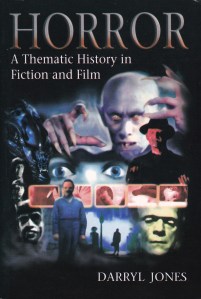
joneshorrorI don’t make New Year’s resolutions. To my way of thinking, if I’m aware I’m doing something wrong, I try to change it at that point, rather than waiting. Needless to say, then, I’m up to my old habits of reading about horror movies. Actually, Darryl Jones’ Horror: A Thematic History in Fiction and Film goes a bit broader than just the cinema. As the subtitle indicates, this charming book also addresses narrative fiction as well and the result is quite engaging. Divided thematically, Jones considers the various types of horror without delving into pretentious theorists to give him academic credibility. Here is a true fan who’s capable to sharing the excitement of the genre. Along the way, accompanying the usual observation that horror and religion share considerable conceptual space, he makes the point that in movies horror is one genre that makes use of academics as characters of authority. Sure, there are others, but in this realm to be educated is a benefit, whether the plan is to take over the world or to stop some evil force from doing the same.

I’ve been watching movies that can be broadly classified as horror since I was young. And I had admired—emulated to some extent—the professors and scientists I saw in those presentations. When a monster was on the loose, you went to find an expert to learn what to do. At the risk of contradicting myself, theorists have been suggesting that one of the problems with post-truth is the death of expertise. Anyone can be an expert these days. The question, “Why should I listen to you?” is on every self-appointed smarty’s lips. Earning a doctorate, the horror world tells us, gives you access to some kinds of knowledge that others don’t have. Problem is, zombies don’t respect such learning. They only want brains to consume.

It never seemed to me that watching horror was a means of learning. As a kid escapism is part of everyday life—taking things seriously is for adults. Growing up, however, I kept my love of scary movies in reserve. Little did I realize that it was a form of training. Now university-affiliated academics are finally able to begin admitting that they find monsters compelling. More than that, they actually learn something from them. Although not a resolution, I see myself reading further books about horror movies this year. It may be a naive hope, but it would be wonderful if they were all as insightful as this one has been.


Reel Salvation

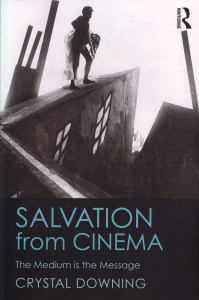
salvationcinemaSalvation is a fraught concept. It’s one of those topics that’s been commandeered by the evangelical camp so that mainstreamers are afraid to touch it, as if it’s catching. The thing is, Christianity is built around the idea that people require saving. The question is how you go about getting “saved.” Some insist it’s being “born again,” while others take a more gradual, one might dare say “evolutionary,” approach. Either way the end result in the same—being rescued from that which threatens you. Like many people, I watch movies. Sometimes I do so with manic intensity, not really knowing why I do it. My personal rationalization is escapism. Living in a world of harsh realities such as Trump (and even before there were sources of great anxiety) one needs an escape hatch. You might say I’m seeking salvation through film.

Crystal Downing suggests I may not be alone in this. Salvation from Cinema: The Medium is the Message is a book that explores the salvific function of movies. These are not just Christian or Bible movies she’s talking about. Indeed, she spends some time wrestling with that preposition “from” in the title. Is cinema something from which one might be saved, or by which one might find salvation? The latter is her focus and she sharpens it by looking at theories which might make it happen. The stories, the stars, and even nudity are put forward as ways the silver screen has been thought to bring salvation to viewers. She also includes a very interesting discussion of breaking the fourth wall. This technique brings the contents directly to the viewer. The second half of her book is more theoretically dense, engaging with modern theorists about what salvation from cinema might mean. Her selection of films to discuss is wide and intriguing.

There can be little question that cinema has a deeper significance than it’s usually supposed. Part of the reason is, as Downing discusses, the easy marriage of capitalism and celluloid in the United States. Movies make money. To counter this she also discusses foreign and art house films as well. There can be little question that those who stand in the queue are seeking something. While cheaper than many diversions, going to the movies does involve a small investment and as capitalists we expect a return on that. So it is that we sit in the dark and allow others to guide us toward the light. That’s as fine a metaphor for salvation as any that the preacher might proffer.


Wild Things

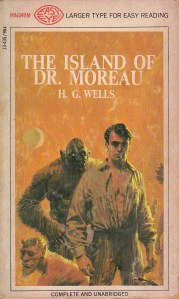
islanddrmoreauLast year my wife suggested we each do a reading challenge for the year. The one we selected was Modern Mrs. Darcy’s, which, with only a dozen books, seemed doable. What makes it a challenge is that to meet Mrs. Darcy’s expectations, you have to read certain types of books, not just go through the stack beside your favorite chair than never seems to get any smaller. I finished the challenge in October or November and posted on most of the books on this blog. This year’s challenge includes a book you’ve read before. Since I’ve been reading about horror movies I decided to reach back to childhood and once again read H. G. Wells’ The Island of Dr. Moreau. It was a timely choice.

For anyone not familiar with it, the story concerns a mad scientist (Moreau) who experiments on animals, making them “men” on an isolated island in the Pacific. These creations aren’t fully human and most of them are blends of different animals as well as part human. They can talk, and they can reason, in a rudimentary way. To create them without anesthesia, Dr. Moreau subjects them to tremendous pain and to prevent them from attacking him, he establishes a basic religion where they obey his rules or he will subject them once again to the “House of Pain.” The narrator, victim of a shipwreck, ends up on the island and has to come to an uneasy peace amid these very strange circumstances. The heart of the book is the chapter where Moreau explains what he’s doing and to justify it he makes a secular theodicy. He is, after all, god to these poor creatures. The book has been made into a horror movie or two over the years, but I’ve never seen any of the cinematic treatments.

What struck me as particularly interesting, revisiting this book some forty years after I last read it, was how easily Wells slips into theological thinking. This is a book unafraid of implicating the Almighty in the troubles of an island that clearly stands in for the world. I wouldn’t have noticed that as a tween. I don’t think there even were tweens when I was one. In any case, the story ends in chaos, rather than creation. What makes it such a timely choice? I suppose the arrogance and entitlement of Dr. Moreau suggested themselves as analogues to our current situation here in the US. Only Moreau is clearly intelligent as well as deranged. This little book is a cautionary tale of what happens when a strong will has its way, unimpeded. It might be a good time for all of us to pick up a copy.


Need to Know

It’s particularly encouraging when the first book I finish in a year is an important one. I try my best to read books that won’t disappoint, but the thing about books is that you sometimes can’t tell until the end. In any case, I can highly recommend Stephen Prothero’s Religious Literacy: What Every American Needs to Know—And Doesn’t. It’s easy to acquire blinders, especially when you stick with a subject through childhood, three degrees, and a career of teaching and editing in that same field. You kind of think other people can see how important it is. Having grown up religious, I was well aware that other people didn’t share my family’s convictions, but it was pretty clear about the continuing uproar of prayer being deemed unconstitutional in public schools that many Americans were concerned about religion. Or so it seemed in my small town.

Prothero, a specialist in American religion, demonstrates in this book just how little we really know about religion—any religion. He traces this lack of knowledge to the Second Great Awakening and the conviction that belief required Christians not to study religion, but to feel it. This “ethic” of knowing little about what you believe, he suggests, became dominant and has reigned ever since. Clearly, watching the results of the presidential election, many people have no idea what Christianity has historically taught, or in official channels, continues to teach. They know that they feel it is right, but they can’t quite say what “it” is. Most Americans fare even worse when it comes to other religions. As a culture we remain very religious. It’s just that we don’t know what we say we believe. Belief has become politicized and it bears little resemblance to what its historic roots have been.

Critics will say that of course people like Prothero—he’s a religion professor after all—will say that we should know about his subject. The truth, however, goes much deeper than that. The world is a very religious place and we have effectively blocked our children’s way to learn about it. Religion motivates billions of lives, but most Americans know very little about it. Those of us who’ve spent our lives studying it are often condemned to stints of unemployment because what we know is deemed unimportant to Wall Street. Religious Literacy, although the statistics are a bit outdated after nearly a decade, remains more relevant than ever. The potential to learn about religion is widely available. The spirit may be willing, but the mind, it seems, is weak.