Nobody’s Business

Working in academic publishing some insights are available that academics typically miss. For example, it isn’t unusual for a professor to ask why royalties aren’t higher on ebooks because “they don’t cost the press anything.” Ah, my poor, simple academics! If only life were so kind. Ebooks don’t require any ink, paper, or binding. They require a whole lot more than that. Ebooks require publishers to hire entire new divisions to oversee the complicated, technical, and swiftly-changing business of having ebooks in the format that they can be accessed by various reader platforms. Think of it this way: instead of buying materials, publishers have to enter an entirely new business area to sell what they always sold without it before. Now let’s twist the letter-opener just a bit more. Ebooks have exploded exponentially. Anyone with an Amazon account can be an author. Who buys academic books? University libraries. How to libraries decide what to buy? Well, let’s just say “it’s complicated.”

Now let’s go a bit deeper. Have you noticed that instead of fewer presses there are more and more of them? Stop and think about this. Universities have been churning out more and more doctorates for a system that has had a shrinking number of positions for at least the last three decades. Yes, someone’s entire academic career could have been spent in a vanishing profession and they never noticed. There are no jobs out there, my dear professors. Why do you continue to churn out graduate students? The student knows that s/he will be expected to publish. A lot. Librarians, whose jobs have gotten a whole lot more complicated, face budgets that have been simplified. That is to say, administrators say “Ebooks cost less, so libraries need less money. Besides, there’s Wikipedia.” A doctoral dissertation on a single word in a single verse on a single book in the Bible is not likely to get noticed in such a situation.

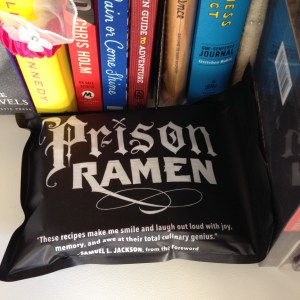
The fact is society is hungry for new knowledge. It just doesn’t want to pay for it. That’s the illusion cast by the internet: knowledge should be free. Tenured professors, however, don’t come cheap. Just ask the professional adjunct living out of his car and eating Ramen noodles heated up with the cigarette lighter. We don’t think about her, however, because she’s not writing books. Society wants an alternative to consumer capitalism. It just doesn’t want to pay for it. Presses start up because there is plenty of content out there—all those dissertations you direct—and anybody can make an ebook cheaply. Print-on-demand alone can keep a press in business. The knowledge pours out the facet, goes over the hands and down the drain. Professors, comfortable in their paneled offices, will never complain. You’ve beat the system—congratulations! But I just can’t help you with those ebook royalties. If you’ll excuse me, my noodles are getting cold.
img_2401


Intelligent Life

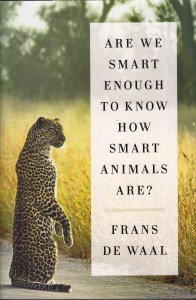
arewesmartPerhaps the most pervasive trait of religion is its ability to construct worldviews. Even when the religion is eventually abandoned, the worldview remains. Most scientists would deny that religion lies behind their perspectives, but in the case of human exceptionalism it remains the most logical cause. I always eagerly await new books by Frans de Waal. Ever since I read his book on empathy and apes, I couldn’t wait for the next one. His latest book, Are We Smart Enough to Know How Smart Animals Are?, although the title is a mouthful, does not disappoint. As I’ve noted before about his works, de Waal is perhaps the most sensible person writing in science today. He considers the evidence and takes his own biases into account. In a competitive world where science money is often doled out to those who can exclude others, de Waal is willing to leave the door open when the evidence demands it.

What is really ironic is that evolution has become the line in the sand between biblical literalists and science. As de Waal points out, the idea that people are different from the animals from which they evolved—in some qualitative way—is an idea based on religion. Many scientists still hold to it in a way that can only be described as, well, religious. This is very strange when evolution works by gradual changes over long periods of time. When did humans gain whatever trait that separates them from “the animals”? When I was a child it was tool use. When that was disproved, it became language. When that was disproved it became consciousness. The latter is the safest since nobody really knows what it is. As de Waal amply demonstrates the Behaviorist school was clearly wrong about animals (including humans). What no Behaviorist wants to admit is that the idea that we alone are conscious comes from the cultural interpretation of the Bible.

Are We Smart Enough to Know How Smart Animals Are? is, like many of de Waal’s books, full of wonderful observations of the ways animals actually behave. They solve problems. They learn from experience. They anticipate the future. In some cases they have been shown to outperform humans on cognitive tasks. And yet we still insist that people are somehow different. Better. Interestingly this is one area where religions and science tend to agree. People are just more important than animals. I wonder if one of the underlying reasons—not addressed by de Waal—is that we have come to depend on a lifestyle that unfairly exploits animals. After all, we eat them, use them for work, and even experiment on them. If we admit that they are intelligent we would need to, yes, rethink all of this. Given what’s happening in the world today, it is perhaps time to admit what we don’t really know.


Banned Truth

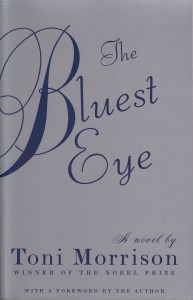
bluesteyeBanned Book Week is one of my favorite holidays. Don’t worry—you haven’t missed it—it occurs the final week of this month. I’m not very good, however, at guessing how long it will take me to finish a fiction book, so I start early, just in case. My banned book of choice this year was Toni Morrison’s The Bluest Eye. It’s not easy to read a novel which is so close to the truth. As any writer of fiction knows, just because something didn’t happen precisely as described doesn’t mean that it’s false. Indeed, fiction is often factual. It’s not easy to read because the “race”—a dubious distinction at best—to which I belong has often throughout history victimized others. While I’ve never knowingly participated in this criminal action—and despite what politicians might say, it is criminal—it’s never comforting to hear from the victim’s perspective. The Bluest Eye is about African American experience in the land of the free. At least in name.

What becomes clear from the beginning is that the families around which this story revolves are pushed to their limits. In an affluent society they are forced to live with less than their “white” neighbors have. Slavery may have ended, but the superiority mindset that permitted it in the first place hasn’t. I grew up in poverty but I didn’t have the added burden of being treated badly because of my “race.” Stories that remind us of that reality are never comfortable places to be. We’d rather think that since slavery ended prejudice went away with it. In reality, however, it is still here. Interestingly, the culture portrayed so vividly by Morrison is deeply biblical. Indeed, surveys of Bible reading in North America show that African Americans tend to actually read the foundational book more than their oppressors. The biblical worldview spills easily across the page.

Although the Bible made it onto the list of top ten banned books last year, The Bluest Eye was challenged because of its sexuality. That’s another defining aspect of the novel. It’s a frank exploration of the human condition. The protagonists are not only African American, they are also all female. Their perception of sexuality is, in many ways, inherently that of victims. Not that love doesn’t enter it, but rather that poverty often leads to a state where sexual gratification is held up as one of the few positives in a life that includes regular mistreatment, poor pay, and jail time. It isn’t an easy story to read. Morrison’s deft hand, however, prevents the story from becoming gloomy. It is like spending a sunny day knowing there’s something you shouldn’t see in the basement. Banned Book Week may be some time away yet, but it is always the right season to read about the truth.


Viewpoints

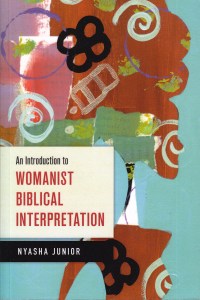
WomanistI first heard of feminism in seminary. Growing up as a poor, uneducated fundie in a small town, where would I have learned about it? I came to it naturally, though. Being raised for several years by a single mother I knew that women were just as smart and resourceful as men. I guess I was surprised to learn that others didn’t see it that way. This was in the eighties and angry feminism was around—I was occasionally attacked in class for my naiveté. After all, I had attended Grove City College not because of its conservatism but simply because I didn’t know any better. This is a lengthy preamble for a book that would’ve helped me a lot as a youngster, although I wouldn’t likely have known to read it. Nyasha Junior’s An Introduction to Womanist Biblical Interpretation is a very useful guide to those who don’t really know what womanism is.

I’ve been in biblical studies long enough to know that I really don’t know much. There are critical approaches to the Bible I’ve never even heard of. Not too shabby for a field that has already been written off as moribund by the academy. In any case, the title “womanist” doesn’t really say much beyond an implication of gender. Junior’s book explains that. Womanism didn’t really grow out of academia as much as it did out of African American women’s experiences. I admit that it took this book to teach me that. What is really being addressed, however, is how womanism is becoming, or is starting to become, an interpretive school. The Bible is in the public domain. It’s anyone’s book. Indeed, it strikes me as odd that translators copyright their work, especially if they believe it is the word of God. The word of God comes with a price tag, I guess. African American women have long been readers of the Bible. What, though, characterizes this method?

That’s the question with which Junior wrestles in this informative book. Just as being female doesn’t make a scholar a feminist, she notes, being an African American woman doesn’t make one a womanist. And we all approach texts with a method, explicit or not. “Objectivity” doesn’t really exist and even literalism is an interpretive approach. Junior traces the history of both feminism and womanism, especially in regard to biblical interpretation. Her struggle should reflect that of any scholar—how do I regard the text regardless of my demographic? While many churches have slumbered in doctrinal dreams, progress in reading the Bible has marched forward. The real danger often comes in the form of labels. This book, written just as a method is starting to be formed, is a trustworthy guide to both the history and to the larger questions.


Zoo or Farm?

It comes as no surprise, I hope, that I read lots of fiction. While not every book I read makes it onto this blog, a good many of them do, along with some I haven’t read yet. Bill Broun’s Night of the Animals is one of the latter. A suspicion is itching way down deep telling me that I’ll probably end up a fan. Part of my suspicion comes from having read a story on NPR about the book. First of all: dystopia. Need I say more? I admire those who try to paint a future with a lighter palette, but I’ve been observing the way those in power behave and it kind of makes me think optimism about improvement is just a tad naive. People are too easily lulled into apathy by things like sports and the internet. The Romans used bread and circuses. Meanwhile those in power help themselves to a bit more until you can’t even get on an airplane without a total stranger seeing you sans briefs. If I can’t be trusted by those I elect, what cause do I have for hope? But enough about me. The book’s the thing.

DSCN1969

Night of the Animals, according to the NPR piece, is kind of a reverse ark. The animals in the London Zoo are understood by a man and they ask him to release them. I don’t know what happens, but I sure hope to find out. When interviewers ask Broun what it was like to spend fourteen years working on a novel, he responded in a way that, I suspect, many writers would understand. He said that it was a spiritual journey. Writing this book was his search for God. Many of us must nod our heads to that.

Concentration is becoming a dying art. I’ve written a number of books in my life—by far the greatest number remain unpublished—and I know there’s nothing like the intense concentration you experience when lost in such a world. Yes, it is spiritual. It is also a cry to be heard. As George Orwell well knew, we are the animals hoping to be heard. Zoos represent entrapment. Broun states that he wanted to explore how people are trapped in his novel. Looking at a system that rewards greed and keeps workers in unfulfilling jobs just so they can keep the system going while their CEOs buy another hotel chain or sports team and decide to run for office, I begin to hear the oinks, whinnies, and neighs all around me. And I haven’t even read the book yet.


Mysterium Tremendum

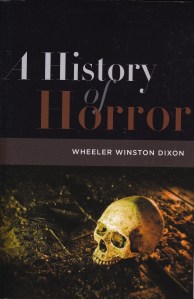
HistoryHorrorFor those of us accustomed to ancient things, horror movies are remarkably new. That doesn’t mean, however, that they are scarce or even easy to understand. While it is beginning to erode, the academic derision of popular culture has long avoided the decidedly low brow genre of horror. It doesn’t know what it’s been missing. Wheeler Winston Dixon’s A History of Horror is an insightful attempt to make some order out of a century of monsters and mayhem. Beginning at the stage when “horror film” was still just a demonic gleam in some vampire’s eye, Dixon points out that from the very earliest experiments with movies “horror” was a popular trope. It seems only natural that the idea of a full-length scary movie would be the expected development. What happened in Universal Studios in the 1930s is that business began making money out of monsters. Where there’s money, there be monsters.

Dixon takes us through the early days into the tired era in the 1950s when life was, apparently just so darned good that people weren’t really thinking about monsters. (Dixon’s analysis is a bit more sophisticated than that.) Horror films matured in the 1960’s and spun out of control in the ‘80s. His book continues up to the first decade of our current century. There’s obviously a lot that can be said about this, but what caught my attention, naturally, was how quickly religion entered the discussion. Those of us who approach horror with an open mind know that religion is its next-door neighbor. Indeed, one of the nihilistic aspects of the proliferation of horror movies since the 1980’s has been the lessening of this getting to know the neighbors. Horror, as Dixon notes, seems to have devolved to brutality and cruelty with no real message.

I’ve never been a fan of gore. I’ve watched my share of slashers, I suppose, but they’re not my favorites. Horror can—in the best of its offerings—be very profound. Indeed, it can even inspire thoughts not so terribly far from those generally classed as religious. For what is worship if not carefully managed horror? The concept of the holy as mysterium tremendum underscores this dynamic. Part of this connection is the appeal to emotion. Horror movies make you feel something, and that is a large part of their appeal. They can be more, however. A smart horror movie will feed your brain rather than just having zombies eat it. Academics, eventually, will catch up with it. Dixon starts to show the way.


Evolving in Place

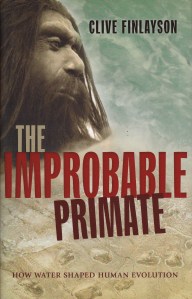
ImprobablePrimateEnvy is not a word I would use to describe how I feel about those trying to piece together the earliest stages of humanity. Evolution, naturally, is a given. Once beyond that, however, the landscape gets dicey. Clive Finlayson is an author I don’t envy. I just finished his The Improbable Primate: How Water Shaped Human Evolution, and it felt like he had to put this immense puzzle together while missing about nine-tenths of the pieces. Early human fossils are rare and it doesn’t take much to throw a laboriously constructed scenario into yesterday’s mistaken hypothesis bin. The central premise of the book, as stated already in the subtitle—human evolution followed water—seems about as firm as any idea. We need water daily and our bodies evolved to help find it efficiently. It’s a fascinating story. Along the way I learned that much of what I’d previously learned about ancient human development was probably wrong. I’m only a casual evolutionist.

Finlayson suggests—and not all biologists would agree with him—that all humans living on earth at any one time (with one possible exception) were of the same species. That is to say, the model I grew up with of separate species (Neanderthal and Cro-Magnon were the usual suspects) duking it out over scarce resources doesn’t match growing evidence very well. We Homo sapiens seem to share some Neanderthal DNA and that paints a somewhat more romantic encounter between the species than the violent one I learned. The same goes for other human ancestors, according to this little book. Our first instinct may not be to kill the stranger. We may have lived apart for a few thousand years, but when populations come back together they “share genes,” if you get my drift. This still happens, of course. The difference is today we’ve become politicized and entitled. We don’t want people not from around here to share our stuff.

Part of that is natural, I suppose. Finlayson points out that the feeling of belonging in natal territory is something we share with other primates. We feel that we belong where we’re born. That seems to me a difficult thing to quantify, but I feel it nevertheless every time I venture back to my hometown. It just feels right. Not that we can’t adjust to elsewhere, but our nature rewards us, in some measure, when we come home. This is a wide-ranging study for such a small book. I don’t envy all the meticulous jigsaw staring without a box-top that students of human origins must do, but the results are still quite interesting. Even if the picture, when enough pieces are finally found, ends up being something different than we thought it was.


Imagining Monsters

WideSargassoSeaAll fiction writing, it is often said, is borrowing. I’m not exactly sure that’s literally true, but the basic idea is that writers often trade with one another. They also borrow against their own experience and observations that others have made. When a character, or set of characters, an author develops become(s) wildly popular, fan fiction can result. There are websites dedicated to “fan fic” where characters from one writer are personalized in another writer’s imagination. Another form of borrowing is the parody. Pride, Prejudice, and Zombies takes Jane Austen far beyond her original scenario while using her novel as the basis of something somewhat new. These borrowings, as the saying suggests, have been around for a long time. I recently read Jean Rhys’ Wide Sargasso Sea. The novel from the 1960s is a “prequel” of sorts to Charlotte Brontë’s Jane Eyre. Although spoiler alerts for literature nearly a couple centuries old might seem like overkill, I’ll give one here anyway. You’ve been warned.

Jane Eyre includes quite a lot of gothic mystery. Thornfield has a mad woman, Bertha, the first wife of Mr. Rochester, living in the attic. Bertha is from the Caribbean, and Rhys, although Welsh, was born in Dominica. Taking an interest in the point of view of the neglected, insane Bertha, she decided to tell her story in Wide Sargasso Sea. I won’t sum up the plot here since you may decide to read it. The reason I brought the whole subject up in the first place is the glimpses given of the religions of the Caribbean. Clearly this was not Rhys’ main objective. The Creole of the various races from the slave trade and colonialism, however, did produce fascinating religious amalgams. The zombie, a figure that plays a small part in the imaginative aspects of the novel, is only the most familiar of the creatures.

The soucriant, or soucouyant, is a blood-sucker. A figure that combines elements of witches and vampires, the soucriant takes the form of an old woman by day and a blood-sucker by night. (Before you get the wrong idea, there are no zombie or soucriant characters in Wide Sargasso Sea—they are merely mentioned briefly in conversation.) This concept, while derived independently, relates to the succubus but also to the more modern chupacabra. These are all creatures that suck the vital essence from another, be the victim human or animal. The ubiquity of the idea is striking. In the context of the novel, however, such creatures merely haunt fevered imaginations. Our minds, however, are what make monsters real. Although Rhys declines to diagnose “Bertha” completely, it is clear that human mistreatment of one another creates, in its own ways, monsters. That’s an idea, I suspect, that I’ve borrowed.


Take Your Time

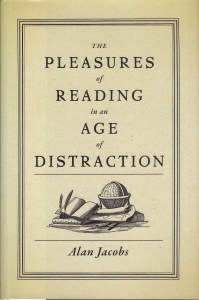
PleasuresOfReadingReading is fundamental. Those of us who grew up hearing that slogan have never forgotten it. The part that I wish had stuck better is just a touch shorter: reading is fun. Or it can be. Should be. Alan Jacobs’ little book The Pleasures of Reading in an Age of Distraction is like an extended essay on the subject. As a professor of literature, Jacobs has considerable experience encouraging people to read, and in his book he makes a case for reading what you want to read (reading on a Whim, he calls it). Wisely he recognizes that many would-be readers are discouraged by being instructed to read that which they don’t find appealing. I learned quite a lot from the suggestions contained herein, and I’ve been reading so long that I thought I knew pretty much what I needed to know about it. Perhaps the most fundamental issue (apart from reading itself) is that many of us expect to be told what to read. We second-guess our own judgment, feeling we need an expert to tell us how to do it. Like singing in public, it’s intimidating to come across someone better read than oneself. Jacobs advocates reading what gives you pleasure and not worrying about what others think.

Recognizing that readers are spoiled for choice, Jacobs addresses, among other topics, rereading. And taking notes. And reading slowly. I recall speed-reading courses advertised, ironically, on television. At college you could take courses in improving your quota of pages turned. There is a specific kind of reading, as Jacobs notes—reading for information—where this may be helpful. This is different than reading for pleasure, or even reading for understanding. In the case of the Bible (Jacobs taught at Wheaton before moving on to Baylor) many people, he suggests, read for information rather than for understanding. When reading for pleasure taking your time is a virtue. Getting to know a book requires rereading. We need to make time for what is important.

Jacobs makes the point that readers are a minority sect. There have always been fewer of us than there have been of those who don’t read. We are, in his words, a tribe. We can generally spot one another. Those of us who can’t walk past a bookstore will recognize ourselves in the pages of this meditation. Those who spend long hours with books become like them, in some respects. Familiar, layered, and requiring more and more attention. Like the reading that it advocates, this book itself is a delight to read. There is so much in this brief volume that it’s difficult to summarize in the short-form writing that I use on this blog. I found myself wishing for an index so that I might find my favorite passages again. Then I realized that perhaps this absence was intentional. Maybe I’ll have to reread it, taking notes as I go. What a wonderful thought.


Let Us Prey

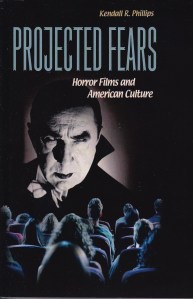
ProjectedFearsI grew up with horror films. Not that my mother encouraged or approved this behavior, but I was a kid with a lot of phobias. With no father around to protect us from what dangers might lurk out there, I tried to learn how to cope by watching others face monsters. That innocent childhood pass-time, like most simple pleasures, disappeared into the adult world of analyzing and being serious and making money. Then it came back. After a series of unsuccessful relationships the old rejection phobias led me back to my beloved monsters. I suspect that’s why I like reading about horror films so much—it’s an exercise in self-understanding. Kendall R. Phillips’ Projected Fears: Horror Films and American Culture is a pleasant Saturday afternoon’s viewing, but for adult monster boomers like myself. Phillips admits up front that academic respectability is hard to come by for horror movies, but that is starting to change. We are beginning to read the script.

Phillips walks the reader not only through the ten movies he’s selected, but also through what was happening in American culture at the time. The horror movie proper is not yet a century old, having begun with Universal’s 1931 monster pair of Dracula and Frankenstein. Phillips shows that what scares a culture changes over time. Indeed, one gets the sense that it is horror movies that lead us in our fears. Highlighting ten culturally significant films, this book guides us through the highs and lows of the last century. The last entry in the book dates from 1999, nicely encapsulating what made us afraid during a most remarkable and, if we’re honest, a most messed up century. Clearly those who purvey horror will have their own choices for significant entries. Phillips does an admirable job of justifying his choices: Dracula, The Thing from Another World, Psycho, Night of the Living Dead, The Exorcist, The Texas Chainsaw Massacre, Halloween, The Silence of the Lambs, Scream, and The Sixth Sense. Each reflects its age, and each impacted its culture.

It should come as no surprise that religious elements—both in culture and in the movies—are up for discussion here. Consciously or not, religion deals with our fears and frequently moves us into the realm of horror. Now that we’ve entered a new era—much has happened already this millennium—the nature of our fears has been changing. To assess cultural impact we need some distance. Books like this help us to understand ourselves, but only after sufficient time has passed. I am confident, however, that when future analysts look back on this insane time that they will find unexpected answers to questions we can only begin to utter. We stare at the monster in the room with us, paralyzed and unable to scream. Or even text. And they will note that religion played a role in our nightmares even as we expected technology to save us.


Simply Beautiful

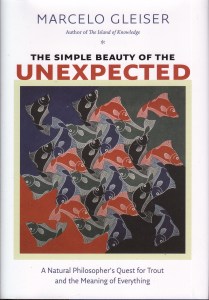
Simple BeautyThe scientific method has been a boon to humanity. Knowing how to sharpen the rational faculties has demonstrated its benefits time and time again. Sometimes, however, overemphasis on rationality contains hidden costs. Humans are not always rational, and sometimes this is a very good thing. Culturally we’re told that reason trumps emotion and that evolution has somehow led us to this. That’s only part of the story. Marcelo Gleiser’s excellent The Simple Beauty of the Unexpected serves as a wonderful corrective to this one-sided view. Although I’ve been trained in rationalistic thinking, my humanities background lacks the credibility of similar training in the sciences. Gleiser, as a physicist, demands respect. As he notes throughout this book, physics asks the hard questions. The only proper response, he rightly declares, is humility. Arrogance in any human endeavor may make for a good story, but it is bad citizenship on this planet.

I have to confess to being one of those poor souls who really doesn’t care about fishing that Gleiser mentions early on in his book. That doesn’t mean that I don’t agree with his outlook and mature thoughts on the subject. Using fly-fishing as a kind of bait, he draws the reader in to consider some deep and meaningful questions about life. Although he describes fishing literally, he clearly has a metaphorical usage in mind as well. Rare is the scientist who will admit that science can’t answer all questions, and moreover, wouldn’t want it to. Showing the limits of rational thought can feel like taking one’s clothes off in front of a crowd for those wedded to empirical evidence. Applied science clearly works very successfully. That’s not the same as having all the answers. Gleiser beautifully illustrates this, acknowledging that the spiritual has a role to play even among the rigorously trained and actually employed of the intelligentsia. This is a very important book.

Admitting that some things happen for which there is no rational explanation, Gleiser advocates for appreciating the wonder rather than trying to force science into situations where its explanatory power fails. This doesn’t happen often—indeed, rarity is what makes the unexpected so wondrous—but when it does happen we need to, like a fisher, accept it as part of the way the art unfolds. In Gleiser’s terms, not every fishing trip is successful. If you always had success, what would be the point in trying? He ventures into the murky waters of religion a time or two, but this is catch-and-release, not for the kill. The Simple Beauty of the Unexpected is an example that includes itself. Those who read it will learn what this means.


Sea Change

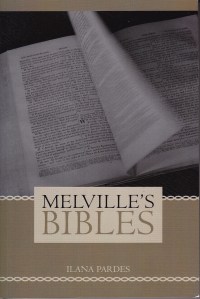
MelvillesBiblesMy reading list is long, and it grows longer all the time. I read both fiction and non-fiction with equal avidity. Given that there are so many books I want to read, it is unusual to read entire books a second time (they should be kept for reference’s sake, of course). Two exceptions to the multiple reading trend have been, for me, the Bible and Moby-Dick. In reading Ilana Pardes’Melville’s Bibles, I discovered I’m not alone in according Melville nearly biblical status. As a book itself, Melville’s Bibles went on my reading list as soon as I learned of it. You see, Moby-Dick was added to my personal Deutero-Canon as soon as I closed its cover. Perhaps before. It was an assignment for a seminary biblical studies class on wisdom literature. My high school wasn’t one that required the novel, and all I knew about it previously was that it was a big book about whale hunting. I knew so little.

Pardes looks at Moby-Dick, and other literature, both by Melville and others, through the lenses of biblical characters. Of course there’s Ishmael. And Ahab. Melville, however, knew his Bible well, and to understand his work on a deeper level so must his reader. Job’s there. As is Jonah. Jeremiah, Elijah, Micaiah ben-Imlah, and even Rachel. Pardes takes these characters and shows how they appear, generally in Moby-Dick, spread across a variety of characters. More than one Ahab and Ishmael walk these decks. All the while, she notes, Melville himself wasn’t a typical “believer.” He struggled with the deity that he just couldn’t find. The end result is a compelling analysis of literature and human nature.

This brief study has a disproportionate number of insights. I frequently found myself stopping to ponder what I’d just read. Perhaps that’s to be expected in any book that brings two weighty canonical works together in such a gam. (If you can’t recall what a gam is, reading either Pardes or Moby-Dick will remind you.) Encountering Moby-Dick the first time was like finding a lost book of the Bible. I had no idea, however, at the depth of comparison. Pardes shows just how deep that ocean is. Melville’s well-thumbed, indeed, annotated Bible does play a role in all of this. Perhaps he didn’t intend all the connections readers like Pardes find, but that doesn’t make the connections tenuous. They’re clearly there. Canonical works are like that. Moby-Dick, indeed, is an iconic book and Pardes is a very capable Captain to guide a reader through it.


For Love of English

One of my most frequent imaginary dalliances is wondering what I would have done with my life if I hadn’t been raised religious. Like many young boys I found “exciting” jobs enticing—soldier, firefighter, explorer—but scientist also loomed large in my imaginary horizon. By the time I was a teen I was firmly ensconced in books. My upbringing meant that many of these books were religious in nature, and my concern with ultimate consequences meant religion was the only possible career track to make any sense. It certainly never made dollars. As someone who professionally looks backwards, I’ve found myself wondering if I shouldn’t have focused on English rather than Hebrew and Ugaritic as a career. After all, the Bible has been available in English for centuries now. Besides that, the canon is larger—from Beowulf to Bible and beyond. Reading is, after all, fundamental.

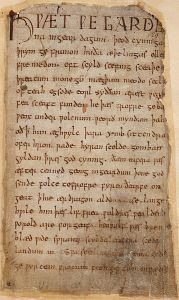
Beowulf, from Wikimedia Commons.

Beowulf, from Wikimedia Commons.

I only discovered BookRiot recently, and that through the mediation of my wife. For the writer of a blog I really don’t spend that much time online outside of work. I like real books, and being outdoors. Too much time staring at a screen brings me down. Nevertheless, BookRiot has stories that cause me to question my career choices from time to time. For instance, I have never knowingly heard of The Exeter Book. Dating to the tenth century, this medieval manuscript is among the earliest of English writings. Showing the interests of the monk who likely inscribed it, it has religiously themed material and riddles. As E. H. Kern’s post on BookRiot points out, The Exeter Book has inspired many later writers and has, through them, made its way into mainstream popular culture. Not bad for a book that I suspect many, like myself, have never heard of.

Old English has the same kind of draw as other ancient languages. Not nearly as dusty as ancient Semitic tongues, it contains the roots to the form of expression I find most familiar. I love looking back at the Old English of Beowulf and spotting the points where my native language has remained relatively unchanged over the centuries. Modern English even begrudgingly owes a considerable debt to the Bible of King James. Our language is our spiritual heritage. We have trouble expressing our deepest thoughts without it. Perhaps had BookRiot existed when I was young, I might have made a rather more informed decision about the direction of my career. Or, then again, religion might have found me nevertheless. From some things there is just no hiding.


The Cost of Chaos

BathingTheLionJonathan Carroll’s novels are always thought-provoking. My reading patterns tend to be driven by book sales and secondhand stores since my reading vice is particularly aggressive. The Ghost in Love is now already years in my past, but I found a copy of Bathing the Lion that I could afford and I was soon dropped into a world of chaos and order. I won’t try to summarize the complex plot here, but I would note the story’s participation in one of the oldest themes of literature—the struggle of order against chaos. The characters called “mechanics” in this book are those who attempt to maintain order throughout the cosmos. Many retire to earth. There, or here, they continue to work against the ever-encroaching chaos.

According to Genesis 1—not the earliest literature, but still fairly ancient—creation is God making order out of chaos. The universe, prior to creation, consists of uncreated, chaotic raw material. Order is what makes our world recognizable. Elsewhere in the Bible creation takes the form of a struggle against a conscious monster that represents chaos. This motif is reflected elsewhere in the ancient world in texts such as the Enuma Elish. Actually, the theme is so common as to be classified as a standard trope of ancient religions with its own name—Chaoskampf. Chaos is always waiting in the wings, ready to break back in and make a mess of our nicely settled existence. The flood story, placed as it is just after creation, is an example of what happens when chaos regains the upper hand.

The battle to maintain order represents a kind of ancient awareness of entropy. If energy isn’t expended, that which is accomplished becomes a wet, stinking mess and anyone who survives has to start all over again. This story is deeply embedded in human consciousness. To our way of thinking, we’re integral to the running of this universe. Spending time in nature gives the lie to this thought. There aren’t that many predators left, but those that are here—cougars and grizzly bears especially—remind us that in the eyes of nature we can be just another meal. Our outlook cannot accept such a low position. As Carroll has the mechanics say, they are not gods. Like human beings, however, they take on a role next to that of divinity. Chaos is the enemy, even garbed in the colors of making us great again. There are still those who will bathe the lion.


Literally Smitten

FfordeWomanDiedJasper Fforde is one of those writers who blends nonsense, deep thought, constant plot twists, and polished writing into compelling novels. His labors are always fun to read and often leave me with something profound to ponder. I haven’t followed his Thursday Next stories in any kind of strict sequence, but I figure that I can sacrifice a few of his abundant references to previous events to read through the latest installment I can get my hands on. The Woman Who Died a Lot was the most recent of these books for me. Thursday Next is a literary detective and her exploits often lead, certainly intentionally, to a feeling that in Fforde’s world libraries and reading are even more than fundamental. Everyone wants to be prided on literary achievement. His universe wouldn’t exist without books and those who love them.

In The Woman Who Died a Lot (and since I haven’t read all the books in the series I have to confess that this theme might’ve been developed earlier) in Fforde’s Swindon, religions have been united into the Church of the Global Standard Deity (GSD) and this GSD drives much of the plot. As Thursday races to solve the latest literary crime, the GSD has decided to smite Swindon. A number of global smitings have already taken place and everyone knows what to expect. A plasma-like discharge, of precise dimensions, wiping out a specified sinful part of the city. The sin here is greed and such smitings have lead to new kind of tourism where the morbidly curious gather outside the boundaries to watch the show, much like Jonah outside Nineveh. As in most Fforde novels there is both a touch of ridiculousness and social critique combined here. I can’t tell you how the smiting ends or you might not read the novel yourself.

The story is populated with peculiar religious orders that always evoke a laugh, and even a Ministry of Theistic Defense charged with finding a way around the smiting of a God willed into existence by the very people the GSD will destroy. I sometimes wonder if Fforde was ever a seminarian. We fabricate our own doom in this literary universe. It’s all in good fun and is reverently irreverent. Virtue is rewarded and in many respects the religion is conventional. The deity can be bargained with, but the law, once laid down, is inviolable. Casuistry is, of course, always an option. It’s a story told with tongue solidly in cheek, but also with brain fully engaged. Fforde is an author not afraid of religion. Indeed, he knows it can lead to a remarkable plot with consequences that will leave a reader scratching one’s saintly head.