Lovecraft Legacy

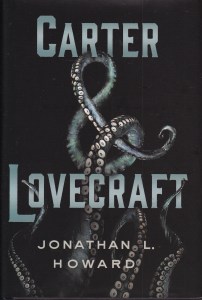
CarterLovecraftHistory can be a funny thing. Take the way it treats some people. H. P. Lovecraft wasn’t famous in his lifetime. In fact, his isn’t exactly a household name even now. His creation Cthulhu lurks grandly in the internet, and even Lovecraft himself is finding mention in some literature courses, despite his lack of literary finesse. Yet, fiction is being written about him. I just finished Jonathan L. Howard’s new novel, Carter and Lovecraft. While H. P. doesn’t appear as an acting character in the novel, he is related to one of the protagonists in a way that is essential to the story’s plot. I won’t give away any spoilers here, but the novel takes over where Lovecraft, the non-fictional character, left off.

Lovecraft, famously, was an atheist. Nevertheless he spun a mythic world of Old Gods that has become canonical in its own right. His stories veritably teem with religious themes as well as monsters. In fact, in Howard’s treatment of the mythos, the religious elements still show up. As I’ve noted before, one need not be a theist to be a capable theologian. Fiction like that of Lovecraft, or that of Howard, inherently holds a kind of numinous quality. In fact, fiction frequently does. In reading, we allow ourselves to be drawn into another world. What could be more religious than that? The beliefs of the writer, it seems, may not ultimately matter.

At one point, at least, in Carter and Lovecraft the sentiment becomes explicit. One of the characters contemplates starting his own religion, only to realize that he’d have to write a holy book. That, he decides, would be a lot of work. As one who dabbles in various forms of literary art, I can take his point. There is something wondrously exhausting about giving birth to words. And those words make worlds. When you stop to think about it, that’s kind of a religious thing to do. I’d recommend Carter and Lovecraft to H. P. L. fans. It’s not a Cthulhu-fest, but it is an enjoyable, compelling tale that raises questions which, if not handled carefully, will quickly turn theological.

Long Live Life

Horseshoe CrabsShortsighted and arrogant. No, I’m not describing Richard Fortey’s Horseshoe Crabs and Velvet Worms, but rather the collective human race. I love people—I really do. Collectively, however, we sometimes act in the most inexplicable ways. This thought came to me repeatedly while reading Fortey’s book. The subtitle might explain the subject a bit fuller: The Story of the Animals and Plants That Time Has Left Behind. Fortey is a paleontologist who tells the stories, almost biographies, of various creatures that have survived eons with little change. He is quick to point out that all creatures evolve, but in the case of some, evolution has been minimal. Animals, such as his titular examples, and many others (cyanobacteria, tuataras, and, of course, coelacanths, just as a sampling) can sometimes be so well adapted to their environments that they change very little over time. In this book Fortey travels to see the living examples of those creatures he’s studied in fossils, and tells the story of an amazing continuity in a world of constant change.

Some of the species, particularly the plants and microscopic organisms, I’d never heard of before. I also have to admit to being surprised at how many very old life forms still exist. And admittedly, this is only a snippet of a much larger cloth. Throughout, I was pleased to see, Fortey mentions various religions—themselves often throwbacks—but not disparagingly (except the creationists). Noting that some creatures have a Buddhist-like calm, or that the Bible occasionally provides the phrase a naturalist writer seeks, here is an irenic meeting of science and religion that is so much needed. So why did I say “shortsighted and arrogant” at the start of this post?

One of the more disturbing truths revealed, and not just about charismatic megafauna, is that people have often hunted animals to extinction. Fortey suggests it has always been so. Large animals (megafauna) are easy targets and we have repeatedly hunted (and continue to hunt) them to extinction. We destroy habitats and thereby drive species extinct that we haven’t even yet discovered. What could be more arrogant of a single species? Looking back over 4 billion years of evolution should give us some perspective. We’re relative newcomers on this planet, and it isn’t ours to do with as we please. Fortey is gentle, but he does remind us that some of the creatures in this book will likely, no matter how great the catastrophe, long outlive us on the planet. Ours is a brief day in the sun. Shouldn’t we care for our planet rather than pillage it for our own gain? Ask the horseshoe crab. When we understand its language we might be able to begin to call ourselves wise.


Holy Haunted Book

Religion is one of those words that defies easy definition. As I’ve suggested before, you know it when you see it, but trying to pin the idea down is a different matter. Consequently, religion is closely related to a number of other areas of interest: philosophy, ethics, monsters, and the paranormal, to name a few. I was interested, therefore to see a blog post recently concerning a “haunted Bible.” Call me naive, but the thought had never occurred to me before: could a holy book be haunted? Churches are notorious for housing ghosts, of course. As someone who’s spent overnight retreats in churches I can vouch for the fact that a sanctuary after dark is a naturally eerie place. I’ve never seen a ghost in a church, however, and I’m not entirely convinced they exist, and if they do, what they might be. In any case, a haunted Bible is a different story.

David Weatherly is a fairly well-known paranormal writer. My web search brought up his blog where he explains that the haunted Bible was for sale on eBay with an asking price of $180,000. The owner, who remains anonymous, claimed to take no responsibility for any damage the supernatural scripture might cause. Instead of thinking that we have here a genuine haunted leather scripture, I know it can be nothing other than a genuine hoax (not on Weatherly’s part). Realtors know well that a haunting can, in today’s climate, counterintuitively drive the price of a house up. With people hungry for some element of the supernatural in their lives, and ghost hunters of all sorts on their televisions, they are willing to shell out a few more dollars to have a spirit around. And since ghosts can’t sign contracts, there’s no guarantee that they’ll be there once you move in. The supernatural can, it turns out, be the perfect scam.

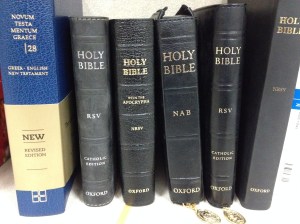
If items can be haunted, I suppose a Bible might as well. When an owner, however, turns down an offer of 50,000 pounds that odor you’re smelling is that of a rat. I love old books. I have a few around that have more than a century’s weight on them. Looking at used bookstores longingly, I see first editions of Poe or Shakespeare that sell for far less than the asking price of the most printed book in the western world. Bibles, if you know where to look, can be had for free. I’ve got at least a dozen of them myself. Nothing makes fakery quite so clear as greed. No wonder the haunted Bible was such a disconnect. There’s nothing paranormal about love of money. That’s all too normal for anyone who tries to sell a Bible for implied spirituality.

IMG_1235


Soul Library

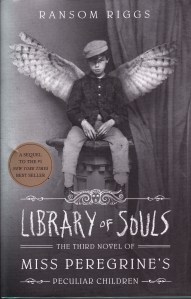
LibrarySoulsThere’s a kind of trinitarian logic to the trilogy format. Long before Hegel’s model of thesis, antithesis, and synthesis, people have grouped things into threes. And there is a hook that film-makers have used to ensure that viewers will come back for the third installment: the cliffhanger. The second episode leaves everything unresolved and you’ll be sure to see the third. Think of the original Star Wars trilogy, or Back to the Future, or even Pirates of the Caribbean. In each case the first film could stand alone, but the second insisted on a third. This is a little trickier with books since, as we all know, publishing is a slow business and writing takes time. I saw Miss Peregrine’s Home for Peculiar Children, by Ransom Riggs, in 2011. I knew I would read it since the cover alone was so intriguing. Young adult literature, it turns out, has come a long way since I was able to classify myself that way. Then Hollow City came out. It ended as a cliff hanger (remember the formula), back in 2014. Just over a year and a half later, The Library of Souls was released.

Having just finished the trilogy, reading each as it came out, I would say that, like most trilogies, the first installment was the best. Freshest, a new idea, where characters exist with whom the reader participates by in filling in the blanks, a series grows more complex as it expands. Some elements that weren’t there at the beginning have to be read back into the previous installments. In my case, I’ve read so many books in the interim that some of the details have grown hazy due to the simple passage of time. Still, Riggs is to be highly commended for bringing souls back into discourse among the young. Too long we’ve been sold the story that we have no souls.

I’m not going to go into any great detail here since those who want to learn how Riggs handles the tale will read his books, but I will say that a stubborn materialism has settled over intellectual culture. Some neuroscientists have naively said, “we’ve looked for it and can’t find it, therefore it must not exist.” And since most of us don’t have access to their kinds of equipment or training, we’re told to acquiesce. Give up your souls—buy into materialism. Buy stuff. That’s what we’re all about. It is a relief, in the midst of all of this, to have a popular writer suggesting, through fiction, that it is souls that make us who we are. The books aren’t preachy. Indeed, it would be difficult to say they are religious in any conventional sense. They are, however, soulful. And for that I am very glad to have read them, even as a middle-aged adult.


Holy Seer

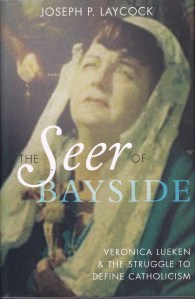
SeerOfBaysideHands up, all who’ve heard of Veronica Lueken. Maybe one of you in the back? I have to confess to having been in the “Veronica who?” crowd until reading Joseph P. Laycock’s The Seer of Bayside. The subtitle would have made the difference: Veronica Lueken and the Struggle to Define Catholicism. It’s a fascinating story. Lueken, a Catholic laywoman in Bayside, Queens, began to have visions of the Virgin Mary. This was in the days of Vatican II. Lueken was a traditionalist who felt the reforms were misguided, and found Mary to be on her side. She grew a large following during her outdoor vigils, eventually becoming so popular that people bussed down from Canada and in from other states to join her. The neighborhood association complained, and, some say, planned to assassinate the seer. The movement, known as Baysiders, eventually moved their vigils to Flushing Meadows Corona Park, where it—or they—continue to meet.

Critics of religion tend to claim believers credulous. The Catholic Church, however, has been notably reluctant to approve of Marian apparitions. Lueken’s visions and her movement were condemned by the authorities, but now, even two decades after her death, two groups of her followers continue to meet. I’ve read quite a bit about Marian apparitions over the past couple of years. As Laycock points out, Marian apparitions are frequently classed with the paranormal since anomalous events often accompany them. It is no different with Baysiders. They claim healings and other unexplained events associated with their devotions, including mysterious lights on Polaroid photographs taken during services.

How are rational people, especially non-Catholics to make sense of this? Obviously one can say that the thousands who’ve claimed to witness such miracles throughout history were simply mistaken. Or deceived. Or one could suggest that there may be more to this old world than we’re generally willing to admit. Laycock takes his book in a different direction by asking the salient question of who gets to decide who Catholicism is. Protestants have no single center like the Holy See, and fractions do what fractions do. They divide. Hierarchy hath its privileges, of course. Rome declares the Baysiders in error. Each side, as is to be expected with religions, claims that it is correct. It seems that only Mary knows the real answer.


Dream Time

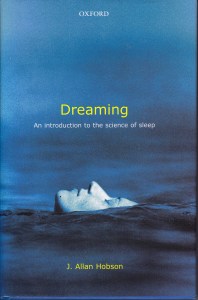
DreamingLike most people, I seldom remember my dreams. When I do, or when only the powerful feeling remains, I know that they are very emotional events. Something is always going on, and my attention is riveted. I recently read J. Allan Hobson’s Dreaming: An Introduction to the Science of Sleep. It must be intimidating, I have to note right away, for a neuroscientist to write a book. Our understanding is changing so rapidly that even academic treatments become a kind of ephemera. Published over a decade ago, it shows its age. Even I’m aware that changes in brain science have occurred and perceptions have changed somewhat since then. What struck me most, however, is Hobson’s absolute confidence that mind is a function of the brain, and that dreams are merely the madness we experience when we sleep. The madness I don’t mind so much. The materialism, however, I think is largely wrong.

Consciousness remains a great unknown. There is disagreement around whether it is emergent—coming from the brain, or receptive—perceived by the brain. Or perhaps something completely different. One of the greatest human foibles is to claim that we understand anything completely. I’ve always been amazed—knowing that the world involves much more than just sight, sound, scent, taste, and touch—that some scientists are so quick to write off complex experience as “merely” activity in the brain. Some animals, for example, seem to perceive magnetic fields. Others use navigation devices we simply don’t comprehend. They may experience senses we don’t even have. And yet, we happily claim that we’ve gotten this one nailed down. Dreams are only activities in the brain when we sleep.

Only? How can any dreamer say that this is only chemical reaction in our heads? The experience of dreaming is, implicitly, so much more than just random thoughts. Hobson does a good job describing how dreams are a form of madness, a psychosis when the reasoning part of our brains are inhibited. Fair enough, but who can experience madness and think it completely material? Our minds are more complex, it seems to me, than we give them credit for being. Hobson begins the book by noting that dreams used to be within the purview of religion. Since has now claimed them. We have an entire universe in our skulls, and yet we insist that although we don’t understand it, we can be certain that it is nothing but material. My dreams continue to suggest a different reality.


Used Bookends

There’s nothing like spending a Saturday in a bookstore. It is actually a rare treat these days with Borders gone and some of the smaller indies having trouble keeping up. I particularly like used bookstores. Unlike most durable goods, books—at least some of them—grow in character with renewed ownership. Like most academics, I have books that had previously been owned by big names in the field. Sometimes because I was a student of one of their students, at other times because their library went for sale and I found the tome in a second-hand shop. A few years back I had to go to Boston for work, and I stopped at the Boston Book Annex only to find it closed. It’s sad when even a used bookstore can’t keep up.

So when my wife told me she had to work on Saturday, and it was in Montclair, my thoughts turned to the Montclair Book Center. It isn’t the largest bookstore around, but it does have used books and it is a healthy walk from my wife’s office. I never go planning to spend much, but being in a bookstore, you see things you didn’t know existed. When the staff comes up to ask if they can help me find anything I just smile and say, “No thanks, I just want to browse.” Maybe it’s because I have no idea what I’m looking for. I’ll know it when I see it.

IMG_2685

I used to visit the Cranbury Bookworm. In a sprawling old house outside Princeton, I often found pleasant, used surprises there. Then the landlord evicted them. They sold off most of their stock and moved to a closet down the street. Even though it’s tiny, there are always others there. I’m never alone in a bookstore. Other patrons feel the draw. I wonder if everyone who reads doesn’t owe a debt of obligation to stop into their local bookstore and pitch in. I grew up in a town without any bookstores at all. The nearest one I knew of was thirty miles away. I know what it is to be book-deprived. It’s Saturday, and a little too cold to spend much time outdoors. It’s probably just an excuse, but you’ll find me in the bookstore nevertheless.


Camera Obscura

There’s a certain etiquette to being on the bus. There has to be, when you pack fifty strangers together for an hour and shake gently. The seats on New Jersey Transit are somewhat intimate and it’s rare to make it through the journey without somehow touching the person next to you—elbows, knees, hips, or general body mass—worlds collide. I’ve mentioned before that not many people read old-fashioned books on the bus, but one of those unspoken rules of etiquette is that you don’t look at a stranger’s book. I’ve benefitted from that any number of times myself. People think odd things about you when you’re reading a book about religion in a public space. Not odd enough thoughts to earn you a seat alone, but still.

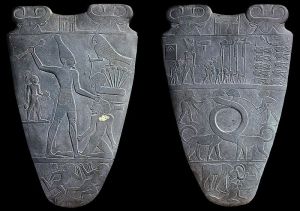
I was reading a book about an ancient Near Eastern religion the other day. For me it’s an occupational hazard. Those of us who have studied this stuff for a living keep on cranking out the books and somebody has to read them. Amid all the blue light from all the devices I often feel like I should be in a museum myself. It was with great surprise then, that my eye wandered onto the book next to me that day. I really couldn’t help it, you see. The woman who sat next to me and was using her cell phone to shed light on her book (the overhead lights don’t always work). She went to make a phone call but forgot to turn off the light so that it hit me right in the eye. Realizing her faux pas, she quickly turned it off, but my attention had been caught. In the book in front of her was a picture of the Narmer Palette. Narmer was the king who united ancient Egypt, according to the lore, and this stone ornament was the commemoration of his achievement. Anyone who’s studied ancient Near Eastern history would instantly recognize it. What were the chances? Two people sitting on a bus, reading actual books, both about the ancient Near East?

800px-Narmer_Palette

Bus etiquette, as I understand it, doesn’t allow me to ask a stranger, “What’re you reading?” It’s kind of a personal question, really. I’ve been doing this commute for going on five years now. The number of books next to me has been negligible. But one related to the very topic I was reading about? Was this one of those “if you see something, say something” things? Instead I practiced custody of the eyes and went back to my own book. Then the other unthinkable: she talked to me. “Do you know where,” she began—“ancient Egypt!” I thought. But then she asked where a certain restaurant was. I apologized. I never pay attention to the businesses along the highway. I’ve always got a book to read. I thought about asking her about the book. She had, after all, breeched the dam of silence. Instead I turned back to my own book and didn’t notice when the bus reached a restaurant whose name I didn’t even know. That’s what etiquette demands.


Under the Weather

A friend, knowing my penchant to watch the skies, sent me a story about the British and the weather. The story by Alastair Sooke on the BBC’s cultural page is discussing Alexandra Harris’s book Weatherland. I have to admit that I haven’t read the book (yet) but the report of it appeals to someone who’s written a book on the weather, but for a much older timeframe. According to Harris, according to Sooke, the British are rumored to be obsessed with the weather. While living in the United Kingdom, my wife and I observed this. It is not merely casual conversation when someone discusses the weather. It is a serious topic. For a nation so accustomed to rain and gloomy skies, the weather has a religious import. It rarely goes without comment. I suppose that’s the point I was trying to make in my book. The weather is important. Vital, in fact, to human survival.

What really caught my attention here, however, was Harris’s observation that weather is used to characterize mood. Sooke mentions ice and snow and melancholy. The image is vivid: early Anglo-Saxons turing a wary eye to a winter sky with its low clouds and preternatural chill. It is so universal, it seems, not to require comment. Yet at the same time, weather can be a great trickster. C. S. Lewis once wrote that the image of the Arctic north filled him with an inexplicable joy. Winter can be fickle that way. In the world of the Psalmists, rain was a blessing and a weapon. How you look at it depends, well, on your mood.

DSCN0904

The British may take their weather more seriously, on a day-to-day basis, than those of us across the Atlantic. We tend to treat the topic casually. In reality, it is just as serious here. Drought, which has gripped the western half of the country for about half a century now, is a serious concern. Winter storms, hurricanes, tornadoes. A lightning storm can still be a theophany. (One awoke me in the middle of the night, just hours ago.) Weather impacts our bodies as well as our moods. It is all-pervasive, but we generally don’t like to articulate it. I suspect our understanding of the weather says more about us than we’re willing to admit. Our British colleagues, however, are less squeamish about the topic than we tend to be. There’s more to the sky than it might appear.


Super Reality

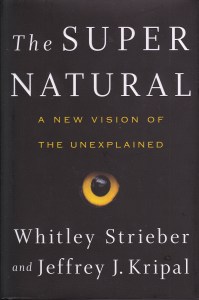
Super NaturalReality is not often, if ever, what it appears to be. As creatures that evolved to survive in this particular environment, we have passed along and received the skills that make this possible. One of those skills is filtering. We filter out most of the stimuli that surround us daily (and nightly), and that with only five senses. We don’t experience reality as it is. It is with this in mind that I read The Super Natural by Whitley Strieber and Jeffrey Kripal. Perhaps unlike many who will read this book, my attraction was based on Jeffrey Kripal’s involvement. In anticipation, late last year I read Whitley Strieber’s Communion, but I have great respect for Jeffrey Kripal’s work, and consider anything he writes well worth the reading. This book, then, is a strange hybrid between the experiencer and the open-minded analyst who brings the toolbox of religious studies to what most academics dismiss as “the paranormal.”

This is one of those books that will distort perceptions of reality. That’s not because Strieber and Kripal simply accept each other’s versions of events or conclusions. They don’t. Both are free to disagree with one another. Kripal, as a recognized academic, brings something rare to the table. He is willing to listen to people who have experienced what standard approaches wipe away as “merely anecdotal.” Ask yourself: what do we have to say that isn’t anecdotal? We don’t experience all of reality, and the filters we use go both ways—what we perceive is filtered, and what we share with others is filtered. As much as a materialist may hate to admit it, she or he still has feelings. And our senses, keep in mind, can be fooled. We’ve all seen mirages or thought we heard something that nobody said. Our brains evolved with lots of false positives. Who are we to judge that someone else’s anecdote is impossible? That’s what super nature can do to you.

It is also refreshing to see that, although the day when a physicist’s name as a household word may have passed (excluding Sheldon Cooper, of course), those who remain recognizable from the past—Niels Bohr, Werner Heisenberg, Wolfgang Pauli, Erwin Schrödinger—were not strict materialists. As The Super Natural points out, these foundational figures of quantum physics all turned to mysticism of some sort or another to help them come to grips with what the empirical evidence was showing. I do wonder how we’ve come, since then, to have so many brilliant people who have lost a sense of wonder about the anomalies that exist in everyday experience. Who hasn’t felt a shiver of pleasure at a particularly poignant coincidence or glitch in the matrix? Maybe most of us will never have as many uncanny experiences as Whitley Strieber, but we might be losing something valuable if we don’t at least listen to what he, and others like him, have to say.


Writers and Readers

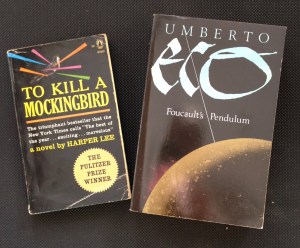
Writers are immortals. Well, at least as long as our species lasts. As a mere internet writer, I suppose that I’m not alone in wanted published books to my name. Solid books that don’t disappear in a power outage. There’s an immortality, no matter how mildewed or mouse chewed, to being in a book. Just two days ago Harper Lee died. And Umberto Eco. On the same day. Like many American kids, I was assigned To Kill a Mockingbird in school. Although I would go for decades without re-reading it, the novel stayed with me powerfully, the way that classics do. When it was assigned to my daughter’s high school class, I read it again, reinforcing the story that held me captive when I was a teen. In many ways it was an introduction into that confusing and convoluted world of adults. It was true, like most fiction is.

Umberto Eco I discovered in seminary. The Name of the Rose was one of the choices for assigned reading in Medieval Church History. Although less of a classic, it was no less real for all that. The work that hit closer to home, however, came when living in the Medieval city of Edinburgh. Foucault’s Pendulum was frightening in its conspiratorial intensity. Esoteric fanatics gather in an unholy profusion. Then, in the midst of reading it, a package, hand-addressed, arrived in my student mailbox. From Germany. Curious, I opened it only to discover a mound of tracts on Satanism, all the scarier for being written in German. They seemed to point to a conspiracy, just as I was reading about in Eco’s novel. Only after much searching (there was no internet to speak of in those days) did I trace them to the Schiller Institute. How they got my name, I never did learn.

IMG_2678

I haven’t read all the works of Lee or Eco. In fact, there are few writers whose entire oeuvre I’ve managed to read. That doesn’t mean that I love them any the less. All it takes is a powerful novel and you can be hooked for life. I leaned this in a profound way reading Moby-Dick in seminary. If there is another book that should be added to the Bible, that is the one. Writers are one of our least appreciated resources. They are, however, among the true immortals of our breed. Harper Lee and Umberto Eco left this world on the same day, only never really to leave it at all.


Rumors of Books

An off-the-cuff remark by Sandeep Mathrani, some CEO of something or other, had the publishing world buzzing a couple weeks back. The rumor began that Amazon.com was about to open hundreds of brick-and-mortar bookstores. After the opening of a store in Seattle, the idea—neither confirmed nor denied by Amazon—has made the book industry reassess its future yet again. Stock in Barnes and Noble immediately fell, but soon recovered. As someone whose entire life has revolved around books, I was glad to read the story. I have no idea of the business implications—I just don’t think that way—but the fact that book news was deemed newsworthy at all was heartening. Of course, it would be even better news if this signaled a growing interest in books.

DSCN5025

The book industry has been a steady one, despite worries and shifts of format, but it has never been as robust in America as it has been even in the small nation of Iceland. There are too many distractions for people to dedicate the quiet hours required to open a book and learn from it. When I sit on the bus and the driver has forgotten to turn on the overhead reading lights, almost nobody complains. Although I see some Kindles in the dark, it is often social media or movies that the person next to me is viewing. A longish bus ride, it seems to me, is the place for a book. Portable knowledge. Do we ever stop to consider the wonder of this anymore? All it takes is a rumor and the industry quivers.

Books, like monsters, are one of those topics that has an inherent connection to religion. No matter how secular a writing may be today, books have close ties to religion, and they always have. The great secrets of religious explorers and inventors are kept between the covers for any awaiting enlightenment. We have become a more secular people, but the religion of secularism is intellectual. The basis for such thinking comes in book form. For me, there’s always a sense of accomplishment with finishing a book. A gold star on the sticker chart. And I worry about books following the thylacine into extinction. And if the thylacine is something you don’t recognize, I have a book that I could recommend.


Chilling Thoughts

GlaciersI don’t think much about glaciers. At least I didn’t. Now they keep me awake at night. Literally. I just finished Jorge Daniel Taillant’s Glaciers: The Politics of Ice. Never have these ice sheets ever seemed to have so much personality before. I don’t live near glaciers, but I have seen a couple. A number of years ago I visited Glacier National Park in Montana. It was summer and the one glacier that was right by the road (Highway to the Sun) was melting. It was the first glacier that I knowingly saw, and I went my usual way, not thinking any more about them. Taillant’s book, however, indicates why everyone should be concerned about ice sheets. Not only is global warming a reality, our ice caps are melting on what appears to be a runaway timetable and we are not likely able to reverse the process until the damage is done. Not only our ice caps endangered, but our glaciers as well.

Why should anyone care about glaciers? For purely selfish reasons, I might point out that they are crucial to supplying drinking water for much of the world. Looking at the globe, it seems there is plenty of water to go around. Only about 3 percent of all water on the planet is fresh water, however. And of that 3 percent about three quarters of it is locked up in glaciers. Glaciers are the only source of fresh water in dry climates during years of drought or excessive heat. Whatever water isn’t used as these ice giants melt flows into the ocean, becoming part of the salt water majority. When the glaciers are gone, they’re gone. They are part of the fine balance that makes life on earth possible. The politics enter the picture when Taillant reveals that large mining interests, particularly in South America, have been destroying glaciers to get at the gold underneath. They block legislation and provide disinformation, all in the name of wealth. When they destroy glaciers, they destroy future prospects for life in the regions they mine. It’s an issue of social justice.

On our little planet that seems so big, we don’t often stop to consider that we didn’t really show up here by accident. We evolved with the features that our planet gave us—notably water—and we have continued to thrive only in the presence of water. It has often been said that future wars will not be fought over petroleum, but water. We can live without oil. We can’t survive without water. And our industrial action is blithely wasting away the largest reserves of drinkable water on the planet. I don’t live near any glaciers. I’ve only seen one or two in my lifetime, but I now worry for their health. Their future is, in many respects, our future. And that makes me want to pour a glass of water and reflect.


Universal Universities

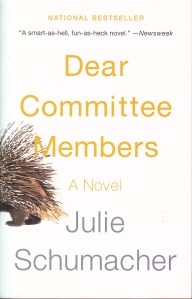
DearCommitteeHaving been in academia for nearly two decades, and having watched from the sidelines ever since being benched, I found Dear Committee Members a little too true to life. This novel by Julie Schumacher is presented as a series of letters of recommendation by an embattled English professor at Payne University. Set over the course of an academic year, the reader watches as the fictional university eviscerates the humanities to make the life of more “practical” departments like Economics much more comfortable. Sarcastic, bitter, and full of pathos, the novel is frequently funny, but it runs so true to life that it would be difficult to say whether it is indeed fiction or not. The book was a national bestseller, but universities continue down this very road, with all seriousness.

I have said before: it is time for those of us who really believe in education to take on, challenge, and overthrow this paradigm. Education is not about making money. There is more to life than that. My reading, which coalesces somewhat coincidentally around these themes (Dear Committee Members was recommended to me by a bookseller that I don’t know personally), paints a larger picture that is disturbing. The capitalist economy is growing out of control, its own dictates now excluding human decision (see my post on At the Altar of Wall Street earlier this week), and one of its strongest investors is higher education. It is a business, you see. The utter and complete devotion to the economy cannot take place without new generations of students indoctrinated into money as the meaning of life. Some of us—many of us—disagree, but we are not organized and we have no funding. We are the human resistance.

Setting out to make money was never my goal in entering the professorate. Motivated by finding authentic meaning in life, I have found that those departments where such a search resides—religion, philosophy, English, music, the arts—are under siege and constantly have to justify their existence to the administration. Dear Committee Members is funny in its overstatement, and in having a protagonist actually say what many of us think. And thinking is what it is all about. Education is about learning to think. Not earning a mint. We are in need of an altar call. The only ones with power to take back education from corporations are people. Who’s willing to join the cause with me? At this point I’d even be willing to consider sympathetic robots.


The Bottom Line

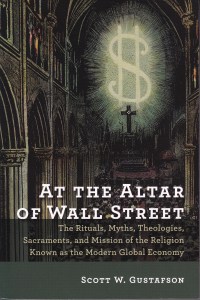
AltarWallStUnderstanding, or even caring about, economics has been one of my abiding weaknesses. I suppose growing up poor, excess money was a foreign concept—at least on a quotidian basis—the possibility of acquiring much of it remote. The poor know their place. Still, I was intrigued by Scott W. Gustafson’s At the Altar of Wall Street: The Rituals, Myths, Theologies, Sacraments, and Mission of the Religion Known as the Modern Global Economy. It has turned out to be one of those very important books that could be world-changing, if enough people read it. The basic idea is simple enough: Economics is a religion. Immediately many people will put the book down. Economics may be the dismal science, but at least it’s a science, right? Not so. Not completely. While economics uses scientific principles (as does theology), it is a belief system based on an underlying myth that has pushed us to the place where the rich are far too rich and we’re convinced that the plight of the poor is simply a reality with which we must live. It’s all based on a myth of barter.

There are places I quibble with Gustafson, but he makes a very compelling case that the Global Economy, through a series of historically discernible steps, has come to be money making money for money’s sake. As he clearly demonstrates, developments in stock trading have made this an enterprise where people are completely left out of the equation and understanding what has happened impossible. As long as money has been made, the Economy is happy. This way of thinking, which is de rigueur for business schools and presidential wannabes, believes with the conviction of an evangelical that as long as money circulates everything will be fine. Those who believe this walk down Fifth Avenue with blinders on.

Step by step Gustafson demonstrates that Economics has all the trappings of any religion: a priesthood, mythology, rites and rituals, and an overarching theology. And this belief structure, like that of many religions, persecutes heretics. Indeed, human sacrifice is an innate part of this religion called Economy. It has sent missionaries out to the far reaches of the world to convert other ways of living to that of the Global Economy. And in this religion, it is safe to say, those who make it to Heaven are remarkably few. This book does offer potential solutions. They are solutions the wealthy and powerful will not like, so they are probably not going to be enacted any time soon, if at all. So while the rest of us are standing in line at the soup kitchen, I would suggest some reading that will make far more sense than you think it might. At the Altar of Wall Street could change the world for the better, if the Economy allows it.