Entitlement

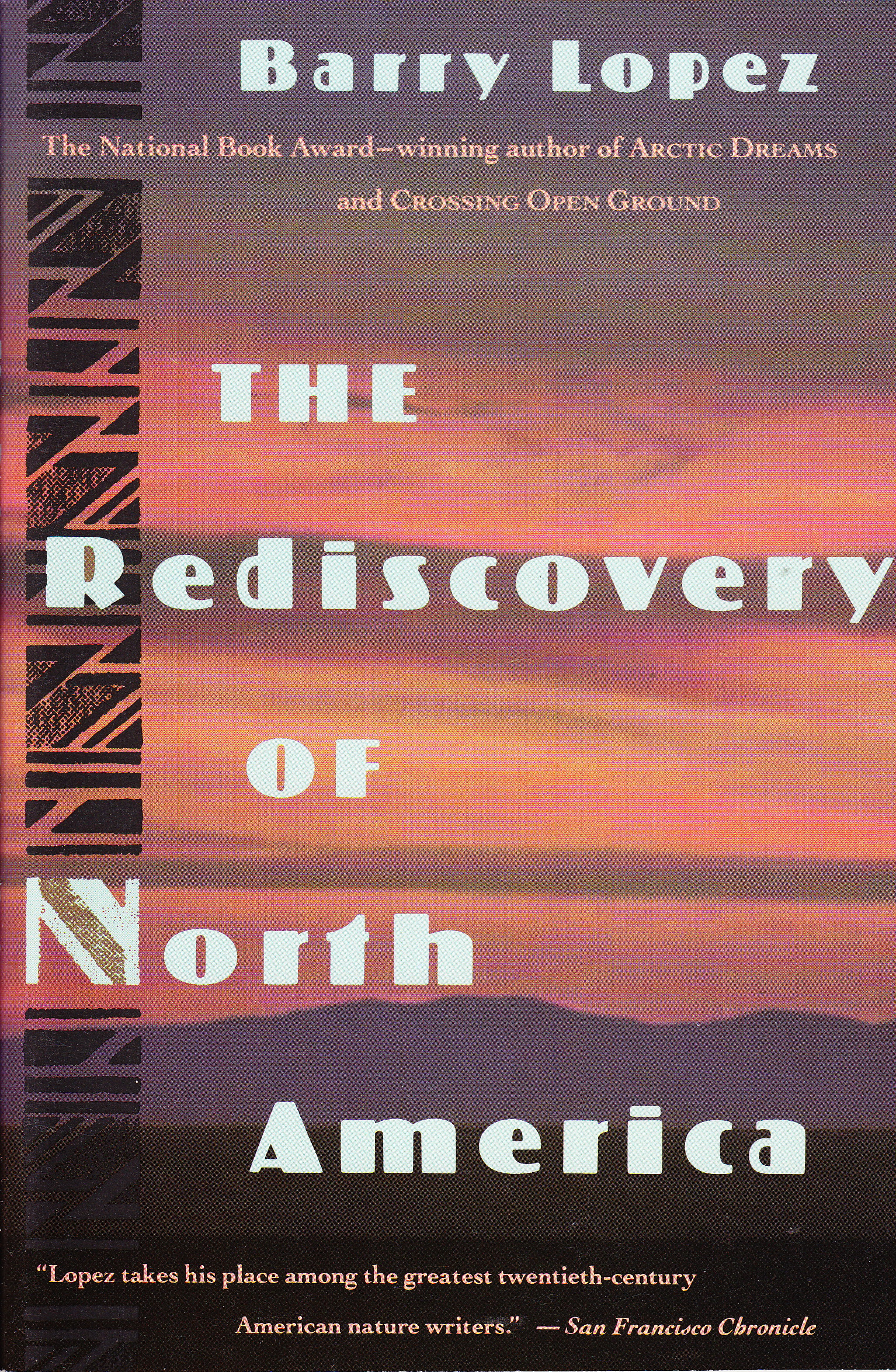
LopezNorthAmericaAs winter begins to settle in, I recall reading Barry Lopez’s masterful Arctic Dreams many years ago. That book left such an impression that when I saw his The Rediscovery of North America—a very small book—I thought it was worth the asking price. Lopez is one of those nature writers who can transport the reader into the world he observes. This brief volume, however, takes the reader to a very different kind of world—the world of European interaction with North America. As children we (and I speak for myself, or perhaps my generation) were still taught that Columbus was a kind of hero. He ventured into the unknown and discovered an entire new world. That world became the everyday place we inhabit with our comforts and our toys. Things only got better from there. Of course, I learned to distrust this view by the time I was an undergraduate, and my perspective has turned a bit more serious since then. These events, viewed from the perspective of the Native Americans, have a completely opposed outlook. Lopez tries to capture a sense of how to rectify these wrongs in his Thomas D. Clark lectures that make the basis for this book.

Greed, no doubt, drove the early explorers of the new world. And a sense of entitlement that has not diminished with the passing centuries. While it is not as simple as tracing this sense of ownership back to Genesis, clearly the Bible plays some role in it. Religions that teach their adherents that they have the sole truth will inevitably lead to entitlement. Monotheism, as I’ve noted before, possesses the tendency to make absolute claims. One God, one Church, one Truth. And non-believers become expendable. To the Catholic Spaniards setting out for the new world (or actually, old world, but tripping up on the new along the way), as Lopez points out, were driven by lust for gold. And spices. And fornication. Things that, if one took it seriously, would be decried by the church as vices. Still, taking advantage of the gullible and helpless is a time-honored practice among many religious bodies, and we know that genocide ensues.

Somehow history has taught us that some genocides are worse than others. Those inflicted on native populations, perhaps because they weren’t always intentional (in the case of diseases) are sometimes still given a silent assent. Yet, as Lopez makes clear, the intention to murder was there already. The conquistadors had already decided that the natives did not deserve the same rights as the God-blessed new arrivals. What saddens me—and I think Lopez too—is that this same sense of entitlement, instead of tempering with time, has continued to increase. Tea Parties and American Values often include removing those who disagree. Inconvenient indigenous populations that aren’t mentioned in the Bible except as Canaanite stand-ins. And should we care to make right what was perpetrated, perhaps we ought to consider rediscovering North America.
Manitous

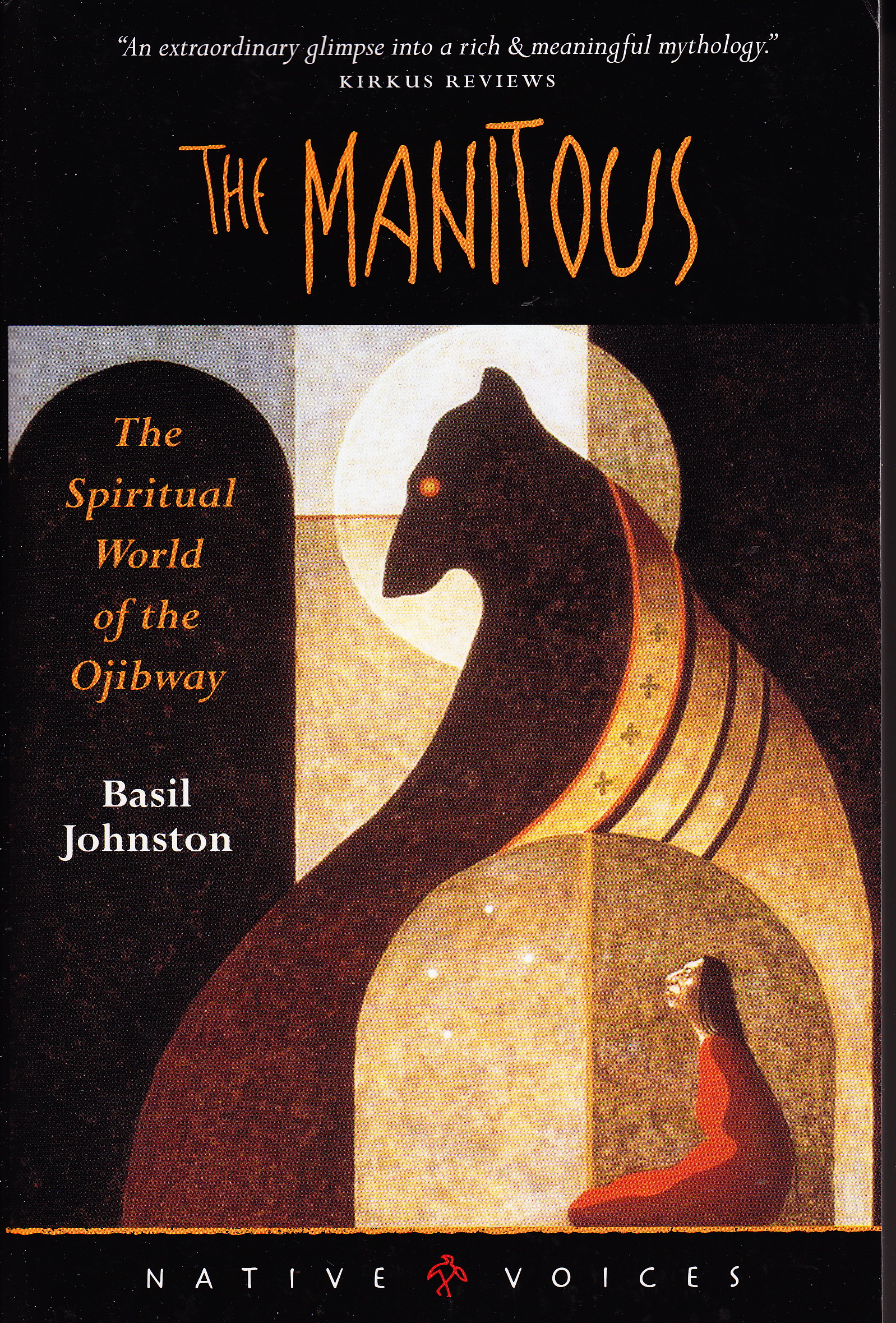
ManitousOne of the yearly autumnal rituals we’ve established is the watching of Escanaba in da Moonlight. It is a silly, crude, and profound movie that revolves around Native American lore—namely, the creature known as the bearwalk. Despite the high level of interest in monsters on the internet, the bearwalk continues to be elusive. Robert C. Wilson wrote a novel, Crooked Tree, about this Ojibwa legend, but academics have seldom explored it. The few resources I found pointed me to the wendigo. Wendigos are frightening spirits of the forest, sometimes presented as skinwalkers, or shape-shifters, who prey on unwary human beings. Some writers call them werewolves, but this isn’t exactly correct. Frustrated at finding no solid information, I picked up a copy of Basil Johnston’s The Manitous: The Spiritual World of the Ojibway. Johnston, who is Anishinaabe, writes to preserve the heritage of his people.

Manitous don’t have a direct equivalent in English. Some have been inclined to designate them as gods or spirits, but they inhabit that strange realm that overlaps with humans as well. The Ojibwa viewed the world as more animate than western science allows. People were part of this larger universe, but were not the sole end of intelligent life. The tales in this book map out an unseen territory where manitous may be found in lakes and streams, in the hearts of trees, in the early prototypes of humankind, and yes, in the wendigo. The wendigo (also spelled windigo or weendigo) is a representation of excessive acquisitiveness. They often begin life as humans, but become cannibals. As they eat other people their hunger grows, along with their bodies, and they cannot be satisfied. The more they eat the more their hunger remains. They are, therefore, extremely destructive, roaming the woods seeking human victims.

Throughout The Manitous, Johnston gives little in the way of editorial comment. One of his stories is a parable for the coming of Europeans and their subsequent treatment of Native Americans, but most of the tales are of the natural world. The wendigo occupies the last chapter of his book. Before putting the matter to rest, however, Johnston makes a poignant and valid point. Although the Ojibwa no longer believe in a literal wendigo, the treatment of the earth by corporations has taken its place. Always hungry, excessively greedy for more to be taken from the earth, industrialists have made the wendigo look as if it were an amateur slaughterer. Living lightly on the land, the Native Americans tried to take only what they needed. Europeans, on the other hand, created new things in order to keep the hunger going. And those who constantly create new needs grow wealthier and wealthier. Instead of naming this inherently destructive system the wendigo, we call it progress and happily invite it to live among us.


Spirit Works

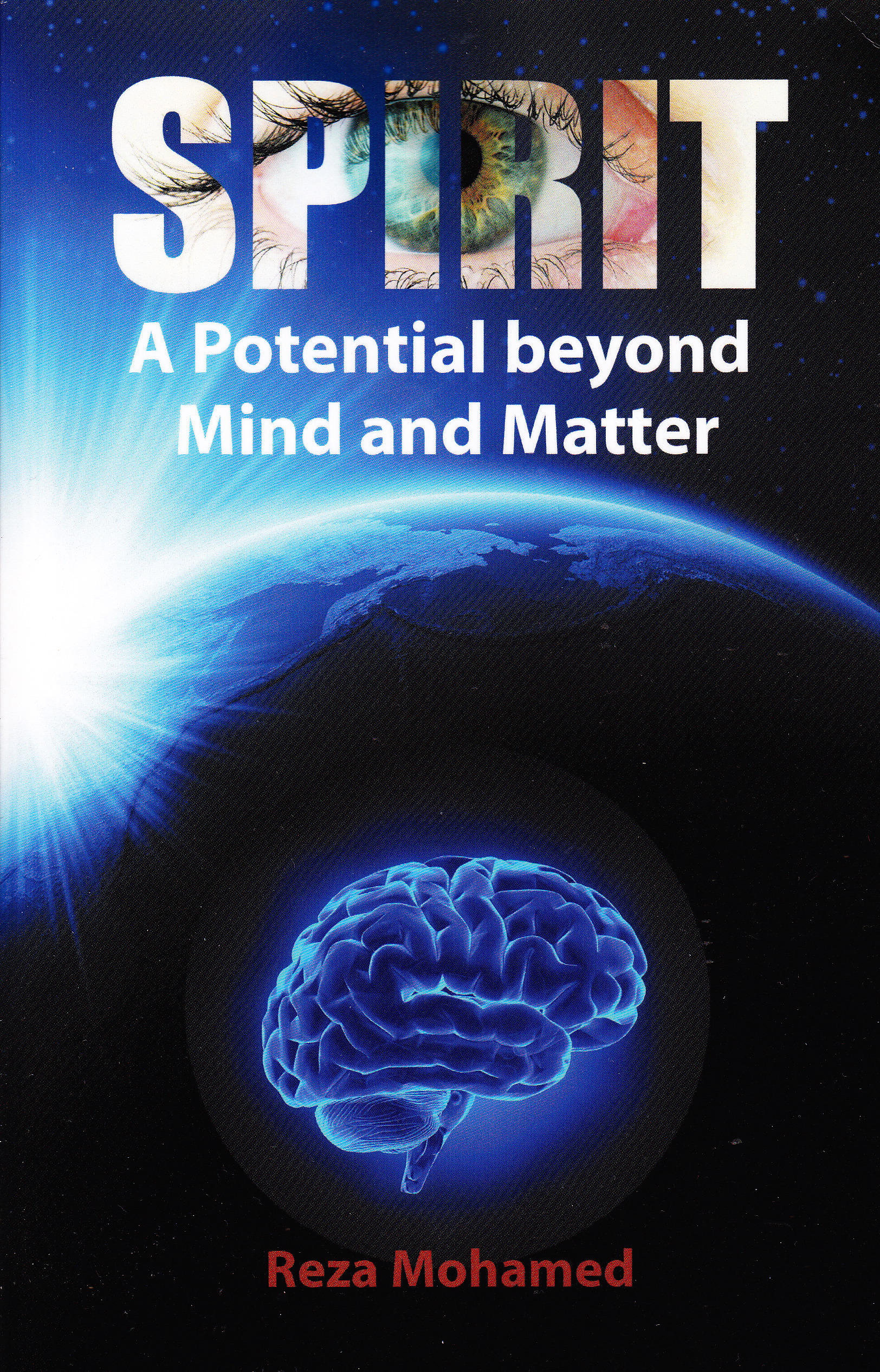
SpiritOne of the unexpected (for me) perks of the academic life was book reviews. Some journal editor would send you expensive academic books you get to keep, just for reading them and giving your opinion in writing! Most academics, truth be told—at least old school ones—would work for books. But don’t—wait. I was going to say “don’t tell the dean,” but it is clear that administration is way ahead of me on this one. In any case, I miss not having a viable academic opinion any more. Not having an institution means journals no longer care what I think about books. Also, working in publishing, there may be a conflict of interest involved. That’s why I was so happy to learn that blogging also leads to free books, on occasion. Most of them aren’t university press books, but you don’t have to be a professor to have something profound or useful to say. So it is that I came to read Spirit: A Potential beyond Mind and Matter, by Reza Mohamed.

There were several points that stopped to give me pause in this book, but about half-way through an idea caught me and has stayed with me since. It revolves around the idea of consciousness, something that Mohamed writes quite a bit about. A number of sources lately have suggested that consciousness is not unique to humans. Clearly, to my mind, animals are also conscious, and I think evidence points to consciousness, on some level, for plants as well. Perhaps even what we call inanimate, or inorganic material. Indeed, perhaps the universe itself is conscious. What occurred to me in reading Spirit, is that perhaps consciousness is the primal element. Maybe it has always existed. Could it be possible that we, like riders on a train, borrow a bit of consciousness while our bodies last, and then when we expire we simply climb off that train and consciousness continues on down the track, waiting for the next passenger?

It is nearly impossible to determine whence consciousness arises. Believing that it always existed is more plausible to me than the odd suggestion that it is just what happens when neurons get all mushy from being too close together. All creatures, as Mohamed notes, have will. Plants that follow the sun—slowly, and over years—seem to have a purpose as well. Who’s to say that it stops there? What have we lost if consciousness is endemic to the universe? Of course I don’t have any answers. Just possibilities. Ideas can spring unexpectedly from books, and as a sometime writer, I can say they even surprise an author from time to time. Then, of course, my opinion is merely that of an independent scholar. But I still find myself working for books.


Thinking about the Universe

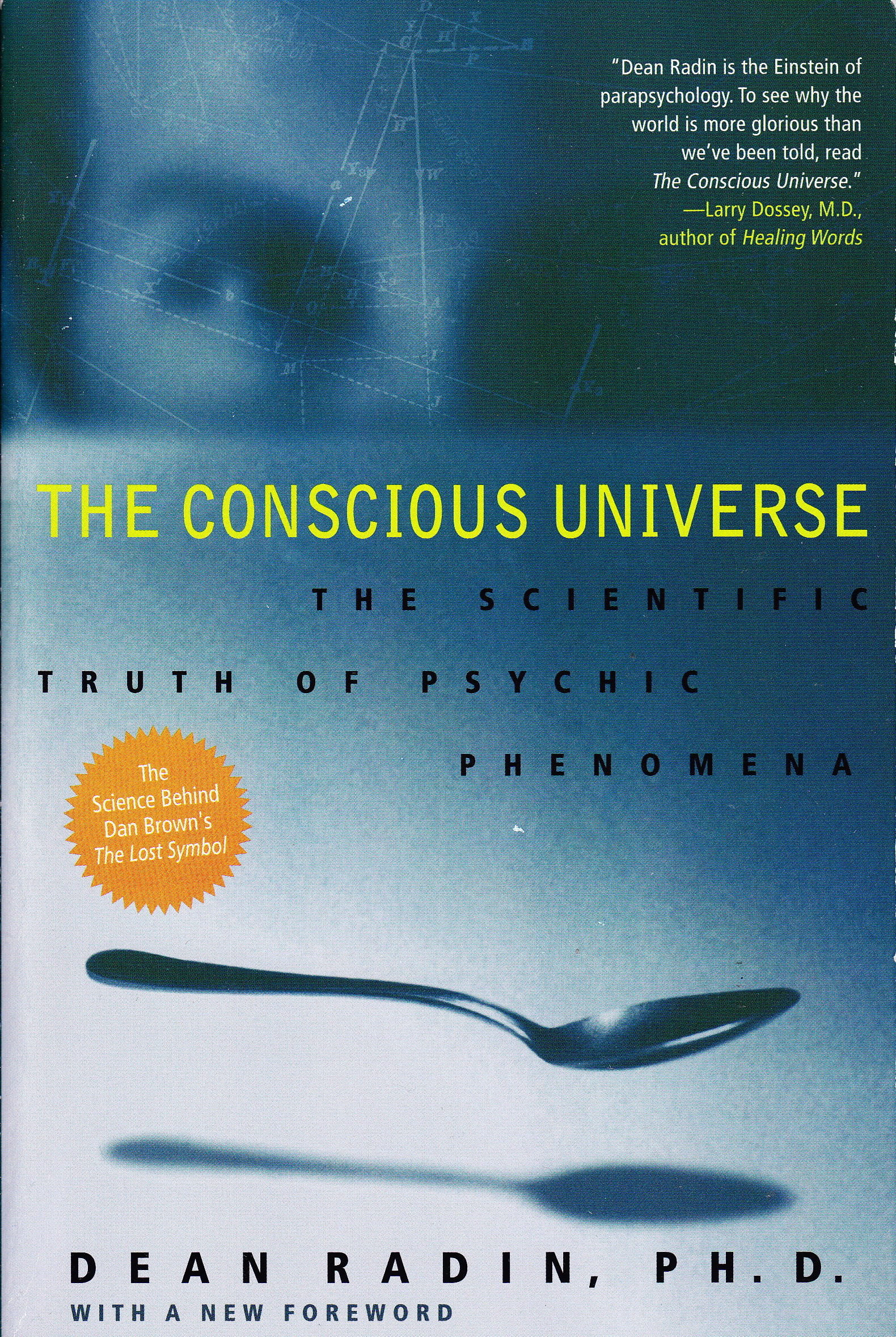
Conscious Universe Notwithstanding appearances, I have been reading. Despite the determination, disruptions to my commuting schedule always throw me off a bit. Having recently read The Holographic Universe, I decided to follow it up with The Conscious Universe. Subtitled The Scientific Truth of Psychic Phenomena, Dean Radin’s book is one of those that you don’t want other commuters examining too closely, although, however, they probably should. Radin is a fully credentialed scientist who has a rare trait: a willingness to follow where the evidence leads. Respectful of traditional scientific method and even mainstream science writing, Radin demonstrates in this book just how risky it is to go against the trends that are like deeply rutted wagon tracks over a sun-baked prairie. Science progresses by examining the evidence, but today science is, in some senses, over-reacting to the refusal of religious thought to, well, give up the spirit. Religion persists and rationalists can’t understand why. Investigating “spooky effects at a distance” is not entirely welcome in such a climate.

Radin, however, approaches psi with scientific rigor. Laboratory experiments, as he thoroughly demonstrates, have revealed with greater evidence than many readily accepted theories, that there is something behind psi. In fact, the government and private industry have invested, and continue to invest, in it. And in our more unguarded moments, most people will generally admit that sometimes coincidences are a little too odd, or that you might, from time to time, really be able to send a thought to someone else. The laboratory results, as Radin clearly shows, are simply dismissed as aberrations because they don’t fit into preconceived (frequently materialistic) worldviews. It is far easier to laugh than to sort out how all of this might actually work.

There is no triumphalism in this. It is simply the willingness to ask honest questions. Quantum mechanics, as physicists know, are not always as mechanistic as they seem. Even Einstein was willing to keep an open mind concerning the larger picture. The universe we envision today is not the same as that which Einstein knew. It isn’t easy to summarize what Radin is addressing in his book, but if I were to try I would say something like this: consciousness is essential. I know materialists dismiss essence, but I believe the evidence goes against them here. Consciousness is an integral part of the universe, and we can’t even define it yet so that all parties agree. If we don’t know what it is, how can we possibly know what it might not be able to do? Radin does what seems to be the only logical response in such a situation: he keeps an open mind.


Holistic Universe

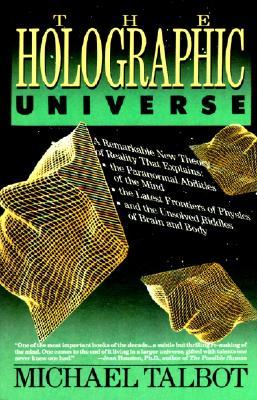
HolographicUniverseThings have been so busy that a satellite landed on a comet and I didn’t even know. I have always wondered about the universe. In fact, as a young man, vying with my tendencies toward ministry I had a vibrant interest in astronomy. The universe, however, has a predilection towards mathematics that frustrates my attempts to understand. I did well enough in my college astronomy class, but I knew it could never be my major. My recent reading reminded me of Michael Talbot’s The Holographic Universe—a book that has been on my shelf since about the time it was published. In my mind, holograph had translated into arithmetic, and every time I picked it up, fear gripped me anew and I vowed I’d read it later. Later caught up with me the last few days, and I found myself plunged down a rabbit hole that I did not even know was there. When I took physics there was no talk of quantum mechanics. It was all the three laws of thermodynamics and the angle of incidence equals the angle of reflection and things like that. Nevertheless, I continued to read science written for the laity, and Talbot’s book rather caught me off guard.

First off, I still have no idea how a holograph works. It is something that seems, to my pragmatic way of thinking, impossible. As Talbot explores this strange concept, however, he introduces a universe I began to recognize. This is one of those realities where the edges don’t quite meet and things that shouldn’t exist show up anyway. In other words, phenomena that are often called “religious” can be made to fit into a holographic universe. Talbot spends a great deal of time discussing miracles and healings. We know that they happen, but we’ve been conditioned to question them. They don’t fit into that universe Mr. Wynecoop told you about in eighth grade. And yet, there they are.

Even after reading the book, I can’t claim to understand how a holographic universe works, but I did come away with a model of reality that allows for the evidence generally swept off the table. Everything from ghosts to time warps are possible in a universe that is a holograph. I’d step off the bus never sure which reality I’d encounter. Still, glancing up at the dark sky, I knew that millions of miles away, someone had recently scored a direct hit on a comet and if we can’t even interpret all that we see on Mars, we’d better be prepared to open our minds for something new. After all, we only see what we allow ourselves to see. Society programs us, just as surely as any computer. And if, like a virus, you play by your own rules, you’ll be the enemy. If you’re willing to ask the uncomfortable questions you’ll be labeled as having tea down a rabbit hole. Maybe, however, I can find a home here. As long as Deacon Dodgson can take care of the math.


Trial and Error

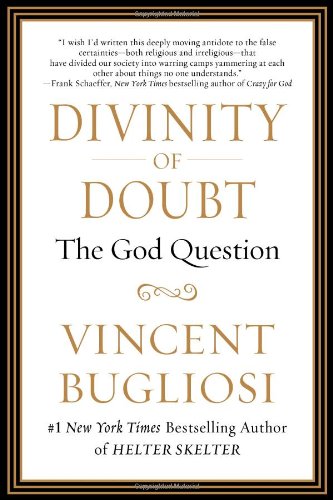
DivinityOfDoubtI’m not a fan of true crime. It seems that daily life has enough drama for me without reading about the truly dark aspects of human behavior. Nevertheless, I appreciate those who spend their life taking on perpetrators of evil. I haven’t read any of Vincent Buliosi’s true crime books, but I was curious about how a famous trial lawyer would treat the question of God. Bulgiosi’s recent book, Divinity of Doubt: The God Question, is a glimpse into an active, agile mind that is innately curious about the issue of the divine. Neither believer nor atheist, Bugliosi makes a strong case for agnosticism. He has no time for the nonsense of many religious beliefs, and like a lawyer, won’t let shoddy excuses such as “it’s a mystery” justify unacceptable answers. Many Christians (especially) would find his unrelenting logic a little distressing. If we accept reason, he fairly demonstrates, the God of traditional Christian design is not possible. Still, he acknowledges that religion has very positive aspects.

Before the angry atheists can begin laughing, however, Bugliosi turns his sharp mind to the arguments of Dawkins, Hitchens, and Harris to show how none of them really make a strong case for atheism either. He notes, as Dawkins does at one point, that proving the absence of God (or anything, for that matter) is not logically possible. There’s always the possibility that, beyond the edge of what you’re arguing, the object in question may lurk. Nevertheless, a strong case might conceivably be built, but Bugliosi declares that it hasn’t. Many atheists attack religion and think they’ve destroyed God. Not that Bugliosi is a friend of God. Indeed, to borrow a title from one of his nemeses, C. S. Lewis, he might have called his book God in the Dock.

Divinity of Doubt is one of those books that throws many questions open. Being an agnostic, of course, Bugliosi is fine with that. Although the book is enjoyable and thought-provoking, there are a few uneven parts. It is difficult to keep logical rigor at fever pitch continuously. Some, no doubt, will find his doubts about evolution puzzling. Others (or the same) may find his understanding of death a little under-developed. Nevertheless, it is refreshing to read a clearly thought-out account of how the proof and disproof of God are equally problematic. Some things you just can’t know. Don’t say that it’s a matter of faith, however; Bugliosi won’t let you get away with that. At times funny, written with verve and wit, this account keeps the reader moving along, even though most people will find something to seethe at along the way. Don’t let it lead you to crime, though, because you wouldn’t want Bugliosi on the prosecution against you.


Darwin Down the Road

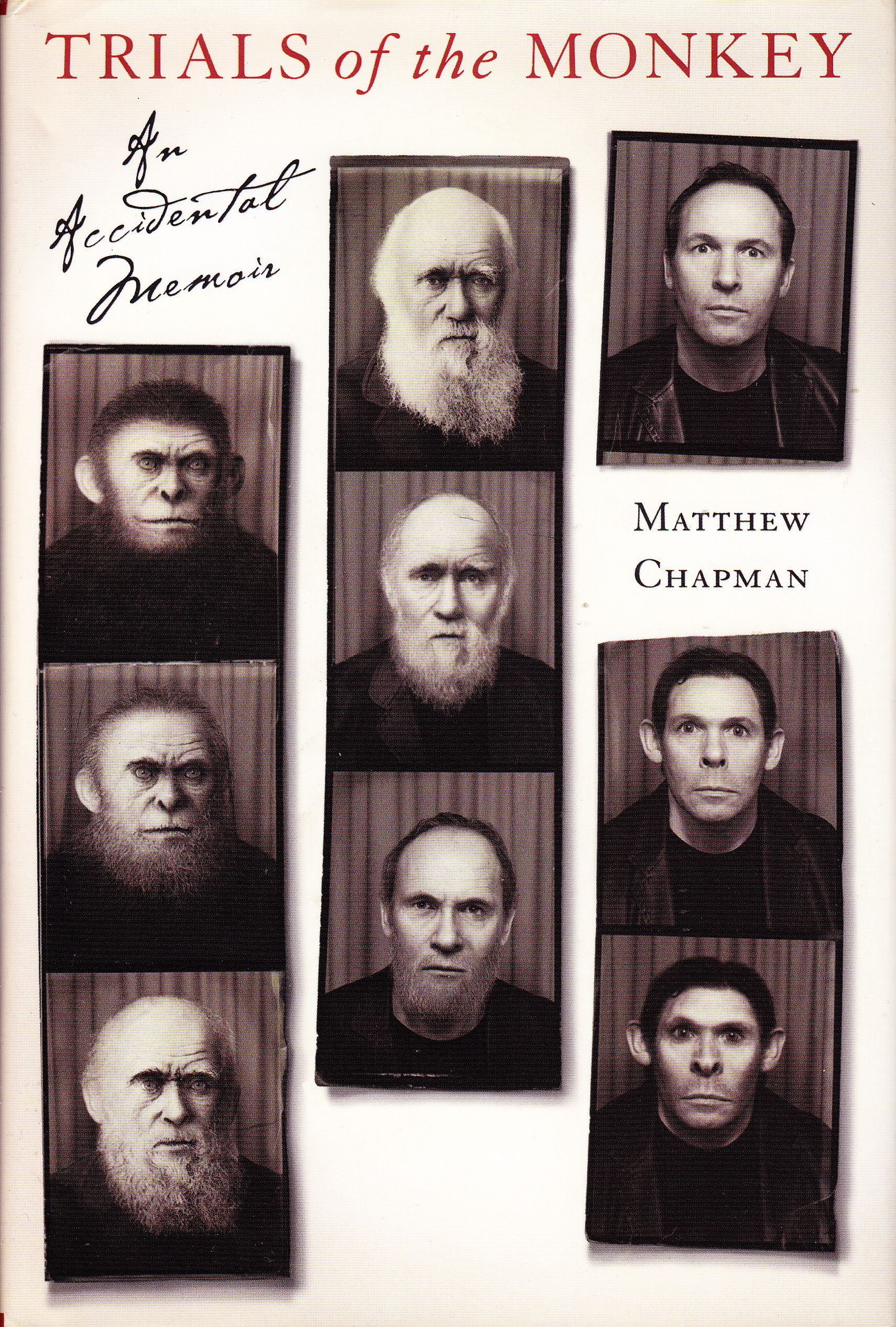
Chapman TrialsThe accidents of birth are the stuff of evolution. When I first heard of Matthew Chapman, direct descendent of Charles Darwin, over a decade ago, I was determined to read his book (then new). Like the accidents of birth, the finding of books at used bookstores is also a kind of evolution, so I picked up Trials of the Monkey: An Accidental Memoir recently and finally read it. Mission accomplished. It had been long enough that I couldn’t recall what the reviews said that made me so eager to read it—I had been developing a course on science and religion at Nashotah House and had been reading about evolution—but I’m glad I got around to it. The book was neither what Chapman nor I had expected. Maybe I’d better explain.

The year 2000, apart from its millennial aspirations, was also the 75th anniversary of the Scopes Monkey Trial. Chapman, a screenwriter from England, decided to go to Dayton, Tennessee to report on the reenactment of the Scopes Trial that was caused, accidentally, by his great-great-grandfather. With acerbic and self-deprecating wit, he narrates how he missed the performance by arriving for the wrong weekend and yet how he’d already begun the book based on it. Instead of reviewing the reenactment, he wove his own life story into those of the people he met on his two trips to Dayton, and left us with an engrossing memoir. Most Europeans, we know, consider American reaction against evolution with some puzzlement. As an Englishman, Chapman shares that curiosity and also, he admits, kind of wanted to make fun of southerners. His encounters, however, forced him to realize just how human all people are.

There’s a healthy dose of exposure to some of the weird ideas of fundamentalism here, but Chapman pulls no punches. The people he met treated him kindly. Some fundamentalists were even likable, even though they could not agree on much. At turns very funny and very sad, this autobiography represents, in its own way, the tensions of any life. The sensual confessions would have made famously squeamish Darwin blush, no doubt, but demonstrate to the reader that a man who can make a lot of money writing movie scripts can be very human as well. And so can the religious. The denizens of Dayton didn’t convince Chapman that their exclusive faith was true. They did, however, open him to the realization that such faith is not as simple as it may seem. A fortnight may have passed since the millennium, but creationism has continued to gain ground. Until more people take Chapman’s cue and actually try to understand those who believe, the trial of the century will continue to go on and on, ever evolving.


Literary Hunter-Gatherers

Perhaps the clearest place my hunter-gatherer roots show is in my tendency to collect. In principle, in Manhattan, I leave coins on the pavement for those less fortunate than myself. This past week on the way to work, I walked past a scattering of pennies on the sidewalk. It physically ached to leave the shiny coins there—one of my recurring dreams is to find a bunch of coins that will lead to the end of my constant fear of want. News of ancient hordes found excite me inordinately. As a child I collected odd things if they came in numbers: stamps and coins and baseball cards go without saying, but also fossils, bottle caps, little HO scale military figurines, even pockets full of punched metal slugs that had obviously fallen from a truck leaving the steel mill just across the river in blessed abundance. My mother asked, not unreasonably, “what do you plan to do with those?” My brothers and I had no answers, but we had found something in profusion. The hunter-gatherer urge was to collect.

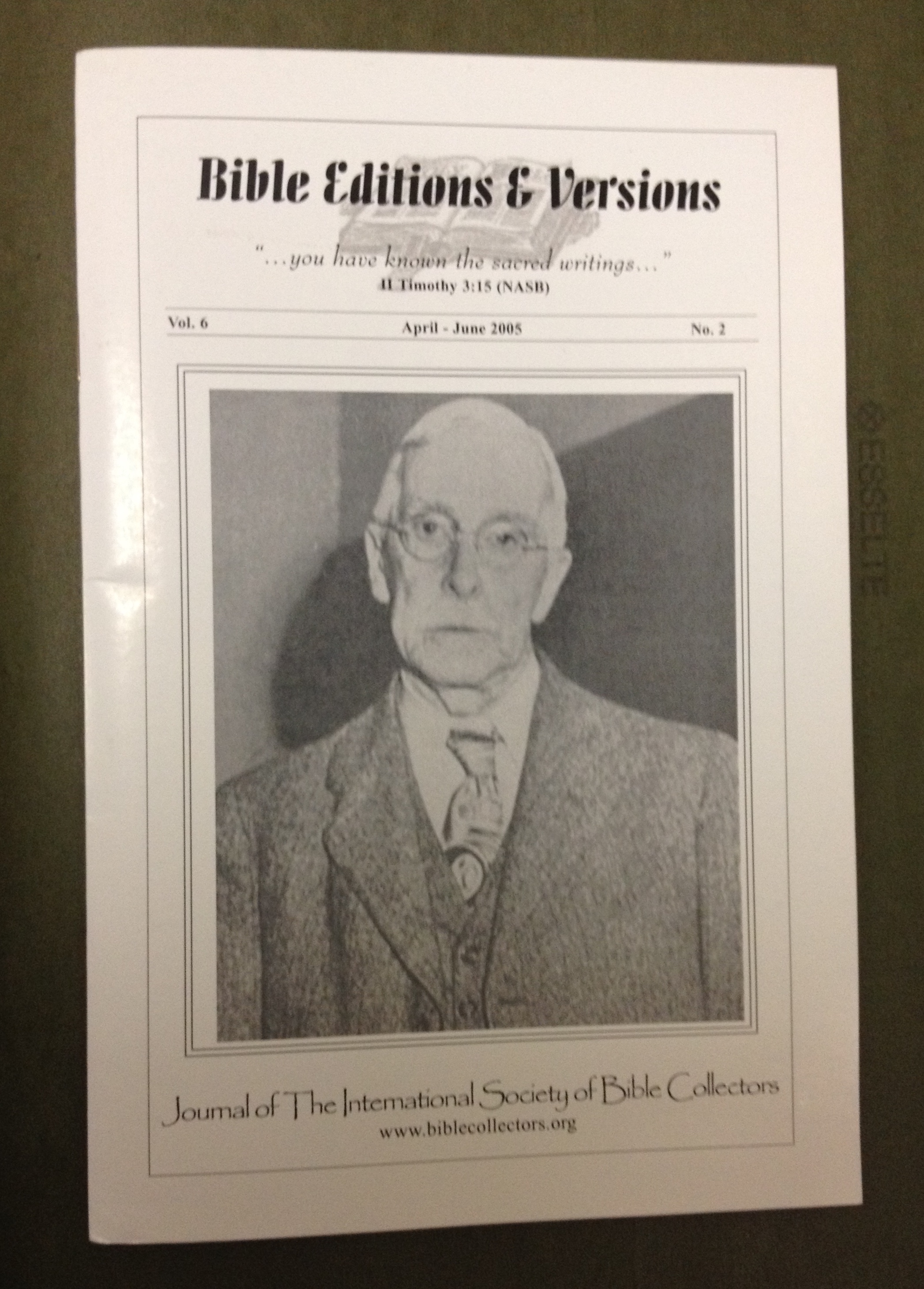
IMG_1642In my teenage years my collecting focused on books. It has remained there ever since. Even in times of penury when I’ve visited the used book store with intent to sell, I’ve always skulked out with more guilt than cash. The Judas Iscariot of the publication world. While sorting through some old files at work, I found a magazine called Bible Editions and Versions. Now, Bibles are books, and I have a fair collection of them, and have even read most of them cover-to-cover. I never knew, however, that Bible collecting was a recognized avocation. And one with a society and magazine. Looking closer, I found the address: www.biblecollectors.org, online home of the International Society of Bible Collectors. Yes, they have a website and the magazine still exists. Porn for sacred writ aficionados. The society has been around since I was two, but it took me half a century to find it.

The Bible is a totem. One colleague describes it as an iconic book. The more secular elements of society simply dismiss it until the loss of the senate makes them scratch their heads and say, “there are people who still take this stuff seriously?” While the numbers may have fallen off a bit, Bibles remain big business. Large print editions may be selling better these days, but the species is hardly endangered. In a world where so much seems uncertain, there is a natural appeal to a book that hasn’t really changed too much for a couple thousand years. Oh, and which claims to have God as its author. As I walk by that pile of pennies on the sidewalk, an almost magnetic force slows me down. I really want to stop and pick them up. I walk on knowing that in a box in my attic I have some real collectors items, in certain segments of society. For the ISBC I might be considered already a wealthy man.


Let It Be

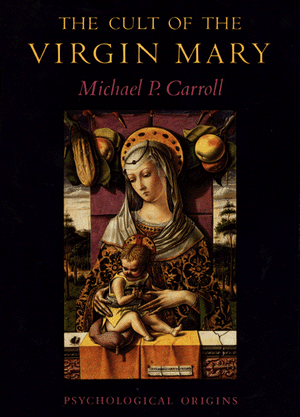
CultOfTheVirginMaryWhy do people pray to Mary? The question is a complex one and answers range from a desire to find some feminine compassion in an angry masculine god to the distinctly Freudian. Michael P. Carroll, in The Cult of the Virgin Mary: Psychological Origins, falls into the latter category. Yes, the book was written in the 1980s, but even then Oedipal complexes and penis envy were deeply suspect. Still, at various points along the way Carroll had me scratching my head and muttering “there may be something to this.” For a few pages, anyway. The problem begins much further back than Mary. To start with, we can’t all agree on what religion is. From there we move to the stage where ancient religions had as many goddesses as gods—even the divine don’t like to be lonely. The heads of most pantheons were male, which likely matched most earthly political systems. Powerful females still existed, at least in mythical realms. Monotheism effectively put an end to that, but before too terribly long, Mary emerged and eventually became almost a goddess.

Indeed, early on in his book Carroll discusses how Mary differs from the goddesses of antiquity, drawing parallels with only Cybele. Mary is the virgin mother completely dissociated from sexuality. Deeper study would reveal some mistakes in Carroll’s reasoning—there were virgin mother goddesses, such as Anat, who might in some ways fill in the gaps. Indeed, arguing for the uniqueness of Mary is kind of a goddesses-of-the-gaps theology. The more we learn the less unique any deity becomes. Still, looking to the psyche to explain Mary is a logical step. Tracing Marian devotion to the ineffective-father family, where a machoism hides a longing for the protective mother, Carroll offers us a Freudian feast of options here. Still, in the light of developments in psychology over the past quarter century, his premise is a bit dated.

We simply don’t know why Mary became such a strong devotional interest in a religion with a masculine Trinity. It would seem that women might be the motive force behind it. Given that half of Christendom was displaced, by default, from the male savior, why would Mary not emerge as the mother all people crave and whom, women know, often soften the harsh decrees of martial law? Delving into the apparitions of Mary from Our Lady of Guadalupe to Fatima and Medjugorje, Carroll finds illusions and hallucinations based on strong females behind each one. Rational inquiry into the deeply spiritual. This, however, remains the proximate cause only. What is really seen can’t be known, except to the seer. And it seems that seers tend to find, amid a religion with an omnipotent man at the top, that it is the mother who appears in times of need. Unless, of course, it is a matter of healthcare where, as government shows, father knows best.


Medusa on the Rocks

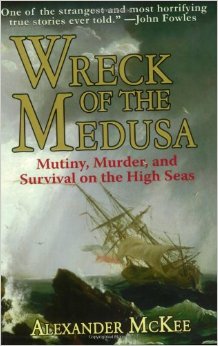
WreckOfTheMedusaShipwrecks possess a compelling resonance that is difficult to explain. I have seldom been on boats, but from my youngest days I’ve been drawn to the coast. While a student in Boston I made weekend trips to Gloucester to be near the place where ships go out to sea, sitting by the quote from Psalm 107 at the base of the famous fisherman statue. Moby Dick has passed under my eyes many times. While at Nashotah House I was frequently tormented with nightmares of sinking ships. Titanic was a huge movie late in those years, and even before watching it, I dreamed of going unceasingly down. In a used bookstore, Alexander McKee’s Wreck of the Medusa recently caught my attention. Although I’d never heard of the Medusa, the name suggested classic themes, and the shipwreck, I knew, would entail suffering and loss and human drama. I knew I had to take it home with me.

The true story of the wreck is tragic in just about every conceivable context. The year was 1816 and aristocracy was still openly practiced. The Medusa, bound for Africa from France, ran aground and, in echoes of what would happen (at least in some instances) a century in the future, the insufficient number of lifeboats were claimed by the wealthy and powerful. The most tragic aspect, however, was the matter of the raft. The masts were felled and a poorly designed raft was hastily constructed (the Medusa was grounded, not sinking). The greatest number of people were herded onto this raft where the water came up to nearly their waists, as the six boats towed the makeshift craft toward shore. At the instigation of the about-to-be-installed governor of Senegal, those towing the raft dropped the line and rowed themselves to safety. The raft, with no means of propulsion, was left adrift where 135 people of the 150 on board slowly died over the next two weeks. The governor and his party made it safely to their destination.

To me, this election week, it seems that I’ve just read a potent parable. We have public officials in place who, like those safely in the boats, cry out “we abandon them” before the masses of those who expect and deserve their protection. Power, it is said, corrupts, and as we witness the constant increase of political power over the sea of humanity taught that their religion favors the party able to quote the Bible the loudest, we sometimes forget that sinking ships may leave very long memories. In another week we will reach the commemoration of the sinking of the Edmund Fitzgerald. The Essex, the Medusa, and countless other tragically doomed ships may easily slip our minds now being propelled at full speed toward the spending frenzy of Christmas. Meanwhile, I urge us all to take a few November moments to consider where this ship is heading, and if there is yet time to change her course.


Transformations

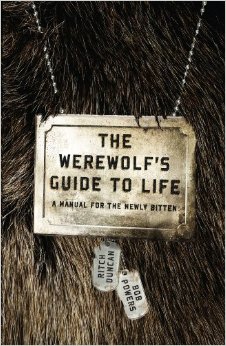
WerewolfsGuideToLifeHalloween, when you think about it, is an odd holiday. I know many who claim it as their favorite although you get no presents and not even a day off work. I suspect that part of the mystique comes in the form of Halloween representing autumn in miniature. The slow death of summer as the chill of winter settles in. The trees, vibrant in their dramatic death throes, are beautiful and melancholy at the same time. The long hours of darkness leave plenty of opportunities to see ghosts. Rich Duncan and Bob Powers’ book, The Werewolf’s Guide to Life: A Manual for the Newly Bitten, is appropriate for the season. This lighthearted parody of self-help books nicely illustrates how monsters often come into contact with religion. As a secular handbook, the Guide nevertheless addresses itself to the religious questions of life: should a werewolf go to confession? How do you deal with guilt? Do werewolves go to heaven? Monsters often force us to face the questions we just can’t answer.

The werewolf, of course, is the manifestation of a person gone feral. While people don’t actually physically change into animals, evolution has left us with a deep kinship to our fellow creatures. At times when work, or school, or relationships become trying, we are tempted to let the beast loose. One size doesn’t fit all, despite the many attempts of society to keep the vast majority of people in the same plight. Halloween is a cathartic holiday that permits us to be someone else and, perchance, to howl at the moon. Not exactly like Carnival, Halloween thrives on false appearances. We wear costumes. The trees and sunlight that apparently die are really only cycling through an annual death and resurrection.

Halloween can’t touch Christmas for a holiday that commemorates new beginnings, but in many ways Halloween is the more visceral of the two. In Manhattan, although Halloween decorations show up early in October, the holiday is lost in the city. The werewolves pretty much keep to themselves. As Christmas, with its lucre, becomes the next obvious holiday (in stores Halloween decorations already give way to those of Christmas at the start of October now) the city transforms. Despite its multi-ethnic and multi-religious makeup, Christmas trees will begin to appear, some impressively large, and the greens will remind everyone that it is time to spend. You’ll get days off work and the days will be painfully brief. Light will slowly return to the skies and the cycle will begin all over. Some will watch this all with wolf-like eyes, however, awaiting the next season of monsters and myths, knowing they are what make us truly human.


Non-Fiction Steampunk

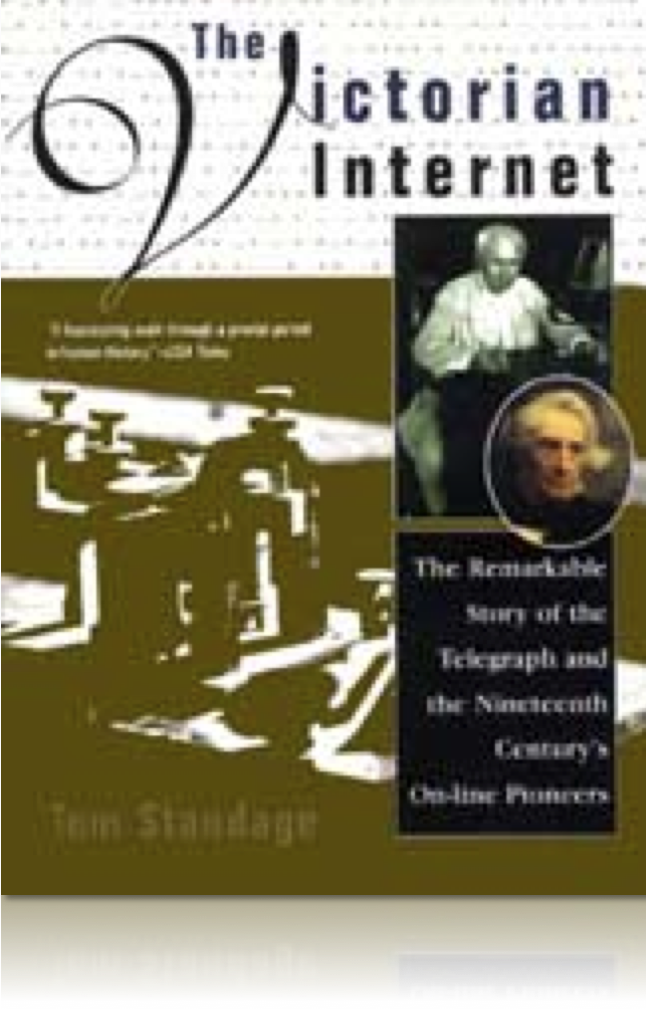
TheVictorianInternetThe histories of Tom Standage approach familiar things from unfamiliar angles. Being interested in Steampunk, and a daily user of the internet who has trouble recalling what life was like before then, I found The Victorian Internet fascinating. Subtitled The Remarkable Story of the Telegraph and the Nineteenth Century’s On-line Pioneers, the story of the wiring of the world did resonate in any almost eerie way to the early days of the world-wide web. Despite my disclaimer, I do recall those days clearly when the only way someone could get in touch with you immediately was the telephone, and you had to be at home for it to work. Prior to the telegraph, news traveled even slower and you could go months without hearing from those closest to you, if they happened to be away. Samuel F. B. Morse knew that first-hand, as Standage tells it. His wife died while he was out of town, and although he rushed back right away upon hearing, she had been buried before he reached her. Such was life when news arrived only by letter. Morse was among those who invented the telegraph, a device that made the world realize that yes, it was possible to send information to distant places almost instantly. It soon become a wired world.

Standage is also more circumspect than some writers who declare, with breathless awe, that some new device will cure the world’s ills. Showing how the telegraph generated much the same hyperbole as the internet (that peace would reign now that people could communicate instantly, that technology had brought a miraculous rapprochement, etc.) he notes that people remained people. Wars continued—intensified, in fact, into World War One where technology was devoted to destruction. People had always been able to kill each other. Now they could do it faster, and in more hideous ways. Still, there’s no denying that once the idea of instant communication caught on that we would continue to develop it rapidly. You never need be away from a network that covers much of the developed world and you can talk on your phone from deep under the Hudson River to the top of the Empire State Building. You can order a pizza from anywhere.

Ironically, Morse dedicated part of his earnings to endow a lectureship concerning how science related to the Bible. It was clear that technology had achieved the impossible (okay, well, the improbable) and yet, Victorian society still relied on the truths contained in Scripture. The telegraph, which began with the words, “What hath God wrought,” ended with the attempt to figure out how the Bible fit into all this. Just because humans had crossed the great barriers of oceans with electric cables didn’t mean the Almighty was out of a job. Even today God can be found on the internet. Along with many other choices of distraction and business. God is not so much dead as commodified. The difference between Morse’s day and ours was that then they knew that the Bible impacted daily life. It continues to do so today, but we’ve become too sophisticated to give it much of a nod. We might be well served, however, to look back once in a while as well as to look forward. We might be surprised at how little things have changed.


How God Became Male

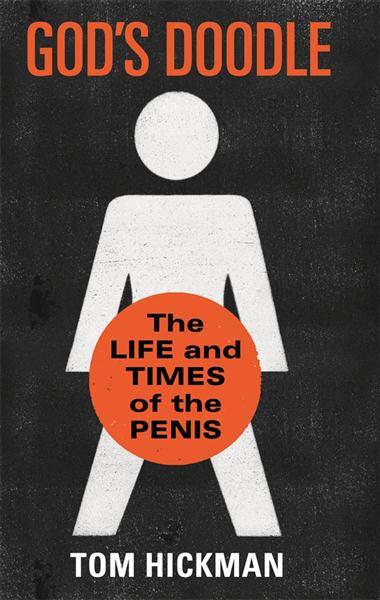
GodsDoodleWhat is gender? Okay, we all know about the mechanics of the thing, but gender is more than just sex. Indeed, it is a psycho-social construct that is difficult to pin down. Sexual reproduction is very common in nature, but we don’t really speak of gender among our fellow animals. Perhaps the decisive factor, in the human realm, is religion. Clearly religion is not the only element, but I often wonder if gender-based commandments didn’t lead many cultures into their current arrangements. The thought occurred to me as I read Tom Hickman’s God’s Doodle: The Life and Times of the Penis. As I informed students in my classes, religion has always shown an interest in sexuality, particularly on providing limitations for it. A recent issue of Christian Century has a cover story about marriage, noting that the widespread prohibitions about homosexual matrimony come from a religion that forbids it. When your stakes are eternal, many people won’t argue.

But I wonder if it goes deeper than that. Gender roles have traditionally been regulated by societies, often on the basis of their religious outlook. Meanwhile, biology, as Hickman reminds his readers, is somewhat more ambiguous. The line between the genders is somewhat of a line in the sand, easily erased. Humans come in a continuum of orientations and biological equipage. Those who don’t match the defined parameters have difficult questions to ponder with a male deity who could think of only two genders. What is a male without a female? Can a male deity exist without a goddess? What, otherwise, is the purpose of a deity’s gender? Wouldn’t a inter-sexual creator may more sense?

Male social behavior has often drawn its entitlement from a bad theology. When feminists first began to raise questions, the orthodox were quick to point out that Jesus was clearly male. As Hickman notes, however, representing him naked on the cross (as crucifixions were historically done) is still rare. Sounds like an effort at keeping the status quo tipped in the favor of one gender that doesn’t want to admit that it slowly morphs into another. We all begin life female, as biologists now understand. Some retain their original gender while males evolve into something different. And with that evolution they tend to make many unsubstantiated claims about the right to make decisions for the other half of the human race. Gender is a lot more complex than many religions would have us believe. Until we learn to treat all people as people, we will still have to ask, and will never adequately answer, how God became male.


Washed Out or Burnt Over?

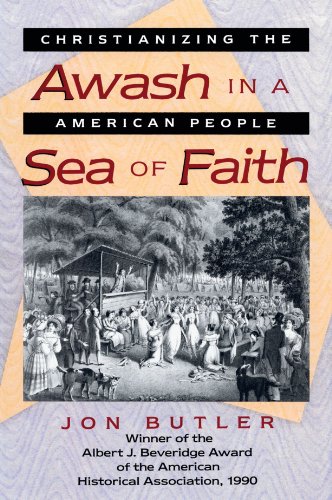
AwashInASeaOfFaithIs America a Christian nation? The answer to that question will no doubt raise ire in some part of the room. People, speaking mostly without data, will assert yes or no, generally based on opinion and sensibility. It is refreshing, then, to read what an historian uncovers by asking the right questions. Jon Butler’s Awash in a Sea of Faith: Christianizing the American People is a book that asks the right questions. On the surface, yes, colonial America was settled by disgruntled Christians from various religious conflicts in Europe. Actions, however, are notoriously louder than words. Butler examines church attendance patterns and affiliations among these early (and later) settlers and finds that they weren’t nearly so Christian as one might think, listening to the rhetoric. Indeed, for people struggling to survive in a new land, religion might well have been the last thing on their minds most of the time. Throughout the book surprising changes of perspective appear. When clear thinking is railroaded by political agendas the issues often become clouded.

A good example of this is Butler’s exploration of the survival of magic and occult traditions. It is not unusual to hear, anecdotally, that the Enlightenment did away with superstitious thinking. In fact, the data point elsewhere. Not only did Americans bring magic and occult practices with them from overseas, they actually continued to develop them in the New World. At times these beliefs substituted for congregational religion. At others, they subsisted alongside it. There was a “sea of faith” here, but it wasn’t always very orthodox. It wasn’t until fairly late in the history of the country that church attendance could be considered the norm. At the same time, many read back into history that “we’ve always been like this.” Not so.

The “myth of the American Christian past” was born out of wishful, and one suspects, political thinking. The country’s founding by Deists led to a fear of Deism—a fairly new phenomenon that descended from that self-same Enlightenment. Still, America could give birth to Spiritualism and a host of new religions. Perhaps it would be more accurate to think of the United States as fertile soil for religions rather than a Christian country. Certainly, by the numbers, Christians have been in the majority since statistics were kept, but, if the anachronism may be pardoned, the “nones” are not a new phenomenon. They were previously just those to be converted. Through much of history, we’ve been a people who didn’t think too much or too deeply about religion. Only when the issue really became politicized did the past become distorted. We have Dr. Butler to thank for providing a clear view into what history actually reveals.


Doodle Dandy

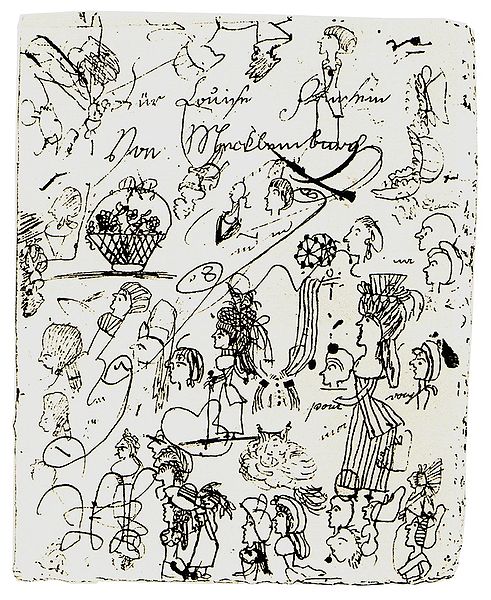
Deep in the stacks of the New College library at Edinburgh University, I came upon a book in the open shelves with a date of 1611. Once the staff had been notified, this book, which had simply aged in place over the centuries, was quickly moved to special collections. It is the dilemma of many a writer that books seldom see the light of library reading lamps. This episode came to mind as a friend shared an interesting story about doodles. Historian Erik Kwakkel has one of the most enjoyable jobs in history (seems appropriate). His research takes him to old books, and by “old” I mean handwritten, to look for pen trials—how pens were tried out before serious writing began. A lot may be learned from not just the words, but how they were formed. A different friend I knew was working on the forensic study of the order of stylus strokes in cuneiform writing. It was completely fascinating. With the right tools, you can find out in just what order strokes were made in clay, their depth, and a host of other information such as the right- or left-handedness of the scribe. Writing reveals the writer. In any case, Kwakkel has a great excuse for looking at doodles.

491px-Luise_KritzelzeichnungOne point in this fun story, however, struck a serious note with me. Scribes were, in final copy, expected to be completely anonymous. Their labor was to go unremarked through history. We owe them some of our greatest treasures, and in a bizarre back-formation, modern scholars give these anonymous scriveners names such as “the tremulous hand of Worcester,” in a vain attempt to recover them. In rare instances we are given the names of scribes. Some may have been creators as well. Most will remain forever nameless. Those who love books may be excluded from them by their very love.

There once was a joke that went around that asked “what do you call a writer who actually has a job?” The answer? “An editor.” In the old days, anyway. Now you can earn university degrees in publishing and editors very quickly vanish into the background, like the ninjas of literacy. Like those ancient scribes who, perhaps bored by the rote task of copying out somebody else’s words, left little doodles behind in the margins as their own attempt at immortality. In many ways this blog is my chance to offer a few doodles to the world. I used to be (and still hope to be) a content producer, but now I understand that content has no room for doodles. The serious business of publishing is all about showcasing the author whose ideas are worth spreading. Oh, there’s a subtext here, all right. A palimpsest, one might say. However, like the anonymous doodlers of history, many of us scribble away awaiting future discovery, long after our names are irrecoverable.