To Whom?

The other day I heard someone use the phrase, “preaching to the converted.” I’ve read enough anthropology to know that regional variations on folk sayings exist, but I’ve always heard this as “preaching to the choir.” What’s the difference, you ask? Actually, these two statements imply very divergent things. It all comes down to preaching. Preaching is what clergy do. (I know I’m over-simplifying, but bear with me.) And where do ministers preach? That’s right, in the church. Aha, you might say, those in the church are both converted and some, anyway, are in the choir! What’s the difference? The difference is the choir has to be there. It’s an issue of volition.

Since this isn’t eighteenth-century New England (at least not yet, although the current administration is trying to make it so) there are no real consequences for not attending church. Many of the converted exercise their God-given right not to worship. The choir, however, has committed itself to being there. They’re more than converted. They’re the faithful. The minister, in other words, doesn’t really need to preach to them at all. Turn this around. Preaching isn’t necessarily to convert someone so much as to improve their lifestyle. Preaching to the unconverted is actually evangelizing. “Evangelizing the converted,” though, just doesn’t have the same ring to it now, does it? Preaching to the choir is applicable to the rest of the church goers who show up regularly. They’re not, however, in the same league with the choir.
I decided to research the history of the saying. It turns out that the original is “preaching to the converted.” The saying originated in England in the 1800s. “Preaching to the choir” appears in America in the 1970s. Perhaps the choir emerged as a new ecclesiastical force in twentieth-century America. Some of the clergy I know would certainly agree with this assessment. They’re really a smaller subset of the converted, after all. The committed converted. Of course, it’s a distinct possibility that I’m spouting nonsense here. If that’s the case, I’m probably preaching to the choir.
Thick Skin

Religion and folklore encapsulate what folk believe. Human beings, despite rationality, are ritualistic creatures. Psychologists have their work cut out trying to explain why we do this or that odd thing, and historians sometimes dig deep into the backstory to find some hint of a tradition’s origins. Although I lived in Edinburgh for over three years, and drove through South Queensferry in the shadow of the great Forth Bridge a number of times, I never heard of the Burryman. In case you haven’t either, here’s a link a friend sent to a brief video about him. In it Andrew Taylor explains the tradition. Each year, going back to South Queensferry’s pagan past, a citizen dresses in a suit of burrs to ensure a good harvest and bring good luck. What’s fascinating here is that burrs are something people generally avoid, although they are an ingenious method of seed dispersal. They stick to clothes, and even skin and can be annoying even singly. Why anyone would submit to an entire outfit of burrs is something only folklore can answer.

Anthropologists are in short supply. Universities don’t like to fund the study of folklore since it doesn’t lead to jobs. The end result is that what we know of many strange traditions is anecdotal. A few years back I got soundly dressed down in an academic setting for referring to a popular publication of Scottish ghost stories. You see, I was writing an article for publication in an academic journal. I wanted to document a story I’d memorized by dint of the fact that a ghost tour guide would stand beneath our window every night in Mylne’s Court and recite his tale. (I traced it back to a potential Ancient Near Eastern origin.) The problem was, no academic would deign to write about such decidedly low brow tripe. In order to find a written source, I had to cite a popular book. Academic reviewers responded with scorn that I would never pass on to an author, speaking as an editor. This was, however, in the old school days.

So, how would we find the backstory to the Burryman? Great Big Story went straight to the source. Andrew Taylor, the incumbent Burryman, tells what he knows of the tradition. You can’t even see the Burryman from high in your ivory tower where pure thought is your only companion. I’ve always been a street academic, though. Growing up blue collar, I find it much more interesting to see what people are doing out here where the professionals don’t tell them how to behave. The pagan past is still alive. We don’t need a wicker man to prove the point. All it takes is a bunch of dried burdock and some very thick skin.


Crossing Beowulf

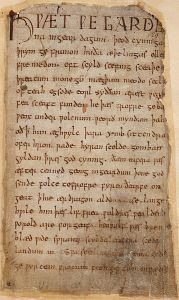
Beowulf, from Wikimedia Commons.

Slaying dragons is costly. In much of the western hemisphere the ultimate metaphor for the perils that await humanity in a world imperfectly understood, dragons were the bane of the medieval imagination. And earlier. Dragons are mentioned in the Bible and were stock creatures in the bestiaries of the Mesopotamian imagination. And, of course, it is a dragon that causes Beowulf’s fall. Almost a type of a latter-day Gilgamesh, Beowulf likewise holds an early, if non-negotiable place in the western canon. In this month’s Atlantic, James Parker discusses the dynamic of this pre-Christian poem in our post-Christian context. Specifically he addresses how modern renditions, perhaps inadvertently, Christianize the story. A popular subject for movies and graphic novels, Beowulf is a monster-hunting story that begs for baptism.

The story itself is familiar to most alumni of American high schools. Perhaps before we’re ready to be exposed to Old English, we find ourselves assigned a story of drinking, rage, and violence. Make no mistake—Beowulf is a hero. A deliverer like the judges of old. Grendel, after all, is the spawn of Cain, the evil seed that continues into a moody world of stygian nights and dismal swamps. Parker’s brief article demonstrates the reception history of the poem nicely. It also raises the question of what’s going on when heroes fight monsters. When the Christian imagery that’s deeply embedded in our culture comes to play Beowulf can’t help but become a Christian monster slayer just as Grendel becomes the enemy of God. All of this may be quite unintentional. What we see, however, isn’t imaginary. That’s the way reception history works.

Parker suggests that, although Beowulf is a pre-Christian poem, the cosmic order laid out in the tale is a Christian one. Even today in a post-Christian America it’s vital to understand how important religion remains. It’s not so much that churches are overflowing (unless they’re mega-churches stating that you can get rich by attending) as it is a recognition that centuries of Christian identity can’t help but leave their mark on culture. We see crosses in the handles of swords. Or even in the grid patterns laid out in city streets. Telephone poles. What’s so remarkable is that we see such things naturally and think nothing of it as we go on our secular way. There may be monsters out there. What may not be so obvious is that in slaying them we’re engaging in a religious activity as old as Gilgamesh, if not as obvious as a crucifix held up to a vampire in the present day.


Neologism

I like a good neologism as much as the next guy. Oxford English Dictionaries recently released a covey of new words added to the famed lexicon. Most of them, it seemed to me, had to do with dangers of technology, like “drunk text” and such fare. Still, increasing vocabulary is one of those rare joys in life that is continues to be free, so I indulge. A friend sent me a BBC story about another new word: champing. Well, my spell-check recognizes that one so maybe it’s not new. In any case, this champing is derived from two words “church” and “camping.” Some locations with medieval churches—which kind of rules out anything on these shores—are now opening them up as camping spots, thus church-camping. The article asks what it’s like to stay overnight in such a place.

Growing up in western Pennsylvania, medieval churches were hard to find, but I spent more than one night sleeping in sacred spaces. It’s an uncanny experience. In what may have been more innocent days, our United Methodist Church allowed youth group sleepovers, as long as there were counselors present. (Ever naive, I only learned later that there were ways around such obvious strictures.) On a Friday night, then, we could occasionally gather with our sleeping bags and slumber under the sanctuary. For theological reasons we couldn’t sleep in the sanctuary itself (although that couldn’t be prevented on the occasional very long sermon) but we could go in. Churches are scary at night with the lights out. We may give lip service to holy ground, but large, cavernous spaces suggest so much by absence and implication that it would take a stout soul indeed to sleep there.

Looks okay from the outside.

Sleeping in sanctuaries in ancient times was an acceptable practice. In fact, there’s a name for doing so: incubation rituals. A person who slept in a sacred place believed any dreams had that night were a message from God. Knowing the dreams I tend to have, I do wonder. Once, at the United Methodist camp called Jumonville—famous for its large white, 60-foot, metal cross visible in three states—we counselors (still naive) had our charges sleep outdoors at the foot of the sigil on the bare top of the mountain. In the morning my champers gleefully informed me that I’d been praying in my sleep. “You kept saying ‘Amen. Amen,’” they told me. Alas, I don’t remember the dreams of that night. Perhaps when I find a medieval church on my journeys I’ll be brave enough to try an incubation ritual once again. This time I’ll take a tape recorder.


Where Arthur?

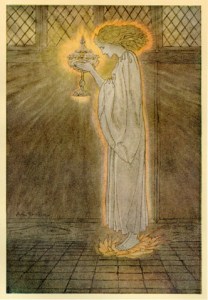
Arthur Rackham - "How at the Castle of Corbin a Maiden Bare in the Sangreal and Foretold the Achievements of Galahad," Wikimedia Commons

Arthur Rackham – “How at the Castle of Corbin a Maiden Bare in the Sangreal and Foretold the Achievements of Galahad,” Wikimedia Commons

We’re all grail hunters. It doesn’t matter what religion, if any, you claim. We want to find that grail. If I was as rich as Donald Trump I wouldn’t bother with the presidency. I’d spend all day on Atlas Obscura. A friend recently sent me one of their stories, “6 Stops on the Hunt for the Holy Grail” by Meg Neal. As the story points out, the grail may not be real, but many places claim it. We want it not because it’s real, but because it’s magical. Midas’ touch without the consequences. Blessings in this life and bliss hereafter. You can have it all.

Nobody knows where the legend of the holy grail begins. One thing’s for certain: it’s not the Bible. The Gospels merely state that at the “last supper” (not a biblical phrase) Jesus took the cup. That definite article implies a certain cup, not just any cup. While speculation has it that this meal was a Passover seder we can’t be sure even of that. If it were that wouldn’t tell us much about this cup in any case. Since the tale is especially prevalent in Celtic lore (many grail sites are in regions loaded with Gaelic influence) some have suggested that the story comes not from ancient Palestine, but from Hibernian traditions of the caldron. This would send seekers back to the mythology of Bran and his life-giving cauldron. In other words, it would share some roots with a modern kind of grail—that of Harry Potter fame. Bran, I once argued in an academic paper, has echoes of some ancient eastern tales. Scholars, of course, are not convinced.

The grail doesn’t come into prominence until the Arthurian legend. Arthur seems to have been an historical person, but facts about him are as rare as they are about Jesus. How he came to be associated with the grail is anybody’s guess. Both Arthur and the grail share a place in Celtic legend and it is perhaps here that the two were brought together. A more crass form of the cauldron is the pot of gold associated with leprechauns—those Gaelic sprites. The grail represents our wishes fulfilled. It’s seldom the spiritual journey that’s sometimes portrayed. The grail represents power. If Indiana Jones has taught us anything it’s that where there’s power, there’s also abuse of power. Then again, we don’t need fiction to know the truth of that.


Theoretically Speaking

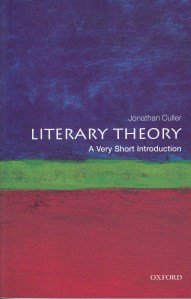
lit-theory-vsiI’ve been brushing up on my literary theory. All writing tends to get classified as fact or fiction, and we don’t stop to think, generally, about what “literature” is. Those of us who write fiction and non know that a well-placed hyperbole might throw us from one camp into the other. Such is the power of rhetoric. So it was that I found myself reading Jonathan Culler’s Literary Theory: A Very Short Introduction. Witty and insightful, Culler acknowledges the elephant in the room for many of us—theory, in a literary context, is often impenetrable. I’ve often wondered what one had to do to be considered a theorist, and this little book actually addresses that. Nobody has time to read all the theorists, though, and come up with their own creative things to say. Chose your poison.

The Bible, of course, is literature. That’s one reason I was reading Culler. I found one of his assertions immediately applicable: people in nineteenth-century England saw literature as a unifying principle. The British Empire encompassed the world, and to make diverse peoples a part of it, literature might be used, they thought, to do the trick. Culler suggests that it might have been a substitute for religion, which, he notes, was no longer holding society together. This gave me pause. Religion—at least official religion—began as social glue. The earliest recorded religions were state sponsored and served to cast the monarch in the role of the special appointee of the gods. There’s no arguing with that, right? Elaborate, expensive temples were erected. Financed by tax-payers’ dollars. This worked fine since priests declared the rule of the king as sanctioned by the gods. Nations warring against each other were thought of as rival gods fighting.

When science began to take the universe literally, religion lost its stickiness. How do you hold a society together when the gods no longer exist? You see, scientists didn’t think out the whole picture in advance. Scientists, like most academics, work in silos (that’s a metaphor). The discovery of a scientific truth can dissolve a social epoxy quite efficiently. Recognizing the slippage in the British Empire, theorists (I suppose that’s who noted such things) considered literature the great uniting force of a diverse people. We’re kind of facing that same dilemma today as literature is becoming, for many, as irrelevant as religion was a century-and-a-half ago. At the same time, people don’t understand science well enough to assess it for themselves. What are we supposed to do? Is there a theorist in the house?


The Morning After

dickens_gurney_head

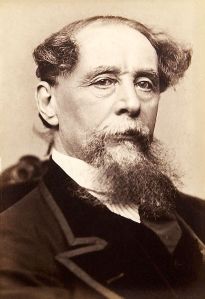
Quite apart from seeing a live performance of A Christmas Carol, Charles Dickens has been on my mind a bit this Christmas season. I suppose that’s not surprising since it has been suggested that Dickens “invented” the modern Christmas, but it is really, I think, because of how the wider world seems to be spinning backwards. The poor have always been a personal concern of mine. I grew up poor and I know how much suffering it entails. My case was a rather mild poverty—we were never out on the street, and we didn’t actually go hungry. We had nothing in the way of luxuries, though, and I could see the possibilities even as I could see the sky where the boards on the roof were pulling apart. It wouldn’t have taken much for us to have been cast out in a cold Pennsylvania winter. Others have it much worse.

On my daily walks to work, I see the homeless. Some sleep in cardboard boxes, some in tents. Others are out under the stars. One morning I walked by a particularly creepy and sad sight of a person sitting, shrouded in a blanket over his or her head, on a subway vent to catch some of the ambient heat. I know that I don’t have the means to buy each one a meal. Their number has been going up, not down. And I think of Bob Cratchit, threatened and bullied by Ebenezer Scrooge. He will lose his job if he’s not in early today, the day after Christmas. Because of his change of heart, Scrooge buys his clerk a pot of “smoking bishop.” And herein lies the only possible cheer.

My wife got me started on Dickens. She also sent me a story from NPR on smoking bishop. It seems, according to the story by Anne Bramley, that British Protestants delighted in making fun of church offices by naming their tipples after titles. Churchmen (and they were men) were largely exempt from being poor and, according to historians, often supported the Poor Laws that made the fate of the poverty-stricken even worse. In a kind of perverse revenge against privilege, drinks were named after various ecclesiastical offices. There’s little that the poor can do, except to try to find the scant humor in a situation where no one has the reach of a Charles Dickens anymore. Ebenezer, unlike Bob, is a biblical name. It means “stone of help.” In these chilly days dare we hope that help may come, even from a stone?


What You Eat

The future of Sleepy Hollow is uncertain. The successful FOX television program has suffered the slings and arrows of outrageous scheduling over the past year and speculation abounds that the current fourth season may be its last. It has been, in my experience anyway, one of the most literate supernatural horror shows ever. Books and reading abound and an interracial team fights evil week after week. Having done some research on the first season of the program, I continue to be surprised just how detailed the homework of the writers is. My wife sent me a story from Atlas Obscura on the “sin eater.” This is a term, I readily confess, that I never heard before the introduction of Henry Parrish to Sleepy Hollow. Ichabod Crane, guilty over the death of a freed African American freedom fighter, ingests poison to kill himself and severe his connection to the Headless Horseman. Abbie Mills, believing there is another way, locates the sin eater.

The idea is fairly simple, if unorthodox. A sin eater can literally devour the sins of another. In Sleepy Hollow this comes at a considerable cost, but the article by Natalie Zarrelli demonstrates that this too reflects research on the subject. There were, it turns out, sin eaters in the early modern British Isles. Often a poor person with no other options, a sin eater would consume bread placed on the chest of the deceased, incorporating, in an almost Christ-like way, the sins of the recently passed. The dead could then be safely buried, forgiven, while for a pittance a poor soul could walk around with someone else’s sins in his or her body. Sounds like capitalism writ large, to me.

Watching Sleepy Hollow I had assumed this idea was invented for the show. Like so many details, however, it turns out that some digging had brought an obscure historical practice to the surface. Sin eating, as the article makes clear, was never sanctioned by the church. People have often worried that official religion might not deliver the salvation it so readily promised, bound up with rules and rites as it was. Here was a sacrament of the people. Bread could be visibly consumed and symbolically, or literally, sin with it. The sin eater was paid, making this a legal transaction. Although sin eating is thought to have died out, it seems that with the recent, high-level resurgence of evil-doing, perhaps it is a practice that should be recalled. In many ways Sleepy Hollow has been ahead of the times since the beginning.

IMG_1960_2


Identity Crisis

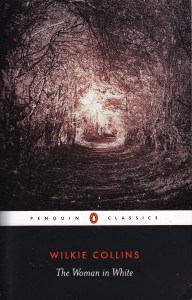
womaninwhiteSince at least my middle school days I have been in search of the great Gothic novel. I can’t claim to have found it just yet, but I’ve read many notable samples along the way. Somehow Wilkie Collins’ The Woman in White remained completely unknown to me until earlier this year. The title was evocative enough to make me pick it up, daunting though its 600 pages might be. Like many novels of its period it was serialized, which likely accounts for its length. Honestly, it took a while to get into it fully. Once ensconced, however, it kept me reading for over a month. (I took some breaks for work and sleep.) I wouldn’t say it was my ideal of the great Gothic novel, but the character of Count Fosco is amazingly drawn and seriously compelling. As the huge man lets mice run over his massive body and treats birds with conscientious gentleness, he is plotting ruin to his fellow human beings to benefit himself. He is an accomplished egotist.

What makes the novel so profound to me is the question of identity. One of the characters in the novel, the eponymous woman in white, has a double in the love interest of the protagonist. Doubles are common in Gothic tales, but in this instance when the woman dies and others believe her double to be her the question of identity is raised. Who am I, really? In the day before DNA evidence, it was impressively difficult to prove you were who you said you were, if your appearance was altered. Emaciated, abused, and drugged, Laura doesn’t look like herself and even her own uncle doesn’t recognize her. In the end her identity is established by legal testimony alone, without benefit of any biological proof.

Identity has been on my mind lately. Especially on a national scale. Brexit and Trump were both movements fueled by distrust and distorted notions of national identity. In short, Britain and the United States, so the reasoning goes, should belong to white men. As Monty Burns famously said, “Well, for once the rich white man is in control!” I personally like a little color in my field of view. I value deeply those I’ve met whose experiences and skin tones don’t match my own pallor. I want our national identity to include more than just fifty shades of white where women are objects and men are some kind of noble studs. Back when I started to read this novel I had a grip on that view of reality. Now that I’ve finally finished it, I wonder who we really are.


Ritual Rent

Rituals frequently outlive their purposes. Some skeptics may claim that rituals—particularly of the religious sort—really don’t mean anything at all, but in fact they do. Rituals have logical origins, or at least that seemed logical at the time. Atlas Obscura ran a piece by Sarah Laskow on “London Is Still Paying Rent to the Queen on a Property Leased in 1211.” Such a story invites commentary on many levels. One is that the items payed in rent—6 horseshoes, an axe, a knife, and 61 nails—don’t seem to be commodities her royal highness actually needs, or could even make use of. Still, it’s easy to see how this ritual rent has a logical origin. Axes, knives, nails, and shoes for six-legged horses were all quite practical in the Middle Ages, one assumes. They won’t help you get onto the internet any faster, though, so one wonders how they might be of use now.

Another question a story like this raises is that of government itself. Rulers both in monarchies and democracies have a habit of skimming off the top. It’s been some time since we’ve had a president who purchased his own loaf of bread or could even guess how much it costs the rest of us to do so. In Britain the question may be even more salient—the royal family is among the richest in the world and yet they still take an axe, a knife, horseshoes, and nails for a property that, as the article states, nobody even knows where is? I guess it’s the price we pay for feeling safe under the watchful eye of those who already have too much. The property itself may be a legal fiction, but the payment is real enough.

Wonder what the rent on this place is?

Wonder what the rent on this place is?

There are those who declare rituals empty, and therefore meaningless. To me that seems a hasty judgment. Our rituals reflect what we’ve historically believed. Those beliefs may have changed over the years, while the rituals continued in their own way. But they are reminders. Reminders of something once held to be significant enough to take time and resources in order to ensure the smooth running of—in the case of religious rituals—the universe itself. On the smaller scale, however, our secular rituals contribute to a system that always has favored the rich. It likely always will. You see, rituals are not easily broken. And even if all they can extract are items of little practical use, those who already have will be glad to accept even more. This is the reality behind rituals and rites.


Silence Fright

the_silence_of_the_lambs_poster

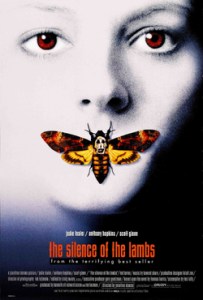
One of my first publications was a letter to the editor. The newspaper was The Scotsman, Edinburgh’s daily. We’d been hearing on the BBC that a new movie, The Silence of the Lambs, had inspired Milwaukee serial killer Jeffrey Dahmer in his gruesome habit of cannibalism. For whatever reason, the Dahmer case had a real fascination for the British. My letter, a rather young attempt to promote an important cause, suggested that such movies could be very dangerous. In the many years since then I’ve read quite a bit about horror films and their effects on people and have come to the conclusion that they don’t cause the crimes. The reasons are much more complex than simply watching a movie since most people who see them don’t “go and do likewise.” When I told friends in Edinburgh that I’d found a teaching job in Wisconsin they said “hopefully not near where that cannibal lived.” Of course Nashotah House is not far from Milwaukee.

My personal embargo of The Silence of the Lambs ran up against my current research project, which involves horror movies. Thinking it over in what I hope is a rational way, I decided that I needed to see my bête noire. Besides, while living in Wisconsin I had learned about Ed Gein, the local serial killer who’d inspired Psycho, a movie I had seen with no ill effects while in college. Movies are as much a part of life as cars and taxes and all kinds of things that impact our ways of thinking. I was surprised at how well done Silence is and the number of references it had spawned that I had missed for the past couple of decades. It won’t be my favorite film, but I’m not afraid of it any more.

The concept of relying on a criminal to catch a criminal is a classic theme, of course. And since the release of this movie some which are much worse have come across the silver screen. We play our anxieties out for all to see. Hannibal Lecter, the cultured killer, is an ambivalent character—a savior criminal. There’s a strange comfort in knowing he has the knowledge to save lives as much as he has the desire to take them. In fact, there’s an element of the divine in that. The capricious nature of a power that has the ability to give and to take is one with which religions constantly deal. Yes, The Silence of the Lambs is a scary movie. The reasons, however, lie more with implications than with imitations.


Of the Night

August isn’t too early to start thinking about vampires. The nights are already noticeably longer than they were in June and some leaves are just beginning to change on the trees. I’m thinking of vampires because one of my readers sent me a link to some investigative reporting about the “Highgate Vampire.” I’ve posted about this before, but the brief story, if you don’t have time to browse through my “monster” category, is that beginning in the 1970s a group of people came to believe a vampire haunted London’s Highgate Cemetery. This led to the publication of written accounts of the hunt for the undead. On a trip to London in 2012 I visited the Highgate Cemetery as my host for the trip lived quite close by. Apart from being the resting place of many famous people, the cemetery is moody and Gothic and it’s easy to see how, in days when it was neglected, it could’ve spawned such tales. Thing is, we know vampires don’t exist. So we’re told.

IMG_0061

Back to the story. My reader pointed me to the website Vamped, and now I’m afraid my limited time has just grown more limited. More specifically, there is a story by Erin Chapman entitled “5 Reasons Why a Wampyr Didn’t Walk in Highgate Cemetery.” The article investigates claims made in Sean Manchester’s book on the subject (reviewed elsewhere on this blog), demonstrating that his locations, photographs, and narrative don’t add up. The piece on Vamped shows a meticulous level of detail, comparing notes and photos in a way some of us simply don’t have time to do. Now I’ll sleep more securely on my next visit to London. I hope. The conclusions are disputed.

At this point some may be asking why an educated, rational adult is even addressing such questions. Why worry about something that isn’t even real? This brings to mind the realm of religion. Archetypes, whether they have an objective existence or not, are part of our consciousness. Supernatural beings of many varieties inhabit our heads, no matter how much garlic or holy water we happen to have lying around. Ignoring them can lead to problems. Do I think there is/was a vampire in Highgate Cemetery? I don’t think so. Do some other people sincerely believe it? I have to think yes. No matter which religion people follow, there will be entities that other people don’t believe. That doesn’t mean that they should be ignored. The Highgate Vampire isn’t real for most people, but it is for others. And just in case, I’ll keep a bit of garlic around as the nights begin to grow longer.


For Love of English

One of my most frequent imaginary dalliances is wondering what I would have done with my life if I hadn’t been raised religious. Like many young boys I found “exciting” jobs enticing—soldier, firefighter, explorer—but scientist also loomed large in my imaginary horizon. By the time I was a teen I was firmly ensconced in books. My upbringing meant that many of these books were religious in nature, and my concern with ultimate consequences meant religion was the only possible career track to make any sense. It certainly never made dollars. As someone who professionally looks backwards, I’ve found myself wondering if I shouldn’t have focused on English rather than Hebrew and Ugaritic as a career. After all, the Bible has been available in English for centuries now. Besides that, the canon is larger—from Beowulf to Bible and beyond. Reading is, after all, fundamental.

Beowulf, from Wikimedia Commons.

Beowulf, from Wikimedia Commons.

I only discovered BookRiot recently, and that through the mediation of my wife. For the writer of a blog I really don’t spend that much time online outside of work. I like real books, and being outdoors. Too much time staring at a screen brings me down. Nevertheless, BookRiot has stories that cause me to question my career choices from time to time. For instance, I have never knowingly heard of The Exeter Book. Dating to the tenth century, this medieval manuscript is among the earliest of English writings. Showing the interests of the monk who likely inscribed it, it has religiously themed material and riddles. As E. H. Kern’s post on BookRiot points out, The Exeter Book has inspired many later writers and has, through them, made its way into mainstream popular culture. Not bad for a book that I suspect many, like myself, have never heard of.

Old English has the same kind of draw as other ancient languages. Not nearly as dusty as ancient Semitic tongues, it contains the roots to the form of expression I find most familiar. I love looking back at the Old English of Beowulf and spotting the points where my native language has remained relatively unchanged over the centuries. Modern English even begrudgingly owes a considerable debt to the Bible of King James. Our language is our spiritual heritage. We have trouble expressing our deepest thoughts without it. Perhaps had BookRiot existed when I was young, I might have made a rather more informed decision about the direction of my career. Or, then again, religion might have found me nevertheless. From some things there is just no hiding.


The Canine Mystique

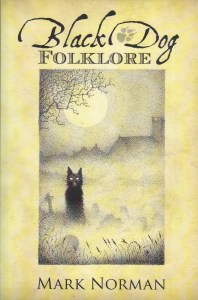
BlackDogAnyone who spends long enough in the United Kingdom will hear about them. Not everyone believes in them, but reports of their presence are pervasive. Some call them ghosts while others call them protective spirits. They are the black dogs. As Mark Norman points out in his new book Black Dog Folklore, the tales of these spectral canines go back centuries and they also appear in other parts of the world. The majority of the lore comes from the British Isles and even there they are concentrated into certain parts of the country. Norman isn’t setting out to prove that they exist, though. This book is an exploration of folklore and the question of the reality of the phenomenon isn’t the point. The fact is people have reported encountering similar kinds of black dogs that vanish in similar ways frequently enough that secondary characteristics can be described and the accounts can be treated as lore.

Dogs were the earliest domesticated animals. Long before cattle and sheep could be tamed, humans and dogs had learned the mutual benefits of each other’s company. This very long association between species has, however, not always been smooth. Dogs retain something of the ancestral wolf in their nature, even as we harbor our inner ape. Some people fear dogs, and indeed, dogs are still used for security and can be trained to attack, or even kill, people. Their millennia-long association with humans, however, has assured them a place in our mythologies. Ancient cultures frequently mythologize dogs, making them prime candidates for an afterlife in folklore.

Traditionally, dogs are chthonian creatures. That word tripped me up the first time I encountered it. “Chthonian” is literally something like “of the earth,” but in mythology it is used to designate that they are associated with the underworld. As in life, dogs may act as guides in mythology, and one of their regular associations is with the realm of the dead. It’s no wonder, then, that dogs came to be associated with ghosts. As Norman demonstrates, the lore was pervasive enough to engage Sherlock Holmes in The Hound of the Baskervilles, and perhaps even Bram Stoker used the image in Dracula. Winston Churchill referred to his depression as a black dog. Norman’s book won’t convince the reader that such things actually exist, but what it does do is draw the tales together to determine what there is to analyze. Since dogs have been our companions for so long, they have become part of our narrative tradition, participating in what it means to be human. As with all good folklore, there are those today who still swear these spectral dogs still haunt those who are willing to believe.


Pagan Virtue

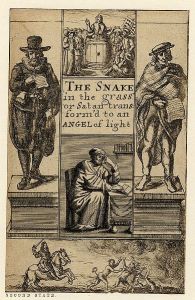
We are products of our place of birth. One of the truly amazing things about human culture is how quickly it can evolve. As biologists have noted, populations separated by natural barriers such as mountains, big rivers, or oceans, tend to evolve in different directions. They adapt to their environment. So far the world-wide web hasn’t flattened our differences out completely with a cultural creole, and it may be best to celebrate it while we still can. In an article in The Atlantic, “Why the British Tell Better Children’s Stories,” by Colleen Gillard, answers her titular query with religion. The British, she suggests, are better attuned to their pagan past. In the United States children’s stories tend toward the moralistic, reflecting the Puritan values that some decry as absent from culture. British stories lean toward magic and earthiness in a way that American stories don’t.

Any generalization opens itself for criticism. (Including the generalization I’ve just made, I suppose.) Still, I think Gillard is onto something. Children are magical thinkers and have to be taught not to see what they think they see. We acculturate them into the dull, adult world of making money instead of magic. American kids get started on the entrepreneurial pathway with early moralizing about hard work and attaining goals—just glance at the titles mentioned in the article and see if you can disagree. Christianity arrived in Britain much, much earlier, of course. There it encountered a pagan sensibility that tempered its increasingly harsh edges. Puritanism took the remaining joy from the good news and made it into a very serious belief system, indeed, with eternal consequences that persistently threaten any enjoyment of life. You constantly have to examine and prove yourself. The British allowed their former earthiness to survive, as early epistles to Augustine (not of Hippo) demonstrate.

389px-The_Snake_in_the_Grass_or_Satan_Transform'd_to_an_Angel_of_Light

The article ends by reflecting on recent American dystopian novels for young adults. These, Gillard suggests, reach toward fantasy in a way earlier efforts didn’t. I wonder if a bleak future is the natural consequence of founding a nation under the eye of an ever watchful, and vengeful, deity. Even a Trump may appear righteous with a Pence in his pocket. We’ve got to return to those old Puritan ways of subjecting women to men to make America great again. As this mass insanity continues to grow and infects the internet, dystopian futures appear to be strangely prescient. The C. S. Lewis of real life was not the grinning evangelical that modern-day candy Christians suppose. He knew a faun wasn’t what it seemed.