Lines and Silver

If you’re thinking about silver linings, here’s one to ponder: waiting in lines has, with certain exceptions, disappeared during the pandemic.  Yes, some people waiting in line to be tested, others to be inoculated.  Early on lines were long to buy toilet paper.  By and large, however, waiting in lines has ceased for many of us.  For me that’s a silver lining.  Even from my youngest days I’ve found waiting in line problematic.  Not that I think I’m more important than other people—not at all—my mind keeps itself pretty active and standing in line has been one of the more difficult times to keep it engaged.  I generally keep a book with me.  The lack of mass-market paperbacks in the categories I tend to read, however, makes having a book in your jacket pocket difficult.

People standing in line are often surly.  It’s not always a great place to strike up a conversation, to improve your mind.  It is the epitome of wasted time.  Not just for me, but for everyone involved.  Learning to live mostly at home has greatly reduced that wasted time.  Interestingly, many people have reported being bored with their extra time.  Others of us find this small windfall just enough to keep in place as we continue sprinting along.  Regardless, the line waiting absence has been one silver lining.  When I was a student I used to call waiting in line a theological problem.  What I believe I meant was that time should not be wasted and your options were severely limited by standing in a queue.

For many people, I suspect, the smartphone has addressed the issue even before the pandemic came.  My smartphone has never been that much of a comfort to me, when it comes to time.  Although I’m on social media I don’t spend a whole lot of time on it.  It can easily become yet another way of spending time I don’t have to squander.  Reading ebooks on a small screen doesn’t really lead to any sense of accomplishment for me.  Perhaps I think about it too much, but it seems that real goals are met in the real world.  Ah, but this is meant to be a silver lining post, the lack of lines.  As the pandemic slowly dies down, queues will return.  Books won’t have grown any smaller in the meantime.  Perhaps I could use the time wisely by learning to explore the wonders of the universe in my pocket.  Just after, however, I finish this book in my hands.

Not Out Loud

I’ve been thinking of funny things lately.  Literally.  You see, while many of us are waiting for vaccines or any sign of hope, it’s natural to try to cheer oneself up.  I try reading books with the reputation of being funny.  I try looking for movies that IMDb tells me will make me laugh.  One thing I’ve discovered is that what’s truly funny is a matter of taste.  Some comedians make me laugh.  Others, well, don’t.  Books that I’m told are LOL (“laugh out loud”) funny often turn out to give me a snicker or two as I wend my way through the pages.  The “out loud” part remains elusive.  But it’s the movies that get to me most.  I can’t remember the last time I saw a movie that made me laugh from beginning to end.  “Sophomoric” is the word my wife used to describe most of the movies on online comedy recommendation lists.

I suppose funny is a matter of buying into lowest common denominator culture.  Education, if we’re honest, can knock the sense of humor out of you.  Besides, most movies have a story to tell and few stories are funny every step along the way.  During a pandemic you might well need something like that.  Of course you couldn’t go to the theater to see it if it came out.  There’s some fun stuff on the internet.  People I know will sometimes send me things that make me chuckle, but I’m guessing I need to step away from horror movies for a while to reacquaint myself with what’s funny.  I got so desperate the other day that I sat down and tried to make a list of the funniest movies I ever saw.  Then I looked at the lists I found online and saw little overlap.  Where to go for a good laugh?

Our sense of humor must have roots in our youth.  I really got into religion then, and I became a very serious teen—we’re talking eternal consequences here.  So much so that I had a conscious epiphany one day that I no longer laughed.  I needed to rebuild my sense of humor.  I tried buying funny books (which wasn’t easy in a town with no bookstores).  I tried to catch up with the others in school who were always talking about this or that funny movie they’d seen.  Of course, anything crude scandalized me then, so it had to be clean fun.  Now it’s a matter of trying to see if anyone gets my sense of humor.  After a year in lockdown we could all use a good laugh.


Whale Tales

Photo by Richard Sagredo on Unsplash

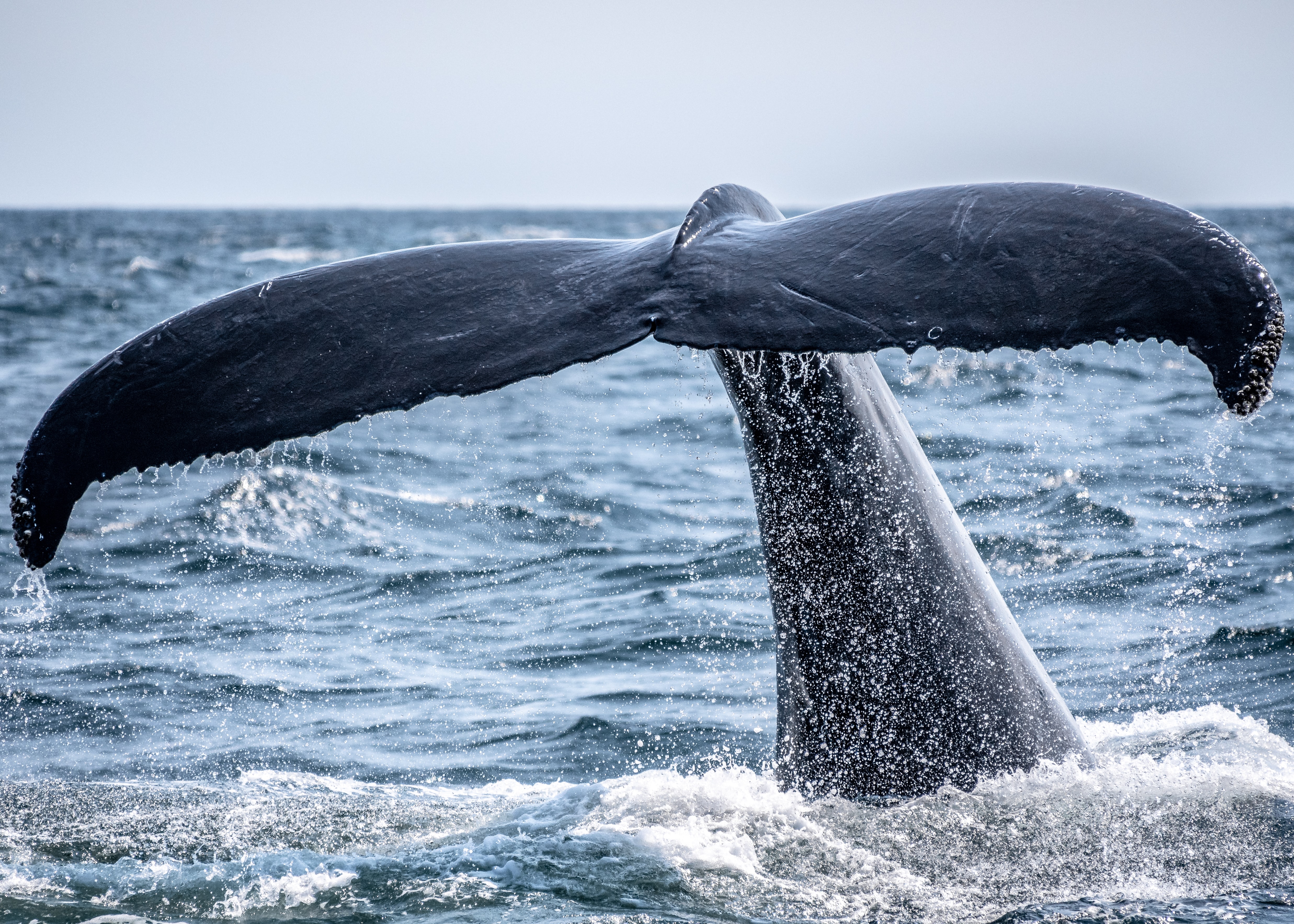
Always I’m surprised when other people seem surprised, specifically about animal intelligence.  Then I have to remind myself that our culture has absorbed the biblical view that people are different so thoroughly that even scientists believe it.  I watch the birds out my window quite a lot.  What they do is intentional and often quite intelligent.  True, not all animals are college material, but they are far brighter than the “automaton” paradigm with which I grew up.  So when I saw a piece in The Guardian titled “Sperm whales in 19th century shared ship attack information” I kept the tab open until I could read it.  Then I woke up this morning wondering why one of my many open tabs had the header “Sperm” on it, only to remember that I was going to read about whales.

I’ve written about Moby-Dick many times on this blog.  Although Melville didn’t experience financial success with it, he managed to pen one of the most profound and memorable novels ever.  One of the things he stressed was the intelligence of the whaler’s prey.  The Guardian article describes how, due to the magic of digitized log books, researchers can now compare captains’ notes about whaling.  What this comparison makes clear is that whales shared the information about attacks and avoided the areas where they occurred.  Despite the massive size of their brains, researchers had supposed whales to be rather stupid—or automatons—simply waiting to get slaughtered.  Animal intelligence is visible anywhere as long as we’re not afraid of that bogeyman, “anthropomorphism.”

We’ve been taught that human beings are so special that we think other animals act like us only because we’re projecting onto them.  Since the Bible informs us that we’re special and they’re further down the food chain, we must assume that creatures who destroy their own planet believing that they’re serving the will of God are somehow smarter than animals living in harmony with their environment.  We’re so smart that we had to add an extra sapiens to Homo sapiens to show just how special we are.  I’ve long suspected that animals are far more intelligent than we allow them to be.  Philip Hoare’s article offers us yet more evidence that we’ve underestimated our non-sapiens companions time and again.  Ironically we can accept that evolution explains how life forms change over time, but we somehow can’t let go of the story that says we’re somehow different.  I think we need to get out more and simply watch how animals behave.


Cherry Trees

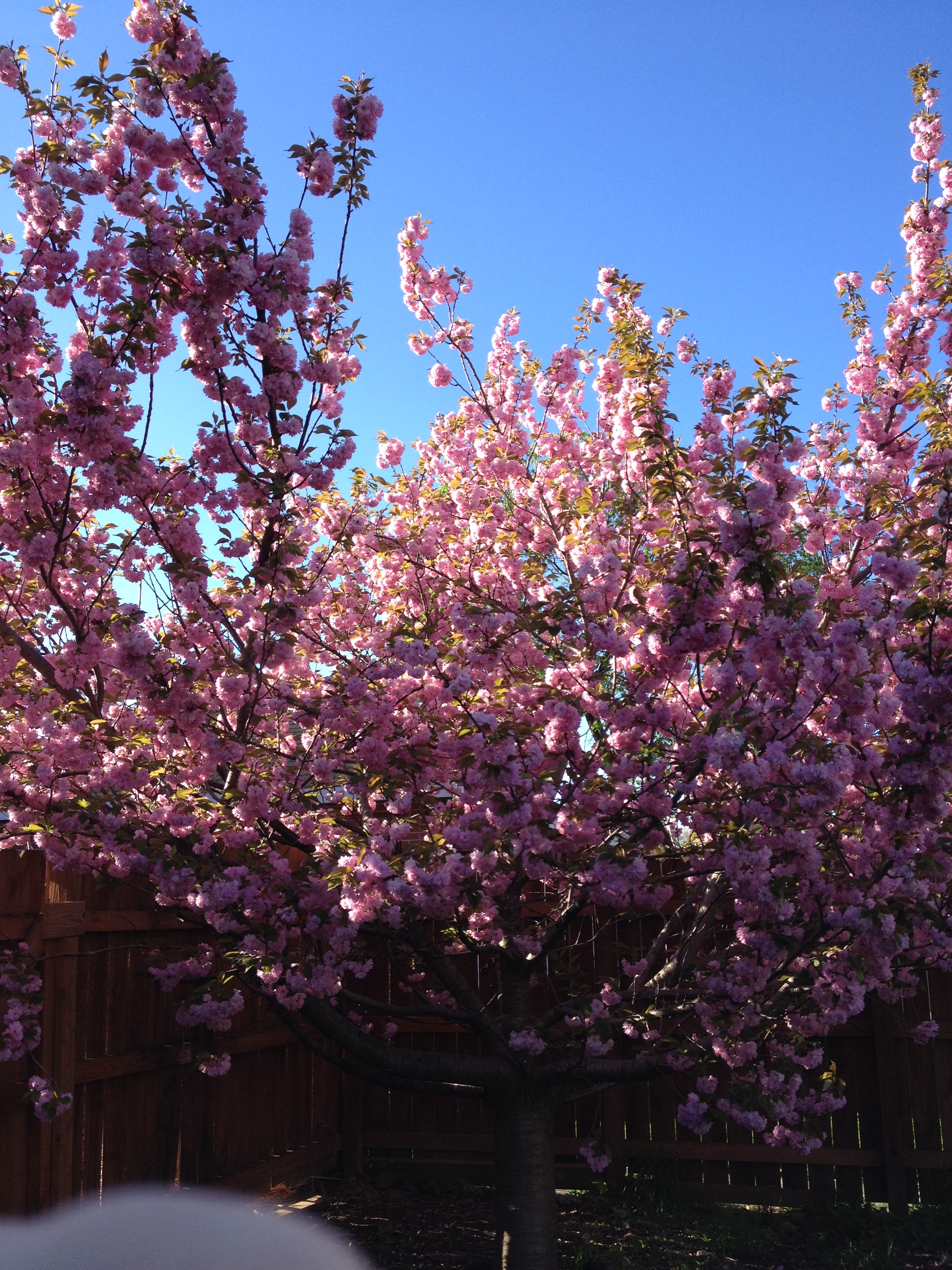
Today is the predicted peak blooming of Washington’s famous cherry blossoms.  Although the trees were a gift from the mayor of Tokyo (before the United States bombed two Japanese cities into oblivion) they perhaps reinforce the myth of a boy George Washington chopping down a cherry tree.  I’m sure you know the story: Georgie cut down the tree and when his aristocratic father asked about it, knowing that he’d get in trouble, our founding father nevertheless confessed.  The incident never happened, as historians have long assured us, but it is part of American lore.  And perhaps a key to understanding American gullibility.  We like things that make us look great.  If a story shows that we’ve been honest even well before independence from Britain, well, we must be honest now.

Perhaps this is why so many people believed Trump, a president with a well-established and fully documented lifetime of lies.  The biggest one being, of course, that he cares about anyone other than himself.  Not content to accept facts, such as a closely monitored and fairly lost election, he espoused lies that are still causing shudders through the nation.  I, like many Americans, live in a “purple” town.  A few doors down from our house is that of a rabid Trump supporter.  Just two days ago I had to walk to the drug store about half a mile from here.  I walked past this house that had hung huge Trump banners right on the siding, in addition to one phallically jutting out from a flag bracket.  Now the house has huge American flags upside down.  Such things never happened, I’m pretty sure, when Bush lost to Clinton.  Or ever before.

Nobody with the ability to read can doubt Trump’s actual record of deceit and lies.  It is fairly well documented that he ran for president to help his business and promote his image rather than out of any concern for any other human being.  After sentencing over half-a-million Americans to death with Covid (about which he simply couldn’t be bothered to do anything), his followers (who numbered high among the victims) still clung to the lies.  Today the cherry trees, it is said, are blooming in Washington.  I believe it because I can check the facts and see if it’s so.  When I do I know that I’ll be thinking of George Washington and his fictional cherry tree.  I know it never happened.  Instead, I’ll focus on the beauty right before my eyes.


The Spiritual Life

Genuine spiritual experiences don’t sit well with a nine-to-five job.  When something truly profound happens to a person s/he requires time to think about it.  Ponder the experience.  If such a thing occurs on a Sunday (imagine that!), the next morning, still reeling, you need to go to work.  Perform duties that no longer seem significant.  And continue to do so for four more days, until the fire has gone out.  This paradox has plagued me for some time.  Perhaps it’s the fate die cast for an editor who can’t just read submissions for their financial payoff.  Who asks, “What if she’s right?”  Doesn’t that affect everything?  Especially in the case of a religion editor.

Blown away.

I first noticed this in college.  Even there the schedule was quite flexible, according to classes you had to take.  The professors were sincere in their presentation of ideas you should take seriously, but then in the work world your boss indicates that you’re not being paid to do that.  You’re being paid to produce.  Contribute to the machine.  Cogs and sprockets don’t think.  They do.  Then a significant weekend would come (or a holiday, say) where the message would really speak to me.  Change my outlook.  Until Monday morning.  The outlook would still be changed, of course, but the demands on routine would not also be changed.  It’s quite a dilemma.  As the great contemplatives throughout history have known, these ideas must be wrestled with.  Conversed with.  Tried on for size.  Walked with.  Such things can’t be done in the context of what you’re paid to do.  “Do it on your own time.”

What is your own time?  The weekend, essentially.  Work expands to fill the quiet times of weekdays.  Your time is owed to somebody who pays you less than the national average to do something any nonspiritual person could do.  Such is the danger of being open to new ways of looking at things.  Vacations need to be planned.  They are rejuvenating, but spiritual experiences can’t be planned.  They just happen.  HR has no algorithm for them.  Not exactly sick days or floating holidays.  And what if you need more than one day?  That meeting that was scheduled for Tuesday, what about that?  As if such things were really important.  Perhaps you too had the professor late for class because s/he was struggling with an idea, an experience that fit her or his specialization.  There were always office hours to recover.  That’s all fine and good, but it’s time for work.


Pandemic Thoughts

Waiting for rescue.  For many years now, I’ve been hoping for it.  It goes back to my first professional job at Nashotah House, perhaps earlier.  Particularly late in the game, I found myself wondering when I might be rescued from that difficult situation.  The teaching and research I loved, but the context was brutal.  The hoped for salvation never came.  Since those days the wishes have swung around to a steady job in a field I love.  One for which I trained.  The feeling arises particularly on weekends.  Often busier than even workdays, I nevertheless sense an almost gothic freedom to them, and Monday rolls around again reminding me that salvation never came.  Things are still the same.  Now, I don’t just sit around waiting for rescue.  I throw out all kinds of lines.  I shout and squirm and try to make myself known.  The ocean is large, however, and my voice is small.  

Perhaps this sense is a natural outgrowth of being raised in a religion that emphasized personal salvation.  The sudden conversion experience.  It was easy to believe things could change rapidly for the better.  Science, particularly uniformitarianism, tells us that the same slow processes always hold.  Solomon was right after all—there’s nothing new under the sun.  At least nothing that we couldn’t see coming for a good, long time.  Out here the horizon stretches ever so far in every direction.  Religions realize the problems with this sameness.  They give us sacred times and sacred spaces.  (The latter of which, however, the pandemic has forced online.)

Rescues that evolve can take many years to reach effective strength.  As a child I recall anticipating the rescue of adult respectability.  When I grew up people would listen to me because I was an adult.  For a brief while that was the case when I stood in the classroom and some students came because they wanted to learn.  I learned from them, and they, I hope, learned from me.  Perhaps this situation arises less among those raised in stable, middle-class families.  Perhaps they don’t sense the constant wolf pacing outside the door.  Maybe salvation is primarily for the poor.  Whoever it’s for and whencever it comes, the feeling has been with me for decades.  Rescue, it seems, is a construct we badly need.  At least on a philosophical level.  The pandemic has leveled our concept of time to a stifling sameness.  I’m prepared.  I’ve been waiting for rescue for as long as I can remember.  Then Monday rolls around again.


That Time Again

Where’d it go?  I could swear I left an hour sitting right here on the table, and now it’s gone.  That’s the feeling of waking up the day of Daylight Saving Time.  Sure, it’ll stay light later now, but the mornings, when hope is most necessary, are once again dark.  It’s funny how we play with time.  I’ve known many people who love the end of Daylight Saving Time because of the illusion that they’ve gained another hour of sleep.  In fact, it’s just a deferred payment.  The great time-keeper in the sky won’t be cheated.  So—pardon my yawn—we’re adjusting again.  One of the great mysteries of this is that keeping Daylight Saving Time permanent has strong bi-partisan support in the US government.  It never becomes law, however, because riders are constantly attached to it, making one side or the other back out.  And so we all spend a couple weeks trying to get our circadian rhythms to adjust.  Again.

I’ve often wondered about the timing for this change.  Why Sunday morning?  In this nation that likes to pretend to be Christian, it’s a regular joke that folks in pre-pandemic times would miss church, having forgot to set their clocks ahead.  One incredibly busy Sunday in Edinburgh, my wife and I had missed church altogether.  I’m thinking it must’ve been in the final throes of getting my dissertation finished.  When supper-time rolled around we found we were out of some ingredients and we went to the local grocery to find, of all things, it was closed early.  It was only then that we had to stop and laugh at ourselves.  We’d just spent an entire day out of joint with time and didn’t even know it.  In pre-internet days it was possible for that to happen.

Most of our clocks now set themselves automatically.  I still wear an old-fashioned analogue watch.  I need to set it manually, which keeps me on my toes when Daylight Saving Time approaches.  O yes, and the clocks in the cars are off—they’re not wired in that way, being older models.  And the one on the microwave.  I can always use my phone for the accurately predetermined time on which we all agree to operate.  Even if the morning skies, which were starting to be light at six now stay dark until seven.  In another month we’ll catch up again.  And Daylight Saving Time, instead of being a strange intrusion, like most unwanted guests, will begin to feel like normal.


Getting into SHAPE

The British Academy, in cooperation with a publisher or two, has taken the initiative to promote SHAPE. Social Sciences, Humanities, and the Arts for People and the Economy (SHAPE) may never match the steam of STEM, but the idea is an important one.  Science, Technology, Engineering, and Mathematics have driven society (and the job market) for many years now.  It’s sometimes easy to forget that we’re human beings and we act irrationally from time to time.  (Consider the last four years in these Untied States.)  Higher education was founded on the premises that the Humanities wouldn’t get studied on their own.  Business keeps us too busy.  Either that, or the egos of rulers lead us into war after war.  What gets left behind is the study of what makes us who we are.  The liberal arts college, learning for learning’s sake, has fallen on hard times.  What’s the profit in it?

SHAPE suggests a society suffers if it doesn’t promote social sciences—the so-call “soft sciences” that state humanity the proper study of humans—the humanities, and the arts.  The acronym itself contains a lesson “for people and the economy.”  The dismal science does, in some sense drive the initiative since we live in a world where tech does most of the work we used to.  We’re left with the non-paying business of being human.  Caring for an aging population where people live longer but aren’t given jobs that pay well enough to retire.  Looking in the mirror to see that the economy’s fruits go unfairly to those who already have too much.  The rest of us, are left to survive as, well, humans do.  Why not celebrate—and better yet, value—what people do?  Or humans for humans’ sake?

I’ve long felt that the priorities of capitalism are badly skewed.  The value of gold is artificial, one assigned by human beings and their love of shiny metals.  Our entire society is set up to, as we’re told, pursue wealth.  There is far more to life.  We humans, we love to create.  We love to socialize.  We love to help one another out.  These aren’t paid activities.  They don’t have to be commodified.  The one who goes home with the most stuff isn’t always the winner, especially when the majority of humans are left without enough.  It’s too early to tell if SHAPE will catch on, but I applaud the effort.  It is time we stopped exchanging the warmth of being human for the coldness of numbers and calculation.


Space and Time

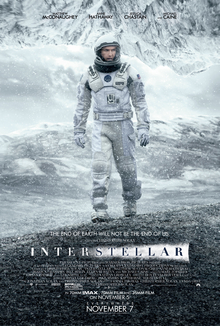
Keeping up with movies could be a regular vocation.  Until it is, however, I will always be running behind.  Seven years ago I planned to see Interstellar in the theater.   Seven years ago we had not dreamed of Covid-19 or a planetary pandemic.  I can’t see now how I would’ve possibly been too busy to have missed it.  If any movie, however, forgives the time-challenged, it’d be this one.  Apart from perhaps being the ultimate father-daughter movie, it plays with time like Inception plays with space.  Or space like it plays with time.  Einstein gave us the laws of relativity, and if they hold up when we finally get to interstellar travel (which has already happened on the space-time continuum somewhere), this is perhaps not at all unlikely.

Back in my teaching days I used to tell students that if they didn’t read at least one book during the summer or winter break that didn’t challenge their worldview then they’d wasted that break.  It was something I did my best to live up to.  Informing yourself—challenging your views—is a feature of education at which we seem to have failed.  Movies like Interstellar are examples of such challenges, albeit in the guise of fiction.  I’ve come to trust Christopher Nolan over the years.  His movies are cerebral yet moving, making us look at things from angles we didn’t know had existed.  I grew up watching not just horror, but also science fiction.  While I gravitated toward the former, I never lost my appreciation for the latter.  Especially when the latter made me think.

Much of Interstellar is, like the best of movies, is informed by previous films.  The influence of 2001: A Space Odyssey is pretty clear, as is that of Contact.  The idea at the center of Interstellar is that love drives the five dimensions in which Cooper finally ends up.  The love of a father for the daughter he had to leave behind and her love for the father that had to abandon her to save the world drives the entire plot.  To me this seems the right balance between science and spirituality.  Love is humanity at its best while science is some of our most advanced thinking at its best.  To recognize the strength of the former is important in a world increasingly driven by technology.  It took me, it seems, a full hour on the water planet to find the time to watch Interstellar.  It is time I won’t get back and I could have used some of it wisely by watching this movie sooner.


Weird Dreams

It’s almost like we’re all part of a huge experiment, perhaps orchestrated from outer space, to see how we react to being caged.  The pandemic and its associated lockdowns have held us in place for nearly a year now.  Long enough that I’ve started to dream about it.  For the longest stretch of time my dreams remained in “normal mode.”  That is to say, people talked about the pandemic very little and it was represented only by the occasional dream anxiety that I wasn’t wearing a mask.  I have yet to recall a dream wherein people are wearing masks.  Recently I dreamed that I had to start commuting again, and I climbed on the bus only to remember I’d forgotten my mask at home.  It was like one of those showing up to school without your pants on dreams,  only scarier.

Dreams are an antidote to the sameness of our days, I suppose.  I’ve watched as stable folks I know start to show signs of isolation stress.  I’m sure that I’m showing them too, but the thing is we often don’t see such things in ourselves.  We’re social animals and we’ve been kept in separate cages for a long time now.  I used to go to zoos and feel sorry for the obviously neurotic animals bored out of their skulls, isolated from their species.  Even as we were being told that animals don’t think and don’t have emotions, it was clear that their having interactions with our species was like us having nothing but Zoom meetings to keep us in company.  It’s artificial, but since the zookeepers have us in separate cages we try to act as if it’s normal.

Speaking of neurotic, at least around here since Trump’s been mostly out of the public eye people have begun wearing masks.  Nothing demonstrates that we’re herd animals better than the fact that an obvious charlatan was able to convince millions of people that he doesn’t care only about himself.  Funny how people can be used and not even know it.  We’ve been enjoying national sanity for just over a month now and things seem like the meds may be kicking in.  Vaccine production is booming and, apart from logistic issues, many people are receiving the necessary protection.  It’s always made sense to me that other beings exist in the universe.  I’m not so arrogant as to assume that we’re all that special.  Looking over the past year, it seems as if we may all be guinea pigs after all.


Signal

It’s difficult to tell signal from noise sometimes.  Specialists in such things tell us that it’s easy to mistake noise for signal.  An exception to this seems to be music.  I don’t often write about music for a couple of reasons: one, it’s very personal, and two, I have little formal understanding of it.  Unlike my wife, who can sing well and who can play more instruments than I could ever dream of, I always struggled in music class.  The teachers I had seemed impatient when I couldn’t quite understand what pitch was, or when I had difficulty keeping a beat.  (Part of the problem is that I overthink such things.  I wondered about things like whether a beat represented the beginning, middle, or end of the sound.  Or how, since your voice sounds different in your head than it does on tape, could you tell if you were replicating the pitch of a note.)  I told you it was personal.

Photo by C D-X on Unsplash

None of this detracts from my enjoyment of music.  In fact, it means quite a lot to me.  Growing up I tended to consider it in the form of individual songs I liked.  Since we didn’t have much money I didn’t buy a lot of music, but the radio was free.  My choice of which albums to buy—starting in college, really—was based on whether I liked enough songs on them to justify the expenditure on an entire LP.  I already knew that the quality of 45s was inferior and that many albums were united by a theme.  Something I didn’t do was get to know a band by its “sound.”  That only started for me recently.

I still don’t have a lot of money.  I also object to paying money for MP3s that seem to disappear when you change devices and you have to buy them all over again.  Still, I’ve begun to discover some bands by their sound without being able to point to a specific song.  MCR (My Chemical Romance) was one.  The Pixies was another.  And recently Radiohead.  The voices of the lead singers speaks to me of youth and all its angst.  Although these bands all have quite different sounds, I find them mesmerizing if the mood is right.  I tend to discover bands once they’re beyond their peak popularity, but I’m personally pleased that I’m learning, in my own way, to separate signal from noise.  It reaps rich rewards.


Winter Waiting

The waiting, as Tom Petty knew, is the hardest part.  Along the slow turning of the wheel of the year it’s now light enough to go jogging before work.  That won’t last, however, because Daylight Saving Time is imminent and will set us back a month in the illumination department.  Also I haven’t been able to jog because the massive snowstorm we had a couple weeks back dumped over two feet of snow on the jogging trail and it hasn’t melted yet.  I miss it.  The jogging, I mean.  I’ve become one of those people who never the leave the house and I see how difficult it is just waiting.  Waiting for the snow to melt.  Waiting for the vaccine.  Waiting for the light.

I’m no psychologist, but I have to wonder if that isn’t one of the greatest stresses faced by the many stir-crazy people who’ve been shut-ins for pretty much a year now.  For us this snowstorm took away the little mobility we had.  Getting out daily for a constitutional put me in touch with nature, at least.  Now nature is under a thick, crusty white blanket, slumbering away.  But the birds have begun to return.  With their avian wisdom they’ve seen the end of winter.  Suddenly this past Wednesday they were here, bringing hope in their wings.  Birds have long been symbols of freedom—we’ve got a couple bald eagles in the neighborhood, reminding me of that.  A far more ancient association was that between the bird and the human soul.  The ability to soar.

We may still be mired in winter, but time is inexorable.  Relentless.  As the globe wobbles recklessly back toward the warmer seasons we need to take responsibility for our part in global warming.  Ironically these freak storms are the result of an overall warming trend.  The weakening of the jet stream that allows cold northern air to drop snow in Texas and storms to cover much of the rest of us all at the same time.  The pandemic has helped clear the air a bit.  At least we’ve rejoined the Paris Climate Accord, and we’ll try to begin undoing the damage to our planet that the last four years introduced.  It will take some time, of course.  By now we should be experts in biding our time.  The snow will melt.  The light will continue to grow.  I will get back out on that jogging path again.  But for now we wait.


Knowing Everything

Of all the jobs I’ve held, being an editor is the only one where strangers send random emails trying to convince me of God’s reality.  Granted, part of that may be because email is now so common as to be passé among the younger crowd.  When I myself was younger it was still just catching on.  Still, part of these strange emails is likely based on the evangelical compulsion to make others see things their way.  Someone who edits biblical studies books might seem like a good target.  I got another such email just last week, and as always, I wondered over it.  What kinds of assumptions must random strangers make about biblical studies specialists?  One of these assumptions, it’s clear, is that they suppose we are atheists.  They know this without even asking.

Technology has made such blindsiding communication easier.  It didn’t invent it, though.  It took a lot more effort to write up a letter, address it, buy a stamp, and mail it than it does to sit down at a keyboard, click, and they start proselytizing away.  In my earlier days, in other incarnations of a career, I received unexpected missives from time-to-time.  And certainly as a seminary professor you had students who had already figured everything out by the time they’d gotten to matriculation.  Many of them were coming to seminary to teach rather than to learn.  Such can be the arrogance of faith.  I fear that many of them graduated with their biases intact.  Education, perhaps, doesn’t work for everyone.

Photo credit: NASA

Having it all figured out is something many of us strive for.  We want things to make sense.  We want our spirituality to fit into this increasingly materialistic world.  Some of us go to seminary and/or graduate school to help us make sense of things.  We encounter minds further along the journey than our own, and, if we’re open, we learn from them.  For me, it’s difficult to understand how education isn’t always a humbling experience.  Oh, I get emails from academics who think they’ve figured it all out as well.  Such communications always make me sad.  The human enterprise, such as it is, has spanned millennia and true progress has only been made when people were humble enough to admit that they didn’t know everything.  They would eventually invent the internet and email.  Then those who already knew all the answers could send them to strangers to convince them of their own great learning.


Critical Snow

No two snowflakes, I’ve always been told, are the same.  Far be it from me to question the collective wisdom of our species, but I wonder how this fact is ever confirmed.  I suppose I’ve personally swallowed a good deal of the evidence over time.  Snowflakes melt and we can’t get them all under the microscope, can we?  This year has been a winter of more than usual snow around here.  During our most recent storm I stared out the window and tried to count.  Billions of snowflakes collected in my yard alone, and no microscope-bearing statistician was anywhere to be seen.  I like the idea of each flake being unique, but I know it’s a theory impossible to falsify, and I wonder if it’s accurate.

I’ve been thinking a lot about critical thinking.  At its base, critical thinking is about asking questions and learning reputable places to find answers.  Not “fake news” or “alternative facts”—these are tools in the Devil’s workbox—but evidence-based information.  Primary education, it seems, is about learning to read, and write, and handle numbers.  It is about learning who we are  and who we’ve been.  About the way that science helps us understand this old world.  Higher education, as it’s generally conceived, used to be about learning critical thinking.  That was before colleges became mere trade schools, catering mainly to careers with high earning potential so that alumni would give more money back to the college.  Where will we learn critical thinking?  No two are the same, right?

Instead, knowledge and hearsay become very similar things.  I used to tell my students not to take my word for it.  Just because I can legitimately put the word “doctor” in front of my name doesn’t mean I know everything.  Yes, I am an expert but even experts aren’t exempt from the test.  So, as more snow starts to fall, I think about all the many, many places I’ve heard that no two flakes are the same.  I think of the astronomical number of snowflakes that have fallen this year alone.  The number of years before we ever evolved on this planet.  In ice ages and even during human-initiated global warming.  And I realize nobody’s done the actual work of comparing every single snowflake to every other one.  Tradition is like that accumulating snow, building on past layers until great glaciers form.  And who, I wonder, would argue with a glacier?


Plants Will Lead

The world just keeps getting weirder.  Although I very much appreciate—“believe in,” if you will—science, sometimes the technology aspect of STEM leaves me scratching my primate cranium.  What’s got the fingers going this morning is spinach.  Not just any spinach.  According to a story on Euronews, “Scientists Have Taught Spinach to Send Emails.”  There are not a few Homo sapiens, it seems, who might learn something from our leafy greens.  The tech comes, not surprisingly, from MIT.   When spinach roots detect certain compounds left by landmines in the soil, it triggers sensors that send an email alert to a human being who’s probably eaten some of their (the spinach’s) very family members.  I’m not denying that this is very impressive, but it raises once again that troubling question of consciousness and our botanical cousins.

Some people live to eat.  I’m one of those who falls into the other category—those who eat to live.  In my life I’ve gone from being a picky omnivore to being a somewhat adventurous omnivore to vegetarian to vegan.  I’m not sure how much more restricted I can make my diet if I leave out plants.  I’ve watched those time-lapse videos of trees moving.  They move even more slowly than I do when my back’s acting up, but they really do move.  If they had legs and speeded up a bit we’d call it walking.  Studies into plant consciousness are finding new evidence that our brainless greens are remarkably intelligent.  Perhaps some could have made a better president than 45.  I wonder if spinach can tweet?

People can be endlessly inventive.  Our thirst for information is never quenched.  Universities are among those rare places where ideas can be pursued and it can be considered work.  While I don’t think everyone necessarily needs to go on to higher education, I can see the benefits it would have for a culture.  Indeed, would we have armed mobs trying to take over because of a fact-based election loss?  I wonder if the spinach would take place in “stopping the steal.”  Hopefully it would fact-check more than those who simply follow the leader.  Consciousness and education can work together for a powerful good.  I’m not sure why Popeye’s favorite was chosen for this experiment, but it does seem to show that we can all get along if we really want to.  Maybe then we could meet in the salad aisle rather than out in the field looking for explosives.