Fiction

All writing is fiction.  I suppose that requires some unpacking.  One of the first things we do when we approach a piece of writing is answer the question “what kind of writing is this?”  We may not do this consciously, but we wouldn’t benefit much from reading if we didn’t.  If your significant other leaves you a note stuck to your computer monitor or the refrigerator door, you know at a glance that it likely contains pithy, factual information.  If you pick up a newspaper you know what to expect the contents to be like.  It’s quite different if you pick up The Onion.  Or a romance novel.  These categories are extremely helpful, but they can also be problematic.  Any writer knows that you write and others decide on your genre.

I read a lot of nonfiction.  It is a kind of fiction, however, since it follows a narrative and it contains mistakes, or perhaps faulty assumptions.  Moreover, nonfiction is a reflection of its own time.  Geoffrey of Monmouth’s England had giants in its past.  It simply did.  Today we question his working assumptions just as surely as future people (if we long survive) will ours.  This current generation doesn’t really excel at critical thinking.  Many academics, as critical as they are in their own fields, fall into standard assumptions once you get beyond their expertise.  They accept the fictions of their era just as readily as does everybody else.  In reality our nonfiction is not the naked fact we like to think it is—it is the narrative of one perspective.  It is perhaps the truth as it is perceived in its own time.

This may seem to be a subtle distinction, but it is an important one.  Genres are very convenient handles that we use to classify what we’re reading.  Very often they become straightjackets that constrain what writing has the potential to be.  The word “genre” is related to the concept of genus, the classification about species.  Zonkeys and other, perhaps rare, but possible cross-breedings show us that hopeful monsters of the literary world are also possible.  We would soon suffer without genres in a world as full of words as this one is.  We also suffer from simple distinctions that somehow become iron-clad over time.  Think about the narrative that comes out of the White House.  We’re accustomed to it being mostly nonfiction.  At least we were until recently.  Watergate broke our trust in that, and now we live in a world of fiction masquerading as reality.  Critical thinking is, perhaps, the only way to make sense of any of this.


Unnatural Nature

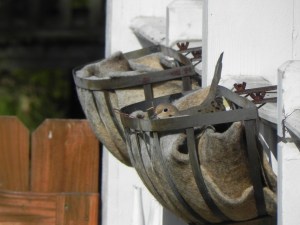
It began as an odd sort of noise.  I had the study windows open during the morning of a heat wave and I heard a small, but metallic noise coming from the roof outside.  My study overlooks part of the first floor roof and slinking to the window I saw a sparrow trying to pick up a roofing nail.  We’ve had the roofers over twice already since we moved in a couple years back (and will have them again), and some of the nails from their work on the second-story roof landed here.  I’ve noticed sparrows pecking at them before.  Instead of skittishly flying away when I came up—I was only about a yard away—she still tried to lift the nail without success.  She then flew even closer to me, snatched up a different nail, and flew off with it.  Sparrows have, of course, adapted well to human dwellings, but what would a bird be wanting with a nail?  Surely not to make a nest?  It wasn’t even shiny—it was a rusty old one from the shingles replaced—since everyone knows birds are attracted to bright objects.

I’ve been a close watcher of nature my entire life.  This isn’t the same as being an outdoorsman, but when I can see outside, or when I do spend valued time outdoors, I look closely.  I always keep an eye out for animals on my daily jogs.  And I watch animal behavior through the window when work isn’t too pressing.  Still, I wonder about what a sparrow could want with a nail.  The next-door neighbors moved out a couple of months ago, and I watch the sparrows on their porch roof.  With no human activity nearby, they frequently gather there.  They seem to be picking up bits of human detritus—even pulling at, it looks from here, nails.  Now this behavior has me a little worried.  I’ve read about sparrows before and despite their innocent looks, they can be very aggressive birds, even attacking and sometimes killing larger perching fowl.  The idea of them weaponizing themselves is disconcerting.

Intelligence in nature is one of the last features many scientists want to admit to the the discussion.  There seems to be too strong a supposed correlation with shape of the physical brain and the ability to “think,” it seems to me.  I don’t know what the sparrows are planning, but clearly it involves gathering rusty old nails.  Even as I was writing this I noticed sparrows chirping aggressively.  Looking out my window across the street, I saw that a squirrel had crawled across an electric cable into a bushy roost where there must’ve been a sparrow nest.  Sparrows began flying into the fracas from all over the place, loudly chirping.  I couldn’t see what what happening because of the leaves, but the squirrel soon rushed out with a whole flutter of sparrows in pursuit.  Perhaps he’d discovered their plan with the nails.

Now, the next order of business…


Almost Ancestors

During the Covid-19 crisis, cemeteries seem to be safe places.  Not too many people are in them, at least not people that can spread the virus, and they always provide grounds for rumination.  Besides, being outdoor spaces they can get you someplace outside the same four walls you see all the time.  My wife and I both have an interest in genealogy.  We’ve worked on our family trees and even try to keep our Reunion software up-to-date.  This past weekend we visited a family burial plot in upstate New York.  My wife’s family has a more accomplished pedigree than mine does, and one of her ancestors here actually merited an obelisk and was written up in local histories as a noteworthy member of the community.  I also have ancestry in upstate, and we’ve traveled to some of their sites in the past, although their markers are usually harder to find.

Being in a cemetery, the logic of ancestor worship suggests itself.  Without these people history as we know it would’ve been different.  Without those who are our direct ancestors we wouldn’t even be here pondering our own insignificance.  We wish these headstones could talk, saying more than the names, vital dates, and perhaps a quote from the Bible.  We listen, hoping to gain knowledge of who they were.  It seems to me that cemetery histories would be a boon to genealogists.  For those of us whose predecessors were buried in small towns, such guides could be a real boon.  As it is, Find A Grave dot com is often a helpful resource, but who wouldn’t like to be written up in an actual book?  Network reception often isn’t great out here in rural America.

Graveyards are gateways to the past.  In a world that feels like it’s changing way too fast, it seems right to have these places—these sanctuaries—to stop and reflect.  They represent lives lived.  Peaceful after the trauma of day-to-day angst and struggle.  Unfortunately the pandemic is daily adding to the number of those who’ll be buried in cemeteries across the nation and around the world.  Although somewhat preventable, we have no national will to stop the tragedy.  So it is I find myself staring at a monument erected to someone I never knew, but without whom my life would’ve been vastly different.  It’s a sunny day and I’m outside amid a crowd that can cause me no harm, but who, at times like this, inspire me. 


Who Watches You

When my wife saw Dominic Johnson’s God Is Watching You on the top of my pile she said “Are you sure you want to be reading that?”  Her question was justified, of course.  I was raised in a religion where the punishment of God was very much on the surface.  Heaven’s carrot was nothing next to Hell’s stick.  I still suffer from that religious outlook in innumerable ways.  Johnson’s subtitle, however, is How the Fear of God Makes Us Human.  Johnson, who holds doctorates in evolutionary biology and political science, is well placed to try to untangle what those of us with just one doctorate in religious studies deal with constantly: what is religion?  The main idea of the book is deceptively simple—we have evolved the way we have because we feared (and continue to fear) supernatural punishment.

Johnson establishes that sociological and anthropological studies have shown that humans respond much more readily to punishment than reward.  Reward is like icing—you can eat a cake without it and still enjoy it—while punishment is like the threat of all food being removed.  You see the difference?  One has a far greater motivating factor than the other.  This idea spins out into many aspects of religion, and even perhaps hints at the origins of religion itself.  I have often written on this blog that animals exhibit religious behavior.  We don’t speak their language so we can’t know for sure, but some of what various animals do seems very much like what we do in church, synagogue, mosque, or gurdwara.  Accusations of anthropomorphism fall flat, to me.  We evolved, did we not?  Then why do we resist pointing out in animals where that behavior sticks out like a sore opposable thumb?

Human societies worldwide share the fear of divine punishment.  Interestingly, even a significant portion of atheists admit fearing it too.  Often those who know me ask about my preoccupation with fear.  It sometimes shows in my writing about horror, but I think Johnson may well have the key in his pocket.  Religion is about fear.  It’s not just about fear, but it clearly is about avoiding divine (however defined) wrath.  Lose a job or two broadly defined as religious and disagree with me.  Am I sure that I should be reading this book?  Now that I’ve finished it I can definitively say “yes.”  While I don’t agree with everything in it Johnson has clearly hit on something that all people who study religion should know.


Hebrew Class

It is utterly remarkable that in this year of the Common Era 2020 that even in Unicode you can’t write Hebrew in Microsoft Word without gymnastics.  The task at work was a fairly simple one: proofread the Hebrew in a typeset manuscript ready for the printer.  This means the manuscript is a PDF at this point and to get Hebrew to appear in a comment bubble you need to copy it from Word and paste it in.  But wait!  Word only has some Hebrew letters in its Symbols menu.  Try getting a yod to appear.  I looked up a Unicode chart, copied and pasted the Unicode unique identifier and Word gave me a capital P.  Not a jot or tittle to be found.  So, to get the yod I had to fetch my personal Mac and use the language menu and type the word out.  Copy.  Paste in an email from my personal account to my work account.  Wait.  Open work email message.  Copy again.  Paste again.

Using this method, a task that would take me maybe twenty minutes stretched into hours.  There was simply no way to get Microsoft Word to display a full Hebrew alphabet shy of changing the language on the computer.  And since I don’t read Modern Hebrew I had a feeling that would lead to disaster.  Part of the problem is that programmers thought it would be smart to make Unicode Hebrew automatically appear right to left.  This has been the bane of many of us since the earliest word processors tried to replicate the language.  We grew used to typing it in backwards.  Now you never know which letter is going to disappear if you hit delete—it doesn’t help that it can act differently on a Mac than on your standard business-issue PC.  Not only that, but when you paste it the receiving document often automatically reverses word order.  Can I get a pen and paper over here?

I sometimes jokingly lament the hold that technology has on us.  In some instances the joking takes on a serious tone, I know.  I do wonder about having techies drive where we’re going.  It’s one thing to make it possible to print Hebrew letters in electronic form, but it is quite another to read them and have a sense of what they’re saying.  And those of us challenged by the whole right-left orientation and a cursor blinking on one side of a word but having its effect on the other wonder if it’s worth the effort.  There’s a reason ancient people wrote in clay, it seems. 


Graphic Graphomania

You can spot them fairly easily.  Graphomaniacs.  Perhaps it’s a bit closer to the surface when you work in publishing, but the person who writes too much can run risks.  Some authors turn out a book every few months.  While this may be okay for potboilers, for academics it is seldom possible to do this well.  Research and reflection take a long time.  Those who churn out book after book sometimes wonder why their works don’t sell.  Graphomania has to be reined in.  Horses have to be held.  I’m sympathetic, actually.  If you write every single day you’ll soon end up with a surplus.  So much so that your computer will tell you to empty some stuff out or it’ll go on strike.  I had to order a new terabyte drive this week exactly for that reason.

To free up some additional space on my laptop I went through the many, many folders that have essays, book drafts (both nonfiction and novels), stories, blog posts, etc.  While I didn’t throw them away, I had to clear them off my working disc.  As I did so I realized that the great majority of these writings will never see the light of day.  There are really a lot of them.  Part of the problem is you never know what you’ll feel like writing when you get up in the morning.  Sometimes the best ideas come after a wretched night’s tossing and turning.  Well-rested you can get up to a brain so content that it doesn’t have much to say.  Or that story you started yesterday may seem dumb today.  That nonfiction book that burned with passion just last week may now seem lame.  My fear is that by moving them off my hard disc they’ll become forgotten.

The terabyte drive is a thing of wonder.  It can hold so much information.  I have to go back and hook it up to my laptop to find it, however.  Out of sight, out of mind.  I’ll move on to other things.  I honestly can’t count the number of projects I have going.  Graphomania can be a problem.  This blog is a daily outlet, and you, my faithful few readers, are saints for coming back.  In my attic, next to the brick wall of external hard drives, are folders full of handwritten material.  Many of them are stories that are complete, but that haven’t been transcribed.  Some writers suggest flooding the market with your stuff.  Others of us know that graphomaniacs are feared in some quarters, and so we keep our own counsel.

Photo credit: NASA


Quantum Religion

Quantum mechanics shows deep connections based on empirical evidence.  This is Einstein’s famous “spooky action at a distance.”  Particles that split apart from one another seem to be in communication as they track on trajectories away from one another at incredible speeds.  It’s almost as if there’s will involved.  Maybe there is.  If intention is part of the natural world, we’re in trouble.  Well, at least stark materialism is.  You can’t measure will.  We all know what it is because we feel it.  Try to define it.  Isn’t will a matter of what you want?  What could a particle possibly want?  If it’s small it can’t hurt us, right?  But once it crosses a certain level, it no longer works.  Science trembles at quantum mechanics being applied at the non-microscopic level.

Ironically science is wedded to an idea proposed by a medieval cleric.  Early scientists were often clergy—an association most scientists would prefer to forget these days.  William of Ockham (fourteenth century) proposed an idea that became the surefooted stance of science in its toddler phase.  Simply reduced it goes like this: the single natural explanation, without relying on outside forces, is probably the best.  It’s known as Ockham’s Razor (aka Occam’s Razor).   Yet Ockham was a Franciscan Friar, a cleric.  His thinking and reasoning were necessarily informed by ecclesiastical thought.  Or, not to put too fine a point on it, theology.  His razor avoided entanglements.  Ironically, science refers to this quantum connection as entanglement.

Humans, it seems, have a tendency toward contrariness.  We’re oppositional.  When we’re told that quantum mechanics applies only to the very small, we wonder if maybe the same principles don’t work “up here” at our scale.  It’s hard to conceive that even our scale is simply a matter of perspective.  Since we’re uncomfortable with the idea we suggest that only our species is conscious.  That way we can keep the will out of animals as well as subatomic particles, let alone larger scale entities such as planets, galaxies, and universes.  Maybe entanglement suggests Ockham’s Razor is dull.  Before getting out the philosophical strop, perhaps we should ask if the simplest explanation is really the best after all.  Maybe the best answer is far more complex than we’d like to admit.  I love science.  I still, when I have time, read science books written for the laity.  It’s just that science, like religion, is part of a larger picture.  As much as we fear entanglement, it is an empirically observed part of life in our universe.


In the Zone

Since it lies somewhere between waking and sleeping, between youth and old age, the Twilight Zone is often where I find myself.  I’m hard pressed to say why the show made such an impression on a young and otherwise religious mind.  Maybe it was because religion itself deals with the Twilight Zone of human experience.  In any case, reading Rod Serling’s Stories from the Twilight Zone, as I continue to make my way through the books of my childhood, was a trip down memory lane.  While living in coronapocalypse, these short stories, novelized from Serling’s teleplays, take you back to a different time.  The late fifties and early sixties seem so very different from where we are now.  And reading about them, I’m not sure why some people want to go back there.

At the same time, reading the physical book takes me back.  My edition was printed in 1964.  It smells like an old book.  It has that unmistakable feel of pulp fiction.  Reading a book is so much more than scanning the words with your eyes.  It’s the lying on your back on a lumpy couch on a hot, humid summer day after being at work for endless hours.  It’s the foxing of the pages and the almost laughable cover design.  But more than that, it’s a signpost back to childhood.  This is a book I first held before leaving home.  It was a refuge from a tense life never knowing what might happen in a day.  Believing that escape was possible could save a soul from a ton of grief.  At the same time, those characters who do escape often learn why that isn’t the best option after all.

Some of these stories I remembered from the shows I watched, while others seemed unfamiliar.  There really are no surprises here.  You see, the Twilight Zone was long ago and the stories have entered our national consciousness.  Some have been borrowed, adapted, and parodied by others.  Others, such as “The Monsters Are Due on Maple Street,” were even part of anthologies we read and discussed in school.  Why are human beings so distrustful of others?  I remember us talking about that in class.  Serling’s version has a more grim ending, it seems, that the one I recollect as a youth.  Sitting here in coronapocalypse, however, I see it playing out around me every day.  We don’t know who might be infected.  And suddenly reading about the Twilight Zone seems like a most sensible thing to do in the circumstances.


In the Clouds

So I’m looking for a photo.  An electronic one, of course.  And since my camera, or phone, or whatever it is, automatically names them for the benefits of machines, I don’t know what it’s called.  When I want to search for it I have to scroll and scan through hundreds of images.  It’s the price we pay for letting technology run things.  Okay, so it’s made life easier; I’m down with that.  Still, I would like to know where my info is.  I learned to find files by navigating to them, something computers taught me how to do.  But computers move things around while we sleep.   

Now that Covid-19 has moved in to stay, we all use meeting software to stay in touch.  Most of us use Zoom so businesses naturally prefer Microsoft Teams.  I don’t know the details of Teams so I watch a video tutorial.  The Microsoft official (well-paid enough to dress casual) is explaining that you can attach things in Teams, something that we’ve all had to learn how to do in email school.  He says that those sharing in your chat don’t know where the actual document is.  “Who needs to know?” (I’m paraphrasing here), he says.  “Nobody needs to know where it is.”  This is my fear—my personal files need to be where I can find them, not on some sleepy server halfway around the world.  Just the other day the internet went out here.  Just for a little while, but those were panicked minutes nonetheless.  I don’t want my files bumping around in a cloud when I need to know how to navigate to them.  What if the server goes down right when I need them?   I don’t trust clouds.  Zeus raped Io in the form of a cloud, remember.

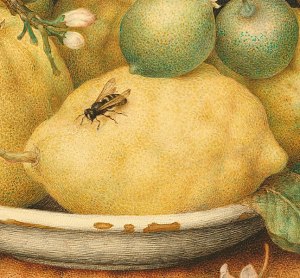
Bordone, Zeus and Io; a picture I did find!

I’d feel better about all this if those of us pen-and-paper types were involved in the discussion.  Nothing says “ephemera” like documents made of electrons.  Maybe I need to spend more time with religions of east Asia where the idea of lack of permanence is key.  Knowing where to find important things, however, has been a hallmark of Euro-American thought.  And if your very own personal documents are being kept where you don’t even need to know where, how can you sleep at night?  Some of us are kept awake still wondering where that thing we can find since we’ve moved might be.  I get the spooky feeling that technology is training us.  For what nobody can guess.  As for me, I’ll get in line once I find that photo that I didn’t even name.


Up the Downgrade

My computer’s been telling me that it wants to upgrade.  In fact, when I first bought this laptop several years ago, and started it up the first time right out of the box, a message popped up that a system update was available.  The tech business, you see, never really sells you a computer.  They’re working on it constantly, often at the same time I’m trying to use it.  In any case, the reason I haven’t upgraded has been that I need to clear off space on my hard drive.  Each upgrade requires more and more of the limited space I have, so my work has to be shoved off onto external drives that I stack like bricks in my attic.  And that takes time.

This wasn’t a problem with my pre-internet computers.  You bought them to do PowerPoint for work and word processing for publications.  Said publications were printed out and sent via mail to publishers.  Just typing that makes me feel old.  The fact was, however, you could get by on those computers without any upgrades at all.  The system that came with it was sufficient for the life of the machine.  Once you get connected to the internet, though, you have to keep up.  I often run into websites on my work laptop, which doesn’t have the latest system, that simply don’t work.  If they’re going to upgrade, I have to upgrade, and to upgrade I have to discard stuff I want to keep.  Every day I get the red warning signal—computer is hungry but can’t be fed until I start throwing my hard work away.  Or at least putting it where it will take extra effort to get it back.

Also, how are you supposed to find the time for upgrades when you use your computer constantly?  A typical download and install takes over an hour.  If we’re so wired, when are we possibly going to find the time for that?  And I still haven’t cleared enough space on my hard drive.  My external drive’s getting too full.  I guess it’s impossible to keep everyone happy.  In the midst of all this I squeeze in some time to use my laptop for that which I actually bought it—to do my research and writing and, during the pandemic, to buy the necessities of life.  And if I don’t upgrade Zoom’s going to stop working because it’s upgrading too.  I need to buy a computer that does nothing but upgrade itself.  That might be the solution.  That, or going back to good old-fashioned pen and paper.


Layers of Brick

If, like me, you can’t see a neighbor’s brickwork without thinking of “A Cask of Amontillado,” then I need not explain why I watch horror films.  I know that as of late some literary scholars have challenged the idea that Edgar Allan Poe wrote horror.  There is now, and always has been, a bias against the genre.  In fact, many would point out that Rod Serling’s Twilight Zone wasn’t really horror, no matter how creepy some of the episodes were.  Some would cast Ray Bradbury into that lot as well, and others would not.  I spend a lot of time pondering this because those of us who enjoy some of what’s called horror are often cast as misfits.  And misfits have a lot in common with monsters.

The connection with religion is a palpable, yet intangible one.  It does seem that religion has its origins in fear and as it branched out it came to have different emphases.  Jesus, for example, apparently stressed love, at least according to the gospel of John.  That religion of love came, eventually, back around to fear.  Calvinism, especially, is suffused with it.  There’s a reason that it is the religion expressed in particularly effective horror.  Apparently they meet similar needs, but psychology is not an exact science, and our tastes in it differ.  Even our interpretations do so.  As the bricklayer puts down row after row of masonry, the thoughts get walled up in days where work prevents serious consideration of the deeper questions.

It’s been years since I’ve read “A Cask of Amontillado.”  The story has stayed with me, however, whether it’s horror or not.  Stories about imprisonment are like that.  The other day a police car stopped outside our house.  We live in a working-class, but descent neighborhood.  From the bits and pieces glimpses out the window revealed, there was a problem with a car that had been parked on the street for quite a while, and that didn’t belong to any of the local residents.  The natural response to seeing that car just outside was fear.  We fear criminals and we fear the police.  We fear what Covid-19 is doing to us, even to those of us who’ve managed not to contract it.  Traditional religion would tell us punishment comes from the Almighty.  These things are all related.  And across the way the bricklayer keeps up his work, row after row.


Live Long and

Neither Edgar Allan Poe nor H. P. Lovecraft lived to see fifty.  I began the task of trying to publish fiction when I was a year beyond Lovecraft’s demise.  I’ve kept up a more or less steady trickle since then, and I wonder, from my perspective of advanced age from either of their perspectives, what their stories would’ve been like had they lived to tell the tale.  Many of us grow up with grim imaginations.  Perhaps because we no longer have to flee predators (apart from the occasional bear in the neighborhood) our minds periodically revisit that unfinished business of natural terror.  As we get older, however, life begins to wear on you.  It wore pretty heavily on both Poe and Lovecraft, of course, without getting to advanced age.  But what if they had?

Lovecraft was born just five years before my grandfather.  Had he lived to my grandfather’s age, with that additional five years, we would’ve overlapped.  I probably still wouldn’t have discovered him then, however, unless one of those weird tricks of life occurred when someone messes with the space-time continuum.  I wonder what kinds of tales an older Poe or Lovecraft would’ve written.  I know this is mere speculation, but considering the impact of their respective oeuvres, it is worth wondering.  Of course, it could have been some kind of personal hidden knowledge that they wouldn’t live long that led to their performance.  I wouldn’t make bold to compare myself to either of them, but I know the pressures of limited time before the daily commute often produced some good work for me.  Knowing time is limited seems to be the key.

The traditional advice for writers is to put your protagonists on the edge of a cliff.  Then throw rocks at them.  Perhaps this is because human experience so often feels like a challenge.  Most of us have been living under extreme stress since 2016.  The coronavirus has added to that stress, and the senseless killing of African-Americans just for being people has raised the tension even more.  I would hope that, apart from a truer sense of justice, that some good writing will have emerged from all of this.  None of it will be from Poe or Lovecraft, of course, but they may have shown us the way regardless.  I am curious how they would have responded to this internet-tied world filled with showy, inept politicians and the heartless treatment of human beings in the midst of a pandemic.  It sounds like a world from which they might’ve produced some strange fiction indeed.


Slimy Veggies

This wasn’t the work of ghosts, but it sure looked like it.  I snapped on the kitchen lights at 3:00 a.m. to find one of the counters dripping with slime.  It looked like the basement of the New York Public Library.  As I grabbed a damp rag and a roll of paper towels, I thought about Ghostbusters and fresh produce.  The slime, you see, came from a burst freezer pack.  During the pandemic we’ve been using Misfits, a service that delivers fresh fruits and vegetables to your door.  Early on, back in March and April, it looked like various shortages, apart from toilet paper, were here to stay.   Every couple of weeks we’d get a Misfits box, so we’d at least have that.

Since fruits and vegetables are perishable, and since there is a time lag involved, they are packed with freezer bags.  These cold-pack bags are reusable and we began sticking them in our ice-box.  We have no free-standing freezer, so the unit atop our fridge was getting full.  The last week’s pack had begun to leak in transit, and, being too busy, I’d set it aside until I could figure out how to dispose of it in the most environmentally friendly way.  We don’t generate a huge amount of trash.  We compost our food scraps, and being vegan we don’t have smelly animal byproducts to toss.  And we recycle all that we can.  I guess just “throwing it out” has become a kind of last resort.  In the dark, the freezer bag made the decision for me and so I found myself mopping in the middle of the night.

It’s a small price to pay, really, to try to help save the environment.  The past four years have contributed unconscionably to global warming.  We tend not to care because those who’ll bear the brunt of it in the short-term are the poor.  Industrialists can afford vacation homes in the mountains.  Our lifestyles have an impact everywhere.  We need to learn to think differently about things.  Of course, that leaky freezer pack did cause quite a mess.  The gooey slime was everywhere, but it was everywhere with a conscience.  I have to wonder what happens to the world when leaders lack conscience.  Unfortunately I don’t have to wonder long since I have the headlines to read.  No, this wasn’t the work of ghosts, but unless we change our ways it could well be.  And when those treating you like enemies are your leaders, who you gonna call?


Aching Backs

The other day someone mentioned to me (virtually, of course, since real conversation is limited to immediate family) that she was going to the chiropractor.  This simple spinal adjustment comment made me curious since my mother has used a chiropractor to manage back pain for as long as I can remember.  I also had heard many disparaging comments about chiropractors over the years and decided to look up some information.  Medical science, if we can hypostatize it that way, considers chiropractic a pseudoscience.  Part of the reason is that the medical training required to be a chiropractor doesn’t come up to the level of a MD degree.  The main reason, however, as far as I can determine, is that chiropractic was founded on the basis of receiving information from “the other world.”

Creator unknown, via Wikimedia Commons

Daniel David Palmer founded chiropractic in the 1890s.  His knowledge of how to do it came from a doctor dead for half a century.  Some of the tenets of chiropractic are spiritual rather than physical.  Not being based on empirical studies going back to such traditional medical ancestors like Galen, the new way of understanding medicine was labeled as a kind of religion—an alternative medicine.  Now, I’m not a medical person.  In fact I’m rather squeamish.  I try not to look too deeply into biology, but this is fascinating.  There are more than 70,000 chiropractors in the United States alone.  If what they are doing doesn’t really help people then why do they keep going back?  Is it a matter of believing that you’ve been helped relieving pain?

Often cost effectiveness is given as the reason people use chiropractors.  In these days of Covid-19 we know that medical practitioners have been on the front lines for many months.  We also know that in the United States many people can’t afford standard medical treatment.  Our government has staunchly refused to nationalize health care, as every other government in developed nations has done, preferring to keep it a free market.  The end result is many people simply can’t afford to go to the doctor.  I don’t know if chiropractic is a pseudoscience or not, but if it provides at least short-term relief for people who can’t afford standard treatment is this a bad thing?  I don’t know much about the topic, but the whole thing seems worthy of further exploration.  Any time the mind in brought in to help heal the body, I suspect, we are knocking on the door of religious thinking.


Teutonic Ennui

I don’t remember its title or its author.  I do recall that there was a character, or perhaps there were characters, who kept saying “etwas muss getan werden”—“something must be done.”  You see, we read quite a few existentialist short stories in German IV in high school.  There were so few of us left from the freshman intro all the way back in ninth grade that our teacher could put us right in the middle of German literature and have us read.  I wish I still had that facility now.  Although I can work my way through many languages academically (German, French, Spanish, Italian, and, of course, the dead languages of koine Greek, classical Hebrew, Ugaritic, and assorted other semitic dialects), the fluency of sitting down and just reading atrophied long ago.  Still, etwas muss getan werden.  That sense of anxiety feels like it’s permanent now.

Every now and again, when tensions are running high—this past week is an example—I find myself nervously checking online news sources frequently to see if anything dramatically good has happened.  This gets to be almost a tic.  I need to have some assurance that we’ve not become a dictatorship, or that there are those in power with enough humanity left inside them have tried to do something to make things better.  Being a nation of throw-away people is ethically wrong no matter what scale you use.  Skin color and national heritage do not lessen the worth of any human being.  We can’t even get out to protest properly because a pandemic, which is still being mishandled, rages.  The days are full of such sameness.  Etwas muss getan werden.  Please.

I wish I could remember the stories I read in high school.  Some have stayed with me through the years.  German class was my introduction to existentialism, a philosophy with which I still mostly identify.  That was the reason I would pick up books by Kafka, Camus, and Dürrenmatt when I would find them in the once plentiful used book stores.  I remember the latter’s Der Besuch der alten Dame. I recall seeing the play performed and being reminded that we are all players in a drama whose only sense comes from our assignment of the same.  Now I sit inside on sunny days.  Afraid of economic insecurity—who knows how long the jobs will hold out?—I don’t go to stores and try to order as little as possible online.  I keep waiting for something to happen.  As I learned in high school etwas muss getan werden, no matter where I read it.