Material to Ponder

EndOfMaterialismFrom my youngest days I remember wanting to be a scientist. This desire was tempered with a real fear of Hell and wish to please. In my career, it seems, the latter won out. Well, mostly. I never planned on being an editor, but it was clear that I missed the hard-core science courses and would always lack scientific credibility. You see, I believed what scientists said, and that included science teachers in high school. To this day I still believe in the back of my mind that you can’t really see atoms with a microscope. One of my teachers had said it was impossible, and although electron microscopes were still a long way off, it was clear that atoms were just too small. The force of materialism first hit me in ninth grade physics. If what I was hearing was true, then if you had enough information, you could figure out the whole universe. But what of Hell?

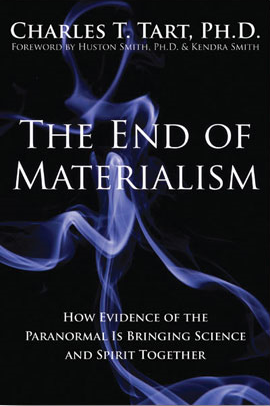
I read Charles T. Tart’s The End of Materialism because of my need for reassurance. Materialism leaves me cold. To find a scientist who feels the same way is a bonus. Not all authorities agree that we’re just excited atoms that can be seen. Tart is willing to consider the spiritual as part of what the evidence reveals. He explores it in the context of psi rather than in the doomed attempt to test religions empirically, but he does make a case for more to this universe than Horatio’s philosophy ever dared dream. And some of that more is decidedly not physical. It’s what we know from our experience of the world. We don’t only reason, we also feel. I have to wonder if reason is really the friend of materialism after all.

You can’t walk across Manhattan without seeing an ambulance most days. Often they’re called out to collect some unfortunate homeless person who collapses from our collective neglect. If we are only matter, then why do we bother to assist those in distress? It’s just a little electricity and some chemicals in a biological organ, right? Consciousness is only an illusion, after all. Unless, of course, the person suffering is a prominent scientist. Then we should all make way for the ambulance lest we lose an asset of great value. Materialism is insidious in its take-no-captives mentality. Feel what you will, there’s nothing more to life than physical stuff. You can make a good living believing that. Why is it that I’m suddenly thinking of Hell again?


Skynet

DSCN5012

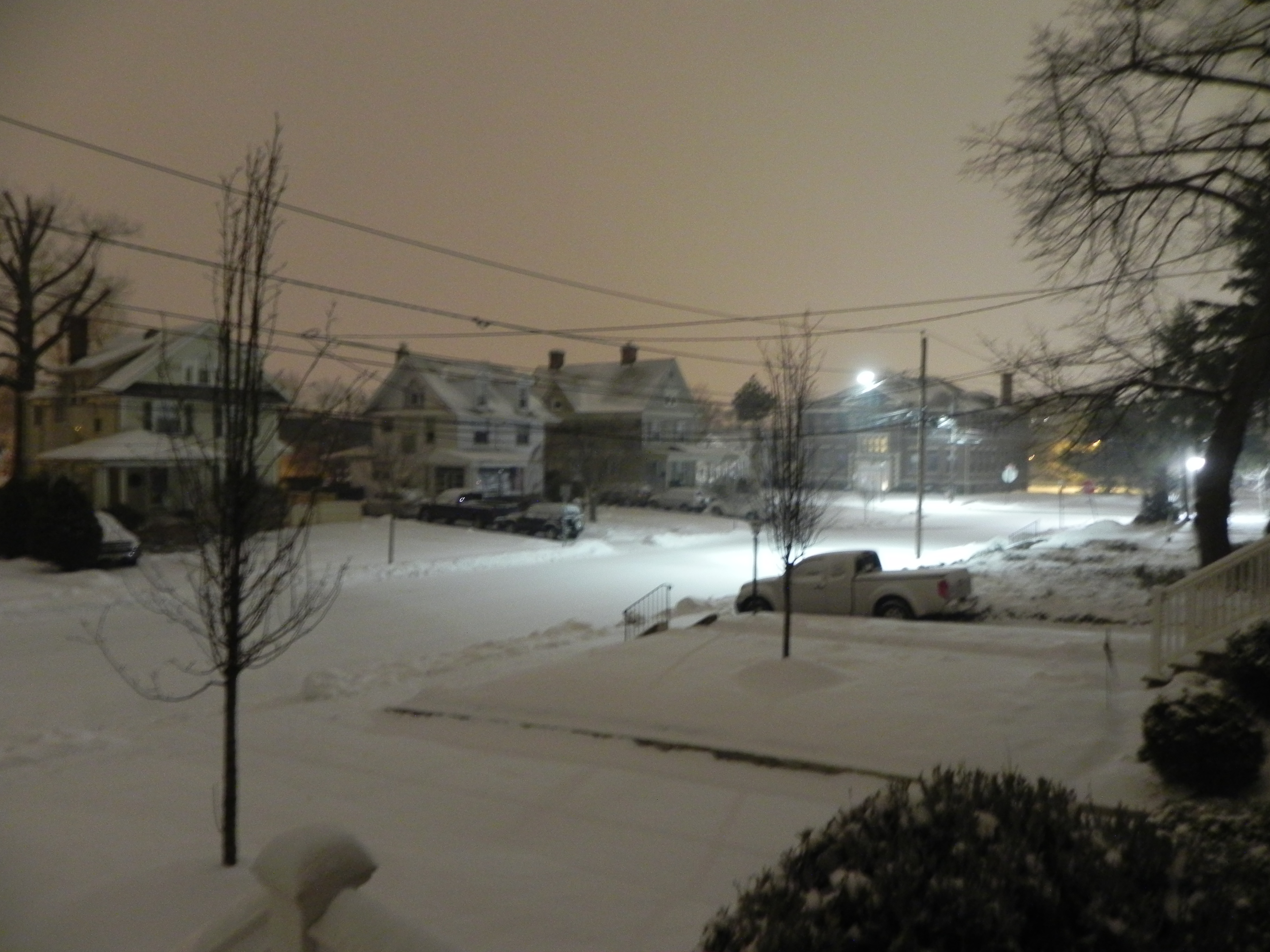
Of cultural innovations, none rivals the internet. Engulfing the world in its wide web, the constant availability of signal has changed everything. In the past five years, civilization has become something that it was not. Take today’s northeast blizzard, for example. Apocalyptic meteorologists (are there any other kind?) are sincerely telling the camera that nothing like this has been seen in recorded history. Meanwhile, my wife’s company sends a Honeywell alert to our phone saying the offices will likely be closed, and please make arrangements to work from home. The snow day is dead. One of the simple joys of life, that delightful naughtiness of playing hooky, is now extinct. Work knows where you are at all times. You are being watched. Sound paranoid? I have known people who had firsthand knowledge of employers following them on Facebook to make sure they didn’t say anything that might make the company look bad. The world is not the same one into which I was born.

Screen Shot 2015-01-26 at 7.55.18 AM

I happened upon a web page the other day advertising for an Advanced Assistant Professor in Digital Shakespeare Studies. A poem by any other name we would tweet. So we have become part of this collective mind known as www dot. The internet is aware that it is still snowing, but only in an academic sense, since it’s not going anywhere. The internet has never had a three-and-a-half hour commute home because of an accident on a single highway in New Jersey. Oh, and don’t forget to check your work email when you get home. We may have sometime more for you to do once you’ve clocked out. Maybe I should see what my social network is up to.

Screen Shot 2015-01-25 at 7.20.01 AM

LinkedIn, Facebook, Twitter, Google +—they all suggest people that I might know. Someone I might rate, or like. The internet, after all, knows which of its myriad sites I’ve viewed, whom I’ve emailed, and what I’ve purchased. The ads from those companies show up on every website I visit from now on, world without end. ThinkGeek emails me every day. My new best friend. Google + is the more intellectual Facebook, I’m told. Whenever I log on, it tells me with whom I might want to connect. Just now Newt Gingrich showed up in my list. Should I add him to my circles? Or should I just venture out into this blizzard and hope I make it to New York City alive? To me, it seems, the odds are equally good in either case.


Seeing I

One of my few Twitter followers (stawiggins) suggested that I watch Dr. Ken Hayworth on YouTube. Specifically, Part 3: If we can build a brain, what is the future of I?, hosted by Galactic Public Archives. It is well worth 9 minutes of your time. Trying to figure out consciousness has been a major preoccupation of mine for some years. I don’t have the tools of neuroscience, but I do have over half a century of coming to know this “I” that constantly seems to wake up in this same body and experience all its woes and occasional joys. Hayworth suggests that the self is a model projected by our brains to help us make decisions and to plan for the future. In a fascinating thought experiment, he notes that if a duplicate self were made, we (or I) should not object to being executed since there is an exact copy now. Hayworth notes, however, that any individual will object because we are “designed” to think this way about ourselves. Designed, I wonder, by whom? I suspect Hayworth means evolution designed us that way, but evolution is non-teleological, and, I suspect, not really reificatory. Evolution is merely a process.

Perhaps the horns here are only those of a semantic dilemma, but I feel not. Hayworth goes on to discuss how instinct works to continue this illusion of self. I’ve never found instinct a very believable concept. We use it when we want to deny consciousness to animals and very young children. Since they can’t have a concept of “I” they have to have “instinct” to preserve themselves. Logically, to me, this seems to be fudging. What is instinct? Is it really any different than admitting at some micro-level, animals have consciousness? To me it seems that consciousness is one of those “turtles all the way down” kinds of propositions. To be alive is to be conscious at some level. Be careful how far down you dig here.

DSCN2021

Hayworth then goes on to what sounds like an almost biblical conclusion. Ethics insists that humans are part of a whole. (A very diseased whole, as the imbalance in society forces us to conclude, but a whole nevertheless.) To kill one is to violate the consciousness of the whole. This concept seems sound, and I would suggest that it might benefit from expansion. Why stop at the human level? We are animals. Animals are conscious. Here we are back at the turtles again. Perhaps we have expended too much energy trying to parse self from soul from mind from consciousness. Perhaps we are all part of a large collective consciousness. If so, we got some very sick units near the top. Any organic being that insists only one percent needs to be kept in perpetual plutocratic indigence while billions of others wonder how long they will survive at this payscale in this economy, or, more realistically, act as slaves to that one percent, is a sick beast indeed. If consciousness is collective, we could all use a massive shrink.


Soulful Phantoms

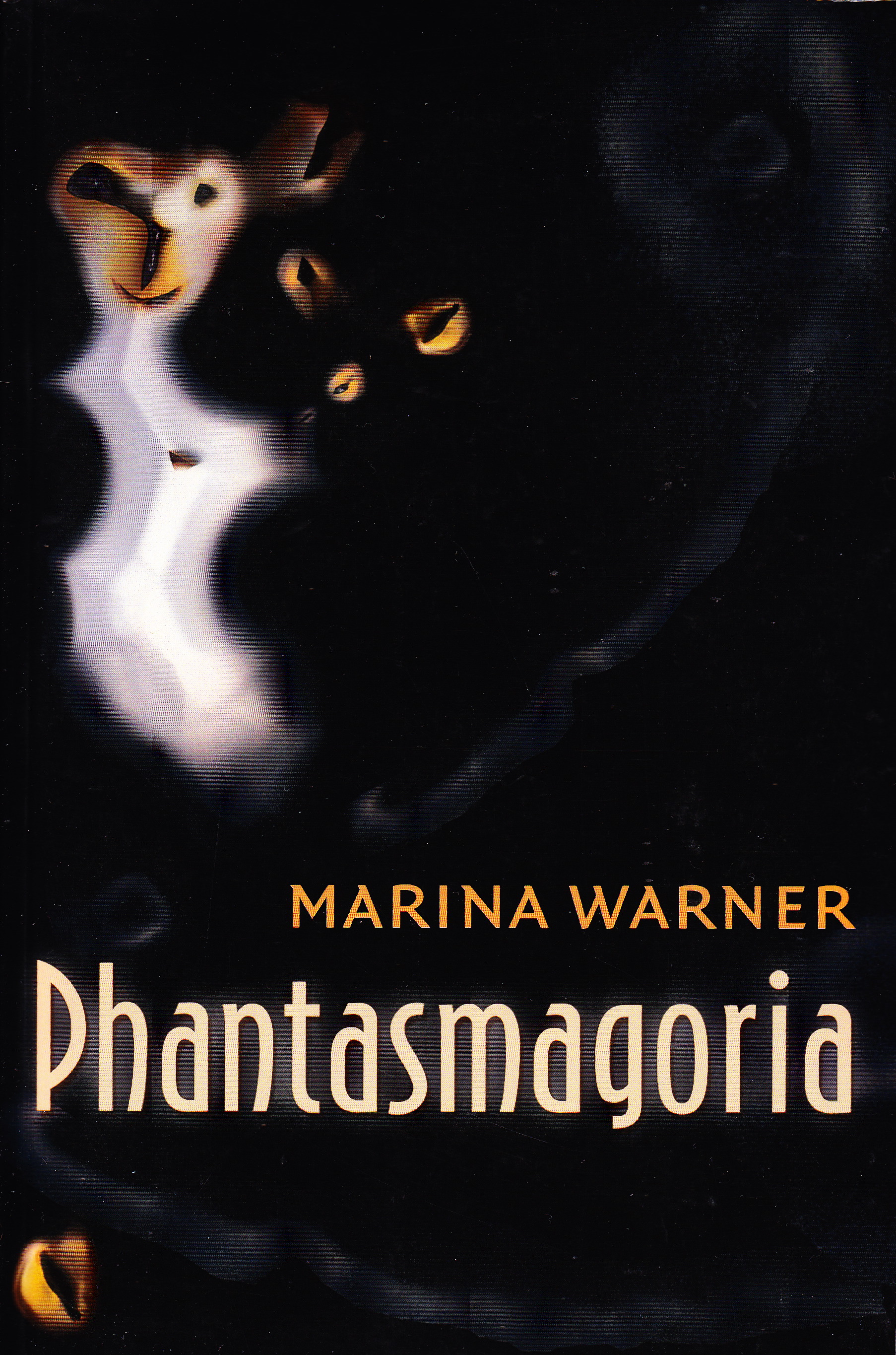
PhantasmagoriaPhantasmagoria is a most appropriate title for the book by Marina Warner that bears that single-word name. The back cover bears none of those helpful tags that give the reader a handle by which to categorize the book. The subtitle helps somewhat: Spirit Visions, Metaphors, and Media into the Twenty-first Century. The book is about ensoulment. The popular rage among many academics is the exploration of embodiment—the times and trials and wisdom of having a physical body. (We all know it, but it is the scholar’s job to think about it.) Warner asks what soul stuff is and pursues this through many media: wax, air, clouds, light, shadow, mirror, ghost, ether, ectoplasm, and film. She’s not suggesting that souls are made of these things, but rather that people have used these media to explore what a soul might be. Apart from being a fine historical resource on these different avenues of exploration, individual chapters in the book focus on various artists, psychologists, parapsychologists, writers, and Scriptures. This makes for a fascinating, if challenging, exploration to undergo.

One of the topics that emerges in the discussion is how soul distinguishes itself from other unquantifiable aspects of being human: what is mind, for example. We can’t really define soul, but it is frequently differentiated from mind or personality, neither of which is particularly well understood. In an era when we’ve not so much ceased to ask these questions as sublimated them into various fictional realms, a book like Phantasmagoria is especially important. The reaction against materialistic reductionism is strong, if not empirically provable. We still flock to theaters to watch zombies on the screen, precisely because we too have become soulless. Romanticism had a place for Gothic sensibilities as well.

Along the way Warner makes a particularly apt observation that politics and entertainment have become difficult to distinguish. Thinking over the number of entertainers who’ve become policy makers, this is a particularly disturbing thought. We trust the media and it gives us entertainment. Most college professors make so little money as to be jokes when it comes to running a political campaign. Where your treasure is, as the saying goes. Media, in all the forms explored, has failed to capture the soul. The chapter on Revelation (the book) is truly spectacular, coming, as it does, in the section on film. It is the embracing of the chimera of the end of the world pieced together from various myths and nightmares that our political leaders find, in many cases, far too compelling. Someone like Warner might be a much better leader to trust, even if she is a scholar.


Bodily Futures

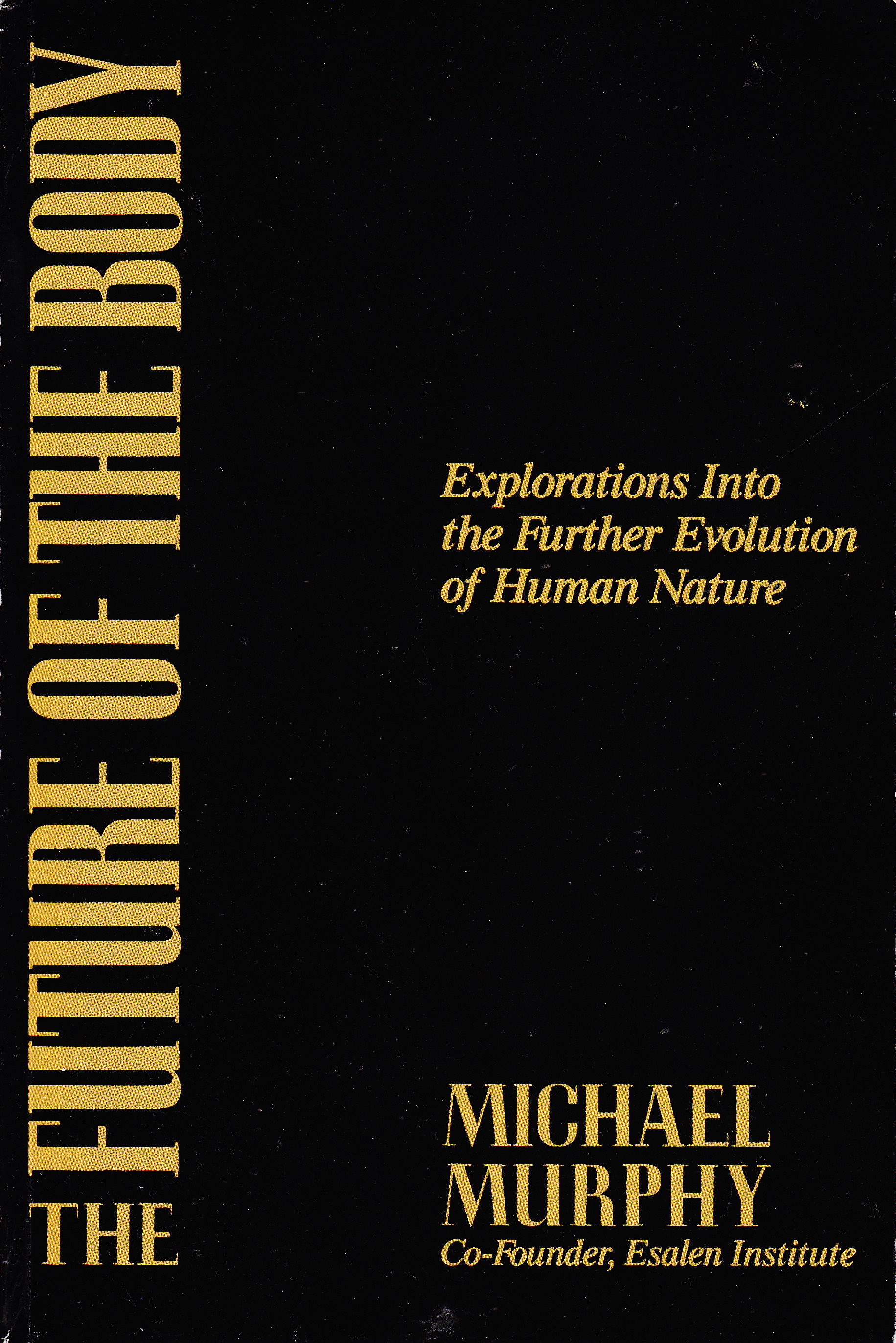
FutureOfTheBodyJust about everyone I know has their own method of curing the hiccups (or, in their more evocative spelling, hiccoughs). Most of these involve holding one’s breath or elaborate ways of drinking a glass of water. Since hiccups are involuntary spasms that can be quite annoying, they can’t be predicted or easily foreseen. Some years ago I realized that the methods I’d been using to rid myself of this unpleasantness were really just ways of getting my attention off of the hiccups—in other words, it was a matter of concentration. I started to respond by thinking the hiccups away whenever they struk me. Cut out the middleman, as it were. And it works. All of this is preamble to the remarkable material to be found in Michael Murphy’s The Future of the Body: Explorations Into the Further Evolution of Human Nature. Murphy is one of the co-founders of the Esalen Institute, about which I’ve posted before. Promoting exploration of human transformative potential, Esalen was a landmark in 1960s culture that I was a little too young to appreciate. Besides, I lived far from California and in a strictly religious mindset. Those who founded Esalen knew, however, that people are capable of more than we appear to be.

Human transformative potential involves matters with which materialistic science is often uncomfortable. Religious practices such as meditation, sports, and martial arts training, all, however, can produce results that shouldn’t be on the books. Whether it is the basketball player who can stay in the air a little too long, or a religious adept who can survive being buried alive for protracted periods of time only to be revived later, or even the remote viewer hired as a spy by the government, people are capable of more than we’re told we are. Murphy suggests that perhaps it is because we are socialized to think this way. Our young minds are open to a realm of possibilities that adult minds have been conditioned to discount. If it’s impossible, it’s impossible. Or is it?

The Future of the Body will take some readers where they do not wish to go. The fact is, however, that faith healers and stigmatics exist without fraud. Just because some frauds imitate reality, it doesn’t follow that the genuine article can’t exist. The usual reductionistic answer is that such things can’t possibly be real—let’s teach our children this fact—we are only robots made of meat. But this view still hasn’t accounted for consciousness, and consciousness is, at least for most of us, inescapably real. We know that because these bodies with whom we are associated do all kinds of things that bring it to mind. We get sick, we experience pain and emotion. We get up and go to work when we don’t feel like it. Most of the time we’re conscious of where we are, and what he have to do. Or do we? It very well may be that matters much larger than the hiccups might just be negotiable.


Grin and Bear It

The dentist’s chair is about the last place I’d like to spend my Saturdays, but given my work schedule there are few alternatives. So there I was yesterday, yellow light glaring in my eyes, drill whirring ebulliently away, and finally gagging embarrassingly into the tiny sink at my right. Those back teeth come in handy for grinding, but they are poorly designed for brushing. I find the dentist’s office a good place for philosophical thought. In that chair where I’d rather not be, feeling sensations I’d rather not feel, I wonder in what sense my body is my own. Lately I’ve been contemplating this quite a bit. Consciousness seems attracted to a single body at a time, but the biological organism I call me doesn’t always have a say in where it is slated to go, or what it is free to do. Each job I have taken has come as an “only offer”—I’m not one of those over whom bidding wars are likely to erupt. That crown that popped off my tooth wasn’t really my doing, nor was the memorable root canal that led to it being there in the first place. Still, here I am.

Photo credit: Richard from Canton, Wikipedia Commons

Photo credit: Richard from Canton, Wikipedia Commons

Religions regularly teach that overcoming physical limitations is one of the perks of paying attention to your soul. I suspect parsing soul, consciousness, mind, and psyche is to slice this entity I call “me” a bit too thin. Whatever all or any of this is, having x-rays shot through it while the assistant hides behind the wall, it is hopefully made of sterner stuff than the teeth nature has given it. One hopes that this can’t be all to expect out of our existence. Life, if only our physical years, is too short to spend much of it in the dentist’s chair.

I’m not sure I like dentists knowing more about this body than me. Is it mine at all? I recall the exasperated call for a tongue blocker in a Wisconsin dentist office and the tooth-meister proclaimed, as if I weren’t in the room, “he has a curious tongue.” I don’t intend for my tongue to be curious, but it always seems to wonder about what finds its way into my mouth. Is it me? Is it mine? The consciousness always seems to come back to this body that does things I can’t control. These thoughts come on a sleepy Saturday morning when I should, by all rights, still be in bed. That is, if I’m indeed the one who wakes up in this body yet again today. And whichever body it may be, if it is mine, I know I brushed its teeth before going to sleep, as I have for as long as I can remember. And yet the drill whirs on.


Weather for the Birds

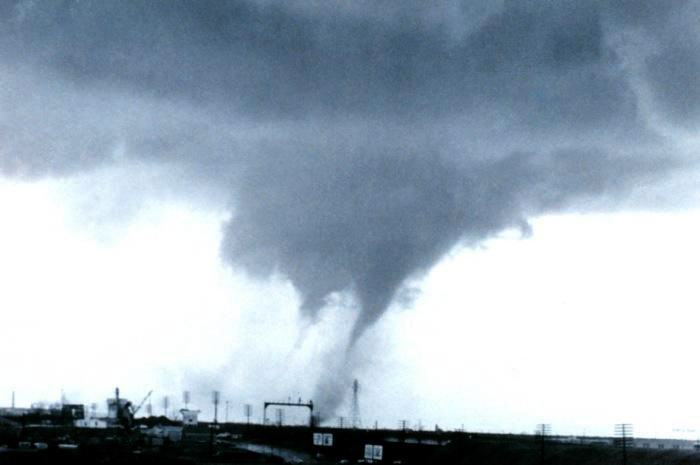
As Christmas nears so does a warm front, dashing hopes of a white Christmas in New Jersey. Well, at least there are no tornadoes coming. The weather, as my readers know, has long been perceived as a divine barometer. In a time when patience is wearing thin with religion, and weary headlines ask if it will ever finally disappear, our animal cousins seem, as usual, to pick up on clues more readily than we. An article on the BBC science page describes how a set of tagged golden-winged warblers vacated their nest a day before a tornado struck. Scientists suspect that the birds—and likely other species of birds as well—picked up the infrasound of the tornadoes that is well below human hearing range. Sensing the danger, they flew nearly a thousand miles, stopping just south of the storm’s track.

1957_Dallas_multi-vortex_1_edited

Of course, tornadoes don’t last an entire day. If the birds fled that long in advance, they couldn’t, I suspect, have heard a tornado that hadn’t formed yet. Since I’m no scientist, I’m not really qualified to offer an explanation, but I do wonder if such behavior isn’t related to consciousness. Several books that I’ve read recently have explored the concept of animal consciousness, and although we are reluctant to admit them to the realm of the self-aware, I wonder how long we can deny it. No doubt, if the birds fled (and returned after the danger had passed) there was an intentionality to their actions. Jealous of our intelligence, we must find a way to explain that animals can predict natural disasters of many kinds long before humans detect their more obvious traits. Our technology gives us seconds, or minutes, of warning. Dogs, cats, and birds know well in advance. But we are the superior beings here.

One of the problems with consciousness is that we can never get outside our own. Other people act in ways similar to us, and describe similar mental states, so we assign them the same kind of consciousness we have. Animals, not using human language, also act in similar ways to us. We call it “instinct” and continue on to the truly important stuff. I have no idea if birds can detect infrasound; I wouldn’t be at all surprised if they could. Without the ability to place it in the context of danger, however, I doubt they would take a thousand mile vacation just after their annual migration. We could learn a lot from our fellow creatures, if only we’d admit them to the conscious club and not the food club. And perhaps they might be able to explain to us why, despite all we know, religion never seems to go away.


Moral Animals

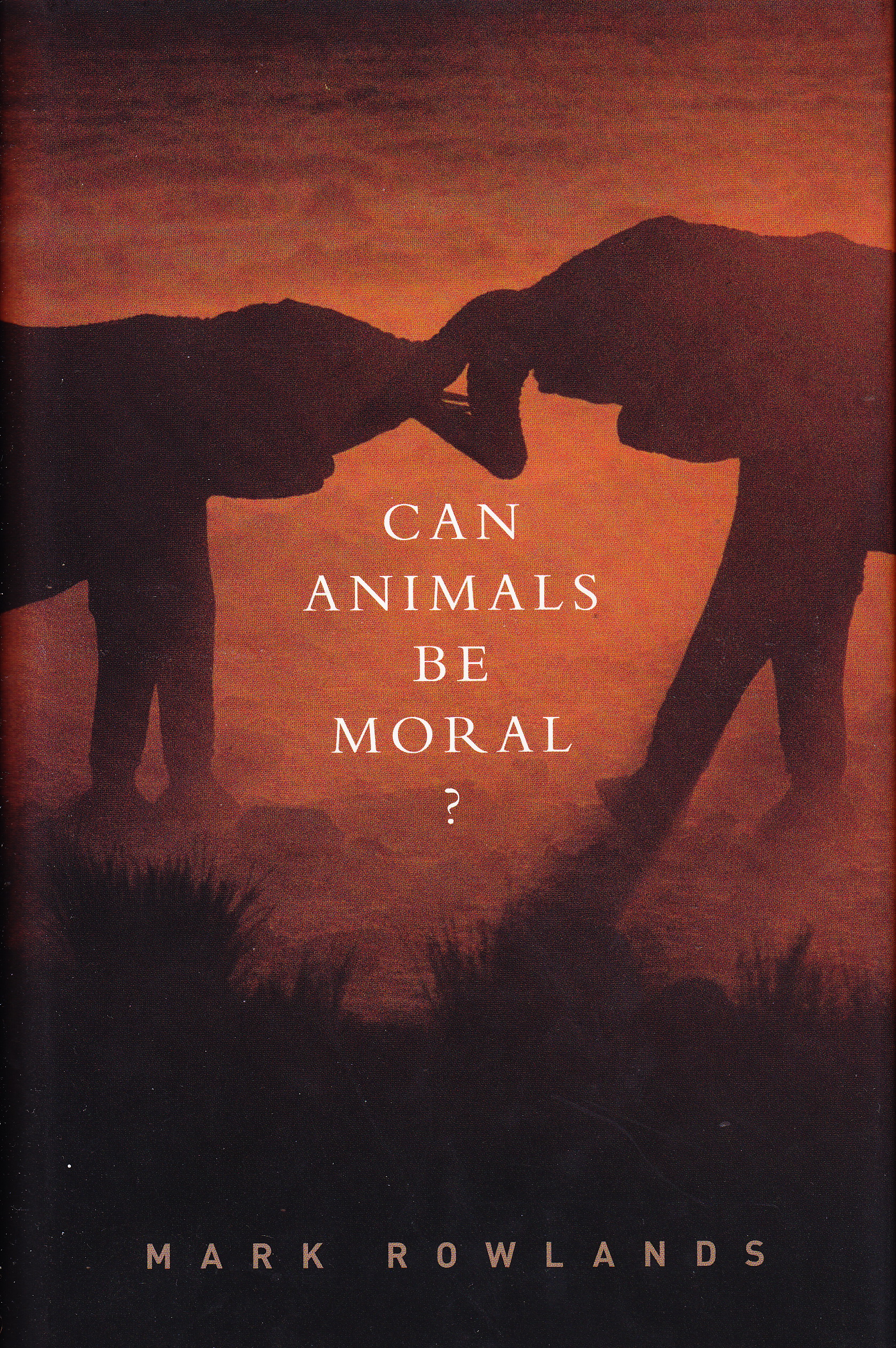
CanAnimalsBeMoralFor all of my life that I can remember, I have felt an affinity with animals. Even when I was relentlessly taught that evolution was wrong—Satanic even—I still held onto the idea that animals are more like us than they are different. I know this is partially the great sin of anthropomorphism (although I secretly doubt it is a mortal sin), but when I’ve interacted with animals, or watched them interact with each other, they’ve convinced me that they’re thinking. Since, however, we are the very top of the food-chain, we can’t allow such things. That’s why I turn to philosophy. Perhaps public transit isn’t the best place to appreciate fully a book of philosophy, but it’s the only time I have. Those who think categorically and with such rigid logic surely must have something to say on the issue of our fellow creatures. Mark Rowlands’s Can Animals Be Moral? is one of those books that might not be best read on a bus. I found myself constantly wanting to draw diagrams to visualize the course of his thought as we hit another pothole, or an angry bird killed a green pig in the next seat over.

While the animal stories that make such an engaging case are not a major part of Rowlands’s book, they nevertheless, for many of us lesser thinkers, seal the deal. When an animal acts in a way that shows its own lack of self-interest (how un-human!) we should sit up and pay attention. The question of morality, however, is thorny. Philosophers of ethics and religious analysts of the same seldom come near one another in their conclusions. We don’t know why we think morally, but it is clear we often do. It is obvious that it isn’t solely because of religion, although religion sometimes has a hand in it. It is, at the end of the day, a matter of feeling what is right. I feel that it is right to treat animals as thinking, feeling creatures. But are they moral?

Rowlands shows that some of the implications of animal morality can be serious. It was not that long ago that some animals were put on trial for the harm they’d putatively caused. Some were executed. (I wonder if they were eaten afterward?) If we attribute morality to animals, can they be blamed for their actions? Here is where the brilliance of Rowlands’s carefully argued book comes out—animals can be moral subjects without being moral agents. That is to say, they can act morally, but they can’t reason it out. I’m sure that I’m not saying this right, but the basic idea still appeals to me. Reading his final chapter on how moral Martians might view the naked apes of this planet gave me the chills. When we take ourselves off the top of the food-chain, the view becomes very sobering indeed. Would we want to be treated by Martians the way we treat animals on our own planet? Morality lies at the answer to that hypothetical question.


And With Thy Spirit

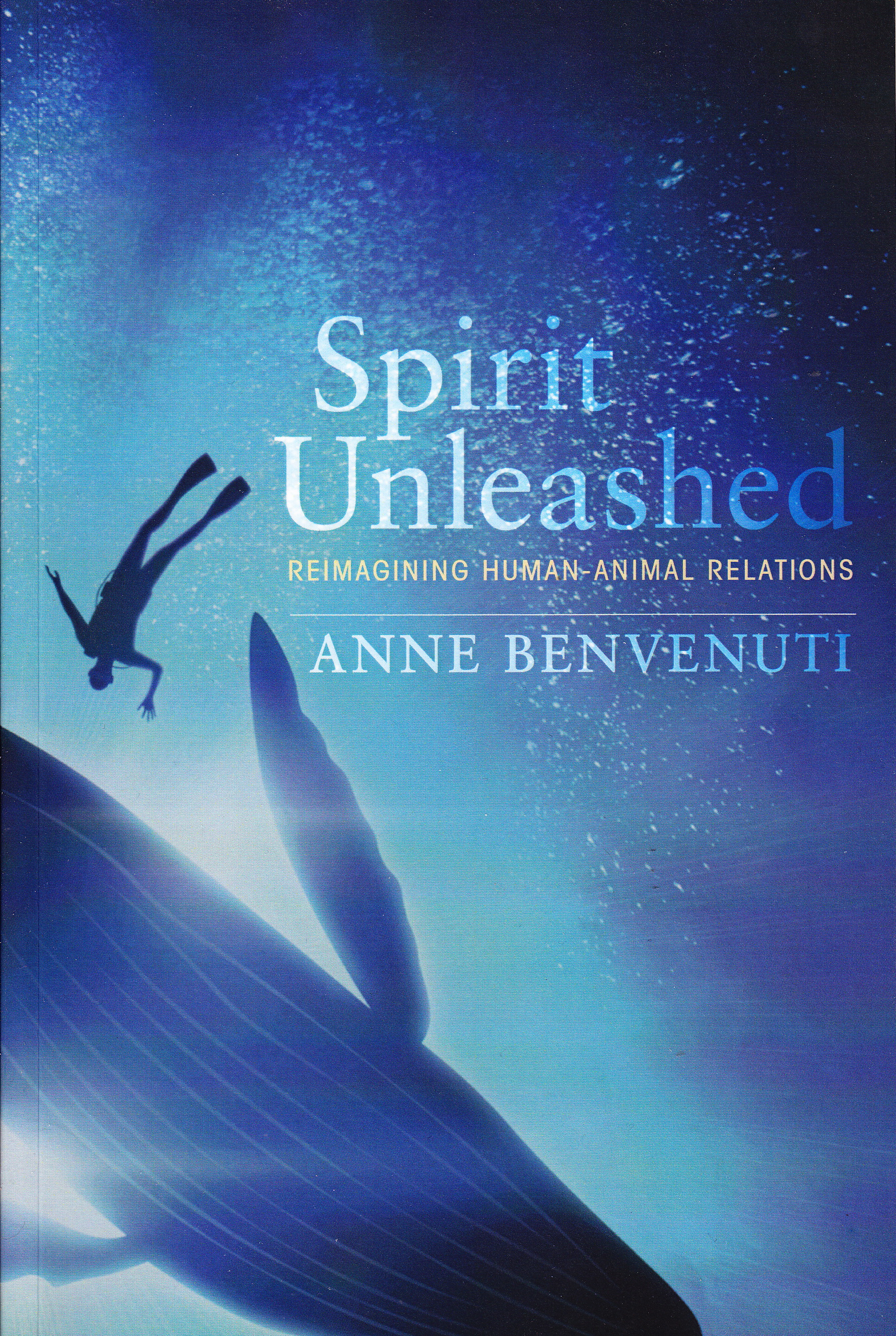
BenvenutiI grew up with pets. In a house with three boys, an aging mother, and no husband, my mother seemed to know instinctively that animals were a way to engage children. She herself had grown up with animals, although not really from a farming family. Living with animals leads to conclusions scientists fear to make. That’s one reason I find Anne Benvenuti’s Spirit Unleashed: Reimagining Human-Animal Relations so important. Not only do animals remind us of who we are, they are who we are. Benvenuti has the scientific credentials to make her case, although, I have to admit, her anecdotes of interactions with animals were my favorite part of the book. We may be told that animals don’t think or feel. Nature, however, proves that wrong for anyone who actually pays attention to animals. Unfortunately, humans are often the bullies of the planet just because our animal brains developed the way they did and our thumbs migrated to a position where we could easily manipulate objects. It’s time to bring animals up to the table with us.

For years I have suggested to my students that animal behavior has the rudiments of what we call religion. I’ve always felt like a voice calling in the wilderness here since both proponents of and opponents to religion think it is uniquely human. Again, the evidence suggests otherwise, but human knowledge often comes at the cost of evidence. It is refreshing to read a book—perhaps the first I ever have—that makes this idea plausible. The “spirit” of Benvenuti’s title is literal, in a sense. She argues forcefully that animals have souls and with this I would agree. The main problem is that we can’t quantify souls and therefore we don’t really know what they are. We know one, however, when we feel one. I’m not sure they’re much different than minds, or maybe they’re the feeling side of the thinking mind. Whatever they are, we are not the only animals to have them.

I’m convinced that one of the reasons we don’t like to admit animal souls (or animal religion) is that such belief ratchets up accountability. Stockyards start to become detainment camps for innocently condemned creatures. If we dare address the moral issue, we have to ask what gives us the right. To kill for food is natural (although I’m happily vegetarian) but to keep animals in miserable conditions their entire lives and then heartlessly kill them and process them as if they were mere objects is immoral. As Benvenuti notes, even farmers who spend time with their animals know they have personalities. Spirit Unleashed is a book full of wonder and awe. Not so much at human superiority, but rather at how much animals really are like us. How they communicate with us if we’ll listen. And how we all have, even if we can’t define the word, souls.


Spirit Works

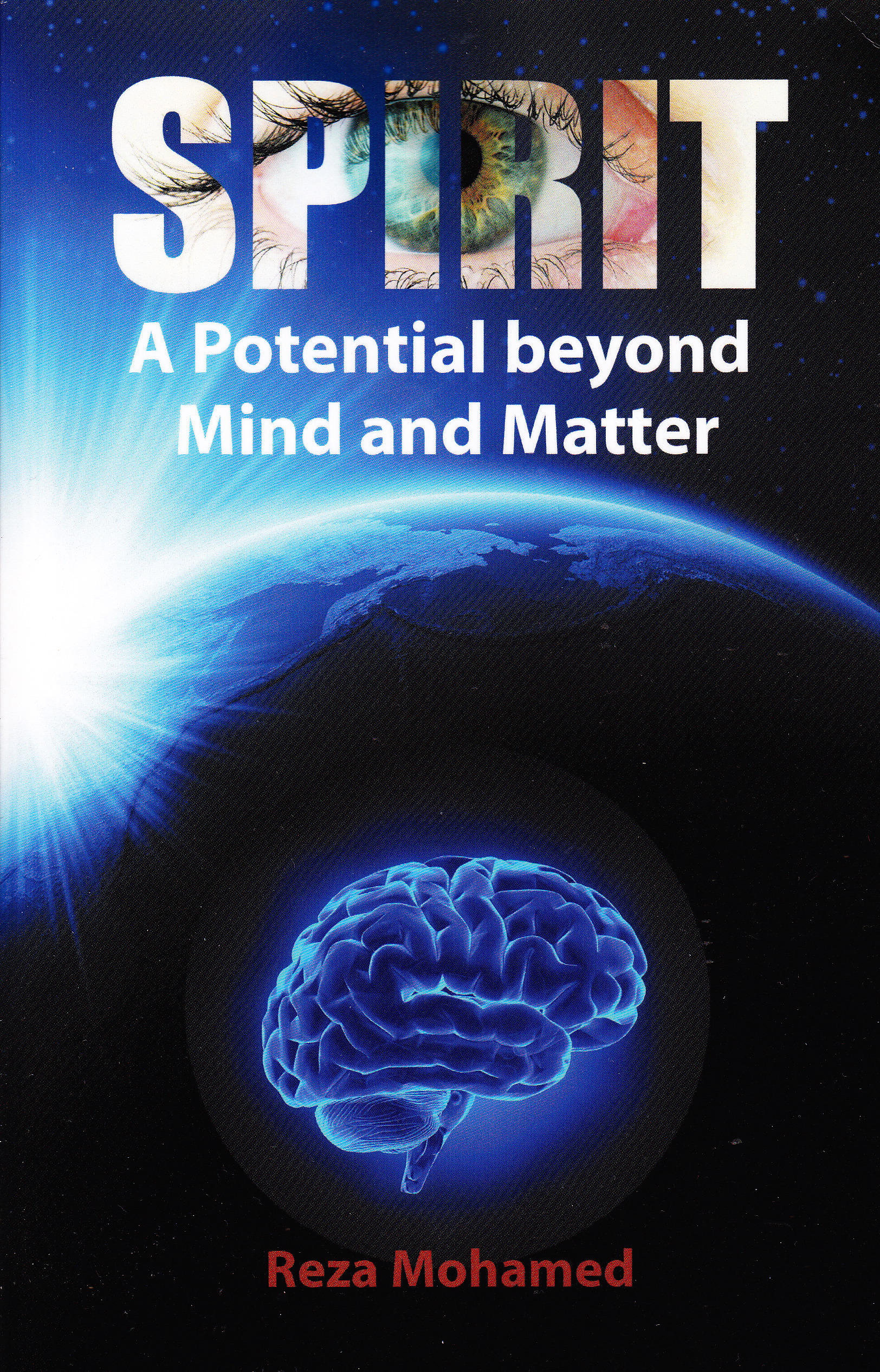
SpiritOne of the unexpected (for me) perks of the academic life was book reviews. Some journal editor would send you expensive academic books you get to keep, just for reading them and giving your opinion in writing! Most academics, truth be told—at least old school ones—would work for books. But don’t—wait. I was going to say “don’t tell the dean,” but it is clear that administration is way ahead of me on this one. In any case, I miss not having a viable academic opinion any more. Not having an institution means journals no longer care what I think about books. Also, working in publishing, there may be a conflict of interest involved. That’s why I was so happy to learn that blogging also leads to free books, on occasion. Most of them aren’t university press books, but you don’t have to be a professor to have something profound or useful to say. So it is that I came to read Spirit: A Potential beyond Mind and Matter, by Reza Mohamed.

There were several points that stopped to give me pause in this book, but about half-way through an idea caught me and has stayed with me since. It revolves around the idea of consciousness, something that Mohamed writes quite a bit about. A number of sources lately have suggested that consciousness is not unique to humans. Clearly, to my mind, animals are also conscious, and I think evidence points to consciousness, on some level, for plants as well. Perhaps even what we call inanimate, or inorganic material. Indeed, perhaps the universe itself is conscious. What occurred to me in reading Spirit, is that perhaps consciousness is the primal element. Maybe it has always existed. Could it be possible that we, like riders on a train, borrow a bit of consciousness while our bodies last, and then when we expire we simply climb off that train and consciousness continues on down the track, waiting for the next passenger?

It is nearly impossible to determine whence consciousness arises. Believing that it always existed is more plausible to me than the odd suggestion that it is just what happens when neurons get all mushy from being too close together. All creatures, as Mohamed notes, have will. Plants that follow the sun—slowly, and over years—seem to have a purpose as well. Who’s to say that it stops there? What have we lost if consciousness is endemic to the universe? Of course I don’t have any answers. Just possibilities. Ideas can spring unexpectedly from books, and as a sometime writer, I can say they even surprise an author from time to time. Then, of course, my opinion is merely that of an independent scholar. But I still find myself working for books.


Thinking about the Universe

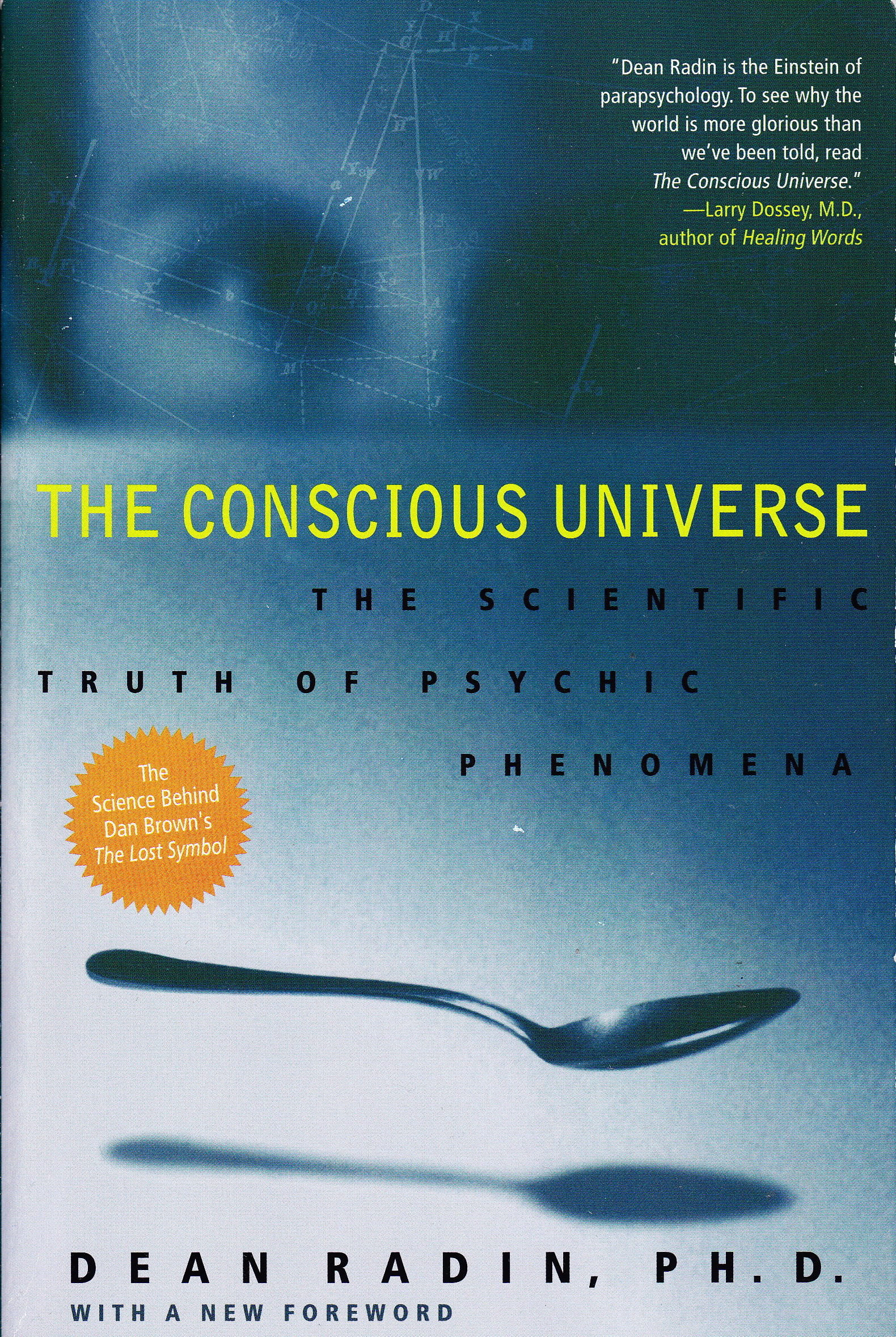
Conscious Universe Notwithstanding appearances, I have been reading. Despite the determination, disruptions to my commuting schedule always throw me off a bit. Having recently read The Holographic Universe, I decided to follow it up with The Conscious Universe. Subtitled The Scientific Truth of Psychic Phenomena, Dean Radin’s book is one of those that you don’t want other commuters examining too closely, although, however, they probably should. Radin is a fully credentialed scientist who has a rare trait: a willingness to follow where the evidence leads. Respectful of traditional scientific method and even mainstream science writing, Radin demonstrates in this book just how risky it is to go against the trends that are like deeply rutted wagon tracks over a sun-baked prairie. Science progresses by examining the evidence, but today science is, in some senses, over-reacting to the refusal of religious thought to, well, give up the spirit. Religion persists and rationalists can’t understand why. Investigating “spooky effects at a distance” is not entirely welcome in such a climate.

Radin, however, approaches psi with scientific rigor. Laboratory experiments, as he thoroughly demonstrates, have revealed with greater evidence than many readily accepted theories, that there is something behind psi. In fact, the government and private industry have invested, and continue to invest, in it. And in our more unguarded moments, most people will generally admit that sometimes coincidences are a little too odd, or that you might, from time to time, really be able to send a thought to someone else. The laboratory results, as Radin clearly shows, are simply dismissed as aberrations because they don’t fit into preconceived (frequently materialistic) worldviews. It is far easier to laugh than to sort out how all of this might actually work.

There is no triumphalism in this. It is simply the willingness to ask honest questions. Quantum mechanics, as physicists know, are not always as mechanistic as they seem. Even Einstein was willing to keep an open mind concerning the larger picture. The universe we envision today is not the same as that which Einstein knew. It isn’t easy to summarize what Radin is addressing in his book, but if I were to try I would say something like this: consciousness is essential. I know materialists dismiss essence, but I believe the evidence goes against them here. Consciousness is an integral part of the universe, and we can’t even define it yet so that all parties agree. If we don’t know what it is, how can we possibly know what it might not be able to do? Radin does what seems to be the only logical response in such a situation: he keeps an open mind.


The Presence of Ideas

Attending the American Academy of Religion and Society of Biblical Literature Annual Meeting is a bittersweet experience. There is nothing as awe-inspiring as being in the presence of ideas. Whether it is meeting friends who have grown old with me over the years, or younger scholars who promise a fascinating future, or those newly discovered that feel like old friends, they all have ideas. Of course, it is not the editor’s job to produce content, no matter how long or deeply one has been trained to do so. Here is where the bitter of the flavorful metaphor comes in: the suppression of ideas is painful. Throughout my career I have had the benefit of being trained by maverick thinkers who, although I hadn’t realized it at the time, were showing me the way to a kind of enlightenment. Enlightenment, whether it be the absence of thought or the plenitude of it, will lead to places we can’t possibly expect.

When talking about ideas with others I realize how artificial our trite divisions are. For many years I was labeled as a “Hebrew Bible scholar.” “A seminary professor.” Or any number of other simplified categories. My interest, however, was always the finding of the truth. No other goal, it seems to me, is really worth all the energy we put into academic discourse. Sure, I may have studied obscure dead languages—the kind of work that is required to read what many call the word of God in the original (and even earlier than original) language(s). There I found deities battling monsters and chaos perpetually lurking in the background. Ideas in conflict. I somehow knew truth would always win. In fact, I more or less took it personally when AAR initiated its temporary separation from SBL. The two need each other, no matter how much they might argue in the night.

What's the idea?

What’s the idea?

After my first full day of the conference, my head was so swimming with ideas that I had a night full of frightful intellectual dreams. Although I may have trouble convincing the great institutions of this land, I do know that I have something to offer. Ideas crowd around me like a newly exorcized man, seeking entrance to a receptive mind. The more we claim we know, the more we have to learn. I face another day of greeting ideas and seeking their company. Of course, I’m a company man, and I should know what I’m here for. The bittersweet truth of the matter is, however, somewhat more complex than that. I can think of no better place to explore it in the company of friends I’ve known for years, or even only for the past few minutes. As long as they bring their ideas.


Holistic Universe

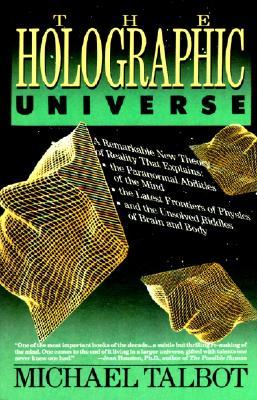
HolographicUniverseThings have been so busy that a satellite landed on a comet and I didn’t even know. I have always wondered about the universe. In fact, as a young man, vying with my tendencies toward ministry I had a vibrant interest in astronomy. The universe, however, has a predilection towards mathematics that frustrates my attempts to understand. I did well enough in my college astronomy class, but I knew it could never be my major. My recent reading reminded me of Michael Talbot’s The Holographic Universe—a book that has been on my shelf since about the time it was published. In my mind, holograph had translated into arithmetic, and every time I picked it up, fear gripped me anew and I vowed I’d read it later. Later caught up with me the last few days, and I found myself plunged down a rabbit hole that I did not even know was there. When I took physics there was no talk of quantum mechanics. It was all the three laws of thermodynamics and the angle of incidence equals the angle of reflection and things like that. Nevertheless, I continued to read science written for the laity, and Talbot’s book rather caught me off guard.

First off, I still have no idea how a holograph works. It is something that seems, to my pragmatic way of thinking, impossible. As Talbot explores this strange concept, however, he introduces a universe I began to recognize. This is one of those realities where the edges don’t quite meet and things that shouldn’t exist show up anyway. In other words, phenomena that are often called “religious” can be made to fit into a holographic universe. Talbot spends a great deal of time discussing miracles and healings. We know that they happen, but we’ve been conditioned to question them. They don’t fit into that universe Mr. Wynecoop told you about in eighth grade. And yet, there they are.

Even after reading the book, I can’t claim to understand how a holographic universe works, but I did come away with a model of reality that allows for the evidence generally swept off the table. Everything from ghosts to time warps are possible in a universe that is a holograph. I’d step off the bus never sure which reality I’d encounter. Still, glancing up at the dark sky, I knew that millions of miles away, someone had recently scored a direct hit on a comet and if we can’t even interpret all that we see on Mars, we’d better be prepared to open our minds for something new. After all, we only see what we allow ourselves to see. Society programs us, just as surely as any computer. And if, like a virus, you play by your own rules, you’ll be the enemy. If you’re willing to ask the uncomfortable questions you’ll be labeled as having tea down a rabbit hole. Maybe, however, I can find a home here. As long as Deacon Dodgson can take care of the math.


Know It All

Perhaps it’s the fact that I had a career malfunction in the middle of my chosen vocation, or perhaps it’s a natural consequence of earning an advanced degree. Whatever the cause, I am convinced that I know less than I used to know. That’s not the same as not having learned—indeed, it is a consequence of precisely that. You see, my education has led me to believe that things I thought I knew were not, in fact what I knew them to be. We all live with false assumptions—the sun rises and sets, the earth holds still, and that we aren’t made up of particles so tiny as to be invisible and that are mostly empty space. There was a time when I believed that science gave “the truth,” but we now think of science as ever provisional—the best theory to account for the facts at this time. It is open to change. And in fact, we know very little.

A deep irony lurks in the fact that many people treat their religion as the locus of certain knowledge. This is a known fact; Jesus resurrected, Muhammad was a prophet, Maroni spoke to Joseph Smith. When confronted with contrary data, such thinking withdraws into itself claiming all the more loudly that it knows the truth already. Learning should, I think, may one more humble. More circumspect. Of course I think I’m right about things. If I thought I was wrong, I would change to the correct way of thinking. What I know, however, is a different matter. As I set out to learn a new career, I find I know less than I thought I did. I know little and I know less all the time.

As an academic I can’t help but to spend my life trying to gain knowledge. I read voraciously, I try to engage in intellectual exchange with others. If I’m lucky, I learn something. And know that much less. That which I learn teaches me that I know less than I did before. The world is vast. The universe infinite, according to our best understanding at the moment. We travel through it all, picking up information and treating it humbly as we go along. I’m moving toward knowing nothing at all. Perhaps that is the true goal of all of this—to get to the point of knowing nothing. Then we shall be truly educated. Except, of course, for the true believers who already know everything there is to know. Of course we are all mostly empty space. I think.

DSCN4907


Growing Up

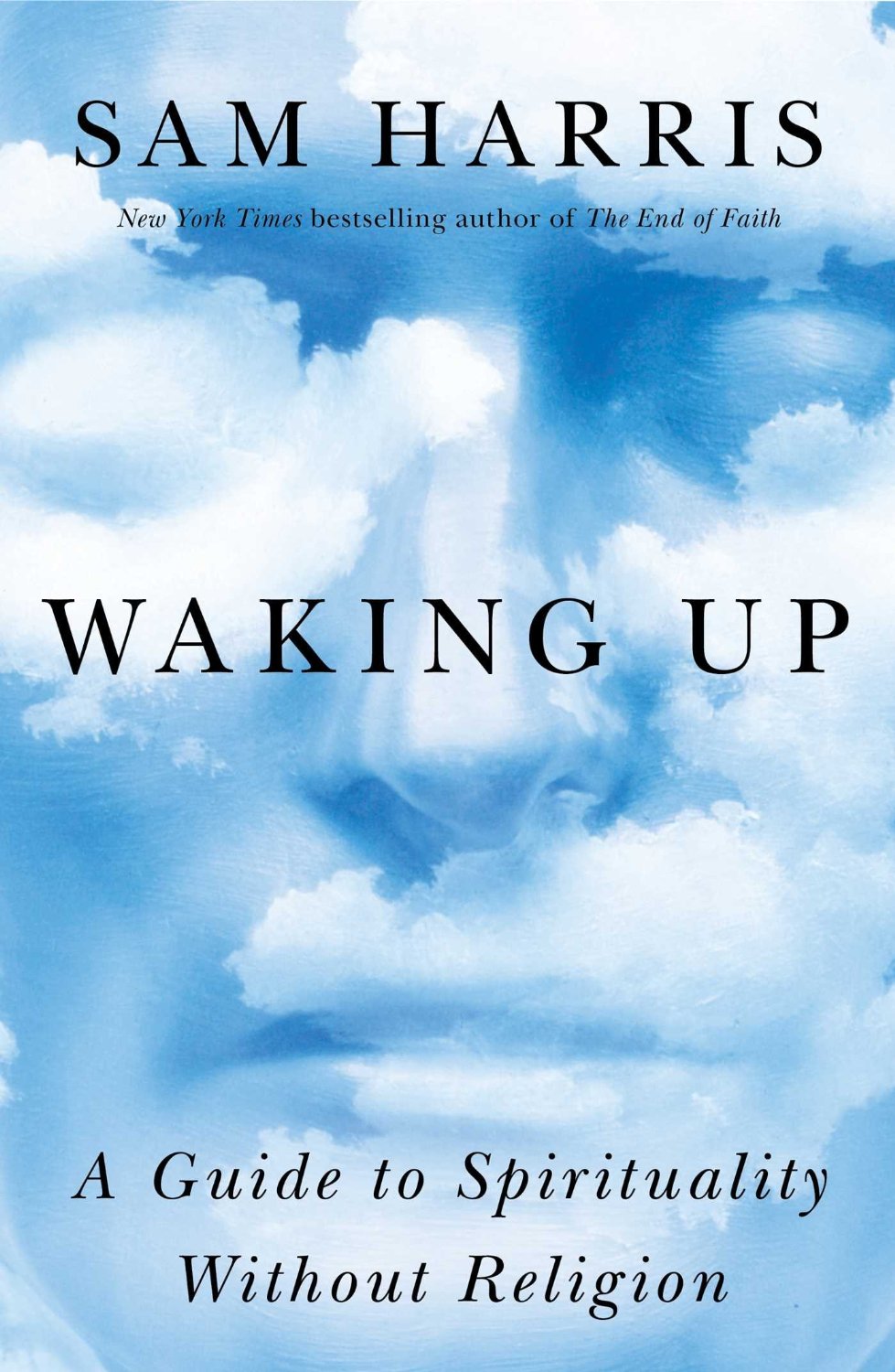
WakingUpI am in two minds about Sam Harris’s Waking Up. Literally. I haven’t read Harris since The End of Faith, and I have to admit that I found Waking Up to be a very engaging book. I can’t agree with everything Harris writes—that’s an occupational hazard of acquiring advanced degrees—but to have a scientist, an atheist no less, praise spirituality felt incredibly genuine. Spiritual experiences happen. I’ve had a few doozies over the years. I’ve also read a number of scientists who tell me they’re all an illusion. Harris admits that consciousness is a mystery. His use of “mind” instead of “brain” won me over from the beginning. I discovered that the atheist can also be a seeker. Dogmatism, of whatever stripe, is the enemy.

Harris has considerable experience meditating. This is no activity for posers or wimps. It is, despite minimal physical demands, hard work. Throughout the book we get the sense that Buddhism is among the least objectionable religions, when divested of its myths. I do wonder, however, if demythologized Christianity was ever given a fair chance. From my own experience, some of the selflessness advocated by Harris can be found in taking aspects of Christianity seriously. I understand, I think, Harris’s objections to religion. It can, and does, lead to horrors both obvious and subtle. Yet, every once in a perhaps great while, it does offer redemption. Meditation, for example, has its roots in religious practice. It is this that Harris calls spirituality. And it is good.

A Guide to Spirituality without Religion is an apt subtitle for this brutally honest and open book. Harris’s knowledge as a neuroscientist endows his ideas with great authority. He opines, and he is not alone, that meditation demonstrates that “I” is only an illusion. This loss of self will haunt me for some time. For decades I is all I seem to have. Still, I am pleased to find an open-minded scientist on this same path I tread. Raised to be both spiritual and religious set the trajectory of my otherwise logic-driven life. You can’t go back and change all that, but you can grow up. To read of Harris’s spiritual experiences in the geography of great spiritual masters as well as in the laboratory instill in this reader a profound hope. Whether or not this reader is merely an illusion. There may be morning after this long night, after all.