Making Sense

Science is more than meets the eye. Even since I was a child I’ve tried to follow what I can of science without a real microscope or telescope and a doctorate in some incomprehensible subject like chemistry. I guess that’s why I’m a fan of popular science—the kind that is written so a layperson might understand, or at least pretend to. Indeed, one of the complaints from scientists and others alike is that science has become so complex that only a specialist can really understand. I suspect that’s one reason religion continues to thrive; anybody can be an expert in religion, even a scientist. Nevertheless, science is based on empirical observation, now with instruments fine tuned to receive data better than human senses. So I sometimes watch Through the Wormhole to find out what is happening in the realm of pure knowledge. Although simplified to the digestibility level of the laity, Through the Wormhole tries to stay on base with interviews with mainstream scientists who are working at the cutting edge of what’s out there. I recently watched the episode entitled “Is There a Sixth Sense?”

I have no way of knowing what scientists think of such things, but I was glad to see the everyday experience of normal people addressed in this particular episode. Who hasn’t felt that weird pre-cognition from time-to-time, or felt like they were being stared at only to learn that they were? These might be the spooky effects at a distance that so unnerved Einstein, but they are part of human experience. We all go through it, but mainstream science comes up with a convoluted scheme whereby our brains project what actually happened back in memory before it happened so that it just seems like we knew something was about to transpire. Of they point to false positives—how many times did we think something was about to happen and it didn’t? We just don’t remember those. Still, this particular show brings together mainstream physicists and theorists usually considered outsiders, such as Dean Radin and Rupert Sheldrake (strangely omitted from the IMDB cast list). Several smart people, it seems, wonder if we are really all connected.

Mainstream science has grown terrified of metaphysics. The suggestion that anything might be remotely like the world of religion is frightening to those who believe we just need more precise calipers and higher resolution imagery to explain an entirely physical universe. This little universe we carry around in our skulls, however, is attuned to what we might just have to call the “spiritual” or some such moniker, just to differentiate it from the particles that we are told make up everything. Or is it strings? Don’t ask me; I couldn’t tell an up quark from a down quark. Interestingly, one is even called a “charm.” And then there’s the God particle, the Higgs’ boson that briefly reminded the world that Edinburgh is a top-rate university, although, as we all know, there’s no place like Harvard. For the rest of us, however, there’s the everyday business of work to face. And if I try to read a blog while on the clock, I definitely have a sense of being stared at, even when I’m alone in here.
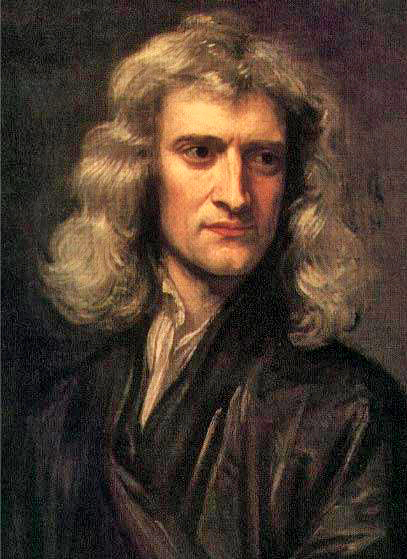
One of the last fearless scientists

One of the last fearless scientists

Apes and Atheists

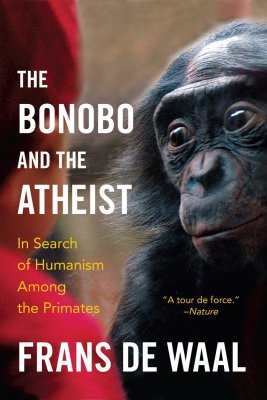
Bonobo&AtheistFrans de Waal is among the sanest of popular science writers. I’ve been following his non-technical work since Our Inner Ape through The Age of Empathy to The Bonobo and the Atheist. As de Waal himself explains, he tended to leave religion out of his earlier works since, for a scientist such topics are generally taboo. His direct address to religion in The Bonobo and the Atheist is refreshing and enlightened. As he notes, de Waal does not believe in God, but he doesn’t believe in the abolition of religion either. This sets him against his fellow biologist Richard Dawkins, who is so bright that the rest of us are burnt out dimmer bulbs by comparison. As de Waal soberly asks: what does science offer in place of religion? What is the point of taking away something that has evolved from our early primate days without offering anything to fill its spot? Even an ape would object.

What makes The Bonobo and the Atheist so engaging, apart from de Waal’s writing, is the openness of his outlook. De Waal suggests that the origins of morality and empathy can be glimpsed in apes and monkeys. He cites the reaction of chimpanzees to rain storms and even waterfalls that hint at early religious development. As I’ve suggested on this forum before, religion may even be allowed to animals. Their experience of religion is certainly not the same as ours, but there is evidence of both thought and feeling. When these are brought together they form religious belief in Homo sapiens. Why not in our ancestors and fellow animals? No, animals don’t develop elaborate doctrines or precious rituals. They do, however, reverence the powerful, ponder death, and feel emotion. Some of our great thinkers are ready to cast all that aside in the name of progress. More humbly, and circumspectly, de Waal considers that evolution is telling us something. And when evolution speaks, its children should pay attention.

Descriptions of reactions and behaviors that we consider unique to humans among the animal world draw me to de Waal’s books. As a scientist de Waal has to draw logical conclusions, and those conclusions point to an inner world that is not so much unique in humans as it is evolved. Religion, I believe, is one of those traits. If animals show some of the early stages of religious development, including a basic form of ethics, how does that devalue our human efforts to explain our universe? Religion is in good company, along with opposable thumbs and basic language comprehension. Looking at how we treat each other, I consider being related to animals a compliment most of the time. Without a doubt some of the ethics Frans de Waal illustrates among the bonobos exceed those I’ve experienced at the hands of many who think of themselves as made in the image of God.


Holy Cows

Back in the days when a book was a luxury item, great care was taken in its production and protection. Having your investment lying around with flimsy paper covers that would begin to grow blunt and roll back even before you finished reading would have seemed irresponsible. To shield the vital contents from the weather and other dangers, leather was used as a kind of skin—come to think of it, it really is skin—and safely the words were housed. Many of these volumes were, naturally, Bibles. Leather and the good book became synonymous for some—even with onionskin paper a book’s not a Bible with just a printed case hardcover. Paperback? How can you take that seriously? To make a Bible authoritative, it seems, cattle must be harvested. After all, sacrifice is at the center of it all.

Being a long-time vegetarian, this often gives me pause. My belt and watch-band are made of canvas, and I try my best to avoid leather shoes (although this is often difficult). I’m pretty sure that my leather Bibles are faux skin. Even though my family respected the Bible to the point of bibliolatry at times, we really couldn’t afford genuine cowhide. Now I take a more circumspect look at the cost of appearances. We’ve outlived the need for animal-bound Bibles. It has become more of an expectation than a necessity. An affectation. There is, however, still a big business in leather Bibles, and Italian leather seems the best fit for a Semitic savior.

What troubles me the most is the idea that animals—deemed not conscious by the very religion that allows their slaughter—are made to pay the cost for human foibles. The whole sacrificial system is built around a radical inequality. Humans domesticated cattle for their own exploitation, and their skins, when no longer needed by their hosts, came to clothe holy books of their masters. In any shade or hue of the rainbow. We can make it less grim by dying it a cheerful color and declaring its progenitor had no thoughts in its vacuous head. It lived a life of servitude and when it paid the ultimate price, it received the martyr’s gift of becoming part of the Bible. The end result? We should feel less qualms about our peccadillos and atrocities. We’ve wired their brains to trust us—we are not the predators to fear. Try not to take it personally. It’s just what our religion demands of us, for we too are a domesticated herd.

From the herd of purple cows...

From the herd of purple cows…


Credo Universitas

DeclineSecularUniversity“I am a Christian gentleman and I teach my course as a Christian gentleman.” The quote was made to me by a colleague at a state university, regarding a former professor of Hebrew Bible, or, in this instance, “Old Testament.” The idea rankled me a bit. You see, religion departments come under pretty constant attack for such things, since in the secular university—especially one that receives state funding—the disestablishment clause looms large. How can one simply bring one’s personal beliefs into the classroom as if normative? I suppose that’s why C. John Sommerville’s The Decline of the Secular University gave me pause. Sommerville, an emeritus professor of History at the University of Florida is no crackpot. He raises some major questions that universities, of all places, should be debating.

While Sommerville is not a scholar of religion per se, he has written about religion before, and he raises some vital questions regarding the secular enterprise. It should be no surprise that secularism can become a kind of religion, especially since the definition of “religion” is anything but fixed. We still don’t relally understand what religion is, except that every human seems to have it. Some call it rationalism or science, but it is essentially belief. None of us has direct access to reality as a Ding an sich, and we all choose to believe senses, reason, and tradition, to varying degrees. Our universities should teach us to be skeptical, but can they excise belief all together? To do so would be to reduce students (and that endangered breed, faculty) to sub-human.

What is it that makes the educated so afraid of belief? I suppose it must feel like weakness to a harsh rationality. Like the implacable Romans of celluloid fame, unmoved by human emotion. Mr. Spock in charge of the nursery. Religion is quite at home in the realm of emotion, and like it or not, humans cannot survive by reason alone. We need our feelings—survival instinct, by itself, is not always rational. As a society, however, we’ve downgraded religion to the point that universities have trouble taking it seriously. I’m sure it would open a few administrators’ eyes very wide to sit in on the religion classes I’ve taught at secular schools. Although most of the students are not majors, all, in some sense of the word, are believers. Sommerville’s book contains much that is challenging, but I think his thesis is absolutely correct: any institution that claims to be human, but removes the possibility of belief, is deluding itself and all its customers.


Holy Hollow

HollowCityEveryone wants to belong, to fit in. Growing up, I seldom felt I managed it. When you’re very young you don’t know enough to notice that you are more melancholy than other kids, or that you can’t afford the nice things they can. As you reach your teenage years, however, and you know that you come from the kinds of families that other parents warn their kids about (fairly poor, very religious, and just a bit peculiar). No wonder I find Ransom Riggs’ books so engaging. Yes, they’re written for young adults, but just about anything that Quirk Press publishes is worth the read. As an adult, if I’m honest with myself, I’m still waiting to feel like I fit in. The kids in Hollow City, the peculiars, know that they can never fit in. They have special, impossible talents that make them the targets of monsters called hollowgasts, or hollows, who try to gobble down as many as possible. Monsters, outsiders, and very human relationships—it’s a winning combination.

Quite apart from the spellbinding pace Riggs spins out (he’s a master of building tension), there are some quasi-religious elements in the books as well. I read Miss Peregrine’s Home for Peculiar Children a couple years back, and Hollow City develops the mythology a bit more. The real enemies are the wights—mean-spirited malcontents who rule the monsters. They learn that they can become demigods if they extract what makes a peculiar peculiar. That’s a religious concept: the essence that materialists tell us isn’t really there at all that makes us what we are. The children are self-sacrificial toward their mistresses, birdlike and godlike at the same time.

Peculiars have two souls, although most of us don’t know what to do with even one. The soul has, of course, come under great suspicion over the last century or so. There seems to be something that makes us what we are, and it isn’t just cells and DNA. Some call it consciousness, others personality. There are those with élan and others with spirit. We can’t call it “soul” because that smacks of superstition and yesteryear. So we read of children with two souls and none to spare. Even Philip Pullman had souls for his children in His Dark Materials. The soul, in both these book series, leaves a person completely dehumanized when it is excised. Of course, materialism will do that for free. Yes, I know it’s fiction—young adult fiction at that—but my money’s on Ransom here. Let’s hear it for those who have a surfeit of souls!


Med Ed

I’m not really the one who should be on oxygen in this situation. It was a routine, scheduled oral surgery for a impacted wisdom tooth. Not mine, but my wife’s. I sat in the recovery room and they wheeled her in on oxygen. When the doctor stopped in to check on her, he looked at me and said, “My God, get that man on oxygen! He’s going to pass out!” So they took the gas from my wife and laid me down instead. My wife had the magnanimity to think it was cute, but I felt embarrassed nevertheless. I couldn’t go into medicine even if I wanted to. I haven’t the stomach for it. So as I write this in the Urgent Care unit, I’m a bit light-headed. We came in for treatment of a snow-shoveling-related injury for my wife, and my mirror neurons are firing overtime. I hear them call a code red, and I think I hear the helicopter coming down and I think I might pass out. I can’t stand the pain-filled groans coming from the next room.

Compassion is one of the most overlooked of human virtues. I haven’t taken a sick day since 1987, but I’ve had companies tell me I hadn’t earned any yet. You have to earn the right to be sick. Even when I threw up on public transit two weeks ago, in one of the most embarrassing moments of half a century, I still got up at 3:30 the next morning to climb aboard again. So I’m sitting here, feeling ill, although I’m fine, and thinking about how people naturally feel for others. Only practiced cynicism can erode that. Or maybe I’m just a wimp.

It is no coincidence that most religions feature healers or healing as one of their central tenets. Life involves suffering, anticipated or not. There is something more than the physical going on here. Pain is the enemy, and I’m the one who’s well. There may be atheists in foxholes and even in hospitals, but they must be aware that the chemicals chasing one another around the neurons upstairs believe something else. Religion is a coping mechanism, perhaps something even more. So the winter takes its toll, and the snow claims another victim. All those instruments on the wall are beginning to creep me out. My mirror neurons suggest that if only those made of ice could melt with a little compassion, this world would be a more humane place. And when you get a moment, could I get a little oxygen over here?

Scare-Yous


Strange Orthodoxies

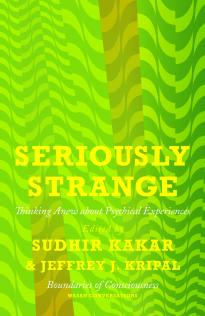
SeriouslyStrangeI had already read three of his books before I called on Jeffrey Kripal. Reading his work created a strange longing in me, as if I had been missing something I once might’ve had, but had lost on my way to academia. Kripal is a fearless writer and a profoundly kind man. He gave me a copy of his edited collection, Seriously Strange: Thinking Anew about Psychical Experiences, (co-edited by Sudhir Kakar, part of the Boundaries of Consciousness series). Like myself, Dr. Kripal had come to the conclusion that a number of apparently disparate human experiences actually belong to the same overarching class. Religion shares not a little ground with monstrosity, heroes, and the paranormal. With the exception of religion (generally) the other phenomena are classed as puerile and not worthy of consideration beyond their juvenile appeal. No real scholar would bother with them.

The orthodoxy of knowledge is a funny thing. I have been fascinated by what science teaches us about the universe since I was I child. Some of it is seriously strange as well. I always thought that science was observing the world closely and drawing logical inferences. Somewhere along the line, science became theory driven—I suspect it was some time after Darwin; and even Freud recognized the draw of the uncanny and how it related to numinous regions of human experience. In any case, by the time I was able to comprehend (partially) the fantastically complex system that science had built up I found a universe teeming with black holes that nobody had ever seen, and sub-atomic particles that behaved very naughtily, not being consistent with what we’d expect. Indeed, uncertainty abounded. Uncertainty is crucial to the humility which is the only true adjunct to human knowledge. We can only know enough to say we wish we knew more.

In the last few decades, however, science has adopted a magisterium like that of the medieval Catholic Church. That realm of unchallenged knowledge ignores the anomalous and declares that everything is reducible to material. Ironically, it seems, material is reducible to energy, and energy is less well tamed. Our understanding of our universe is still in its infancy. We haven’t even learned to walk yet. From the beginning, however, we have been religious and even science suggests that it may be biologically beneficial. So Seriously Strange takes some of the borderlands of mainstream science and looks closely at them. Some of the assertions are modest, and nobody claims to prove anything here. The essays will, however, instill a sense of much needed wonder into a Weltanschauung that increasingly has no space for simply being human.


Horse Sense

In an article in last month’s Federalist, Tom Nichols lamented the death of expertise. Well, not exactly. Expertise is not so much dead as lost in the wash. In the days of internet reality, it is difficult not to feel an expert after half an hour on Wikipedia and with a glance at a few headlines. What concerns Nichols, however, is that those who have done the hard work of going through educational programs and heavy research to learn materials minutely and intimately, are no longer considered any more qualified to speak the truth about their subject than anyone else. The web is full of self-proclaimed experts, and even I was always a little alarmed at student papers that took online resources at face value (I warned students about us bloggers). We have truly entered democracy—intellectual democracy—and it is scarier than anyone might have imagined.

I’m not a snob. I grew up in a blue collar home and I generally trust blue collar people more than my more educated colleagues. In the working class, at least in my experience, if someone intends to harm you there is usually some warning shot fired across your bow. In the world of business and finance the unseen and surgical strike is carried out with far more finesse. Experts can make brutally efficient killers. It was only after years and thousands of dollars I had not yet earned that I could claim to be an expert on ancient religion. From the first day in the classroom (particularly at Nashotah House) I found myself face-to-face with self-acknowledged experts who put up with my instruction only by dint of ecclesiastical command. Being an expert meant I was to be mistrusted. I was the one who might lead astray. The internet was already out there, but it was only lurking in the background. In religion, expertise had been dead long before Jesus showed up on the scene.

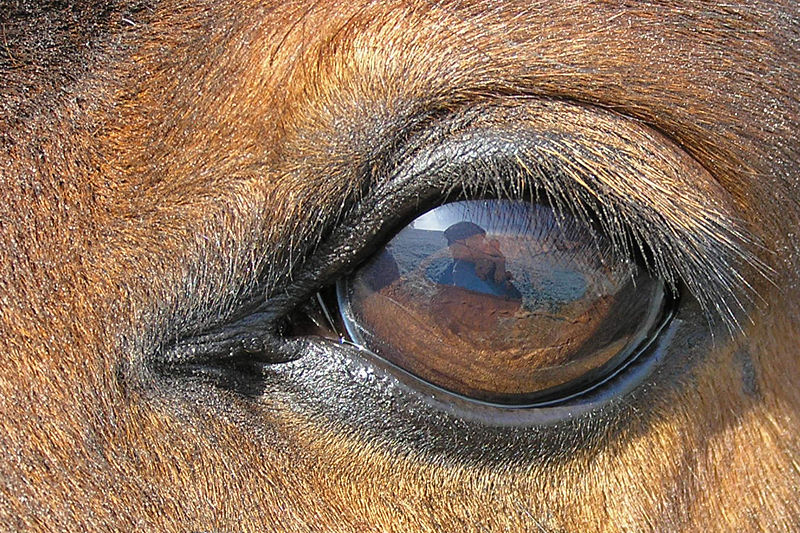
The problem with religion is that nobody can have the whole truth. I used to show my students a photograph of the silhouette of a horse against a sunset/sunrise. You can’t tell which way the horse is facing—toward the camera or away. When I asked them which way the beast faced, some would say away, but most said, predictably, towards them. Then I would reveal that not one of us in the room knew the answer. Religion is like that. The photographer who stood near the horse knows, but the person behind the camera may as well be in heaven for all it helps us. I was an expert because I’d spent years learning arcane languages and looking at texts in as close to the original format as we had available. All I had learned is that no one knows the direction that horse is facing. Tom Nichols is right: we face a crisis of expertise. But for me the only source of truth may be found astride a noble steed.

Photo credit: Waugsberg, WikiCommons

Photo credit: Waugsberg, WikiCommons


Who Loves You?

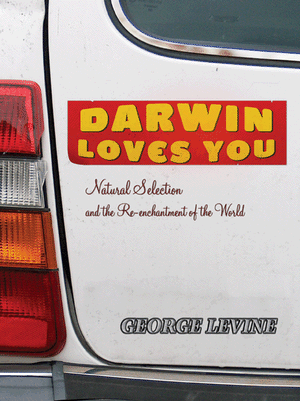
DarwinLovesYouWonder is too easily lost in a reductionistic world. Even when we get to the level of quantum mechanics we’re told, “it’s just physics.” How depressing. Such ideas seem to have been in the mind of George Levine as he wrote Darwin Loves You: Natural Selection and the Re-Enchantment of the World. Don’t get me wrong, Levine does not back away from the secular starkness of biology. What he does, however, is ask whether or not evolution by natural selection shouldn’t create a kind of secular enchantment. Almost from page one Levine has to address religion, the tyrannosaurus in the room. Religion, for all its shortcomings, has provided people with a sense of purpose, even enchantment, from days long before any temples or priests existed. The materialist response of “buck up, there’s nothing more than biology going on here,” has proved to be of little consolation to the vast majority of people on the planet. One of the reasons, and I speak only for myself here, is that it just doesn’t feel true.

Truth is a slippery concept. In origin the word seems to derive from something like “to have good faith.” In terms of factuality it also has the meaning of conforming to reality. Reality, however, is equally perilous when it comes to authoritative definitions. Reality means nothing if it is not perceived. Perception may actually bring something to the table, if particle physics are to be believed. Empirical method is pragmatic—I believe that every time I grudgingly climb aboard an airplane, or turn on a computer. At the same time I sense that there may be more to it than that. No matter how much science I read, that perception simply won’t go away. The professors of materialism have learned to quash that still, small voice. The hollow feeling with which it leaves me, however, may be significant.

Evolution and religion are inextricably interwoven. Religion, although poorly defined, has to do with finding meaning in a world that is often harsh and cruel. No doubt such feelings evolved, and some of our animal kin may share them with us. When molecules break down into atoms, they generally lose the characteristics of the molecule. We now know that we can keep breaking even the invisible apart until we’re left with only theory as to what might be below. This may be true. At the same time, the wonder with which we might stand before a cyclotron or a little robot rolling around the surface of Mars, the question of truth emerges like a rock that wasn’t there just a few days before. A gnawing sense that we don’t have the full picture. A sense that no matter how far we tear apart, the total will always be far more than the sum of parts. Levine is right; evolution can induce wonder. And truth, at its very heart, is a matter of faith.


Material Goods

Few ideas are as insidious as the reductionistic materialism touted by some of the New Atheists. Atheism and materialism need not walk down the same garden path, but the idea that we are determined by the thoughtless playing out of particle physics can only be achieved by sweeping the vast majority of human experience off the table to attempt a sterile analysis that applies, it seems, only in a vacuum. I often ponder this dilemma since those who think through the implications seriously soon find themselves locked out of the room. Materialists want nothing to do with those who challenge a system that is a little too neat, while ardent believers in religion have trouble letting go of what are obviously the mythological underpinnings of belief structures. The rest of us, trying to be intellectually honest, know that strange things happen and that materialism’s strong arm is powerless to uphold a system that is simplistic.

Indeed, scientists have moved away from utility as the sole criterion for explaining the universe. Beauty, or elegance, is frequently considered to be key to a Grand Unified Theory. It may be a gut-level reaction, but it speaks to something deeply human; we need to make sense of our world. We can do that, however, only if we’re willing to be honest. I’m not sure we can be honest without acknowledging that our minds range far beyond the sum of all the electro-chemical activity within an individual brain. If they didn’t, religion, for one, just couldn’t survive. Beauty, as a qualifier, is said to be in the eye of the beholder. Philosophers, however, maintain that aesthetics, the study of beauty, constitutes a branch of philosophy that requires hard thinking and specialized training. Beauty is a driving force for many aspects of life. Otherwise we wouldn’t hire architects to design since buildings on university campuses. A pile of bricks sufficiently mortared will do.

450x230_q75

The issue is trenchant because a generation is growing up with this idea firmly in place. Scientific studies, if scientists are to be believed, demonstrate that a strict materialism erodes empathy, the sense that what others experience matters. The logical conclusion to a reductionistic world is a kind of cold solipsism where the only spark of consciousness that matters is the one that takes place inside this head. All the rest are just formulas and equations. And yet, don’t even materialists enjoy a good novel, movie, or fine meal? The world is a complex place, and we haven’t even taken the first adult steps to begin exploring the rest of the universe with the five basic senses we acknowledge. Even down here, however, there is much that reductionistic materialism can’t explain. I wouldn’t stick a god in that gap, but a dose of humble wonder, I suggest, wouldn’t hurt.


Read Until Ragnarok

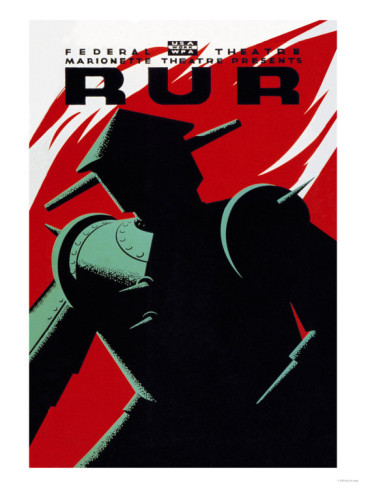
Wpa-marionette-theater-presents-rur“The play’s the thing. Wherein I’ll catch the conscience of the king,” quoth Hamlet. Shortly after the Velvet Revolution, my wife and I were shown about Prague by a friend who’d grown up in Communist ruled Czechoslovakia. As we watched the changing of the guard, he told us how Václav Havel, the final president of Czechoslovakia, had been a playwright and appreciated the need for pageantry in such civil ceremonies. I remember being impressed with what this playwright had accomplished while America had just survived being ruled by a lackluster comedic actor whose major contribution had been the myth of trickle-down economics. Havel was at one point selected as ranking high among the world’s top hundred intellectuals. Somehow Bedtime for Bonzo just didn’t seem to be worth bragging over.

Within another year or two, Czechoslovakia would dissolve, but the world would remain impressed by the Czech playwright. Karel Čapek was another Czech author and playwright of considerable import. Čapek, “public enemy number two” of the invading Nazis, died before the National Socialists could reach him. His brother died in Bergen-Belsen. Čapek is the author of the play R.U.R., or Rossum’s Universal Robots. Indeed, he coined the term “robot,” around which this play revolves. Over the holidays I finally had a chance to read R.U.R., and I was immediately struck by how prominent the meme of God appeared, and also how prescient Čapek was. Like his contemporary Franz Kafka, Čapek had an unsullied vision of human propensities. Not having seen a production of R.U.R., or knowing how it would play out, I was nearly buried under the layers of meaning that such a brief piece could convey. Harry Domin, the general manager of R.U.R., supplies the world with robots for the easement of human labor. These robots eventually acquire souls, through human tampering, but also rely on humans for their reproduction. All of humanity, save a sole survivor kept alive to make new robots, is destroyed. Alquist, the last man alive, realizes when one robot will lay down its life for its mate, they have become a new Adam and Eve, and humanity’s existence is truly at an end.

Although I’ve read about robots since I was a child, I didn’t know about R.U.R. until my daughter joined her high school robotics club. Robots have, in many ways, dominated my life since. Although Čapek’s play is funny in parts, it is dystopian and profoundly troubling. Our robots have evolved since the period of World War I, just after which the play was written, but our moral sensibilities have not kept pace. Helena, the eventual wife of Domin, feels that robots should be given a soul. At first they feel no pain, mental or physical. Once they acquire these, however, they begin their inexorable march to the elimination of humankind. Reading of how technocrats believe that our true function is now to service the robots who do much of our work today, while unemployment just won’t release its grip on the flesh, my thoughts go back to Karel Čapek, Václav Havel, and William Shakespeare. The playwrights create, but the actors just ape.


Not Knowing

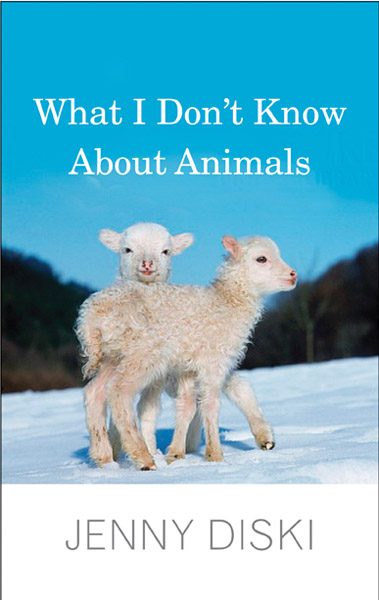
WhatIDontKnowAboutAnimalsBegin with a basic premise: we cannot know what a creature without language thinks. Add in the thoughtful anxieties of a post-domestic writer who knows about animals and you have What I Don’t Know About Animals, by Jenny Diski. Part biography, part science, part philosophy, wholly human. I knew from the day the book was released that I would read it since, like the author, I am one haunted by the relationship between the exploited and the exploiter. Diski’s confessions are difficult to read at times, veiling herself, as she does behind the curtains of one’s most private experiences, but she reveals plenty to those who read on. We can’t know for certain what another person thinks, so how can we know what a sentient animal thinks? Some, following Descartes and Skinner, would declare that animals don’t think, they simply do as programmed. The rest of us know that they are wrong. The evidence accumulates more each year that animals think and feel, but, as Diski repeatedly points out, we need to drive with the brakes on. We can’t get inside them to actually know if human experience corresponds at all with animal experience. We’ve shared the planet for millions of years, but we’ve lost track of our common origins.

As I suspected, the Bible came into the discussion. The book of Genesis lurks in the background of most human-animal rationalizations. The divine division into separate “kinds” must be kept discrete at all times. The problem is, nature won’t always play along with that game. One type slowly morphs into another and some biologists are even questioning the usefulness of “species” at all. Fear of bestiality, as Diski points out, is found already in the Bible. Best to keep everything in its proper pigeon-hole, whether that’s where it belongs or not. Genesis gives us the right to exploit, and so we continue to use animals for our own purposes. Although the feline, it turns out, may have figured out how to set this order on its head. In some cases.

What I Don’t Know About Animals is not a defense of vegetarianism or of radical, thoughtless abandon. Diski writing on spiders will cause many heads to nod in agreement, and her rage against the loss of the common lady-bug struck an amazingly responsive chord with this reader. The lady-bug’s demise came at human tampering, importing asian beetles as pest control—beetles that eventually edged out the harmless lady-bug, replacing the Volkswagen of beetles with a biting, omnivorous, massing pest. In Wisconsin the southern side of our faculty house was literally blanketed with them in the spring. Diski uses the same word I did then: biblical. Swarms seem to be the way that the Almighty has of telling us too much of even a good thing will go bad. Although I couldn’t agree with every statement Diski makes, I have the feeling this is a book I will reread more than once. Wisdom often comes in the form of admitting just how little we know.


Nothing Unusual

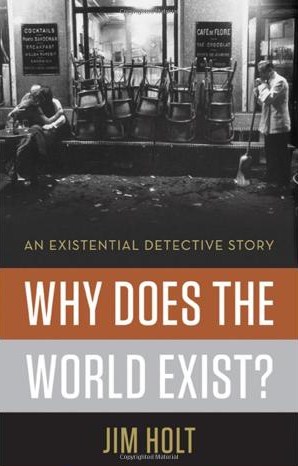
WhyDoestheWorldExist“Is this a world?” Ranger Tom asks seriously, “And if it is, am I in it?” On the lips—or fingertips—of some, this set of questions appears profound. Although I’m not technically a philosopher, I find it impossible to walk by a book with the title Why Does the World Exist? and not pick it up. I am not familiar with Jim Holt’s other work—I engage a little too heavily with books to spend much time with magazines—but the question of the title is one I’ve often pondered. It is right up there with “Why can some people get published and others can’t?” Holt is, however, on a serious quest. Not surprisingly, religion features prominently in the discussion. For the usual existential reasons, including a couple of significant deaths in the family, Holt asks perhaps the most basic of all questions and engages a number of prominent philosophers on the issue. Why is there something rather than nothing? For some in the western world such a question appears a non-starter, because our culture is biblically suffused. Whether we want to admit it or not, our social ocean veritably bobs with the basic belief that God created the world, end of story. We don’t need to ponder it, we just have to accept it. For those who look deeper, however, the answers aren’t that easy.

Holt goes through some serious computation in various forms of logic to try to arrive at a schematic demonstrating that the world is a surprising place. Not trained in such rigorous logic, I was interested to notice how the language occasionally slipped from “world” or “universe” to “reality.” Reality is perhaps the slipperiest concept of them all. Many simply accept their own experience as real, a position known as “naive realism.” Others probe somewhat deeper, seeking to verify reality. How do we know what is really real? It is, however, a different question than the existence of the world. Reality has the distinct ability to haunt with its half-answered questions and surfeit of ambiguity. Every time I wake from a dream I ask myself what is really real.

Once the divine is removed from the equation, why the world is here becomes a much more complex issue. Holt engages the new atheists as well as the neo-orthodox. It turns out that God may not help as much as we generally assume: whence God? Or, in its more childlike version, where did God come from? Once brute fact is ruled out, this becomes a tangled problem indeed. Faced with an endless regression, logic quails. Perhaps, however, we have reached the limits of rationality—even Einsteinian physics breaks down at the Big Bang. No matter what scientists or philosophers may tell us, we will always wonder, “and before that, what?” I put Holt’s book down with a sense that I’d spent a few pleasant hours considering the possibilities, but I still wonder, with Ranger Tom, if this is a world. And if it is, am I in it?


A Dog’s (Inner) Life

Last week’s Sunday Review in the New York Times included a piece tucked under Opinion entitled “Dogs Are People, Too.” Gregory Berns, the article’s author, a professor at Emory University, describes how he trained his dog to enter and remain still inside an MRI machine long enough to scan brain activity. The results, repeated on other trained dogs, indicated that dogs share the same level of sentience as a human child. Berns’ conclusion: dogs are persons. I tend to agree. Although I’m no longer a pet “owner,” I grew up with dogs (and cats, birds, reptiles, and hamsters). There was never any question in my mind that our dogs could think. The also shared emotions with people—as Holmes would say, it’s elementary. Obvious. Staring at you with puppy-dog-brown-eyes-right-in-the-face obvious. Science, however, has always had an uneasy relationship with consciousness, the ghost in the machine. Dogs, many declare, are just machines. They salivate at the sound of a bell, for goodness sake!

Berns, however, has found the holy grail of scientific proof. The brain scan is accepted as a measure of human conscious activity. It is difficult enough to lure a human into an MRI and have her or him hold still. Dogs, however, are smart. They can be trained to do this too. Berns has succeeded and now has evidence that the emotional centers in dogs’ brains respond much like human brains. If they are emotional beings, as many of us knew all along, they are persons. Berns points out that this has legal implications. We make laws about unborn humans, but we treat fully alive canines like, well, dogs. Consciousness is part of the animal, and perhaps even the plant world. That stands to reason, if not scientific proof.

Christianity is largely responsible for advocating the concept of human superiority. We are, after all, made in the image of God. The Bible tells me so. Although scientists tend to abandon the Bible, they retain the myth of human superiority. Some concepts are just too convenient to relinquish, even in a rational world. We assume, since animals don’t talk the way that people do, that they are not thinking creatures. Even scientists appear afraid, at times, to take on the immaterial concept of thought. If the materialistic view is correct, thoughts are only electrochemical signals. Only this, and nothing more. As time nears to get dressed for work, I’d like to send my electrochemical signals out to get the paper. If I do the paper will still be on the lawn when I get home at the end of the day. I’ll have to fetch my own slippers, I guess.

Need I say more?

Need I say more?


Cave In

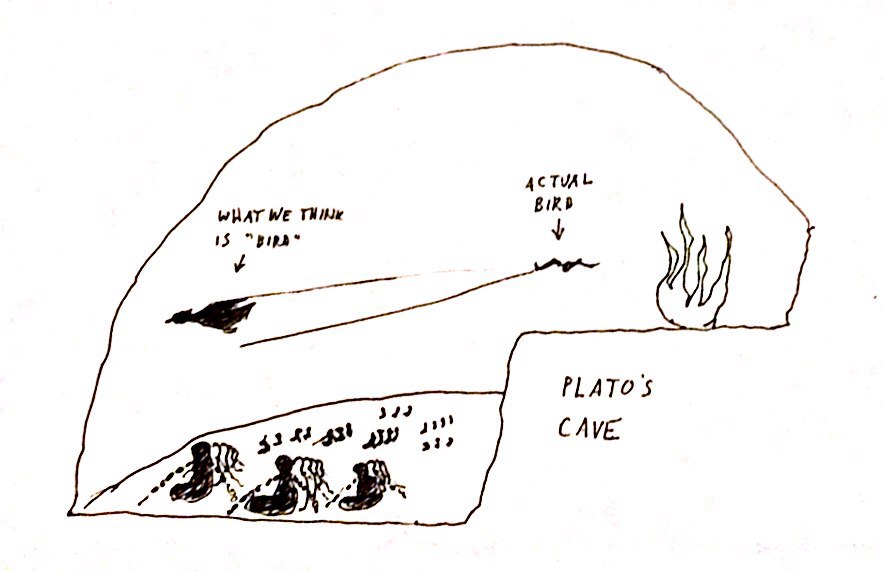
The conversation began, as conversations often do, with Plato’s allegory of the cave. The nature of reality was the topic of a chat I had with a very intelligent undergrad the other day. Plato believed in a realm of ideal forms. What we experience in life is not the actual forms themselves, but a reflection of them sufficient to alert us to what it is we encounter. Humans are sitting, as it were, in a cave. We are chained so that we face the inside wall of the cave and can’t look around. Behind us there is a fire and the ideal forms pass between the fire and people, throwing their shadows on the wall. Not having ever been outside the cave, we suppose the shadows are reality. We are, however, deceived. This led, naturally enough, to a discussion of Aristotle’s counter-argument that the “essence,” or entelechy, of things is something inherently within it. No need for an alternate realm of reality. And so, I asked, what is reality? What is truth?

PlatosCave

My young interlocutor said that reality is what we perceive. It is different for every person, and therefore there are a multitude of realities. Truth is simply the term we apply to our experience of reality. I began to feel as old as Plato. When I was young I believed, not exactly in a realm of ideal forms, but in a universe that contained abstracts. Abstract concepts objectively existed, and in a kind of neo-Platonism, we recognized them when we encountered them. Love, for instance. We may not be able to define it precisely (although materialists claim it is just a pretense to get sex), but we sure know it when we feel it. Or consciousness. What is it? No one reading this doubts, however, that it exists. And truth. I had always assumed that there was Truth with a capital T, objectively floating around out there. Perhaps, if the undergrad is right, there are multiple truths around. We chose the one that fits our experience of reality. Q.E.D.

C.Q.D.! C.Q.D.! Worldviews are in the process of changing. I tend to think the internet has democratized truth. Religions have tended to play their trump card—revelation—at this point. The unambiguous input from the divine should end all questions. But it only requires a moment’s reflection to realize that there are multiple religions and multiple revelations. Which one are we to believe? Some scientists claim there is no need for philosophy, religion, or the humanities. Objective facts, however, are interpreted subjectively. To privilege one reality above others is a kind of intellectual fascism. Perhaps my reality is different. We all sit in the same cave watching the same shadows play in front of us. We then decide what is real. Perhaps we need to get outside for a breath of fresh air. Even Plato knew, however, that that is against the rules.