The Jonah Treatment

A kayak on the ocean might’ve seemed to be a safe place during a pandemic.  In November of 2020, however, two women ended up getting the Jonah treatment.  While it happened some time ago, the story appeared in Slate just in August, so the world is learning about it after a few years.  At least those of us who hadn’t seen the viral videos before.  Julie McSorley tells how she and a friend were paddling out to see some humpback whales along the California coast.  Then, like a scene from Finding Nemo, bubbles started to well up around them and they found themselves briefly in the whale’s mouth.  They escaped unharmed since humpbacks don’t eat mammals, being baleen whales.  Apart from the natural fascination of the story, what caught my attention was the reference to Jonah in the log line.  As Heather Schwedel notes, few people “outside of storybooks and the Bible” have actually been inside a whale.

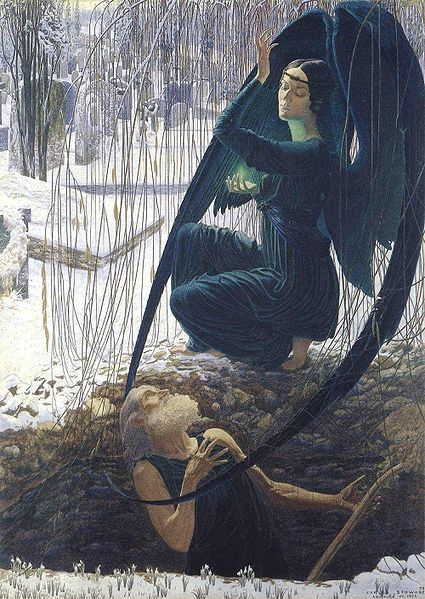
Image credit: Gustave Doré, Illustrations of Baron von Münchhausen, public domain via Wikimedia Commons

The typical biblical scholar response is generally somewhere along the lines of, “the Bible says ‘great fish,’ not whale.”  This may be true but we don’t possess a biblical glossary for the animals, real and imaginary, in the Good Book.  Ancient Israelites were neither great seafarers nor precise describers of nature.  There are many strange references to animals in the Bible with no certain referents in the world we know.  Not being oceanographically inclined, biblical authors wrote “great fish,” a term that was still used to describe whales up to Melville’s time.  But we now know there are other big fish as well.  Whale sharks, for example, and if you’ve ever watched River Monsters you’ve likely seen catfish large enough to send shivers down your spine. 

The funny thing about the book of Jonah is that the point of the story is often overlooked for the splashy action.  There’s a moral to the story.  It’s all about not judging others because they don’t belong to your group.  Jonah has already condemned the Ninevites as godless idolaters.  The book teaches that such judgment isn’t a human prerogative.  But we simply can’t get past that image of a whale, or great fish, swallowing a guy and digesting him for three days.  Like Jonah, Julie was spit back out by the whale.  It took only a matter of seconds since, despite what Pinocchio shows, the interior anatomy of most whales won’t allow living space for a long weekend away from home.  Julie McSorley and her friend emerged relatively unharmed.  McSorley even says it was a transformative experience.  One might even suggest it could be a spiritual one.


Asking Questions

Strangely appropriate pareidolia is one of those oddly specific things that generates a lot of internet interest.  I was late to find out about the “question mark” in space photographed by the James Webb Space Telescope.  Okay, a couple of things: photographs, like the one below, taken by U.S. Government agencies are in the public domain (thanks, NASA!).  This one can be easily enlarged on the James Webb Space Telescope webpage.  To see the “question mark” you need to start from the center red star and look down to the two bright blue stars just to the left of center.  The image I’m using has been enlarged so that it’s obvious.  Serious news outlets have discussed this, but it’s clearly a case of pareidolia, or the human ability to attribute specific meaning, or design, to something that’s random.  We see faces everywhere, but question marks are somewhat less common.

Photo credit NASA: public domain

Given the state of the world—people like Trump able to continue scamming millions of willing believers for his own benefit, hurricanes hitting California, Putin going to war against the rest of the world, capitalism, war in the Holy Land—it’s no wonder that people like to think a big question mark is hanging over everything.  Looking into the sky we expect to see God.  Isn’t it a little disconcerting to see a huge query instead?  I, for one, think it might be best if we learn to recognize false signals rather than seeing some giant message tucked away in some small corner of the universe in the hopes that we’ll turn our seeing-eye telescope that way.  What font is it anyway?  Does it violate some cosmic copyright?

Some signs are, I’m convinced, for real.  I think they tend to be on a much smaller scale.  Way down here where  we can see them.  What appears to be, from our viewpoint, a question mark may be seen as an exclamation point from a different angle.  It’s all a matter of how we look at things.  One of the most important lessons of life is that people see the same thing from different points of view.  If we can accept that, others don’t seem so threatening and strange.  In a small planet plagued with xenophobia, it’s important to discover strangely appropriate pareidolia every now and again to get us thinking about the deeper issues.  We may not find the answers, but often asking the question is the more important thing to do.


The Good Lurid

It takes a lifetime to make a reputation.  In high school my teachers and classmates knew mine well: religious and full of integrity.  Going on to do three degrees in religious studies confirmed all that (at least the former).  Something that nobody seemed to pick up on was that I liked watching monster movies.  I did less of it in college, but still watched some heavy-duty fare (including David Cronenberg) when I was in seminary.  Once I married life looked more optimistic and I really didn’t feel the need to watch what is called “horror” any more.  Sure, we occasionally saw films everyone was talking about, but in general I moved away from the genre.  It took Nashotah House and its aftermath to bring me back.  In any case, my reputation seems to be such that now when people who know me see religion and horror together they think of me.  I’m touched.

A regular reader of my blog sent me an article from The Guardian titled, “Schlock horror! Meet the family who made lurid movies for the Lord.”  It should be pretty clear, if my integrity is intact, that what I’m trying to do is figure out how these things fit together, religion and horror.  That they do is obvious, but how?  In any case, this article plugs a book by journalist Jimmy McDonough, The Exotic Ones.  The book explores the Ormond family and their odd filmmaking.  The father, mother, and son triad, made a living producing cheap, questionable films.  After a plane crash, which they survived, they became religious only to find their minister wanted them to keep making their bad movies for evangelistic purposes.  The films they produced for the church had religious themes, but used well recognized horror tropes, anticipating, if you will, Left Behind and its ilk.  Like a Thief in the Night scarred many of my generation.

I’m probably not alone in not recognizing any of the movies the article discusses.  If I’m reading correctly, Tim Ormond, the son and sole surviving family member, stopped making these films after the death of his parents.  In any case, I have been developing a fascination with bad movies.  The fact that they’re even made and released is incredible to me (mostly the released part).  Many of us end up reacting to life rather than following the plans we had for it.  Fate—call it what you will—has a way to stepping in.  For one family, however, fate led them to a church that paid them for what they wanted to do.  Many of the rest of us find just the opposite and we end up watching horror to try to understand.


What Message?

The search for autumnal horror movies is a never-ending one.  Can it really be that auteurs just don’t—drenched in the California sun—get that October feeling?  There’s something in the turning of the leaves and the appearance of pumpkins that changes everything.  And it works every year.  So it was that I thought of The Messengers.  I’d watched this years ago but found it somewhat unremarkable.  I seemed to recollect that, being based on a farm, it was autumnal in character, so I decided to try it again.  I remembered once more why I hadn’t watched it for years.  It’s a serviceable movie, but it is really set in summer (short sleeves the whole way through) and although August farm visits put me in the fall mood, this one is incoherent enough to prevent that feeling from catching on.

Jess is a girl with a past.  Driving under the influence, in Chicago, she was in a crash that rendered her baby brother mute.  In response her parents decide to move to a sunflower farm in North Dakota.  There the crows (actually ravens) attack them.  A stranger arrives and offers to help out.  Of course the house is haunted because of some past murders, but when the crows attack the hired help, it spurs him into a relapse—he’d lived here before and had killed his family, and so he decides to kill this new one too.  Being PG-13, they survive and the house swallows up the murderer from the past.  It’s never quite clear what the crows (the presumed messengers) really want to convey.  Are they trying to warn the family?  Are they trying to awake a killer’s memory?  What do they want?

This is an early Kristen Stewart movie—she’ll go on to more sophisticated horror films.  William B. Davis, with only cameo appearances, offers echoes of The X-Files.  Casting the generally congenial John Corbett as a killer is a bit of a stretch, however.  More intriguing, in this more global world, are the directors—the Pang brothers.  Known for their east Asian movies, including award-winning horror, they took on this American-themed, shot in Canada, project.  It had the backing of a few production companies and a reasonable budget.  Still, it struggles to be memorable.  I seem to recall that the prequel might’ve been a bit better.  But was it autumn-based?  I can’t recall and it’s that time of year when seeing falling leaves and a pumpkin or two make for essential viewing.


Final Thoughts

You feel kind of special running stop signs and red lights.  I’ve never driven in a funeral cortege before but this one is somehow taking place on an obligingly rainy October afternoon.  Although I was in that kind of emotional shock that you feel at the death of a close family member (it isn’t my first), I couldn’t help but consider all those behind the scenes who work in the death industry.  From the mortician at the Gardinier-Warren Funeral Home—where my grandmother’s funeral was also held—to the undertaker getting soaked in the chilly rain, everyone was friendly and kind.  I also reflected that watching horror movies is homework in a world where death is inevitable.  As a child I already knew about death, and although I’m not afraid to die, I’m not eager to have that particular experience just yet.

Horror movies are all about learning to cope.  Not so different from the book of Job, they’re reflections on why “the good life” doesn’t continue as it sometimes does for various stretches of a human life.  And as we age, death more and more naturally comes to mind.  I’ve written before about the therapeutic aspect of my odd avocation.  One of the realities of growing up religious is that my mother—may she rest in peace—taught me early on that this would be my bodily fate.  I found it disturbing seeing my grandmother in her casket.  I remember distinctly Mom telling me, “this is just her shell,” that her soul had moved on.  That didn’t prevent nightmares of that shell rising and walking again.  Is it any wonder I grew up watching horror films?

Reflecting afterwards with my brothers on our physical ailments—we aren’t young any more—my thoughts wandered back from time to time to horror movies that had made this just a little easier for me.  Life is full of opportunities to do our homework.  As I grew up reading the Bible and watching horror, I didn’t think of it as studying, but it was.  Many kids with whom I went to high school have died over the years.  I tend to look at the alumni magazine necrologies even as medical science improves our chances of surviving some of nature’s more dreaded diseases.  Life comes with no guarantees and horror films reinforce that it’s not a bad idea to think of some of these things ahead of time.  Afterwards, at one of my mother’s favorite local overlooks, I reflected on how I have a lot yet to process.  Homework never ends.


Personal Psalms

I haven’t heard it yet, but a New York Times article encourages me to.  Paul Simon has joined the ranks of those aging music stars to record albums presaging their deaths.  The article was about Simon’s latest album, Seven Psalms.  And, yes, the religious reference is pretty hard to miss.  Like most kids from the sixties, I grew up hearing Simon and Garfunkel on the radio.  We didn’t have money for albums, but I always liked their songs when I heard them.  After their breakup I really didn’t pay much attention to Simon until Graceland, and since then I’ve listened with half an ear.  You see, I’m wired in such a way that I can’t listen to music while I write.  Or read.  My mind grips one thing at a time.  That means I don’t listen to background music much.

That doesn’t mean I don’t appreciate music.  I do.  Almost religiously so.  On occasion I come back to Simon, with or without Garfunkel.  I posted about his song “Werewolf” some years back.  I eventually listened to that album, and I’m not sure I got it.  Artists are that way.  Some pieces you like, others are just okay.  I am curious about Seven Psalms, though.  I’ve posted about David Bowie’s Blackstar, Leonard Cohen’s You Want It Darker (both discussed in the Times article), and Bruce Springsteen’s Letter to You.  No longer young myself—these guys were young when I was a kid—hearing them reflect on death is powerful, and, if the mood is right, peaceful.  We fear death because it’s unknown.  And also, we all know, deep down, that we’re flawed.

Psalms aren’t necessarily biblical, of course.  Sinead O’Connor’s “Take Me to Church” is a psalm.  So is “Sounds of Silence.”  Artists have been writing psalms for as long as they’ve been writing songs.  The biblical psalms are among the most quoted bits of literature in the western world.  They were likely originally sung as well, but we can only guess what they may have sounded like.  We know that across the world people turn to song to express strong emotion.  I’m not sure what Paul Simon’s Seven Psalms might be, but it seems that thoughts of mortality go naturally enough with emotion.  I don’t write much about music because it’s so deeply personal.  I try to be intellectually honest on this blog, but if you want to talk music you really have to get to know me first.  Then I’ll reveal my psalms.


Mom

Mom

I just became an orphan.  I tend not to write about other people without their permission, but I have a few words to say about Doris Ruth Miller.  First of all, she was a saint.  I’m often accused of putting the needs of others before my own, and this is something I learned from Mom.  She set me on my lifelong course of reading the Bible, determining, in some inexplicable way, what I call a career.  Mom was born April 7, 1935 in New Jersey.  She was the youngest, and last surviving, of five siblings, and the only girl.  When I reached that age when children (as adults) get curious about their parents, I asked what town she was born in.  By that stage she couldn’t recall, but at one point she told me Cherry Hill, and at another, Asbury Park.  She never finished high school and never had any job training.  But she always believed.  She was faith personified.

She married to get away from a difficult relationship with her own mother.  My father, who died twenty years ago, was an alcoholic.  They had three sons together.  Mom, very aware of Dad’s condition, didn’t believe in divorce and stayed with him until she no longer felt safe doing so.  Not for herself, but for her sons.  Her life revolved around her children.  She eventually remarried and her final son was born.  This marriage involved a move to Rouseville, Pennsylvania—I’ve written about it before—my last childhood home.  Neither of her marriages were happy ones, but she was determined about two things: maintaining her faith, and caring for her children.  She believed unquestioningly and the only book I ever saw her read for herself was the Bible.

I only found out over the weekend that she was in rapid decline.  Circumstances (medical and financial) had kept us away for far longer than I would’ve liked or hoped.  I talked to her on the phone nearly every other day and told her with joy just about a month ago that we had finally got a car that would enable a visit.  We were planning on spending Thanksgiving with her.  The universe, which operates on its own timetable, had different plans.  Mom was a remarkable woman.  She was not afraid of death and she embodied these famous words from Paul of Tarsus: “O death, where is thy sting? O grave, where is thy victory?”  Mom lived eighty-eight difficult years.  She dedicated her life to others and lived the Gospel by example.  I miss her terribly, but I have no doubts about her being among the saints.  Thanks for life, Mom, and for showing how to love unconditionally.


Down to the Sea in Ships

On the final day of our Charleston odyssey we toured the USS Yorktown, an aircraft carrier dry-docked at Point Pleasant.  One of my uncles served on the Yorktown between the Korean and Vietnam wars and was able to show us around.  What really struck me, as often does with military matters, is just how advanced our engineering is when it comes to war.  The aircraft carrier was invented to meet a belligerent need: to convey aircraft close enough to other nations to support air strikes against “targets” there.  These targets consist of living, breathing human beings, at least in part.  But the technical problems, where I’d rather focus this post, were formidable.  How do you land a plane moving at 200 miles per hour on a moving ship with limited runway?  And how do you do it without tearing the plane apart from the sudden deceleration?

Carriers have steel cables stretched across the landing strip.  A tail hook on the plane, or later jet, would catch a cable, wound several times below deck to increase the ratio of force (as with a pulley), to add enough play to stop a plane without the forward motion tearing it apart.  Five cables stretched across the deck and the ideal was to catch the third one for an optimal landing.  Each landing (which could take place 30 seconds apart) was filmed and analyzed for improvements.  Listening to the technical nature of all this, and knowing that such things had been invented some eighty years ago, made me wonder, yet again, at how creative human beings are.  And made me ponder why so much of our creativity goes toward war machines.  Just think of the problems we could solve if we all worked together!  Instead, Putin covets Ukraine, Trump covets everything, and we fall in line behind them.

I’ve written on such topics before.  I took a self-tour of the USS Midway while in San Diego as part of a business trip back in 2014.  The tech there was perhaps a bit more advanced as this was a nuclear carrier.  Standing on this deck, however, thinking how this one ship costs more than I will earn with a lifetime of education and employment, leaves me a bit reflective.  Those who push for wars are often those on their knees praying for the second coming.  The rest of us, content with the first coming, think how the message of love and peace seems to have been swallowed by a whale.  But this ship is larger than any whale, and, I’m told, much, much more expensive.


Waiting for the Sun

Waiting.  It’s difficult in the best of circumstances.  It’s even harder when dealing with multiple sources of delay.  For example: it has been unseasonably cool around here for a few months.  Looking at the US weather maps, it looks like we’ve got just about the coolest temperatures in the lower 48.  September is usually reliably a month where you don’t need the furnace in these here parts, but that’s not the case now.  A slowly moving weather system has blocked the sun for days and our poor old house just can’t warm up.  I feel like Noah waiting for some sign of hope.  The weather apps all say, “oh, two or three more days…”  Endurance, I remind myself.  Stoicism.  Still, we need some sun about now.  But that’s not all.

In addition to wearing three heavy layers and my fingerless gloves (in September—and this will last until May!), I’m also doing my prep for a colonoscopy.  In case it’s been a while—that means a liquid diet for a day.  I need to wait until this time tomorrow to have anything to eat and my teeth are on edge because the allowable fluids tend to be sweet and I really need something salty with a bit of crunch about now.  I see I’m allowed ice pops.  But did I mention that it’s cold in here?  If it were a normal year at least one of these two things wouldn’t been an issue at this point in time.  Nobody that I know of looks forward to a colonoscopy.  I know I’ll barely sleep tonight and the whole situation ends up looking downright Dickensian.  Chilly, hungry, persistent rain.  All I really need at a time like this is just some indication that the following days might improve.  Don’t look to the Weather Channel for support.  No, rely on your Stoicism.  Endure.

The trick I usually use on myself is to dangle a small carrot—lunch will be in just three hours!—to get through a long, chilly day.  (You’ll be able to eat something hot…)  I suppose giving up caffeinated beverages a few years back (when the last colonoscopy was well forgotten), might’ve been a poor decision.  I sure could use a Thermos of coffee right about now.  And one of those solar headbands that tricks you into believing you’re getting some sun.  Hey, September’s my second favorite month, after October, so shouldn’t waiting be just a smidge easier?  I’ve been waiting for September since last November.  And still I wait.  Such is the human lot in life.  Endurance is important, I know.  But a peek of sunshine (haven’t seen anything like it for three days) in September—is that too much to ask?  Or at least a hot meal.  What would Zeno do?  (Of course, he did live in sunny Greece…)


Ravens and Autumn

In need of some diversion, and seeking some way to celebrate the equinox, we made our way to Mount Gretna.  With a population of less than 300 souls, Mount Gretna is remote and an area of natural beauty.  But that’s not why we’re here.  Each year the Mount Gretna Theatre—housed in an open-air playhouse—puts on an Edgar Allan Poe performance in the autumn.  I’m not sure if it’s always titled “Nevermore,” but it is this year.  And it’s a fine evening for an outdoor performance.  The show is a walking tour of seven Poe vignettes.  A guide starts the evening by telling us a murderer is on the loose and Dupin (for Poe invented the detective story genre) warns us to trust no one.  I’m thinking this will be a murder mystery, but the first vignette is adapted from “The Fall of the House of Usher.”  My favorite short story, I smile at the choice.

The next venue—we’re walking around the parameter of the playhouse now—is from “The Masque of the Red Death,” which has taken on new significance with Covid.  These, by the way, are single actor vignettes.  We’re then led to a saucy woman who performs “The Black Cat” with a subtle humor.  As she’s led away, a madman leads us to a corner of the building where he retells “The Telltale Heart,” and you begin to realize just how much Poe wrote about revenge and guilt and murder.  We’re then led to the only two-person vignette for a retelling of “A Cask of Amontillado.”  A haunted young man crying “Lenore” next recites “The Raven,” from which the evening takes its name.  The final vignette is the only unfamiliar one in the lot, based on Poe’s humorous—if politically incorrect—stories, “How to Write a Blackwood Article,” and “A Predicament.” (Set in Edinburgh, no less.)

It’s a beautiful September night in a delightful wooded setting.  The fact that it takes some effort to get here is part of the draw.  The actors clearly enjoy themselves and the stories are told in such a way that it doesn’t matter that we’ve read them all before.  Once back home, I learn that the playhouse is in a borough founded by the Chautauqua Society.  I think how times have changed and that it was quite a world that supported adult education institutes.  Chautauquas are found around at least the rural parts of the country.  Founded by a Methodist minister, Chautauqua was a wholesome competitor to Vaudeville, offering entertainment as well as education.  I feel I’ve been both educated and entertained as we climb back in the car in a Pennsylvania night on the eve of the autumnal equinox.


Rocks and Philosophs

Porphyry is, apart from being a cool word, a kind of purplish stone that was prized for statue-making in antiquity.  It is also the name a Syrian philosopher gave himself in the third century of the Common Era.  Now, if you read widely about antiquity, as some of us have done, you’ll encounter the name Porphyry from time to time, but those of us who focused on older materials don’t pay him much mind.  I was reading about Porphyry recently, however, and did a little poking around to discover that he’d written a book called, in translation, Against the Christians.  Some historians speculate that Porphyry may have once been a Christian himself, but whether or not that’s true, he developed an antipathy to the sect.  I was curious about what his beef may have been only to discover that this book is lost.

Now lost works in antiquity are the rule rather than the exception.  Literacy may not have been widespread, but those who could write did write, and often prolifically.  Human history was very well documented.  But tonnes of it went missing.  Wars have been part of that history and wars are notorious for destroying written records.  Also, much writing was on perishable materials that, well, perished.  That wasn’t the case with Against the Christians, however.  Porphyry’s work was purposefully destroyed.  By this point Christianity had taken over the Roman Empire.  Rather than accepting the challenge of a philosopher, officials censored and destroyed his work.  Ironically, all that survives are quotes from books of theologians who were trying to refute him.

This made me reflect on the book bans that are currently all the rage among some “Christian” politicians.  Such rearguard actions belie the confidence that imperial religions showcase.  A religion that’s afraid others might see the holes raises many questions, does it not?  It seems to come down to the idea that nothing has changed in two millennia, even though Jesus didn’t have a cellphone—not even one of those old flip-open kind—and much of what we know of nature was still many centuries in the future.  The fact is that we only try to silence those who disagree when we fear them.  Book bans pretend that they can hold the hands of the clock still and that all will remain as it was decades ago.  Learning, however, is a genie let out of the bottle.  Back in Porphyry’s day powerful bishops and emperors ordered his book banned and destroyed.  And we are all the poorer for it.


Not for Profit

Non-profits are the backbone of our society.  In a world measured by “net worth” some of us are aware that people are more than figures, ciphers on a ledger.  Honestly, I’m impressed by plans for a universal basic income, which seems more humane to me than brutal capitalism with its new first estate.  Since that’s not likely to happen here, however, I look to non-profits and I’m impressed.  Despite the distorted narrative that states those who struggle to get by are lazy (hey, I don’t know many rich people up as early as I am daily!), our economy favors the greedy and the graspy.  That’s why non-profits are so important.  These are corporations or companies that work for something other than making money for themselves.  They have a more civil goal in mind.  They are, in a word, civilization.

I recently attended a cancer research support organization Oktoberfest.  It’s for a small non-profit foundation, local to the Lehigh Valley, but it was amazing how much money it has been able to raise for research.  Like many such foundations, it was born of personal loss and the desire to prevent others from experiencing such loss.  Compare that, if you will, to a company whose business is, well, making money for itself.  See the difference?  One you can feel good about.  The other makes you feel like you should take a shower after work to wash the grime of selfishness from you.  I have worked for profit-making companies and non-profits and there’s no comparison.  Those with money as the only goal tend to be heartless.  If you ever want to feel like chattels, apply here.

Non-profits have to think quite a bit about money, of course, but there’s always more to the picture.  There are discussions of the larger goal, which is generally something for the good of society.  To help people.  I’m not naive enough to think that non-profits can’t get corrupt (lucre corrupts everything), particularly when they get large, but without them there would be so much more suffering in the world.  Becoming “civilized” has been a fraught exercise from the beginning, but it was an effort for individuals who are very different from one another to learn how to live together and cooperate for the good of all.  Capitalism is a means whereby some game the system for personal gain and the rest envy them and want to try too.  Thankfully into this moral morass non-profits have arisen, like oases in the desert.  They are the hope for our society.  Indeed, for civilization itself.


End the Stigma

I’ve been a lifelong fan of Edgar Allan Poe.  I bought books about him (and by him) from a young age, fascinated by a person who expressed himself so beautifully in the face of trauma.  Of  a different era, and mindset, was Rod Serling, creator of The Twilight Zone.  Another childhood hero of whom I made the assumption of some trauma.  One thing interesting about both of these influential writers is that relatives have written about them claiming that they weren’t as haunted as they seemed.  I wonder, however, if they write such things because we still, we are still stigmatizing trauma.  We’re great victim-blamers.  Perhaps it’s because we want to distance ourselves from the scary forces at play.  We fear that unhappy master, whom, in Poe’s words, “Unmerciful disaster followed fast and followed faster.”  We don’t want to attract such things to ourselves.

Reflecting on my father recently—I didn’t know him well at all—I was thinking about his experience in the Korean War.  I don’t know what happened to him there and I never had the opportunity to ask him about it.  But I do believe that, like Rod Serling, he may have been traumatized by combat.  War leaves trauma in its wake.  Few, I suspect, come out of such situations without deep scars that haunt them the remainder of their lives.  And still we fight.  I knew, already at a young age, that I could never be a soldier.  This despite growing up with G. I. Joe.  Some of us spend our lives trying not to harm others.  Trauma follows on from that since the world has its share of unmerciful disasters.

There are those who claim Poe wasn’t the experiencer of doom and gloom about which he wrote so eloquently.  He lost those close to him to disease.  Even now there are many stigmatized diseases.  That’s one of the reasons employers are insistent that conditions suffered by employees not be revealed.  Our whole medical privacy mindset plays into the stigmatizing those who face illness.  Tuberculosis was only one of many widespread diseases during Poe’s life, and it’s still widespread in parts of the world because companies like Johnson & Johnson and Danaher price gouge the well-understood cures to maximize profits.  And we blame the victims.  I return to Poe at intervals in my life.  I also watch episodes of The Twilight Zone.  And I think of my father.  There is trauma in the world, and some of it, at least, is preventable.  We must stop blaming the victims.


Dials and Destinies

Indiana Jones and the Dial of Destiny didn’t do well in theaters.  I’m afraid that Indy fans, like Harrison Ford, may be aging out.  Although anthropologists are loathe to admit it, Indiana Jones was a boon for archaeology.  He made it cool, back in the eighties.  We’re four decades older now and for some of my generations, Indy’s still a draw.  The energy of Raiders and Final Crusade, however, has dissipated a bit.  I don’t watch trailers, so I learned that the eponymous Dial of Destiny was the Antikythera mechanism, curiously called “the Antikythera” in the film.  Or Archimedes’ Dial.  The film starts off with a religious artifact, the lance of Longinus, but it’s a fake.  The Dial, however, is real, if broken.  In order to make the Indy magic work they had to make a remarkable scientific device into something occult.

While I watched I thought about how the move away from religious artifacts into secular is a sign of our times.  The original trilogy involved Christian and Hindu symbols.  (It was only a couple years back that I realized Temple of Doom was set before Raiders, when Ford was young enough to pull that off.)  Crystal Skull was a mix of religious and secular.  We don’t know, historically, what the crystal skulls were for, but clearly they could have had religious significance.  The film spun them all widdershins into paranormal playthings.  The Dial, as it’s called, has no religious implications at all in the current film.  The 1960s Nazis want to travel back in time, which is what the Antikythera, we’re told, predicts (letting interested parties know the time and place of time fissures).  A Hitler wannabe plans to do World War II right, so that Germany wins.  They end back at Archimedes’ time, however, and the world is saved.

As I’ve noted with other pop culture franchises, when a series begins with a religion plot and then drops it, things start to unravel.  I suspect many screenwriters and directors underestimate the power of religion for generating compelling stories.  Belief changes things.  Dial of Destiny demonstrates that substitutes really don’t engage viewers to the same level.  This is a perfectly serviceable Indiana Jones movie.  Lots of adventure and PG 13-level violence.  Getting the girl may not have the same urgency with an octogenarian archaeologist, and Helena seems undecided what she wants, in any case.  What’s really missing, however, is the pizazz that religion brings to stories of finding ancient artifacts.  Archaeology, embarrassingly for some, began in West Asia for religious reasons.  Acknowledging that is simply staying true to history.


Friendly Bug

The Beetle and I go way back.  I’m unapologetically a child of the sixties and I’ve always loved Volkswagen Beetles.  My second car was a used Beetle, one of the older kind before they were discontinued.  I had to sell it to pay for seminary.  Since things tend to happen in cycles, I was teaching in seminary when we could finally afford car payments and we bought one of the New Beetles before they discontinued them.  That was back in 2003.  I mentioned in a previous post that I had to trade in a twenty-year old car for a new one.  That was the Beetle.  Cleaning it out was an exercise in history.  And it brought a few tears.  We’d only put 113,000 miles on that car—it had electronics issues that kept it in the shop a lot—but it was more the years than the distance.  There were memories.  It wasn’t unlike having your dog die.

I remember buying the Beetle on Blue Mound Road.  This was back in Wisconsin.  Waiting for it to arrive (only a matter of days instead of months).  Driving a stick-shift again.  It was basic driving.  Each little artifact I pulled out from under the seat, or tucked away in the trunk, triggered another memory.  A tear or two escaped, I confess.  We were unaware that just a couple short years after buying it that Nashotah House would turn savage and we would have to drive the Beetle halfway across the country to find work.  Registering a car in New Jersey is a surreal experience.  I used it for commuting to Gorgias Press until that ended, then commuting to Rutgers and Montclair State.  Then came the long, long years of commuting by bus to New York when the Beetle sat mostly neglected in the driveway.  All those trips up to Binghamton, then Ithaca.

The move to Pennsylvania involved yet more paperwork, since cars are more complicated than any other commodity.  The Beetle became our short-trip car.  I love shifting gears manually.  Feeling a sense, however illusory, of control.  Of longevity.  We kept the car for two full decades, making memories along the way.  It was alas, aging.  At twenty it was like fifty in dog years and the check engine light was on again although it just passed inspection.  It felt wrong pulling all the accoutrements out, getting ready to hand an old friend over to a stranger’s care.  We’d been the car’s only owners in three states.  Through four presidential administrations.  There was a lot of personal history there.  It’s the end of an era.  Goodbye, old friend.