Freedom Trail

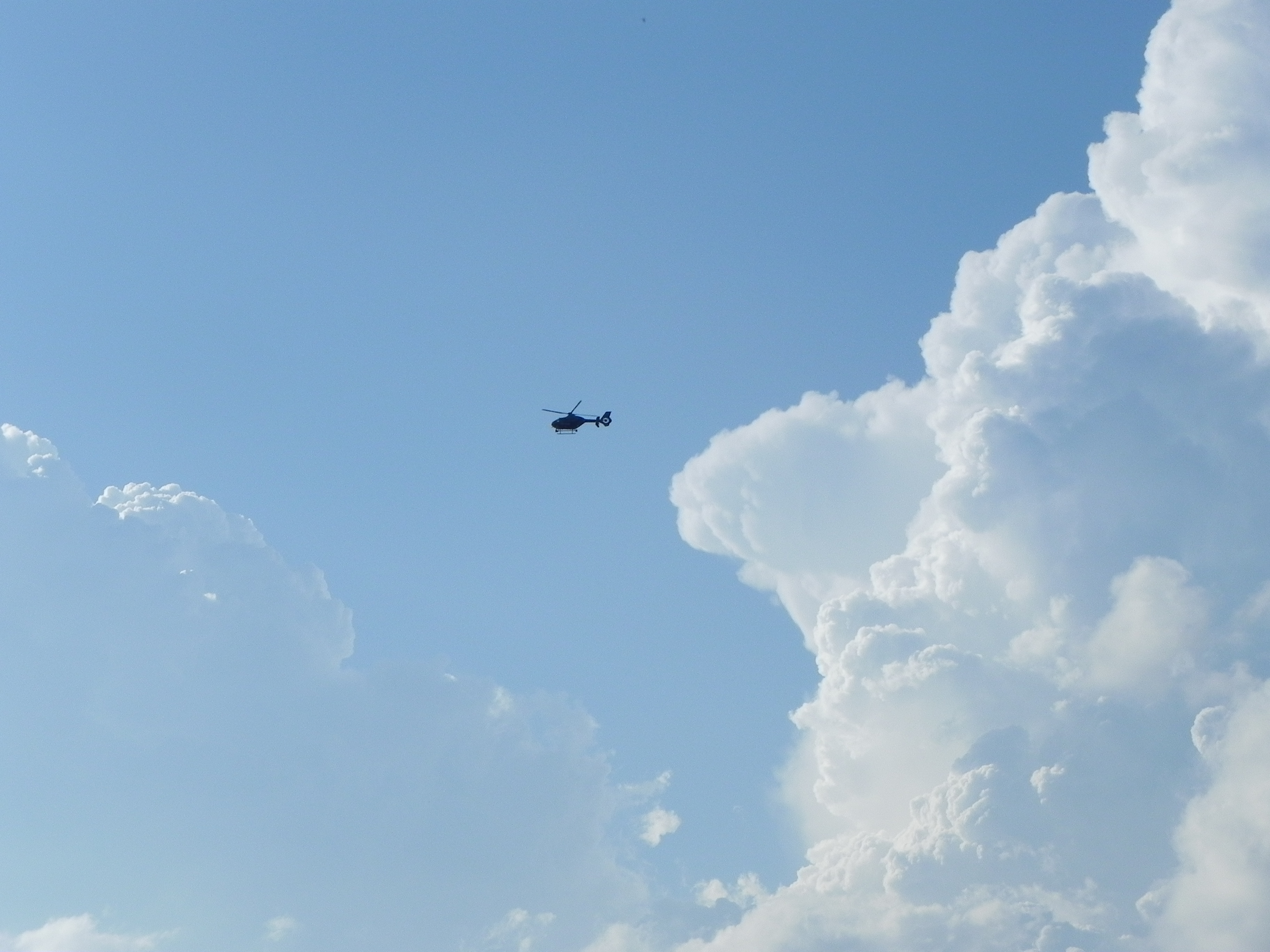
The machine gun on the bow of the National Guard boat would’ve impressed me as a boy. Now it kind of scares me. The helicopters overhead pass frequently. Police on jet skis chase girls in a canoe away from the shore of the Charles as if they were piloting a landing craft on D-Day. A whole blessed platoon of chartreuse-garbed police on bicycles pedal by, some clearly out of shape, creating a presence. It has been a quarter century since I’ve been in Boston to celebrate our freedom. I wonder where it’s gone. To get onto the Esplanade you have to be brushed with a metal detector. Although the web site said backpacks would be searched, the guy at the gate claims it said they were not allowed at all. “You can empty it out”, he said, “and put the contents in a plastic bag,” but the empty cloth must stay here under a tree like a naughty dog. “Happy Independence Day,” he says. I wonder if he’s aware of the irony.

Big Brother

Big Brother

We have become the most skittish home of the brave I know. We are being watched, we are told, for our own good. The watcher is not some enemy nation, but our own “leaders.” Lead us not, I pray, into temptation. I wonder when we considered chasing girls in a canoe away from the shore a matter of national security. In 1985 I called Boston home. When my wife and I came to the Fireworks Concert as a young engaged couple, we lazily wandered down to the Esplanade, plopped on a free bit of grass and saw maybe an officer or two the entire day. Now everyone on this grassy strip is treated as if they’re on a grassy knoll. Armed police on boats cruise the shore to make sure we’re minding our manners. After dark that helicopter spotlight can’t help but to make you feel guilty of something. There’s a hurricane coming, and three tons of fireworks are sitting anxiously on the barges in the river. The concert begins, but soon so does lightning. They skip right to the fireworks, forget the 1812 Overture. I wonder about my evil backpack under the tree.

The woman behind me is talking to her companion about how illogical the backpack rule is. “If the bag is empty, why can’t you take it in?” she asks. I’m not one to talk to strangers, but I have to turn around to agree. We exchange horror stories about being screened at the airport. Doesn’t anybody see how offended our revolutionary forebears would’ve been by such a military presence in peacetime? What if some crazed national decided to do something insane? Would that wicked machine gun hit me and my family, right on the waterfront, while trying to get the perpetrator? Are we collateral damage on the trail to freedom? Or is freedom even in the picture any more? We can’t let the terrorists win. Every time we face a backpack full of homemade explosives with hundreds and hundreds of chunky guys on bicycles and hovering our heads with deadly force, I can’t help but think it’s no contest. There’s a hurricane coming. They rush through the fireworks and I join the other owners of dispossessed backpacks looking for my luggage. Then the fattest raindrops I have even felt begin to fall.


It’s My Body

Those who believe mythology is dead have to look no further than the Supreme Court. Amid pictures of women protesting religious freedom to be told what to do with their bodies, the Court decided that employers may withhold rights to birth control under the rubric of religious belief. The ones who raise the issue, however, biologically never carried a baby to term. One gender making decisions for the other. We all know that the official stance of Roman Catholicism, closely followed by radical Evangelicalism, is that God intended sex only for procreation. Those women who find themselves on the receiving end of unwanted conception are helpless in the eyes of the law, depending on who their employer is. Blind justice indeed. Obamacare is intended to help level the playing field. Too few people have any real control over what medical treatment they can afford. I know more than one fixed-income person who suffers chronic pains due to lack of adequate treatment. I also know people who have used the system for plastic surgery before a trip to the beach. It seems that your employer now has the right to decide—but only if you’re a woman, and only if it involves what might be euphemistically called your “private parts”—what care you deserve.

Legislating morality, we religion majors debated even when I was back in college, cannot be effectively executed. If you presume there is a God, then enforced obedience is no obedience at all. Even conservative undergraduates could see that. Now our “Supreme” Court, with its male majority, has followed the lead of closely held corporations (doublespeak for certain patriarchal, Evangelically based companies) and declared that half the humans in America don’t deserve the same health care as the other half. The reason? Closely held companies don’t want women to have access to birth control. Our courts strike a blow against freedom and justice for private religious interests.

Within days of one Christian denomination declaring that gay marriage will be—should be— sanctioned, our own judiciary sides with the right of upper management in private corporations to discriminate based on gender. At least the owners of Hobby Lobby and Conestoga can sleep better at night knowing that they’ve prevented women from having their basic rights upheld. And metaphorically crawling into bed with closely held corporations are a male majority of supreme court justices who believe one man’s religion (yes, man’s) has the right to overturn the freedom of his employees. With the blessings of a male God. A situation like this prevailed, it seems to me, until 1863, also with the backing of scripture. Only in those days the argument was, I believe, that God is clearly Caucasian.

Looks balanced...

Looks balanced…


Kingdom Come

Bible in HistoryPopular media tells us the Bible is irrelevant. As someone who has struggled for years to find a non-sacerdotal job in that area of specialization, it’s not difficult to believe popular media is right. Despite all the rationales on all the religion department websites out there, there is little that you can do with your degree. It was refreshing, therefore, to read The Bible in History: How the Texts Have Shaped the Times, by David W. Kling. While not exactly what I expected it to be, Kling’s book did explore several specific pericopes (pericopae sounds too pretentious) with an eye toward showing how a single verse from the Bible could change western history. The examples go from the early monastic movement up to debates about women’s ordination that are, unbelievably, still on-going. The social movements he traces demonstrate that the Bible has been, and continues to be, more than just a book.

At several points through this volume I stopped to consider the implications. From an outsider’s point of view many of these debates must seem almost infantile. They would have no teeth at all if not for the belief that the salvation of humanity rode on their correct interpretation. Often—too often—the results were the torture and oppression of others, for the sake of the Gospel. If we’ve got this right, then we need to prove it through might. A mighty fortress is our God. So the Psalms seem to say.

Few people stop to consider just how deeply engrained in our culture the Bible is. The idea, on the surface, is almost like a fairy tale: once upon a time, God said… And yet, some of the most intelligent people the world has known have staked their very reputations on this claim. As a postscript to Kling, we can still see the Bible’s influence on politics—and therefore society—over a decade later. We still debate whether homosexuals can legally love one another. The biblical basis of this debate is thin, but it is a bulwark even today. We argue about stem cells, and although from the biblical worldview such things are mythical; yet that same Bible gives people the material with which to argue, eh, Jeremiah? And where is that female president we should’ve elected long ago? Any ideas, Paul? No matter how we may discount it, the Bible is, and will continue to be, a most influential book. Too bad we as a society don’t care to learn about it from specialists. Not when it’s so irrelevant.


June Bugs

On my way to work yesterday, I came upon an overturned June bug clawing at the air, trying to regain its feet.  I’m always in a hurry getting to or from work, but I decided to stop, offering the insect a leaf to grip, and turning it back over.  I knew, as I spied birds flying overhead, that its chances weren’t good.  In the course of nature, insects are radically overproduced because so many get eaten.  In my apartment they can even be a source of sudden terror when they find their way inside.  I knew the June bug was probably nearing the end of its short time on the earth, but as I held out that leaf to it, I knew that in the act of struggling we were one.  That sounds terribly Buddhist of me, I know.  Insects and humans share, on the most basic level, the desire to survive.  Who likes to feel vulnerable—soft, unprotected underbelly exposed to the air?  Defenseless and helpless?  Certainly not this poor beetle.

Photo credit: Patrick Coin, Wikimedia Commons

Photo credit: Patrick Coin, Wikimedia Commons

Stepping off the bus in New York City, I began my daily power walk to work.  The bus had arrived a few minutes late, and my anxiety level about clocking in works as if it’s on steroids.  I have to buzz past the interesting things happening in the city, the people who merit a second look, the architecture that has an unexpected amount of detail, only to be lost in the overwhelming number of buildings.  Big buildings as numerous as bugs on a summer morning.  Then I saw a box pulled up on a low sill outside some swank bank.  I often need boxes at work, and I can’t help stopping to appreciate how this unbroken expanse of paperboard would be useful.  Then I noticed the feet sticking out the end.  There was life in this box, not so different from the beetle I’d stopped to help an hour and a half ago, in its exoskeleton, grasping for some kind of salvation.

I arrived at work agitated. I had been able to help the beetle, but what could I do for the sleeping human being in his box? I had no money in my pocket, and even a twenty would stay the exposed, raw human on the city street for no more than a few hours. To care for a person takes commitment, long-term willingness to make sure that those who fall on their backs are set again on their feet, given the resources, the opportunities they need to get along in a world where those circling above are far more dangerous than the birds in my neighborhood. I looked at my calendar. June is nearly over. The June bugs will soon disappear. And yet I couldn’t erase the image from my mind. How much relief seemed to show on that inexpressive June bug face when it could finally crawl away from the center of the sidewalk. Something was terribly wrong here. And a man was sleeping in a box just two blocks away. In the act of struggling we are one.


Trans-Human

“Rapture of the Nerds,” an article in this week’s Time magazine by Jessica Roy, has me scratching my head. Or it would if I had a head. That is, if I were an uploaded consciousness in a machine. A transhuman. The idea that consciousness is transferable to hardware has been gaining momentum over the last several years during which humans have evolved into illogical machines. Roy’s article about Terasem, which is being called a new religion, explores what the leaders of the movement teach about human consciousness. You write down your thoughts in most intimate detail, download, and viola, send them out to the cosmos. Your soul has been saved. If only we knew what a soul was. Transhumanism has been promising an attenuated kind of immortality for its adherents, but as I sit down to write out my thoughts, I’m aware that there’s always a lot more going on in my brain than the simple ideas I can scrawl down before they evaporate. There’s quick wisps of thoughts about my loved ones, my schedule (what do I have to do today?), what I ate for supper last night, how I feel—all of this while I’m putatively thinking about writing a blog post. Schizophrenia of the soul?

Faith

So much of thought is having a biological body. From early days I have been aware that this body will die. I was taught that the soul would live on, but this thing I call consciousness seems pretty closely tied with this thing I call life. And once the biological input ends, that part will be over. I think. In other words, my thoughts are tied to my biological existence. How can I even begin to write a minute fraction of them down accurately? I used to toy with an idea called meta-thinking. It was something I came up with as a plot element in a science fiction story. The idea was that those who can think two thoughts at once would eventually take over from those of us with lesser mentalities. Those who have two minds in one brain are, it seems, a step closer to the divine.

I use technology on a daily basis, but I am a disingenuous advocate. Some of the most transcendent moments I’ve experienced have been outdoors with technology left behind, under a sunny sky with an ocean breeze blowing in my face and those I love walking beside me. I think I’ve already broadcast that out into the universe by simply being a part of it. I don’t need circuits and motherboards to make me more of what I am. Technology is the follower. It is consciousness that will always remain in the lead. And we still really don’t even have an idea of what consciousness actually is. It’s certainly not this computer that’s sitting on my lap. And I do have to wonder, once my consciousness becomes a robot, what it will do with this strange, primate urge I have, when I’m puzzled, to scratch my head.


Mores the Merrier

The Presbyterian Church (USA) and I go back a long way now. Not that I’ve ever been a member, but one of their institutions gladly accepted four years of my tuition money and tolerated my presence on campus during that same time. I arrived at college a fundamentalist, but, as a religion major who thought through what was presented in class, I soon discovered that literalism was as wrong as sin. This past week the Presbyterian Church (USA) voted to allow gay marriages. Talking to someone I still know in my native, conservative western Pennsylvania, I learned that disgruntled heterosexuals I’ve known since I was a child are now denomination shopping because of the change. Ironically, this includes divorced individuals and others who can’t seem to get the hang of this heterosexual relationship thing. Marriage may not work for straights, but we sure don’t want the gays to have a chance at it.

Gay marriage, of course, is only the tip of the iceberg upon which modern Christianity is bearing down. And not just Christianity. Any ancient religion that finds itself surviving in a world that has completely changed since its founding has trouble remaining relevant. This issues of peasants in Palestine under imperial Roman rule are very different from a high-tech, service-industry, desk-job society. One could argue that people never change, but I suspect that society gives the lie to that. Some issues are perennial—we still haven’t figured out how to make sure the poor have enough. We will walk out of church, however, when we see affluent people of the same gender walking down the aisle together. With priorities arranged this way, is it any wonder that the mainline churches have difficulties retaining members? For some, the church has become a place to feel comfortable with their prejudices rather than to try to figure out what a first-century religion means in a twenty-first-century world.

I applaud the Presbyterian Church (USA) for its decision. It will certainly cost the denomination numbers. It is, however, a move to try to introduce justice back onto the agenda. One does wonder whether it was predestined. Far be it from me to speak for a first-century carpenter, but I suspect that a church founder who stressed repeatedly that love, not judgment, was the way to become one of his followers might be a bit sad at the political turn this has all taken. We know, from all that biology tells us, that sex has far more importance to humans than reproduction. It has a pair-bonding social function without which many couples would split up. This seems true regardless of the gender combination involved. Why not acknowledge this fact as truth and get on with the important business of negotiating the twenty-first century? Of course, we will have to find some other way to justify our prejudices.

IMG_1087


What You Pay for

Over four to one. It’s a sad statistic. A friend sent me a story in Slate exposing, once again, the (some would say) criminal inequality of university administration to the “talent.” Turning our eyes to Canada, the piece by Rebecca Schuman narrates how when administrator Indira Samarasekera of the University of Alberta announced that she was leaving, her position was applied for by four faculty members of Dalhousie University as a group. Intended as a pointed joke, the faculty members, led by Kathleen Cawsey, noted that if all four were hired the salary of Samarasekera would cover all of their salaries with a substantial raise. Universities continue to insist that administrators should pull down corporate salaries for what, to the eyes of everyone else, is a job with no point. Long before even a Dean had been born, faculty taught because that’s what they do. As perennial overachievers they require very little managing to do their jobs. The more corporate universities have become the more pronounced faculty abuses of they system have grown. Coincidence?

In my current ancillary job to the calling of my life (the classroom), I spend a lot of time on college, university, and seminary websites. One of the interesting dynamics I’ve noticed over the last few years is that when you want to find faculty (the only ones likely to write a truly academic book) you have to wade past tabs announcing trustees, administrators, and other dead weight. Almost as if institutions of higher education find the subject experts to be an embarrassing afterthought. When we send our children off to take the SATs and have them sign up for honors courses and college-placement classes in high school, we’re probably not thinking about what trustees they will be emulating or administrators they will be ignoring. There was a time when people associated universities with the faculty talent they could draw. And the subsequent benefit to paying students.

How the times have changed...

How the times have changed…

Samarasekera’s $400,000 salary will be, undoubtedly, claimed by another faceless administrator. Universities across the United States and Canada will help to recoup their costs by hiring more adjunct faculty and slashing permanent positions. And parents will weep all the way to the bank’s loan officer. Our children are being taught “business ethics” in real time. Tuition will go endlessly up to make sure we can afford the best paid deans of this or that, and the most comfortably paid coaches whether or not their teams win or lose, because, we all know in advance who the losers are. One thing is for certain, they will not be the administrators or coaches. They will, however, be the ones paying to sit in the classroom.


The Truth about Elves

We are nothing if not certain. We know that there are no such things as intelligent non-human entities anywhere in the natural realm. We may reluctantly nod toward some animal intelligence, but that’s as far as the head inclines. Humans are the acknowledged and absolute top of the chain of command. Until you try to build a road in Iceland.

The story of how the road crews were called to a halt because of fear of infringing on elf territory hit the internet months ago. An article in the BBC News recently revised the scene. Emma Jane Kirby traveled to Iceland to see just how seriously this was being taken. I, for one, am glad that mythology survives on the surface in at least a few small places in the world. According to Kirby, surveys suggest about half of all rational adults in Iceland at least hold open the possibility that Huldufolk exist. The Huldufolk, or “hidden folk” are not diminutive, but human-sized and invisible. Who’s to say that invisible people don’t exist? Show me.

Ängsälvor_-_Nils_Blommér_1850

Rationalists are quick to jump out with the accusation that witch trials and other superstition will soon follow should we allow that perhaps the angelic, demonic, or folkloristic beings exist. Of course, it was the rational authorities of the day—often the church—that made those trials possible. Without religion, though, we never would have had science. I don’t think the invisible beings had anything to do with it. Human, all too human, hatred was the real culprit. Fear can lead even the most well-adjusted to the precipice on a dark and stormy night (with apologies to Edward Bulwer-Lytton). People are inclined to mythology to give meaning to a world that, no matter whether scientifically described or not, must make sense to us. Sometimes the elves seem to be the most likely explanation.

The only thing really lost by catering to the belief in elves is money. It might take a little more time and a bit more effort, and empty the coffers just a bit more, but in the end both elves and humans are happier. This worldview has a sense of wonder that a money-padded saunter through Manhattan simply lacks. When faced with the choice between mean money or disgruntled elves, I know the path I would rather take.


Psalm 151b

sinead-oconnor-take-me-to-churchI can’t claim to know much about Sinéad O’Connor. When she did her Saturday Night Live act a few years back, I remember the outrage among several Nashotah House students muttering unholy threats. Not that they were Catholic, having *ahem* celibacy issues, but they objected to a picture of Pope John Paul II, known colloquially as “J2P2,” being torn up. This symbolic gesture lost her, on campus anyway, about a dozen fans. I had nearly forgotten the Irish bardess when my wife sent me an NPR story on her recent song, “Take Me to Church.” I was immediately struck by the lyrics that, to this old Psalter reader, sounded very much like a Psalm. The lyrics, while some will certainly disagree, resonant very strongly with the self-confession that permeates the hymnal of ancient Israel. Not that O’Connor has suddenly become a proper Catholic, but she has entered the band of David.

Many popular artists over the years, I would contend, have struck that familiar chord. Anyone who reads the Psalms at face value will find it hard to miss the angst of the writer who tries to do right only to find that s/he needs someone to “take them to church.” Music is the confessional of the soul. Psalms can be a most secular book. The way some biblical scholars like to explain it is that the Torah and the prophets are God speaking to (read “commanding”) people, and Psalms are the opportunity of people to speak their mind to the divine. This might explain the otherwise inexcusable anger that pours out in invective which, if we’re honest, we’ll have to admit to having felt from time to time.

The line we draw sharply between sacred and secular is attenuated in the Psalms. In fact, it is in any honest religion. When religions present themselves as strictly lived as if people could be truly righteous while others should be excluded, trouble is on the horizon. Pictures get torn up, and the “faithful” grow angry. I know few who would argue that humans are perfect just the way we are, yet, for the most part, we try to do what is right. The standards any religion proffers are too high, and we are bound to fail. Perhaps the saving grace, if I may borrow a bit of religious language, is that even the secular can write effective psalms along the way.


Global Warning

“Sticks and stones,” the childhood wisdom goes, “may break my bones, but words will never harm me.” We were taught that little mantra as a response to being teased by bullies. But words can and do hurt. They can even be lethal. Although I’ve come to realize that specific words are inherently neither good nor bad, I’m still a little shy around some of them. The website known, euphemistically, as “IFL Science!” contains an f-bomb that sometimes makes me wary—what’s wrong with just regularly loving science? In any case, perhaps this adverbial use of the most versatile swear word is intended to make the website a bit of racy fun. The posts are often very good. So it was that I recently read a story about “Friends of Science.” This group, it seems, is paying good money to convince the scientifically illiterate that global warming is natural, caused by the sun and not emissions, and so we should just chill. IFL Science! points out that the group, however, receives money from petroleum companies. Sticks and stones.

450x436_q75

On my way to work this week, I noticed how many of the ads in ebullient, affluent Midtown Manhattan reflect dark shows and movies. It’s summertime, when we expect bright colors and sunny weather. Has it, perhaps, been too sunny? The best selling non-fiction book over the past few weeks has been on economic inequality and how it will lead to a good, old-fashioned primate crash. Going ape-crap on the bullies. Our species doesn’t tolerate radical unfairness for long. Those who suck money from under the ground may not fracking care about the rest of us, but they sure pull in the big money. Big enough to buy the truth. Our emissions, they seem to say, don’t stink. And that weird weather you’ve been noticing for the past decade or so? That’s normal. Words will never harm me.

Global warming is a reality.

Oligarchy comes in many forms, the most insidious of which is the benign overlord. The implied subtext is “if I am smart enough to make all this money, I must surely be smart enough to decide what’s best for everyone.” Call it the gold standard of hypocrisy. In an increasingly secular society where the rewards of heaven devolve to what we can grab on earth, this might even be called a kind of theology. We all know that public policy and federal laws can be purchased, if we call it lobbying. Or election fund donations. The truth it seems, is up for sale. Call it Friends of Science—the name says it all. And if we’re tempted to add our own epithets, it might pay to ask what harm can words really do?


Programming God

Robots have been part of my world far longer than I ever recognized. Still, growing up in a small town in the 1960s, their impact was fairly minimal—they may have had a part in the manufacture of the car we drove, and perhaps helped prepare some of the products we bought—but those robots were far away. Far more present were those on television who, for the most part, were funny and helpful. This month’s Wired magazine runs a story entitled “Trusting Our Robots,” by Emily Anthes. The point of her short article is that people feel more comfortable with robots that are programmed to appear uncertain. We don’t trust robots to drive our cars, as she points out, but we give them more, old-fashioned primate sympathy when we make them look like they’re having a hard time. Just a couple weeks back Time magazine had a blurb on how we’re now at the point of programming drones to kill without human input. Add a dose of uncertainty and we get a glimpse of what it must be like to be gods.

Underneath our exteriors, we all know that robots do what they are programmed to do. In many respects—physically, especially—they are superior to us. Nevertheless, human knowledge is not perfect. We, too, are prone to uncertainty. Our robots aren’t better than we are, only more efficient. Doubt is a human quality. Perhaps our most endearing. As Ms. Anthes notes, “even when confronted with evidence of our own inferiority, we resist a robot’s help.” We have evolved over millions of years to interact with other creatures. Those non-biological entities we’ve created and endowed with artificial intelligence (sound familiar?) somehow can’t equal the right we’ve earned from struggling against, and along with, nature for these many eons. Would God really trust us with the keys to the universe?

An early plan for a robot.

An early plan for a robot.

Robots, we are told, are our inevitable future. Some visionaries look forward to uploading human consciousness (even though we have no idea what it is) into a machine and, with replaceable parts, living forever. Before the dead and resurrected Jesus, according to the gospel of John, stood Thomas—the man some traditions said was Jesus’ very twin—and yet he doubted. As much as we claim otherwise, we adore Thomas for it. Evolving even in a world full of religion—itself a product of our evolution—we are so unsure. Our robots, however, programmed by us, have no doubts. Even when they act confused, it’s only because we tell them too. Our minds, as Wired tells us, resist letting robots drive the car for us. We let them pull the trigger, however, and pray our programmers got it right.


Real Reading Rainbow

Libraries rule. According to recent studies libraries rate higher than religious institutions, according to public surveys, in their usefulness to society. From the lost library of Alexandria of yore to the local Carnegie, libraries have been the repositories of information almost from the beginning of civilization itself. Last week the American Library Association, according to an article forwarded to me by my wife, and the Banned Books Week planning committee, announced a theme for this year’s recognition of the books various groups (many of them religious) tell us we shouldn’t read. Banned Book Week, of course, falls in September. It might seem strange that planning has to go into this, but the banning of books has never ceased and the list grows year by year. I recently mentioned John Green, one of the authors who frequently appears on banned lists for children. In an age when encouragement to read should be running high, we hide behind platitudes to keep our eyes toward a predetermined prize. Among the reasons frequently given for banning a book: its religious outlook. I.e., the “wrong” one.

IMG_0324

I often wonder why we think sheltering children who are old enough to read from the collective knowledge of the human race does them any favors. Our culture so successfully removes us from nature that we don’t experience the “facts of life” that our ancestors no doubt noticed early and often. Violence, sex, drugs, and death, however, haven’t become any less common. They are only hidden until their knowledge hits with often catastrophic force, leading to neuroses about how unsafe our world really is. A function of story, if neurologists are to be believed, is to help us navigate the many trials we’ll encounter by seeing how others have done it before. I don’t doubt that there is age-appropriate material for children, but they understand a lot more than adults like to think they do. In my teaching days I was always amazed at how much undergraduates knew that I was only beginning to discover as a professor. Books seem a good way to introduce knowledge appropriately.

The internet, of course, gives access to unvetted knowledge to anyone with access to a computer or phone. Published books, it used to be, had the added value of passing through editorial hands on their way to public presentation. A funny thing happened on the way to the library. We’ve democratized the writing of books through self-publishing, but we’ve not yet ceased to ban them. Perhaps the real way to protect our children is to listen to them. We seem to think telling is better than hearing, although the flow of knowledge can go both ways. Instead of banning books for our young we might all benefit from opening of our own minds.


Jonahado

SharknadoSome movies are so bad that they become classics. Some are just plain bad. The jury in my head is still out on Sharknado. The story, obviously tongue-in-cheek, is so far-fetched as to be pretentious, and anyone who knows something about either sharks or tornadoes, or both, will likely find credibility waning from the first scene. For those sensible among my readers, who’ve not seen the movie, the title gives it all away. A global-warming-induced hurricane hurries toward Santa Monica with its forever young sun-worshippers. The hurricane floods the California coast, bringing sharks to the city streets. As our protagonists drive around somewhat pointlessly, the sharks attack their car, eventually eating everyone who’s not family. At one point the family tries to buy rations at a liquor store, only to have the news announce that this is the apocalypse. The store owner scowls that it’s the government, not God, that’s bringing this upon them. Then the waterspouts appear, morphing into tornadoes carrying sharks, still hungrily chomping at everything as they fly through the air.

Ironically a biblical theme comes about with the swallowing of Nova. As she falls from a helicopter (don’t ask), a great white shark snaps her up in mid-air, and since she’s about the only character you can care about, the movie seems to have reached its nadir. As the tornadoes dissipate and the sharks coming raining down, the eponymously named Fin is swallowed whole by a huge great white, while still holding his chainsaw. We already know that this latter-day Jonah will make his way back out, and we are supposed to be surprised that this is the very same shark that holds the reborn Nova, who admits her real name is Jenny Lynn. Like Neo in The Matrix, she is the convert to a new faith, this time in the family of Fin, whose only fault, it seems, is that he cares too much for others.

While a made-for-television B movie (although C or D might be more appropriate), Sharknado demonstrates the popular conception of the apocalypse. Not that it will involve flying sharks and destructive wind-storms, but that the end of the world is somehow inevitable. We have convinced ourselves that its a matter of when, not if, the world will meet its demise. Global warming, clearly our fault, is blamed by the movie (as is the government), but the story is that the flimsy culture we’ve constructed is subject to utter ruin by a hurricane and maritime predators. Or I could be reading far too much into this. Religious tropes may be picked and chosen at will. And when things really go wrong, like accidentally switching on Sharknado, we have a ready arsenal of religious ideas at hand to blame. And the apocalypse may be the least of our worries.


The Fault in Whose Stars?

The_Fault_in_Our_StarsTheodicy. I’m no theologian, but the problem of suffering erects a wall ever higher between wanting to believe and actual experience. Many great thinkers have laid down their faith because of this insuperable hurdle. The movie version of John Green’s The Fault in Our Stars opened last night, but I didn’t see it. It was difficult enough to make it through the book. I have to admit feeling a bit wimpy about finding a young adult novel emotionally challenging, but it just is. As I mentioned a few days ago, Veronica Roth’s Divergent trilogy has been topping charts lately, but so has John Green’s novel of childhood cancer. Theodicy is deeply inscribed in this sad tale of loss and love. From a purely biological perspective, the death of the young is explicable, but that seems to be the easy way out.

I’ve been toying with The Fault in Our Stars since January. Picking it up long enough to read a few pages, then growing frightened and putting it aside for a few weeks. The story begins in “the literal heart of Jesus” in a church for a cancer support group where Hazel meets Gus, and, as young people do, falls in love. Green is clear on one point from the beginning: no novel where the protagonists are victims of cancer can ever have a happy ending. We just have to watch and wait for the inevitable. The children return time and again to the “literal heart of Jesus” but no healing comes. They face loss and every page you turn brings more imponderable questions. Yes, this is fiction, but we live in a world where childhood cancer exists. And childhood starvation. And childhood victims of abuse and violence. And still we try to find a way to fit it into a broken-down theology and wonder why we don’t smile more often.

I don’t shy away from provocative fiction. I read scary stories with all sorts of monsters. Finding ourselves, however, in a world where neither rationalism nor theology really makes all the sense they should, sometimes the scariest stories are the truest to life. John Green’s fiction, it comes as no surprise, is frequently banned. Reading it as an adult one finds parts predictable and parts handled too gently, but with enough realism thrown in to want to see it through to the end. Banning books, however, is merely an attempt to shield children from that which they need to see. We do no favors, hiding the truth from those best equipped by nature to accept it. The real question is whether theodicy itself can survive. Perhaps, like the characters in the novel, it will come to its own quiet termination with no real answers to offer.


Back to School

“We want to make certain that we view culture through the eyes of faith, that we don’t view our faith through the eyes of culture.” The words are those of Stephen Livesay, president of Bryan College, according to a recent New York Times article. Bryan College in Dayton, Tennessee, already famous as the school that evolved out of the Scopes Monkey Trial, has been toying with adding a more specifically fundamentalist statement to its panoply of faith. Instead of stating simply that humans (more precisely, “man”) were (was) created by God, Livesay wants to clarify that this means by special creation, no evolution involved. Hey, we’re all thinking it. Why not just say it?

800px-Ape_skeletons

With the characteristic, journalistic eye-rolling that inevitably accompanies stories about creationism, I frequently wonder why there aren’t more calls to try to understand this viewpoint. It’s easier to condemn and say that narrow minds can’t widen out, but some of us who had believed in Bryan’s hypothesis at one time have managed by dint of reading and reason to climb our way out of the slime. If we understood what made literalism so appealing, we might be able to figure out why only America lags behind the developed world in accepting what is otherwise universally regarded as a fact. Instead, faculty members nationwide willing to call this into question are summarily fired and nobody bothers to do a thing to support them. Collateral damage of the culture wars. Perhaps we should add a statement about not letting the door hit you on your way out.

Evolution through natural selection stabs very deeply into the heart of human self-worth. We still refer to other animals as “lower” than us, and we exploit them in any way we see fit. Then we don’t wonder why being told you’re just like them isn’t disturbing. This is trench warfare. Lines in the sand dug deeper and deeper. Those who believe in creationism aren’t simple. Even with all our space telescopes and Mars rovers, we’re told the most complex thing known to humanity is still its own brain. And that brain makes people with Ph.D.s think that they’re special—either a separate creation by an invisible god, or because they can recognize how irrational our own brains make us. No intelligent being would want to understand why this is so by studying it rationally. That would make far too much sense.