Diminishing Returns

You know that phenomenon where in movies or on television spinning wheels reach a point where they suddenly shift to spin the opposite direction? Of course it’s an illusion, since physics is not kind to fast-moving bodies that suddenly reverse direction. A friend of mine had an uncle, now sadly deceased, who studied this phenomenon (he was an academic of course). He figured out in terms I’ll never comprehend why this actually happens. To my mind, however, it seems like the maximum efficiency has been overreached. It’s like when you screw a fastener in too far, stripping the screw. So far is all you need. Anything more is too much. It seems that we’ve lost that fair concept of excess. An article in The Guardian that my wife sent me illustrates this as well as endlessly spinning wheels. “Out of office, out of mind – free yourself from inbox tyranny on holiday” by Steven Poole makes a lot of sense. Of course, in the “Old World” they take time off much more seriously than Americans do.

I didn’t get a vacation this year, but I remember what breaks from work feel like. Since I get up at 3:30 a.m., that’s saying something. I don’t have any sadistic intent that drives me to rise so early—just a killer commute and a job where no matter how much you give you could always be giving more. I could snooze and catch the next bus, but that puts me home at the time when all things being equal, nothing is equal. As it is evening is spent eating supper, doing dishes, getting ready for work again the next day, and checking my personal email. Reboot at 3:30. What my fellow Steve is writing about is the out of office message on your email that assures your clients you will check your email once in a while, even on vacation. Is it really vacation? Does your company give you a massive bonus for squandering that pittance of ten days off they graciously allow you? Have you improved from indentured servitude? With the abysmal job market any threat of employment lost is exploitation. Make no mistake—you are owned.

Spinning_Wheel_Drawing

What quality work do the exhausted produce? Those whose eyes are red and for whom a cup of coffee in hand is as close to a transfusion as you can humanly get? Yet the company will gladly give you a Blackberry to stay in touch after hours. Blackberry or raspberry? Don’t check your personal email on it—that’s against company policy. What do you think, you’re on your own time at home or on vacation? Germany, known for its legendary efficiency, has a company called Daimler that, Poole tells us, has the out of office email instruct you to contact someone else because your email to a vacationing employee will be deleted and not delivered. Daimler is a car manufacturer. And cars have wheels that seem to spin in the opposite direction when they start moving too fast. Maybe I just need sleep, but it looks to me like such wheels have reached the point of maximum efficiency.


Religion Fiction

Children brought up in a religious environment, according to a recent BBC story, are more prone to believe in fictional characters. The story, based on research from my alma mater, Boston University, suggests that if children are taught to believe miraculous stories at a young age, they will more likely believe that fictional figures are based in reality too. Undoubtedly this will be seen as yet another brick in Montresor’s wall by those who can find no good in religion. The reasoning will go something like this: believing in no religion is the “neutral” position. If we raise children in a religious context, we are inclining them toward a fictional belief system and making them less likely to reason their way out of it. Therefore, we should raise children secular.

Even in the BBC story there are dissenting voices. Perhaps children who learn about Jesus find Thor a more compelling character. Perhaps they are open to possibilities that logic shuts out. Our brains have two hemispheres for a reason. I often wonder whether it is possible to be fully human while ignoring about half of what evolution gave us to work with. Logic tells me that religious belief serves a survival function. And my creative side still appreciates the possibilities that my Manhattan brain is forced to shut down every day when I punch the clock. If there’s nothing more than work, perhaps believing in fiction serves a valuable function after all. But I suspect this is playing right into the rationalists’ hand. Pass me another brick, will you, Fortunato?

The jury, however, is still out on the nature of reality. Even for materialists. Gods of the gaps tend not to survive very well. The question is actually much larger than that. We don’t know the nature of ultimate reality. We’re not even sure what reality is yet. Can a parent who believes in God, after the experience of growing to maturity in a heartless universe, be blamed for teaching their children the same? No humane parent raises their child purposefully teaching them falsehoods. Yes, some children are damaged by religious upbringings. Some are damaged by materialist upbringings as well. What seems to have shifted, in my humble opinion, is the popular perceptions of religion. What used to be understood as the foundation of a civil society is now challenged as a harmful fantasy that encourages children to grow up into terrorists or non-functioning adults. The belief that we can raise children with no biases, however, is clearly fiction. Until we have the full truth, there should be room for both Gilligan and the Professor on this island. But then again, I was raised to believe in the divine world, so what do I know?

Fact or fiction?

Fact or fiction?


God Discount

God is great, despite what Christopher Hitchens wrote, at least, that is, if you want to save 15% without having to talk to a gecko. According to Mulder’s World—I want to believe that what I find on this site is true, but often I find myself feeling more like Scully—Mary’ Gourmet diner in Winston-Salem, North Carolina gives a grace discount. Well, perhaps this is believable. Praying in public has a long pedigree. This past Corpus Christi as I was driving back into town after a day out, I saw a procession walking down the street a few blocks from the local Catholic Church. Vested and carrying a monstrance with a humeral veil, the priest led the faithful out in public for a little recognized festival many suppose to be named after a city in Texas. Actually, I was an acolyte for Corpus Christi one year at the Church of the Advent in Boston. The well-heeled of Beacon Hill, however, knew to expect us out on the genteel streets. Private prayer in public, however, is something quite different.

As a very religious teen, I often went to United Methodist Youth events with the other faithful young. We would stop into restaurants on our long drives and make a show of praying amid the heathen. Some of us (not me, I assure you) even left Chick tracts instead of tips. If we’d ever ventured into Dixie, we might have had a discount. The problem with offering a praying in public discount is that it is impossible to tell if such shows are sincere. I have sat through many such episodes, wondering about Jesus’ statement “But thou, when thou prayest, enter into thy closet, and when thou hast shut thy door, pray to thy Father which is in secret; and thy Father which seeth in secret shall reward thee openly.” Well, that was only the Sermon on the Mount. Here we’re talking fifteen percent! “For where your treasure is, there will your heart be also.” This gecko winks.

IMG_1502Public displays of piety are not uncommon. I spent yesterday at the local County 4-H Fair on a rare day off of work. The Gideons, as always, were there handing out New Testaments. Let your light so shine—they are bright orange. Religious freedom ensures that prayer in public is kosher, as is agnosticism in public. Who is harmed by a public prayer? In that diner, who is made uncomfortable? Sometimes the innocuous act of kindness is a sign of mature morality. How many times—isn’t it nearly always?—does that car cutting you off in traffic have a Jesus fish plastered to the back? “I drive my car,” Daniel Amos sings, “it is a witness.” What you truly believe shows up when you’re behind the wheel more than when you’re behind the napkin. The truth may be out there after all. In the meanwhile, my tip’s on the table.


Sects for You

Oxford University Press has a religion blog. (Well, who doesn’t these days?) Apart from being jealous about their numbers, I find some of the posts fascinating. A recent entry by Linda Woodhead on the approval of women bishops in the Church of England was particularly well done. Woodhead is known for her in-depth knowledge of religiosity in Britain, and she begins her post with a distinction between two types of churches that I find most helpful. She mentions the “church type” that embraces society and tends to have less trouble keeping up with social changes, and the “sect type” that insists on keeping a long distance from the evils of society. She points out how the Church of England went from the former to the latter and how its numbers have subsequently declined. Her article made me realize that for much of my life I’ve found myself among the “sect type” believers. Fundamentalists, among whom I grew up, are naturally suspicious of the world. Grove City College, where I cut my critical teeth, was dead-set against change. And Nashotah House—need I utter more than its very name?

Sects are indeed concerned about being right. Not only being right, but being the only ones who are right. I recall a New Testament class in seminary at Boston University where an unnamed professor said, “If anyone can join, what’s the draw? Barriers are important.” Christianity, he claimed, grew strong by excluding others. This professor would have a difficult time being retained by many seminaries today. The “church type” church realizes that without embracing society it will embrace empty collection plates. Unless, of course, you court conservative political causes, for which there seem to be bottomless pockets of money available. Sects thrive on the feeling of superiority. Knowing that we got it right and everyone else got it wrong is cause for great rejoicing. Others are encouraged to join, just as long as they jettison their point of view. We are the Borg.

It is no wonder that religions struggle in a world with the Internet. Too much information, 24/7. Religions you’ve never heard of are suddenly right there at your fingertips, and the believers are sincere and convinced. Some are sects and some are churches. Some are open to any belief system while others have just what the (church) doctors prescribed. To me this raises a fundamental question of religion: what is its purpose? Is it to seek the truth, or is it to exclude others and make members feel special? Truth is an expensive commodity. Indeed, nobody has a universally accepted version of it yet. While some religious believers will not rest while the search continues, others made up their minds centuries ago. And those believers use sects to get what they want.

Photo credit: Peretz Partensky, Wikimedia Commons

Photo credit: Peretz Partensky, Wikimedia Commons


Religion Is Fundamental

One of the books on my shelf growing up was a cheap paperback entitled How to Be a Christian without Being Religious. The idea appealed since having to do all that “religious” stuff seemed kind of like Catholicism or some other formal system of behavior rather than a kind of organic relationship with God. Ironically now, fast forward an indeterminate number of years, and the “spiritual but not religious” demographic is quickly rising. From the secular side. As a sign of this new direction society seems to be turning is the Hart and Crescent Award, designed for Girl and Boy Scouts who are members of a nature religion. Perhaps the most widely recognized religion of this category is Wicca, the modern incarnation of witchcraft, according to some, simple nature religion according to others. The award, according to the website, is open to any young person who completes the requirements to learn about the earth and earth religion.

762px-Shaman_tableau

Also worthy of note is a story in last week’s Time magazine about atheist churches. Ministers from a number of traditions, disenchanted with belief systems that just don’t match what we know of reality are starting to form congregations of unbelievers. This may distress some materialists who find no reason to be spiritual, but the fact is, people naturally are. The article cites, for example, Bill Maher who stands against the idea. There is security in numbers, and in a society where people find themselves increasingly isolated from others, joining together on a Sunday morning for time with likeminded non-believers may not be such a bad thing.

One aspect of Josh Sanburn’s article has me a little puzzled, however. He notes that Richard Dawkins has torn religion apart in his books, and yet, here it is. Dawkins and Maher and other vocal atheists seem to believe that religion has brought us nothing but evil. How quick we are to forget that civilization itself is typically defined as having a formal concept religion, as well as several other components of what it means not to be “savage” or “barbarian.” That religion may not be Christianity. It may be Wicca. It may be the Houston Oasis and its atheistic system. People need common cause. Reason is great, indeed marvelous as far as it goes. People, however, are not entirely rational. They can be spiritual without being religious. And they can be religious without being believers. If you persist in it, your Scout can even earn an award for caring for the earth. And that should be no cause for complaint.


Romney Wordsworth

TheTwilightZoneLogo

The Twilight Zone, one of my favorite fallbacks when I’m alone, doesn’t shy away from religion. I remember watching some of these moody tales in my childhood, already in reruns by the time I was old enough to appreciate them, and occasionally having my young mind shaken as a result. The frisson of having reality not being as it appeared kept me wanting to see more of Rod Serling’s universe, evaluating, re-evaluating, speculating. Often heavy with psychological realism, despite the obviously outlandish premises, these half-hour plays in black-and-white still have a strange power to alter a mood. I recently viewed the episode “The Obsolete Man,” which closed season two. Having been declared obsolete myself, more than once, I found this story particularly chilling. A totalitarian state declares what worthwhile occupations might be, and Romney Wordsworth, as a librarian, doesn’t hold one of them. With shades of both Orwell and Bradbury, Wordsworth is sentenced to death.

In startlingly strong language, Serling has Wordsworth declare that, despite the decision of the state, there is a God. He wants his death televised, to which the Chancellor is happy to acquiesce. Locking the Chancellor into his room where, Wordsworth reveals, a bomb is about to go off, he tests the steel of the state by accepting his fate. Wordsworth spends his last hour reading the Bible. The Chancellor sweats and chain smokes himself frantic, finally calling out, “In the name of God let me go!” Wordsworth, of course, does. Rod Serling was not known as a particularly religious man. Many of his characters are hard-bitten, tough-talking caricatures whose bravado masks a profound uncertainty about life. The writing may not be stellar, but the ideas are beyond the stars. Religion is very human.

Many of these Twilight Zone episodes I have never seen. Still, they do reveal a world of imagination that had a tremendous impact on Cold War America. Bomb shelters, revolutionaries, and invaders haunt the minds of not just those born in the fifties, but of every generation since. The state that protects us is the very one that breaks open our luggage to look at our unmentionables when we want to fly. To keep us safe from ourselves. A decade before Serling’s series, George Orwell was looking a quarter century ahead, calculating the trajectory. The good guys, it turns out, have the wherewithal to decide who is obsolete and what is subversive. And if you don’t see things their way, they’ll start talking impeachment or perhaps worse. Your next stop, the Twilight Zone.


Sign of Jonas

A century ago today, the world erupted in war. Those who engaged in World War One are pretty much all gone now, but the war to end all wars has left its scars across the globe. We showed ourselves we could do it. We could drag, through our accumulated frustrations, just about every nation into open conflict. The costs were astronomical, but we didn’t learn a thing. Just a couple decades later we were back at it. Nations taking provocative stabs at other people. Keep on poking and people, being what they are, will eventually hit back. So on this anniversary of the start of the First World War (awaiting a sequel, perhaps from the start), I’m reading about the extremists in Iraq destroying Jonah’s tomb. Poke. Poke. Well, it is more a loss to fellow Muslims than it is to those who take the Bible seriously. Jonah is a nice story of a prophet (rather blithely retold in the Washington Post) who probably never existed. If there was a Jonah he wasn’t fish food, that we know for sure. The tomb of Jonah is like that of an unknown prophet. The symbol’s the thing.

In the story in the Washington Post, Justin Moyer laments that “anything in the Bible” might be destroyed in these circumstances. I wonder how you can destroy something that never happened. Doing so, in any case, is liable to start a war. It really doesn’t take that much. The last century has taught us little. Don’t get me wrong—I’m not in favor of destroying ancient landmarks or parts of a region’s history. But if we misattribute its importance to something sacred, or biblical, it will be far too simple to start a row. You see, Jonah converted Nineveh, according to the Bible. The Assyrians became good Yahwists, despite the historical record. Those who destroyed his tomb likely had conversion on their minds as well.

As these thoughts were taking form in my head, I happened upon the page of GETS Theological Seminary, which, as far as I can tell, is in China. On the banner across its homepage was a picture of its mission field. Is that the United States? Of course, if you read the description you’ll see that the world, in toto, is the mission field they intend. Still, it is a little bit of a shock to see yourself counted among the heathen. I’m sure, had Jonah really existed, that the Assyrians would have been just as shocked. They were as moral as any other militaristic society. And today my thoughts are on militaristic societies. The First World War definitively changed everything from that fatal moment it began, a century ago today. It was the first, but not the last, loss of humanity’s innocence. We would invent newer and crueler ways to kill each other in greater numbers. Blood would become the true currency of the last hundred years. Maybe we should keep a weather-eye out for a fish-swallowed prophet after all. The world could perhaps stand a bit of conversion.

f11w


Hydrofracking

HydrofrackingGenies can’t be put back into bottles, I’m told. They are one of the many things that once done cannot be undone. I had that sense throughout my reading of Alex Prud’homme’s Hydrofracking: What Everyone Needs to Know. Prud’homme does an admirable job in attempting a dispassionate, fair treatment of a subject that is divisive by nature. And destructive. Fracking, once done, cannot be undone. Those who are already against fracking will probably come away from this little book with a sense that ex cathedra statements are slightly more difficult to sustain. The further you read, however, the darker the palette becomes. Yes, fracking provides domestic, fairly clean fossil fuels, reducing dependency on foreign oil. It also has long-term results that remain unknown, with indicators pointing to the worrisome side of the dial. Enough negative correlations exist to give us pause for rumination. Is fracturing the shale a mile underground really a good idea? What about when we run out of shale? And the tremendous waste of water.

Environmental concerns are, by definition, ethical issues. What we do to the environment effects others, and when we effect others ethics is involved. Or should be. One of the startling facts about fracking is that it has been around for a long time. Since the 1940s. Growing up in fracking-friendly Pennsylvania I had no idea that oil companies could move in, break up the ground under my feet, and siphon out the gas and oil they found. It is an industry without strong federal regulation. In fact, due to Dick Cheney’s influence, oil companies are not required to declare what chemicals they are releasing into the environment. Trade secrets can be deadly. It feels like awaking to find Deepwater Horizon in your back yard, not having been aware that the technology to do such massive operations even existed. Who granted permission? The mighty rex lucre.

Prud’homme points out that fracking is not about to go away. Too much money is at stake. Once we’ve learned how to build atomic bombs, incendiaries will ever after seem quaint. We can’t unlearn how to frack, even as we can’t undo the process once it’s done. We have, however, abundant sources of renewable, sustainable energy, but not the will to harvest them. Our economic thinking embraces the myth of excelsior—ever upward! Fracking may not be as dirty as coal or as scary as nuclear waste, but it does leave scars forever beneath the surface. Its genie has escaped its bottle and it is far too capitalist an idea to be suppressed once it has tasted opportunity. Prud’homme’s book is rightly subtitled What Everyone Needs to Know. That which you don’t know can indeed cause harm on a scale we can’t even calculate.


Fear of the Known

Social media has become the new reality. Not that rumor ever had much trouble before the internet, but now our cultural memes explode so fast that we have to be wired constantly to keep up. And what we see makes us afraid. The other day I came across a story on channel 7 WSPA website out of Spartanburg, South Carolina. I don’t suppose I have any business needing to know what was going on in South Carolina, but the headline “Mysterious ‘woman in black’ spotted in Tennessee” got my spidey sense going (or my Men in Black sense, but that’s just a bit cumbersome). Was this a female urban legend who shows up after UFO reports and warns the witnesses to keep quiet? The truth is much more mundane. She’s a woman, dressed in black, walking south from Virginia, currently in Tennessee. Police say she has a name and she’s from Alabama. Since she’s all over social media, however, people are worried.

She’s on a Bible mission one woman has claimed. A Blues sister in black? Others claim she’s from an Islamic nation. Some implicate the Pentagon. When someone exhibits unusual behavior our minds turn to religious causes. Why would a person dress in black and walk down the highway? It’s just not done! Must be religion. On YouTube apparently a video shows her arguing about religion with a man in a Wal-Mart parking lot. Where’s the element of surprise there? If there are any firmly fixed social markers they are surely Wal-Mart and religion. Time to be afraid.

Scarcely a day passes when I’m in New York that I don’t see someone doing something peculiar. It’s the new normal. I suppose religion is sometimes the motivation, but I wouldn’t know. The gospel can be pretty difficult to identify definitively these days. You can’t trust someone just because they dress in black any more. After all, we’ve seen agents K and J battling aliens on the big screen since 1997 and there doesn’t seem to be much preaching involved. There is conversion, however, and just a dash of conspiracy theory. That’s more like American-style speculation. Internet fame is remarkably easy for some. Put on your black and walk down the road. And if you see Johnny Cash along the way, there will be no doubt that this is newsworthy indeed.

Bible-thumper or alien?

Bible-thumper or alien?


Dead See Scrolls

Despite her ability to overlook my obvious deficiencies, my wife has good eyesight. Last week she spotted an article carried by the Associated Press entitled “Dispute over ancient scrolls changes modern law.” Although many ancient documents (notably those from Ugarit) outweigh the importance of the Dead Sea Scrolls for understanding the religion of ancient Israel, the Scrolls have continued to be headliners. There never seems to be some sort of scandal very far from the Scrolls, and this article by Jennifer Pletz reaffirms that assessment. The name of Norman Golb is familiar to just about any Hebrew Bible scholar. His work on the Scrolls is highly regarded. The story, however, brings the scandal down a generation to Golb’s son Raphael, a lawyer and literature scholar. In a case whose details rival the minutiae of the Scrolls themselves, the younger Golb is accused of sending emails putatively said to have been sent from his father’s rivals confessing plagiarism. To what point, beyond alleged family honor, one hesitates to speculate.

Dead_Sea_Scrolls_Before_Unraveled

“Sculduggery,” J. C. L. Gibson once said, “is always just around the corner in archaeological circles.” The same might be said to apply to the Scrolls. Episode after episode of scholars behaving badly have attended the controversial documents since their accidental discovery on the eve of Israel becoming a state. Ironically, the Scrolls in some symbolic ways represent the struggles of the Israelis. No one doubts their importance, but access has always been an issue. Careers were made and secured by the Scrolls, reaching to the highest academic offices in the land. And yet, we can learn more by turning back the pages of history just a little further.

The Scrolls date from that troubled time period when Christianity was just beginning to emerge from Judaism. Tempers flare at implications masked or insinuated. As if the Scrolls were really the much sought philosopher’s stone. The original generation of Scroll readers is going the way of all nature. Those associated with the more solid tablets of Ugarit have long passed that way already. And yet we still have Bible museums being built and implications left dangling. Law suits are filed and ownership of the Scrolls is disputed. In the twenty-first century scholars are still willing to risk it all on some parchment fragments that have the appeal of the esoteric. Hidden truths, almost apocalyptic, squirreled away in desert caves. Knowledge is indeed money, unless, of course, you actually know how to read the Scrolls for yourself.


Lobby Hobby

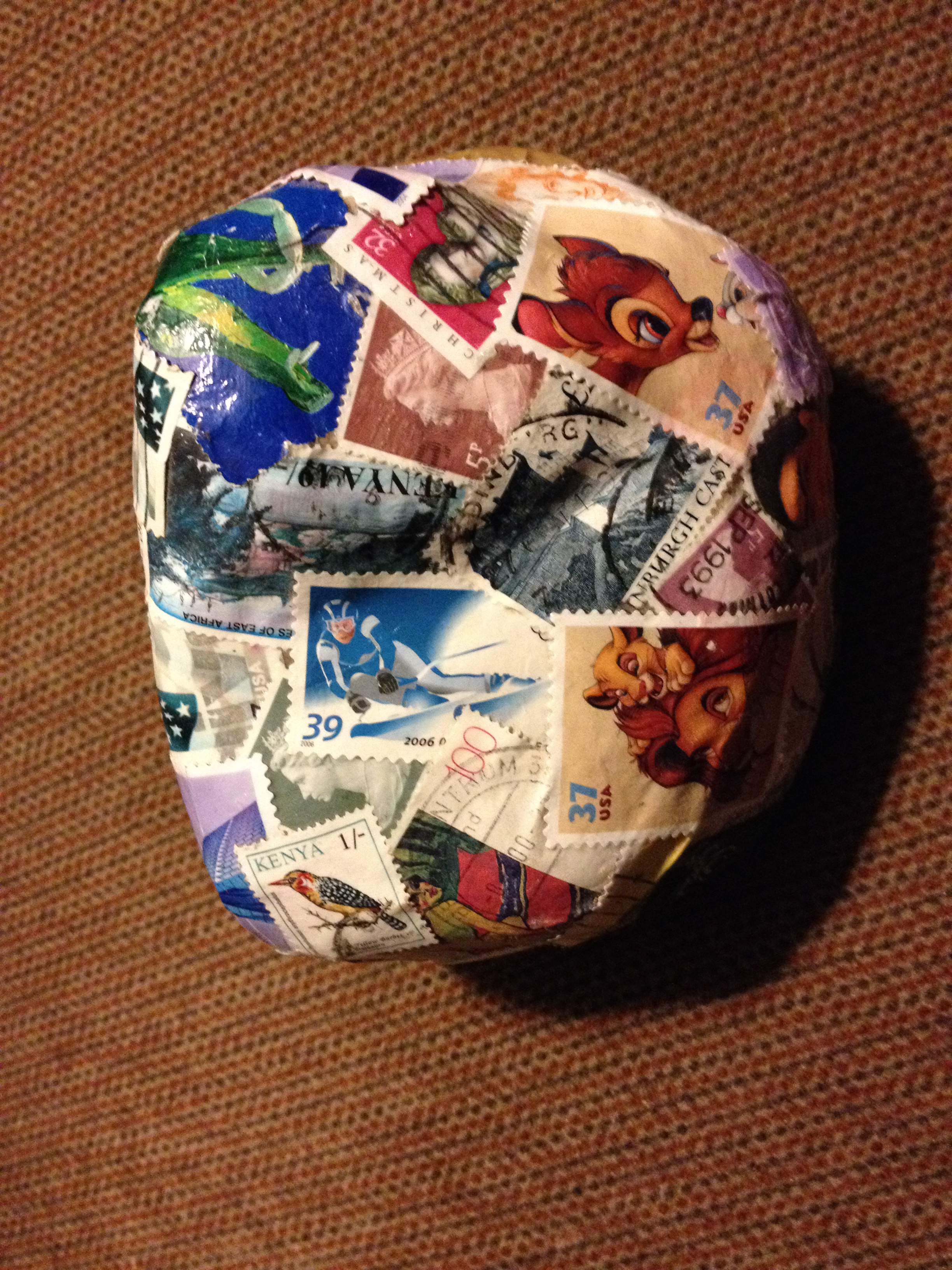
I can recall a time when hobbies seemed less than threatening. Indeed, the idea was to relax, not to lobby. My hobbies—collecting just about anything you could get without money—didn’t involve going to a store. Stamps (because everybody used them back then), coins (ditto), fossils from the local river bank, bottle caps that we collected while Mom was doing the wash at the laundromat, all kinds of handouts from society’s detritus made for many hours’ entertainment. I also collected Bibles. That was when I was old enough to earn some money and spend it on books. And I read those Bibles until I’d run out of versions, then I’d start over again. Now my hobby has come back to haunt me.

According to the New York Times, the Hobby Lobby family is planning to build a Bible Museum in Washington, DC, prompting fears of evangelization. Right there in the nation’s capital, not far from the Mall, a museum showing the importance of the Bible would indeed send a message. But is it really a threat? We live under the judicial decisions of a Supreme Court weighted towards the literal already. It might not hurt to have a museum dedicated to finding out what’s going through our justices’ minds. Clearly it’s not women’s rights. If we wander those proposed halls, we might see that museums are indeed dedicated to outdated stuff that has some importance. Rare are the contemporary museums that show right where we are at the moment. Rarer still, those that show the future that remains undecided. In many senses, Washington is already a museum.

The secular world seems to fear the Bible. It is, however, not going to go away. Although I left literalism decades ago, I’m still pleasantly surprised how much the Bible has to offer by way of insight into human nature and contemplation. You might even find some workable ethics if you can get away from the non-issues of birth control, stem cells, or same-sex marriage. The Bible doesn’t need to be a threatening book. In the wrong hands, it may at times seem like The Book of Eli had its eyes right on the target, but those who would use the Bible to harm others are those who read without understanding the words. No, I don’t think the Green family’s plans for such a museum are innocent. Neither can I believe that hobbies are a $3 billion industry. Reading books and picking up other people’s cast-offs may be the only hobbies you need.

Engraven images?

Engraven images?


Equal Measure

Far off in the woods of Wisconsin sits a seminary. In these woods, I’m told, wolves eat little girls. That seminary has for decades distinguished itself by its stance against women priests. I knew of, and respectfully disagreed with this policy when I was hired to teach there in 1992. I didn’t make waves, but rollers have a way of finding you nevertheless. It doesn’t take much to capsize an unstable boat. Within my first year a student challenged me, “Did your life change forever on July 29, 1974?” I was unfamiliar with the code and asked what happened on that date, vaguely thinking perhaps it had something to do with the run-up to the Bicentennial. On that date, it turns out, Barbara Harris was ordained among the first female priests (the Philadelphia Eleven) in the Episcopal Church in the United States. I suppose my life should’ve changed—for the better—but I was a Methodist at the time. Perhaps my life changed then, for I was 12, but that change had little to do with what the student intended. Or maybe everything. I wouldn’t have had a problem with a woman priest in any case. In 1989, Harris was elected bishop, the first woman to hold that title in the Anglican communion. Just three years later I found myself in the lion’s den.

When I asked male students what their problem was with women priests the answer invariably pointed to three factors: Jesus had no women disciples (wrong, according to a certain sacred book they claim to have revered), the Roman Catholic church did not ordain women, and the Church of England did not ordain women. The problem with backing and filling is that filling always overtakes backing. By 1994 the Church of England was ordaining women. Yesterday, at long last, the General Synod approved of female bishops. Welcome to the twentieth century. Now only Rome stands in the way. I am confident, despite the certitude in the eyes of my Nashotah interlocutor, that Rome will eventually come around. I may not live to see it, but justice will be served.

Photo credit: ChrisO, Wiki Commons

Photo credit: ChrisO, Wiki Commons

There is good evidence that most religions, prior to the monotheistic triad, had women priests. Something about the singularity of deity seems to have contraindicated a protective mother in the psyche of male clergy. Ironically, the same day that the C of E decided to do what was right, Oxford University Press’s blog ran a post on Mormon women bloggers. Among the newest monotheistic faiths, like the traditions before it, the Church of Jesus Christ of Latter Day Saints has not recognized the sacerdotal role of women, leading some to be excommunicated for speaking out. We are told that God is a jealous god. This is, after all, the wilderness. After yesterday’s long-awaited decision the woods seem a little less dense, and the threat of the wolves may have been exaggerated all along. If religions would only see people as people all our lives might just change forever.


World Cup Runneth Over

I’m not a sports fan of any description. I guess the message, “it’s just a game” sank in rather well as a child. Nevertheless, I was curious when some friends invited us over to watch the World Cup finals. New York City has been abuzz over the last few weeks, and if my walk home takes me past a bar in the city, I almost always have to cross the street to get around the crowds standing outside. So, I’ve been a little intrigued. It perhaps helps that some considerable primordial Teutonic blood makes its home in my ancestry. Hey, but it’s only a game. As a sometime jogger, it was interesting watching these guys running themselves ragged for 120 minutes, but what makes the World Cup worthy of a blog on religion is the sheer amount of religious imagery that pervaded the Brazilian broadcast of the event. Several lingering shots on Christ the Redeemer backlit by a halo-like sun preempted footage of the game. When night fell, the shots show Jesus looking down to watch the game.

800px-Obama_family_in_mist_in_Rio_de_Janeiro

The Argentineans, it would seem, should have had the spiritual advantage. With a pope in the Vatican, and a fan or two even dressed up like the Holy Father, the match taking place in some of the most Catholic territory outside of Rome, you might think some blessing would have been ambient. As the game ended Christ the Redeemer was lit up in rainbow colors and the Germans held the trophy high. Perhaps this is just grousing coming from a guy who’s lost as many times as I have, but it seemed that there could have been a bit more bonhomie on the part of those who managed to make their way to the final for what was, throughout, a very tight game. Perhaps they were just exhausted, but a smile for the camera might have gone a long way. They only lost by one.

During the match, as the director chose scenes of Christ the Redeemer, the announcers could be heard saying, “shouldn’t we be watching the game?” A profound, yet utterly human reversal of the usual evangelical trope of keeping one’s eyes on Jesus. But the millions around the world tuned in were not interested in Rio’s most famous landmark; rather, they wanted to see what was happening down on the ground, in real time. Heaven has its place, no doubt, but it should not interfere with matters of worldly importance. For many, some sociologists tell us, sports serves the function of religion. While extremely fit men run themselves to exhaustion, a kind of worship is taking place down on the field. Looking up to the icon on the hill, it is crucial to remember that it is just a game.


Truth Fully

An article on science reporting on the BBC has me thinking about truth. Again. Truth is, of course, a philosophical concept. What it means is a matter of debate, and always has been. The way that it’s used, however, is reflected in the debate-oriented situation in the story. According to IFL Science’s Lisa Winter, the BBC has been tasked with tightening up its science programs to avoid the dilemma posed by the “two sides to every story approach.” While not denying that debate is the lifeblood of science, assessing the strength of the debate is essential. For example, there is a true scientific consensus about global warming. Those who deny it are generally backed by either corporate or religious causes that motivate them to claim the truth lies elsewhere. Truth is a very slippery term. And anybody can use it and claim it. In philosophy there’s no answer key in the back of the book.

Photo credit: Marretao22, Wikimedia Commons

Photo credit: Marretao22, Wikimedia Commons

Science, which I’ve admired from my earliest years, has a really, really strong track record of describing the physical universe accurately. Truly enormous paradigm shifts are rare in science and must be accompanied by stringent evidence. Sometimes critics grow frustrated at the slowness of science to accept something that seems obvious, but scientific thinking is nothing if not careful. Enter religion. The claims of most religions lay far beyond the reach of science. And yet, religion too has a really, really good track record—not of describing the physical universe (at which it often does abysmally poorly), but of providing meaning to human lives. Scientists have actually studied this. Religion, like it or not, does help. When it makes a claim on truth, however, a religion often comes into conflict with science. And the problem is that policies based on faulty scientific outlooks can have catastrophic consequences.

So what is truth? If we define it as what really, physically describes the material universe, science is onto it. In fact, science has the best chance of giving us an intellectually honest answer. If we define truth as what a certain deity declared law about a particular aspect of human life, science can’t help. Science doesn’t concern itself with gods or their putative decrees. Religion, however, does. And a vast part of the population votes for leadership based on religious beliefs rather than on scientific principles. And most have not taken too many classes in philosophy. In a democracy we both benefit and suffer under the weight of public opinion. And right now, it seems, public opinion considers philosophy as waste of time and would prefer the truth shrink-wrapped and ready for easy consumption.


Are You Being Served?

Weary from a long day at work, I stepped off the bus last night to find the street to my house barricaded. That’s seldom a good sign. From the looks of the sludgy stains along the street, it was pretty clear that we were dealing with a water-main break. Sure enough, at home, no water. As I pondered making supper, washing dishes, and brushing my teeth—all that I usually have time for before going to bed—I wondered how I’d do any of them without water. As humans do, I managed. This morning I awoke to find the faucets still empty and considered the prospect of going to work with no shower, when a natural kind of grumpiness settled over me. We expect water. We take it for granted. For much of the world, however, lack of clean water is one of the largest problems faced. Showing up for work in a modern city with dirty hair hardly seems like a major issue when children are dying of diseases due to lack of potable water. Water is a justice issue.

Some experts have been positing that the next great war (as if there’s anything such as a great war) will not be over oil, but water. Politics aside, we know that western involvement in Middle Eastern conflicts comes down to petroleum. They have what we want. Better make some friends. But water is even more basic than oil. Scientists have discovered many odd creatures in extreme environments on this planet, and all share this quality: life can’t go on without water. Even the amazing tardigrade, able to survive a decade without water, will eventually die without it. People can barely make it a day or two. We have the technology to make clean water possible for many. Instead we wonder what’s taking them so long with the repairs this time, and my gosh, it’s time to go to work and I can’t even brush my teeth. It’s a sliding scale of fairness. The ethics of economy.

I can’t put it off any longer. I’m going to need to head for the bus stop and await my fate. I live less than fifty miles from the ocean. All oceans are interconnected, covering a full three-fourths of our planet. With water we can’t drink. We emit our gases and melt our ice caps—some of the largest natural reservoirs of fresh water on the planet—thinking only of the joyous prospect of an overflowing bank account. What will we do, however, when we awake in the morning to find the water still off? Will we think of our fellow humans dying at this very moment for lack of life’s most basic necessity? Will we rush out to petition our leaders to ensure that safe water is provided to those without? Will we even remember this tomorrow? I know that like your average other guy I’ll find myself grumbling over the fact that I don’t have coffee, and it will seem that my petty world is suffering its own little apocalypse. And justice hasn’t been served.

Photo credit: Tiago Fioreze, Wiki Commons

Photo credit: Tiago Fioreze, Wiki Commons