Wayward Ninevites

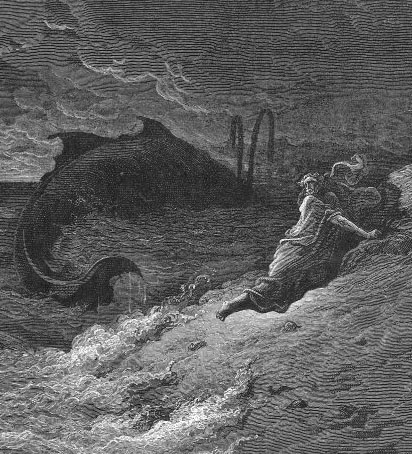
“Come listen to my tale, of Jonah and the whale, way down in the bottom of the ocean;” a children’s song with a catchy tune that has a way of becoming a lifetime companion. Among the earliest Bible stories many children learn is the remarkable story of Jonah and the whale. And since the Bible is God’s word, it must be historical, right? Many modern readers have a difficult time fathoming that Jonah is not a book of history. As if living three days underwater isn’t enough of a stretch, stalwart bibliolaters ignore the tons of archival material from Nineveh itself and claim that the entire city spent a day, or a week, worshiping Yahweh. It stretches the imagination.

Too close for comfort

While working at Gorgias Press I discovered, in an entirely unexpected way, just how seriously some otherwise rational adults take this tale. I had to postpone an important meeting with an influential client because it had fallen on “the Rogation of the Ninevites.” As a lifelong biblical scholar and student of ancient religions, this was a festival I’d never before encountered. A web search refused to yield too much information for as long as my curiosity lasted, but I did find out that the date is difficult to nail down (apparently sometime a week or two ago), and that it predominates among Orthodox Christians of Iraq and Syria. These believers claim the heritage of the fictionally converted Ninevites. Even if the book of Jonah were intended as history, the conversion would have been to Judaism, not Christianity.

As I tried to find a new date with our lucrative associate, I realized once again just how far faith is willing and able to stretch. The story of Jonah is a cautionary tale, almost a fable, reminding post-exilic Jews of the occasional righteousness of the other. While other interpretations have been ceaselessly floated by serious scholars, I have never discovered anyone outside the putative descendents of the fabricated Ninevites who take this non-historical event to be important enough to jeopardize an essential business deal. Anyone who attempts to introduce logic into such an equation may well find him-or-herself, Geppetto-like, slowly digesting in the enormous gastric cavity of a whale that has a taste for prophets.


Fruits of the Dearth

Religions developed out of universal concerns. While I can’t hope to compete with the masterful insight of Pascal Boyer, I do have a gut feeling that as soon as humans evolved the ability of foresight we began to worry. Where is that next meal coming from? Will we survive another day? Is there any way to hedge our bets? In ancient times mortality’s unblinking stare would have been much closer to our faces. Even as recently as the Middle Ages death was much more on the mind, much more frequently seen.

One way to ensure survival is to propitiate those gods who control the productivity of the soil. Long before Demeter lost Persephone ancient people mourned the death of gods who ensured fertile soil, hoping against hope that they might come back each spring. I recall the seriousness with which Rogation Days were taken in the Midwest. At Nashotah House the earth itself was blessed. I recall a priest from Central Illinois who gleefully recounted that the University of Illinois crop experiments were always a little skewed because each year he blessed them on Rogation Days, giving Ceres a boost. CPR for mother earth; give us our daily bread.

The picture of a South Korean boy spinning a can filled with glowing embers over a field on the first full moon of the Korean New Year reaffirms that concerns are the same everywhere. In our sterilized, indoor, urbanized lives where food is grown, harvested, processed and packaged by others for simple consumption of the vast majority, we have lost one of the most poignant aspects of religion. People pray for survival against the devious plans of terrorists, or the insidious diseases that threaten those who make a living simply moving electrons from place to place. Meanwhile somewhere in a country teetering on the brink of nuclear winter, a young boy swings a bucket full of hope.


When Machines Fall in Love

When I want to have a good scare, I seldom think to turn to Time magazine. This week’s issue, however, has me more jittery than a Stephen King novel. One of the purest delights in life is being introduced to new concepts. Those of us hopelessly addicted to education know the narcotic draw of expanding worldviews. Once in a while, however, a development changes everything and leaves you wondering what you were doing before you started reading. A change so profound that nothing will ever return to normal. Singularity. The point of no return. According to the cover story by Lev Grossman, we are fast approaching what theorist and technologist Raymond Kurzweil projects as the moment when humanity will be superseded by its own technology. The Singularity. Noting the exponential growth of technology, Singularitarians – almost religious in their zeal – predict that computing power will match and then surpass human brain speed and capacity by 2023. By 2045 computers will outdistance the thought capacity of every human brain on the planet (more challenging for some than for others, no doubt). The software (us) will have become obsolete.

A corollary to this technological paradise is that by advancing medical techniques (for those who can afford them) and synching tissue with silicone chip, we may be able to make humans immortal. We will have finally crossed that line into godhood. Kurzweil notes laconically, death is why we have religion. Once death is conquered, some of us will be left without a job. (Those of my colleagues who actually have jobs, that is.) We have empirically explained events as far back as the Big Bang, and no deities need apply. The evolution of life seems natural and inevitable with no divine spark. And now we are to slough off mortality itself. O brave new world!

There was a time when mythographers created the very gods. They gave us direction and focus beyond scraping an existence from unyielding soil. We have, however, grown up. There are a few problems, nevertheless. Scientists are no nearer explaining or understanding emotion than they were at the birth of psychology. We might explain what chemicals produce which response, but we can’t explain how it feels. Emotion, as the very word indicates, drives us. Until Apple comes out with iMotion and our electronic devices feel for us we are stuck falling in love for ourselves. Computers can only do, we are told, what they are programmed to do. The mythographer steps down, the programmer steps up as the new God designer. Having dealt extensively with both, I feel I know which I trust better to provide an emotionally satisfying future.

Zadoc P. Dederick's Steam-Man


In the Name of Hate

Saint Valentine’s Day: a minor holiday that no one gets off work or school, but which has both naughty and nice aspects to it. A day with long pre-Christian associations (sorry St. Valentine), the celebration has become an icon of love in the Hallmarkian holiday world. It is a welcome change to the weariness of winter that drags on around the northern hemisphere, reminding lovers and curmudgeons alike spring is on its way. A holiday of hope.

At the same time, an editorial in Saturday’s New Jersey Star-Ledger raises the ghosts of less pleasant times. The Mississippi Division of Sons of Confederate Veterans is attempting to sponsor state license plates honoring General Nathan Forrest, first Grand Wizard of the Ku Klux Klan. While pointing out that Forrest eventually distanced himself from the movement, state officials want to acknowledge his contribution to their state’s history. License plates advertise to the nation as a whole what states uphold as their most attractive traits. In a world where the Klan is still seething under the surface, with active groups in nearly all states, it is not hard to see that hate can not lead us forward. It has failed in the past and it has no hope of success in the future.

Among the most distressing, if not revealing, features of various hate groups is their outspoken adherence to “old time” Christianity. Religion is but one tool in their arsenal, but what makes it so deadly is that even “peaceful” religions such as Christianity have a violent heritage. The Bible can be used to justify genocide as well as rescuing the widow and orphan. Christianity has a long history of being used for political, often hateful, ends in America. It is a trend that is dressed up in its Sunday best for glib talk-show hosts and windbag politicians who claim that “old time” values (read “white privilege”) are what America needs. Do we really need more hate? It’s Valentine’s Day. Let’s give it a break on the rhetoric of hate for at least a day. Who knows? It may become a habit.


Evolving in America

Columnist Leonard Pitts Jr. is one of the most sensible men in America right now. Witty, humble, and bright, he sees clearly and shoots straight. In an allegory entitled “A tale of a giant grown stupid” he illustrates the frustration many intelligent people feel in a country where thinking is viewed askance, and accepting empirical data is rife with suspicion. He begins his article by citing a statistic in Science that indicates some 60 percent of high school biology teachers in the United States inform their students that they don’t have to believe in evolution, they just have to know enough to get through the test. And evolution is not alone in the field of falsified information. Americans are regularly fed a high-fat, low-fiber diet of poor quality religion and told it is the only correct one.

While the remainder of the developed world has moved on to more important issues, we in America are still stuck in Fundamentalist kindergarten. The constant barrage of insipid theology from self-proclaimed doyens of the Scriptures assures the masses that the price of heaven is a healthy dose of creationism. Making matters worse, most biblical scholars choose not to engage these misguided spokespersons, choosing instead to believe they’ll eventually just go away. But why go away when you’re winning the fight?

Evolution is such an odd issue over which to argue. Neither serious biologists nor serious biblical scholars have any problem with it. Only a society increasingly under the power of a jacked-up, over-eager, offensive Christianity buys the feeble creationist rhetoric. And buys it in bulk. That is the American way. For many, society’s ills may be blamed on too much thinking. The Bible requires no thought, just the ability to see in black and white. And the Bible has proven a more powerful weapon than an H-bomb in the educational curriculum of our bright young minds. America itself is evolving. Unfortunately it is evolving into a nation satisfied with simplistic solutions to complex problems. And Bible scholars do nothing and wonder why everyone ignores them. Once upon a time there was a giant. Only it was not sleeping, it was already dead.


Witch World

Little did I realize when I posted an entry on witches two days ago that the news this week would itself become bewitched. Tuesday’s New Jersey Star Ledger contained a piece entitled “Catholics publish guide to witches and wizards.” Then the next day a former student posted a link to CBC News article headlined “Witches to face prison for false predictions.” Last week the Jehovah’s Witnesses left an issue of Awake! at my door that reveals “The Truth About the Occult.” Coincidence or black magic? Are we really in the twenty-first century? If only employment had the same staying power as superstition there would be no jobless rate to complain about!

The Roman Catholic Church in England and Wales is concerned about all the interest Harry Potter is generating. Afraid that tweens and teens might tiptoe into the dark side, the Catholic Truth Society has produced a booklet called “Wicca and Witchcraft: Understanding the Dangers.” The booklet, written by a former Wiccan, is a strange answer to J. K. Rowling given that Potter and friends are not members of the Wiccan faith. They are simply fictional witches that haven’t been grounded by the constraints of the Enlightenment. Fantasy grants them their magical powers, not the Devil. In Romania, meanwhile, witches beset by income tax laws are now facing hard time if their predictions don’t pan out. New laws in the economically depressed nation would require witching permits to be obtained and receipts to be given to customers. This is not to sweep out paganism, but to gain some lucre from it. The Jehovah’s Witnesses are just concerned that occult practices, often seen as mere entertainment, might lead the younger generation down the road to sex and violence.

I was disabused of belief in witches before I failed out of kindergarten the first time. Teaching religion and mythology classes at two major universities, I see students from many different backgrounds trying to improve their minds. But once the sun goes down a backlash against the empirical method is nightly unleashed. I’m not sure whether to pick up my Kant and Descartes or my mugwort and rosemary. Religion breeds these darker manipulators of magic, a force against which many fear God has no recourse. So in our world of high tech gadgets and space stations and cyclotrons, we still have to worry about witches. Theirs is a metaphor yet to be fully appreciated.

Weird sisters or strange attractors?


iConfess; Indulge Me

I confess to being a Luddite at times. I was a late-onset cell-phone user and my last laptop (Macintosh, of course) survived ten years of hard, academic use before an accidental drop forced me into a newer model. Now I walk through student centers and see banners advertising “new apps” and wonder what an app is and whether it is something I should have already had old versions of. I’ve figured out that “app” is an apocopated form of application, and that it generally has something to do with handheld electronic devices. Now it seems that I’ve been out-teched by the Catholic Church. That great bastion of faith that agonized over Galileo for four centuries has now whizzed by guys like myself who cut our high-tech teeth on telephones that had rotary dials.

What is this new app? According to the New York Daily News, the app is called Confession. The program apparently lets you choose a commandment that you’ve violated and offers a list of sins to tick off. (I envy the priest who got that job!) A press of the button and your sins are forgiven. Sure is a lot easier than getting down on your knees and telling it all to a guy you barely know. This handy app even automatically tracks the time since your last confession, so you can give it to the holy father in nanoseconds. It only costs $1.99.

Technology has wreaked havoc on ecclesiastical tradition. Only the most severely shortsighted of churches denies the draw and retention of the electronic revolution. Problem is, the worldview that generated these religions simply doesn’t fit into a palm-sized box. The world of century one was full of demons and dragons, and all on a very flat earth. Confession, when it became a requirement, was a visceral outpouring of deep secrets and fears before a black-garbed authority figure who had the power to dole out Hail Marys like a theophanic thunderstorm. Now it can be done at the stoplight on the way to Starbucks. The last time the church had asked for payment for forgiveness Martin Luther nailed 95 Theses to the Wittenberg Door. Today, I’m sure, it would be an electronic error report posted to a Wiki-board Domain, whatever that might be.

Forgive me, Father -- oh! I've got email!


Sacred Bowl

No winners in this game

I am not a sports fan. Nevertheless, in years when we can afford cable I’ve watched the Super Bowl with a perverse curiosity. Especially when I’ve lived near the locus of one of the competing teams. Having grown up just north of Pittsburgh and having spent fourteen years just south of Green Bay, this year would have been a toss-up for me anyway. I have friends from both Pennsylvania and Wisconsin, and it was interesting to watch the pre-game posturing, knowing that someone’s self esteem would be low this morning after. The Super Bowl, unlike Sunday religious meetings, is an event that never fails to fill the pews. Football reaches across denominational borders into personal pride. It is an odd thing to find regional self-worth in the antics of highly paid professional players from all over the country secured in a single location by money alone.

Sports are religious for many. There are acolytes, saints, bishops and high priests of the gaming community. And the congregation feels special when their team wins. An odd way to measure civic pride. When was the last time that a city bragged about the social care offered to its unfortunate? Would sponsors pay millions to see a city cleansed of unemployment, uneven health care, and corruption? Shining cities just aren’t set on the hills any more. What shines are lycra leggings and polycarbonate helmets. And funny commercials. For one day many Americans are gathered around the common altar of the television screen and many, many prayers are uttered.

In a world full of serious problems, playtime may be essential release. Nevertheless, when the game is over the problems remain. If only people could get as excited about solving a genuine crisis, and feel a sense of accomplishment by helping those on the opposite team. Instead religions divide up into teams and compete for stakes higher than even a Vince Lombardi, stakes that are sometimes taken too literally. No matter what the teams may be, the losers are always the same. They are the ones who suffer no matter which team walks away with the prize. Who won the Super Bowl? Did anybody really win?


Cyclotrons and Stardust

While recently watching an episode of Morgan Freeman’s Through the Wormhole, a connection emerged between religion and science. In an episode entitled “What Are We Really Made of?” the viewer is taken deep into CERN, and shown the tunnel where the Large Hadron Collider slithers like a 17-mile metallic snake coiling back on itself. In a quest for what ultimately constitutes sub-atomic particles, the script informs us, when the Collider is up to full speed it will recreate conditions as they were nanoseconds after the Big Bang. Scientists will be witnesses to creation itself. Their book of Genesis, however, will not be as easy to read as the one we currently have.

From CERN's website; the apocalyptic LHC

CERN represents perhaps the most sophisticated scientific instrument ever built. And the Kepler Space Telescope, one of the far-sighted members of our arsenal of understanding, has discovered rocky planets like our own 2,000 light years away. When the light of their sun left, Christianity was just beginning. Since then, millions of earthlings have died because of religious fanaticism. The deeper we peer, the less unique we become. Life is surely out there, and maybe building cyclotrons larger than CERN. The more we populate the universe, the lonelier we feel.

Kepler's guide to planets, from NASA

Scientists are also closing in on the creation of life itself. Working with self-replicating collectively autocatalytic peptide sets, they are nearing the point where we might say life has emerged independently in a laboratory. Where might religion be then? Human initiative in discovering the secrets of nature has balanced a divine creator on a precarious precipice. If life may emerge from a large soup of non-living peptides, and if we push the moments from the Big Bang back to merest fractions of a second while waving to our neighbors light-years away, have we consigned God to the unemployment line? I feel in better company now, although the light may have taken eons to arrive this far.


Faith Stealing

The sad story of the Schaible family of Philadelphia has reached a compromise that demonstrates just how awkwardly religion and politics sit together. Believers in faith healing, the Schaibles watched their two-year old son die for lack of medical attention. No limits exist on what people are capable of believing. Belief is at the root of most religions, so any nation that advocates freedom of religion has to open itself to the bizarre and wonderful possibilities that follow. Belief can’t be legislated. Too many revolutions throughout the world have amply demonstrated that. If a religion decides that the use of turn-signals is sinful (apparently a popular doctrinal stance here in New Jersey), it may bring conflicts with civil authorities and other citizens. When a religion declares professional medical treatment to be wrong, it is simply exercising its right to believe. When civil laws declare that parents must watch over the physical welfare of their children, clashes with such faith systems are inevitable. Believe what you will, physical death will not be cheated.

The shift of religion from praxis to belief gave believers a shove down a very slippery slope. Ancient religions tended to be matters of practice: gods demand sacrifice, so we grudgingly give them that. In actual fact, sacrifices supported the temple staff, often an arm of the government. It was, although probably not disingenuous, taxation in disguise. To be the member of a community, you have to pay the price. The system started to break down when religious individuals began to internalize this external structure. Instead of just offering the sacrifice, you have to do it with the right intentions. Those intentions evolve into beliefs. And beliefs are the ultimate free agents.

When a society defines religion as a belief system to which you may (or may not) subscribe, then myriad religious concepts emerge. Offering religious institutions tax-exempt status only encourages such behavior. If you tax them, on the other hand, the wealthier religions will have more political influence. No matter what pious lips may say, money will always trump pure belief. Meanwhile very real human suffering takes place, hostage to belief systems made up by somebody else. Religion has given us many lofty ideals; maybe one of those ideals is that we should limit its own infinite power.

Borrowed from some place on the Internet


Return of the Frost Giants

We have ceased believing in the gods, but we still feel their wrath. The recent winter storms encompassing much of the nation demonstrate our arrogance in the face of the uncontrollable. It has long been my contention that the chief god is a personification of the weather. No matter how many HAARPs we put into place or how many satellites we hurl over our heads, the atmosphere remains a chaotic system. Global warming triggers unpredictable weather and extreme conditions. Yet people claim the moderate level of snow in the northeast is proof against the facts. I say the gods are laughing. How quickly we forget the ice ages.

As a child Norse mythology was among my favorite pagan religious systems. Obviously those responsible for naming our weekdays felt the same. The struggles and weaknesses of Odin, Thor, and Loki are far more honest than claims of pristine intention on the part of the majority of gods. The most captivating aspect was the eventual victory of the frost giants at a kind of Ragnarök. In Scotland, so close to the landfall of many a Viking, I took advantage of indulging in Viking sagas and myths. My understanding remains that of a curious layman, but I sense a deep wisdom at work here.

A recent email from a university dean on a particularly treacherous weather morning admonished all instructors that classroom presence was a commodity that paying students have a right to expect. Deans, with their six-figure salaries, are not accustomed to not getting their own way. How hard it is to admit that the gods have bested us! There are those who’ve not bothered to study global warming but nevertheless like to make pronouncements about it. They claim such weather disproves that the world is heating up, despite the global warming models that predict erratic and localized colder weather. We have released the frost giants. The more we mess with them the more dangerous they become. So, what is my solution to the dilemma of too much weather? Well, I’m morally obligated not to say until I receive my six-figure salary.

The little wolf laughed to see such sport


The Triumph of Baal

“Snow weariness” is no strange phenomenon even to those of us who were reared in the legendary snow belt of Lake Erie. Although Buffalo consistently topped our records, months of deep snow burying all the familiar features of our landscape in northwestern Pennsylvania were regular expectations of winter. Snow weariness generally settled in around March when we longed for green pastures and unstill waters. As an adult in generally snow-deprived New Jersey, the weariness sets in much quicker. Attempting to drive on highways with sneophytes is a challenge; before I had my license I had driven in plenty of snow, otherwise I’d have had to hibernate from December through April of each year. Digging out from New Jersey’s third major snow-plop of January, however, the magic seems to have vanished.

Baal was a god who controlled the weather. Some years back I finished a book (still unpublished) on weather terminology in the Psalms. Many psalms are notable for containing archaic imagery and phrasing, leading some scholars to suggest they might have been new, revised “Canaanite” versions of songs originally dedicated to Baal. Perhaps so. The Psalms frequently note the wonder of weather, even occasionally of the snow. Psalm 147 contains the lines:

16 The one giving snow like the wool,
he scatters hoarfrost like the ashes,
17 throwing his rime like crumbs,
before his cold who will stand?

Originally a paean to Baal? Who knows? It’s just that we’re all shivering down here. And Israelites didn’t have to shovel a path to their cars to turn over reluctant engines to get a modicum of warm air circulating before they actually arrived at work.

Once Israel’s monotheism set in, Yahweh took control of the weather, thank you. Even a glance at the Psalms demonstrates the superiority of Israel’s divine weather-maker. From the view down here, however, it looks like maybe Baal has a few tricks still to play. Would Yahweh ever cause a Bible class to be cancelled because of inclement weather?

Dawn in the new snow Baal


Dog Gone!

Religion is a strange attractor. Maybe not in the exact same sense as in chaos theory, but in reality it brings together mental states so bizarre that science fiction and fantasy writers have a buyer’s choice. Yesterday the New York Daily News reported on a South Carolina woman who hanged and burned a one-year old pit-bull puppy. Why? The bitch had bitten the woman’s Bible. Citing the animal as a “Devil dog,” the southern woman became a vigilante for the Lord. Now she’s being tried on charges of animal cruelty. This story touched me in a number of ways.

With family roots in South Carolina, I can conjure up images of this happening. Having known many, many Fundamentalists, it seems even more plausible. Given the constant barrage of contrary messages descrying the presence of evil in the world, all the sudden any mutt can become Mephistopheles. Begging off the Baskervilles, the demonic hound has a long pedigree in mythical imagination. It is well known that the Bible cites dogs as unclean animals, but it is their charnel character that leads to the development of the full-blooded hellhound. Prior to the Hebrew Bible, in ancient Ugarit dogs had an infernal connection. It isn’t seen clearly, but the association is there. Snatches of the underworldly dog appear long before Cerberus, and last well nigh into the twenty-first century.

Hel and his hound

Unfortunately for the deceased canine, it is a myth. Hellhounds still abound in popular media, everywhere from The Omen to O Brother, Where Art Thou? Dogs, however, were among humanity’s earliest partners in the survival game. From about as early as I can remember, we always had dogs in the house, and nary a demonic encounter. We never put them on trial, even when house-training was in progress and an accident occurred.

The news story reminded me of an episode of Dragnet I saw as a child. A woman was arrested for murder, and Sergeant Friday, in his unflappable voice, told his partner it was because the victim had shot one of her books. In the final fade out, after Bill Gannon asked what book it had been, Friday holds up a Bible with a bullet-hole through it. I was a little confused. Was the woman guilty or was someone shooting a Bible just cause? The episode did not answer the moral dilemma. I can’t even remember the outcome. But in 2011 things haven’t much changed. If he goes to South Carolina McGruff better watch what he takes a bite out of, or it could be lynching time again.


Beside Metallic Waters


My brother recently pointed out the story of Rev. John Van Sloten, a Canadian pastor who has written a book about how he’s come to see the gospel in the songs of Metallica. Yes, Metallica. Even the members of the 1980’s hard rock band found the association a little surprising. It all came about, it seems, through an open mind. The story is narrated in basic form on the Gibson guitar website. Young parishioners at Van Sloten’s church suggested he should listen to Metallica. Perhaps aware of the principally negative conservative Christian reaction to rock in general and hard rock in particular, the pastor says he ignored the advice. Then the minister was presented with Metallica tickets. A divine mix was in the works.

At the concert the pastor had a revelation: the issues wailed against by the band resonate well with the concerns of Christianity. In fact, some of the band’s concerns sound downright prophetic. The concept of prophecy today often revolves around a prediction of future events (à la Harry Potter). Prophecy in the Hebrew Bible far more often concerns social justice, speaking out against the oppressor. Metal bands, from their inception, were vehicles for protest. Disillusionment against a system that perpetuates unfairness either at a governmental or a cosmic level. When I sat down to listen to the lyrics of Black Sabbath for the first time, I was surprised how biblical many of them were (don’t tell Ozzy).

Many religious folks prejudge heavy metal as “satanic” and evil without even listening to it. I have always been struck by how much these groups frequently draw on bleak biblical images. Today we treat biblical characters as paragons of emulation. The Bible does many of its characters no such disservice. Prophets are to be heard, not emulated. We think of Isaiahs or Jeremiahs as pleasant supper guests who happen to have a divine word inside. In the Bible their actions often lead to recriminations, but their uncomfortable message is sound. I grew up in a tradition that discouraged heavy metal, as if something in the music were inherently evil. I applaud Rev. Van Sloten for approaching one of the formative bands of the genre with an open mind. Truth may be found in some very unlikely places.


2012 Reconsidered

Maybe I was a little too hasty on the 2012 thing. Back in first grade Mrs. Shaw told us, “one bad one ruins it for everyone.” Nevertheless, I was somewhat content with my educational experience: not too many privileges were revoked over the years. But then things changed. When my wife and I expatriated to Scotland back in ’89, we flew on what had formerly been known as Pan Am flight 103, the route of the airliner that had been blown up over Lockerbie just three months before our international move. Being resident aliens, we had to register with the police in Edinburgh, so at 26 I acquired my first police record. Other than a disputed traffic violation ticket, after returning to the States, I’ve kept a clean record since.

Now I try to volunteer at the local schools. I had been newly elected as PTO president in Wisconsin just before I will dismissed from a position I’d held for some 12 years with nothing but excellent teaching reviews. Paranoia may have begun then. Here in New Jersey, to volunteer to help high school clubs (such as Robotics), you must be fingerprinted. As I made my way to a bio-tech company set up in a back room like a shady fly-by-night business venture, I reflected on how strange this world has become. I was duly fingerprinted and released. Then as I attempted to get back to the highway there was a roadblock with a sign reading “Check Point.” A black-garbed police officer was stopping cars and sending select drivers off to a detention point at the side of the road. I wondered if somehow I’d mistakenly awoken in Kosovo. Was this “the land of the free and the home of the brave”?

Not that I ever felt terribly secure at the best of times, I wonder what has happened to the country I was born in. Freedom now requires groping at airports, random check-points on local roads, and regular “silver alerts” on the highway. It feels like it’s a crime to be born American now. As a kid who was always taught to do what’s right, and who’s tried to live that exacting standard his whole life, the world has come to confound me. Fired for excellent work, fingerprinted for volunteering, felt-up for wanting to fly – the world may well have already ended before 2012 has a chance to get here. Now, what’s that guy doing on the telephone pole outside my window?

Is this now the game of Life?